

Submitted:
17 July 2026
Posted:
20 July 2026
You are already at the latest version
Abstract
Preliminary evidence suggests that patients with Enterococcus faecalis bacteremia and infective endocarditis, particularly those without an identifiable source, may have an increased prevalence of colorectal neoplasia. Whether systematic colonoscopy should be recommended in this population remains unresolved. EnteroColonus is a multicenter, prospective, observational matched cohort study that will recruit adults aged 50 years or older with E. faecalis bacteremia and/or infective endocarditis from 22 Spanish centers, together with asymptomatic controls undergoing colorectal cancer screening. Cases will be stratified into E. faecalis bacteremia/endocarditis of unknown origin (EFBEUO) and with suspected source (EFBESS). Planned sample size is 414 participants: 276 cases and 138 matched controls. Core procedures include colonoscopy, histopathology, clinical and microbiological phenotyping, fecal microbiome profiling by shotgun metagenomics, detection of E. faecalis genetic material in colorectal biopsy specimens using 16S sequencing and species-specific qPCR, and whole-genome, SNP, and phylogenetic analyses of clinical isolates. The primary endpoint is the detection of colorectal neoplasia by colonoscopy/histopathology in EFBEUO compared with EFBESS and matched screening controls. Secondary endpoints include microbiome profiles, biopsy positivity for E. faecalis, genomic traits of bloodstream isolates, mortality, relapse/recurrence, and development of a colorectal neoplasia risk score. This protocol is designed to clarify which patients with E. faecalis bloodstream infection might benefit from systematic colonoscopy evaluation and to explore host-microbe mechanisms underlying the observed association with colorectal neoplasia.
Keywords:
Enterococcus faecalis
; bacteremia
; infective endocarditis
; colorectal neoplasia
; colonoscopy
; microbiome
; protocol
Introduction
Enterococci have emerged over recent decades as leading causes of bloodstream infection in industrialized settings, particularly among older and medically complex patients.1–3At the same time, colorectal cancer (CRC) remains a major cause of cancer burden and death.4,5The best-established infection-neoplasia paradigm in this field is the association between Streptococcus gallolyticus bacteremia/endocarditis and colorectal neoplasia, for which colonoscopic evaluation is widely endorsed.6–11 Against this background, accumulating reports have suggested that Enterococcus faecalis bloodstream infection may also signal occult colorectal lesions, especially when no clear portal of entry is identified.12–18
The EnteroColonus rationale stems from preliminary findings showing a markedly increased prevalence of advanced adenomas and colorectal carcinoma among patients with E. faecalis infective endocarditis of unknown origin who underwent colonoscopy.12–14 Additional case reports and small series have described colonic abnormalities in patients with enterococcal infective endocarditis or bacteremia,15–18 while experimental literature suggests that E. faecalis may contribute to colonic carcinogenesis through oxidative stress, extracellular superoxide generation, inflammatory signaling, and interactions with gut dysbiosis.19–21 Moreover, recent evidence from large-scale metagenomic studies has identified specific microbial signatures enriched in colorectal cancer patients, supporting a broader role for the microbiome in colorectal carcinogenesis.22,23 The project summary also notes that diagnosis of CRC can occur during follow-up after the initial infectious episode, raising the possibility that bloodstream infection may function as a clinical warning sign of otherwise unrecognized colorectal neoplasia.13,18
Despite these signals, major uncertainties remain. It is not known whether the excess risk is confined to infective endocarditis or extends to bacteremia without endocarditis; whether it is limited to episodes without an identifiable source; which types of colorectal lesions are enriched; whether microbiome patterns differ across patient groups; whether colorectal tissue demonstrates enrichment with E. faecalis genetic material; and whether particular E. faecalis strains harbor genomic features associated with translocation, virulence, antimicrobial resistance, or colorectal neoplasia.13,16–21 There is also no validated clinical model to guide selective colonoscopy after E. faecalis bloodstream infection.
The primary objective is to prospectively study patients with EFBEUO by colonoscopy and compare endoscopic/histopathologic findings with those of patients with EFBESS and matched asymptomatic individuals undergoing CRC screening. Secondary objectives are to compare fecal microbiome profiles across groups; assess the presence of E. faecalis genetic material in colorectal biopsy samples; compare genomic characteristics of bloodstream isolates according to source classification and colonoscopic findings; and develop a risk score for colorectal neoplasia among patients with E. faecalis bloodstream infection.
Methods
Study Design and Setting
EnteroColonus is designed as a multicenter, prospective, observational matched cohort study. Recruitment will be performed across 22 Spanish centers, with biospecimen processing centralized through Hospital Clínic Barcelona and partner laboratories including IrsiCaixa for microbiome and biopsy-associated molecular analyses and the Center for Antimicrobial Resistance and Microbial Genomics in Houston, Texas, for isolate genomics. The project duration in the original plan was 3 years (Figure 1).
Cases comprise adults aged 50 years or older with E. faecalis bacteremia and/or infective endocarditis, classified by source as unknown origin (EFBEUO) or suspected source (EFBESS). Controls are asymptomatic individuals aged 50 years or older undergoing screening colonoscopy, matched to EFBEUO cases by site, sex, and age within +/-2 years.
Recruitment and Eligibility Criteria
Eligible cases are patients aged 50 years or older with an episode of E. faecalis bacteremia and/or infective endocarditis and at least 6 months of follow-up.
Infective endocarditis is defined according to modified Duke criteria.24A suspected source is assigned when clinical and/or microbiological findings strongly support a clear portal of entry, such as catheter-related infection, urinary tract source with compatible symptoms and urine culture, surgical wound infection, or biliary focus. Otherwise, the episode is categorized as unknown origin.
Controls are asymptomatic screening participants meeting matching criteria. Exclusion criteria include previous E. faecalis bacteremia/endocarditis, previous CRC, familial CRC or hereditary CRC syndromes, and follow-up shorter than 6 months. Table 1 shows the eligibility criteria.
Study Population
The planned sample includes 414 participants: 276 cases and 138 matched controls. The sample size assumes an annual median of approximately 45 E. faecalis infective endocarditis cases in the recruiting network, a bacteremia-to-endocarditis ratio of roughly 3:1 to preserve power for infective endocarditis subgroup analyses, 30%-50% of cases with unknown origin, and a relapse rate of 3%-8%. Approximately half of the case population is expected to fall within the EFBEUO category. Relapses will contribute clinical data and isolate analyses, whereas recurrences may trigger repeat colonoscopy and repeat fecal sampling if clinically indicated.
Outcome Measures
The primary endpoint is the rate of colorectal neoplasia detected by colonoscopy and confirmed by histopathology in EFBEUO compared with EFBESS and matched controls. Colorectal lesions are first classified endoscopically as neoplastic or non-neoplastic and then histopathologically as malignant (advanced adenomas, colorectal carcinoma, and other colorectal cancers) or non-malignant.13
Secondary endpoints include fecal microbiome composition and diversity; detection of E. faecalis DNA in biopsy material by 16S sequencing and species-specific qPCR; genomic features of bloodstream isolates including WGS profiles, SNPs, phylogenetic clustering, and antimicrobial resistance-related traits; 30-day mortality for bacteremia; 1-year mortality for infective endocarditis; relapse/recurrence; cardiac surgery in infective endocarditis; and clinically relevant treatment changes prompted by colorectal findings.
Study Procedures and Schedule of Assessments
For cases, baseline data will include epidemiological, clinical, therapeutic, microbiological, and diagnostic information. Colonoscopy will be performed according to routine endoscopic practice, with lesion biopsy when clinically indicated. Fecal samples for microbiome analysis will preferably be collected 48 hours before bowel preparation; if not feasible, collection may occur 14 days after colonoscopy using a stabilization system (Table 2).
Table 3 shows the schedule of assessments. All participants will contribute to one primary fecal sample, while repeat samples may be cryopreserved for participants who undergo follow-up colonoscopy. Patients will be followed at approximately 1 month and 6 months after the index admission. Follow-up colonoscopy will only be performed when indicated by routine clinical guidelines (Figure 2).
Data Management
Clinical data will be captured using the established Spanish Collaboration on Endocarditis–Grupo de Apoyo al Manejo de la Endocarditis Infecciosa en España (GAMES) shared database 25 together with a specific case report form for colorectal and biospecimen variables in RedCAP. The source document indicates that the network already maintains standard case report form (CRFs) and a data manager, and that an additional project/data manager and contract research organization support were planned for coordination, monitoring, and query resolution. Microbiology laboratories at each center will store E. faecalis strains locally until shipment. Fecal samples and paraffin-embedded biopsy material will be centralized through Hospital Clínic Barcelona and then distributed to the designated molecular laboratories. This structure supports standardized handling, batched processing, and traceability across centers.
Sample Size Calculation
The original project proposal included an operational recruitment estimate of 414 participants (276 cases and 138 controls), based on the expected number of Enterococcus faecalis bacteremia and infective endocarditis episodes in the participating GAMES network, the anticipated proportion of episodes of unknown origin, the expected bacteremia-to-endocarditis distribution, and the possibility of relapse or recurrence. This figure should therefore be interpreted as a feasibility-based recruitment target rather than as the formal minimum sample size required to achieve a prespecified statistical power.
A formal power-based sample size calculation was subsequently undertaken for the primary endpoint, defined as the prevalence of colorectal neoplasia detected by colonoscopy and confirmed by histopathology in patients with E. faecalis bacteremia/endocarditis of unknown origin compared with the predefined comparison group. The number of cases was treated as the primary quantity to be estimated, and the number of controls was derived from the prespecified control-to-case allocation ratio.
In the initial confirmatory design, the planned allocation was one control for every three cases. Assuming a two-sided α of 0.05 and 80% power, the resulting formal target sample size was 324 participants, corresponding to 243 cases and 81 controls. This sample size was considered adequate to address the primary hypothesis while preserving reasonable precision for the main planned secondary clinical comparisons. By contrast, microbiome, tissue-microbiology, and bacterial-genomics analyses were considered exploratory and were not individually powered as confirmatory endpoints.
Recruitment was subsequently affected by the COVID-19 pandemic and, thereafter, by an apparent sustained decrease in the incidence of E. faecalis bacteremia/endocarditis in the participating setting, plausibly related to persistent changes in hospital epidemiology and infection-control measures introduced during and after the pandemic. A protocol amendment was therefore introduced to preserve confirmatory testing of the primary hypothesis only, while reclassifying the remaining objectives as secondary or exploratory.
Data Analysis Plan
The analysis plan combines classical epidemiologic methods with multi-omics workflows. First, descriptive statistics will summarize clinical, endoscopic, histopathologic, microbiological, microbiome, and genomic features. Group comparisons will then be conducted using univariate methods appropriate to data type and distribution. For clinical endpoints, logistic regression will be used to identify factors associated with colorectal neoplasia, mortality, and relapse, while Kaplan-Meier curves may be used for time-to-event outcomes. For shotgun metagenomic data, the proposal specifies quality control, decontamination, taxonomic profiling, gene richness estimation, KEGG-based functional profiling, and strain-level characterization, followed by richness/diversity analyses, non-metric multidimensional scaling, correlation testing, pairwise and multi-group nonparametric testing with multiplicity correction, and longitudinal modeling when repeat sampling exists. For isolate genomics, WGS annotation, SNP calling, and phylogenetic analyses will be used to compare strains across exposure groups and lesion phenotypes. Finally, a multivariable integrated prediction model will be developed to generate a colorectal neoplasia risk score in EFBE, potentially including propensity-score methods and ROC curve assessment. Because the source proposal framed some omics variables as exploratory, this manuscript should be interpreted as a protocol-level analytic plan subject to prespecified statistical refinement before database lock.
Potential Modifications to the Protocol as Contingency
The original proposal explicitly recognizes that several variables are exploratory because no prior comprehensive dataset exists in this field. Contingency modifications may therefore include refinement of dependent or intermediate omics variables after pilot analyses; adaptation of biospecimen logistics if pre-colonoscopy stool sampling is not feasible; repeat fecal sampling and repeat colonoscopy only in clinically indicated recurrences; and staged methodological adjustments identified during the pilot phase of sequencing and molecular analyses.
In the amended design, the allocation ratio was changed to one control for every two cases, while maintaining a two-sided α of 0.05 and 80% power. Under this revised framework, the recalculated total sample size was 165 participants, corresponding to 110 cases and 55 controls. From that point onward, only the primary endpoint was considered confirmatory. Secondary analyses, including subgroup analyses by bacteremia versus infective endocarditis, microbiome analyses, detection of E. faecalis genetic material in biopsy specimens, isolate genomic analyses, and risk-score development, were regarded as exploratory and hypothesis-generating.
A detailed mathematical derivation of the sample size calculation is provided in the Supplementary Material.
Ethics and Dissemination
According to the source protocol, the Ethics and Research Committee of Hospital Clínic de Barcelona was designated to perform the initial protocol and informed-consent review, after which all participating centers were to obtain local approval before study initiation (HCB/2021/0073). Written informed consent is required for enrollment and biospecimen collection. The study is observational, but colonoscopy, biopsy handling, microbiologic isolate storage, and genomic/microbiome analyses require careful governance of privacy, sample traceability, and data security.
Dissemination plans in the project summary include final reporting, conference presentations, and manuscript drafting, with the coordinating investigators leading the first publication and later substudies assigned across sites. Study findings will be disseminated through peer-reviewed publications and presentations at national and international scientific meetings. The main results manuscript will report the primary study objectives, including the association between Enterococcus faecalis bloodstream infection and colorectal neoplasia and the comparative diagnostic yield of colonoscopy across the predefined study groups. Secondary manuscripts will address prespecified ancillary analyses, including microbiome profiles, detection of E. faecalis genetic material in colorectal biopsy specimens, genomic characterization of bloodstream isolates, and development of a risk model for colorectal neoplasia. Results will be reported regardless of the direction, magnitude, or statistical significance of the findings.
The coordinating investigators will lead the primary dissemination outputs, and additional publications arising from substudies will be developed with participation from investigators across collaborating centers according to their contributions. Findings will also be shared with participating centers to support interpretation of the results and to inform future research and clinical decision-making regarding colonoscopic evaluation in patients with E. faecalis bacteremia or endocarditis.
Expected Results, Relevance and Potential Implications for Clinical Practice and Future Research
The study is expected to validate whether EFBEUO is associated with a substantially higher prevalence of colorectal neoplasia than EFBESS and matched screening controls.12–18 It is also expected to define whether this association is confined to unknown-source episodes or extends more broadly across E. faecalis bloodstream infections.13,16–18. Current recruitment is depicted in Figure 3.
At the biological level, EnteroColonus is expected to identify group-specific microbiome signatures, characterize the burden of E. faecalis genetic material within colorectal lesions, and determine whether particular bloodstream isolates cluster by genomic patterns associated with neoplasia.19–21 Fecal samples will be collected from patients with E. faecalis bloodstream infections of unknown or suspected origin, as well as matched asymptomatic colorectal cancer screening controls, and analyzed using whole-metagenome shotgun sequencing. Taxonomic, functional, and strain-level profiling will be performed through established bioinformatic pipelines including MetaPhlAn4, HUMAnN3, KEGG-based functional annotation, FishTaco, and strain-tracking approaches. In parallel, colorectal biopsy samples obtained during colonoscopy will undergo 16S rRNA amplicon sequencing and E. faecalis-specific RT-PCR/qPCR analyses to evaluate bacterial enrichment in neoplastic lesions. Whole-genome sequencing and phylogenetic characterization of bloodstream E. faecalis isolates will also be performed, including assessment of genomic traits and antimicrobial resistance patterns. Previous studies have shown that gut microbiome dysbiosis is associated with colorectal carcinogenesis and that distinct microbial signatures may be identified in precancerous lesions13,-27. Integrated statistical analyses combining microbiome, genomic, histopathological, and clinical variables are expected to identify microbial signatures associated with colorectal lesions and to clarify potential relationships between gut dysbiosis, E. faecalis translocation, colorectal carcinogenesis, and clinical outcomes.
If successful, the integrated dataset should support construction of a clinically useful risk score to prioritize colonoscopy work-up in patients with E. faecalis bacteremia or infective endocarditis. If the study confirms a high burden of colorectal neoplasia in patients with EFBEUO, it could support systematic or risk-stratified colonoscopy as part of the diagnostic work-up for E. faecalis bloodstream infection, analogous in concept to current practice for S. gallolyticus.8–10,13
Equally important, a negative or source-restricted result would help avoid unnecessary colonoscopy in lower-risk subgroups.13 Beyond immediate clinical decision-making, the project provides a translational framework linking bedside phenotypes with microbiome and bacterial genomic data.19–21 That framework may clarify mechanisms of translocation and carcinogenesis, enable externally validated prediction tools, and generate hypotheses for future studies on virulence factors, mucosal colonization, longitudinal cancer risk, and intervention strategies.13,19–21
Supplementary Materials
The following supporting information can be downloaded at the website of this paper posted on Preprints.org.
Author Contributions
Conception and design: JMP and JMM; Drafting of the manuscript: JMP, MAC and JMM; Tables and figures: JMP and MAC; Data acquisition: All authors; Revision of the manuscript and editing: all authors; Final approval of the manuscript: all authors.
Funding
Instituto de Salud Carlos III, Proyectos de Investigación en Salud (grant number PI19/01898). JMM received a personal 80:20 research grant from Institut d’Investigacions Biomèdiques August Pi i Sunyer (IDIBAPS), Barcelona, Spain, during 2017–26.
Acknowledgments
We want to thank Mr. Iván Adán for his continuous support to both the application and management of the project.
Conflicts of Interest
All named authors meet the International Committee of Medical Journal Editors (ICMJE) criteria for authorship for this article, take responsibility for the integrity of the work, and have given their approval for this version to be published.
Appendix A. EnteroColonus Investigators
Hospital Universitario La Princesa (Madrid): Carmen Sáez, Javier B Pérez-Serrano, M Auxiliadora Semiglia-Chou, Nelly D Zurita, J Andrés Moreno-Monteagudo, Jorge Mendoza Jiménez-Ridruejo; Hospital Central de Asturias (Oviedo): Mª Ángeles Rodríguez, Raquel Rodríguez, Fernando Fernández-Cadenas, Mª Eugenia Llaneza; Hospital Mutua Terrassa (Barcelona): Lucía Boix, Pablo Ruíz, Beatriz Dietl, Cristina Badía; Hospital Universitario Puerta de Hierro (Madrid): Jorge Calderón-Parra, Antonio Ramos, Itziar Diego-Yagüe, M Isabel Veral-Mendoza; Hospital Universitario Ramón y Cajal (Madrid): Rosa Escudero, Enrique Navas, Pilar Vizcarra, Sofia Parejo, Javier Moreno-García; Hospital General Universitario Gregorio Marañón (Madrid): Sofía de la Villa, Ana Álvarez-Uría, Marina Machado, Martha Kestler, Patricia Muñoz, Julia Serrano-Lobo, Teresa Vicente-Rangel, Iván Adán-Rodríguez, Almudena Burillo, Beatriz Merino-Rodríguez, Sara Rodríguez; Hospital Universitario de Canarias (Tenerife): Mª Mar Alonso-Socas; Hospital Universitario de Son Espases (Palma de Mallorca): Silvia Peláez-Fernández, M Carmen Garrido, M Àngels Ribas, Enrique Ruiz-de-Gopegui, Isabel Amengual, Silvia Peláez, Laura Vidal; Hospital San Pedro (Logroño): Lara García-Álvarez, Concepción García-García, Estíbaliz Corral; Hospital Universitario Materno-Infantil de Gran Canaria (Las Palmas de Gran Canaria): Elena Pisos-Álamo, Violeta Malo-de-Molina, Isabel de Miguel-Martínez, Cristina Carranza; Hospital Clínic (Barcelona): Asunción Moreno, Guillermo Cuervo, Marta Hernández-Meneses, Juan M Pericàs, Jose M. Miró, Leticia Moreira, Coral Sala, Irina Luzco, Mateu Espasa-Soley, Marta Maristany; Hospital de Donosti (San Sebastián): Alazne Aguirre-García, Xabier Intxausti-Picabea, Miguel Á Goenaga, Claudia Nevado; Hospital Parc Tauli (Barcelona): Victor Monsalvez, Andrea Soult, Oriol Gasch, Eva M Pascual-Gonzalez, Eva Martinez-Bauer, Marina Alguacil; Hospital Universitario y Politécnico La Fe (Valencia): Rosa Blanes, Mariona Tasias, Jennifer Guevara, Marta Montero, Juan Frasquet; IrSICaixa, Hospital Germans Trias i Pujol (Badalona, Barcelona): Oriol Careta, Francesc Català-Moll, Mariona Parera, Roger Paredes. Houston Methodist Hospital (Texas, USA): Diana Panesso, Cesar A. Arias.
References
- Miller, William R. ; Arias, Cesar A. ; Murray, Barbara E. Enterococcus Species, Streptococcus gallolyticus Group, and Leuconostoc Species. Mandell, Douglas, and Bennett’s Principles and Practice of Infectious Diseases, 9th Edition: Volume 1-Vol. 2 Elsevier, 2019; 2492-2504.e4.
- Agudelo Higuita NI, Huycke MM. Enterococcal Disease, Epidemiology, and Implications for Treatment. In: Gilmore MS, Clewell DB, Ike Y, Shankar N, eds. Enterococci: From Commensals to Leading Causes of Drug Resistant Infection. Boston: Massachusetts Eye and Ear Infirmary; February 4, 2014.
- Prematunge C, MacDougall C, Johnstone J, et al. VRE and VSE bacteremia outcomes in the era of effective VRE therapy: A systematic review and meta-analysis. In: Infection Control and Hospital Epidemiology. Vol Cambridge University Press, 2016; 37: 26–35.
- Roth GA, Abate D, Abate KH, et al. Global, regional, and national age-sex-specific mortality for 282 causes of death in 195 countries and territories, 1980–2017: a systematic analysis for the Global Burden of Disease Study The Lancet 2018; 392: 1736–88.
- Quintero E, Castells A, Bujanda L, et al. Colonoscopy versus Fecal Immunochemical Testing in Colorectal-Cancer Screening. N Engl J Med. 2012;366: 697-706.
- García-Albéniz X, Hsu J, Lipsitch M, Logan RW, Hernández-Díaz S, Hernán MA. Infective endocarditis and cancer in the elderly. Eur J Epidemiol 2016; 31: 41–9.
- Fernández-Cruz A, Muñoz P, Sandoval C, et al. Infective endocarditis in patients with cancer: A consequence of invasive procedures or a harbinger of neoplasm? A prospective, multicenter cohort. Medicine (United States) 2017; 96: e7913.
- Corredoira-Sánchez J, García-Garrote F, Rabunal R, et al. Association between bacteremia due to Streptococcus gallolyticus subsp. gallolyticus (Streptococcus bovis I) and colorectal neoplasia: A case-control study. Clinical Infectious Diseases 2012; 55: 491–6.
- Baddour LM, Wilson WR, Bayer AS, et al. Infective endocarditis in adults: Diagnosis, antimicrobial therapy, and management of complications: A scientific statement for healthcare professionals from the American Heart Association. Circulation 2015; 132: 1435–86.
- Habib G, Lancellotti P, Antunes MJ, et al. 2015 ESC Guidelines for the management of infective endocarditis. Eur Heart J 2015; 36: 3075–123.
- Delgado V, Ajmone Marsan N, De Waha S, et al. 2023 ESC Guidelines for the management of endocarditis. Eur Heart J 2023; 44: 3948–4042.
- Pericàs JM, Corredoira J, Miro JM. Colorectal Adenomas. New England Journal of Medicine 2016; 375: 387–90.
- Pericàs JM, Corredoira J, Moreno A, et al. Relationship Between Enterococcus faecalis Infective Endocarditis and Colorectal Neoplasm: Preliminary Results From a Cohort of 154 Patients. Revista Española de Cardiología (English Edition) 2017; 70: 451–8.
- Sengodan Prasanna, Thota Prashanthi, Asadi Tannas, et al. Colonic Lesions in Patients with Enterococcal Endocarditis. IDWeek 2017; Abstract: 1902.
- Khan Z, Siddiqui N, Saif MW. Enterococcus Faecalis Infective Endocarditis and Colorectal Carcinoma: Case of New Association Gaining Ground. Gastroenterology Res 2018; 11: 238–40.
- Amarnani R, Rapose A. Colon cancer and enterococcus bacteremia co-affection: A dangerous alliance. J Infect Public Health 2017; 10: 681–4.
- Gonzales Zamora JA, Varadarajalu Y, Liu S, et al. Enterococcus Bacteremia A Manifestation of Colon Cancer?; 2018; 26: e91-e92.
- Corredoira J, García-País MJ, Coira A, et al. Differences between endocarditis caused by Streptococcus bovis and Enterococcus spp. and their association with colorectal cancer. European Journal of Clinical Microbiology and Infectious Diseases 2015; 34: 1657–65.
- Goh HMS, Yong MHA, Chong KKL, et al. Model systems for the study of Enterococcal colonization and infection. Virulence 2017; 8: 1525–62.
- Lunch SV, Perdersen O.. The Human Intestinal Microbiome in Health and Disease. New England Journal of Medicine 2016; 375: 2369–79.
- de Almeida CV, Taddei A, Amedei A. The controversial role of Enterococcus faecalis in colorectal cancer. Therap Adv Gastroenterol 2018; 11: 1–11.
- Wirbel J, Pyl PT, Kartal E, et al. Meta-analysis of fecal metagenomes reveals global microbial signatures that are specific for colorectal cancer. Nat Med 2019; 25: 679–89.
- Thomas AM, Manghi P, Asnicar F, et al. Metagenomic analysis of colorectal cancer datasets identifies cross-cohort microbial diagnostic signatures and a link with choline degradation. Nat Med 2019; 25: 667–Erratum in Nat Med 2019, 25(12), 1948.
- Fowler VG, Durack DT, Selton-Suty C, et al. The 2023 Duke-International Society for Cardiovascular Infectious Diseases Criteria for Infective Endocarditis: Updating the Modified Duke Criteria. Clinical Infectious Diseases 2023; 77: 518–26.Erratum in Clinical Infectious Diseases. 2023;77(8):1222.
- Muñoz P, Kestler M, De Alarcon A, et al. Current Epidemiology and Outcome of Infective Endocarditis: A Multicenter, Prospective, Cohort Study. Medicine (Baltimore). 2015;94(43): e1816.
- Zeller G, Tap J, Voigt AY, et al. Potential of fecal microbiota for early-stage detection of colorectal cancer. Mol Syst Biol. 2014;10:1–18.
- Rezasoltani S, Asadzadeh Aghdaei H, Dabiri H, et al. The association between fecal microbiota and different types of colorectal polyp as precursors of colorectal cancer. Microb Pathog. 2018;124:244–249.
Figure 1.
Study design and analytic framework of the EnteroColonus project, showing the three study groups EFBEUO, EFBESS, and matched screening controls the core clinical and biospecimen procedures, and the downstream histopathologic, microbiome, tissue-microbiology, and bloodstream isolate genomic analyses.
Figure 1.
Study design and analytic framework of the EnteroColonus project, showing the three study groups EFBEUO, EFBESS, and matched screening controls the core clinical and biospecimen procedures, and the downstream histopathologic, microbiome, tissue-microbiology, and bloodstream isolate genomic analyses.
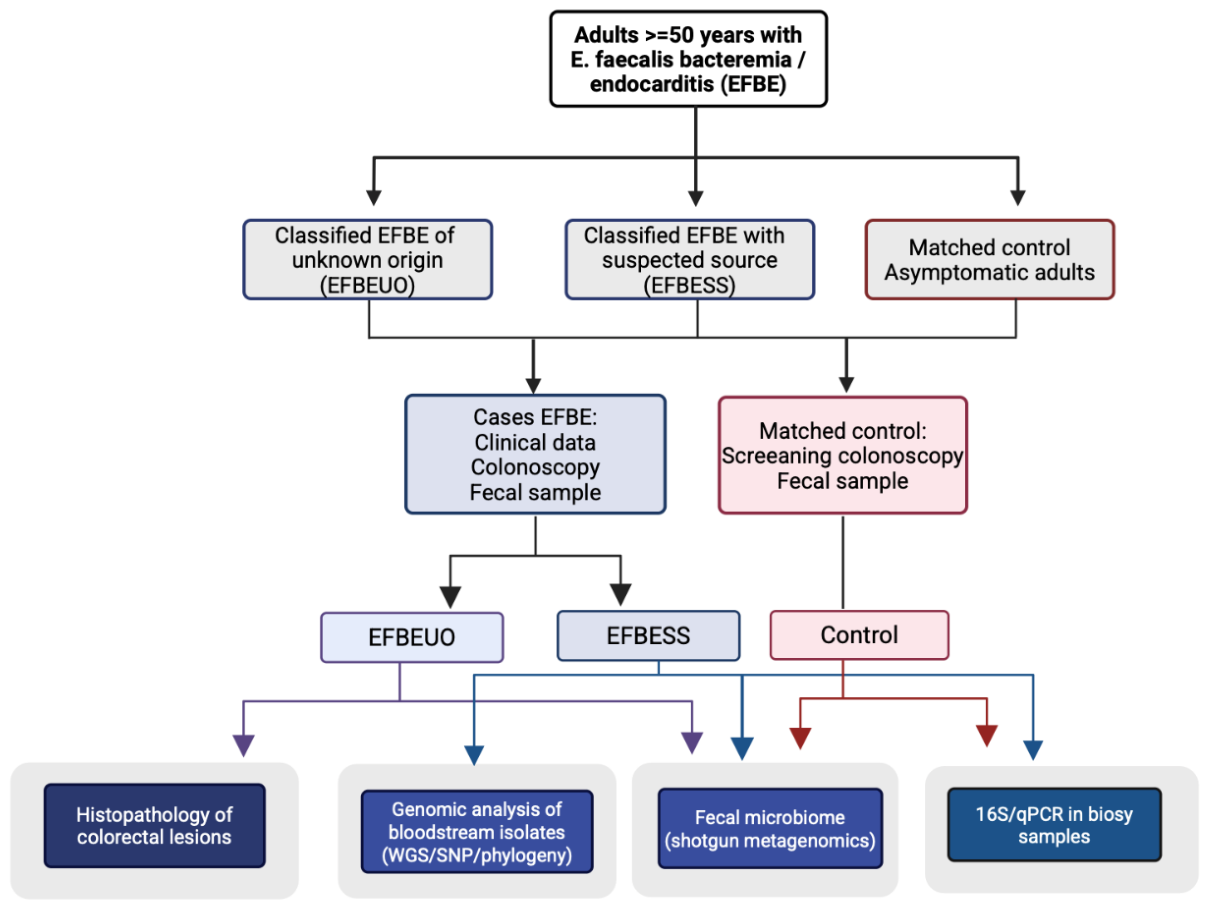
Figure 2.
Protocol timeline summarizing the timing of eligibility assessment, biospecimen collection, colonoscopy, and follow-up visits.
Figure 2.
Protocol timeline summarizing the timing of eligibility assessment, biospecimen collection, colonoscopy, and follow-up visits.
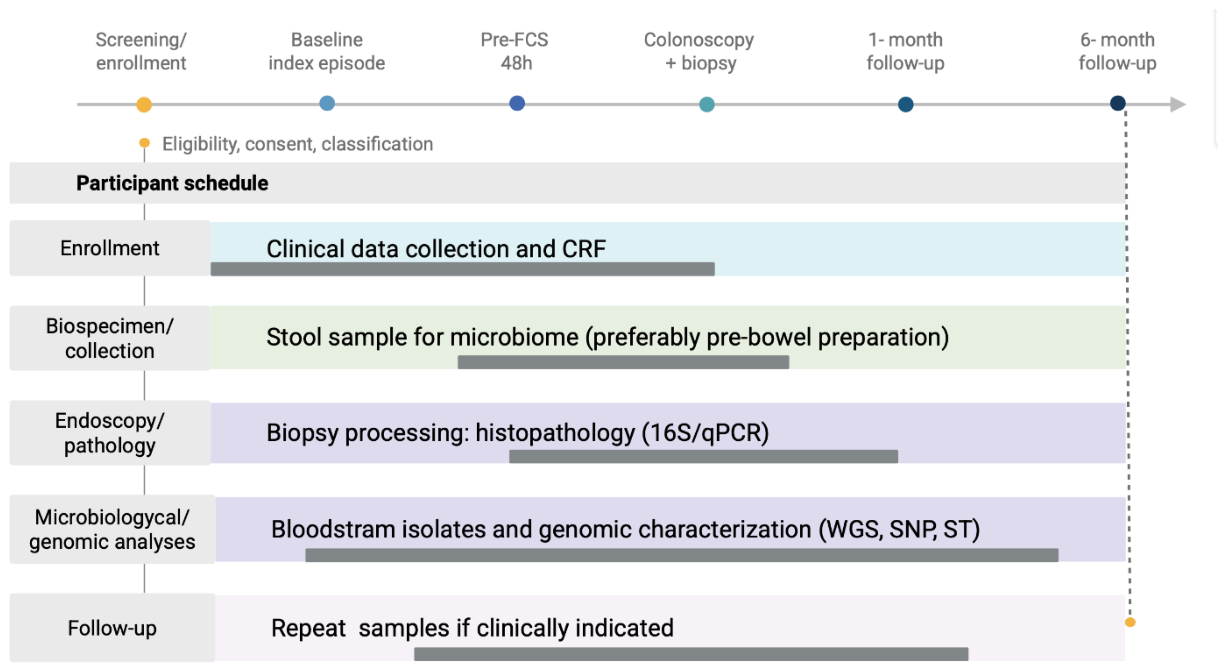
Figure 3.
Recruitment of cases and controls by June 2026.
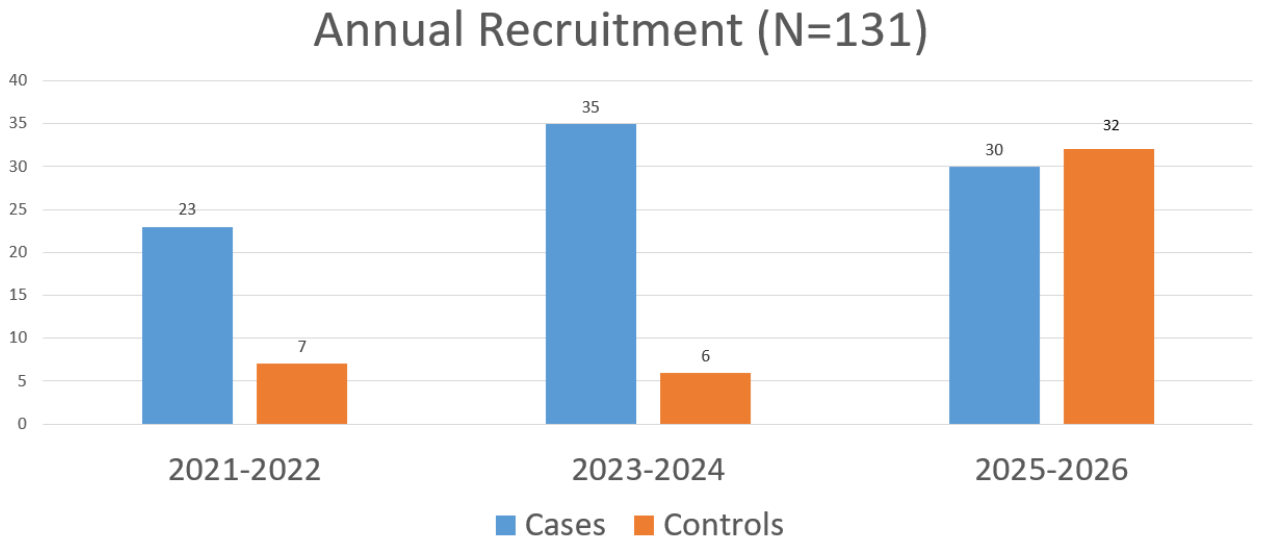

Table 1.
Eligibility criteria and study groups.
| EFBEUO | EFBESS | Matched controls | |
| Core definition | Adults with E. faecalis bacteremia and/or infective endocarditis without an identifiable source | Adults with E. faecalis bacteremia and/or infective endocarditis with a clinically supported suspected source | Asymptomatic adults undergoing screening colonoscopy for CRC |
| Age/follow-up | Age ≥50 years; ≥6-month follow-up | Age ≥50 years; ≥6-month follow-up | Age ≥50 years |
| Matching | Reference group for matched-control selection | Not matched | Matched to EFBEUO participants by site, sex, and age (+/-2 years) |
| Key exclusions | Prior EFBE, prior CRC or familial/hereditary CRC syndromes | Prior EFBE, prior CRC or familial/hereditary CRC syndromes | Prior CRC or hereditary/familial CRC syndromes as applicable to local screening practice |
| Main study procedures | Clinical data collection, colonoscopy, histopathology, stool sampling, and isolate genomics | Clinical data collection, colonoscopy, histopathology, stool sampling, and isolate genomics | Screening colonoscopy and stool sampling |
| CRC, colorectal cancer; EFBE, E. faecalis bacteremia/endocarditis; EFBEUO, E. faecalis bacteremia/endocarditis of unknown origin; EFBESS; E. faecalis bacteremia/endocarditis with suspected source. | |||
Table 2.
Planned endpoints and analytic domains.
| Endpoint/measure | Method/source | |
| Primary clinical endpoint | Colorectal neoplasia detected across EFBEUO, EFBESS, and controls. | Colonoscopy with histopathology. |
| Microbiome | Taxonomic composition, richness/diversity, functional pathways, strain-level features. | Shotgun metagenomic sequencing of stool samples |
| Tissue microbiology | Presence and relative enrichment of E. faecalis in colorectal lesions. | 16S sequencing and species-specific qPCR on FFPE biopsy samples. |
| Bacterial genomics | Genomic annotation, SNPs, phylogeny, resistance/virulence-associated features. | WGS, variant calling and phylogenetic analysis of bloodstream isolates |
| Clinical outcomes | 30-day mortality, 1-year mortality, relapse/recurrence, cardiac surgery. | Prospective follow-up and CRF-based data review. |
| Prediction model | Risk score for colorectal neoplasia among EFBE patients. | Integrated clinical, endoscopic, microbiologic, and omics analyses. |
| CRC, colorectal cancer; CRF, case report form; EFBE, E. faecalis bacteremia/endocarditis; EFBEUO, E. faecalis bacteremia/endocarditis of unknown origin; EFBESS; E. faecalis bacteremia/endocarditis with suspected source. FFPE, formalin-fixed, paraffin-embedded; SNPs, single-nucleotide polymorphisms; WGS, whole-genome sequencing. | ||
Table 3.
Schedule of assessments.
| Assessment | Enrollment / index episode | Pre-colonoscopy | Colonoscopy | 1 month | 6 months |
| Eligibility, consent, source classification | X | ||||
| Clinical, microbiological and treatment data collection | X | X | X | ||
| Stool sample for microbiome | X | X* | |||
| Screening/diagnostic colonoscopy | X | ||||
| Histopathology of lesions | X** | ||||
| Biopsy 16S sequencing / E. faecalis qPCR | X** | ||||
| Bloodstream isolate storage and genomic analyses | X | ||||
| Relapse/recurrence adjudication | X | X | |||
| * Repeat stool sampling only if clinically indicated. ** Performed when biopsy material is obtained and lesions are available for analysis | |||||
Disclaimer/Publisher’s Note: The statements, opinions and data contained in all publications are solely those of the individual author(s) and contributor(s) and not of MDPI and/or the editor(s). MDPI and/or the editor(s) disclaim responsibility for any injury to people or property resulting from any ideas, methods, instructions or products referred to in the content. |
© 2026 by the authors. Licensee MDPI, Basel, Switzerland. This article is an open access article distributed under the terms and conditions of the Creative Commons Attribution (CC BY) license (http://creativecommons.org/licenses/by/4.0/).
Copyright: This open access article is published under a Creative Commons CC BY 4.0 license, which permit the free download, distribution, and reuse, provided that the author and preprint are cited in any reuse.


