

Submitted:
20 July 2026
Posted:
20 July 2026
You are already at the latest version
Abstract
Objective: To determine whether a high concentration of oxygen and hyaluronic acid applied vaginally in the two weeks preceding embryo transfer may increase implantation rates in human IVF. Design: Oxygen was applied vaginally in 3 x 15 minute sessions in the two weeks prior to embryo transfer at a pressure of 1bar at a flow of 2 litres /minute containing 0.2% of sodium hyaluronate. Subjects: 377 women (average age in the control group 38.0yrs and 37.5 yrs in the treated group) with a history of infertility or previous IVF failure undergoing frozen blastocyst transfer. Main Outcome Measures: Implantation rates after homologous and heterologous frozen blastocyst transfer. Results: The treated patients (n = 161) showed a significant increase in implantation rate compared to the control group (n = 216), with the highest significance in the heterologous population. Conclusions: Pre-treating IVF patients with high concentrations of O2 and hyaluronic acid delivered vaginally in the two weeks preceding transfer statistically improved implantation rates in human IVF following frozen-thawed single blastocyst transfer.
Keywords:
high concentrations of oxygen and hyaluronic acid
; vaginal delivery
; pre-transfer
; frozen blastocyst transfer
; implantation rates
; homologous
; heterologous
1. Introduction
Implantation failure following assisted reproductive techniques often remains an unresolved dilemma. Although embryo culture has improved notably over the past two decades there have been less advances in understanding endometrial receptivity. It has been estimated that embryo viability accounts for one third of implantation failures, while sub-optimal endometrial receptivity and altered embryo-endometrial dialogue are responsible for the remaining two thirds (1,2,3). Even following blastocyst selection using pre-implantation genetic diagnosis for ploidy, the implantation rate hovers around 40-60% (4). Embryo implantation in the human is a complex orchestration of complimentary tissues, involving a temporal sequence of dialogue and depends on an oxygen and nutrient rich uterine environment (5).
Since the classical work of Rock and Bartlett (6), describing the histological changes of the endometrium at the time of implantation, there have been many attempts to improve the efficiency of implantation. Protocols for the timing of transfer of in vitro human embryos revolve around monitoring the endothelial lining with ultrasound (7). A wide variety of pharmaceutical options to improve implantation rates exist and range from hormonal therapy, through cortisone to vasodilators. Specific attempts to identify the window of implantation have seen the introduction of the ERA test (Endometrial Receptivity Array) where several hundred molecular markers have been suggested to be indicative of a receptive endometrium (8). To date, the ERA test is considered to be of limited clinical use (9). Mechanical stimulation of the uterine lining by endometrial scratching has been used for decades in an attempt to improve the implantation rate (10), while much attention has been given to immune alterations and therapies in human endometrial receptivity (11). Attempts to improve endometrial receptivity by infiltration of platelet-rich plasma (PRP) has also recently been adopted (12), while the elasticity of the cervix has been considered as a marker for ease of transfer and improved implantation rates (13). Uterine contractility at the time of embryo transfer, cervical stenosis and indeed the adequacy of the embryo transfer technique may all lead to negative outcomes after assisted reproduction (14).
An equilibrated vaginal microbiome has been used as a marker to indicate a favourable implantation platform (15) and recently it has been shown that the vaginal biome may be significantly altered following erogation with high concentrations of oxygen and hyaluronic acid (16), with marked improvements in hydration of the vaginal epithelia. This minimally invasive technology is now widely used to treat a variety of vaginal and vulval pathologies, including lichens, atrophy, urethral pain, candidiasis and vaginal dryness (17,18,19).
More recently, it has been demonstrated that microbial contamination of the embryo transfer catheter with cervico -vaginal microorganisms, other than Lactobacilli, can significantly reduce pregnancy and live birth rates in an IVF programme (20).
The present study is a pilot, proof of concept, retrospective, observational case controlled study to determine whether high O2 and hyaluronic acid applied vaginally in the two weeks preceding an embryo transfer may increase implantation rates. Frozen-thawed blastocysts were used in single embryo transfers in 377 patients from CFA-Italy, Naples, randomly assigned to a control group and a treated group.
2. Methods
Couples attending CFA-Italy gave written consensus for this preparatory treatment. Those enrolled met the following criteria; infertility, as defined as failure to conceive after 12 months and /or previous IVF failures. Patients with previous history of cervical diseases, cervical surgery or infection were excluded. Male gametes were from partners with normospermia, various degrees of oligastenoteratospermia and also sperm extracted from Tese samples. Female partners were stimulated with gonadotrophins to increase the number of oocytes superovulated. Oocyte collection, fertilization, embryo culture and blastocyst vitrification were carried out by standard procedures (Homologous). Other patients received a frozen thawed blastocyst from an oocyte donor using husband spermatozoa (Heterologous). The treated group differed from the control group in the application of high vaginal oxygen and hyaluronic acid. A self cooling Caress Flow (Caress Flow srl, Casette di Fumo, Bologna, Italy) device was used to apply high O2 (93% ± 3%) at a pressure of 1 ± 0.1 bar at a flow of 2 ± 0.2L/min containing 0.2% of sodium hyaluronate in three 15 minute sessions in the two week period prior to embryo transfer. The first 14 days before embryo transfer, the second 7 days before transfer, the last 24 hrs before transfer. Synchronization and preparation of the uterus followed a standardized protocol for both the control group (n=216) and the Caressflow treated group (n=161).
3. Results
Three hundred and seventy seven patients attending CFA in Naples from September 2024 until April 2025 were used in this study and assigned either to the treated group (n=161) or the control group (n = 216). The average age in the treated group was 38.0 while the average age in the control group was 37.5 years.
Laboratory conditions and blastocyst quality were comparable in the two groups, as were embryo transfer protocols. Serum hCG was measured 9 days after embryo transfer with a value of over 90 mlU/mL considered positive.
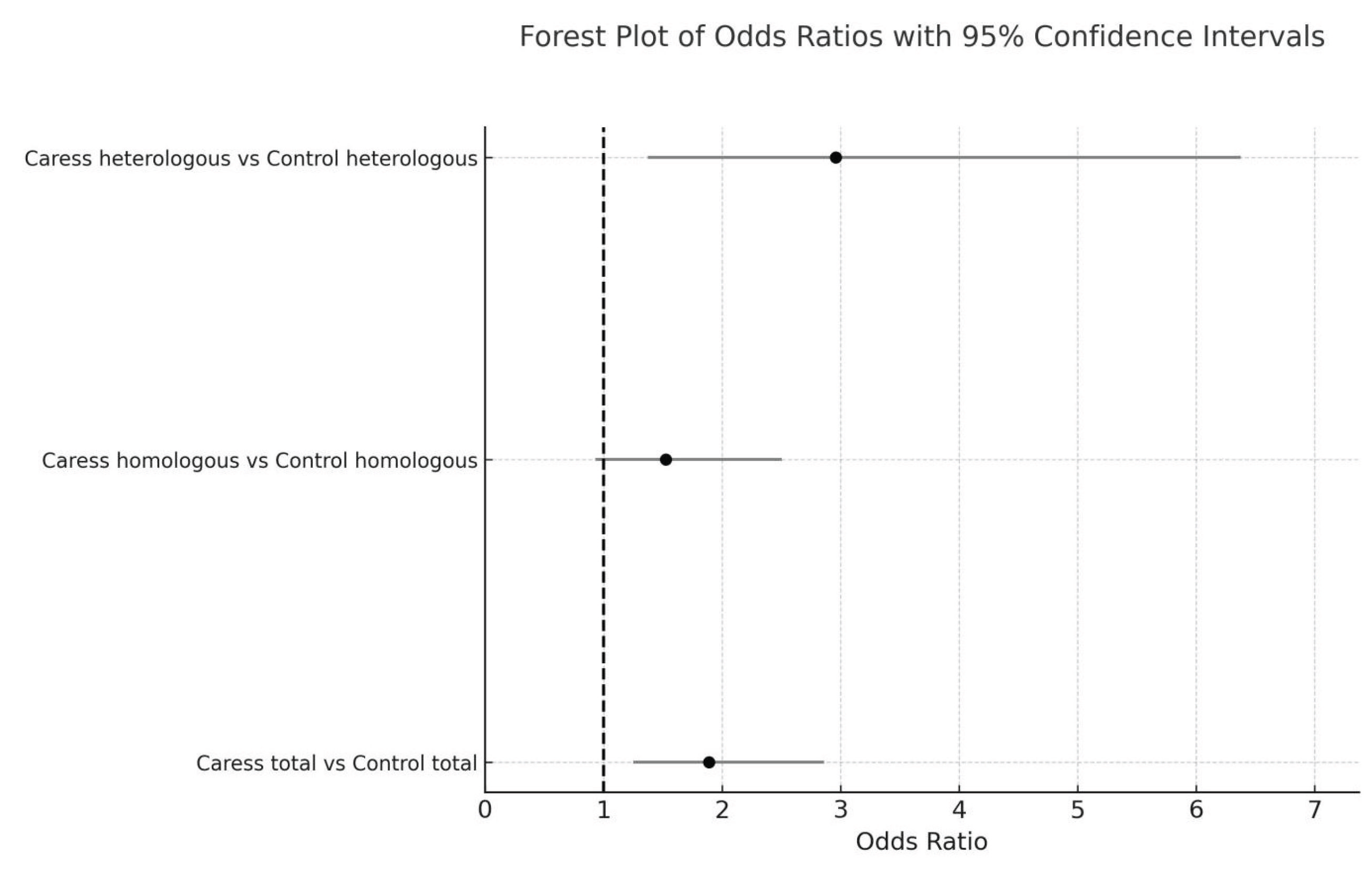
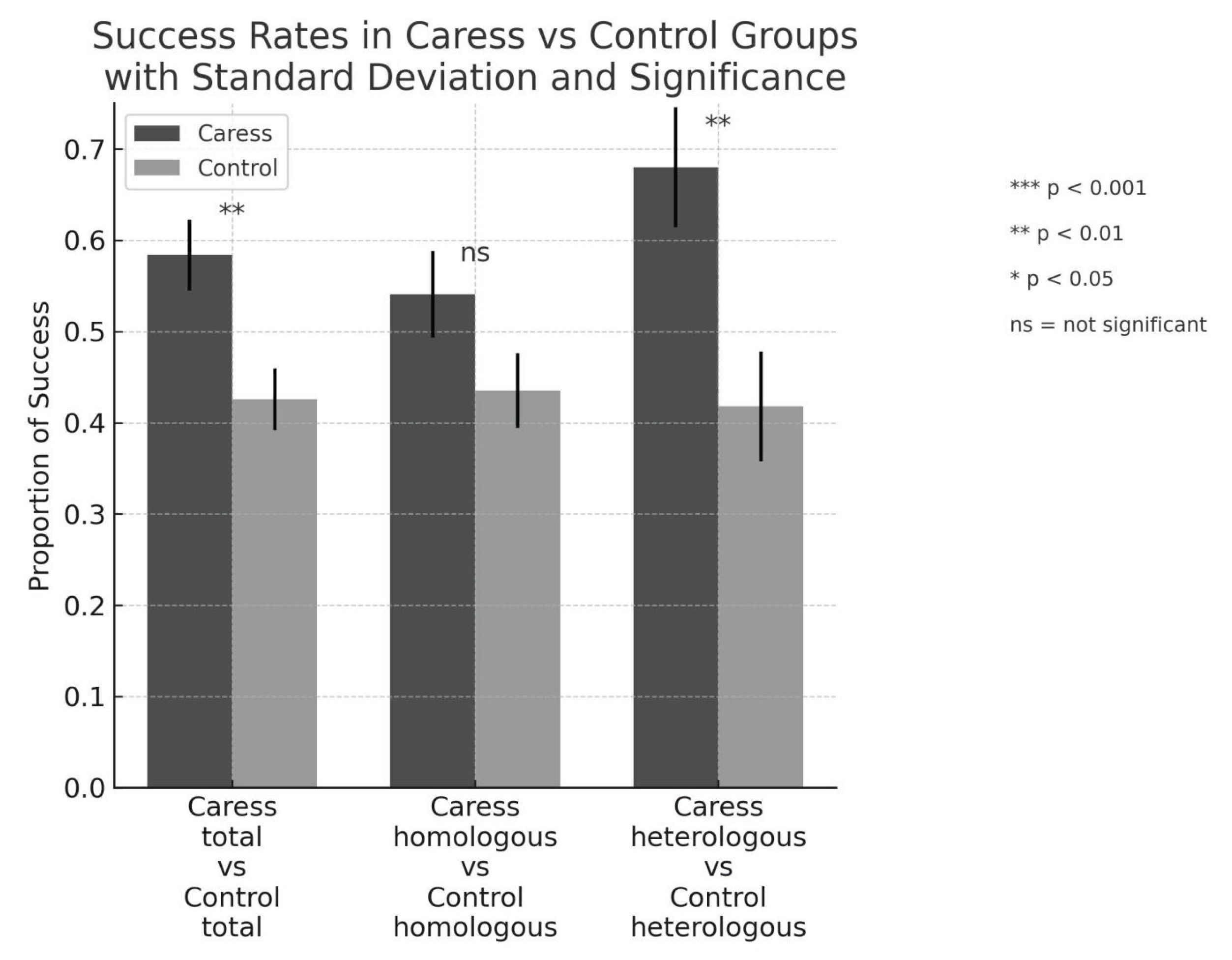
Overall the data shows a significant increase in the success of blastocyst implantation following treatment with high O2 and hyaluronic acid (Figure 1), non-significance in the homologous patients (average age of 36.1 for the treated population vs 34.6 for the control group) and high significance in the heterologous patients (average age of 44.4 for the treated patients vs 43.9 for the control population).
4. Discussion
Implantation of the human embryo is a complex dynamic interaction of complimentary tissues (5). Formation of a rapidly expanding blastocyst cavity is a pre-requisite to hatching and depends, in part, on the adequate expression of gap junction, tight junctions and desmosomes (21,22). The trophectoderm cells produce proteolytic enzymes to hatch free of the protective zona pellucida and these may be complimented by proteolytic enzymes produced by the uterus. A molecular dialogue between the hatched blastocyst and the endometrium favours attachment to the epithelium. The blastocyst trophectoderm then secretes hCG which signals the epithelial cells, displacing them, and allowing the embryonic cells to penetrate the basement membrane. Thus, for implantation we may consider three phases, apposition, adhesion and invasion, which must occur at a specific time, i.e. when the uterine epithelium is receptive “the implantation window”.
This window of opportunity is thought to be less than 24 hours long in the human and occurs approximately 6 days after ovulation (5). Attempts to identify this window by biopsy (ERA test) have fallen short (9,23). The blastocyst initially derives nourishment from uterine secretions, but in order to keep growing it must develop its own vascular system, Maternal hormones influence communication between the embryo and the endometrium with cytokines, adhesion molecules, prostaglandins, metalloproteases and angiogenic growth factors all involved.
In this study, we have used as a baseline, frozen thawed blastocysts and, while maintaining patients personalised therapies for individualized endometrial preparation, our prime aim was to determine whether the application of high concentrations of vaginal O2 and hyaluronic acid could alter the implantation rate in a trial with 377 patients. It is the policy of CFA-Italy to offer PGT-A (evaluation of ploidy) only to patients who request this add-on and we do not routinely screen for chromosomal number in donor embryos. In our study, we have shown that there is a significant increase in implantation rate in the Caress flow treated population with a highly pronounced difference in the heterologous population. Assuming that the blastocysts from the treated group and Caressflow treated group have similar characteristics, the main difference between the heterologous and homologous populations is the age of the receiving patient and probably reflects the inherent differences in uterine physiology of the two patient groups.
Considering the multi-factorial process of early human reproduction it is feasible that the effects of our combined O2 and hyaluronic acid treatment protocol are also multiple. The reasons for the improved implantation rate in our study at this point can only be the object of conjecture. Briefly, we would like to raise interest in two simple, yet fundamental, pathways. One major factor to consider is the pH of the uterine environment, which appears to be around pH 7.7 in non pregnant women (24). Studies on other mammals, also point to an alkaline uterus with changes correlated with the oestrus cycle in the rat and sow (25,26). A study is in progress at CFA to measure uterine extracellular pH during the oestrous cycle in normo-cycling women. The human oocyte and early cleavage embryo have a pHi of 7.4 and have poor tolerance to extracellular pH insults below 7.0, however on Day 5 the human blastocyst acquires acid regulating pumps on the plasma membrane and is able to tolerate both acid and alkali conditions [27). Intracellular pH will of course influence all cellular processes. Furthermore, it has been shown that the contractility of the human myometrium is altered by intracellular pH (28) and that the very low vaginal pH of around 4.0 in cycling women is due to the presence of Lactobacillus species. Considering that high concentrations of O2 and hyaluronic acid are known to improve the vaginal microbiome, increase the hydration of the vaginal mucosa and improve the vascularity of the cervix (16), it would be of interest not only to study the uterine pH but also to classify the uterine microbiome before and after treatment. In fact in a recent study it has been shown that implantation rates may be substantially reduced by the microbial contamination of the embryo transfer catheter with cervico vaginal micororganisms (20).
Although, at present we have no direct evidence that vaginal application of O2 will influence the uterine cavity, a second, pathway related to high concentrations of O2 to be considered, is its role in driving redox-signalling and in particular stimulation of expression of growth factors, such as VEGF, reducing inflammatory processes and promoting angiogenesis (29,30).
Finally, since it is known that implantation rates are dependent on the adequacy of the transfer technique (13) we raise the possibility that an improvement in cervical physiology may also account in part for the significant increase in implantation rate.
Conclusion: Our pilot retrospective study on a population of 377 infertile patients treated at CFA, Naples from September 2024 until April 2025 demonstrate that implantation rates of frozen thawed blastocysts may be significantly improved by the vaginal delivery of high concentrations of oxygen and hyaluronic acid in the two week period preceding embryo transfer. The most significant increase in implantation rate was observed in patients receiving donated blastocysts. We discuss the possible reasons for this increase, which may include changing the vaginal and uterine microbiome, altering endometrial extracellular pH, or cervical physiology.
Author Contributions
Conceptualization, Brian Dale; Methodology, Daniela Dale and Arianna Ramone; Validation, Rocco Falotico and Flavio Garoia; Formal analysis, Flavio Garoia; Investigation, Brian Dale, Rocco Falotico, Daniela Dale, Maristella D'UVA, Arianna Ramone, Chiara Riccio and Flavio Garoia; Resources, Daniela Dale, Maristella D'UVA and Chiara Riccio; Writing – original draft, Brian Dale and Flavio Garoia; Writing – review & editing, Brian Dale; Visualization, Daniela Dale; Supervision, Brian Dale, Rocco Falotico and Arianna Ramone. All authors have read and agreed to the published version of the manuscript.
Funding
This research received no external funding.
Institutional Review Board Statement
Ethical Approval: The study protocol was approved by the Ethical Committee of the University of Naples (CET3) protocol number 95/2026 and was performed in accordance with the Declaration of Helsinki. Caressflow is a European approved medical device for applying high concentration of O2 and hyaluronic acid vaginally (CE IT293213-1).
Informed Consent Statement
Informed consent was obtained from all subjects involved in the study.
Data Availability Statement
The original contributions presented in this study are included in the article. Further inquiries can be directed to the corresponding author.
Conflicts of Interest
The authors declare no conflict of interest.
References
- Edwards R. Implantation, interception and contraception. Human Reproduction 1994; 9: 985-995.
- Simon C, Moreno C, Remohi J, and Pellecier A. Cytokines and embryo implantation. J Reprod Immunol 1998; 39: 117-1341.
- Frasaniak, J., et al. The nature of aneuploidy with increasing age of the female partner a review of 15169 consecutive trophectoderm biopsies evalued with comprehensive chromosomal screening. Fertil and Steril 2014: 101; 656-663.
- Cimadomo, D., et al . Opening the black box: why do euploid blastocysts fail to implant: A systematic review and meta-analysis. Human Reproduction Update 2023: 95(5); 57.
- Elder K and Dale B. “In vitro Fertilization” 4th Edition. Cambridge.
- University Press (2020).
- Rock J and Bartlett M. Biopsy studies of human endometrium criterion of.
- dating about amenhorrhea, menorrhea and tissue ovulation. J. Am. Med. Assoc. 1937: 108; 2022.
- Craciunas, L. et al., Conventional and modern markers of endometrial receptivity:a systematic review and meta analysis. Human Reproduction Update 2019; 25; 202-223.
- Diaz-Gimeno P., et al. A genomic diagnostic tool for human endometrial receptivity based on the transcriptomic signature. Fertil. Steril. 2011: 95; 50-60.
- Zolfaroli I., Miralles, A., Hidalgo Mopra J., Puig, B., Rubio, J. Impact of endometrial receptivity on pregnancy outcomes in patients undergoing embryo transfer: a systematic review and meta analysis. J. Assist. Reprod. Genetic; 2023 985-994.
- Barash A., Dekel, N., Fieldudt, S., Segal, I., Schechtman, E. and Granot, I. Local injury to the endometrium doubles the incidence of successful pregnancies in patients undergoing in vitro fertilization Fertil and Steril. 2003: 79(6) 1317-22.
- Mukherjee N., Shaarma, R., and Modi, D. Immune alterations in recurrent implantation failure. Am. J. Reprod Immunol. 2023: 89(2). [CrossRef]
- Alonso-Frias P., et al, Beneficial Effects of Infiltration of Platelet rich Plasma in the endometrium Biology 2025:14, 319 . [CrossRef]
- Stanziano, A.,et al. Evaluation of the cervix tissue homogeneity by ultrasound elasatography in infertile women for the prediction of embryo transfer ease:a diagnostic accuracy study. Reproductive Biology and Endocrinology; 2017: 15, 64 .
- Schoolcraft, W. Importance of embryo transfer technique in maximizing reproductive outcomes. Fertil.Steril 2016: 105, 855-860.
- Azar, PR., et al.,The role of the endometrial micobiome in embryo implantation and recurrent implantation failure. J Reprod.Immunol. 2024. [CrossRef]
- Facchinetti, F., et al., Vaginal supplementation of high concentration oxygen for the treatment of vaginal infections: A pilot controlled trial. European J. Gynaecology and Obstetrics 2024: 7(1), 23-26.
- Palmieri, B., Condemi, L., Bertozzi, E., Garoia, F., Vadalà M. Relapsing Vulvovaginal Candidiasis: Treatment with Oxygen Therapy and Hyaluronic Acid. Macedonian J Med Sci; 2022: 10(B):2258-2266.
- Barbero M, et al. Conjugate treatment with high concentration normobaric oxygen and hyaluronic acid for vaginal atrophy: a prospective study. Eur Rev Med Pharmacol Sci 2023:27(5):2011-2017.
- Massarotti, C., Asinaro, G., Schiaffino, M. Vaginal oxygen plus hyaluronic acid on genito-urinary symptoms of breast cancer survivors. Climacteric. 2023 :26(2):129-134.
- Boughanmi, A., Hamdoun, M, Braham M., et al. catheter contamination during embryo transfer:impact oon outcomes of in vitro fertilization. Fertil.Steril. 2026. [CrossRef]
- Dale, B., et al. Intercellular communication in the early human embryo. Mol. Reprod. Develop.1991: 29: 22-28.
- Gualtieri, R., Santella, L. and Dale B. Tight junctions and cavitation in the human pre-embryo. Molec. Rprod. Develop. 1992: 32:81-87.
- Arian, S. et al. Endometrial receptivity array before frozen embryo transfer cycles: a systematic review and meta analysis. Fertility and Sterility. 2023:119. [CrossRef]
- Lykke M., et al. Vaginal and uterine pH in women with normal and abnormal Vaginal Microbiota. Pathogens 2021: 10, 90. [CrossRef]
- Gholami A. et al. Modulation of sodium bicarbonate co-transporter (SLC4A4/NBCeI) protein and mRNA expression in rats uteri by sex steroids and at different phases of the oestrus cycle. RES Vet Sci. 2014: 96, 164-170.
- Lopez-Albors et al. In vivo measurements of pH and CO2 levels in the uterus of sows through the oestrus cycle and after insemination. Scientific : 11, 3194. [CrossRef]
- Dale, B., Menezo, Y., Cohen, J., Di Matteo, L. and Wilding, M.
- Intracellular pH regulation in the human oocyte. Hum. Reprod. 1998: 13, 964-970.
- Parratt, J., Taggart, M., and Wray, S. Functional effects of intracellular pH alteration in the human uterus: simultaneous measurements of pH and force. Journal of Reproduction and Fertility. 1995:105, 71-75.
- Gordillo, G., et al. Topical oxygen therapy induces VEGF expression and improves closure of clinically presented chronic wounds. Cli. Exp. Pharmacol. Physio. 2008: 35(8) 957-964.
- Oropoallo, A., Serena, T., Armstrong, D. ,Niederauer, M. Molecular biomarkers of oxygen therapy in patients with diabetic foot ulcers. Biomolecules 2021:11, 925. [CrossRef]
Disclaimer/Publisher’s Note: The statements, opinions and data contained in all publications are solely those of the individual author(s) and contributor(s) and not of MDPI and/or the editor(s). MDPI and/or the editor(s) disclaim responsibility for any injury to people or property resulting from any ideas, methods, instructions or products referred to in the content. |
© 2026 by the authors. Licensee MDPI, Basel, Switzerland. This article is an open access article distributed under the terms and conditions of the Creative Commons Attribution (CC BY) license (http://creativecommons.org/licenses/by/4.0/).
Copyright: This open access article is published under a Creative Commons CC BY 4.0 license, which permit the free download, distribution, and reuse, provided that the author and preprint are cited in any reuse.