
Submitted:
18 July 2026
Posted:
20 July 2026
You are already at the latest version
Abstract
The fifth member of the Upper Triassic Xujiahe Formation (T₃x⁵) in the southwestern Sichuan Basin contains widely developed organic-rich source rocks, which represent a crucial interval for hydrocarbon exploration in the region. This study systematically evaluates the organic geochemical characteristics, spatial distribution, and hydrocarbon generation potential of these source rocks using total organic carbon (TOC) analysis, organic matter typing, vitrinite reflectance (Ro) measurements, and basin modeling. The results show that the upper and lower submembers have average TOC values of 3.19% and 3.41%, respectively, with organic matter predominantly of mixed sapropelic-humic type (Type II₂). TOC content generally increases from uplift areas to depressions, reflecting the control of depositional environment on organic matter preservation. Thermal maturity exhibits a westward increase and eastward decrease, with the southwestern part reaching high to over-mature stages (Ro generally >1.3%), while the eastern part remains in the condensate-wet gas window. Thickness of the upper submember ranges from 60 to 320 m, with depocenter in the central-southern part of western Sichuan; the lower submember is 60-200 m thick, centered in the Chengdu-Deyang area. Basin modeling, which integrates burial and thermal histories, estimates a cumulative gas generation of approximately 192×10¹² m³ (192 trillion cubic meters), with the highest generation intensity coinciding with the western Sichuan depression. It is concluded that the T₃x⁵ source rocks possess excellent material bases and huge resource potential. Tight sandstone reservoirs adjacent to the gas kitchen should be prioritized in future exploration, with differentiated strategies adapted to various maturity zones.
Keywords:
Xujiahe formation
; southwestern Sichuan basin
; source rock evaluation
; basin modeling
; exploration potential
1. Introduction
The Upper Triassic Xujiahe Formation in the Sichuan Basin is one of the most important coal-measure source rock intervals in central China, hosting significant natural gas accumulations [1,2,3]. In recent years, exploration has gradually shifted from conventional structural traps to subtle and lithological traps, increasing attention has been paid on the hydrocarbon generation potential of the Xujiahe Formation, particularly its fifth member (T3x5) [4]. The southwestern part of the Sichuan Basin (hereafter referred to as the study area) is a key region for deep natural gas exploration due to its thick succession of lacustrine dark shales and coaly mudstones [5,6]. However, previous studies mainly focused on the overall source rock characteristics of the Xujiahe Formation, with limited systematic evaluation of the vertical and lateral variations in organic matter abundance, type, maturity, and hydrocarbon generation potential of the T3x5 member [7,8,9,10,11,12]. Furthermore, the thermal evolution history and gas generation intensity of the T3x5 source rocks in this area remain poorly constrained [11,13].
This study aims to systematically characterize the organic geochemical features of the T3x5 source rocks in southwestern Sichuan Basin, including total organic carbon (TOC) content, organic matter type (maceral composition and kerogen type), thermal maturity (vitrinite reflectance Ro), and source rock thickness distribution. In addition, basin modeling is applied to reconstruct the burial and thermal history and to quantify the gas generation intensity and cumulative gas generation. The results will provide a scientific basis for further exploration and resource assessment of the Xujiahe Formation in the study area.
2. Geological Settings
The Sichuan Basin located in southwestern China, covers an area of approximately 1.8×10⁵ km2 [14,15]. Tectonically, it is a multi-cycle superimposed sedimentary basin developed on the Yangtze Plate [16]. Based on structural characteristics, the basin can be subdivided into six tectonic units: the western depression, northern depression, central uplift, eastern high-steep structural zone, southern low-steep structural zone, and southwestern gentle structural zone [17]. From the Sinian to the Middle Triassic, the basin was dominated by subsidence and marine carbonate deposition. Due to tectonic inversion during the Late Triassic to Eocene, the basin experienced uplift and deposited transitional and continental clastic sequences [16,18,19].
The Upper Triassic Xujiahe Formation is a clastic unit consisting of five members (T3x1 to T3x5). Among these, T3x5 is the youngest and corresponds to a period of maximum lacustrine transgression, with widespread deposition of lacustrine dark mudstones, carbonaceous mudstones, and thin coal seams [20,21,22]. In the study area (southwestern Sichuan Basin), the T3x5 member is divided into upper and lower submembers based on lithological associations and sedimentary cycles. The sedimentary environments range from shore-shallow lake and delta front in the upper submember to semi-deep lake in the lower submember, with locally developed interdistributary bays and lagoons that favored the accumulation of organic-rich sediments [23,24].
The study area is located in the western depression, the southwestern gentle structural and the central uplift zones, where the T3x5 member has been preserved from intense erosion. The present-day burial depth ranges from 300 to 3500 m [25,26]. The source rocks in this area are thermally mature to over-mature, with Ro values generally between 1.0% and 2.0%. The T3x5 source rocks are considered to be the primary gas-generating interval in the southwestern Sichuan Basin (Figure 1).
3. Materials and Methods
A total of 402 core samples were collected from the southwestern Sichuan Basin. The samples cover both the upper and lower submembers of the T3x5 member, with lithologies including dark lacustrine mudstones, carbonaceous mudstones, and coals. Special care was taken to select fresh, unweathered portions of the cores for analysis. The samples were stored in sealed bags to prevent contamination and oxidation before laboratory processing.
3.1. TOC Analysis
The total organic carbon (TOC) content of the samples was determined using the Leco-CS744 analyzer. The samples were ground to below 200 mesh and washed with 5% dilute hydrochloric acid to remove carbonate. After repeatedly washing with distilled water and drying, the samples were combusted at 1100 °C in the instrument to obtain TOC. To ensure data accuracy, the instrument was calibrated with a standard sample after every 10 samples were tested.
3.2. Organic Petrology Analysis
Thin section microscopy analysis is one of the main methods for source rock evaluation. Fresh parts of core samples were selected and cut perpendicular to the bedding plane. Then, the samples were ground down to below 20 mesh and mixed with epoxy resin. After the samples were polished into thin sections, petrographical organic compositions were identified under transmitted light, reflected light, and fluorescence using a Leica DM4500P microscope equipped with an MPS 200 microphotometer.
3.3. Thermal Evolution Analysis of Source Rocks
Thermal evolution history modeling of source rocks is based on burial history reconstruction and includes thermal and maturity history. By simulating the thermal evolution history, a dynamic understanding of the thermal background, organic matter maturity, and hydrocarbon generation process in the basin can be obtained, providing a basis for analyzing the spatiotemporal configuration of petroleum accumulation conditions and for evaluating petroleum resources. The basin modeling software used in this study is PetroMod (IES GmbH, Germany), which includes the EASY% Ro theoretical model established by Sweeney and Burnham [28]. The EASY% Ro model is currently the most commonly used chemical kinetic predictive model for thermal evolution analysis of source rocks.
4. Results and Discussion
4.1. Organic Geochemical Characteristics of Source Rocks
4.1.1. Organic Matter Abundance
The TOC content of the T3x5 source rocks in the southwestern Sichuan Basin mainly ranges from 0.5% to 4%, with the maximum reaching 71.73% and the average being 2.09%. More than 71.7% of the samples have TOC greater than 1.0%. The main lithologies of the hydrocarbon source rocks are lacustrine mudstone, carbonaceous mudstone and coal. Among them, lacustrine mudstone is the main lithology of the hydrocarbon source rocks, accounting for 89.3%, while the proportions of carbonaceous mudstone and coal are 9.5% and 1.2% respectively.
Vertically, the T3x5 member has the highest organic matter abundance among all members of the Xujiahe Formation, and the abundance increases from bottom to top. In the upper submember, samples with TOC > 1.0% account for 73.3%, while in the lower submember, this proportion is 71.8%. Overall, the organic matter abundance of the upper and lower submembers is comparable, with the upper submember being slightly higher (Figure 2).
Laterally, multiple high-TOC areas occur in the upper submember, mainly in the central-eastern part, which is related to coal development during that period. In the western lacustrine area, TOC is generally 1.5%–2.5%. In the southern area, organic matter abundance is relatively low, with TOC generally 0.5%–1.0%. For the lower submember, high-abundance source rocks are widely developed in the southwestern part, with TOC generally above 2.5%. Influenced by the sedimentary environment, coal and carbonaceous mudstones developed along the lake shoreline, forming independent high-abundance centers distributed along the shoreline. Overall, the distribution of high-abundance source rocks in the lower submember is broader than that in the upper submember. The planar distribution of organic matter abundance differs significantly due to variations in sedimentary water environments.
4.1.2. Organic Matter Type
Organic petrology analysis was performed in different areas of southwestern Sichuan. Results show that the depression area is dominated by semi-deep to deep lacustrine facies, with quiet water and well-developed lower aquatic organisms, favoring the enrichment of sapropelic organic matter. In well Fushun-1, the content of sapropelic macerals such as alginite and amorphous organic matter reaches 64%, indicating Type II kerogen. In well Qiulin-2, the T3x5 member also contains abundant amorphous algae (sapropelic group accounting for 51%), with framboidal pyrite (grain size <0.5 μm) reflecting a deep-water environment, and the organic matter is generally Type II (Figure 3).
In the lower slope area, which is mainly a semi-deep to shallow lacustrine environment, the input of higher plants increases, and the organic matter type is mainly mixed (humic-sapropelic). The content of amorphous algae (sapropelic) increases to about 45%, while vitrinite (humic) is still present in certain amounts. For example, in well Jiantan-1, the T3x5 member is dominated by laminated alginite and sapropelic amorphous organic matter (45%), with vitrinite content of 42% and solid bitumen content of 13%. In well Yongqian-7, detrital vitrinite and sapropelic amorphous organic matter are developed, with sapropelic group accounting for about 35%, vitrinite 42%, and solid bitumen 23% (Figure 4).
In the upper slope, uplift areas, and basin margins, fluvial-delta sedimentary systems dominate, and the organic matter is mainly derived from terrigenous higher plants, such as vitrinite. Relatively enclosed environments like interdistributary bays can also contain certain amounts of sapropelic organic matter. For example, in well Yin-36, coal fragments and amorphous sapropel are common, with vitrinite accounting for 55%, sapropelic group 25%, and solid bitumen 20%. In the Dujiangyan section, coal seams are developed, and the organic matter consists of 75% vitrinite, 18% sapropelic group, and 7% solid bitumen, indicating Type III kerogen (Figure 5).
Traditionally, the Upper Triassic Xujiahe Formation in the Sichuan Basin is considered to be coal-measure source rock mainly derived from higher plants. However, the organic petrology analysis indicates that the organic matter characteristics of the T3x5 source rocks vary considerably with basin structure and sedimentary water environment. Near the basin margin toward the provenance, higher plant input is dominant with Type III kerogen. In the lake center and interdistributary bays, the water is quiet, lower aquatic organisms are well developed, and sapropelic organic matter such as algal amorphous material is abundant, forming Type II kerogen-dominated source rocks.
4.1.3. Thermal Maturity of Source Rocks
The thermal maturity of source rocks generally decreases from west to east (Figure 6). The western Sichuan area experienced large subsidence, leading to high thermal maturity, reaching the high-mature stage and locally the over-mature stage. The thermal maturity decreases towards the east. The lower slope area is generally in the mature stage, locally high-mature. In the central Sichuan and Shunan areas, subsidence was small, and the maturity remains in the early mature stage. The Weiyuan and southern areas are in the low-mature stage. The thermal maturity of the lower submember is slightly higher than that of the upper submember, with a larger area of high maturity. Overall, the western Sichuan area has high thermal maturity and great hydrocarbon generation potential, making it the most favorable exploration target for the T3x5 member.
4.1.4. Thickness Distribution of the Source Rocks
The T3x5 member is dominated by shore-shallow lake and delta front deposits. During this period, the lake basin reached its maximum extent, and the distribution of dark mudstones was also largest. Sand bodies and delta lobes from different provenances exhibit elongate shapes, intersecting to form multiple semi-enclosed bays or lagoons with quiet water, which were very favorable for the deposition of high-abundance source rocks. Due to uplift and erosion, the T3x5 member is absent in the northwestern part of the basin. The upper submember dark mudstone thickness center is widely distributed in the southwestern, central, and west-central parts of western Sichuan, with thicknesses of 120–280 m and a maximum exceeding 320 m. Eastward, the thickness rapidly decreases to 40 m in the Leshan-Zizhong-Hechuan-Guang’an-Sanhui-Yilong area, and to less than 20 m in the Yibin-Chongqing-Liangping area (Figure 7).
The lower submember dark mudstone in the central-southern part of western Sichuan is generally thinner than the upper submember, typically 80–180 m. The thickness center is located in the Chengdu-Mianzhu area, with a central thickness of 160–220 m and a maximum exceeding 240 m. Eastward, the thickness rapidly decreases to 40 m in the Leshan-Zizhong-Hechuan-Guang’an-Sanhui-Yilong area, and to less than 20 m in the Yibin-Chongqing-Liangping area (Figure 8).
Laterally, the T3x5 source rock thickness gradually decreases from southwest to northeast, which is related to the foreland basin structure and provenance supply. Provenance was supplied from the north, east, and south, resulting in coarse clastic deposits and relatively poorly developed source rocks. In the southwest, entering the foreland depression, the mud content increases, and source rocks are thick. Near the provenance, local interdistributary bays can host thick coal seams, providing important hydrocarbon supply for local gas accumulations. Therefore, even though the T3x5 source rocks are relatively thin in the eastern, northern, and southern Sichuan areas, the development of coal and carbonaceous mudstones with high organic matter abundance can still result in large-scale hydrocarbon supply and significant exploration potential. Overall, the T3x5 source rocks are thick and widely distributed, favorable for large-scale hydrocarbon generation.
4.2. Evaluation of Hydrocarbon Generation Potential
The hydrocarbon generation potential of source rocks is closely related to organic matter type, abundance, and thermal maturity. Vitrinite reflectance is the most common and effective indicator for determining source rock maturity. The Xujiahe Formation source rocks are mainly coal-measure source rocks, and vitrinite is widely developed.
In this study, thermal simulation experiments were used to determine the vitrinite reflectance of each source rock interval. After burial history reconstruction and calibration, the thermal evolution history of the Xujiahe Formation was reconstructed. Then, using the basin modeling software PetroMod, the hydrocarbon generation amount of each member of the Xujiahe Formation was simulated and calculated to comprehensively evaluate its hydrocarbon generation potential.
4.2.1. Hydrocarbon Generation History
The thermal maturity of source rocks changes with external conditions, mainly temperature and time. Therefore, the basin thermal history (paleogeothermal gradient or paleo-heat flow evolution) is the main factor influencing the hydrocarbon generation history of source rocks. Referring to previous heat flow values for the northwestern Sichuan Basin (Huang Shaopeng et al., 1990; Yang Huai et al., 2004) and validation by single-well data, the thermal evolution trend is generally consistent with measured Ro (Figure 9).
The burial and thermal history of the Xujiahe Formation source rocks in the southwestern Sichuan Basin are shown in Figure 10 and Figure 11. From the end of the Late Triassic to the end of the Early Jurassic, the Upper Triassic source rocks in the study area reached the hydrocarbon generation threshold (early stage), with Ro ranging from 0.5% to 0.7%, generating a small amount of early kerogen cracking gas. The threshold depth is approximately 2100 to 2400 m.
By the end of the Late Cretaceous, the T3x5 source rocks reached the mature stage, with Ro ranging from 0.9% to 1.3%, generating large amounts of kerogen cracking gas, initiating primary migration, and being preserved in adjacent reservoirs. By the end of the Paleogene, the organic matter of the T3x5 member reached the high-mature stage, with Ro > 1.3%, entering the late gas generation stage, which is the key period for natural gas generation. Subsequently, the Himalayan movement caused uplift and erosion, reducing the burial depth of the Xujiahe Formation source rocks. In the central and southern Sichuan areas, the organic matter did not evolve to higher thermal maturity stages and essentially maintained the maturity at the end of the Paleogene. Only in the main body of the western Sichuan depression did the organic matter continue to evolve to higher stages, reaching the over-mature stage.
In the lower slope area, the T3x5 source rocks entered the mature stage in the Late Cretaceous (Figure 1-26), then slowly increased in burial depth. By the end of the Late Cretaceous, uplift occurred, thermal evolution ceased, and the source rocks essentially remained in the mature stage.
4.2.2. Natural Gas Generation Intensity and Volume
For total geological resource assessment, basin modeling is the most widely used and generally considered to be a reliable method. Basin modeling fully utilizes existing geological and geochemical data to dynamically simulate the hydrocarbon generation and expulsion processes of each source rock interval based on reconstructed burial and thermal history, ultimately obtaining the hydrocarbon generation and expulsion amounts at different periods. The main parameters for calculating gas generation volume include source rock volume, organic matter abundance, type, thermal maturity, and gas generation rate. After determining the relevant parameters, this study used the PetroMod software to calculate the gas generation intensity and volume for each member of the Xujiahe Formation in the northwestern Sichuan Basin.
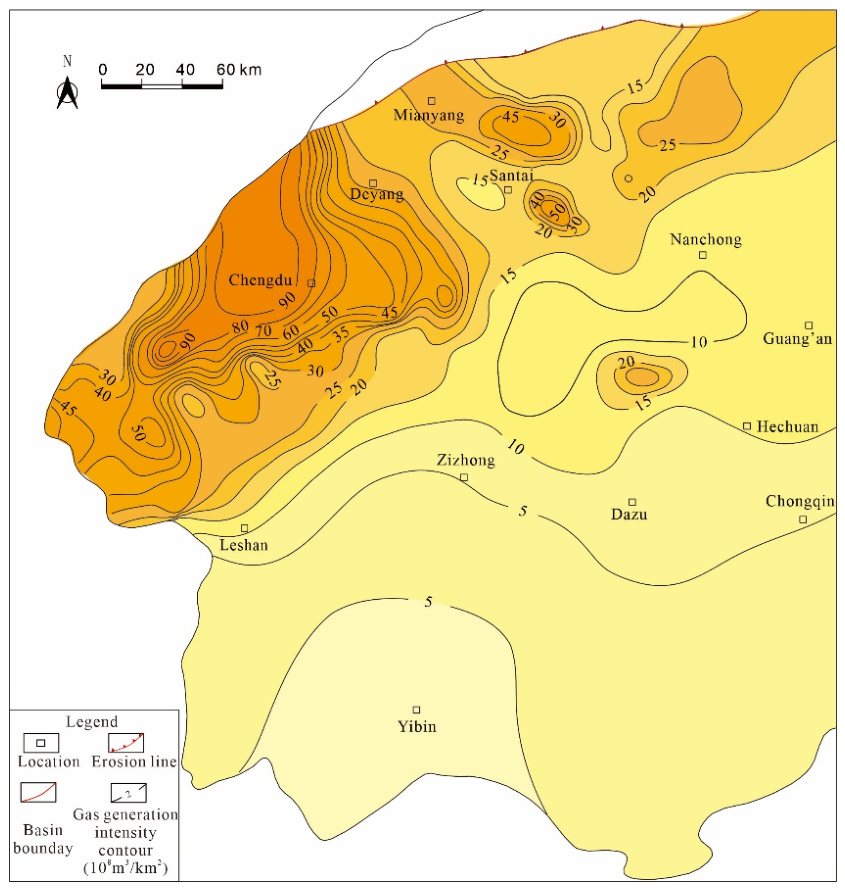
Overall, the T3x5 gas generation intensity is highest in the central-southern section of the western Sichuan depression, with a maximum exceeding 70×108 m3/km2. The gas generation intensity in the Qiulin, Jinhua, Jianyang, and southwestern Sichuan areas is generally greater than 20×108 m3/km2. The area with gas generation intensity >20×108 m3/km2 is about 2.3×10⁴ km2, indicating significant resource potential. In the central Sichuan area, the intensity is generally 10-12×108 m3/km2, and in the area around well Mo-208 to well Tongnan-105, due to the development of coal seams of certain scale, the gas generation intensity is higher, reaching 15-20×108 m3/km2 (Figure 12). According to the simulated calculation, the total hydrocarbon generated from the T3x5 member is approximately 19.2 trillion cubic meters.
Considering that the T3x5 member is characterized to be near-source accumulation [3],the areas with low gas generation intensity still have considerable exploration potential. In summary, the southwestern Sichuan Basin has high gas generation intensity and gas source conditions favorable for forming large gas fields, making it the preferred area for further exploration.
5. Conclusions
(1) The T3x5 source rocks in the southwestern Sichuan Basin have high organic matter abundance, with an average TOC of 2.09%. The upper submember has a slightly higher abundance than the lower submember. High-abundance source rocks are widely distributed in the western lake area and along the paleo-shoreline.
(2) Organic matter types vary systematically: Type II kerogen dominates in the deep lake center and interdistributary bays, Type II–III mixed types occur in the lower slope area, and Type III kerogen dominates near the basin margin and provenance areas.
(3) Thermal maturity is high in the west (high-mature to over-mature) and decreases eastward (mature to low-mature). The western Sichuan depression has the highest maturity and the greatest hydrocarbon generation potential.
(4) The T3x5 source rocks are thick (up to 320 m) and widely distributed, with thickness decreasing from southwest to northeast.
(5) Basin modeling results show total gas generation of approximately 192 tcm, with high gas generation intensity (>20×108 m3/km2) covering an area of 2.3×10⁴ km2, indicating that the southwestern Sichuan Basin has excellent gas source conditions and is a priority exploration target.
References
- Dai, J.; et al. The significance of coal-derived gas in major gas producing countries. Pet. Explor. Dev. 2019, 46(3), 435–450. [Google Scholar] [CrossRef]
- Qin, S.; et al. Geochemical evidence for in situ accumulation of tight gas in the Xujiahe Formation coal measures in the central Sichuan Basin, China. Int. J. Coal Geol. 2018, 196, 173–184. [Google Scholar] [CrossRef]
- Xie, Z.; et al. Accumulation characteristics and large-medium gas reservoir-forming mechanism of tight sandstone gas reservoir in Sichuan Basin, China: Case study of the Upper Triassic Xujiahe Formation gas reservoir. J. Nat. Gas. Geosci. 2021, 6(5), 269–278. [Google Scholar] [CrossRef]
- Zheng, T.; et al. Organic geochemistry of the Upper Triassic T3 × 5 source rocks and the hydrocarbon generation and expulsion characteristics in Sichuan Basin, central China. J. Pet. Sci. Eng. 2019, 173, 1340–1354. [Google Scholar] [CrossRef]
- Zecheng, W.; et al. Geochemical characteristics of natural gases in the Upper Triassic Xujiahe Formation in the southern Sichuan Basin, SW China. Int. J. Coal Geol. 2013, 120, 15–23. [Google Scholar] [CrossRef]
- Bai, H.; et al. Hydrocarbon expulsion potential of source rocks and its influence on the distribution of lacustrine tight oil reservoir, Middle Permian Lucaogou Formation, Jimsar Sag, Junggar Basin, Northwest China. J. Pet. Sci. Eng. 2017, 149, 740–755. [Google Scholar] [CrossRef]
- Wang, Z.H.; et al. Geochemical characteristics and hydrocarbon generation potential of main source rocks in the Upper Triassic Xujiahe Formation, Sichuan Basin, China. Front. Earth Sci. 2023, 11. [Google Scholar] [CrossRef]
- Zheng, C.; et al. Re-Evaluation of the Source Rocks of the Upper Triassic Xujiahe Formation in the Sichuan Basin. Appl. Sci.-Basel 2026, 16(5). [Google Scholar] [CrossRef]
- Yang, T.; et al. Hydrocarbon-generating characteristics of Xujiahe coal-bearing source rocks in the continuous sedimentary environment of the Southwest Sichuan. Open Geosci. 2025, 17(1). [Google Scholar] [CrossRef]
- Deng, T.; et al. Geochemical characteristics and organic matter enrichment mechanism of black shale in the Upper Triassic Xujiahe Formation in the Sichuan basin: Implications for paleoweathering, provenance and tectonic setting. Mar. Pet. Geol. 2019, 109, 698–716. [Google Scholar] [CrossRef]
- Zhao, Z.; et al. Geological characteristics and main controls on the enrichment and high yield of tight gas in Xujiahe 4 Member, Jianyang area, Sichuan Basin. Nat. Gas. Explor. Dev. 2025, 48(03), 27–36. [Google Scholar]
- Peng, T.; et al. Identification and evaluation of fractures outside wellbores in tight sandstone reservoirs: A case study of Triassic Xujiahe Formation in Hexingchang area, western Sichuan Basin. Nat. Gas. Explor. Dev. 2025, 48(05), 37–47. [Google Scholar]
- Guo, Y.C.; et al. Hydrocarbon Generation and Expulsion of the Upper Triassic T3 × 5 Source Rocks in the Western Sichuan Depression: Assessment for Unconventional Natural Gas. Acta Geol. Sin.-Engl. Ed. 2015, 89(1), 175–186. [Google Scholar] [CrossRef]
- Li, Y.; et al. Linked sequence stratigraphy and tectonics in the Sichuan continental foreland basin, Upper Triassic Xujiahe Formation, southwest China. J. Asian Earth Sci. 2014, 88, 116–136. [Google Scholar] [CrossRef]
- Mu, H.X.; et al. Formation of the Late Triassic western Sichuan foreland basin of the Qinling Orogenic Belt, SW China: Sedimentary and geochronological constraints from the Xujiahe Formation. J. ASIAN EARTH Sci. 2019, 183. [Google Scholar]
- Cheng, G.; et al. Structural evolution of southern Sichuan Basin (South China) and its control effects on tectonic fracture distribution in Longmaxi shale. J. Struct. Geol. 2021, 153, 104465. [Google Scholar] [CrossRef]
- Wang, Z.-c.; et al. Role of basement faults in gas accumulation of Xujiahe Formation, Sichuan Basin. Pet. Explor. Dev. 2008, 35(5), 541–547. [Google Scholar] [CrossRef]
- Liu, S.; Steel, R.; Zhang, G. Mesozoic sedimentary basin development and tectonic implication, northern Yangtze Block, eastern China: record of continent–continent collision. J. Asian Earth Sci. 2005, 25, 9–27. [Google Scholar] [CrossRef]
- Meng, Q.-R.; Wang, E.; Hu, J.-M. Mesozoic sedimentary evolution of the northwest Sichuan basin: Implication for continued clockwise rotation of the South China block. GSA Bull. 2005, 117(3-4), 396–410. [Google Scholar] [CrossRef]
- Dai, J.; Ni, Y.; Zou, C. Stable carbon and hydrogen isotopes of natural gases sourced from the Xujiahe Formation in the Sichuan Basin, China. Org. Geochem. 2012, 43, 103–111. [Google Scholar] [CrossRef]
- Dai, J.; et al. Stable carbon isotopes of alkane gases from the Xujiahe coal measures and implication for gas-source correlation in the Sichuan Basin, SW China. Org. Geochem. 2009, 40(5), 638–646. [Google Scholar] [CrossRef]
- Hu, S.; et al. Sedimentary characteristics and evolution of Upper Triassic Xujiahe Formation, northeastern Sichuan Basin. Nat. Gas. Explor. Dev. 2024, 47(04), 15–27. [Google Scholar]
- Huang, H.; et al. Sedimentary Environment and Organic Matter Enrichment of the First Member in the Upper Triassic Xujiahe Formation, Southeastern Sichuan Basin. Minerals 2025, 15(10). [Google Scholar] [CrossRef]
- Huang, H.; et al. The Sedimentary Record of Marine-Continental Transitional Shales in the Upper Triassic of Xujiahe Formation, Southeast Sichuan Basin, China. J. Mar. Sci. Eng. 2025, 13(4). [Google Scholar] [CrossRef]
- Luo, B.; et al. Accumulation characteristics and favorable exploration directions of tight sandstone gas in the Xujiahe Formation, western-central Sichuan Basin. Nat. Gas. Geosci. 2026, 37(01), 59–77. [Google Scholar]
- Zhu, R.K.; et al. Standardization of continental sequence stratigraphy and sequence lithofacies paleogeography: A case study of the Upper Triassic Xujiahe Formation in Sichuan Basin. Earth Sci. Front. 2011, 18(04), 131–143. [Google Scholar]
- Tang, D.H.; et al. Main controlling factors for enrichment and high production of tight sandstone gas reservoirs in the Xujiahe Formation, Zhongtai Mountain area, Sichuan Basin. Nat. Gas. Geosci. 2018, 29(11), 1575–1584. [Google Scholar]
- Sweeney, J.J.; Burnham, A.K. Evaluation of a Simple Model of Vitrinite Reflectance Based on Chemical Kinetics1. AAPG Bull. 1990, 74(10), 1559–1570. [Google Scholar] [CrossRef]
Figure 1.
Tectonic division of Sichuan Basin and foreland basin during the Late Triassic, modified from Tang, Wang [27].
Figure 1.
Tectonic division of Sichuan Basin and foreland basin during the Late Triassic, modified from Tang, Wang [27].
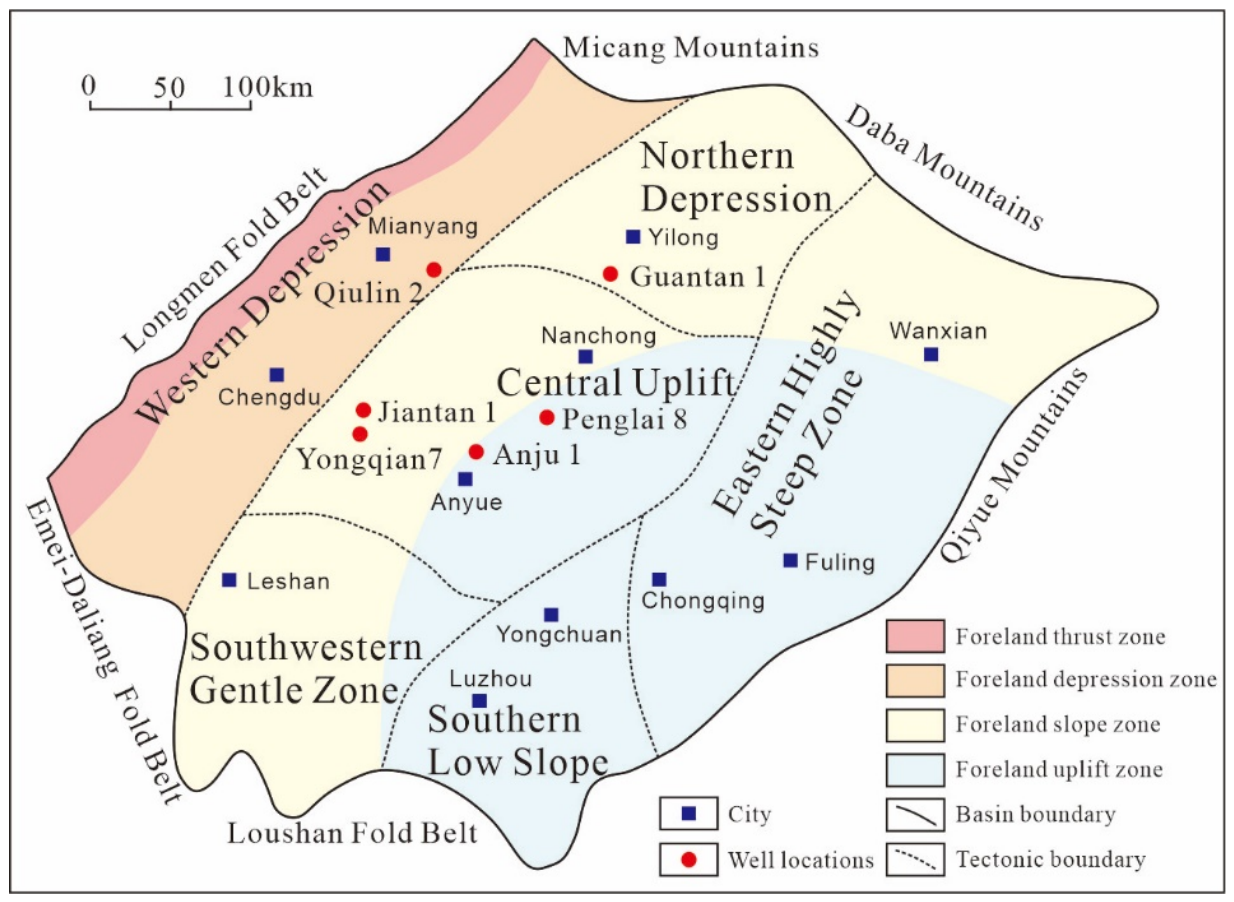
Figure 2.
TOC histograms of source rocks in the upper submember (a) and lower submember (b) of T3x5 in southwestern Sichuan Basin.
Figure 2.
TOC histograms of source rocks in the upper submember (a) and lower submember (b) of T3x5 in southwestern Sichuan Basin.
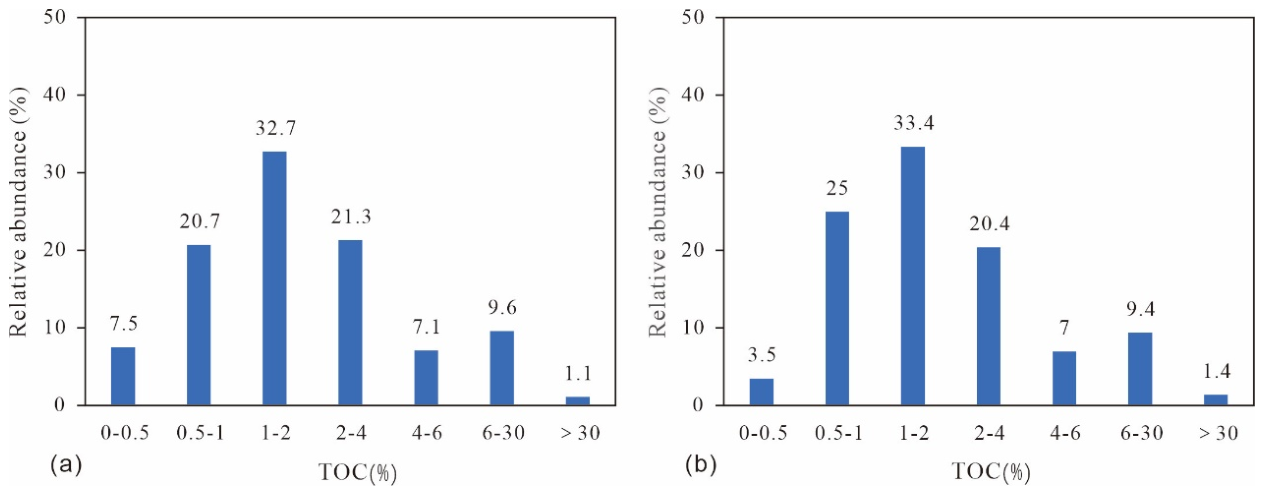
Figure 3.
Organic maceral composition of T3x5 source rocks of wells Fushun-1 (top) and Qiulin-2 (bottom) under transmitted light, white reflected light and fluorescent light.
Figure 3.
Organic maceral composition of T3x5 source rocks of wells Fushun-1 (top) and Qiulin-2 (bottom) under transmitted light, white reflected light and fluorescent light.
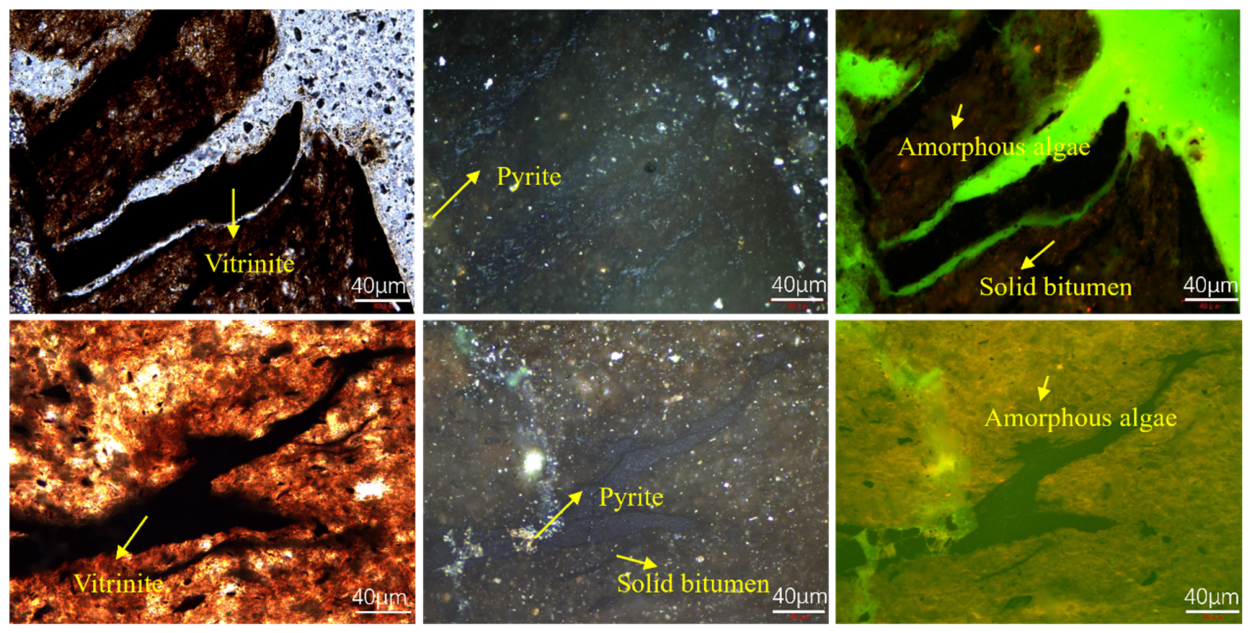
Figure 4.
Organic maceral composition of T3x5 source rocks in wells Jiantan-1 (top) and Yongqian-7 (bottom) under transmitted light, white reflected light and fluorescent light.
Figure 4.
Organic maceral composition of T3x5 source rocks in wells Jiantan-1 (top) and Yongqian-7 (bottom) under transmitted light, white reflected light and fluorescent light.
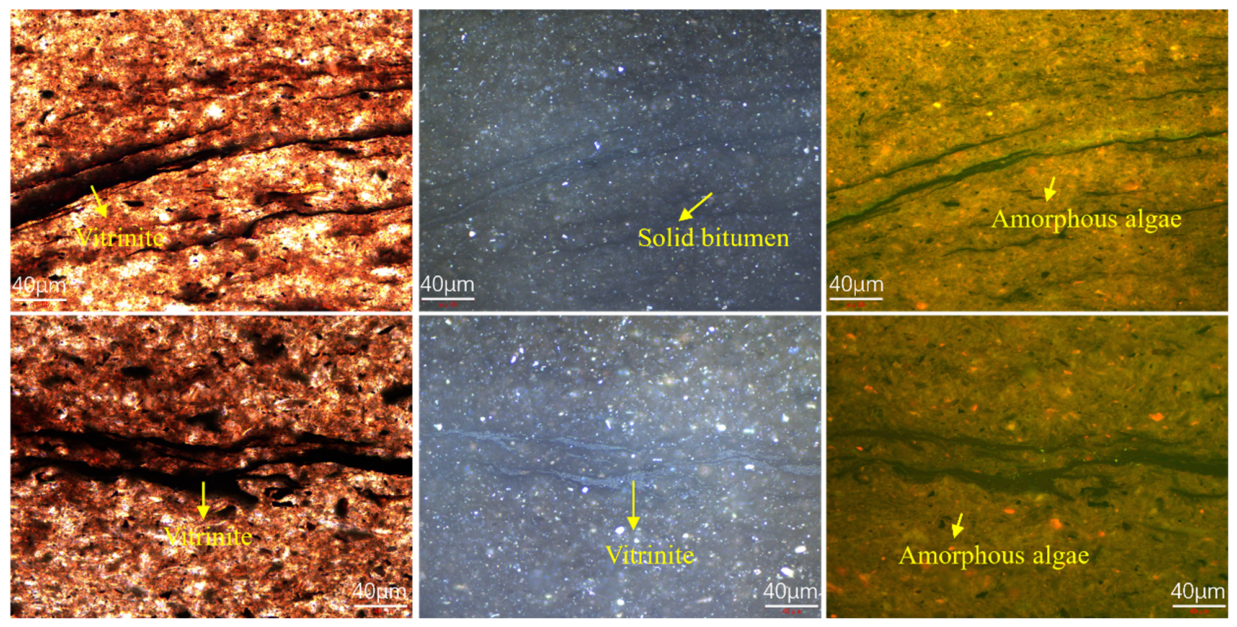
Figure 5.
Organic maceral composition of T3x5 source rocks in well Yin-36 (top) and the Dujiangyan outcrop (bottom) under transmitted light, white reflected light and fluorescent light.
Figure 5.
Organic maceral composition of T3x5 source rocks in well Yin-36 (top) and the Dujiangyan outcrop (bottom) under transmitted light, white reflected light and fluorescent light.
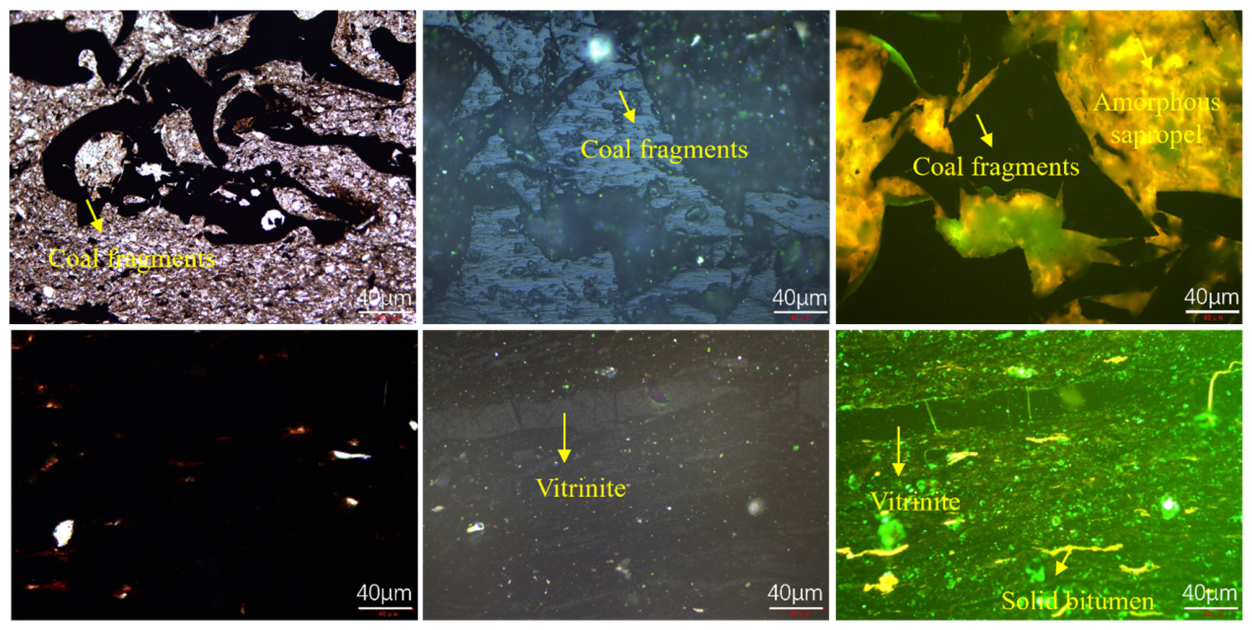
Figure 6.
Present-day thermal maturity maps of the upper and lower submembers of T3x5 in the southwestern Sichuan Basin.
Figure 6.
Present-day thermal maturity maps of the upper and lower submembers of T3x5 in the southwestern Sichuan Basin.
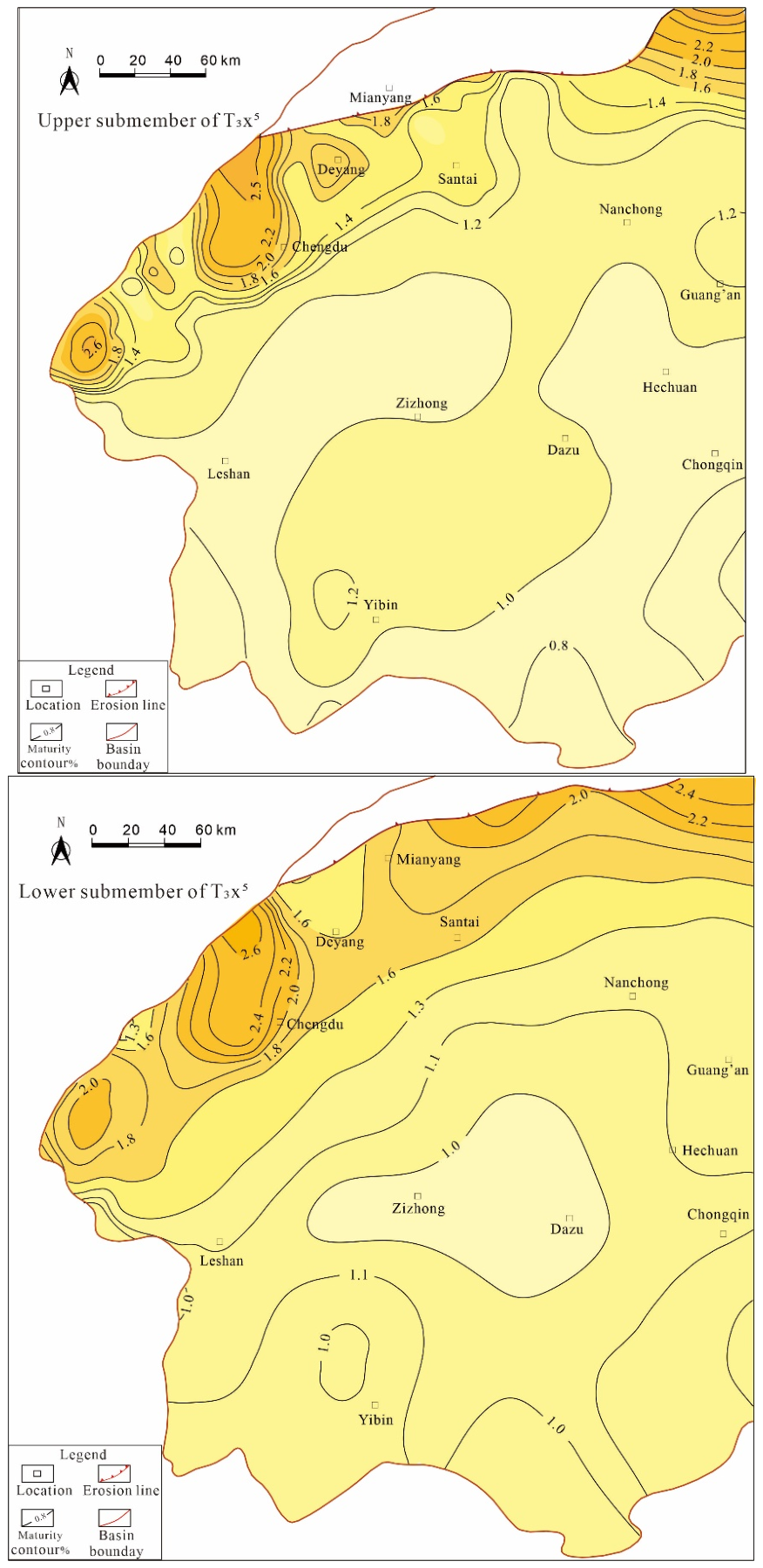
Figure 7.
Predicted source rock thickness distribution of the upper submember of T3x5 in central and southern Sichuan Basin.
Figure 7.
Predicted source rock thickness distribution of the upper submember of T3x5 in central and southern Sichuan Basin.
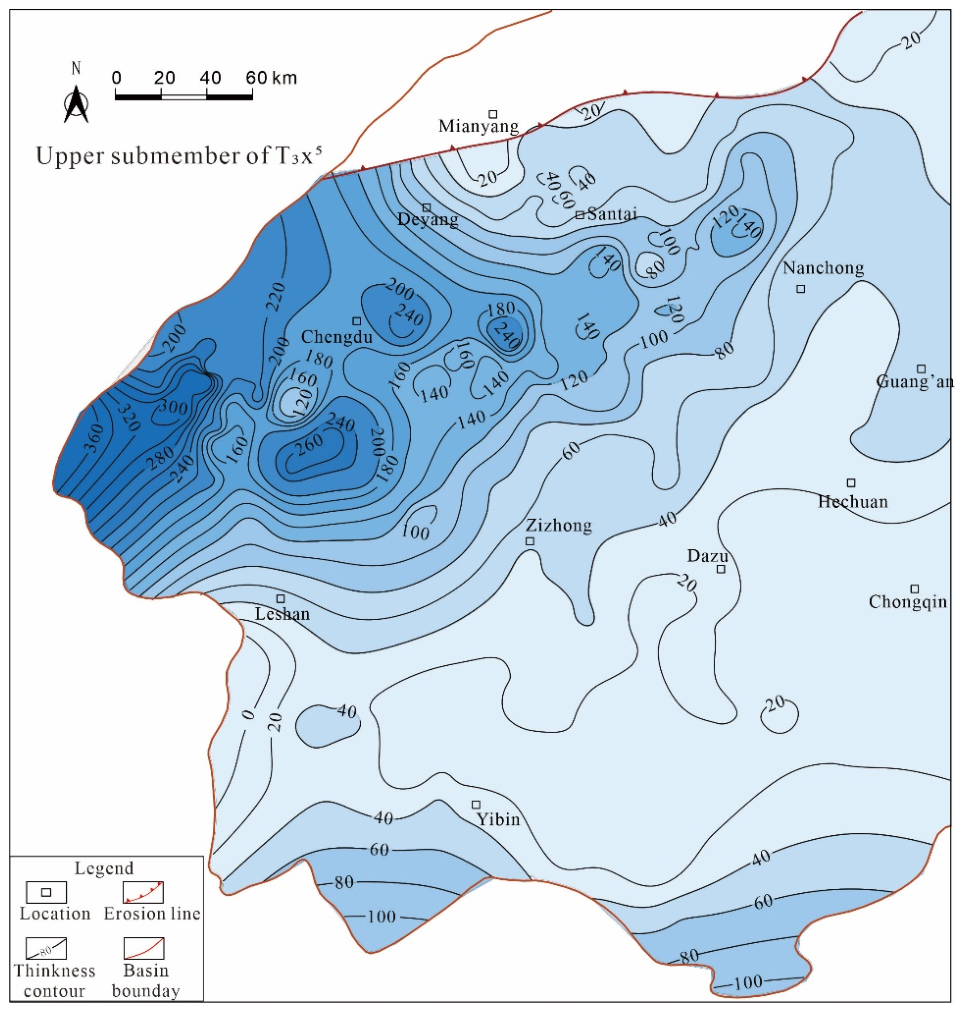
Figure 8.
Predicted source rock thickness distribution of the lower submember of T3x5 in central and southern Sichuan Basin.
Figure 8.
Predicted source rock thickness distribution of the lower submember of T3x5 in central and southern Sichuan Basin.
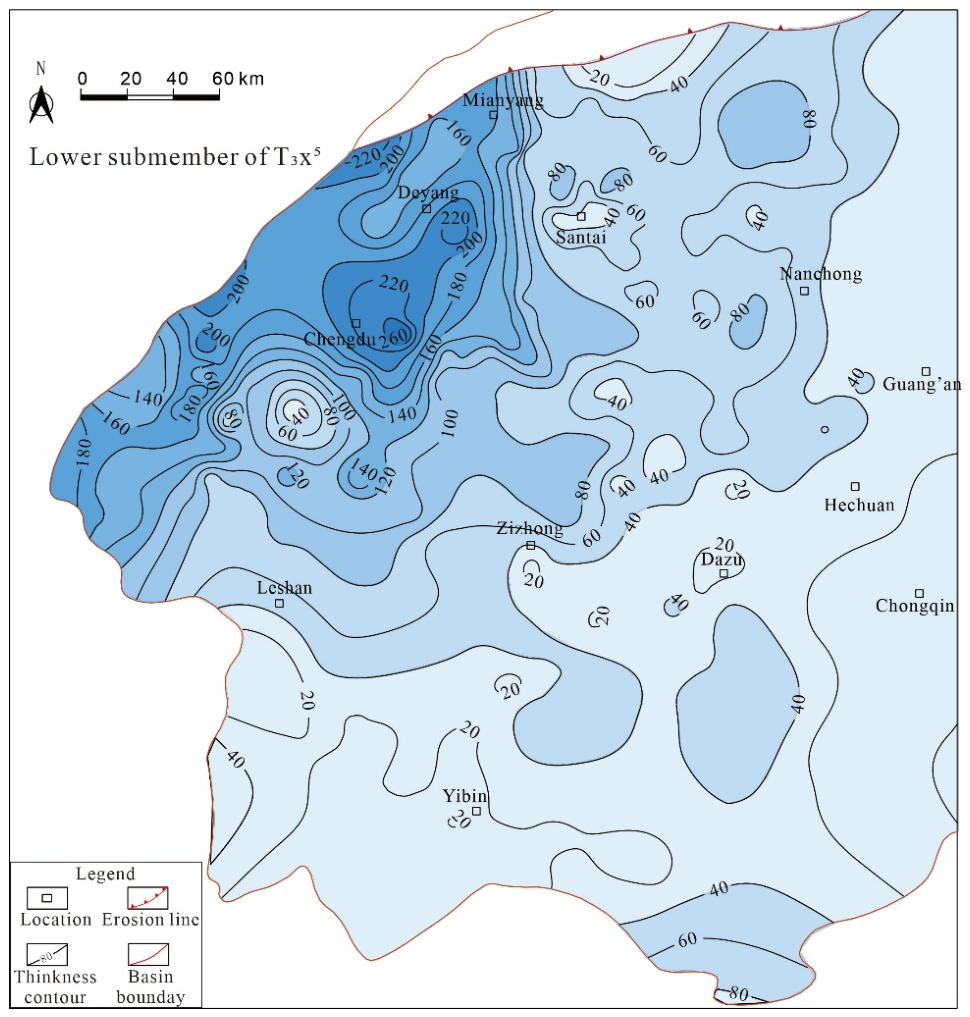
Figure 9.
Fitting of simulated thermal evolution and measured Ro in southwestern Sichuan Basin.
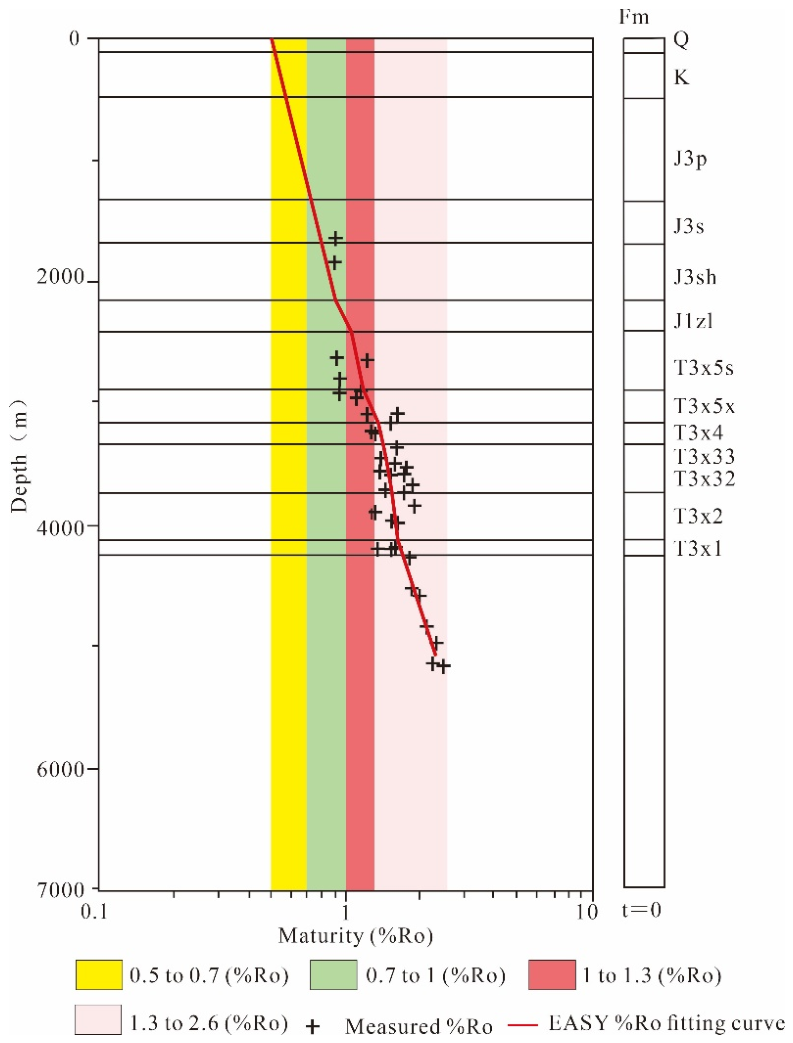
Figure 10.
Burial and thermal evolution history of well Pingtan-1.
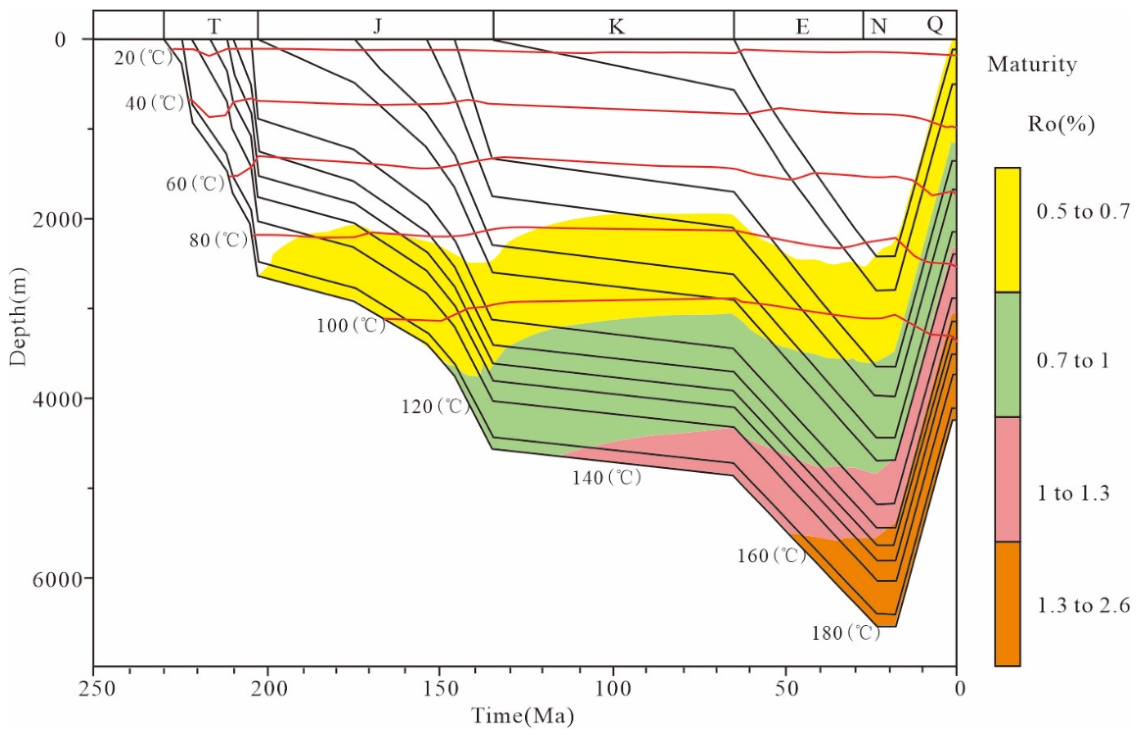
Figure 11.
Burial and thermal evolution history of well Jiantan-1.
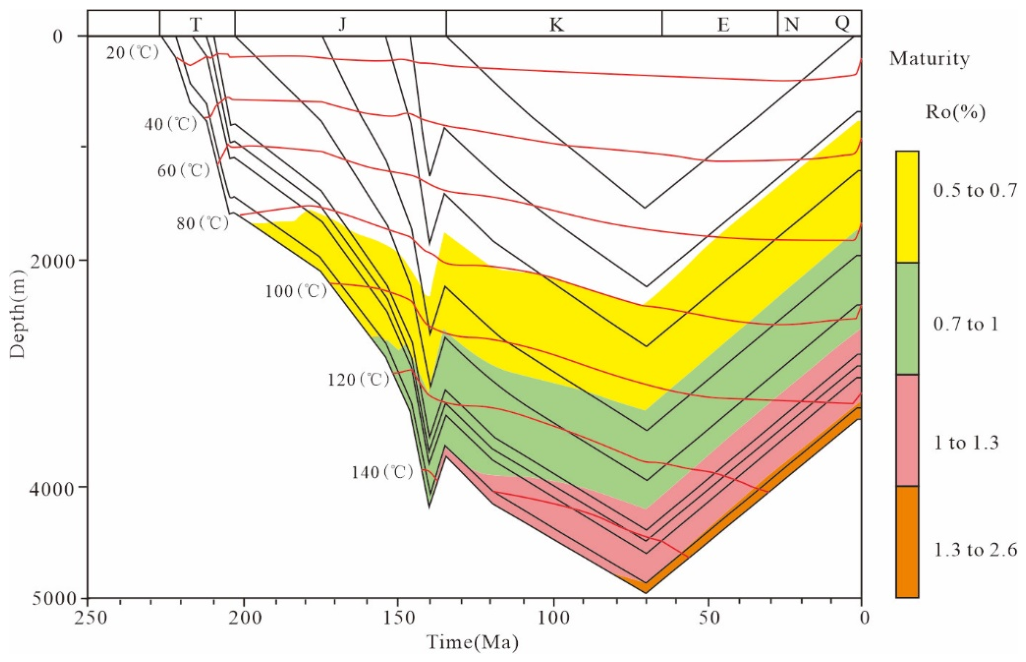
Figure 12.
Gas generation intensity map of the T3x5 source rocks in central and southern Sichuan Basin.
Figure 12.
Gas generation intensity map of the T3x5 source rocks in central and southern Sichuan Basin.
Disclaimer/Publisher’s Note: The statements, opinions and data contained in all publications are solely those of the individual author(s) and contributor(s) and not of MDPI and/or the editor(s). MDPI and/or the editor(s) disclaim responsibility for any injury to people or property resulting from any ideas, methods, instructions or products referred to in the content. |
© 2026 by the authors. Licensee MDPI, Basel, Switzerland. This article is an open access article distributed under the terms and conditions of the Creative Commons Attribution (CC BY) license (http://creativecommons.org/licenses/by/4.0/).
Copyright: This open access article is published under a Creative Commons CC BY 4.0 license, which permit the free download, distribution, and reuse, provided that the author and preprint are cited in any reuse.


