

Submitted:
19 July 2026
Posted:
20 July 2026
You are already at the latest version
Abstract
Background
Airway contamination during regurgitation, emesis, or aspiration represents a time-critical emergency in pediatric airway management. Although larger suction devices have demonstrated superior performance in open-container and adult simulation models, it remains uncertain whether these findings translate to anatomically constrained pediatric airways. We sought to determine how airway anatomy and fluid viscosity influence suction performance by comparing a Yankauer suction tip and a 14 French suction catheter in both an infant airway mannequin and an unconstrained open-container model.
Methods
This pilot simulation study used two complementary experimental models: an anatomically constrained infant airway mannequin and an unconstrained open-container model. Three fluids of progressively increasing viscosity (water, whole milk, and plain yogurt) were evaluated using a Yankauer suction tip and a 14 Fr flexible suction catheter under standardized suction pressure. In the mannequin model, suction time, pharyngeal volume evacuated, residual pharyngeal/esophageal volume, and recovered lung volume were measured. In the open-container model, time required for complete evacuation was recorded.
Results
In the infant airway mannequin, suction times differed minimally between devices, with the Yankauer demonstrating faster evacuation only for water. However, the Yankauer consistently evacuated larger pharyngeal volumes than the 14 Fr catheter across all fluids, with the greatest difference observed for yogurt. Residual pharyngeal/esophageal volume was similar for water and milk but differed for yogurt, suggesting that the flexible catheter may have improved access to anatomically restricted regions despite lower intrinsic suction capacity. Recovered lung volumes did not differ significantly between devices. In contrast, the unconstrained open-container model demonstrated substantially superior intrinsic suction performance of the Yankauer, particularly for high-viscosity material; the 14 Fr catheter was unable to completely evacuate yogurt within five minutes in any trial.
Conclusions
Airway anatomy and fluid viscosity substantially influence suction performance during simulated pediatric airway contamination. Although the Yankauer demonstrated superior intrinsic suction capability, anatomical constraints reduced the magnitude of these differences within the infant airway model. These findings suggest that data derived from unconstrained bench-top studies should not be directly extrapolated to pediatric airway management and support a complementary suction strategy using rigid suction for rapid bulk decontamination followed by flexible catheter suction for anatomically inaccessible regions.
Keywords:
suction
; Yankauer
; 14 french
; pediatric
Introduction
Airway contamination during regurgitation, emesis, or pulmonary aspiration represents one of the most time-critical emergencies in pediatric airway management. Successful airway rescue depends on the rapid evacuation of contaminated material to restore glottic visualization and facilitate tracheal intubation before progressive hypoxemia develops. These challenges are amplified in infants and young children because of smaller airway dimensions, reduced functional residual capacity, higher oxygen consumption, and limited physiological reserve[1].
Previous investigations have consistently demonstrated that suction performance improves with increasing catheter diameter in simulated airway contamination models. Nikolla et al. reported greater suction flow rates using large-bore suction systems than standard Yankauer catheters, while Finke et al. demonstrated superior evacuation of liquids with varying viscosities using the DuCanto catheter compared with Yankauer and conventional suction catheters.[2,3] Similarly, Andreae et al. showed that alternative suction devices more effectively evacuated simulated emesis than standard Yankauer suction.[4] Collectively, these studies provided the experimental basis for the development and widespread adoption of suction-assisted laryngoscopy airway decontamination (SALAD) techniques for contaminated airway management.[5,6]
However, an important limitation of these investigations is that they were performed primarily in unconstrained bench-top or adult airway models. Such models evaluate the intrinsic suction characteristics of individual devices but do not account for the geometric constraints, limited maneuverability, and restricted access encountered within the pediatric airway. Consequently, it remains uncertain whether superior performance demonstrated in open-container models translates into improved suction performance under anatomically constrained pediatric airway conditions.
We therefore sought to determine how airway anatomy and fluid viscosity influence suction performance by comparing a Yankauer suction tip and a 14 French suction catheter in both an anatomically constrained infant airway mannequin and an unconstrained open-container model (see Figure 1). We hypothesized that device performance observed in the open-container model would not fully predict performance within the anatomically constrained pediatric airway.
Methods
Study Design
This pilot, simulation-based experimental study was conducted at the Children's Minnesota Simulation Center to compare suction performance under anatomically constrained and unconstrained conditions. Two complementary experimental models were used: an infant airway mannequin representing the pediatric airway and an unconstrained open-container model designed to assess intrinsic device suction performance.
Experimental Setup
An infant airway mannequin (toddler model) was positioned supine to simulate pediatric airway contamination during regurgitation or aspiration events (Figure 2). Wall suction pressure was standardized at –200 mmHg throughout all experiments.
Three test fluids representing progressively increasing viscosity were selected to simulate clinically relevant airway contamination encountered during regurgitation or aspiration:
- Water (low viscosity)
- Whole milk (intermediate viscosity)
- Plain yogurt (high viscosity)
Suction Devices
Two commonly available suction devices routinely used in pediatric airway management were evaluated:
- Yankauer suction tip (Cardinal Health K87)
- 14 French flexible suction catheter
The Yankauer catheter was selected because it is the standard rigid suction device routinely used in our pediatric operating rooms. We recognize that Yankauer catheter dimensions vary among manufacturers, which may influence suction performance and should be considered when interpreting the generalizability of these findings.
All suction procedures were performed by the same investigator using a standardized suction protocol to minimize operator-related variability.
Infant Airway Mannequin Model (Figure 2)
For each trial, 50 mL of the test fluid was rapidly instilled through the esophageal opening into the pharynx using a syringe. Suction was initiated immediately after fluid instillation without the use of adjuncts such as direct or video laryngoscopy and continued until no additional fluid could be evacuated.
Each fluid-device combination was evaluated in five independent trials.
The following outcome measures were recorded:
- Suction time (seconds)
- Pharyngeal volume evacuated (mL)
- Residual pharyngeal/esophageal volume (mL)
- Recovered lung volume (mL)
Recovered lung volumes were measured using calibrated collection cups connected to the bronchi
Unconstrained Open-Container Model
To evaluate intrinsic device suction performance independent of airway anatomy, a complementary unconstrained open-container model was studied. Fifty milliliters of each test fluid were placed directly into an open container and suctioned to completion using each device.
Each fluid-device combination was evaluated in three independent trials.
For yogurt, suction attempts were terminated after 5 minutes if complete evacuation could not be achieved.
Statistical Analysis
Given the pilot nature of the study and the small sample size, descriptive statistics are presented as raw observations, means, and 95% confidence intervals. Independent two-sample t-tests were prespecified as the primary analyses for comparisons between suction devices. Mann–Whitney U tests were performed as sensitivity analyses because normality assumptions could not be reliably assessed with the available sample size. No adjustment for multiple comparisons was applied because all analyses were considered exploratory. For the open-container yogurt condition, the 14 Fr catheter failed to achieve complete evacuation within 5 minutes in all three trials; therefore, this outcome is presented descriptively without formal statistical comparison. Statistical significance was defined as a two-sided p value <0.05.
The study was designed as a pilot investigation intended to generate preliminary comparative data and inform future studies incorporating additional suction devices, alternative patient positioning, and larger sample sizes.
Results
Suction Time in the Infant Airway Mannequin Model
Suction time differed minimally between the Yankauer suction tip and the 14 Fr catheter across the three test fluids (Figure 2). For water, the Yankauer achieved significantly faster evacuation than the 14 Fr catheter (mean 2.84 s [95% CI 2.45–3.23] versus 3.45 s [95% CI 2.99–3.92]; p = 0.0221). No significant differences were observed for milk or yogurt. As expected, suction times increased substantially with the high-viscosity yogurt for both devices.
Mean suction time (95% confidence intervals) for the Yankauer suction tip and 14 Fr suction catheter during evacuation of water, milk, and yogurt from the infant airway mannequin. The Yankauer evacuated water more rapidly than the 14 Fr catheter. No significant differences were observed for milk or yogurt.
Pharyngeal Volume Evacuated
The Yankauer suction tip consistently evacuated larger pharyngeal volumes than the 14 Fr catheter across all three test fluids (Figure 3). The largest difference was observed with yogurt, where the Yankauer evacuated more than four times the volume recovered by the 14 Fr catheter. Similar, although smaller, differences were observed for water and milk.
Mean pharyngeal volume evacuated (95% confidence intervals) using the Yankauer suction tip and 14 Fr suction catheter during suctioning of water, milk, and yogurt. The Yankauer demonstrated significantly greater evacuation across all fluids, with the greatest difference observed for yogurt.
Residual Pharyngeal/Esophageal Volume
Residual pharyngeal/esophageal volume did not differ significantly between devices following suction of water or milk (Figure 4). For yogurt, however, significantly greater residual volume remained after Yankauer suction than after use of the 14 Fr catheter, suggesting that although the Yankauer efficiently removed bulk material, the flexible catheter may have provided improved access to anatomically restricted regions.
Mean residual pharyngeal/esophageal volume (95% confidence intervals) following suctioning with the Yankauer suction tip and 14 Fr suction catheter. Significant differences were observed only for yogurt.
Recovered Lung Volume
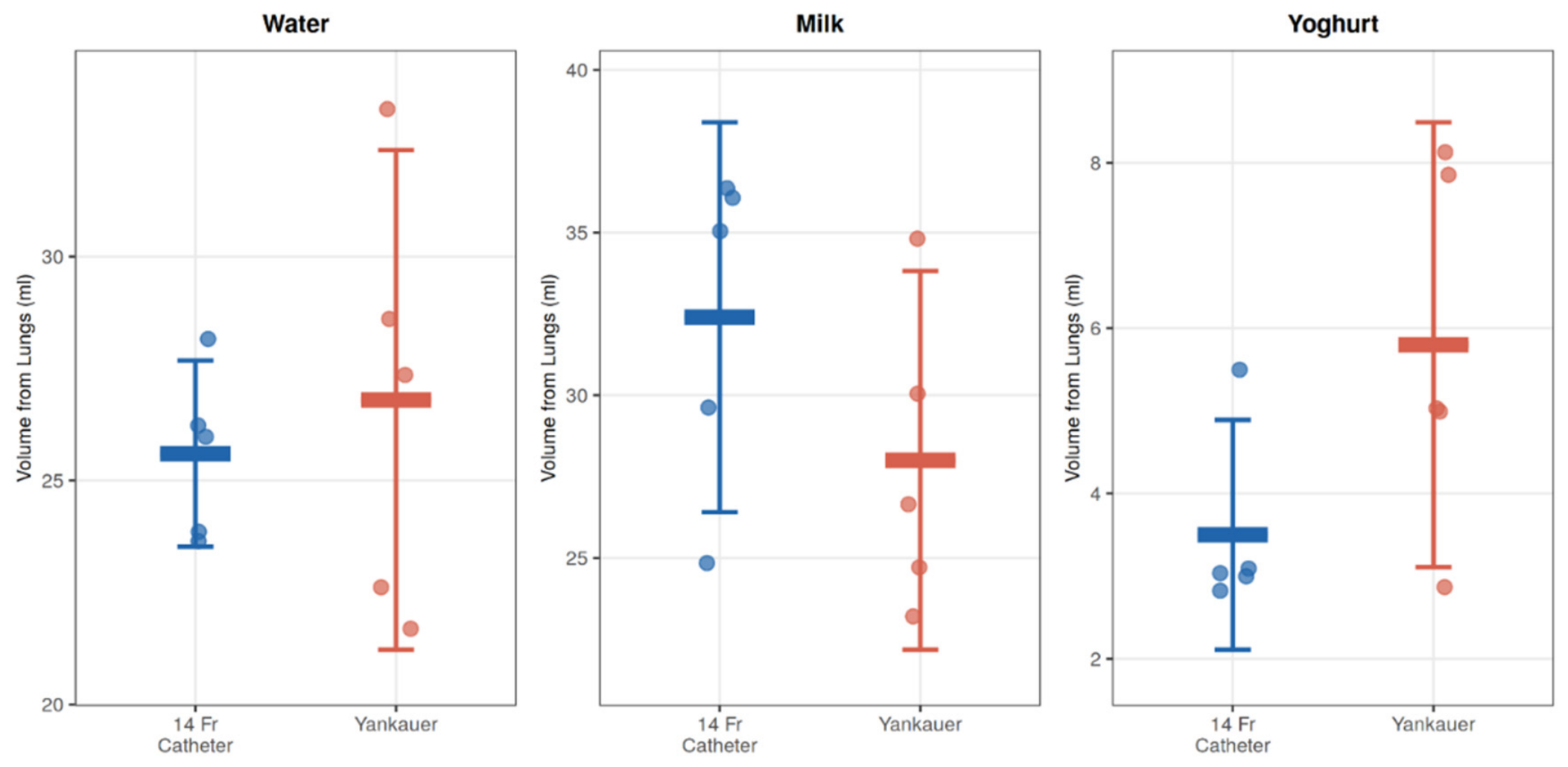
Recovered lung volume did not differ significantly between devices for water, milk, or yogurt (Figure 5). Although slightly greater recovered lung volume was observed with the Yankauer during yogurt trials, overall differences were small and did not alter the principal findings of the study.
Mean recovered lung volume (95% confidence intervals) following suctioning with the Yankauer suction tip and 14 Fr suction catheter. No clinically meaningful differences were observed between devices.
Unconstrained Open-Container Model
The unconstrained open-container model demonstrated substantially greater intrinsic suction efficiency for the Yankauer (Figure 6). Water and milk were evacuated significantly faster than with the 14 Fr catheter. The greatest difference was observed with yogurt. The Yankauer successfully evacuated all yogurt samples, whereas the 14 Fr catheter was unable to achieve complete evacuation within five minutes in any trial.
Mean suction time (95% confidence intervals) required for complete evacuation of water, milk, and yogurt using the Yankauer suction tip and 14 Fr suction catheter. The Yankauer demonstrated consistently superior intrinsic suction performance. The 14 Fr catheter was unable to completely evacuate yogurt within the predefined five-minute study period.
In conclusion, overall, the open-container model demonstrated superior intrinsic suction performance of the Yankauer across fluids of increasing viscosity. Within the anatomically constrained infant airway mannequin, however, performance differences between devices were less pronounced, indicating that airway geometry and device maneuverability substantially influence functional suction performance during simulated pediatric airway contamination.
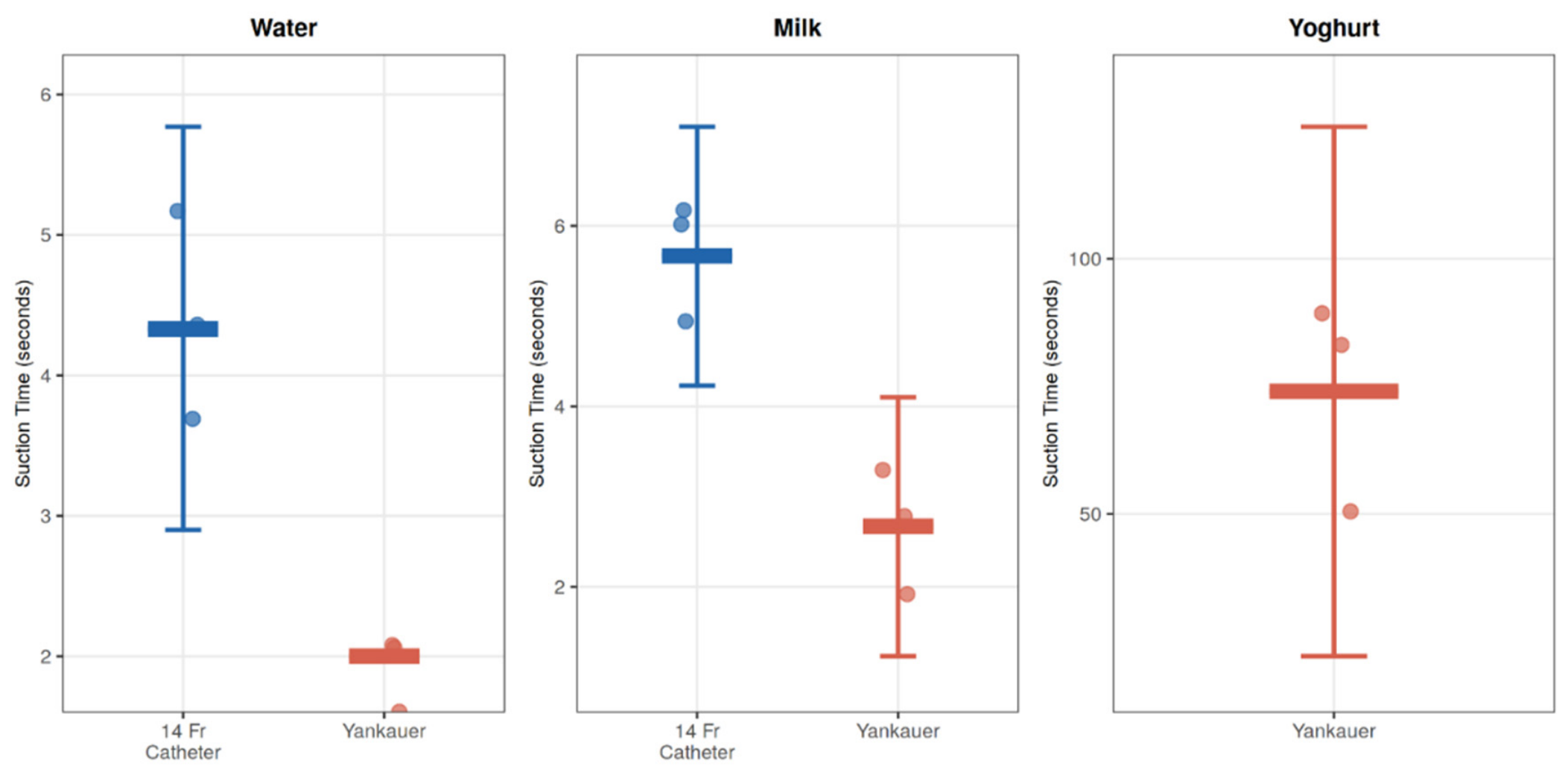
Figure 7.
Open-Cup Suction Model: Suction Time Mean suction time required for complete evacuation of water, milk, and yogurt using the Yankauer suction tip and 14 Fr suction catheter in the open-cup model. Yankauer suction cleared water and milk significantly faster than the 14 Fr catheter. For yogurt, the Yankauer successfully evacuated the material, whereas the 14 Fr catheter failed to completely clear the fluid within 5 minutes.
Figure 7.
Open-Cup Suction Model: Suction Time Mean suction time required for complete evacuation of water, milk, and yogurt using the Yankauer suction tip and 14 Fr suction catheter in the open-cup model. Yankauer suction cleared water and milk significantly faster than the 14 Fr catheter. For yogurt, the Yankauer successfully evacuated the material, whereas the 14 Fr catheter failed to completely clear the fluid within 5 minutes.
Discussion
Principal Findings
This study demonstrates that suction performance during simulated pediatric airway contamination is determined by both fluid viscosity and airway anatomy. As hypothesized, suction performance observed in the unconstrained open-container model did not fully predict device performance within the anatomically constrained infant airway mannequin. Although the Yankauer demonstrated superior intrinsic suction capability, particularly for high-viscosity material, differences between devices became less pronounced within the pediatric airway model. These findings suggest that anatomical constraints substantially influence functional suction performance and should be considered when selecting suction devices for contaminated pediatric airways.
Relationship to Previous Studies
Our findings are consistent with previous simulation studies demonstrating superior evacuation characteristics of large-bore suction devices. Nikolla et al. reported greater suction flow rates using large-bore suction systems than standard Yankauer catheters, whereas Finke et al. demonstrated superior evacuation of fluids with varying viscosities using the DuCanto catheter.[2,3] Andreae et al. similarly reported improved evacuation of simulated emesis with alternative suction devices compared with conventional Yankauer suction.[4]
However, these investigations were performed primarily in open-container systems or adult airway models and therefore principally evaluated intrinsic device suction characteristics. In contrast, the present study examined suction performance within an anatomically constrained infant airway model, allowing assessment of the interaction between device characteristics, airway geometry, and fluid viscosity. Our results suggest that device performance measured under unconstrained conditions cannot be assumed to translate directly to the pediatric airway.
Why the Mannequin Behaved Differently
One of the most important observations of this study was the differing behavior of the two suction devices in the infant airway compared with the open-container model. In the open-container experiments, the Yankauer demonstrated markedly superior evacuation of high-viscosity material, whereas within the mannequin the differences between devices were considerably smaller.
Several factors likely explain this finding. The infant airway presents a confined three-dimensional space in which suction efficiency depends not only on catheter lumen diameter but also on maneuverability, accessibility, and the ability to reach contaminated material within anatomically restricted regions. Although the Yankauer efficiently removed bulk material from the pharynx, the flexible 14 Fr catheter may have accessed narrower recesses that were less accessible to the rigid suction tip. These observations suggest that functional airway performance reflects a combination of intrinsic suction capacity and anatomical accessibility rather than catheter diameter alone.
Clinical Implications
These findings have practical implications for pediatric airway management during regurgitation, emesis, and pulmonary aspiration. The superior bulk evacuation achieved by the Yankauer, particularly with high-viscosity material, supports its role as the primary suction device during initial airway decontamination. However, the flexible catheter may retain value for removing residual material from anatomically restricted regions after bulk contamination has been cleared. Rather than viewing these devices as competing alternatives, our findings support a complementary strategy in which rigid and flexible suction devices are used sequentially according to the clinical situation.
Future Directions
The present investigation should be viewed as a pilot study designed to generate mechanistic data regarding suction performance in pediatric airway simulation. Future studies should evaluate additional suction devices, including pediatric large-bore suction catheters such as the DuCanto device, compare multiple Yankauer designs from different manufacturers, examine alternative patient positioning including lateral and head-down positions, and assess suction performance under video laryngoscopy-guided airway management. Such investigations will further define optimal suction strategies during contaminated pediatric airway management.
Limitations
Several limitations should be acknowledged. First, this was a simulation-based investigation using a pediatric airway mannequin and therefore cannot fully reproduce the complex physiology, tissue compliance, secretion characteristics, and dynamic airflow encountered during clinical aspiration events. Second, only one commercially available Yankauer design was evaluated; differences among manufacturers may influence suction performance and limit the generalizability of these findings. Third, the study used standardized wall suction pressure and a limited number of repeated trials, reflecting its pilot nature. Fourth, only the supine position was studied. Alternative patient positioning, particularly lateral head-down positioning commonly recommended during regurgitation, may influence suction performance and warrants future investigation. Finally, although the selected fluids provided reproducible surrogates representing progressively increasing viscosity, they cannot completely replicate the rheological properties of human gastric contents.
Conclusions
Airway anatomy and fluid viscosity both significantly influence suction performance during simulated pediatric airway contamination. While the Yankauer demonstrated superior intrinsic suction performance, particularly for high-viscosity material, anatomical constraints reduced the magnitude of these differences within the infant airway model. These findings suggest that data derived from unconstrained bench-top models should not be directly extrapolated to pediatric airway management. A sequential suction strategy using a rigid Yankauer for rapid bulk decontamination followed by a flexible catheter for clearance of anatomically inaccessible regions may represent a practical approach to contaminated pediatric airway management and deserves further clinical investigation.
Future clinical studies are needed to determine whether the complementary suction strategy identified in this simulation model translates into improved airway management and patient outcomes during pediatric regurgitation and aspiration events.
Author Contributions
:Conceptualization, Ravi Jindal and Kumar Belani; Methodology, Ravi Jindal and Kumar Belani; Formal analysis, Todd DeFor; Investigation, Ravi Jindal, Ryan Anderson, Manu Madhok and Kumar Belani; Data curation, Todd DeFor; Writing – original draft, Ravi Jindal; Writing – review & editing, Kumar Belani; Project administration, Ryan Anderson, Manu Madhok and Kumar Belani.
Funding
This research received no external funding
Institutional Review Board Statement
The study had no human subjects and is a simulation study. Hence no ethics committee approval was needed for the study.
Informed Consent Statement
The study had no human subjects and is a simulation study. Hence no informed consent was needed for the study.
Data Availability Statement
The raw data supporting the conclusions of this article will be made available by the authors on request.
Conflicts of Interest
The authors declare no conflict of interest
References
- Litman, R.S. Pulmonary aspiration in pediatric anesthesia. Pediatr. Anesth. 2017, 27(11), 1067–1068. [Google Scholar] [CrossRef] [PubMed]
- Nikolla, D.A.; King, B.; Heslin, A.; Carlson, J.N. Comparison of Suction Rates Between a Standard Yankauer, a Commercial Large-Bore Suction Device, and a Makeshift Large-Bore Suction Device. J. Emerg. Med. 2021, 61(3), 265–270. [Google Scholar] [CrossRef] [PubMed]
- Finke, S.-R.; Schroeder, D.C.; Ecker, H.; Bottiger, B.W.; Herff, H.; Wetsch, W.A. Comparing Suction Rates of Novel DuCanto Catheter Against Yankauer and Standard Suction Catheter Using Liquids of Different Viscosity: A Technical Simulation. BMC Anesthesiol. 2022, 22(1), 285. [Google Scholar] [CrossRef] [PubMed]
- Andreae, M.C.; Cox, R.D.; Shy, B.D.; Wong, N.; Strayer, R.J. 319 Yankauer outperformed by alternative suction devices in evacuation of simulated emesis. Ann. Emerg. Med. 2016, 68, 123. [Google Scholar] [CrossRef]
- DuCanto, J.; Serrano, K.D.; Thompson, R.J. Novel Airway Training Tool that Simulates Vomiting: Suction-Assisted Laryngoscopy Assisted Decontamination (SALAD) System. West. J. Emerg. Med. 2017, 18(1), 117–120. [Google Scholar] [CrossRef]
- Root, C.W.; Mitchell, O.J.L.; Brown, R.; Evers, C.B.; Boyle, J.; Griffin, C.; West, F.M.; Gomm, E.; Miles, E.; McGuire, B.; Swaminathan, A.; St George, J.; Horowitz, J.M.; DuCanto, J. Suction Assisted Laryngoscopy and Airway Decontamination (SALAD): A technique for improved emergency airway management. Resusc. Plus 2020, 1-2, 100005. [Google Scholar] [CrossRef] [PubMed]
Figure 1.
Conceptual framework illustrating the relationship between intrinsic device performance measured in an open-container model and functional airway performance within an anatomically constrained pediatric airway. Intrinsic performance is modified by airway geometry, fluid viscosity, device maneuverability, and access limitations. These collectively determine functional performance and guide clinical airway management.
Figure 1.
Conceptual framework illustrating the relationship between intrinsic device performance measured in an open-container model and functional airway performance within an anatomically constrained pediatric airway. Intrinsic performance is modified by airway geometry, fluid viscosity, device maneuverability, and access limitations. These collectively determine functional performance and guide clinical airway management.
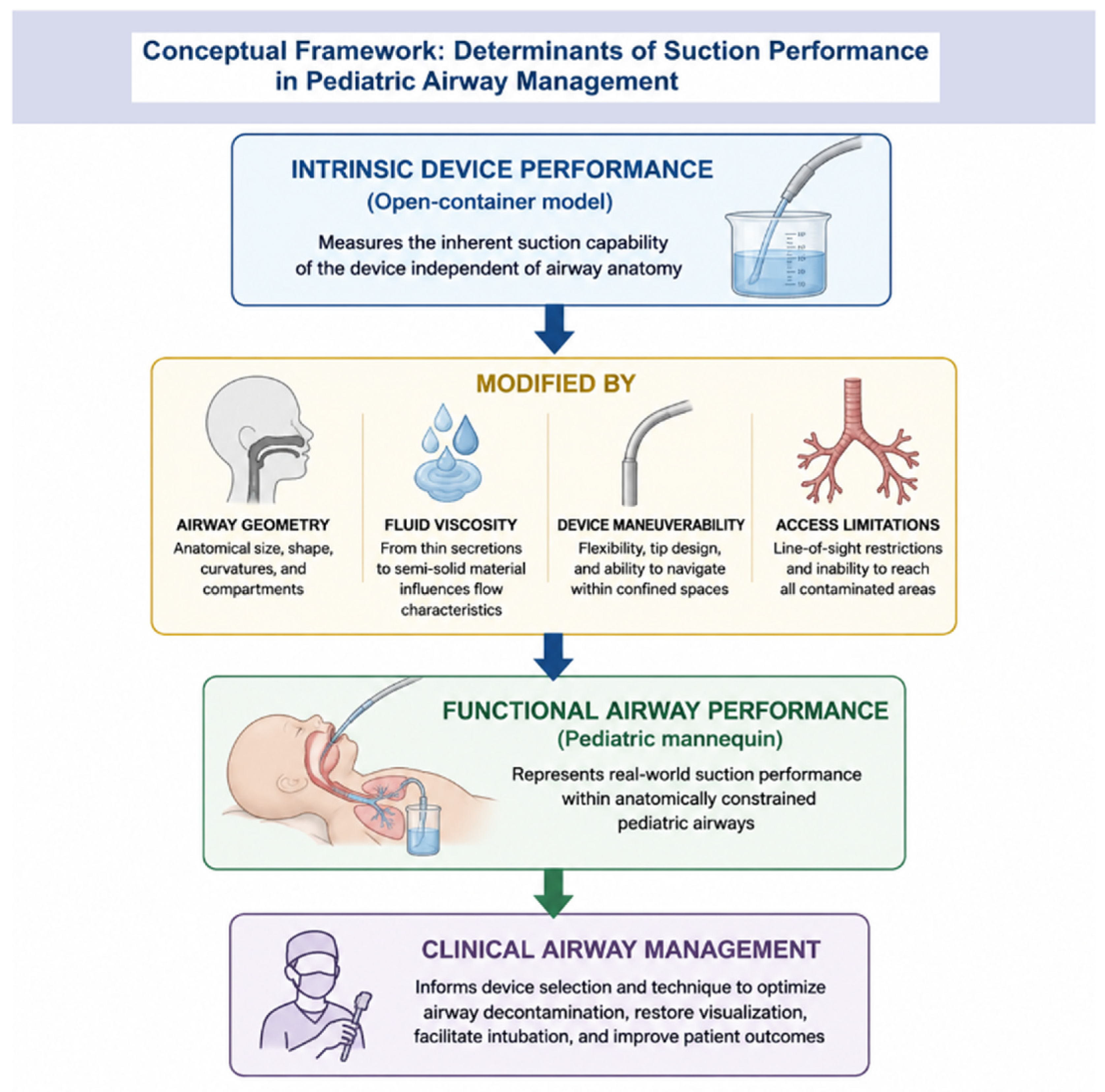
Figure 2.
Infant mannequin (Toddler model). Infant airway mannequin experimental set up. The test fluid was instilled into the pharynx via the esophagus. Calibrated collection cups connected to the bronchi were used to measure recovered lung volume.
Figure 2.
Infant mannequin (Toddler model). Infant airway mannequin experimental set up. The test fluid was instilled into the pharynx via the esophagus. Calibrated collection cups connected to the bronchi were used to measure recovered lung volume.
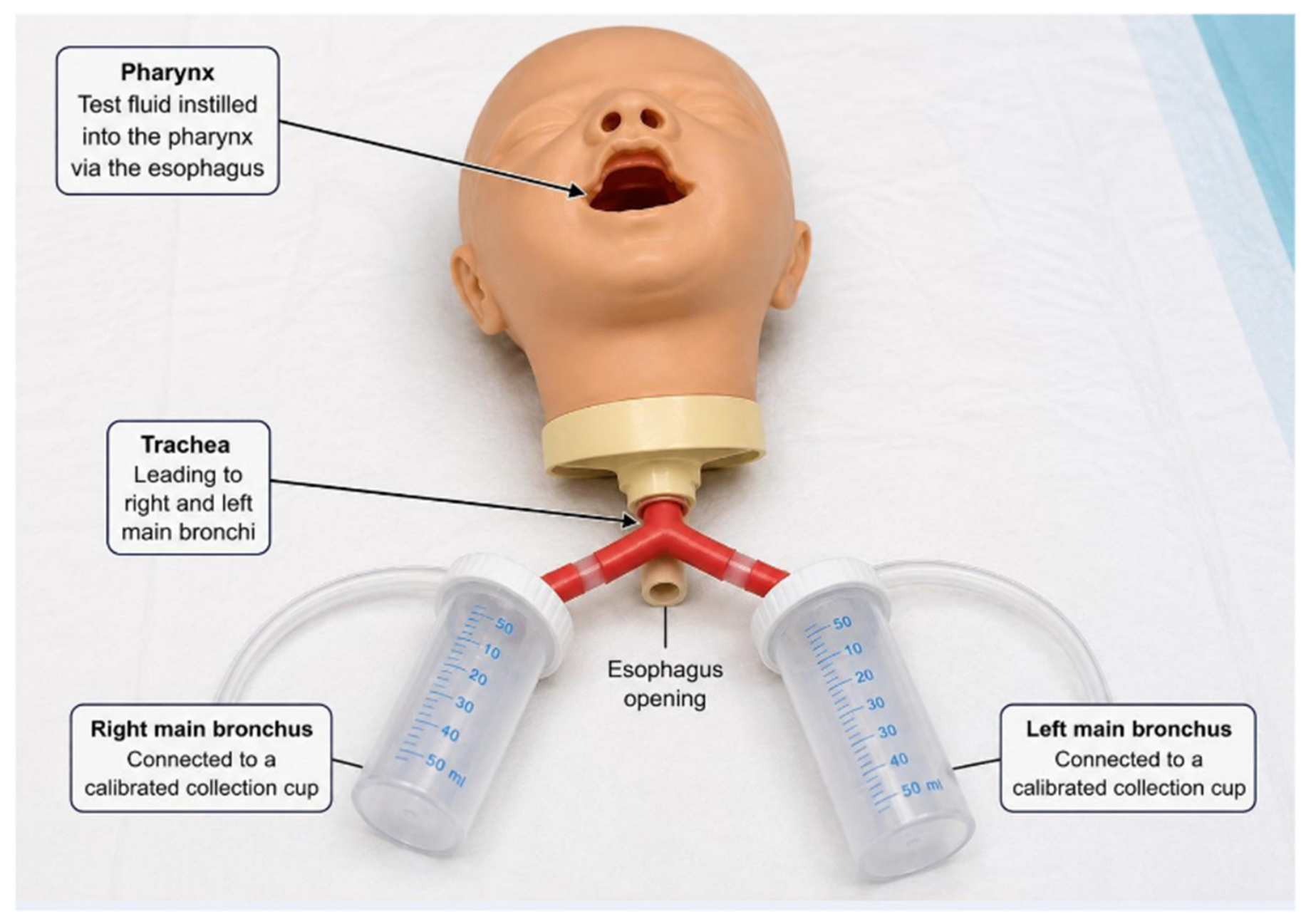
Figure 3.
Suction Time in the Infant Airway Mannequin Model Mean suction time for Yankauer and 14 Fr suction catheters during clearance of water, milk, and yogurt from the infant airway mannequin. No significant differences were observed for milk or yogurt. For water, the 14 Fr catheter demonstrated a shorter suction time compared with the Yankauer (p = 0.0221).
Figure 3.
Suction Time in the Infant Airway Mannequin Model Mean suction time for Yankauer and 14 Fr suction catheters during clearance of water, milk, and yogurt from the infant airway mannequin. No significant differences were observed for milk or yogurt. For water, the 14 Fr catheter demonstrated a shorter suction time compared with the Yankauer (p = 0.0221).
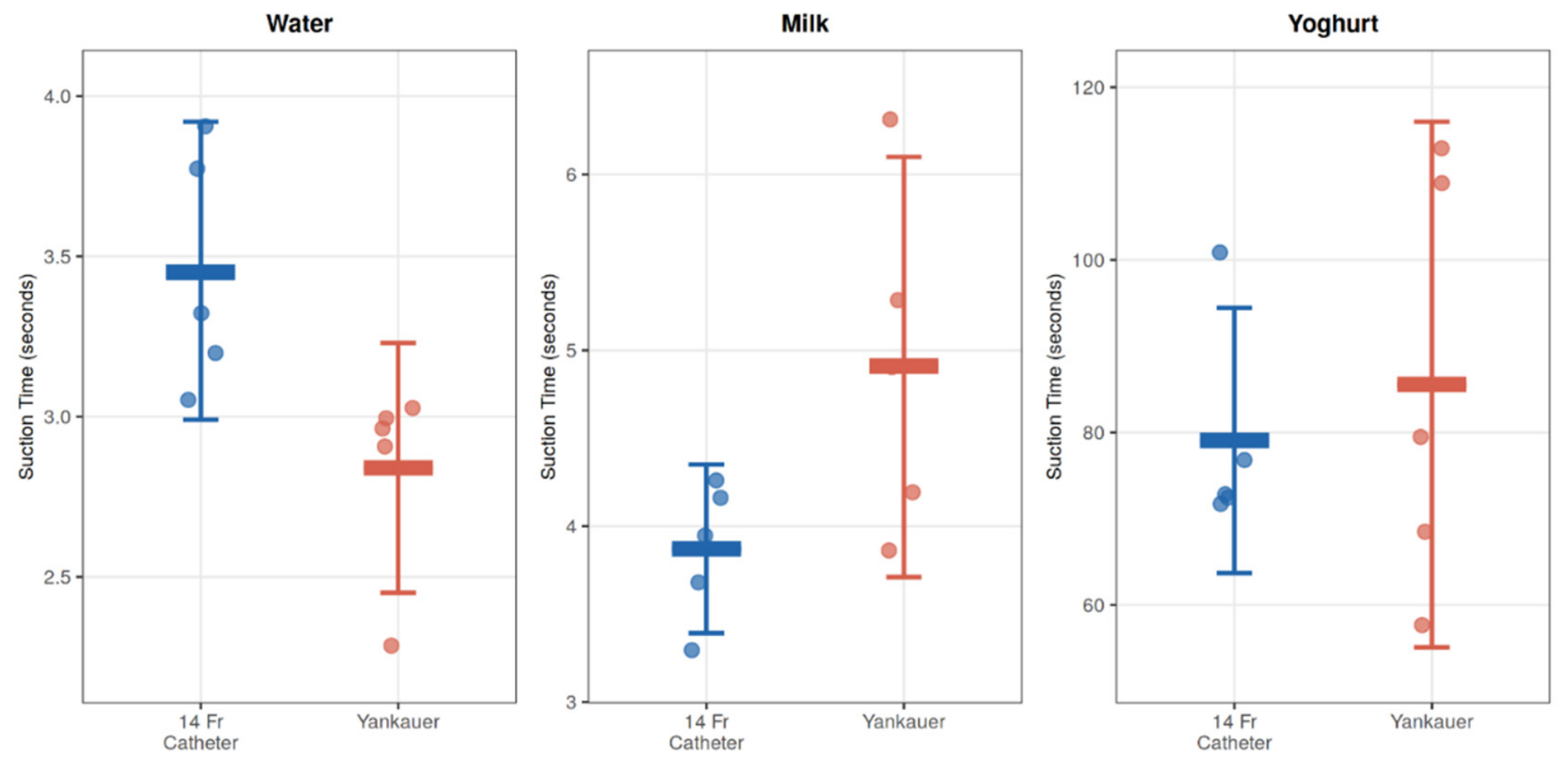
Figure 4.
Pharyngeal Volume removed in the Infant Airway Mannequin Model Mean pharyngeal volume removed using the Yankauer suction tip and 14 Fr suction catheter during suctioning of water, milk, and yohurt. Yankauer suction removed significantly greater pharyngeal volume across all tested fluids, with the largest difference observed for yogurt (p < 0.0001).
Figure 4.
Pharyngeal Volume removed in the Infant Airway Mannequin Model Mean pharyngeal volume removed using the Yankauer suction tip and 14 Fr suction catheter during suctioning of water, milk, and yohurt. Yankauer suction removed significantly greater pharyngeal volume across all tested fluids, with the largest difference observed for yogurt (p < 0.0001).
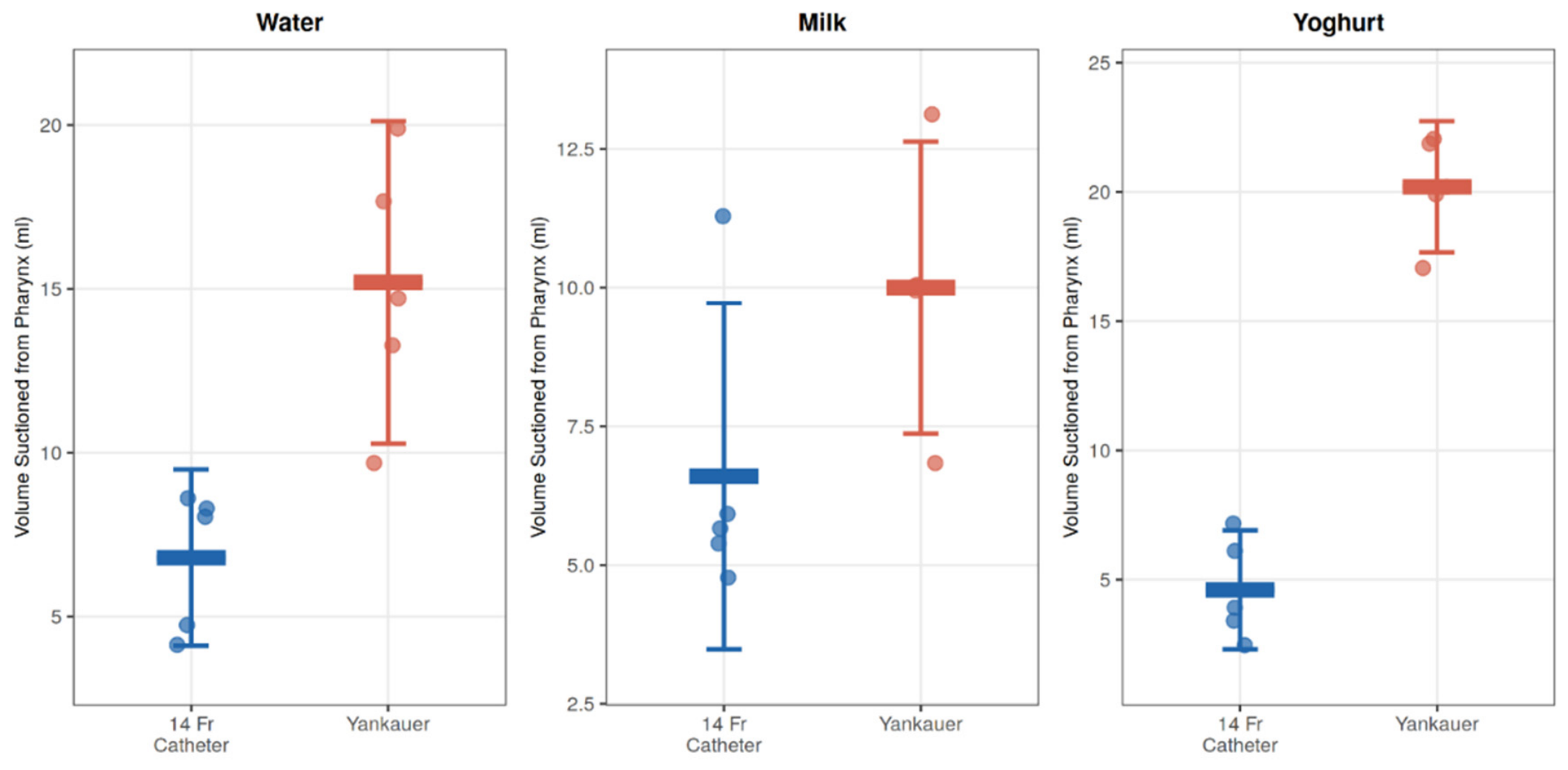
Figure 5.
Residual Pharyngeal/ Esophageal Volume in the Infant Mannequin Model Mean residual volume remaining after suctioning with the Yankauer suction tip and 14 Fr suction catheter during clearance of water, milk, and yogurt. Residual volume did not differ significantly between devices for water and milk. However, for Yoghurt, residual volume was significantly greater with Yankauer than with 14 Fr Catheter (p=0.0065).
Figure 5.
Residual Pharyngeal/ Esophageal Volume in the Infant Mannequin Model Mean residual volume remaining after suctioning with the Yankauer suction tip and 14 Fr suction catheter during clearance of water, milk, and yogurt. Residual volume did not differ significantly between devices for water and milk. However, for Yoghurt, residual volume was significantly greater with Yankauer than with 14 Fr Catheter (p=0.0065).
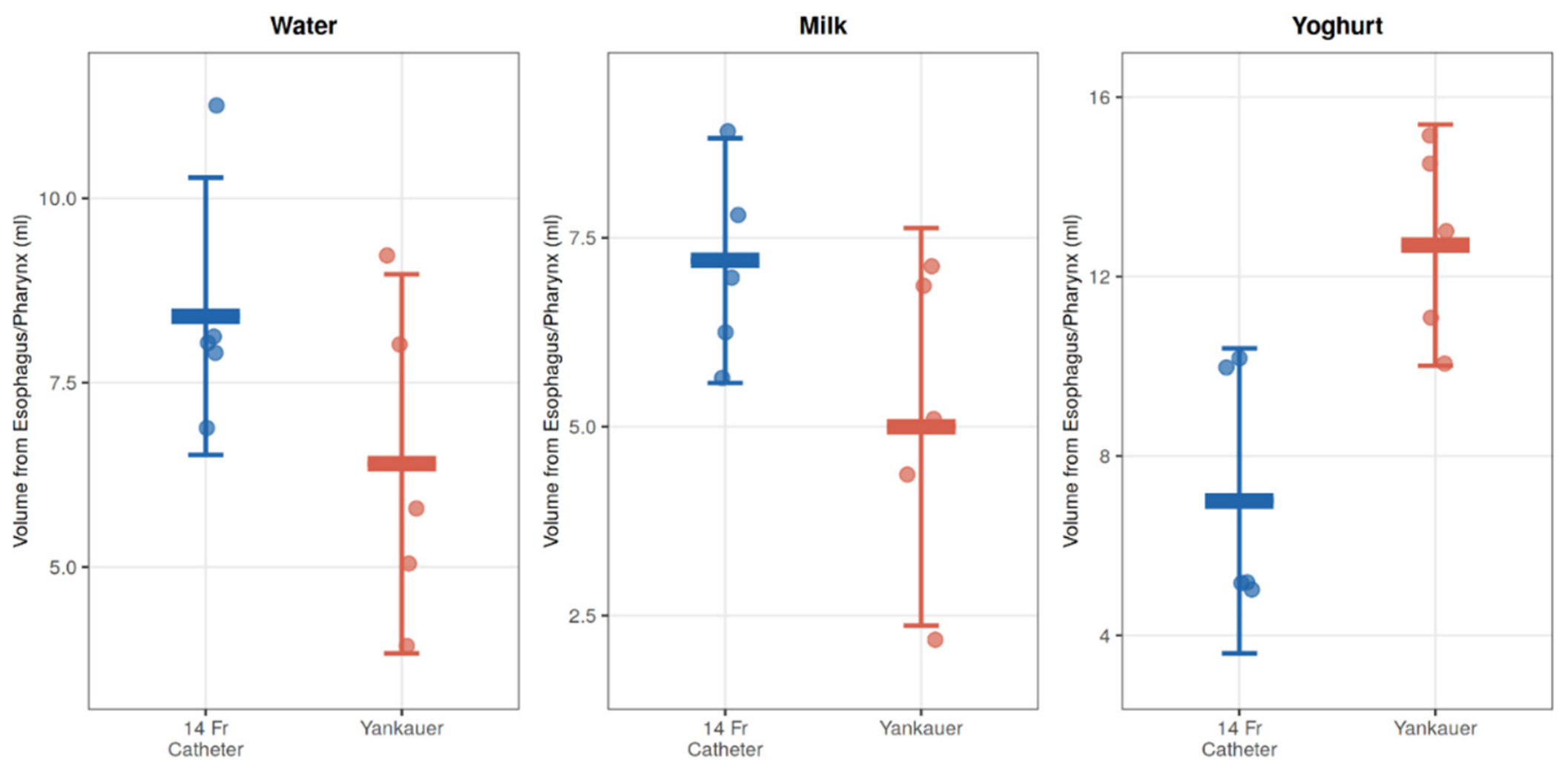
Figure 6.
Recovered Lung Volume in the Infant Airway Mannequin Model Mean recovered lung volume following suctioning with the Yankauer suction tip and 14 Fr suction catheter during clearance of water, milk, and yogurt. No significant differences were observed for all tested fluids.
Figure 6.
Recovered Lung Volume in the Infant Airway Mannequin Model Mean recovered lung volume following suctioning with the Yankauer suction tip and 14 Fr suction catheter during clearance of water, milk, and yogurt. No significant differences were observed for all tested fluids.
Disclaimer/Publisher’s Note: The statements, opinions and data contained in all publications are solely those of the individual author(s) and contributor(s) and not of MDPI and/or the editor(s). MDPI and/or the editor(s) disclaim responsibility for any injury to people or property resulting from any ideas, methods, instructions or products referred to in the content. |
© 2026 by the authors. Licensee MDPI, Basel, Switzerland. This article is an open access article distributed under the terms and conditions of the Creative Commons Attribution (CC BY) license (http://creativecommons.org/licenses/by/4.0/).
Copyright: This open access article is published under a Creative Commons CC BY 4.0 license, which permit the free download, distribution, and reuse, provided that the author and preprint are cited in any reuse.


