
Submitted:
17 July 2026
Posted:
20 July 2026
You are already at the latest version
Abstract
Background: To evaluate the sociodemographic and clinical profiles of pregnant women with positive IgM anti‑T. gondii in the eastern Brazilian Legal Amazon, during the period from 2018 to 2023. Methods: This was an indirect observational study through the retrospective analysis of 1,049 medical records from pregnant women attended in the Obstetrics service of Basic Health Units. The dependent variable was the presence of IgM antibodies, and the independent variables included age brackets, ethnicity, schooling, occupation, and clinical complaints. Data were analyzed using Epi‑Info 3.3.2 software. Risk factors and odds ratio (OR) with 95% CI were calculated. Results: From the 1,049 medical records analyzed, 52 (4.97%) presented IgM anti‑T. gondii antibodies. There was a significant correlation between IgM presence and age older than 30 years (OR 2.17; CI: 1.60–7.12), being employed (OR: 8.42; CI: 1.05–22.12), being married (OR: 3.02; CI: 1.43–9.32), and having less than eight years of schooling (OR: 3.04; CI: 1.24–11.56). Conclusions: The prevalence of IgM antibodies in the studied population was considered high, associated with low schooling, employment, and age over 30 years. The asymptomatic characteristic of acute infection is highlighted, reinforcing the need for effective prenatal screening.
Keywords:
gestational toxoplasmosis
; IgM antibodies
; risk factors
; Toxoplasma gondii
; pregnancy complications
1. Introduction
Gestational toxoplasmosis is of extreme importance due to the risk of congenital transmission which may lead to utmost deleterious injuries to the concept and may cause alterations that aggravate the neonatal prognosis of the survivors such as prematurity, intra-uterus low growth, anomalies development, congenital malformations and generalized disease. Recent data from the eastern Brazilian Amazon confirm a high prevalence of congenital toxoplasmosis among newborns, with prematurity and low birth weight as frequent outcomes [1]. Even if the newborn is asymptomatic, the child may develop future sequelae due to a persistent chronic infection [2,3,4,5,6]. In Southern Brazil, the incidence of congenital toxoplasmosis among live births in a tertiary center remains considerable, reinforcing the need for continuous surveillance [7].
The congenital infection occurs through the transplacental via usually during the maternal primo infection or in women that already had the infection before pregnancy and suffer a reactivation or a reinfection, in rare occasions. It may lead to varied consequences that depend on the degree of the fetus exposure to the tachyzoite forms of the parasite, the strain virulence and the gestational age in which the acute maternal infection occurred. Also it depends on the immune system defense capacity from the mother, the placenta, the fetus and the intensity of the fetal inflammatory response [8]. A prospective cohort study in Brazil identified that maternal serological titers and timing of infection during pregnancy are significant predictors of vertical transmission, reinforcing the multifactorial nature of fetal outcomes [9].
The fetus is immunologically deficient and begins the antibodies production about 10–12 weeks of gestational age. On the other hand, the IgG transmission from the mother to the fetus only reaches protective levels about 20–22 weeks of gestational age, increasing by the end of the gestational period when it reaches levels identical to the ones detected in the mother. Therefore there is a serological window formed until the 22nd week of gestational age in which the fetus does not present an effective antibody protection against the parasite [10]. A recent global meta-analysis reported a seroprevalence of Toxoplasma gondii in pregnant women of 36.6% worldwide, with the highest rates in South America (52.8%), highlighting the relevance of regional screening programs [11].
Most of the acutely infected pregnant women do not show clinical symptoms and the infection is only detected through serological examinations [12]. Hence the difficulty in the diagnosis of an acute infection in pregnant women [13]. Updated diagnostic approaches, including advanced serological techniques and molecular methods, have been reviewed to improve early detection of congenital toxoplasmosis [14].
Gestational toxoplasmosis is usually acquired through the ingestion of raw or undercooked meat contaminated with bradyzoit cysts, or unwashed or poorly washed raw vegetables that contain the oocysts, or even through contact with soil or water contaminated with oocysts of the parasite which were eliminated in the feces from infected cats. Therefore, the behaviors of pregnant women, their dietary and cultural habits, are directly related to infection acquisition. A comprehensive review on gestational and congenital toxoplasmosis emphasizes that dietary habits, socioeconomic conditions, and access to prenatal care remain the main determinants of infection in high-prevalence countries [15].
Despite the well-documented burden of toxoplasmosis in Brazil, most studies have focused on the South and Southeast regions, and data from the Brazilian Legal Amazon, particularly the eastern portion of Tocantins, remain scarce. Furthermore, few investigations have comprehensively analyzed both sociodemographic and clinical variables simultaneously in the same population, which limits the understanding of the local epidemiological profile and hinders the planning of region-specific prenatal screening strategies.
Therefore, this study aimed to evaluate the sociodemographic and clinical profiles of pregnant women with positive anti-T. gondii IgM antibodies attended at Basic Health Units in the city of Gurupi, state of Tocantins, Brazil, from 2018 to 2023. The prespecified hypothesis was that low schooling, older maternal age, and working outside the home would be associated with IgM seropositivity, and that most seropositive women would be asymptomatic, a pattern consistent with acute toxoplasmosis in pregnancy.
2. Materials and Methods
2.1. Study Design
The reporting of this study adheres to the “STROBE Statement” (Strengthening the Reporting of Observational Studies in Epidemiology), which consists of 22 items to be included in observational studies [16].
2.2. Context
This was an exploratory descriptive study with a quantitative approach which used the indirect observation technique through the retrospective analysis of medical records of pregnant women attended in the Obstetrics Service of the Basic Units of Health (BUH) from the city of Gurupi, located in the southern portion of the state of Tocantins, in the eastern region of the Brazilian Legal Amazon, Brazil. Gurupi is the third-largest city in the state and serves as the main health reference center for the southern region of Tocantins, covering 18 municipalities (including Gurupi itself), with a total population of 281,596 inhabitants according to the 2022 IBGE Census (IBGE, Censo Demográfico 2022) (Figure 1). The data collection was performed in 11 BUH in the urban zone of the city, covering all Basic Health Units that offered prenatal care during the study period.
2.3. Data Sources and Measurement
The pregnant women attended at the BUH of the Gurupi city are serologically triaged for toxoplasmosis through the electrochemiluminescence method in search for anti-T. gondii IgM antibodies. These tests are performed in laboratories which are credentialed by the Health Secretary from the Gurupi city.
All data were obtained from the data bank of the BUH in the period of 2008 to 2013. Data were selected from women who performed the antenatal consultations in that period. All medical records from pregnant women attended in the BUH were analyzed however only the records that presented complete information, that were filled in correctly were included in this study. Also the pregnant women must have been dwellers in the Gurupi city and must have been triaged for anti-T. gondii IgM antibodies. All pregnant women from other cities or with incomplete data were excluded.
The data collection only began after the ethics committee approval, protocol number 394846 according to the National Health Council resolution number 19611, also after the approval by the health secretary from the city of Gurupi and by the coordination of each BUH. The identity of each participant was kept in total secrecy.
2.4. Participants
A total of 6583 medical records from pregnant women were analyzed. Only 1049 were selected for this study from which 52 presented positive IgM anti-T. gondii antibodies and therefore constituted the sample size and 997 pregnant women represented the control group.
2.5. Bias Control
To reduce bias, the groups were matched by maternal age and race/skin color, with the group of IgM-positive women being matched with the group of IgM-negative women. To preserve internal validity, the same serological test kit (Cobas e411, Roche) was used for all pregnant women, and all analyses were processed in a single laboratory to avoid measurement errors, using the electrochemiluminescence method. The tests were centrally processed at the reference laboratory of the Municipality of Gurupi, Tocantins.
2.6. Variables
The dependent variable analyzed was the presence of IgM antibodies (yes or no) and the independent variables were grouped into sociodemographic characterization or procedure and clinical characterization of the main complaints or complications. The sociodemographic analyzed data were: age brackets, ethnicity, schooling, marital state, occupation, household, number of pregnancies, family income, number of antenatal consultations (<6 or ≥6) and miscarriages. The clinical data were: if there were any complaints during pregnancy, hypertension, cephalalgia, pain in the lower belly, leucorrhea, lower back pain, edema in toes, ankles and legs, nausea, vaginal bleeding, vertigo, heartburn, insomnia and urinary infection.
2.7. Serological Test
The IgG and IgM serological test was performed using the Roche (Elecsys) Cobas e411 kit (Roche Diagnostics GmbH, Mannheim, Alemanha) and employed the electrochemiluminescence immunoassay (ECLIA) technique, an automated method for the detection and quantification of specific antibodies in serum. The test principle involves incubating samples with T. gondii antigens and ruthenium-labeled reagents, whose light emission, activated by an electric current, is directly proportional to the antibody concentration. For IgM antibodies, values expressed in IU/mL below 0.50 were considered non-reactive (Negative), indicating the absence of recent infection; values between 0.50 and 0.60 were indeterminate, requiring re-evaluation; and values greater than or equal to 0.60 were reactive (Positive), suggesting recent infection. For IgG antibodies, which indicate past infection or immunity, a cut-off below 1.6 IU/mL was considered Non-Reactive, and a cutoff greater than or equal to 1.6 IU/mL was considered Reactive.
2.8. Sample Size
The parameters for calculating the sample size were an expected prevalence of 50%, a confidence level (type I error) of 5%, and a precision level of 5%. An additional 5% margin was estimated to compensate for possible losses. A minimum sample size of 444 pregnant women was defined. Pregnant women were selected by convenience; those from whom categorical data were extracted from their medical records and who underwent serological testing for T. gondii were included in the study.
2.9. Statistical Analysis
The analysis was conducted using IBM SPSS Statistics software (Version 31.0.0). Variable selection for the multivariate model was performed using a stepwise backward selection procedure, and descriptive statistical analysis was applied using the absolute and percentage frequencies presented in the tables.
Due to the predominantly categorical nature of the independent variables included in the logistic regression models, formal normality tests for the predictors were not applicable. All statistical analyses were performed considering a significance level of p < 0.05.
Risk factors were assessed by estimating the odds ratio (OR) with a 95% CI between the two subgroups formed: the first with positive anti-T. gondii IgM antibodies and the other with negative pregnant women.
3. Results
A total of 1049 medical records with complete information from pregnant women attended in BUH in the city of Gurupi, estate of Tocantins, Brazil, from January 2008 to December 2013 were analyzed. From those, 52 (4.97%) were infected with T. gondii as they presented positive IgM anti-T. gondii antibodies in the peripheral blood (Figure 2).
The sociodemographic characteristics related to the presence of IgM anti-T. gondii antibodies in the studied pregnant women, featured that age higher than 30 years old increased two fold the toxoplasmosis risk, working at other places than home increased eight fold the risk, being married increased three fold and having less than 8 years of schooling increased three fold the toxoplasmosis risk (Table 1).
Regarding the clinical characteristics of the pregnant women there was no relation between the complaints or other occurrences with the presence of IgM anti-T. gondii antibodies (Table 2).
4. Discussion
This study investigated the sociodemographic and clinical profiles of pregnant women with positive IgM anti-T. gondii antibodies attended at 11 Basic Health Units in Gurupi, Tocantins, Brazil, from 2018 to 2023. The main findings were: a prevalence of 4.97% of IgM seropositivity; four sociodemographic factors significantly associated with IgM positivity — age ≥ 30 years (OR: 2.17), working outside the home (OR: 8.42), being married/living with a partner (OR: 3.02), and schooling < 8 years (OR: 3.04); and no statistically significant association between any clinical complaint and IgM seropositivity.
The prevalence of 4.97% in Gurupi is elevated compared to other Brazilian studies. In Rolândia, Paraná, the prevalence was 2.2% [18]. In Recife, a study reported 2.8% [19]; in Niterói, Rio de Janeiro, 4.2% was found [20]. In western Paraná, 1.1% was reported [21]. However, the prevalence in Gurupi was lower than in Goiânia, Goiás (8.6%) [22]. A recent global meta-analysis estimated the overall seroprevalence of T. gondii in pregnant women at 36.6%, with South America presenting the highest rate of 52.8% [11]. The IgM prevalence observed in our study (4.97%) is consistent with the expected proportion of recently acquired infections in a highly endemic region. A retrospective cohort study in the eastern Brazilian Amazon found a congenital toxoplasmosis prevalence of 5.1% among newborns of IgM-positive mothers [1]. In southern Brazil, an incidence of 3.8 per 10,000 live births was reported [7]. In Amazonas state, a seroprevalence of 6.2% was found among pregnant women [23].
Low schooling (< 8 years) increased the risk threefold. This supports the hypothesis that higher educational levels reduce exposure to infective forms through better knowledge of hygienic measures [24]. A cross-sectional study in Ghana similarly found lower educational attainment associated with seropositivity [25]. Regarding awareness, a study in Jeddah revealed that only 28.4% of pregnant women had adequate knowledge about toxoplasmosis, with higher education being the strongest predictor of good preventive practices [26].
Age ≥ 30 years increased the risk approximately twofold, in accordance with previous reports [27,28,29]. This may be explained by longer cumulative exposure to risk factors over time [30,31]. However, divergent findings exist in Cuiabá [32] and Porto Alegre [27]. A systematic review of African studies reported that maternal age > 30 years was consistently associated with higher seroprevalence [33]. A case–control study in Italy identified maternal age > 35 years as an independent risk factor [34], and a longitudinal study in Lyon, France confirmed that seroprevalence increases steadily with age [35].
Working outside the home showed the strongest association (OR: 8.42). This is plausibly explained by eating in restaurants or workplace cafeterias where food hygiene is unknown or deficient [8,36]. A study in Ghana found a 2.5-fold increase in seropositivity associated with working outside the home [25]. The review by Hatanaka et al. highlighted that dietary habits, particularly consumption of raw or undercooked meat outside the home, remain among the most important preventable risk factors [15].
Being married or living with a partner (OR: 3.02) may reflect confounding by age, as married women tend to be older and have had more time for exposure. Similar associations have been reported in other Brazilian studies [24,37].
Regarding clinical findings, no statistically significant difference was observed between the groups for any of the 12 clinical variables. This confirms the predominantly asymptomatic nature of acute toxoplasmosis in pregnancy, making clinical diagnosis alone unreliable and reinforcing the need for systematic serological screening [13,37,38,39]. A scoping review in Africa concluded that over 80% of acute infections are asymptomatic [40]. An updated overview emphasized that serological screening remains the cornerstone of early detection, complemented by molecular methods in suspected cases [14]. A prospective cohort study in Rio de Janeiro demonstrated that maternal serological titers are significant predictors of vertical transmission [9]. Recent advances, including dried blood spots for seroprevalence estimation, have been proposed as cost-effective strategies [41]. Early treatment with spiramycin significantly reduced the risk of vertical transmission [42].
The prevalence found in this study and its association with modifiable risk factors — schooling, occupation, and dietary habits — have important implications for prenatal care in the Brazilian Legal Amazon. Prenatal screening programs should include serological testing for toxoplasmosis in the first trimester, with repeat testing in seronegative women in the third trimester, as recommended for high-prevalence regions [1,15].
This study has several limitations. The retrospective design is subject to information bias, as data completeness depends on original record quality. The sample was drawn from a single city, limiting generalizability. Selection by convenience may have introduced bias, although the sample exceeded the minimum calculated size. The small number of IgM-positive cases (n = 52) limited statistical power. The study period includes the COVID-19 pandemic years, during which prenatal care access may have been disrupted. Serological classification relied on a single IgM test without IgG avidity or confirmatory PCR, which may have led to misclassification. Residual confounding by unmeasured variables — dietary habits, cat ownership, water source, cannot be excluded.
5. Conclusions
This study revealed that the prevalence of IgM anti-T. gondii antibodies in pregnant women from Gurupi, Tocantins, was 4.97%, which is elevated when compared to most Brazilian studies. Four sociodemographic factors were significantly associated with IgM seropositivity: low schooling (< 8 years), age ≥ 30 years, working outside the home (eightfold increase), and being married or living with a partner. These findings confirm the prespecified hypothesis that low schooling, older maternal age, and occupational exposure are important determinants of infection in this population.
The absence of statistically significant differences in clinical complaints between IgM-positive and IgM-negative women across all 12 clinical variables analyzed confirms the predominantly asymptomatic nature of acute toxoplasmosis in pregnancy. This finding reinforces that clinical diagnosis alone is unreliable, and that systematic serological screening remains essential for timely detection and management. The strong association between working outside the home and infection risk highlights the need for occupational health education during prenatal care, particularly regarding food hygiene in restaurants and workplace cafeterias.
Universal serological screening for toxoplasmosis should be implemented in the first prenatal consultation, with repeat testing in seronegative women during the third trimester. Health education programs targeting women with low schooling should focus on dietary hygiene measures, proper washing of vegetables and avoidance of raw or undercooked meat. Future prospective studies with IgG avidity testing, PCR confirmation, and multi-centre designs across the Brazilian Legal Amazon are needed to improve generalisability and guide region-specific preventive strategies.
Supplementary Materials
The following supporting information can be downloaded at the website of this paper posted on Preprints.org.
Author Contributions
M.G.S. and E.E.L.G. conceived and designed the study; M.G.S., N.M.E.P.L.C., R.G.F., P.O.A. and H.G. collected and analyzed the data; M.G.S. and E.E.L.G. wrote the manuscript. All authors have read and agreed to the published version of the manuscript.
Funding
This research received no external funding.
Institutional Review Board Statement
The study was conducted in accordance with the Declaration of Helsinki and approved by the Ethics Committee of the Federal University of Tocantins (protocol code 394846).
Informed Consent Statement
Patient consent was waived due to the retrospective nature of the study using anonymized medical records.
Data Availability Statement
The data presented in this study are available on request from the corresponding author. The data are not publicly available due to privacy and ethical restrictions.
Conflicts of Interest
The authors declare no conflicts of interest.
Abbreviations
The following abbreviations are used in this manuscript:
| Abbreviation | Description |
| BHU | Basic Health Units |
| CI 95% | 95% Confidence Interval |
| IgG | Immunoglobulin G |
| IgM | Immunoglobulin M |
| OR | Odds Ratio |
| SD | Standard Deviation |
| SI | International System of Units |
| T. gondii | Toxoplasma gondii |
References
- Sousa, S.B.C.; Mangueira, C.D.M.; Moron, S.E.; Ferreira, R.G.; Gomes, H.; Costa, N.M.E.P.L.; Cangussu, A.S.R.; Ribeiro, B.M.; Campos, F.S.; Santos, G.R.D.; et al. Prevalence and Risk Factors for Congenital Toxoplasmosis in Newborns in the Public Health System in the Eastern Region of the Brazilian Amazon, Northern Tocantins State, Brazil: Retrospective Cohort Study. Trop. Med. Infect. Dis. 2026, 11, 13. [Google Scholar] [CrossRef] [PubMed]
- De-Paschale, M.; et al. Antenatal screening for Toxoplasma gondii, Cytomegalovirus, rubella and Treponema pallidum infections in northern Benin. Trop. Med. Int. Health 2014, 19, 1–4. [Google Scholar] [CrossRef]
- Yadav, R.K.; Maity, S.; Saha, S. A review on TORCH: groups of congenital infection during pregnancy. J. Sci. Innov. Res. 2014, 3, 258–264. [Google Scholar] [CrossRef]
- Manicklal, S.; et al. The "silent" global burden of congenital cytomegalovirus. Clin. Microbiol. Rev. 2013, 26, 86–102. [Google Scholar] [CrossRef] [PubMed]
- Padmavathy, M.; et al. Seroprevalence of STORCH infections and adverse reproductive outcome in current pregnancy with bad obstetric history. J. Clin. Biomed. Sci. 2013, 3, 62–71. [Google Scholar] [CrossRef]
- Thiébaut, R.; et al. Effectiveness of prenatal treatment for congenital toxoplasmosis: a meta-analysis of individual patients' data. Lancet 2007, 369, 115–122. [Google Scholar] [CrossRef] [PubMed]
- Holler, S.R.; dos Passos, C.; Ribeiro, A.L.; Küster, S.Z.; Silvestre, E.A.; Martins, D.R.; Teixeira, A.C.M.; Antunes, M.T.Z.; Bischoff, A.R.; Carvalho, C.G. Incidence of congenital toxoplasmosis among live births in a tertiary center in Southern Brazil. J. Trop. Pediatr. 2026, 72, fmag037. [Google Scholar] [CrossRef] [PubMed]
- Kawasaki, M.L.; Carvalho, P.N.; Lucarevschi, B.R. Atenção à toxoplasmose durante a gestação em população carente do interior do Estado de São Paulo. Pediatria (São Paulo) 2006, 28, 242–250. [Google Scholar]
- D'Ambros, D.; Santos, L.H.S.; dos Santos, L.S.; Ferreira, M.; Andrade, C.; Guttmann, P.; Frota, A.C.; Abreu, T.; Machado, E.; Hofer, C.B. Maternal and clinical predictors of congenital toxoplasmosis: a prospective cohort study in Brazil. Int. J. Gynecol. Obstet. 2026, 00, 1–7. [Google Scholar] [CrossRef] [PubMed]
- Avelino, M. A gestação como fator de risco para a primo-infecção pelo Toxoplasma gondii. Ph.D. Thesis, Universidade de Brasília, Brasília, Brazil, 2000. [Google Scholar]
- Salari, N.; Rahimi, A.; Zarei, H.; et al. Global seroprevalence of Toxoplasma gondii in pregnant women: a systematic review and meta-analysis. BMC Pregnancy Childbirth 2025, 25, 90. [Google Scholar] [CrossRef] [PubMed]
- Carellos, E.V.M.; et al. Adverse socioeconomic conditions and oocyst-related factors are associated with congenital toxoplasmosis in a population-based study in Minas Gerais, Brazil. PLoS ONE 2014, 9, e88588. [Google Scholar] [CrossRef] [PubMed]
- Avelino, M.M.; et al. Congenital toxoplasmosis and prenatal care state programs. BMC Infect. Dis. 2014, 14, 33. [Google Scholar] [CrossRef] [PubMed]
- Nguyen, T.G.; Garnaud, C.; Brenier-Pinchart, M.P.; Robert, M. Diagnosis and treatment of congenital toxoplasmosis: an updated overview. Expert Rev. Anti Infect. Ther. 2026, 24, 501–516. [Google Scholar] [CrossRef] [PubMed]
- Hatanaka, A.R.; Braga, A.; Traina, E.; Teixeira, L.K.A.; Longo, C.; Castro, P.T.; Werner, H.; Callado, G.Y.; Araujo Júnior, E. Gestational and congenital toxoplasmosis: an updated review with emphasis on high-prevalence countries. Women 2026, 6, 43. [Google Scholar] [CrossRef]
- Malta, M.; Cardoso, L.O.; Bastos, F.I.; Magnanini, M.M.F.; da Silva, C.M.F.P. STROBE initiative: guidelines on reporting observational studies. Rev. Saude Publica 2010, 44, 559–565. [Google Scholar] [CrossRef] [PubMed]
- Brasil. Ministério da Saúde. Conselho Nacional de Saúde. Resolução nº 196, de 10 de outubro de 1996; Diretrizes e normas regulamentadoras de pesquisas envolvendo seres humanos. Brasília, 1996.
- Dias, R.C.F.; Lopes-Mori, F.M.R.; Mitsuka-Breganó, R.; Dias, R.A.F.; Tokano, D.V.; Reiche, E.M.V.; et al. Factors associated to infection by Toxoplasma gondii in pregnant women attended in basic health units in the city of Rolândia, Paraná, Brazil. Rev. Inst. Med. Trop. São Paulo 2011, 53, 185–191. [Google Scholar] [CrossRef] [PubMed]
- Porto, A.M.F.; Amorim, M.M.R.; Coelho, I.C.N.; Santos, L.C. Serologic profile of toxoplasmosis in pregnant women attended at a teaching-hospital in Recife. Rev. Assoc. Med. Bras. 2008, 54, 242–248. [Google Scholar] [PubMed]
- Moura, F.L.; Amendoeira, M.R.R.; Bastos, O.M.P.; Mattos, D.P.B.G.; Fonseca, A.B.M.; Nicolau, J.L.; et al. Prevalence and risk factors for Toxoplasma gondii infection among pregnant and postpartum women attended at public healthcare facilities in the City of Niterói, State of Rio de Janeiro, Brazil. Rev. Soc. Bras. Med. Trop. 2013, 46, 200–207. [Google Scholar] [CrossRef] [PubMed]
- Bittencourt, L.H.F.D.B.; Lopes-Mori, F.M.R.; Mitsuka-Breganó, R.; Valentim-Zabott, M.; Freire, R.L.; Pinto, S.B.; et al. Soroepidemiologia da toxoplasmose em gestantes a partir da implantação do Programa de Vigilância da Toxoplasmose Adquirida e Congênita em municípios da região oeste do Paraná. Rev. Bras. Ginecol. Obstet. 2012, 34, 63–68. [Google Scholar] [PubMed]
- Avelino, M.; Campos-Júnior, D.; Parada, J.; Castro, A. Risk factors for Toxoplasma gondii infection in women of childbearing age. Braz. J. Infect. Dis. 2005, 8, 164–174. [Google Scholar]
- Azevedo, A.P.; de Lima, H.A.A.; da Silva, A.R.R. Características epidemiológicas da toxoplasmose gestacional no Amazonas. Braz. J. Implantol. Health Sci. 2024, 6, 268–282. [Google Scholar] [CrossRef]
- Silva, M.G.; Câmara, J.T.; Vinaud, M.C.; Castro, A.M. Epidemiological factors associated with seropositivity for toxoplasmosis in pregnant women from Gurupi, State of Tocantins, Brazil. Rev. Soc. Bras. Med. Trop. 2014, 47, 469–475. [Google Scholar] [CrossRef] [PubMed]
- Co-infections and risk factors of Toxoplasma gondii infection among pregnant women in Ghana: a facility-based cross-sectional study. PLoS ONE 2025, 20, e0324950. [CrossRef] [PubMed]
- Toxoplasmosis knowledge and preventive behaviours among pregnant women in Jeddah, Saudi Arabia: a cross-sectional study. Healthcare 2025, 13, 174. [CrossRef] [PubMed]
- Varella, I.; Wagner, M.; Darela, A.; Nunes, L.; Müller, R. Prevalência de soropositividade para toxoplasmose em gestantes. J. Pediatr. 2003, 79, 69–74. [Google Scholar] [CrossRef]
- Ertug, S.; Okyay, P.; Turkmen, M.; Yuksel, H. Seroprevalence and risk factors for Toxoplasma infection among pregnant women in Aydin province, Turkey. BMC Public Health 2005, 5, 66. [Google Scholar] [CrossRef] [PubMed]
- Oliveira-Bahia, L.; Abreu, A.; Azevedo-Silva, J.; Oréfice, F. Toxoplasmosis in southeastern Brazil: an alarming situation of highly endemic acquired and congenital infection. Int. J. Parasitol. 2001, 31, 115–144. [Google Scholar]
- Aspinall, T.; Guy, E.; Roberts, K.; Joynson, D.; Hyde, J.; Sims, P. Molecular evidence for multiple Toxoplasma gondii infections in individual patients in England and Wales: public health implications. Int. J. Parasitol. 2003, 33, 97–103. [Google Scholar] [CrossRef] [PubMed]
- Spalding, S.; Amendoeira, M.; Ribeiro, L.; Silveira, C.; Garcia, A.; Camilo-Coura, L. Estudo prospectivo de gestantes e seus bebês com risco de transmissão de toxoplasmose congênita em município do Rio Grande do Sul. Rev. Soc. Bras. Med. Trop. 2003, 36, 483–491. [Google Scholar] [CrossRef] [PubMed]
- Leão, P.; Meirelles-Filho, J.; Medeiros, S. Toxoplasmose: soroprevalência em puérperas atendidas pelo Sistema Único de Saúde. Rev. Bras. Ginecol. Obstet. 2004, 26, 43–54. [Google Scholar] [CrossRef]
- Gelaw, Y.M.; Dagnew, G.W.; Alene, G.D.; Gangneux, J.P.; Robert-Gangneux, F. Toxoplasma gondii seroprevalence among pregnant women in Africa: a systematic review and meta-analysis. PLoS Negl. Trop. Dis. 2024. [Google Scholar] [CrossRef] [PubMed]
- Maternal, behavioral, and environmental factors associated with Toxoplasma gondii infection in pregnancy in Italy: a case–control study. Diagnostics 2026, 16, 606. [CrossRef] [PubMed]
- Alvaro, R.; Gaucher, L.; Dupont, D.; Menotti, J.; Atallah, A.; de la Fournière, B.; Massoud, M.; Lina, B.; Tirard-Collet, P.; Wallon, M. Epidemiological changes in Toxoplasma infection: a 7-year longitudinal study in pregnant women in Lyon, France. 2025. [Google Scholar] [CrossRef] [PubMed]
- Barbosa, I.R. Estudo epidemiológico da toxoplasmose em gestantes atendidas na Maternidade Escola Januário Cicco, Natal, Rio Grande do Norte. Master's Thesis, Universidade Federal do Rio Grande do Norte, Natal, Brazil, 2008. [Google Scholar]
- Barbosa, I.; Holanda, C.; Andrade-Neto, V. Toxoplasmosis screening and risk factors amongst pregnant females in Natal, northeastern Brazil. Trans. R. Soc. Trop. Med. Hyg. 2009, 103, 377–382. [Google Scholar] [CrossRef] [PubMed]
- Alford, C.; Stagno, S.; Reynolds, D. Congenital toxoplasmosis: clinical, laboratory and therapeutic considerations with special reference to subclinical disease. Bull. N. Y. Acad. Med. 1974, 50, 160–168. [Google Scholar] [PubMed]
- Alves, J.M.; Magalhães, V.; Gomes, A. Avaliação oftalmológica em pacientes com AIDS e neurotoxoplasmose. Rev. Soc. Bras. Med. Trop. 2010, 43, 36–40. [Google Scholar] [CrossRef] [PubMed]
- Early warning signs, effects, risk factors, and diagnostic indicators of toxoplasmosis in pregnant women in Africa: a scoping review. Trop. Med. Infect. Dis. 2026, 11, 104. [CrossRef] [PubMed]
- Using dried blood spots to estimate Toxoplasma gondii seroprevalence in pregnant women in Catalonia, Spain, and to serologically diagnose congenital toxoplasmosis. PLoS Negl. Trop. Dis. 2026. [CrossRef] [PubMed]
- Perinatal outcomes in primary toxoplasmosis during pregnancy: treatment. J. Biochem. Technol. 2026, 17, 57–67. [CrossRef]
Figure 1.
Geographic location of the municipalities of origin of the mother’s gestational toxoplasmosis who formed the study group, located in the eastern region of the Brazilian Legal Amazon, in the state of Tocantins, Brazil.
Figure 1.
Geographic location of the municipalities of origin of the mother’s gestational toxoplasmosis who formed the study group, located in the eastern region of the Brazilian Legal Amazon, in the state of Tocantins, Brazil.
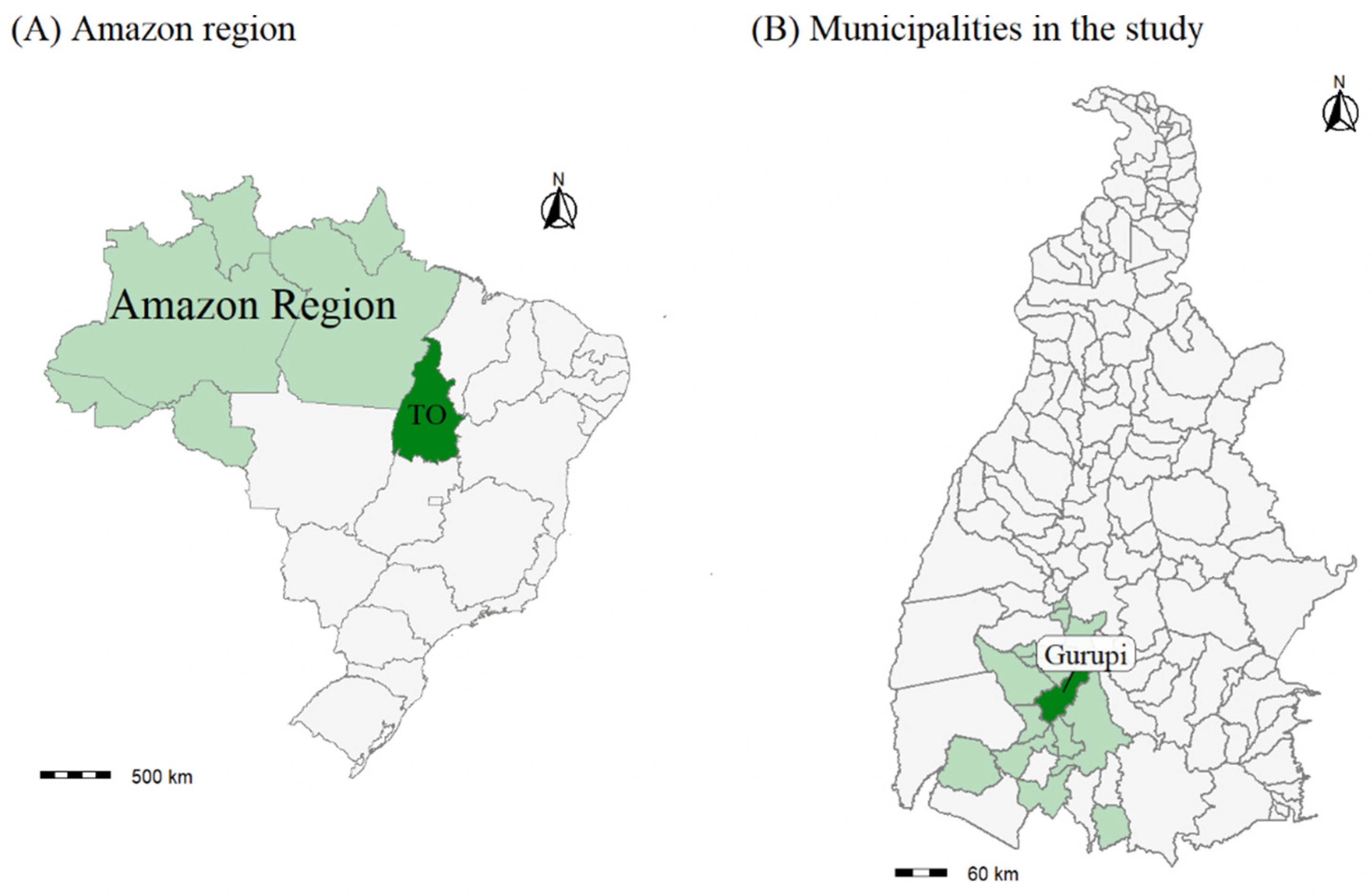
Figure 2.
Schematic flowchart of the study design. The study was conducted in 11 Basic Health Units (BUH) in the urban area of Gurupi, Tocantins, Brazil (eastern Brazilian Legal Amazon), from 2018 to 2023. A total of 6,583 medical records were analyzed, of which 1,049 met the inclusion criteria, comprising 52 IgM-positive cases and 997 IgM-negative controls. The methodology was organized into three main axes: (1) preparation, study design, setting, population, sampling, and ethical approval; (2) execution, serological testing (electrochemiluminescence, Roche Cobas e411), data collection on sociodemographic and clinical variables, and statistical analysis (logistic regression, SPSS v.31); and (3) results, prevalence of 4.97%, identification of four significant risk factors (age ≥ 30 years, working outside the home, being married, schooling < 8 years), and absence of significant clinical associations, confirming the predominantly asymptomatic nature of acute toxoplasmosis.
Figure 2.
Schematic flowchart of the study design. The study was conducted in 11 Basic Health Units (BUH) in the urban area of Gurupi, Tocantins, Brazil (eastern Brazilian Legal Amazon), from 2018 to 2023. A total of 6,583 medical records were analyzed, of which 1,049 met the inclusion criteria, comprising 52 IgM-positive cases and 997 IgM-negative controls. The methodology was organized into three main axes: (1) preparation, study design, setting, population, sampling, and ethical approval; (2) execution, serological testing (electrochemiluminescence, Roche Cobas e411), data collection on sociodemographic and clinical variables, and statistical analysis (logistic regression, SPSS v.31); and (3) results, prevalence of 4.97%, identification of four significant risk factors (age ≥ 30 years, working outside the home, being married, schooling < 8 years), and absence of significant clinical associations, confirming the predominantly asymptomatic nature of acute toxoplasmosis.
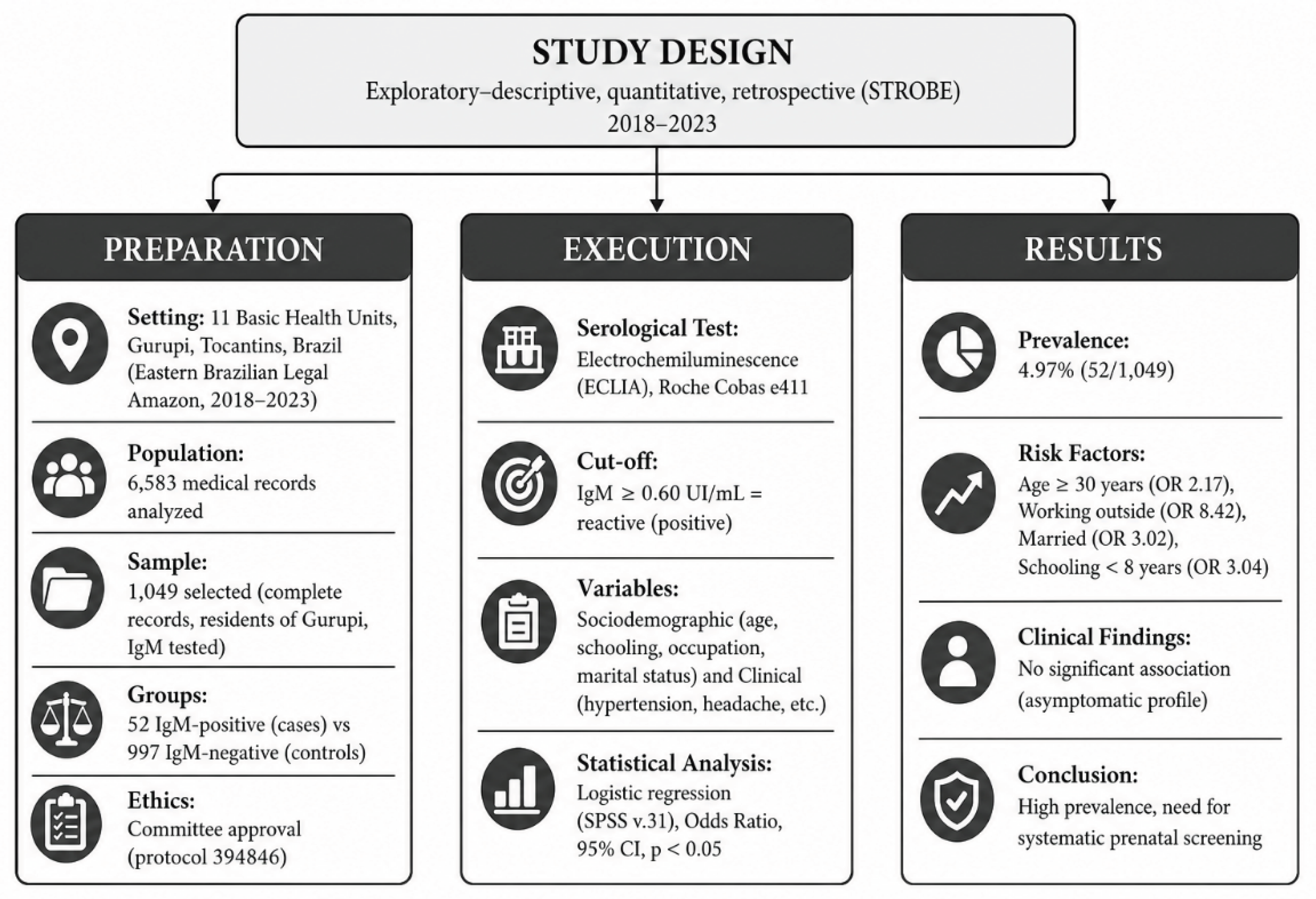

Table 1.
Sociodemographic characterization of pregnant women with positive IgM anti-Toxoplasma gondii antibodies attended in 11 Basic Units of Health from Gurupi, estate of Tocantins, Brazil in the period of 2008 to 2013.
Table 1.
Sociodemographic characterization of pregnant women with positive IgM anti-Toxoplasma gondii antibodies attended in 11 Basic Units of Health from Gurupi, estate of Tocantins, Brazil in the period of 2008 to 2013.
| IgM + Pregnant Women | IgM - Pregnant Women | OR | CI 95% | p Value | |||
|---|---|---|---|---|---|---|---|
| n. | % | n. | % | ||||
| ETHNICITY | |||||||
| mulatto + black | 45 | 85.54% | 778 | 78.03% | 1.81 | 0.02-9.90 | 0.830 |
| white | 7 | 13.46% | 219 | 21.97% | |||
| AGE | |||||||
| ≥30 | 35 | 67.31% | 485 | 48.64% | 2.17 | 1.60-7.12 | 0.014 |
| <30 | 17 | 32.70% | 512 | 51.36% | 1 | ||
| ORIGIN | |||||||
| Rural zone | 3 | 5.8% | 46 | 4.6% | 1.26 | 0.11-6.84 | 0.324 |
| Urban zone | 49 | 94.2% | 951 | 95.4% | 1 | ||
| NUMBER OF PREGNANCIES | |||||||
| Primigravid | 19 | 36.5% | 387 | 38.8% | 0.91 | 0.32-3.12 | 0.112 |
| Multigravid | 33 | 63.5% | 610 | 61.2% | |||
| OCCUPATION | |||||||
| Work | 47 | 90.4% | 526 | 52.8% | 8.42 | 1.05-22.12 | 0.032 |
| Not work | 5 | 9.6% | 471 | 47.2% | 1 | ||
| MONTHLY FAMILY INCOME | |||||||
| < 2 minimum wages | 22 | 42.31% | 493 | 49.4% | 0.74 | 0.42-5.12 | 0.980 |
| ≥ 2 minimum wages | 30 | 57.69% | 504 | 51.6% | 1 | ||
| LABOR | |||||||
| Cesarean section | 33 | 63.5% | 624 | 62.6% | 1.04 | 0.42-2.05 | 0.850 |
| Normal | 19 | 36.5% | 373 | 37.4% | 1 | ||
| PREVIOUS MISCARRIAGES | |||||||
| Yes | 13 | 25% | 200 | 20.1% | 1.33 | 0.47-3.73 | 0.590 |
| No | 39 | 75% | 797 | 79.9% | 1 | ||
| NUMBER OF MISCARRIAGES | |||||||
| 1 miscarriage | 8 | 60% | 156 | 78.0% | - | ||
| > 1 miscarriage | 5 | 40% | 44 | 22.0% | |||
| MARITAL STATE | |||||||
| Married (with partner) | 47 | 90.4% | 754 | 75.6% | 3.02 | 1.43-9.32 | 0.023 |
| Single (without partner) | 5 | 9.6% | 243 | 24.4% | |||
| SCHOOLING | |||||||
| < 8 years of schooling | 30 | 57.69% | 308 | 30.9% | 3.04 | 1.24-11.56 | 0.030 |
| ≥ 8 years of schooling | 22 | 42.31% | 687 | 69.1% | 1 | ||
| NUMBER OF CONSULTATIONS | |||||||
| ≥ 6 | 30 | 57.69% | 472 | 52.7% | 1.52 | 0.10-2.27 | 0.444 |
| < 6 | 22 | 42.31% | 525 | 47.3% | 1 | ||
n.= Absolute frequency; % = relative frequency, OR = Odds Ratio, CI = confidence interval.
Table 2.
Clinical characterization of pregnant women with positive IgM anti-Toxoplasma gondii antibodies attended in 11 Basic Units of Health from Gurupi, estate of Tocantins, Brazil in the period of 2008 to 2013.
Table 2.
Clinical characterization of pregnant women with positive IgM anti-Toxoplasma gondii antibodies attended in 11 Basic Units of Health from Gurupi, estate of Tocantins, Brazil in the period of 2008 to 2013.
| IgM + pregnant women | IgM - pregnant women | OR | CI 95% | p value | |||
|---|---|---|---|---|---|---|---|
| n. | % | n. | % | ||||
| COMPLAINTS | |||||||
| With complaints | 43 | 82.7% | 836 | 83.8% | 0.92 | 0.44-1.93 | 0.834 |
| No complaints | 9 | 17.3% | 161 | 16.2% | 1 | ||
| HYPERTENSION | |||||||
| Yes | 11 | 21.1% | 153 | 15.3% | 1.48 | 0.71-2.99 | 0.302 |
| No | 41 | 78.9% | 844 | 84.7% | 1 | ||
| CEPHALALGIA | |||||||
| Yes | 20 | 38.5% | 381 | 38.2% | 1.01 | 0.56-2.75 | 0.961 |
| No | 32 | 61.5% | 616 | 61.8% | 1 | ||
| PAIN IN THE LOWER BELLY | |||||||
| Yes | 17 | 32.7% | 356 | 35.7% | 0.87 | 0.63-2.07 | 0.668 |
| No | 35 | 67.3% | 641 | 64.3% | 1 | ||
| LEUCORRHEA | |||||||
| Yes | 11 | 21.2% | 189 | 19.0% | 1.14 | 0.44-1.74 | 0.700 |
| No | 41 | 78.8% | 808 | 81.0% | 1 | ||
| LOWER BACK PAIN | |||||||
| Yes | 14 | 26.9% | 164 | 16.4% | 1.87 | 0.28-4.00 | 0.046 |
| No | 38 | 73.1% | 833 | 83.6% | 1 | ||
| EDEMA* | |||||||
| Yes | 7 | 13.5% | 138 | 13.8% | 0.96 | 0.45-2.32 | 0.957 |
| No | 45 | 86.5% | 859 | 86.2% | 1 | ||
| NAUSEA | |||||||
| Yes | 6 | 11.5% | 124 | 12.4% | 0.91 | 0.46-2.61 | 0.856 |
| No | 46 | 88.5% | 873 | 87.6% | 1 | ||
| VAGINAL BLEEDING | |||||||
| Yes | 3 | 5.8% | 92 | 9.2% | 0.60 | 0.51-5.42 | 0.407 |
| No | 49 | 94.2% | 905 | 90.8% | 1 | ||
| VERTIGO | |||||||
| Yes | 3 | 5.8% | 78 | 7.8% | 0.72 | 0.42-4.53 | 0.598 |
| No | 49 | 94.2% | 919 | 92.2% | 1 | ||
| HEARTBURN | |||||||
| Yes | 3 | 5.8% | 74 | 7.4% | 0.76 | 0.40-4.28 | 0.669 |
| No | 49 | 94.2% | 923 | 92.6% | 1 | ||
| INSOMNIA | |||||||
| Yes | 2 | 3.8% | 44 | 4.4% | 0.86 | 0.27-4.83 | 0.860 |
| No | 50 | 96.2% | 953 | 95.6% | 1 | ||
| URINARY INFECTION | |||||||
| Yes | 5 | 9.6% | 107 | 10.7% | 0.88 | 0.44-2.90 | 0.800 |
| No | 47 | 90.4% | 890 | 89.3% | 1 | ||
* = Edema in toes, ankles and legs; n.= absolute frequency, % = relative frequency, OR = Odds Ratio, CI = confidence interval.
Disclaimer/Publisher’s Note: The statements, opinions and data contained in all publications are solely those of the individual author(s) and contributor(s) and not of MDPI and/or the editor(s). MDPI and/or the editor(s) disclaim responsibility for any injury to people or property resulting from any ideas, methods, instructions or products referred to in the content. |
© 2026 by the authors. Licensee MDPI, Basel, Switzerland. This article is an open access article distributed under the terms and conditions of the Creative Commons Attribution (CC BY) license (http://creativecommons.org/licenses/by/4.0/).
Copyright: This open access article is published under a Creative Commons CC BY 4.0 license, which permit the free download, distribution, and reuse, provided that the author and preprint are cited in any reuse.


