
Submitted:
17 July 2026
Posted:
20 July 2026
You are already at the latest version
Abstract
The wider adoption of electric motorcycles has increased interest in their role in urban mobility. However, research on e-motorcycle adoption remains scattered across different disciplines, with no comprehensive overview of the field. Bibliometric analysis was utilised to identify the main research themes, and highlight future research directions. A total of 165 publications published between 2000 and June 2026 were retrieved from the Scopus and Web of Science databases and analysed using the Bibliometrix R package. The first publication appeared in 2005, but research grew rapidly after 2020 and reached its peak in 2025. China was the leading contributor to the field. The findings show that research has shifted from an early focus on battery technology and environmental performance to narrower issues, such as user behaviour, charging infrastructure, and sustainable urban mobility. Three main research themes were identified: sustainability and environmental policy; transport policy and economics; and behavioural and psychological factors. The review also identified important research gaps in governance, renewable energy, social inclusion, and studies from African cities. Future studies should give more attention to how policies, renewable energy-powered charging, and inclusive mobility initiatives can support e-motorcycle adoption in Africa.
Keywords:
electric motorcycle
; electric scooter
; adoption
; intention
; urban
; cities
; bibliometric
1. Introduction
Urban areas face many challenges due to rapid urbanisation and a rising number of vehicles on the road [1,2]. In addition, urban areas continue to struggle with congested roads, inadequate transport infrastructure, and increasing air and noise pollution [3,4,5]. These transport-related challenges also contribute to climate change, as the transport sector produces about 25% of global carbon emissions [4,6]. These challenges are expected to worsen as the number of vehicles in the world's top 100 cities is predicted to rise by 36% by 2030 [4]. The increasing use of conventional motorcycles is also adding to urban air pollution and carbon emissions [7,8], making it more difficult to achieve sustainable urban transport systems. In response, urban transport systems are shifting towards electric motorcycles (e-motorcycles) to tackle these challenges [2,9,10]. The shift is reflected in the rising share of global electric two-wheeler sales, which increased from 14% in 2024 to 15% during the first 10 months of 2025 [11]. However, the growth remains uneven, with China leading with a 54. 8% sales share [11].
An e-motorcycle is a two-wheeled vehicle that operates on an electric motor powered by rechargeable batteries rather than an internal combustion engine [12]. It differs from an electric bicycle in speed, power output, weight, and operating requirements [13]. E-motorcycles are built for higher speeds, greater power, heavier loads, and riders need a valid driving licence [13]. Beyond these technical differences, e-motorcycles support clean transport and reduce dependence on imported fossil fuels [14]. Compared with conventional motorcycles, the e-motorcycles are quieter and less polluting [12], since an electric motor replaces the combustion engine. They also reduce the cost of short urban trips by lowering operating costs when supported by a reliable charging infrastructure [15]. However, e-motorcycles adoption still face several barriers. These include a shortage of repair stations, low consumer trust, worries about resale value, and negative user perceptions [16]. Range anxiety, high purchase prices, and unreliable charging infrastructure are also major barriers [14]. Perceived risk, especially around safety, is also a barrier [9]. Overcoming these barriers is necessary for widespread adoption of e-motorcycles in urban areas.
Although numerous studies have examined e-motorcycle adoption, the empirical literature remains fragmented and lacks an integrated view. The studies are published across diverse perspectives. These include adoption/ purchase intention [2,9,17,18,19]; technology acceptance and behavioural models [2,7,9,10,16,17,20,21]; adoption drivers and barriers [9,14,16,22]; environmental and sustainability concerns [23,24]; safety concerns [25]; shared e-scooters [26]; and user characteristics [27,28,29]. Although some bibliometric reviews have investigated e-motorcycle adoption [30,31,32], no study has analysed e-motorcycle adoption and urban mobility. Thus, this review presents a comprehensive bibliometric mapping of e-motorcycle adoption and urban mobility. The following research objectives guide the study
- To identify the key themes used in e-motorcycle adoption and urban mobility research.
- To propose future research agendas in e-motorcycle adoption and urban mobility research.
2. Materials and Methods
This study applied a bibliometric analysis to provide a comprehensive mapping of e-motorcycle adoption and urban mobility research. Bibliometric analysis enables quantification of publication trends, influential authors and journals, and the evolution of research themes over time [33]. A search was undertaken in the Scopus and Web of Science databases on 30 June 2026 using the following search string: Title-Abs-Key ("electric motorcycle" OR "electric motorbike" OR "emotorcycle" OR "emotorbike" OR “electric two wheeler” OR “electric scooter” OR “escooter”) AND ("acceptance" OR "adoption" OR "uptake" OR "intention" OR “willingness to”) AND (“urban” OR “town” OR “city” OR “cities” OR “metropolitan”). Both databases were used to broaden disciplinary and geographic coverage to reduce the risk of omitting relevant publications available in only one source [34].
The search yielded 244 documents (i.e., Scopus: 170; WoS: 74). Inclusion was limited to articles, conference papers, and reviews published in English from 2000 to 30 June 2026. A total of 60 duplicates were deleted, resulting in 174 documents. Further manual screening of the titles and abstracts of the documents led to the exclusion of 9 publications. Although the 9 publications mentioned e-motorcycles, their primary focus was on e-bikes, electric buses, cargo EVs, or transport policies. This process yielded 165 publications that were downloaded to a CSV file for analysis. The analysis combined performance analysis and science mapping. Performance analysis covered annual scientific output; the most-cited and most productive authors, journals, and affiliations; and the countries of corresponding authors. Science mapping used keyword co-occurrence to construct a thematic map, classifying themes by centrality and density, and a thematic evolution map tracing shifts in dominant themes across sub-periods of the review window. All analyses were performed using the Bibliometrix R package and its Biblioshiny interface (version 5.0), which combines performance analysis and science mapping tools. The resulting thematic clusters, together with gaps identified during screening, informed the future research agenda presented in Section 4. Table 1 shows that analysed publications span from 2005 to 2026. The annual growth rate of 15.86 per cent and an average of 22.72 citations per document, showing that more researchers are paying attention on the topic. Journal articles (124) dominate the field, compared with only 4 reviews (Table 1), highlighting a lack of studies synthesising existing findings on the topic.
3. Results
This section presents the performance analysis and science mapping of the 165 publications included in the final dataset.
3.1. Performance Analysis
Figure 1 shows the annual trend in publications between 2000 and 2026. However, the first publication was published in 2005, examining battery technology for e-scooters. Between 2005 and 2018, research activity remained limited, with atmost one publication annually. The focus was on how e-motorcycles can help reduce carbon emissions. Research activity grew gradually from 2019 to 2022, rising from 3 to 17 publications. The focus was on user behaviour and the development of charging infrastructure. Research output grew rapidly from 2023 onwards, increasing from 18 publications in 2023 to a high of 51 in 2025. The focus was on behavioural intentions, perceived value and risk, artificial intelligence, and government incentives. The 22 publications recorded in 2026 (an incomplete year) are a sign of continued growth in research activity on the topic.
3.1.1. Journal Productivity
Sustainability Journal is the leading journal, with 10 publications, a g-index of 10, and 456 total citations since 2017 (Table 2). The journal focuses on sustainable transport, environmental concerns, and policies supporting the transition to e-mobility. Transportation Research Part D: Transport and Environment has the highest total citations (761) across 8 publications since 2015. The journal mainly addresses sustainable mobility, transport emissions, and environmental policy. Transportation Research Part F: Traffic Psychology and Behaviour is an emerging journal with the highest m-index (1.0) despite only two publications since 2025. The journal focuses on behavioral and psychological factors influencing the adoption of e-motorcycles. Three themes are identified from the most productive journals on the topic. The sustainability and environmental policy theme includes the Sustainability journal and the Sustainable Cities and Society. The transport policy and economics theme includes journals such as Transportation Research Parts A and D, Case Studies on Transport Policy, and Research in Transportation Business and Management. The Behavioural and psychological research theme is represented by Transportation Research Part F.
3.1.2. Author Productivity
As shown in Table 3, a total of 561 authors have contributed to research on this topic. Nguyen-Phuoc, D., is the most productive author, with seven publications. Since 2023, these publications have received 68 total citations, a g-index of 7, and an m-index of 1. This is an influential emerging author with the highest number of publications and m-index, focusing on the behavioral drivers of e-motorcycle adoption, including perceived value, risk, attitudes, knowledge, AI-related perceptions, and policy support. Su, D., is also an emerging author with an m-index of 1, based on 4 publications co-authored with Nguyen-Phuoc, D., since 2025. The studies focus on factors influencing e-motorcycle adoption, as well as AI-related perceptions, perceived risks, and perceived value in Vietnam. Lu, C., is a veteran author with the highest number of total citations (370) from four publications since 2020. The author focuses on e-scooter sharing, e-motorcycle adoption, and the behavioral factors influencing user acceptance and continued use.
3.1.3. Author Affiliations
Table 4 shows the distribution of publications by the corresponding author's country. China accounts for 10.3% of the publications, followed by Indonesia (8.5%), the USA (7.9%), and India (7.3%). China's high research output is driven by its leading role in the production and adoption of electric two-wheelers, as well as supportive government policies. The strong performance of Indonesia and India can be linked to the widespread use of motorcycles as a primary means of urban transport and ongoing initiatives to advance electric mobility. Research from the USA mainly focuses on travel behaviour, and sustainable urban transport. Most research comes from Asia (i.e., China, Indonesia, India, Thailand, and Japan), with a focus on e-motorcycle adoption, consumer behaviour, and policy interventions. Most European research originates from Italy, the UK, and Sweden. These studies address micromobility safety, regulatory frameworks, and sustainable urban mobility. Africa remains underrepresented in research output.
3.2. Science Mapping
3.2.1. Co-Authorship Analysis
China has the strongest collaboration (thickest lines) with Australia (Figure 2), primarily focusing on behavioral, psychological, and policy determinants influencing the acceptance, adoption, and safe use of electric two-wheelers. Australia has the strongest collaborations with the Netherlands, primarily focusing on the determinants of electric two-wheeler adoption and user safety. The highest research output (red colour) is concentrated in China, India, the USA, and Australia. Moderate research output (orange colour) is emerging from the Netherlands, Sweden, Colombia, Saudi Arabia, Indonesia, and Thailand. Africa and South America remain underrepresented in research output (grey colour).
3.2.2. Word Cloud
Figure 3 shows micromobility as the dominant keyword, situated at the center of the word cloud. This illustrates that the integration of e-motorcycles into micromobility is core to urban mobility systems. Sustainable development is situated close to micromobility. Other keywords in the sustainability theme include emissions, climate change, sustainable mobility, greenhouse gases, air pollution, and energy. This illustrates the role of e-motorcycles in reducing environmental impacts. Charging (batteries) is also situated close to micromobility. The other keywords in the technology and infrastructure theme include technology adoption, battery management systems, and battery swapping. This demonstrates that technological innovations and supporting charging infrastructure are required to facilitate e-motorcycle adoption. Most keywords at the periphery of the word cloud, such as transportation planning, behavioral research, consumer behavior, risk perception, transportation policy, theory of planned behaviour, humans, perception, purchase intention, and travel behavior relate to the behavioural and policy theme. This shows that behavioural and policy issues have received less attention, highlighting the need for more research on how they can support e-motorcycle adoption. Notably, keywords such as governance, renewable energy, and social inclusion are underrepresented in the word cloud.
3.2.3. Thematic Map
Figure 4 shows that the basic themes include micromobility, sustainable development, road safety, travel behavior, perceptions, technology adoption, climate change, transportation planning, atmospheric pollution, and costs. These themes are central to e-motorcycle adoption research but remain relatively underdeveloped. The niche themes include charging (batteries), battery management systems, greenhouse gases, emissions, and sustainable transportation. Together, these themes represent specialised research on charging technologies and environmental sustainability. Keywords such as adult, female, male, and humans also appear as niche themes, suggesting that demographic aspects have received attention but remain weakly connected to the broader research field. Motor and emerging/ declining themes were not available.
3.2.4. Thematic Evolution
During the initial period (2005 to 2019), research focused on sustainable development with limited attention to costs (Figure 5). This indicates that early research on the topic utilised sustainability as the primary basis for e-motorcycle adoption. Between 2020 and 2023, micromobility and charging (batteries) were the dominant themes. This indicates a growing focus on applied and technology-specific research. Between 2024 and 2025, the research became more diverse, focusing on transportation systems, travel behavior, and road safety. This shows a shift from broad sustainability and technology issues to the operational and behavioural aspects of e-motorcycle adoption. In 2026, most research focuses on sustainable development and charging (batteries). This highlights the growing importance of sustainable transport and charging technologies in advancing e-motorcycle adoption. Overall, the research on the topic is evolving from broad, cost- and sustainability-driven issues to specialised, technology- and behavior-integrated research.
3.2.5. Citation Analysis
Table 5 shows the 10 most-cited publications on e-motorcycle adoption and urban mobility. The study by Trivedi et al. [25] is the most influential, with an average of 49.80 citations per year. The study is influential for providing early empirical evidence on injuries associated with e-scooter use. It was established that use of standing e-scooters in the USA was associated with frequent head injuries and fractures [25]. Safety concerns were later identified as the strongest barrier to the adoption and continued use of shared e-scooters in Austin, USA [35]. These findings suggest that improving rider safety remains essential for increasing the acceptance of electric two-wheelers. Shared micromobility adoption is another major research theme. For example, users in Taiwan had a higher intention to adopt e-scooter sharing when it matched their lifestyles and mobility needs [26]. In contrast, shared micromobility users in Zurich were mainly young, university-educated males living in households without private cars [28]. These findings indicate that user characteristics and travel needs contribute to the adoption of shared electric two-wheelers. Sustainability has also emerged as a major research theme. Electric two-wheelers are more energy-efficient and produce lower emissions than conventional motorcycles [36]. However, their wider adoption depends on supportive policies and infrastructure [36]. Advances in battery management systems have also improved the performance and reliability of e-scooters [37]. Electric two-wheelers have also been used within urban transport systems. For example, in northern Poland, e-scooters were mainly used for leisure trips, whereas e-bikes were more commonly used for commuting and first- and last-mile travel [27]. In Oslo, shared e-scooter users were mainly younger males living in densely populated urban areas [29]. This highlights that electric two-wheelers can be used in urban areas to address a range of urban travel needs. Most of the top-cited publications were conducted in Europe, North America, and Asia, with limited evidence from Africa. This highlights the need for more research on e-motorcycle adoption in African cities, where transport systems, infrastructure, and travel behaviour differ from those reported in existing studies.
4. Discussion
The findings show that research on e-motorcycle adoption and urban mobility has expanded considerably since 2020. This increase follows recommendations for more studies on e-motorcycle adoption [24]. Earlier studies focused mainly on battery technology and environmental performance. For instance, Affanni et al. [37] examined battery management systems, reflecting the early emphasis on improving e-motorcycle performance rather than understanding user adoption. In contrast, recent studies place greater emphasis on travel behaviour, user acceptance, charging infrastructure, and urban mobility. For example, Bieliński and Ważna [27] examined travel behaviour among e-scooter users, while Eccarius and Lu [26] showed that users were more likely to adopt electric scooter-sharing services when they matched their lifestyles and mobility needs. The prominence of sustainable development and charging technologies in 2026-onwards suggests that these areas will remain important priorities for future e-motorcycle research.. This shift suggests that e-motorcycle adoption is no longer viewed solely as a technological issue but also as a transport, sustainability, and behavioural issue.
The findings also suggest that research on e-motorcycle adoption and urban mobility has evolved around three dominant themes: sustainability and environmental policy, transport policy and economics, and behavioural and psychological factors. Sustainability and environmental policy emerged from the word cloud (e.g., sustainable development, climate change, emissions, and greenhouse gases). This is consistent with Weiss et al. [36], who found that electric two-wheelers are more energy-efficient and produce lower emissions than conventional motorcycles. In addition, leading journals such as Sustainability and Sustainable Cities and Society have published studies on sustainable transport, environmental concerns, and e-mobility policies. The transport policy and economics theme was reflected in the thematic map through keywords like transportation planning, costs, and road safety. This finding is supported by Guerra [23], who reported that consumers' willingness to adopt electric motorcycles was strongly influenced by price, driving range, speed, and charging time. The influential journals, including Transportation Research Parts A and D, Case Studies on Transport Policy, and Research in Transportation Business and Management, published studies on transport policy and e-mobility. The behavioural and psychological research theme was represented by travel behaviour, perceptions, technology adoption, and consumer behaviour in the word cloud. This is reinforced by influential studies published in the journal Transportation Research Part F: Traffic Psychology and Behavior. For example, users in Taiwan were more willing to adopt e-scooter sharing when it aligned with their lifestyles and mobility needs [26]. At the same time, studies in the USA showed that safety concerns continue to discourage adoption and continued use of shared e-scooters [25,35].
Two underexplored areas were identified. First, the word cloud analysis showed that governance, renewable energy, and social inclusion received little research attention, as these keywords appeared only rarely. Second, the country-affiliations and citation analyses showed that most studies have been conducted in Asia, Europe, and North America, with very limited research from Africa. As a result, current knowledge is largely based on the transport systems and policy settings of these regions. This makes it difficult to apply the findings directly to African cities, where transport infrastructure, regulations, and mobility needs are different.
5. Conclusions
A bibliometric review was conducted to examine key themes and future research agendas in e-motorcycle adoption and urban mobility. The findings show that research has increased since 2020. Three main themes were identified: sustainability and environmental policy; transport policy and economics; and behavioral and psychological research. The review also found limited research on governance, renewable energy, social inclusion, and African countries. Future studies should address research gaps identified in the key themes and underexplored areas.
- Sustainability and environmental policy emerged as a dominant theme. Most studies have examined how e-motorcycles can reduce emissions and support cleaner, more sustainable urban transport. However, renewable energy and policy implementation remain underexplored. Future research should explore how solar-powered charging stations, battery-swapping systems, and renewable electricity can promote e-motorcycle adoption in urban areas across Africa and South America.
- Research also focused on transport policy and economics. Existing studies mainly examined transport planning, costs, and road safety. Future studies should investigate how e-motorcycles affect operating and maintenance costs, as well as income, among commercial riders. Future research could also compare African and South American cities to understand which transport policies and regulations are most effective in supporting e-motorcycle adoption.
- Behavioural and psychological factors were also widely examined in the literature. While previous studies have examined travel behaviour, user perceptions, and technology adoption, social inclusion has received relatively little research attention. Future studies should investigate the factors influencing adoption among women, low-income households, and commercial motorcycle riders in African and South American cities. Research should also examine how safety, affordability, charging availability, and public awareness influence users' willingness to adopt e-motorcycles. Such evidence can support policies that promote inclusive and sustainable urban mobility.
This review is subject to two limitations. First, the review used bibliometric analysis to identify publication trends and research themes. As a result, it did not critically evaluate the findings of individual studies. Future studies could complement bibliometric analysis with systematic or scoping reviews to provide a more comprehensive understanding of e-motorcycle adoption. Secondly, the review was limited to English-language publications. As a result, relevant studies published in other languages may have been missed. Future reviews should include multilingual publications to improve the geographical coverage and diversity of the available evidence.
Overall, this review contributes to knowledge on e-motorcycle adoption and urban mobility by organising the existing literature into three dominant research themes: sustainability and environmental policy, transport policy and economics, and behavioural and psychological factors. It also highlights important research gaps in governance, renewable energy, social inclusion, and studies from Africa. These findings can guide future research and support the development of conceptual frameworks for e-motorcycle adoption in urban areas. The findings also have important policy implications. This includes developing integrated e-mobility strategies that bring together charging infrastructure, renewable energy, financial incentives, and rider safety. Furthermore, future policies should consider the needs of commercial motorcycle transport and reflect the local transport conditions in African and South American cities rather than relying on approaches developed elsewhere.
References
- Duan, L.; Song, L.; Wang, W.; Jian, X.; Heijungs, R.; Chen, W. Q. Urbanization inequality: evidence from vehicle ownership in Chinese cities. Humanit. Soc. Sci. Commun. 2024, 11(1), 1–12. [Google Scholar] [CrossRef]
- Al Mamun, A.; Zainol, N. R.; Hayat, N. Electric scooter–intention and adoption of alternative mode of transportation for Malaysian youth. Environ. Dev. Sustain. 2025, 27(12), 30973–30993. [Google Scholar] [CrossRef]
- Mogire, E. Last Mile Delivery and Customer Satisfaction Created by Online Retailers in Nairobi. Ph.D. Thesis, University of Johannesburg, Johannesburg, South Africa, 2022. Available online: https://ujcontent.uj.ac.za/esploro/outputs/doctoral/Last-mile-delivery-and-customer-satisfaction/9921406107691 (accessed on 5 July 2026).
- UN-Habitat. World Cities Report 2022: Envisaging the Future of Cities; United Nations Human Settlements Programme: Nairobi, Kenya, 2022; Available online: https://unhabitat.org/sites/default/files/2022/06/wcr_2022.pdf (accessed on 19 June 2026).
- Mogire, E.; Kilbourn, P.; Luke, R. Resilient electric vehicle charging stations in urban areas: a systematic literature review. World Electr. Veh. J. 2026, 17(3), 148. [Google Scholar] [CrossRef]
- Liu, R.; Liu, N. Study on urban passenger transport carbon reduction pathways based on system dynamics. Sci. Rep. 2025, 15(1), 37471. [Google Scholar] [CrossRef] [PubMed]
- Dharmowijoyo, D. B. E.; Irawan, M. Z.; Kresnanto, N. C.; Shalihati, S. F.; Illahi, A. Exploring the intrinsic and extrinsic motivations behind electric motorcycle adoption in yogyakarta, Indonesia. J. Civ. Eng. Forum 2025, 11(3), 307–321. Available online: https://journal.ugm.ac.id/v3/JCEF/article/view/22565/6038. [CrossRef]
- Kamonlimsakun, S.; Chen, C. C. An integrated SOR and BAI model to promote electric motorcycles usage rates: a case study in Thailand. Transp. Plan. Technol. 2026, 49(2), 296–313. [Google Scholar] [CrossRef]
- Nguyen-Phuoc, D. Q.; Su, D. N.; Truong, A.; Li, Z. C.; Oviedo-Trespalacios, O. How do perceptions of risk influence the adoption of electric motorcycles? A theory-based investigation considering the multidimensional nature of risk. Transp. Res. Part F. Traffic Psychol. Behav. 2025, 109, 689–710. [Google Scholar] [CrossRef]
- Van Nguyen, B.; Nguyen-Phuoc, D. Q.; Vo, N. D. Q.; Su, D. N.; Oviedo-Trespalacios, O. How value, cost, and emotions drive electric motorcycle adoption in Vietnam: A cognitive–affective–conative approach. Res. Transp. Bus. Manag. 2026, 64, 101534. [Google Scholar] [CrossRef]
- International Council on Clean Transportation (ICCT). A sneak peek at the 2025 global electric two-wheeler market. December 2025. Available online: https://theicct.org/sneak-peek-at-the-2025-global-electric-two-wheeler-market-dec25/ (accessed on 01 June 2026).
- Huu, D. N.; Ngoc, V. N. Analysis study of current transportation status in Vietnam’s urban traffic and the transition to electric two-wheelers mobility. Sustainability 2021, 13(10), 5577. [Google Scholar] [CrossRef]
- Wang, L.; Zhao, X.; Bian, Y.; Yao, Y.; Liu, B. Electric motorcycle crash severity: a random parameters logit model considering interaction effects and counterfactual policy evaluation. Saf. Sci. 2026, 200, 107206. [Google Scholar] [CrossRef]
- Truong, N.; Trencher, G.; Yarime, M.; Barrett, B.; Matsubae, K. Barriers to the adoption of electric cars and electric motorcycles in Vietnam. Transp. Res. Part D. Transp. Environ. 2024, 131, 104204. [Google Scholar] [CrossRef]
- Trung, N. T.; Urmee, T. Electrifying Vietnam's streets: Identifying the determinants of electric two-wheelers uptake. Transp. Res. Part D. Transp. Environ. 2024, 129, 104116. [Google Scholar] [CrossRef]
- Ashok, K.; Tripathi, A.; Arora, S. What drives and inhibits consumers from adopting electric two wheelers: a behavioural reasoning theory perspective. Manag. Labour Stud. 2025, 50(2), 166–183. [Google Scholar] [CrossRef]
- Chen, Y. S.; Liang, J. K.; Lu, C. C. Investigating factors that influence the intention to use electric scooter sharing in a market with multiple service providers: combined UTAUT2 and brand attitude. Transp. Res. Rec. 2024, 2678(4), 543–561. [Google Scholar] [CrossRef]
- Patil, M.; Majumdar, B. B.; Sahu, P. K.; Truong, L. T. Evaluation of prospective users’ choice decision toward electric two-wheelers using a stated preference survey: An Indian perspective. Sustainability 2021, 13(6), 3035. [Google Scholar] [CrossRef]
- Phuong, T. T. L.; Huong, T. T. L.; Dat, T. T.; Truong, D. D. Determinants of electric motorbike purchasing intention among consumers in Hanoi City, Vietnam. Environ. Res. Commun. 2024, 6(7), 075016. [Google Scholar] [CrossRef]
- Chien, Y. S.; Liang, J. K.; Lu, C. C. Investigating factors that influence the intention to use electric scooter sharing in a market with multiple service providers: combined UTAUT2 and brand attitude. Transp. Res. Rec. 2024, 2678(4), 543–561. [Google Scholar] [CrossRef]
- Kamonlimsakun, S.; Chen, C. C. An integrated SOR and BAI model to promote electric motorcycles usage rates: a case study in Thailand. Transp. Plan. Technol. 2026, 49(2), 296–313. [Google Scholar] [CrossRef]
- Aqmarina, S. N.; Nurcahyo, R.; Sumaedi, S. Accelerating electric motorcycle adoption: comparison between users and non-users perspectives in Jakarta, Indonesia. TEM J. 2024, 13(2), 1633. [Google Scholar] [CrossRef]
- Guerra, E. Electric vehicles, air pollution, and the motorcycle city: A stated preference survey of consumers’ willingness to adopt electric motorcycles in Solo, Indonesia. Transp. Res. Part D. Transp. Environ. 2019, 68, 52–64. [Google Scholar] [CrossRef]
- Eccarius, T.; Lu, C. C. Powered two-wheelers for sustainable mobility: A review of consumer adoption of electric motorcycles. Int. J. Sustain. Transp. 2020a, 14(3), 215–231. [Google Scholar] [CrossRef]
- Trivedi, T. K.; Liu, C.; Antonio, A. L. M.; Wheaton, N.; Kreger, V.; Yap, A.; Elmore, J. G. Injuries associated with standing electric scooter use. JAMA Netw. Open 2019, 2(1), e187381–e187381. Available online: https://jama.jamanetwork.com/article.aspx?doi=10.1001/jamanetworkopen.2018.7381&utm_campaign=articlePDF%26utm_medium=articlePDFlink%26utm_source=articlePDF%26utm_content=jamanetworkopen.2018.7381. [CrossRef] [PubMed]
- Eccarius, T.; Lu, C. C. Adoption intentions for micro-mobility–Insights from electric scooter sharing in Taiwan. Transp. Res. Part D. Transp. Environ. 2020b, 84, 102327. [Google Scholar] [CrossRef]
- Bieliński, T.; Ważna, A. Electric scooter sharing and bike sharing user behaviour and characteristics. Sustainability 2020, 12(22), 9640. [Google Scholar] [CrossRef]
- Reck, D. J.; Axhausen, K. W. Who uses shared micro-mobility services? Empirical evidence from Zurich, Switzerland. Transp. Res. Part D. Transp. Environ. 2021, 94, 102803. [Google Scholar] [CrossRef]
- Mouratidis, K. Bike-sharing, car-sharing, e-scooters, and Uber: who are the shared mobility users and where do they live? Sustain. Cities Soc. 2022, 86, 104161. [Google Scholar] [CrossRef]
- Yuniaristanto; Sutopo, W.; Hisjam, M.; Wicaksono, H. Electric motorcycle adoption research: a bibliometric analysis. In Proceedings of the International Manufacturing Engineering Conference & The Asia Pacific Conference on Manufacturing Systems; Springer Nature Singapore: Singapore, October 2022; pp. 131–138. [Google Scholar] [CrossRef]
- Firdaus, T. A.; Yuniaristanto; Damayanti, R. W. Bibliometric analysis: The development of research on electric two-wheeler adoption in the last decade (2014-2024). IOP Conf. Ser. Earth Environ. Sci. 2025, 1488(1), 012022. [Google Scholar] [CrossRef]
- Mogire, E. light electric vehicles and sustainable transport in urban areas: a bibliometric review. World Electr. Veh. J. 2026, 17(1), 23. [Google Scholar] [CrossRef]
- Donthu, N.; Kumar, S.; Mukherjee, D.; Pandey, N.; Lim, W.M. How to conduct a bibliometric analysis: An overview and guidelines. J. Bus. Res. 2021, 133, 285–296. [Google Scholar] [CrossRef]
- Singh, V. K.; Singh, P.; Karmakar, M.; Leta, J.; Mayr, P. The journal coverage of Web of Science, Scopus and dimensions: a comparative analysis. Scientometrics 2021, 126(6), 5113–5142. [Google Scholar] [CrossRef]
- Blazanin, G.; Mondal, A.; Asmussen, K. E.; Bhat, C. R. E-scooter sharing and bikesharing systems: an individual-level analysis of factors affecting first-use and use frequency. Transp. Res. Part C Emerg. Technol. 2022, 135, 103515. [Google Scholar] [CrossRef]
- Weiss, M.; Dekker, P.; Moro, A.; Scholz, H.; Patel, M. K. On the electrification of road transportation–a review of the environmental, economic, and social performance of electric two-wheelers. Transp. Res. Part D. Transp. Environ. 2015, 41, 348–366. [Google Scholar] [CrossRef] [PubMed]
- Affanni, A.; Bellini, A.; Franceschini, G.; Guglielmi, P.; Tassoni, C. Battery choice and management for new-generation electric vehicles. IEEE Trans. Ind. Electron. 2005, 52(5), 1343–1349. [Google Scholar] [CrossRef]
Figure 1.
Publications per year on e-motorcycle adoption and urban mobility research (2000 – 2026).
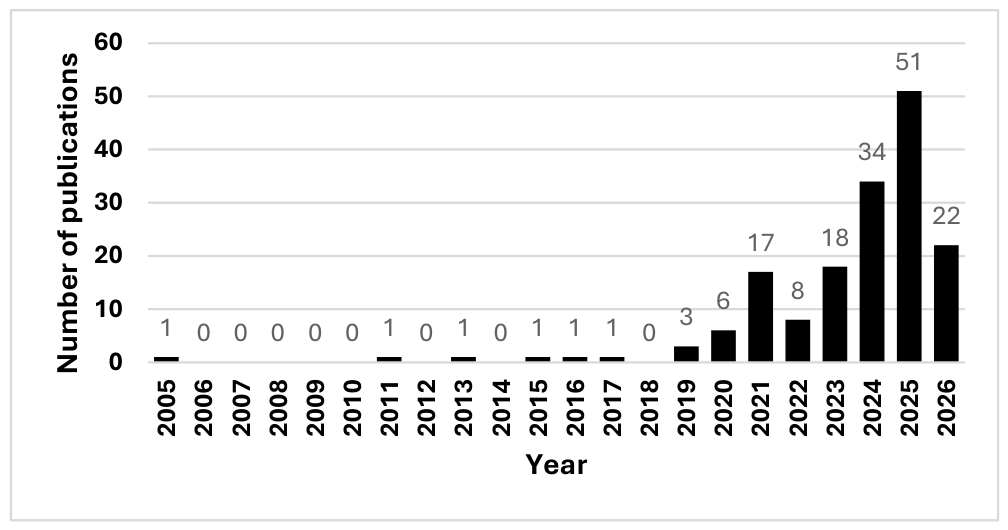
Figure 2.
Country collaboration map on e-motorcycle adoption and urban mobility research (2000 – 2026).
Figure 2.
Country collaboration map on e-motorcycle adoption and urban mobility research (2000 – 2026).
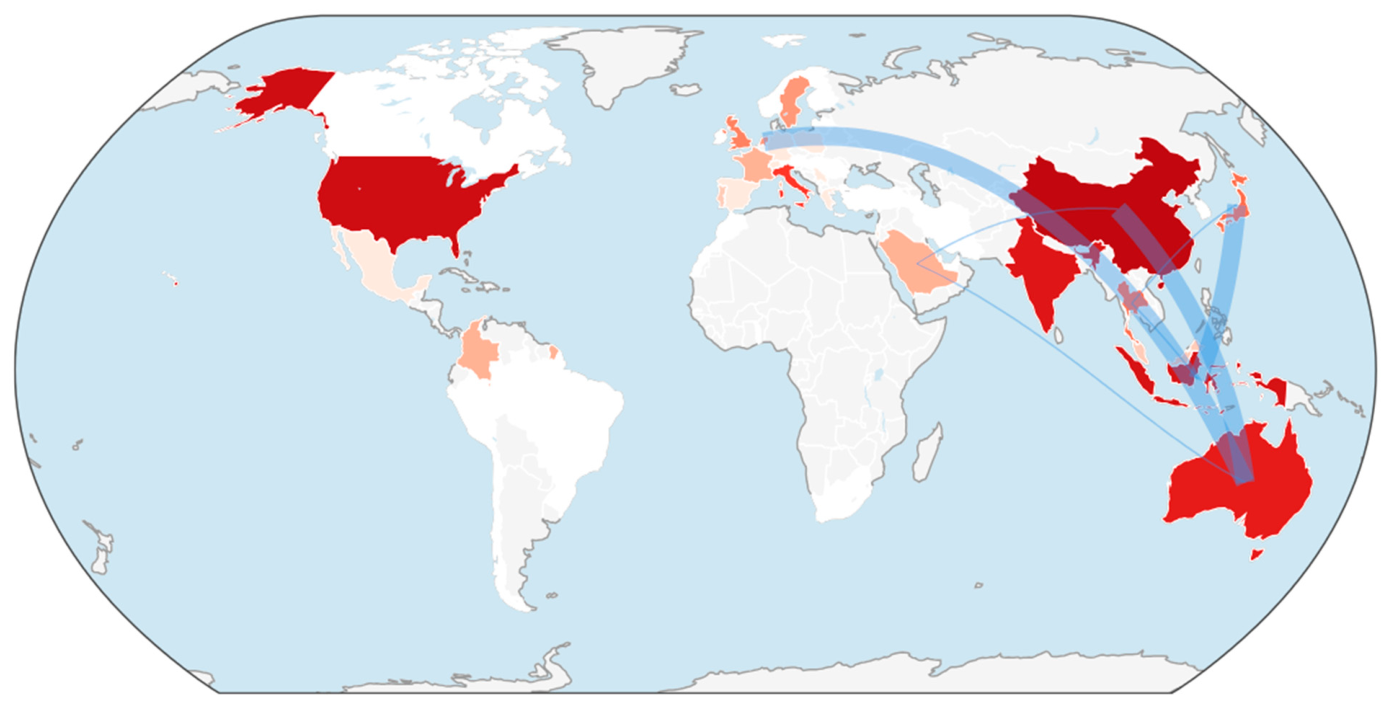
Figure 3.
Word cloud on e-motorcycle adoption and urban mobility research (2000 – 2026).
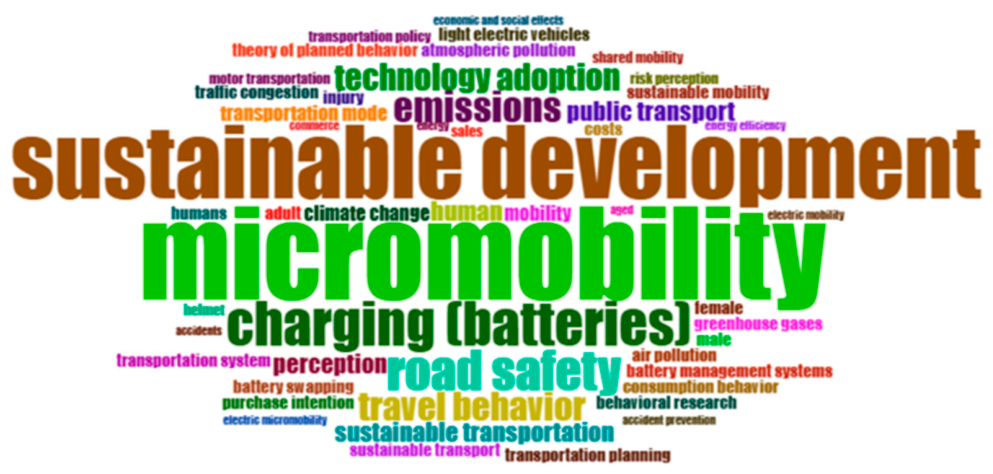
Figure 4.
Thematic map on e-motorcycle adoption and urban mobility research (2000 – 2026).
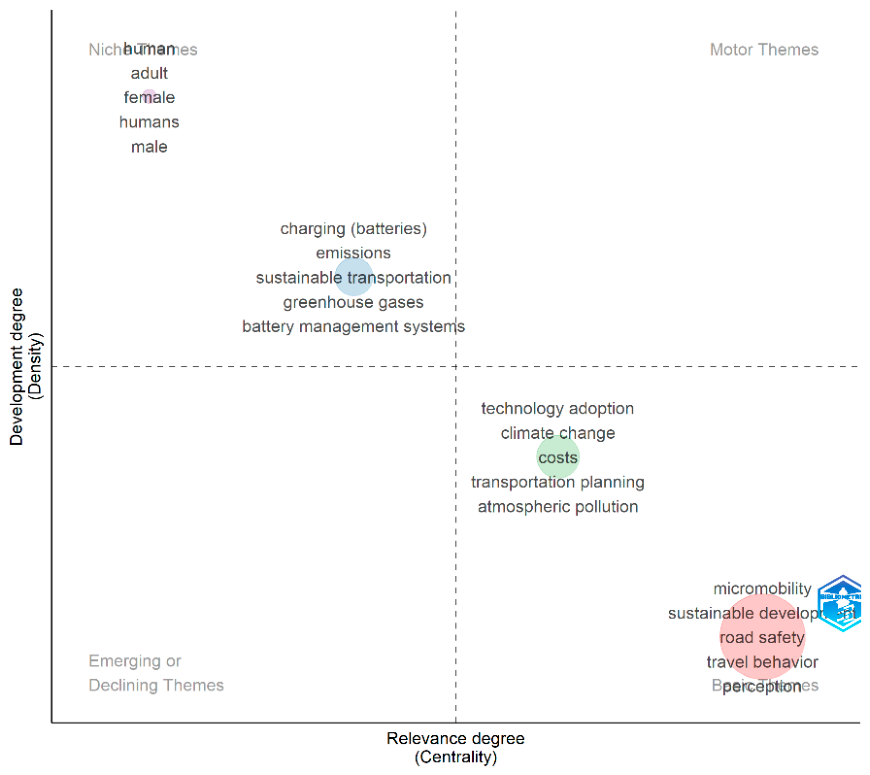
Figure 5.
Thematic evolution on e-motorcycle adoption and urban mobility research (2000 – 2026).
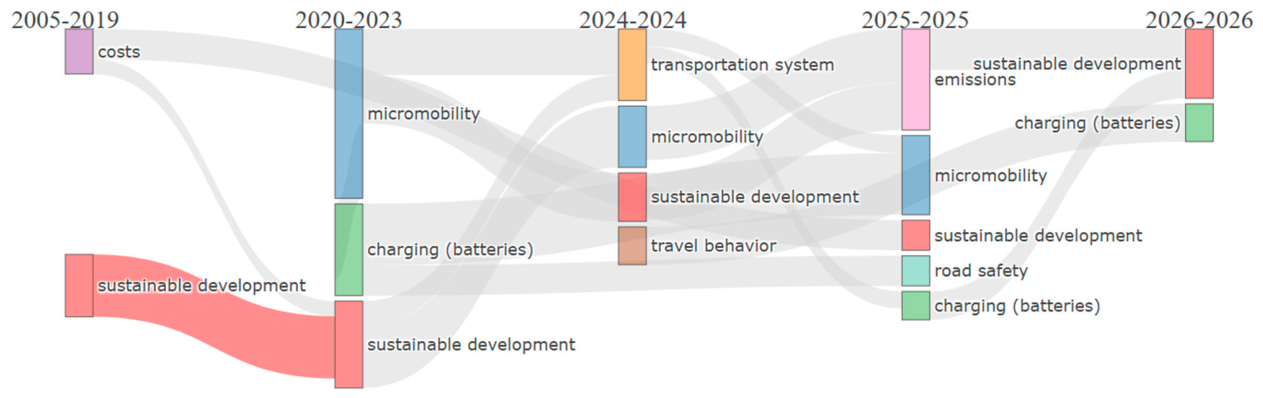

Table 1.
Summary of research on e-motorcycle adoption and urban mobility research (2000 – 2026).
| Description | Results |
| Timespan | 2005:2026 |
| Sources (Journals, Books, etc.) | 103 |
| Documents | 165 |
| Annual Growth Rate % | 15.86 |
| Document Average Age | 2.58 |
| Average citations per doc | 22.72 |
| References | 7010 |
| DOCUMENT CONTENTS | |
| Keywords Plus (ID) | 1135 |
| Author's Keywords (DE) | 544 |
| AUTHORS | |
| Authors | 561 |
| Authors of single-authored docs | 12 |
| AUTHORS COLLABORATION | |
| Single-authored docs | 13 |
| Co-Authors per Doc | 3.81 |
| International co-authorships % | 20 |
| DOCUMENT TYPES | |
| Article | 124 |
| Conference paper | 37 |
| Review | 4 |
Table 2.
Top 10 journals on e-motorcycle adoption and urban mobility research (2000 – 2026).
| Rank | Journal | h-Index | g-Index | m-Index | TC | NP | PY_Start |
| 1 | Sustainability (Switzerland) | 7 | 10 | 0.7 | 456 | 10 | 2017 |
| 2 | Transportation Research Part D: Transport and Environment | 7 | 8 | 0.583333 | 761 | 8 | 2015 |
| 3 | Case Studies on Transport Policy | 3 | 6 | 0.5 | 48 | 6 | 2021 |
| 4 | Research in Transportation Business and Management | 3 | 5 | 0.5 | 47 | 5 | 2021 |
| 5 | Transportation Research Part A: Policy and Practice | 3 | 5 | 0.214286 | 158 | 5 | 2013 |
| 6 | Transportation Research Record | 3 | 5 | 0.428571 | 154 | 5 | 2020 |
| 7 | Transportation Research Part F: Traffic Psychology and Behaviour | 2 | 4 | 1 | 17 | 5 | 2025 |
| 8 | Sustainable Cities and Society | 4 | 4 | 0.8 | 235 | 4 | 2022 |
| 9 | Transportation Research Procedia | 2 | 4 | 0.333333 | 33 | 4 | 2021 |
| 10 | IOP Conference Series: Earth and Environmental Science | 1 | 3 | 0.166667 | 11 | 4 | 2021 |
Table 3.
Top 10 authors on e-motorcycle adoption and urban mobility research (2000 – 2026).
| Rank | Author | h-Index | g-Index | m-Index | TC | NP | PY_Start |
| 1 | Nguyen-Phuoc, D | 4 | 7 | 1 | 68 | 7 | 2023 |
| 2 | Lu, C | 4 | 4 | 0.571429 | 370 | 4 | 2020 |
| 3 | Scorrano, M | 3 | 4 | 0.5 | 62 | 4 | 2021 |
| 4 | Su, D | 2 | 4 | 1 | 19 | 4 | 2025 |
| 5 | Irawan, M | 1 | 3 | 0.5 | 10 | 4 | 2025 |
| 6 | Majumdar, B | 2 | 3 | 0.333333 | 50 | 3 | 2021 |
| 7 | Oviedo-Trespalacios, O | 2 | 3 | 0.5 | 50 | 3 | 2023 |
| 8 | Patil, M | 2 | 3 | 0.333333 | 50 | 3 | 2021 |
| 9 | Chalermpong, S | 1 | 1 | 0.5 | 1 | 3 | 2025 |
| 10 | Hettiachchi, D | 1 | 2 | 0.5 | 4 | 3 | 2025 |
Table 4.
Corresponding author’s countries affiliation on e-motorcycle adoption and urban mobility research (2000 – 2026).
Table 4.
Corresponding author’s countries affiliation on e-motorcycle adoption and urban mobility research (2000 – 2026).
| Rank | Country | Number of publications | Publications (%) |
| 1 | China | 17 | 10.3 |
| 2 | Indonesia | 14 | 8.5 |
| 3 | USA | 13 | 7.9 |
| 4 | India | 12 | 7.3 |
| 5 | Italy | 9 | 5.5 |
| 6 | Australia | 8 | 4.8 |
| 7 | Thailand | 5 | 3.0 |
| 8 | United Kingdom | 5 | 3.0 |
| 9 | Sweden | 4 | 2.4 |
| 10 | Japan | 3 | 1.8 |
Table 5.
Top cited publications on e-motorcycle adoption and urban mobility research (2000 – 2026).
| Author(s) and year | Title | Total Citations Per Year | Summary |
| Trivedi et al. [25] | Injuries associated with standing electric scooter use | 49.80 | The study assessed injuries associated with the use of standing e-scooters in the USA. It was found that head injuries and fractures were common, while helmet use was rare among riders. |
| Eccarius & Lu [26] | Adoption intentions for micro-mobility–Insights from electric scooter sharing in Taiwan | 29.70 | The study investigated factors influencing university students' intention to use electric scooter-sharing services in Taiwan. It was found that perceived compatibility with users' lifestyles and mobility needs was the strongest predictor of adoption, while environmental awareness influenced intentions indirectly. |
| Reck & Axhausen [28] | Who uses shared micro-mobility services? Empirical evidence from Zurich, Switzerland | 26.50 | The study examined the characteristics of shared micromobility users in Zurich, Switzerland. It was found that shared e-scooter users were predominantly young, university-educated males who were employed full-time and lived in affluent households without children or private cars. |
| Bieliński & Ważna [27] | Electric scooter sharing and bike sharing user behaviour and characteristics | 25.70 | The study compared the travel behaviour of shared e-scooter and e-bike users in northern Poland. It found that e-scooters were mainly used for leisure trips by younger users, while e-bikes were more commonly used for commuting and first- and last-mile travel. |
| Guerra [23] | Electric vehicles, air pollution, and the motorcycle city: A stated preference survey of consumers’ willingness to adopt electric motorcycles in Solo, Indonesia | 21.90 | The study examined consumers' willingness to adopt electric motorcycles in Solo, Indonesia, using a stated preference survey. It found that purchase decisions were strongly influenced by price, driving range, speed, and charging time, with shorter charging times significantly increasing purchase intentions. |
| Mouratidis [29] | Bike-sharing, car-sharing, e-scooters, and Uber: Who are the shared mobility users and where do they live? | 21.00 | The study examined the characteristics of users of shared mobility services (i.e., e-scooter sharing), in Oslo, Norway. It was found that e-scooter users were predominantly younger males living in densely populated urban areas. |
| Eccarius & Lu [24] | Powered two-wheelers for sustainable mobility: A review of consumer adoption of electric motorcycles. | 20.70 | The review synthesised existing evidence on consumer adoption of electric motorcycles, with a particular focus on Asian countries where powered two-wheelers account for about 80% of the global fleet. It found that research on electric motorcycle adoption remains limited compared with electric cars. |
| Affanni et al. [37] | Battery choice and management for new-generation electric vehicles | 19.50 | The study developed and evaluated a lithium-ion battery pack and battery management system for a high-performance e-scooter. The study highlighted battery management as a critical factor in enhancing e-scooter adoption. |
| Weiss et al. [36] | On the electrification of road transportation – A review of the environmental, economic, and social performance of electric two-wheelers |
18.80 | The study reviewed the environmental, economic, and social performance of electric two-wheelers. It concluded that electric two-wheelers are generally more energy-efficient and produce lower emissions than conventional motorcycles. The review also highlighted that wider adoption depends on improvements in affordability, supportive infrastructure, and policies addressing safety and urban mobility planning. |
| Blazanin, et al. [35] | E-scooter sharing and bikesharing systems: An individual-level analysis of factors affecting first-use and use frequency | 18.20 | The study examined factors influencing first-time adoption and frequency of e-scooter sharing in Austin, Texas. It was found that psychosocial attitudes, individual characteristics, and the built environment significantly influenced adoption and continued use. Safety concerns emerged as the strongest barrier. |
Disclaimer/Publisher’s Note: The statements, opinions and data contained in all publications are solely those of the individual author(s) and contributor(s) and not of MDPI and/or the editor(s). MDPI and/or the editor(s) disclaim responsibility for any injury to people or property resulting from any ideas, methods, instructions or products referred to in the content. |
© 2026 by the authors. Licensee MDPI, Basel, Switzerland. This article is an open access article distributed under the terms and conditions of the Creative Commons Attribution (CC BY) license (http://creativecommons.org/licenses/by/4.0/).
Copyright: This open access article is published under a Creative Commons CC BY 4.0 license, which permit the free download, distribution, and reuse, provided that the author and preprint are cited in any reuse.