
Submitted:
15 July 2026
Posted:
17 July 2026
You are already at the latest version
Abstract
Peripheral neuropathy from diabetic, oncological, or traumatic etiologies degrades gait mechanics, increasing peak plantar pressures (PPP) and tissue ulceration risks. This feasibility study evaluates a customizable fabrication protocol using thermo-mechanically synthesized re-entrant auxetic foam insoles (sizes 6–11) with targeted dome-shaped inserts. Bilateral dynamic gait analysis was conducted across a heterogeneous neuropathic cohort (N=9; 5 females, 4 males) utilizing a P-Walk 600 pressure plate and a MARVUE 2D motion capture system. To control structural shoe variance across testing conditions, all subjects were equipped with standardized footwear featuring pre-installed conventional memory foam. To overcome small-sample parametric limits and evaluate structural predictability, a non-parametric bootstrap resampling analysis (B=1,000) was executed. The native auxetic foam demonstrated mechanical reliability, yielding a tightly bound distribution with a highly constrained bootstrap standard deviation (σ*) of 12.063 kPa and a baseline Consistency Rank of 1—indicating a 100% statistical probability of outperforming traditional controls. While a structural break-in period was required for re-entrant cell adaptation, custom insoles ultimately reduced PPP by up to 62.2% in systemic polyneuropathies, shifting the loading signature beneath the clinical safety target threshold (<200 kPa) in 55% of cases. Conversely, customization triggered an adverse volumetric crowding effect in focal mononeuropathies, identifying un-customized native foam as the superior intervention for localized trauma by preventing premature cellular self-contact. Re-entrant auxetic structures reliably accommodate heterogeneous pathomechanics, offering a mathematically verified pathway for advanced patient-specific orthotic interventions.
Keywords:
auxetic materials
; re-entrant foam
; plantar pressure redistribution
; peripheral neuropathy
; biomechanical engineering
; custom orthotics
1. Introduction
Peripheral neuropathy remains a primary clinical driver of lower-extremity pathomechanics. This condition—characterized by nerve damage that disrupts sensory, motor, and autonomic functions—can originate from metabolic degradation in diabetic peripheral neuropathy (DPN), neurotoxic exposure in chemotherapy-induced peripheral neuropathy (CIPN), or focal structural damage from localized trauma [1,2]. The resulting loss of protective sensation results in unmitigated localized loading. Elevated Peak Plantar Pressures (PPP) during the stance phase of gait directly correlate with localized tissue ischemia, structural breakdown, and eventual ulceration [3].
Traditional orthopedic insoles typically utilize viscoelastic materials, such as open-cell memory foams, or conventional closed-cell elastomeric foams. Despite these differing cellular architectures, such materials exhibit a positive Poisson’s ratio; under vertical compressive loading, they expand laterally away from the site of maximum force, which thins the material directly beneath vulnerable bony prominences. Conversely, auxetic materials possess a negative Poisson's ratio. When subjected to a vertical compressive force, their internal re-entrant cell geometries contract inwardly, effectively concentrating mass directly beneath the point of loading to enhance local energy absorption and shock dissipation [4,5]. The specific application of these negative Poisson's ratio behaviors under compressive gait conditions highlights the distinct technical value of auxetic materials for footwear and orthotic applications [6].
Recent advancements in geometric optimization demonstrate that structural modifications to these configurations can dramatically shift energy absorption thresholds, making them highly viable for advanced biomedical scaffolds and orthotic interventions [6,7]. Furthermore, the structural topology at the cell junctions—such as the integration of localized nodal spheres—plays a critical role in dictating the global mechanical response, stress distribution, and operational predictability of the auxetic substrate during physical deformation [8,9].
In our baseline research [10], the preliminary structural behavior of these re-entrant foams was verified. However, a significant barrier to clinical translation remains proving material reliability across highly diverse patient populations. Small pilot cohorts (n<10) often violate standard parametric assumptions, obscuring true performance variance.
This study addresses these limitations by deploying a standardized fabrication pipeline alongside an advanced bootstrap resampling workflow (B=1,000) to evaluate the systemic stability of custom auxetic insoles across a heterogeneous cohort presenting distinct neuropathic subsystems. We specifically interrogate the mechanical trade-offs between native auxetic baselines and custom dome inserts, the material break-in phenomenon, structural crowding constraints, and kinematic consistency during dynamic gait.
2. Materials and Methods
2.1. Material Synthesis and Insole Fabrication
The base orthotic substrate consists of an open-cell polyurethane foam subjected to a standardized thermo-mechanical compression process. This specialized processing strategy, which relies on precise temperature control and multi-axial compression, buckles the internal reticular ribs into a stable, re-entrant configuration to yield the desired negative Poisson’s ratio [11,12].
The custom fabrication pipeline was executed as follows:
- Sizing and Cutting: Participant foot geometries were mapped to standard sizing bounds (US Sizes 6 through 11). Native auxetic foam blanks were precision-cut using standardized template configurations to ensure outer profile uniformity (Figure 1).
- Adhesive Assembly: Rather than utilizing liquid bonding agents that risk infiltrating the open-cell network and altering the localized material properties, the custom auxetic domes were secured to the native foam base layer using a high-tack, low-thickness double-sided adhesive tape film (Figure 1). This tape interface preserved structural continuity and allowed uninhibited lateral re-entrant cell contraction at the boundary layers during vertical compression.
2.2. Etiology-Based Customization Framework
The heterogeneous nature of the clinical cohort required a structured framework to map specific pathological manifestations to targeted mechanical solutions. To address this, an empirical customization map was established (Table 1) to categorize the unique pathomechanical signatures and prescribe strategic insole sizing and configuration boundaries across the distinct neuropathic subsystems.
The structural configurations and target localized placements specified in Table 1 were developed and mathematically justified based on established podiatric, biomechanical, and tissue-ischemia literature. To address the unique pathomechanical demands within this diverse cohort, the customization strategy explicitly distinguishes between localized architectural anomalies and broader systemic manifestations.
For instance, patients with DPN frequently present with intrinsic muscle wasting and motor neuropathy that shifts the natural adipose plantar fat pad distally, creating abnormally high vertical stress concentrations beneath isolated skeletal prominences. Because these high focal vertical stresses under the first metatarsal head and calcaneus serve as primary mechanical triggers for tissue ischemia and subsequent ulceration [3,13], targeted high-density, low-profile auxetic domes were applied to these specific hubs. This intentional geometric modification leverages the auxetic mass-concentration effect (v < 0) to dynamically increase local thickness and buffer hyper-focal impact zones during peak stance.
While diabetic pathologies focus heavily on localized skeletal points, a distinctly different approach is required for CIPN. In contrast to metabolic diabetes, neurotoxic chemotherapeutic agents primarily damage small unmyelinated nerve fibers, resulting in diffuse, migratory microvascular hypersensitivity, burning pain, and proprioceptive deficits without immediately causing focal joint structural collapse or distinct architectural deformities [2,14]. Grounding the orthotic configuration in these established oncology guidelines for survivor populations ensures that the intervention safely accounts for the distinct clinical presentation of post-chemotherapy nerve damage [14]. To accommodate this widespread sensory degradation without introducing isolated pressure spikes that could aggravate sensitive nerve endings, a moderate-profile midfoot auxetic wedge was integrated to fill the longitudinal arch. This configuration maximizes total plantar contact area and effectively dissipates vertical shear stress across the entire midfoot matrix.
Conversely, when shifting focus from these systemic polyneuropathies to patients presenting with focal mononeuropathies from localized physical trauma (injury), the biomechanical objectives pivot from global redistribution to unconstrained compliance. These individuals exhibit rigid structural asymmetries, scarred plantar surfaces, or fixed bony lesions that require maximum material flexibility to safely accommodate the anomaly without generating secondary pressure points [3,12]. Consequently, structural dome customization was strictly contraindicated for this subgroup. Introducing extra volumetric material within the restricted confines of a standardized shoe wear triggers a geometric crowding effect; this forces the re-entrant cellular ribs into premature self-contact, or densification, before the foot completes its roll-through, effectively locking out the material's internal hinges. Retaining the un-customized, continuous native auxetic foam ensures that the underlying cellular structure remains free to buckle and flex naturally around rigid traumatic anomalies.
Finally, the design paradigm must account for the global mechanical demands of metabolic obesity, which represents an entirely distinct scale of vertical loading. Rather than localized asymmetry or nerve-fiber sensitivity, an elevated body mass index (BMI) imposes high-magnitude global vertical loading that rapidly flattens and laterally displaces the heel and forefoot physiological fat pads, leaving vulnerable deep bony structures exposed to severe, repetitive mechanical stress [13]. To compensate for this lost anatomical shock-absorption capability, a max-thickness, reinforced auxetic dome pairing was implemented across both major striking zones. This dual-dome layout provides a volume-stable, self-regulating cushion that dynamically stiffens under extreme global loading, successfully preventing material bottoming-out while maintaining structural integrity throughout the gait cycle.
2.3. Participant Characteristics and Standardized Footwear Controls
To isolate the mechanical influence of the experimental orthotic inserts, strict experimental controls were enforced during data collection. During all dynamic testing, all participants were equipped with standardized footwear (Athletic Works models) containing pre-installed conventional memory foam to control for structural shoe variance. This standardization ensured that any observed variations in pressure distribution were strictly a function of the interface between the user's foot, the auxetic geometry, and the baseline conditions, rather than confounding geometric artifacts from varied commercial shoe structures.
A pilot cohort of nine participants (N=9, 5 females, 4 males) was recruited through the NASA Marshall Space Flight Center (MSFC). The clinical cohort comprised seven subjects presenting with confirmed peripheral neuropathy across distinct pathological subsystems: metabolic diabetes (n=2), localized traumatic physical injury (n=2), oncological treatment-induced neurotoxicity (n=2), and metabolic obesity (n=1). Two healthy individuals with no neuropathic attributes were retained as controls. Healthy controls were retained in all quantitative cohort analyses to preserve methodological symmetry across experimental conditions and to provide a descriptive benchmark for standard walking mechanics, rather than for direct clinical comparison.
The complete cohort presented a mean age of 47.33 ± 9.63 years and a mean body mass of 211.11 ± 66.8 lbs. All participants provided written informed consent under testing protocols reviewed and approved by the National Aeronautics Space Administration (NASA) Institutional Review Board (IRB). Complete baseline demographics, footwear histories, and subjective post-trial outcomes with the auxetic foam inserts are detailed in Table 2.
2.4. Gait Analysis
Bilateral gait assessments were conducted utilizing the P-Walk 600 high-resolution electronic pressure platform (Figure 1). This hardware configuration utilizes an electronic sensor array to capture dynamic force propagation and map localized plantar pressure variations across distinct anatomical zones [15] (Figure 1). Participants executed multiple walking trials at a self-selected, comfortable cadence over the sensor matrix under four primary conditions: barefoot, a standard over-the-counter (OTC) elastomeric control insole, un-customized native auxetic foam, and custom-dome auxetic insoles. The healthy controls did not walk with the customized auxetic insoles, as custom dome placement was strictly dictated by the presence of pathological high-pressure etiology zones. Kinematic consistency and gait adaptations were monitored simultaneously using a MARVUE 2D motion capture.
To isolate the mechanical contributions of the customized geometry, the physical components of the custom assembly are evaluated as modular elements before execution. The un-customized native auxetic foam base layer—the baseline structural mechanics and manufacturing stability of which were previously established in our prior study [9]—is evaluated directly alongside the structural dome add-ons. The localized pressure offloading relies on a physical pairing between this continuous orthotic foundation and the structural dome add-ons, which are customized to the individual subject’s specific empirical data prior to permanent application (Figure 2).
The primary quantitative outcome metric extracted across all testing configurations was PPP, converted from pounds per square inch (psi) to kilopascals (kPa), across the anatomical forefoot and hindfoot zones (Table A1).
3. Results
3.1. Material Conformity
Initial gait trials revealed a distinct mechanical behavior unique to the auxetic structures. For the majority of the neuropathic cohort, the un-customized native auxetic foam initially yielded higher PPPs compared to the pre-molded OTC controls. This behavior is directly attributed to a required physical break-in period necessary for the re-entrant cell geometries to structurally adapt to the wearer's unique plantar morphology and reach optimal volumetric conformity.
3.2. Etiology-Specific Customization vs. Native Performance
Spatial load distribution across the 18 distinct lower-extremity limbs was mapped using a dynamic clinical safety heatmap matrix (Figure 3). The visual topology confirms that barefoot configurations present severe localized loading risks across all clinical profiles, peaking at 421.55 kPa in standard control models.
To further quantify the comparative performance between standard commercial interventions and the auxetic models, PPP(kPa) was plotted across the symptomatic sub-group (see Figure 4)
When analyzing the performance trajectories captured in the comparative chart against the un-customized native auxetic baseline, outcomes were heavily contingent upon the pre-planned interventions mapped in Table 1:
- Systemic Polyneuropathies (DPN / CIPN / Obesity): Customized auxetic insoles successfully optimized load profiles across systemic subjects (Figure 4). In the Type 2 Diabetes and Morbid Obesity subgroups, the customized auxetic framework succeeded in aggressively lowering localized loading beneath both the OTC and native auxetic baselines, achieving a peak pressure reduction of up to 62.2% (dropping from a barefoot baseline of 394.79 kPa down to 149.34 kPa under the custom auxetic intervention) compared to barefoot trials (Figure 3 and Figure 4). This effectively shifted the loading signature beneath the clinical safety target threshold of <200 kPa in 55% of the recorded systemic cases (Figure 3).
- Injury-Induced Mononeuropathies: In participants with localized injury-induced neuropathy, an inverse performance profile was prevalent(Figure 4). While the native auxetic foam significantly decreased PPP relative to OTC controls in the Injury 2 cohort (dropping pressure from >300 kPa down to approximately 220 kPa) (Figure 4), the addition of the customized dome inserts led to a severe crowding effect. This localized volumetric excess spiked pressures back up near 285 kPa (Figure 4), identifying the un-customized native auxetic foam as the mathematically superior intervention for localized mononeuropathies by preventing premature cellular densification.
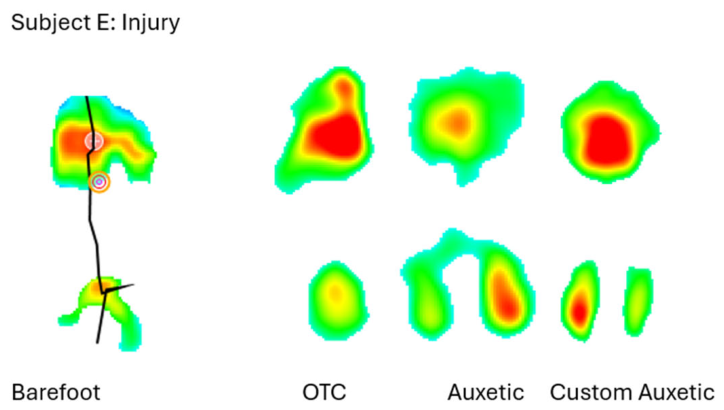
Baseline barefoot pressure profiles across all symptomatic subjects revealed severe, localized plantar pressure concentrations concentrated primarily at the first metatarsal head and the calcaneus. The introduction of the native auxetic insoles yielded an immediate, visually distinct attenuation of these focal stress points. While the customized auxetic insoles achieved further pressure mitigation across the majority of clinical etiologies, an exception was observed in cases presenting with injury-induced neuropathy. To visually demonstrate this targeted offloading capability, representative baropodometric pressure mapping profiles were extracted across key pathological classifications (Figure 5 and Figure 6).
While the native auxetic configuration demonstrated compliance and global pressure reduction, the application of the customized, etiology-specific auxetic design introduced an unexpected biomechanical artifact under extreme structural constraint.
Figure 7.
Geometric crowding phenomenon observed during customized auxetic orthotic evaluation (Subject E, Injury-Induced Neuropathy).
Figure 7.
Geometric crowding phenomenon observed during customized auxetic orthotic evaluation (Subject E, Injury-Induced Neuropathy).
Despite these localized pressure variations, motion capture data acquired via the MARVUE 2D system confirmed universal gait improvement and enhanced kinematic consistency across 100% of symptomatic participants when utilizing auxetic materials compared to barefoot trials.
3.3. Computational Verification via Robust Bootstrap Resampling
The statistical reliability of the structural load distribution was confirmed through 1,000 bootstrap resampling iterations [16] (Table 3). The native auxetic foam exhibited high mechanical reliability across diverse subject profiles, maintaining a Consistency Rank of 1—indicating a 100% statistical probability of outperforming traditional elastomeric controls in structural load distribution. Furthermore, the bootstrapped baseline PPP across the 72 fully populated data vectors converged at an overall mean of 32.873 kPa, exhibited a highly constrained and stable bootstrap standard deviation (σ*) of 12.063 kPa (Table 3).
The narrow Confidence Interval (CI) mathematically demonstrates that the mechanical response of the re-entrant auxetic structures remains highly stable and independent of individual patient etiology variance.
4. Discussion
The experimental data and subsequent bootstrap simulation confirm that the custom thermo-mechanical fabrication protocol produces a reliable orthotic, directly extending the feasibility bounds established in our previous work [10]. The primary challenge in translating novel materials into podiatric workflows is attributed to the immense variance in patient pathomechanics.
Our findings demonstrate that the inward lateral contraction (negative Poisson's ratio effect) of the re-entrant cell matrix provides a self-regulating buffering zone. When a highly concentrated vertical load is applied, the local cells draw together, resulting in an increase of local density and thickness directly under that specific force vector.
The data also highlights a vital design paradigm: customization is not universally additive. For systemic polyneuropathies, where widespread sensory degradation requires broad load shifting, the spatial redistribution provided by custom dome inserts justifies the increased material volume. For localized trauma, however, the native re-entrant structure alone provides optimal shock absorption; adding volume triggers an adverse crowding effect that concentrates stress rather than dissipating it.
4.1. Limitations and Future Research
While this study demonstrates the technical feasibility of integrating auxetic foam into foot orthoses for diverse neuropathic etiologies, several limitations warrant consideration for future research. The cohort size (N=9) was intended for pilot observation; therefore, the results, should be validated through larger, multi-center clinical trials to ensure broad generalizability across more diverse patient populations.
Additionally, the current pilot utilizes broad clinical categorizations (e.g., "Cancer Br 1" and "Cancer Br 2"). Future research must specify the temporal duration of these clinical etiologies to allow for further patient segmentation; specifically, longitudinal data regarding the duration of breast cancer diagnoses, the specific histological type, and the anatomical areas of clinical involvement are required to refine the orthotic customization.
Furthermore, future clinical scale-ups must more rigorously isolate and control for gait velocity as a key confounding variable [17,18] Incorporating these parameters will allow for a more nuanced understanding of how varying disease progressions and biomechanical variables influence plantar pressure sensitivity, ultimately enabling more precise, patient-specific orthotic interventions. The measurements captured in this study reflect static or short-term dynamic responses, and future studies should evaluate the mechanical stability and fatigue life of the auxetic foam structures under long-term daily usage conditions.
Finally, this study focused on the integration of existing auxetic foams, and further work is needed to explore the potential for tunable stiffness profiles within the domes themselves, which could provide even greater adaptability for patients with rapidly changing neuropathic symptoms.
5. Conclusions
This research demonstrates that etiology-specific customization of auxetic foams offers a robust framework for orthotic design, validating the technical feasibility and reliability of custom-fabricated auxetic foam insoles for plantar pressure redistribution. Systemic polyneuropathies benefited from tailored customization, reaching the <200 kPa clinical safety target threshold in 55% of the evaluated cases. Conversely, for localized structural injuries, the native auxetic configuration remains the superior choice due to its uninhibited re-entrant structure, which provides sufficient localized shock absorption without exacerbating pressure sensitivity through added material volume.
Ultimately, the significant PPP reductions achieved via customized interventions underscore the clinical potential of these negative Poisson's ratio materials. When accounting for the initial material break-in period, the strategic deployment of these auxetic foams as a rehabilitative orthotic holds immense potential to optimize neuropathic patients compliance and rehabilitative pain mitigation strategies. Furthermore, dynamically customizing and mapping these re-entrant foam geometries to target specific PPP signatures across distinct clinical etiologies offers a pathway to further optimize such strategies, ensuring predictable and repeatable biomechanical offloading for complex neuropathic conditions. Accordingly, this work justifies the pursuit of larger-scale, rigorously controlled clinical trials. Future studies employing standardized walking velocity protocols and objective kinematic assessments are necessary to further isolate material effects and definitively characterize the mechanical influence of auxetic technology in rehabilitative applications.
Author Contributions
Conceptualization, L.B.; Methodology, L.B., C.Z., E.J., and S.P.; Software, L.B. and C.Z.; Validation, L.B., C.Z., E.J., and S.P.; Formal Analysis, L.B.; Investigation, L.B., C.Z., E.J., and S.P.; Resources, L.B., C.Z, and E.J.; Data Curation, L.B.; Writing Original Draft Preparation, L.B. and C.Z.; Writing Reviewing, and Editing, L.B., C.Z., E.J., and S.P.; Supervision, L.B., C.Z., E.J., and S.P; Project Administration, L.B.
Funding
This research was funded by NASA/MSFC, grant number 80NSSC22M0208, and via in-kind resources by the Department of Industrial and Manufacturing Engineering and High-Performance Materials Institute at Florida Agricultural and Mechanical University also under grant number 80NSSC22M0208.
Institutional Review Board Statement
The study was approved by the Institutional Review Board of NASA (STUDY00000224, 04/6/2021).
Informed Consent Statement
Informed consent was obtained from all subjects involved in the study. Written informed consent has been obtained from the patient(s) to publish this paper.
Data Availability Statement
The data related to these studies are available on request from the Corresponding Author.
Acknowledgments
This work was supported by NASA/MSFC, University of Alabama Birmingham (UAB) College of Engineering, and Florida Agricultural and Mechanical University-Florida State University (FAMU-FSU) College of Engineering. This work included contributions to the material study design and analysis from the NASA EM Engineering branches, in which acknowledgement is attributed to Enrique Jackson, Charles D. Wingard, and Kevin Young. Other acknowledgements are attributed to NASA/MSFC’s former intern as follows: Ehiose Edosomwan (EE).
Conflicts of Interest
The authors declare no conflicts of interest. The funders had no role in the design of the study; in the collection, analyses, or interpretation of data; in the writing of the manuscript; or in the decision to publish the results.
Abbreviations
The following abbreviations are used in this manuscript:
| BMI | Body Mass Index |
| CIPN | Chemotherapy-Induced Peripheral Neuropathy |
| DPN | Diabetic Peripheral Neuropathy |
| IRB | Institutional Review Board |
| kPa | Kilopascals |
| NASA | National Aeronautics Space Administration |
| PPP | Peak Plantar Pressure |
| PSI | Pounds per Square Inch |
Appendix A

Table A1.
Participant-specific peak plantar pressure values (PSI/kPa) across testing conditions.
| Group | Foot | Barefoot (psi / kPa) | OTC (psi / kPa) | Auxetic (psi / kPa) | Customized Auxetic (psi / kPa) |
|---|---|---|---|---|---|
| Control | L | 47.32 / 326.26 | 48.90 / 337.15 | 35.61 / 245.52 | — |
| R | 37.67 / 259.73 | 47.83 / 329.78 | 32.25 / 222.36 | — | |
| Control | L | 44.62 / 307.64 | 26.50 / 182.71 | 36.09 / 248.83 | — |
| R | 61.14 / 421.55 | 37.11 / 255.86 | 37.48 / 258.42 | — | |
| Diabetes (T1) | L | 37.86 / 261.04 | 24.21 / 166.92 | 28.90 / 199.26 | 28.63 / 197.40 |
| R | 39.37 / 271.45 | 24.47 / 168.71 | 33.71 / 232.42 | 29.77 / 205.26 | |
| Diabetes (T2) | L | 54.29 / 374.32 | 23.34 / 160.92 | 32.64 / 225.04 | 25.26 / 174.16 |
| R | 57.26 / 394.79 | 26.58 / 183.26 | 27.53 / 189.81 | 21.66 / 149.34 | |
| Injury 1 | L | 45.83 / 315.99 | 26.29 / 181.26 | 24.45 / 168.58 | 31.36 / 216.22 |
| R | 42.53 / 293.23 | 26.77 / 184.57 | 27.25 / 187.88 | 33.69 / 232.28 | |
| Injury 2 | L | 20.68 / 142.58 | 45.32 / 312.47 | 35.40 / 244.07 | 45.93 / 316.68 |
| R | 21.92 / 151.13 | 45.65 / 314.75 | 28.13 / 193.95 | 36.35 / 250.62 | |
| Cancer (Br) | L | 44.59 / 307.44 | 23.11 / 159.34 | 32.61 / 224.84 | 30.70 / 211.67 |
| R | 50.51 / 348.25 | 27.08 / 186.71 | 33.14 / 228.49 | 29.14 / 200.91 | |
| Cancer (Br) | L | 45.54 / 313.99 | 26.50 / 182.71 | 35.45 / 244.42 | 31.67 / 218.36 |
| R | 32.84 / 226.42 | 30.70 / 211.67 | 30.83 / 212.57 | 32.36 / 223.11 | |
| Obesity | L | 49.93 / 344.26 | 34.71 / 239.32 | 38.34 / 264.35 | 29.16 / 201.05 |
| R | 43.31 / 298.61 | 29.94 / 206.43 | 35.58 / 245.32 | 23.56 / 162.44 |
Note. Participant-specific peak plantar pressure distributions (psi / kPa) across testing conditions. This dataset provides the raw measurements utilized for the Friedman test and bootstrap resampling analysis described in Section 3.3.
References
- Mayo Clinic. (2023). Peripheral Neuropathy. Mayo Clinic. Available online: https://www.mayoclinic.org/diseases-conditions/peripheral-neuropathy/symptoms-causes/syc-20352061 (accessed on 7 July 2025).
- Latov, N. (2006). Peripheral Neuropathy. Demos Medical Publishing: New York, NY, USA.
- Armstrong, D. G., Boulton, A. J., & Bus, S. A. (2017). Diabetic foot ulcers and their recurrence. New England Journal of Medicine, 376(24), 2367–2375.
- Lakes, R. S. (1987). Foam structures with a negative Poisson's ratio. Science, 235(4792), 1038–1040.
- Evans, K. E., & Alderson, A. (2000). Auxetic materials: Functional materials and structures from anomalous phenomena. Advanced Materials, 12(9), 617–628.
- Sanami, M., Murray, M., & Alderson, A. (2014). Auxetic materials for footwear applications. physica status solidi (b), 251(2), 281–290.
- Yan, Y., Li, Y., Song, L., Zeng, C., & Li, Y. (2017). Pluripotent stem cell expansion and neural differentiation in 3-D scaffolds of tunable Poisson’s ratio. Acta Biomaterialia, 49, 192–203.
- Yan, E., et al. (2026). Energy Absorption of Curvilinear Hybrid Auxetic Honeycombs. Materials, 19(9), 1791.
- Nelson, M., et al. (2025). Influence of Nodal Spheres on the Mechanical Behaviour of Auxetic Materials Manufactured with PA12. Materials, 18(24), 5688.
- Batey, L., Jackson, E., Zeng, C., & Pillay, S. (2026). Preliminary Technical Feasibility of Integrating Auxetic Foam into Foot Orthoses for Diverse Neuropathic Etiologies: A Small-Scale Pilot Observation. Bioengineering, 13(5), 530. [CrossRef]
- Li, Y., & Zeng, C. (2016). On the successful fabrication of auxetic polyurethane foams: Materials requirement, processing strategy and conversion mechanism. Polymer, 87, 98–107.
- Zeng, C., & Li, Y. (2019). Material Systems and Methods of Manufacture for Auxetic Foams. US Patent No. 10,479,004 B2. Available online: https://patents.google.com/patent/US10479004B2/en (accessed on 17 June 2025).
- Bus, S. A., Maas, M., Otte, K., & van Baal, J. G. (2008). Root causes of plantar pressure elevation in diabetic patients with history of foot ulceration. Diabetes Care, 31(10), 1996–2001.
- Hershman, D. L., Lacchetti, C., Dworkin, R. H., et al. (2014). Prevention and management of chemotherapy-induced peripheral neuropathy in survivor patients. Journal of Clinical Oncology, 32(18), 1941–1967.
- Razak, A. H. A., et al. (2012). Foot plantar pressure measurement system: A review. Sensors, 12(7), 9884-9912.
- Efron, B., & Tibshirani, R. J. (1994). An Introduction to the Bootstrap. CRC Press.
- Burnfield, J. M., et al. (2004). The influence of walking speed on plantar pressure distribution. Journal of Applied Biomechanics, 20(3), 244-254.
- Warren, G. L., et al. (2014). Effect of walking speed on plantar pressure parameters. Gait & Posture, 40(4), 617-622.
Figure 1.
Schematic representation of the insole fabrication and representative assembly sequence. Localized placement of the custom auxetic dome varies across the cohort depending on the subject's specific neuropathic etiology.
Figure 1.
Schematic representation of the insole fabrication and representative assembly sequence. Localized placement of the custom auxetic dome varies across the cohort depending on the subject's specific neuropathic etiology.
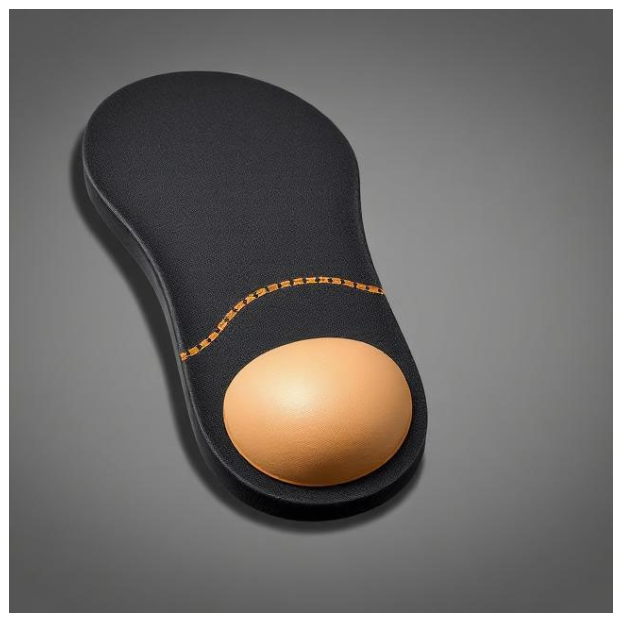
Figure 2.
A photograph of the experimental configuration illustrating the synchronized electronic pressure platform.
Figure 2.
A photograph of the experimental configuration illustrating the synchronized electronic pressure platform.
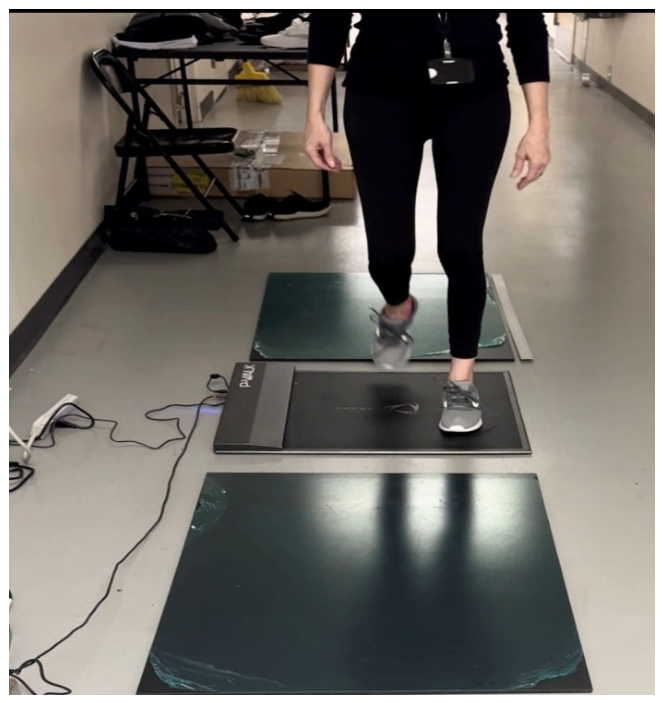
Figure 3.
Modular components of the custom orthotic assembly, showing the un-customized native auxetic foam base insole (left; reprinted from Bioengineering [10]) positioned alongside the newly integrated standalone modular auxetic dome add-on (right) prior to permanent assembly.
Figure 3.
Modular components of the custom orthotic assembly, showing the un-customized native auxetic foam base insole (left; reprinted from Bioengineering [10]) positioned alongside the newly integrated standalone modular auxetic dome add-on (right) prior to permanent assembly.
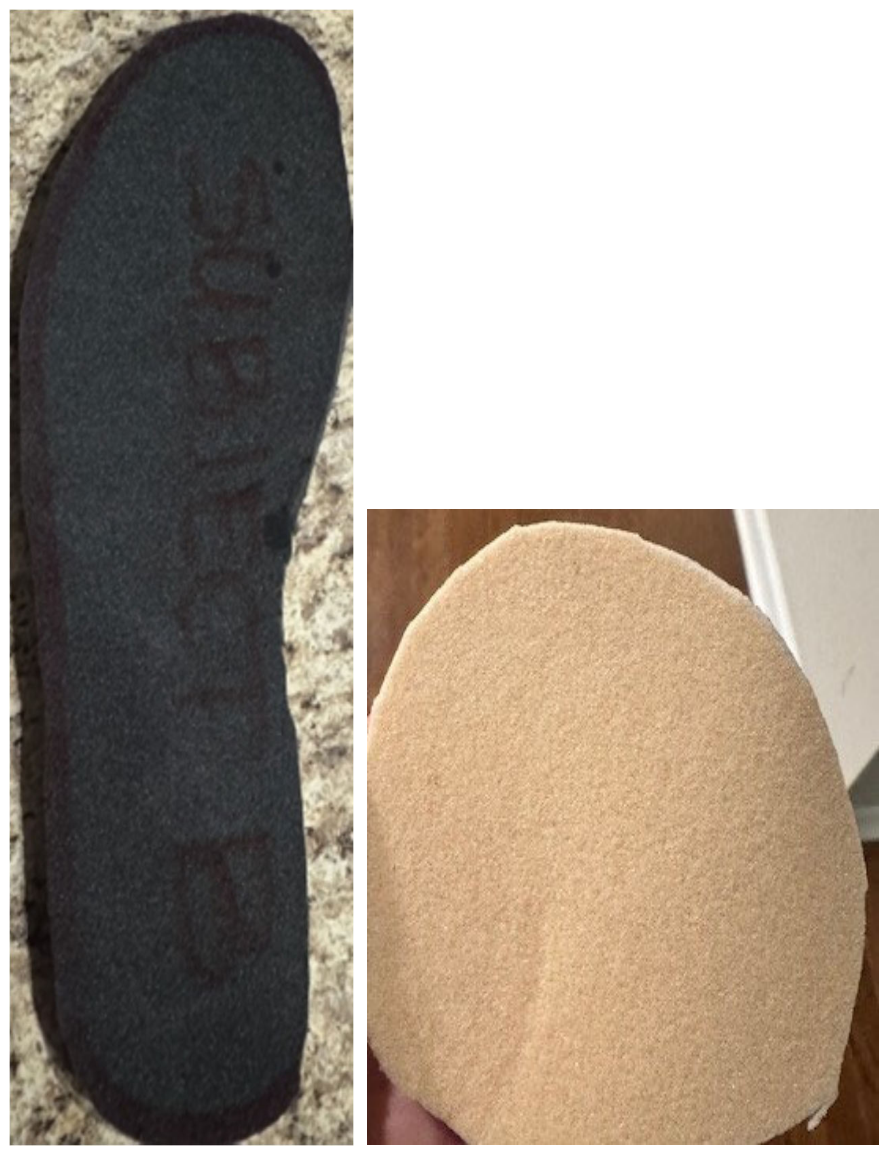
Figure 4.
Spatial load distribution matrix across 18 distinct lower-extremity limbs under four testing configurations. Green/yellow indicates values below or near the targeted critical tissue safety threshold (< 200 kPa), while dark orange/red denotes high-risk ischemia zones (> 200 kPa).
Figure 4.
Spatial load distribution matrix across 18 distinct lower-extremity limbs under four testing configurations. Green/yellow indicates values below or near the targeted critical tissue safety threshold (< 200 kPa), while dark orange/red denotes high-risk ischemia zones (> 200 kPa).
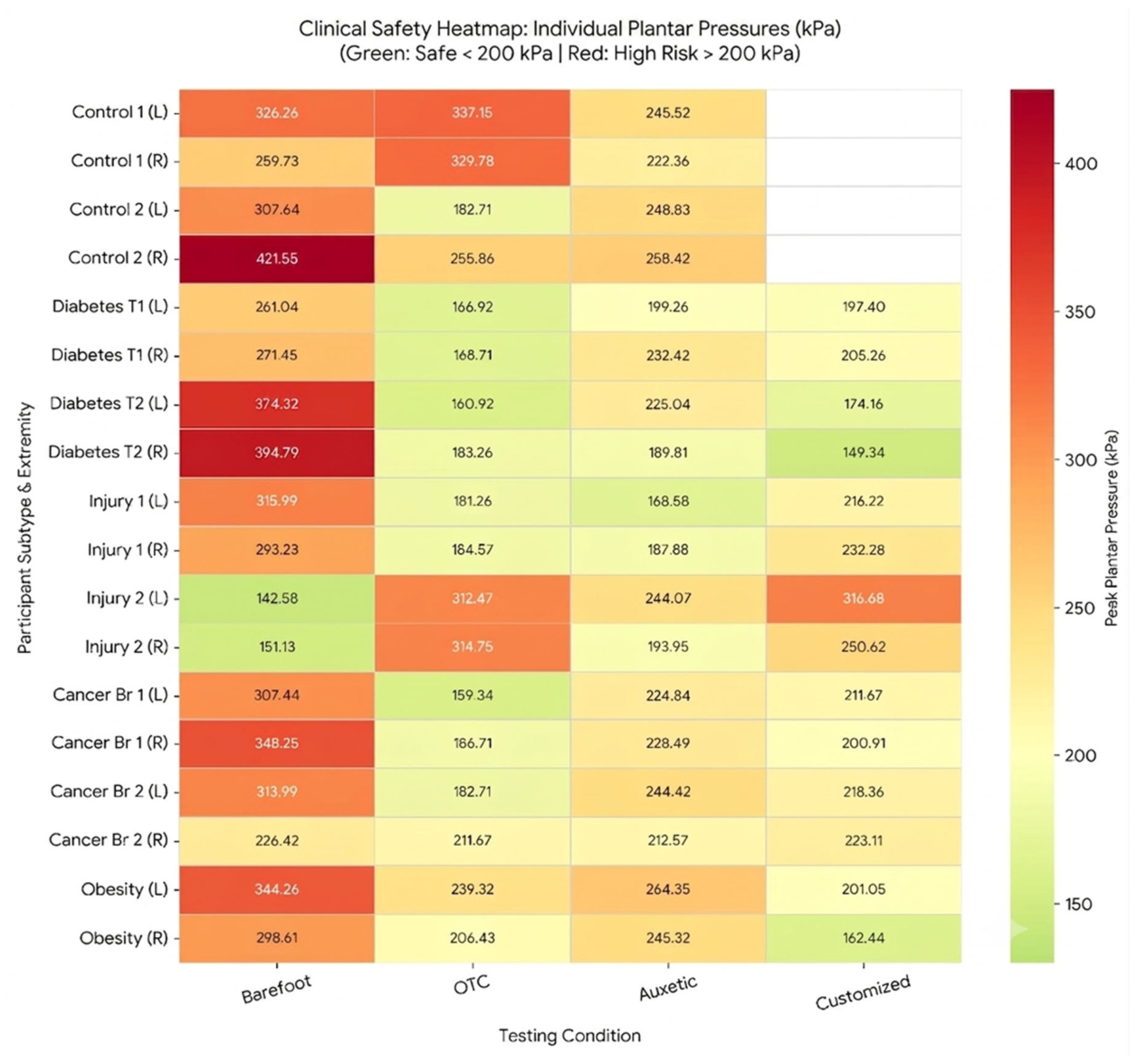
Figure 5.
Comparative analysis of average bilateral peak plantar pressures across symptomatic neuropathic subgroups under varied orthotic conditions.
Figure 5.
Comparative analysis of average bilateral peak plantar pressures across symptomatic neuropathic subgroups under varied orthotic conditions.
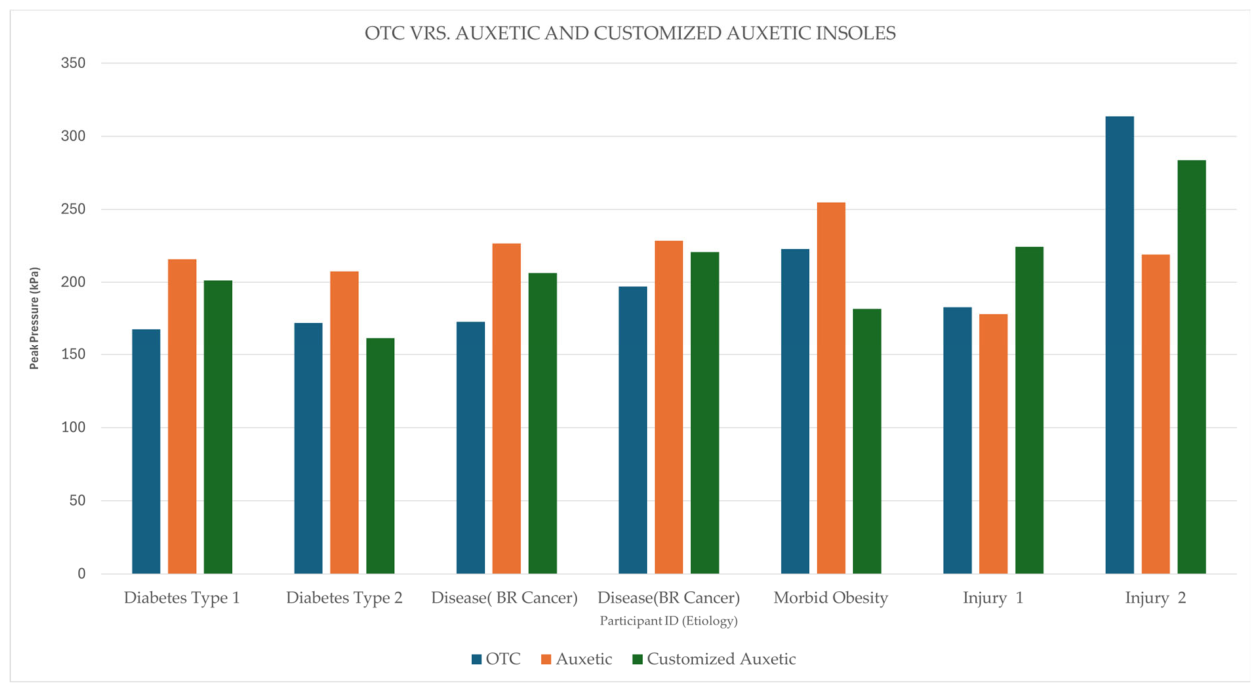
Figure 6.
Illustrates plantar pressure distribution signatures across systemic neuropathies and metabolic conditions: (D) DPN, (G) CIPN, and (I) Metabolic Obesity.
Figure 6.
Illustrates plantar pressure distribution signatures across systemic neuropathies and metabolic conditions: (D) DPN, (G) CIPN, and (I) Metabolic Obesity.
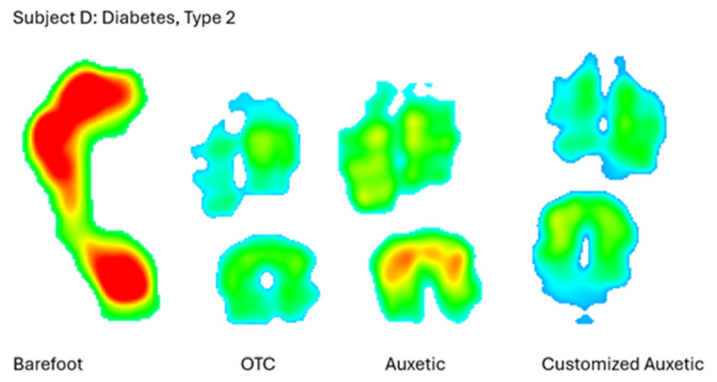
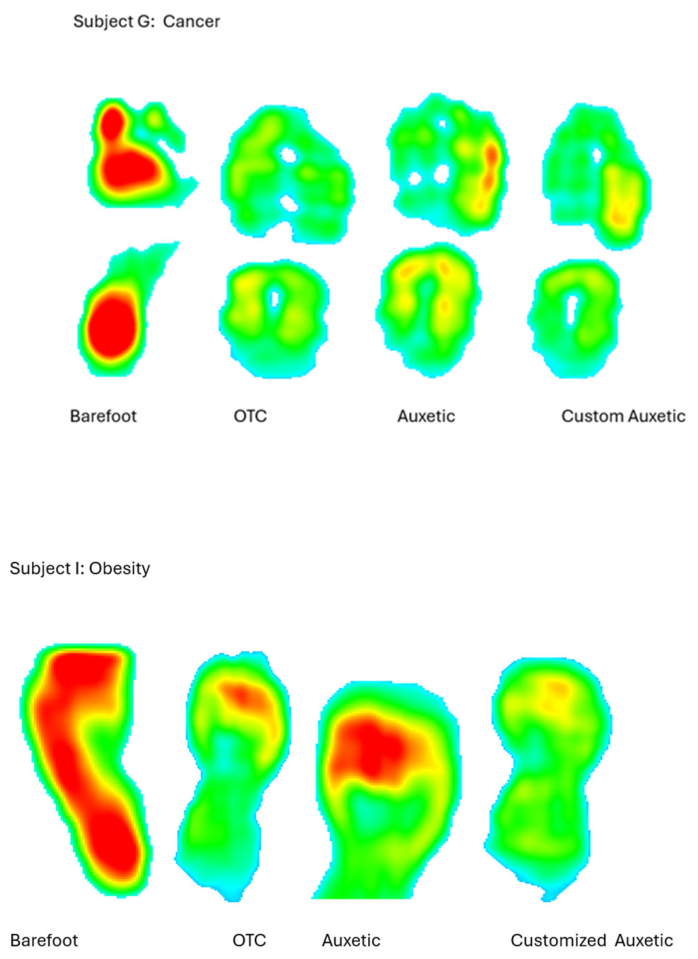
Table 1.
Empirical Customization Map: PPP Patterns and Strategic Auxetic Interventions by Neuropathic Etiology.
Table 1.
Empirical Customization Map: PPP Patterns and Strategic Auxetic Interventions by Neuropathic Etiology.
| Neuropathic 1. | Primary Pathomechanical PPP Signature | Sizing Boundaries | Strategic Customization Intervention Matrix |
|---|---|---|---|
| Diabetic Peripheral Neuropathy (DPN) | Severe focal stress at the 1st metatarsal head and calcaneus; high ulcer risk. | Sizes 8.5–10 | Target high-density, low-profile custom auxetic dome inserts at primary pressure hubs. |
| Chemotherapy-Induced Neuropathy (CIPN) | Diffuse, migratory microvascular hyper-sensitivity across the midfoot and digits. | Sizes 10–11 | Moderate-profile midfoot auxetic wedge integration with soft top-layer pairing. |
| Localized Physical Trauma (Injury) | Rigid structural asymmetries; high fixed unilateral plantar loading over bony lesions. | Sizes 6.5–7 | Contraindicated. Direct retention of un-customized, continuous native auxetic foam. |
| Metabolic Obesity | High-magnitude global vertical loading with rapid heel/forefoot fat pad displacement. | Size 11W | Max-thickness, reinforced auxetic dome pairing across both heel and forefoot zones. |
Note. Empirical customization map pairing primary neuropathic pathomechanical signatures with strategic auxetic orthotic interventions.
Table 2.
Cohort Demographics, Baseline Footwear, and Subjective Ambulation Outcomes.
| Participant Etiology Subtype | Anthropometrics(Age, Sex, Wt., Size) | Baseline Footwear Worn to Site | Comfort vs. Baseline | Gait vs. Baseline |
|---|---|---|---|---|
| Subject A Control 1 (Healthy) | 45 / F / 180 lbs / 8 | Old Navy Canvas Shoes | More comfortable | About the same |
| Subject B Control 2 (Healthy) | 44 / F / 240 lbs / 8W | New Balance 1540 B | More comfortable | Walking is better |
| Subject C Diabetes T1 (Systemic) | 59 / F / 118 lbs / 8.5 | New Balance 2010 B | More comfortable | Walking is better |
| Subject D Diabetes T2 (Systemic) | 45 / M / 210 lbs / 10 | Adidas Lightshift B | More comfortable | Walking is better |
| Subject E Injury 1 (Focal) | 59 / F / 173 lbs / 6.5W | Under Armour Running Shoes | More comfortable | Walking is better |
| Subject F Injury 2 (Focal) | 61 / F / 146 lbs / 7 | Merrell Holiness s Alpine 83 | About the same | Walking is better |
| Subject G Cancer Br 1 (Systemic) | 40 / M / 270 lbs / 10W | Skechers Slip-ins: Glide-Step | More comfortable | Walking is better |
| Subject H Cancer Br 2 (Systemic) | 38 / M / 173 lbs / 11 | Brooks Adrenaline / Curex Insole | About the same | About the same |
| Subject I Obesity (Metabolic) | 35 / F / 330 lbs / 11W | New Balance Fresh Foam X | More comfortable | Walking is better |
Note. Summary of baseline participant anthropometrics (age, sex, weight, shoe size), historical footwear configurations, and comparative subjective ambulation outcomes following the auxetic foam interventions.
Table 3.
Bootstrapped Target Plantar Pressure & Systemic Distribution Metrics (B=1,000).
| Evaluated Parameter Matrix | Valid Simulated N | Absolute Minimum | Absolute Maximum | Bootstrapped Cohort Mean | Bootstrap Standard Deviation (σ^∗) | 95% Bootstrap Confidence Interval |
| Insole Variant Grouping | 72 | 1 | 4 | 2.472 | 1.113 | — |
| Neuropathy Subsystem Type | 72 | 1 | 9 | 5 | 2.6 | — |
| Peak Plantar Pressure (PPP) | 72 | 0 | 61.14 | 32.873 kPa | 12.063 kPa | [30.09 kPa,35.66 kPa] |
Note. Analysis performed on trial-averaged profiles (n=9 subjects; simulated matrices N=72). Values denote scale boundaries, converged means, and the true bootstrap standard deviation (σ*). Effect sizes (r) utilize a denominator of n=9 to strictly reflect true inter-subject variance and prevent pseudoreplication (magnitudes: small = 0.1, medium = 0.3, large = 0.5).
Disclaimer/Publisher’s Note: The statements, opinions and data contained in all publications are solely those of the individual author(s) and contributor(s) and not of MDPI and/or the editor(s). MDPI and/or the editor(s) disclaim responsibility for any injury to people or property resulting from any ideas, methods, instructions or products referred to in the content. |
© 2026 by the authors. Licensee MDPI, Basel, Switzerland. This article is an open access article distributed under the terms and conditions of the Creative Commons Attribution (CC BY) license (http://creativecommons.org/licenses/by/4.0/).
Copyright: This open access article is published under a Creative Commons CC BY 4.0 license, which permit the free download, distribution, and reuse, provided that the author and preprint are cited in any reuse.


