

Submitted:
14 July 2026
Posted:
15 July 2026
You are already at the latest version
Abstract
The large-scale withdrawal of military forces from urban areas represents one of the most significant drivers of land-use change in post-socialist Central and Eastern Europe. Based on a national database of former military sites in Hungary, this study investigates the changes in the residential population and social environment of these sites as an outcome of brownfield regeneration. The research combines statistical data analysis of occupational status for the census years 2001, 2011, and 2022 with qualitative methods, including semi-structured in-depth interviews conducted across four case study locations in three Hungarian second-tier cities. The findings reveal three active governance configurations producing distinct social trajectories: social exclusion under market dominance, social mix under sustained municipal involvement, and gentrification in a transitional model where the state eventually withdraws. Ultimately, the study concludes that the social outcomes of military brownfield regeneration are primarily determined by the governance dynamic between municipal authorities and private market actors rather than site attributes alone. Consequently, early and sustained municipal engagement remains the key factor for achieving socially balanced regeneration outcomes.
Keywords:
brownfield regeneration
; military brownfield
; urban governance
; post-socialist transition
; segregation
; social mix
1. Introduction
The large-scale withdrawal of military forces from urban areas represents one of the most significant, yet systematically understudied drivers of land-use change in post-socialist Central and Eastern Europe (CEE). Following the political transitions of 1989–1991, the dissolution of the Warsaw Pact and the subsequent restructuring of national defence forces released extensive areas of previously inaccessible land into civilian use across the region [1,2,3]. These former military areas constitute a distinct version of brownfield land: they share the functional vacancy and redevelopment challenges common to former industrial sites, yet differ fundamentally in their prior state ownership, their physical configuration as large, bounded, access-restricted enclaves, and the legal and political mechanisms that govern their transfer to civilian use [4,5].
In Hungary, the demilitarization process affected more than a thousand sites across the country used by the armed forces during the state-socialist period, a heterogeneous stock of which only a portion became ultimately abandoned brownfields. Based on a national database, this study aims to investigate the changes of the residential population and social environment in these sites as an outcome of brownfield regeneration. Housing affordability in Hungarian cities has worsened during the post-socialist transition due to the lack of freely available urban land and the near-total cessation of social housing provision [6,7]. These factors made centrally located former military areas an attractive target for both public and private sectors developments. Yet, despite the scale and social significance of the phenomenon, the residential reuse of military brownfields in the post-socialist context has been addressed only by single case-studies rather than systematic comparative analysis [8,9].
The motivation of this study can be linked with two interconnected gaps in the existing literature. First, while the literature on brownfield regeneration has developed typological and governance frameworks for former industrial and commercial sites [10,11], research on military brownfields (particularly in the CEE context) has not provided a systematic analysis of and a typology for residential regeneration processes [9,12]. Second, the post-socialist urban governance literature, which has produced sophisticated accounts of housing privatization, gentrification, and socio-spatial segregation [13,14], has not systematically engaged with former military areas as a distinct arena of governance arrangements. The processes through which municipalities and private developers negotiate the regeneration of these strategically located sites, and the divergent social outcomes that follow from different governance arrangements, remain poorly understood.
This study addresses both gaps by developing an empirically grounded typology of residential military brownfield reuse in Hungary. We argue that the governance dynamic between municipal authorities and private market actors (specifically, the temporal trajectory of municipal involvement) constitutes the primary dimension differentiating reuse outcomes. The central research question is: what distinct typological patterns characterise the residential reuse of former military brownfields in Hungary, and through what governance mechanisms do these patterns generate divergent social outcomes? To answer the question, we combine statistical data analysis with qualitative research methods in a comparative approach to track the evolving socio-spatial processes across four case study locations in three Hungarian second tier cities. Social outcomes are assessed using occupational status data from the Hungarian Central Statistical Office (KSH) for the census years 2001, 2011, and 2022, complemented by semi-structured in-depth interviews with professionals and site observations conducted in spring 2026. In doing so, the study provides both an empirical analysis of a significant and under-examined urban phenomenon and an analytical framework replicable in other urban contexts in general.
2. Literature Review
2.1. Military Brownfield Land: Definitions
Brownfield land is commonly defined as any land or premises that had previously been used or developed and is not currently fully used, being in most cases vacant, derelict and contaminated [15]. The broad scope of this definition allows its wide use and serves as the foundation for possible typological refinements [16,17]. Two of these refinements are particularly relevant here. First, the choice between brownfield and greenfield development is not a technical decision but one shaped by institutional context, market structure and political priorities [18]; the reuse of military land must, therefore, be analysed as the outcome of an institutional configuration rather than of site attributes alone. Second, redevelopment outcomes are determined less by the physical characteristics of a site than by the governance frameworks within which redevelopment is organised [19]. Comparative research results on military land disposal in Western and Southern Europe reinforces this institutional factor, where ministries of defence often sell their assets to reduce maintenance costs and generate revenue, in a predominantly speculative, financially driven model that follows the broader neoliberal restructuring of the public sector [20]. The post-socialist transformation of military brownfields in Central and Eastern Europe (CEE) differs from this model because the public ownership on the eve of the military withdrawal creates an opportunity for socially oriented reuse, but also a structural vulnerability to the same market-driven logic once fiscal pressures take hold.
Within the broad brownfield category, military sites constitute a theoretically distinct subtype for both institutional and physical reasons. Institutionally, the original owner is almost exclusively the state rather than a private entity, so the transfer of military land to civilian use is governed by legal mechanisms and political decisions that have no equivalent in private land markets [21,22]. Physically, former military installations are generally larger than other brownfield structures, they often contain variegated building stock and other infrastructure and are separated from the surrounding urban fabric by strict boundaries and a long history of access restriction [23]. These characteristics jointly produce challenges and opportunities (large contiguous land reserves, ambiguous ownership status, physical and social isolation) that the general brownfield literature does not adequately address. Base conversion in Western European and North American contexts has been studied primarily from planning and environmental perspectives [20,24], however, aspects of conversion from military to residential use have received considerably less attention.
Looking at the growing body of literature, we can say that research on the transformation of military brownfields in CEE has recently intensified. Early studies identified the absence of legal frameworks and institutional capacity for conversion as the central obstacle to revitalisation in the region [21], because the rapid withdrawal of the Soviet troops meant that municipalities received large land portfolios before the necessary legal and planning instruments were elaborated [22]. Local governance capacity subsequently proved to be decisive for conversion success [23]. The Czech experience is the most directly comparable to the Hungarian case: governance arrangements established at the time of military transfer were the primary determinant of whether residential reuse became possible [25], the withdrawal of the public-sector constituted the key barrier to successful regeneration, and good governance (e.g., transparency, stakeholder participation and active administrative involvement) was the key predictor of success across a large sample of sites [26,27]. Findings from other post-socialist contexts are consistent with this pattern: in Serbia, deliberative and participatory planning has been proposed as a means of counteracting the exclusionary tendencies of market-led military brownfield redevelopment [28], while in Poland, mixed-use adaptations of barracks complexes combining market-based and affordable housing proved achievable only where public actors retained meaningful control [29]. The recurring lesson is that governance configuration, rather than site quality matters, yet the literature in the field remains predominantly descriptive and case-specific and has not produced a systematic typology of governance arrangements.
The Hungarian literature on the reuse of military brownfields has also been enriched recently. So far, the focus of studies was on the diversity of regeneration at the national scale and related challenges. An early study identified the concentration of former military areas in secondary cities [30]. In their paper, Kádár and Kozma (2011) analysed the functional transformation of former Soviet military sites in Debrecen, Hungary’s second-largest city. Authors found that marked variations in reuse outcomes can be primarily attributed to differences in initial governance decisions [31]. To date, the most comprehensive national overview in the field demonstrates that the success of reuse strongly correlates with the position in settlement hierarchy and municipal administrative capacity [32], a finding reinforced by other studies stressing that limited fiscal and institutional capacity in smaller municipalities frequently results in prolonged vacancy or sub-optimal conversion [33]. The most recent publication in the field provided a typology of the reuse of former Soviet military brownfields based on GIS analysis and semi-structured interviews [34], but it did not consider the governance arrangements nor examine the social outcomes of different reuse trajectories.
2.2. Post-Socialist Urban Governance and Related Challenges
The post-socialist urban transition is best understood as a compound process in which political institutions, economic frameworks and social relations were restructured simultaneously, producing urban outcomes irreducible to any single causal factor. The most analytically precise formulation of this insight is the multiple-transformations framework put forward by Sýkora and Bouzarovski [35], which conceptualises post-socialist urban change as the temporally sequenced and spatially uneven layering of institutional reform (including property-market liberalisation and municipal decentralisation), social-structural change, and urban spatial restructuring. The proposed framework is a starting point for this study, which identifies the municipality–market relationship as the structuring axis of urban land development after 1989. In this process, the institutional background was restructured first, social structures adjusted more slowly, and the built environment changed last, so the conditions under which any individual site was redeveloped depended on when in this sequence redevelopment occurred. The spatial consequences of this layering have been documented across CEE cities, where the simultaneous privatisation of land and housing and the deregulation of planning produced rapid and often socially regressive changes in urban form [36,37].
Within this general framework, the fiscal position of municipalities is central to understanding the reuse of military brownfield sites. The decentralisation of property rights in the early 1990s transferred not only assets but also liabilities to local governments [36], and the dismantling of the state-socialist housing model left municipalities with large property portfolios but no subsidies for maintenance or renovation [38]. Decisions regarding newly acquired military land were consequently driven by fiscal pressures rather than strategic planning. This fiscal constraint, moreover, was not static in Hungary, where urban governance has passed through three successive rescaling phases since 1989: decentralisation without adequate fiscal redistribution (1990–2004), Europeanisation through EU accession (2004–2010), and post-2010 recentralization, which systematically curtailed municipal autonomy and redirected development resources to the central state level [39]. The recentralization phase is well documented in the literature; post-2010 legislative reforms stripped Hungarian municipalities of competences, fiscal resources and asset control, creating structural conditions under which active municipal development roles in brownfield regeneration became increasingly difficult [40].
The cumulative effect of these shifts is a highly dynamic municipality–market relationship, in which the development potentials of individual sites vary substantially according to the time of acquisition and the local political-economic context. The consequences of weak regulatory frameworks combined with municipal fiscal incentives for rezoning have been especially prevalent in the metropolitan zone of Budapest, where extensive urban sprawl and land conversion disproportionately benefited private developers at the expense of planned, socially balanced development [41]. Findings at the European scale provide the explanation for such outcomes: the growing role of private actors in urban development becomes socially problematic, especially when public-sector counterweights are absent [42]. This condition characterised many post-socialist cities throughout the 1990s and, under recentralization, has re-emerged in new forms in Hungary in the 2010s, a temporal pattern that the governance typology developed in this study is aimed to capture.
2.3. Privatisation of Housing and Its Social Consequences
After 1989, the privatisation of housing and the re-establishment of the land market in post-socialist countries created the preconditions within which the residential outcomes of military brownfield regeneration should be interpreted. In CEE countries, the mass transfer of public housing to sitting tenants at a discount price, accompanied by a decline of state housing construction, produced a radical shift in the tenure structure [43]. In Hungary, the share of the public rental sector on the housing market declined from 23% in 1990 to 3% by 2011, resulting in an almost entirely owner-occupied system, where housing careers completely depended on households’ income and wealth [44]. The implications of housing market transition for the regeneration of military brownfields are direct: sites redeveloped in the 1990s entered a housing market where social housing provision was not a standard component, so its inclusion in any specific project depended entirely on deliberate municipal agency.
The re-establishment of urban land markets followed an equally rapid and spatially uneven course. Hedonic analyses of emerging post-socialist land markets documented steepening centre–periphery land value gradients during the 1990s, driven by accessibility and infrastructure availability [45,46]. Price differentiation was accompanied by social outcomes, for instance, the reconfiguration of state–market relations in post-socialist Budapest and other capital cities of the region resulted in gated communities [47,48] and other speculative residential projects that reinforced, rather than mitigated existing socio-spatial disparities [49]. The systematic extraction of potential ground rent through housing commodification caused affordability erosion and displacement in formerly working-class neighbourhoods [50], These processes were also observable in the transformation of military brownfield sites, where initially low land values at central or close-to-central locations created the value gap that attracted speculative capital.
In this study, the social outcomes of brownfield regeneration are evaluated through the overlapping frameworks of three concepts: residential segregation, social mix, and gentrification.
Residential segregation, the uneven spatial distribution of social groups across urban neighbourhoods, has consistently been found to increase in post-socialist cities as an outcome of market transition. The literature on welfare regimes points to institutional arrangements governing housing and labour markets as the primary mediators between economic inequality and residential sorting [51]. In CEE countries, the withdrawal of the state from housing provision and the weakening role of welfare aspects after 1989 removed the institutional counterweight to market-driven segregation, allowing pre-existing and emerging economic inequalities to translate more directly into residential differentiation. This has been confirmed by empirical evidence, from CEE capital cities like Budapest, Prague, Tallinn, Vilnius and Warsaw, where socio-economic segregation (measured through the dissimilarity of occupational groups across census tracts) increased consistently between 1990 and 2010 [14,48,52,53,54]. Important to note for the present study, that sharpening market-driven residential segregation has not remained confined solely to the capital cities, but it has become prevalent at lower levels of the urban hierarchy, as it is demonstrated by Vámos and Kovács (2026) in Szeged, a second-tier Hungarian city [55].
Social mix, the deliberate co-location of households from different socio-economic strata, has been a near-universal objective of European housing and regeneration policy since the 1990s. Yet, several studies have come to the conclusion that market forces typically reassert socio-spatial differentiation unless continuous institutional mechanisms maintain social diversity [56,57,58]. These findings frame one of the central concerns of the present study and provide the starting hypothesis: sustained municipal involvement is necessary but not sufficient for the preservation of social mix in neighbourhoods. It may prevent the most extreme forms of market-driven exclusion but cannot by itself guarantee a socially integrated outcome.
Gentrification, the displacement of lower-income residents through the entry of higher-income households in urban neighbourhoods, has been studied extensively since Glass’s initial concept [59] see e.g., [60,61]. In post-socialist cities, the process has taken distinctive forms shaped by the institutional context of the transition [39,62]. Kubeš and Kovács (2020) notes that post-socialist gentrification spans a great variety of classical, new-build, tourism-driven and state-led forms, and that Western models require substantial modification to capture the institutional specificities of CEE contexts [63]. The reach of the municipality–market relationship extends beyond housing: the regulatory withdrawal of local government under neo-patrimonial governance has been shown to drive tourism- and night-time-economy-induced displacement in Budapest [64]. The financialization of housing supplies the overarching foundation for these observations because financialization is a variegated, place-specific process [65], and gentrification outcomes are strongly mediated by the governance arrangements of individual sites, where municipal control is absent, financial logic dominates and very often displacement follows.
The interplay of the three above mentioned concepts provides the conceptual framework of this study. We think that military brownfields constitute a structurally distinct type of urban land where the reuse outcomes are shaped by governance decisions made at the moment of military withdrawal, decisions that, in the post-socialist context, were taken under the conditions of fiscal constraint, institutional uncertainty and rapid market expansion. The social outcomes of these neighbourhood transitions (whether segregated, mixed-composition or gentrified neighbourhoods) can be evaluated by different research methods and data, what is the starting point of this study.
3. Research Design
The primary aim of this study is to find out how different governance arrangements shape the socio-economic outcomes of the regeneration of former military sites in Hungarian cities. In line with the main research objective we followed a step-by-step approach first setting up a database of existing military brownfields, recording the basic information of such sites, then performing a typology of those where residential reuse is present. This provided the basis for the selection of case-study neighbourhoods where both quantitative and qualitative date were used during the analysis.
The main dimension of the comparison of case-study sites was the role of municipalities and the involvement of private developers during the regeneration process.
3.1. Former Military Sites in Hungary
This study is based on a mixed methodology combining both quantitative and qualitative research methods. Firstly, a detailed database of former military sites in Hungary was compiled by the authors using multiple sources, including academic and grey literature, local media archives, municipal planning materials, real estate brochures, and other online materials. Information from different sources was cross-checked where possible.
This dataset contained relevant information on 316 former military sites in Hungary, such as the exact location of a site, its military background (Soviet or Hungarian), the year of abandonment, data regarding the ownership structure, the current form of land use, stages of redevelopment, and developer types. Sites were grouped according to their current land use as shown by Figure 1.
Since the main objective of the study was to analyse the wider socio-economic impacts of the regeneration of former military sites, only sites with pure residential function (n=20) and mixed function with residential component (n=47) were considered for further analysis. Altogether, 67 former military sites were investigated. An important aspect of case study selection was the transformation of ownership structure over time. We distinguished the following six ownership categories in the database: local municipality, private individual, private company, central state, international company and mixed ownership. The ownership transformation over time was particularly important because we wanted to scrutinise and contrast the role of municipalities and private actors in the regeneration of military brownfield sites in general.
3.2. Ownership and Governance Arrangements
Regarding the main research question, the interplay between municipal authorities and private market actors seems to be pivotal in the renewal of former military sites. Therefore, we were interested in whether and for how long municipalities can retain meaningful control over the development process, and what the main social consequences of the different configurations of this relationship are. This focus is very much founded in the post-socialist urban governance literature, which identified the municipality–market relationship as the main dividing axis of urban land development in the region after the gradual withdrawal of the state started in 1989 [35]. Operationalising this dimension requires information on two aspects available in our database: the initial post-military owner and the current owner. The transition between these two ownership forms (whether public ownership was retained, shared, or transferred completely to market actors) captures the essential governance trajectory without requiring subjective case-by-case assessment.
This approach yielded four basic types of governance in our sample (n=67), as summarised in Table 1. The market-dominant type (n=21, 31,3%) comprises sites where ownership was passed directly to private actors when the military function ceased and has remained private ever since, with no sign of municipal influence. The municipal-led mixed type (n=15, 22,4%) includes sites where the municipality was the initial owner and has retained full or partial ownership involving some private actors over time, sustaining dominant public sector involvement alongside private investments. The transitional type (n=6, 9,0%) comprises sites where the municipality was the initial owner, but the site was completely transferred to private actors; here the main distinguishing factor is temporal — strong municipal involvement at the beginning, followed by a sharp withdrawal of the state, which influenced the development trajectory. The passive municipal reuse type (n=25, 37,3%) contains sites that remained entirely under municipal ownership, and where the existing building stock has only been partially renovated for social or low-cost rental housing purposes, without the involvement of private actors. Since the central focus of this study is on the governance arrangements between municipal and private actors, the last category was not considered during the case-study selection.
3.3. Selection of Case-Study Sites
Three main criteria guided the selection process of case-study sites. First, sites had to be located in cities above the medium level of the urban hierarchy, which means in Hungary, 50 thousand inhabitants, ensuring the comparability of development context, institutional capacity, and data availability. Second, only sites with a sufficiently advanced redevelopment trajectory were considered, so that governance arrangements and social outcomes could be meaningfully assessed rather than merely anticipated. Third, sites were required to have adequate and cross-verifiable documentation (e.g., planning records, local media appearance, statistical data) to support the research. Applying these criteria, finally, four sites were selected for empirical investigation: two in Kecskemét (a former military warehouse and the Homokbánya barracks), one in Veszprém (Jutasi Road barracks), and one in Szolnok (Bocskai barracks). An additional aspect of selection was that these cases cover the full governance spectrum identified in our database (Figure 2).
Among the selected case-study sites, the Military warehouse in Kecskemét represents the market-dominant type, having been transferred directly into private ownership at the very beginning, without any direct influence of the municipality. The other site in Kecskemét, the Homokbánya barracks, on the other hand, represents the municipal-led mixed type, where the municipality retained its ownership and involved private actors in the regeneration process. The sites selected in Veszprém and Szolnok both represent the transitional type, with initial municipal engagement followed by gradual withdrawal and privatisation. Including two different cases of this type may provide a better understanding of the transitional category. We could test whether the same governance trajectory produces similar social outcomes in two different cities with different historical, socio-economic and planning contexts.
It is important to note that all four selected case studies are former Soviet military installations. This deliberate choice is justified by the distinct legal and institutional mechanisms regarding the transformation of the former military sites in Hungary. While Soviet military sites became vacated in a condensed way between 1990 and 1991 and were systematically offered to local municipalities (thereby creating the structural precondition for the municipal–market governance dynamics analysed here), Hungarian military sites followed a different trajectory. They were abandoned gradually over multiple stages and were legally prioritised for direct market sale to private investors. Municipalities were able to acquire Hungarian military sites only occasionally, if no market actors expressed their interest.
3.4. Data Collection
Social outcomes of the military brownfield regeneration across the case study sites were assessed by using occupational data from the Hungarian Central Statistical Office (KSH) for census years 2001, 2011, and 2022. The focus of investigation was on the positions of residents in the occupational structure, based on the ISCO08 classification (International Classification of Occupations 2008). Based on the ISCO08 classification, two broad categories were created: a high-status group comprising ISCO 1–2 active earners (managers and professionals) and a low-status group comprising ISCO 7–9 active earners (industry and construction industry occupations; machine operators, assembly workers, drivers of vehicles; occupations not requiring qualifications). The use of occupational composition as a proxy for the social status of residents is well documented in urban segregation research [14,66], and is particularly appropriate in the Hungarian context, where occupational data are consistently available at the census tract level across all three census years. Tracking the share of high- and low-status occupational groups over time allowed us to identify different social trajectories in the studied neighbourhoods, from stable composition to social upgrading, shedding light on the social effects of different governance arrangements.
Statistical data analysis was extended by semi-structured in-depth interviews conducted in spring 2026 with chief architects and urban development professionals directly involved in the governance of the case study sites: two in Kecskemét, two in Veszprém, and one in Szolnok. Interview topics covered the timeline of property transfer, the nature and extent of municipal and private actor involvement at different stages, planning and zoning changes, and the perceived social consequences of the development trajectory. Interviews were recorded, transcribed, and analysed thematically.
4. Results
4.1. Military Brownfield Sites with Residential Functions in Hungary
During the data collection, we identified 67 out of the 316 former military sites in Hungary where a residential function was present. The 67 residential sites are distributed unevenly across Hungary’s 19 counties and Budapest. They concentrate in the central part of Hungary in and around the capital city, with the highest concentrations in Budapest (n=10), Fejér county (n=7), Komárom-Esztergom county (n=7), and Bács-Kiskun county (n=6), reflecting the historical geography of military installations in Hungary (Figure 3).
The timing of military abandonment shows distinct differences between Soviet and Hungarian military objects. Soviet military sites with residential function (n=47) were abandoned predominantly in 1990–1991, in the immediate aftermath of the dissolution of the Warsaw Pact and the withdrawal of Soviet troops from Hungary. On the other hand, Hungarian military sites followed a more protracted transformation trajectory, with abandonment taking place in multiple steps between 1990 and 2005, driven by successive restructuring of the Hungarian Defence Forces following the NATO accession in 1999. This temporal pattern is relevant for the governance typology and hence for the scope of this study, because the rapid conversion of Soviet sites in 1990–1991 created a great opportunity for municipalities for intervention under conditions of institutional uncertainty and severe fiscal constraint, which helps explain the high proportion of direct market transfers in that cohort. Hungarian military sites, were abandoned more gradually, allowing municipalities more time (and in some cases more opportunities) to develop active regeneration strategies.
As explained in the method section, we divided the 67 sites into four clusters according to governance arrangements (see Table 1). The passive municipal reuse type is the largest single category (n=25), comprising sites where municipalities used the existing military housing stock for social or low-cost rental purposes without private developer involvement. As explained in Section 3.4, this type was excluded from the analysis. Among the three active governance types (which together account for 42 sites), the market-dominant type is the most prevalent (n=21), followed by the municipal-led mixed type (n=15), and the transitional type (n=6). The dominance of the market-dominant configuration among active development cases reflects the structural conditions of the early post-socialist transition when municipalities lacked both the financial capacity and the institutional frameworks to manage large-scale residential renovations, resulting in most cases the direct transfer of the sites to private actors.
The ownership transition matrix reveals the structural basis for the four governance configurations (Figure 4). Municipal ownership was by far the most common initial ownership form: 40 of the 67 residential sites (59,7%) were acquired by municipalities following military withdrawal, reflecting the default legal mechanism of post-socialist military property transfer in Hungary, whereby sites were first offered to local authorities before private sale. Of these 40 originally municipality owned sites, the majority either remained in municipal ownership (n=17) or transformed to a mixed public(municipal)-private ownership (n=17). These two types together provided the basis for the municipal-led mixed and passive municipal reuse types. A smaller group of six municipally owned sites were transferred fully to private ownership over time, forming the transitional type (n=6). The market-dominant type (n=21) is composed of sites that were never owned by municipalities, 14 of such sites had mixed ownership from the point of transfer, and 7 sites were transferred directly to private individual or corporate ownership.
Two further dimensions of the matrix are analytically significant. First, the diagonal (sites that kept the same ownership form throughout) reveals a structural asymmetry; privately held sites showed high ownership stability (7 out of 11 originally private sites remained in private hands), while municipally owned sites showed considerably more variation, with ownership dispersing across municipal, shared, and private categories over time. This asymmetry reflects the fragile position of municipal ownership in the post-socialist context: fiscal constraints, changing political priorities, and developer pressure together created incentives for municipal exit that had no equivalent in private ownership. Second, a small but noteworthy counter-flow is visible, four sites with initial private or mixed ownership subsequently came under municipal or shared-municipal control (Private→Municipality: 2; Private→Mixed/shared: 2). This suggests that in a minority of cases, municipalities actively acquired sites that had initially bypassed them a finding that warrants attention in future research on municipal land banking strategies.
The transitional pathway — Municipality→Private (n=6) — is quantitatively the smallest of the three active governance types but analytically the most consequential for understanding displacement risk. All six transitional sites began under municipal ownership, meaning that public sector actors had the initial capacity to shape the development trajectory; in all six cases, that capacity was subsequently relinquished. In the next section, we analyse why and when this relinquishment occurred pointing out that the social consequences in the transitional type are consistently more severe than in either of the other active configurations.
4.2. Social Outcomes of Governance Arrangements
Here we focus on the social consequences of the three active types of governance arrangements in the case-study areas, shedding light on the differences during the development process and especially the social outcomes. For each type, first the defining governance mechanism is described, which is followed by the longitudinal analysis of occupational data from census records (2001, 2011, 2022); providing an overview of the social trajectory of the case-study neighbourhoods. This approach enables a systematic cross-type comparison and makes it explicit that the case studies serve as instances of analytically prior categories rather than as self-contained narratives.
4.2.1. Type 1 — Market-Dominant Reuse
In this type, former military sites were passed directly into private ownership at the point of military transfer, with no signs of municipal involvement in the subsequent development process. The defining governance mechanism is early and irreversible disengagement of the public sector. Once the municipality transferred the site, market logic became the sole organising principle of redevelopment. The outcomes of redevelopment (including land use intensity, housing form, price level, and the social composition of future residents) were determined exclusively by the investor’s return calculations. The absence of a public sector counterweight meant that social affordability considerations became structurally excluded from the redevelopment process. This configuration was the most common among the active reuse pathways in the studied military brownfield sites (n=21).
The former military warehouse in Kecskemét illustrates this pathway. Following the withdrawal of the Soviet army in 1991, the site went directly to a private owner without a period of municipal stewardship. No social housing provision was planned, and no obligations for affordable housing could be set for subsequent development permissions. Planning decisions (zoning changes and building permits) followed standard municipal procedures, but the municipality had no leverage over the project itself. Private investors developed the area incrementally over the following two decades, producing an upscale residential quarter characterised by detached and semi-detached housing (Figure 5). Interviewees confirmed that the municipality’s role was limited in the regeneration process, and it had no instrument to shape the social composition of the area. The site’s trajectory thus reflects pure market logic from the outset; the excellent location and development potential were captured and utilised entirely by private actors, with no redistribution of land value gains toward public or social ends.
The social outcome of the redevelopment process is consistent with the governance mechanism. Occupational data show a stable high-status residential composition throughout the studied period (Figure 6). The share of the high-status group remained the same, well above the city’s average (41.92% in 2011 and 41.36% in 2022), while the share of low-status residents somewhat declined. The relative stability of the high-status profile reflects the consolidation of a socially homogeneous, high-income enclave, with no signs of social mixing. This result corresponds to what the segregation literature terms residential exclusion: the systematic filtering of lower-income households through market pricing rather than through explicit exclusionary policy [51].
4.2.2. Type 2 — Municipal-Led Mixed Reuse
In the municipal-led mixed form of reuse, the municipality acquired the site after the withdrawal of military troops and kept meaningful control throughout the redevelopment process, even when private developers became involved at later stages. The defining governance mechanism can be labelled as sustained public sector presence, since the municipality acts not merely as a regulatory authority but as an active development partner, shaping land use decisions, enabling affordable housing provision, and maintaining a counterweight to purely market-driven considerations. This does not, however, preclude private investment; indeed, the presence of private actors is the distinguishing factor of this type compared to the passive municipal reuse configuration, but the municipality ensures that social objectives remain embedded in the regeneration program. This configuration accounts for 15 sites among the studied military brownfields and represents the pathway most consistent with post-socialist housing policy ambitions, though it requires sustained institutional capacity and political will that were absent in many other cases.
The Homokbánya barracks in Kecskemét illustrates this configuration (Figure 7). Following the Soviet military withdrawal, the site was acquired by the municipality, which retained ownership and took an active role in shaping its reuse. The redevelopment program combined market-based owner-occupied housing with public rental housing and workers’ apartments, reflecting a deliberate social mixing objective. The municipality used its ownership position to impose conditions on private investments — including affordable-unit quotas and design requirements — that would not otherwise have been possible through planning regulation alone. Private developers entered the site under these conditions rather than as unconstrained market actors. The result was a substantially larger housing stock: the number of dwellings on the site increased approximately 5.5-fold between 2011 and 2022, indicating intensive development activity, yet the mixed-tenure structure remained intact throughout.
The social outcome of the regeneration reflects the governance mechanism. High-status occupational groups slightly increased from 13.49% to 20.83% between 2011 and 2022 (+7.34%), indicating an upward trajectory, however, the share of low-status groups declined only marginally, from 31.75% to 30.44% (−1,31%), indicating that no displacement took place and low-status residents remained present in the area after the regeneration (Figure 8). The site, thus, has moved toward a more mixed social composition — with both high- and low-status groups represented at meaningful levels — rather than undergoing the unidirectional status shift characteristic of gentrification. This outcome is consistent with the social mix preservation trajectory identified in the social mix literature as the intended but rarely achieved goal of public-sector-led urban regeneration (Bolt, G. et al. 2010), and stands in direct contrast to the outcomes observed in the other two governance types.
4.2.3. Type 3 — Transitional Reuse
The transitional configuration is the most analytically complex of the three basic types of governance arrangements, and it is the most consequential for understanding the social risks of post-socialist military brownfield regeneration. Sites in this category were initially acquired by the municipality, but later they were transferred to private ownership as fiscal constraints or shifting political priorities eroded the municipality’s capacity or willingness to sustain active involvement. This type of governance mechanism can be labelled as municipal withdrawal under pressure, where the relinquishment of public ownership is important, rather than the fact of initial acquisition. Early municipal involvement in the redevelopment of military sites usually results in some affordable housing provision in the area for lower-income groups, whereas the subsequent market takeover introduces development pressures that progressively displace those groups. The transitional pathway thus produces dynamic gentrification not through the absence of public control but through its premature termination. Altogether, only 6 sites were classified in this trajectory, nevertheless, its social consequences are disproportionate to its limited weight.
The Jutasi road barracks in Veszprém is the primary illustration of this pathway. Following Soviet withdrawal in 1990, the site was acquired by the municipality of Veszprém, which initially used it to provide home for low-income residents in the renovated military housing estate (Figure 9). This early phase produced a socially diverse residential environment with a significant low-status component. From the late 1990s onward, however, fiscal constraints led to rapid withdrawal of the local municipality from active site management. Private developers entered the area during the 2000s and sped up the development. Between 2001 and 2011, 35% of all new dwellings constructed in the city were located on this single former military site, a concentration that reflects both the area’s development potential and the pervasive advance of the private developers.
The social structure of the area changed drastically between 2001 and 2022, the share of high-status rose from 21.91% to 31.72% (+9.81%), while the ratio of low-status people fell from 30.30% to 23.29% (−7,01%) (Figure 10). This systematic upward trajectory is a clear sign of gentrification, driven by gradual displacement of lower-class people, as the market-based owner-occupied housing has gradually outweighed the affordable housing stock in the area established during the early phase of regeneration.
The former Bocskai military barracks in Szolnok provides another example for the transitional pathway (Figure 11). Following the military abandonment in the early 1990s, the site was partially acquired by the municipality of Szolnok, which initiated the residential reuse of the area at affordable price level for lower-income households. As a consequence, the share of low-status groups was relatively high (35.8%) in 2001, whereas the ratio of high-status people remained modest (15.1%). Municipal involvement quickly diminished from the mid-2000s, as private developers increasingly entered the regeneration process and the role of the municipality in the site became restricted to standard regulatory oversight. The scale of subsequent social change is exceptional. The share of high-status people more than doubled between 2001 and 2022, rising from 15.1% to 34.44%. Simultaneously, the proportion of low-status people fell from 35,8% in 2001 to 19.23% by 2022. The most intense social transformation took place in the first decade of the 21st century, exactly when the private sector led development was most intense following the withdrawal of the municipality (Figure 12).
The convergence of the trajectories of the two different military sites in Veszprém and Szolnok (two cities with different historical, economic and social profiles) supports the assumption that the gentrification in the two areas has been the outcome of shifting governance arrangements rather than natural local social transformation. In both cases after an initial engagement phase the municipality withdrew, real estate developers started to control the development trajectory, resulting in an upward social trajectory, where lower-status residents tended to be displaced.
4. Discussion and Conclusions
The central preliminary hypothesis of this study was that the social outcomes of military brownfield regeneration are not determined by site characteristics, location, or market demand alone, but by the configuration of public and private agency through which the redevelopment is organized. The three active governance types elaborated in this study produce three distinct and consistent social trajectories: social exclusion under market dominance, social mix under sustained municipal involvement, and gentrification in transitional model where the state withdraws. The interviews provided evidence that these findings are not merely statistical correlations but causal pathways operating through identifiable mechanisms.
In the market-dominant case, the interviews confirmed the mechanism of early and irreversible disengagement. In this case the municipality initially received the warehouse but sold it after a few years, because the cost of site remediation was unaffordable, and eventually the site was transferred to a financial investor around 2000. When it was transferred, no social or housing policy considerations were attached to the development plans, the municipality could not intervene in the later stage of the development. The subsequent trajectory was driven entirely by profit maximization through high-quality housing, producing what became one of the most expensive areas in the city (Kecskemét). More significantly, the local interview revealed the arrival of an additional actor, the newly opened Mercedes-Benz plant. For its specialist employees, the company purchased housing on the site reinforcing the high-status composition from the outset. This confirms that the absence of a public-sector counterweight allowed locational advantage and development potential to be captured entirely by private actors, with no redistribution toward social ends.
The municipal-led mixed case demonstrates the contrasting mechanism of sustained public-sector presence. The results of the interview are particularly instructive here, as it reveals how the municipality actively managed the site over time rather than simply retaining ownership. Having received the Homokbánya site (initially home to marginalised and partly informal residents in former barracks buildings) from the state, the municipality used EU funding in the early 2000s to develop rental housing and to bring in a university college and a secondary school, pursuing a deliberate “knowledge-district” vision. Crucially, the municipality managed its disposals strategically, retained land needed for social housing, allocated areas to Mercedes for workers’ accommodation, transferred land to the university foundation, and sold a substantial parcel to a real estate investor for higher-quality housing, but, did all of this in a manner deliberately aligned with the city’s overall concept. This selective, purpose-driven disposal (retaining strategic control while enabling private investment) is precisely the mechanism that distinguishes the municipal-led mixed type from both market dominance and passive retention, and it produced the social mix visible in the occupational data.
The transitional cases provide insights into the mechanism of municipal withdrawal under pressure most clearly, and the interviewees in the two cities were unambiguous about their fiscal origins. In Veszprém, the municipality renovated and sold the existing dwellings it could afford to develop, but, according to the interviewee, lacked the resources necessary to develop an area of this size and, therefore, left the remainder to a market actor once a larger investor arrived with residential development plans. The withdrawal was not a strategic choice but a fiscal default, the municipality never intended to retain the site and developed only what it could afford before placing the rest in the market. The interview in Szolnok confirmed identical logic, stating that the municipality neither wanted to nor have the resources to develop the site itself, and the sale of the site to a private investor was simply the easiest solution. The convergence of these two accounts across two cities with different socio-economic profiles and planning strategies provides strong qualitative corroboration of the quantitative finding that the transitional pathway produces gentrification through the premature termination of public-sector involvement.
Taken together, the four cases support a clear analytical conclusion, it is not the presence or absence of private market actors as such that determines social outcomes of regeneration, but the presence of the public-sector counterweight throughout the development process. All four sites underwent substantial private-sector-led development, all four are now predominantly market-governed residential areas. What differs is the social composition that resulted, and this difference directly relates to the duration and strategic character of municipal involvement.
The interviews also shed light on some aspects that nuances the social-mix finding. In both Kecskemét cases, the interviewee noted that the resulting districts function primarily as residential areas lacking the services and community infrastructure of a self-contained urban quarter. This suggests that even the most successful governance configuration does not automatically produce socially integrated, fully functioning neighbourhoods, it prevents the most regressive distributional outcomes but does not guarantee a positive one. This finding aligns with the broader social mix literature, which has consistently found that public-sector intervention is a necessary but not sufficient condition for socially balanced urban development [57,58].
The policy implications of these findings are direct and, in the Hungarian context, urgent. The comparative analysis demonstrates that the social outcomes of the regeneration of military brownfields were shaped decisively by decisions taken at and after the moment of military transfer, decisions that were, in principle, flexible to policy intervention. Where municipalities retained strategic ownership and engaged actively with private developers, socially mixed outcomes could be achieved. Where, on the other hand, the municipality withdrew under fiscal pressure, gentrification and social exclusion followed. The central policy lesson is, therefore, that early and sustained municipal engagement is the key factor for achieving socially balanced regeneration outcomes.
In addition to the key findings, this study also has some limitations. The typology developed here is analytically rather than statistically generalizable, it does not claim that the four configurations occur in the same proportions across post-socialist countries, but that the causal mechanisms identified, fiscal constraint driving municipal withdrawal, market actors producing social homogenization in the absence of public-sector counterweight are theoretically transferable to other contexts with similar structural conditions [35]. The scope conditions for this transferability are specific: a post-socialist trajectory of property decentralization to fiscally weak municipalities, a compressed wave of military site release creating concentrated decision-making under uncertainty, and a residualised social housing sector that makes affordable provision dependent on deliberate municipal agency. Where these conditions prevail (across most of CEE) the governance typology and its associated social outcomes are likely to be observable, though the specific distribution of cases will reflect national institutional and fiscal particularities.
Further consideration limits the scope of the present findings and defines their boundaries. The four case studies are all former Soviet installations, selected because these sites were systematically offered to municipalities first, creating the structural precondition for the municipality–market governance dynamics analysed here. Hungarian military sites, by contrast, were legally prioritized for direct market sale and entered municipal hands only residually. The typology developed here, therefore, applies most directly to the Soviet-origin segment of the military brownfields; the governance dynamics of Hungarian-origin sites, which begin from a different institutional starting point, represent a distinct analytical problem warranting separate investigation.
Author Contributions
Conceptualization, B.S. and Z.K.; methodology, B.S. and Z.K.; software, B.S.; validation, B.S..; formal analysis, B.S.; investigation, B.S.; resources, Z.K.; data curation, B.S.; writing—original draft preparation, B.S.; writing—review and editing, Z.K.; visualization, B.S.; supervision, Z.K.; project administration, Z.K.; funding acquisition, Z.K. All authors have read and agreed to the published version of the manuscript.
Funding
This research was supported by the NKFIH Advanced Grant No. 152237.
Conflicts of Interest
The authors declare no conflicts of interest. The funders had no role in the design of the study; in the collection, analyses, or interpretation of data; in the writing of the manuscript, or in the decision to publish the results.
References
- Jarczewski, W.; Kuryło, M. Regeneration of Post-Military Areas in Poland. Eur. XXI 2010, 21, 117–133. [Google Scholar] [CrossRef]
- Kádár, K. The Rehabilitation of Former Soviet Military Sites in Hungary. Hung. Geogr. Bull. 2014, 437–456. [Google Scholar] [CrossRef]
- Klusacek, P.; Martinát, S.; Krejcí, T.; Kunc, J.; Hercik, J.; Havlícek, M.; Skokanová, H. Return of the Local Democracy to the Territory of the Military Training Areas (Case Study the Czech Republic). Communist Post.-Communist Stud. 2020, 53, 191–213. [Google Scholar] [CrossRef]
- Bagaeen, S.G. Redeveloping Former Military Sites: Competitiveness, Urban Sustainability and Public Participation. Cities 2006, 23, 339–352. [Google Scholar] [CrossRef]
- Kunc, J.; Martinát, S.; Tonev, P.; Frantál, B. Destiny of Urban Brownfields: Spatial Patterns and Perceived Consequences of Post-Socialistic Deindustrialization. Transylv. Rev. Adm. Sci. 2014, 109–128. [Google Scholar]
- Tsenkova, S.; Polanska, D. V. Between State and Market: Housing Policy and Housing Transformation in Post-Socialist Cities. GeoJournal 2014, 79, 401–405. [Google Scholar] [CrossRef]
- Stephens, M.; Lux, M.; Sunega, P. Post-Socialist Housing Systems in Europe: Housing Welfare Regimes by Default? Hous. Stud. 2015, 30, 1210–1234. [Google Scholar] [CrossRef]
- Kádár, K.; Kozma, G. Az Egykori Szovjet Katonai Területek Funkcióváltása Debrecenben. Tér És Társadalom 2011, 25, 164–179. [Google Scholar] [CrossRef]
- Hercik, J.; Šimáček, P.; Szczyrba, Z.; Smolová, I. Military Brownfields in the Czech Republic and the Potential for Their Revitalisation, Focused on Their Residential Function. Quaest. Geogr. 2014, 33, 127–138. [Google Scholar] [CrossRef]
- Rizzo, E.; Pesce, M.; Pizzol, L.; Alexandrescu, F.M.; Giubilato, E.; Critto, A.; Marcomini, A.; Bartke, S. Brownfield Regeneration in Europe: Identifying Stakeholder Perceptions, Concerns, Attitudes and Information Needs. Land Use Policy 2015, 48, 437–453. [Google Scholar] [CrossRef]
- Frantál, B.; Greer-Wootten, B.; Klusáček, P.; Krejčí, T.; Kunc, J.; Martinát, S. Exploring Spatial Patterns of Urban Brownfields Regeneration: The Case of Brno, Czech Republic. Cities 2015, 44, 9–18. [Google Scholar] [CrossRef]
- Szabó, B.; Kovalcsik, T.; Kovács, Z. Regeneration of Military Brownfield Sites: A Possible Tool for Mitigating Urban Sprawl? Land . 2025, 14, 596. [Google Scholar] [CrossRef]
- Górczyńska, M. Gentrifiers in the Post-Socialist City? A Critical Reflection on the Dynamics of Middle- and Upper-Class Professional Groups in Warsaw. Environ. Plan. A Econ. Space 2017, 49, 1099–1121. [Google Scholar] [CrossRef]
- Marcińczak, S.; Tammaru, T.; Novák, J.; Gentile, M.; Kovács, Z.; Temelová, J.; Valatka, V.; Kährik, A.; Szabó, B. Patterns of Socioeconomic Segregation in the Capital Cities of Fast-Track Reforming Postsocialist Countries. Ann. Assoc. Am. Geogr. 2015, 105, 183–202. [Google Scholar] [CrossRef]
- Alker, S.; Joy, V.; Roberts, P.; Smith, N. The Definition of Brownfield. J. Environ. Plan. Manag. 2000, 43, 49–69. [Google Scholar] [CrossRef]
- Adams, D.; De Sousa, C.; Tiesdell, S. Brownfield Development: A Comparison of North American and British Approaches. Urban Stud. 2010, 47, 75–104. [Google Scholar] [CrossRef]
- Oliver, L.; Ferber, U.; Grimski, D.; Millar, K.; Nathanail, P. The Scale and Nature of European Brownfield; 2005. [Google Scholar]
- Adams, D.; Watkins, C. Greenfields, Brownfields and Housing Development; 2002; ISBN ISBN: 978-0-632-06387-1. [Google Scholar]
- De Sousa, C.A. Turning Brownfields into Green Space in the City of Toronto. Landsc. Urban Plan. 2003, 62, 181–198. [Google Scholar] [CrossRef]
- Camerin, F.; Córdoba Hernández, R. What Factors Guide the Recent Spanish Model for the Disposal of Military Land in the Neoliberal Era? Land Use Policy 2023, 134, 106911. [Google Scholar] [CrossRef]
- Komár, A. The Problems of the Revitalisation and Reusing of Former Military Lands in Central and Eastern Europe. Geografie 1998, 103, 347–351. [Google Scholar] [CrossRef]
- Myrttinen, H. Base Conversion in Central and Eastern Europe 1989-2003. BICC 2003, 30. [Google Scholar]
- Jauhiainen, J. Conversion of Military Brownfields in Oulu. In Rebuilding the city. Managing the built environment and remediation of brownfields; Urban, Vestbro Dick, Ed.; Baltic University Press, 2007; pp. 27–33. [Google Scholar]
- Bagaeen, S. Framing Military Brownfields as a Catalyst for Urban Regeneration. In Sustainable Regeneration of Former Military Sites; Routledge, 2016; pp. 1–18. [Google Scholar]
- Hercik, J.; Šimáček, P.; Szczyrba, Z.; Smolová, I. Military Brownfields in the Czech Republic and the Potential for Their Revitalisation, Focused on Their Residential Function. Quaest. Geogr. 2014, 33, 127–138. [Google Scholar] [CrossRef]
- Klusáček, P.; Alexandrescu, F.; Osman, R.; Malý, J.; Kunc, J.; Dvořák, P.; Frantál, B.; Havlíček, M.; Krejčí, T.; Martinát, S.; et al. Good Governance as a Strategic Choice in Brownfield Regeneration: Regional Dynamics from the Czech Republic. Land Use Policy 2018, 73, 29–39. [Google Scholar] [CrossRef]
- Osman, R.; Frantál, B.; Klusáček, P.; Kunc, J.; Martinát, S. Factors Affecting Brownfield Regeneration in Post-Socialist Space: The Case of the Czech Republic. Land Use Policy 2015, 48, 309–316. [Google Scholar] [CrossRef]
- Peric, A.; Miljus, M. The Regeneration of Military Brownfields in Serbia: Moving towards Deliberative Planning Practice? Land Use Policy 2021, 102, 105–222. [Google Scholar] [CrossRef]
- Rudnicka-Bogusz, M. Mix-Use Adaptations in Sustainable Regeneration of Barrack Complexes. E3S Web Conf. 2018, 49, 1–10. [Google Scholar] [CrossRef]
- Kádár, K. A Szovjet Katonai Objektumok Kialakítása, Elhagyása És Újrahasznosítása Hazánkban. Sereg Szle. 2011, 2, 133–147. [Google Scholar]
- Kádár, K.; Kozma, G. Az Egykori Szovjet Katonai Területek Funkcióváltása Debrecenben. Tér És Társadalom 2011, 25, 164–179. [Google Scholar] [CrossRef]
- Bársony, R. Bezárt Katonai- És Határőrlaktanyák Hasznosításának Helyzete Magyarországon. Területfejlesztés És Innováció 2018, 12, 40–52. [Google Scholar]
- Dannert, É.; Pirisi, G. Demilitarizálódó Kisvárosok – a Katonai Barnamezők Hasznosításának Helyi Sikerei És Kudarcai. Területfejlesztés És Innováció 2016, 10, 27–44. [Google Scholar]
- Szabó, B.; Kovalcsik, T.; Kovács, Z. Lessons of the Regeneration of Former Soviet Military Sites in Hungary. In Achieving Sustainability in Ukraine through Military Brownfields Redevelopment; Morar, C., Berman, L., Erdal, S., Niemets, L., Eds.; Springer: Dordrecht, 2024; pp. 139–148. [Google Scholar]
- Sykora, L.; Bouzarovski, S. Multiple Transformations: Conceptualising the Post-Communist Urban Transition. Urban Stud. 2012, 49, 43–60. [Google Scholar]
- Stanilov, K. Housing Trends in Central and Eastern European Cities during and after the Period of Transition; 2007; pp. 173–190. ISBN 978-1-4020-6052-6. [Google Scholar]
- Nedovic-Budic, Z.; Tsenkova, S.; Marcuse, P. The Urban Mosaic of Post-Socialist Europe. Urban Mosaic Post.-Social. Eur. 2006, 3–20. [Google Scholar] [CrossRef]
- Lux, M.; Sunega, P. Public Housing in the Post-Socialist States of Central and Eastern Europe: Decline and an Open Future. Hous. Stud. 2014, 29, 501–519. [Google Scholar] [CrossRef]
- Czirfusz, M.; Horváth, V.; Jelinek, C.; Pósfai, Z.; Szabó, L. Gentrification and Rescaling Urban Governance in Budapest-Józsefváros. Intersections 2015, 1. [Google Scholar] [CrossRef]
- Pálné Kovács, I.; Zongor, G.; Kacziba, P.; Grünhut, Z.; Finta, I.; Bodor, Á. Farewell to Decentralisation: The Hungarian and Its General Implications. Hrvat. I Komparat. Javna Uprava 2017, 16, 789–816. [Google Scholar] [CrossRef]
- Kovács, Z.; Farkas, Z.J.; Egedy, T.; Kondor, A.C.; Szabó, B.; Lennert, J.; Baka, D.; Kohán, B. Urban Sprawl and Land Conversion in Post-Socialist Cities: The Case of Metropolitan Budapest. Cities 2019, 92, 71–81. [Google Scholar] [CrossRef]
- Van Kempen, R.; Murie, A. The New Divided City: Changing Patterns in European Cities. Tijdschr. Voor Econ. En. Soc. Geogr. 2009, 100, 377–398. [Google Scholar] [CrossRef]
- Hegedüs, J.; Tosics, I. The Disintegration of the East European Housing Model. Hous. Priv. East. Eur. 1996, 15–40. [Google Scholar] [CrossRef]
- Hegedüs, J.; Horvath, V.; Tosics, N. Economic and Legal Conflicts between Landlords and Tenants in the Hungarian Private Rental Sector. Eur. J. Hous. Policy 2014, 14. [Google Scholar] [CrossRef]
- Dale-Johnson, D.; Brzeski, J.W. Land Value Functions and Land Price Indexes in Cracow, 1993–1999. J. Hous. Econ. 2001, 10, 307–334. [Google Scholar] [CrossRef]
- Bertaud, A.; Planner, U. The Spatial Structures of Central and Eastern European Cities: More European than Socialist? 2004. [Google Scholar]
- Kovács, Z.; Hegedűs, G. Gated Communities as New Forms of Segregation in Post-Socialist Budapest. Cities 2014, 36, 200–209. [Google Scholar] [CrossRef]
- Ouředníček, M.; Pospisilova, L.; Špačková, P.; Kopecká, Z.; Novák, J. The Velvet and Mild: Socio-Spatial Differentiation in Prague after Transition. Socio-Econ. Segreg. Eur. Cap. Cities East Meets West 2015, 261–286. [Google Scholar]
- Bodnar, J.; Molnar, V. Reconfiguring Private and Public: State, Capital and New Housing Developments in Berlin and Budapest. Urban Stud. 2010, 47, 789–812. [Google Scholar] [CrossRef]
- Olt, G.; Smith, M.K.; Csizmady, A.; Sziva, I. Gentrification, Tourism and the Night-Time Economy in Budapest’s District VII – the Role of Regulation in a Post-Socialist Context. In Tourism and the Night; Routledge, 2021; pp. 24–36. [Google Scholar]
- Musterd, S.; Marcińczak, S.; van Ham, M.; Tammaru, T. Socioeconomic Segregation in European Capital Cities. Increasing Separation between Poor and Rich. Urban Geogr. 2017, 38, 1062–1083. [Google Scholar] [CrossRef]
- Kovacs, Z.; Szabó, B. Urban Restructuring and Changing Patterns of Socioeconomic Segregation in Budapest. Socio-Econ. Segreg. Eur. Cap. Cities East Meets West 2015, 238–260. [Google Scholar]
- Krisjane, Z.; Berzins, M.; Kratoviš, K. Occupation and Ethnicity: Patterns of Residential Segregation in Riga Two Decades after Socialism. Socio-Econ. Segreg. Eur. Cap. Cities East Meets West 2015, 287–312. [Google Scholar]
- Ratkaj, I.; Jocić, N.; Budović, A. Residential Segregation in a Radically Changing Urban Context: Experiences from Belgrade. Geogr. Ann. Ser. B 2024, 106, 365–386. [Google Scholar] [CrossRef]
- Vámos, R.; Kovács, Z. A Társadalmi Szegregáció Vizsgálata Szegeden (2011-2022). Területi Stat. 2026, 66, 34–57. [Google Scholar] [CrossRef]
- Lees, L. Gentrification and Social Mixing: Towards an Inclusive Urban Renaissance? Urban Stud. 2008, 45, 2449–2470. [Google Scholar] [CrossRef]
- Galster, G. Should Policy Makers Strive for Neighborhood Social Mix? An Analysis of the Western European Evidence Base. Hous. Stud. 2007, 22, 523–545. [Google Scholar] [CrossRef]
- Bolt, G.; Phillips, D.; Van Kempen, R. Housing Policy, (De)Segregation and Social Mixing: An International Perspective. Hous. Stud. 2010, 25, 129–135. [Google Scholar] [CrossRef]
- Glass, R. Aspects of Change; MacGibbon and Kee, 1964. [Google Scholar]
- Atkinson, R.; Bridge, G. Gentrification in a Global Context: The New Urban Colonialism. Gentrification A Glob. Context New Urban Colon. 2004, 1–308. [Google Scholar] [CrossRef]
- Smith, N. New Globalism, New Urbanism: Gentrification as Global Urban Strategy. Antipode 2002, 34, 427–450. [Google Scholar] [CrossRef]
- Kovacs, Z.; Wiessner, R.; Zischner, R. Urban Renewal in the Inner City of Budapest: Gentrification from a Post-Socialist Perspective. Urban Stud. 2013, 50, 22–38. [Google Scholar] [CrossRef]
- Kubeš, J.; Kovacs, Z. The Kaleidoscope of Gentrification in Post-Socialist Cities. Urban Stud. 2020, 57, 004209801988925. [Google Scholar] [CrossRef]
- Olt, G.; Smith, M.; Csizmady, A.; Sziva, I. Gentrification, Tourism and the Night-Time Economy in Budapest’s District VII – the Role of Regulation in a Post-Socialist Context; 2021; pp. 24–36. ISBN 9781003142096. [Google Scholar]
- Aalbers, M. The Variegated Financialization of Housing. Int. J. Urban Reg. Res. 2017, 41. [Google Scholar] [CrossRef]
- Maloutas, T.; Spyrellis, S.; Szabó, B.; Kovacs, Z. Vertical Segregation in the Apartment Blocks of Athens and Budapest: A Comparative Study. Eur. Urban Reg. Stud. 2022, 30, 096977642211160. [Google Scholar] [CrossRef]
Figure 1.
Current land use of former military sites in Hungary. Source: Own data.
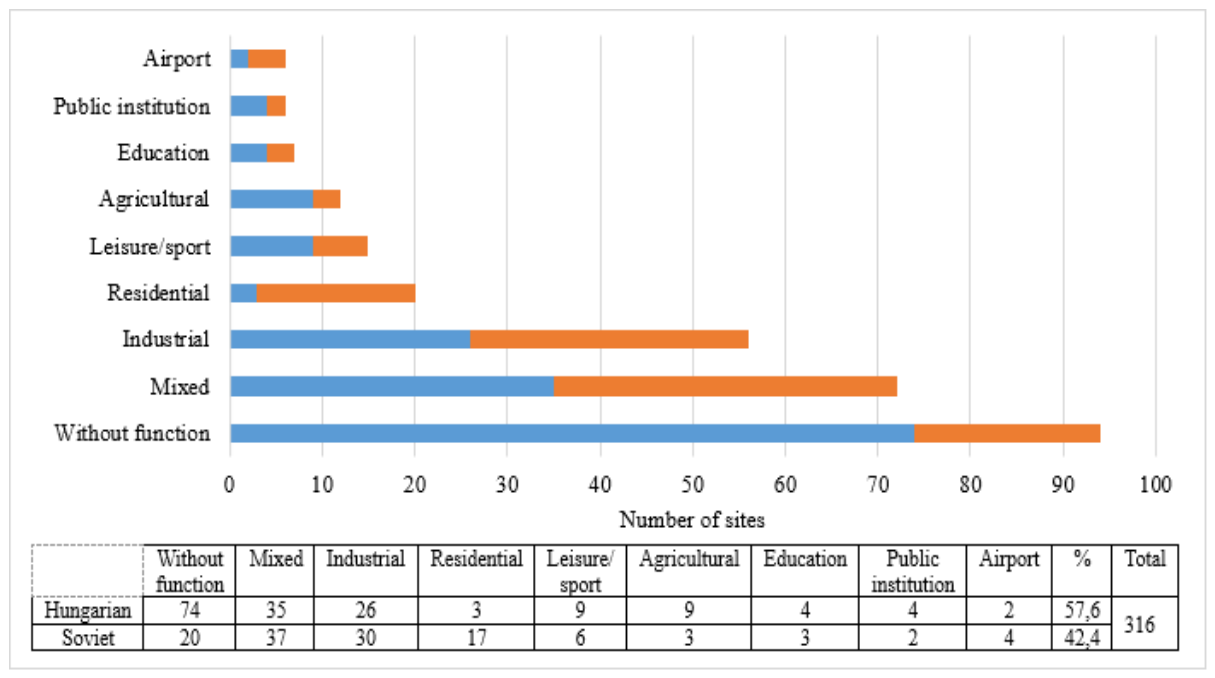
Figure 2.
The selected case-study areas.
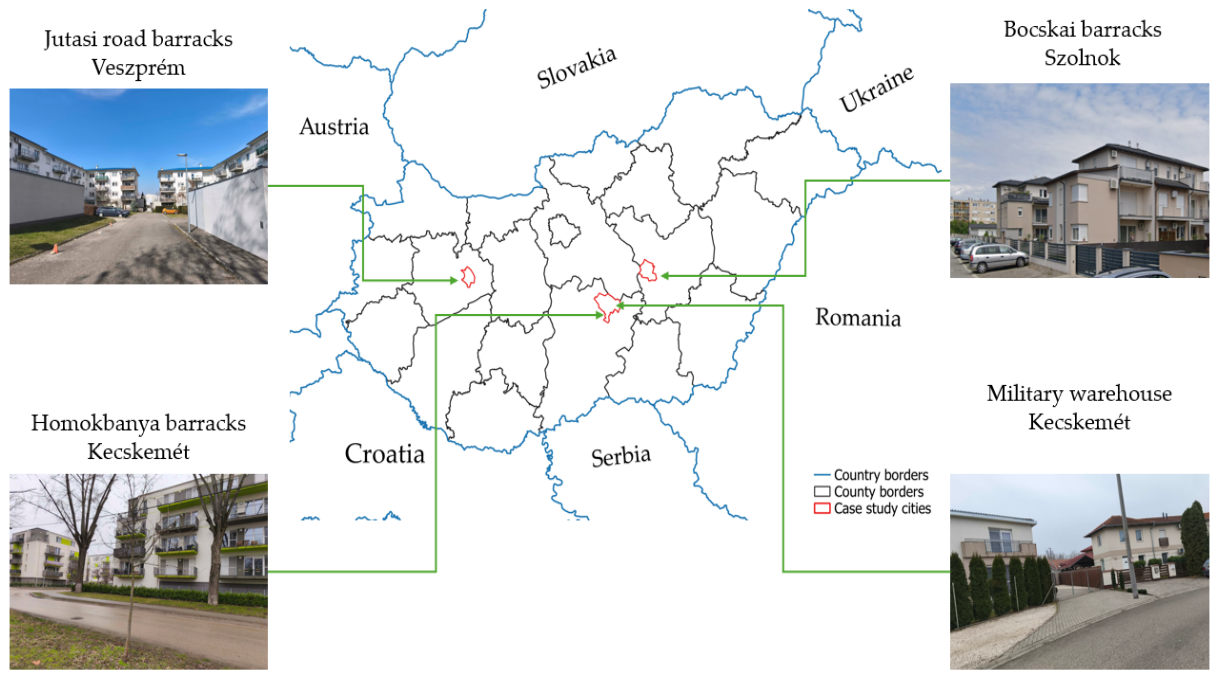
Figure 3.
Spatial distribution of former military sites with residential use in Hungary.
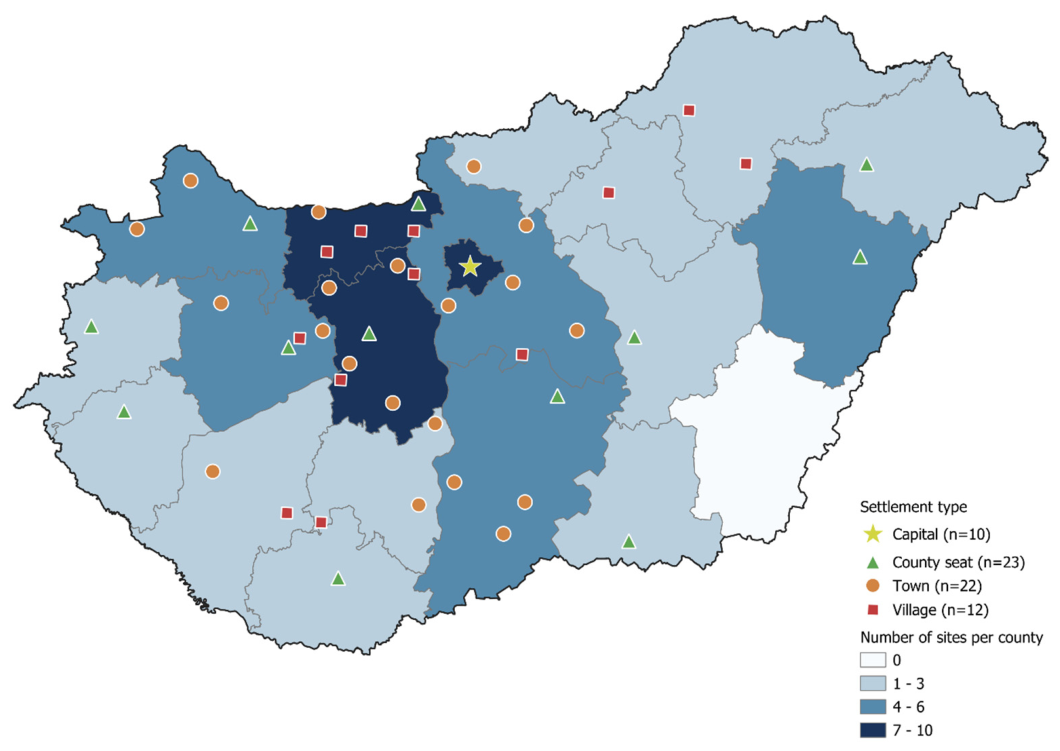
Figure 4.
Ownership transition matrix: initial and current ownership of residential military brownfields (N=67 classified sites).
Figure 4.
Ownership transition matrix: initial and current ownership of residential military brownfields (N=67 classified sites).
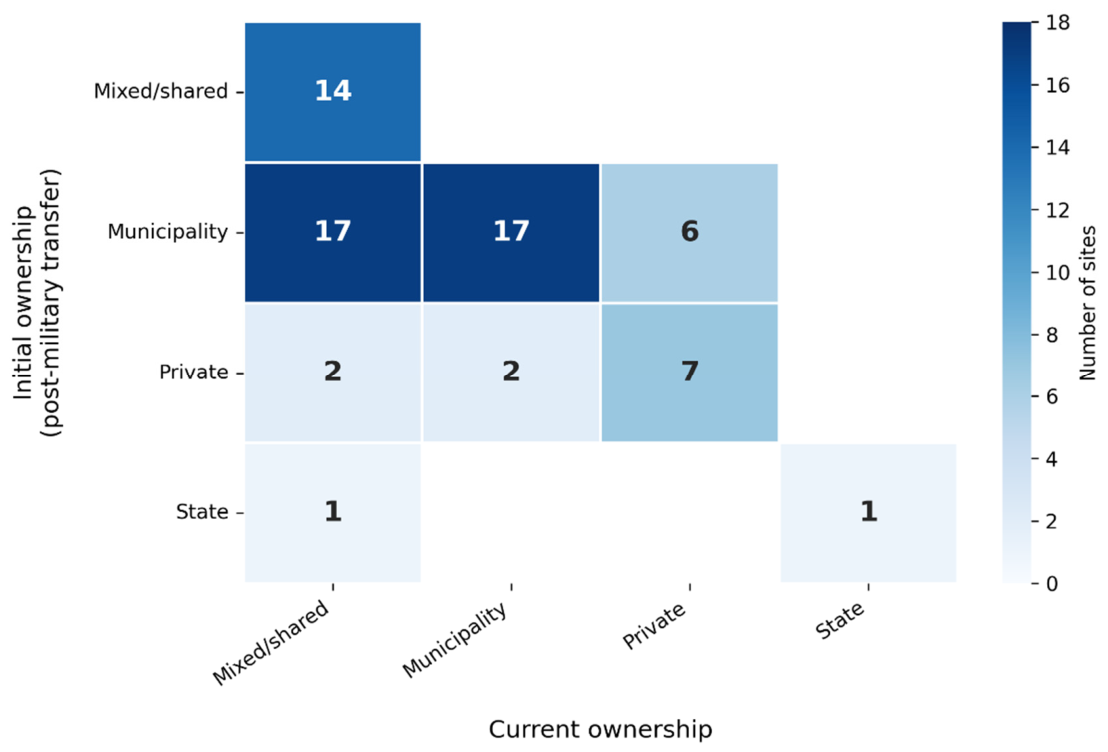
Figure 5.
The former military warehouse in Kecskemét.
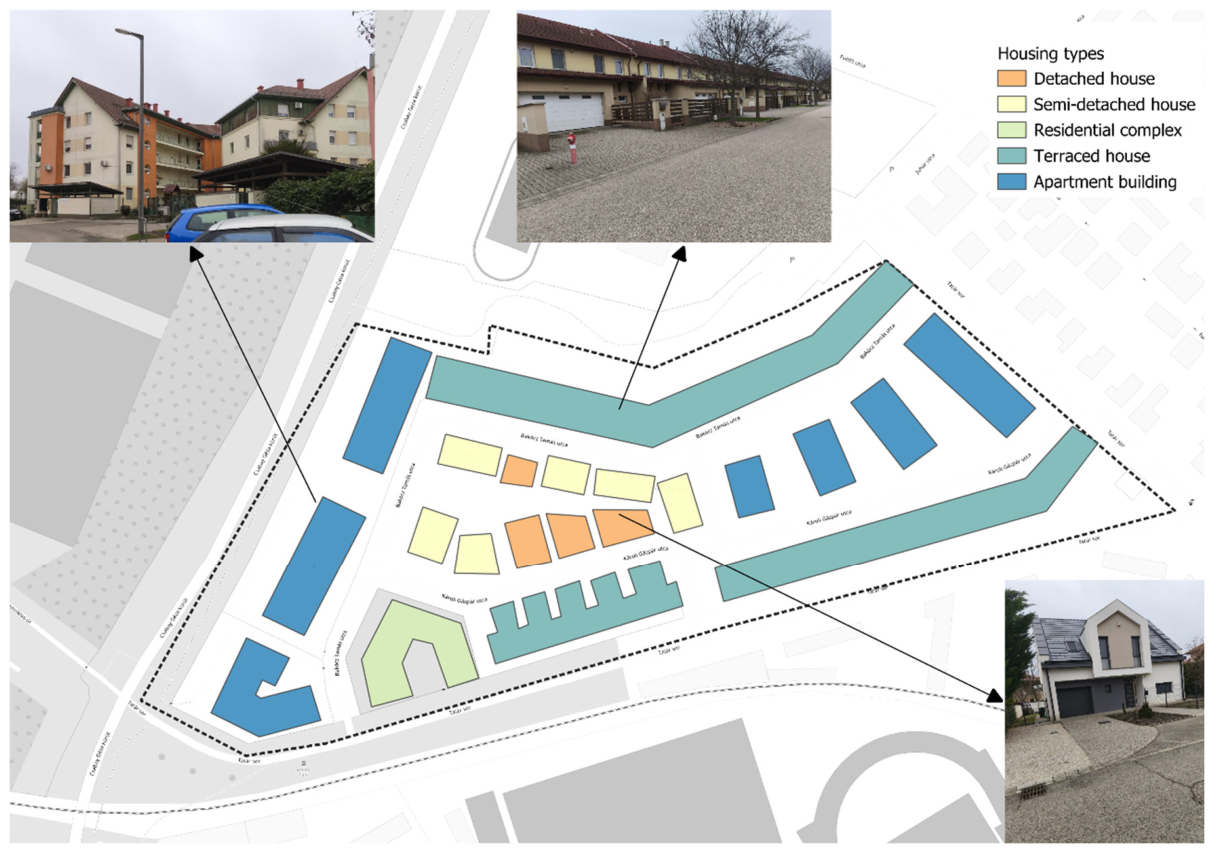
Figure 6.
Social composition of the former military warehouse area in Kecskemét.
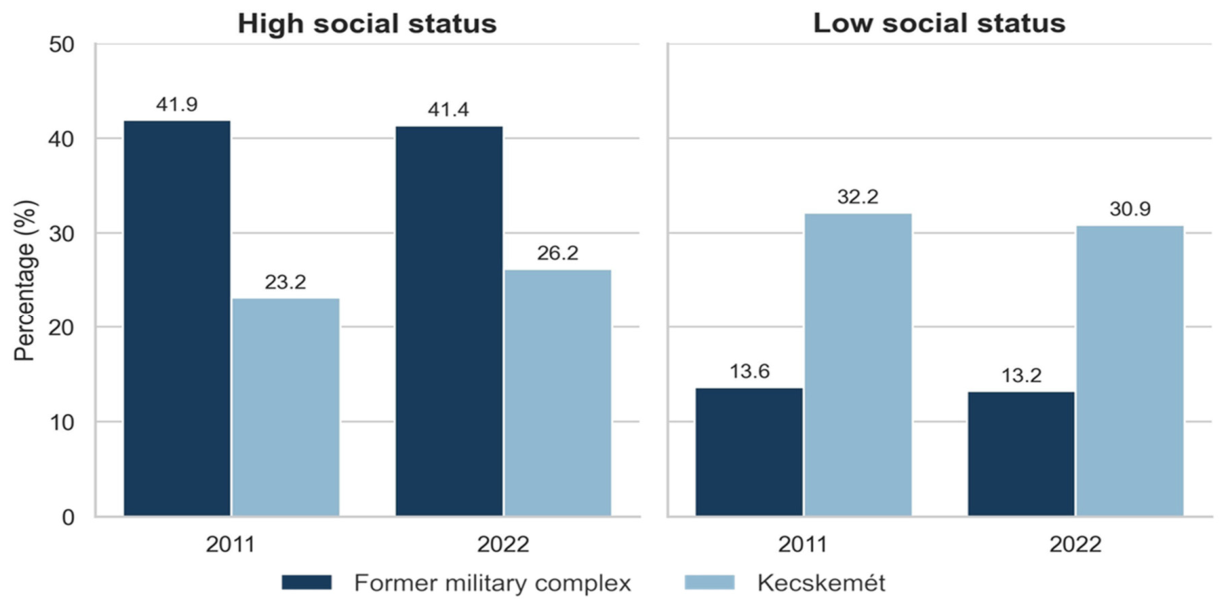
Figure 7.
The former Homokbánya military barracks in Kecskemét.
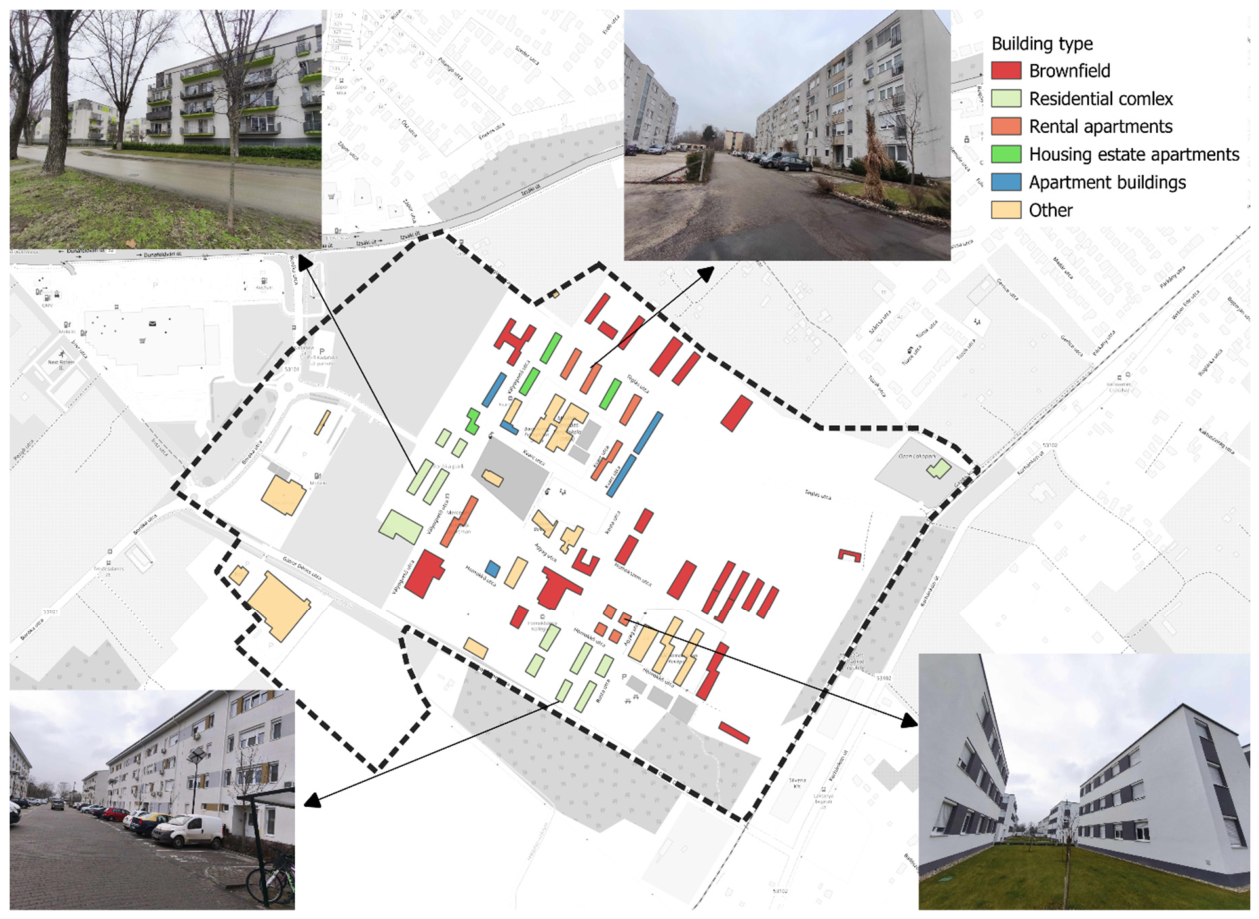
Figure 8.
Social composition of the former Homokbánya military barracks area in Kecskemét.
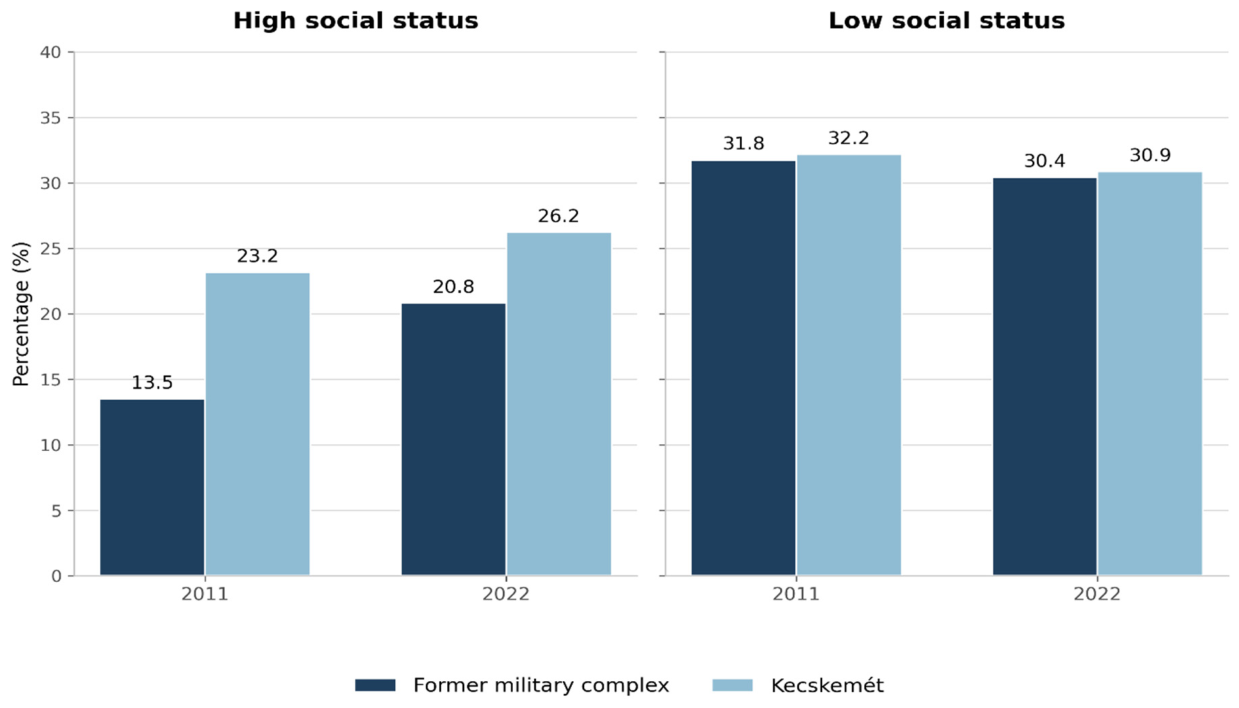
Figure 9.
The former Jutasi road military barracks in Veszprém.
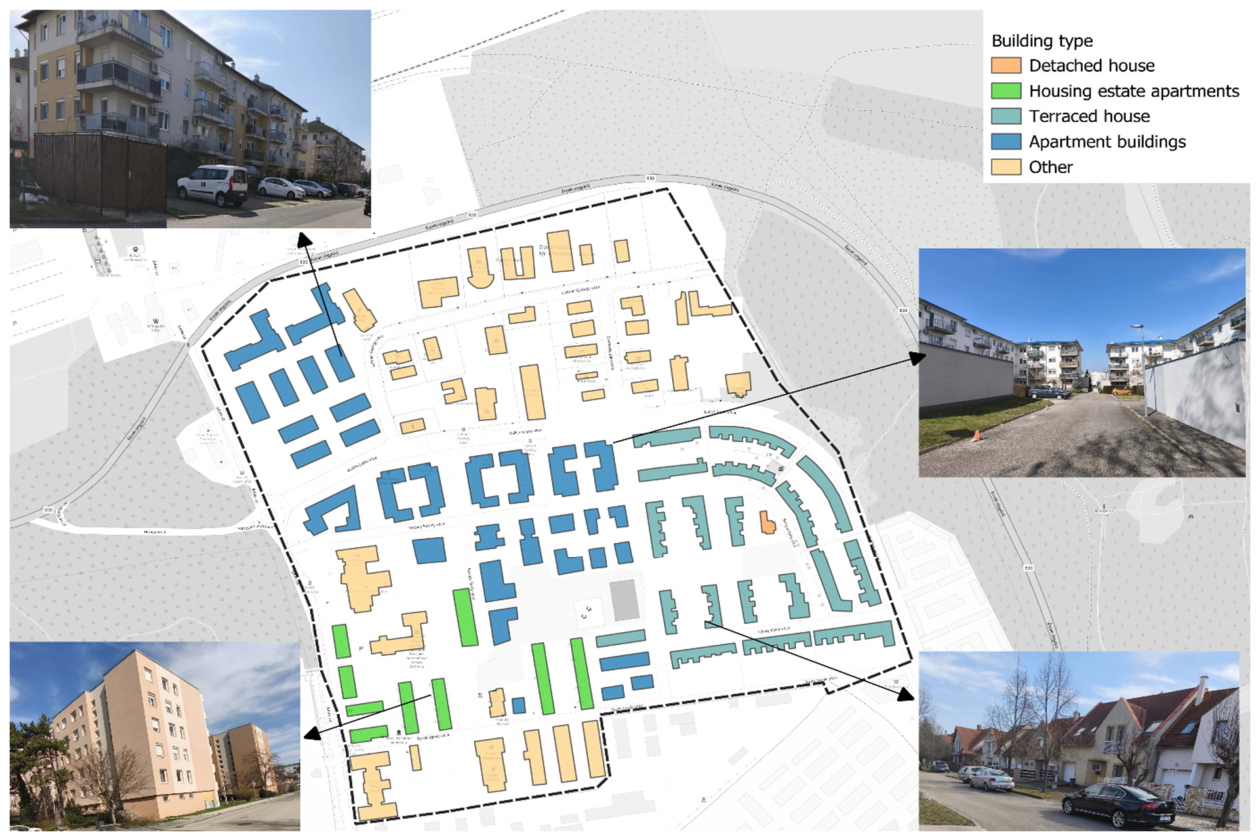
Figure 10.
Social composition of the former Jutasi road barracks in Veszprém.
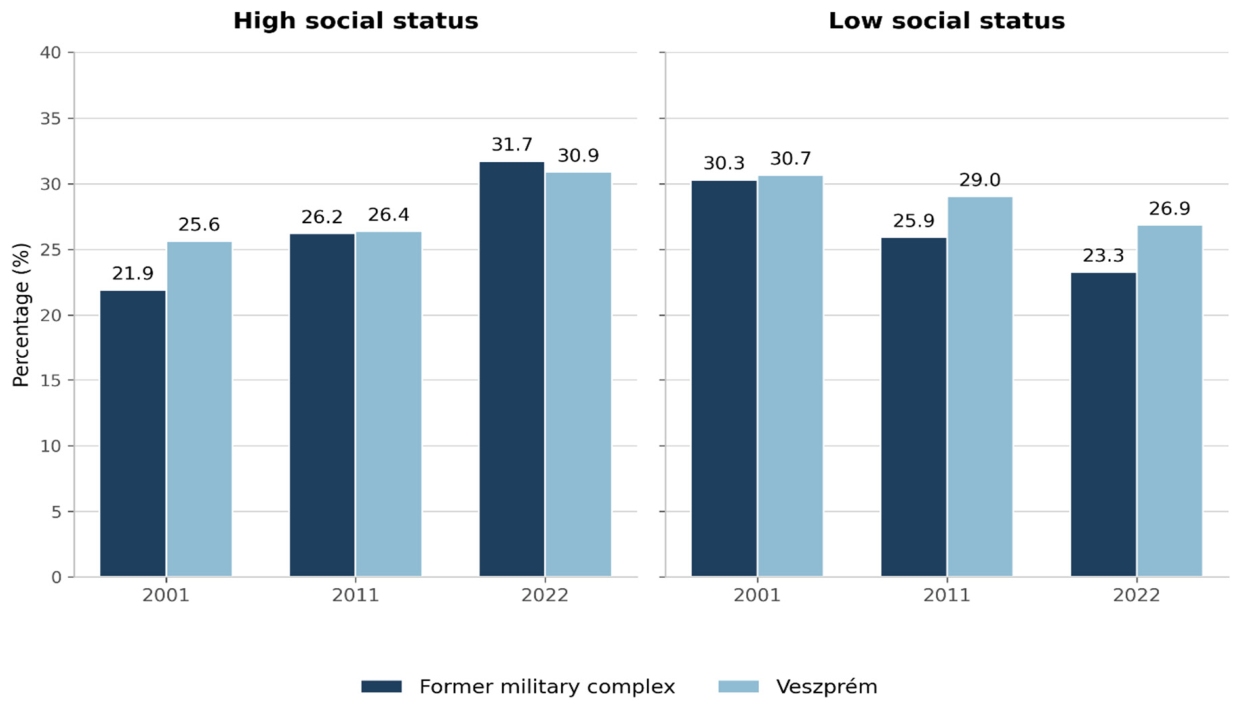
Figure 11.
The former Bocskai military barracks in Szolnok.
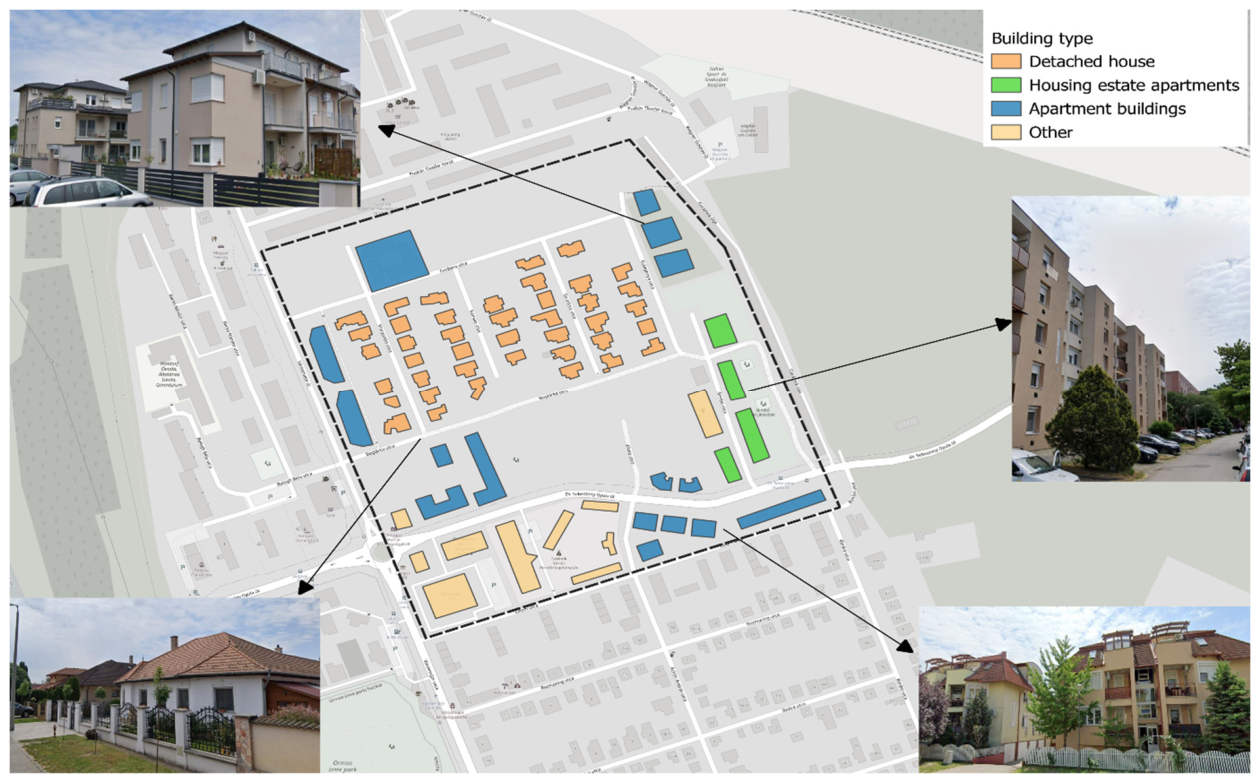
Figure 12.
Social composition of the former Bocskai military barracks in Szolnok.
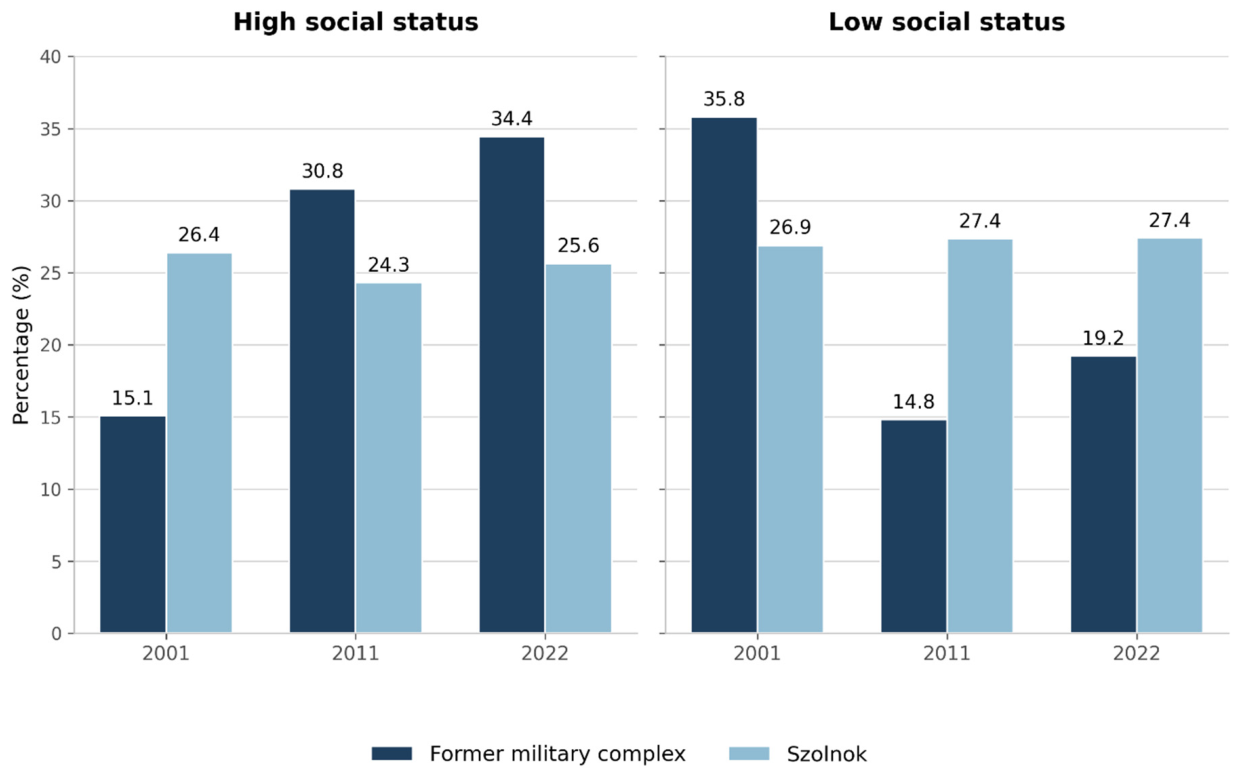

Table 1.
Governance typology of residential reuse of military brownfields in Hungary (N=67).
| Governance type | Definition | Municipal role | Market role | n | Share (%) | Case study (city) |
| Market-dominant | Site became transferred directly to private actors; the municipality has no influence over long-term development | Very limited | Dominant from the very beginning | 21 | 31.3 | Military warehouse (Kecskemét) |
| Municipal-led mixed | Municipality retained full or partial ownership; and remained active together with private actors | Active and sustained | Present but secondary | 15 | 22.4 | Homokbánya barracks (Kecskemét) |
| Transitional | Municipality acquired the site initially, but ownership was transferred to private actors over time | Strong initially, followed by withdrawal | Increase over time after municipal withdrawal | 6 | 9.0 | Jutasi Road barracks (Veszprém) – Bocskai barracks (Szolnok) |
| Passive municipal reuse | Municipality kept the site and used the existing housing stock for social/low-cost purposes, without the involvement of private developer | Sole actor throughout | Absent | 25 | 37.3 | Not considered for analysis |
| Total | 67 | 100 |
Disclaimer/Publisher’s Note: The statements, opinions and data contained in all publications are solely those of the individual author(s) and contributor(s) and not of MDPI and/or the editor(s). MDPI and/or the editor(s) disclaim responsibility for any injury to people or property resulting from any ideas, methods, instructions or products referred to in the content. |
© 2026 by the authors. Licensee MDPI, Basel, Switzerland. This article is an open access article distributed under the terms and conditions of the Creative Commons Attribution (CC BY) license (http://creativecommons.org/licenses/by/4.0/).
Copyright: This open access article is published under a Creative Commons CC BY 4.0 license, which permit the free download, distribution, and reuse, provided that the author and preprint are cited in any reuse.