

Submitted:
11 July 2026
Posted:
13 July 2026
You are already at the latest version
Abstract
Cancer development is influenced not only by genetic alterations but also by epigenetic dysregulation driven by environmental and lifestyle factors, particularly diet. Nutrigenomics investigates how dietary components interact with the genome to influence gene expression, while nutritional epigenetics focuses on diet-induced modifications such as DNA methylation, histone modifications and non-coding RNA regulation. Increasing evidence indicates that bioactive dietary compounds can modulate epigenetic mechanisms involved in carcinogenesis, highlighting their potential role in cancer prevention.
This review synthesises recent evidence (2015–2025) on the molecular interplay between diet, epigenetic reg-ulation and cancer risk. We examine how key dietary factors—including methyl donors involved in one-carbon metabolism, polyphenols, short-chain fatty acids and omega-3 fatty acids—modulate epigenetic regulators such as DNA methyltransferases and histone deacetylases. Particular emphasis is placed on the emerging diet–microbiota–epigenome axis, whereby microbiota-derived metabolites influence host chromatin architecture and gene expression pathways relevant to tumour suppression and inflammation.
In addition, we discuss current evidence linking dietary patterns, including Mediterranean and Western diets, with distinct epigenomic signatures associated with cancer susceptibility. The review further explores the potential of epigenetic biomarkers and epigenome-wide association studies to support precision nutrition strategies for cancer prevention.
Collectively, accumulating data suggest that diet-driven epigenetic plasticity represents a promising avenue for cancer prevention. However, further large-scale human studies integrating multi-omics approaches are required to translate mechanistic insights into clinically applicable precision nutrition interventions.
Keywords:
nutrigenomics
; nutritional epigenetics
; cancer prevention
; DNA methylation
; histone modification
; microRNAs
; diet–gene interaction
1. Introduction
Cancer remains a leading cause of global morbidity and mortality, accounting for approximately 10 million deaths annually [8]. Although inherited genetic susceptibility contributes to cancer risk, a substantial proportion of malignancies arise from modifiable environmental and lifestyle factors, with diet representing one of the most influential determinants [12,24]. Epidemiological evidence suggests that up to 30–40% of cancers may be preventable through dietary and behavioral interventions, underscoring the biological importance of understanding diet–gene interactions in carcinogenesis [8,21].
Beyond irreversible genetic mutations, cancer development is critically shaped by epigenetic dysregulation. Epigenetic mechanisms—including DNA methylation, histone modifications and non-coding RNA regulation—govern gene expression without altering the underlying DNA sequence and are highly dynamic and environmentally responsive [13,24]. These modifications are potentially reversible and cooperate with genetic alterations to promote tumor initiation, progression and metastasis [13,24]. Environmental exposures, including dietary factors, can induce persistent epigenetic changes that influence pathways central to carcinogenesis, such as inflammation, oxidative stress, DNA repair and cell cycle regulation [11,18].
Nutrigenomics and nutritional epigenetics have emerged as complementary scientific frameworks aimed at elucidating how dietary components influence gene regulation through epigenetic pathways [20,24]. Nutrigenomics explores genome-wide transcriptional responses to nutrients, whereas nutritional epigenetics focuses on diet-induced modifications of DNA methylation patterns, chromatin remodeling and regulatory RNA networks [20,25]. Advances in high-throughput epigenomic technologies and multi-omics approaches have strengthened our understanding of diet–epigenome interactions and their implications for disease prevention [28].
Accumulating evidence demonstrates that bioactive dietary compounds—including methyl donors involved in one-carbon metabolism, polyphenols, short-chain fatty acids (SCFAs) and omega-3 fatty acids—can modulate epigenetic enzymes such as DNA methyltransferases (DNMTs) and histone deacetylases (HDACs) [3,11,22,26]. In parallel, diet-induced alterations in gut microbiota composition influence host epigenetic landscapes through microbial-derived metabolites, particularly butyrate, thereby establishing a diet–microbiome–epigenome axis relevant to cancer prevention [1,2,3,4,7].
Unlike previous reviews that address nutritional epigenetics, dietary patterns or microbiome interactions in isolation [20,24,25], the present review integrates molecular epigenetic mechanisms, dietary bioactive compounds, gut microbiota modulation, epigenetic biomarker development and translational precision nutrition strategies within a unified conceptual framework. By synthesizing contemporary evidence (2015–2025) and bridging mechanistic insights with emerging clinical and biomarker data [18,19,20,28,29,30], this review aims to clarify how diet-driven epigenetic plasticity may be leveraged for personalized cancer prevention.
Through this integrative perspective, the manuscript highlights current evidence, translational challenges and future directions at the intersection of nutrigenomics and oncology, emphasizing the need for systems-level approaches to optimize preventive strategies.
This review aims not only to summarize current knowledge but also to provide an integrated translational framework linking nutritional exposures, epigenetic regulation, the gut microbiome and precision cancer prevention.
Unlike previous reviews that have focused on individual aspects of nutrigenomics, epigenetics or dietary bioactive compounds, the present review adopts an integrative systems biology perspective by connecting dietary exposures, gut microbial metabolism, epigenetic regulation and precision nutrition within a unified translational framework. This approach culminates in the proposed Nutrigenomics–Microbiome–Epigenome Axis, providing a conceptual model that integrates current evidence and highlights future directions for personalized cancer prevention.
2. Epigenetic Mechanisms in Carcinogenesis
Epigenetic regulation encompasses heritable and reversible changes in gene expression that do not involve alterations in DNA sequence. The principal epigenetic mechanisms include DNA methylation, histone modifications, and regulation by non-coding RNAs, all of which are frequently dysregulated in cancer [13,24].
2.1. DNA Methylation
DNA methylation involves the transfer of a methyl group to the 5′ position of cytosine residues, predominantly within CpG dinucleotides, and is catalyzed by DNA methyltransferases (DNMT1, DNMT3A, and DNMT3B) [26]. In normal cells, DNA methylation is essential for genomic stability, imprinting, and regulation of gene expression.
Cancer cells exhibit profound alterations in DNA methylation patterns, characterized by global hypomethylation and site-specific hypermethylation of CpG islands in promoter regions of tumor suppressor genes [13,26]. These aberrant methylation patterns contribute to genomic instability, oncogene activation, and silencing of genes involved in cell cycle control, apoptosis, and DNA repair [18].
Dietary factors strongly influence DNA methylation through one-carbon metabolism, which provides methyl groups for the synthesis of S-adenosylmethionine (SAM), the universal methyl donor [22,26]. Disruption of methyl donor availability has been linked to altered methylation profiles and increased cancer susceptibility.
2.2. Histone Modifications
Histones are core chromatin proteins that undergo post-translational modifications such as acetylation, methylation, phosphorylation, and ubiquitination, which collectively regulate chromatin structure and gene accessibility [24]. Histone acetylation, mediated by histone acetyltransferases (HATs), generally promotes transcription, whereas histone deacetylases (HDACs) repress gene expression by condensing chromatin [3,4].
Aberrant expression and activity of histone-modifying enzymes are commonly observed in cancer and contribute to oncogenic transcriptional programs [13]. Importantly, several dietary bioactive compounds have been shown to modulate histone acetylation and methylation by inhibiting HDACs or influencing histone methyltransferases, thereby restoring the expression of tumor suppressor genes [11,17].
2.3. Non-Coding RNAs
Non-coding RNAs, particularly microRNAs (miRNAs) and long non-coding RNAs (lncRNAs), represent an additional epigenetic regulatory layer that controls gene expression post-transcriptionally [18]. Dysregulated miRNA expression is a hallmark of many cancers and affects key signaling pathways involved in proliferation, invasion, and apoptosis [13].
3. Nutrigenomics and Epigenetic Plasticity
Nutrigenomics investigates how nutrients and dietary patterns influence gene expression and cellular function. Epigenetic plasticity enables cells to dynamically respond to nutritional cues, particularly during critical periods such as early development and aging [31].
Interindividual variability in nutrigenomic responses is influenced by genetic polymorphisms, baseline epigenetic status, age, sex, and gut microbiota composition [20,25]. These factors complicate the interpretation of nutritional intervention studies but also highlight the potential for personalized nutrition strategies in cancer prevention.
4. Dietary Components Modulating Epigenetic Mechanisms
4.1. Methyl Donors and One-Carbon Metabolism
One-carbon metabolism integrates dietary folate, vitamins B12 and B6, methionine, and choline to generate SAM for DNA and histone methylation reactions [22,26]. Folate deficiency has been associated with global DNA hypomethylation, chromosomal instability, and increased risk of colorectal and other cancers [22,26].
However, excessive folate intake may promote the progression of pre-neoplastic lesions, emphasizing the importance of dose, timing, and individual risk profile in dietary recommendations [26].
4.2. Polyphenols and Phytochemicals
Dietary polyphenols, including curcumin, resveratrol, epigallocatechin-3-gallate (EGCG), and sulforaphane, have demonstrated significant epigenetic activity [11,17]. These compounds can inhibit DNMTs and HDACs, leading to reactivation of epigenetically silenced tumor suppressor genes and suppression of oncogenic signaling pathways [11].
In addition to direct epigenetic modulation, polyphenols exert antioxidant and anti-inflammatory effects, reinforcing their multifaceted role in cancer prevention [8,11].

Table 1.
Major dietary bioactives and their epigenetic targets in cancer prevention.
| Dietary component | Principal epigenetic target/mechanism | Cancer model(s) | Evidence level | Key references |
|---|---|---|---|---|
| Folate (methyl donor) | DNA methylation via one-carbon metabolism (SAM synthesis); DNMT activity modulation | Colorectal, other solid tumors | Human observational studies; intervention trials | [22,26] |
| Curcumin | DNMT inhibition; HDAC modulation; miRNA regulation | Colorectal, breast | In vitro; animal models | [11] |
| Resveratrol | Histone modification; SIRT1 activation; miRNA modulation | Breast, prostate | Preclinical | [11,15] |
| EGCG (green tea polyphenol) | DNMT inhibition; histone acetylation modulation | Prostate, colorectal | In vitro; animal | [11] |
| Sulforaphane | HDAC inhibition; chromatin remodeling | Colorectal | Preclinical; mechanistic studies | [11,17] |
| Butyrate (SCFA) | HDAC inhibition; histone hyperacetylation | Colorectal cancer | Mechanistic; human relevance | [3,4] |
| Omega-3 fatty acids | miRNA modulation; anti-inflammatory epigenetic signaling | Breast, colorectal | Observational; mechanistic | [6,11] |
| Mediterranean diet (pattern) | Favorable DNA methylation signatures; inflammation-related gene modulation | Multiple cancers | Population studies | [8,9,10] |
| Western diet (pattern) | Global DNA hypomethylation; oncogene activation; pro-inflammatory epigenetic profile | Colorectal, breast | Epidemiological; animal | [12,13,14] |
| Caloric restriction / fasting | SIRT1 activation; AMPK–mTOR axis; histone acetylation changes | Multiple tumor models | Preclinical; translational | [15,16,17] |
5. Gut Microbiota, Diet, and Epigenetic Regulation in Cancer Prevention
The gut microbiota has emerged as a central mediator linking dietary exposures to host epigenetic regulation and cancer susceptibility. Dietary components influence both the composition and metabolic activity of the intestinal microbiome, which in turn generates bioactive metabolites capable of modulating host chromatin architecture and gene expression programs [1,2].
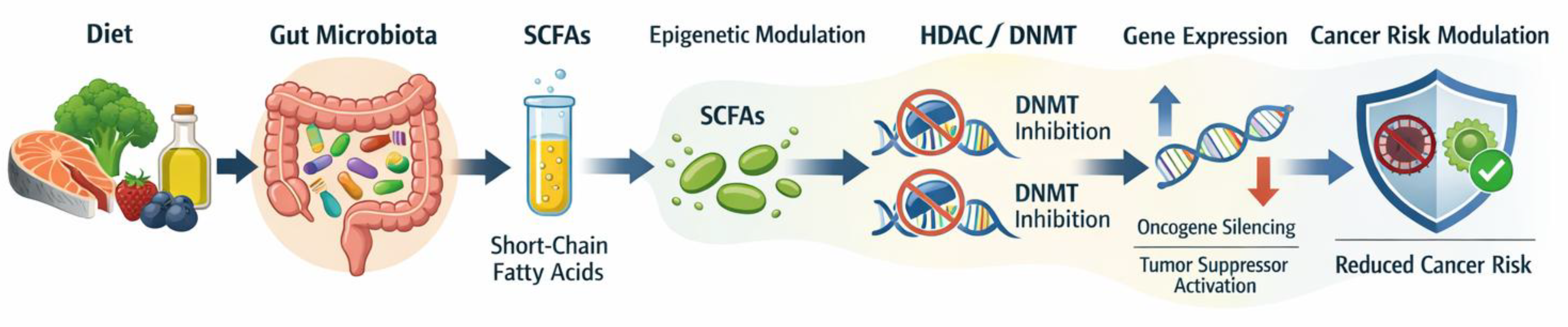
Among these metabolites, short-chain fatty acids (SCFAs)—particularly butyrate, propionate and acetate—represent key molecular intermediaries between diet and epigenetic regulation. SCFAs are produced through microbial fermentation of dietary fiber and resistant starch, and their concentration is strongly dependent on habitual dietary patterns. Butyrate, in particular, is a well-characterized inhibitor of histone deacetylases (HDACs) and has been shown to induce histone hyperacetylation, promote cellular differentiation, trigger apoptosis and suppress proliferation in colorectal cancer models [3,4]. Through HDAC inhibition, SCFAs enhance chromatin accessibility and reactivate tumor suppressor gene expression. Recent metabolomic and chromatin-mapping studies further demonstrate that short-chain fatty acids, including butyrate and propionate, function as direct epigenetic regulatory elements by modifying histone acylation marks and reshaping transcriptional landscapes in a nutrient-dependent manner [32]. These findings provide molecular-level validation of the diet–microbiota–epigenome axis depicted in Figure 1.
Beyond histone acetylation, emerging data suggest that microbiota-derived metabolites may also influence DNA methylation dynamics by modulating the availability of substrates and cofactors involved in one-carbon metabolism, thereby indirectly affecting DNA methyltransferase (DNMT) activity. These epigenetic alterations can influence inflammatory signaling, oxidative stress responses and cell cycle control—pathways centrally involved in carcinogenesis.
Diet-induced dysbiosis, commonly associated with Western dietary patterns rich in saturated fats and refined carbohydrates, promotes chronic inflammation and aberrant epigenetic programming linked to tumor development [5]. In contrast, fiber-rich, polyphenol-rich and omega-3–enriched dietary patterns support a eubiotic microbiota that favors anti-inflammatory and tumor-suppressive epigenetic signaling [6]. Importantly, microbiota-mediated epigenetic regulation is not confined to the colon but may exert systemic effects through immune modulation and metabolic signaling networks [7].
Collectively, current evidence supports a mechanistic framework in which dietary inputs shape microbial composition, microbial metabolism generates SCFAs, and SCFAs modulate epigenetic regulators such as HDACs and DNMTs, ultimately influencing gene expression programs involved in tumor suppression and oncogene regulation.
Figure 1. Diet–microbiota–epigenome axis in cancer risk modulation.
Figure 1.
Conceptual schematic illustrating the diet–microbiota–epigenome axis in cancer prevention. Dietary components shape gut microbiota composition and metabolic activity, leading to the production of short-chain fatty acids (SCFAs). SCFAs modulate epigenetic regulators such as histone deacetylases (HDACs) and DNA methyltransferases (DNMTs), thereby influencing gene expression programs involved in tumor suppression and oncogene regulation. These interconnected pathways collectively contribute to modulation of cancer risk.
Figure 1.
Conceptual schematic illustrating the diet–microbiota–epigenome axis in cancer prevention. Dietary components shape gut microbiota composition and metabolic activity, leading to the production of short-chain fatty acids (SCFAs). SCFAs modulate epigenetic regulators such as histone deacetylases (HDACs) and DNA methyltransferases (DNMTs), thereby influencing gene expression programs involved in tumor suppression and oncogene regulation. These interconnected pathways collectively contribute to modulation of cancer risk.
6. Dietary Patterns and Epigenomic Profiles
While individual nutrients exert measurable epigenetic effects, dietary patterns provide a more integrative view of long-term epigenetic modulation. Population-based studies increasingly associate specific dietary patterns with distinct epigenomic signatures relevant to cancer prevention.
6.1. Mediterranean Diet
While Figure 1 illustrates the mechanistic diet–microbiota–epigenome axis at the molecular level, long-term dietary patterns determine the sustained activation or suppression of these pathways in human populations. Rather than acting through isolated nutrients, habitual dietary patterns exert cumulative epigenetic effects that influence cancer risk over time.
The Mediterranean diet, characterized by high consumption of fruits, vegetables, legumes, whole grains, olive oil and fish, represents a dietary pattern enriched in fiber, polyphenols and omega-3 fatty acids—key modulators of the microbiota–epigenome axis described above [8,9,10,11]. Adherence to this dietary pattern has been associated with favorable DNA methylation profiles in genes involved in inflammation, oxidative stress and tumor suppression [9,10].
Through increased production of SCFAs, enhanced availability of bioactive polyphenols and modulation of lipid signaling pathways, the Mediterranean diet appears to promote HDAC inhibition, balanced DNMT activity and miRNA regulation consistent with tumor-suppressive gene expression programs. These cumulative epigenetic effects likely contribute to the reduced cancer incidence and mortality observed in epidemiological studies [8,10].
6.2. Western Diet
In contrast, Western dietary patterns—rich in red and processed meats, saturated fats and refined carbohydrates—are associated with microbiota dysbiosis, reduced SCFA production and pro-inflammatory signaling [5,12]. These alterations disrupt the epigenetic equilibrium outlined in Figure 1, contributing to global DNA hypomethylation, oncogene activation and dysregulated microRNA expression, particularly in colorectal and breast cancer contexts [12,13,14].
Animal models further demonstrate that sustained exposure to Western dietary patterns induces persistent epigenetic alterations, some of which may extend across generations, highlighting the long-term biological imprint of dietary habits [14].
6.3. Caloric Restriction and Fasting-Mimicking Diets
Caloric restriction and fasting-mimicking interventions represent metabolic strategies that converge on epigenetic regulators central to the diet–epigenome axis. These interventions influence sirtuin signaling (SIRT1), AMP-activated protein kinase (AMPK) and mTOR pathways, thereby modulating chromatin structure, histone acetylation and transcriptional stability [15,16,17].
By promoting epigenetic configurations associated with genomic stability and reduced proliferative signaling, caloric restriction paradigms provide additional support for the concept that sustained dietary patterns can reshape epigenomic landscapes relevant to cancer prevention.
7. Epigenetic Biomarkers and Precision Cancer Prevention
Epigenetic biomarkers offer promising tools for early cancer detection, risk stratification, and monitoring of dietary interventions. DNA methylation signatures in blood, saliva, and stool samples have demonstrated potential as non-invasive biomarkers for cancer risk assessment [18,19].
Nutrigenomic approaches integrating epigenetic biomarkers may enable personalized dietary recommendations tailored to individual epigenetic and genetic profiles [20]. However, validation of diet-responsive epigenetic markers in large, longitudinal human cohorts remains limited.
8. Evidence from Human Studies and Clinical Trials
Although mechanistic evidence supports the epigenetic modulation of carcinogenesis by dietary components, translation into human populations remains complex. Clinical and epidemiological studies investigating methyl donors, polyphenols, microbiota-derived metabolites and dietary patterns provide encouraging but heterogeneous findings.
Intervention studies examining folate and one-carbon metabolism nutrients have demonstrated measurable changes in global and gene-specific DNA methylation patterns, particularly in colorectal cancer risk contexts [22,26]. However, dose-dependent dual effects have been reported, whereby folate deficiency is associated with global hypomethylation and genomic instability, while excessive supplementation may promote the progression of pre-existing neoplastic lesions [26]. These findings highlight the importance of individualized risk stratification when targeting DNA methylation pathways.
Clinical trials investigating polyphenols such as curcumin, resveratrol and EGCG have reported modulation of DNMT activity, histone acetylation status and circulating microRNA profiles in preclinical and early-phase human studies [11]. Nevertheless, most trials are limited by small sample sizes, short intervention durations and variability in bioavailability, restricting definitive conclusions regarding long-term cancer prevention efficacy. A recent systematic review of clinical trials evaluating nutritional interventions and DNA methylation outcomes reported consistent but heterogeneous effects across populations, underscoring both the translational promise and methodological variability of diet-driven epigenetic modulation in humans [34].
Evidence linking gut microbiota-derived short-chain fatty acids (SCFAs), particularly butyrate, to epigenetic regulation is strongest in colorectal cancer models [3,4]. Human observational data support associations between dietary fiber intake, fecal SCFA production and favorable epigenetic signatures, although direct interventional studies measuring HDAC inhibition in vivo remain limited. Beyond single-nutrient approaches, recent human intervention studies incorporating dietary and lifestyle modifications have demonstrated measurable reductions in epigenetic age as assessed by DNA methylation clocks, suggesting that diet-responsive epigenetic signatures may reflect systemic biological aging trajectories relevant to cancer risk [33].
Population-based studies evaluating Mediterranean dietary patterns consistently associate adherence with favorable DNA methylation profiles in genes involved in inflammation, oxidative stress and tumor suppression [8,9,10]. Conversely, Western dietary patterns correlate with pro-inflammatory epigenetic signatures, including global DNA hypomethylation and dysregulated miRNA expression linked to colorectal and breast cancer risk [12,13,14]. These findings suggest that whole dietary patterns may exert cumulative epigenetic effects beyond individual nutrient supplementation.
Emerging data also indicate that caloric restriction and fasting-mimicking interventions influence epigenetic regulators such as SIRT1 and the AMPK–mTOR axis, potentially promoting chromatin states associated with genomic stability and tumor suppression [15,16,17]. However, robust long-term randomized controlled trials with cancer incidence as an endpoint are still lacking. Emerging epigenome-wide association studies (EWAS) further support population-level links between dietary patterns and differential DNA methylation signatures across multiple genomic loci, strengthening the epidemiological basis for precision nutrition approaches in cancer prevention [35].
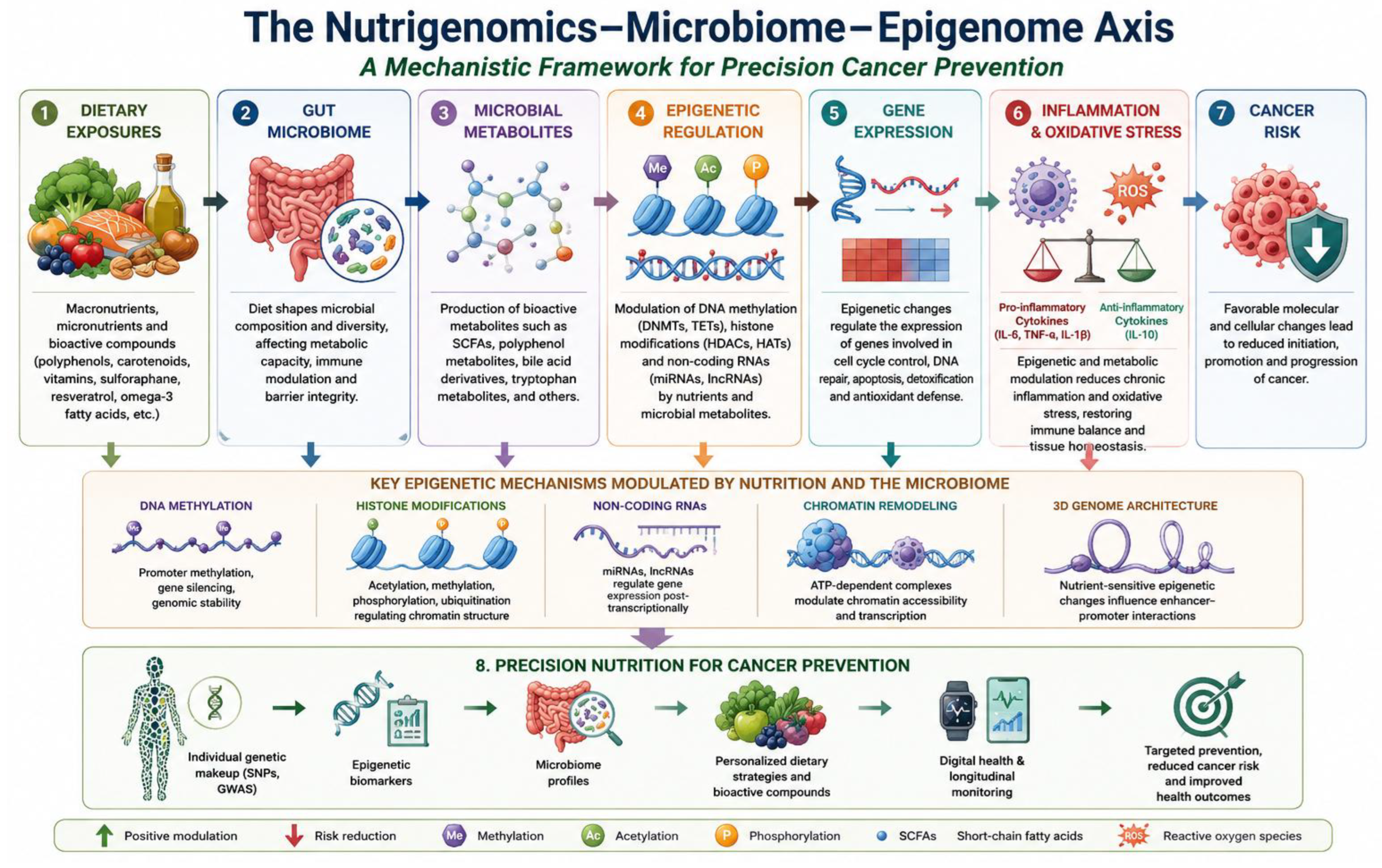
Overall, while human evidence increasingly supports diet-induced epigenetic modulation, current clinical trials are constrained by limited duration, heterogeneity in biomarkers assessed (e.g., global methylation, LINE-1 methylation, circulating miRNA panels) and variability in tissue sampling. Future studies integrating epigenetic endpoints, multi-omics profiling and adequately powered randomized designs are required to substantiate precision nutrition strategies for cancer prevention. The evidence presented throughout this review highlights the complex interplay between dietary exposures, the gut microbiome, microbial metabolites, and epigenetic regulation in shaping cancer susceptibility and prevention. Rather than acting independently, these biological processes form an interconnected network that links nutrition with molecular mechanisms governing inflammation, genomic stability, immune regulation, and gene expression. This integrated perspective is summarized in the conceptual framework presented in Figure 2, which illustrates how nutrigenomics and nutritional epigenetics converge to support precision nutrition as an emerging strategy for personalized cancer prevention.
The evidence presented throughout this review demonstrates that dietary exposures, gut microbial ecology, microbial metabolites, and epigenetic regulation operate as components of an interconnected biological network rather than as isolated mechanisms. Building upon these observations, we propose the Nutrigenomics–Microbiome–Epigenome Axis as a conceptual mechanistic framework integrating current evidence on how nutrition influences gene expression and cancer susceptibility through microbiome-mediated epigenetic pathways (Figure 2). This framework is intended to synthesize existing knowledge into a unified translational perspective that may facilitate future hypothesis generation and guide precision nutrition strategies for personalized cancer prevention.
Figure 2. The Nutrigenomics–Microbiome–Epigenome Axis: A Conceptual Framework for Precision Cancer Prevention.
Figure 2.
Proposed conceptual framework illustrating the biological interactions between dietary exposures, the gut microbiome, microbial metabolites, epigenetic regulation and gene expression in cancer prevention. Dietary bioactive compounds modulate microbial composition and metabolic activity, generating signaling molecules that influence DNA methylation, histone modifications, chromatin remodeling and non-coding RNA expression. These epigenetic mechanisms regulate inflammation, oxidative stress and cancer-related pathways, ultimately contributing to precision nutrition strategies aimed at personalized cancer prevention and improved long-term health outcomes.
Figure 2.
Proposed conceptual framework illustrating the biological interactions between dietary exposures, the gut microbiome, microbial metabolites, epigenetic regulation and gene expression in cancer prevention. Dietary bioactive compounds modulate microbial composition and metabolic activity, generating signaling molecules that influence DNA methylation, histone modifications, chromatin remodeling and non-coding RNA expression. These epigenetic mechanisms regulate inflammation, oxidative stress and cancer-related pathways, ultimately contributing to precision nutrition strategies aimed at personalized cancer prevention and improved long-term health outcomes.
9. Challenges, Limitations, and Ethical Considerations
The mechanistic interactions summarized in Figure 2 provide a conceptual framework for integrating nutrigenomics, microbiome science and epigenetic regulation into future precision nutrition strategies. Despite compelling mechanistic evidence linking diet, epigenetic regulation, and cancer prevention, several challenges hinder clinical translation. One major limitation is the complexity of human diets and the difficulty in isolating the epigenetic effects of individual nutrients within heterogeneous dietary patterns [24]. Moreover, epigenetic responses to dietary interventions are highly context-dependent and influenced by age, sex, genetic polymorphisms, baseline epigenetic status, and gut microbiota composition [25].
Another critical challenge concerns dose and timing. Nutrients such as folate exhibit dual effects, where deficiency increases cancer risk, while excessive supplementation may promote tumor progression in individuals with pre-existing lesions [26]. This underscores the importance of precision rather than generalized dietary recommendations.
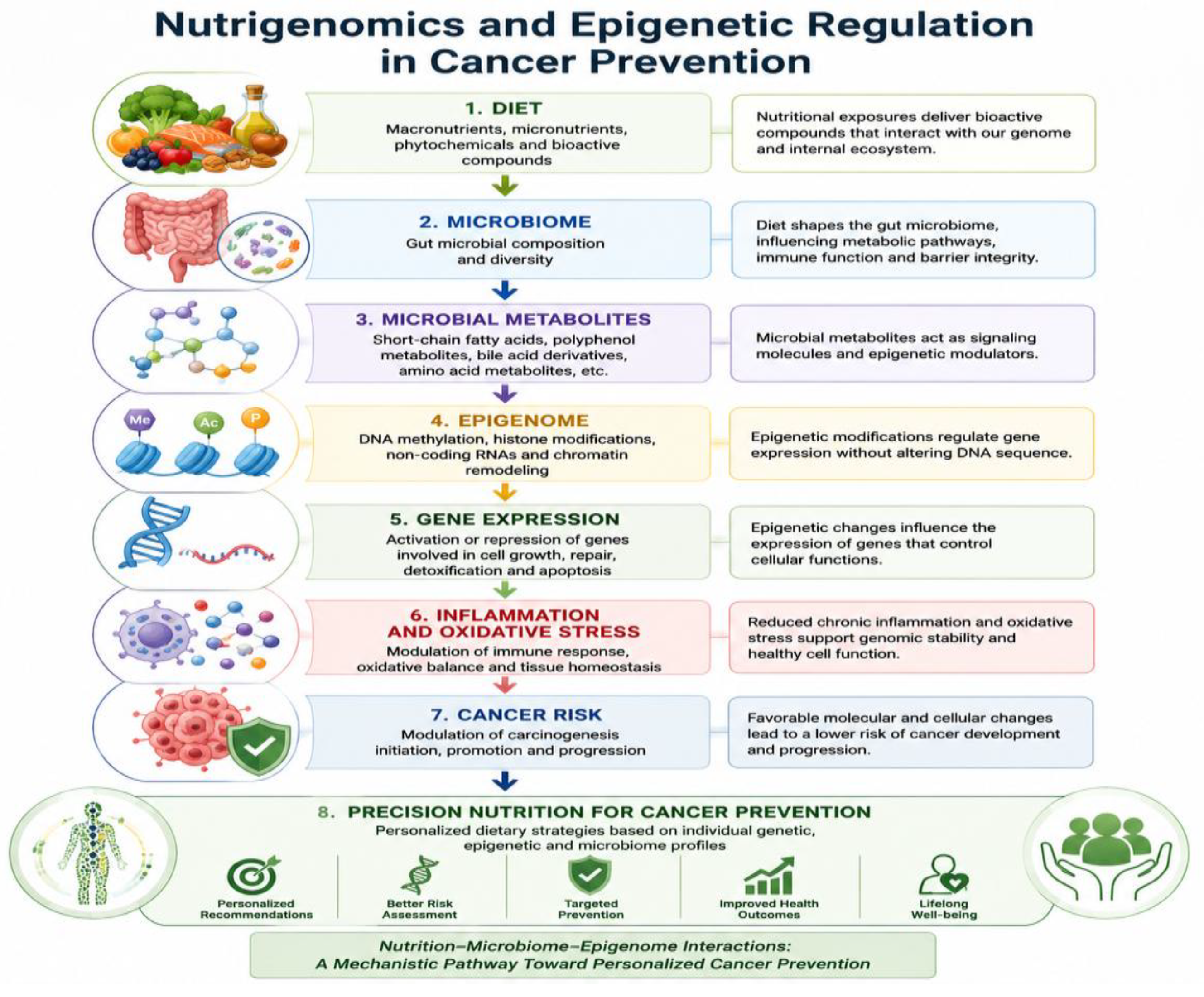
From an ethical perspective, the application of nutrigenomic and epigenetic profiling raises concerns related to data privacy, health disparities, and equitable access to personalized nutrition strategies [27]. As epigenetic information may reflect past environmental exposures, its misuse could lead to stigmatization or discrimination if not adequately regulated. The complex interactions described throughout this review can be integrated into a unified mechanistic framework (Figure 3). This conceptual model illustrates how dietary exposures influence the gut microbiome and microbial metabolite production, leading to epigenetic modifications that regulate gene expression and ultimately shape cancer susceptibility. Such an integrated perspective supports the emerging paradigm of precision nutrition as a cornerstone of personalized cancer prevention.
Figure 3. Conceptual framework linking diet, the gut microbiome, epigenetic regulation and precision cancer prevention.
Figure 3.
Proposed conceptual framework illustrating the interactions between dietary exposures, the gut microbiome, microbial metabolites, epigenetic regulation and gene expression in cancer prevention. Nutritional bioactive compounds influence gut microbial composition and metabolic activity, generating signaling molecules that regulate DNA methylation, histone modifications and non-coding RNA expression. These epigenetic mechanisms modulate inflammation, oxidative stress and cancer-related pathways, ultimately supporting precision nutrition strategies for personalized cancer prevention.
Figure 3.
Proposed conceptual framework illustrating the interactions between dietary exposures, the gut microbiome, microbial metabolites, epigenetic regulation and gene expression in cancer prevention. Nutritional bioactive compounds influence gut microbial composition and metabolic activity, generating signaling molecules that regulate DNA methylation, histone modifications and non-coding RNA expression. These epigenetic mechanisms modulate inflammation, oxidative stress and cancer-related pathways, ultimately supporting precision nutrition strategies for personalized cancer prevention.
10. Future Perspectives
The conceptual framework proposed in this review (Figure 2) illustrates the dynamic interactions between nutrition, the gut microbiome and epigenetic regulation, highlighting the importance of integrated biological approaches in future cancer prevention research. As multi-omics technologies, artificial intelligence and systems biology continue to evolve, this framework may contribute to the development of predictive models capable of supporting precision nutrition and personalized cancer prevention strategies. The future of nutrigenomics in cancer prevention lies in the integration of multi-omics technologies, including genomics, epigenomics, transcriptomics, metabolomics, and microbiomics [28]. Such integrative approaches will enable a systems-level understanding of diet–epigenome interactions and their impact on carcinogenesis.
Artificial intelligence and machine learning tools are expected to play a central role in identifying epigenetic signatures predictive of cancer risk and dietary responsiveness [29]. Additionally, advances in liquid biopsy technologies may facilitate the use of epigenetic biomarkers for real-time monitoring of dietary interventions [30].
Importantly, early-life nutrition represents a critical window for epigenetic programming with long-term implications for cancer risk [31]. Future preventive strategies may therefore focus not only on adult dietary interventions but also on maternal and childhood nutrition as determinants of lifelong epigenetic health.
11. Conclusions
Nutrigenomics and nutritional epigenetics provide a mechanistically coherent framework linking dietary exposures to cancer prevention through dynamic and potentially reversible regulation of gene expression. Accumulating evidence from molecular, preclinical and emerging human studies supports the concept that diet-induced modulation of DNA methylation, histone modifications and non-coding RNA networks contributes meaningfully to carcinogenesis control.
The integrated diet–microbiota–epigenome axis described in this review underscores the central role of microbial-derived metabolites, particularly short-chain fatty acids, in mediating the epigenetic effects of dietary patterns. Through coordinated modulation of histone deacetylases, DNA methyltransferases and chromatin accessibility, sustained dietary habits can shape transcriptional programs governing inflammation, genomic stability, cell proliferation and apoptosis. This systems-level perspective moves beyond reductionist nutrient-centric models and emphasizes the cumulative biological imprint of long-term dietary patterns.
Despite compelling mechanistic data, translation into clinical practice requires rigorous validation of diet-responsive epigenetic biomarkers in large, well-designed human cohorts. Precision nutrition strategies integrating epigenomic profiling, microbiome characterization and multi-omics technologies hold promise for individualized cancer risk stratification and prevention. However, challenges related to interindividual variability, dose–response dynamics and long-term sustainability of dietary interventions remain significant.
Future research must prioritize longitudinal studies with standardized epigenetic endpoints, integration of artificial intelligence–driven data analysis and development of minimally invasive biomarker platforms such as liquid biopsy methylome profiling. Early-life nutritional exposures also warrant focused investigation, given their potential to establish durable epigenetic trajectories influencing lifelong cancer susceptibility.
In conclusion, diet-driven epigenetic plasticity represents a biologically plausible and clinically actionable target for cancer prevention. Harnessing the full preventive potential of nutrigenomics will require interdisciplinary collaboration across molecular biology, oncology, nutrition science and computational biology to translate mechanistic insight into scalable public health strategies. Ultimately, nutrigenomics and nutritional epigenetics are reshaping cancer prevention by transforming nutrition from a population-based recommendation into a personalized, mechanism-driven strategy capable of improving lifelong health outcomes. The proposed Nutrigenomics–Microbiome–Epigenome Axis provides an integrated framework that may guide future translational research and the implementation of precision nutrition strategies in cancer prevention.
Overall, the evidence reviewed highlights the central role of nutrigenomics and epigenetic regulation in shaping future cancer prevention strategies. The proposed Nutrigenomics–Microbiome–Epigenome Axis provides an integrated conceptual framework linking dietary exposures, microbial metabolism, epigenetic regulation and gene expression. This systems-based perspective may serve as a foundation for future translational research and accelerate the implementation of precision nutrition in personalized cancer prevention.
Author Contributions
Conceptualization, S.P.D. and G.R.; methodology, S.P.D. and G.R.; validation, S.P.D. and G.R.; formal analysis, S.P.D. and G.R.; investigation, S.P.D. and G.R.; resources, S.P.D.; data curation, G.R. and S.P.D.; writing—original draft preparation, G.R. and S.P.D.; writing—review and editing, S.P.D.; visualization, S.P.D. and G.R.; supervision, S.P.D.; project administration, S.P.D. All authors have read and agreed to the published version of the manuscript.
Funding
This research received no external funding. The Article Processing Charge (APC) was not supported by external funding.
Institutional Review Board Statement
Not applicable. This study is a narrative review based exclusively on previously published literature and did not involve human participants, animals, or identifiable personal data.
Informed Consent Statement
Not applicable.
Data Availability Statement
No new datasets were generated or analyzed during the current study. This article is based exclusively on previously published literature, and all sources supporting the findings are appropriately cited within the manuscript.
Acknowledgments
The authors would like to thank all researchers whose work contributed to the scientific literature discussed in this review. During the preparation of this manuscript, the authors used ChatGPT (OpenAI, GPT-5.5) to assist with language refinement, improvement of readability, manuscript organization, and editorial support. All generated content was critically reviewed, revised, and verified by the authors. The authors take full responsibility for the scientific accuracy, interpretation, and final content of this publication.
Conflicts of Interest
The authors declare no conflicts of interest.
Abbreviations
The following abbreviations are used in this manuscript:
| Abbreviation | Definition |
| AI | Artificial Intelligence |
| APC | Antigen-Presenting Cell |
| BMI | Body Mass Index |
| CRC | Colorectal Cancer |
| CRISPR | Clustered Regularly Interspaced Short Palindromic Repeats |
| DNA | Deoxyribonucleic Acid |
| DNMT | DNA Methyltransferase |
| EGCG | Epigallocatechin-3-Gallate |
| EMT | Epithelial–Mesenchymal Transition |
| ER | Estrogen Receptor |
| FA | Fatty Acid |
| FTO | Fat Mass and Obesity-Associated Gene |
| GPCR | G Protein-Coupled Receptor |
| HDAC | Histone Deacetylase |
| HAT | Histone Acetyltransferase |
| IL | Interleukin |
| KEGG | Kyoto Encyclopedia of Genes and Genomes |
| lncRNA | Long Non-Coding RNA |
| MAPK | Mitogen-Activated Protein Kinase |
| miRNA | MicroRNA |
| mRNA | Messenger RNA |
| mTOR | Mammalian Target of Rapamycin |
| NAD+ | Nicotinamide Adenine Dinucleotide |
| NGS | Next-Generation Sequencing |
| NF-κB | Nuclear Factor Kappa B |
| Nrf2 | Nuclear Factor Erythroid 2–Related Factor 2 |
| NCDs | Non-Communicable Diseases |
| OMICS | High-Throughput Molecular Profiling Technologies |
| PI3K | Phosphoinositide 3-Kinase |
| PPAR | Peroxisome Proliferator-Activated Receptor |
| PR | Progesterone Receptor |
| RNA | Ribonucleic Acid |
| ROS | Reactive Oxygen Species |
| SCFA | Short-Chain Fatty Acid |
| SNP | Single Nucleotide Polymorphism |
| TCA Cycle | Tricarboxylic Acid Cycle |
| TET | Ten-Eleven Translocation |
| TGF-β | Transforming Growth Factor Beta |
| TNF-α | Tumor Necrosis Factor Alpha |
| VEGF | Vascular Endothelial Growth Factor |
| Wnt | Wingless/Integrated Signaling Pathway |
References
- Koh, A.; De Vadder, F.; Kovatcheva-Datchary, P.; Bäckhed, F. From dietary fiber to host physiology: short-chain fatty acids as key bacterial metabolites. Cell. 2016, 165, 1332–45. [Google Scholar] [CrossRef] [PubMed]
- Rooks, M.G.; Garrett, W.S. Gut microbiota, metabolites and host immunity. Nat Rev. Immunol. 2016, 16, 341–52. [Google Scholar] [CrossRef] [PubMed]
- Davie, J.R. Inhibition of histone deacetylase activity by butyrate. J Nutr. 2003, 133, 2485S–93S. [Google Scholar] [CrossRef] [PubMed]
- Donohoe, D.R.; et al. The microbiome and butyrate regulate energy metabolism and autophagy in the mammalian colon. Cell Metab. 2011, 13, 517–26. [Google Scholar] [CrossRef] [PubMed]
- Zinöcker, M.K.; Lindseth, I.A. The Western diet–microbiome-host interaction and its role in metabolic disease. Nutrients 2018, 10, 365. [Google Scholar] [CrossRef] [PubMed]
- Singh, R.K.; et al. Influence of diet on the gut microbiome and implications for human health. J Transl. Med. 2017, 15, 73. [Google Scholar] [CrossRef] [PubMed]
- Zitvogel, L.; et al. Microbiome and anticancer immunosurveillance. Cell. 2016, 165, 276–87. [Google Scholar] [CrossRef] [PubMed]
- Schwingshackl, L.; et al. Adherence to Mediterranean diet and risk of cancer. BMJ 2017, 358, j3229. [Google Scholar]
- Arpón, A.; et al. Adherence to Mediterranean diet is associated with DNA methylation changes. Nutrients 2019, 11, 2330. [Google Scholar]
- Castelló, A.; et al. Mediterranean diet and cancer prevention. Cancers 2019, 11, 953. [Google Scholar] [CrossRef]
- Romagnolo, D.F.; Selmin, O.I. Mediterranean diet and epigenetic effects. Curr Opin. Clin. Nutr. Metab. Care 2017, 20, 372–8. [Google Scholar]
- Tabung, F.K.; et al. Inflammatory diet and cancer risk. J Clin. Oncol. 2018, 36, 196–204. [Google Scholar]
- Johnson, I.T.; Belshaw, N.J. Environment, diet and DNA methylation. Nutr Cancer 2014, 66, 954–61. [Google Scholar]
- Li, Y.; et al. Transgenerational epigenetic inheritance and cancer risk. Trends Cancer 2018, 4, 406–19. [Google Scholar]
- Longo, V.D.; Mattson, M.P. Fasting: molecular mechanisms and clinical applications. Cell Metab. 2014, 19, 181–92. [Google Scholar] [CrossRef] [PubMed]
- Fontana, L.; Partridge, L. Promoting health and longevity through diet. Cell. 2015, 161, 106–18. [Google Scholar] [CrossRef] [PubMed]
- Li, Y.; Daniel, M.; Tollefsbol, T.O. Epigenetic regulation of caloric restriction. J Nutr. Biochem. 2011, 22, 98–103. [Google Scholar] [CrossRef]
- Luo, Y.; et al. DNA methylation biomarkers for cancer detection. Clin Epigenetics 2020, 12, 42. [Google Scholar] [CrossRef]
- Hao, X.; et al. Liquid biopsy and epigenetic biomarkers. Cancer Lett. 2017, 400, 39–47. [Google Scholar]
- Corella, D.; Ordovás, J.M. Nutrigenomics in precision nutrition. Am J. Clin. Nutr. 2018, 108, 1337–44. [Google Scholar]
- Milagro, F.I.; et al. Nutritional epigenetics in human intervention studies. Mol Nutr. Food Res. 2013, 57, 87–96. [Google Scholar]
- Martínez, J.A.; et al. Folate and DNA methylation in humans. Nutrients 2018, 10, 1514. [Google Scholar]
- Niculescu, M.D.; Zeisel, S.H. Diet, methyl donors and epigenetics. Annu Rev. Nutr. 2002, 22, 173–201. [Google Scholar]
- Ordovás, J.M.; Ferguson, L.R.; Tai, E.S.; Mathers, J.C. Nutritional genomics and epigenomics. Am J. Clin. Nutr. 2018, 107, 879–89. [Google Scholar]
- Ferguson, L.R. Nutrigenomics and nutrigenetics. Nutrients 2014, 6, 1920–36. [Google Scholar]
- Kim, Y.I. Folate and colorectal cancer. Nutr Rev. 2016, 74, 673–83. [Google Scholar]
- Chadwick, R. Ethics of nutrigenomics. Bioethics 2015, 29, 393–400. [Google Scholar]
- Hasin, Y.; et al. Multi-omics approaches to disease. Genome Biol. 2017, 18, 83. [Google Scholar] [CrossRef] [PubMed]
- Libbrecht, M.W.; Noble, W.S. Machine learning in genetics and genomics. Nat Rev. Genet. 2015, 16, 321–32. [Google Scholar] [CrossRef] [PubMed]
- Shen, S.Y.; et al. Sensitive tumour detection using plasma DNA methylomes. Nature 2018, 563, 579–83. [Google Scholar] [CrossRef] [PubMed]
- Waterland, R.A.; Michels, K.B. Epigenetic epidemiology of the developmental origins hypothesis. Annu Rev. Nutr. 2007, 27, 363–88. [Google Scholar] [CrossRef] [PubMed]
- Nshanian, M.; et al. Short-chain fatty acids as epigenetic regulatory elements linking diet and gene expression. Nat Metab 2025. [Google Scholar] [CrossRef] [PubMed]
- Villanueva, J.L.; et al. Dietary associations with reduced epigenetic age. Aging (Albany NY). 2025.
- García-García, I.; et al. Nutrition strategies and DNA methylation: systematic review of clinical trials. Front Aging. 2024. [Google Scholar]
- Asif, R.; et al. Epigenome-wide association studies of dietary measures. Clin Epigenetics. 2025. [Google Scholar] [CrossRef]
Disclaimer/Publisher’s Note: The statements, opinions and data contained in all publications are solely those of the individual author(s) and contributor(s) and not of MDPI and/or the editor(s). MDPI and/or the editor(s) disclaim responsibility for any injury to people or property resulting from any ideas, methods, instructions or products referred to in the content. |
© 2026 by the authors. Licensee MDPI, Basel, Switzerland. This article is an open access article distributed under the terms and conditions of the Creative Commons Attribution (CC BY) license.
Copyright: This open access article is published under a Creative Commons CC BY 4.0 license, which permit the free download, distribution, and reuse, provided that the author and preprint are cited in any reuse.


