

Submitted:
10 July 2026
Posted:
13 July 2026
You are already at the latest version
Abstract
Autism spectrum disorder is characterized by substantial heterogeneity in developmental trajectories, physiological regulation, participation, therapeutic engagement, and response to intervention. Although increasing attention has been given to biological burden, neuroplasticity, fatigue, sleep, and intervention responsiveness in autism, the construct linking these domains remains insufficiently defined. This manuscript proposes energetic capacity as a hypothesis-generating translational construct describing the dynamic biological and functional resources available to sustain regulation, participation, recovery, learning, and adaptive change. Energetic capacity is not intended to represent mitochondrial function alone, a fixed trait, a diagnostic marker, a global severity score, or a measure of motivation. Rather, it is conceptualized as a state-sensitive construct that may fluctuate across sleep quality, stress exposure, illness, sensory load, intervention intensity, environmental demands, and recovery conditions. Within the Framework for Integrated Autism Precision Care (FIAP), energetic capacity is positioned as one possible bridge between multidomain biological burden, adaptive reserve, neuroplastic accessibility, therapeutic engagement, and intervention responsiveness. However, energetic capacity is proposed as a standalone construct that can be evaluated independently of FIAP. The manuscript distinguishes energetic capacity from adaptive reserve, allostatic load, fatigue, self-regulation, motivation, and task engagement; outlines candidate physiological, behavioral, therapeutic-process, and contextual indicators; proposes testable hypotheses; and describes a staged pathway toward empirical validation. Energetic capacity remains an unvalidated conceptual research construct. Future studies should examine feasibility, reliability, construct validity, longitudinal variability, predictive value, fairness, and accessibility before any clinical or translational application is considered.
Keywords:
autism spectrum disorder
; energetic capacity
; adaptive reserve
; biological burden
; neuroplasticity
; therapeutic engagement
; intervention responsiveness
; precision psychiatry
Introduction
Autism spectrum disorder is characterized by substantial heterogeneity in clinical presentation, adaptive functioning, developmental trajectories, physiological regulation, and responsiveness to intervention [1,2,3,4,5,6]. Although behavioral, developmental, educational, and rehabilitative interventions can support meaningful gains, autistic individuals differ considerably in their ability to access, tolerate, sustain, and benefit from therapeutic input across time and contexts. Contemporary precision psychiatry emphasizes the need for constructs and measurement strategies that can account for such heterogeneity while avoiding premature translation of group-level associations into individual-level clinical decisions [18,19,20,21].
Current explanations for this variability commonly emphasize baseline developmental profile, communication level, symptom presentation, intervention type, intensity, timing, fidelity, environmental demands, family resources, and service access [4,5,6]. These factors are important, but they may not fully explain why two individuals with broadly similar intervention exposure can show markedly different patterns of participation, recovery, learning consolidation, generalization, and adaptive change.
A potentially important but insufficiently defined dimension is the availability of biological and functional resources required to sustain adaptive developmental work. Regulation, attention, sensory processing, social engagement, emotional control, learning, recovery, and neuroplastic adaptation are all biologically demanding processes [13,14,15,16,17]. When physiological demand is high or recovery capacity is limited, fewer resources may remain available for therapeutic participation and experience-dependent learning.
This manuscript proposes energetic capacity as a hypothesis-generating translational construct describing the dynamic biological and functional reserve available to sustain regulation, learning, participation, recovery, and adaptive change. Energetic capacity is not intended to represent mitochondrial function alone, a fixed trait, a diagnostic marker, a global severity score, or a direct measure of motivation. Rather, it is proposed as a state-sensitive construct that may fluctuate across sleep quality, stress exposure, illness, sensory load, intervention intensity, developmental stage, environmental context, and recovery conditions.
The central hypothesis is that energetic capacity may help explain how multidomain biological burden becomes functionally relevant to intervention accessibility. Elevated biological burden may increase physiological demand, reduce recovery efficiency, and constrain adaptive reserve. Reduced energetic capacity may then limit the individual’s ability to remain regulated, sustain attention, participate meaningfully, consolidate learning, and recover from intervention demands. These relationships are provisional, potentially bidirectional, and require empirical validation.
The purpose of this manuscript is to define energetic capacity, distinguish it from neighboring constructs, situate it within a broader translational framework, identify candidate indicators, outline testable hypotheses, and propose a staged pathway toward empirical validation. The construct is presented as a research framework for studying variability in intervention accessibility and responsiveness, not as a validated clinical tool or treatment-selection instrument.
Energetic Capacity as a Standalone Construct and Within the FIAP Framework
Energetic capacity was developed within the broader FIAP ecosystem. The Framework for Integrated Autism Precision Care (FIAP) is a hypothesis-generating translational framework for autism precision care that seeks to organize relationships among multidomain biological burden, adaptive reserve, neuroplastic accessibility, therapeutic engagement, and intervention responsiveness.
Within FIAP, energetic capacity is positioned as one possible translational bridge between upstream physiological demand and downstream accessibility to therapeutic learning. However, energetic capacity is not dependent on FIAP for its scientific evaluation. It is proposed here as a standalone, testable construct that can be examined independently across autism research, rehabilitation, developmental intervention, participation-oriented care, and precision psychiatry.
The FIAP framework provides an integrative context rather than a required implementation platform. It does not represent a validated clinical instrument, diagnostic system, autonomous decision-making tool, or established treatment-selection framework. Its constructs, including energetic capacity, require independent operationalization, measurement development, construct validation, longitudinal testing, fairness assessment, and evaluation of clinical utility before any translational application can be considered.
Accordingly, the scientific value of energetic capacity will depend on whether it can be measured reliably, distinguished from related constructs, tested across contexts, and shown to add explanatory or predictive value beyond established indicators such as symptom severity, adaptive functioning, fatigue, motivation, sleep disturbance, physiological dysregulation, and intervention exposure.
Defining Energetic Capacity
Energetic capacity refers to the biological and functional reserve available to sustain adaptive developmental processes. It includes the capacity to maintain attention, regulate emotion, tolerate sensory demands, recover from stress, participate in therapeutic tasks, consolidate learning, and adapt across changing contexts.
Energetic capacity is not limited to mitochondrial energy production, although mitochondrial and metabolic processes may contribute to it [8,9,15,16]. It is broader and more translational. It includes biological energy, regulatory stability, adaptive reserve, recovery capacity, autonomic flexibility, sleep-dependent restoration, and the ability to allocate resources toward learning rather than homeostatic survival.
Energetic capacity is a state-sensitive construct. It may change across hours, days, developmental periods, illness states, sleep quality, stress exposure, sensory load, intervention demands, and environmental conditions.
Conceptual Boundaries and Distinction from Related Constructs
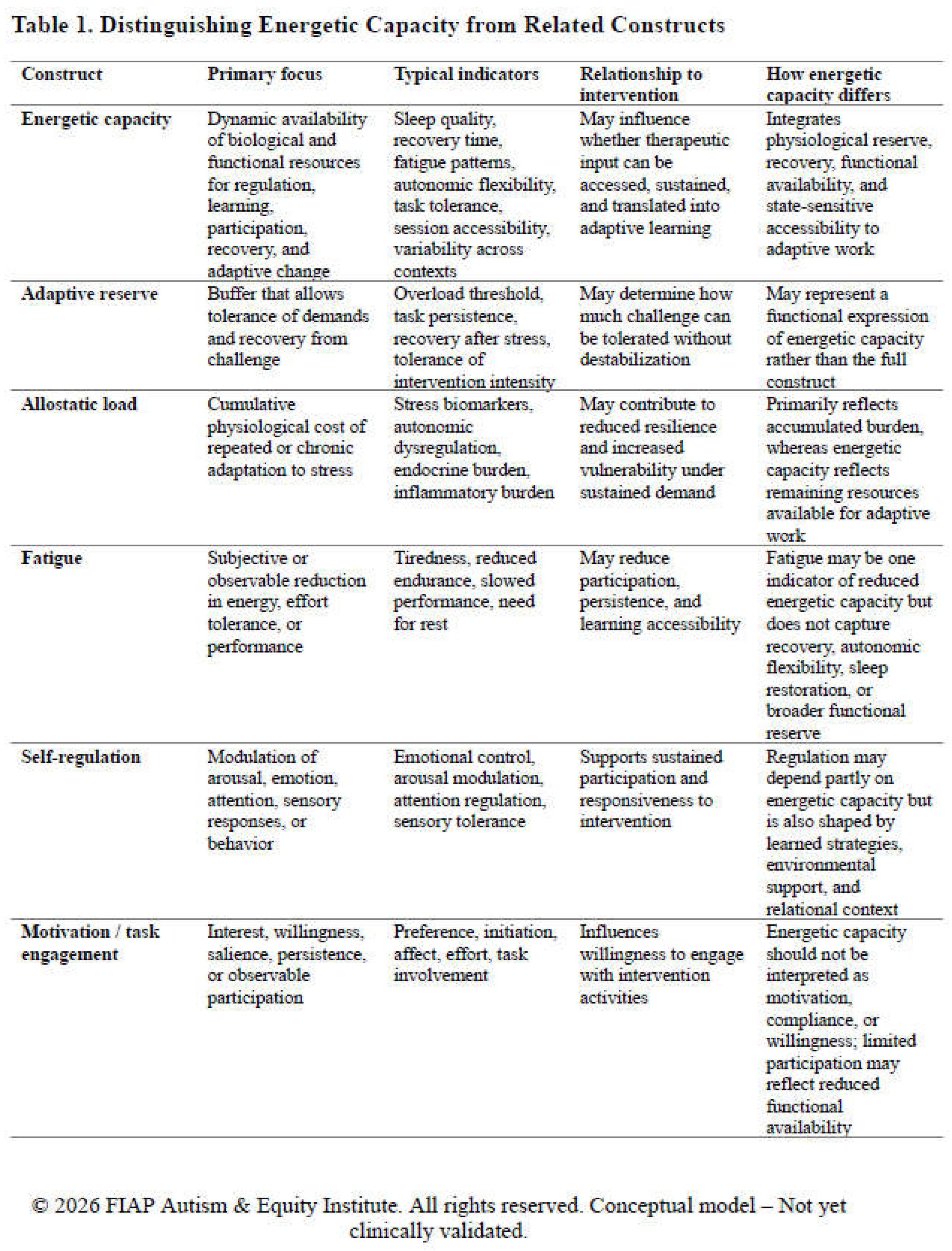
Energetic capacity overlaps conceptually with several established constructs, including adaptive reserve, allostatic load, fatigue, self-regulation, motivation, and task engagement. However, it is not intended to replace or duplicate any of these constructs. Its proposed contribution is to describe the dynamic availability of biological and functional resources required to sustain regulation, learning, participation, recovery, and adaptive change under specific developmental and intervention conditions.
Adaptive reserve refers to the buffer that allows an individual to tolerate demands, recover from stress, and maintain functioning under challenge. Energetic capacity is related but conceptually broader. It refers to the underlying availability of resources that may support or constrain that buffer. Within this formulation, adaptive reserve may be understood as one observable functional expression of energetic capacity, particularly when the individual is exposed to therapeutic, environmental, sensory, cognitive, or relational demands.
Allostatic load describes the cumulative physiological cost associated with repeated or chronic adaptation to stress. Energetic capacity differs in temporal orientation and functional emphasis. Allostatic load primarily reflects accumulated burden, whereas energetic capacity refers to the resources that remain available for adaptive work at a given time. High allostatic load may reduce energetic capacity, but the two constructs should not be treated as interchangeable.
Fatigue refers to a subjective or observable state of reduced energy, effort tolerance, or performance capacity. Fatigue may be an important indicator of reduced energetic capacity, but it does not fully define the construct. Energetic capacity also includes recovery efficiency, autonomic flexibility, sleep-dependent restoration, physiological stability, task tolerance, and the ability to allocate resources toward learning and participation. An individual may have reduced energetic capacity without clearly reporting or displaying fatigue, particularly when communication differences, developmental level, or contextual supports affect its expression.
Self-regulation refers to the ability to modulate arousal, emotion, attention, behavior, or sensory responses in ways that support functioning. Self-regulation may depend partly on energetic capacity, but it also reflects learned strategies, environmental supports, relational safety, executive processes, and contextual demands. Energetic capacity is therefore not equivalent to regulation itself; rather, it may influence how consistently regulation can be sustained under challenge.
Motivation and task engagement concern interest, willingness, persistence, salience, or observable participation in an activity. Energetic capacity should not be interpreted as a measure of motivation or compliance. Reduced participation may reflect limited physiological or functional availability rather than lack of interest or willingness. Conversely, strong motivation may not be sufficient to sustain participation when sleep disruption, fatigue, sensory overload, physiological stress, or recovery demands constrain adaptive resources.
Energetic capacity is therefore proposed as a distinct but related translational construct. Its empirical value will depend on whether it can be measured independently, distinguished from neighboring constructs, and shown to add explanatory value beyond established measures of fatigue, self-regulation, adaptive functioning, motivation, symptom severity, sleep disturbance, and physiological stress. Table 1 summarizes the main conceptual distinctions between energetic capacity and related constructs.
Energetic Capacity Within the FIAP Framework
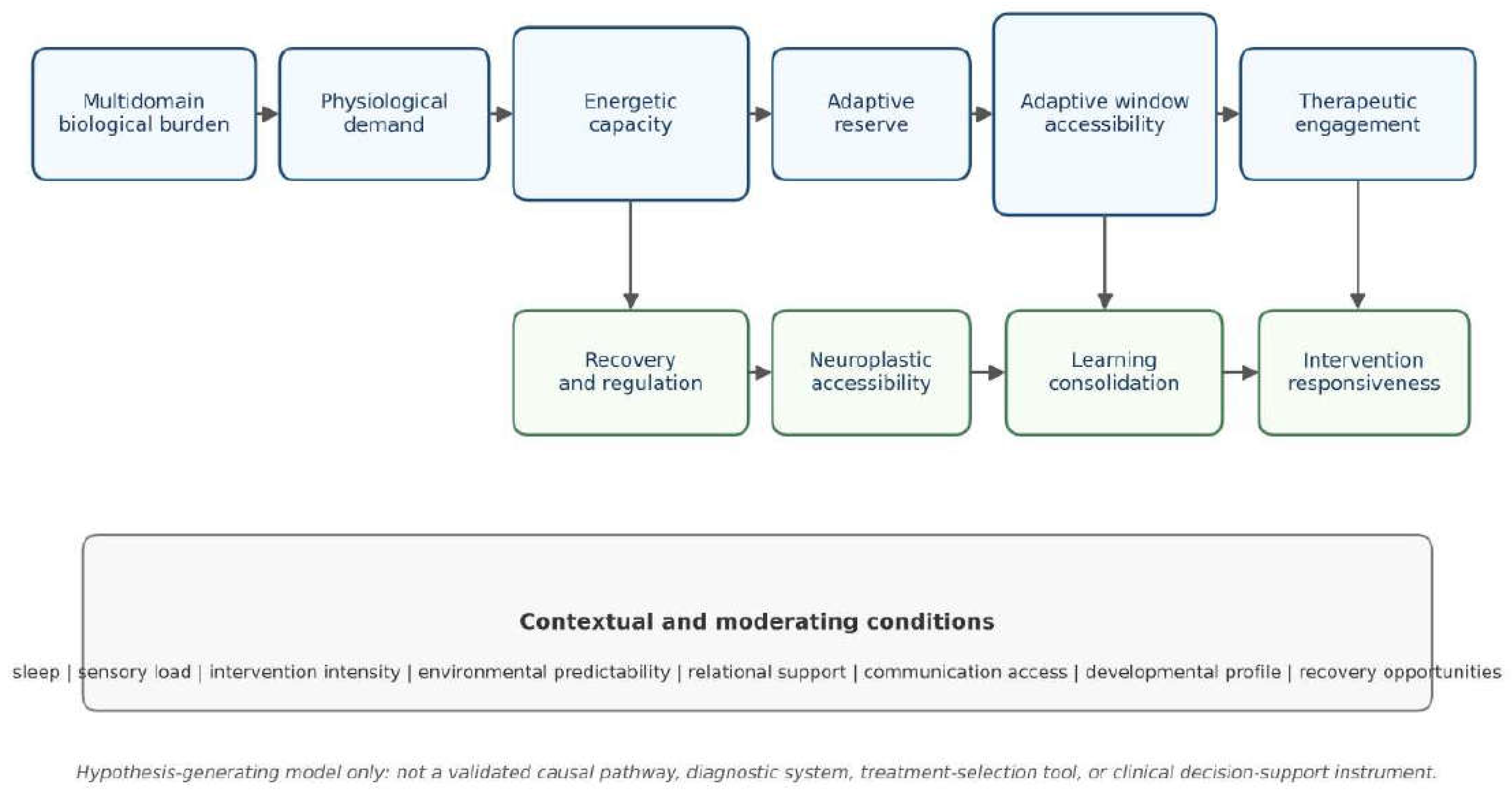
Within the FIAP framework, energetic capacity is positioned as a possible translational bridge between upstream physiological demand and downstream accessibility to therapeutic learning. The proposed sequence can be represented as: Biological burden -> energetic capacity -> adaptive neurodevelopmental window accessibility -> neuroplastic capacity -> therapeutic engagement -> intervention responsiveness.
This sequence should not be interpreted as a validated causal pathway. The relationships are likely to be reciprocal, context-dependent, developmentally sensitive, and influenced by intervention type, environmental demands, relational support, communication profile, sleep, stress, and service context.
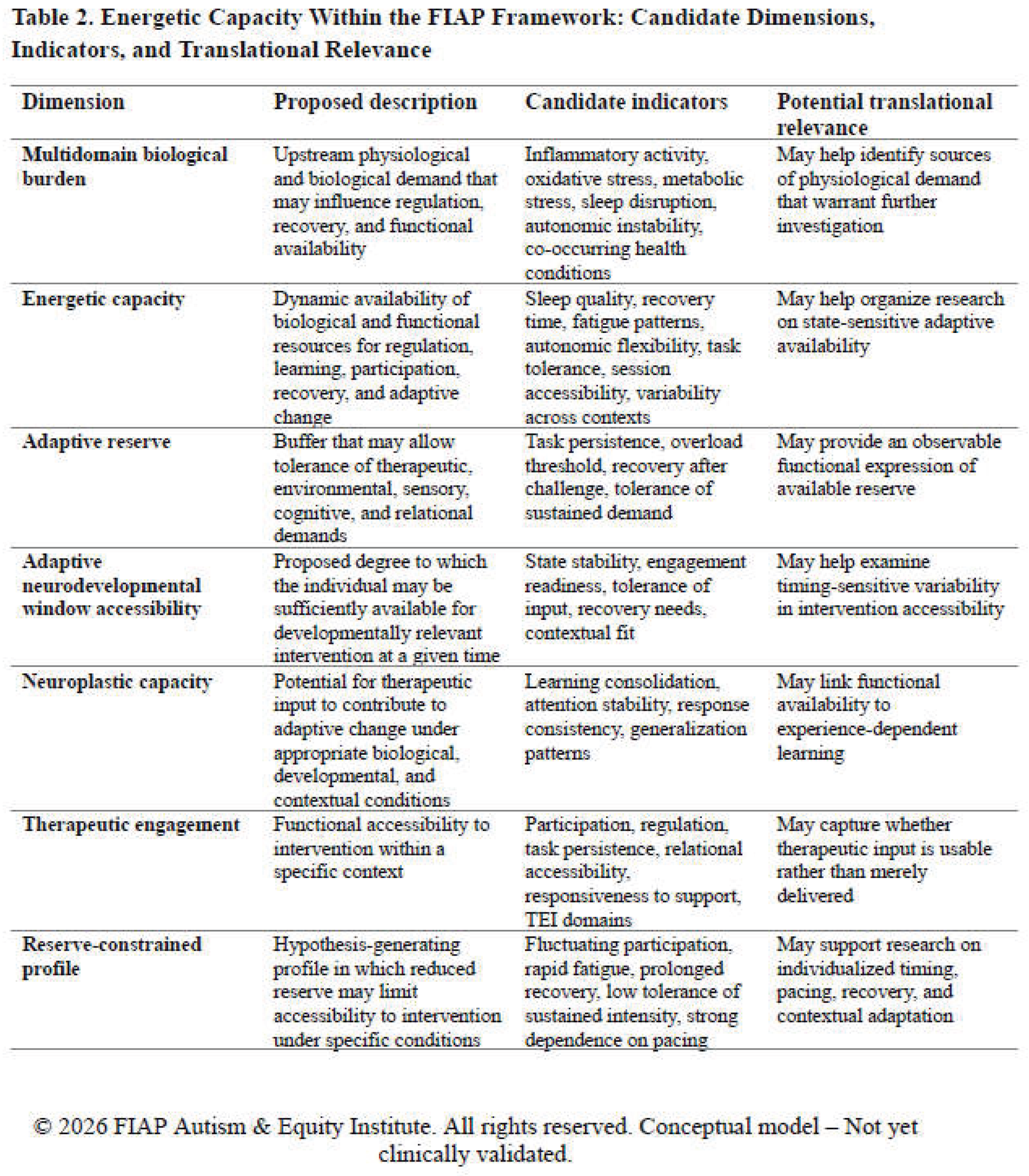
The Biological Burden Index is intended to represent cumulative multidomain biological load. Energetic capacity reflects the resources that may remain available under that burden. Adaptive neurodevelopmental window accessibility refers to whether the individual may be sufficiently available for intervention at a given time. Neuroplastic capacity refers to the potential for adaptive change. The Therapeutic Engagement Index refers to the functional accessibility of therapeutic participation.
Energetic capacity therefore provides one possible mechanism through which upstream burden may become relevant to participation and responsiveness. However, each FIAP construct requires independent operationalization, validation, and evaluation before any clinical or translational application can be considered. Figure 1 summarizes this proposed model, and Table 2 outlines the candidate dimensions, indicators, and translational relevance of the framework.
Biological Burden as a Potential Upstream Constraint on Energetic Capacity
Multidomain biological burden may influence energetic capacity through several interacting pathways. Immune and inflammatory activation may increase physiological demand and alter neural signaling [7]. Oxidative stress may reduce cellular efficiency and increase the cost of maintaining homeostasis [9]. Mitochondrial and metabolic dysfunction may affect energy production, recovery, and tolerance of sustained demand [8,15,16]. Sleep and circadian disruption may impair restoration, attention, and learning consolidation [11,17]. Autonomic dysregulation may reduce physiological flexibility and contribute to increased allostatic burden [12].
These pathways are not proposed as deterministic or autism-specific mechanisms. Their relevance is likely to vary across individuals, developmental stages, co-occurring conditions, environmental contexts, and intervention demands. Biological burden may also interact with social, relational, educational, and service-level factors that shape functional accessibility.
The central hypothesis is that, under conditions of elevated physiological demand, fewer resources may remain available for regulation, exploration, sustained attention, recovery, and therapeutic participation. In such circumstances, the individual may need to allocate more resources toward maintaining stability and less toward adaptive learning. This proposition requires empirical testing and should not be interpreted as evidence that biological burden directly causes reduced intervention responsiveness.
Energetic Capacity and Adaptive Reserve
Multidomain biological burden may influence energetic capacity through several interacting pathways. Immune and inflammatory activation may increase physiological demand and alter neural signaling [7]. Oxidative stress may reduce cellular efficiency and increase the cost of maintaining homeostasis [9]. Mitochondrial and metabolic dysfunction may affect energy production, recovery, and tolerance of sustained demand [8,15,16]. Sleep and circadian disruption may impair restoration, attention, and learning consolidation [11,17]. Autonomic dysregulation may reduce physiological flexibility and contribute to increased allostatic burden [12]. Gut-brain and microbiota-related pathways may also contribute to physiological regulation and systemic demand in some individuals [10].
Within this formulation, adaptive reserve may represent one observable functional expression of energetic capacity. An individual with greater reserve may be better able to tolerate therapeutic intensity, sensory demands, task difficulty, social complexity, and environmental variation without marked destabilization. Conversely, reduced reserve may be associated with more rapid fatigue, reduced persistence, longer recovery time, increased dysregulation, or greater dependence on pacing and contextual adaptation.
The relationship between energetic capacity and adaptive reserve is expected to be dynamic rather than fixed. Reserve may vary across sleep quality, stress exposure, illness, intervention demands, environmental predictability, relational support, and recovery opportunities. Future research should therefore examine both constructs longitudinally and determine whether energetic capacity adds explanatory value beyond observable measures of reserve alone.
Energetic Capacity and Neuroplasticity
Neuroplastic adaptation is biologically demanding. Experience-dependent learning depends on coordinated neural signaling, attention, emotional safety, repeated meaningful input, sleep-dependent consolidation, physiological stability, and adequate recovery [13,14,15,16,17]. Energetic capacity may therefore be relevant to the conditions under which therapeutic input can be processed, retained, and generalized.
The proposed relationship between energetic capacity and neuroplasticity is hypothesis-generating rather than established. Reduced energetic capacity may constrain the consistency, duration, or efficiency of learning-related processes, particularly when intervention demands exceed the individual’s current reserve. Conversely, improved sleep, pacing, regulation, recovery, and contextual support may increase accessibility to learning opportunities.
A central hypothesis of this framework is that energetic capacity may mediate or moderate the relationship between biological burden and neuroplastic capacity. This hypothesis should be tested prospectively and independently of baseline developmental level, symptom severity, adaptive functioning, intervention intensity, and treatment fidelity.
Energetic Capacity and Therapeutic Engagement
Therapeutic engagement requires more than physical presence. It may depend on sustained regulation, attention, tolerance, relational accessibility, cognitive flexibility, task persistence, and the ability to recover from challenge. Energetic capacity may influence the degree to which these processes remain available within a specific intervention context.
Reduced energetic capacity may be associated with fragile or fluctuating engagement, including reduced attention, rapid fatigue, sensory overload, emotional dysregulation, reduced task persistence, inconsistent participation, prolonged recovery, or decreased tolerance of intervention intensity. These manifestations should not be interpreted as lack of motivation, poor cooperation, or limited potential.
Within the FIAP framework, the Therapeutic Engagement Index is proposed as one possible functional expression of therapeutic accessibility. Energetic capacity may contribute to that accessibility, but it should not be treated as the sole determinant of engagement. Relational safety, intervention fit, communication access, environmental predictability, task demands, caregiver or clinician support, and broader contextual conditions must also be considered.
Reserve-Constrained Translational Profile
The reserve-constrained profile is proposed as a hypothesis-generating translational profile in which reduced energetic capacity may limit accessibility to intervention. This profile may be characterized by high fatigue burden, low tolerance of sustained intensity, fluctuating participation, prolonged recovery after intervention, increased sensitivity to sensory or emotional demand, variable attention, and stronger dependence on pacing, timing, and contextual support.
The reserve-constrained profile should not be interpreted as low ability, low motivation, or reduced developmental potential. It is intended to signal that current intervention demands may exceed the individual’s available reserve under specific conditions.
The profile may be most useful as a research hypothesis for examining whether adaptation of pacing, intensity, timing, recovery opportunities, environmental predictability, and regulatory support improves accessibility to therapeutic learning. It should not be used as a diagnostic category, eligibility criterion, or justification for reducing support.
Measurement and Candidate Indicators
The empirical evaluation of energetic capacity will require a multidomain, repeated-measure, and context-sensitive measurement strategy. No single biomarker, behavioral observation, or caregiver report is expected to capture the construct adequately. Energetic capacity should therefore be operationalized through converging indicators that reflect physiological demand, recovery, functional availability, and accessibility to adaptive work.
Candidate physiological indicators may include sleep duration and continuity, heart rate variability, autonomic flexibility, stress reactivity, recovery time following challenge, activity patterns, and state-dependent fatigue. Candidate biological indicators may include metabolic, mitochondrial-related, inflammatory, oxidative stress, endocrine, or stress-regulation markers. These indicators should not be interpreted as direct measures of energetic capacity in isolation. Their relevance will depend on whether they contribute to a coherent and reproducible profile of adaptive availability.
Behavioral and therapeutic-process indicators may include session tolerance, task persistence, attention stability, engagement duration, recovery after intervention, variability across sessions, caregiver-reported fatigue, clinician-rated accessibility, and the degree to which support, pacing, or environmental adaptation improves participation. Contextual indicators may include intervention intensity, sensory load, routine disruption, environmental predictability, relational support, family stress, school demands, and therapy setting.
Repeated measurement is essential because energetic capacity is proposed as a state-sensitive rather than fixed construct. A single observation may reflect temporary fatigue, acute stress, illness, poor sleep, or contextual mismatch. Longitudinal assessment should therefore examine intra-individual variability across days, sessions, developmental periods, and intervention contexts.
Future measurement systems should also document data provenance, timing, context, missingness, and uncertainty. Physiological, behavioral, caregiver-reported, and clinician-rated indicators may differ in reliability and may not always converge. Missing data should be treated as informative rather than ignored, particularly when low tolerance, fatigue, or dysregulation limits data collection.
Construct validation must demonstrate that energetic capacity is distinguishable from symptom severity, adaptive functioning, fatigue, sleep disturbance, motivation, self-regulation, and general participation. It should also be tested for incremental explanatory or predictive value beyond established baseline characteristics and intervention variables.
Energetic capacity is not currently a validated scale, biomarker panel, clinical score, or treatment-selection tool. Candidate indicators are proposed only as a starting point for future feasibility studies, measurement development, reliability testing, construct validation, and longitudinal research.
Toward Empirical Validation
Energetic capacity requires staged empirical evaluation before it can be interpreted as a reliable translational construct. An initial objective should be to determine whether the construct can be measured feasibly, acceptably, and repeatedly across intervention contexts without imposing excessive burden on autistic participants, families, or clinicians.
A feasible first-stage study could use a prospective longitudinal design involving approximately 20 to 30 autistic participants receiving an established developmental, educational, behavioral, or rehabilitative intervention. The purpose of such a study would not be to validate energetic capacity as a clinical tool, but to examine whether candidate indicators can be collected consistently and whether they show meaningful within-person variation across time and contexts.
Candidate measures could include sleep quality, caregiver-reported fatigue, recovery time after intervention, heart rate variability where feasible, clinician-rated session accessibility, task persistence, attention stability, engagement duration, intervention intensity, sensory load, and contextual factors such as routine disruption or environmental predictability. Measures could be collected before, during, and after selected intervention sessions, with repeated observations across several weeks.
The initial analyses should focus on feasibility, acceptability, missingness, burden, inter-rater consistency, temporal variability, and preliminary convergence across physiological, behavioral, caregiver-reported, and clinician-rated indicators. Particular attention should be given to whether candidate measures are sensitive to state-dependent changes rather than merely reflecting stable developmental characteristics.
Subsequent studies should examine construct validity by testing whether energetic capacity can be distinguished from fatigue, adaptive functioning, symptom severity, sleep disturbance, motivation, self-regulation, and general participation. Predictive validity should then be evaluated by assessing whether energetic capacity contributes explanatory value beyond intervention exposure, baseline developmental profile, and established predictors of intervention responsiveness.
Longitudinal and multi-site studies will ultimately be required to determine whether energetic capacity can be measured reliably across ages, communication profiles, intervention models, cultural contexts, and levels of support need. Fairness, accessibility, and the risk of inequitable interpretation must be assessed before any clinical or decision-support application is considered.
Until these stages are completed, energetic capacity should be regarded as a hypothesis-generating research construct rather than a validated clinical measure, biomarker profile, or treatment-selection instrument.
Testable Hypotheses
- Higher multidomain biological burden will be associated with lower energetic capacity after accounting for baseline developmental profile, adaptive functioning, symptom severity, and intervention exposure.
- Lower energetic capacity will be associated with reduced accessibility to therapeutic engagement, including lower session tolerance, reduced task persistence, greater variability in participation, and longer recovery after intervention.
- Energetic capacity will demonstrate meaningful within-person variation across sleep quality, stress exposure, illness, sensory load, intervention intensity, environmental context, and recovery conditions.
- Energetic capacity will be distinguishable from fatigue, adaptive reserve, allostatic load, self-regulation, motivation, sleep disturbance, and general participation.
- Energetic capacity will add incremental explanatory or predictive value beyond established indicators such as symptom severity, adaptive functioning, baseline developmental level, intervention intensity, treatment fidelity, fatigue, and sleep disturbance.
- Energetic capacity may mediate or moderate associations between multidomain biological burden and therapeutic engagement or intervention responsiveness.
- Reserve-constrained profiles will show greater variability in engagement across sessions and contexts than profiles with higher energetic capacity.
- Improvements in sleep, regulation, pacing, recovery, environmental predictability, and contextual support will be associated with improved energetic capacity trajectories.
- Longitudinal measures of energetic capacity will predict changes in therapeutic engagement and intervention responsiveness more effectively than static baseline characteristics alone.
These hypotheses are falsifiable. The construct would be weakened if energetic capacity cannot be measured reliably, cannot be distinguished from neighboring constructs, does not show meaningful state-sensitive variation, or fails to add explanatory value beyond established predictors.
Clinical, Rehabilitation, and Translational Implications
Energetic capacity may have relevance for precision-oriented autism research, rehabilitation, developmental intervention, and participation-focused care [18,19,22,24,25]. The construct suggests that intervention accessibility may depend not only on what support is delivered, but also on whether the individual has sufficient biological and functional reserve to tolerate, process, sustain, and recover from the demands of that support.
From a rehabilitation and participation perspective, energetic capacity may help organize questions related to activity tolerance, meaningful engagement, recovery needs, environmental demands, and the fit between intervention intensity and the individual’s current state [22,24,25]. An intervention may be theoretically appropriate yet functionally inaccessible when fatigue, sleep disruption, sensory overload, physiological stress, or insufficient recovery reduce the resources available for participation.
This framework does not imply that lower intensity is always preferable or that individuals with reduced reserve should receive less support. Rather, it raises the hypothesis that timing, pacing, predictability, recovery opportunities, relational safety, communication access, environmental adaptation, and participation-oriented supports may influence whether therapeutic input becomes usable [22,24,25].
Potential Future Applications, if Validated, Include:
- examining whether intervention intensity is aligned with current reserve;
- monitoring recovery after therapeutic or educational demands;
- identifying patterns of fluctuating participation across contexts;
- evaluating whether pacing or environmental adaptation improves accessibility;
- integrating sleep, fatigue, regulation, and recovery into longitudinal research;
- supporting interdisciplinary communication across clinical, educational, rehabilitative, and community settings.
These implications remain provisional. Energetic capacity is not currently a validated clinical measure, treatment-planning tool, or basis for modifying intervention without appropriate professional judgment and empirical evidence.
Energetic capacity must be developed and interpreted with careful ethical safeguards. The construct should not be used to assign responsibility to autistic individuals or families for limited participation, variable engagement, or reduced intervention responsiveness. Consistent with caution regarding diagnostic classification and clinical interpretation in autism [23], energetic capacity should not be treated as a diagnostic marker, biomarker panel, severity score, eligibility criterion, or proxy for treatment effectiveness. It is not intended to replace established clinical assessment, professional judgment, individualized care planning, or validated measures of functioning, participation, fatigue, sleep, or regulation.
A low energetic capacity profile should not be interpreted as low motivation, poor cooperation, limited ability, reduced developmental potential, or lack of suitability for intervention. Rather, it should prompt research questions about whether current physiological, sensory, environmental, relational, or recovery conditions are limiting accessibility to adaptive developmental work.
The construct should also not be used to justify reducing support, excluding individuals from services, lowering expectations, or determining eligibility for intervention. If energetic capacity is eventually validated, its purpose should be to support better understanding of accessibility conditions, not to restrict access to care.
Particular attention must be given to equity. Families with fewer resources may have less access to stable services, specialized assessment, sleep support, rehabilitation, wearable monitoring, or consistent intervention environments. Apparent differences in energetic capacity may therefore reflect system-level barriers, environmental instability, or unequal access to support rather than individual biological limitation.
The construct must also avoid over-medicalization. Biological and physiological factors may contribute to functional availability, but energetic capacity should not be used to support unvalidated biological treatments, unsupported causal claims, or reductionist explanations of autistic participation.
Any future use of physiological monitoring, wearable devices, biomarkers, or digital tools must consider sensory tolerance, burden, accessibility, privacy, informed consent, data governance, and the risk of excluding individuals who cannot tolerate or access such technologies.
Energetic capacity remains a hypothesis-generating research construct. It should not be used clinically until reliability, validity, fairness, feasibility, accessibility, and practical utility have been demonstrated.
Limitations
This manuscript is conceptual and does not present original data, a validated scale, a biomarker panel, a computational model, or evidence of clinical effectiveness. Energetic capacity remains a hypothesis-generating construct that requires operationalization, measurement development, reliability testing, construct validation, longitudinal evaluation, and assessment of incremental value beyond established predictors.
The construct may overlap with fatigue, adaptive reserve, allostatic load, self-regulation, motivation, sleep disturbance, adaptive functioning, and general participation. Empirical work will be required to determine whether energetic capacity is sufficiently distinct to justify independent measurement.
The proposed relationships among biological burden, energetic capacity, neuroplasticity, therapeutic engagement, and intervention responsiveness may be reciprocal, context-dependent, and confounded by developmental level, communication profile, intervention fidelity, family resources, service access, co-occurring conditions, and environmental demands.
Candidate physiological and biological indicators may also be difficult to collect consistently, particularly in individuals with sensory sensitivities, limited tolerance of wearable devices, or variable access to specialized assessment. Missing data, measurement burden, and inequitable access to technology must therefore be treated as central methodological and ethical considerations.
The framework may not generalize equally across ages, cultures, intervention models, support needs, or service settings. Multi-site, cross-context, and fairness-focused validation will be required before any translational or clinical application can be considered.
Energetic capacity should not be used as a diagnostic label, severity score, eligibility criterion, explanation for limited progress, or justification for reducing support. Until validated, it should be regarded solely as a conceptual research framework.
Discussion
Energetic capacity is proposed as a dynamic, state-sensitive, and hypothesis-generating translational construct for studying variability in intervention accessibility and responsiveness in autism. Its central contribution is not the general claim that biological state, fatigue, sleep, regulation, or participation matter. These relationships are already recognized across autism research, rehabilitation, developmental intervention, and precision psychiatry [18,19,22,24,25]. Rather, the proposed contribution is to organize these dimensions around a specific question: how much biological and functional reserve may be available, at a given time and under specific conditions, to sustain regulation, participation, recovery, learning, and adaptive change?
The construct is intended to bridge, without collapsing, several levels of analysis. Multidomain biological burden may contribute to increased physiological demand. Energetic capacity refers to the resources that may remain available under that demand. Adaptive reserve may represent one observable functional expression of those resources. Neuroplastic accessibility concerns the conditions under which therapeutic input may be processed and consolidated. Therapeutic engagement concerns whether the individual can access, tolerate, sustain, and respond to intervention within a specific context.
This formulation is deliberately provisional. Energetic capacity should not become a broad container for every factor associated with intervention responsiveness. It should remain distinguishable from fatigue, allostatic load, self-regulation, motivation, adaptive functioning, symptom severity, and general participation. Its empirical value will depend on whether it can be operationalized reliably, measured repeatedly, and shown to provide explanatory or predictive value beyond these established constructs.
The framework also emphasizes that reduced participation should not be interpreted as low motivation, poor cooperation, limited ability, or reduced developmental potential. Apparent nonresponse may sometimes reflect insufficient accessibility to therapeutic learning under current physiological, contextual, sensory, relational, or recovery conditions. This interpretation is consistent with participation-oriented and rehabilitation perspectives, which emphasize the interaction between individual capacity, environmental demands, support conditions, and meaningful activity [22,24,25].
Within the FIAP framework, energetic capacity is positioned as one possible translational bridge between biological burden and downstream therapeutic accessibility. However, the scientific relevance of energetic capacity does not depend on acceptance of the broader FIAP framework. The construct can and should be evaluated independently through feasibility studies, repeated-measure designs, longitudinal observation, construct discrimination, predictive testing, cross-context validation, and causal-inference-aware research designs [20,21].
A key methodological challenge will be determining whether candidate indicators converge sufficiently to represent a coherent construct. Sleep quality, heart rate variability, recovery time, caregiver-reported fatigue, clinician-rated accessibility, engagement duration, task persistence, and contextual demand may each capture different aspects of functional availability. Their relationships may vary across individuals and intervention settings. Therefore, future work should avoid assuming that a single biomarker or behavioral indicator can adequately represent energetic capacity.
A second challenge concerns equity and accessibility. Physiological monitoring, wearable devices, repeated assessments, and multimodal data collection may be difficult or burdensome for some autistic individuals. Individuals with greater sensory sensitivities, communication differences, limited access to specialized services, or fewer family resources may be underrepresented in research or may generate more missing data. These issues must be treated as central methodological and ethical considerations rather than as secondary technical problems.
At its strongest, energetic capacity may help researchers formulate testable hypotheses about why intervention exposure does not always translate into meaningful participation, learning, or generalization. At its weakest, it could become an overly broad label for fatigue, dysregulation, or reduced functioning. The proposed validation pathway is therefore essential. Energetic capacity should be retained as a distinct construct only if it demonstrates measurable boundaries, reliability, state sensitivity, construct validity, and incremental explanatory value.
The immediate purpose of this framework is not to direct clinical care, prescribe intervention intensity, or justify treatment modification. Its purpose is to provide a structured research language for examining whether biological and functional reserve may influence accessibility to adaptive developmental work. Any future clinical translation should occur only after rigorous validation, fairness assessment, interdisciplinary review, and demonstration of practical utility.
Conclusion
Energetic capacity is proposed as a dynamic translational construct describing the biological and functional resources that may be available to sustain regulation, participation, recovery, learning, and adaptive change in autism.
The construct is intended to help organize a specific research problem: why individuals exposed to broadly comparable intervention opportunities may differ in their ability to access, tolerate, sustain, and benefit from therapeutic input across time and contexts.
Energetic capacity is conceptually related to adaptive reserve, fatigue, allostatic load, self-regulation, motivation, and participation, but it is not intended to replace or duplicate these constructs. Its value will depend on whether it can be operationalized independently, measured reliably, distinguished from neighboring constructs, and shown to add explanatory or predictive value beyond established indicators.
Within the FIAP framework, energetic capacity provides one possible bridge between multidomain biological burden, neuroplastic accessibility, therapeutic engagement, and intervention responsiveness. However, the construct can be evaluated independently of FIAP and should remain a hypothesis-generating research framework until empirical validation is achieved.
Future research should prioritize feasibility testing, repeated-measure assessment, construct validity, longitudinal evaluation, fairness, accessibility, and cross-context replication. Until such evidence is available, energetic capacity should not be used as a diagnostic measure, clinical score, treatment-selection tool, or explanation for limited progress.
Author Contributions
YF conceived the Energetic capacity framework, developed the conceptual architecture and wrote the manuscript.
Funding Statement
No specific external funding was received for the preparation of this manuscript.
Ethics Statement
This manuscript does not report human-subject data, animal data, clinical intervention, identifiable health information, or retrospective record review. It presents a conceptual and translational research architecture. Therefore, research ethics board approval was not required for the present manuscript. Future feasibility studies, pilot validation, data collection, or implementation research involving autistic children, caregivers, clinicians, educational contexts, health-related information, or service records will require appropriate ethics review, consent procedures, privacy safeguards, and governance approval before initiation.
Data Availability Statement
No datasets were generated or analyzed for the present manuscript. Energetic capacity is presented as a conceptual and hypothesis-generating architecture. Future empirical studies will require predefined data governance procedures, privacy protections, data minimization, and ethics-approved data-sharing arrangements where applicable.
Acknowledgments
Generative artificial intelligence tools were used for language refinement and figure-development support. All AI-assisted outputs were critically reviewed, revised, verified, and approved by the author, who takes full responsibility for the accuracy, originality, integrity, and scientific content of the manuscript. The tools used included ChatGPT (OpenAI) for language refinement and figure development support.
Conflicts of Interest Statement
The author is the founder of FIAP Autism & Equity Institute and the originator of the Energetic capacity conceptual architecture. Energetic capacity, FIAP-related constructs, figures, terminology, translational models, and future digital implementation concepts may constitute intellectual assets under development. The present manuscript is conceptual and does not present a validated clinical product, commercial device, medical intervention, diagnostic tool, or autonomous decision-support system.
Clinical and Translational Caution
Energetic capacity is not a validated clinical instrument, diagnostic system, biomarker panel, medical device, treatment-selection algorithm, or autonomous decision-making technology. It should not be used to make clinical decisions, determine service eligibility, restrict care, diagnose autism or any other condition, or modify intervention delivery outside an approved research protocol.
Intellectual Property Notice
© 2026 FIAP Autism & Equity Institute / Yves Fuamba. All rights reserved. The conceptual architecture, terminology, figures, tables, and translational model described in this manuscript are presented for scientific communication and hypothesis generation. No license is granted for unauthorized clinical, commercial, digital, algorithmic, educational, or derivative use without prior written authorization.
References
- Lord, C.; Brugha, T.S.; Charman, T.; Cusack, J.; Dumas, G.; Frazier, T.; Jones, E.J.H.; Jones, R.M.; Pickles, A.; State, M.W.; et al. Autism spectrum disorder. Nat. Rev. Dis. Prim. 2020, 6, 1–23. [Google Scholar] [CrossRef] [PubMed]
- Lai, M.C.; Lombardo, M.V.; Baron-Cohen, S. Autism. Lancet 2014, 383, 896–910. [Google Scholar] [CrossRef] [PubMed]
- Lombardo, M.V.; Lai, M.-C.; Baron-Cohen, S. Big data approaches to decomposing heterogeneity across the autism spectrum. Mol. Psychiatry 2019, 24, 1435–1450. [Google Scholar] [CrossRef] [PubMed]
- Dawson, G.; Rogers, S.; Munson, J.; Smith, M.; Winter, J.; Greenson, J.; Donaldson, A.; Varley, J. Randomized, Controlled Trial of an Intervention for Toddlers With Autism: The Early Start Denver Model. Pediatrics 2010, 125, e17–e23. [Google Scholar] [CrossRef] [PubMed]
- Schreibman, L.; Dawson, G.; Stahmer, A.C.; Landa, R.; Rogers, S.J.; McGee, G.G.; Kasari, C.; Ingersoll, B.; Kaiser, A.P.; Bruinsma, Y.; et al. Naturalistic Developmental Behavioral Interventions: Empirically Validated Treatments for Autism Spectrum Disorder. J. Autism Dev. Disord. 2015, 45, 2411–2428. [Google Scholar] [CrossRef] [PubMed]
- Cassidy, S.; Ropar, D.; Mitchell, P.; Chapman, P. Can Adults With Autism Spectrum Disorders Infer What Happened to Someone From Their Emotional Response? Autism Res. 2013, 7, 112–123. [Google Scholar] [CrossRef] [PubMed]
- Estes, M.L.; McAllister, A.K. Immune mediators in the brain and peripheral tissues in autism spectrum disorder. Nat. Rev. Neurosci. 2015, 16, 469–486. [Google Scholar] [CrossRef] [PubMed]
- Rossignol, D.A.; Frye, R.E. Mitochondrial dysfunction in autism spectrum disorders: A systematic review and meta-analysis. Mol. Psychiatry 2012, 17, 290–314. [Google Scholar] [CrossRef] [PubMed]
- Rossignol, D.A.; Frye, R.E. Evidence linking oxidative stress, mitochondrial dysfunction, and inflammation in the brain of individuals with autism. Front. Physiol. 2014, 5, 150. [Google Scholar] [CrossRef] [PubMed]
- Cryan, J.F.; O'RIordan, K.J.; Cowan, C.S.M.; Sandhu, K.V.; Bastiaanssen, T.F.S.; Boehme, M.; Codagnone, M.G.; Cussotto, S.; Fulling, C.; Golubeva, A.V.; et al. The Microbiota-Gut-Brain Axis. Physiol. Rev. 2019, 99, 1877–2013. [Google Scholar] [CrossRef] [PubMed]
- Cohen, S.; Conduit, R.; Lockley, S.W.; Rajaratnam, S.M.; Cornish, K.M. The relationship between sleep and behavior in autism spectrum disorder (ASD): a review. J. Neurodev. Disord. 2014, 6, 1–10. [Google Scholar] [CrossRef] [PubMed]
- Kushki, A.; Drumm, E.; Mobarak, M.P.; Tanel, N.; Dupuis, A.; Chau, T.; Anagnostou, E. Investigating the Autonomic Nervous System Response to Anxiety in Children with Autism Spectrum Disorders. PLoS ONE 2013, 8, e59730. [Google Scholar] [CrossRef] [PubMed]
- Hensch, T.K. Critical period plasticity in local cortical circuits. Nat. Rev. Neurosci. 2005, 6, 877–888. [Google Scholar] [CrossRef] [PubMed]
- Citri, A.; Malenka, R.C. Synaptic Plasticity: Multiple Forms, Functions, and Mechanisms. Neuropsychopharmacology 2008, 33, 18–41. [Google Scholar] [CrossRef] [PubMed]
- Yarom, Y.; Hounsgaard, J. Voltage Fluctuations in Neurons: Signal or Noise? Physiol. Rev. 2011, 91, 917–929. [Google Scholar] [CrossRef] [PubMed]
- Harris, J.J.; Jolivet, R.; Attwell, D. Synaptic Energy Use and Supply. Neuron 2012, 75, 762–777. [Google Scholar] [CrossRef] [PubMed]
- Tononi, G.; Cirelli, C. Sleep and the Price of Plasticity: From Synaptic and Cellular Homeostasis to Memory Consolidation and Integration. Neuron 2014, 81, 12–34. [Google Scholar] [CrossRef] [PubMed]
- Insel, T.R. The NIMH Research Domain Criteria (RDoC) Project: Precision Medicine for Psychiatry. Am. J. Psychiatry 2014, 171, 395–397. [Google Scholar] [CrossRef] [PubMed]
- Fernandes, B.S.; Williams, L.M.; Steiner, J.; Leboyer, M.; Carvalho, A.F.; Berk, M. The new field of ‘precision psychiatry’. BMC Med. 2017, 15, 1–7. [Google Scholar] [CrossRef] [PubMed]
- Halliday, A.R.; Vucic, S.N.; Georges, B.; LaRoche, M.; Pardo, M.A.M.; Swiggard, L.O.; McDonald, K.; Olofsson, M.; Menon, S.N.; Francis, S.M.; et al. Heterogeneity and convergence across seven neuroimaging modalities: a review of the autism spectrum disorder literature. Front. Psychiatry 2024, 15, 1474003. [Google Scholar] [CrossRef] [PubMed]
- Bernstorff, M.; Jefsen, O.H. Precision psychiatry needs causal inference. Acta Neuropsychiatr. 2024, 37, 1–5. [Google Scholar] [CrossRef] [PubMed]
- Ricchetti, G.; Navarro-Egido, A.; Rodríguez-Bailón, M.; Salazar-Frías, D.; Merchán-Baeza, J.A.; Ariza-Vega, M.P.; Funes, M.J. The Breakfast and Dressing Conflict Task: Preliminary Evidence of Its Validity to Measure Online Self-Awareness After Acquired Brain Injury. Am. J. Occup. Ther. 2024, 78, 6–9. [Google Scholar] [CrossRef] [PubMed]
- Kamp-Becker, I. Autism spectrum disorder in ICD-11—a critical reflection of its possible impact on clinical practice and research. Mol. Psychiatry 2024, 29, 633–638. [Google Scholar] [CrossRef] [PubMed]
- Simpson, K.; Adams, D. Parent-reported environmental factors and strategies to support home and community participation in children on the autism spectrum. Disabil. Rehabil. 2023, 46, 3970–3979. [Google Scholar] [CrossRef] [PubMed]
- Oliveira, K.S.C.; Fontes, D.E.; Longo, E.; Leite, H.R.; Camargos, A.C.R. Motor Skills are Associated with Participation of Children with Autism Spectrum Disorder. J. Autism Dev. Disord. 2021, 53, 1403–1412. [Google Scholar] [CrossRef] [PubMed]
Figure 1.
Proposed translational model of energetic capacity in autism. This figure illustrates a hypothesis-generating model in which multidomain biological burden may increase physiological demand and influence the resources available for regulation, learning, participation, recovery, and adaptive change. Energetic capacity is proposed as a dynamic and state-sensitive construct that may contribute to adaptive reserve, accessibility to developmentally relevant intervention, neuroplastic accessibility, therapeutic engagement, and intervention responsiveness. The relationships shown are provisional, potentially reciprocal, and influenced by contextual and moderating conditions, including sleep, sensory load, intervention intensity, environmental predictability, relational support, developmental profile, communication access, and recovery opportunities. The model is not a validated causal pathway, diagnostic system, treatment-selection tool, or clinical decision-support instrument.
Figure 1.
Proposed translational model of energetic capacity in autism. This figure illustrates a hypothesis-generating model in which multidomain biological burden may increase physiological demand and influence the resources available for regulation, learning, participation, recovery, and adaptive change. Energetic capacity is proposed as a dynamic and state-sensitive construct that may contribute to adaptive reserve, accessibility to developmentally relevant intervention, neuroplastic accessibility, therapeutic engagement, and intervention responsiveness. The relationships shown are provisional, potentially reciprocal, and influenced by contextual and moderating conditions, including sleep, sensory load, intervention intensity, environmental predictability, relational support, developmental profile, communication access, and recovery opportunities. The model is not a validated causal pathway, diagnostic system, treatment-selection tool, or clinical decision-support instrument.
Disclaimer/Publisher’s Note: The statements, opinions and data contained in all publications are solely those of the individual author(s) and contributor(s) and not of MDPI and/or the editor(s). MDPI and/or the editor(s) disclaim responsibility for any injury to people or property resulting from any ideas, methods, instructions or products referred to in the content. |
© 2026 by the author. Licensee MDPI, Basel, Switzerland. This article is an open access article distributed under the terms and conditions of the Creative Commons Attribution (CC BY) license.
Copyright: This open access article is published under a Creative Commons CC BY 4.0 license, which permit the free download, distribution, and reuse, provided that the author and preprint are cited in any reuse.


