

Submitted:
09 July 2026
Posted:
13 July 2026
You are already at the latest version
Abstract
The enhancement of the E-learning experience for learners through personalized recommendations is achieved by utilizing diverse techniques in E-learning recommender systems. Among these techniques are content and collaborative filtering, as well as Experience API (XAPI) integration, which enable the provision of intelligent recommendations for personalized E-learning. This paper proposes an E-learning system that utilizes content and collaborative filtering, as well as XAPI integration, to provide intelligent recommendations for personalized E-learning. The system aims to create a community for students to help them choose courses and resources that are appropriate for their learning needs. The system's recommendation engine uses the student's search history and progress to filter courses and monitor their progress. Additionally, the system includes a smart tool for career exploration and job analysis that matches student portfolios with firms' employment criteria, making it easier for organizations to find workers with the necessary skills. The proposed system aims to enhance the learning experience of students by providing personalized recommendations and helping them find work based on their skills and experience.
Keywords:
E-learning
; personalized recommendations
; content filtering
; collaborative filtering
; XAPI
; intelligent recommendations
1. Introduction
The popularity of e-learning has grown significantly in recent years, especially due to the COVID-19 pandemic, and has become an important means of acquiring knowledge for both students and life-long learners. However, with the abundance of courses and resources available online, users require assistance in selecting the most appropriate options for their career development. To address this issue, recommender systems have been developed to offer personalized recommendations to users based on two key components: the users themselves and the items to be recommended [1].
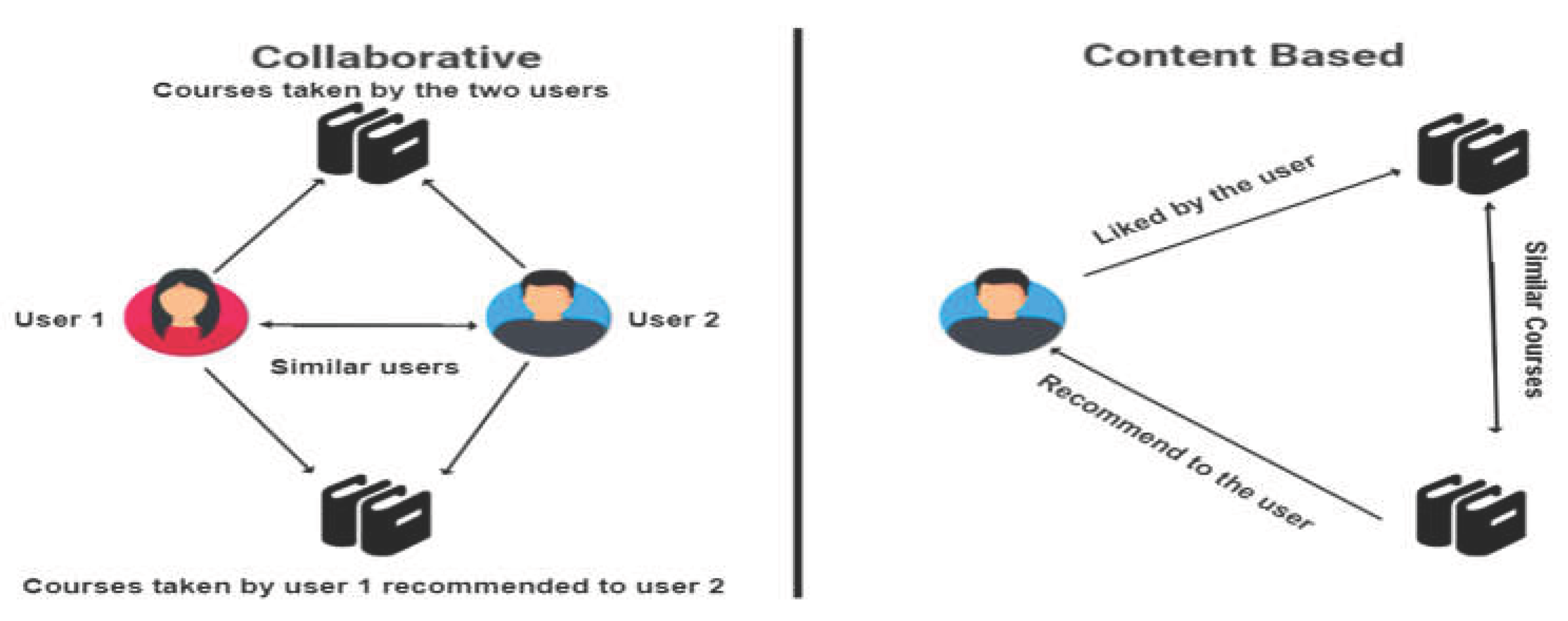
There are various types of recommender systems available, including content-based filtering, collaborative filtering, and hybrid approaches. Content-based filtering is a technique that recommends items based on their similarity to a learner's interests and preferences. Collaborative filtering, on the other hand, recommends items based on similarities between learners and their liked items, while hybrid approaches combine multiple techniques to improve the accuracy and diversity of recommendations [2,3].
Another technique that is gaining popularity in e-learning is XAPI (Experience API), which captures and analyzes learner data to provide personalized recommendations based on their learning experiences. Effective recommender systems are essential in supporting learners in their continuous pursuit of knowledge and ensuring that they receive relevant and engaging content [4].
This paper aims to propose a new e-learning system that incorporates advanced recommender techniques and the XAPI to enhance the learning experience of students. The proposed approach includes a recommendation engine that utilizes content-based and collaborative filtering techniques, as well as a Curriculum Vitae (CV) creator that works with user input and uses XAPI to track their achievements and learning activities.
The reminder of this paper is structured as follows: Section 2 provides the basics and background information on E-Learning Recommender Techniques and XAPI. Section 3 proposes the new e-learning system and discusses the setup environment, dataset and database creation, and implementation of the proposed system. Finally, Section 4 concludes the paper and suggests future work in this area.
2. Basics and Background
2.1. E-Learning Recommender Techniques
Technology-Enhanced Learning refers to the integration of information and communication technologies into education, including recommendation systems that utilize machine learning and information retrieval techniques to suggest relevant items based on a user's interests. However, Non-personalized recommender learning systems provide the same recommendations to all learners based on predefined criteria, which may not be effective for learners with different backgrounds, abilities, and interests. On the other hand, personalized recommender learning systems use data about the learner's preferences, behavior, and performance to provide customized recommendations that are tailored to their individual needs. This approach can improve engagement, motivation, and learning outcomes by delivering content that is relevant, interesting, and challenging for each learner. Therefore, personalized recommender learning systems have the potential to revolutionize education by offering adaptive and personalized learning experiences that meet the unique needs of every learner [5].
Personalized recommender techniques in education can be broadly classified into two categories: content-based, collaborative-based, and hybrid approaches. Content-based techniques recommend learning resources based on the similarity between the content of the resources and the learner's interests and preferences. These techniques analyze the characteristics of the learning resources, such as keywords, topics, and metadata, to generate recommendations. Collaborative-based techniques, on the other hand, recommend resources based on the similarity between the learner's behavior and that of other learners. These techniques analyze the interaction data between learners and resources to identify patterns and similarities in their behavior and generate recommendations. Both content-based and collaborative-based techniques have their advantages and limitations. Content-based techniques are useful when there is limited interaction data available or when the learner's interests are well-defined. However, they may not be effective in recommending resources that are outside the learner's comfort zone or that are not directly related to their interests. Collaborative-based techniques, on the other hand, can provide more diverse and serendipitous recommendations by leveraging the collective intelligence of the learner community [6].
However, they may require a large amount of interaction data to generate accurate recommendations and may also suffer from the "echo chamber" effect, where learners are only exposed to resources that are similar to their existing preferences. To overcome these limitations, hybrid recommender systems that combine both content-based and collaborative-based techniques have been proposed. These systems leverage the strengths of both approaches to provide more accurate and diverse recommendations. Personalized recommender learning systems that use these techniques have the potential to transform education by providing adaptive and personalized learning experiences that cater to the unique needs of every learner [7,8].
Figure 2.
Collaborative vs Content based of E-learning Recommender System.
2.2. Experience API (XAPI)
XAPI is a specification that provides a standardized format for capturing and sharing learning data. It focuses on capturing learning experiences in a statement-based format, with three key components: actor, verb, and object. The xAPI specification allows for capturing a wide range of learning experiences, including traditional e-learning activities, simulations, mobile learning, social learning, offline training, and more. It enables the tracking of various types of interactions, such as completing a module, answering a quiz question, watching a video, participating in a discussion, or even performing real-world activities. One of the key advantages of the XAPI is its ability to capture learning experiences beyond the boundaries of a Learning Management System (LMS). It allows data to be collected from diverse sources, including standalone apps, virtual reality experiences, games, and other learning platforms. This flexibility in data collection enables a more comprehensive view of learners' activities and experiences across different learning contexts. The XAPI can be integrated into a learning management system or smart e-learning platform to capture and store data on learners' skills, achievements, and progress. This data can then be used to automate and improve the CV creation process. As learners acquire new skills or achieve milestones within the e-learning platform, the dynamic CV creation feature can automatically update, providing a real-time reflection of the learner's capabilities. Additionally, companies can search for candidates with specific skills by matching their skill requirements with user profiles stored in the database. The system retrieves matching CVs and presents them to the company, showcasing users' relevant skills, qualifications, and experiences [9,10].
3. The Proposed Platform
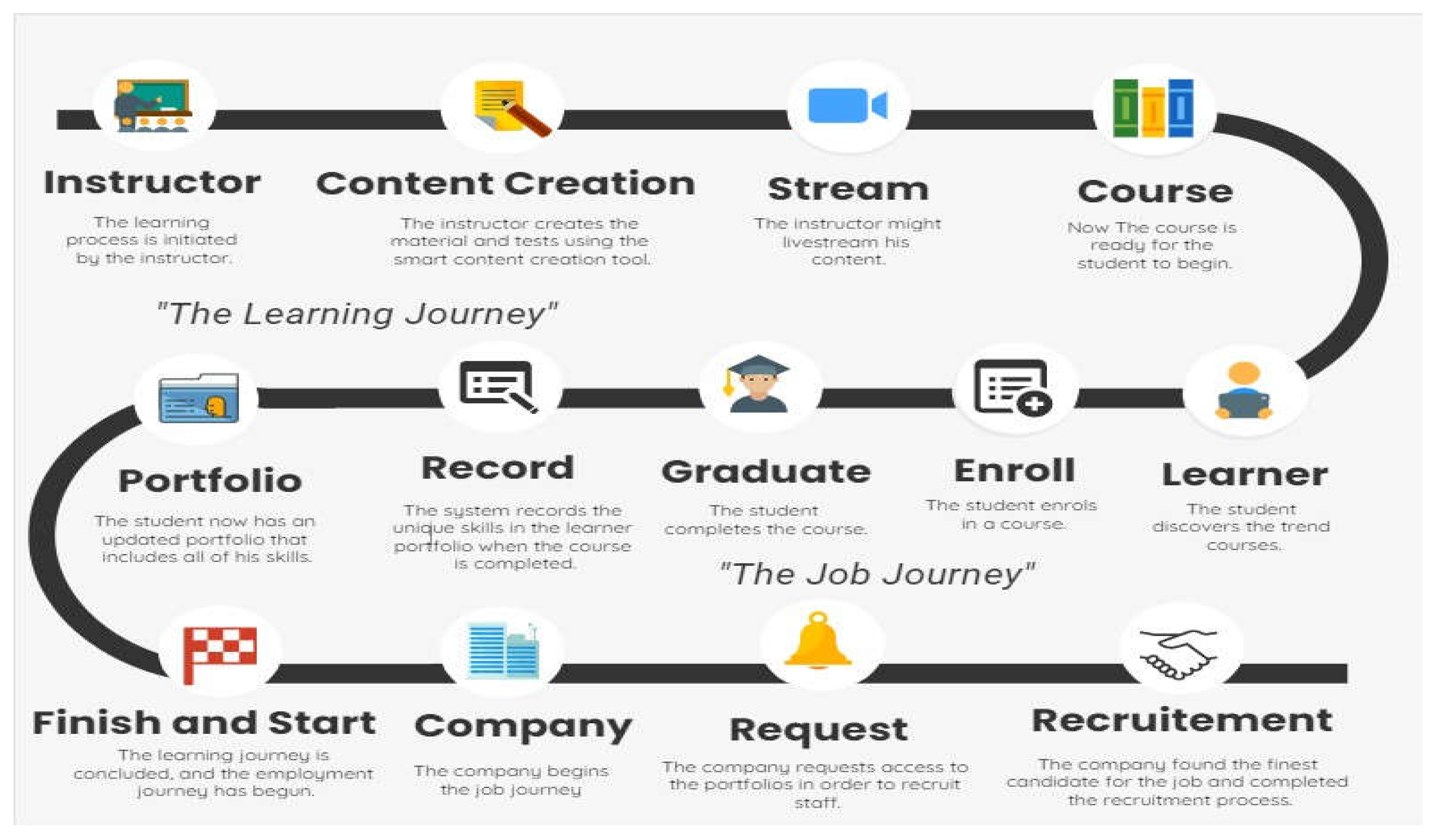
The proposed approach aims to create a smart e-learning platform that offers personalized learning experiences to users. The platform includes a recommendation engine that utilizes content-based and collaborative filtering techniques to suggest relevant courses and resources based on the user's learning preferences and goals. Content-based filtering involves recommending items similar to what the user has already shown interest in, while collaborative filtering involves recommending items based on the preferences of other users with similar interests. In addition, the platform also features CV creator that works with user input and uses XAPI to track their skills and achievements. This allows the platform to continuously update the user's CV whenever they achieve something new. The CV can then be matched with companies looking for employees, providing users with job opportunities that align with their skills and achievements. XAPI is a specification for learning technology that enables tracking of learning activities and achievements across different platforms and tools. Moreover, the proposed approach encompasses supplementary functionalities that will benefit instructors.
These include a content creation tool that empowers users to generate and distribute top-notch content, with the added capability to condense and extract images from any pdf files. Additionally, a quiz creator tool and live streaming feature are also incorporated, as shown in Figure 2.
Figure 2.
The Framework of the Proposed E-learning System.
3.1. Environment Setup
The aim of this study was to develop a smart e-learning platform using various tools and technologies. Python was selected as the primary programming language for developing recommendation systems, while front-end development was carried out using JavaScript and HTML/CSS. Flask framework was used to link between the front-end and back-end. To enable machine learning features, Python libraries such as pandas, sklearn, spacy, collections, and heapq were utilized depending on the specific algorithms chosen. These libraries facilitated the processing of large amounts of data and extraction of meaningful insights from it. MySQL was selected as the database management system to store and manage user data, content, and activity logs. The database tables were created using PHPMyAdmin, which provided a user-friendly interface for managing the database. Tin Can with various cloud-based Learning Record Stores (LRS) were used to track user progress and provide personalized recommendations. These LRSs received, stored, and returned Tin Can statements, which enabled the tracking of user activity and generation of recommendations based on their learning history.
3.2. Dataset and Database Creation
The proposed approach entails the construction of an intelligent e-learning system by gathering and organizing information on various courses. The primary phase of constructing the suggested e-learning system encompasses the establishment of a PHPMyAdmin. The MySQL database is employed to generate and regulate the tables, while queries are utilized to retrieve and manipulate the data.
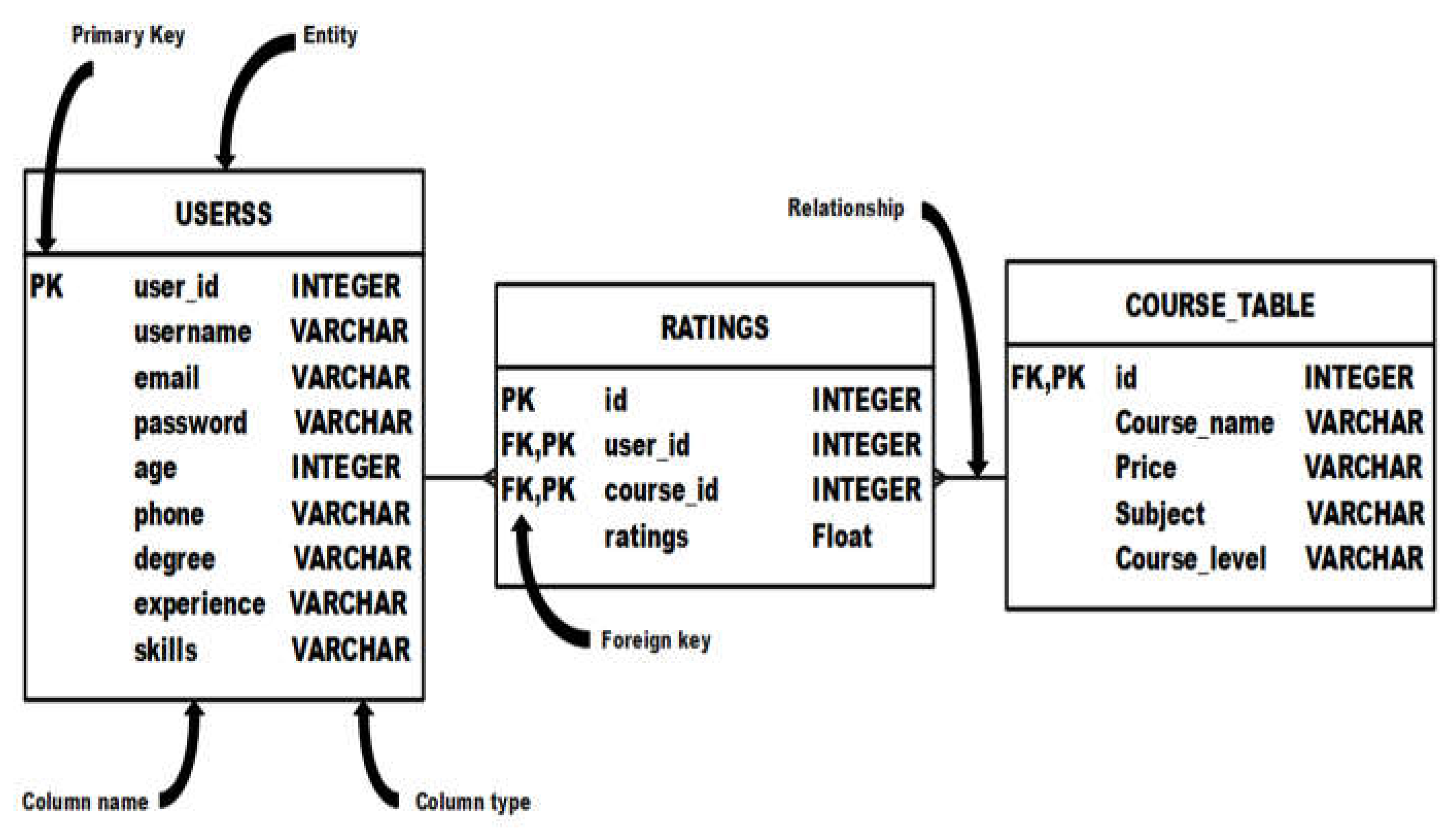
The below figure displays the Entity-Relationship Diagram (ERD) that visualizes the connections between various entities represented as tables in the database. Each table contains specific attributes related to the entity it represents, such as the "Users" table that includes attributes like user_id, user name, email, password, age, phone, degree, experience, and skills with appropriate data types like INTEGER and VARCHAR. The primary key for this table is "user_id," ensuring the unique identification of each user. Similarly, the "Course_Table" table has attributes like id, Course_name, Price, Subject, and Course_level with their respective data types, and the primary key is "id." As the relationship between the "Users" and "Course_Table" tables is many-to-many, a new table called "Ratings" is created to decompose this relationship. The "Ratings" table has attributes like id, user_id, course_id, and ratings, with the primary key being "id," and the user_id and course_id attributes serve as foreign keys to establish one-to-many relationships between the "Users" and "Ratings" tables and between the "Course_Table" and "Ratings" tables.
Figure 3.
The ERD of Database.
3.3. Details of the Implementation Process
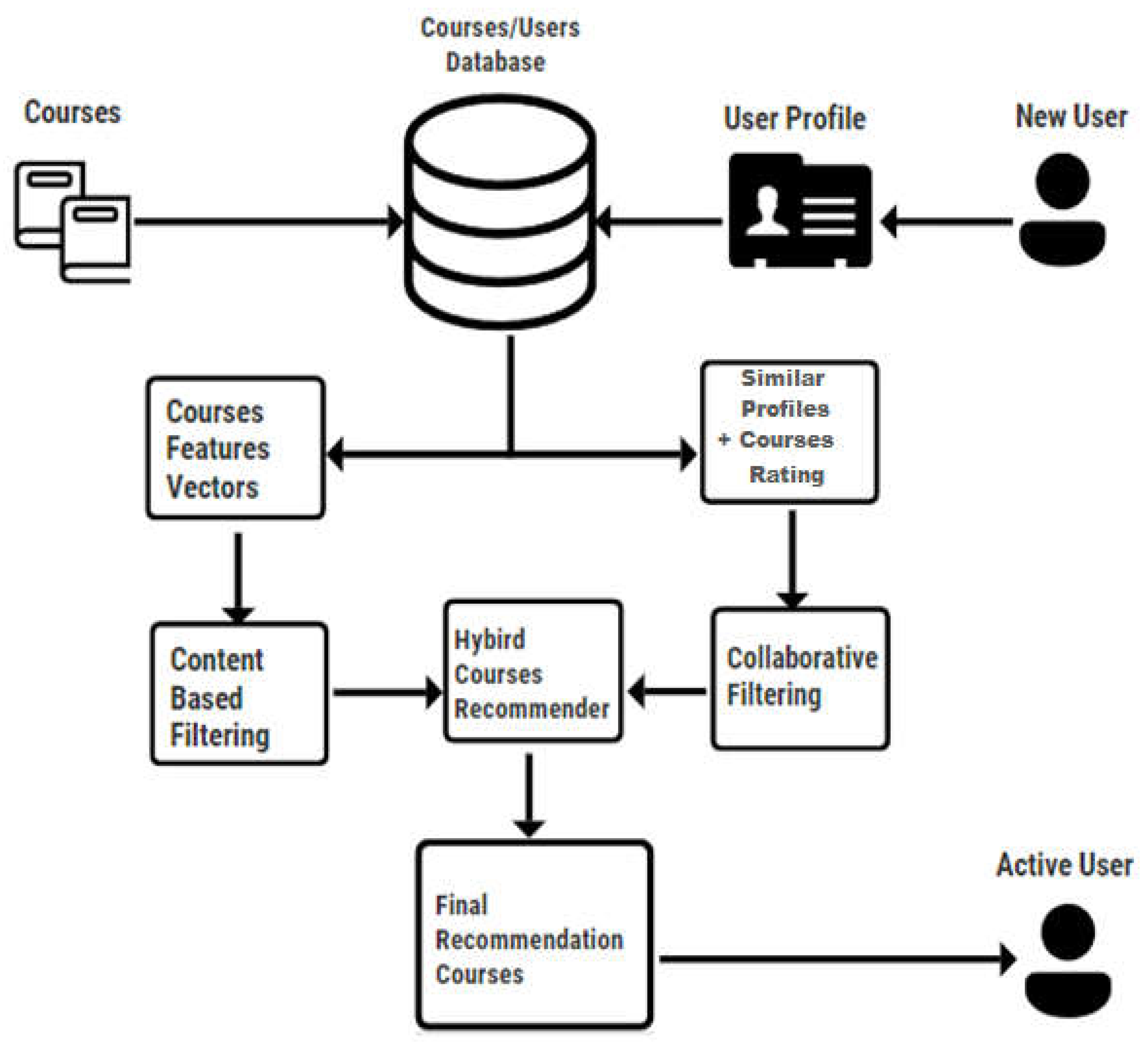
The e-learning platform has a recommendation system that uses both collaborative and content-based filtering techniques to provide accurate and diverse recommendations to users. For new users, the system employs collaborative filtering to recommend courses based on the highest ratings from other users, while for existing users, it analyzes their behavior and similarities with other users to provide personalized recommendations.
Additionally, the platform uses content-based filtering to recommend courses based on the subject matter and attributes of the course, ensuring that users are presented with relevant and high-quality learning materials. The system continuously learns from user feedback to further refine its recommendations and provide personalized learning experiences. In a collaborative scenario, the system recommends courses based on the common courses taken by the user and other users. For an old user, the system recommends courses taken in common with other users, while for a new user, it recommends the best rating courses. In a content-based scenario, the user selects a course, and the system recommends a course based on the subject matter and other criteria from the database, such as course level and price. Overall, the personalized recommender system has the potential to transform education by providing adaptive and personalized learning experiences that cater to the unique needs of every learner.
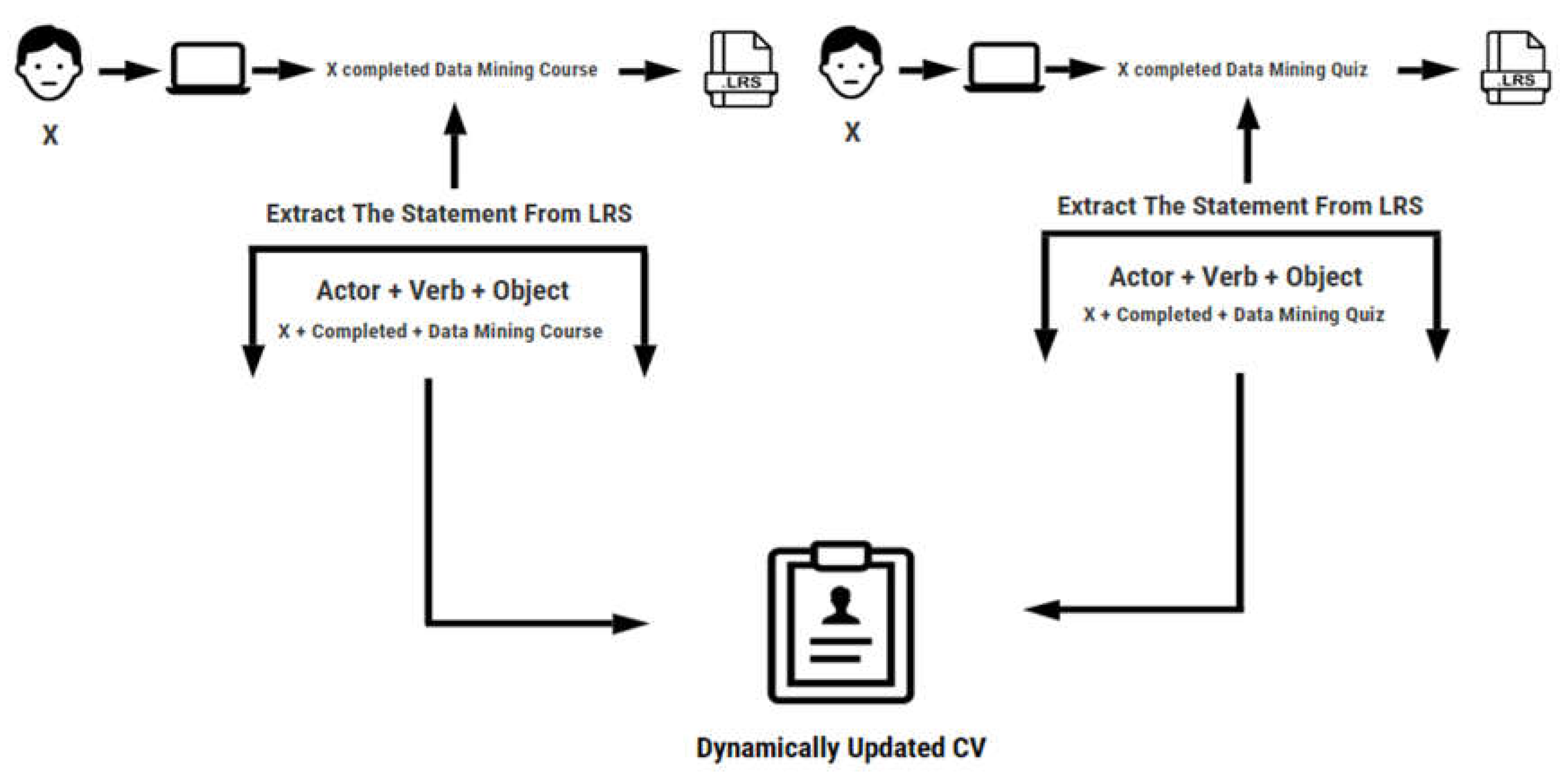
Another primary phase of the propsed approach is XAPI integration, the main purpose of XAPI is to track and record learning experiences, it can be used in conjunction with a smart e-learning platform to enhance the CV creation process. By integrating XAPI into smart e-learning platform, data on learners' skills, achievements, and progress can be captured and stored. This data can then be used to automate and improve the CV creation process. The XAPI can track various learning activities, such as completing courses, earning certifications, participating in online discussions, or engaging with interactive learning materials. This information can be mapped to specific skills or competencies and dynamically incorporated into the CV. As learners acquire new skills or achieve milestones within the e-learning platform, the dynamic CV creation feature can automatically update, providing a real-time reflection of the learner's capabilities.
Figure 4.
The Framework of the Proposed Recommender Approach.
The scenario, when a user completes a course or takes a quiz, their learning achievements are stored as a learning statement. This statement reflects the skills the user has acquired through their learning activities and is saved in the learning store. The user's profile is then updated with the learned skills, providing an accurate reflection of their knowledge and abilities. Then, a company searches for candidates with specific skills. The system matches the company's skill requirements with user profiles stored in the database. The system retrieves matching CVs and presents them to the company, showcasing users' relevant skills, qualifications, and experiences, as shown in Figure 5.
Figure 5.
The Framework of the Proposed Updating CV using XAPI.
3.4. Implementation Results
This section outlines multiple test scenarios that aim to assess the functionality and efficacy of diverse web application testing methods. To execute the proposed scenarios, we draw upon data from the database. The scenarios concentrate on collaborative filtering, XAPI integration, content-based recommendations, and the use of XAPI to monitor user accomplishments and update CVs. Each scenario targets a unique testing objective and furnishes valuable knowledge about the performance and capacities of the web application being analyzed.
3.4.1. Collabrative Filtering Test Scenario
The first scenario in the implementation results focuses on testing the course recommendation feature of the system based on collaborative filtering. The objective is to evaluate the functionality of the web application by generating recommendations for a current user (User ID: 12) based on common courses taken by other users. The collaborative table, as shown in Figure 6, contains user ID, course ID, and rating features. The test steps include User 12 signing into the system, retrieving the courses taken by User 12, identifying other users who have taken courses in common with User 12, calculating the common courses between User 12 and each identified user, generating recommended courses based on the identified common courses, and presenting the recommended courses to User 12. The test data includes User 12 and three other users with their respective courses taken. The anticipated outcomes of this implementation scenario involve two aspects: firstly, identifying the courses that User 12 has in common with each identified user, and secondly, suggesting a course that User 12 has not yet taken. Specifically, the recommended course is course_ID 3 (Deep learning), which is listed in Figure 7, courses table. The results are displayed on the web user interface, as shown in Figure 8.
Figure 6.
The collaborative table in database.
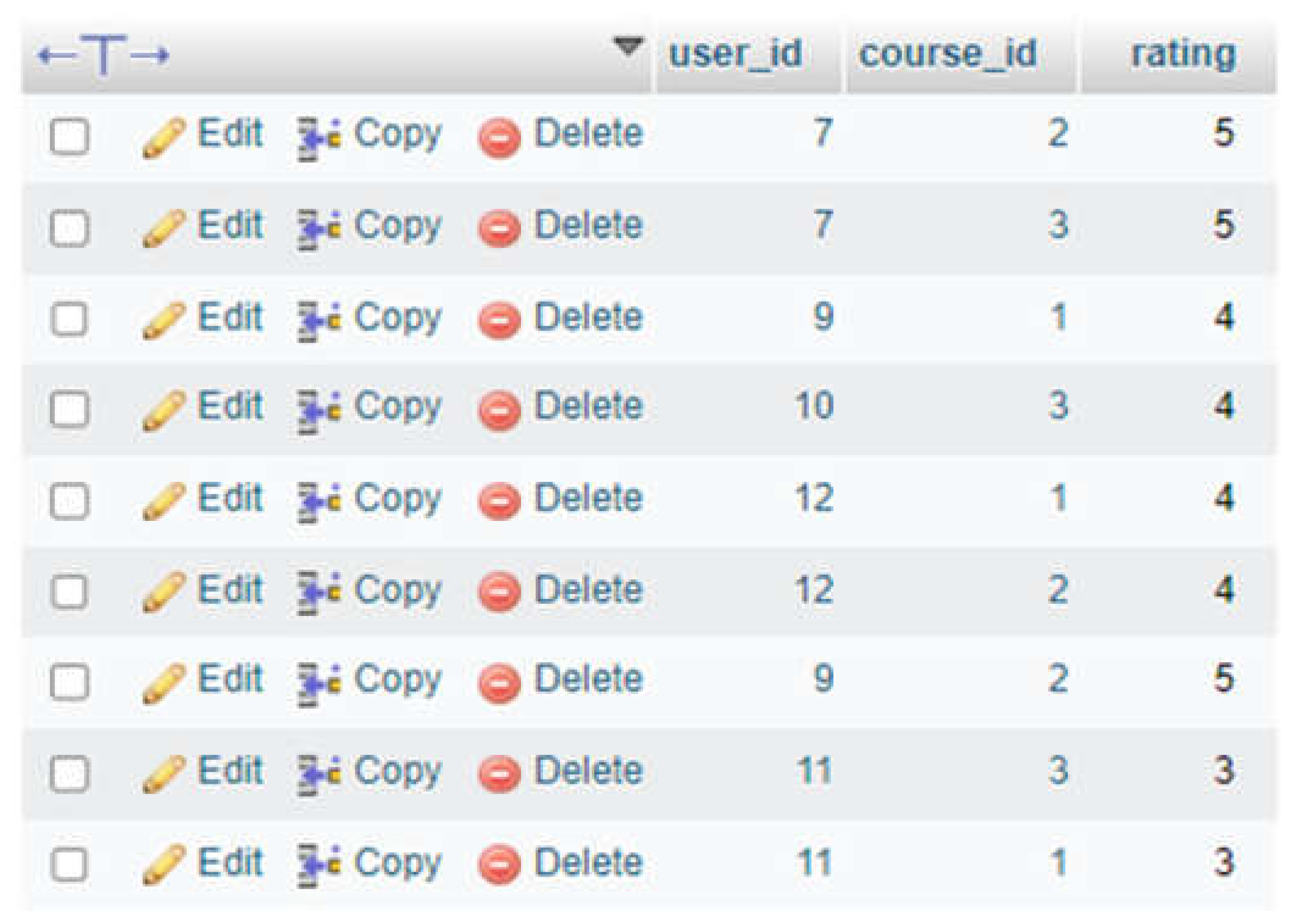
Figure 7.
Course_id and Course_name of courses table in database.
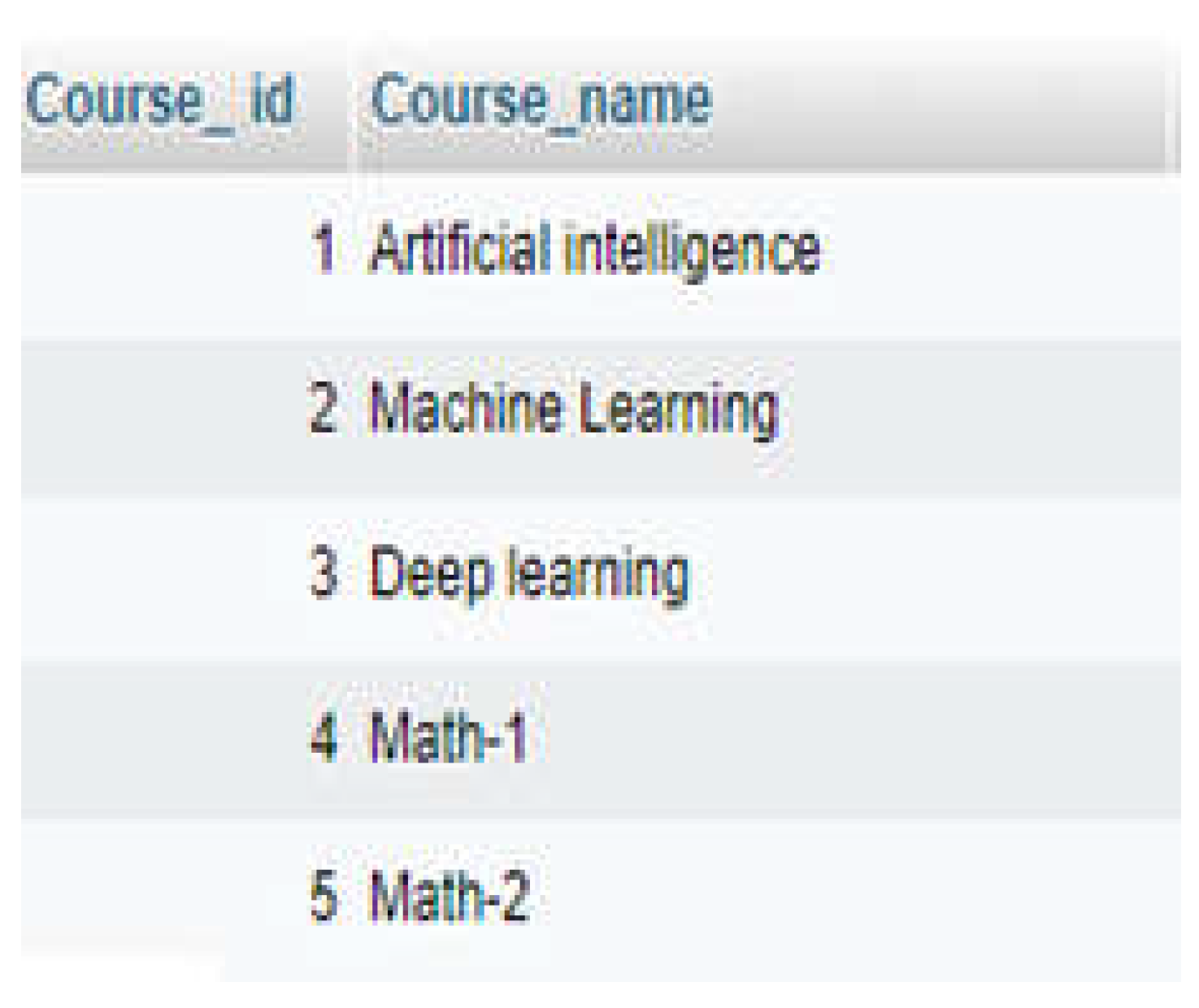
Figure 8.
The collaborative filtering result in web interface.
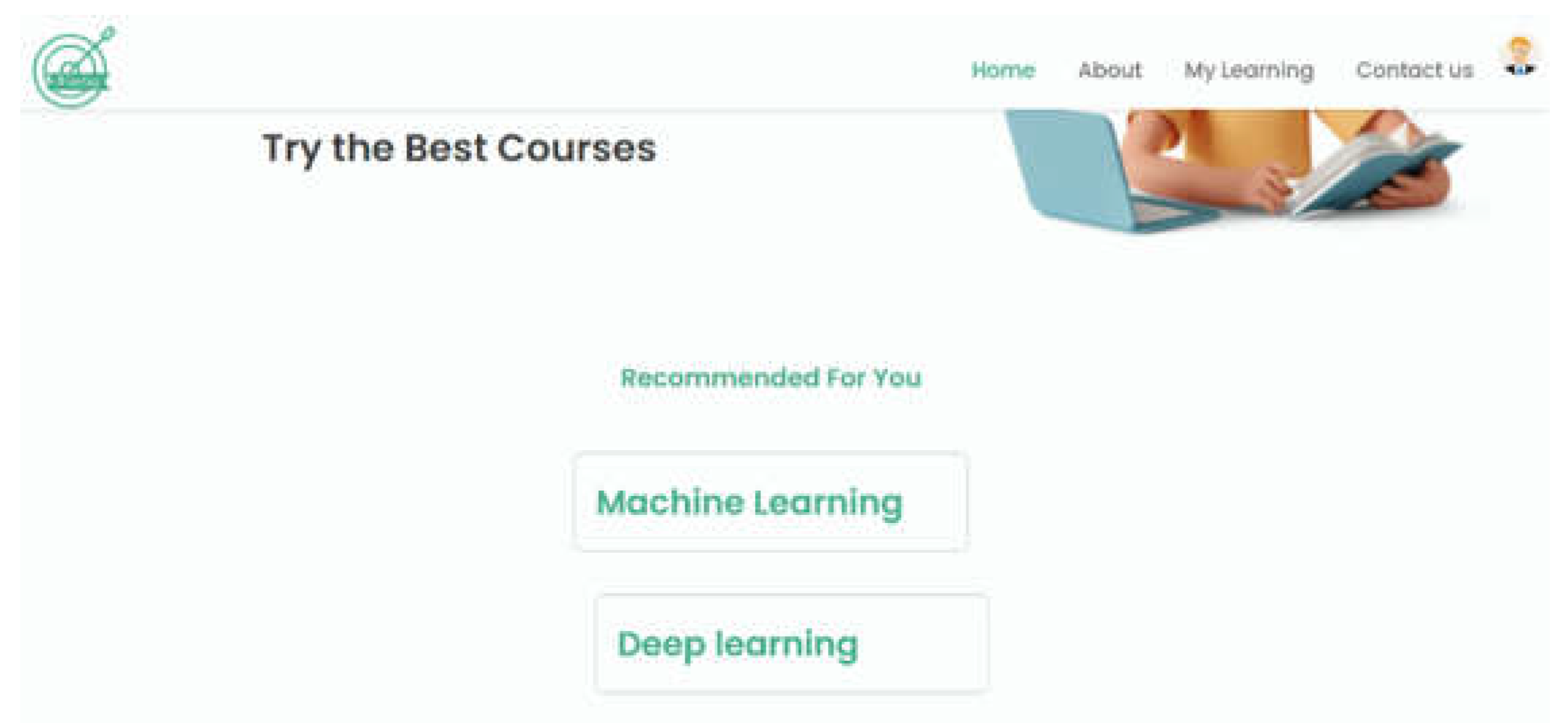
The second scenario proposed is for a new user, where the aim is to evaluate the course recommendation feature of the system by suggesting courses with the best ratings. The example user in this scenario is User ID 15. The testing process involves User 15 logging into the system, and the system retrieving the courses with the highest ratings from the available data. The recommended courses are then generated based on the highest-rated courses and presented to User 15. The recommended courses for User 15 are Course 2 (Machine Learning) and Course 3 (Deep Learning), which have the highest ratings as shown in Figure 7 table of courses. Figure 9 displays the results obtained on the web interface.
Figure 9.
The best rate filtering result in web interface.
3.4.2. Content Based Test Scenario
The objective of the Content-Based Course Recommendations scenario is to assess the effectiveness of the system's course recommendation function based on content similarity. The test involves a user choosing a course, and the system suggesting other courses with comparable attributes like course title, cost, subject, and level.
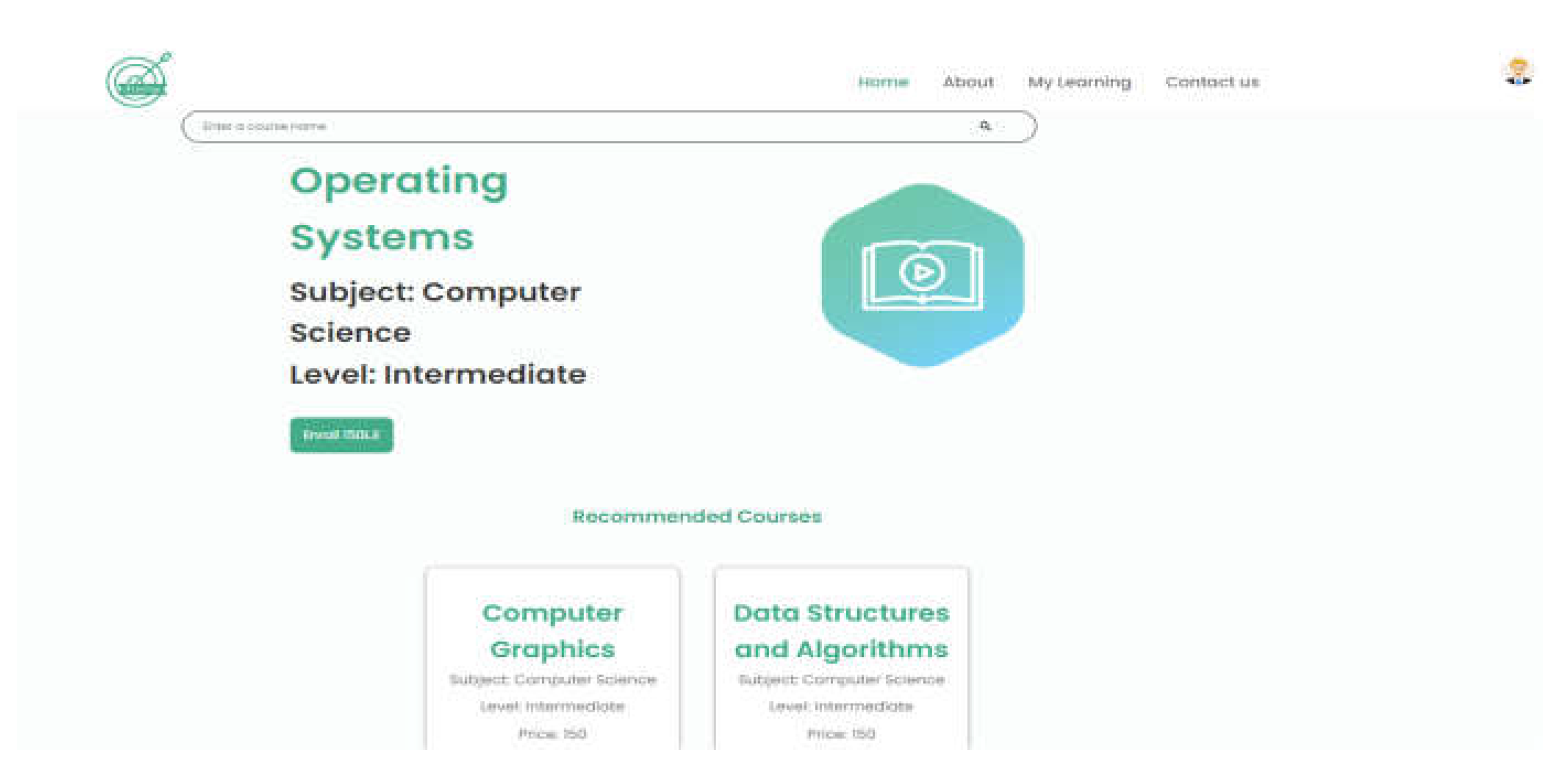
The process includes the user selecting a course, the system analyzing its characteristics, searching for comparable courses, ranking them based on content similarity, creating recommended courses, and presenting them to the user. The database's content table is shown in Figure 4, with the chosen course for testing being "Operating System," and the expected recommended courses being "Data Structures and Algorithms" and "Computer Graphics." These are matched with the selected course in terms of subject and level, as depicted in Figure 10, courses table with “course-id”, “course_name”, “price”, “subject”, and “course_level” features. Figure 11 displays the content based recomendation results obtained on the web interface.
Figure 10.
The courses table in database
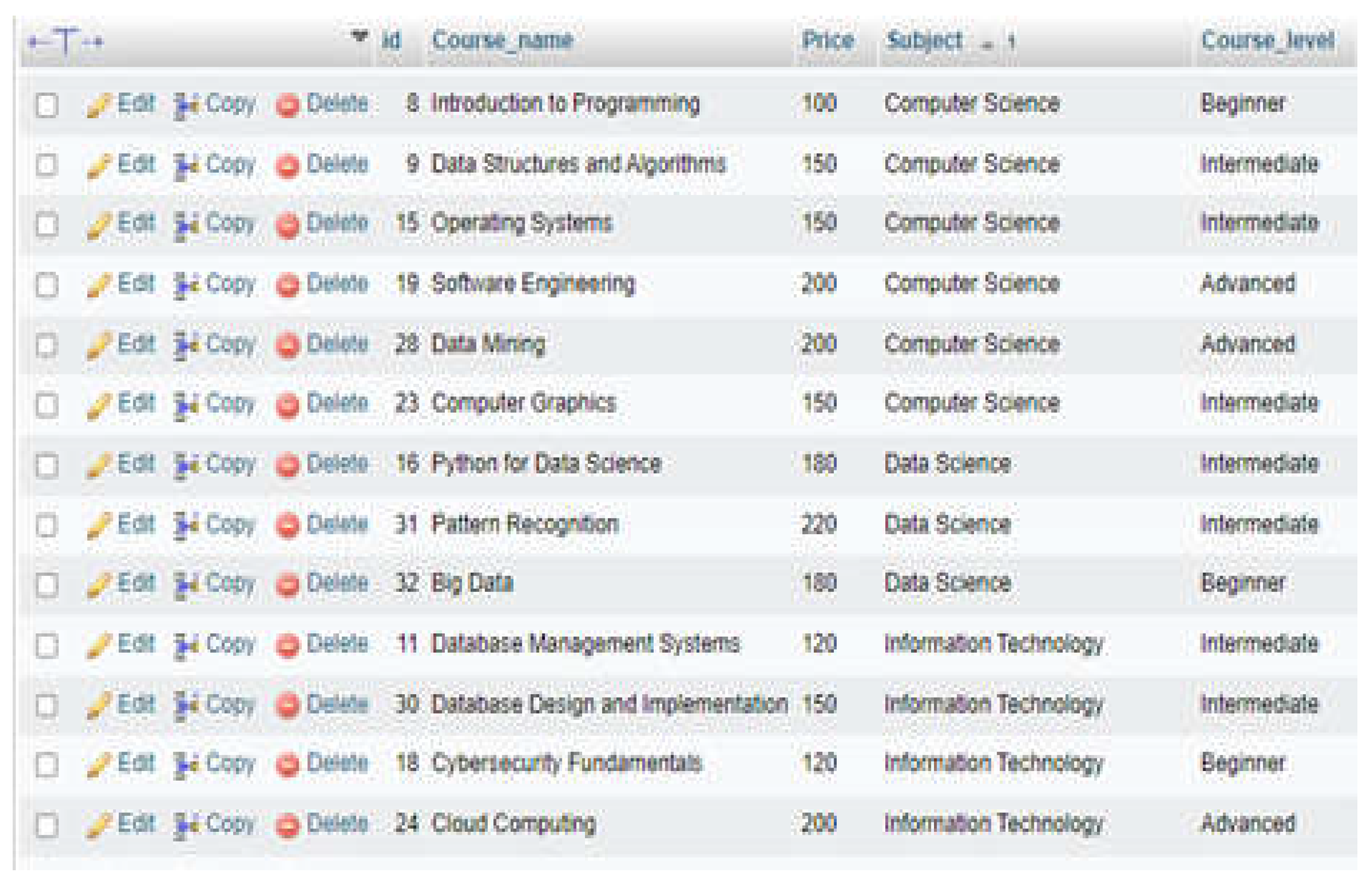
Figure 11.
The content based recomendation result in web interface.
3.4.3. XAPI IntegrationTest Scenario
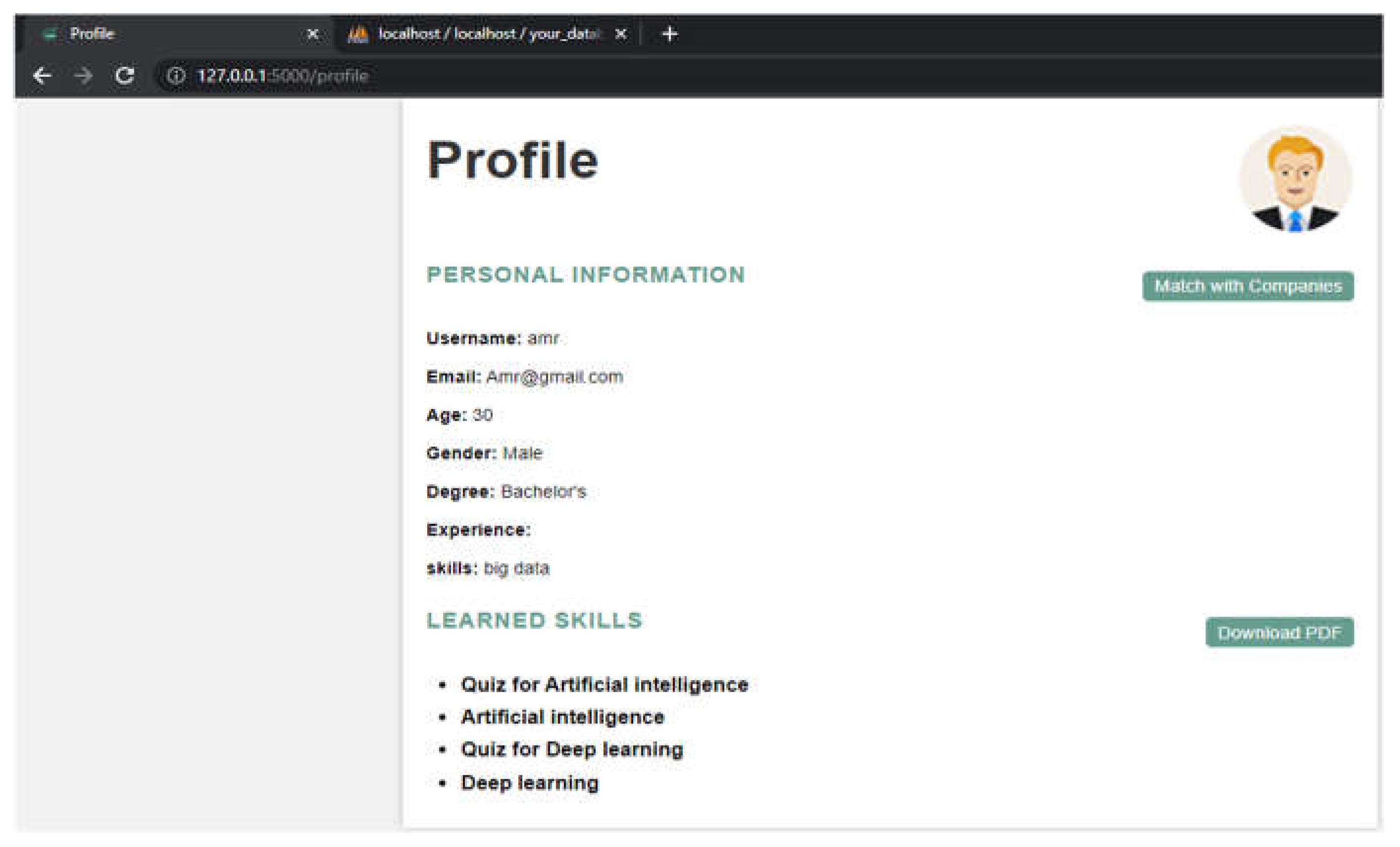
The XAPI Integration for Tracking User Achievements and Updating CV Scenario aims to test the system's ability to integrate with XAPI functionality for tracking user accomplishments and updating their CVs based on completed courses. The test involves the user taking one or more courses within the system, with the system capturing completion data and generating XAPI statements. These statements are then sent to the LRS for storage, and the completed courses data is retrieved from the LRS. The system updates the user's profile with the completed courses information and dynamically updates their CV with newly acquired achievements. The test data includes completed courses, and the expected results are successful saving of completed courses data in the LRS, updating of the user's profile, and dynamic updating of their CV. This scenario emphasizes the importance of integrating with XAPI for tracking user achievements and updating their CVs, providing a more comprehensive and accurate representation of their skills and knowledge. In Figure 12 and Figure 14, the original and updated profiles are displayed, respectively. Figure 13 illustrates the saved completed courses in the LRS.
Figure 12.
Original Profile.
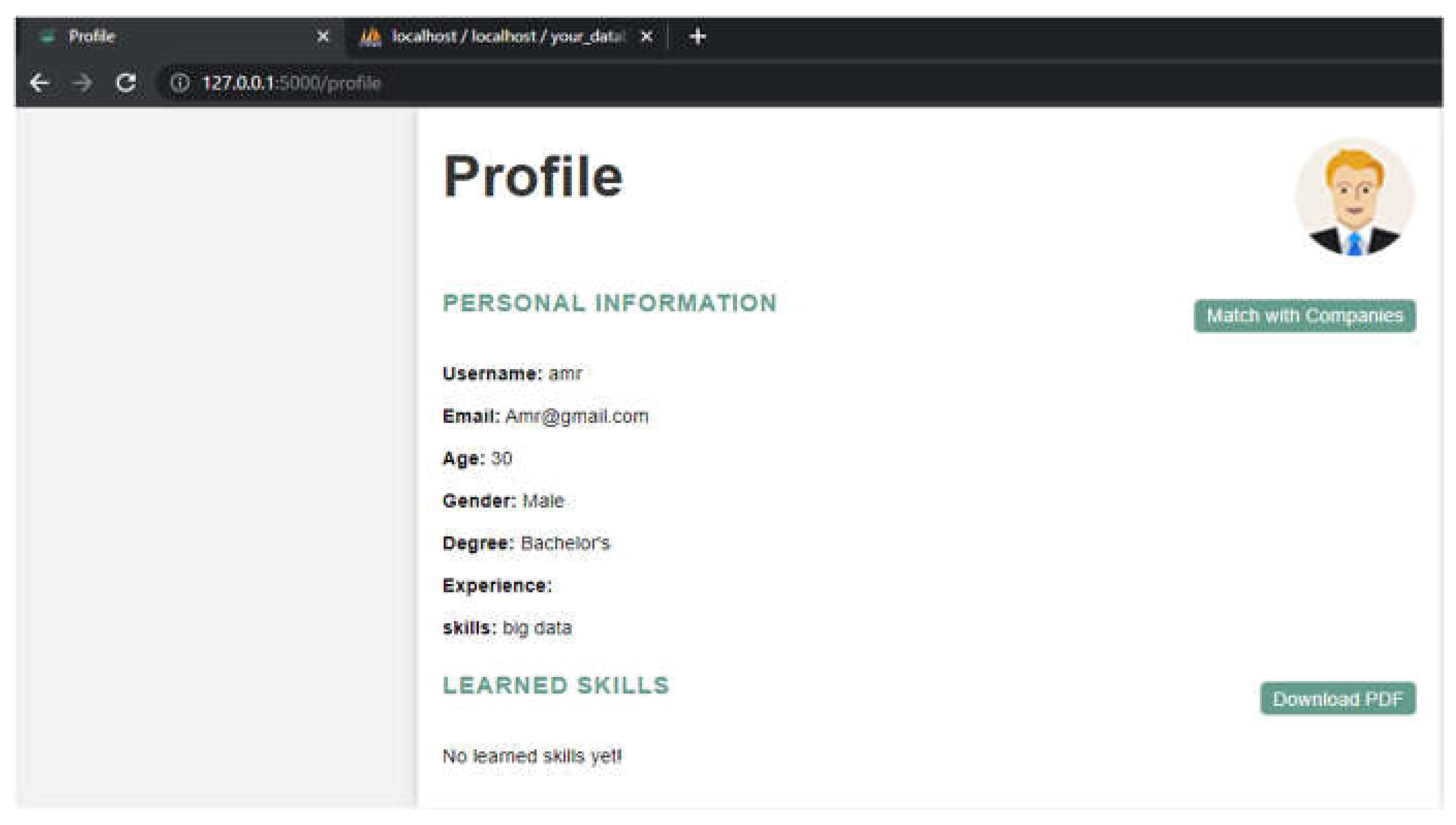
Figure 13.
Completed Courses Saved in LRS.
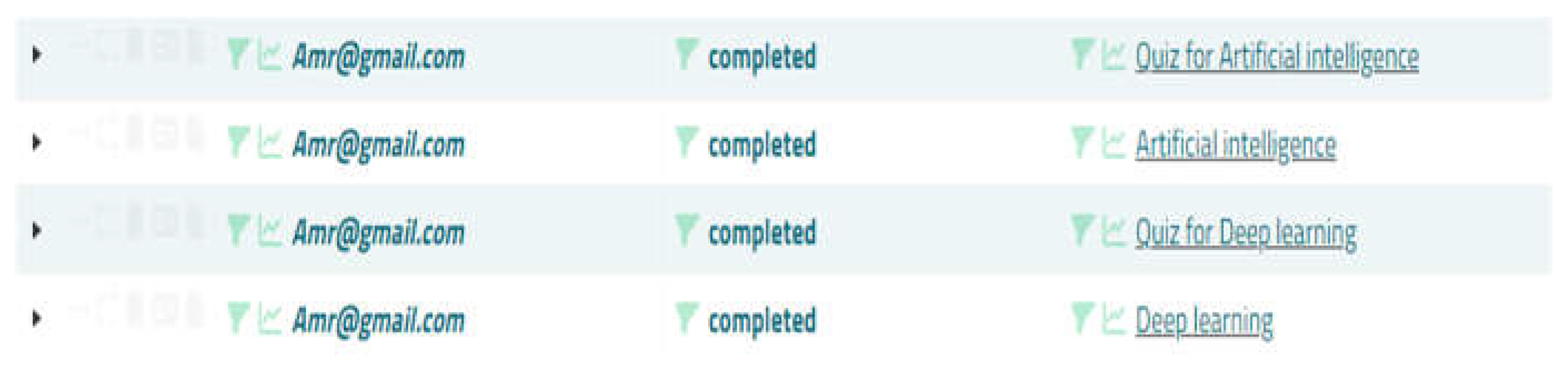
Figure 14.
Updated Profile.
4. Conclusion and Future Work
In conclusion, the proposed approach of developing a smart e-learning platform with a recommendation system, content creation tool, and CV creator has several benefits, including personalized learning experiences, increased engagement and retention, and improved content creation and CV creation tools. Future work could include integrating the platform with social media platforms, adding gamification elements, developing a mobile app version, adding multilingual support, improving analytics and reporting, and creating an educational and professional community for users. Additionally, integrating artificial intelligence and machine learning algorithms can enhance the recommendation system's accuracy and efficiency. Natural language processing can also be integrated into the content creation tool to provide suggestions and corrections for grammar and syntax. Another potential improvement could be the incorporation of virtual and augmented reality technologies to create immersive learning experiences.
References
- Dahdouh, K.; Oughdir, L.; Dakkak, A.; Ibriz, A. Smart Courses Recommender System for Online Learning Platform. 2018 IEEE 5th International Congress on Information Science and Technology (CiSt), Marrakech, Morocco, 2018; pp. 328–333. [Google Scholar] [CrossRef]
- Isinkaye, F.O.; Folajimi, Y.O.; Ojokoh, B.A. Recommendation systems: Principles, methods and evaluation. Egypt. Inform. J. 2015, 16, 261–273. [Google Scholar] [CrossRef]
- Papadakis, H.; Papagrigoriou, A.; Panagiotakis, C.; et al. Collaborative filtering recommender systems taxonomy. Knowl. Inf. Syst. 2022, 64, 35–74. [Google Scholar] [CrossRef]
- Kaur, R.; Gupta, D.; Madhukar, M.; Singh, A.; Abdelhaq, M.; Alsaqour, R.; Breñosa, J.; Goyal, N. E-Learning Environment Based Intelligent Profiling System for Enhancing User Adaptation. Electronics 2022, 11, 3354. [Google Scholar] [CrossRef]
- Walek, Bogdan; Fajmon, Petr. A hybrid recommender system for an online store using a fuzzy expert system. Expert Systems with Applications 2023, 212. [Google Scholar] [CrossRef]
- Adomavicius, G.; Tuzhilin, A. Toward the next generation of recommender systems: a survey of the state-of-the-art and possible extensions. IEEE Trans. Knowl. Data Eng. 2005, 17, 734–749. [Google Scholar] [CrossRef]
- Wu, L.; He, X.; Wang, X.; Zhang, K.; Wang, M. A Survey on Accuracy-Oriented Neural Recommendation: From Collaborative Filtering to Information-Rich Recommendation. IEEE Trans. Knowl. Data Eng. 2023, 35, 4425–4445. [Google Scholar] [CrossRef]
- Zhang, Qian; Lu, Jie; Zhang, Guangquan. Recommender Systems in E-learning. J. Smart Environ. Green Comput. 2021, 1, 76–89. [Google Scholar] [CrossRef]
- Nouira, Azer; Cheniti-Belcadhi, Lilia; Braham, Rafik. An Enhanced xAPI Data Model Supporting Assessment Analytics. Procedia Comput. Sci. 2018, 126, 566–575. [Google Scholar] [CrossRef]
- Gabriel M. Ramirez, V.; Collazos, Cesar A.; Moreira, Fernando; González, Carina. Relation between u-learning, connective learning, and standard xAPI: a systematic review. In Proceedings of the XVIII International Conference on Human Computer Interaction (Interacción '17). Association for Computing Machinery, New York, NY, USA, 2017; pp. 1–4. [Google Scholar] [CrossRef]
Disclaimer/Publisher’s Note: The statements, opinions and data contained in all publications are solely those of the individual author(s) and contributor(s) and not of MDPI and/or the editor(s). MDPI and/or the editor(s) disclaim responsibility for any injury to people or property resulting from any ideas, methods, instructions or products referred to in the content. |
© 2026 by the authors. Licensee MDPI, Basel, Switzerland. This article is an open access article distributed under the terms and conditions of the Creative Commons Attribution (CC BY) license (http://creativecommons.org/licenses/by/4.0/).
Copyright: This open access article is published under a Creative Commons CC BY 4.0 license, which permit the free download, distribution, and reuse, provided that the author and preprint are cited in any reuse.


