

Submitted:
09 July 2026
Posted:
10 July 2026
You are already at the latest version
Abstract
Background Current handwashing techniques used by healthcare and laboratory workers in the United Kingdom can create splash around the sink area, providing an environment for opportunistic pathogens. These microorganisms may transfer onto other surfaces, such as paper-towel dispensers and door handles, or into the air, increasing the risk for transmission and infection. This study investigated potential differences in sink-area contamination between the common UK National Health Service (NHS) handwashing procedure, a modified NHS procedure, and volunteers’ own procedures, incorporating two soap-dispenser locations. Method Twenty-nine volunteers were divided into three groups of ten, with one volunteer being part of two groups due to low volunteer numbers. Each group performed one of the three handwashing comparisons defined by procedure and soap-dispenser location. A fluorescent gel under UV light was used to visualise generated splashes in and around the sink area. The number of contamination events for each test was recorded and compared to determine statistical significance of contamination levels from the different handwashing procedures. Results A slight modification to the commonly used NHS handwashing procedure (collecting soap with one dry hand and collecting water with the other before proceeding through the handwashing technique) significantly reduced the amount of sink-area contamination irrespective of soap-dispenser location (P<0.01). Reductions were greatest between the modified NHS procedure and the standard NHS procedure, with smaller, non-significant reductions for volunteers’ own procedures. Conclusion Employing the modified NHS handwashing procedure reduced sink-area contamination, by minimising splashing during initial soap and water collection. Subsequently, this could reduce microbial transference onto readily contactable surfaces and fomites, thereby reducing the risk of occupational- and healthcare-associated infections.
Keywords:
handwashing
; contamination
; sink
; infection control
; healthcare
Introduction
Hand hygiene, particularly handwashing, is renowned for its importance in breaking the chain of infections and controlling infectious disease outbreaks [1,2]. Previous studies have looked at the effectiveness of handwashing procedures and many have been shown to effectively clean hands [3,4]. Current handwashing techniques used by healthcare and laboratory workers in the UK can create substantial splash around the sink area [5]. These splashes are likely to contain microorganisms removed from the skin of the individual during handwashing. This moist environment can encourage these and other ubiquitous microorganisms (e.g., Pseudomonads) present in the local environment to proliferate where there is sufficient growth media, such as components of soap, skin squames and dust [6]. These microorganisms can be transferred from the sink area to other fomites, e.g., surfaces and objects; [7] paper towel dispensers, bins and door handles.. Exposure to these microorganisms poses an infection risk for both the person(s) exposed and subsequent transference to others [8], and increased likelihood of transmission of infection to vulnerable people. For example, burns patients are particularly susceptible to infection due to the loss of skin integrity, which is their primary infection barrier. Pseudomonas infections of this patient group have been associated with contaminated sinks [9].
Sink design and placement within hospital and laboratory facilities have been studied with the intention of reducing pathogen transfer as part of an infection prevention and control (IPC) strategy, [6,10] and several hospitals have trialled removing sinks from their high-risk wards such as intensive care units (ICUs) [11]. A decrease in the number of healthcare-acquired infections and reduced risk of antibiotic use was observed, implicating contaminated sinks as a source of infection [11. 12]. Specific sink areas such as the drain, U-bend and soap bottles have been identified as sources of healthcare-acquired infection, particularly in paediatric and elderly patients [13,14,15]. However, evidence on the mechanisms of bacterial spread is mixed; a recent study using fluorescent bacterial tracers suggests that bacteria do not escape the U-bend but can escape the drain [16]. A further study also provided evidence of bioaerosol generation during tap running of a sink with a drain contaminated with pathogenic bacteria [17].
Handwashing protocols have been studied extensively and contamination of taps and sinks considered in principle [18], but the amount of splash and other contamination generated in and around the sink during handwashing requires more in-depth study. A search of the literature could not identify any evidence that handwashing procedures have been designed to both effectively wash hands and minimise sink splashes. This study investigates a modification to the current NHS procedure [19,20] whereby wetting both hands and then collecting the soap is replaced by one dry hand collecting the soap preventing drips and splashes onto the soap and surrounding area, and the other hand collecting water before bringing both hands together to wash. Given this is a minor modification to the current NHS procedure, it has been termed “modified NHS procedure” herein. In addition, soap dispenser positioning can differ between handwashing stations. Some are located above the sink while others can be located further away, e.g., between two sinks or on an adjacent unit. This is likely to have an impact on the level and location of contamination dripped from wet hands during soap collection when using the current commonly used handwashing technique.
Harmless fluorescent markers are often used as surrogate contaminants that are applied to the hands of personnel during training on correct handwashing techniques and during studies on handwashing. Fluorescent markers have been used previously to indicate areas of potential contamination [21] when they are visualised under ultraviolet (UV) light. This study investigated potential differences in sink area contamination between the current NHS handwashing procedure, the modified NHS procedure and volunteers’ own procedures incorporating two soap dispenser locations using fluorescence markers as a substitute for bacterial contamination.
Material and Methods
Twenty-nine volunteers recruited from the Health and Safety Executive (HSE) were divided into two groups of ten, and one group of nine, with each group undertaking the specific pair of handwashing tests shown in Table 1. To limit participation burden and prevent over familiarisation with the handwashing procedures skewing results each group performed each assigned test once. However, one participant was part of group 1 and group 3.
Before each test, volunteers were asked to cover their hands with a fluorescent marker (Glogerm 1003, Glo-Germ portable sanitation training kit, Cole-Palmer, UK). They then washed their hands using the current NHS handwashing procedure (Figure S1) or the modified NHS version (Figure S2), where the soap was collected with one dry hand and the water with the other before bringing both hands together over the sink to wash. All volunteers received training in both procedures. A flip chart was used to ensure that all steps were completed consistently and in sequence. To minimise any order effects, half of the volunteers completed the NHS handwashing procedure first and half completed the modified NHS handwashing procedure first.
In addition, volunteers’ own handwashing techniques were included in the study to observe any further differences in environmental contamination of the sink area. In Test 3, volunteers completed two handwashing procedures using their own techniques. i) Volunteers washed their hands in their usual manner, wetting both hands before soap collection. ii) A modified version of their own procedure in which one dry hand collected the soap and the other was wetter first, mirroring the structure of the modified NHS procedure. Observation notes were taken of the handwashing technique used by each volunteer.
Two soap dispenser locations were used during the study to determine the impact of contamination. The soap was positioned on a small cupboard adjacent to the sink for Test 1 and above the sink for Tests 2 and 3 (Figure 1).
After each handwashing procedure, the sink area was visualised under 365nm UV light (Titan UV light, UV Light Technology, UK) A semi-quantitative approach was used to indicate sink area contamination. To achieve this, the sink area was split into various zones and presence or absence of contamination for each zone logged (see Figure S3 for an example of the completed form). The number of contamination events for each test procedure was recorded and compared to determine statistical significance of contamination levels from the different handwashing procedures. All results are in tables S4 within the supplementary section.
Results are presented in diagrams for each test to highlight the total number of volunteers that contaminated specific locations for the two handwashing procedures and the volunteers’ own procedure alongside soap dispenser locations. Diagrams are colour-coded according to the number of the volunteers that contaminated a particular location enabling more frequently contaminated areas to be identified by a darker hue. The number of contamination events per individual pre-mapped location was not compared statistically due to the small sample size, as only very large differences would be detectable. Instead, for each procedure, the overall percentage of contaminated locations per test group was calculated (mean +/- standard deviation), and these aggregated values were compared using paired t-tests.
To gauge the level of volunteer engagement and potential change in handwashing behaviour resulting from participating in these trials, volunteers were asked for their feedback on perceived levels of handwashing and sink contamination before and after participation (see S3). All responses were subjected to content analysis to systematically analyse individual responses to questions and attain underlying themes and context. Every sentence was carefully analysed for the themes it encompassed, such as knowledge of health, personal habit and whether it suggested a positive or negative attitude to change.
Ethics
Ethical approval for this study was given by the University of Sheffield Medical School Research Ethics Committee [HSL19, approved 20 July 2019].
Results
All tests showed a statistically significant reduction in mean sink contamination events when the modified procedure was used. The largest reduction was observed when reaching for soap located on a small cupboard next to the sink (Test 1), with splash contamination falling from 62.2% (SD +/- 17.7) to 41.7% (SD +/- 14.2) (p=0.001). The next largest reduction occurred when the soap was located above the sink (Test 2), with contamination decreasing from 55.9% (SD +/- 6.4) to 41.8% (SD +/- 9.4) (p<0.001). The decrease for volunteers’ own handwashing procedures (Test 3) was smaller, with contamination falling from 51.8% (SD +/- 12.9) to 43.5% (SD +/- 13.9), although this difference was not statistically significant (p=0.1).
Test 1: NHS and NHS Modified Procedures with Soap Dispenser Adjacent to Sink
Figure 2 shows the contamination mapping for Test 1, which compared the commonly used current NHS procedure with the modified NHS procedure. This was undertaken with the soap located on a small cupboard adjacent to the sink. The biggest impact was seen on the top of the cupboard where the soap was located (location 15), which observed a decrease in contamination from 10 contamination events (all volunteers) to 0 (no volunteers). Relatively large differences were also observed between the number of contamination events on the floor (location 12) from N=6 to N=2, the back of the sink by the cold tap (location 5) from N=9 to N=6 and the soap dispenser from N=7 to N=4, when using the modified NHS procedure. Changes were not observed for the left-hand side of the basin (location 6) or the right-hand rim of the bowl (location 9), which were immediately below the handwashing activity for all methods and were contaminated by all volunteers.
Test 2: NHS and NHS Modified Procedures with Soap Dispenser Above Sink
Figure 3 shows the results of the contamination mapping for Test 2, where the current and modified NHS handwashing procedures were compared when the soap was located above the sink. The largest change in terms of numbers of contamination events was on the cold tap, which reduced from N=7 to N=2. A relatively large reduction was observed on the right-hand-side tiled area behind the sink (location 3) where contamination reduced from N=8 to N=4. Both sides of the basin (locations 6 and 7) and the right-hand rim of the bowl (location 9) observed no change in contamination events between the procedures. The wall to the right of the sink (location 14) never became contaminated by any of the volunteers for either procedure.
Test 3: Volunteer Procedures with Soap Dispenser Above Sink
Figure 4 shows the results of the contamination mapping for Test 3, which compared the volunteers’ wetting their hands, collecting the soap and then using their own handwashing procedures with the modified procedure of collecting soap with one dry hand and the water with the other. The greatest change was observed on the floor (location 12) and the wall to the left of the sink (location 13), where the number of volunteers who contaminated these areas reduced from N=4 to N=1. There was no change for both sides of the basin (locations 6 and 7) and both sides of the back of the sink (locations 4 and 5), where contamination either always occurred or nearly always occurred for both procedures, due to its proximity to the handwashing activity. There was also no change for the wall to the right of the sink (location 14), which was never contaminated during this test.
Observational Data
Volunteers using their own handwashing procedures were generally less thorough in their handwashing approach. These tended to be much shorter than both the NHS or NHS modified procedures and often missed the thumb area. The volunteers procedures had two to five stages, which mostly included palm to palm rubbing, rinsing under the tap, and removal of excess water through flicking or dripping. Detailed procedures are available in the supplementary material, Table S1.
Before the trial, many volunteers stated that they did not think about the contamination around the sink. After the trial volunteers were asked, via a questionnaire (See Figure S3) for feedback about handwashing and sink contamination and if this would change the way they washed their hands in future (Figure S3). Many stated they were surprised at the extent of the contamination around the sink and comments included:
“I was surprised how much residue and splash was left.”
“It is quite easy to contaminate without much activity.”
One volunteer stated that the level of contamination was “a little surprising, but as it’s in the sink, not of great concern”.
Other volunteers did not view this in the same way, stating they “would take more care to clean the sink and surrounding area”.
When asked if participating in the trial would affect their future handwashing behaviour the responses were mixed. Half of the respondents reported that they would carry on as they had done before and the remaining stated they would pay more attention to areas of the hands that they had not washed very well, such as thumbs and nail beds. None of the volunteers mentioned using the modified separate soap and water collection to reduce sink contamination, despite most noting that contamination was reduced.
Volunteers thought the current NHS handwashing procedure was involved, but easy to perform and effective, although remembering it would be “a matter of continual practise”. A few volunteers did state that they were unlikely to follow this procedure and would be very likely to take short cuts if they were expected to wash their hands with this procedure regularly.
Given most volunteers noted seeing less contamination around the sink when using the modified procedures, the majority of volunteers considered the modified NHS procedure “made sense”. Several volunteers stated they would “need to overcome their habit of wetting both hands first”. Overall, volunteers agreed that the modified procedure did not affect the effectiveness of the handwashing, as most of the steps had not changed, but the modified procedure did reduce the amount of contamination around the sink.
Discussion
Water from pre-wetted hands drips on and around the sink area prior to soap collection. As such, any contamination on the hands can also be contained in splash dissemination from those drips, providing a reservoir of microorganisms in a moist environment. If not removed through robust and frequent cleaning procedures, these microbes can proliferate colonising surfaces such as, soap, skin squames and dust which are available as carbon sources. Prolonged contamination in sink areas could promote surface biofilm formation, which is less readily removed and allows microbial persistence. This can lead to increased likelihood of transference to other surfaces, fomites and people, increasing the risk of pathogen exposure and subsequent infection, particularly in immunocompromised individuals.
This small-scale study showed that a slight modification to the commonly used NHS handwashing procedure (collecting soap with one dry hand and collecting water with the other over the sink, before proceeding through the handwashing technique) reduced significantly the amount of sink area contamination. Benefits were observed irrespective of soap dispenser location.
Volunteers in this study were previously unfamiliar with the NHS handwashing technique. Own handwashing procedures were much shorter and as such changing peoples’ habits to a longer technique could prove challenging. This was confirmed by the findings of the questionnaire as many did not think they would use either the current or modified NHS procedures in future despite observing beneficial differences in the contamination around the sink. However, this might be a result of the volunteers presuming handwashing reduces the risk of infection to themselves only rather than an additional infection prevention and control measure for others. As such, behavioural interventions would likely be necessary to change peoples’ handwashing habits. If behaviour change was brought about, it would be possible to help reduce potential infection risks associated with sink area contamination.
Based on the preliminary evidence from this study the modified NHS handwashing technique was included in a WHO Monograph on Personal Protective Equipment (part of the 4th edition of the WHO Laboratory Biosafety Manual. LBM4, 2020) [22].
While the presence or absence of fluorescent contamination worked well as a visual tool to indicate the spread of contamination within a specific location around the sink area, the volume of fluid or amount of fluorescence was not measured. This meant that the presence/absence check reflected the frequency of, or tendency for an area to be contaminated, but did not distinguish between heavily contaminated areas and those areas showing only light contamination. That said, much of the contamination seen near the soap in the unmodified procedure could have been classed as heavy contamination as there was a visibly high volume of fluid containing the fluorescent marker present at that location compared with other areas that might have had only a few droplets. Further work is required to determine more accurate levels of contamination during current and modified handwashing procedures. This could involve the use of non-pathogenic marker organisms such as Bacillus atrophaeus (formerly Bacillus globigii) as a biological marker. This bacterium has a distinctive colony morphology that makes identification easy.
This study used a small cohort of participants, a single sink and specific tap design, size and location. Variations in sink design area could influence the amount and location(s) of contamination following handwashing. Future work could explore these variables.
Conclusions
Hand hygiene, particularly handwashing, is renowned for its importance in breaking the chain of infection and controlling infectious disease outbreaks. Whilst handwashing protocols are usually designed for use within healthcare and laboratory sectors, they apply to all industries and the public more generally as good infection prevention and control practice, e.g., as part of rest room hygiene This small-scale study modified a commonly used handwashing procedure by collecting soap with one dry hand and collecting water with the other hand before bringing them together for washing above the sink. This minor modification significantly reduced the extent of splash contamination around the sink area particularly where the soap dispenser was located. As such, this modified NHS handwashing procedure could reduce the presence and proliferation of microorganisms around the sink area. This would offer the benefit of reduced microbial transference onto frequently contactable surfaces and fomites thereby helping to reduce the incidence of occupational- and healthcare-associated infections.
Supplementary Materials
The following supporting information can be downloaded at the website of this paper posted on Preprints.org.
Funding
This paper and the work it described were funded by the Health and Safety Executive. Its contents, including any opinions and/or conclusions expressed, are those of the authors alone and so not necessarily reflect HSE policy.
Acknowledgments
The authors would like to thank the volunteers who participated in the study.
Conflicts of Interest
No conflicts of interest.
References
- Vally, H.; McMichael, C.; Doherty, C.; Li, X.; Guevarra, G.; Tobias, P. The Impact of a School-Based Water, Sanitation and Hygiene Intervention on Knowledge, Practices, and Diarrhoea Rates in the Philippines. Int. J. Environ. Res. Public Health 2019, 16(21), 4056. [Google Scholar] [CrossRef] [PubMed]
- Wong, J. S. W.; Lee, J. K. F. The Common Missed Handwashing Instances and Areas after 15 Years of Hand-Hygiene Education. J. Environ. Public Health 2019, 2019, 1–7. [Google Scholar] [CrossRef] [PubMed]
- Martos-Cabrera, M. B.; Mota-Romero, E.; Martos-García, R.; Gómez-Urquiza, J. L.; Suleiman-Martos, N.; Albendín-García, L.; Cañadas-De la Fuente, G. A. Hand Hygiene Teaching Strategies among Nursing Staff: A Systematic Review. Int. J. Environ. Res. Public Health 2019, 16(17), 3039. [Google Scholar] [CrossRef] [PubMed]
- Kitsanapun, A.; Yamarat, K. Evaluating the Effectiveness of the “Germ-Free Hands” Intervention for Improving the Hand Hygiene Practices of Public Health Students. J. Multidiscip. Healthc. 2019, Volume 12, 533–541. [Google Scholar] [CrossRef] [PubMed]
- Yui, S.; Muzslay, M.; Karia, K.; Shuttleworth, B.; Ali, S.; Dudzinska, N.; Wilson, P. Evaluation of Droplet Production by a New Design of Clinical Handwash Basin for the Healthcare Environment. J. Hosp. Infect. 2019, 103(1), e110–e114. [Google Scholar] [CrossRef] [PubMed]
- Cloutman-Green, E.; Kalaycioglu, O.; Wojani, H.; Hartley, J. C.; Guillas, S.; Malone, D.; Gant, V.; Grey, C.; Klein, N. The Important Role of Sink Location in Handwashing Compliance and Microbial Sink Contamination. Am. J. Infect. Control 2014, 42(5), 554–555. [Google Scholar] [CrossRef] [PubMed]
- Dandalides, P. C.; Rutala, W. A.; Sarubbi, F. A. Postoperative Infections Following Cardiac Surgery: Association with an Environmental Reservoir in a Cardiothoracic Intensive Care Unit. Infect. Control 1984, 5(8), 378–384. [Google Scholar] [CrossRef] [PubMed]
- Feng, Y.; Wei, L.; Zhu, S.; Qiao, F.; Zhang, X.; Kang, Y.; Cai, L.; Kang, M.; McNally, A.; Zong, Z. Handwashing Sinks as the Source of Transmission of ST16 Carbapenem-Resistant Klebsiella Pneumoniae, an International High-Risk Clone, in an Intensive Care Unit. J. Hosp. Infect. 2020, 104(4), 492–496. [Google Scholar] [CrossRef] [PubMed]
- Lalancette, C.; Charron, D.; Laferrière, C.; Dolcé, P.; Déziel, E.; Prévost, M.; Bédard, E. Hospital Drains as Reservoirs of Pseudomonas Aeruginosa: Multiple-Locus Variable-Number of Tandem Repeats Analysis Genotypes Recovered from Faucets, Sink Surfaces and Patients. Pathogens 2017, 6(3), 36. [Google Scholar] [CrossRef] [PubMed]
- Hota, S.; Hirji, Z.; Stockton, K.; Lemieux, C.; Dedier, H.; Wolfaardt, G.; Gardam, M. A. Outbreak of Multidrug-ResistantPseudomonas AeruginosaColonization and Infection Secondary to Imperfect Intensive Care Unit Room Design. Infect. Control Hosp. Epidemiol. 2009, 30(1), 25–33. [Google Scholar] [CrossRef] [PubMed]
- Shaw, E.; Gavaldà; Càmara, L.; Jordi; Gasull, R.; Gallego, S.; Tubau, Fé; Granada, R.; Ciercoles, P.; Domínguez, M.Á.; Mañez; Carratalà, R.; Jordi; Pujol, M. Control of Endemic Multidrug-Resistant Gram-Negative Bacteria after Removal of Sinks and Implementing a New Water-Safe Policy in an Intensive Care Unit. J. Hosp. Infect. 2018, 98(3), 275–281. [Google Scholar] [CrossRef] [PubMed]
- De-Las-Casas-Cámara, G.; Collados-Arroyo, V.; García-Torrejón, María Carmen; Muñoz-Egea, María-Carmen; Martín-Ríos, María Dolores. Impact of Sink Removal from Intensive Care Unit Rooms on the Consumption of Antibiotics and on Results of Zero Resistance Project. Med. Clínica 2022, 158(1), 1–6. [Google Scholar] [CrossRef] [PubMed]
- Kotay, S.; Chai, W.; Guilford, W.; Barry, K.; Mathers, A. J. Spread from the Sink to the Patient: In Situ Study Using Green Fluorescent Protein (GFP)-Expressing Escherichia Coli to Model Bacterial Dispersion from Hand-Washing Sink-Trap Reservoirs. Appl. Environ. Microbiol. 2017, 83(8). [Google Scholar] [CrossRef] [PubMed]
- Livingston, S. H.; Cadnum, J. L.; Gestrich, S.; Jencson, A. L.; Donskey, C. J. A Novel Sink Drain Cover Prevents Dispersal of Microorganisms from Contaminated Sink Drains. Infect. Control Hosp. Epidemiol. 2018, 39(10), 1254–1256. [Google Scholar] [CrossRef] [PubMed]
- Archibald, L. K.; Corl, A.; Shah, B.; Schulte, M.; Arduino, M. J.; Aguero, S.; Fisher, D. J.; Stechenberg, B. W.; Banerjee, S. N.; Jarvis, W. R. Serratia Marcescens Outbreak Associated with Extrinsic Contamination of 1% Chlorxylenol Soap. Infect. Control Hosp. Epidemiol. 1997, 18(10), 704–709. [Google Scholar] [CrossRef] [PubMed]
- Pirzadian, J.; Souhoka, T.; Herweijer, M.; van Heel, L.; van Wamel, W. J. B.; Goossens, R. H. M.; Severin, J. A.; Vos, M. C. Impact of Sink Design on Bacterial Transmission from Hospital Sink Drains to the Surrounding Sink Environment Tested Using a Fluorescent Marker. J. Hosp. Infect. 2022, 127, 39–43. [Google Scholar] [CrossRef] [PubMed]
- Cole, K.; Talmadge, J. E. Mitigation of Microbial Contamination from Waste Water and Aerosolization by Sink Design. J. Hosp. Infect. 2019, 103(2), 193–199. [Google Scholar] [CrossRef] [PubMed]
- WHO. WHO Guidelines on Hand Hygiene in Health Care First Global Patient Safety Challenge: Clean Care is Safer Care . 2009. Available online: https://iris.who.int/server/api/core/bitstreams/b7cdc469-d662-4958-adfd-949a750e5ad9/content (accessed on 20th May 2026).
- NHS. How to wash your hands . nhs.uk. 2019. Available online: https://www.nhs.uk/live-well/healthy-body/best-way-to-wash-your-hands (accessed on 2026-05-20).
- UKHSA. Best Practice: How to hand wash step by step images . UKHSA. 2022. Available online: https://www.england.nhs.uk/wp-content/uploads/2022/09/nipc-manual-appendix-1-handwashing.pdf (accessed on 2026-02-24).
- Crook, B.; Makison Booth, C.; Hall, S. Fluorescence visualization as a training tool for infection control. Int. J. Public Health Saf. 2018, 3(2), 156. Available online: https://www.omicsonline.org/open-access/fluorescence-visualization-as-a-training-tool-for-infection-control-101572.html (accessed on 24th February 2026).
- WHO Personal Protective Equipment (PPE) Monograph. Laboratory Biosafety Manual, 4th Edition and associated monographs . 2020. Available online: https://www.who.int/publications/i/item/9789240011410 (accessed on 24th February 2026).
Figure 1.
Photographic representation of the sink area and the different locations of the soap dispenser: positioned adjacent to the sink for Test 1 (A), positioned above the sink for Test 2 and 3 (B).
Figure 1.
Photographic representation of the sink area and the different locations of the soap dispenser: positioned adjacent to the sink for Test 1 (A), positioned above the sink for Test 2 and 3 (B).
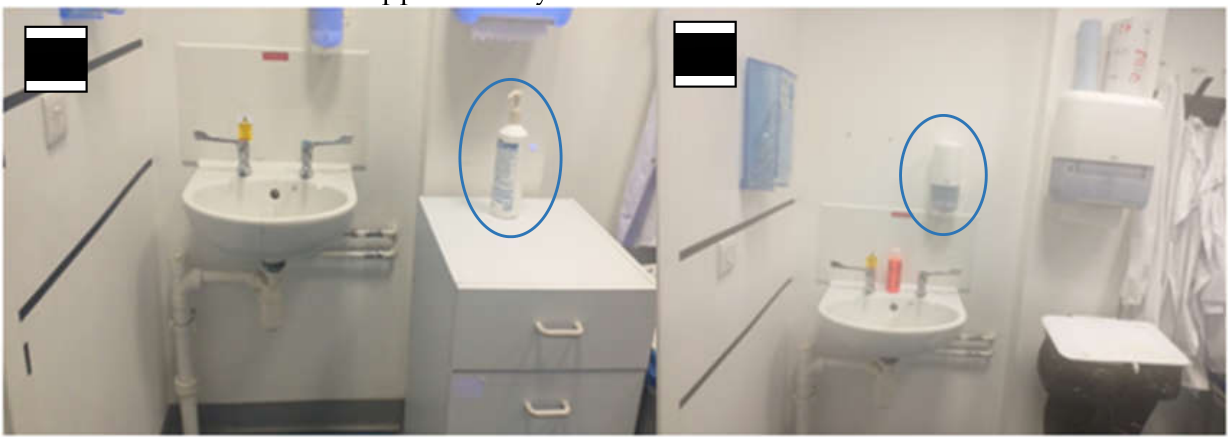
Figure 2.
Number of contamination events by 10 volunteers using the current NHS handwashing procedure (A) and the modified NHS procedure (B) when the soap was located adjacent to the sink. The number in each area is the location reference and ‘N=x’ is the number of volunteers who contaminated that location.
Figure 2.
Number of contamination events by 10 volunteers using the current NHS handwashing procedure (A) and the modified NHS procedure (B) when the soap was located adjacent to the sink. The number in each area is the location reference and ‘N=x’ is the number of volunteers who contaminated that location.
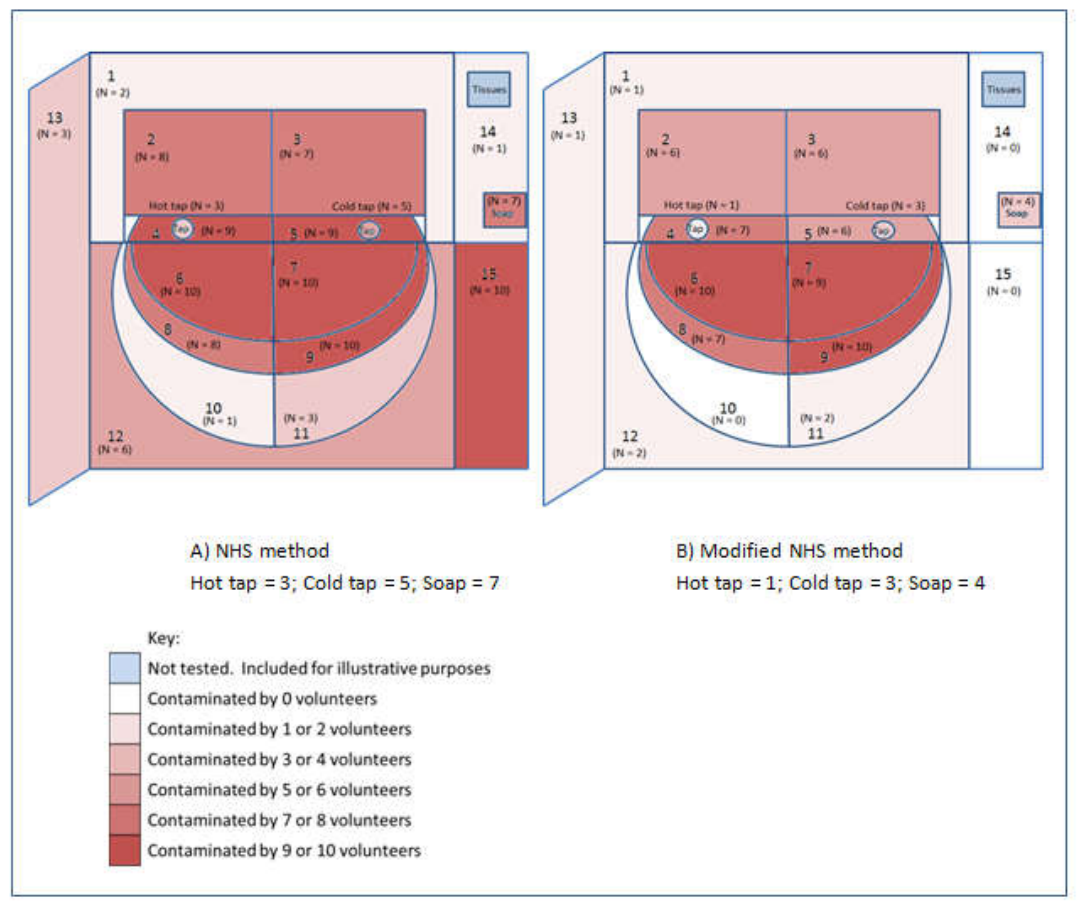
Figure 3.
Number of contamination events by 10 volunteers using the current NHS handwashing procedures (A) and the modified NHS procedure (B) when the soap was located above the sink. The number in each area is the location area and ‘N=x’ is the number of volunteers who contaminated that location.
Figure 3.
Number of contamination events by 10 volunteers using the current NHS handwashing procedures (A) and the modified NHS procedure (B) when the soap was located above the sink. The number in each area is the location area and ‘N=x’ is the number of volunteers who contaminated that location.
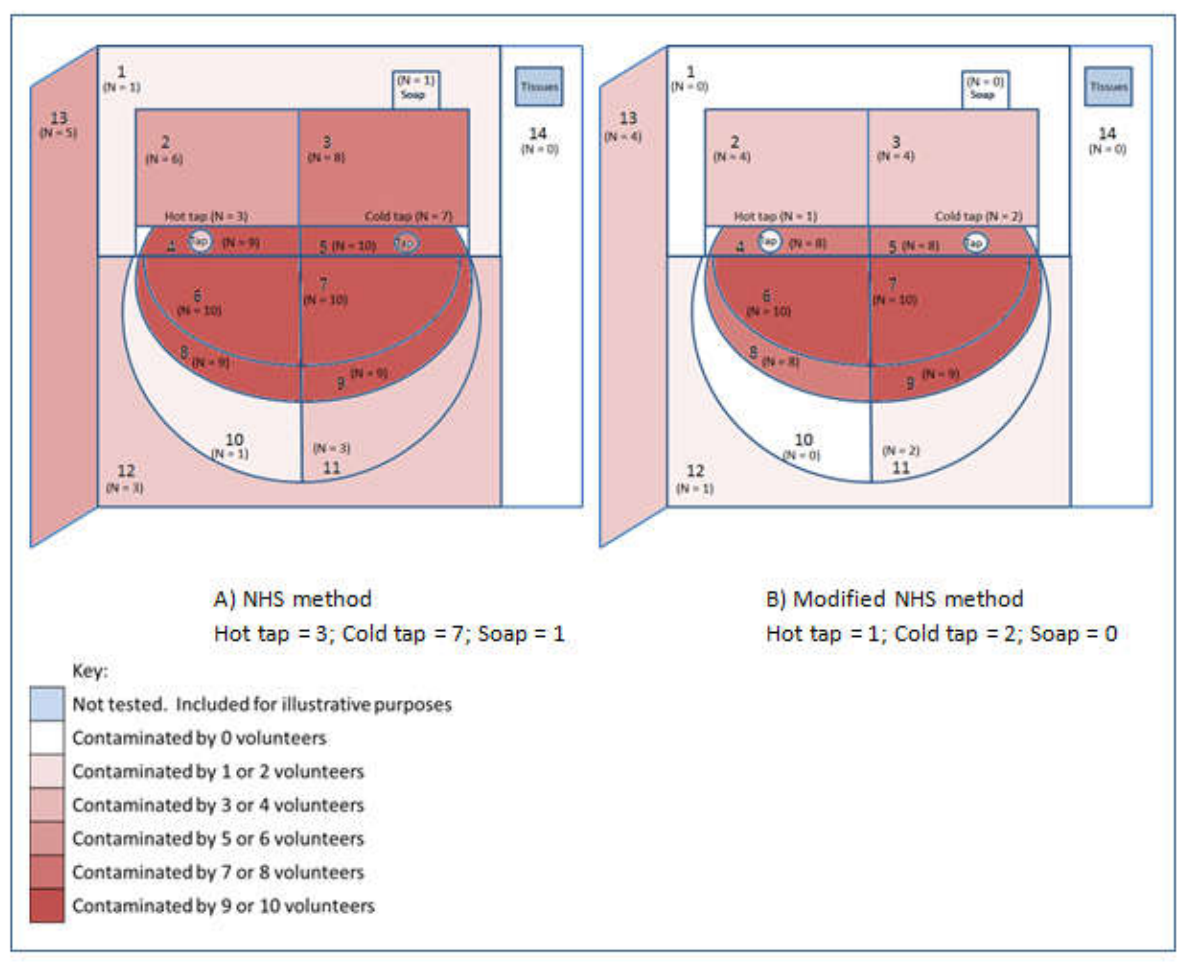
Figure 4.
Number of contamination events by 10 volunteers using their own handwashing procedures wetting hand before soap collection (A) and their own procedure with one dry hand collecting soap and the other collecting water (B) when the soap was located above the sink. ‘N=x’ is the number of volunteers who contaminated that location.
Figure 4.
Number of contamination events by 10 volunteers using their own handwashing procedures wetting hand before soap collection (A) and their own procedure with one dry hand collecting soap and the other collecting water (B) when the soap was located above the sink. ‘N=x’ is the number of volunteers who contaminated that location.
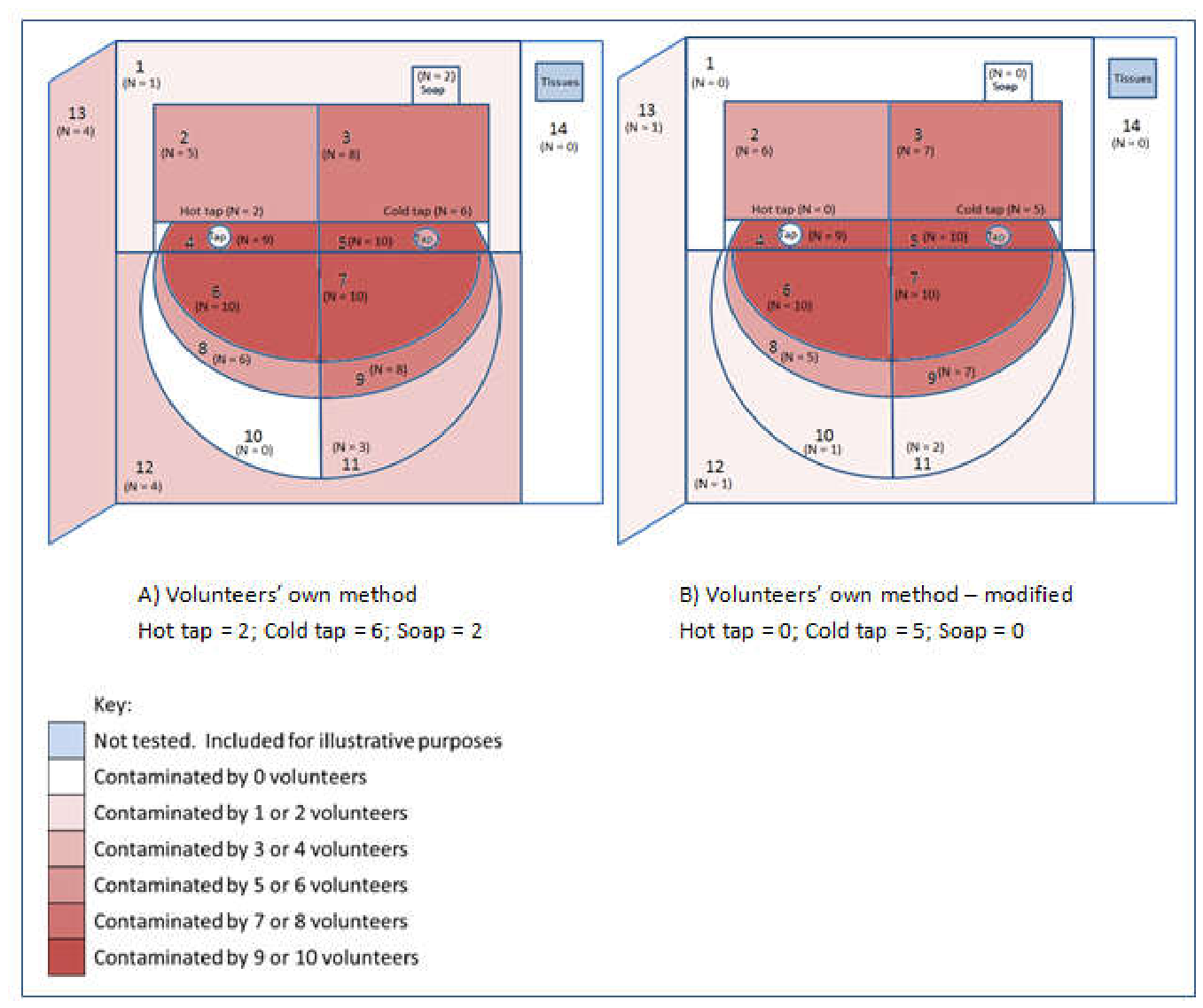

Table 1.
Handwashing procedures and soap-dispenser locations used in the three tests.
| Test | Handwashing Procedure | Soap location (see Figure 1a,b) |
| 1 | Current NHS procedure | On cupboard next to sink |
| Modified NHS procedure | On cupboard next to sink | |
| 2 | Current NHS procedure | Above sink |
| Modified NHS procedure | Above sink | |
| 3 | Volunteers’ own procedures | Above sink |
| Modified volunteers’ own procedures (i.e., They washed their hands as normally but instead of collecting the soap with wet hands used one dry hand and wet the other per the modified NHS procedure) | Above sink |
Disclaimer/Publisher’s Note: The statements, opinions and data contained in all publications are solely those of the individual author(s) and contributor(s) and not of MDPI and/or the editor(s). MDPI and/or the editor(s) disclaim responsibility for any injury to people or property resulting from any ideas, methods, instructions or products referred to in the content. |
© 2026 by the authors. Licensee MDPI, Basel, Switzerland. This article is an open access article distributed under the terms and conditions of the Creative Commons Attribution (CC BY) license (http://creativecommons.org/licenses/by/4.0/).
Copyright: This open access article is published under a Creative Commons CC BY 4.0 license, which permit the free download, distribution, and reuse, provided that the author and preprint are cited in any reuse.


