
Submitted:
07 July 2026
Posted:
10 July 2026
You are already at the latest version
Abstract
Background/Objectives: The integration of nutrition into the psychological sciences and mental healthcare has gained increasing attention with the emergence of Nutritional Psychology as an interdisciplinary field. However, little is known about how professionals approach this interface or the barriers they face. This study aimed to explore the extent to which mental health and nutrition professionals engage with each other’s domains. Methods: This cross-sectional study analyzed survey responses from 196 professionals, including psychologists, nutrition professionals, and other health providers. The goal was to examine training, practices, perceived barriers, and interest in collaboration between these professions. Descriptive statistics summarized categorical and quantitative variables. Mann-Whitney U tests with rank-biserial correlation examined ordinal data. Exploratory factor analysis (principal axis factoring, varimax rotation) was applied to barrier ratings, which approximated Likert scaling. Results: A total of 87.8% of mental health professionals reported addressing nutrition in their practice at least occasionally, while nearly all nutrition professionals (98.1%) discussed mental health with clients at least occasionally. Despite this engagement, 31% of nutrition professionals and 58% of mental health professionals reported no formal training in the complementary field, with most of their knowledge acquired informally through self-study or workshops. The most significant barriers included a lack of training, unclear professional boundaries, and a lack of a common language, whereas a lack of evidence was perceived as the least critical. Importantly, 99% of respondents expressed interest in evidence-based interdisciplinary training, and 96% agreed that collaboration would improve patient outcomes. However, only 48% of nutrition professionals and 49% of mental health professionals reported having collaborative experience. Conclusions: These findings highlight both the readiness and unmet needs of professionals at the psychology-nutrition interface and underscore the strong need to develop structured educational pathways and formalized collaborative models.
Keywords:
nutritional psychology
; interdisciplinary collaborations
; nutritionist/dietitians
; psychologists
; perceived barriers
; integrated care
1. Introduction
The relationship between dietary intake and mental health is increasingly recognized as bidirectional and clinically relevant [1,2,3,4]. A growing body of research has highlighted the possible influence of nutrition on psychological processes, brain function, and psychopathological outcomes, including mood, cognition, behavior, and emotional regulation [5,6,7,8,9,10,11,12]. In parallel, the emergence of Nutritional Psychology as an emerging interdisciplinary field aims to systematize these findings, provide a shared theoretical framework, and create novel language, tools, and training to support the integration of nutritional science into clinical mental health practice [13].
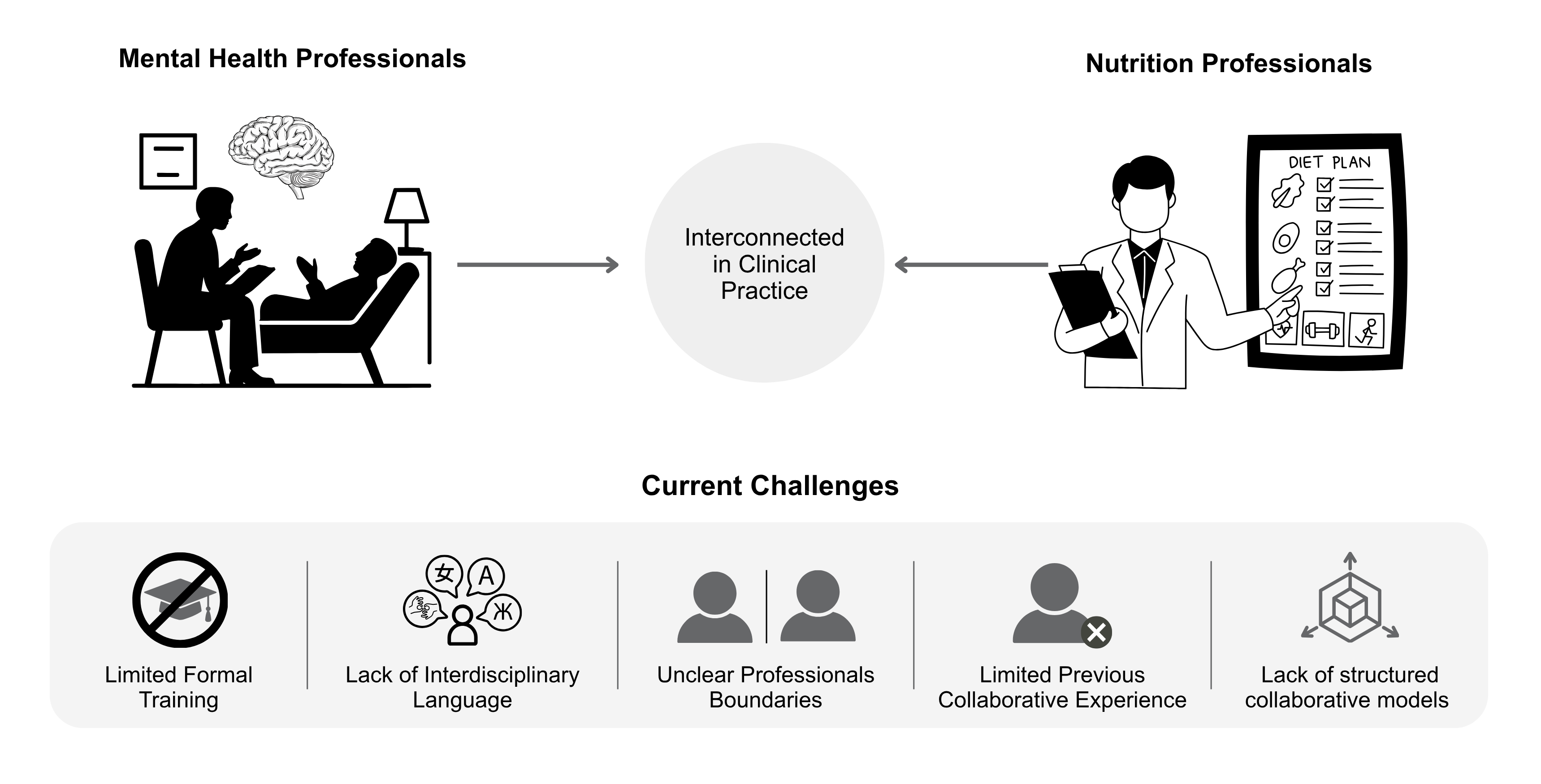
Despite this momentum, mental health and nutrition professionals often lack adequate training to implement such an integrated approach within scope of practice. Surveys show that between 47.5% and 66.3% of psychologists report no formal nutrition education, yet many still address dietary issues in therapy sessions [14,15]. Similarly, dietitians and nutritionists report some exposure to psychological content, often limited to basic undergraduate coursework, and feel underprepared to address mental health concerns within their scope of practice [14,15,16,17]. Nevertheless, interest in additional training remains high across both disciplines; up to 97% of respondents in recent studies expressed a desire to expand their knowledge of nutrition-mental health interconnections [14,15].
Beyond individual diet–brain relationships, cross-cultural and biopsychosocial factors significantly modulate how nutrition interfaces with mental health. Cultural variation in genetic polymorphisms, self-construal, and metabolic profiles has been linked to differences in depression prevalence and antidepressant response [18,19,20]. Moreover, cultural norms and socioeconomic conditions influence the relationship between body mass index (BMI) and depression, with positive correlations found in Western samples but often inverse correlations found in East Asian populations [21,22]. Such findings highlight that the interplay between diet, biology, and mental health cannot be understood apart from its cultural and ecological context.
While promising models of interprofessional collaboration have emerged, such as Interprofessional Enhanced Cognitive Behavioral Therapy (CBT-IE) in the treatment of eating disorders [23], the systematic implementation of Nutritional Psychology within broader mental health practice remains underdeveloped. This gap is especially relevant for psychological domains such as mood, anxiety, emotion regulation, stress responsiveness, eating-related behaviors, and overall psychological well-being, where nutrition-related factors may interact with cognitive, emotional, behavioral, and relational processes [16]. Similar gaps have also been observed in obesity and weight management, where psychological interventions such as Cognitive Behavioral Therapy (CBT), Motivational Interviewing (MI), and Acceptance and Commitment Therapy (ACT) remain inconsistently implemented in community and Tier 2 care services, highlighting the need for systematic integration of essential evidence-based psychological approaches into primary care [24]. In this regard, one of the central missions of the “Center for Nutritional Psychology (CNP)” is to promote collaboration and communication between the fields of nutrition and psychology by identifying and addressing existing barriers and advancing the integration of nutritional approaches into broader mental healthcare [25]. While mental health practitioners focus primarily on emotional, behavioral, and cognitive processes, nutrition professionals emphasize dietary assessment and metabolic health. Barriers to this integration include a lack of formal interdisciplinary education, limited role clarity, absence of a shared clinical language, and fears of overstepping professional boundaries [16,17,25]. Additional obstacles concern economic and administrative aspects, such as the lack of reimbursement mechanisms or billing codes for interdisciplinary services, limited insurance coverage, and the resulting financial inaccessibility of integrated care models [17,26].
To address these gaps, it is essential to better understand how professionals from both fields currently approach the nutrition–mental health interface, how they perceive collaboration, and what barriers and training needs they identify. The development of evidence-based educational programs and collaborative frameworks requires input from practitioners working at this intersection. Without this information, integration efforts may remain fragmented and lack ecological validity.
The present study aims to:
- -
- Explore how much mental health and nutrition professionals currently engage with each other’s domains in clinical practice;
- -
- Determine the nature and extent of their formal and informal training in nutrition related to mental health;
- -
- Identify perceived barriers and training gaps; and
- -
- Assess interest in interdisciplinary collaboration, education, and training.
Through a structured online survey, we examined: 1) the frequency with which mental health professionals address nutrition and conversely, nutrition professionals address mental health, 2) the characteristics of their formal and informal training, 3) their openness to evidence-based interdisciplinary education, and 4) their actual experiences with interprofessional collaboration. By gathering both quantitative and qualitative data, this study seeks to inform the development of practical frameworks and training programs to support the growing field of Nutritional Psychology and its implementation in routine care.
2. Materials and Methods
This study employed a cross-sectional, exploratory design based on an online survey conducted by CNP in 2026. The survey was designed to explore current practices, training, perceived barriers, and attitudes toward interprofessional collaboration between mental health and nutrition professionals. Item generation was informed by a review of existing surveys exploring nutrition–mental health integration [14,15,16,17,21].
The survey comprised five sections addressing key domains of professional engagement at the interface between nutrition and mental health. It collected information on respondents’ professional background, cross-disciplinary practice (frequency of addressing nutrition or mental health), training (type and extent of formal and informal education in the complementary field), perceived barriers to integration, and collaborative experience and interest. The questionnaire was developed collaboratively by a multidisciplinary team including psychologists, mental health professionals, and dietitian/nutrition professionals affiliated with CNP [25]. It included items assessing professional background, frequency of addressing nutrition (among mental health professionals) or mental health (among nutrition professionals) in clinical practice, formal and informal training in nutrition related to mental health, perceived barriers to integration, interest in interdisciplinary training, and perceptions regarding the clinical utility of collaboration.
Participants’ responses on formal and informal education were used to estimate the quantity of nutrition-related training in mental health they had received. For formal training, points were assigned as follows: 1 point for one undergraduate course, 2 points for a professional certificate, 3 points for more than one undergraduate course, and 4 points for graduate coursework. The quantity of informal training was estimated by simply counting the number of different sources/methods of informal knowledge participants listed (self-taught, workshops and similar activities, and professional activities or mentoring).
Respondents were also asked to rate six common barriers to integration (lack of training, unclear professional boundaries, limited access to resources, time constraints, lack of a common language, and perceived lack of evidence) on a scale of 1 (No barrier) to 5 (A very large barrier). The survey combined both closed- and open-ended questions and was tailored to the respondent’s professional category (e.g., mental health or nutrition professional) (see Figure 1).
A non-probabilistic convenience sampling approach was used. The survey was disseminated between February and May 2026 via professional mailing lists, social media channels, institutional networks, and direct outreach to clinicians affiliated with CNP and collaborating institutions. Eligibility criteria included being a licensed or in-training psychologist or other mental health professional, nutritionist, or dietitian. Participation was voluntary and anonymous, though respondents could optionally provide their email address to receive follow-up communications. Demographic and professional information collected included the professional category (e.g., psychologist, dietitian, counselor, educator). However, no additional variables such as years of professional experience, licensure status, geographic location, type of patient population served, or primary practice setting (e.g., private vs. public sector) were collected in the original survey. As such, analyses could not account for potential subgroup differences, and the generalizability of the findings should be interpreted with caution.
Frequencies and percentages were calculated for categorical variables, and means, medians, and standard deviations were calculated for quantitative variables. The Mann-Whitney U test was used for comparing mean ranks of variables that could be considered ordinal, while the rank-biserial correlation coefficient (rᵣbis) was used as a measure of effect size. Exploratory factor analysis using the principal axis factoring method and varimax orthogonal rotation was used to explore the nature of associations between barrier rankings.
Analyses were performed using Microsoft Excel, JASP, and IBM SPSS Statistics, Version 25.0 (IBM Corp., Armonk, NY, USA).
3. Results
A total of 196 professionals completed the survey (Figure 2). Of these, 46.9% (n = 92) were mental health professionals, 33.2% (n = 65) were nutrition professionals, and 19.9% (n = 39) belonged to other professions. The mental health professionals category included psychologists and counselors across various specializations. The nutrition specialists were most often dietitians/nutritionists. The “Other” professionals group consisted mainly of educators and students, but also included 3 chefs, a social worker, a wellness coach, a physical therapist, and individuals with several other professions.
3.1. How Often Do Psychologists Address Nutrition, and Dietitians Address Mental Health?
Among participants who identified as psychologists or other mental health professionals (n = 92), 22.8% (n = 21) reported discussing nutrition very frequently in their clinical practice, and 35.9% (n = 33) reported doing so frequently. An additional 19.6% (n = 18) reported addressing nutrition occasionally, while 10.9% (n = 10) did so rarely. Zero participants reported never discussing nutrition in their sessions, but 10 mental health professionals did not answer this question. These findings indicate that the vast majority of mental health professionals surveyed do address nutrition to some extent in clinical settings. Results are illustrated in Figure 3.
Conversely, among respondents identifying as dietitians or nutritionists (n = 65), the majority reported routinely addressing mental health in their clinical work. Specifically, 26 participants (40%) stated they do so very frequently, while 21 (32.3%) indicated they do so frequently. Only a small number of participants reported addressing mental health occasionally (4; 6.2%) or rarely (1; 1.5%). 13 nutrition professionals (20.0%) did not answer this question. These data suggest that among nutrition professionals who do discuss mental health, most do so frequently or very frequently (72.3%). Results are presented in Figure 4.
If the reported frequencies are treated as ordinal values and central tendencies of how often mental health professionals address nutrition compared with how often nutrition specialists address mental health issues, results showed that nutrition specialists report addressing mental health issues (M=3.450, SD=0.790) a bit more often than mental health professionals report addressing nutrition (M=3.178, SD=1.004). However, the result of the Mann-Whitney U test comparing mean ranks of these two groups is not statistically significant, and the effect size indicates a small difference (U=2.611, p=.107, rᵣbis=0.138).
3.2. Formal and Informal Training and Interest in Nutrition Related to Mental Health
Despite growing interest, structured educational pathways in nutritional psychology remain limited. Among respondents who were psychologists or mental health professionals (n = 92), 51% (n = 47) reported having received no formal training. Among those who have received training, the most frequently reported forms were professional certificates or training programs (25%; n = 23), followed by graduate-level coursework (8%; n = 7). A smaller proportion reported having completed more than one undergraduate course (5%; n = 5) or a single undergraduate course (4%; n = 4). Several participants reported completing more than one form of formal education. Overall, while some mental health professionals reported exposure to formal educational pathways, these findings underscore the persistence of a significant gap in structured nutrition training among those working in mental health fields.
Of the 65 nutrition professionals, 16 (25%) reported having no formal education in mental health. Professional certificates or training programs were the most common form of education in mental health in this group (34%, n=22), followed by more than one course (23%, n=15), one undergraduate course (12%, n=8), and graduate coursework (11%, n=7). Participants often reported having more than one form of formal education in mental health related to nutrition.
Comparing mental health professionals and participants whose primary area of work is in the field of nutrition on the quantity of education in nutrition related to mental health versus mental health related to nutrition results show that nutrition professionals tend to report more formal education in nutrition than mental health professionals report having education in nutrition. The difference is low-moderate in size (see Table 1).
Comparing the two groups on the frequency of specific types of formal education, results again indicated that nutrition professionals had more courses in mental health than mental health professionals had in nutrition. The difference between the two groups is not statistically significant in the number of people with professional certificates in the other area and graduate coursework in it.
When asked, “If you had formal training and resources, would you incorporate nutritional psychology into your practice?”, of those respondents (n = 196), the vast majority (92.3%; n = 181) answered that they would or that they already do, while 6.1% (n = 12) responded with “Maybe”. 1 participant gave a clear “No”, while 2 stated that they are retired. These findings point to a strong professional interest and a pressing need for formal training pathways.
Regarding informal training in nutrition related to mental health or mental health related to nutrition, all nutrition professionals indicated that they had at least some informal training. 92.7% (n=76) of psychologists and mental health professionals reported having some form of informal training in nutrition related to mental health. Specifically, 74.4% (n = 61) of mental health professionals and 90.4% (n = 47) of nutrition professionals indicated being self-taught through resources such as books, research, or webinars, either alone or in combination with other forms of informal training. 63.4% (n = 52) of mental health professionals and 84.6% of nutrition professionals (n = 44) reported participation in non-degree workshops, online courses, or webinars. Informal mentoring or on-the-job professional experience was reported by 35.4% (n = 29) of mental health professionals and 51.9% (n = 27) of nutrition professionals. These findings suggest that, in the absence of structured academic pathways, many professionals turn to informal, self-guided, or experiential routes to acquire nutrition-related knowledge.
Comparing mental health and nutrition professionals on the types and quantity of informal training related to mental health, the results again indicate that nutrition professionals report more informal training in mental health than mental health professionals report having in nutrition. Cramer’s V values are low,, but two of the three cross the .05 statistical significance threshold,, and the third is very close (see Table 1). Comparing the overall number of informal training types reported (informal training quantity), the results of the U test show a statistically significant difference of low-to-moderate magnitude in favor of nutrition professionals (see Table 1).
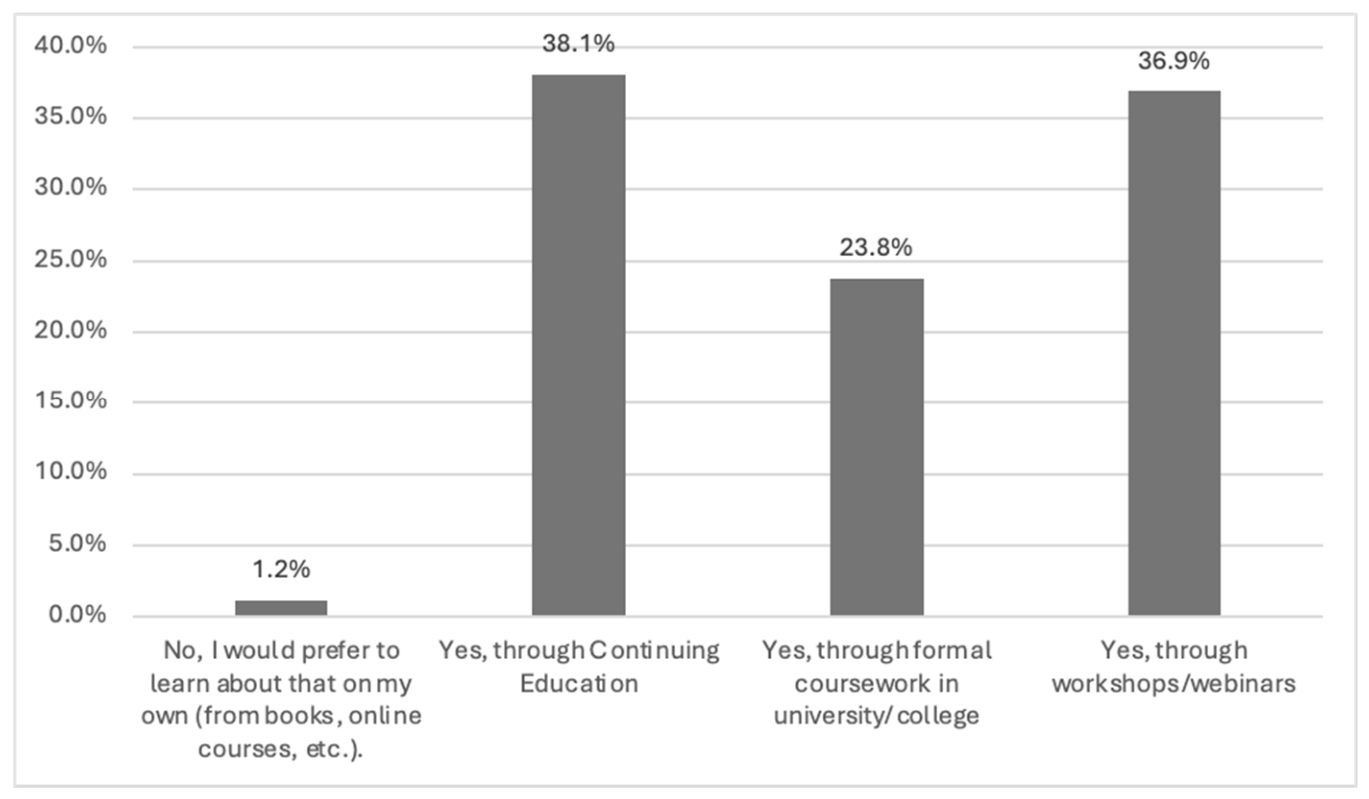
Figure 5.
Interest in Interdisciplinary Training: Psychology & Nutrition (n=84).
3.3. Perceived Barriers to Integrating Nutrition into Mental Healthcare
Respondents were asked to rate six predefined potential barriers to the integration of nutrition into mental healthcare on a scale from 1 (No barrier) to 5 (A very large barrier).
The most frequently cited barrier was the “Lack of training”, which received the highest average importance rating (M = 3.73, SD = 1.10). The “Unclear professional boundaries” also emerged as a major obstacle (M = 3.16, SD = 1.16). Similarly, the “Lack of a common language” (M = 3.10, SD = 1.15) was considered highly relevant by respondents.
The “Limited access to resources” was perceived as somewhat less important (M = 2.91, SD = 1.25), followed by “Time constraints in sessions” (M = 2.85, SD = 1.29).
In contrast, the “Lack of evidence” was perceived as the least critical barrier (M = 2.03, SD = 1.12).
To examine the associations among participants’ rankings of specific barriers, an exploratory factor analysis was conducted, treating the assigned ranks as ratings.

Table 2.
Loadings and eigenvalues of factors extracted from participants’ responses about barriers for integrating nutrition into mental health, treated as ratings, varimax rotation was applied, and principal axis factoring.
Table 2.
Loadings and eigenvalues of factors extracted from participants’ responses about barriers for integrating nutrition into mental health, treated as ratings, varimax rotation was applied, and principal axis factoring.
| Barrier item | Professional barriers (factor 1) | Resource barriers (factor 2) | Uniqueness |
|---|---|---|---|
| Percentage of variance explained by the factors | 27.60% | 20.10% | |
| Lack of evidence | 0.258 | 0.832 | |
| Lack of training | 0.789 | 0.386 | |
| Lack of common language | 0.762 | 0.376 | |
| Unclear professional boundaries | 0.630 | 0.655 | |
| Time constraint in sessions | 0.461 | 0.700 | |
| Limited access to nutrition resources | 1.021 | 0.151 |
Inspection of factor loadings indicates that participants seem to group ratings into two latent dimensions: 1) professional barriers, represented primarily by unclear professional boundaries, lack of common language and training, and 2) resource barriers, primarily represented by limited access to nutrition resources.
| Barrier | Mental health professionals, M (SD) | Nutrition professionals, M (SD) | Mann-Whitney z | p | rᵣbis |
| Lack of evidence | 2.000 (1.079) | 2.015 (1.152) | -0.075 | 0.941 | -0.007 |
| Lack of training | 3.728 (1.017) | 3.769 (1.129) | -0.451 | 0.653 | 0.040 |
| Lack of common language | 3.087 (1.164) | 3.046 (1.138) | -0.378 | 0.707 | -0.034 |
| Unclear professional boundaries | 3.13 (1.206) | 3.308 (1.089) | -0.825 | 0.410 | 0.075 |
| Time constraint in sessions | 2.641 (1.297) | 2.892 (1.312) | -1.233 | 0.218 | 0.113 |
| Limited access to nutrition resources | 2.859 (1.163) | 2.908 (1.366) | -0.091 | 0.929 | 0.008 |
| Factor score - Resource barriers | -0.068 (0.954) | -0.006 (1.105) | -0.308 | 0.759 | 0.029 |
When comparing mental health and nutrition professionals’ ratings of specific barriers, the results showed no statistically significant differences (see Table 3).
These results collectively highlight that structural and educational gaps, rather than epistemological doubts, are the most prominent perceived obstacles to integrating nutrition into clinical mental healthcare.
3.4. Ethical and Professional Concerns Related to Integration
The most highly rated concerns were “Ethical or liability concerns” (M = 2.68, SD = 1.29) and “Risk of working outside my professional scope” (M = 2.64, SD = 1.33), reflecting a broad awareness of ethical, legal, and professional boundaries when incorporating nutritional components into psychological care. Somewhat lower ratings were assigned to “Lack of confidence in nutrition knowledge” (M = 2.31, SD = 1.25), suggesting that many professionals feel underprepared to discuss or apply nutritional concepts in clinical settings, and to “Fear of confusing and overwhelming clients” (M = 2.31, SD = 1.15). “Billing concerns” were perceived as the least important concern (M = 2.25, SD = 1.32).
3.5. Education in Nutrition Within Mental Health, Barriers, and Discussing Nutrition/Mental Health with Patients
When exploring correlations between the quantity of formal and informal education about nutrition in mental health with perceptions of barriers and frequency of discussing mental health (by nutrition professionals) or nutrition (by mental health professionals), results generally indicated that nutrition professionals with more training, either informal or formal (see Table 4), about nutrition in mental health reported discussing mental health with their patients. Similarly, mental health professionals with more training of this type tended to report discussing nutrition with their patients more frequently. Among mental health professionals, the quantity of formal education was more strongly associated with the frequency of discussing nutrition in practice than the quantity of informal education. This may suggest that formal education in nutrition for mental health professionals makes them more confident to discuss nutrition in practice than informal education does.
Results indicate that nutrition professionals with more informal education on mental health tend to discuss mental health with their clients more frequently. On the other hand, mental health professionals with more formal training in nutrition tended to discuss nutrition with their clients more frequently. Perceptions of barriers were not associated with the quantity of either formal or informal training in the complementary area.
3.6. Perceptions and Experiences of Interprofessional Collaboration
This section distinguishes between professionals’ perceptions, their attitudes and beliefs about the value of collaboration, and their experiences (i,e., their actual involvement in collaborative activities). When asked whether interprofessional collaboration between mental health and nutrition professionals would improve patient outcomes, the vast majority of respondents expressed a strongly positive view. Specifically, among the participants who answered this question (n = 133), 72.9% (n = 97) strongly agreed, and 23.2% (n = 31) agreed. Only 2.3% (n = 3) were neutral, and just 2 participants (1.6%) expressed disagreement or strong disagreement.
These findings reflect a near-unanimous consensus among respondents on the perceived benefits of integrated care approaches, reinforcing the notion that interdisciplinary collaboration is not only desirable, but also crucial for improving clinical effectiveness.
Despite this clear consensus on the potential benefits of collaboration, actual experience in collaborative practice was more varied. While 10.9% (n = 10) of mental health professionals reported collaborating with a dietitian or nutritionist regularly, 37% (n = 34) reported doing so occasionally, and somewhat less than half of the respondents (41.3%; n = 38) had never collaborated in patient care; nevertheless, 35.9% (n = 33) indicated that they would like to. The 10.9% (n = 10) of mental health professionals did not answer this question.
Similarly, 36.9% of nutrition professionals (n = 24) reported regularly cooperating with a psychologist or other mental health professionals, while 12.3% (n = 8) reported doing so occasionally. 26.2% (n=17) of nutrition professionals reported never having cooperated with a psychologist or other mental health professional, although 23.1% (n = 15) stated that they would like to.
Among those who reported past or ongoing collaboration, qualitative responses revealed a wide range of modalities. The most commonly reported forms included shared care planning, client referrals, joint sessions, and interdisciplinary consultation. Additional examples included co-developing treatment plans, participating in multidisciplinary team meetings, engaging in informal knowledge exchange, and collaborating in educational or community-based programs. These narratives underscore the diversity of existing collaborative practices and suggest substantial openness among professionals to integrated models of care.
These results highlight a strong perceived value of interdisciplinary collaboration and a clear interest in expanding such partnerships, although current opportunities for direct collaborative practice remain limited for many professionals.
4. Discussion
This study examined the current landscape of interdisciplinary integration between mental health and nutrition professions by analyzing self-reported training, clinical practices, perceived barriers, and interest in collaborative care models. The findings suggest substantial professional interest in bridging psychological and nutritional sciences, despite limited access to structured educational pathways and relatively infrequent interprofessional collaboration in practice. These results align with the American Psychological Association’s growing attention to the bidirectional interplay among dietary intake, psychological processes, and mental health, with nutritional psychology emerging as an interdisciplinary field within the psychological sciences at the interface of nutrition and mental health [27].
A central finding concerns the lack of formal training in nutritional psychology across professional groups. The extent of this lack was similar among groups of mental health professionals and nutrition professionals. Over 44% of respondents reported no formal education in the complementary field, and the most common form of training consisted of non-degree certificates or workshops. While only a minority had completed graduate-level coursework or comprehensive academic programs, a large proportion (86%) reported engaging in self-directed learning, such as reading, online webinars, and informal mentoring. This finding indicates a strong intrinsic motivation to acquire relevant knowledge. These findings are consistent with previous studies [14,17] that have identified a persistent gap between professional interest in nutritional psychology training and institutional support. Notably, almost all respondents expressed interest in evidence-based interdisciplinary training, confirming a clear unmet educational demand. Results also show a correlation between the quantity of training in the complementary field and the frequency with which they discuss it in their practice. The more training participants had, the more likely they were to discuss the topics from the complementary field. This association likely reflects greater perceived confidence or comfort in addressing cross-disciplinary topics, rather than objective competence or clinical skill, which were not measured in this study. It is important to note that the relationships established in this study are correlational and cross-sectional, and therefore cannot support causal inferences.
Despite the lack of formal preparation, most psychologists and other mental health professionals (87.8%) who responded reported addressing nutrition at least occasionally in clinical sessions, and nearly all nutrition professionals (98.1%) who responded reported discussing mental health at least occasionally. These findings suggest that professionals on both sides recognize the relevance of integration and are motivated to address it in clinical settings. However, the fact that many engage in cross-disciplinary discussions without formal training also raises ethical and professional considerations regarding boundaries of competence. This underscores the importance of developing structured, accredited training programs to ensure that integration occurs safely and within professional standards, remaining within ethical and professional boundaries (APA Ethical Principle 2.01). This widespread engagement also raises concerns about competence and boundaries, as many professionals operate without standardized training or collaborative frameworks.
Analysis showed that these barriers can be grouped into professional barriers and resource barriers. Nutrition professionals and mental health professionals perceived these barriers as similarly important. Although mean ratings showed minor numerical differences across some barriers, none of the between-group comparisons reached statistical significance; therefore, these trends should not be overinterpreted.
Additional concerns emerged from open-ended responses, including the risk of operating outside one’s professional scope (29%), low confidence in nutrition-related knowledge (22%), legal or ethical concerns (22%), and fear of confusing or overwhelming clients (21%). Billing and insurance issues were also reported (15%), underscoring how financial and regulatory contexts shape clinical feasibility. These concerns reveal both personal uncertainty and structural limitations, pointing to the need for clear, interdisciplinary guidelines that protect professional roles while fostering cooperation.
While nearly all participants (99%) believed that collaboration between mental health and nutrition professionals could improve patient outcomes, fewer than half reported any past collaborative experience, and only 26% reported engaging in regular interprofessional care. This striking discrepancy between perceived value and actual implementation underscores the need for institutional support, defined pathways, and accessible models of collaboration. Nonetheless, among those who had collaborated, qualitative responses indicated a rich diversity of modalities, including shared care planning, referrals, joint sessions, co-treatment, and informal consultations, demonstrating that integrated practice is both feasible and, in some cases, already well-established.
These findings point toward a clear set of priorities for advancing a coherent model of integrated care. As a foundational step, the development of evidence-based interdisciplinary education and training programs, ranging from structured continuing education for licensed professionals to undergraduate and graduate-level courses in university and college programs, is crucial to bridging the current educational gap and ensuring ethical and competent professional practice. Equally important is the clarification of professional boundaries and scopes of practice through the publication of joint guidelines by regulatory bodies and professional associations. Establishing a shared clinical language, promoting interdisciplinary supervision models, and creating institutional infrastructures that support co-treatment and referral pathways would further facilitate collaborative implementation. Policy-level interventions, including reimbursement reform and expanded insurance coverage, are also necessary to remove structural barriers and ensure the financial sustainability of integrated care. Finally, future research should evaluate the impact of these interventions on patient outcomes, team functioning, and healthcare efficiency. In summary, the results of this study serve as a roadmap to guide the development of structured, sustainable, and ethically sound models for integrating psychological and nutritional care.
5. Limitations
This study has several limitations. First, the data were based on self-reports, which introduces the possibility of recall bias and social desirability effects. It is also likely that respondents with a pre-existing interest in the integration of nutrition and mental health may have been more inclined to participate, potentially introducing selection bias and inflating estimates of engagement, enthusiasm, and perceived relevance. Therefore, the results should be interpreted as reflecting a self-selected, motivated subgroup of professionals rather than the broader population of mental health and nutrition practitioners. Moreover, some items had non-negligible non-response rates; therefore, percentages should be interpreted with attention to the item-specific denominator. Second, as a secondary analysis of a pre-existing, non-probabilistic dataset, the study lacked an a priori power calculation and probabilistic sampling design. Third, the sample was not stratified by region, level of experience, licensure status, or practice setting, limiting the generalizability of the findings. Fourth, while open-text responses were rich and thematically informative, they were analyzed using topic modeling and manual categorization, without formal qualitative coding procedures; therefore, they should be interpreted as exploratory. Fifth, the survey instrument was not subjected to formal pilot testing, reliability analysis, or construct validation. Although items were adapted from previous studies and reviewed by a multidisciplinary expert team for face and content validity, the lack of formal psychometric testing limits the interpretability and replicability of some results, particularly the factor-analytic findings. An exploratory factor analysis was conducted on a set of responses that were initially intended as rankings, but participants treated them as Likert-scale items. In doing this, we used the opportunity to study the underlying structure of the perceived barriers, although the survey was not initially designed to allow for this. The survey did not include an operational definition of “nutritional advice,” which may have led respondents to interpret the construct variably, ranging from general lifestyle guidance to more specific clinical recommendations. Although some open-ended comments provided illustrative examples, these qualitative responses were not formally analyzed in the present study. Finally, the cross-sectional design does not allow for causal inferences regarding the impact of training or collaboration on clinical outcomes.
Despite these limitations, the study offers a comprehensive overview of current attitudes, experiences, and perceived needs among professionals working at the intersection of nutrition and mental health. The results highlight not only a substantial readiness for interdisciplinary integration, but also concrete educational, systemic, and regulatory gaps that must be addressed to translate interest into effective clinical practice. Furthermore, future research should include validated knowledge tests, observed practice measures, and patient-level outcomes to substantiate these findings.
6. Conclusions
This study provides an updated overview of how mental health and nutrition professionals perceive, implement, and envision interdisciplinary collaboration. The findings reveal a clear mismatch between strong professional interest in integration and the limited availability of formal training and structured collaborative opportunities. While many practitioners are already engaging in cross-disciplinary conversations and interventions, often driven by self-education or informal partnerships, significant gaps remain in terms of educational infrastructure, institutional support, and role clarity.
There is a near-unanimous consensus on the benefits of developing structured, evidence-informed, and ethically grounded educational frameworks and formalized collaborative models. The goal is not rigid standardization, but the establishment of core competencies and adaptable curricula that can evolve with emerging scientific evidence while ensuring safe and competent interdisciplinary practice. Furthermore, the range of collaborative modalities already in use, despite systemic barriers, suggests a strong foundation on which more formalized, sustainable models of integrated care could be built.
Future efforts should focus on creating accredited interdisciplinary curricula, clarifying professional scopes of practice, and supporting institutional policies that facilitate team-based approaches. By addressing these areas, the field can move from isolated efforts to a coherent and effective model of nutritional-psychological integration in clinical care.
Author Contributions
Conceptualization, R.G., V.H., and E.M.; Methodology, R.G., V.H., and E.M.; Validation, R.G., V.H., and E.M.; Formal Analysis, R.G., V.H., and E.M.; Investigation, R.G., V.H., and E.M.; Resources, R.G., V.H., and E.M.; Data Curation, R.G., V.H., and E.M.; Writing—Original Draft Preparation, R.G., V.H., and E.M.; Writing—Review and Editing, R.G., V.H., and E.M.; Visualization, R.G., V.H., and E.M.; Supervision, R.G., V.H., and E.M.; Project Administration, R.G., V.H., and E.M. All authors have read and agreed to the published version of the manuscript.
Funding
Vladimir Hedrih’s work on the study was supported by the project of the Faculty of Philosophy of the University of Niš, Serbia - Popularization of science and scientific publications in the sphere of psychology and social policy, project number 423/1-3-01.
Institutional Review Board Statement
The study was reviewed by the Institutional Review Board of IFEDD, The International Federation of Eating Disorder Dietitians, and was determined to qualify for exemption from full IRB review in accordance with 45 CFR 46. The IRB tracking number is E-2025-0007, and the IFEDD IRB HHS Registration Number is IRB00013903.
Informed Consent Statement
Informed consent was obtained from all subjects involved in the study.
Data Availability Statement
Data supporting the findings of this study are available upon reasonable request from the authors. Due to privacy restrictions, raw survey responses cannot be publicly shared.
Acknowledgments
None.
Conflicts of Interest
The Center for Nutritional Psychology, which originally designed and disseminated the professional survey analyzed in this study, provides training in the field of nutritional psychology. The present study was conducted autonomously for academic and research purposes, without any financial compensation, contractual obligation, or editorial influence from CNP. No author received direct or indirect funding from CNP or any related organization for this publication.
Abbreviations
The following abbreviations are used in this manuscript:
| ACT | Acceptance and Commitment Therapy |
| APA | American Psychological Association |
| BMI | Body Mass Index |
| CBT | Cognitive Behavioral Therapy |
| CBT-IE | Interprofessional Enhanced Cognitive Behavioral Therapy |
| CFR | Code of Federal Regulations |
| CNP | Center for Nutritional Psychology |
| HHS | Health and Human Services |
| IBM | International Business Machines |
| IFEDD | International Federation of Eating Disorder Dietitians |
| IRB | Institutional Review Board |
| JASP | Jeffreys’s Amazing Statistics Program |
| MI | Motivational Interviewing |
| SPSS | Statistical Package for the Social Sciences |
References
- Banta, J.E.; Segovia-Siapco, G.; Crocker, C.B.; Montoya, D.; Alhusseini, N. Mental Health Status and Dietary Intake among California Adults: A Population-Based Survey. Int. J. Food Sci. Nutr. 2019, 70, 759–770. [Google Scholar] [CrossRef] [PubMed]
- Głąbska, D.; Guzek, D.; Groele, B.; Gutkowska, K. Fruit and Vegetable Intake and Mental Health in Adults: A Systematic Review. Nutrients 2020, 12, 115. [Google Scholar] [CrossRef] [PubMed]
- O’Neil, A.; Quirk, S.E.; Housden, S.; Brennan, S.L.; Williams, L.J.; Pasco, J.A.; Berk, M.; Jacka, F.N. Relationship between Diet and Mental Health in Children and Adolescents: A Systematic Review. Am. J. Public Health 2014, 104, e31-42. [Google Scholar] [CrossRef] [PubMed]
- Teasdale, S.B.; Ward, P.B.; Samaras, K.; Firth, J.; Stubbs, B.; Tripodi, E.; Burrows, T.L. Dietary Intake of People with Severe Mental Illness: Systematic Review and Meta-Analysis. Br. J. Psychiatry 2019, 214, 251–259. [Google Scholar] [CrossRef] [PubMed]
- Firth, J.; Marx, W.; Dash, S.; Carney, R.; Teasdale, S.B.; Solmi, M.; Stubbs, B.; Schuch, F.B.; Carvalho, A.F.; Jacka, F.; et al. The Effects of Dietary Improvement on Symptoms of Depression and Anxiety: A Meta-Analysis of Randomized Controlled Trials. Psychosom. Med. 2019, 81, 265–280. [Google Scholar] [CrossRef] [PubMed]
- Horovitz, O. Nutritional Psychology: Review the Interplay Between Nutrition and Mental Health. Nutr. Rev. 2025, 83, 562–576. [Google Scholar] [CrossRef] [PubMed]
- Jacka, F.N. Nutritional Psychiatry: Where to Next? EBioMedicine 2017, 17, 24–29. [Google Scholar] [CrossRef] [PubMed]
- Kris-Etherton, P.M.; Petersen, K.S.; Hibbeln, J.R.; Hurley, D.; Kolick, V.; Peoples, S.; Rodriguez, N.; Woodward-Lopez, G. Nutrition and Behavioral Health Disorders: Depression and Anxiety. Nutr. Rev. 2021, 79, 247–260. [Google Scholar] [CrossRef] [PubMed]
- Lieberman, H.R. Nutrition, Brain Function and Cognitive Performance. Appetite 2003, 40, 245–254. [Google Scholar] [CrossRef] [PubMed]
- Martins, L.B.; Braga Tibães, J.R.; Sanches, M.; Jacka, F.; Berk, M.; Teixeira, A.L. Nutrition-Based Interventions for Mood Disorders. Expert Rev. Neurother. 2021, 21, 303–315. [Google Scholar] [CrossRef] [PubMed]
- Melzer, T.M.; Manosso, L.M.; Yau, S.-Y.; Gil-Mohapel, J.; Brocardo, P.S. In Pursuit of Healthy Aging: Effects of Nutrition on Brain Function. Int. J. Mol. Sci. 2021, 22, 5026. [Google Scholar] [CrossRef] [PubMed]
- Sochacka, K.; Kotowska, A.; Lachowicz-Wiśniewska, S. The Role of Gut Microbiota, Nutrition, and Physical Activity in Depression and Obesity-Interdependent Mechanisms/Co-Occurrence. Nutrients 2024, 16, 1039. [Google Scholar] [CrossRef] [PubMed]
- Stroebele-Benschop, N.; Hedrih, V.; Behairy, S.; Pervaiz, N.; Morphew-Lu, E. Conceptual Framework for Nutritional Psychology as a New Field of Research. Behav. Sci. 2025, 15, 1007. [Google Scholar] [CrossRef] [PubMed]
- Litta, A.; Nannavecchia, A.M.; Ferrandina, M.; Favia, V.; Minò, M.V.; Vacca, A. Nutrition in Mental Health: Insight from a Survey among Psychiatrists and Psychologists. Psychiatr. Danub. 2024, 36 Suppl. 2, 236–240. [Google Scholar] [CrossRef]
- Mörkl, S.; Stell, L.; Buhai, D.V.; Schweinzer, M.; Wagner-Skacel, J.; Vajda, C.; Lackner, S.; Bengesser, S.A.; Lahousen, T.; Painold, A.; et al. “An Apple a Day”?: Psychiatrists, Psychologists and Psychotherapists Report Poor Literacy for Nutritional Medicine: International Survey Spanning 52 Countries. Nutrients 2021, 13, 822. [Google Scholar] [CrossRef] [PubMed]
- Stromsnes, W. Nutrition Counseling Practices Among Psychologists. Theses and Dissertations, University of the Pacific, 2024; p. 123. [Google Scholar]
- Stenz, C.F.H.; Jansen, K.L. Nutrition and Depression: Collaboration between Psychologists and Dietitians in Depression Treatment. Transl. Issues Psychol. Sci. 2023, 9, 137–148. [Google Scholar] [CrossRef]
- Chiao, J.Y.; Blizinsky, K.D. Culture–Gene Coevolution of Individualism–Collectivism and the Serotonin Transporter Gene. Proc. R. Soc. B Biol. Sci. 2010, 277, 529–537. [Google Scholar] [CrossRef] [PubMed]
- Takahashi, N.; Yamada, A.; Shiraishi, A.; Shimizu, H.; Goto, R.; Tominaga, Y. Efficacy and Safety of Fixed Doses of Intranasal Esketamine as an Add-on Therapy to Oral Antidepressants in Japanese Patients with Treatment-Resistant Depression: A Phase 2b Randomized Clinical Study. BMC Psychiatry 2021, 21, 526. [Google Scholar] [CrossRef] [PubMed]
- Marazziti, D.; Mucci, F.; Avella, M.T.; Palagini, L.; Simoncini, M.; Dell’Osso, L. The Increasing Challenge of the Possible Impact of Ethnicity on Psychopharmacology. CNS Spectr. 2021, 26, 222–231. [Google Scholar] [CrossRef] [PubMed]
- Giannakopoulou, O.; Lin, K.; Meng, X.; Su, M.H.; Kuo, P.H.; Peterson, R.E.; Awasthi, S.; Moscati, A.; Coleman, J.R.I.; Bass, N.; et al. The Genetic Architecture of Depression in Individuals of East Asian Ancestry: A Genome-Wide Association Study. JAMA Psychiatry 2021, 78, 1258–1269. [Google Scholar] [CrossRef] [PubMed]
- O’Loughlin, J.; Casanova, F.; Hughes, A.; Fairhurst-Hunter, Z.; Li, L.; Chen, Z.; China Kadoorie Biobank Collaborative Group; Bowden, J.; Watkins, E.; Freathy, R.M.; et al. BMI and Well-Being in People of East Asian and European Ancestry: A Mendelian Randomisation Study. Transl. Psychiatry 2023, 13, 251. [Google Scholar] [CrossRef] [PubMed]
- Bray, M.; Heruc, G.; Byrne, S.; Wright, O.R.L. Collaborative Dietetic and Psychological Care in Interprofessional Enhanced Cognitive Behaviour Therapy for Adults with Anorexia Nervosa: A Novel Treatment Approach. J. Eat. Disord. 2023, 11, 31. [Google Scholar] [CrossRef] [PubMed]
- Basri, H.; Al-Waadh, M.; Mohammed, Z. From Margins to Mainstream: Making Psychological Interventions for the Treatment of Obesity and Weight Management Core to NHS Primary Care. Cureus 2025. [Google Scholar] [CrossRef] [PubMed]
- The Center for Nutritional Psychology. Available online: https://www.nutritional-psychology.org/ (accessed on 21 August 2025).
- Rich, K.; Murray, K.; Smith, H.; Jelbart, N. Interprofessional Practice in Health: A Qualitative Study in Psychologists, Exercise Physiologists, and Dietitians. J. Interprofessional Care 2021, 35, 682–690. [Google Scholar] [CrossRef] [PubMed]
- Abrams, Z. We Are What We Eat: Researchers Are Furthering Our Understanding of Nutrition to Optimize Mental Health. Monit. Psychol. 2026, 57, 2. [Google Scholar]
Figure 1.
Six common perceived barriers to integration.
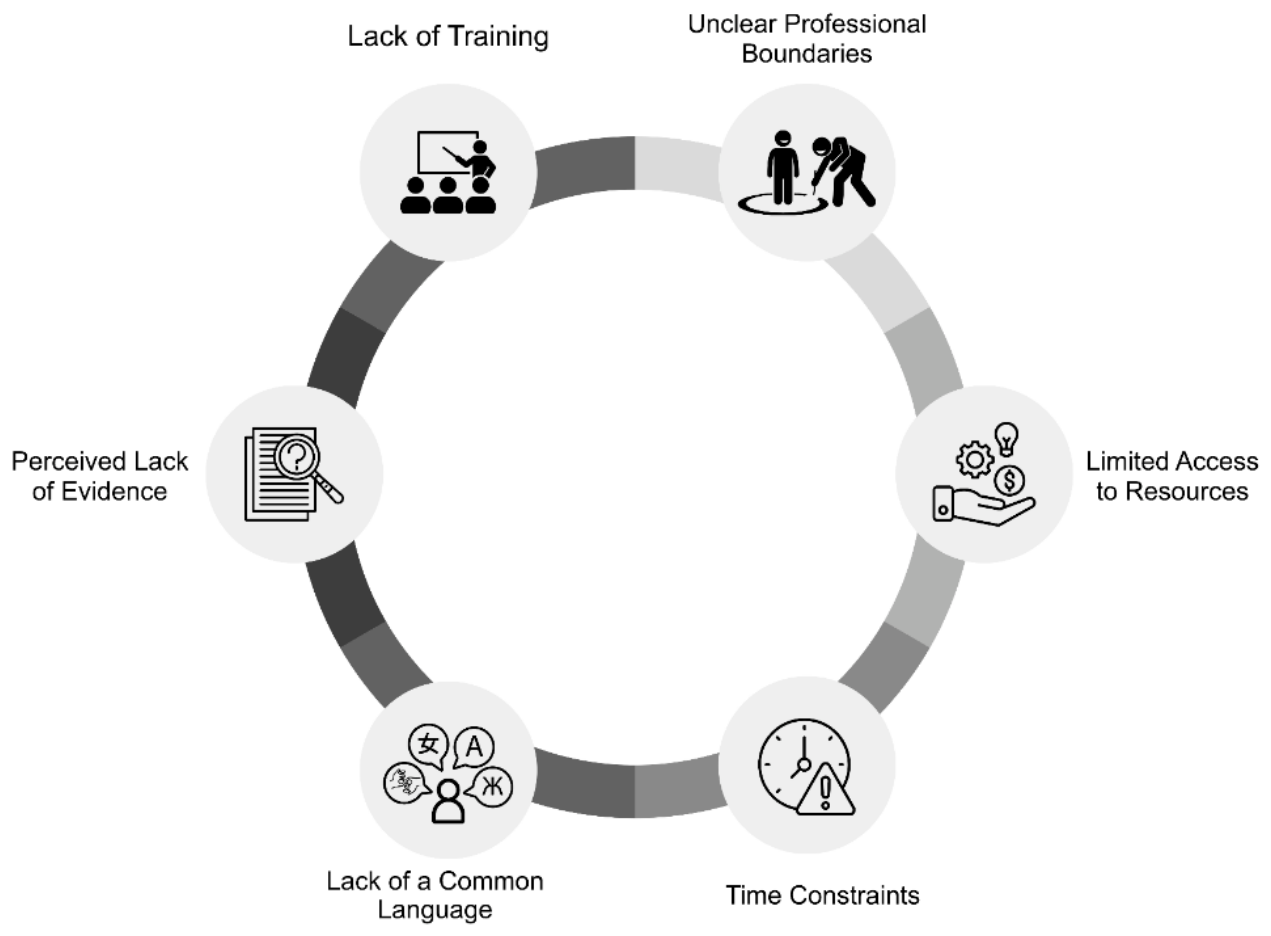
Figure 2.
Professional Roles of Participants (n = 196).
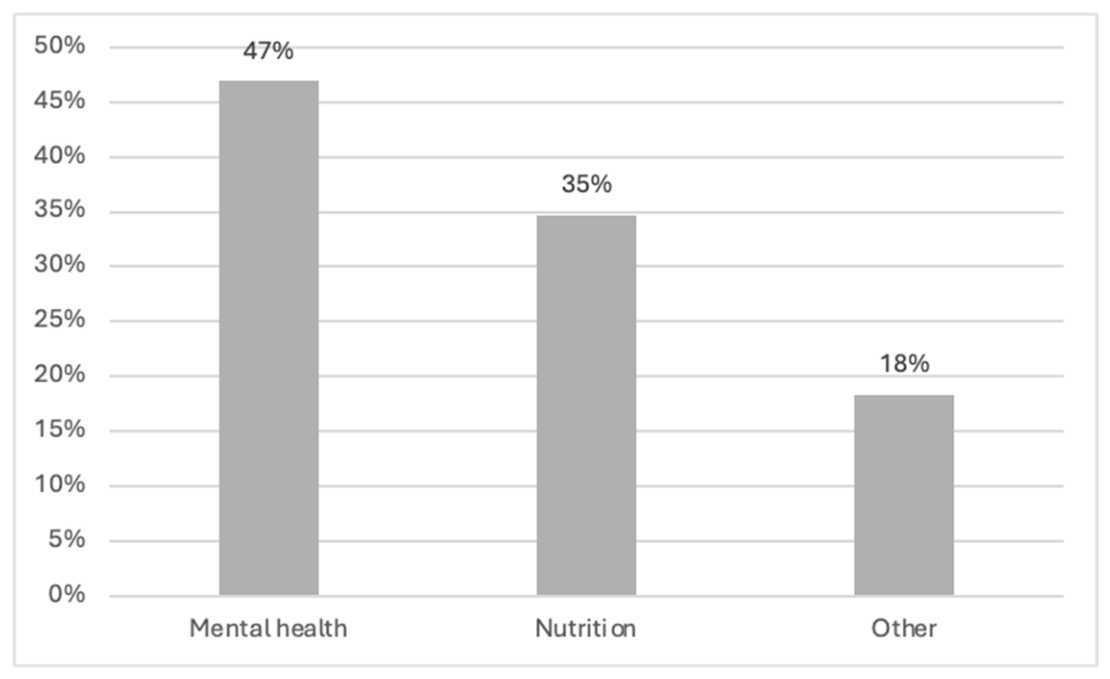
Figure 3.
Frequency of Nutrition Discussions in Mental Healthcare (n=92).
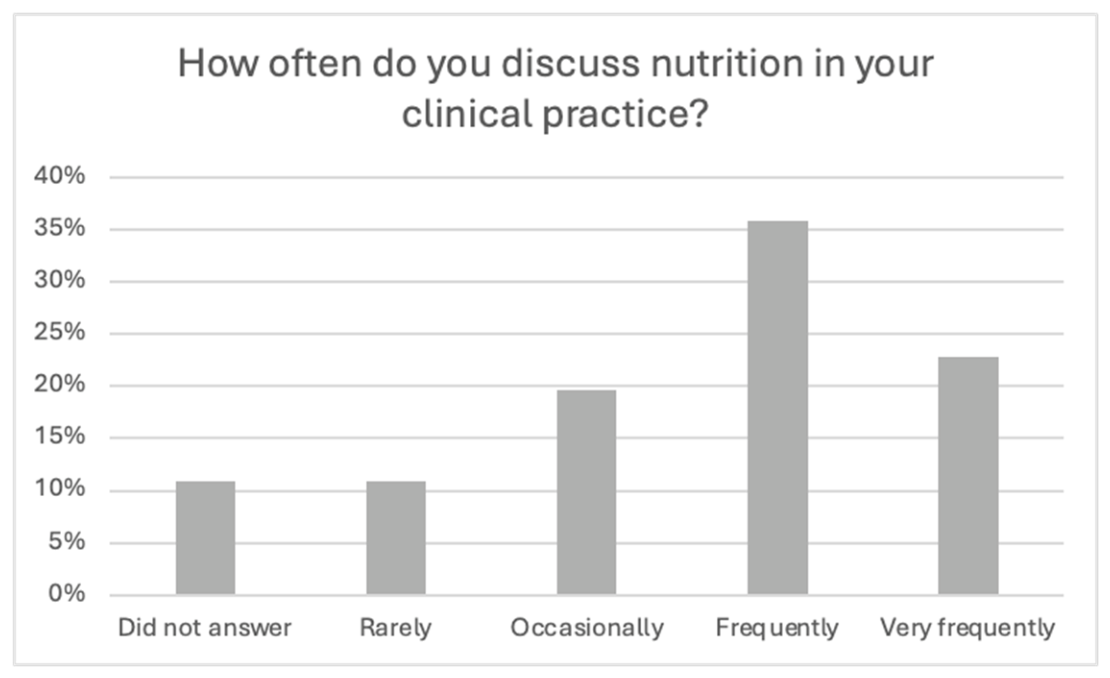
Figure 4.
Mental Health Discussions in Clinical Practice: Dietitians & Nutritionists (n=65).
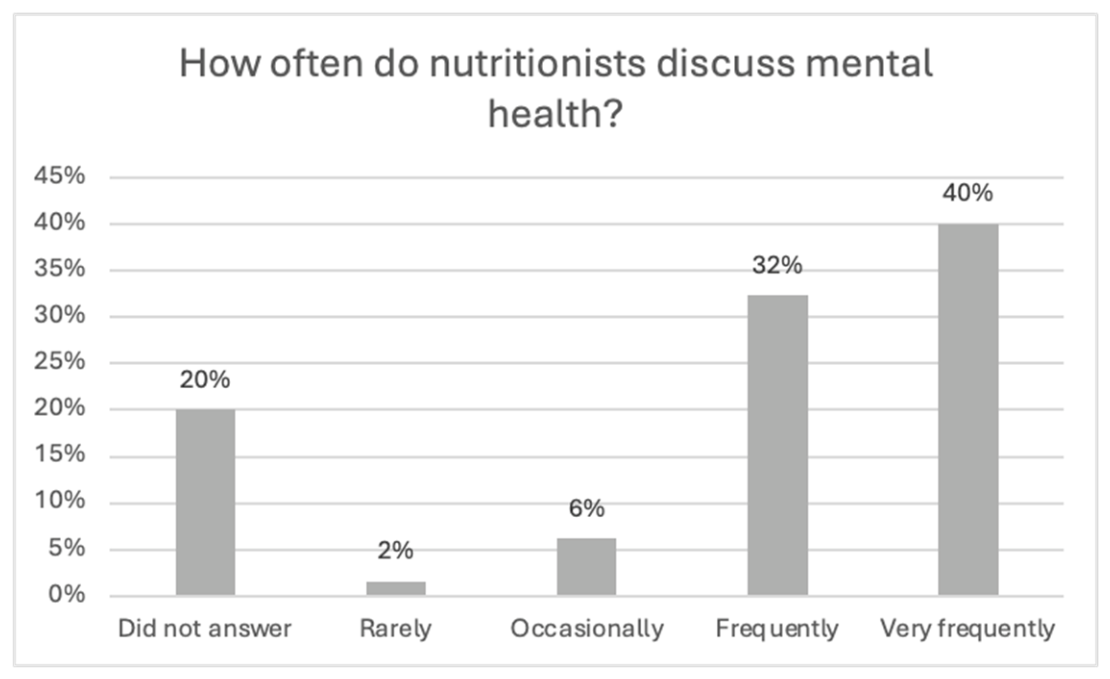
Table 1.
This is a table. Tables should be placed in the main text near to the first time they are cited.
Table 1.
This is a table. Tables should be placed in the main text near to the first time they are cited.
| Education/training variable | Mental health professionals | Nutrition professionals | Cramer’s V / z | p | rᵣbis |
|---|---|---|---|---|---|
| Formal training | |||||
| One undergraduate course (e.g., a 101 course) | 4.9% | 15.4% | 0.178 | 0.040 | |
| Professional certificate/training program | 28.4% | 42.3% | 0.143 | 0.098 | |
| More than one undergraduate course | 6.2% | 28.8% | 0.310 | p<0.001 | |
| Graduate coursework | 8.6% | 13.5% | 0.077 | 0.377 | |
| Informal training | |||||
| Self-taught | 74.4% | 90.4% | 0.197 | 0.023 | |
| Participation in workshops, online courses, or webinars (non-degree) | 63.4% | 84.6% | 0.229 | 0.008 | |
| Informal mentoring or professional experience | 35.4% | 51.9% | 0.164 | 0.058 | |
| Quantity of formal training score, M (SD) | 1.148 (1.726) | 2.404 (2.411) | -3.559 | p<.001 | 0.344 |
| Quantity of informal training score, M (SD) | 1.732 (0.917) | 2.269 (0.770) | -3.306 | p<.001 | 0.323 |
Note. Scores of formal and informal training quantities are not comparable.
Table 4.
Spearman’s correlation between the quantity of formal and informal education in nutrition and mental health, the frequency of discussing mental health or nutrition with clients, and perceptions of barriers.
Table 4.
Spearman’s correlation between the quantity of formal and informal education in nutrition and mental health, the frequency of discussing mental health or nutrition with clients, and perceptions of barriers.
| Spearman’s rank correlations | Quantity of informal education | Quantity of formal education |
|---|---|---|
| Nutrition professionals’ frequency of discussing mental health in practice (nutrition professionals only) | .314* | .027 |
| Mental health professionals’ frequency of discussing nutrition in practice (mental health professionals only) | .206 | .479* |
| Lack of evidence (full sample) | -.016 | -.002 |
| Lack of training (full sample) | -.015 | .008 |
| Lack of common language (full sample) | -.119 | -.088 |
| Unclear professional boundaries (full sample) | .011 | .058 |
| Time constraint in sessions (full sample) | -.058 | -.052 |
| Limited access to nutrition resources (full sample) | -.027 | -.108 |
| Factor score - Professional barriers (full sample) | -.059 | .020 |
| Factor score - Resource barriers (full sample) | -.017 | -.113 |
Disclaimer/Publisher’s Note: The statements, opinions and data contained in all publications are solely those of the individual author(s) and contributor(s) and not of MDPI and/or the editor(s). MDPI and/or the editor(s) disclaim responsibility for any injury to people or property resulting from any ideas, methods, instructions or products referred to in the content. |
© 2026 by the authors. Licensee MDPI, Basel, Switzerland. This article is an open access article distributed under the terms and conditions of the Creative Commons Attribution (CC BY) license (http://creativecommons.org/licenses/by/4.0/).
Copyright: This open access article is published under a Creative Commons CC BY 4.0 license, which permit the free download, distribution, and reuse, provided that the author and preprint are cited in any reuse.


