
Submitted:
08 July 2026
Posted:
09 July 2026
You are already at the latest version
Abstract
Wood biodeterioration by wood-decaying fungi, termites and wood-boring insects remains a major limitation for the long-term use of wood and wood-based materials in construction and furniture applications. Although synthetic preservatives such as boron-based treatments are widely used, increasing concerns regarding human health, environmental impact and regulatory restrictions have driven the search for safer and more sustainable alternatives. In this study, a polyphenol-rich plant extract obtained from Arnica montana were evaluated as a fully plant-based wood-preservative formulation against a broad spectrum of xylophagous organisms, including wood-decaying basidiomycetes, subterranean termites and the house longhorn beetle Hylotrupes bajulus. Treated Scots pine sapwood and cellulose-based specimens were assessed using laboratory assays based on standardized procedures, including fungal growth monitoring, termite choice and no-choice tests, larval mortality evaluation and measurements of biological degradation. The formulations showed strong protective performance, including reduced fungal development, total protection of treated wood specimens against several termite species under the tested conditions, and high larval mortality against H. bajulus. The results further suggest that the efficacy of these formulations is associated with the penetration and retention of polyphenolic compounds within the lignocellulosic matrix. Based on the known biochemical properties of plant polyphenols, including protein complexation, enzyme inhibition, antioxidant activity and metal-chelating capacity, possible mechanisms involved in the inhibition of fungal and insect-mediated wood degradation are discussed. Overall, this work supports the potential of polyphenol-rich Arnica montana extract as sustainable, bio-based alternative for durable wood protection.
Keywords:
wood protection
; Arnica montana
; polyphenols
; bio-based preservatives
; termites
; xylophagous insects
; wood-decaying fungi
; sustainable materials
Introduction
For the longest time, due to its remarkable mechanical characteristics, wood has been a basic material for building construction in indoor and outdoor environments, and furniture industry. Durability and aesthetical appearance of woody materials are subjected to environmental degradation processes by wood decaying fungi, wood-feeding insects and marine borers. The susceptibility of wood to biodeterioration by xylophagous organisms affects its service performance and durability during storage. In the same way, bio-based materials like cellulose fibers or vegetal fibers in polymeric composites, used for wall and roof insulation in buildings, are susceptible to fungal proliferation and attack that result in adverse effects for the construction and for the health of the residents (Portnoy et al., 2005). This causes, worldwide, considerable economical losses estimated by the billions. Protecting wood from biodegradation is therefore of prime importance to improve durability and sustainability of wood-based materials that must therefore be treated for protection. Conventional treatments against wood predators involve various techniques, like fumigation, spraying or impregnation using salt metals and synthetic chemical agents (Evans, 2003; Freeman et al, 2003). Up to now, boron salts and synthetic organic pesticides have been largely used but have been classified as Reprotoxic Category 1B (CLP regulation) because of the negative impact of most of these chemical pesticides on the environment and their toxicity for human health such as carcinogenicity. Their application has been severely restricted in many countries when not totally banned by European regulations. This has prompted research efforts for natural protection solutions, respectful of environment and ecosystems. In this scope, plant aromatic secondary metabolites have demonstrated great potential in pest management (Azab, 2018; Sankara et al. 2020). Trees with natural durability harbor endogenous biocides that provide them with resistance against xylophagous fungi and insects (Morris and Stirling, 2012; Tascioglu et al. 2013; Broda, 2020) led to the interest in plant active extractives with natural biocide properties as an alternative to synthetic preservatives. It was observed that impregnating Scots pine (Pinus sylvestris) sapwood with various lignin types improved its durability when exposed to ligninolytic fungi (Laks et al. 1988; Chirkova et al. 2010).
Understanding the way natural polyphenolic extracts can counteract the attacks of xylophagous organisms on wood material is complex since it involves three protagonists: the microstructural macromolecular organization of wood cell walls; the biochemical mode of action of wood-feeding fungi and insects; and the specific bioactivities of polyphenols.
Microstructural Macromolecular Organization of the Wood Cell Walls
Wood essentially consists of composite secondary cell walls. The latter consist of a network of polysaccharides, cellulose and hemicelluloses, and polyphenol, lignins (Åkerholm, Salmén 2001; Iiyama 1994; Joseleau and Pérez 2016). This supramolecular structure is organized around the framework of crystalline and amorphous cellulose microfibrils (Ruel et al. 2002). Within such an intertwined cross-linked three-dimensional architecture, lignin constitutes a protective barrier against wood predators. Thus, in preventing the access to the polysaccharide feeding source, lignin represents the main challenging obstacle to all xylophagous organisms. It is therefore understandable that the efficiency of treatments to protect wood and woody materials against biological degradation by xylophagous organisms depends on the penetration and retention of active agents within the lignocellulose network.
Biochemical Mode of Action of Xylophagous Organisms in Wood Digestion
Lower termites as well as wood-rotting fungi find their source of energy in metabolizing cellulosic polysaccharides. A crucial step in the wood cell wall deconstruction by termites and fungi to access the carbohydrate sources is to overcome the barrier of lignin. The ability of termites to degrade and ingest the polysaccharides involves the help of a symbiotic microbial consortium living in their guts (Talia, Arneodo, 2018). In this process they implement a complex concerted mechanism resulting in a synergy with the symbionts present in the hindgut compartment. The hindgut harbors mutualistic protozoans, bacteria, and some fungi which, together, can break down the complex composite wood cell walls (Martinez et al. 2005, 2018; Geib et al. 2008; Chouvenc et al. 2021).
Bioactivity of Polyphenols
Polyphenols originate from plant secondary metabolism (Higuchi, 1990; Quideau et al. 2011) and constitute a particularly large and complex class of natural compounds with over 8000 different structures. They span from simple molecules such as phenolic acids (e.g. gallic acid) to highly polymerized compounds such as condensed tannins (also known as proanthocyanidins, more than 30,000 Daltons) and lignins. Most polyphenols contain building blocks of simpler phenolic moieties.
An early recognized biological activity of polyphenols was their capacity to form complexes with proteins that could result in inactivation of the proteins and enzymes inhibition.
Another important biochemical activity of polyphenols is their behavior as antioxidants and as chelators of transition metals. Plant extracts potential for the control of termites (Ohmura et al. 2000; Candelier et al. 2020; Sankara et al. 2020) has been reviewed by Coêlho et al. 2023).
In this work, we report results of laboratory experiments in which wood specimens exposed to various wood-feeding fungi and insects were treated with us up to 100% natural polyphenolic formulations (Fahy, Messaoudi, 2017; Messaoudi et al. 2018).
Materials and Methods
Polyphenolic Extracts
Groupe Berkem’s formulations were based on plant polyphenolic extracts from Berkem Biosolutions® (extraction by Berkem’s procedure). Arnica montana extract was obtained by hydro-alcoholic extraction.
Composition was determined by HPLC analysis performed on an apparatus equipped with a UV/visible detector, a C18 column (25 x 0.46 cm). Elution was carried out with a solvent gradient of A: H2O + H3PO4, and B: acetonitrile.
Wood Specimens
Scots pine (Pinus sylvestris) sapwood specimens 50 x 25 x 13 mm were impregnated with Groupe Berkem’s formulations. The treated specimens and untreated controls were kept at 27.6°C and relative humidity above 80%. The experimentation was carried out over a six to eight-week period. Dried Scots pine wood specimens were impregnated under low-pressure vacuum at various formulation concentrations.
Assays of Fungal Growth on Cellulose Fibers
Cellulose fibers disks were inoculated with spores from five strains of fungi spores: Aspergillus niger, Penicillium funiculosum, Trichoderma viride, Chaetomium globosum, Paecilomyces variotii (Saker et al., 2021). Approximately 5 g of untreated and treated fibers were placed in separate sterile Petri dishes and exposed to the fungal species: 100 ml of fungal spores were added, and incubation was maintained at 28 °C and 95 % humidity for four weeks. At the end of the incubation period the moisture and development of the molds were assessed by visual evaluation and microscopy at a magnification of 50. Finally, the fungal development was monitored by colony-forming units (CFU) method.
Control of Wood Deterioration by Termites
Five specimens of Scots pine sapwood, 50 x 25 x 13 mm, impregnated under vacuum pressure with our polyphenolic formulation were exposed to Coptotermes gestroi (Wasmann, 1896) and Prorhinotermes canalifrons (Sjöstedt, 1904) and Reticulitermes santonensis de Feydaud during 6 to 28 weeks under the “choice and no-choice” tests according to EN 117 (2013). The resulting deterioration was observed visually and rated on a scale from 0 to 4. The number of termite workers, soldiers, and nymphs were 250, 10, and zero, respectively, at the start of the experimentation. The mortality of workers was evaluated by manual counting along the duration of the assay. Several concentrations of the formulation were tested after dilution in 99% ethanol. The assays were performed in five replicates per concentration, at 20°C and 650 of relative humidity, over a period of eight weeks. Visual rating of the damage caused on the test blocks was established on a scale from 0 to 5.
Activity of Polyphenolic Formulation Against House Longhorn Beetle Hylotrupes bajulus (L.)
The toxic value of the preservative formulation was determined on Scots pine wood specimens infested with a given number of recently hatched larvae of European house longhorn beetle (H. bajulus (L.)) according to NF EN 47 and NF EN1390. The dried specimens were impregnated by low-pressure vacuum (NF EN 47) or by brush (NF EN 1390) with the polyphenol formulation at various concentrations over a period of more than 24 weeks (up to 52 weeks) according to NF EN47 and 52 weeks according to NF EN1390. The mortality of larvae surviving the treatment was determined at various times and the lethal concentration ascertained.
Results and Discussion
Antifungal Activity
The fungicidal efficacy of Groupe Berkem’s new generation of polyphenolic formulations was assessed on cellulose fibers exposed to five strains of fungal spores, Aspergillus niger, Penicillium funiculosum, Tricoderma viride, Chaetomium globosum, Paecilomyces variotii. The resistance to the growth induced by the 100% polyphenol-rich formulation was comparable to that of fibers treated with the more classical boron salt (data not shown) that have been classified as “Reprotoxic Category 1B (CLP Regulation, 2024). [Borates, in general, have proved to be effective fungicides at retentions of 2.0 kg/m3 or 0.5% (w/w) of boric acid equivalent (BAE) (Tsunoda, 2001)]. This showed that the plant-based extract gave optimal performance (Messaoudi et al. 2018). Although no visual growth on either the untreated or the treated fiber disks could be detected after 28 days of incubation (T28), the effect of the formulation could be evidenced by the average number of cultivable flora (colony-forming units, CFU) on the diagram in Log10 CFU/m3 (Figure 1). The number was clearly lower after 28 days of incubation (T28) than at the beginning of the assay (T0) and for the untreated control.
Anti-Termite Activity
The anti-feedant and repellent activity of polyphenols against termites is rather well documented (Ohmura et al. 2000). The efficacy of the phenol-extract formulations was assessed Pinus sylvestris sapwood specimens according to the NF EN 117 standard procedure, incubated with a variety of subterranean termites such as, inter alia, Coptotermes gestroi (Wasmann, 1896), Prorhinotermes canalifrons (Sjöstedt, 1904), Coptotermes formosanus, and Reticulitermes flavipes. As shown on Figure 2 after 1 to 3 months of exposure to the termites, all the treated wood specimens showed total protection. The same result was obtained against all the termite species, reaching 100 % mortality, compared to the about 30% loss observed in untreated control. Such efficient activity of our formulation resulted in a combination of anti-feedant activity and termiticidal activity. The loss of termites on the control is a normal phenomenon, due to natural movements of the insects.
The observed total protection after a few weeks implies that the bio-based formulation had the capacity of reaching the wood through penetration and high yields retention (Messaoudi et al. 2020). The formulation penetrates the wood mostly by the natural openings of vessels and fibers but can also diffuse into the cell wall microstructure (Ruel et al. 2015). Indeed, the size of the flavonoid molecules of the plant extracts is compatible with the pore size of the wood cell wall and allows their penetration and retention within the lignocellulose network of the secondary wall (Siau 1984; Matsunaga et al. 2009). The toxic effects of the polyphenolic compounds against termites were clearly paralleled with an efficient protection of the wood as shown by the weak weight loss induced on the treated specimens. The effectiveness of the polyphenolic formulations was even higher against P. canalifons. With R. flavipes lethal concentration of the formulations was obtained at 11 % (w/w) and retention in wood of about 60 kg/m3.
As shown in Figure 3, the 100% polyphenolic formulation was quite effective in blocking the action of C. formosanus. Comparable results were observed with the “choice and no-choice” tests carried out on several wood specimens. The biological variables in the mortality evaluation experiments were analyzed by the one-way analysis of variance (ANOVA), and the values of least significant differences (LSD) assessing the differences among control and treated groups were considered significant.
The naked eye observation of the treated wood specimens exhibiting strong signs of degradation clearly demonstrated the effective protection provided by the polyphenol formulation, contrary to the untreated control which exhibited important biodeterioration signs.
Action of Polyphenolic Formulations Against House Longhorn Beetles (Hylotrupes bajulus)
House longhorn beetles are one of the most commonly reported cause of important damage to timbers within buildings and furniture. Groupe Berkem’s bio-based polyphenolic formulation applied for preventive or curative treatment of this wood-eating beetle showed particular effectiveness to prevent its action and invasion. Impregnation by brushing P. sylvestris specimens with the formulations was applied at various dilutions. Monitoring the insecticidal action of the treatment was performed by counting the number of dead larvae over a period of 52 weeks. Dilution to 15% concentration of the formulation induced almost total mortality (average 98.3%) of the insect larvae at decreasing concentrations with increasing time of exposition, beyond 4 weeks and up to 24 weeks (Table 1). The effectiveness of the formulation observed after 52 weeks suggests that the polyphenol compounds had been retained within the wood microstructure for extensive periods of time, providing substantial long-term protection.
The first action of termites is to mechanically deconstruct wood material with their strong mandibles. The resulting small wood particles are then subjected to cellulases and hemicellulases secreted by the salivary glands, the foregut and middle gut. At this stage, only the accessible superficial polysaccharides from the wood cell walls can be attacked. Conversely, the bulk of the polysaccharides in the secondary wall remain inaccessible. The entanglement of the polymers in the secondary walls is such (Ruel et al. 2002; 2006) that lignin exerts a physical barrier protecting the polysaccharides from degradation. The crucial step in the wood cell walls deconstruction by termites to access their feeding source is to break down the barrier of lignin. To this end, termites use the symbiotic microbial consortium living in their hindgut. The complex communities of bacteria, protozoa, and fungi, release a system of lignin oxidizing enzymes such as peroxidases and laccases together with reactive oxygen species (ROS) that are able to split the structure of lignin in several points (Martinez et al. 2005; 2018), leaving access to hemicelluloses and cellulose (Sousa et al. 2019, Messaoudi et al. 2020).
Given the mode of degradation of wood by the insects, it can be inferred that some of the most specific biochemical activities of polyphenols (Quideau et al. 2011; De Rossi et al. 2025; Kamimura et al., 2019) can counteract the enzymes and ROS implemented in lignin breakdown. This can be achieved through the capacity of polyphenols to establish physico-chemical complexes with proteins resulting in the inhibition of enzymes. On the other hand, ROS may be counteracted through the capacity of polyphenols to scavenge free radicals, in particular hydroxyl radical involved in lignin biodegradation (Ruel, Joseleau, 1987; Sebestyen et al. 2022). Moreover, iron being indispensable for the survival of bacteria, the property of polyphenols of chelating iron entails the death of termites gut bacteria. Polyphenols have been reported to affect acetylcholinesterase and glutathione-S-transferases (Isman (2020) and the levels of acid and alkaline phosphatases that are crucial in the metabolism of insects (Nathan et al. 2007). The conjunction of all the above properties of polyphenols may explain their effectiveness in blocking wood deterioration by termites and other insects.
Conclusions
The above results show that plant polyphenol extracts can be an effective alternative for the control of diverse fungi and termite species. The fact that up to 100% pure plant extracts provided effective wood protection demonstrates that polyphenols in themselves behave as active fungicidal and insecticide agents. They show the rather general action of these extracts as protective formulations against xylophagous wood predators. Although the precise mechanism of action against fungi and insects of the flavonoid molecules present in the extracts is not fully understood, it is likely that the typical antioxidant and chelating properties of these polyphenols should explain the fungicide and termiticidal effects. The present results underscore all the potential of plant polyphenol extracts for the control of wood decaying organisms. Plant polyphenol biocides offer several interests. They are readily available from various renewable raw material sources, and their extraction is relatively simple with no particular separation or purification. In addition, the lack of toxicity of most plant polyphenols makes these environmentally friendly and socially acceptable ingredients particularly suited for biological control.
The outcome of this study concerns the protection of industrial wood and wooden structures from wood destroying insects and fungal decay. As wood preservatives, natural polyphenolic plant extracts can promote substantial results in terms of wood protection, without causing negative effects on the environment.
This should position our cost-effective, high-safety solutions for mammals and environment. Arnica extract, one of the plant polyphenolic extracts from Berkem Biosolutions® complies with new strategies for construction wood and furniture protection. Groupe Berkem is committed to continuing to improve and extend the applications of polyphenolic plant extracts as environmentally friendly pesticides.
References
- Åkerholm, M. & Salmén, L (2001). Interactions between wood polymers studied by dynamic FTIR spectroscopy. Polymer, 42: 963–69.
- Azab A (2018) Antifungal and anti-termite activities, total phenolic content of Prosopis farcta extracts; Attempts to develop weed biocontrol method against it. European Chemical Bulletin 7(10):293-302. [CrossRef]
- Broda M (2020) Natural compounds for wood protection against fungi—A Review. Molecules 25: 3538-2562. [CrossRef]
- Candelier K, Thévenon M.F, Collet R, Gerardin P, Dumarçay S (2020). Anti-fungal and anti-termite activity of extractives compounds from thermally modified ash woods. Maderas. Ciencia y Tecnología 22 (2): 223-240. [CrossRef]
- Chirkova J, Andersone I, Irbe I, Spince B, Andersons B (2011) Lignins as agents for bio-protection of wood. Holzforschung 65(4): 497-502. [CrossRef]
- Chouvenc T, Šobotník J, Engel MS, Bourguignon T (2021) Termite evolution: mutualistic associations, key innovations, and the rise of Termitidae. Cell Mol Life Sci78(6):2749-2769. [CrossRef]
- CLP Regulation UK SI 2019/758 and UK SI 2020/1577 as amended, Revision Date 25-Jan-2024.
- Coêlho CB, Araujo ECG, Brasil ID, Pontes Teixeira das Chagas K, Silva TC, Orso GA, Mascarenhas ARP, Ventdruscolo J (2023) Biological control of termites: a bibliometric and state-of-the-art review Nativa, Sinop,11(1):115-127.Pesquisas Agrárias e Ambientais Https://doi.org/10.31413/nativa.v11i1.14852.
- De Rossi L, Rocchetti G, Lucini L, Rebecchi A (2025). Antimicrobial potential of polyphenols: mechanisms of action and microbial responses—A narrative review. Antioxidants 14 (2), 200. [CrossRef]
- Evans P 2003 Emerging technologies in wood protection. Forest Prod J 53(1): 14-22.
- Fahy O, Messaoudi D (2017) Composition biocide pour le traitement des bois. Brevet Européen EP 3 146 840 A2.
- Freeman MH, Shupe TF, Vlosky RP, Barnes HM (2003) Past, present, and future of the wood preservation industry. Forest Prod J 53(10): 8-15.
- Geib S M, Filley TR, Hatcher PG, Hoover K, Carlson JE, Jimenez-Gasco MdMar, Nakagawa-Izumi A, Sleighter RL, Tien M (2008) Lignin degradation in wood-feeding insects. Proc Natl Acad Sci U S A 105(35):12932-7. [CrossRef]
- Higuchi, T. Lignin biochemistry: Biosynthesis and biodegradation. Wood SciTechnol 24:23 (1990).
- Isman MB (2020) Commercial development of plant essential oil and their constrituents as active ingredients in bioinsecticides. Biochem Rev 19: 235-241. [CrossRef]
- Iiyama, K., Lam, T.B.T. and Stone, B. (1990) Phenolic acid bridges between polysaccharides and lignin in wheat internodes Phytochemistry, 29: 733–737.
- Joseleau, J-P, Pérez, S (2016) The Plant Cell Walls: Complex Polysaccharide Nano-composites. Glycopedia. eu.
- Kamimura N, Sakamoto S, Mitsuda N, Masai E, Kajita S (2019) Advances in microbial lignin degradation and its applications. Current Opinion in Biotechnology 56: 179-186 . [CrossRef]
- Laks P E., McKaig PA, Hemingway W (1988) Flavonoid Biocides: Wood Preservatives Based on Condensed Tannins Holzforschung, 42(5): 299-306 . [CrossRef]
- Martínez AT, Speranza M,, Patricia Ferreira FJ, Camarero S, Guillén F, Martínez MJ, Gutiérrez A, del Río JC (2005) Biodegradation of lignocellulosics: Microbial, chemical, and enzymatic aspects of the fungal attack of lignin. International Microbiology 8(3):195-204.
- Martínez AT, Camarero S, Ruiz-Dueñas FJ, Martínez MJ (2018) Biological lignin degradation. In Lignin valorization: Emerging approaches. Edited by Beckham GT. Royal Society of Chemistry 199-225.
- Matsunaga H, Kiguchi M, Evans PD (2009) Microdistribution of copper-carbonate and iron oxide.
- nanoparticles in treated wood. J Nanopart Res 11: 1087-1098. [CrossRef]
- Messaoudi D, Jame P, Oberlin C (2018) Développement de solutions biosourcées innovantes pour la durabilité conférée des matériaux face aux agents biologiques. In FIBRA International Biobuilt concept bio-based construction– Paris –France- 3,4 October. https://gdr-mbs.univ-gustave-eiffel.fr/fileadmin/contributeurs/MBS/documents/P5_ADKALIS.pdf.
- Messaoudi D, Ruel K, Joseleau J-P (2020) Uptake of insecticides and fungicides by impregnable and refractory coniferous wood species treated with commercial bio-based emulsion gel formulations.
- Maderas Ciencia y tecnología 22(4): 505-516 ISSN 0717-3644, ISSN-e 0718-221X,.
- Morris PI, Stirling R (2012) Western red cedar extractives associated with durability in ground contact. Wood Sci. Technol 46(5): 991–1002.
- Nathan SS, Choi, M-Y, Seo H-Y (2007) Food consumption, utilization, and detoxification enzyme activity of the rice leaffolder larvaeafter treatment with Dysoxylum triterpenes. Pest Biochem Physiol 88: 260-267. [CrossRef]
- NF EN: European Standards 2013- 2024.
- Ohmura W, Doi S, Aoyama M (2000) Antifeedant activity of flavonoids and related compounds against the subterranean termite Coptotermes formosanus Shiraki. J Wood Sci 46: 149-153.
- Portnoy JM, Kwak K, Dowling P, VanOsdol T, Barnes C (2005) Health effects of indoor fungi. Annals of Allergy, Asthma & Immunology 94: 313-320.
- Quideau S, Deffieux D, Douat-Casassus C, Pouységu L (2011) Plant Polyphenols: Chemical Properties, Biological Activities, and Synthesis, Biological Activities, and Synthesis. Angew. Chem. Int. Ed. 50: 586–621. 10.1002/anie.201000044.
- De Rossi L, Rocchetti G, Lucini L, Rebecchi A 2025 Antimicrobial Potential of Polyphenols: Mechanisms of Action and Microbial Responses—A Narrative Review. Antioxidants 2025, 14(2), 200. [CrossRef]
- Ruel K, Chevalier-Billosta V, Guillemin F, Berrio Sierra J, Joseleau J-P (2006) The wood cell wall at the ultrastructural scale - formation and topochemical organization. Maderas. Ciencia y Tecnología 8(2):107-116.
- Ruel K, Joseleau J-P (1987) Role of H2O2 in the degradation of wood polysaccharides by fungi. Food Hydrocolloids 1 (5-6): 515-517 . [CrossRef]
- Ruel K, Montiel M-D, Goujon T, Jouanin L, Burlat V, Joseleau J-P (2002) Interrelation betweenlignin deposition and polysaccharide matrices during the assembly of plant cell walls. Plant Biol 4: 2-8.
- Ruel K, Tapin-Lingua S, Messaoudi D, Fahy O, Jequel M, Petit-Conil M, Joseleau J-P (2015) Probing biocide penetration and retention in wood products by immunolabeling techniques. In: Gurau L., Campean M., Ispas M. (eds), Proceedings Wood Science and engineering in the third millennium, International Conference 10th edition. November 5-7, ICWSE 2015. Transylvania University, Brasov, Romania, 211-217. https://www.proligno.ro/en/articles/2015/4/Ruel_final.pdf.
- Sankara A, Ouédraogo J-C W, Pignolet L, Thévenon M-F, Bonzy-Coulibaly Y L (2020) Chemical profiles and anti-termite activity from three aromatic plants acclimated in Burkina Faso. J Agric Sci 12(8): 245-256.
- Saker S, Masson E, Rougié M, Messaoudi D (2021) 4th International Conference on Bio-Based Building Materials, June 16-18, 2021.
- Sebestyen D., Perez-Gonzalez G, Goodell B (2022) Antioxidants and iron chelators inhibit oxygen generation in fungal cultures of plant pathogenic fungi. Fungal Biol 12(8): 480-487.
- Siau JF (1984) Transport processes in wood. Springer Verlag: Berlin. 243 p.
- Sousa G, Gandara ACP, Oliveira PL et al. (2019) The relationship between oxidant levels and gut physiology in a litter-feeding termite. Sci Rep 9: 670. [CrossRef]
- Talia P, Arneodo J (2018) Lignocellulose Degradation by Termites. In book: Termites and Sustainable Management, Sustainability in Plant and Crop Protection M.A. Khan, W. Ahmad (eds.) Springer International Publishing (pp.101-117). [CrossRef]
- Tascioglu C, Yalcin M, de Troya T, and Sivrikaya H (2012). Termiticidal properties of some wood and bark extracts used as wood preservatives. BioRes. 7(3): 2960-2969.
- Tsunoda K (2001) Preservative properties of vapour-boron treated wood and wood-based composites. J. Wood Sci. 47: 149-153.
Figure 1.
Colony-forming units (CFU) after 28 days of incubation of the five fungal strains on cellulose fibers.
Figure 1.
Colony-forming units (CFU) after 28 days of incubation of the five fungal strains on cellulose fibers.
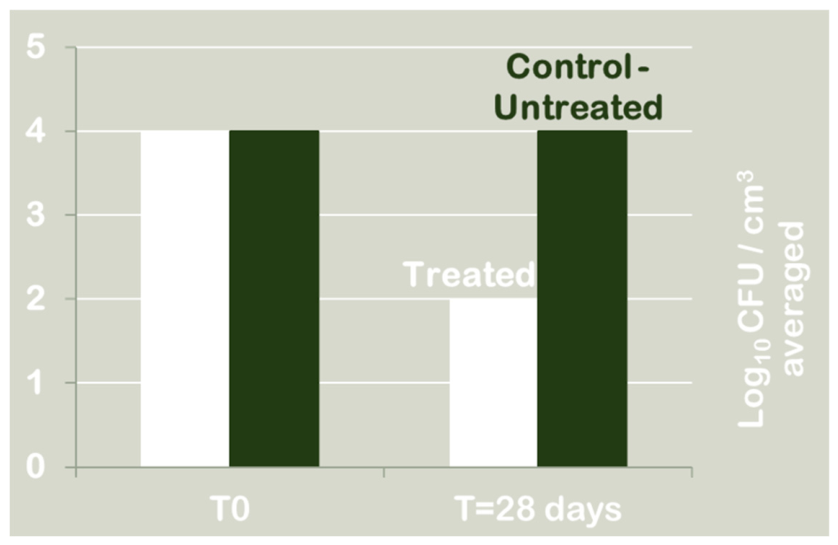
Figure 2.
Efficacy of Groupe Berkem’s polyphenolic extract against Coptotermes gestroi, Reticulitermes flavipes, Prorhinotermes canalifrons.
Figure 2.
Efficacy of Groupe Berkem’s polyphenolic extract against Coptotermes gestroi, Reticulitermes flavipes, Prorhinotermes canalifrons.
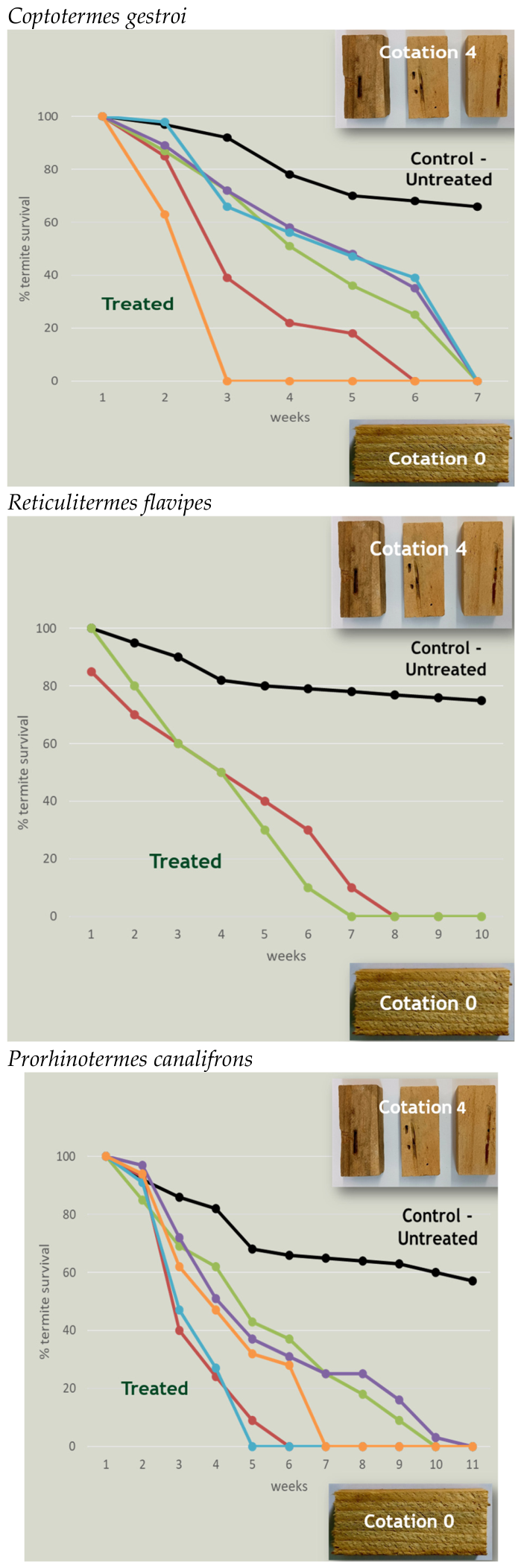
Figure 3.
Efficacy of Groupe Berkem’s polyphenolic extract against Coptotermes formosanus.
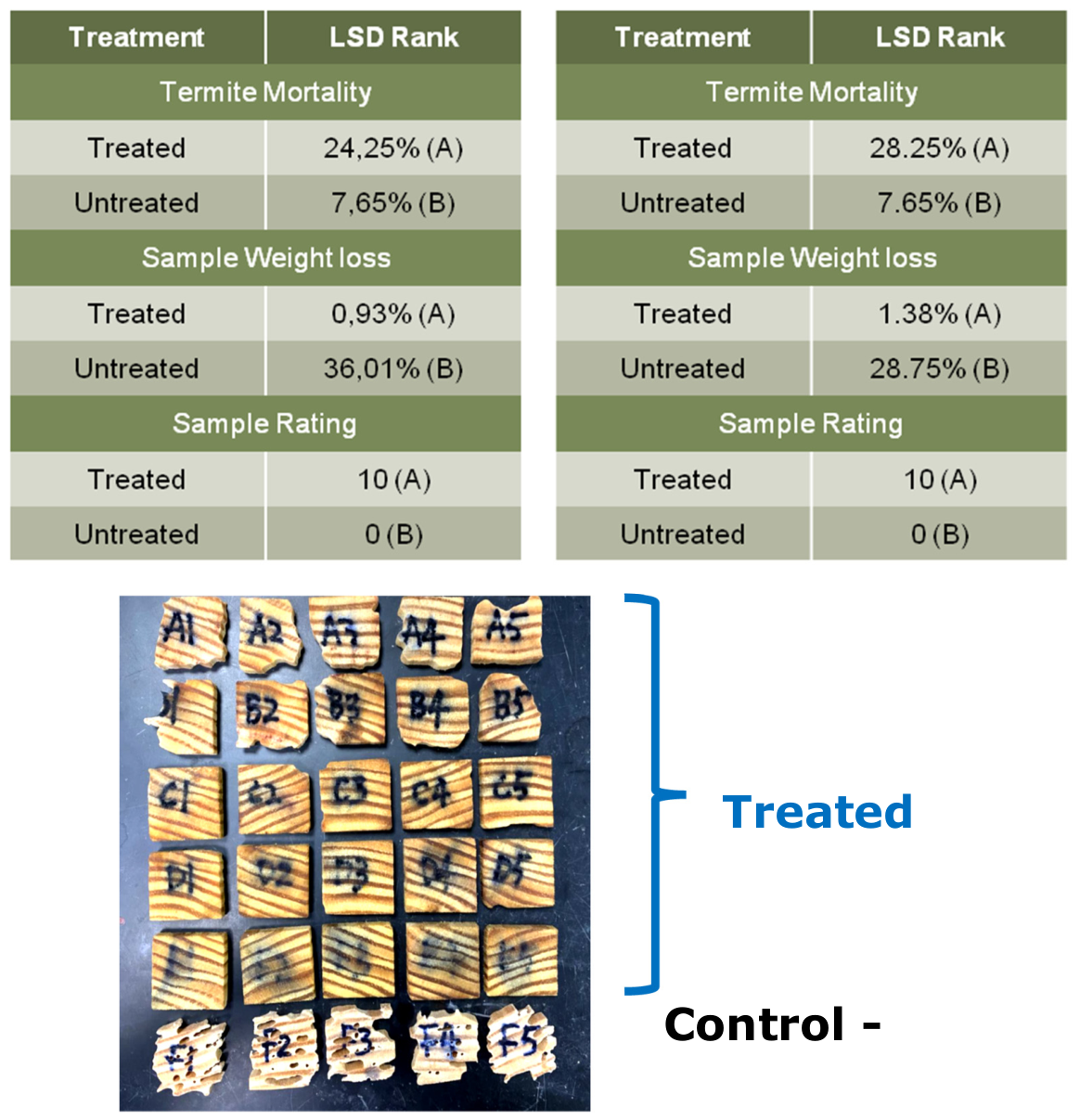

Table 1.
Hylotrupes bajulus development on Pinus sylvestris sapwood specimens.
| Toxic Values | |||
| Test Duration | Concentration % |
Number of larvae Dead Alive |
|
| 4 Weeks | 15.0 | 6 | 1 |
| 12 Weeks | 6.2 9.3 12.2 |
28 29 27 |
000 |
| 24 Weeks | 3.1 | 21 | 5 |
| Control (Untreated) |
0 | 29 | |
Disclaimer/Publisher’s Note: The statements, opinions and data contained in all publications are solely those of the individual author(s) and contributor(s) and not of MDPI and/or the editor(s). MDPI and/or the editor(s) disclaim responsibility for any injury to people or property resulting from any ideas, methods, instructions or products referred to in the content. |
© 2026 by the authors. Licensee MDPI, Basel, Switzerland. This article is an open access article distributed under the terms and conditions of the Creative Commons Attribution (CC BY) license (http://creativecommons.org/licenses/by/4.0/).
Copyright: This open access article is published under a Creative Commons CC BY 4.0 license, which permit the free download, distribution, and reuse, provided that the author and preprint are cited in any reuse.