

Submitted:
08 July 2026
Posted:
09 July 2026
You are already at the latest version
Abstract
Objective To evaluate the real-world effectiveness and tolerability of Iron Hydroxide Adipate Tartrate (IHATTM) in women with iron deficiency across three common obstetric and gynecologic clinical settings: pregnancy, the postpartum period, and abnormal uterine bleeding. Methods This prospective multicenter observational real-world study included women with iron deficiency managed in routine clinical practice across Italy. Participating gynecologists collected data using standardized case report forms. Patients received IHATTM according to routine clinical practice and were followed for approximately three months. Baseline demographic and hematologic parameters were recorded, including hemoglobin and ferritin levels. The primary outcome was the change in hemoglobin between baseline and follow-up. Secondary outcomes included changes in ferritin levels, treatment adherence, and tolerability. Results A total of 517 women was included in the analysis. The study population included pregnant women (N=287, 55.5%), women with abnormal uterine bleeding (N=161, 31.1%), and women in the postpartum period (N=69, 13.3%). Improvements in hemoglobin were observed across all clinical settings with hemoglobin increasing from 10.35 g/dL at baseline to 11.63 g/dL at three months, corresponding to a mean increase of 1.28 g/dL. Mean ferritin levels increased from 22.50 ng/mL to 37.74 ng/mL in three months. Treatment adherence was high or moderate in 93.4% of patients. Gastrointestinal adverse events were infrequent, with constipation (9.7%) and nausea (4.8%) among the most reported. Conclusion In this prospective real-world multicenter study, treatment with IHATTM was associated with meaningful improvements in hemoglobin and iron stores in women with iron deficiency across pregnancy, postpartum, and abnormal uterine bleeding. The treatment showed good adherence and a favorable tolerability profile in routine clinical practice.
Keywords:
iron deficiency
; iron deficiency anemia
; pregnancy
; postpartum period
; abnormal uterine bleeding
; oral iron supplementation
; Iron Hydroxide Adipate Tartrate
; IHATTM
; real-world study
; treatment adherence
1. Introduction
Iron deficiency represents not only a hematological condition but also a broader systemic disorder that can significantly impact quality of life, cognitive function and physical performance in women of reproductive age [1,2,3]. Even in the absence of overt anemia, iron depletion has been associated with fatigue, reduced exercise tolerance, impaired immune response and decreased work productivity. These clinical manifestations are particularly relevant in reproductive-aged women, who often experience cumulative iron loss over time due to physiological and pathological processes.
From a public health perspective, iron deficiency remains one of the most prevalent nutritional deficiencies worldwide, with prevalence estimates ranging from 20% to over 40% in women of reproductive age depending on geographic and socioeconomic factors [4,5]. Despite the availability of multiple therapeutic strategies, optimal management of iron deficiency continues to represent a challenge in routine clinical practice, especially in settings where long-term adherence to therapy is required [6].
Several physiological and pathological conditions can contribute to reduced iron stores in this population. Increased iron requirements during pregnancy, blood loss related to delivery in the postpartum period and chronic menstrual bleeding in women with abnormal uterine bleeding are among the most common contributors to iron deficiency in these settings [7].
During pregnancy, maternal iron demand increases progressively as a consequence of expanded red cell mass and the requirements of the developing fetus and placenta. When iron intake or absorption is insufficient to meet these demands, iron deficiency and anemia may develop. Postpartum women may also experience depletion of iron stores, particularly following peripartum blood loss. In the gynecologic population, abnormal uterine bleeding represents a major cause of chronic iron loss and is frequently associated with iron deficiency and iron deficiency anemia.
Oral iron supplementation is generally recommended as first-line therapy for iron deficiency in many clinical contexts, although variability in absorption and response to treatment has been widely documented [8,9,10]. Furthermore, conventional oral iron preparations are often associated with gastrointestinal adverse effects that can limit treatment adherence [11].
In addition to gastrointestinal intolerance, conventional oral iron formulations may be limited by suboptimal absorption in specific clinical conditions characterized by inflammation or altered intestinal function. Elevated hepcidin levels, commonly observed during pregnancy and in inflammatory states, may further reduce iron bioavailability by inhibiting intestinal iron transport mechanisms. Consequently, even when oral iron is prescribed appropriately, the expected hematologic response may not always be achieved, particularly in patients with underlying gastrointestinal disorders or chronic inflammatory conditions.
In routine clinical practice, intolerance to therapy and poor compliance may reduce the overall effectiveness of oral iron supplementation.
Iron Hydroxide Adipate Tartrate (IHATTM) is a novel food and a next-generation oral iron source designed to deliver iron in a nanoparticulate form that closely mimics the mineral core of ferritin [12], representing a clear advancement over conventional supplements.
Following EFSA’s comprehensive safety and bioavailability assessment [13], IHATTM has been proposed as an effective strategy to enhance iron delivery while overcoming key limitations of traditional iron salts, particularly gastrointestinal intolerance.
IHAT™ features a novel absorption mechanism via endocytosis [14], as illustrated in Figure 1, enabling iron uptake without releasing free iron in the intestinal lumen and thereby avoiding redox reactions responsible for gastrointestinal damage [15,16]. This uptake pathway appears to be less influenced by inflammatory states and elevated hepcidin levels, which typically limit iron absorption [17,18]. IHAT™ promotes a favorable gut microbiota, preserving beneficial microorganisms (Lactobacillus) and inhibiting the growth of pathogenic bacteria (Bacteroides and Echerichia) [15], unlike ferrous sulfate, as the absence of free luminal iron contributes to a stable microbial ecosystem. Moreover, IHATTM provides a controlled and progressive iron availability, avoiding tissue accumulation in the intestinal MALT (Mucosa-Associated Lymphoid Tissue), liver and spleen [13], and reducing the risk of non-physiological plasma iron peaks, further supporting its safety and tolerability [15]. Although previous investigations have explored the pharmacological characteristics of IHATTM and its potential clinical benefits, evidence on its use in routine clinical practice across different obstetric and gynecologic populations remains limited [19]. Real-world studies may help clarify how this therapy performs outside controlled research settings and in heterogeneous patient populations.
2. Objective
The objective of the present study was to evaluate the real-world effectiveness of IHATTM in women with iron deficiency across three common clinical settings in obstetric and gynecologic practice: pregnancy, the postpartum period, and abnormal uterine bleeding.
3. Methods
Methods Study Design and Setting
This was a prospective, multicenter, real-world observational study conducted in routine obstetric and gynecologic clinical practice across Italy. Participating gynecologists collected data using standardized case report forms specifically developed for the study.
The study aimed to evaluate the effectiveness of IHATTM in women with iron deficiency managed in three common clinical settings: pregnancy, the postpartum period and gynecologic patients with abnormal uterine bleeding.
Because treatment decisions were made according to routine clinical practice and no experimental intervention was imposed by the study protocol, the investigation was conducted as a non-interventional observational study.
Study Population
Women with iron deficiency who were prescribed IHATTM in routine clinical practice were eligible for inclusion.
Patients were enrolled consecutively by participating clinicians and categorized into three predefined clinical groups: pregnant women (1st, 2nd, and 3rd trimester), women in the postpartum period and gynecologic patients with abnormal uterine bleeding. A total of 517 patients were included in the study database.
Data Collection
Clinical data were prospectively recorded using standardized case report forms completed by the treating physicians. Information collected at baseline included demographic characteristics, clinical setting and laboratory parameters related to iron status. Baseline hematologic variables included hemoglobin (Hb), ferritin, serum iron, transferrin saturation (TSAT), red blood cell count (RBC) and mean corpuscular volume (MCV) when available. Treatment information included prescription of IHATTM and clinical recommendations provided by the physician, with dosing regimens of either 30 or 60 mg of elemental iron daily, while 90 mg daily was used rarely. Patients were followed according to routine clinical practice, and follow-up data were collected approximately three months after treatment initiation.
Outcomes
The primary objective of the study was to assess the real-world effectiveness of IHATTM by evaluating changes in hematologic parameters between baseline and follow-up. Secondary outcomes included evaluation of treatment adherence, physician-reported clinical response and tolerability of therapy during the observation period.
Statistical Analysis
Continuous variables were summarized using mean and standard deviation or median and interquartile range, depending on data distribution. Categorical variables were reported as frequencies and percentages. Changes in hematologic parameters between baseline and follow-up were evaluated using paired statistical tests. Subgroup analyses were performed according to the three predefined clinical settings (pregnancy, postpartum and abnormal uterine bleeding) and to the dosing regimen (30 mg daily or 60 mg daily). All analyses were conducted using the available study database including 517 patients.
Given the real-world observational design of the study, no predefined sample size calculation was performed. The study aimed to include all eligible patients treated with IHATTM within the participating centers during the study period, in order to reflect routine clinical practice as closely as possible.
Missing data were managed according to available-case analysis and no imputation methods were applied. The observational nature of the study implies that variations in clinical management, laboratory assessment timing and follow-up procedures may have occurred across participating centers, reflecting real-life heterogeneity in clinical practice.
4. Results
Study Population
A total of N=517 women were included in the study. Patients were distributed across the three predefined clinical settings as follows: pregnancy (N=287, 55.5%), abnormal uterine bleeding (N=161, 31.1%) and postpartum (N=69, 13.3%).
According to the provided dose regimen (expressed as elemental iron), the patients were distributed as follows: 30 mg daily (N=339, 65.6%), 60 mg daily (N=172, 33.3%) and 90 mg daily (N=6, 1.2%). Baseline demographic and clinical characteristics of the study population are reported in Table 1.
Hematologic Parameters
At baseline, the mean Hb level was 10.35 g/dL (SD 1.29). At the 3-month of IHATTM supplementation, mean hemoglobin was 11.63 g/dL (SD 1.33), a mean change of Hb increase of +1.28 g/dL (SD 1.13). Iron stores also improved: mean serum ferritin levels increased from 22.50 ng/mL (SD 22.3) at baseline to 37.74 ng/mL (SD 26.85) at 3 months, with a mean serum ferritin increase of +15.24 ng/mL (SD 26.64). Incrases in additional, related hematologic parameters including serum iron, TSAT, RBC, and mean MCV were also observed and are summarized in Table 2. Data stratified by clinical setting and dose regimen are presented in Table 3, Table 4 and Table 5, and in Figure 2 and Figure 3. Within the overall N= 517 women, N= 15 subjects with gastrointestinal comorbidities such as inflammatory bowel disease (IBD), irritable bowel syndrome (IBS), celiac disease (CeD) and prior bariatric surgery were included. In this subgroup, where iron absorption with conventional oral therapies is impaired, an improvement in hematological parameters was also observed. At baseline, the mean Hb level was 10.14 g/dL (SD 1.15) and at the 3 months after IHATTM supplementation, mean Hb increased to 11.26 g/dL (SD 0.99), with a mean increase of +1.12 g/dL (SD 1.02). Serum ferritin was 17.00 ng/mL (SD 13.70) at baseline and 24.45 ng/mL (SD 16.06) at 3 months, with a mean increase of +7.45 ng/mL (SD 17.50).
Symptom Resolution
As per physician-reported evaluation, clinical symptoms associated with ID such as fatigue and asthenia showed improvement with a substantial proportion of patients reporting resolution or significant improvement after IHATTM intake.
Treatment Adherence
Adherence to treatment was reported as high adherence (N=350, 67.7%), moderate adherence (N=133, 25.7%) and low adherence (N=34, 6.6%).
Overall, the majority of patients demonstrated high or moderate adherence to therapy (93.4%). Tolerability
IHATTM was generally well tolerated. Reported gastrointestinal adverse events were uncommon and included: 9.7% constipation (N=50), 4.8% nausea (N=25), 3.3% reflux (N= 17), 2.5% abdominal pain (N=13), 1.4% diarrhea (N=7), 0.4% vomiting (N= 2). No severe adverse events were reported in the study database.
Physician Evaluation
At the end of the observation period, physicians reported an overall improvement in hematologic parameters in the majority of patients receiving IHATTM. Detailed physician assessments are summarized in Table 6.
5. Discussion
Main Findings
In this prospective multicenter real-world study including 517 women with iron deficiency managed in routine obstetric and gynecologic institutional and private offices practice, treatment with IHATTM was associated with a clinically meaningful improvement in hematologic parameters after three months of IHATTM supplementation.
Overall, hemoglobin levels increased substantially between baseline and follow-up at 3 months of supplementation, with a mean increase of approximately 1.3 g/dL in the overall population. Improvement in iron stores was also observed, as reflected by the increase in ferritin concentrations. These findings were consistent across the three predefined clinical settings included in the study, i.e.,: pregnancy, postpartum and abnormal uterine bleeding. The magnitude of hemoglobin improvement differed among clinical settings, with larger increases observed in women in the postpartum period and in those with abnormal uterine bleeding compared with pregnant women. In pregnant women, greater Hb and serum ferritin improvement were observed in those patients provided with 60 mg iron equivalent daily dose. This pattern is biologically plausible, as iron requirements and baseline iron status may differ between these different clinical settings [20]. Treatment adherence was generally high, with more than two-thirds of patients reporting high adherence to therapy and more than 90% reporting at least moderate adherence. In addition, the treatment was well tolerated, with relatively low rates of gastrointestinal adverse events reported in routine clinical practice. Of interest the Hb and serum ferritin increase observed in a small subgroup of patients with gastrointestinal inflammatory comorbidities, commonly regarded as non-responder to conventional oral iron supplementation and oftenly requiring parenteral iron interventions. Due to the observed implementation in iron status, clinical testing of IHATTM in such conditions certainly deserves further insight.
Taken together, these findings suggest that IHATTM represents an effective and highly tolerated oral treatment option for iron deficiency in several common obstetric and gynecologic clinical contexts and possibly a promising strategy to implement iron status in patients with impaired oral iron absorption because of inflammatory bowel conditions.
Several limitations should be acknowledged: (i) the study was observational and did not include a control group receiving an alternative iron formulation. Therefore, causal inference regarding comparative effectiveness cannot be established. However, IHATTM has been proven to be absorbed by endocytosis into duodenal enterocytes with no DMT1 engagement and to be at least as effective as those iron forms requiring DMT1 for iron absorption but with a higher tolerability profile []; (ii) treatment decisions were made according to routine clinical practice and laboratory assessments were not performed within a strictly standardized research protocol; (iii) another limitation is the relatively short duration (3 months) of treatment, which may not fully capture long-term outcomes or recurrence of iron deficiency; (iv) some degree of heterogeneity in clinical management across participating physicians cannot be excluded, as always happens with many real-world observational studies.
Comparison with Existing Literature
The findings of the present study are consistent with previous evidence suggesting that novel oral iron formulations may offer advantages in terms of tolerability and patient adherence when compared to conventional iron salts [21,22,23]. While randomized controlled trials remain the gold standard for establishing efficacy, real-world studies provide complementary information by capturing treatment performance in broader and more heterogeneous populations.
In particular, adherence to oral iron therapy is a well-recognized determinant of treatment success. Previous studies have reported discontinuation rates of conventional oral iron therapy ranging from 20% to 50%, primarily due to gastrointestinal side effects [24,25]. In this context, the high adherence rates observed in the present study may represent a clinically relevant finding, suggesting that improved tolerability could translate into better overall treatment effectiveness.
Implication
Iron deficiency is frequently encountered in both obstetric and gynecologic care and often requires pharmacologic treatment [26]. However, intolerance to conventional oral iron preparations may represent a significant barrier to effective therapy [27]. The results of this study suggest that IHATTM may represent a practical treatment option in routine clinical settings, demonstrating improvement in hemoglobin levels and iron stores together with a favorable tolerability profile. Indeed, the relatively high adherence observed in this cohort reflects acceptable tolerability in daily clinical practice. These findings may be particularly relevant in clinical scenarios where oral iron therapy is preferred, but gastrointestinal iron intolerance to other oral iron forms limits adherence. In such contexts, IHATTM may help improve treatment efficacy.
Further research is needed to better define the role of IHATTM in the management of iron deficiency across different patient populations. Future studies could include randomized comparative trials evaluating IHATTM against conventional oral iron formulations in specific obstetric or gynecologic populations. In addition, longer-term observational studies may help assess the durability of hematologic response and the potential impact on patient-reported outcomes such as fatigue and quality of life. Additional research may also explore optimal dosing strategies and treatment duration in different clinical settings, including pregnancy and postpartum care.
Clinical Relevance
From a clinical perspective, the management of iron deficiency in women of reproductive age requires a balance between efficacy, tolerability and patient adherence. In pregnancy and postpartum settings, timely correction of iron deficiency is particularly important to prevent adverse maternal and neonatal outcomes. In obstetric populations, untreated iron deficiency has been associated with adverse outcomes including preterm delivery, low birth weight and impaired maternal recovery in the postpartum period [28,29,30]. Similarly, in women with abnormal uterine bleeding, chronic iron loss may lead to persistent or recurrent anemia if not adequately addressed.
The results of this study suggest that IHATTM may represent a valuable therapeutic option in these contexts, particularly for patients who experience intolerance to conventional oral iron or who require prolonged treatment. The observed improvements in hematologic parameters, combined with a favourable tolerability profile, support its potential role in routine clinical practice.
Conclusions
In this prospective multicenter real-world study involving 517 women with iron deficiency, treatment with IHATTM was associated with a significant improvement in hemoglobin levels and iron stores after three months of therapy. As a next-generation oral iron and novel food, IHATTM demonstrated high adherence and a good tolerability profile in routine clinical practice. The favorable tolerability is related to its unique mechanism of action, which delivers iron in a protected form without releasing free luminal iron, which is responsible for damage to the intestinal mucosa and helping preserve gut microbiota balance. Collectively, these findings suggest that IHATTM represents an effective, well-tolerated and innovative oral treatment option for iron deficiency in women during pregnancy, postpartum and in the context of abnormal uterine bleeding. Future research should further explore the long-term clinical impact of IHATTM, including its role in preventing recurrence of iron deficiency and its potential benefits in specific high-risk populations.
Author Contributions
Conceptualization, F.D.S. and M.M.; Methodology, M.M. and G.S.; Formal Analysis, G.S.; Investigation, M.M. and G.S.; Data Curation, M.M.; Writing – Original Draft Preparation, M.M.; Writing – Review & Editing, F.D.S., G.S. and N.D.S.; Supervision, F.D.S. and N.D.S. All authors have read and agreed to the published version of the manuscript.
Financial Support
This study received financial support from Enteralia Bioscience srl, belonging to Nemysis Ltd. The sponsor had no role in study design, conceptualization, data collection, data analysis, interpretation of results, or preparation of the manuscript.
Institutional Review Board Statement
Ethical review and approval were waived for this study due to its non-interventional observational design based on anonymized data collected in routine clinical practice.
Informed Consent Statement
Informed consent was waived due to the observational nature of the study and the use of anonymized data.
Data Availability Statement
The data presented in this study are available on reasonable request from the corresponding author. The data are not publicly available due to privacy and ethical restrictions.
Acknowledgments
The authors sincerely thank all participating clinicians for their contribution to data collection and their real-world clinical experience. The authors also acknowledge Studio Congressi S.r.l. for operational support in study coordination and data management. The authors sincerely thank all the doctors who shared their real practice experience: Bruno Arduino – Aversa (CE); Federica Arini – Livorno; Marica Basile Ripalta – Roma; Claudio Berardesca – Nola (NA); Francesco Cassanelli – Roma; Pietro Chiacchio – Grumo Nevano (NA); Antonio Cimmino – Villaricca (NA); Michela Colombo – Legnano (MI); Rosa Coppola – Eboli (SA); Beatrice Ermini – Roma; Roberta Frantellizzi – Roma; Valentina Galiano – Milano; Francesco Paolo Improda – Aversa (CE); Cristian La Rusca – Napoli; Cristina Maffioletti – Arzago d’Adda (BG); Diletta Mauro – Catania; Federica Melis – Cagliari; Marina Merola – Milano; Sonia Migliorini – Caserta; Monica Piera Moneta – Milano; Pier Luigi Nicastri – Bari; Mario Passaro – Napoli; Elena Pecchioli – Calenzano (FI); Vincenzo Piscitelli – Somma Vesuviana (NA); Antonio Ranieri – San Sebastiano al Vesuvio (NA); Andrea Risalvato – Cagliari; Carmine Romano – Pollena Trocchia (NA); Maria Grazia Sansone – Napoli; Marco Santagata – Napoli; Francesco Savarese – Napoli; Marianna Scognamiglio – Portici (NA); Simona Sorrentino – Napoli; Giuseppe Spinelli – Genova; Antonio Tampieri – Cinisello Balsamo (MI); Antonella Tartaglione – Sant’Antonio Abate (NA); Lorenzo Trapassi – Calenzano (FI); Laura Trespidi – Milano; Paolo Verrazzo – Mugnano di Napoli (NA); Giuseppe Zara – San Prisco (CE).The authors also thank Studio Congressi S.r.l. for its operational support in coordination and in data collection and management.
Conflicts of Interest
The authors declare no personal conflicts of interest. This study was funded by Enteralia Bioscience srl. The sponsor had no role in the design of the study; in the collection, analyses, or interpretation of data; in the writing of the manuscript; or in the decision to publish the results.
Disclosure
The authors report no conflict of interest.
References
- Haas, J.D.; Brownlie, T. Iron deficiency and reduced work capacity: a critical review. Am. J. Clin. Nutr. 2001, 73(4), 673–690. [Google Scholar]
- Falkingham, M.; Abdelhamid, A.; Curtis, P.; Fairweather-Tait, S.; Dye, L.; Hooper, L. The effects of oral iron supplementation on cognition in older children and adults: a systematic review. Nutr. J. 2010, 9, 4. [Google Scholar] [CrossRef] [PubMed]
- Beard, J.L. Why iron deficiency is important in infant development. J. Nutr. 2008, 138(12), 2534–2536. [Google Scholar] [CrossRef] [PubMed]
- McLean, E.; Cogswell, M.; Egli, I.; Wojdyla, D.; de Benoist, B. Worldwide prevalence of anemia. Public Health Nutr. 2009, 12(4), 444–454. [Google Scholar] [CrossRef] [PubMed]
- Stevens, G.A.; Finucane, M.M.; De-Regil, L.M.; et al. Global prevalence of anemia. Lancet Glob. Health 2013, 1(1), e16–e25. [Google Scholar] [PubMed]
- Barton, J.C.; Wiener, H.W.; Barton, J.C.; Acton, R.T. Prevalence of Iron Deficiency Using 3 Definitions Among Women in the US and Canada. JAMA Netw. Open 2024, 7(6), e2413967. [Google Scholar] [CrossRef] [PubMed] [PubMed Central]
- Coad, J.; Conlon, C. Iron deficiency in women: assessment, causes and consequences. Curr. Opin. Clin. Nutr. Metab. Care 2011, 14(6), 625–34. [Google Scholar] [CrossRef] [PubMed]
- Tolkien, Z.; Stecher, L.; Mander, A.P.; Pereira, D.I.A.; Powell, J.J. Ferrous sulfate supplementation causes significant gastrointestinal side-effects. PLoS ONE 2015, 10(2), e0117383. [Google Scholar] [CrossRef] [PubMed]
- Cancelo-Hidalgo, M.J.; Castelo-Branco, C.; Palacios, S.; et al. Tolerability of different oral iron supplements. Curr. Med. Res. Opin. 2013, 29(4), 291–303. [Google Scholar] [CrossRef] [PubMed]
- Pantopoulos, K. Oral iron supplementation: new formulations, old questions. Haematologica 2024, 109(9), 2790–2801. [Google Scholar] [CrossRef] [PubMed] [PubMed Central]
- Tan, X.; Tian, Y.; Zhang, T.; Yao, Q.; Zhu, T.; Wang, W.; Wang, Q.; Fu, H. Oral iron preparations: gastrointestinal adverse events and medication adherence in female patients with iron deficiency anemia. Front Pharmacol. 2026, 17, 1727566. [Google Scholar] [CrossRef] [PubMed] [PubMed Central]
- Helman, S.L.; Wilkins, S.J.; McKeating, D.R.; Perkins, A.V.; Cuffe, J.S.M.; Hartel, G.; Faria, N.; Powell, J.J.; Anderson, G.J.; Frazer, D.M. A Novel Ferritin-Core Analog Is a Safe and Effective Alternative to Oral Ferrous Iron for Treating Iron Deficiency during Pregnancy in Mice. J. Nutr. 2022, 152(3), 714–722. [Google Scholar] [CrossRef] [PubMed]
- EFSA Panel on Nutrition, Novel Foods and Food Allergens (NDA). EFSA J. 2021, 19(12), 6935.
- Pereira, D.I.; Mergler, B.I.; Faria, N.; Bruggraber, S.F.; Aslam, M.F.; Poots, L.K.; Prassmayer, L.; Lönnerdal, B.; Brown, A.P.; Powell, J.J. Caco-2 cell acquisition of dietary iron(III) invokes a nanoparticulate endocytic pathway. PLoS ONE Erratum in: PLoS One. 2015 Mar 20;10(3):e0119747. doi: 10.1371/journal.pone.0119747. PMID: 24278403; PMCID: PMC3836913. 2013, 8(11), e81250. [Google Scholar] [CrossRef] [PubMed]
- Pereira, D.I.; Bruggraber, S.F.; Faria, N.; Poots, L.K.; Tagmount, M.A.; Aslam, M.F.; Frazer, D.M.; Vulpe, C.D.; Anderson, G.J.; Powell, J.J. Nanoparticulate iron (III) oxo-hydroxide delivers safe iron that is well absorbed and utilised in humans. Nanomedicine 2014, 10(8), 1877–86. [Google Scholar] [CrossRef] [PubMed] [PubMed Central]
- Powell, J.J.; Bruggraber, S.F.; Faria, N.; Poots, L.K.; Hondow, N.; Pennycook, T.J.; Latunde-Dada, G.O.; Simpson, R.J.; Brown, A.P.; Pereira, D.I. A nano-disperse ferritin-core mimetic that efficiently corrects anemia without luminal iron redox activity. Nanomedicine 2014, 10(7), 1529–38. [Google Scholar] [CrossRef] [PubMed] [PubMed Central]
- Lechuga, S.; Ivanov, A.I. Disruption of the epithelial barrier during intestinal inflammation: Quest for new molecules and mechanisms. Biochim Biophys. Acta Mol. Cell Res. 2017, 1864(7), 1183–1194. [Google Scholar] [CrossRef] [PubMed] [PubMed Central]
- Gulec, S.; Anderson, G.J.; Collins, J.F. Mechanistic and regulatory aspects of intestinal iron absorption. Am. J. Physiol. Gastrointest. Liver Physiol. 2014, 307(4), G397–409. [Google Scholar] [CrossRef] [PubMed] [PubMed Central]
- Mohammed, N.I.; Wason, J.; Mendy, T.; Nass, S.A.; Ofordile, O.; Camara, F.; Baldeh, B.; Sanyang, C.; Jallow, A.T.; Hossain, I.; Faria, N.; Powell, J.J.; Prentice, A.M.; Pereira, D.I.A. A novel nano-iron supplement versus standard treatment for iron deficiency anaemia in children 6-35 months (IHAT-GUT trial): a double-blind, randomised, placebo-controlled non-inferiority phase II trial in The Gambia. EClinicalMedicine 2023, 56, 101853. [Google Scholar] [CrossRef] [PubMed] [PubMed Central]
- Özbilen, M.; Kaya, Y. Beyond anemia: a comprehensive analysis of iron deficiency symptoms in women and their correlation with biomarkers. BMC Womens Health 2025, 25(1), 376. [Google Scholar] [CrossRef] [PubMed] [PubMed Central]
- Stoffel, N.U.; Zeder, C.; Brittenham, G.M.; Moretti, D.; Zimmermann, M.B. Iron absorption from supplements. Lancet Haematol. 2020, 7(7), e524–e533. [Google Scholar]
- Moretti, D.; Goede, J.S.; Zeder, C.; et al. Oral iron supplements increase hepcidin. Blood 2015, 126(17), 1981–1989. [Google Scholar] [CrossRef] [PubMed]
- Tolkien, Z.; Stecher, L.; Mander, A.P.; Pereira, D.I.A.; Powell, J.J. Iron supplementation side effects review. PLoS ONE 2015, 10, e0117383. [Google Scholar] [CrossRef] [PubMed]
- Pasricha, S.R.; Tye-Din, J.; Muckenthaler, M.U.; Swinkels, D.W. Iron deficiency. Lancet 2021, 397, 233–248. [Google Scholar] [CrossRef] [PubMed]
- Cappellini, M.D.; Musallam, K.M.; Taher, A.T. Iron deficiency anaemia revisited. J. Intern Med. 2020, 287(2), 153–170. [Google Scholar] [PubMed]
- Sholzberg, M.; Hillis, C.; Crowther, M.; Selby, R. Diagnosis and management of iron deficiency in females. CMAJ 2025, 197(24), E680–E687. [Google Scholar] [CrossRef] [PubMed] [PubMed Central]
- Sunkara, T.; Caughey, M.E.; Nigar, S.; Olivo, R.; Gaduputi, V. Iron Pill Gastritis: An Under Diagnosed Condition With Potentially Serious Outcomes. Gastroenterol. Res. 2017, 10(2), 138–140. [Google Scholar] [CrossRef] [PubMed]
- Breymann, C. Iron deficiency anemia in pregnancy. Semin Hematol. 2015, 52(4), 339–347. [Google Scholar] [CrossRef] [PubMed]
- Pavord, S.; Myers, B.; Robinson, S.; et al. UK guidelines on iron deficiency in pregnancy. Br. J. Haematol. 2012, 156, 588–600. [Google Scholar] [CrossRef] [PubMed]
- Milman, N. Postpartum anemia I: definition, prevalence. Ann. Hematol. 2011, 90(11), 1247–1253. [Google Scholar] [CrossRef] [PubMed]
Figure 1.
Representation of the absorption mechanism of IHAT™ compared to conventional iron forms.
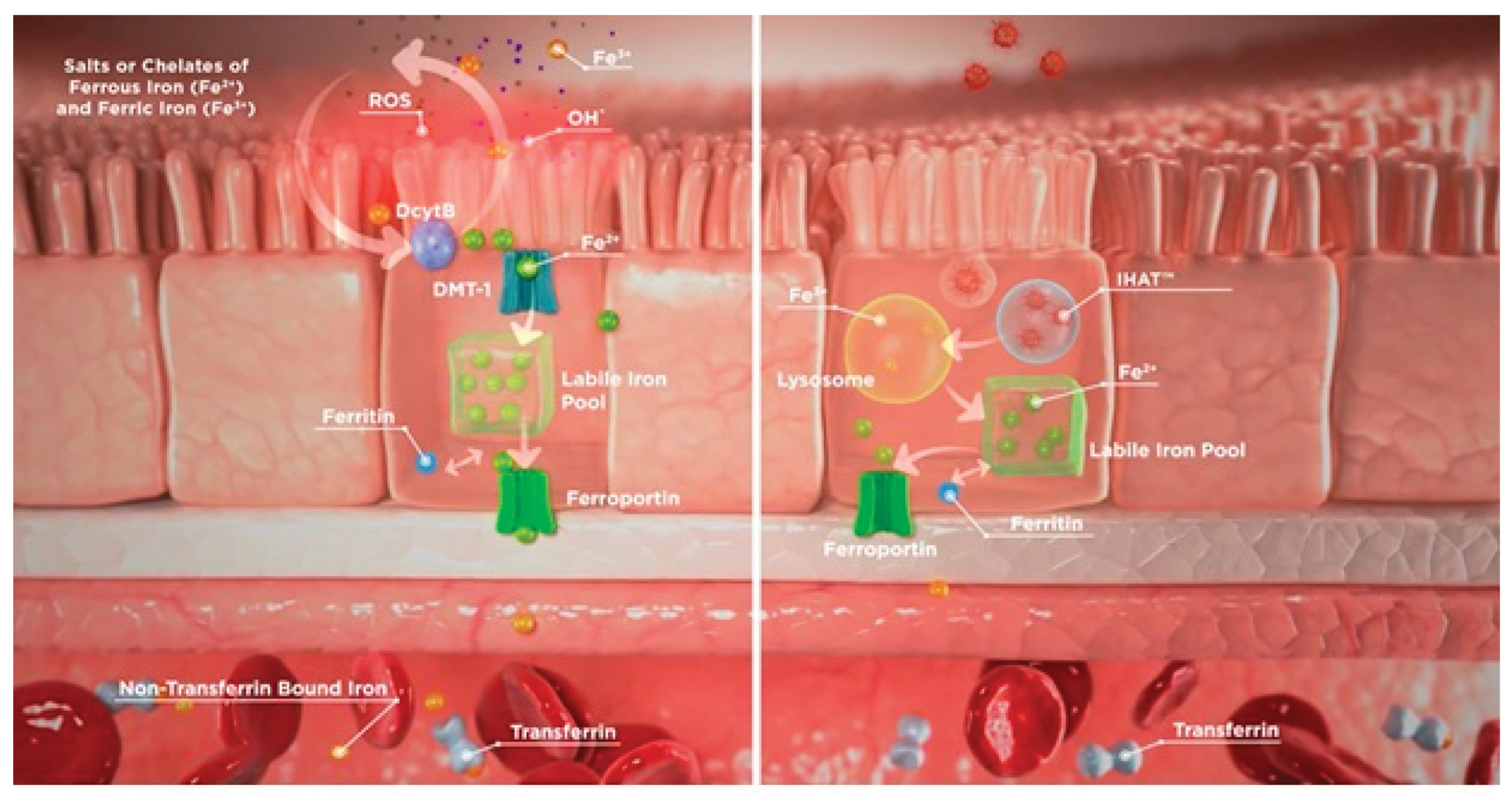
Figure 2.
Change in hemoglobin at 3 months by clinical setting.
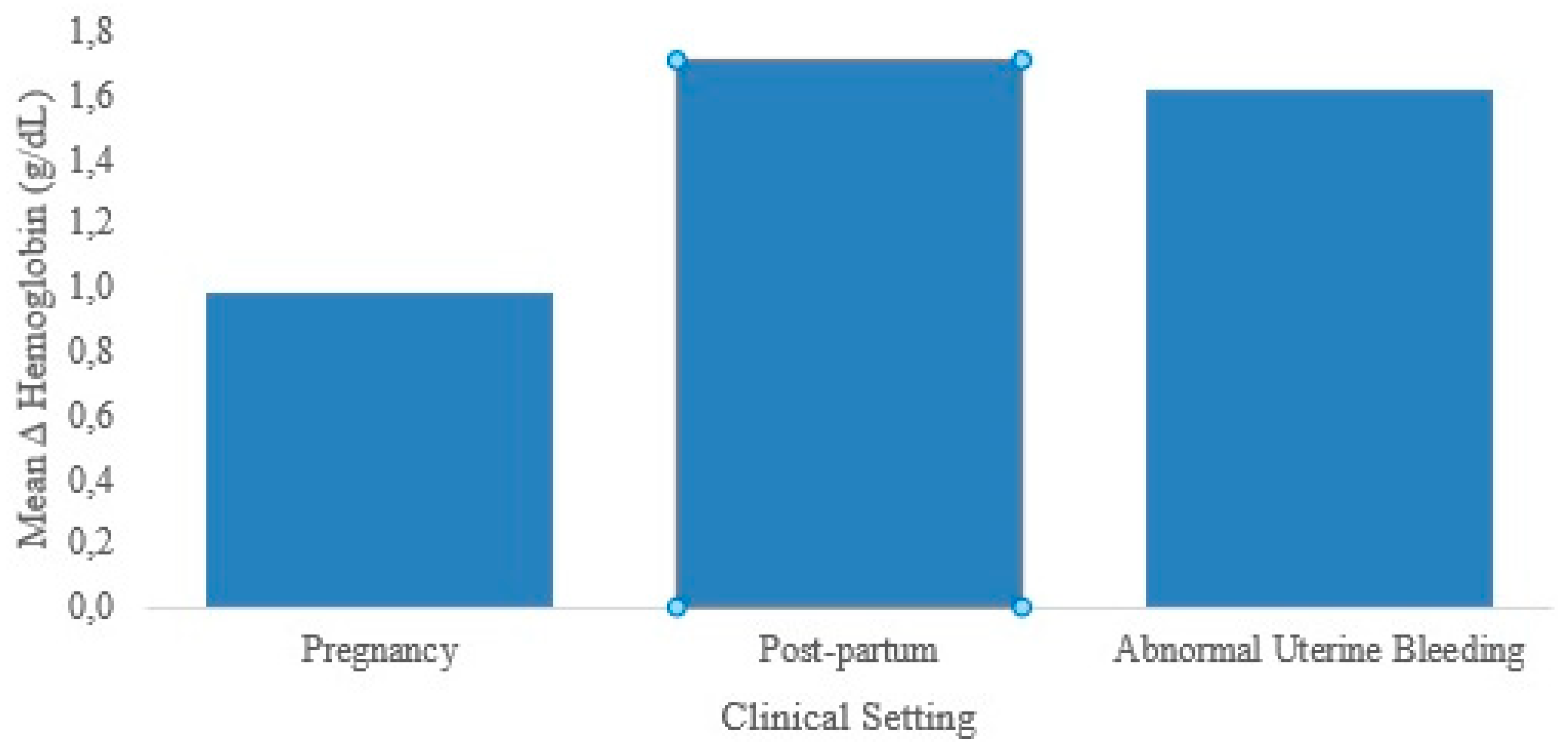
Figure 3.
Change in ferritin at 3 months by clinical setting.
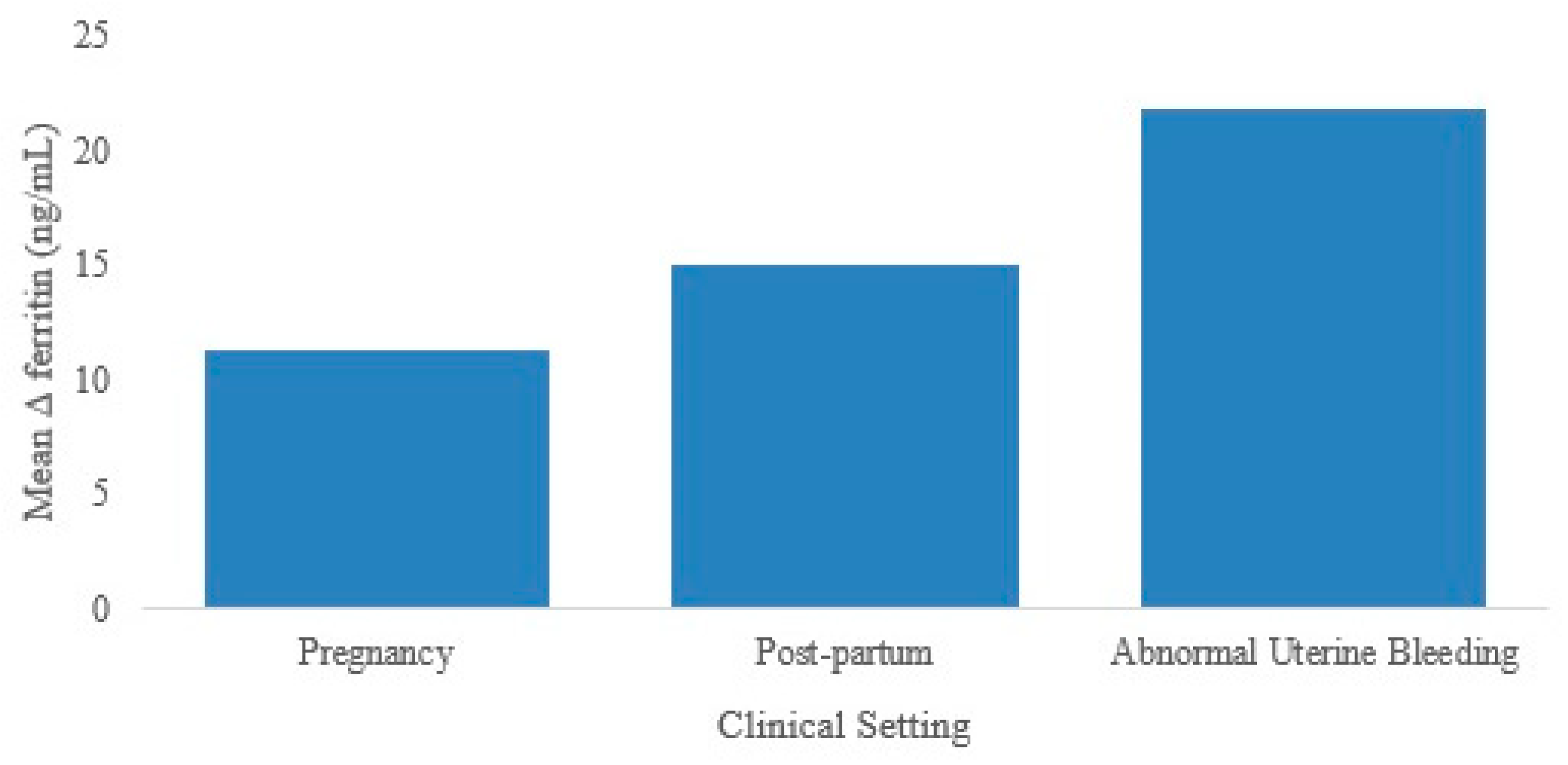

Table 1.
Characteristics of the study population.
| Value | |
|---|---|
| Total patients | 517 |
| Clinical setting - Pregnancy | 287 (55.5%) |
| Clinical setting - Postpartum | 69 (13.3%) |
| Clinical setting - Abnormal uterine bleeding | 161 (31.1%) |
| Age 18–25 years | 70 (13.5%) |
| Age 26–35 years | 209 (40.4%) |
| Age 36–45 years | 156 (30.2%) |
|
Age >45 years No comorbidities Gastrointestinal disorders Autoimmune diseases Hematological disorders-coagulopathies Other conditions Concomitant therapies 30 mg dose regimen 60 mg dose regimen 90 mg dose regimen |
82 (15.9%) 369 (71.4%) 41 (7.9%) 27 (5.2%) 18 (3.5%) 28 (5.4%) 228 (44.1%) 339 (65.6%) 172 (33.3%) 6 (1.2 %) |
Table 2.
Changes in hematologic parameters from baseline to 3 months.
| Baseline Mean (SD) | 3 Months Mean (SD) | Mean Change (SD) | |
|---|---|---|---|
| Hemoglobin (g/dL) | 10.35 (1.29) | 11.63 (1.33) | 1.28 (1.13) |
| Ferritin (ng/mL) | 22.50 (22.32) | 37.74 (26.85) | 15.24 (26.64) |
|
Serum Iron (µg/dL) TSAT (%) RBC (1012/L) MCV (fL) |
50.82 (27.81) 18.86 (13.29) 3.86 (0.68) 81.80 (9.62) |
74.32 (31.15) 30.02 (13.60) 4.31 (0.63) 85.67 (6.40) |
23.50 (31.70) 11.16 (14.00) 0.45 (0.52) 3.87 (8.40) |
Table 3.
Hemoglobin response stratified by clinical setting.
| N | Baseline Hb Mean (SD) | 3 Months Mean (SD) | Δ Hb Mean (SD) | |
|---|---|---|---|---|
| Pregnancy | 287 | 10.52 (1.08) | 11.50 (1.10) | 0.98 (1.02) |
| Post-partum | 69 | 10.81 (1.85) | 12.52 (1.89) | 1.71 (1.35) |
| Abnormal uterine bleeding | 161 | 9.85 (1.21) | 11.47 (1.29) | 1.62 (1.08) |
Table 4.
Changes in hematologic parameters from baseline to 3 months by dosing regimen.
| IHAT 30 mg (N. 339) | IHAT 60 mg (N. 172) | |||||
|---|---|---|---|---|---|---|
| Baseline Mean (SD) | 3 Months Mean (SD) | Mean Change (SD) | Baseline Mean (SD) | 3 Months Mean (SD) | Mean Change (SD) | |
| Hemoglobin (g/dL) | 10.76 (1.24) | 11.92 (1.34) | 1.16 (1.24) | 9.57 (0.99) | 11.06 (1.12) | 1.49 (0.85) |
| Ferritin (ng/mL) | 25.46 (25.53) | 37.09 (28.26) | 11.63 (29.03) | 17.03 (13.55) | 39.09 (24.56) | 22.05 (20.35) |
Table 5.
Hemoglobin response stratified by clinical setting and dosing regiment.
| IHAT 30 mg | IHAT 60 mg | |||||||
|---|---|---|---|---|---|---|---|---|
| N | Baseline Hb Mean (SD) | 3 Months Hb Mean (SD) | Δ Hb Mean (SD) | N | Baseline Hb Mean (SD) | 3 Months Hb Mean (SD) | Δ Hb Mean (SD) | |
| Pregnancy | 201 | 10.82 (1.05) | 11.68 (1.13) | 0.86 (1.1) |
82 | 9.82 (0.83) | 11.06 (0.91) | 1.23 (0.69) |
| Post-partum | 50 | 11.30 (1.91) | 12.95 (1.84) | 1.65 (1.38) | 19 | 9.25 (0.73) | 11.37 (1.55) | 1.85 (1.3) |
| Abnormal uterine bleeding | 88 | 10.32 (1.07) | 11.88 (1.25) | 1.56 (1.27) | 71 | 9.29 (1.15) | 10.98 (1.20) | 1.69 (0.80) |
Table 6.
Treatment adherence and tolerability.
| N (%) | |
|---|---|
| High adherence | 350 (67.7%) |
| Moderate adherence | 133 (25.7%) |
| Low adherence | 34 (6.6%) |
| Constipation | 50 (9.7%) |
| Nausea | 25 (4.8%) |
| Reflux | 17 (3.3%) |
| Abdominal pain | 13 (2.5%) |
| Diarrhea | 7 (1.4%) |
| Vomiting | 2 (0.4%) |
Disclaimer/Publisher’s Note: The statements, opinions and data contained in all publications are solely those of the individual author(s) and contributor(s) and not of MDPI and/or the editor(s). MDPI and/or the editor(s) disclaim responsibility for any injury to people or property resulting from any ideas, methods, instructions or products referred to in the content. |
© 2026 by the authors. Licensee MDPI, Basel, Switzerland. This article is an open access article distributed under the terms and conditions of the Creative Commons Attribution (CC BY) license (http://creativecommons.org/licenses/by/4.0/).
Copyright: This open access article is published under a Creative Commons CC BY 4.0 license, which permit the free download, distribution, and reuse, provided that the author and preprint are cited in any reuse.


