
Submitted:
07 July 2026
Posted:
08 July 2026
You are already at the latest version
Abstract
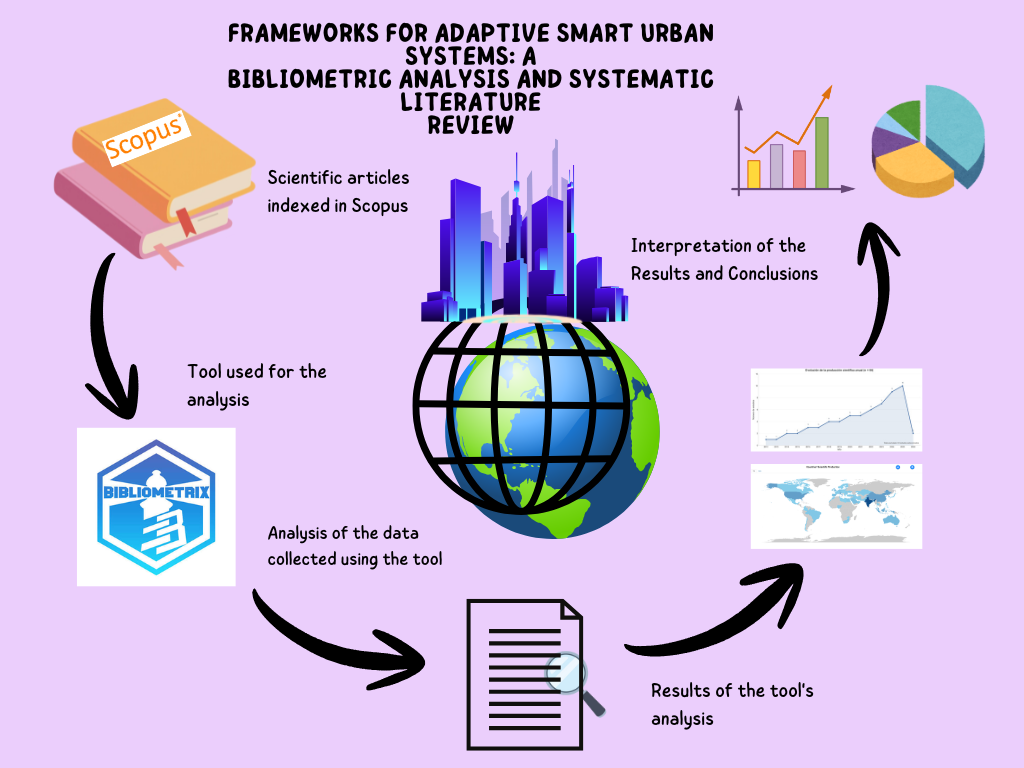
The sustained growth of urban areas has increased the complexity of managing services, infrastructure, and mobility, creating a need for advanced technological solutions capable of responding dynamically to rapidly changing environments. In this context, adaptive smart urban systems have emerged as an innovative alternative that integrates artificial intelligence (AI) to optimize real-time decision-making. This study presents a systematic literature review focused on the frameworks underpinning these systems, examining the main adaptive AI techniques, current technological trends, and the structural challenges that limit their implementation. The methodology applied is based on the selection and critical analysis of indexed scientific publications, enabling the identification of predominant approaches such as machine learning, deep learning, multi-agent systems, and reinforcement learning. The findings reveal a strong convergence between AI, the Internet of Things (IoT), and Big Data, as well as significant limitations in terms of interoperability, data governance, and scalability. It is concluded that, while the advances are promising, the consolidation of these systems requires a comprehensive approach that combines technological innovation, appropriate regulation, and social sustainability.
Keywords:
smart cities
; adaptive artificial intelligence
; urban systems
; machine learning
; smart infrastructure
Copyright: This open access article is published under a Creative Commons CC BY 4.0 license, which permit the free download, distribution, and reuse, provided that the author and preprint are cited in any reuse.


