

Submitted:
06 July 2026
Posted:
07 July 2026
You are already at the latest version
Abstract
This article examines non-Muslim cemeteries in Istanbul as multicultural urban heritage landscapes, focusing on the Feriköy Protestant Cemetery as a case exemplar. Rather than treating cemeteries solely as religious or funerary spaces, the study frames them as material archives of urban memory, minority presence, spatial displacement, and heritage governance. Based on literature review, historical documentation, mapping, and field observation, the article first outlines the transformation of non-Muslim cemeteries from the Ottoman period to the Republican era, with particular attention to their relocation, disappearance, and reuse within processes of urban modernization. It then analyses the Feriköy Protestant Cemetery in terms of its foundation, multinational administrative structure, architectural and funerary features, transferred memorial elements, digitisation practices, and conservation initiatives. The case demonstrates how cemetery heritage can reveal the layered relationship between urban development, multicultural identity, and sustainable conservation. The article argues that surviving non-Muslim cemeteries in Istanbul should be understood as living memory spaces and cultural landscapes whose protection requires documentation, public awareness, and multi-actor heritage governance.
Keywords:
Ottoman period
; non-Muslim cemeteries
; Feriköy protestant cemetery
; cultural heritage
1. Introduction: Cemetery Heritage and Multicultural Urban Memory
Cemeteries are not only places of burial, mourning, and religious practice; they are also material archives of urban history, social identity, cultural plurality, and collective memory. In multicultural cities, cemetery landscapes record the presence of different communities through their spatial locations, inscriptions, funerary monuments, ritual practices, ownership structures, and patterns of continuity or displacement. Within this framework, non-Muslim cemeteries in Istanbul constitute a significant but often overlooked component of the city’s multicultural urban heritage. They reveal how religious communities were spatially organized, how minority identities were represented in the urban landscape, and how processes of modernization, relocation, and conservation transformed the material traces of communal memory.
The Ottoman imperial system accommodated religious and communal diversity through legally and administratively differentiated structures, most notably the ‘millet’ system. According to Islamic law, when a city with a non-Muslim population was conquered, an agreement called a zimmet akdi was made with the city's inhabitants, and non-Muslims who accepted this agreement were called as zimmi. Within this framework, the rights of non-Muslim communities were legally recognized in several respects [1]. As Eryılmaz notes, until the beginning of the twentieth century, the term millet in Ottoman usage referred primarily to a community sharing the same religion or sect; accordingly, the Ottoman State defined Muslims as one millet and non-Muslims as separate millets according to their religious and sectarian affiliations [2,3] (p.6).
Non-Muslims in Ottoman documents were referred to through terms such as Tebaa-i gayrimüslime (non-Muslim subjects), cemaat-ı muhtelife (different communities), and milel-i muhtelife (different nations). These communities were generally classified according to religious and sectarian belonging, including Christians, Jews, and other groups [3,4]. Karataş [1] (p.269) defines the main non-Muslim millets within the Ottoman system as Greeks, Armenians, and Jews, while also noting that Catholics and Protestants became increasingly visible within this framework from the eighteenth century onwards. This institutional differentiation is important for understanding the formation, use, and management of non-Muslim cemeteries, since burial grounds were closely linked to communal identity, religious authority, and administrative recognition.
In the Ottoman Empire, non-Muslim communities conducted many of their affairs with the state through their own communal and religious representatives. The Orthodox Christians were represented by the Patriarchate of Constantinople, the Jews by the Rabbinate, and the Armenians by the Armenian Patriarchate [3]. While Muslims were subject to Sharia law in the administration of the state, non-Muslims maintained a degree of autonomy in social and religious matters such as marriage, inheritance, and death, within the framework of their own communal regulations. This autonomy also shaped funerary practices and cemetery organization, making burial grounds key spatial indicators of communal presence and institutional continuity.
Istanbul has historically been a mosaic of different languages, religions, and cultures, and this plurality has been reflected in its religious, educational, medical, residential, and funerary landscapes. Gürçay [5] provides a detailed historical account of the diverse belief communities that existed in Istanbul during the Ottoman period, including the Greek Orthodox Patriarchate, the Armenian Patriarchate, and the Bulgarian Exarchate. These institutions were not only religious authorities but also actors that contributed to the spatial organization of communal life. Churches, schools, hospitals, residences, and cemeteries together formed a network of non-Muslim urban presence, particularly visible in districts such as Galata, Pera, Tatavla, Pangaltı, Şişli, and Feriköy.
From the second half of the nineteenth century onwards, Istanbul’s non-Muslim and foreign communities became increasingly visible through new urban institutions and architectural forms. Galata and Pera, long associated with port trade, diplomacy, and European commercial networks, became central areas of social and spatial transformation. The long-standing commercial relationships established by Greeks, Armenians, Latins, and Levantines with European companies contributed to the development of the city’s commercial and cultural ties with Europe [6]. Following the Tanzimat and Islahat reforms, schools that had initially operated within churches or modest buildings began to emerge as independent institutions, while Greek, Latin, and Armenian hospitals became important educational and health-related establishments. In parallel, the residences of non-Muslim and Latin families with high living standards also reflected the changing urban culture of the nineteenth century [6].
The transformation of Galata and Pera was also connected to legal, economic, and spatial changes in the nineteenth century. After the regulations clarified by the 1867 law granting property rights to foreigners, the architectural character of the area began to change through monumental buildings, churches with bell towers, bank and insurance buildings, commercial structures, schools, hospitals, and residences [6]. Within this broader process, cemeteries were not marginal spaces but integral components of the same multicultural urban landscape. They recorded demographic presence, communal boundaries, religious affiliation, social status, and transnational connections, while also becoming sites affected by urban modernization and spatial reorganization.
One of the early indicators of the spatial shift from Pera and Galata towards Şişli was the construction of the Saint Esprit Church in 1846. Following the Great Galata Fire and the construction of Saint Esprit, settlement expanded around the church, contributing to the formation of the present-day neighbourhoods of Tatavla and Feriköy. After the construction of the Taksim Barracks, a tree-lined road extending from Taksim to Pangaltı was opened in 1869, further strengthening the northward expansion of the city [6,7]. In this context, cemetery areas became crucial indicators of both population density and urban development. Even when the non-Muslim population living around these areas decreased, the surviving cemeteries and related buildings continued to preserve the material traces of Istanbul’s multicultural past.
For this reason, non-Muslim cemeteries in Istanbul should be understood not merely as burial grounds, but as multicultural urban heritage landscapes that reveal the spatial politics of modernization, minority memory, and conservation governance. Their relocation, disappearance, survival, or continued use reflects broader transformations in urban planning, communal identity, property relations, and heritage preservation. This article examines the historical development and spatial transformation of non-Muslim cemeteries in Istanbul during the Ottoman and Republican periods, with a particular focus on the Feriköy Protestant Cemetery. By analysing its establishment, architectural character, multinational administrative structure, memorial elements, and role in cultural memory, the study positions Feriköy Protestant Cemetery as a representative case for understanding cemetery heritage as a living component of Istanbul’s multicultural urban memory.
2. Conceptual Framework: Cemeteries as Multicultural Urban Heritage Landscapes
Cemeteries are not passive burial grounds but layered cultural landscapes in which religious affiliation, minority identity, urban transformation, material memory, and heritage governance intersect. In multicultural cities, burial spaces operate as spatial records of communities that may have changed, diminished, relocated, or become less visible over time. Their gravestones, inscriptions, chapels, monuments, burial registers, vegetation, circulation patterns, and administrative structures together form a complex heritage system. Therefore, cemetery heritage should be understood not only through architectural or funerary elements, but also through the broader urban, social, and institutional relations that shape its continuity.
In the context of Istanbul, non-Muslim cemeteries are particularly significant because they document the long-term presence of different religious and ethnic communities within the Ottoman and Republican urban landscape. These cemeteries reflect the spatial organization of minority communities, the transformation of burial practices, the relocation of older cemetery areas, and the changing relationship between urban modernization and cultural memory. Some cemetery sites have disappeared or been transformed into public spaces, while others have survived as active burial grounds, enclosed cultural landscapes, or fragments of transferred memory. In this respect, cemeteries function both as material archives and as urban memory spaces.
This article uses the concept of “multicultural urban heritage landscape” to interpret non-Muslim cemeteries as spaces where tangible and intangible heritage values overlap. Tangible values include gravestones, chapels, monuments, walls, gates, burial records, and spatial layouts. Intangible values include ritual continuity, communal belonging, memory transfer, minority identity, and multi-actor governance. The Feriköy Protestant Cemetery is examined within this conceptual framework because it brings together several of these dimensions: it contains transferred memorial elements from earlier cemetery grounds, has a multinational administrative structure, includes architectural and funerary heritage elements, and continues to operate as an active site of memory, documentation, and conservation.

Table 1.
Conceptual framework for interpreting cemeteries as multicultural urban heritage landscapes.
Table 1.
Conceptual framework for interpreting cemeteries as multicultural urban heritage landscapes.
| Concept | The corresponding term in the article |
| Cemetery heritage |
Gravestones, chapels, burial records, monuments |
| Urban Memory | Memories transferred from Taksim / Grand Champs to Feriköy |
| Minority heritage | Protestant, Latin, Armenian, Levantine, and diplomatic communities |
| Cultural landscape | Cemetery + green space + monumental objects + ritual continuity |
| Heritage governance | Consular committee, community donations, digital archive |
| Sustainable conservation | Documentation, maintenance, access, public awareness |
This framework structures the analysis developed in the following sections. First, the historical development of non-Muslim cemeteries in Istanbul is examined in relation to urban growth, relocation, and transformation. Second, the spatial distribution of surviving and lost cemetery areas is discussed as evidence of changing urban policies and demographic patterns. Finally, the Feriköy Protestant Cemetery is analysed as a case through which cemetery heritage, multicultural memory, architectural value, governance, and sustainable conservation can be read together.
3. Materials and Methods/Approach
This article adopts a qualitative, heritage-focused case study approach. The methodological framework combines literature review, documentary analysis, spatial mapping, and field-based architectural observation. Rather than producing a statistical or quantitative assessment, the study aims to develop an interpretive understanding of non-Muslim cemeteries in Istanbul as multicultural urban heritage landscapes. The methodological structure is organised in three interrelated stages (Figure 1).
In the first stage, a comprehensive literature review was conducted to establish the historical and conceptual basis of the research. The review focused on the transformation of non-Muslim cemeteries in Istanbul, the role of religious and communal structures in the Ottoman urban system, and the spatial dynamics that shaped the location, relocation, disappearance, or survival of cemetery areas. Within this stage, a conceptual corpus was created based on scholarly publications, historical studies, institutional reports, archival references, and previous research on non-Muslim communities, cemetery landscapes, and urban transformation. The literature review was structured around two main axes:
(1) the historical development and transformation process of non-Muslim cemeteries;
(2) the socio-political and spatial dynamics that influenced the location of these cemeteries within the urban structure, particularly during the Ottoman and early modernisation periods.
In the second stage, mapping and documentation studies were carried out in order to identify the spatial distribution and transformation patterns of non-Muslim cemeteries in Istanbul. Existing documents, historical references, visual materials, municipal data, maps, and field-based observations were used together to distinguish between surviving, lost, relocated, and transformed cemetery sites. The mapping process was not treated merely as a cartographic exercise, but as a tool for interpreting the relationship between cemetery landscapes, urban expansion, public space production, and changing demographic patterns. In this way, spatial documentation supported the broader heritage-based reading of cemeteries as urban memory spaces.
In the third stage, the Feriköy Protestant Cemetery was examined as the principal case study. The selection of this cemetery was based on its historical continuity, multinational administrative structure, active use, architectural and funerary elements, transferred memorial traces, and current relevance for sustainable conservation. Field observations and photographic documentation were used to analyse the cemetery’s spatial layout, chapel, gravestones, monuments, circulation patterns, green character, and relationship with the surrounding urban fabric. In addition, the cemetery’s administrative structure, burial records, documentation initiatives, and conservation practices were evaluated in relation to the conceptual framework developed in the previous section.
The analysis was structured according to six interrelated heritage dimensions: cemetery heritage, urban memory, minority heritage, cultural landscape, heritage governance, and sustainable conservation. These dimensions allowed the study to connect historical evidence, spatial documentation, architectural observation, and conservation-oriented interpretation. The methodological aim was therefore not only to describe the Feriköy Protestant Cemetery, but also to position it as a representative case through which the multicultural cemetery heritage of Istanbul can be understood, documented, and discussed within contemporary heritage studies.
4. Historical Background: Non-Muslim Cemeteries in Istanbul
The historical development of non-Muslim cemeteries in Istanbul is closely related to the city’s changing demographic structure, patterns of urban expansion, and processes of modernization. From the Ottoman period onwards, cemetery areas were not merely functional burial grounds; they also marked the spatial presence, institutional recognition, and communal continuity of different religious groups. In this respect, the history of non-Muslim cemeteries in Istanbul should be read together with the transformation of Galata, Pera, Taksim, Pangaltı, Şişli, Feriköy, and other neighbourhoods in which non-Muslim and foreign communities became visible through religious, educational, medical, residential, and funerary landscapes.
Until the fifteenth century, Pera functioned as a commercial district outside the historical centre, where non-Muslim communities were concentrated around the coastal axis shaped by port trade. The upper areas of Pera were used by the non-Muslim population as agricultural land and cemetery grounds [8]. Towards the end of the fifteenth century, the construction of the Galata Mevlevihane by Sultan Bayezid II contributed to the increasing presence of the Muslim population in the area. By the sixteenth century, this vitality attracted Western states, particularly France, and led to the establishment of embassies around Pera. The diplomatic and commercial activity generated by these embassies also encouraged the construction of Western-style buildings for embassy staff and other non-Muslim populations, a process that continued into the nineteenth century [9].
By the nineteenth century, Westernisation policies and the proclamation of the Tanzimat Edict in 1839 intensified the presence of foreign communities and accelerated the transformation of Pera. From the 1840s onwards, the district became associated with luxury shops, stores, restaurants, hotels, and cultural activities, giving it the appearance of a Western-oriented urban centre [8]. However, the growing need for public open spaces also brought cemetery areas into the agenda of urban transformation. The local population used nearby cemeteries for various social and recreational activities, which revealed the lack of planned public spaces in this part of the city [8,10]. At the same time, the military zone formed by the Topçu Barracks, Mecidiye Barracks, and Gümüşsuyu Barracks limited the public use potential of the Taksim area. As a result, non-Muslim cemetery lands in Beyoğlu and Galata began to be considered suitable locations for the creation of new public spaces, particularly Taksim and Tepebaşı. The relocation of these cemeteries towards Şişli, then perceived as the urban periphery, became a key element of this transformation [9].
The Grand Champs Cemetery represents one of the most significant examples of this process. Located in the area of today’s Taksim Gezi Park and its surroundings, it was one of the oldest known cemetery areas used by Armenians, Latins, Catholics, Protestants, and Greeks in Istanbul. The cemetery had been used since 1561 and was allocated to non-Muslims for the burial of those who died during plague outbreaks. According to İnciciyan, in the eighteenth century the largest section of the Grand Champs Cemetery was the Armenian Cemetery, while other sections were used by Latins, Catholics, Protestants, and Greeks [6,11]. The Greek section of the cemetery is thought to have been located around today’s Taksim area, where Aya Triada Greek Church and Zappeion Greek Girls’ High School are situated. The northern part of the cemetery was reserved for Russians, Serbs, Bulgarians, and Montenegrins, while the southern section was used for Greek Orthodox burials [6,12,13].
Although the exact size of Grand Champs Cemetery remains uncertain, its historical extent was considerable. Alp notes that the area included the land later occupied by the Artillery Barracks and approximately 13,500 arşın, or around 47,000 square metres, from which bones were removed in 1864 [6]. Akın also emphasizes the large scale of the cemetery, estimating that it extended from the area of today’s Atatürk Cultural Centre towards Dolmabahçe and Fındıklı and was more than twice the size of the walled Galata settlement [14]. As the cemetery was gradually expropriated and opened to urban development, its remaining sections were pushed towards Pangaltı. The area where Armenians were predominantly buried became the Pangaltı Armenian Cemetery, also known as Surp Agop Armenian Cemetery. According to Kömürcüyan, gravestones dating from the sixteenth, seventeenth, and eighteenth centuries were found in this cemetery, while no gravestones after 1865 were recorded, suggesting that burials shifted to the Şişli Armenian Cemetery after that date [6,15].
The removal of the Pangaltı Armenian Cemetery in the twentieth century further demonstrates how cemetery heritage became entangled with urban development and public land policies. The cemetery, which remained in existence until the 1930s in the area where the Divan Hotel stands today, was completely removed after it became municipal property in 1939. Approximately 4,800 gravestones were transferred to the Şişli Armenian Cemetery; several important graves were moved to church gardens, including the grave of Patriarch Hagop of Julfa to the garden of the Beyoğlu Surp Yerortutyun Church and the grave of Hagop Gataghikos Chughayetsi to the garden of the Üç Horan Church [6,16]. These transfers indicate that the disappearance of a cemetery did not necessarily erase its material memory; rather, fragments of memory were relocated, reassembled, and preserved in new communal settings.
The Feriköy Latin Catholic Cemetery and the Feriköy Protestant Cemetery emerged directly within this context of relocation and spatial reorganization. The Feriköy Latin Catholic Cemetery was one of the important nineteenth-century cemeteries still used by the Latin community. The cemetery, surrounded by a wall funded by the French army, was initially used for the burial of French soldiers who died in hospitals in Pera. Its use was also connected to the transfer of gravestones and bones collected from the Grand Champs Cemetery between 1863 and 1864. In 1870, a memorial tomb was built with 178 gravestones collected from the Grand Champs Cemetery, and the collected bones were placed inside it [6,17]. The Feriköy Protestant Cemetery, established in the same period and separated from the Latin Catholic Cemetery by Abide-i Hürriyet Avenue, was founded in 1859 following the removal of the Grand Champs Cemetery. It became the principal burial ground for Protestants and constitutes the main case study of this article.
Beyond Taksim, Pangaltı, and Feriköy, Istanbul contains a wider network of non-Muslim cemeteries that reflects different patterns of survival, relocation, fragmentation, and disappearance. Some cemeteries, such as the Şişli Greek Orthodox Cemetery, Şişli Armenian cemeteries, Balıklı Armenian and Greek cemeteries, Edirnekapı Armenian Cemetery, Kurtuluş Aya Lefter Cemetery, Kadıköy Latin Catholic Cemetery, and Haydarpaşa English Cemetery, have survived as active or historically significant cemetery landscapes. Others, including several Armenian, Greek, and Latin cemeteries in Beşiktaş, Ortaköy, Yeşilköy, and other districts, have been removed, reduced, or transformed as a result of urban expansion, road construction, municipal decisions, or changes in community presence [6]. This broader distribution shows that non-Muslim cemeteries should be understood as a citywide heritage network rather than isolated burial grounds.
Legal and administrative factors also shaped the location, expansion, and protection of non-Muslim cemeteries. The demarcation of cemetery boundaries was carried out under state supervision, together with authorised persons such as foundation trustees, sergeants, and leading figures of non-Muslim communities. When necessary, cemeteries were expanded by adding new land. If cemetery lands were located on state-owned property, non-Muslim communities paid a tithe for the use of the land; in some cases, they also paid a tithe to foundations when cemetery areas were allocated from foundation property [18]. Disputes concerning cemeteries were generally resolved through qadis, and violations against cemeteries allocated to non-Muslims, such as the construction of houses on cemetery land, were often settled in favour of the non-Muslim communities [18]. These practices demonstrate that cemetery spaces were not informal or marginal areas, but legally defined and administratively regulated components of the Ottoman urban order.
Communal differentiation and intercommunal disputes further affected burial practices and cemetery allocation. In the nineteenth century, the recognition of Catholics in 1830 and Protestants in 1850 as separate communities created new questions concerning burial rights, particularly among Armenian groups. Since many Catholic and Protestant Armenians had previously used Orthodox Armenian cemeteries, the emergence of separate communal status required new burial arrangements. Türkan identifies two main solutions in Istanbul: the burial of Catholic Armenians at the edge of Orthodox Armenian cemeteries, or the allocation of a separate cemetery shared with Protestants [19]. The dispute concerning the Armenian cemetery in Taksim became especially significant. After the Armenian patriarch requested the removal of the Taksim Cemetery in 1893, a commission was established to determine the legal status of the cemetery, eventually deciding that three-quarters belonged to the Armenians and one-quarter to the Catholics. The issue later involved foreign diplomatic pressure, particularly from the French embassy, and was finally resolved in 1897 [19]. This case reveals that cemetery heritage in Istanbul was shaped not only by urban planning but also by religious affiliation, communal negotiation, property rights, and international diplomacy.
According to recent municipal data, Istanbul contains 573 cemetery areas in total, of which 506 are Muslim cemeteries and 67 are non-Muslim or minority cemeteries. Of these, 306 cemeteries are located on the European side, including 45 minority cemeteries, while 267 are located on the Asian side, including 22 minority cemeteries. Together, these cemeteries cover approximately 1,375 hectares [20,21] (p.290). The cemeteries discussed in this article are shown in Figure 2 according to whether they survive today or no longer exist.
In this historical context, non-Muslim cemeteries in Istanbul can be classified into four main categories: surviving and active cemeteries, relocated cemetery landscapes, transformed or partially erased cemetery sites, and lost cemeteries known primarily through archival or secondary sources. This classification allows cemetery heritage to be interpreted not only through individual sites, but also through broader processes of urban modernization, minority memory, spatial displacement, and conservation continuity. The Feriköy Protestant Cemetery is particularly important within this framework because it embodies several of these processes simultaneously: it is a surviving and active cemetery, a site of transferred memory from earlier burial grounds, a multinational heritage landscape, and a case of ongoing documentation and conservation.
5. The Feriköy Protestant Cemetery as a Case Exemplar
The Feriköy Protestant Cemetery constitutes a representative case for understanding non-Muslim cemeteries in Istanbul as multicultural urban heritage landscapes. Located today within one of the city’s densely built central districts, the cemetery brings together several heritage dimensions: transferred memory from earlier burial grounds, multinational administration, architectural and funerary heritage, documentary value, and ongoing conservation initiatives. Its significance derives not only from its continued use as a burial ground, but also from its role as a material archive of Istanbul’s nineteenth-century cosmopolitan structure, diplomatic networks, minority communities, and urban modernization processes.
5.1. Spatial Displacement and the Production of Modern Public Space
The historical roots of the Feriköy Protestant Cemetery are directly connected to the relocation of older non-Muslim burial grounds that once extended across the area between present-day Taksim Square and Dolmabahçe Palace. The so-called “French Cemetery” had been used for burials since the sixteenth century; however, by the second half of the nineteenth century, cemetery areas in and around Taksim increasingly became part of broader debates on urban development, public space, and modernization. The northward expansion of the city from Galata and Pera towards Taksim, Pangaltı, Şişli, and Feriköy transformed the spatial position of non-Muslim cemeteries and gradually shifted burial grounds from central urban areas to what was then considered the urban periphery.
In this context, the relocation of cemetery areas was not simply a functional response to the need for new burial grounds. It was also part of the production of modern public space in Istanbul. The conversion of former cemetery lands into urban spaces such as Taksim and Tepebaşı reveals how cemetery landscapes became embedded in the spatial politics of modernization. Feriköy emerged within this transformation as one of the new burial landscapes that preserved fragments of memory transferred from earlier cemetery sites, while also reflecting the changing geography of Istanbul’s non-Muslim communities.
5.2. Feriköy as a Continuity Site of Transferred Memory
In 1853, an area in Feriköy was allocated for the relocation of Catholic and Protestant graves from the cemetery areas in Taksim. As the first allocated area soon became insufficient, the site was reorganized: in 1857, one area was allocated to Catholics, while a second area, still in use today, was designated for Protestants. The Protestant cemetery, separated from the Latin Catholic Cemetery by Abide-i Hürriyet Avenue, is bounded by Ergenekon Avenue, Rumeli Avenue, Bilgiç Street, and a surrounding wall. A section of the cemetery was also allocated to Ottoman subjects of the Protestant Armenian faith. The cemetery covers approximately 3.1 acres belonging to different states; together with the section allocated to Ottoman subjects of Armenian faith, the total area reaches approximately 3.5 acres (Figure 3).
The establishment of the Feriköy Protestant Cemetery was closely linked to diplomatic negotiations. In 1857, the King of Prussia requested a burial ground for Protestants from Sultan Abdülmecid I. The decree issued by the Sultan emphasized that the burial ground previously allocated to Catholics was insufficient and that members of both churches should be treated equally through the allocation of a new site for Protestants [6,23]. Following the removal of the Grand Champs Cemetery, Latin Protestants buried in the Frankish section near the Beyoğlu Barracks were first transferred to an area near the Mekteb-i Harbiye in Pangaltı and, after 1859, to Feriköy. In this sense, the Feriköy Protestant Cemetery functions as a continuity site of transferred memory: it preserves material and symbolic links to earlier burial landscapes that were displaced by urban transformation.
5.3. Multinational Governance as a Heritage Management Model
The Feriköy Protestant Cemetery is also significant because of its multinational administrative structure. The land in Feriköy was handed over on 29 April 1857 to the ambassadors of seven political entities: Great Britain, Prussia, the United States of America, the Netherlands, Denmark, Sweden and Norway, and the Federal Cities of the Hanseatic League. These embassies prepared a decree for the management of the cemetery through negotiations and with the approval of their respective states. The decree defined responsibilities, job descriptions, and cost-sharing arrangements [24]. The seven countries agreed to manage the cemetery in annual rotation, and the Kingdom of Prussia, which had requested the land, assumed responsibility for the first year [25]. (Fındıkgil Doğuoğlu, 2002).
The Feriköy Protestant Cemetery and its chapel were opened in February 1859, and from 1860 onwards, the transfer of coffins and gravestones from Taksim accelerated. Today, the cemetery continues to be managed by a committee formed by representatives of the consulates of Germany, Great Britain, the Netherlands, Sweden, Hungary, Switzerland, and the United States [24]. The continuity of British, American, and Dutch representation from the Ottoman period to the present is particularly noteworthy. The former Danish, Swedish, and Norwegian kingdoms are now represented by Sweden, while Prussia and the Federal Cities of the Hanseatic League are represented by Germany. Hungary and Switzerland later joined the management structure as states with Protestant communities. The maintenance of the cemetery is supported through consular and community donations, as well as burial revenues.
This governance model makes Feriköy more than a cemetery belonging to a single community. It represents a multi-actor heritage management structure in which diplomatic, communal, religious, and conservation-related responsibilities overlap. For this reason, the cemetery offers an important example for discussing heritage governance in multicultural urban contexts.
5.4. Architectural and Material Heritage Values
The Feriköy Protestant Cemetery preserves a rich ensemble of architectural, funerary, and documentary heritage elements. The cultural heritage transferred from the former Frankish Cemetery establishes a physical and symbolic link between the earlier burial grounds of Taksim and the present cemetery landscape in Feriköy. To date, approximately 5,000 burials have taken place in the cemetery, and nearly 1,000 monumental graves have been constructed (Figure 4). The site is therefore not only an active burial ground, but also a cultural heritage landscape that records multiple generations of foreign, Levantine, Protestant, diplomatic, and local communities.
The cemetery contains the graves of people of different nationalities and social backgrounds. In addition to families who lived in Istanbul for generations, the cemetery also includes individuals who died while travelling to Istanbul or while serving on ships. This diversity reflects the transnational character of nineteenth- and twentieth-century Istanbul. The “Wall of Monuments” near the entrance is particularly significant. Composed of stone monuments, tomb covers, sarcophagus lids, and elements decorated with coats of arms, this wall contains artefacts dating from the sixteenth century to the first half of the nineteenth century. These pieces were brought from the Taksim cemetery area and no longer correspond to specific burials, yet they preserve the memory of the earlier cemetery landscape within the present site.
The “Bone House” near the apse of the chapel is another important material element. It was used for the collection of bones after the expiration of temporary burial rights, while those who paid for permanent burial plots were commemorated through more elaborate and often monumental graves. Collective monuments, such as the Dutch Monument and the Robert College Monument, further demonstrate the documentary and memorial character of the cemetery. The Dutch Monument, located in the section reserved for the Netherlands, commemorates the remains transferred to the cemetery in 1864. The Robert College Monument, placed on the west wall in 2003, records the names of teachers and administrative staff who appear in the burial registers but do not have individual gravestones.
The cemetery also contains the graves of individuals who contributed to Istanbul’s visual, intellectual, educational, and documentary history. Among them are Swedish photographer Per Wilhelm Berggren, postcard publisher Max Fruchtermann, German academic and diplomat Andreas David Mordtmann, missionary and editor John Kingsley Birge, Swiss writer Ernest Mamboury, and the Irish-American academic and writer John Freely. These figures show that Feriköy Protestant Cemetery is not only a funerary landscape but also a memory archive of Istanbul’s cultural production, documentation, education, and international networks. Where individual biographical details are retained in the manuscript, they should be supported with specific references in order to avoid an overly descriptive or unsupported narrative.
The chapel within the cemetery grounds is one of the most important architectural components of the site. It was registered as a cultural asset requiring protection by the Istanbul No. 2 Regional Council for the Protection of Cultural and Natural Assets through the decision dated 09.06.2006 and numbered 368. The decision does not specify a protection group. As a cemetery chapel, the building is modest in scale and simple in decoration (Figure 5). It is a single-storey masonry structure with a cruciform plan and Neo-Gothic architectural character. It shares certain stylistic features with the Crimean Memorial Church in Beyoğlu, built in 1858–1859 by architect George Edmund Street, and with All Saints Moda, also known as Istanbul Presbyterian Church, built in Moda in 1878.
The main entrance door has a pointed arch and is constructed of limestone. A rose-window interpretation is used on the entrance façade. Pointed arches also appear in the window openings and in the transition to the transept arms. The windows include geometric decoration formed with limestone, while the most elaborate decorative element is the stained-glass window in the apse. The roof is a timber pitched roof covered with tiles, with crosses located above the entrance and on the apse side. A lower annex attached to the apse side of the chapel includes a pointed-arch entrance and windows, also decorated with limestone.
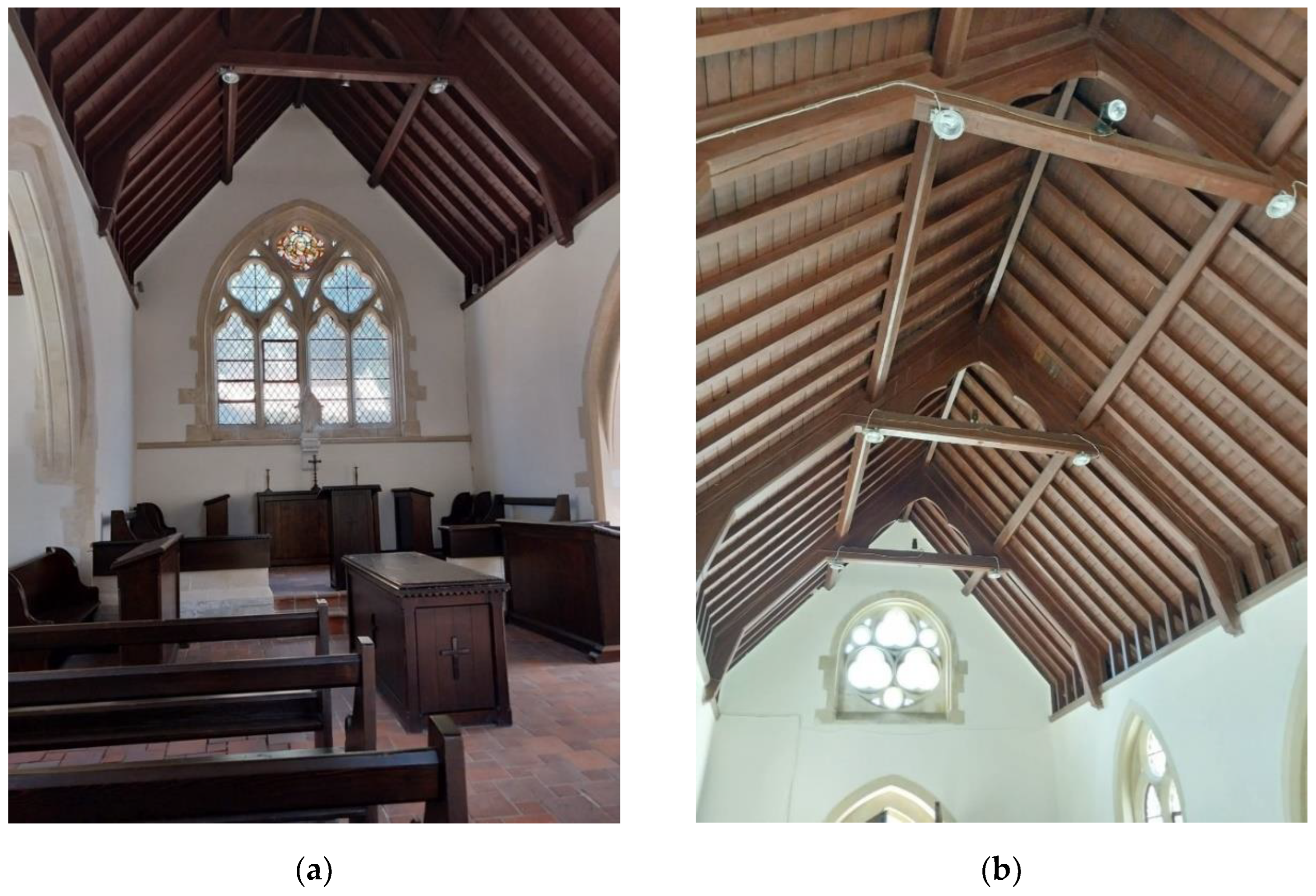
The interior of the chapel is equally restrained in character (Figure 6). The floor is covered with brick-coloured ceramic tiles. The altar area is raised towards the apse, where a layout is arranged to accommodate a coffin during ceremonies. The wooden benches in the nave and transepts provide seating for approximately 60–80 people. The chapel thus contributes to the architectural value of the cemetery while also supporting its continuing ritual function.
5.5. Documentation, Digitisation, and Sustainable Conservation
The recent conservation history of the Feriköy Protestant Cemetery shows how documentation, maintenance, digitisation, and public access have become central components of sustainable cemetery heritage. Between 1997 and 2005, the American Committee led several preservation initiatives related to the graves and the maintenance of the chapel, using the bequest of Istanbul-born Emma “Charlie” Ehrmann (1921–1995) [26]. As part of this process, aerial photographs were used to prepare plans of the cemetery and its grave structures. Additional phases included the construction of a visitor centre, the preparation of an exhibition, and the publication of a book. The chapel and visitor-related spaces have also occasionally been used for exhibitions and receptions after funeral ceremonies.
In 2012, the cemetery management board requested support from the German Archaeological Institute Istanbul and the Orient-Institut Istanbul to make the grave and family records of those buried in Feriköy accessible. Digital images of two official burial registers, covering the periods 1858–1893 and 1894–1991, were produced and made available for use by relatives and researchers. Between 2013 and 2016, Richard Wittmann, Deputy Director of the Orient-Institut Istanbul, and a team of young academics transcribed these records and compiled them into a database in three languages: French, English, and German [26]. Today, the research initiative, mainly composed of academics, continues to support maintenance, restoration, reinforcement, documentation, and conservation-related efforts at the Feriköy Protestant Cemetery.
These initiatives demonstrate that sustainable conservation in cemetery heritage requires more than the physical repair of architectural elements. It also depends on documentation, archival access, digitisation, public interpretation, multi-actor governance, and continuous maintenance. In this sense, the Feriköy Protestant Cemetery provides a valuable model for understanding how multicultural cemetery heritage can be preserved as both a material site and a documentary memory system.
Table 2.
Heritage values and conservation implications of the Feriköy Protestant Cemetery.
| Heritage value | Evidence from Feriköy Protestant Cemetery | Conservation implication |
| Historical value | Allocation in 1857; opening in 1859; transferred gravestones and remains from Grand Champs / Taksim | The site should be conserved in relation to nineteenth-century modernization and cemetery relocation history |
| Multicultural value | British, Prussian/German, American, Dutch, Swedish, Swiss, Hungarian, Armenian Protestant and Levantine connections | Multi-actor heritage governance should be maintained and made visible |
| Architectural value | Neo-Gothic chapel, monumental graves, Wall of Monuments, collective burial monuments | Conservation should include both the chapel and funerary monuments |
| Documentary value | Burial registers, digitised records, trilingual database | Digital heritage management and researcher access should be strengthened |
| Urban ecological value | Green character within a dense urban district | The cemetery should be considered as part of urban green heritage and open-space policy |
| Memory value | Transferred gravestones, bones, collective monuments, records of communities and individuals | Interpretation should highlight spatial displacement and continuity of multicultural memory |
6. Discussion: Heritage Values and Conservation Challenges
This study demonstrates that non-Muslim cemeteries in Istanbul should be interpreted not only as religious or funerary spaces, but also as multicultural urban heritage landscapes shaped by spatial displacement, minority memory, legal-administrative structures, and conservation practices. The historical development of these cemeteries reveals that burial grounds were repeatedly involved in processes of urban change. Particularly from the nineteenth century onwards, the acceleration of Westernisation, the northward expansion of the city, and the production of new public spaces transformed the location and visibility of many non-Muslim cemeteries. In several cases, cemetery areas in central districts were relocated, fragmented, or converted into public and urban spaces, while their material traces were partly erased or transferred elsewhere [6,8,9].
The Feriköy Protestant Cemetery is significant because it preserves several layers of this transformation within a single site. It is at once an active burial ground, a repository of transferred memorial elements from earlier cemetery landscapes, a site of multinational governance, and a cultural landscape containing architectural, funerary, documentary, and ecological values. The gravestones, chapel, Wall of Monuments, collective memorials, burial registers, and digitised records together form a multi-layered archive of Istanbul’s Protestant, Levantine, diplomatic, and wider non-Muslim presence. In this respect, the cemetery functions not only as a place of commemoration but also as a spatial document of Istanbul’s multicultural history.
The case also shows that cemetery heritage cannot be reduced to the conservation of individual monuments or buildings. The protection of Feriköy Protestant Cemetery requires an integrated approach that considers the chapel, burial plots, gravestones, transferred fragments, archival records, circulation system, vegetation, boundary walls, and administrative structure as interdependent components of the same heritage landscape. Its multinational management model, historically rooted in the involvement of several consular authorities, offers a distinctive example of multi-actor heritage governance [24,25]. This governance structure has enabled the continuity of maintenance, documentation, and institutional care, yet it also points to the need for long-term coordination between diplomatic actors, local authorities, researchers, conservation experts, and the wider public.
The conservation challenges of non-Muslim cemeteries in Istanbul can be grouped under four main issues. The first is material conservation, including the maintenance of gravestones, monuments, walls, inscriptions, chapels, and other architectural elements exposed to environmental decay, vandalism, neglect, or urban pressure. The second is documentary conservation, which concerns the preservation, digitisation, translation, and accessibility of burial records and archival materials. The work carried out on the Feriköy burial registers between 2012 and 2016 demonstrates the importance of digital documentation for both family history and academic research [26]. The third issue is urban conservation, since cemeteries located within dense urban districts are often treated as residual spaces rather than as heritage landscapes. The fourth issue is public interpretation, which involves making the multicultural and historical significance of these cemeteries visible without compromising their dignity, sacredness, or continuing funerary function.
In this context, Feriköy Protestant Cemetery provides a productive model for rethinking the conservation of minority cemetery heritage in Istanbul. It demonstrates that surviving cemeteries should not be approached as isolated remnants of the past, but as living memory spaces that continue to connect urban history, community identity, architectural heritage, archival knowledge, and contemporary conservation governance. The challenge is therefore not only to preserve physical remains, but also to sustain the cultural meanings, institutional responsibilities, and public awareness that allow such sites to remain legible within the changing urban landscape.
7. Conclusion
This article has examined non-Muslim cemeteries in Istanbul as multicultural urban heritage landscapes, focusing on the Feriköy Protestant Cemetery as a representative case. The study has shown that these cemeteries are not merely burial grounds, but layered heritage sites where religious affiliation, minority identity, urban transformation, material memory, and conservation governance intersect. Their historical trajectories reveal broader processes of relocation, disappearance, survival, and reinterpretation within the changing urban structure of Istanbul.
The Feriköy Protestant Cemetery is particularly important because it brings together several dimensions of cemetery heritage. Its establishment was connected to the relocation of earlier burial grounds from Taksim and Grand Champs; its administration reflects a rare multinational governance model; its chapel, gravestones, collective monuments, and transferred memorial elements represent architectural and material heritage values; and its burial records and digitisation initiatives demonstrate the importance of documentary preservation. These characteristics make Feriköy not only an active cemetery, but also a living archive of Istanbul’s multicultural urban memory.
The article argues that the conservation of non-Muslim cemeteries should move beyond the narrow protection of individual monuments. A more comprehensive approach is required—one that combines architectural conservation, grave and inscription documentation, archival digitisation, landscape maintenance, public interpretation, and multi-actor governance. In this framework, cemetery heritage should be integrated into wider discussions of urban memory, cultural landscape, minority heritage, and sustainable conservation.
The case of Feriköy Protestant Cemetery also suggests a broader policy implication for Istanbul. Surviving non-Muslim cemeteries should be systematically documented, mapped, maintained, and interpreted as part of the city’s multicultural heritage infrastructure. Lost, relocated, or transformed cemetery sites should also be recorded in order to make visible the spatial histories that have shaped the modern city. Protecting these sites is therefore not only a matter of conserving funerary architecture, but also of sustaining cultural continuity, historical justice, and urban memory.
In conclusion, Feriköy Protestant Cemetery demonstrates how a cemetery can operate simultaneously as a burial ground, a cultural landscape, a documentary archive, a governance model, and a space of memory. Its conservation offers an opportunity to rethink the place of minority heritage within Istanbul’s contemporary urban identity and to develop more inclusive approaches to the preservation of multicultural urban landscapes.
Author Contributions
Conceptualization, M.M.F, İ.C. and S.G.Y.; methodology, İ.C.; software, İ.C.; validation, İ.C..; formal analysis, İ.C..; investigation, M.M.F, İ.C. and S.G.Y.; resources, İ.C..; data curation, M.M.F, İ.C. and S.G.Y.; writing—original draft preparation İ.C.; writing—review and editing, İ.C..; visualization, İ.C.; supervision, İ.C. All authors have read and agreed to the published version of the manuscript.”.
Funding
This research received no external funding.
Institutional Review Board Statement
Institutional Review Board Statement: Not applicable. This study did not involve human participants, human data, human tissue, animals, or any intervention requiring ethical approval.
Informed Consent Statement
Not applicable. This study did not involve human participants, interviews, surveys, identifiable living individuals, or any personal data requiring informed consent.
Data Availability Statement
The data supporting the findings of this study are included within the article. The study is based on literature review, historical documentation, mapping, field observation, and author-produced photographic documentation. No additional publicly archived datasets were generated for this study.
Acknowledgments
During the preparation of this manuscript, the authors used OpenAI’s ChatGPT (GPT-5.5 Thinking) for language editing and structural refinement. The authors reviewed and edited the output and take full responsibility for the content of this publication.
Conflicts of Interest
The authors declare no conflicts of interest.
Abbreviations
The following abbreviations are used in this manuscript:
| IBB | Istanbul Metropolitan Municipality (İstanbul Büyükşehir Belediyesi) |
| BOA | Ottoman Archives of the Prime Ministry (Başbakanlık Osmanlı Arşivi) |
References
- Karataş, A. İ. Osmanlı Devleti’nde Gayrimüslimlere Tanınan Din ve Vicdan Hürriyeti. TC. Uludağ Üniversitesi İlahiyat Fakültesi Derg. 2006, Sayı:1, ss.267–284. [Google Scholar]
- Eryılmaz, B. Osmanlı Devleti’nde Millet Sistemi. In Yayıncılık, İstanbul; 1992. [Google Scholar]
- Adaklı, I. Osmanlı’da Kültürel Çoğulculuk Biçimleri ve Millet Sistemi; Sakarya University, Institute of Social Sciences, Department of Social Structure and Social Change Analysis, Research Paper: Sakarya, Turkey, 2013. [Google Scholar]
- Gök, A.A. Osmanlı İmparatorluğu’nda Gayrimüslimler: Millet Sistemi, Tarihi Gelişimi ve Milletlerarası Antlaşmalar. Türkiye Ve Siyaset 2001, 3, 101–108. [Google Scholar]
- Gürçay, S. İstanbul’un İnanç ve İnanışlarına Panoramik Bir Yaklaşım. Aydın Toplum Ve İnsan Derg. 2017, 3, 35–56. [Google Scholar]
- Alp, S. İstanbul’daki Rum, Ermeni ve Levanten Mezarlıklarında 19. Yüzyıl Figürlü Mezar Anıtları. Ph.D. Thesis, Anadolu Uni-versity, Institute of Social Sciences, Department of Art History, Eskişehir, Turkey, 2015. [Google Scholar]
- Brillari, D.; Godoli, E. İstanbul 1900: Art Nouveau Mimarisi ve İç Mekânlar; YEM Yayınları: İstanbul, Turkey, 1997. [Google Scholar]
- Akıncı Kurtuldu, G. Taksim Kentsel Tasarım Yarışması: Kamusal Belleğe Müdahalede Katılımcı(sız) Bir Yaklaşım. MUJAD 2023, 14, 22–47. [Google Scholar] [CrossRef]
- Gülersoy, Ç. Taksim: Bir Meydanın Hikayesi; Turing Yayınları: İstanbul, Turkey, 1986. [Google Scholar]
- Bey, Abdülaziz. Osmanlı Adet, Merasim ve Tabirleri; Günay, Arısan, Arısan, D.K., Eds.; Tarih Vakfı Yurt Yayınları: İstanbul, Turkey, 2000. [Google Scholar]
- İnciciyan, P.Ğ. 18. Asırda İstanbul; Andreasyan, H.D., Translator; İstanbul, Turkey, 1976. [Google Scholar]
- Benlisoy, Y. Rum Mezarlıkları. In Geçmişten Günümüze Beyoğlu; Anadol, K., et al., Eds.; TAÇ Vakfı: İstanbul, Turkey, 2004; Volume 2, p. 505. [Google Scholar]
- Şenol, E. Pera-Galata-Samatya; Pozitif Matbaacılık: Ankara, Turkey, 2006. [Google Scholar]
- Akın, N. 19. Yüzyılın İkinci Yarısında Galata ve Pera; Literatür Yayınları: İstanbul, Turkey, 1998. [Google Scholar]
- Kömürcüyan, E.Ç. İstanbul Tarihi: XVII. Asırda İstanbul; Pamukciyan, K., Ed.; Andreasyan, H.D., Translator; Eren Yayınları: İstanbul, Turkey, 1988. [Google Scholar]
- Hançer, E. Ermeni Kiliseleri ve Mezarlıklar. In Geçmişten Günümüze Beyoğlu; Anadol, K., et al., Eds.; TAÇ Vakfı: İstanbul, Turkey, 2004; Volume 2. [Google Scholar]
- Marmara, R. İstanbul Latin Cemaati ve Kilisesi: Bizans İmparatorluğu’ndan Günümüze; Özen, S., Translator; Kitap Yayınevi: İstanbul, Turkey, 2006. [Google Scholar]
- Kenanoğlu, M.M. Osmanlı İmparatorluğu’nda Dinlerarası İlişkiler (14–20. Yüzyıllar). Milel Ve Nihal 2009, 6, 103–164. [Google Scholar]
- Türkan, A. İstanbul Ermenilerinin Dini, Toplumsal ve Kurumsal Problemleri: Mezarlıklar Sorunu (19. YY). Güneydoğu Avrupa Araştırmaları Derg. 2012, 21, 29–56. [Google Scholar]
- İstanbul Büyükşehir Belediyesi. 2022 Faaliyet Raporu. Available online: https://ibb.istanbul/BBImages/Slider/Image/2022_faaliyet_raporu_v2_26-04-23.pdf (accessed on 2 July 2026).
- Kazel, E. İstanbul’da Nekrocoğrafya (Mezarlıklar): Mekânsal Planlama Yönünden Bir Değerlendirme. Ege Coğrafya Derg. 2023, 32, 273–287. [Google Scholar] [CrossRef]
- SALT Research Archives. Feriköy Protestant Cemetery on the 8th Pervititch Map. Available online: https://archives.saltresearch.org/handle/123456789/118028 (accessed on 2 July 2026).
- Johnson, B. Feriköy Protestan Mezarlığı; Cingi, H., Translator; Fotokitap Fotoğraf Ürünleri: İstanbul, Turkey, 2002. [Google Scholar]
- Johnson, B.; Wittmann, R. İstanbul Feriköy Protestan Mezarlığı; Koç, C.; Abi, C.; Simavi, Z., Translators; Ofset Yapımevi: İstanbul, Turkey, 2021. [Google Scholar]
- Fındıkgil-Doğuoğlu, M.M. 19. Yüzyıl İstanbul’unda Alman Mimari Etkinliği. Ph.D. Thesis, Istanbul Technical University, Institute of Science and Technology, Department of Architecture, Architectural History Program, İstanbul, Turkey, 2002. [Google Scholar]
- Er, O. Sanat ve Mimarlık Tarihi Açısından Bomonti Semtinin Gelişimi. Master’s Thesis, Mimar Sinan Fine Arts University, Institute of Social Sciences, Department of Art History, Turkish-Islamic Arts Program, İstanbul, Turkey, 2021. [Google Scholar]
Figure 1.
Methodological framework of the article.

Figure 2.
Map showing existing and non-existent cemeteries on the European side (Prepared by the authors using a base map obtained from the publicly accessible Istanbul Metropolitan Municipality map service.).
Figure 2.
Map showing existing and non-existent cemeteries on the European side (Prepared by the authors using a base map obtained from the publicly accessible Istanbul Metropolitan Municipality map service.).
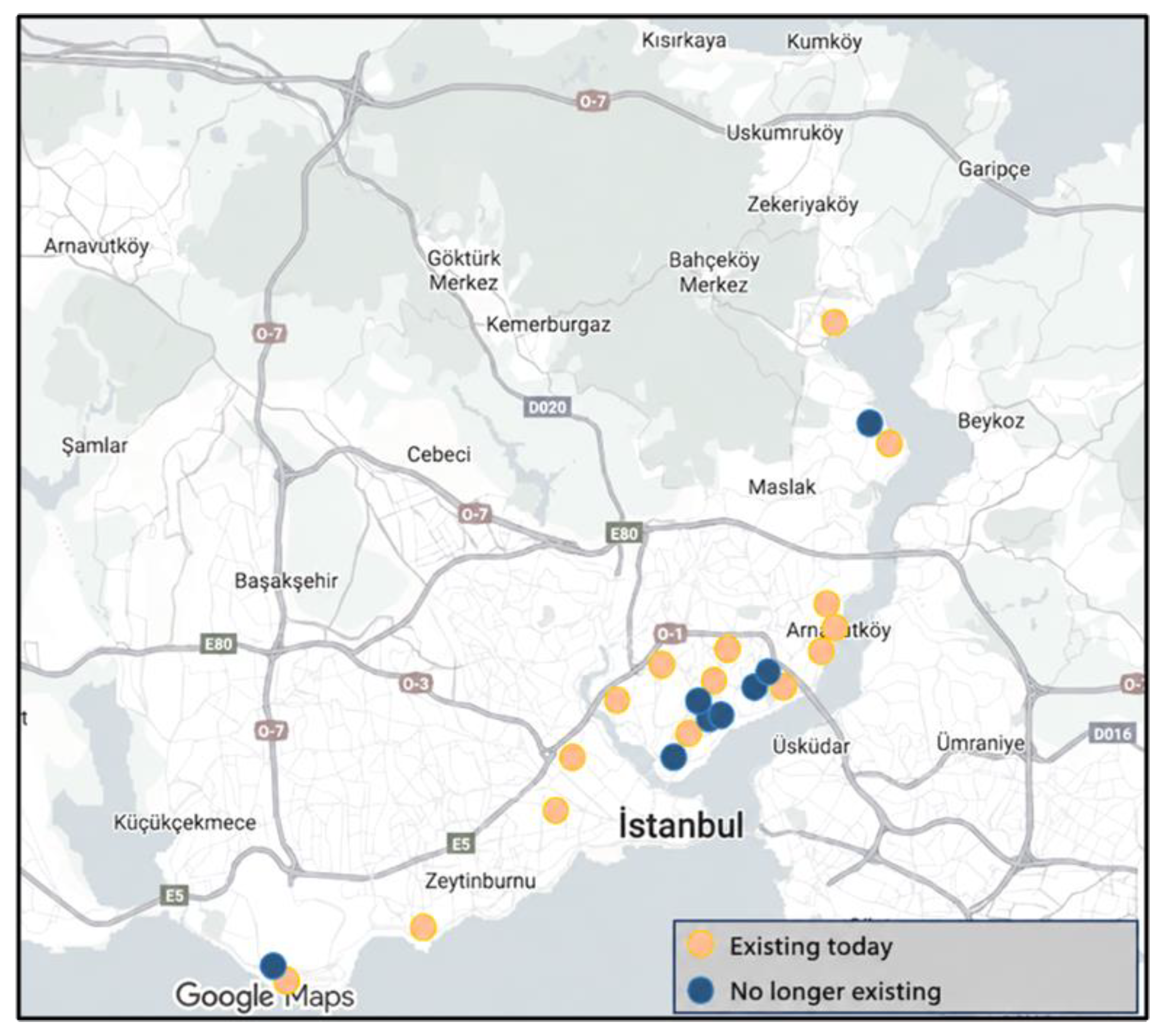
Figure 3.
Feriköy Protestant Cemetery on the 8th Pervititch map dated January 1925. (SALT Research Archives) Permission request in progress.
Figure 3.
Feriköy Protestant Cemetery on the 8th Pervititch map dated January 1925. (SALT Research Archives) Permission request in progress.
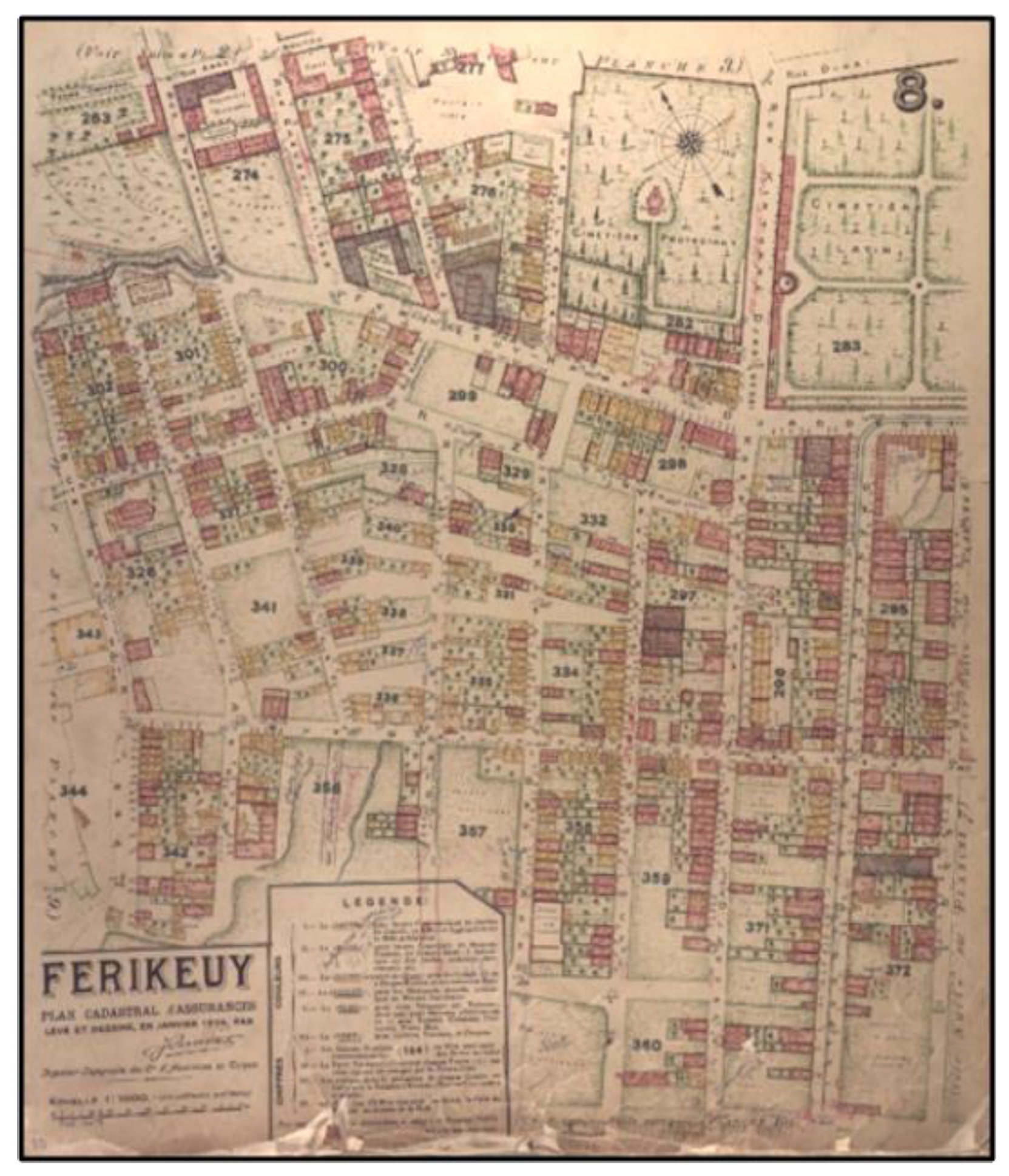
Figure 4.
Photographs of the Feriköy Protestant Cemetery (by the authors in 2024).
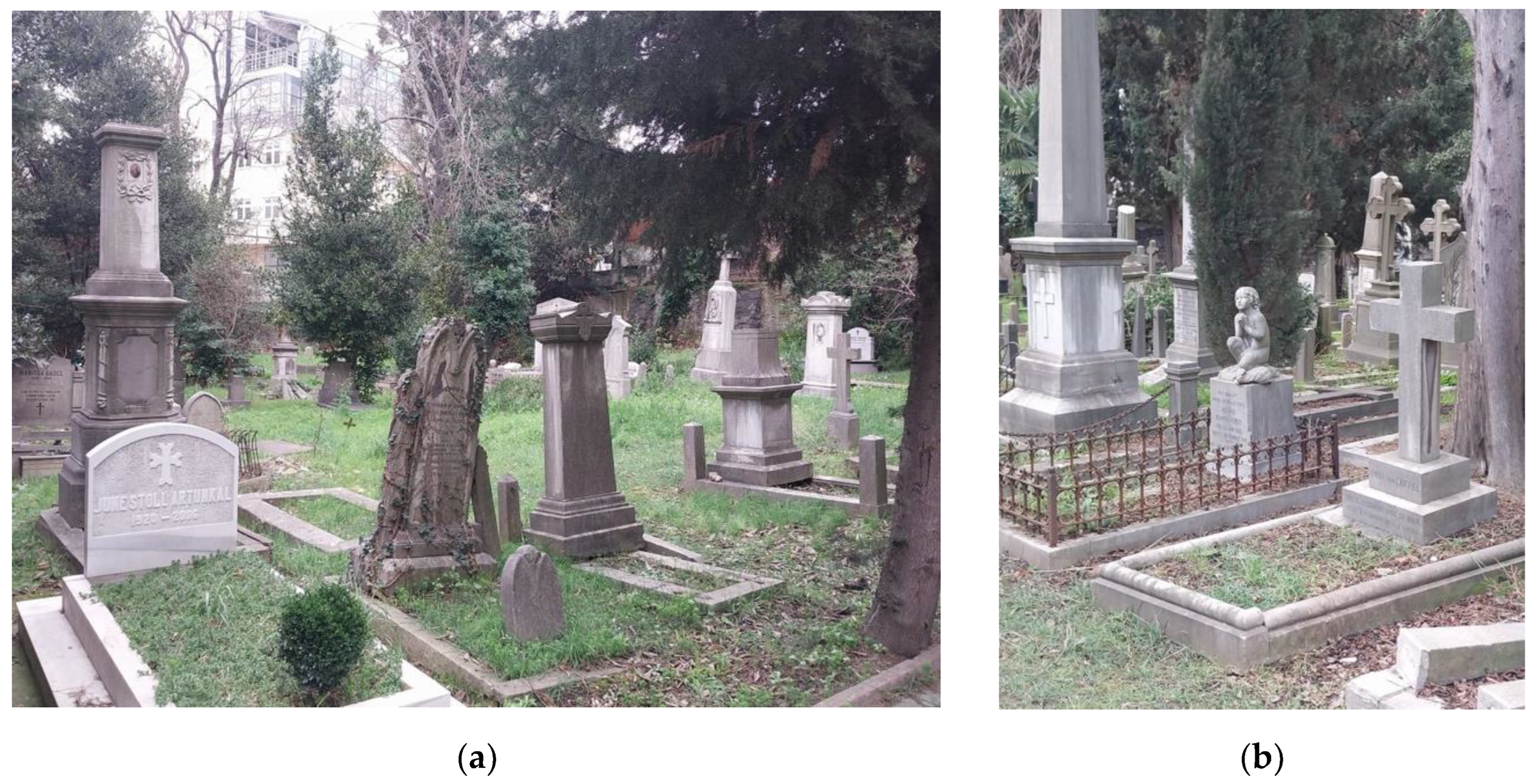
Figure 5.
Photographs of the chapel (by the authors in 2024).
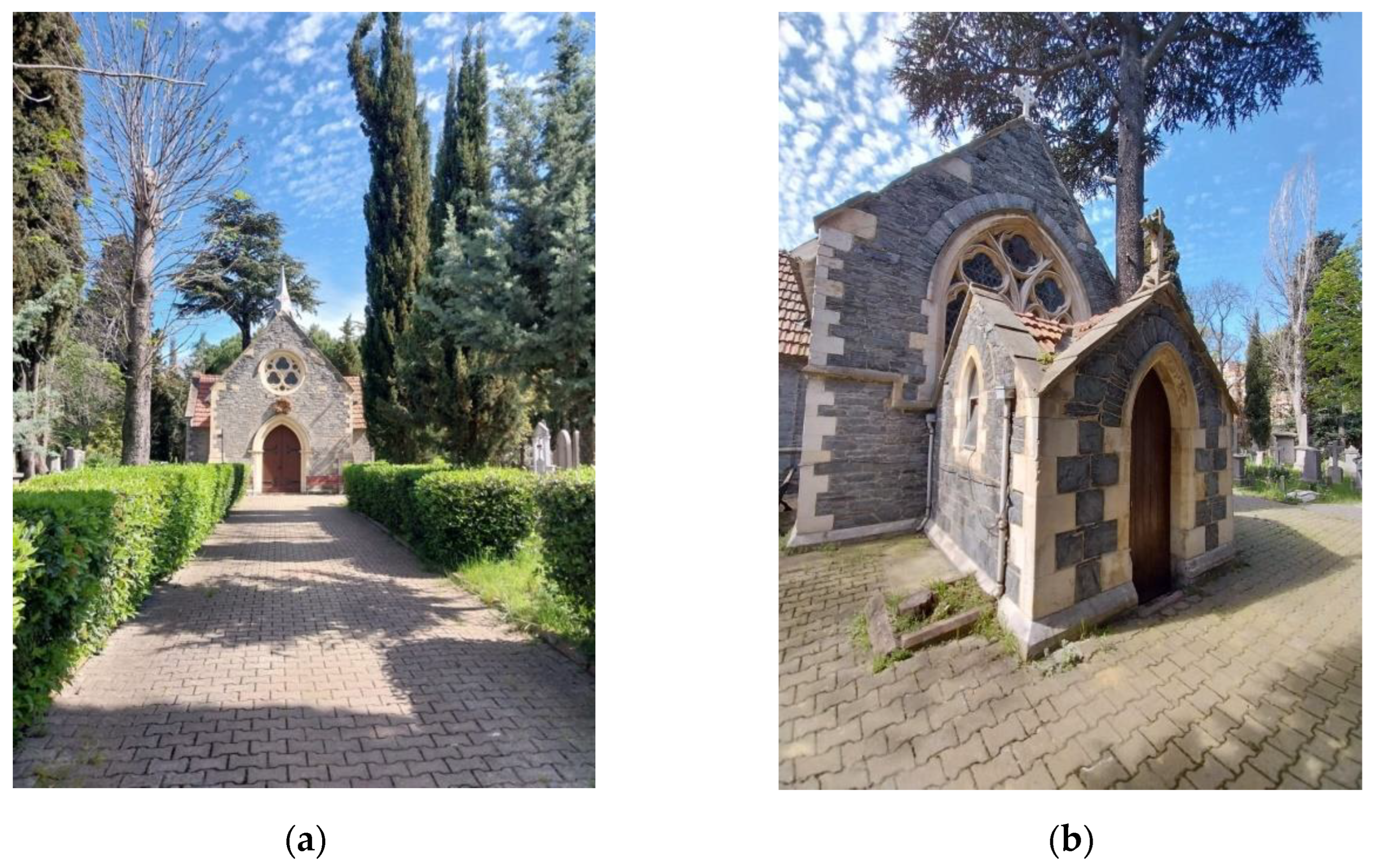
Figure 6.
Photographs of the chapel's interior (taken by the authors in 2024).
Disclaimer/Publisher’s Note: The statements, opinions and data contained in all publications are solely those of the individual author(s) and contributor(s) and not of MDPI and/or the editor(s). MDPI and/or the editor(s) disclaim responsibility for any injury to people or property resulting from any ideas, methods, instructions or products referred to in the content. |
© 2026 by the authors. Licensee MDPI, Basel, Switzerland. This article is an open access article distributed under the terms and conditions of the Creative Commons Attribution (CC BY) license (http://creativecommons.org/licenses/by/4.0/).
Copyright: This open access article is published under a Creative Commons CC BY 4.0 license, which permit the free download, distribution, and reuse, provided that the author and preprint are cited in any reuse.