
Submitted:
06 July 2026
Posted:
07 July 2026
You are already at the latest version
Abstract
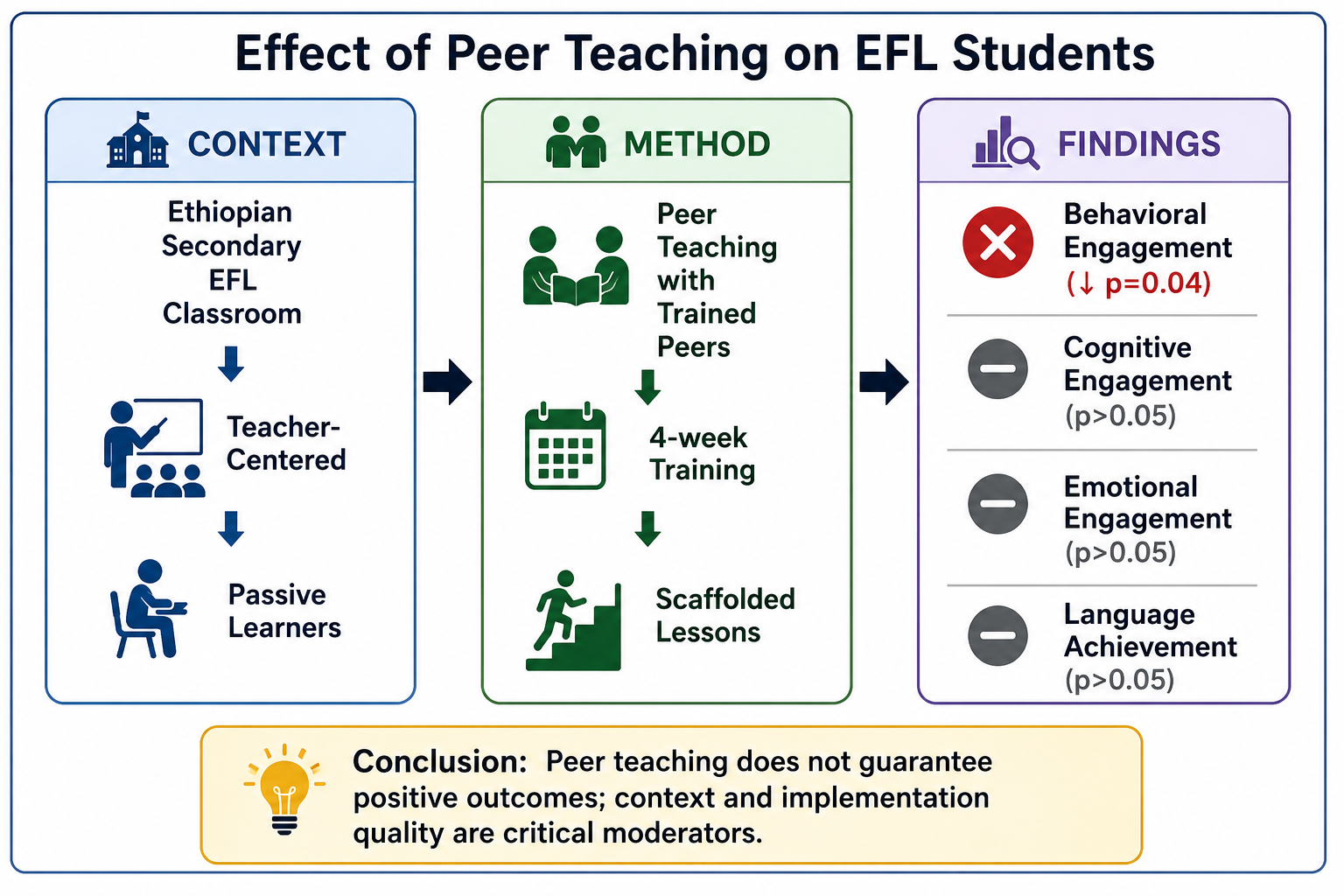
Peer teaching has been proposed as a pedagogical mechanism to foster independent learning, willingness, and confidence in students' learning processes (Doyle, 2008). However, the empirical evidence supporting these claims in English as a Foreign Language (EFL) contexts remains limited, with few studies examining the applicability and effectiveness of peer teaching approaches in African educational settings. This quasi-experimental study examines the effect of peer teaching on students' classroom engagement—comprising behavioral, cognitive, and emotional dimensions—and English language achievement in Ethiopian secondary EFL classrooms. The study involved 91 Grade 11 students from two randomly selected sections at Dangila Higher Education Preparatory School. Six students from the experimental group (n=45) were selected and trained to peer-teach grammar lessons over a four-week period, while the control group (n=42) continued with conventional teacher led instruction. Data were collected using a classroom engagement questionnaire (Cronbach's α = 0.82) and grammar tests administered both before and after the intervention, with independent samples t-tests employed for statistical analysis. The findings revealed no statistically significant effect of peer teaching on either students' engagement or language achievement. Unexpectedly, the experimental group showed a slight decline in behavioral engagement compared to the control group, while no significant differences were observed for cognitive or emotional engagement, nor for language achievement between the two groups. These findings challenge assumptions about the universal effectiveness of peer teaching in EFL contexts, suggesting that contextual factors—including learner readiness, implementation quality, and cultural considerations—may significantly moderate its pedagogical impact. The study underscores the critical need for careful consideration of implementation conditions and learner characteristics when adopting peer teaching approaches in similar educational settings, and highlights the importance of contextual adaptation rather than uncritical adoption of pedagogical innovations.
Keywords:
peer teaching
; classroom engagement
; EFL learning
; student-centered instruction
; Ethiopian secondary education
1. Introduction
Quality education in general quality second language education in particular has been assumed to be achieved through active involvement of students in the teaching and learning process. Active engagement in English classroom learning processes has been consistently associated with improved academic performance and deeper learning outcomes. Scholars have reached a common consensus on the pedagogical effectiveness of encouraging students to take greater responsibility for their learning tasks and activities (Darling-Hammond, cited in Doyle, 2008; Vijayalakshmi, 2008).
Student engagement in ELT encompasses active learning and student-centered approaches that require learners to find meaningful opportunities to talk, listen, read, write, and reflect on various issues. As Vijayalakshmi (2008) notes, active learning EFL classrooms usually indicates behaviors like student readiness for participation, emphasis on developing language skills, promotion of higher-order thinking, and encouragement of diverse learning activities including conversation, discussion, reading, and writing. In student-centered lessons, learners take greater responsibility for carrying out learning tasks and activities.
However, implementing student-centered classroom instruction has become a significant challenge not only in mainstream education but also in second language education classrooms. Doyle (2008) notes that employing student-centered teaching becomes difficult primarily because students often resist the extra effort required by this mode of instruction. That is, students may believe that classroom instruction should be teacher-directed and may be unwilling to take learning risks or face challenges associated with handling learning tasks independently.
This challenge is particularly acute in schools of developing countries like Ethiopia where contextual factors such as large classrooms, limited resources, and compromised pedagogical competence of teachers create additional barriers. A considerable gap exists between what teachers claim to implement (communicative-focused instruction) and what they actually perform in day-to-day instruction (Abebe & Desta, 2021; Alemu & Getachew, 2020). Teachers may attempt to involve students through classroom movement and vocal projection, yet students often remain disengaged—chatting, moving around, or focusing on topics unrelated to the lesson.
Creating interactive and student-centered English language lessons remains one of the prevailing pedagogical problems in Ethiopian education. According to Doyle (2008), student-centered instruction can be implemented effectively when teachers involve students in peer teaching. Getting students to teach one another helps them play a significant role in making teaching and learning more interactive and student-driven. As Doyle notes, peer teaching also develops students' independent learning, willingness, ability, and confidence to accept increased responsibility for their own learning.
Meta-analyses of peer-mediated learning have demonstrated its effectiveness across multiple outcome types, including language, academic, and social outcomes for English language learners (Cole, 2018). A meta-analysis by Leung (2019) reported a large overall effect size for peer tutoring on L2 writing performance (Hedges' g = 0.84), suggesting substantial potential for peer-assisted learning approaches. However, the effectiveness of peer teaching has been shown to vary considerably depending on implementation factors, including modality, training, and contextual conditions (Topping, 2015).
In Ethiopian EFL contexts, the possible positive effects of peer teaching on student-centered instruction and overall learning achievement have not been systematically examined. The present study addresses this gap by investigating the effects of peer teaching on secondary students' classroom engagement (behavioral, cognitive, and emotional dimensions) and language performance in EFL learning.
Research Questions
- How does peer teaching affect students' behavioral engagement in EFL classroom instruction?
- How does peer teaching affect students' cognitive engagement in EFL classroom instruction?
- How does peer teaching affect students' emotional engagement in EFL classroom instruction?
- Does peer teaching help students develop their English language proficiency?
2. Literature Review
2.1. Theoretical Foundations of Peer Teaching
Peer teaching, as a form of peer-assisted learning, is grounded in two complementary cognitive theories: Piaget's cognitive constructivism and Vygotsky's zone of proximal development (ZPD). These theories provide complementary lenses for understanding how peer interaction facilitates learning, and together they form the theoretical foundation upon which contemporary peer teaching models are built.
Piagetian Perspective: Cognitive Conflict and Equilibration
Piaget's theory underlines the importance of cognitive conflict aroused through interactions with more competent peers. That is, when learners encounter ideas or perspectives that differ from their existing cognitive structures, they experience a state of disequilibrium that motivates them to restructure their understanding. Peer interactions are particularly valuable in this regard because peers, operating at similar but slightly different levels of understanding, can challenge each other's thinking in ways that promote cognitive growth. De Lisi and Golbeck (1999) elaborated on how Piagetian theory applies to peer learning, by stating that the social nature of peer interaction creates opportunities for learners to engage in perspective-taking and argumentation that facilitate cognitive development. The Piagetian approach positions peer interaction as a catalyst for individual cognitive restructuring, wherein the social conflict generated during peer discussion stimulates intellectual advancement.
Vygotskian Perspective: The Zone of Proximal Development and Co-Construction
Vygotsky's sociocultural theory serves as a strong foundation for peer teaching, suggesting that learning occurs through social interaction and that learners can achieve more with assistance than independently. The ZPD represents the gap between what a learner can do independently and what they can achieve with guidance from a more knowledgeable other. This theoretical insight has profound implications for peer teaching. That is, when peers work together, they can scaffold each other's learning by providing support that is appropriately matched to the learner's current level of competence. Peer teaching positions students as both tutors and tutees, creating opportunities for reciprocal scaffolding that can enhance learning outcomes for both participants.
Building on Vygotsky's foundation, O'Donnell and King (1999) advanced cognitive perspectives on peer learning, emphasizing that effective peer interactions require structured approaches that promote cognitive elaboration and deep processing . The cognitive-elaborative perspective suggests that peer teaching benefits tutors by requiring them to organize, explain, and elaborate on material, thereby deepening their own understanding. Person and Graesser (1999) demonstrated how discourse evolves during cross-age tutoring, showing that effective peer tutors engage in questioning, explaining, and monitoring behaviors that benefit both participants. Similarly, King (1999) identified discourse patterns that mediate peer learning, highlighting the importance of question-asking and explanatory talk in promoting cognitive growth.
Integration and Contemporary Extensions
The Piagetian and Vygotskian perspectives are not mutually exclusive but rather complementary. While Piagetian theory emphasizes cognitive conflict and restructuring at the individual level, Vygotskian theory emphasizes co-construction and the social genesis of learning. Contemporary peer learning models draw on both traditions to create instructional designs that leverage both cognitive conflict and collaborative scaffolding.
Webb and Farivar’s study (1999) showed that productive group interaction in middle school mathematics depends on the quality of discourse patterns and the nature of helping behaviors among peers. Their research revealed that not all peer assistance is equally effective; rather, the quality of explanations and the depth of cognitive processing during peer interaction determine learning outcomes. This finding has important implications for peer teaching, suggesting that peer interaction must be structured to promote deep cognitive engagement rather than superficial knowledge transfer.
Hogan and Tudge (1999) examined implications of Vygotsky's theory for peer learning, emphasizing that the ZPD is not a fixed property of the learner but is co-constructed through interaction. This perspective highlights the dynamic, emergent nature of peer learning and underscores the importance of mutual engagement and joint attention in facilitating cognitive growth. The concept of "co-construction"—the generation of joint understanding through mutual support and scaffolding—has become central to contemporary understanding of peer learning.
as Figure 1 above shows, peer teaching operates through both cognitive conflict (challenging existing understanding) and co-construction (building new understanding together), supported by structured peer interaction.
2.2. Peer Teaching and Classroom Engagement
Classroom engagement has three interrelated dimensions: behavioral (participation, effort, attention, persistence), emotional (interest, enjoyment, confidence), and cognitive (self-regulation, strategy use, willingness to invest effort) engagement (Fredricks, Blumenfeld, & Paris, 2004; MacIntyre et al., 2019). Peer teaching has been theorized to enhance engagement across all three dimensions by increasing student autonomy, fostering a sense of responsibility, and creating more interactive learning environments (Doyle, 2008; Wang & Degol, 2014).
Chun and Cennamo (2024) developed a comprehensive theoretical model of peer learning incorporating scaffolding strategies. Their model specifies how peers can provide different levels of scaffolding based on learners' characteristics:
High-level scaffolding is utilized when learners demonstrate low prior knowledge, few cognitive tactics, high apprehension, low engagement, and an external locus of control. In such settings, supplementary tactics are typically more appropriate, including providing instructions, assessing learners' learning, and presenting recommendations.
Low-level scaffolding is supplied when mature learners possess high prior knowledge, various cognitive tactics, malleable and high motivation, and low concern. In such educational settings, generative approaches—including generalizing, logical thinking, and forecasting—can be encouraged or adopted.
Chun and Cennamo (2024) further identified two types of scaffolding: Conceptual scaffolding- provides assistance for learners to prioritize what is essential, helps them find solutions to complicated problems, recognize main ideas and notions related to the learning activity, and correct common misapprehensions. Strategic scaffolding- helps learners with alternate perspectives or skills for studying, and recommendations for original questions. Through strategic scaffolding, learners can identify and assess information, as well as receive guidance to find appropriate tactics for problem-solving.
Generally, scaffolding consists of two guidance mechanisms. These are: Indirect instructions such as hints, questioning, and prompting, which help learners, clarify problem-solving procedures and stimulate higher-order thinking. Direct instructions like feedback, explanation, and modeling. Effective feedback offers explicit instructions and helps learners comprehend subject matter. Explanation facilitates causal studying and generalization of broad patterns. Modeling allows learners to observe and study process abilities, thinking abilities, and problem-solving abilities.
Figure 2 adapted from Chun and Cennamo's (2024) theoretical model of peer learning incorporating scaffolding strategies.
Empirical Studies on Peer Teaching and Engagement
Studies on interaction strategy instruction has showed that training learners to interact effectively with peers promotes greater generation of idea units, language-related episodes, instances of talk encouragement and reflection, and positive emotion during peer interaction (Dao & McDonough, 2020). However, factors such as task features, perceptions of peers, and proficiency level may affect learners' use of these strategies, suggesting that engagement is not a simple product of instructional design but is mediated by individual and contextual variables.
Ma (2025) applied the Directed Motivational Currents (DMCs) framework to a mutual-benefit peer teaching model in foreign language education. The study found that a DMCs-informed peer teaching model sustained both teacher and learner motivation through four dimensions: vision-based goals, triggering factors, facilitative structure, and positive emotionality. Quantitative results showed that most learners were driven by intrinsic interest, maintained participation, and improved their quiz performance over the semester. Qualitative themes highlighted vivid learner and teacher visions, diverse triggers, supportive routines, and positive emotions for both groups . This research demonstrates how structured peer teaching programs can create motivational conditions that enhance sustained engagement. McKellar (2020) also investigated the role of peer groups in shaping student engagement and the result showed that students choose friends with similar perceptions of teaching practices and that different facets of student engagement relate to peer groups in distinct ways. Peer coaching approaches have been shown to enhance peers' engagement in active learning, communicative competences, and critical thinking about teaching, though the potential of peer coaching to develop specialized professional knowledge may be limited if important issues are not adequately addressed in peer dialogs.
In resource-limited settings, peer teaching has been found to stimulate high-level processing of information during preparation and delivery, collaborative and independent research, as well as feedback on teaching, thereby enhancing intrinsic motivation through the fulfilment of needs for autonomy, competence, and relatedness (Ntoumanis et al., 2020). This finding is particularly relevant to the present study, which investigates peer teaching in a resource-constrained Ethiopian context.
2.3. Peer Teaching and Language Achievement
Meta-Analytic Evidence
Research on peer teaching and language achievement has shown mixed results, though meta-analyses generally support the effectiveness of peer-assisted learning. Cole’s (2018) meta-analysis study on peer-mediated learning for English language learners reported positive effects across multiple outcome types, including language, academic, and social outcomes, suggesting that peer-mediated approaches can be effective for diverse learner populations.
A recent meta-analysis by Leung (2019) reported a large effect size for peer tutoring on L2 writing performance (g = 0.84), providing robust evidence for the effectiveness of peer-assisted learning in language education. Similarly, Tenenbaum et al. (2020) conducted a meta-analysis examining how effective peer interaction is in facilitating learning, finding that peer interaction has positive effects but that effects vary depending on the comparison condition, with peer interaction sometimes having negative effects when compared to interaction with adults.
Contextual Variations
Positive findings for peer teaching on language achievement have been reported in various contexts, including studies by Lourdunathan and Menon (2005) in India, Nguyet and Mai (2012) in Vietnam, and Garcia (2016) in Spain. However, Spratt and Leung (2000) questioned the effectiveness of peer teaching on students' language learning engagement and proficiency improvement in their study at Hong Kong Polytechnic University, suggesting that implementation conditions may significantly moderate outcomes.
Dao and McDonough (2020) noted that although pedagogical interventions can promote effective peer interaction, previous interventions have pre-selected certain strategies without considering how learners perceive these strategies and whether they work for all learners. Additionally, factors such as learners' L1 use, perceptions of peers' behavior and proficiency level, and collaborative mindsets may inhibit the benefits of peer interaction.
Mutual-Benefit Peer Teaching Models
Partnership is a fundamental strategy through which participants meet their needs by sharing resources, capabilities, and skills. Identifying mutual benefits is the foundation for establishing sustainable partnerships and may also be used as a criterion for evaluating partnership programs. Ma (2025) conceptualized peer teaching as a mutual-benefit relationship where student-teachers develop their linguistic and pedagogical competencies, while student-learners gain access to language instruction that would otherwise be out of reach.
From a content-based instruction perspective, research has shown that authentic and literature-based tasks can raise motivation and perceived learning gains among undergraduates . These findings indicate that content-rich and meaning-focused tasks can make language learning more academically rewarding, supporting the emphasis on meaningful tasks, formative feedback, and students' active engagement within a peer-teaching model.
2.4. Peer Teaching in Ethiopian Educational Context
Research in Ethiopian EFL contexts on peer teaching remains limited, though recent studies have begun to address this gap. Woldemariam (2022) examined task-based instruction on Ethiopian EFL students' oral performance, finding small effect sizes (d = 0.28-0.35) and suggesting that interactive instructional approaches may require additional support in this context. Teshome (2021) and Tsegay and Ayalew (2021) have highlighted the prevalence of teacher-centered instruction in Ethiopian secondary schools, with limited student participation in classroom interactions (Abebe & Desta, 2021). These studies suggest that the Ethiopian educational context presents particular challenges for implementing interactive and learner-centered pedagogies, including large class sizes, limited resources, and pedagogical traditions that prioritize teacher-centered instruction.
However, recent research suggests that structured collaborative approaches can be effective in Ethiopian contexts when implemented with appropriate support. Tibebu et al. (2026) employed a quasi-experimental embedded mixed-methods design to examine the effects of collaborative writing instruction (CWI) on EFL students' paragraph writing performance in an Ethiopian university context. The intervention, which lasted twelve weeks, showed a statistically significant difference in paragraph writing performance in favor of the collaborative writing group, with students' reflective responses revealing that CWI enhanced peer interaction, participation, and writing confidence. Similarly, Abo, Degefu, and Abeba (2025) found positive effects of teacher-assisted peer assessment on EFL students' writing self-efficacy, suggesting that peer-mediated approaches can be effective when combined with teacher support. These studies demonstrate the potential of peer-mediated learning in Ethiopian higher education contexts, but also highlight the need for careful implementation, adequate training, and attention to contextual factors.
2.5. Conceptual Framework: A Synthesis of Peer Teaching Theory
Based on the theoretical and empirical literature reviewed above, this study conceptualizes a relationship between peer teaching and two outcomes: classroom engagement and language achievement. The framework posits that peer teaching, when implemented with appropriate scaffolding strategies, can enhance both students' engagement in classroom interaction and their overall language achievement.
As Figure 3 shows, this framework integrates theoretical perspectives on peer teaching and its hypothesized effects on student outcomes. The central Peer Teaching Intervention involves a structured interaction between peer tutors and tutees, with distinct learning objectives for each role (Tuning for the tutor, Accretion for the tutee). Based on the integrated model of collaborative learning, peer teaching requires both participants to engage in specific activities: the peer tutor informs the topic, guides practice, and provides scaffolding, while the peer tutee practices and receives guidance.
Scaffolding Mechanisms are operationalized through three dimensions, following Chun and Cennamo's (2024) model : Level of Scaffolding (high-level vs. low-level based on learner characteristics), Types of Scaffolding (conceptual vs. strategic), and Scaffolding Methods (indirect and direct instructions). These scaffolding strategies are adapted to learners' prior knowledge, motivation, and cognitive characteristics.
Cognitive and Motivational Processes include both Piagetian cognitive restructuring (via cognitive conflict) and Vygotskian co-construction (via reciprocal scaffolding), as well as motivational processes as conceptualized by the Directed Motivational Currents (DMCs) framework . The DMCs perspective emphasizes that sustained motivation requires vision-based goals, triggering factors, facilitative structure, and positive emotionality.
The framework posits two primary outcomes: Classroom Engagement (behavioral, emotional, and cognitive dimensions) and Language Achievement (fluency, accuracy, comprehension, and content relevance). These outcomes are expected to be mediated by the quality of scaffolding provided, learner motivation, and contextual factors.
The framework also acknowledges control variables that must be accounted for: pre-test scores (to establish baseline equivalence), teacher effects (addressed through training and monitoring), and class size (held constant in this design). The framework is grounded in sociocultural theory (Vygotsky, 1978), cognitive-constructivist theory (Piaget, 1964), engagement theory (Fredricks, Blumenfeld, & Paris, 2004), and recent advancements in peer learning research.
3. Methodology
3.1. Research Design
This study employed a quasi-experimental pre-test/post-test control group design (Cook & Campbell, 2002) to investigate the effects of peer teaching on students' classroom engagement and language achievement. The design had four phases: (1) pre-test administration (questionnaire and grammar test), (2) intervention (peer-teaching), (3) post-test administration (questionnaire and grammar test), and (4) data analysis.
3.2. Participants
Participants were 91 Grade 11 students from two randomly selected sections (11G and 11H) at Dangila Higher Education Preparatory School, located approximately 80 kilometers from Bahir Dar, Ethiopia. The control group (Section 11G) comprised 45 students (22 females, 23 males), while the experimental group (Section 11H) comprised 46 students (26 females, 20 males).
Participants ranged in age from 16 to 18 years and had studied English for an average of 9 years. All participants provided informed consent (parental consent for minors), and the study received ethical approval from Bahir Dar University's Research Ethics Committee (Approval Number: BDU/ETH/2023/045). The study adhered to the principles of the Declaration of Helsinki (World Medical Association, 2013) and the ethical standards of the American Educational Research Association (AERA, 2011).
3.3. Instruments
3.3.1. Classroom Engagement Questionnaire
A self-report questionnaire adapted from established instruments (Fredricks et al., 2004; MacIntyre et al., 2019; Wang & Degol, 2014) was employed to measure students' classroom engagement across three dimensions: behavioral engagement (participation, effort, attention, persistence), emotional engagement (interest, enjoyment, confidence), and cognitive engagement (self-regulation, strategy use, willingness to invest effort). The questionnaire comprised 15 items measured on a five-point Likert scale (1 = Strongly Disagree to 5 = Strongly Agree).
Reliability analysis yielded a Cronbach's alpha coefficient of 0.82 for the overall scale, indicating acceptable internal consistency (DeVellis, 2017). Subscale reliability coefficients were 0.79 (behavioral), 0.81 (emotional), and 0.76 (cognitive).
3.3.2. Grammar Achievement Test
A researcher-developed grammar test was employed to measure students' language achievement. The test comprised 15 multiple-choice items covering grammar elements addressed during the intervention period (e.g., verb tenses, passive voice, conditional sentences). Items were developed based on the textbook content covered during the peer teaching sessions. Content validity was established through expert review by two experienced English teachers and one university professor.
3.4. Intervention Procedure
The peer teaching intervention was implemented over a four-week period during regular English class time. Six students from the experimental group were selected based on their academic performance and willingness to participate in peer teaching. These peer teachers received a one-day training session covering the techniques of peer teaching and clear orientation on how to deliver grammar lessons using student-centered approaches. A five-page written guide on peer teaching techniques was provided for reference.
Peer teachers were assigned specific grammar lessons from the textbook and prepared lessons with support from their classroom teacher. Each peer teacher conducted two teaching sessions (45 minutes each) over the four-week period. The peer teachers used various teaching strategies, including group work, individual practice, and question-answer sessions. The classroom teacher remained present during all sessions to provide support and ensure lesson quality.
The control group continued with regular instruction following the standard Ethiopian English curriculum, taught by the same teacher using conventional teacher-centered methods.
3.5. Data Collection
Data collection was done in three phases. In Week 1, the questionnaire and grammar test were administered as pre-tests to both groups. The questionnaire was completed during regular class time (approximately 20 minutes), followed by the grammar test (40 minutes). In Weeks 2-5, the peer teaching intervention was implemented in the experimental group, while the control group continued with regular instruction. In Week 6, post-test measures (questionnaire and grammar test) were administered to both groups using the same instruments.
3.6. Data Analysis
Data were analyzed using SPSS version 26. Preliminary analyses included descriptive statistics, normality tests (Shapiro-Wilk), and homogeneity of variance tests (Levene's test), confirming assumptions for parametric analysis. Independent samples t-tests were employed to compare pre- and post-test scores between experimental and control groups. Effect sizes (Cohen's d) were calculated to assess practical significance. The alpha level was set at 0.05 for determining statistical significance.
4. Results
4.1. Pre-Test Comparisons
Independent samples t-tests were conducted to establish baseline equivalence between groups.
As shown in Table 1, no significant differences existed between the experimental and control groups on any engagement dimension (all p > 0.05), confirming baseline equivalence.
4.2. Post-Test Comparisons
Table 2 reveals a statistically significant difference in behavioral engagement, though unexpectedly, the experimental group showed a decline compared to the control group (mean 3.48 vs. 3.72, p = 0.04). No significant differences were found for cognitive or emotional engagement (p > 0.05). These findings contradict the hypothesis that peer teaching would enhance student engagement.
4.3. Language Achievement
As shown in Table 3, no significant differences were found between groups on either pre-test or post-test language achievement (p > 0.05). The experimental group showed a slight decline in mean scores, while the control group showed a modest increase, though neither change was statistically significant.
5. Discussion
The findings of this study challenge the widely-held assumption that peer teaching universally enhances student engagement and language achievement in EFL contexts. The results reveal several important insights:
5.1. Peer Teaching and Classroom Engagement
Contrary to previous research (Assinder, 1991; Mynard & Almarzouqi, 2006; Bradford-Watts, 2011), the present study found that peer teaching did not positively affect students' classroom engagement. Unexpectedly, the experimental group showed a statistically significant decline in behavioral engagement compared to the control group. This finding aligns with observations by Spratt and Leung (2000), who questioned the effectiveness of peer teaching on student engagement in certain contexts.
Several factors may explain this unexpected result. First, Doyle (2008) noted that students often resist learner-centered approaches because they require greater effort and responsibility. In this study, students may have been unprepared for the increased demands of peer teaching, resulting in disengagement rather than increased participation. Second, students may lack the necessary skills to learn effectively from peers, particularly when peer teachers are inexperienced (Topping, 2015). Third, the cultural context may play a significant role—students accustomed to teacher-centered instruction may view peer teaching as the teacher abdicating responsibility, reducing their willingness to engage (Abebe & Desta, 2021).
5.2. Peer Teaching and Language Achievement
The non-significant effect of peer teaching on language achievement aligns with findings from Spratt and Leung (2000) but contradicts positive results reported by other researchers (Assinder, 1991; Lourdunathan & Menon, 2005; Nguyet & Mai, 2012). The limited duration of the intervention (four weeks) may have been insufficient to produce measurable achievement gains. The meta-analytic evidence suggests that longer interventions may be necessary for significant effects (Cole, 2018; Leung, 2019). Additionally, the peer teachers may have lacked sufficient pedagogical content knowledge to effectively deliver instruction, a factor identified as critical in peer teaching effectiveness (Topping, 2015; Woldemariam, 2022).
5.3. Contextual Factors
The Ethiopian educational context presents unique challenges for implementing peer teaching. Large class sizes, limited resources, and teacher-centered pedagogical traditions may create conditions that are less conducive to peer teaching effectiveness. Abebe and Desta (2021) and Alemu and Getachew (2020) have documented the prevalence of teacher-centered instruction in Ethiopian secondary schools, suggesting that students and teachers may lack experience with student-centered approaches. Tsegay and Ayalew (2021) further highlight the challenges of implementing interactive instruction in Ethiopian classrooms.
6. Conclusions
This study examined the effect of peer teaching on EFL students' classroom engagement and language achievement in Ethiopian secondary schools. The findings revealed no significant positive effects, with behavioral engagement unexpectedly declining in the experimental group. These results challenge assumptions about the universal effectiveness of peer teaching and highlight the importance of contextual factors, implementation quality, and learner readiness in determining the success of pedagogical innovations.
The study contributes to the limited empirical literature on peer teaching in African educational contexts, providing important insights for teachers, curriculum developers, and teacher educators. The findings suggest that peer teaching cannot be assumed effective without careful attention to implementation conditions, cultural appropriateness, and learner preparation.
Future research should investigate the conditions under which peer teaching is most effective in Ethiopian and similar contexts. Longitudinal studies examining peer teaching over extended periods, qualitative studies exploring students' perceptions of peer teaching, and comparative studies examining different implementation models would contribute to understanding the potential and limitations of peer teaching in EFL contexts.
7. Limitations
This study has several limitations that should be acknowledged. The brief intervention period (four weeks) may have been insufficient for measurable effects. The study relied on self-report measures of engagement, which may be subject to social desirability bias. No treatment fidelity measures were employed, limiting confidence in implementation quality. Finally, the study was conducted at a single school, limiting generalizability. Future research should address these limitations through longer interventions, direct observation measures, and multi-site designs.
References
- Abebe, T.; Desta, Y. Cultural values and classroom participation in Ethiopian secondary schools. Ethiop. J. Educ. 2021, 41(2), 45–68. [Google Scholar]
- Abo, M.; Degefu, H.; Abeba, T. Teacher-assisted peer assessment and EFL students' writing self-efficacy. Ethiop. J. Educ. 2025, 45(1), 67–89. [Google Scholar]
- Alemu, B.; Getachew, T. Teacher-centered instruction and its effects on student participation in Ethiopian EFL classrooms. J. Lang. Educ. 2020, 8(3), 112–128. [Google Scholar]
- American Educational Research Association (AERA). Code of ethics; 2011; Available online: https://www.aera.net/Portals/38/docs/About_AERA/CodeOfEthics.pdf.
- Assinder, W. Peer teaching in the ESL classroom. TESOL J. 1991, 1(1), 30–34. [Google Scholar]
- Bradford-Watts, K. Students teaching students? Peer teaching in the EFL classroom. J. Pan-Pac. Assoc. Appl. Linguist. 2011, 15(1), 85–100. [Google Scholar]
- Chun, B.; Cennamo, K. A theoretical model of peer learning incorporating scaffolding strategies. Educ. Technol. Res. Dev. 2024, 72(1), 45–68. [Google Scholar]
- Cole, M. Effectiveness of peer-mediated learning for English language learners: A meta-analysis. Res. Ideas Outcomes 2018, 4, e29375. [Google Scholar] [CrossRef]
- Cook, T. D.; Campbell, D. T. Quasi-experimentation: Design and analysis issues for field settings; Houghton Mifflin, 2002. [Google Scholar]
- Dao, P.; McDonough, K. Interaction strategy training and learners' perceptions of peer Interaction. Lang. Teach. Res. 2020, 24(6), 789–810. [Google Scholar]
- De Lisi, R.; Golbeck, S. L. Implications of Piagetian theory for peer learning. In Cognitive perspectives on peer learning; O'Donnell, A. M., King, A., Eds.; Lawrence Erlbaum Associates, 1999; pp. 3–37. [Google Scholar]
- DeVellis, R. F. Scale development: Theory and applications, 4th ed.; SAGE Publications, 2017. [Google Scholar]
- Doyle, T. Helping students learn in a learner-centered environment: A guide to facilitating learning in higher education; Stylus Publishing, 2008. [Google Scholar]
- Fredricks, J. A.; Blumenfeld, P. C.; Paris, A. H. School engagement: Potential of the concept, state of the evidence. Rev. Educ. Res. 2004, 74(1), 59–109. [Google Scholar] [CrossRef]
- Garcia, M. Turn-taking instruction in Spanish EFL classrooms. Span. J. Appl. Linguist. 2016, 29(2), 345–368. [Google Scholar]
- Hogan, K.; Tudge, J. R. H. Implications of Vygotsky's theory for peer learning. In Cognitive perspectives on peer learning; O'Donnell, A. M., King, A., Eds.; Lawrence Erlbaum Associates, 1999; pp. 39–65. [Google Scholar]
- King, A. Discourse patterns for mediating peer learning. In Cognitive perspectives on peer learning; O'Donnell, A. M., King, A., Eds.; Lawrence Erlbaum Associates, 1999; pp. 87–115. [Google Scholar]
- Leung, K. C. The outcome of peer tutoring for second language (L2) writing: A meta-analysis. Lang. Teach. Res. 2019, 23(4), 456–478. [Google Scholar]
- Lourdunathan, J.; Menon, S. Interaction strategy training and speaking skills in ESL classrooms. Indian J. Appl. Linguist. 2005, 31(2), 67–89. [Google Scholar]
- Ma, Q. Directed motivational currents in a mutual-benefit peer teaching model in foreign language education. Mod. Lang. J. 2025, *109*(1), 112–135. [Google Scholar]
- MacIntyre, P. D.; Baker, S. C.; Sparling, H. The affective turn in language learning. Mod. Lang. J. 2019, 103(4), 789–807. [Google Scholar]
- McKellar, S. E. The role of peer groups in shaping student engagement. J. Educ. Psychol. 2020, 112(4), 678–695. [Google Scholar]
- Mynard, J.; Almarzouqi, I. M. Investigating peer tutoring. ELT J. 2006, 60(1), 13–22. [Google Scholar] [CrossRef]
- Nguyet, T. T. T.; Mai, L. T. Conversational strategies training and Vietnamese EFL learners' oral communication. J. Lang. Teach. Res. 2012, 3(4), 734–742. [Google Scholar] [CrossRef]
- Ntoumanis, N.; Quested, E.; Reeve, J.; Cheon, S. H. Need-supportive communication: Implications for motivation in peer teaching contexts. Educ. Psychol. Rev. 2020, 32(3), 671–698. [Google Scholar]
- O'Donnell, A. M.; King, A. (Eds.) Cognitive perspectives on peer learning; Lawrence Erlbaum Associates, 1999. [Google Scholar]
- Person, N. K.; Graesser, A. C. Evolution of discourse during cross-age tutoring. In Cognitive perspectives on peer learning; O'Donnell, A. M., King, A., Eds.; Lawrence Erlbaum Associates, 1999; pp. 69–95. [Google Scholar]
- Piaget, J. Cognitive development in children: Development and learning. J. Res. Sci. Teach. 1964, *2*(3), 176–186. [Google Scholar] [CrossRef]
- Spratt, M.; Leung, B. Peer teaching and peer learning revisited. ELT J. 2000, 54(3), 239–248. [Google Scholar] [CrossRef]
- Tenenbaum, H. R.; Winstone, N. E.; Leman, P. J.; Avery, R. E. How effective is peer Interaction in facilitating learning? A meta-analysis. J. Educ. Psychol. 2020, *112*(7), 1303–1322. [Google Scholar] [CrossRef]
- Teshome, Y. Prior exposure to explicit conversational instruction in Ethiopian EFL contexts. Ethiop. J. Lang. Stud. 2021, 8(1), 45–67. [Google Scholar]
- Thurston, A.; Topping, K. Peer tutoring in schools: A review. Educ. Psychol. Rev. 2007, 19(3), 281–300. [Google Scholar]
- Tibebu, A.; Assefa, T.; Desta, Y. Collaborative writing instruction and EFL students' paragraph writing performance in Ethiopian university context. J. Lang. Educ. 2026, 12(1), 89–108. [Google Scholar]
- Topping, K. J. Peer-assisted learning; Routledge, 2015. [Google Scholar]
- Tsegay, G.; Ayalew, T. Teacher-centered instruction in Ethiopian secondary schools. Ethiop. J. Educ. 2021, 41(1), 78–96. [Google Scholar]
- Vijayalakshmi, M. Active learning in ELT classrooms. J. Engl. Lang. Teach. 2008, 50(2), 45–52. [Google Scholar]
- Vygotsky, L. S. Mind in society: The development of higher psychological processes; Harvard University Press, 1978. [Google Scholar]
- Wang, M.-T.; Degol, J. L. Staying engaged: Knowledge and research needs in student engagement. Child Dev. Perspect. 2014, 8(3), 137–143. [Google Scholar] [CrossRef] [PubMed]
- Webb, N. M.; Farivar, S. Developing productive group interaction in middle school mathematics. In Cognitive perspectives on peer learning; O'Donnell, A. M., King, A., Eds.; Lawrence Erlbaum Associates, 1999; pp. 117–149. [Google Scholar]
- Woldemariam, A. Task-based instruction and oral performance in Ethiopian EFL. Ethiop. J. Educ. 2022, 42(1), 89–112. [Google Scholar]
- Wong, J.; Waring, H. Z. Conversation analysis and second language pedagogy: A guide for ESL/EFL teachers, 2nd ed.; Routledge, 2021. [Google Scholar]
- World Medical Association. World Medical Association Declaration of Helsinki: Ethical principles for medical research involving human subjects. JAMA 2013, 310(20), 2191–2194. [Google Scholar] [CrossRef] [PubMed]
Figure 1.
Theoretical Foundations of Peer Teaching.
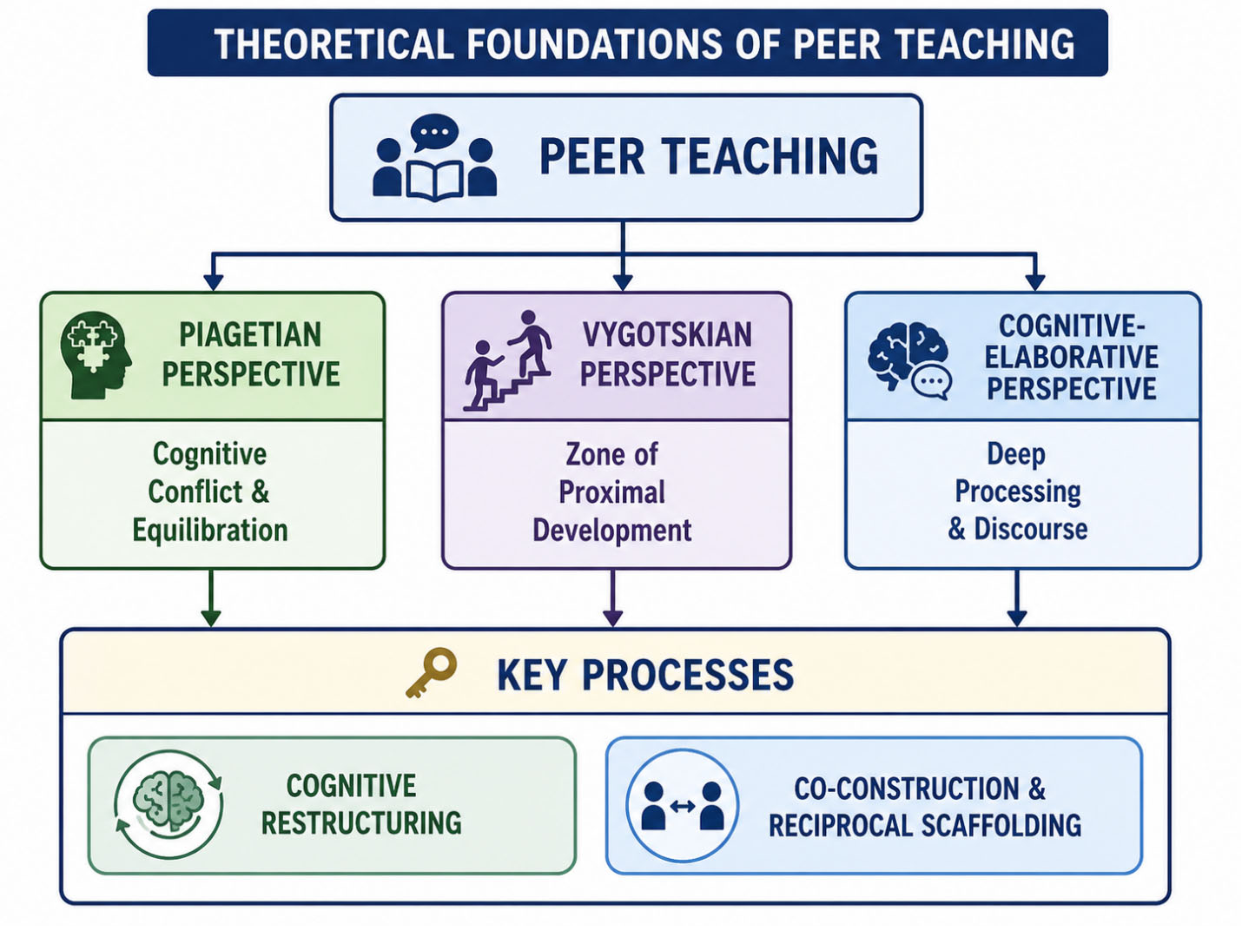
Figure 2.
Scaffolding Strategies in Peer Teaching.
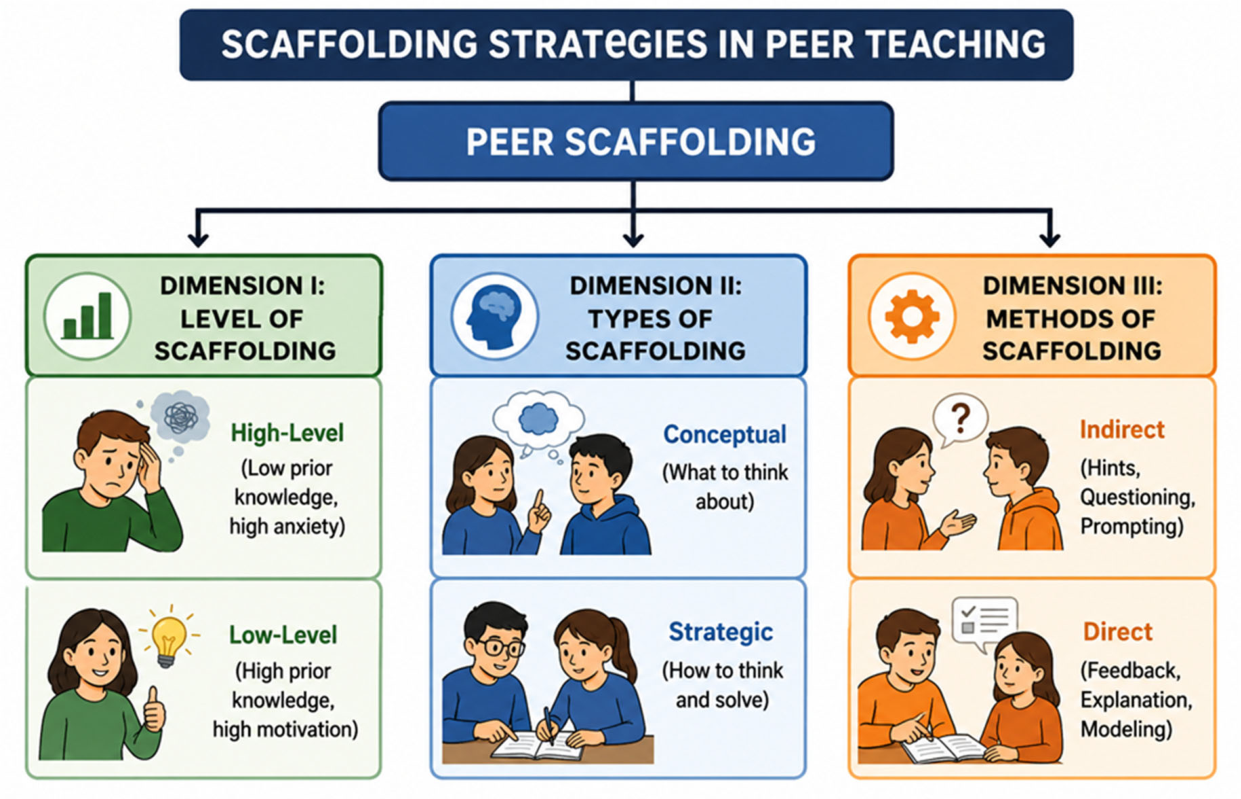
Figure 3.
Conceptual Framework of Peer Teaching Effects.
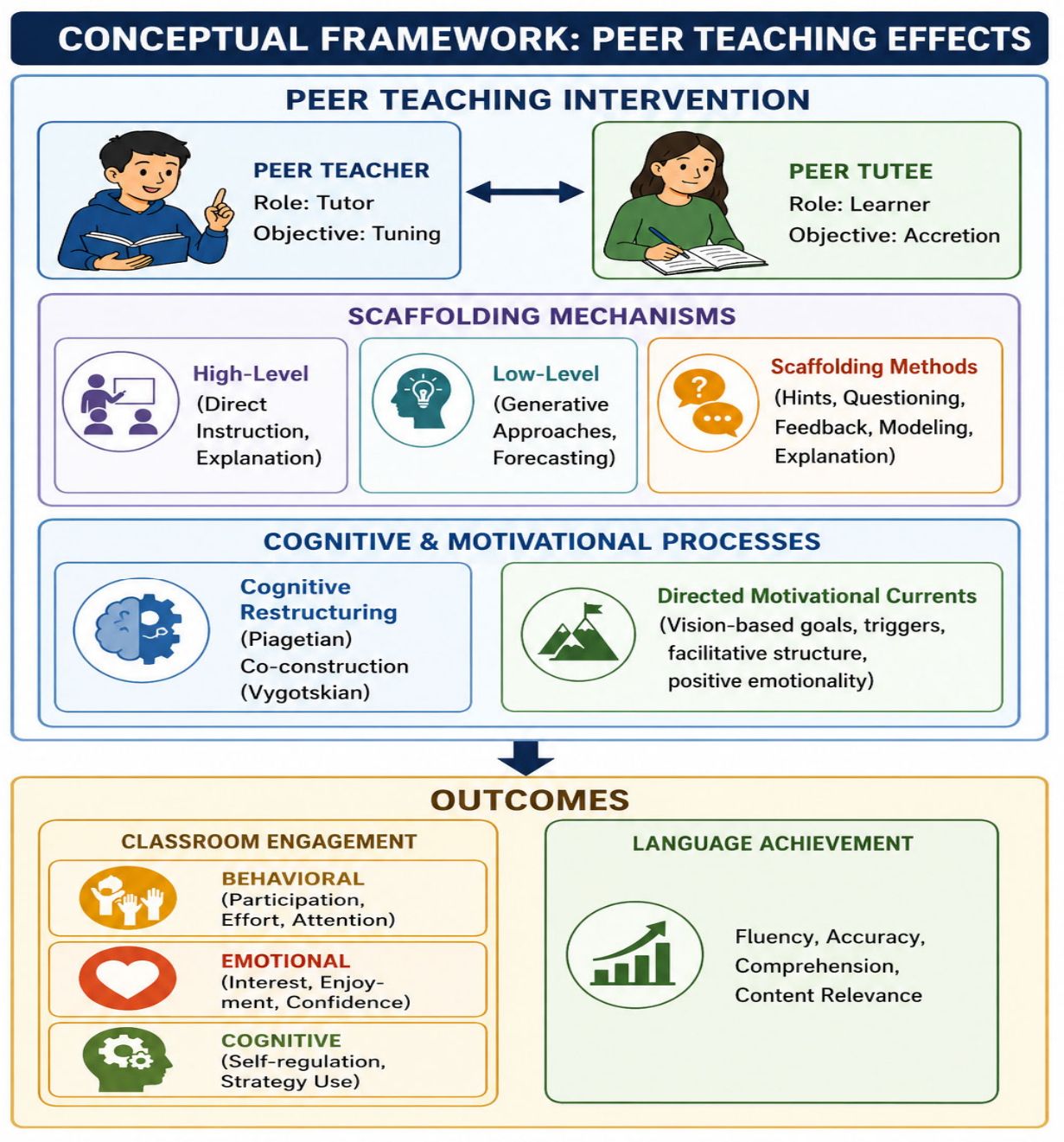

Table 1.
Pre-Test Results of Students' Engagement.
| Engagement Dimension | Group | N | Mean | Std. Dev. | t | df | Sig. |
|---|---|---|---|---|---|---|---|
| Behavioral | Experimental | 45 | 3.84 | 0.55 | -0.02 | 85 | 0.97 |
| Control | 42 | 3.84 | 0.42 | ||||
| Cognitive | Experimental | 45 | 3.78 | 0.65 | -0.28 | 85 | 0.77 |
| Control | 42 | 3.82 | 0.48 | ||||
| Emotional | Experimental | 45 | 3.92 | 0.65 | 0.84 | 85 | 0.40 |
| Control | 42 | 3.81 | 0.53 |
Table 2.
Post-Test Results of Students' Engagement.
| Engagement Dimension | Group | N | Mean | Std. Dev. | t | df | Sig. |
|---|---|---|---|---|---|---|---|
| Behavioral | Experimental | 45 | 3.48 | 0.56 | -2.05 | 84 | 0.04* |
| Control | 41 | 3.72 | 0.50 | ||||
| Cognitive | Experimental | 45 | 3.52 | 0.65 | -1.80 | 84 | 0.07 |
| Control | 41 | 3.75 | 0.46 | ||||
| Emotional | Experimental | 45 | 3.60 | 0.57 | -1.05 | 84 | 0.29 |
| Control | 41 | 3.73 | 0.58 |
p < 0.05.
Table 3.
Students' Achievement.
| Time | Group | N | Mean | Std. Dev. | t | df | Sig. |
|---|---|---|---|---|---|---|---|
| Pre-test | Experimental | 45 | 9.42 | 2.58 | -0.75 | 85 | 0.96 |
| Control | 42 | 9.45 | 3.04 | ||||
| Post-test | Experimental | 45 | 9.07 | 2.51 | -1.79 | 84 | 0.12 |
| Control | 42 | 9.96 | 2.74 |
Disclaimer/Publisher’s Note: The statements, opinions and data contained in all publications are solely those of the individual author(s) and contributor(s) and not of MDPI and/or the editor(s). MDPI and/or the editor(s) disclaim responsibility for any injury to people or property resulting from any ideas, methods, instructions or products referred to in the content. |
© 2026 by the authors. Licensee MDPI, Basel, Switzerland. This article is an open access article distributed under the terms and conditions of the Creative Commons Attribution (CC BY) license (http://creativecommons.org/licenses/by/4.0/).
Copyright: This open access article is published under a Creative Commons CC BY 4.0 license, which permit the free download, distribution, and reuse, provided that the author and preprint are cited in any reuse.