

Submitted:
06 July 2026
Posted:
07 July 2026
You are already at the latest version
Abstract
Background: Hypertension commonly complicates diabetes mellitus (DM), contributing significantly to increased morbidity and mortality. This study determined the prevalence and factors associated with hypertension among people with DM at a tertiary health facility in Northern Uganda. Methods: A hospital-based cross-sectional study employing a quantitative approach was conducted between July 18 and October 24, 2024. Participants with confirmed DM were selected using systematic random sampling at Lira Regional Referral Hospital (LRRH), Lira city, Uganda. Data were collected using a structured questionnaire adapted from the WHO STEPS (2022) tool. Patient charts and registers were used to verify information. Data were analyzed using STATA version 16. Multivariable logistic regression was performed, and a p-value < 0.05 was considered statistically significant. Results: A total of 340 participants were enrolled into the study, the median age was 54.3 years (IQR 50-60), predominantly female 244 (71.8%), and most had attained primary education 162 (47.6%). Overall, 67.1% (228/340) of the participants with DM had hypertension. Factors independently associated with higher odds of hypertension were, age 61+ years (aOR=5.55, 95% CI:1.34-23.1, p=0.018), being overweight (aOR=3.77, 95%CI: 1.05-13.57, p=0.042), DM duration of more than five years (aOR=2.51, 95% CI: 1.41- 4.67, p=0.002), and being widowed (aOR=8.04, 95% CI: 1.87-34.61, p=0.005). Earning UGX 50,001–100,000 per month (aOR=0.35, 95% CI: 0.13-0.93, p=0.037) was associated with a 65% lower odds of having hypertension. Conclusion: In this study, almost two-thirds of patients with DM had hypertension, and factors such as older age, overweight, longer diabetes duration, and marital status significantly increase hypertension risk; meanwhile, moderate-income status offered a protective effect. The high burden of hypertension among patients with DM demonstrates the necessity for targeted public health interventions such as comprehensive lifestyle modification programs, routine screening for hypertension, early detection, and its management among patients with DM, through enhanced healthcare access. These need to focus on integrated care approaches that include monitoring and managing DM alongside hypertension.
Keywords:
hypertension
; diabetes mellitus
; risk factors
1. Introduction
DM and hypertension are two chronic non-communicable diseases (NCDs) that have triggered substantial public health challenges worldwide [1], mostly in low- and middle-income countries (LMICs) such as Uganda. Both conditions are major contributors to morbidity and mortality, with substantial overlap in their risk factors and complications [2]. Hypertension is persistent high blood pressure ≥140/90 mmHg [3], which can damage blood vessels and organs over time. DM, on the other hand, is a metabolic disorder characterized by elevated blood glucose levels. Hypertensive diabetes, escalates the risk of cardiovascular events, cardiovascular accidents, kidney disease, and other complications, posing a considerable burden on affected individuals and healthcare systems [4].
Globally, individuals with DM are most likely to live in the North Africa and Middle East region (10.9%). In contrast, individuals with DM are most likely to be diagnosed in the Western Pacific region (37.5%) [5]. The coexistence of hypertension and DM is much higher, with rates of 9.7% in Nigeria and 70% in Morocco, while Cameroon and Kenya have a prevalence of 66.4% and 50% respectively [6]. At Mulago National Referral Hospital (NRH) of Uganda, 61.9% of newly diagnosed patients with DM had hypertension [7].
The first countrywide study conducted in Uganda established that a substantial percentage of the population (26.4%) had hypertension. The prevalence of hypertension was lower in rural regions (25.8%) than in urban (28.9%) and was higher in males (28.3%) than in females (25.2%) [8] Meanwhile, regional prevalence had the Central Region with the greatest prevalence of hypertension (34.3%), similar to that of the Western and Eastern Regions, and the least prevalence seen in the North (22.0%) [6]. However, only 19.5% of those with hypertension are controlled, highlighting the significant prevalence of uncontrolled hypertension and the urgent need to improve early diagnosis of hypertension [9].
The prevalence of type 2 DM (T2DM) and hypertension were 5% and 20%, respectively among adults with a family history of obesity [10]. Over 65% of patients with hypertension frequently have experienced a myocardial infarction (34%) and had abnormalities on their electrocardiogram (47%) [11]. In western Uganda, one in four adults has hypertension amidst increased physical activity, emphasizing the genetic role in hypertension, 63.7% were overweight, age > 40 years, consuming <3 servings of fruit or vegetables per week, overweight, and obesity [12].
Lira Regional Referral Hospital (LRRH) provides as a primary healthcare and specialized services for the population in the Lango region, catering to a diverse patient population from urban and rural areas, with a catchment population of 2,565,000 people. Nevertheless, local data are deficient regarding the prevalence of hypertension among patients with DM attending LRRH and the associated factors contributing to this comorbidity, hence the need for this study.
2. Methods
2.1. Study Design
The study used a cross-sectional design and utilized a quantitative approach among patients with DM at LRRH, conducted between July 18, and October 24, 2024.
2.2. Study Site
The study was conducted at the outpatient department of LRRH, which offers primary health care and specialized services to the population, with a bed capacity of 400. The hospital runs a diabetes clinic as a specialized clinic every Thursday with an average monthly clinic attendance of 860 patients; however, newly diagnosed patients can be attended to any day during working hours. The hospital is a public facility established in 1920, located in Lira City along Kitgum Road on plot 9/19, 21-41, coordinates of 02°15′06″N 32°54′05″E / 2.25167°N 32.90139°, serving a population of 2.7 million people in the 10 districts of Lango sub-region and neighboring regions.
2.3. Study Population and Eligibility Criteria
The study population consisted of adults 18 years and older with confirmed DM attending diabetes clinic at LRRH. Those excluded include patients with mental illness, patients too ill requiring admission and health workers.
2.4. Sample Size Calculation
2.5. Sampling Procedure
At the beginning of every clinic day, a health talk was used to educate patients, and informed consent was obtained from those with a diagnosis of DM whose names were already on the register. The study ad a sample size of 422; participants were selected using a systematic random sampling method from a cohort of 860 patients with DM scheduled for routine evaluation every four to eight weeks at the diabetes clinic as the sample frame. The sampling interval (k) was determined by dividing the overall population size (N=860) by the intended sample size (n) (n=422). k = N/n = 860 /422 ≈ 2.04 interval was rounded to the next whole number (k=2).
A random number between 1 and k was selected as the starting point by the principal investigator, who tossed a coin: if heads, the first participant was selected; if tails, the second participant was selected. After throwing the coin, the tail was up, which corresponded to the second participant. Hence, every second participant was selected until we reached the end of the sample frame, with no looping considered to avoid the risk of consecutive sampling, since the lowest interval was used. The study enrolled 340 participants; 25 declined consent, 42 traveled out of the region, and 15 were excluded from the study.
2.6. Study Variables
Dependent variable: Participants with confirmed hypertension or known hypertension status (1 = Yes; 2 = No). Independent variables: sociodemographic factors such as age, gender, and positive family history of hypertension, occupation, and residence. Lifestyle factors such as pollution, physical inactivity, unhealthy diets, exposure to toxic chemicals, smoking, alcohol use, stressors, high salt use, and fast/processed foods, built environment. Clinical factors such as duration of diabetes, treatment, BMI, and other comorbidities.
2.7. Data Collection Tool
The researcher and trained research assistants administered a pre-tested, modified, and standardized questionnaire that complied with the World Health Organization’s stepwise approach to surveillance (WHO STEPS) questionnaire for non-communicable diseases [15]. The pretesting involved 30 participants from the Pentecostal Assembly of God (PAG) Mission Hospital, approximately 3 km from LRRH.
The questionnaire consisted of three STEPS: STEP I involved a questionnaire, STEP II involved physical measurements of weight, height, MUAC, waist, and hip circumference, and STEP III involved measurement of blood pressure. Each STEP had several cores, expanded, which were modified with questions to suit local needs. We reviewed patient charts and registers to ascertain blood sugar levels, blood pressure readings, and medications they had been on.
2.8. Data Collection Procedure
The study was explained to participants, and written consent was obtained from eligible participant’s. To ensure a high level of information accuracy, a questionnaire was administered by a trained research assistant. The sociodemographic and risk factors were gathered in the first portion of the questionnaire. The body measurement was done, and blood pressure was taken last to confirm the presence or absence of hypertension. Each of the measurement procedures is described below.
The body weight was measured using a calibrated analog weighing scale (Alibaba®), which was used during the entire study period and placed on a hard, flat surface to ensure stability. Participants were asked to remove heavy outer garments, shoes, and accessories, which could influence the reading. Standing centrally on the scale, which allows even weight distribution, the individual remains still while the reading stabilizes. The result was recorded to the nearest 0.1 kg.
A stadiometer (Allen stick height board®) was used. Participants were instructed to remove their shoes and stand straight with their back against the stadiometer, the heels, buttocks, shoulders, and the occiput of the head, aligning the body for an accurate reading. Positioning the head in the Frankfurt plane ensures the headpiece of the stadiometer sits correctly on the crown. The height was recorded to the nearest 0.1cm, emphasizing consistency in measurement techniques.
Waist circumference was measured using a non-stretchable tape measure. The participant was allowed to stand upright with feet shoulder-width apart, arms relaxed, and breathing normally. The tape was wrapped snugly around the waist, at the midpoint between the lower margin of the last palpable rib and the top of the iliac crest, ensuring it was parallel to the floor without compressing the skin. Meanwhile, hip circumference was measured by placing the same non-stretchable measuring tape around the widest point of the hips, ensuring it remains parallel to the floor and snug without compressing the skin. The result was recorded to the nearest 0.1 cm, maintaining consistency in technique.
Blood pressure was the last measurement done using a digital Sphygmomanometer (Sinocare ®) after the participant had rested for at least 10 minutes in a sitting position, requested to remove clothing from the left arm, the appropriate size of a cuff placed research assistant turned on Sinocare ® to automatically inflate and deflate and two readings at 2 minutes apart and the average reading was considered.
2.9. Data Analysis
The data derived from the study were organized and entered into Microsoft Excel 2019, then sorted and exported to the Statistical Package STATA version 16.0, and analyzed. Data was analyzed at univariate, bivariate, and multivariate levels. At the univariate level, means and standard deviation, ratios were used to describe continuous variables, whereas frequencies and percentages were used to describe categorical variables. In bivariate analysis, the chi-square test was used to test for risk factors of hypertension. All factors found to be significant at the bivariate level (p-values <0.2) were considered in the multivariate regression model. Finally, multivariate logistic regression using a backward elimination method to determine the risk factors of hypertension while adjusting for possible confounders was applied. Risk factors with p-values of less than 0.05 at multivariate analysis was considered statistically significant.
2.10. Quality Control
Quality assurance began with the design of the data collection tool and translation into the local language, followed by training and pre-testing of research assistants, physical handling of survey instruments and data, and final data entry and analysis. The appropriate field tools were translated into local languages (Leb Lango) and back-translated to English to ensure consistency and correctness before they were pre-tested. The designed questionnaire was field tested with similar clients in a health facility that was not chosen for the study to ensure there were no errors in the questionnaire design and that the research assistants can easily gather the data with the participants understanding and responding to the questions.
The equipment used for measurement, such as the sphygmomanometer and weighing scale, were calibrated before each study day by the hospital biomedical engineer to ensure consistent measurement and reduced bias.
Patients were allowed to rest for at least 10 minutes before taking their blood pressure; appropriate cuff sizes were used, and two recordings at 2-minute intervals were taken. Training of research assistants and having clear inclusion and exclusion criteria. Standard operating procedures were followed while performing the measurements.
3. Results
This was a health facility-based survey that estimated a sample size of 422; however, data were obtained from 340 participants, with a response rate of 80.6%.
3.1. Sociodemographic Characteristics
The background characteristics in Table 1 show that the median age of participants was 54.3 years (IQR 50-60). Majority were above 61 years 113 (33.3%), and predominantly females 244 (71.8%). Most had attained primary education 162 (47.6%), with smaller proportions having tertiary education 49 (14.4%). The majority were married 250 (73.5%) and resided in urban areas 197 (57.9%). Catholics 129 (37.9%) and Anglicans 120 (35.3%) were the most common religious affiliations. Most participants earned ≤10,000 Ugandan shillings 217 (63.8%), About two-thirds 225 (66.2%) lived within 5 km of the health facility.
3.2. The Prevalence of Hypertension Among Patients with DM at LRRH
Overall, Figure 1 shows 67.1% (228/340) of the patients with DM had hypertension, indicating that about two-thirds of the patients with DM in this clinic have hypertension.
3.3. Bivariate Analysis of Sociodemographic Factors Associated with Hypertension Among Patients with DM at LRRH
Female gender, p<0.001 and age (61+, p<0.001) showed a significant association. Income level (earning ≤10,000 Ugandan Shillings) also demonstrated a significant association (p=0.038). Body Mass Index (BMI) (overweight) showed a relationship with hypertension (p<0.001). Marital status (widowed) was significantly associated (p<0.001) with DM at LRRH. See Table 2 below.
3.4. Bivariate Analysis of Lifestyle and Clinical Factors Associated with Hypertension Among Patients with DM at LRRH
The bivariate analysis reveals significant associations between hypertension and certain lifestyle and clinical factors among patients with DM attending the LRRH clinic. The type of house (permanent) was significantly associated with hypertension (p<0.001). Additionally, the duration of diabetes (more than five years) showed a significant association (p=0.011). See Table 3 below.
3.5. Multivariate Analysis of Factors Associated with Hypertension Among Patients with DM at LRRH
The multivariate analysis highlighted several significant factors associated with hypertension among patients with DM attending LRRH. Patients aged 61+ years were 5.55 times likely to have hypertension compared to those aged ≤30 years (aOR=5.55, 95% CI: 1.34-23.10, p=0.018). Overweight patients were 3.77 times likely to be hypertensive than underweight patients (aOR=3.77, 95% CI: 1.05-13.57, p=0.042). Patients who had DM for more than five years were 2.51 times more likely to have DM (aOR=2.51, 95% CI: 1.41-4.67, p=0.002). See Table 4 below. Marital status also influenced hypertension risk, with widowed patients being 8.04 times likely to have hypertension compared to single patients (aOR=8.04, 95% CI: 1.87-34.61, p=0.005). Patients earning UGX 50,001–100,000 were less likely to have hypertension than those earning ≤10,000 (aOR=0.35, 95% CI: 0.13-0.93, p=0.037). These findings suggest that older age, overweight, longer diabetes duration, and marital status significantly increase hypertension risk, while moderate income may offer a protective effect.
4. Discussion
In this study, we found that 67.1% (228/340) of people with DM attending LRRH had hypertension. This is higher than the findings in a study done at Mulago National Referral Hospital among newly diagnosed patients with diabetes mellitus which found a prevalence of 61.9%, the difference can be attributed to regional differences and the population sample in the study [7]. This is slightly lower than the study done in Kenya (69.8%) which is contrary since this study involve a rural population while LRRH patients are mostly urban population [16].
A study done by Nigist Ellen Mohamed Memorial Hospital Hosanna in southern Ethiopia showed a lower prevalence of hypertension among T2DM patients at 55% than that at LRRH [17]. However, the study did not specify whether T1DM or T2DM, and considered all patients with diabetes mellitus. Prevalence is higher than for Africa (58%) and East Africa (53%), West Africa (51.5) but lower than for South Africa (69.1%) and Central Africa (77.6%) [14]. However, the study showed diabetes patients have a three-fold likelihood of being hypertensive than the general population. The prevalence of hypertension in northern Uganda among the general population is 22% [6].
A study done among hypertensive T2DM patients with uncontrolled hypertension at Mbarara Regional Referral Hospital with a median age of 54, revealed a prevalence of 82.5% [18] which is higher than for LRRH. This closely relates to regional variations of hypertension, which are higher in Eastern, Central, and Western parts of Uganda compared to the Northern region. The study at Mbarara had a small sample size of 209 compared to Lira, which had a sample size of 340, and considered both controlled and uncontrolled hypertension. A study done in Bangladesh revealed a higher prevalence of hypertension of 76.3% in a hospital-based study which is higher than for LRRH. However, their mean age was 80, higher than for this study [19] though a small sample size of 156 could contribute to the variation in the findings.
A systematic review of hypertension among T2DM patients in Ethiopia showed a pooled prevalence of 51% in Oromia and 58% in southern regions, respectively with a higher prevalence in urban residents (60%) than in rural (52%) which is lower than the finding of this study. This means the study regions require more intervention than Ethiopia despite being urban sites [20]. This high prevalence of hypertension comorbidity in patients with DM is associated with a two to four-fold risk of cardiovascular diseases such as stroke, heart attack, and heart failure [21]. The increasing prevalence of hypertension and DM co-morbidity in Northern Uganda is not surprising because of the shared common risk factors and rapid epidemiological transition in many African countries [22]. The concurrency of hypertension and DM has huge social and economic implications for prevention and control of individuals, families, and the healthcare system in low-resource settings, where there is a need for enhanced screening and integrated care approaches [23].
In this study, old age (61+) were found an almost six-folds higher odds of having hypertension which is similar to studies done in Israel, where a cutoff value of 130/80 mm Hg was applied, the prevalence of hypertension rose with age, reaching a rate of 94.4% in patients who were 80 years of age or older [24]. This study used a cut-off of 140/90 mmHg and had few patients above 80 years, which could have given a lower age for onset of hypertension among patients with DM at LRRH. The finding that patients aged 61 and older, those with higher BMIs, and widowed individuals are significantly more likely to have hypertension is consistent with global research and provides valuable insights into hypertension risk factors. The association between older age and an increased likelihood of hypertension is well-documented. As people age, they often accumulate risk factors for hypertension, which aligns with broader trends [25]. Older adults are more susceptible to hypertension due to physiological changes and lifestyle factors.
Higher BMI categories are strongly linked to an increased risk of hypertension. This finding is supported by research like Forman et al., (2019), which has identified obesity as a significant modifiable risk factor for hypertension. Obesity leads to increased risk due to associated conditions like insulin resistance and inflammation, emphasizing the need for weight management in hypertension prevention [26]. A study on risk factors for hypertension among DM patients from Mbarara RRH had similar findings, where hypertension was 28% in obese and 32.15% overweight BMI 25 < 30 kg/ m2 [27]. A study in Indonesia found a significant correlation (p<0.01) between obesity and systolic blood pressure. The strongest correlations were seen between waist circumference and SBP (r=0.316) and BMI and DBP (r=0.206) [28]. However, in this study, waist circumference was not considered in the analysis.
The increased likelihood of hypertension among widowed individuals is noteworthy. While marital status and associated stress can influence health, this specific finding suggests that widowhood might exacerbate hypertension risk due to additional socio-economic and emotional stressors. This aligns with broader studies, such as those by Giatti et al. (2018), which link socio-economic factors to hypertension. Most studies find women at higher risk of hypertension; however, they do not relate to marital status. For example, a study done in Peru found more than half (56.1%) of the affected group were women [29]. This could be an incidental finding that needs further exploratory research.
The results highlight the need for targeted public health initiatives that focus on managing obesity and addressing age-related risks. Programs should promote healthy lifestyles, particularly for older adults, and include weight management strategies. Additionally, providing support and stress management for widowed individuals could help reduce their increased risk of hypertension. While the study clearly shows the importance of age, BMI, and marital status in hypertension risk, these factors may interact with other variables such as diet, physical activity, and socio-economic conditions. The strong link between obesity and older age with hypertension underscores the need for comprehensive health interventions. Further research is needed to understand how marital status and other socio-economic factors specifically impact hypertension risk and to develop targeted interventions accordingly.
A study done on socioeconomic factors of hypertension in Nanjing revealed primary educational level (49.6%), jobless and retired (49.5%), and those with a lower yearly household income (44.9%). Unemployed and retired individuals had higher odds of having hypertension, while mental laborers and students had higher odds of regulated blood pressure when compared to other categories. Lower-income individuals were more likely to be hypertensive (and had lower odds of having managed hypertension) [30]. However, in this study, those who had an income between 10,000 and 50,000 had 0.35 odds of hypertension, which means a reduced chance of hypertension. This could be because they can have healthy diets and live in areas where they can exercise. A similar study from Ilam University found that Hypertension was -0.154 (95% CI (-0.02, -0.23), with lower socioeconomic groups having a higher prevalence. Employment, educational level, and socioeconomic status were the most significant socioeconomic factors influencing inequality [31].
The study findings of having DM for more than five years are strongly associated with hypertension. The association between long-term DM and hypertension is well-documented. Research, such as Reusch et al. (2021), emphasizes a bidirectional relationship where insulin resistance in DM exacerbates hypertension by affecting vascular function. Long-term DM often leads to endothelial dysfunction and increased vascular resistance, both of which contribute to higher blood pressure. This relationship underscores the need for integrated management approaches to address both conditions simultaneously to mitigate cardiovascular risks. The role of obesity in exacerbating both DM and hypertension is significant. Nguyen et al. (2023) have demonstrated that excess body weight contributes to insulin resistance and inflammation, which in turn elevates blood pressure. This supports the finding that diabetes mellitus, particularly long-standing diabetes mellitus, significantly increases hypertension risk, as both conditions share common risk factors related to metabolic disturbances.
4.1. Study Strengths and Limitations
The study used quantitative data, which was appropriate as it involved measurements that offer better options for statistical analysis, and the WHO steps tool offers a better measure of non-communicable disease risk assessment. The study was a cross-sectional study, hence cannot tell if DM was the first diagnosis or hypertension. This was mitigated by review of patients files to ascertain the diagnosis, considering the possibility of recall bias. The facility-based study deals with an informed and knowledgeable population about their disease, contributing to selection bias, hence not appropriate for generalization to the population. This was mitigated by using a simple random method that reduced the chance of selection bias. The quantitative study limits respondent’s answers, this was mitigated by a thorough literature search and designed questions that cover the required areas of the study.
4.2. Implications of Study Findings
The study findings will help policymakers establish, formulate, and implement regulations targeting the reduction of hypertension incidence among patients with diabetes mellitus. It will also strengthen the health care delivery system for people with DM to help the Ministry of Health and partners scale up the country’s NCD programs. Lastly, it adds to the pool of knowledge on hypertension among patients with DM in developing countries such as Uganda.
5. Conclusions
In this study, we found almost two in three people with DM attending LRRH had hypertension. Factors such as older age, overweight, longer diabetes duration, and marital status significantly increase hypertension risk; meanwhile, moderate-income status offered a protective effect. The high burden of hypertension among patients with DM demonstrates the necessity for targeted public health interventions such as comprehensive lifestyle modification programs, routine screening for hypertension, early detection, and its management among patients with DM, through enhanced healthcare access. The findings support integrated care approaches that monitor and manage DM alongside hypertension.
Author Contributions
Conceptualization: B.O, G.E, G.A, M.S.O. Data curation: S.I, B.O. Formal analysis: B.O, GE, S.I. Methodology: B.O, G.A, F.K. Writing—original draft: F.B, G.E, B.N, M.S.O, B.O. Writing—review and editing: B.O, M.S.O, G.E. Supervision: B.O, G.A. All authors reviewed and approved the final version of the manuscript.
Funding
No external funding for this research.
Institutional Review Board Statement
The study was conducted in accordance with the Declaration of Helsinki, and ethical approval was sought from the Uganda National Council of Science and Technology (UNCST) (HS4701ES) through the Lira University Research Ethics Committee with reference number LUREC-2024-205 on July 09, 2024. Female patient measurements were done by female health workers, and male patient measurements were done by male health workers. Permission was sought from the LRRH research committee with reference number LRRH/37/24 before accessing the study participants.
Informed Consent Statement
Participants were enrolled after written informed consent, participation was entirely voluntary, and their withdrawal did not interfere with the service they receive. Patients confirmed with hypertension were directed to seek care from the available medical officer at the Outpatient Department. Anonymity was maintained during the study period and after the study.
Data Availability Statement
All the vital data involved in the study have been provided in the manuscript, with others in the supplementary material.
Acknowledgments
The authors thank the management of Lira University, Faculty of Public Health, for providing me with the necessary knowledge and skills to undertake this study successfully. Sincere gratitude to the management of LRRH for permitting me to conduct the study in the hospital. The authors also thank the research assistants, Sr. Lilly Akullu, Sr. Modesta Ejang, Mr. Emmanuel Obote, Sr. Vicky Apio, and Mr. Amos Ocen, for their dedicated service in data collection.
Conflicts of Interest
The authors declare no conflict of interest.
Abbreviations
aOR Adjusted odds ratio
BMI Body Mass Index
CI Confidence Interval
DM Diabetes Mellitus
NCD Non-Communicable Disease
LRRH Lira Regional Referral Hospital
T1DM Type 1 Diabetes Mellitus
T2DM Type 2 Diabetes Mellitus
References
- Ouyang, F.; Cheng, X.; Zhou, W.; He, J.; Xiao, S. Increased Mortality Trends in Patients with Chronic Non-communicable Diseases and Comorbid Hypertension in the United States, 2000–2019. Front Public Health 2022, 10. [Google Scholar] [CrossRef] [PubMed]
- Health Data Sciences and Cardiovascular Disease in Africa: Needs and the Way Forward | Current Atherosclerosis Reports [Internet]. 8 Dec 2024. Available online: https://link.springer.com/article/10.1007/s11883-024-01235-1.
- Fuchs, F.D.; Whelton, P.K. High Blood Pressure and Cardiovascular Disease. Hypertension 2020, 75(2), 285–92. [Google Scholar] [CrossRef] [PubMed]
- Kario, K.; Okura, A.; Hoshide, S.; Mogi, M. The WHO Global report 2023 on hypertension warning the emerging hypertension burden in globe and its treatment strategy. Hypertens. Res. 2024, 47(5), 1099–102. [Google Scholar] [CrossRef] [PubMed]
- Bulamba, R.M.; Nalugoda, F.; Nkale, J.; Kigozi, G.; Ochieng, A.M.; Kyasanku, E.; et al. Examining associations between mental health and Chronic Non-Communicable Diseases (C-NCDs) among older adults in Wakiso, Uganda. PLoS ONE 2024, 19(6), e0293993. [Google Scholar] [CrossRef] [PubMed]
- Lunyera, J.; Kirenga, B.; Stanifer, J.W.; Kasozi, S.; van der, Molen T; Katagira, W.; et al. Geographic differences in the prevalence of hypertension in Uganda: Results of a national epidemiological study. PLoS ONE 2018, 13(8), e0201001. [Google Scholar] [CrossRef] [PubMed]
- Muddu, M.; Mutebi, E.; Ssinabulya, I.; Kizito, S.; Mondo, C.K. Hypertension among newly diagnosed diabetic patients at Mulago National Referral Hospital in Uganda: a cross sectional study. Cardiovasc J. Afr. 2018, 29(4), 218–24. [Google Scholar] [CrossRef] [PubMed]
- Guwatudde, D.; Mutungi, G.; Wesonga, R.; Kajjura, R.; Kasule, H.; Muwonge, J.; et al. The Epidemiology of Hypertension in Uganda: Findings from the National Non-Communicable Diseases Risk Factor Survey. PLoS ONE 2015, 10(9), e0138991. [Google Scholar] [CrossRef] [PubMed]
- Majumdar, U.; Clarke, R.N.; Moran, A.E.; Doupe, P.; Gadikota-Klumpers, D.D.; Gidio, A.; et al. Hypertension screening, prevalence, treatment, and control at a large private hospital in Kampala, Uganda: A retrospective analysis. PLoS Glob. Public Health 2022, 2(5), e0000386. [Google Scholar] [CrossRef] [PubMed]
- Tokioka, S.; Nakaya, N.; Hatanaka, R.; Nakaya, K.; Kogure, M.; Chiba, I.; et al. Depressive symptoms as risk factors for the onset of home hypertension: a prospective cohort study. Hypertens. Res. 2024, 1–12. [Google Scholar] [CrossRef] [PubMed]
- Maurizi, N.; Skaldis, I.; Fumagalli, C.; Ochooa, E.; Tamba, M.; Olivotto, I. Hypertensive myocardial disease screening in low-income settings using smartphone-based technologies: a prospective multicenter trial. Eur. Heart J. 2024, 45 (Supplement_1), ehae666.3550. [Google Scholar] [CrossRef]
- Kansiime, G.; Nuwagira, E.; Obwoya, P.S.; Baluku, J.B.; Kanyesigye, M.; Twesiime, C. Prevalence, awareness and factors associated with hypertension among adults in rural south-western Uganda: a cross-sectional study [Internet] p. 2024.09.03.24313036. medRxiv. 2024. Available online: https://www.medrxiv.org/content/10.1101/2024.09.03.24313036v1.
- Nabukalu, C. FACTORS ASSOCIATED WITH PREVALENCE OF HYPERTENSION AMONG ADULTS AGED 30-79 YEARS ATTENDING THE HYPERTENSION CLINIC AT HOIMA REGIONAL REFERRAL HOSPITAL. A CROSS-SECTIONAL STUDY. Stud. J. Health Res. Afr. 2023, 4(9), 9. [Google Scholar] [CrossRef]
- Hinneh, T.; Akyirem, S.; Bossman, I.F.; Lambongang, V.; Ofori-Aning, P.; Ogungbe, O.; et al. Regional prevalence of hypertension among people diagnosed with diabetes in Africa, a systematic review and meta-analysis. PLoS Glob. Public Health 2023, 3(12), e0001931. [Google Scholar] [CrossRef] [PubMed]
- WHO STEPS Instrument (Core and Expanded) STEPS Instrument Overview [Internet]. Available online: www.who.int/chp/steps.
- Karinja, M.; Pillai, G.; Schlienger, R.; Tanner, M.; Ogutu, B. Care-Seeking Dynamics among Patients with Diabetes Mellitus and Hypertension in Selected Rural Settings in Kenya. Int. J. Env. Res. Public Health 2019, 16(11), 11. [Google Scholar] [CrossRef] [PubMed]
- Worku, K.; Amare, H.; Hailemariam, T.; Gebretsadik, T. prevalence-of-hypertension-among-patients-with-type-2-diabetes-mellitus-and-its-socio-demographic-factors-in-nigist-ellen-mohamed-2155-6156-1000792. 22 Mar 2021.
- Saasita, P.K.; Senoga, S.; Muhongya, K.; Agaba, D.C.; Migisha, R. High prevalence of uncontrolled hypertension among patients with type 2 diabetes mellitus: a hospital-based cross-sectional study in Southwestern Uganda. Pan Afr. Med. J. [Internet] 2021, 39(1), 1. Available online: https://www.ajol.info/index.php/pamj/article/view/221168.
- Kibone, W.; Bongomin, F.; Okot, J.; Nansubuga, A.L.; Tentena, L.A.; Nuwamanya, E.B.; et al. High blood pressure prevalence, awareness, treatment, and blood pressure control among Ugandans with rheumatic and musculoskeletal disorders. PLoS ONE 2023, 18(8), e0289546. [Google Scholar] [CrossRef] [PubMed]
- Haile, T.G.; Mariye, T.; Tadesse, D.B.; Gebremeskel, G.G.; Asefa, G.G.; Getachew, T. Prevalence of hypertension among type 2 diabetes mellitus patients in Ethiopia: a systematic review and meta-analysis. Int. Health 2023, 15(3), 235–41. [Google Scholar] [CrossRef] [PubMed]
- Sheikh, M.S.A.; Aljohani, E.M.; Alrayes, F.H.; Aldakhil, A.R.; Albulayhid, S.B.H.; Alinad, A.K.M.; et al. Hypertension and Coronary Heart Disease in Diabetic Patients: A Systematic Review. Arch. Pharm. Pract. 2020, 11(4–2020), 4–2020. [Google Scholar] [CrossRef]
- Jannat, M.; Rishad, M.M.; Noor, N.; Prince, S.M.K.Z.; Khan, T.R.; Mahiyuddin, N.; et al. Pattern of Macrovascular Complications and its relationship with HbA1c in Hospitalized Patients with Type 2 Diabetes Mellitus. J Med. Located at. Bangladesh, 16 Jul 2024; 25, p. 2. [CrossRef]
- Rohwer, A.; Nicol, J.U.; Toews, I.; Young, T.; Bavuma, C.M.; Meerpohl, J. Effects of integrated models of care for diabetes and hypertension in low-income and middle-income countries: a systematic review and meta-analysis. BMJ Open;PubMed 2021, 11(7), e043705. [Google Scholar] [CrossRef] [PubMed]
- Sagie, S.; Na’amnih, W.; Frej, J.; Cohen, D.; Alpert, G.; Muhsen, K. Correlates of hospitalizations in internal medicine divisions among Israeli adults of different ethnic groups with hypertension, diabetes and cardiovascular diseases. PLoS ONE 2019, 14(4), e0215639. [Google Scholar] [CrossRef] [PubMed]
- Roy, S.; Maheshwari, V.; Basu, S. Prevalence of multiple non-communicable diseases risk factors among self-reported healthy older adults living in community dwelling in India: Evidence from the Longitudinal Ageing Study in India. Clin. Epidemiol. Glob. Health 2024, 28, 101680. [Google Scholar] [CrossRef]
- Handelsman, Y.; Anderson, J.E.; Bakris, G.L.; Ballantyne, C.M.; Beckman, J.A.; Bhatt, D.L.; et al. DCRM Multispecialty Practice Recommendations for the management of diabetes, cardiorenal, and metabolic diseases. J. Diabetes Complicat. 2022, 36(2), 108101. [Google Scholar] [CrossRef] [PubMed]
- Amanyire, J.; Tumwebaze, M.; Mugisha, M.K.; Bright, L.W. Prevalence and Risk Factors for Hypertension, Diabetes and Obesity among Lecturers and Support Staff of Bishop Stuart University in Mbarara, Uganda. Open J. Appl. Sci. 2019, 9(3), 3. [Google Scholar] [CrossRef]
- Umara, A.F.; Winahyu, K.M.; Yoyoh, I. Correlational study on Obesity Indicators and Blood Pressure in Productive Age Group. IJNP Indones. J. Nurs. Pract. 2024, 8(2), 2. [Google Scholar] [CrossRef]
- Vera-Ponce, V.J.; Zuzunaga-Montoya, F.E.; Vásquez-Romero, L.E.M.; Loayza-Castro, J.A.; Carrillo, C.I.G.D.; Vigil-Ventura, E. Prevalence, Trends, and Associated Factors of Isolated Systolic, Diastolic, and Systolic-Diastolic Hypertension in Peru: A Nine-Year Analysis of the Demographic and Family Health Survey [Internet] p. 2024.05.21.24307449. medRxiv. 2024. Available online: https://www.medrxiv.org/content/10.1101/2024.05.21.24307449v1.
- Qin, Z.; Li, C.; Qi, S.; Zhou, H.; Wu, J.; Wang, W.; et al. Association of socioeconomic status with hypertension prevalence and control in Nanjing: a cross-sectional study. BMC Public Health 2022, 22(1), 1. [Google Scholar] [CrossRef] [PubMed]
- Veisani, Y.; Jenabi, E.; Nematollahi, S.; Delpisheh, A.; Khazaei, S. The role of socio-economic inequality in the prevalence of hypertension in adults. In J Cardiovasc Thorac Res.; PubMed Central, 2019; Volume 11, 2, pp. 116–20. [Google Scholar] [CrossRef] [PubMed] [PubMed Central]
Figure 1.
The prevalence of hypertension among patients with DM at LRRH.
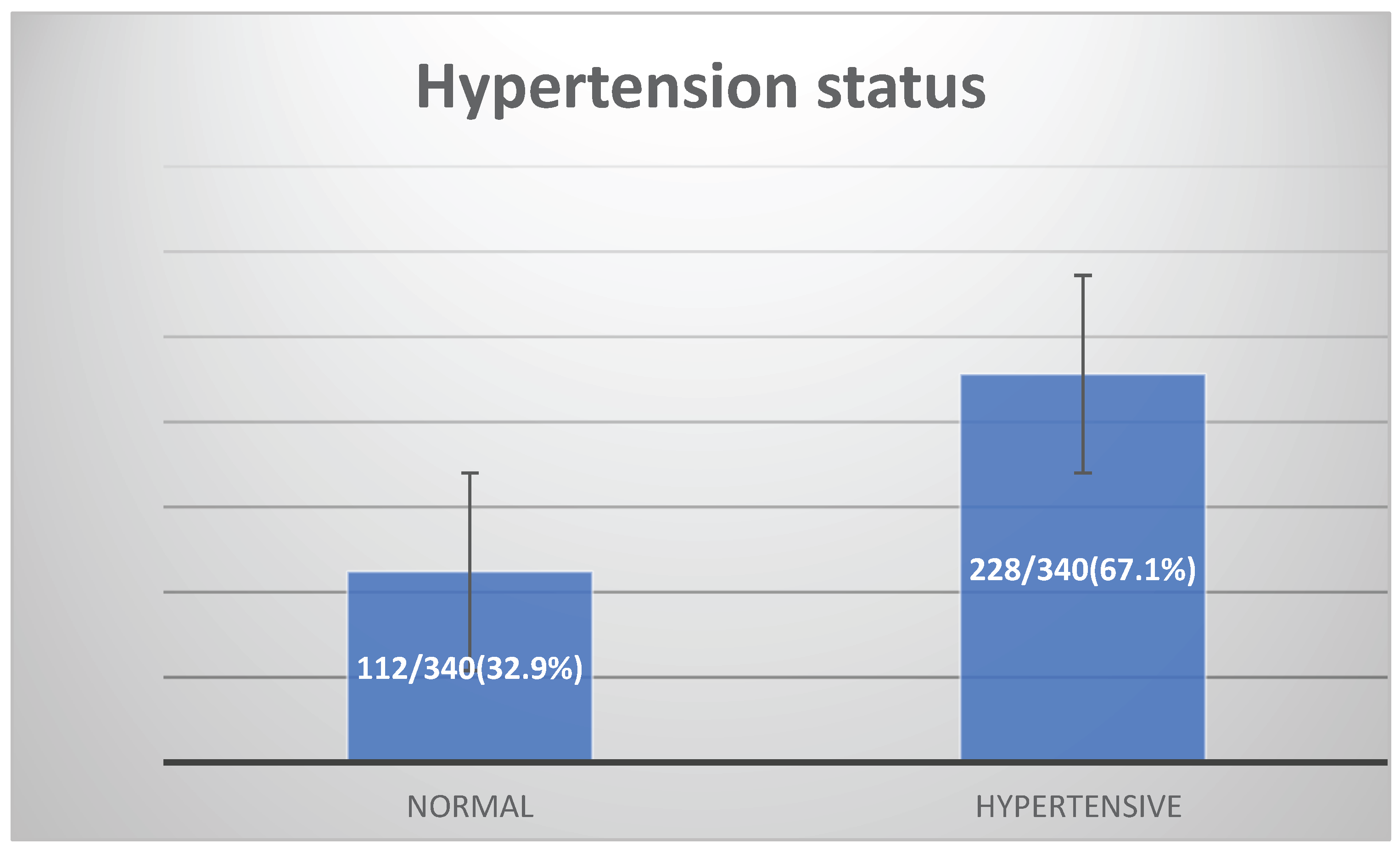

Table 1.
Background Characteristics of patients with DM at LRRH.
| Variable | M/n | SD /% |
| Age in years | 53.4 | ± 15.4) |
| <=30 | 16 | 7.7 |
| 31-40 | 27 | 12.9 |
| 41-50 | 38 | 18.2 |
| 51-60 | 62 | 29.7 |
| 61+ | 66 | 31.6 |
| Gender | ||
| Male | 57 | 27.3 |
| Female | 152 | 72.7 |
| Highest level of education | ||
| Informal | 42 | 20.1 |
| Primary | 99 | 47.4 |
| Secondary | 42 | 20.1 |
| Tertiary | 26 | 12.4 |
| Marital status | ||
| Single | 17 | 8.1 |
| Married | 144 | 68.9 |
| Divorced | 11 | 5.3 |
| Widowed | 37 | 17.7 |
| Current residence | ||
| Rural (>5km) | 93 | 44.5 |
| Urban (<5 km) | 116 | 55.5 |
| Religion | ||
| Catholics | 80 | 38.3 |
| Anglican | 73 | 34.9 |
| Pentecostal | 51 | 24.4 |
| Muslim | 5 | 2.4 |
| Occupation | ||
| Peasant | 144 | 68.9 |
| Business | 36 | 17.2 |
| civil servant | 22 | 10.5 |
| Others | 7 | 3.3 |
M=mean, n=number; SD=standard deviation; %=percent.
Table 2.
Bivariate Analysis of Sociodemographic Factors Associated with Hypertension Among Patients with DM at LRRH.
Table 2.
Bivariate Analysis of Sociodemographic Factors Associated with Hypertension Among Patients with DM at LRRH.
| Hypertension status | |||
| Variable | No | Yes | (p-value) |
| Gender | |||
| Male | 45 (40.2%) | 51 (22.4%) | <0.001 |
| Female | 67 (59.8%) | 177 (77.6%) | |
| Age in years | |||
| <=30 | 16 (14.4%) | 4 (1.8%) | <0.001 |
| 31-40 | 27 (24.3%) | 12 (5.3%) | |
| 41-50 | 21 (18.9%) | 43 (18.9%) | |
| 51-60 | 26 (23.4%) | 77 (33.8%) | |
| 61+ | 21 (18.9%) | 92 (40.4%) | |
| Income in Uganda shillings | |||
| <=10,000 | 66 (58.9%) | 151 (66.2%) | 0.038 |
| 10,001-50,000 | 19 (17.0%) | 31 (13.6%) | |
| 50,001-100,000 | 15 (13.4%) | 12 (5.3%) | |
| above 100,000 | 12 (10.7%) | 34 (14.9%) | |
| Distance in kilometers | |||
| <=5km | 71 (63.4%) | 154 (67.5%) | 0.447 |
| Above 5km | 41 (36.6%) | 74 (32.5%) | |
| BMI | |||
| Underweight | 12 (10.7%) | 7 (3.1%) | <0.001* |
| Normal | 55 (49.1%) | 82 (36.0%) | |
| Overweight | 45 (40.2%) | 139 (61.0%) | |
| Occupation | |||
| Peasant | 77 (68.8%) | 148 (64.9%) | 1.63(0.653) |
| Business | 15 (13.4%) | 43 (18.9%) | |
| Civil servant | 15 (13.4%) | 27 (11.8%) | |
| Others | 5 (4.5%) | 10 (4.4%) | |
| Highest education level | |||
| Informal | 11 (9.8%) | 45 (19.7%) | 0.053 |
| Primary | 55 (49.1%) | 107 (46.9%) | |
| Secondary | 31 (27.7%) | 42 (18.4%) | |
| Tertiary | 15 (13.4%) | 34 (14.9%) | |
| Marital status | |||
| Single | 18 (16.1%) | 8 (3.5%) | <0.001 |
| Married | 85 (75.9%) | 165 (72.4%) | |
| Divorced | 3 (2.7%) | 11 (4.8%) | |
| Widowed | 6 (5.4%) | 44 (19.3%) | |
| Current residence | |||
| Rural | 50 (44.6%) | 93 (40.8%) | 0.499 |
| Urban | 62 (55.4%) | 135 (59.2%) | |
| Religion | |||
| Catholics | 48 (42.9%) | 81 (35.5%) | 0.400 |
| Anglican | 35 (31.2%) | 85 (37.3%) | |
| Pentecostal | 27 (24.1%) | 53 (23.2%) | |
| Muslim | 2 (1.8%) | 9 (3.9%) | |
Table 3.
Bivariate Analysis of Lifestyle and Clinical Factors Associated with Hypertension Among Patients with DM at LRRH.
Table 3.
Bivariate Analysis of Lifestyle and Clinical Factors Associated with Hypertension Among Patients with DM at LRRH.
| Hypertension status | |||
| Variable | No | Yes | p-value |
| Smoking | |||
| Yes | 1 (0.9%) | 5 (2.2%) | 0.392 |
| No | 111 (99.1%) | 223 (97.8%) | |
| Alcohol | |||
| Yes | 11 (9.8%) | 14 (6.1%) | 0.222 |
| No | 101 (90.2%) | 214 (93.9%) | |
| Family history of hypertension | |||
| Yes | 33 (29.5%) | 56 (24.6%) | 0.334 |
| No | 79 (70.5%) | 172 (75.4%) | |
| Family history of diabetes | |||
| Yes | 46 (41.1%) | 116 (50.9%) | 0.089 |
| No | 66 (58.9%) | 112 (49.1%) | |
| Education on hypertension | |||
| Yes | 91 (81.2%) | 191 (83.8%) | 0.561 |
| No | 21 (18.8%) | 37 (16.2%) | |
| Stressful work environment | |||
| Yes | 53 (47.3%) | 91 (39.9%) | 0.194 |
| No | 59 (52.7%) | 137 (60.1%) | |
| Type of house | |||
| Permanent | 68 (60.7%) | 160 (70.2%) | <0.001 |
| Semi-Permanent | 17 (15.2%) | 47 (20.6%) | |
| Temporary | 27 (24.1%) | 21 (9.2%) | |
| Use Chemicals for house | |||
| Yes | 62 (55.4%) | 102 (44.7%) | 0.065 |
| No | 50 (44.6%) | 126 (55.3%) | |
| Duration of diabetes | |||
| <=5 years | 70 (62.5%) | 109 (47.8%) | 0.011 |
| Above 5 years | 42 (37.5%) | 119 (52.2%) | |
Table 4.
Multivariate Analysis of Factors Associated with Hypertension Among Patients with DM at LRRH.
Table 4.
Multivariate Analysis of Factors Associated with Hypertension Among Patients with DM at LRRH.
| Variable | COR (95% CI) | p-value | aOR (95%CI) | p-value |
| Gender | ||||
| Male | 1.00 | |||
| Female | 2.33(1.43-3.80) | 0.001* | 1.72(0.94-3.15) | 0.079 |
| Age in years | ||||
| <=30 | 1.00 | 1.00 | ||
| 31-40 | 1.78(0.49-6.46) | 0.382 | 0.85(0.19-3.85) | 0.837 |
| 41-50 | 8.19(2.43-27.56) | 0.001* | 2.62(0.61-11.12 | 0.193 |
| 51-60 | 11.84(3.63-38.64) | <0.001* | 3.40(0.80-14.37) | 0.096 |
| 61+ | 17.52(5.53-57.82) | <0.001* | 5.55(1.34-23.10) | 0.018* |
| BMI | ||||
| Underweight | 1.00 | 1.00 | ||
| Normal | 2.55(0.94-6.89) | 0.064 | 2.11(0.58-7.62) | 0.133 |
| Overweight | 5.29(1.96-14.26) | 0.001* | 3.77(1.05-13.57) | 0.042* |
| Duration with diabetes | ||||
| <=5 | 1.00 | 1.00 | ||
| Above 5 | 1.88(1.12-5.66) | 0.001* | 2.51(1.41-4.67) | 0.002* |
| Marital status | ||||
| Single | 1.00 | 1.00 | ||
| Married | 4.36(1.82-10.45) | 0.001* | 2.45(0.79-7.59) | 0.119 |
| Divorced | 8.25(1.79-37.88) | 0.007* | 5.52(0.90-33.84) | 0.065 |
| Widowed | 16.5(5.01-54.35) | <0.001* | 8.04(1.87-34.61) | 0.005* |
| Income | ||||
| <=10,000 | 1.00 | 1.00 | ||
| 10,001-50,000 | 0.71(0.38-1.35) | 0.301 | 0.70(0.33-1.48) | 0.352 |
| 50,001-100,000 | 0.35(0.16-0.79) | 0.011* | 0.35(0.13-0.93) | 0.037* |
| 100,000+ | 1.24(0.60-2.54) | 0.560 | 1.50(0.63-3.58) | 0.357 |
1.00=Reference Category, COR=Crude Odds Ratio; aOR=Adjusted Odds Ratio; CI=Confidence Interval; * significant at 5%.
Disclaimer/Publisher’s Note: The statements, opinions and data contained in all publications are solely those of the individual author(s) and contributor(s) and not of MDPI and/or the editor(s). MDPI and/or the editor(s) disclaim responsibility for any injury to people or property resulting from any ideas, methods, instructions or products referred to in the content. |
© 2026 by the authors. Licensee MDPI, Basel, Switzerland. This article is an open access article distributed under the terms and conditions of the Creative Commons Attribution (CC BY) license.
Copyright: This open access article is published under a Creative Commons CC BY 4.0 license, which permit the free download, distribution, and reuse, provided that the author and preprint are cited in any reuse.


