

Submitted:
04 July 2026
Posted:
07 July 2026
You are already at the latest version
Abstract
This study investigates the potential for recovering valuable minerals from feldspar tailings generated during industrial processing and commonly discarded as waste, causing both economic losses and environmental concerns. A hydrocyclone overflow sample obtained from a feldspar processing plant in the Muğla region of Türkiye was characterized and evaluated for the production of a marketable feldspar concentrate by flotation. Bulk and selective reverse flotation tests were performed using Denver and TK Lab flotation cells incorporating different impeller–stator configurations to evaluate the combined effects of reagent chemistry, flotation cell hydrodynamics, and bubble characteristics on flotation performance. The Sauter mean bubble diameter (d₃₂) was measured under both two-phase and three-phase conditions to characterize bubble size. Compared with the conventional plant reagent scheme (Derna-7 and Der A4), the sequential flotation scheme employing sulfonate collectors (R801–R825) for Fe–Ti-bearing minerals followed by the amine collector DAHC for mica significantly improved impurity rejection. The highest concentrate quality was achieved in the TK Lab Cell, producing a feldspar concentrate containing as low as 0.49% Fe₂O₃ while maintaining a total alkali content of 9.57%, satisfying the Fe₂O₃ requirement for second-grade ceramic applications. Despite producing larger bubbles than the Denver Cell, the TK Lab Cell exhibited superior rejection of Fe–Ti-bearing minerals. The consistently larger bubbles generated by the TK Lab Cell, irrespective of the reagent scheme employed, indicate that the different impeller–stator configurations played a key role in governing bubble generation and gas dispersion, while reagent chemistry primarily modified bubble characteristics within the hydrodynamic environment established by each flotation cell. The results demonstrate that flotation performance is governed by the combined effects of reagent chemistry, flotation cell hydrodynamics, and bubble characteristics, providing new insights into the sustainable valorization of feldspar processing tailings.
Keywords:
feldspar tailing
; flotation
; flotation machine
; bubble size
; reagent scheme
; tailing valorization
1. Introduction
Feldspar minerals are essential industrial raw materials utilized extensively across various sectors, most notably in glass, ceramics, plastics, and paint manufacturing. Their unique chemical and physical properties provide significant advantages; for instance, they serve as a primary alumina source in glass production to enhance durability, and their low melting temperatures facilitate energy savings in the ceramics industry. Furthermore, feldspar acts as a critical filler in the plastics and paint industries, improving the mechanical and physical properties of the final products. The strategic importance of this mineral group has been further underscored by its inclusion in the European Union’s 2023 Critical Raw Materials Act, which highlights its economic significance and potential supply risks [1]. Beyond traditional applications, feldspar is now integral to green energy technologies such as solar panels and LED lighting, and digital transformation processes [2].
Türkiye holds a prominent position in the global feldspar market, possessing substantial reserves and production capacities. The country’s major deposits are located in the Muğla, Aydın, and Bilecik regions, particularly featuring rich albite (sodium feldspar) reserves. Producing approximately 13 million tons annually, Türkiye is a leading supplier to the European glass and ceramic industries. In feldspar beneficiation plants, fine slimes are commonly removed before flotation and magnetic separation processes used to eliminate mica and Fe–Ti-bearing impurities. Slime coatings are considered a major challenge in flotation because they interfere with particle–bubble attachment and increase reagent consumption [3,4,5]. The deposition of slimes on both valuable mineral surfaces and air bubbles has been reported to contribute significantly to the observed reduction in flotation recovery. Furthermore, fine slimes can reduce the selectivity of magnetic separation by increasing the entrainment and mechanical retention of non-magnetic particles in the magnetic product [6,7]. Consequently, considerable amounts of feldspar-bearing slime tailings are generated and commonly discarded as waste, resulting in both economic losses and environmental challenges.
The industrial value of feldspar is strongly dependent on its alkali content and the concentration of coloring impurities, particularly iron-bearing minerals. According to the quality requirements reported by Zhang [8], Na-feldspar used in the glass industry should contain 63–70% SiO₂, 16–20% Al₂O₃, less than 0.3% Fe₂O₃, and at least 8% Na₂O, whereas K-feldspar products should contain less than 0.2% Fe₂O₃ and more than 11% K₂O. Similarly, for ceramic applications, high-grade Feldspar concentrates are required to contain more than 12% total alkalis (Na₂O+K₂O), less than 0.15% Fe₂O₃, and more than 17% Al₂O₃, while even second-grade ceramic products generally require Fe₂O₃ contents below 0.5%. These specifications highlight the importance of removing Fe–Ti-bearing minerals and mica from feldspar resources in order to produce marketable concentrates suitable for glass and ceramic industries [9]. Nevertheless, the quality specifications of feldspar products are not uniform across all industrial applications. Some grades of feldspar are also utilized as filler in plastics, paint, sealants, adhesives etc., though to a lesser extent [10].
Flotation is the most widely used beneficiation method for feldspar and has therefore been the subject of extensive research [9,11,12,13,14]. Reverse flotation is generally preferred because of its economic efficiency, since feldspar typically contains only low concentrations of impurities. As a result, selectively floating minor gangue minerals such as mica and iron/titanium-bearing minerals is more cost-effective than floating the bulk feldspar. In this process, collectors selectively adsorb onto gangue surfaces, thereby inducing hydrophobicity and facilitating their removal via the froth phase [15].
The selective removal of mineral impurities from feldspar has been extensively studied using various cationic collectors in single- and multi-stage flotation processes. The flotation concentration of Turkish Na-feldspar obtained from the Çine-Aydın region was investigated using different collector combinations. It was determined that the combined use of AERO 3030C (cationic collector) with AERO 801 and AERO 825 (anionic collector) provided more selective results for the removal of Fe and Ti-bearing impurities compared to the individual use of these collectors. Under the optimum reagent combination, a high-quality feldspar concentrate containing 0.018% Fe₂O₃, 0.135% TiO₂, 11.02% Na₂O, and 0.22% K₂O was obtained. These results showed that mixed collector systems can improve selectivity and enhance concentrate quality in feldspar flotation [16]. Similarly, Noorbakhsh and Andargoli [17] investigated the beneficiation of feldspar ore from the Damghan region of Iran (0.31% Fe₂O₃). Amine-based cationic collectors were initially used, followed by the application of the anionic collectors Aero 801 and Aero 845 in an acidic medium, resulting in a reduction of the Fe₂O₃ content to 0.11%.
Terzi and Kurşun [18] stated that the wastes generated from feldspar processing plants should not only be considered as materials for disposal, but also as potential secondary resources due to the valuable minerals they contain. In the study, the flotation recovery of TiO₂-bearing minerals from feldspar wastes was investigated, and the best results were obtained using the R845 (anionic type) collector, pine oil as frother, and at pH 3 conditions. Under the optimum flotation conditions, a concentrate containing 39% TiO₂ was obtained from the −0.106+0.038 mm size fraction with 89.52% recovery. The results showed that the re-evaluation of feldspar wastes by flotation could provide both economic benefits and reduction of waste amount.
Bubble size is a critical parameter in flotation because it directly affects particle–bubble collision and attachment probabilities, froth stability, and consequently separation performance [19,20,21]. Bubble size is influenced by both operating conditions and reagent regime. In particular, the use of fine bubbles has been reported to improve the recovery and selectivity of fine particles by enhancing particle–bubble interactions and reducing detachment [22,23]. Therefore, bubble size control has attracted considerable attention in the flotation of fine mineral particles. Jameson [24] reported that reducing bubble diameter and increasing the local shear rate significantly improve the probability of particle–bubble collisions and flotation kinetics for ultrafine particles. The study also emphasized that conventional flotation cells generally show poor recovery outside the optimum particle size range of approximately 20–120 µm.
Karagüzel and Çobanoğlu [25] investigated the removal of Fe and Ti-bearing coloring minerals from feldspathic slimes smaller than 38 µm obtained from feldspar flotation plants using a laboratory-scale Jameson flotation cell, which is known for its ability to generate fine bubbles and high-intensity mixing conditions. The slime sample consisted mainly of albite and contained 1.06% Fe₂O₃ + TiO₂. In the flotation experiments, anionic BD-15 and cationic G-TAP collectors, sodium hexametaphosphate as dispersant, and Aerofroth 65 as frother were used. It was determined that single-stage flotation did not provide sufficient selectivity; therefore, a flowsheet combining rougher flotation and stage-wise flotation was proposed. Under optimum conditions (Jg: 0.65 cm/s, jet velocity: 10.6 m/s, and bias factor: 0.8), a ceramic-grade Na-feldspar concentrate containing 0.11% Fe₂O₃ and 0.07% TiO₂ was obtained with approximately 70% recovery. In a related study, Karagüzel [26] investigated the applicability of dissolved air flotation (DAF) for the beneficiation of feldspathic slimes smaller than 38 µm. In the study, BD-15 and Na-oleate were used as collectors, Na(PO₄)₆ as a dispersant, and pine oil as a frother; the traditional conditioning and charged-bubble methods were compared. It was determined that the fine bubbles (10–100 µm) generated in the DAF system achieved more selective flotation, especially with the charged-bubble method. The optimum flotation performance was achieved at pH 4 with a BD-15 dosage of 500 mg/L, a 5 min rising time, a 5 min drainage time, and charged bubble conditioning. Under these conditions, an albite concentrate containing 0.33% Fe₂O₃+TiO₂ was obtained from a slime sample containing 1.06% Fe₂O₃+TiO₂, and the product was found suitable for ceramic applications.
Although these studies clearly demonstrated the importance of fine bubbles for feldspar flotation, Yáñez et al. [27] argued that bubble size alone cannot fully explain flotation performance. Because fine particles tend to follow fluid streamlines and exhibit low collision probabilities with bubbles, appropriate hydrodynamic conditions characterized by elevated shear rates and energy dissipation are also required to enhance particle–bubble interactions. Consequently, flotation performance cannot be attributed solely to bubble size distribution, as cell hydrodynamics also play a critical role in determining recovery and selectivity.
Gas dispersion characteristics are among the most important hydrodynamic parameters governing flotation performance. Finch et al. [28] emphasized that machine-related variables such as impeller speed, air flow rate, and cell design do not directly affect metallurgical performance but rather determine the hydrodynamic environment, including mixing intensity, solids suspension, bubble–particle interactions, and gas dispersion. Since these parameters are strongly influenced by both gas rate and bubble size, they provide useful indicators for evaluating the relationship between flotation cell design and separation performance.
Bubble size is influenced not only by the flotation technology employed but also by impeller design and reagent chemistry. Much of the current understanding of bubble formation, coalescence, and bubble size distribution has been derived from two-phase air–water systems, where physical and chemical variables can be evaluated under controlled conditions. Nevertheless, no systematic study has been reported on the combined influence of impeller design and collector chemistry on bubble size distribution during feldspar flotation.
This study investigates the effects of impeller design and collector chemistry on bubble size in the flotation of feldspar tailings. The relationship between bubble-size characteristics and flotation performance was systematically examined using both bulk and selective flotation approaches, with particular emphasis on the rejection of Fe–Ti-bearing minerals and mica, as well as feldspar recovery. Based on the flotation performance obtained, the potential of feldspar tailings as a source of commercial-grade feldspar concentrates was also assessed.
2. Materials and Methods
2.1. Materials
The sample used in this study was obtained from a feldspar processing plant in the Muğla region. The feldspar processing plant employs a conventional beneficiation flowsheet consisting of grinding, classification, and flotation stages. Hydrocyclone classification is used to separate fine slimes from the flotation feed in the feldspar plant. While the hydrocyclone underflow is processed further through flotation for the removal of mica and colored impurities, the overflow stream is discharged as tailing. The sample investigated in this study was collected from this overflow stream. Despite being rejected from the main process, the material contains considerable quantities of feldspar, indicating its potential for reprocessing and resource recovery.
Malvern Mastersizer 2000 was used to assess the size fraction. Figure 1 presents the particle size distribution of the tailings sample. The analysis revealed d80 and d50 particle sizes of 70 µm and 34 µm, respectively.
Following particle size distribution analysis, the tailings sample was characterized using chemical and mineralogical techniques. The chemical composition was determined by X-ray fluorescence (XRF) analysis, while mineralogical characterization was carried out using X-ray diffraction (XRD). XRF analysis was conducted using Panalytical Epsilon 3. XRD measurements were conducted on a Panalytical X’Pert Pro diffractometer (UK) with Cu Kα radiation, and mineral phases were identified using the PDF4/Minerals ICDD database. The XRF and XRD results are presented in Table 1 and Figure 2, respectively.
According to the chemical analysis results, the tailings sample contains 1.25% Fe2O3, 6.61% Na2O, 1.87% K2O, 0.31% TiO2, and 69.69% SiO2. The semi-quantitative mineralogical composition of the tailings sample was determined to be approximately 55-60% feldspar, 20-25% mica, and 15-20% quartz. These estimations were conducted using the Reference Intensity Ratio (RIR) method [29]. The calculations were based on the highest intensity diffraction peaks of the constituent minerals and their respective calibration constants. To account for potential analytical errors, the mineral abundances are reported within 5% intervals.
2.2. Method
2.2.1. Flotation Test
All tests were performed using a Denver-type flotation cell and a TK Lab Cell manufactured by Tüfekçioğlu, a company specializing in the design and production of laboratory-scale flotation equipment. Both cells had a working volume of 1 L, and the impeller speed was maintained at 1100 rpm throughout all experiments. Figure 3 presents schematic illustrations of the experimental apparatus employed in this study, comprising (a) the Denver cell and (b) the TK Lab Cell. The stator structures of the two flotation cells differ considerably. The Denver cell employs a radial blade-type stator with multiple flow-directing elements surrounding the impeller, whereas the TK Lab Cell incorporates a cylindrical cage-type stator consisting of vertical bars. These structural differences may lead to variations in the hydrodynamic characteristics of the flotation system, including turbulence intensity, shear conditions, and bubble breakup behavior. The potential effects of these differences on bubble size distribution and flotation performance were evaluated in this study using both two-phase (gas–liquid) and three-phase (gas–liquid–solid) systems.
Superficial gas velocity (Jg) is an important gas dispersion parameter in flotation systems and is defined as the volumetric air flow rate entering the flotation cell divided by the cross-sectional area of the cell at the pulp–froth interface. It can be expressed as formula (1).
Qg is the air flow rate, and A is the cross-sectional area of the flotation cell. Jg influences gas dispersion behavior and has been reported to affect bubble size characteristics in flotation systems. Previous studies have shown that changes in gas velocity alter bubble formation, bubble–bubble interactions, and coalescence behavior, which may ultimately influence the resulting bubble size [30,31]. The air flow rate (Qg) was determined using the inverted graduated-cylinder method. A water-filled graduated cylinder was inverted and submerged into the flotation cell, and the displaced air volume collected inside the cylinder was recorded as a function of time. The volumetric air flow rate was then calculated from the measured air volume and collection time and subsequently used for the calculation of superficial gas velocity (Jg). Each measurement was repeated three times, and the average value was reported. Therefore, Jg was evaluated in the present study to provide additional insight into the hydrodynamic differences between the Denver and TK Lab Cell flotation machines and to support the interpretation of the observed bubble size distributions and flotation performance.
Flotation tests were conducted to evaluate the efficiency of different reagent combinations in feldspar beneficiation by removing Fe/Ti-bearing minerals and mica impurities. In the current plant operation, Derna 7 (Derboteks, Türkiye) and Der A4 (Derboteks, Türkiye) are used together to float both iron-bearing minerals and mica. In this study, both the existing plant reagent practice and an alternative selective flotation approach were evaluated. In the selective flotation approach, Fe/Ti-bearing minerals were floated separately with R801 and R825 (sulfonate-type anionic collectors, Cytec, USA), followed by the selective flotation of mica with DAHC (dodecylamine hydrochloride, a cationic collector, 97% purity, Thermo Scientific, Japan). Flotation tests were carried out to remove impurities by reverse flotation using two different approaches: bulk flotation and selective flotation. Bulk flotation tests were conducted at the natural pulp pH (approximately 8.0–8.5), with Derna-7 and Der A4 collectors added together in five consecutive stages. In the selective flotation tests, Fe/Ti-bearing oxide minerals were first floated under acidic conditions (pH 3.5), using R801 and R825 collectors. Subsequently, mica minerals were floated in a second stage at pH 2.5 using DAHC as the collector. The parameter conditions for the conducted tests are presented in Table 2. Following flotation, the floating and sinking products were dried and subsequently analyzed by X-ray fluorescence (XRF) spectroscopy to determine their chemical composition.
Due to the limited information available on the Derna 7 and Der A4 chemicals, FTIR analyses have been conducted in the literature to determine their chemical structures. Derna 7 is classified as an ethoxylated non-ionic collector due to its negligible effect on surface charge and the detection of C-O-C stretching bands typical of non-ionic surfactants. In contrast, Der A4 is identified as a cationic amine-type surfactant according to the FTIR spectrum [32].
2.2.2. Bubble Size Measurement
Bubble size measurements were conducted to evaluate the relationship between flotation performance and bubble characteristics in different flotation cells. Measurements were performed under both two-phase (gas–liquid) and three-phase (gas–liquid–solid) conditions. The two-phase measurements were carried out using the same reagent conditions as the corresponding flotation tests but without mineral particles, whereas the three-phase measurements were performed under identical conditions in the presence of mineral particles. Images captured at each stage were analyzed to determine the bubble size distribution and calculate the Sauter mean diameter using ImageJ software (version 1.8.0). Representative bubble images and diameter measurements are presented in Figure 4. The Sauter mean diameter (d₃₂) was calculated from measurements of approximately 200–300 bubbles per image, providing a statistically reliable representation of the average bubble size under different experimental conditions.
The Sauter mean diameter (d₃₂), defined as the volume-to-surface mean bubble diameter, was used to characterize the bubble size distribution. It was calculated according to formula (2):
where ni is the number of bubbles with diameter di.
The calculated Sauter mean diameter values were used as a representative parameter of bubble size to assess hydrodynamic differences between the flotation cells and their influence on flotation efficiency and selectivity.
3. Experimental Results
3.1. Bulk Reverse Flotation
Bulk reverse flotation experiments were conducted on the tailings sample at natural pulp pH using Derna-7 (100 g/t) and Der A4 (20 g/t) as collectors, which were added in five stages during flotation. The tests were performed using both the Denver and TK Lab Cell flotation machines to compare their flotation performance under identical reagent conditions. The flotation efficiencies and the content of the sinking and floating products obtained from the two flotation machines are presented in Figure 5a and Figure 5b.
As shown in Figure 5a, the floating product obtained from the Denver Cell contained higher Fe₂O₃ and TiO₂ contents but lower recoveries of these impurities than that from the TK Lab Cell. In addition, the lower Na₂O and K₂O recoveries indicate reduced feldspar losses to the floating product, suggesting a more selective separation by the Denver Cell. As shown in Figure 5b, the sinking products obtained from the Denver and TK Lab Cell exhibited very similar chemical compositions, indicating comparable feldspar concentrate grades. However, the Denver Cell achieved significantly higher Na₂O and K₂O recoveries (94.9% and 95.1%) than the TK Lab Cell (74.3% and 74.0%), resulting in substantially higher feldspar recovery despite the similar concentrate content.
Despite the higher alkali recoveries obtained with the Denver Cell, the removal of Fe–Ti-bearing impurities remained limited for both flotation devices. The high Fe₂O₃ and TiO₂ recoveries in the sinking products indicate that a significant portion of the impurity minerals remained associated with the feldspar fraction. Therefore, the applied bulk flotation conditions did not provide sufficient selectivity to effectively remove Fe–Ti-bearing minerals, thereby preventing the production of a high-purity feldspar concentrate.
To better understand the influence of bubble characteristics on flotation performance, the Sauter mean bubble diameter (d₃₂) was measured for both flotation cells under two-phase and three-phase conditions using combined additions of Derna-7 (100 g/t) and Der A4 (20 g/t), applied in five successive stages (20 g/t Derna-7 and 4 g/t Der A4 per stage). Figure 6 shows the Sauter mean bubble diameter (d32) for the TK Lab and Denver Cell under two-phase and three-phase conditions. Bubble sizes were consistently larger in the TK Lab Cell than in the Denver Cell. In both cells, three-phase flotation produced larger bubbles than two-phase flotation. Reagent addition generally affected bubble size, although the trend varied with dosage. Despite the larger bubbles generated in the TK Lab Cell, no improvement in separation efficiency was observed.
The observed variation in bubble size can also be attributed to the presence of solid particles in the flotation pulp. Grau and Heiskanen [33] reported that the addition of quartz increased the Sauter mean bubble diameter, with the effect becoming more pronounced at solids concentrations above 20 wt.%. They suggested that the increase in slurry viscosity and the damping of turbulence promoted the formation of larger bubbles. Similar observations were previously reported by Tucker et al. [34] who also found that increasing solids concentration resulted in larger bubbles in laboratory flotation cells. These findings are consistent with the present study, where larger bubble diameters were observed under three-phase flotation conditions, confirming the influence of suspended solids on bubble generation and gas dispersion.
Superficial gas velocity measurements revealed significant differences in gas dispersion behavior between the two flotation cells. The Jg value of the TK Lab Cell (0.0637 cm/s) was approximately 7.2 times higher than that of the Denver cell (0.0088 cm/s). According to flotation hydrodynamic theory, increased gas flux enhances bubble–bubble collision frequency and may promote bubble coalescence, resulting in larger bubble diameters. This trend was consistent with the bubble size measurements obtained in the present study, where the TK Lab Cell generated larger bubbles than the Denver cell.
3.1. Selective Reverse Flotation
To further improve the rejection of Fe–Ti-bearing minerals and mica and enhance feldspar concentrate quality, a selective reverse flotation approach was investigated using both flotation cells. The bulk flotation results demonstrated that, although high feldspar recoveries were achieved, the plant reagent scheme based on Derna-7 and Der A4 did not provide sufficient selectivity for impurity removal. Therefore, the plant reagent scheme was replaced with a selective reagent scheme employing sulfonate- and amine-type collectors in two flotation stages. In the first stage, Fe–Ti-bearing oxide minerals were floated using the sulfonate-type collectors R801 (100 g/t) and R825 (100 g/t). In the second stage, the sink product obtained from the first stage was subjected to mica flotation using the amine-type collector DAHC (200 g/t). The results of the selective flotation experiments conducted in the Denver and TK Lab Cell are presented in Figure 7a and Figure 7b.
Selective flotation using the sulfonate–amine reagent scheme significantly improved the rejection of Fe–Ti-bearing minerals compared with the bulk flotation results (Figure 7a–b). In the floating products (Figure 7a), the TK Lab Cell exhibited higher Fe₂O₃ flotation efficiency than the Denver Cell, whereas the Na₂O flotation efficiencies were nearly identical at approximately 30% for both flotation cells, indicating comparable feldspar losses to the floating product. In the sinking products (Figure 7b), the Fe₂O₃ contents were markedly reduced compared with those obtained by bulk flotation, reaching 0.95% in the Denver Cell and 0.49% in the TK Lab Cell, while the total alkali contents remained high at 9.41% and 9.57%, respectively. The Na2O flotation efficiencies were nearly identical for the Denver Cell (70.4%) and TK Lab Cell (70.6%). These results demonstrate that the selective flotation approach, together with the sulfonate–amine reagent scheme, improved impurity rejection, with the TK Lab Cell providing more effective rejection of Fe-bearing minerals without increasing feldspar losses to the floating product. Consequently, the concentrate obtained with the TK Lab Cell satisfies the Fe₂O₃ requirement for second-grade ceramic applications.
Figure 8 presents the Sauter mean bubble diameter (d₃₂) measured at each stage of the selective flotation process in the TK Lab and Denver cells using the sulfonate–amine reagent scheme. The first two flotation stages were carried out using the sulfonate collectors R801 and R825 for Fe–Ti oxide flotation, while the last two stages employed the amine collector DAHC for mica flotation. As shown in Figure 8, the sulfonate collectors (R801–R825) produced relatively fine bubbles during the Fe–Ti oxide flotation stage, whereas the addition of DAHC during the mica flotation stage markedly increased the bubble diameter. Compared with the bulk flotation experiments (Figure 6), bubble sizes were generally smaller during selective flotation, particularly in the Fe–Ti oxide flotation stage. However, bubble diameters increased after DAHC addition and approached those observed in the bulk flotation tests. These results indicate that bubble size is influenced not only by flotation cell design but also by the reagent scheme.
The larger bubbles observed during the mica flotation stage may be associated not only with the use of the amine collector (DAHC) but also with the plate-like morphology of mica particles. Such particles can modify local hydrodynamic conditions and bubble–particle interactions, potentially promoting bubble coalescence and increasing bubble diameter. The influence of particle morphology on bubble stability and froth hydrodynamics has also been discussed in previous studies. Bournival et al. [35] reported that particle characteristics, particularly particle shape, play an important role in determining bubble stability and froth behavior. Non-spherical particles can modify the geometry of the liquid film and alter local hydrodynamic conditions at the bubble surface, thereby influencing bubble coalescence and froth stability. Consistent with these observations, Bhambhani et al. [36] demonstrated that the platy morphology of mica significantly influences particle transport through the froth, resulting in greater entrainment than more equant gangue minerals and highlighting the important role of particle shape in flotation performance. In a subsequent study, Bhambhani et al. [37] demonstrated that the transport of platy mica particles within the froth is governed by the balance between the upward hydrodynamic drag generated by rising bubbles and the downward drainage driven by gravity. Owing to their high aspect ratio, platy mica particles experience greater drag forces and lower settling velocities than more equant gangue minerals, thereby enhancing particle transport and retention within the froth. These findings support the interpretation that both the plate-like morphology of mica particles and the associated changes in froth hydrodynamics may have contributed to the larger bubble diameters observed during the mica flotation stage in the present study.
The differences in bubble size observed between the Denver and TK Lab flotation cells are likely related to differences in their hydrodynamic characteristics and gas dispersion mechanisms. Similar observations were reported by Grau and Heiskanen [33], who demonstrated that flotation cell design, operating conditions, and rotor–stator configuration significantly influence bubble generation and the resulting Sauter mean bubble diameter. Since bubble size directly affects the available bubble surface area for particle attachment, these hydrodynamic differences can contribute to variations in flotation performance.
Consequently, the present results demonstrate that bubble characteristics during selective flotation are governed by the combined influence of flotation cell hydrodynamics, reagent chemistry, and particle properties. The interaction among these factors governs bubble generation, particle–bubble attachment, and froth stability, ultimately influencing the efficiency and selectivity of feldspar flotation.
3.1. Relationship Between Bubble Size and Mass Pull
To investigate the relationship between bubble size and flotation performance, the Sauter mean bubble diameter was compared with mass pull under bulk and selective flotation conditions. Figure 9 shows the relationship between bubble size and mass pull during bulk flotation. Although the reagents were added stepwise during the flotation tests (Table 2), the dosages shown in Figure 9 and Figure 10 represent the total cumulative dosage applied per test. In the TK Lab Cell, both bubble size and mass pull generally decreased with increasing reagent dosage, whereas the Denver Cell exhibited only minor changes in bubble size and relatively low mass pull throughout the tests. The TK Lab Cell consistently produced larger bubbles and higher mass pull than the Denver Cell.
Figure 10 shows the relationship during selective flotation. Bubble size remained small during oxide flotation with R801–R825 and increased markedly after DAHC addition. Mass pull also increased during the mica flotation stage, particularly in the Denver Cell.
The trends observed in Figure 9 and Figure 10 indicate that the relationship between bubble size and mass pull varied with reagent dosage and reagent type. Flotation performance depends on the combined effects of bubble size, reagent type, and flotation cell hydrodynamics rather than on a single parameter alone. These findings indicate that larger bubbles were generally associated with higher mass pull, particularly in the TK Lab Cell, whereas the finer bubbles generated in the Denver Cell resulted in lower mass pull but improved feldspar recovery.
Regardless of the reagent scheme employed and the corresponding variations in mass pull, the TK Lab Cell consistently generated larger bubbles than the Denver Cell under both bulk and selective flotation conditions. Although reagent chemistry influenced bubble size within each flotation stage, the relative difference between the two flotation cells remained essentially unchanged. These observations suggest that the hydrodynamic conditions established by the respective impeller–stator configurations primarily governed bubble generation and gas dispersion, whereas the reagent scheme mainly influenced bubble size within the hydrodynamic environment characteristic of each flotation cell. Therefore, the effect of reagent chemistry on bubble characteristics should be interpreted in conjunction with flotation cell hydrodynamics, as both factors collectively determine the bubble size distribution and, consequently, flotation performance.
3.4. Implications for Sustainable Valorization
The experimental results demonstrated that feldspar tailings containing significant amounts of feldspar can be effectively upgraded through selective flotation. The proposed reagent scheme enabled the production of low-iron feldspar concentrates while maintaining acceptable alkali contents. In addition to reagent selection, flotation cell design was found to significantly influence separation performance. Although the Denver Cell generated finer bubbles, the TK Lab Cell provided superior impurity rejection under optimized conditions. Therefore, both the reagent scheme and flotation cell characteristics should be considered in the development of sustainable flowsheets for feldspar slime valorization. Based on these findings, a conceptual process flowsheet is proposed to maximize resource recovery, improve concentrate quality, and minimize tailing generation. A conceptual process flowsheet based on the experimental results is presented in Figure 11, highlighting the role of reagent selection and flotation cell design in sustainable feldspar tailing valorization.
The proposed flotation flowsheet contributes to sustainable mineral processing by enabling the recovery of valuable feldspar from waste slimes that are otherwise disposed of in tailings facilities. The reprocessing of these tailings reduces the demand for primary raw materials, minimizes waste generation, and improves resource efficiency. Therefore, the developed approach supports circular economy principles and provides both environmental and economic benefits through the valorization of industrial waste streams.
4. Discussion
The present study demonstrates that the flotation performance of feldspar tailings is governed by the combined effects of reagent chemistry, flotation cell hydrodynamics, and bubble characteristics rather than by a single operating parameter. Although the influence of bubble size on flotation has been extensively reported in the literature, the results obtained in this study indicate that bubble size alone cannot fully account for the observed differences in separation efficiency among flotation cells.
The conventional plant reagent scheme, consisting of the combined addition of Derna-7 and Der A4, produced high feldspar recoveries but failed to provide sufficient rejection of Fe–Ti-bearing minerals. The high impurity contents remaining in the sinking products indicate that the simultaneous flotation of different gangue minerals reduced flotation selectivity. In contrast, the sequential reagent scheme employing sulfonate collectors (R801 and R825) followed by the amine collector (DAHC) significantly improved impurity rejection while maintaining satisfactory alkali recovery. The improvement is attributed to the selective adsorption behavior of the collectors, allowing oxide minerals and mica to be floated independently under their respective optimum flotation conditions. The better performance of selective flotation compared with bulk flotation can be explained by the staged removal of different gangue minerals. According to Bulatovic (2015), feldspar ores containing mica and iron-bearing minerals are generally treated by sequential flotation to improve selectivity. Similarly, in this study, the use of sulfonate collectors for Fe–Ti-bearing minerals followed by DAHC for mica flotation resulted in more effective impurity removal than the bulk flotation approach.
An important outcome of this work is that flotation performance could not be correlated solely with bubble size. The Denver flotation cell consistently generated finer bubbles than the TK Lab Cell under both two-phase and three-phase conditions. According to classical flotation theory, smaller bubbles provide a larger specific surface area, thereby increasing particle–bubble collision probability and improving flotation kinetics, particularly for fine particles [19,22,24]. However, despite producing larger bubbles, the TK Lab Cell showed better rejection of Fe–Ti-bearing minerals and produced a higher-quality feldspar concentrate. This suggests that bubble size alone did not control flotation performance.
The observed differences are more reasonably explained by variations in flotation cell hydrodynamics. The two flotation cells employ different rotor–stator configurations, which directly influence gas dispersion, turbulence intensity, bubble breakup, and solids suspension. Finch et al. [28] emphasized that machine variables such as impeller design and air flow primarily influence flotation through their effect on gas dispersion characteristics rather than through direct metallurgical responses. Similarly, Grau and Heiskanen [33] demonstrated that flotation cell design significantly affects bubble generation and bubble size distribution. The substantially higher superficial gas velocity measured in the TK Lab Cell further supports this interpretation. The higher gas flux increased bubble generation and bubble–bubble interactions, resulting in larger bubbles while simultaneously modifying the hydrodynamic environment responsible for particle transport and froth formation. Consequently, the superior flotation performance obtained in the TK Lab Cell appears to result from more favorable hydrodynamic conditions rather than from bubble size alone.
Bubble size measurements also revealed systematic differences between two-phase and three-phase systems. In both flotation cells, larger bubbles were observed in the presence of solid particles than in air–water systems. This behavior is consistent with previous studies by Tucker et al. [34] and Grau and Heiskanen [33], who reported that suspended solids increase slurry viscosity and damp local turbulence, thereby promoting bubble coalescence and increasing the Sauter mean diameter. The agreement between the present results and previous investigations confirms that bubble size measurements performed only under two-phase conditions cannot fully represent the hydrodynamic behavior occurring during actual flotation operations.
The selective flotation tests further demonstrated that reagent chemistry strongly influenced bubble characteristics. During the flotation of Fe–Ti-bearing minerals using sulfonate collectors, relatively fine bubbles were generated in both flotation cells. Following the addition of DAHC during mica flotation, bubble diameters increased considerably. This behavior is likely associated not only with the surface-active characteristics of the amine collector but also with the morphology of mica particles. Plate-like mica particles modify local hydrodynamic conditions within the pulp and froth, promoting bubble coalescence and increasing bubble stability. Similar effects of particle morphology on froth transport and bubble behavior have been reported by Bournival et al. [35] and Bhambhani et al. [36,37], who demonstrated that platy particles alter froth drainage and particle transport owing to their high aspect ratios. These observations suggest that both reagent chemistry and particle morphology contributed to the changes in bubble size observed during the selective flotation stages.
The relationship between bubble size and mass pull further illustrates the complexity of flotation systems. In bulk flotation, larger bubbles generated in the TK Lab Cell were generally accompanied by higher mass pull, whereas the Denver Cell produced finer bubbles and lower mass pull. During selective flotation, both bubble size and mass pull increased after DAHC addition, indicating that froth characteristics changed substantially during mica flotation. These results indicate that mass pull cannot be interpreted solely as a consequence of bubble size; rather, it reflects the combined influence of gas dispersion, froth stability, reagent chemistry, and particle properties. Therefore, optimization of flotation performance requires simultaneous consideration of these interacting parameters rather than independent optimization of bubble diameter.
Beyond the flotation mechanisms, the results demonstrate the considerable potential for valorizing feldspar processing tailings. The investigated hydrocyclone overflow, commonly discarded as waste, contained approximately 55–60% feldspar and was successfully upgraded to a concentrate containing 0.49% Fe₂O₃ and 9.57% total alkalis. The Fe₂O₃ content satisfies the requirement for second-grade ceramic applications. Since the material already exists in a fine particle size suitable for flotation, the proposed process does not require an additional grinding stage, reducing both energy consumption and processing costs. Consequently, reprocessing feldspar tailings offers both economic and environmental benefits by recovering valuable minerals from an existing waste stream while simultaneously reducing the volume of material requiring disposal.
Taken together, the present study demonstrates that feldspar processing tailings can be successfully upgraded into a valuable feldspar product. The results also provide further insight into the effects of reagent scheme, bubble size, and flotation cell design on flotation performance. Although only selected flotation parameters were investigated, the findings highlight the importance of considering these factors together when evaluating and optimizing flotation performance.
5. Conclusion
Feldspar slimes generated during industrial feldspar processing contain significant amounts of recoverable feldspar and can be successfully upgraded by selective flotation. Since the hydrocyclone overflow was treated directly without additional grinding or size reduction, the proposed process offers a potentially more economical and energy-efficient alternative for tailing reprocessing.
The sequential flotation scheme using R801–R825 for Fe–Ti-bearing minerals and DAHC for mica significantly improved concentrate quality in flotation cells with different impeller–stator configurations (Denver and TK Lab Cells). The highest concentrate quality was achieved in the TK Lab Cell, producing a feldspar concentrate containing as low as 0.49% Fe₂O₃ while maintaining total alkali contents between 9.41% and 9.57%, demonstrating its suitability for industrial applications.
The Denver Cell generally achieved higher feldspar recovery, whereas the TK Lab Cell provided more selective rejection of Fe–Ti-bearing minerals despite generating larger bubbles. These findings indicate that flotation performance is governed not only by bubble size but also by the combined effects of reagent chemistry and flotation cell hydrodynamics.
The findings demonstrate that selective flotation provides an effective route for recovering valuable feldspar from processing tailings while reducing waste generation and improving resource efficiency. The proposed approach has the potential to lower processing costs and support the sustainable valorization of feldspar processing tailings.
Author Contributions
Conceptualization, Ş.B.A. and G.B.; methodology, Ş.B.A. and G.B.; validation, Ş.B.A., G.G., T.T. and G.B.; investigation, Ş.B.A., G.G. and T.T.; data curation, Ş.B.A. and G.B.; writing—original draft preparation, G.G. and T.T.; writing—review and editing, Ş.B.A. and G.B.; visualization, G.G. and T.T.; supervision, Ş.B.A. and G.B.; project administration, Ş.B.A. and G.B. All authors have read and agreed to the published version of the manuscript.
Funding
This research received no external funding.
Data Availability Statement
Dataset available on request from authors.
Acknowledgments
The authors would like to express their sincere thanks and appreciation to Istanbul Technical University Circulating Capital Enterprise R&D for their financial support as part of the General Research Project (MGA-2024-45703).
Conflicts of Interest
The authors declare no conflicts of interest.
Abbreviations
| LED | Light Emitting Diode |
| DAF | Dissolved Air Flotation |
| XRF | X-Ray Fluorescence |
| XRD | X-Ray Diffraction |
| ICDD | International Centre for Diffraction Data |
References
- European Council EPRS. Strategic Autonomy: Critical Raw Materials Act. European Parliamentary Research Service. November 2024. Available online: https://www.europarl.europa.eu/RegData/etudes/BRIE/2024/766253/EPRS_BRI(2024)766253_EN.pdf (accessed on 26 February 2026).
- International Energy Agency. The Role of Critical Minerals in Clean Energy Transitions. May 2021. Available online: https://www.iea.org/reports/the-role-of-critical-minerals-in-clean-energy-transitions (accessed on 26 February 2026).
- Xu, Z.; Liu, J.; Choung, J.W.; Zhou, Z. Electrokinetic study of clay interactions with coal in flotation. Int. J. Min. Process 2003, 68, 183–196. [Google Scholar] [CrossRef]
- Gülgönül, I.; Karagüzel, C.; Çelik, M. S. Surface vs. bulk analyses of various feldspars and their significance to flotation. Int. J. Miner. Process 2008, 86, 68–74. [Google Scholar] [CrossRef]
- Yu, Y.; Ma, L.; Cao, M.; Liu, Q. Slime coatings in froth flotation: A review. Miner. Eng. 2017, 114, 26–36. [Google Scholar] [CrossRef]
- Hu, Z.; Lu, D.; Zheng, X.; Wang, Y.; Xue, Z.; Xu, S. Development of a high-gradient magnetic separator for enhancing selective separation: A review. Powder Technol. 2023, 421, 118435. [Google Scholar] [CrossRef]
- Yassin, K. E.; El-Sayed, H. R.; Elbendari, A. M. Impact of dry and wet magnetic separator process parameters on iron oxide removal from Egyptian feldspar ore. J. Min. Inst. 2025, 274, 154–166. [Google Scholar]
- Zhang, L. Experimental research of mineral processing and purification on potassium feldspar from Liaoning province. In School of Resources and Environment Engineering; Wuhan University of Technology: Wuhan, China, 2013. [Google Scholar]
- Zhang, Y.; Hu, Y.; Sun, N.; Liu, R.; Wang, Z.; Wang, L.; Sun, W. Systematic review of feldspar beneficiation and its comprehensive application. Miner. Eng. 2018, 128, 141–152. [Google Scholar] [CrossRef]
- Lewicka, E. Conditions of the feldspathic raw materials supply from domestic and foreign sources in Poland. Gospod. Surowcami Miner. 2010, 26(4), 5–19. [Google Scholar]
- Aksay, E. K.; Akar, A.; Kaya, E.; Cocen, I. Influence of fatty acid based collector on the flotation of heavy minerals from alkali feldspar ores. Asian J. Chem. 2009, 21(3), 2263. [Google Scholar]
- Demir, C. Selective Separation of Na- and K-Feldspar from Weathered Granites by Flotation in Hf Medium. Ceramics-Silikáty 2010, 54(1), 60–64. [Google Scholar]
- Gaied, M. E.; Gallala, W. Beneficiation of feldspar ore for application in the ceramic industry: Influence of composition on the physical characteristics. Arab. J. Chem. 2015, 8(2), 186–190. [Google Scholar] [CrossRef]
- Wang, W.; Cong, J.; Deng, J.; Weng, X.; Lin, Y.; Huang, Y.; Peng, T. Developing effective separation of feldspar and quartz while recycling tailwater by HF pretreatment. Minerals 2018, 8(4), 149. [Google Scholar] [CrossRef]
- Zhan, J.; Lu, J.; Wang, D.; Liu, Z.; Guo, K.; Xie, B. Scalable recycling of feldspar slime into high-quality concentrates by removal of colored minerals using the combined beneficiation processes. Sep. Purif. Technol. 2023, 309. [Google Scholar] [CrossRef]
- Bayat, O.; Arslan, V.; Cebeci, Y. Combined application of different collectors in the floatation concentration of Turkish feldspars. Miner. Eng. 2006, 19(1), 98–101. [Google Scholar] [CrossRef]
- Noorbakhsh, A.; Andargoli, M. B. E. The laboratory investigations of reducing iron and silica content of potassium feldspar ore by flotation. Eng. Sci. 2022, 7(2), 33. [Google Scholar] [CrossRef]
- Terzi, M.; Kurşun, İ. Feldspat zenginleştirme tesisi atıklarının değerlendirilebilirliğinin araştırılması. MT Bilimsel 2013, (3), 41–50. [Google Scholar]
- Yoon, R. H. The role of hydrodynamic and surface forces in bubble–particle interaction. Int. J. Mineral. Process. 2000, 58(1-4), 129–143. [Google Scholar] [CrossRef]
- Wang, H.; Yang, W.; Yan, X.; Wang, L.; Wang, Y.; Zhang, H. Regulation of bubble size in flotation: A review. J. Environ. Chem. Eng. 2020, 8(5), 104070. [Google Scholar] [CrossRef]
- Güven, G.; Tunç, B.; Aydın, Ş. B.; Bulut, G. Effects of frothers on bubbles size and flotation performance of hydrophobic minerals. J. Cent. South Univ. 2024, 31(7), 2280–2299. [Google Scholar] [CrossRef]
- Tao, D. Role of bubble size in flotation of coarse and fine particles—a review. Sep. Sci. Technol. 2005, 39(4), 741–760. [Google Scholar] [CrossRef]
- Bhondayi, C. Flotation froth phase bubble size measurement. Mineral. Process. Extr. Metall. Rev. 2022, 43(2), 251–273. [Google Scholar] [CrossRef]
- Jameson, G. J. New directions in flotation machine design. Miner. Eng. 2010, 23(11-13), 835–841. [Google Scholar] [CrossRef]
- Karagüzel, C.; Çobanoğlu, G. Stage-wise flotation for the removal of colored minerals from feldspathic slimes using laboratory scale Jameson cell. Sep. Purif. Technol. 2010, 74(1), 100–107. [Google Scholar] [CrossRef]
- Karagüzel, C. Selective separation of fine albite from feldspathic slime containing colored minerals (Fe-Min) by batch scale dissolved air flotation (DAF). Miner. Eng. 2010, 23(1), 17–24. [Google Scholar] [CrossRef]
- Yáñez, A.; Kupka, N.; Tunç, B.; Suhonen, J.; Rinne, A. Fine and ultrafine flotation with the Concorde CellTM–a journey. Miner. Eng. 2024, 206, 108538. [Google Scholar] [CrossRef]
- Finch, J. A.; Xiao, J.; Hardie, C.; Gomez, C. O. Gas dispersion properties: bubble surface area flux and gas holdup. Miner. Eng. 2000, 13(4), 365–372. [Google Scholar] [CrossRef]
- Chung, F. H. Quantitative interpretation of X-ray diffraction patterns of mixtures. III. Simultaneous determination of a set of reference intensities. Appl. Crystallogr. 1975, 8(1), 17–19. [Google Scholar] [CrossRef]
- Naghavi, H.; Dehghani, A.; Karimi, M. The effects of froth depth and impeller speed on gas dispersion properties and metallurgical performance of an industrial self-aerated flotation machine. J. South. Afr. Inst. Min. Metall. 2019, 119(7), 661–669. [Google Scholar] [CrossRef]
- Nesset, J. E.; Hernandez-Aguilar, J. R.; Acuna, C.; Gomez, C. O.; Finch, J. A. Some gas dispersion characteristics of mechanical flotation machines. Miner. Eng. 2006, 19(6-8), 807–815. [Google Scholar] [CrossRef]
- Üçerler-Çamur, Z.; Keles, O.; Kangal, M. O. Comparative Adsorption Mechanisms of Cationic and Non-Ionic Surfactants on Biotite Surfaces: An Electrokinetic and Spectroscopic Study. Results Surf. Interfaces 2026, 100827. [Google Scholar] [CrossRef]
- Grau, R. A.; Heiskanen, K. Bubble size distribution in laboratory scale flotation cells. Miner. Eng. 2005, 18(12), 1164–1172. [Google Scholar] [CrossRef]
- Tucker, J. P.; Deglon, D. A.; Franzidis, J. P.; Harris, M. C.; O'Connor, C. T. An evaluation of a direct method of bubble size distribution measurement in a laboratory batch flotation cell. Miner. Eng. 1994, 7(5-6), 667–680. [Google Scholar] [CrossRef]
- Bournival, G.; Ata, S.; Wanless, E. J. The roles of particles in multiphase processes: Particles on bubble surfaces. Adv. Colloid Interface Sci. 2015, 225, 114–133. [Google Scholar] [CrossRef] [PubMed]
- Bhambhani, T.; Farinato, R. S.; Somasundaran, P.; Nagaraj, D. R. Effect of platy gangue minerals in sulfide flotation: Part 2: Mechanisms. Miner. Eng. 2023, 201, 108180. [Google Scholar] [CrossRef]
- Bhambhani, T.; Farinato, R.; Nagaraj, D. R.; Somasundaran, P. Effect of platy gangue minerals in sulfide flotation: Part I-transport rates. Miner. Eng. 2023, 201, 108185. [Google Scholar] [CrossRef]
- Bulatovic, S.M. Handbook of Flotation Reagents: Chemistry, Theory and Practice: Flotation of Industrial Minerals; Hardback; Elsevier: Amsterdam, The Netherlands, 2015; Volume 3, ISBN 978044453083. [Google Scholar]
Figure 1.
Particle size distribution of the feldspar tailing sample.
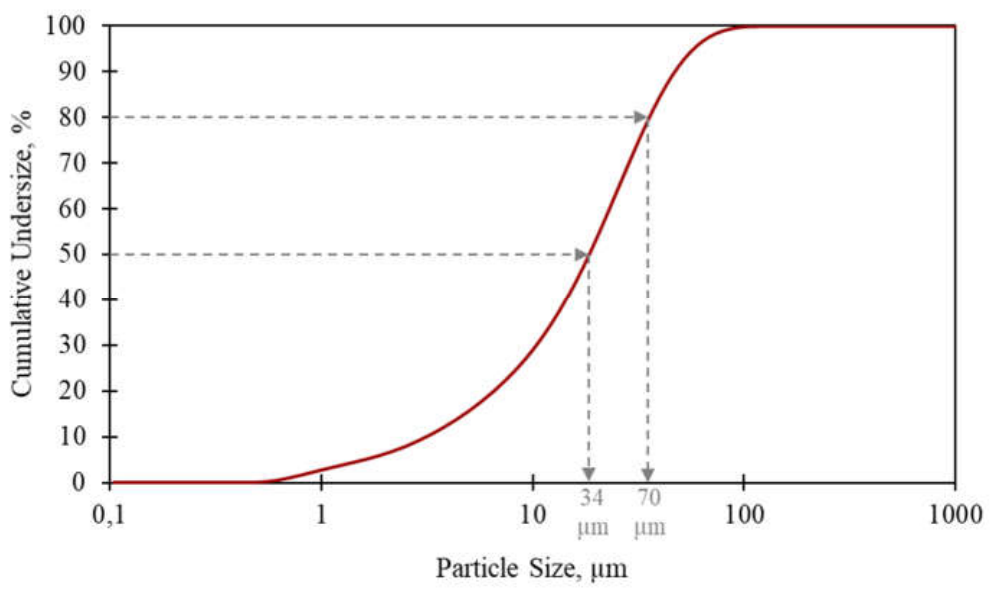
Figure 2.
XRD analysis of the tailings sample.
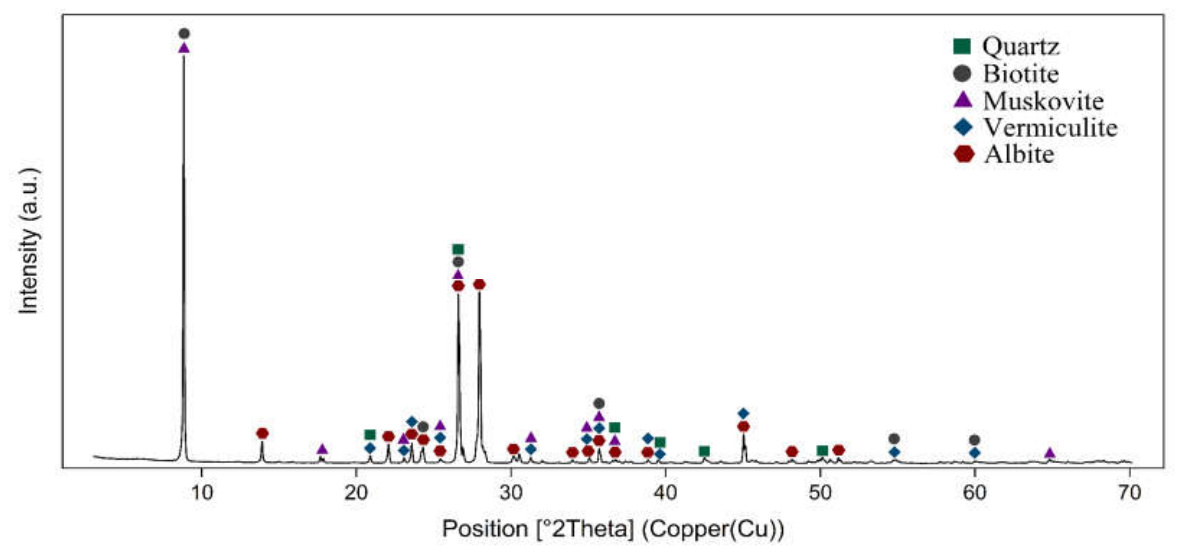
Figure 3.
Schematic views of the flotation cells and their rotor–stator assemblies: (a) Denver Cell and (b) TK Lab Cell.
Figure 3.
Schematic views of the flotation cells and their rotor–stator assemblies: (a) Denver Cell and (b) TK Lab Cell.
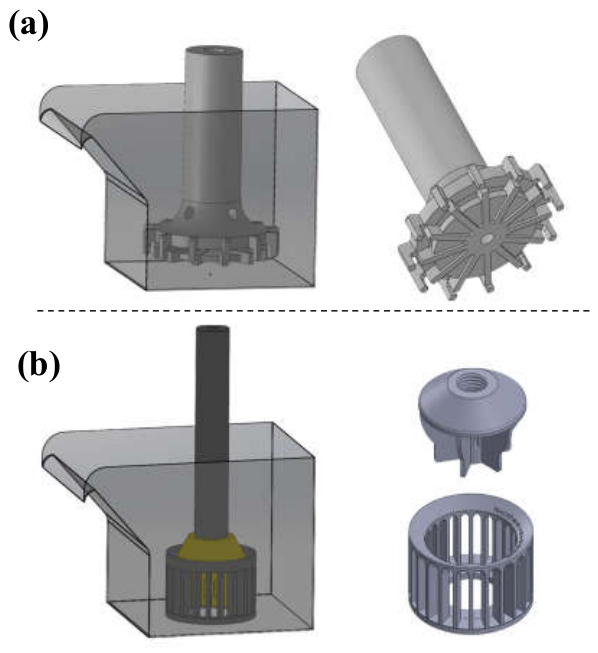
Figure 4.
Bubble size measurement using ImageJ software (the red arrow indicates the bubble diameter, and the black outlines identify the measured bubbles).
Figure 4.
Bubble size measurement using ImageJ software (the red arrow indicates the bubble diameter, and the black outlines identify the measured bubbles).
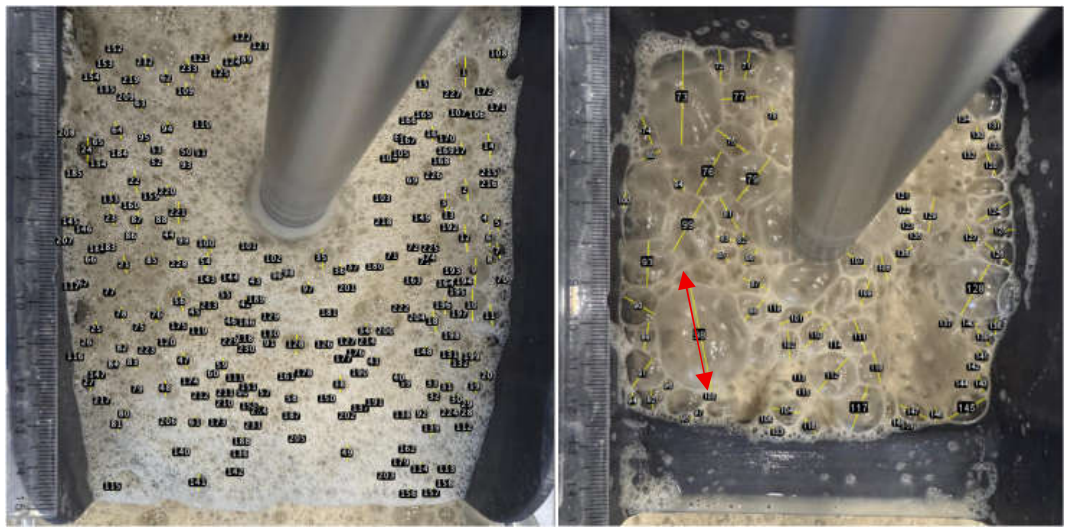
Figure 5.
Contents and flotation efficiencies obtained using the bulk flotation reagent scheme in the Denver Cell and TK Lab Cell (a) floating product, (b) sinking product).
Figure 5.
Contents and flotation efficiencies obtained using the bulk flotation reagent scheme in the Denver Cell and TK Lab Cell (a) floating product, (b) sinking product).
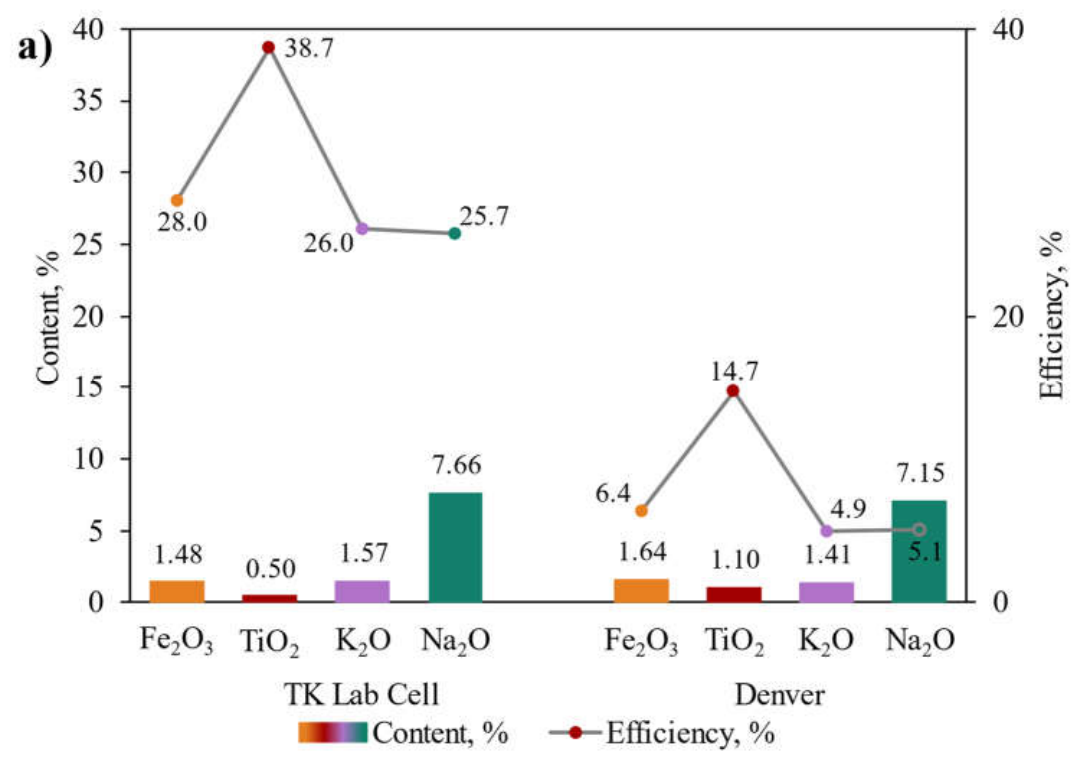
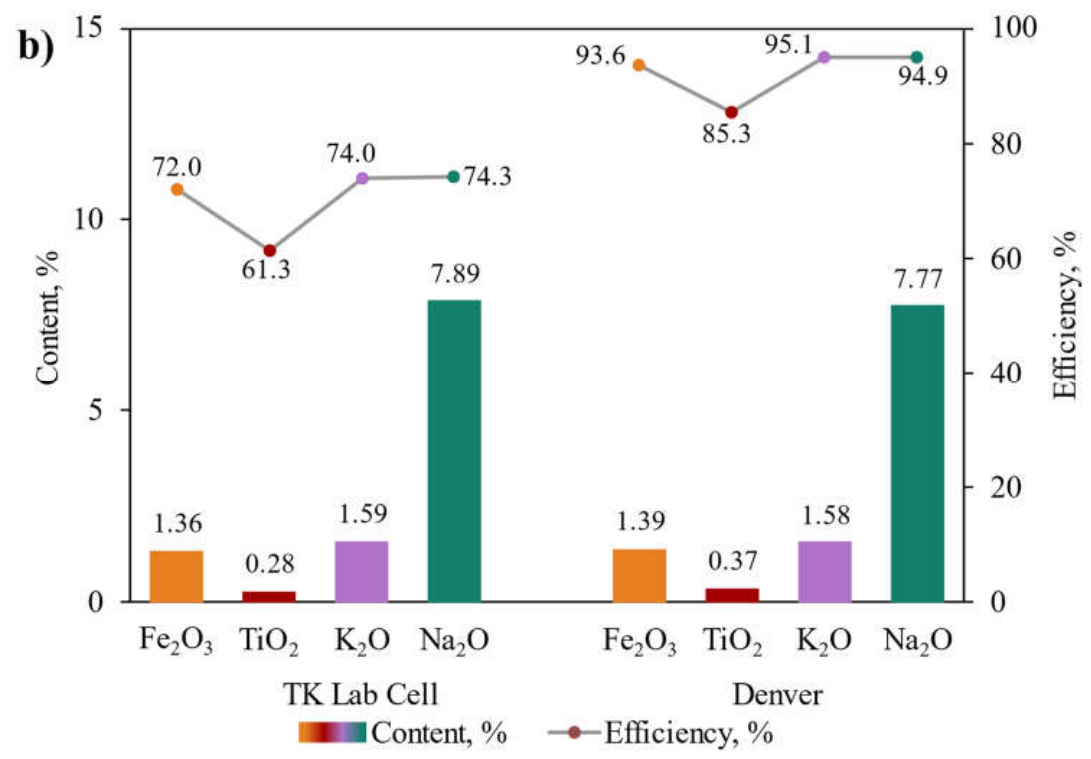
Figure 6.
Comparison of Sauter mean diameter from bulk flotation test using Denver and TK Lab Cell.
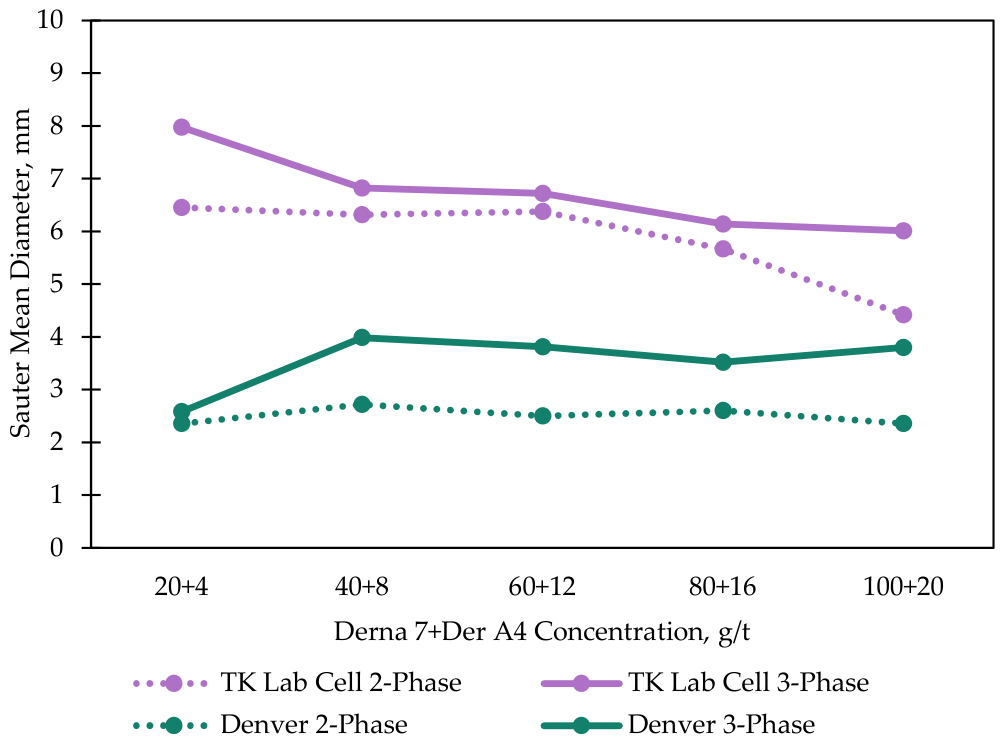
Figure 7.
Contents and flotation efficiencies obtained using the selective flotation reagent scheme in the Denver Cell and TK Lab Cell ((a) floating product, (b) sinking product).
Figure 7.
Contents and flotation efficiencies obtained using the selective flotation reagent scheme in the Denver Cell and TK Lab Cell ((a) floating product, (b) sinking product).
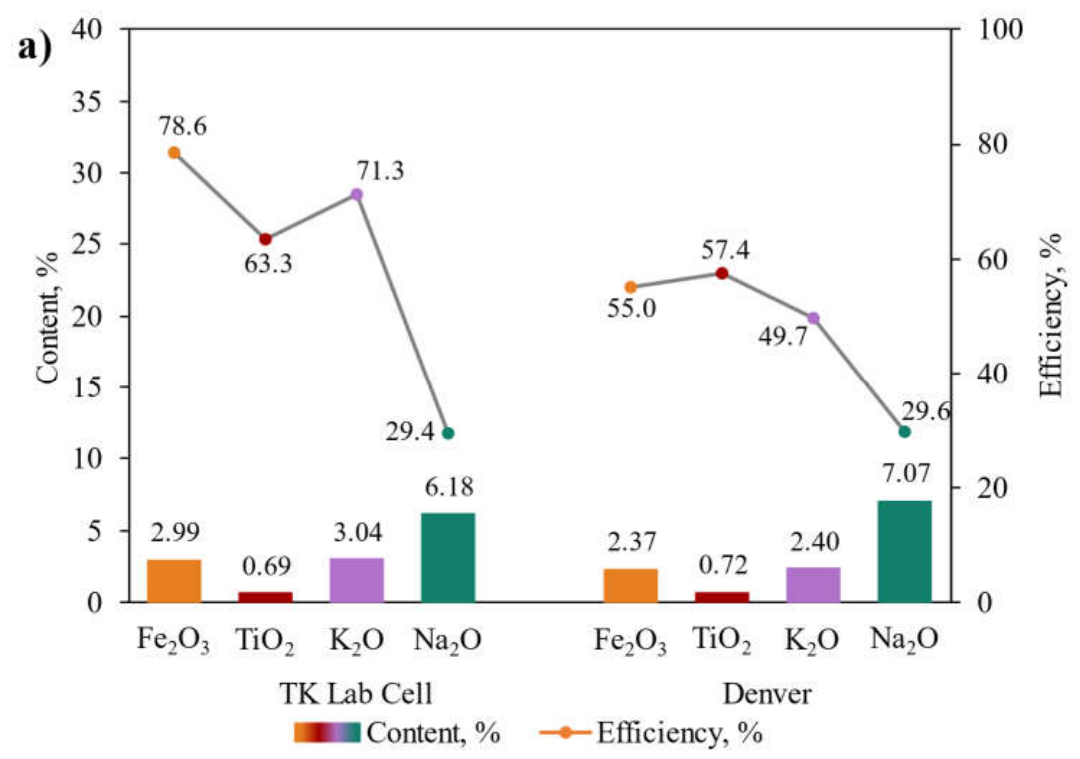
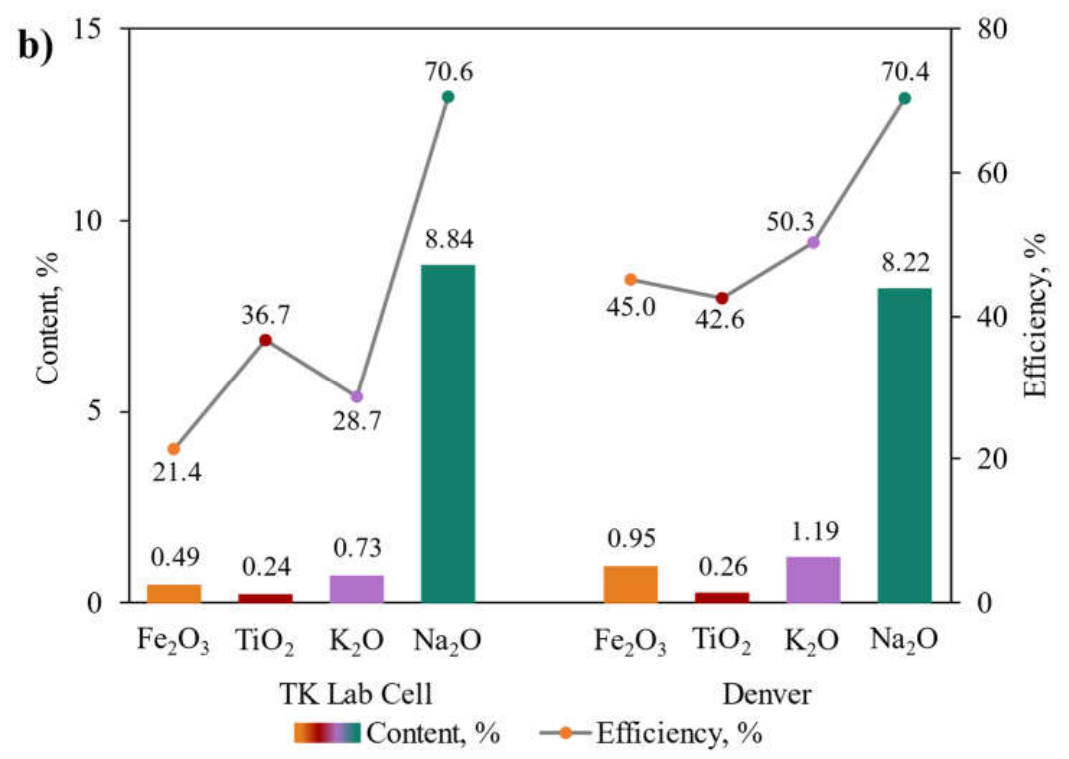
Figure 8.
Comparison of Sauter mean diameter from selective flotation test using Denver and TK Lab Cell.
Figure 8.
Comparison of Sauter mean diameter from selective flotation test using Denver and TK Lab Cell.
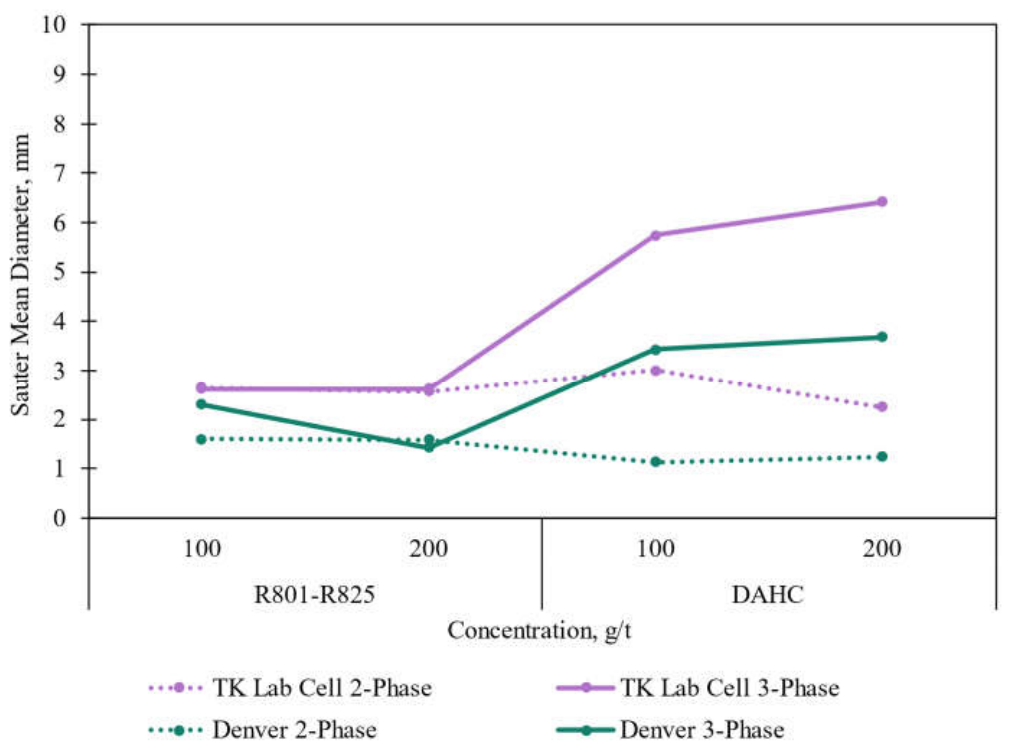
Figure 9.
Comparison of mass pull and Sauter mean diameter for bulk flotation tests.
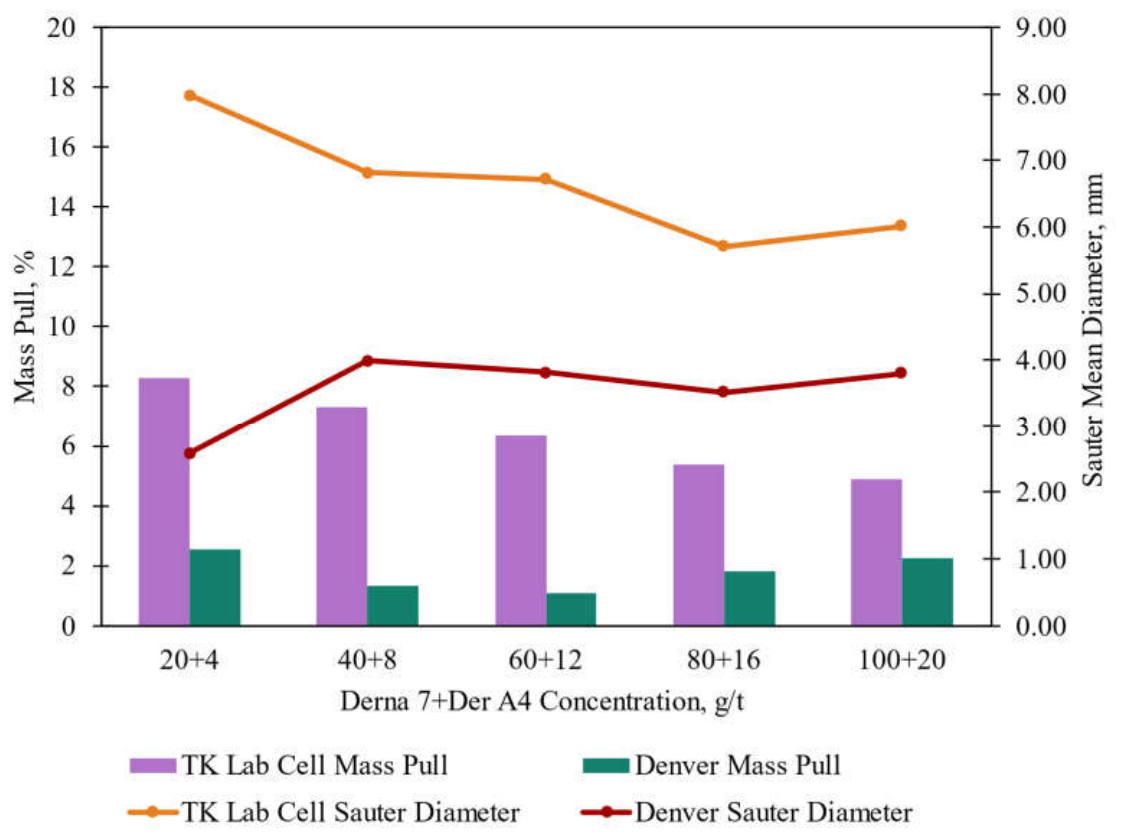
Figure 10.
Comparison of mass pull and Sauter mean diameter for selective flotation tests.
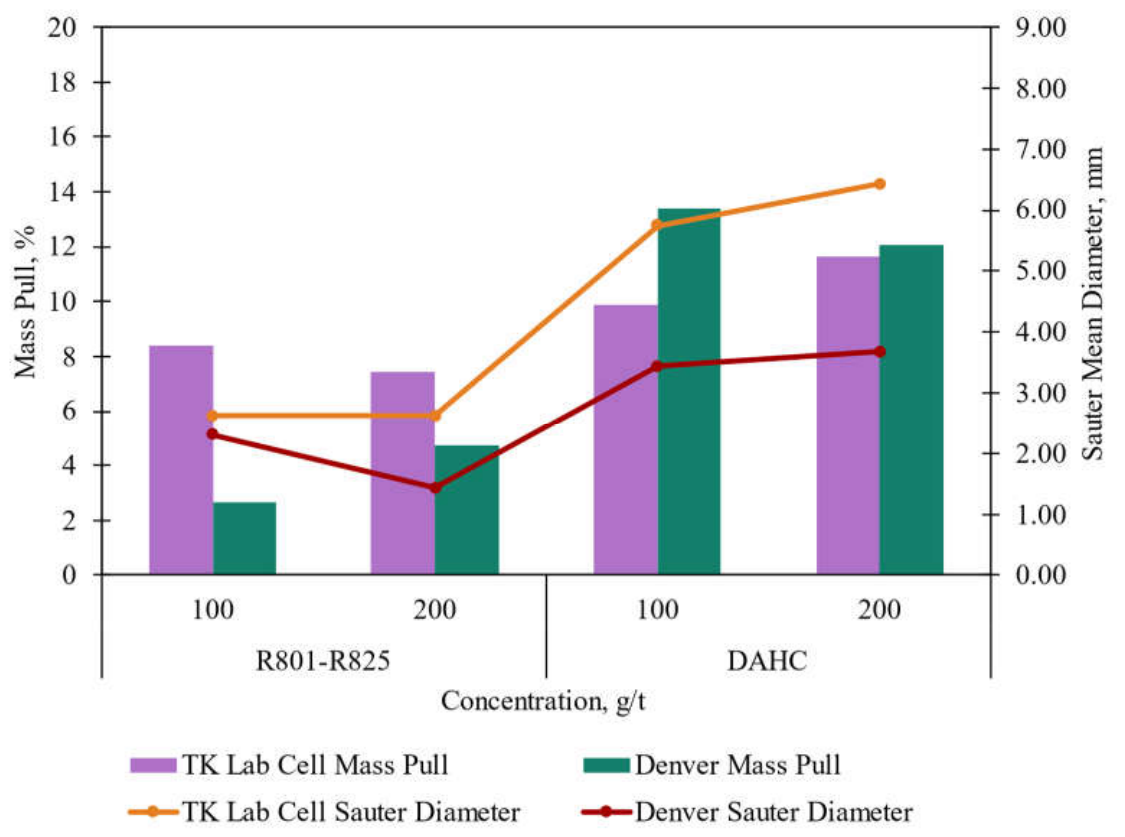
Figure 11.
Proposed sustainable flotation flowsheet highlighting the influence of reagent scheme and flotation cell design on feldspar tailing valorization.
Figure 11.
Proposed sustainable flotation flowsheet highlighting the influence of reagent scheme and flotation cell design on feldspar tailing valorization.
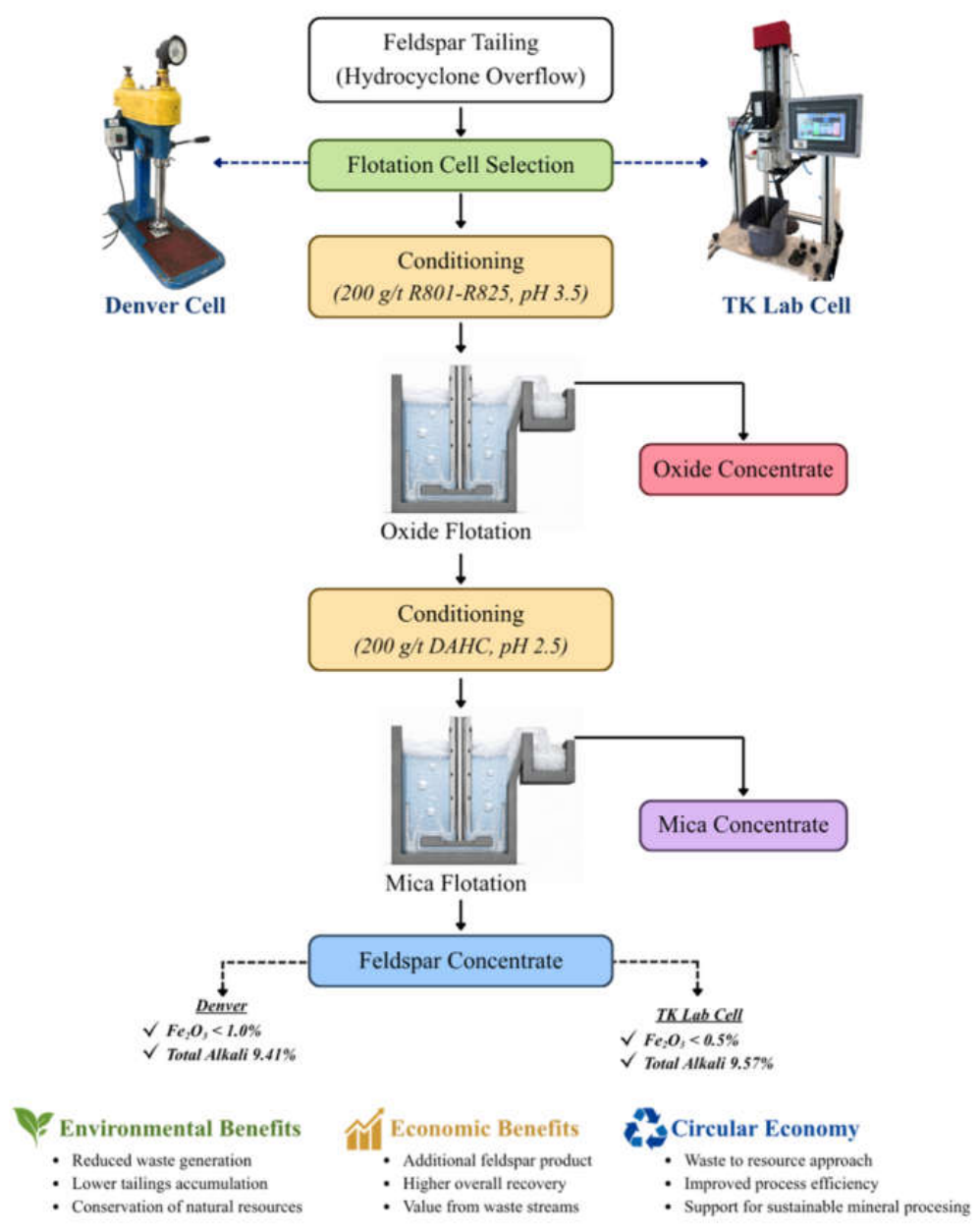

Table 1.
Chemical analyses of the tailings sample.
| Component | Na2O | MgO | Al2O3 | SiO2 | P2O5 | K2O | CaO | TiO2 | Fe2O3 | Cl | F | LOI |
| Content, % | 6.61 | 3.04 | 14.79 | 69.69 | 0.18 | 1.87 | 0.61 | 0.31 | 1.25 | 0.02 | 0.37 | 1.18 |
Table 2.
Conditions for flotation tests.
| Bulk Reverse Flotation | Selective Reverse Flotation | ||
| pH | Natural (8-8.5) | pH | 3.5 |
| Derna-7, g/t | 20+20+20+20+20 | R801, g/t | 50+50 |
| Der A4, g/t | 4+4+4+4+4 | R825, g/t | 50+50 |
| Condition time | 5+3+3+3+3 | pH | 2.5 |
| Flotation time | 3+3+3+3+3 | DAHC, g/t | 100+100 |
| Condition time | 5+3+5+3 | ||
| Flotation time | 2.5+2.5+2+1.5 | ||
Disclaimer/Publisher’s Note: The statements, opinions and data contained in all publications are solely those of the individual author(s) and contributor(s) and not of MDPI and/or the editor(s). MDPI and/or the editor(s) disclaim responsibility for any injury to people or property resulting from any ideas, methods, instructions or products referred to in the content. |
© 2026 by the authors. Licensee MDPI, Basel, Switzerland. This article is an open access article distributed under the terms and conditions of the Creative Commons Attribution (CC BY) license (http://creativecommons.org/licenses/by/4.0/).
Copyright: This open access article is published under a Creative Commons CC BY 4.0 license, which permit the free download, distribution, and reuse, provided that the author and preprint are cited in any reuse.


