
Submitted:
02 July 2026
Posted:
03 July 2026
You are already at the latest version
Abstract
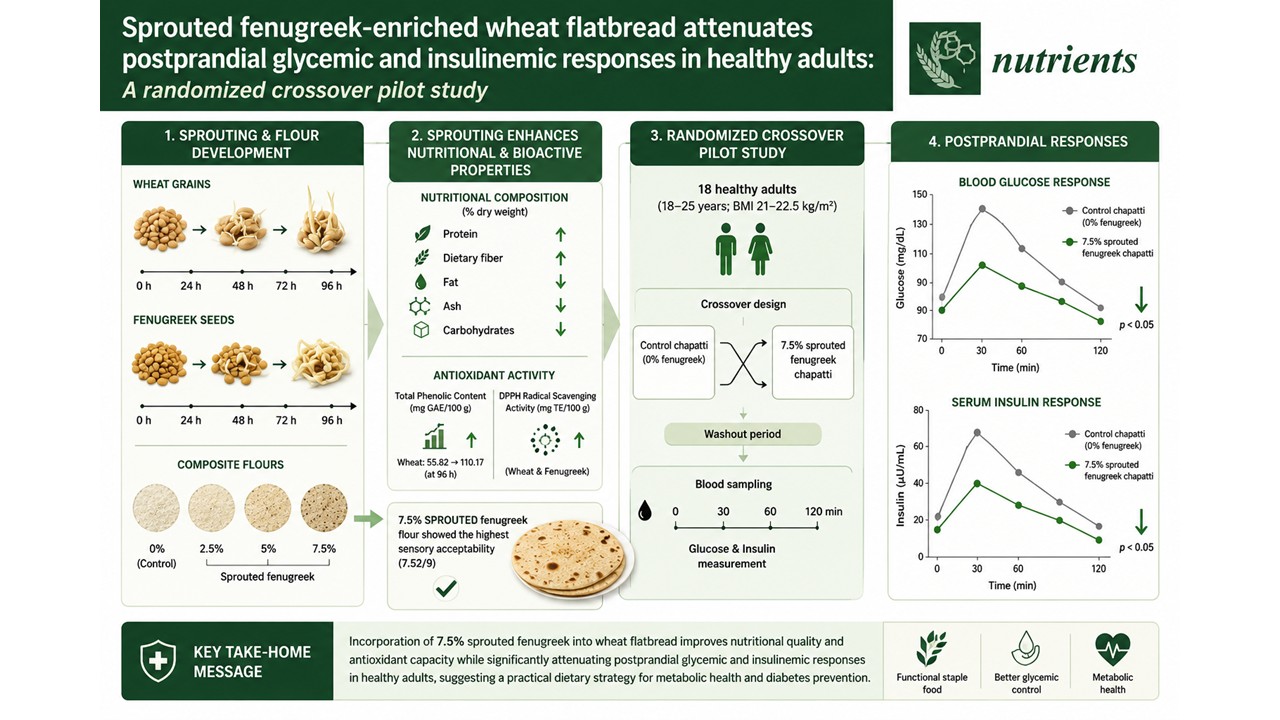
The development of functional staple foods with improved metabolic properties represents a practical dietary strategy for the prevention of type 2 diabetes. This study investigated the effects of incorporating sprouted fenugreek (Trigonella foenum-graecum L.) into wheat-based flatbread (chapatti) on postprandial glycemic and insulinemic responses in healthy adults. Wheat (cv. Galaxy 2013) and fenugreek seeds were germinated for up to 96 h and analyzed for nutritional composition and antioxidant activity. Composite flours containing 0%, 2.5%, 5%, and 7.5% sprouted fenugreek were formulated and evaluated for sensory acceptability. Eighteen healthy participants (18–25 years; BMI 21–22.5 kg/m²) consumed chapattis containing 7.5% sprouted fenugreek or control white flour in a ran-domized crossover design. Blood glucose and serum insulin were measured at 0, 30, 60, and 120 min postprandially. Sprouting significantly increased protein, dietary fiber, and antioxidant capacity in both wheat and fenugreek (p < 0.001). Total phenolic content in wheat increased from 55.82 to 110.17 mg GAE/100 g after 96 h of germination, accompa-nied by a significant rise in DPPH radical scavenging activity. The formulation containing 7.5% sprouted fenugreek showed the highest sensory acceptability (7.52/9). Fenu-greek-supplemented chapattis significantly reduced postprandial glucose and insulin re-sponses (p < 0.05) compared with control. Incorporation of 7.5% sprouted fenugreek into wheat flatbread improves nutritional quality while attenuating glycemic and insulinemic responses, suggesting a practical dietary strategy for metabolic health and diabetes pre-vention.
Keywords:
sprouted fenugreek
; insulinemic response
; wheat flatbread
; antioxidant activity
; functional foods
Copyright: This open access article is published under a Creative Commons CC BY 4.0 license, which permit the free download, distribution, and reuse, provided that the author and preprint are cited in any reuse.


