

Submitted:
02 July 2026
Posted:
03 July 2026
You are already at the latest version
Abstract
Alignment is a central problem in systems composed of diverse, interacting components, from biological development to social and engineered systems. One crucial aspect of this problem is determining an answer to the question of to whom or to what the alignment should be. We argue that in decentralized systems, alignment is necessarily to a virtual governor, an abstract governing entity embodied in the coordinating relationships among agents, such as bioelectric networks or the price system. Crucially, despite not being a physical object, virtual governors are causally instructive, controlling the behavior of a system by aligning its parts toward higher-level goals. As a result, agents, from cells to humans and all manner of diverse intelligences, behave as if pursuing the objectives of the virtual governor. We argue that alignment is necessarily to a virtual governor in decentralized, coordinated systems, discuss examples of virtual governors, and describe how virtual governors are constructed by the very components they align.
Keywords:
diverse intelligence
; basal cognition
; agency
; software
1. Introduction
Alignment is a central problem across many domains, from biological development and motor behavior to markets and society. In each case, diverse components must coordinate their actions so as to produce coherent, goal-directed outcomes at the level of the whole. Yet in these systems, no explicit representation of a shared objective exists, and no central authority specifies what is to be optimized. This raises a general question: how is alignment achieved in decentralized systems, and what, precisely, are such systems aligned to?
These examples are all special cases of a bigger issue emerging from the field of diverse intelligence, which recognizes the forthcoming plethora of unconventional agents in evolved, engineered, and hybrid embodiments (Levin, 2025; Clawson & Levin, 2023) How do vastly different beings, with divergent sensory-motor capabilities and cognitive architectures, align their actions toward flourishing into the future? It is likely that progress on this problem involves gaining a better understanding of how larger scales of systems control (literally, align) their parts toward larger-scale goals in novel problem spaces, and developing formalisms for the origins of specific patterns to which novel systems align.
In this paper, we argue that alignment is constructed through signaling architectures that translate global constraints into local incentives, giving rise to virtual governors, or emergent system-level objectives that organize collective behavior (Wiener, 1965; Dewan, 1976; Pezzulo & Levin, 2016; Cervera, Manzanares, et al., 2019). We show that in decentralized systems without explicit goal representations, alignment necessarily takes the form of alignment to such virtual governors.
Virtual governors are made of the coordinating relationships that organize a system of agents, relationships that arise from the economic coordination processes that assemble self-interested components into collective intelligences. The virtual governor is thus “virtual” because it is relationally embodied rather than corresponding directly to any physical structure. A virtual governor is a “governor” because it is the locus of instructive control: it is a causal driver for the system’s behavior. The components in the system are naturally induced by the construction of the coordinating system to behave so as to conform to the preferences of the virtual governor, making the resulting alignment an example of strong anticipation (Stepp & Turvey, 2010). Agents are thus aligned to the virtual governor in the sense that they can reliably be expected to fulfill the virtual governor’s plan.
Ultimately, we make two central points about virtual governors and alignment. First, decentralized coordination necessarily gives rise to virtual governors. Second, alignment means alignment to the plans, goals, or preferences implicit in the structure of the virtual governor.
The paper proceeds as follows. Section 2 introduces the concept of a virtual governor. Section 3 illustrates it with examples from physical systems, computation, biology, motor behavior, economic coordination, and mathematics. Section 4 shows how virtual governors emerge naturally in collective decision-making settings. Section 5 discusses methods for aligning virtual governors to particular goals. Section 6 discusses more complicated aspects of virtual governors: competition between them, the ability of governed components to exit the governance system, and virtual governors at multiple scales.
2. The Virtual Governor Hypothesis
Many coordinated systems of agents—organisms, economies, and more—behave as if they were guided by a single governing objective, even though no such objective is explicitly represented by any individual component of the system. The overall behavior of the system exhibits coherence and direction not attributable to any of the system’s components, suggesting the presence of a form of control operating at the level of the system as a whole.
We refer to such emergent control structures as virtual governors (Wiener, 1965; Dewan, 1976; Pezzulo & Levin, 2016; Cervera, Manzanares, et al., 2019). A virtual governor is an abstract entity embodied in the network of coordinating relationships among components that governs system behavior by shaping the incentives, constraints, and enablements faced by individual agents. More precisely, it is the system-level objective function implicitly implemented by a signaling architecture that transforms global constraint violations into local incentives, which ensures that a collection of decentralized parts are guided to behave in ways compatible with the system-level goal.
Virtual governors are “virtual” because they do not have traditional embodiments. Nevertheless, they exert real causal effect by structuring the environment in which components act, thereby guiding the collective dynamics of the system toward system-level goals.
The key idea is that coordination mechanisms often create conditions under which agents pursuing their own local objectives collectively implement system-level goals. In such systems, the governing objective does not reside in any particular agent’s mind or in an explicitly represented rule. Instead, it is encoded in the structure of interactions and signaling relationships that connect agents to one another. The resulting behavior can therefore be understood as the execution of a plan or policy belonging to the virtual governor embodied in that structure.
Virtual governors emerge in systems that must coordinate the use of scarce resources or satisfy collective constraints. To do so, these systems typically employ signaling mechanisms that transmit information about system-level stresses to individual components. Such signals allow agents to adjust their behavior in ways that reduce local pressures while simultaneously alleviating stresses affecting the system itself. Because the signals transform information about global constraints into local constraints, the responses of individual agents collectively steer the system toward states that satisfy those constraints.
When agents respond to these signals by attempting to minimize their own local costs or stresses, their behavior becomes aligned with the virtual governor. Alignment in this sense does not require that agents understand, agree with, or personally care about the overall objectives of the system. Instead, alignment arises because the signaling architecture ensures that reducing local stress tends to reduce system-level stress as well. As a result, agents pursuing their own goals act in ways that collectively realize the policy implemented by the virtual governor.
The virtual governor hypothesis is therefore the idea that coordinated systems of many self-interested agents tend to generate governing structures that align the behavior of their components to system-level goals through shared signaling mechanisms. When such mechanisms are present, agents become aligned to the virtual governor rather than directly to one another (indeed, opposition between agents, like competing firms in an economy or an opposable thumb to a set of fingers, can be crucial for aligning the agents to system-level goals). The governor organizes the flow of incentives, constraints, and enablements that shape agent behavior, producing coherent large-scale outcomes even in the absence of centralized control.
This perspective provides a useful way to analyze a wide range of coordinated systems. In the next section, we illustrate the concept of virtual governors with examples drawn from physics, computation, biology, motor behavior and cognition, economic coordination, and even pure mathematics, showing how diverse systems exhibit similar patterns of emergent governance.
3. Examples of Virtual Governors
In this section we discuss a number of examples of virtual governors to illustrate key aspects of the concept. While virtual governors’ crucial property is that they exert causal influence over their parts, we will not get into the question of top-down causation here, as it has been discussed extensively elsewhere (Butterfield, 2012; G. F. R. Ellis & Bloch, 2011; Juarrero, 2009; G. Ellis, 2009, 2008; Auletta et al., 2008; Craver & Bechtel, 2007; Jaworski, 2006), and recently quantified via new developments in information theory (Albantakis et al., 2019; Hoel, 2018, 2017; Hoel et al., 2016, 2013).
One example of a virtual governor is the “center of gravity”. Consider a hollow sphere in space. The center of gravity is at the middle of the sphere, where there is no mass at all – no physical components. And yet, in order to control its motion, one needs to know about the center of gravity, and – crucially – manage it. In other words, the virtual governor is the key controller of the system in the sense that it forms the optimal target of interventions when one wants to change its behavior.
Another example is the “algorithm” (G. Ellis & Drossel, 2019). Consider a digital computer. On the one hand, it does not escape the laws of physics; its behavior is controlled at the bottom by Maxwell’s equations regulating electron flows through conducting media. A reductionist could mock software developers for their magical beliefs in a mystical, non-physical “algorithm” that makes the electrons dance inside the machine. And yet, a coder who didn’t believe that the non-physical algorithm was causal in producing specific outcomes, would never write any useful software. The algorithm is a virtual governor that operates at a higher level of description than the machine layer underneath, and causes an alignment
Another powerful virtual governor occurs in biology, specifically in developmental or regenerative morphogenesis. What are we counting, when we look at millions of embryonic cells and say there’s “1 embryo” – what is this embryo? It is a self-modifying information structure, implemented by physiological networks operating within cell collectives (Levin, 2019). These networks do two important things, in order to distort the option space for cells and align them toward species-specific target morphology. First, they store setpoints that enable the system to perform homeostatic and allostatic goal-directed behavior as they reduce distance from those states (error). Second, they implement the collective intelligence widely observed as morphogenetic systems reach their goals despite perturbations and barriers (Levin, 2023b), or even adopt entirely new goals (in the case of synthetic beings which have not been selected for those traits like biobots (Gumuskaya et al., 2025; Pai et al., 2025; Fotowat et al., 2026). In other words, what we see as anatomies are the results of virtual governors navigating morphospace according to their own agendas, which pull the cell along at least as much as the cells’ actions implement pattern formation (see Figure 1). And, it is increasingly recognized that managing these virtual governors, not the molecular matter they supervene upon, is a functional roadmap to novel advances in biomedicine and bioengineering (Lagasse & Levin, 2023; Davies & Levin, 2023).
In the context of motor behavior, a virtual governor can be understood as the emergent control structure that coordinates muscles, joints, and neural signals to satisfy task-level constraints without a single central controller or pattern generator. A motor behavior is assembled out of far too many components to be prescribed by a nervous system (Bernstein, 1967). Instead, the body maintains stability and goal-directed movement by constraining, coordinating, and exploiting the degrees of freedom of the musculoskeletal system, allowing local interactions to self-organize into globally functional patterns (Turvey, 1990). Transitions between movement patterns arise naturally from the intrinsic physical dynamics of the component interactions (Haken et al., 1985; Kugler et al., 1980, 1982; Kugler & Turvey, 1987), leading to coordinated behaviors the essences of which are contained in none of the components. Experiments have shown that these dynamics can be deliberately manipulated to encourage a system to “remember” or “regenerate” behaviors that should not be present yet according to typical developmental timetables (Thelen & Ulrich, 1991). Indeed, consciousness has also been modeled as a virtual governor supervening on the computational processes of the brain and body (Dewan, 1976).
Motor behavior is an intriguing example because the virtual governors that control the system (at many scales, coordinating groups of fibers and muscles into functional units, and coordinating the whole body into a functional unit) emerge and dissolve rapidly. This observation suggests that motor behavior is an example of the class of phenomena constructed through what neuroscientists call allostasis, or stability through change (Sterling, 2004, 2012; Sterling & Eyer, 1988). Allostasis is theorized to be responsible for all psychological phenomena (Barrett, 2017; Barrett & Lida, 2025; Barrett et al., 2025) rather than component-level essences (Barrett, 2006; Lindquist et al., 2012). Thus, psychological phenomena in general may be organized via virtual governors. This perspective is corroborated by the successful application of motor behavior principles to cognition (Kelso, 1995; Thelen & Smith, 1996; L. B. Smith, 2005).
The eponymous example of virtual governors arises in electrical power grids (Wiener, 1965), where many generators must coordinate to match total power supply with fluctuating demand. If generation exceeds demand, the grid frequency rises; if demand exceeds generation, it falls. Each generator responds locally to this frequency signal—adjusting mechanical input to produce more or less power—without knowing the total demand or the actions of other generators. Because all generators respond to the same signal, their individual adjustments collectively restore balance. The grid frequency thus encodes system-wide stress, and the coordination among generators emerges from local responses. In this way, the balancing of supply and demand is achieved by a virtual governor: an emergent control structure that organizes system-level behavior without being represented in any single component.
Possibly the oldest example of a virtual governor comes from economics, where the concept has been referred to as the “invisible hand” (A. Smith, 1776). Like multicellular organisms and electrical grids, the economy consists of many individual elements interacting with each other to produce coherent, goal-directed outcomes without central direction or explicitly represented values. This is achieved via prices, which function as signals of relative scarcities: when a resource becomes scarce, its price rises, creating incentives for producers to increase the quantity they supply and for consumers to reduce the quantity they demand. Individuals responding to these signals pursue their own interests, but are guided, as if by an invisible hand—or by a virtual governor—to produce and consume to fulfill system-level constraints.
Virtual governors can also be seen in mathematics through the concept of universal properties. Rather than specifying an object’s internal structure, a universal property defines it entirely by its relationships to other objects (Riehl, 2016), uniquely characterizing it up to isomorphism. These properties constrain all constructions attempting to satisfy the same conditions, so that every valid construction must interact with the rest of the mathematical universe in the same way. In this sense, the universal object functions as a virtual governor: an abstract structure defined relationally that organizes and shapes the behavior of all systems built to satisfy its constraints, even though it has no internal, centralized representation.
These examples of virtual governors have a shared principle: system-level coordination emerges from local interactions shaped by relational structures rather than centralized control or internal representations or essences. Crucially, these structures arise because the components of a system are aligned, responding to shared constraints in ways that collectively stabilize and coordinate behavior. We now turn to explore this principle in detail.
4. Mechanisms of Alignment in a Collective Give Rise to Virtual Governors
The examples above suggest a common structural pattern. Virtual governors do not arise from centralized representation of system-level goals. Rather, they emerge in systems that must satisfy shared constraints and that possess signaling architectures capable of transmitting information about those constraints to individual components. Alignment occurs when local responses to such signals reliably reduce system-level stress.
Virtual governors are constructed from the relationships among the individual components of the system. These relationships constitute constraints and enablements that influence the behavior of the components, which can be understood as taking place on two levels: system-level, and component-level.
System-level constraints include the target morphology of an organism, the balance of power generation and load in an electrical grid, and the requirement that markets clear in the economy. At a system level, these constraints must be obeyed. However, no individual component of the system necessarily knows about these constraints, let alone monitors deviations from them or is intrinsically motivated to correct said deviations. A mechanism is required to align individual goals with system-level requirements.
Violations of system-level constraints produce system-level measurements of stress, or deviations from goal states. For example, changes in voltage patterns signal deviations from target anatomical states (Cervera, Manzanares, et al., 2019; Levin & Martyniuk, 2018), changes in grid frequency imbalance between power generation and load, and changes in relative prices signal mismatches between supply and demand.
In each case, the alignment mechanism is in how these system-level measurements of stress are translated into component-level measurements of stress. Cells change their behavior in response to changes in voltage patterns. Generators provide more or less power as frequency goes down or up. People adjust their patterns of consumption and production in response to (and, notably, in anticipation of) price changes. In each case, the result is that the components of the system naturally adjust their behavior in ways that resolve the system-level stress purely by acting so as to resolve their own stress.
Thus, signaling mechanisms in coordinated systems perform a kind of informational compression. Instead of transmitting a full description of the system’s global state to each component, they transform global system-level stress into component-level stress, thereby economizing on information. For example, the price of a loaf of bread may be influenced by the activities of millions of people, but any individual bread consumer need only think about how much bread they plan to buy given the price. Similarly, no individual cell needs to know the morphogenetic plan. That knowledge exists at the level of the cellular collective; the plan consists of component-level signals that each individual cell responds to.
Alignment is thus achieved as a two-way flow between system-level measures of stress and component-level measures of stress. When the signals to which components respond encode system-level stress, local minimization behavior produces global coordination. This occurs in part because system-level constraints must be obeyed by the collective behavior of the components even though no individual component may be aware of those constraints or intentionally try to adhere to them. Alignment therefore arises without requiring that components explicitly represent, perceive, understand, or endorse a global objective.
When a system consistently responds to constraint-encoded signals in ways that restore stability or reduce stress, its behavior can be modeled as if it were minimizing a system-level objective function. In control-theoretic terms, the system behaves like an optimizer with respect to certain global variables. In economic terms, it behaves as though implementing an allocation policy responsive to scarcity. In biological terms, it behaves as though pursuing a target morphology.
This perspective connects closely to a foundational result in social choice theory. Collective behavior must somehow map individual preferences onto a social preference. The only aggregation rule that guarantees a rational collective preference is one that behaves as if it were determined by a single ordering, called a dictator in social choice theory (Arrow, 1950). This theorem is congruent with the framework of this paper: a decentralized system that reliably behaves as if it is optimizing a coherent objective must instantiate a single governing preference that resolves conflicts and imposes consistency across the collective. The virtual governor can thus be understood as a distributed, emergent “dictator” encoded in the signaling architecture, integrating competing local pressures into a unified system-level directive.
This “as if” governing preference need not be explicitly represented anywhere in the system. It emerges from the interplay between constraints, signals, and local response rules. Nevertheless, it exerts genuine causal influence: altering the signaling architecture or the mapping between signals and agent responses changes the system’s large-scale behavior. The objective is therefore not a mere metaphor; it is a useful abstraction capturing the organizing structure of the system.
The virtual governor can thus be understood as the emergent governing objective, or system-level preference, encoded in the signaling relationships that coordinate agent behavior. Agents become aligned to this governor because the structure of feedback ensures that reducing local stress tends to reduce global constraint violations. Alignment is therefore not imposed from above but induced from within the system’s architecture of coordination.
This mechanism is not merely one way alignment can occur; it is the only way alignment can occur in decentralized systems whose components do not explicitly represent system-level goals. If component behavior did not depend on signals encoding system-level constraint violations—shared variables such as prices, frequencies, or bioelectric potentials—local responses would be independent of global stress and could not systematically restore system stability. Alignment therefore requires that information about constraint violations be transmitted to components in a form that alters their incentives or dynamics. The resulting feedback structure, by which global stress is converted into local stress and locally minimized, constitutes the virtual governor. In biology, we can understand this process as minimizing error between an homeostatic setpoints and the current state of the system. For example, if the anatomy is damaged or deviated, the bioelectric network detects this “stress” (error) and drives cellular behavior (growth, remodeling) to return the system to the target, thus minimizing the error (see Figure 1).
Thus, alignment mechanisms necessarily give rise to virtual governors. Whenever decentralized components achieve coordinated behavior without representing system-level goals, this coordination must occur through signals that encode global constraint violations and guide local responses. These signals define the governing structure of the system—the virtual governor—to which the components are effectively aligned. In this sense, virtual governors are not an additional layer imposed on alignment mechanisms but the structural form that alignment necessarily takes in decentralized coordination.
5. Aligning Virtual Governors to Particular Goals
The idea that all of the components of a system must be aligned to a virtual governor if they are to be aligned at all may initially seem troubling. The goals of a virtual governor are not the goals of the components. For example, the cellular collective has a goal of a target morphology, but no individual cell has this goal. Being aligned to a virtual governor, therefore, means being aligned to goals that are not one’s own. However, this does not mean that virtual governors themselves are fixed or uncontrollable. A growing body of empirical and theoretical work shows that virtual governors can be aligned toward particular goals by shaping the signaling architectures through which coordination occurs.
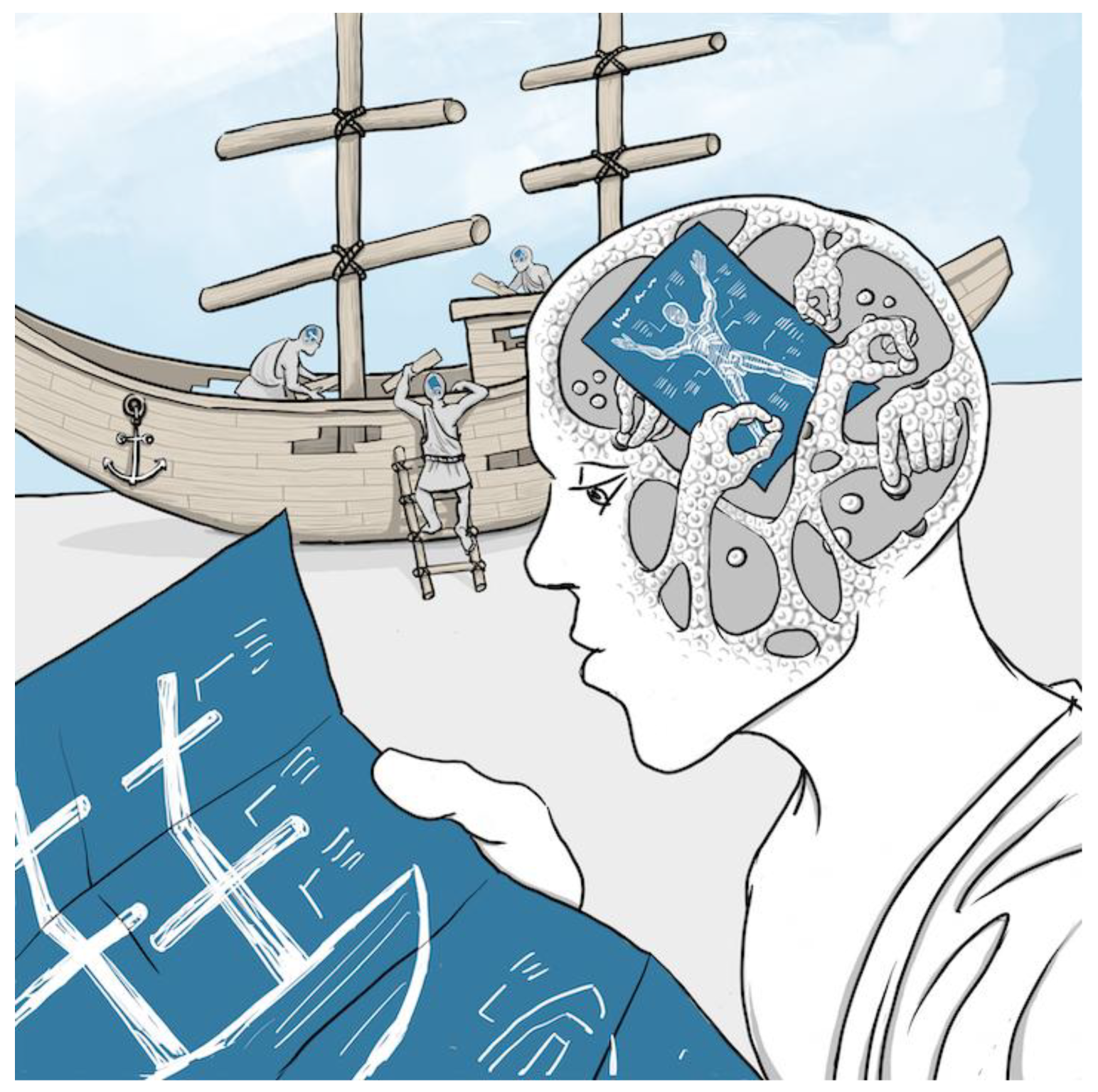
One of the clearest demonstrations of this principle comes from developmental and regenerative morphogenesis. The virtual governor is implemented by bioelectricity, the electrical signaling system that cells use to coordinate with each other (Levin & Martyniuk, 2018; Levin, 2019, 2021a, 2023a) (see Figure 2). Cells electrically couple to each other, producing bioelectric networks that maintain patterns of resting potential voltage across the membranes of the many cells and consequently instruct the development of form (Levin, 2013, 2014; Pietak & Levin, 2016, 2017; Mathews & Levin, 2017; Pai et al., 2018; Pietak & Levin, 2018; Cervera et al., 2018; Cervera, Levin, et al., 2020; Cervera, Manzanares, et al., 2019; Cervera, Meseguer, et al., 2020; Cervera, Pai, et al., 2019; Manicka & Levin, 2019; Mathews et al., 2023) (see Figure 2A,B). The bioelectric networks thus act as a virtual governor (Pezzulo & Levin, 2016; Levin, 2022), exerting a coordinating pressure on the cells that maintains the voltage pattern across the cell membranes much like how the governor of the generators maintains a frequency pattern across the generators. The “governor”, i.e., the bioelectric network, is not imposed on the cells from without but is an abstract entity created from the coordinating bioelectric relationships among the cells, which nevertheless acquires a self-sustaining dynamic that enables it to persist throughout constant replacement of cellular material and its rearrangements. A virtual governor in this sense is a perfect formalization of the classical concept of the Ship of Theseus, which isn’t really the ship but the forward-looking, goal-directed, pattern of the ship as the plan in the mind of the workers – at once immaterial and yet ultimately powerful, providing the characteristic stability, plasticity, robustness, and resilience of the larger scale despite change at the lower (see Figure 3).
Bioelectric networks are particularly instructive because they directly show how virtual governors embody plans not attributable to the components. The bioelectric network’s plans are forms that encode the setpoint for cell behaviors that implement the morphology of the multicellular organism—the size and shape of the limbs, the position of the head and tail, etc. (Pezzulo & Levin, 2016). The bioelectric network’s plans can even visualized, using voltage-sensitive fluorescent dyes, as an electrical prepattern that the cells are then observed to follow—for example, bioelectric networks in tadpoles implement an “electric face” on the body of the tadpole, a pattern which guides the morphogenesis of craniofacial structures by the cells following a setpoint literally spelled out (encoded) by the bioelectric network (Vandenberg et al., 2011; Beane et al., 2013) (see Figure 2C).
Crucially, these bioelectric patterns can themselves be manipulated, allowing researchers to align the morphogenetic governor toward alternative goals. As seen in experiments with planaria, changing the bioelectrical pattern will assign a new anatomical memory/goal (see Figure 2D). Other applications of this concept include inducing the formation of ectopic organs such as eyes, repairing birth defects, triggering the regeneration of injured appendages, etc. (Levin, 2021a). These results demonstrate that aligning a system does not necessarily require controlling each component individually. Instead, it may be sufficient to alter the signaling structures through which the virtual governor operates.
The price system is an analogous example of a signaling system (Lyons & Levin, 2024) where the virtual governor has been shown to be alignable to particular ends. As a general alignment mechanism, taxes can be used to discourage undesirable activities (or more precisely, overproduced activities) by making them more expensive, and subsidies can be used to encourage desirable activities (or underproduced activities) by making them more rewarding. For example, pollution can be taxed, and research subsidized. Additionally, we can intentionally build out the signaling architecture of the economy to predictably guide the virtual governor toward certain ends, such as via markets for emissions rights or prediction markets (Hanson, 2003; Wolfers & Zitzewitz, 2004). In each case, the goal is not to control individual actors directly but to reshape the signals to which they respond, thereby steering the emergent dynamics of the system.
Economics also shows that the governance of a virtual governor depends on voluntary methods. The price system remains informative precisely because participants are free to disagree with current price patterns and act on their own beliefs about relative scarcities. By attempting to profit from what they perceive to be inaccurate pricings, individuals continuously refine the signals guiding the system. Alignment therefore emerges not from coercion but from the interaction between shared signals and the independent problem-solving of system participants.
Taken together, these examples illustrate that virtual governors are aligned not by dictating the behavior of individual components but by shaping the signaling architectures through which coordination occurs. By modifying these relational structures, whether bioelectric gradients, price signals, or anything else, it becomes possible to redirect the goals that guide collective behavior.
6. Competition and Exit: Virtual Governors at Multiple Scales
So far the picture of alignment via and to a virtual governor may seem relatively peaceful and simple: a single governing preference order is assembled over a system of components and aligns those components to that shared goal. However, there are several complicating factors to consider.
First, it is important to observe that participation in a virtual governor’s plan is incentivized, not obligatory. Agents can defect from one coordination regime and attempt to establish another. In biology, cells sometimes abandon the cooperative regime of the multicellular organism and revert to more primitive forms of coordination, as occurs in cancer. Cells, tissue, organs compete for resources (Johnston, 2009; Gawne et al., 2020; Smiley & Levin, 2022). When resources are constrained, a subset of the biological system defy the virtual governor, ultimately leading to cancer (Taylor et al., 2017). By doing so, cells get out from under the “rule” of the organism’s virtual governor and follow a new one. In general, cancer can start its own regime or niche construction (Barcellos-Hoff et al., 2013), no longer seeing the body as part of itself but as part of the environment, and therefore something to be ignored, exploited, or even destroyed, including the body’s virtual governor (Levin, 2021b).
Exit is enabled in part by the fact that virtual governors are a multiscale phenomenon. Biological systems contain nested coordination structures ranging from gene regulatory networks to cellular collectives to whole organisms. Gene regulatory networks (GRNs) are dynamical genetic networks than can be trained and can show several different kinds of learning and memory (Biswas et al., 2021). Therefore, they can switch from one behavior-guiding attractor to another as if they too embody virtual governors, encoded in the transcriptomics or the genetic ‘pattern’ similar to how the bioelectrical pattern encodes the memory of the target form for morphogenesis and regeneration. Emerging tools of causal information theory have now been used to quantify the appearance of virtual governors in such networks, which both increase their learning capacity and are in turn strengthened and reified by learning experiences (Pigozzi et al., 2025). More broadly, all collective intelligences may implement goal-directed dynamics through signaling architectures at multiple levels simultaneously, as shown clearly in the case of motor behavior, where linkages group components into functional units at many levels. Social and technological systems may exhibit analogous hierarchies, with higher-level virtual governors regulating the behavior of lower-level ones. In this light, alignment itself becomes a multiscale problem: stable coordination may depend on identifying the levels of organization at which governing structures emerge and shaping the signals that operate at those levels.
Research has been shown that we can detect the emergence of higher order ‘macroscales’ in interactomes and that these biological macroscales are associated with lower noise and degeneracy and therefore lower uncertainty (Hoel et al., 2013; Klein et al., 2021; Pigozzi et al., 2025). In a similar way, we might detect alignment-related macroscales in which goal structures become more stable. At these levels, virtual governors would appear as stable attractors, revealing which levels of organization effectively implement the system’s “values”.
There can even be competition between virtual governors. In planaria experiments, we can observe a bistability of the somatic pattern (Pezzulo et al., 2021). Planaria exhibit remarkable regenerative capacity: when cut them into pieces, each fragment can regenerate into identical worms. However, when planaria fragments are treated with compounds that perturb their bioelectric networks, regeneration does not yield a single uniform outcome, some regenerate as two-headed and some do not (Durant et al., 2019). Further cuts yield three different kinds of worms: wild-type worms that consistently regenerate a single head, two-headed worms that always regenerate two heads, and “cryptic” one-headed worms whose target morphology has been destabilized. In the cryptic animals, the underlying bioelectric circuit has been durably reset into a state that, after each new cut, can spontaneously resolve either into the stable two-headed program or remain in the cryptic condition without any change to the genome. Interpreting this results in light of virtual governors, the cryptic animals, at collective levels are competing for two different virtual governors, both of which are visible in the bioelectric pattern.
Taken together, these observations suggest that alignment is more complicated than simply constructing and conforming to a virtual governor. Every component of the system plays a role in constructing the virtual governor they are in turn aligned to. Many construction processes are happening at once, competing and coordinating across multiple scales. If the collective construction process fails to satisfy certain criteria, such as when the coordinating relationships in the system fail to account for various stressors (Bator, 1958), agents will adjust their behavior accordingly, which could mean withdrawing from, updating, or replacing the virtual governor, depending on a variety of factors.
Ultimately, it must be recognized that agents within and without the system can often reshape their governing structure to influence the goals it implements. Human societies routinely alter the effective objectives of the price system through taxes, subsidies, regulations, and institutional design. Biological systems exhibit analogous phenomena: experimental manipulations of bioelectric signaling networks can alter the target morphologies that guide development and regeneration. The interplay between virtual governors and the forces they account for, model, and govern is thus a complex, ongoing weave at many directions and scales.
7. Conclusion
Alignment is often framed as the problem of ensuring that individual agents pursue the correct objectives. However, many of the most important coordination systems in nature and society operate without agents that explicitly represent system-level goals. Coordination instead emerges through signaling architectures that transmit information about constraint violations and guide local responses. When such systems stabilize collective behavior, they do so through structures that function as if they were governing objectives. We refer to these emergent governing structures as virtual governors.
In this paper, we argued that alignment in decentralized systems always takes the form of alignment to a virtual governor. When agents share resources or must collectively satisfy system-level constraints, information about constraint violations must be transmitted through shared signals that shape local behavior. The resulting feedback structures convert global stress into locally actionable signals, producing coordinated behavior without requiring any component to represent the system’s goals. Virtual governors therefore arise as a structural consequence of distributed constraint satisfaction.
To align a system is not simply to specify the right objectives at the level of its components, but to shape the signaling structures that determine which virtual governors emerge, and thus which system-level objectives are realized. The components do not even need to be aware of the system-level objectives, let alone be intrinsically motivated by them. The virtual governor itself does the work of aligning the components to its goals via the way it shapes their incentives.
This argument has direct implications for the emerging problem of creating a cooperative society of humans, artificial intelligences, and other diverse intelligences. As artificial and other kinds of agents become integrated into economic, technological, and institutional coordination systems, their behavior will tend to align with, and participate in constructing, the virtual governors embedded in those systems. The relevant governing objectives may not correspond to the explicit goals of any individual human or organization but instead emerge from the signaling architectures that structure collective behavior. While this does mean that virtual governors will solve the alignment problem for us in one sense or another, and shows that the question of “to whom” AIs will be aligned (Korinek & Balwit, 2022) is always answered by a virtual governor, it does indicate that determining how to predict the virtual governor’s values and where those values come from therefore become empirical questions of crucial importance.
This perspective suggests that aligning diverse intelligences is not necessarily a problem of designing individual agents with appropriate objectives. It can be framed as a problem of understanding and shaping the governance architectures that generate the virtual governors to which those agents will align. Human societies already possess experience modifying such systems through institutions, regulations, and technological design. The challenge going forward is to apply and extend that knowledge to coordination systems in which increasingly capable artificial agents participate.
More broadly, the concept of virtual governance highlights the continuity between biological, technological, and social forms of collective intelligence. Systems ranging from morphogenetic processes to economic markets achieve coherent outcomes through distributed signaling mechanisms that guide local responses to global constraints. Understanding these mechanisms may therefore provide a unified framework for studying alignment across domains, and for designing coordination systems capable of supporting increasingly powerful forms of collective intelligence.
Can efforts to decode the bioelectric system (Tseng & Levin, 2013; McMillen & Levin, 2025) generalize to virtual governors broadly? It would be very helpful to expand our ability to decode and edit a virtual governor’s goals in various contexts including and beyond bioelectric systems and price systems. Future work should include determining how to predict preferences of a virtual governor from the interactions that manifest it. Although currently mainstream approaches view virtual governors as “emergent” from low-level interactions and constraints (Juarrero, 2015), it has recently been suggested that virtual governors exist in a latent space alongside more static patterns such as mathematical truths (Levin, 2025b). In either case, albeit with different research programs, it is inevitable to begin to develop a predictive discipline of anticipating and managing the properties of unexpected virtual governors with varying degrees of competency and diverse goal states.
Finally, theoretical and empirical work should be done to determine when agents, such as stressed agents or agents competing for resources, are likely to reject their virtual governor, and when competition between virtual governors is likely to emerge and how to resolve it in a peaceful and cooperative way.
Acknowledgments
M.L. gratefully acknowledges the support of Astonishing Labs. This work was supported by Schmidt Sciences, LLC. We are deeply grateful for their generous support, which made this research possible.
References
- Albantakis, L.; Marshall, W.; Hoel, E.; Tononi, G. What Caused What? A Quantitative Account of Actual Causation Using Dynamical Causal Networks. Entropy 2019, 21(5). [Google Scholar] [CrossRef] [PubMed]
- Arrow, K. J. A Difficulty in the Concept of Social Welfare. Journal of Political Economy 1950, 58(4), 328–346. [Google Scholar] [CrossRef]
- Auletta, G.; Ellis, G. F. R.; Jaeger, L. Top-down causation by information control: From a philosophical problem to a scientific research programme. Journal of the Royal Society Interface 2008, 5(27), 1159–1172. [Google Scholar] [CrossRef] [PubMed]
- Barcellos-Hoff, M. H.; Lyden, D.; Wang, T. C. The evolution of the cancer niche during multistage carcinogenesis. Nature Reviews. Cancer 2013, 13(7), 511–518. [Google Scholar] [CrossRef] [PubMed]
- Barrett, L. F. Are Emotions Natural Kinds? Perspectives on Psychological Science 2006, 1(1), 28–58. [Google Scholar] [CrossRef] [PubMed]
- Barrett, L. F. The theory of constructed emotion: An active inference account of interoception and categorization. Social Cognitive and Affective Neuroscience 2017, 12(1), 1–23. [Google Scholar] [CrossRef] [PubMed]
- Barrett, L. F.; Atzil, S.; Bliss-Moreau, E.; Chanes, L.; Gendron, M.; Hoemann, K.; Katsumi, Y.; Kleckner, I. R.; Lindquist, K. A.; Quigley, K. S.; Satpute, A. B.; Sennesh, E.; Shaffer, C.; Theriault, J. E.; Tugade, M.; Westlin, C. The Theory of Constructed Emotion: More Than a Feeling. Perspectives on Psychological Science: A Journal of the Association for Psychological Science 2025, 20(3), 392–420. [Google Scholar] [CrossRef] [PubMed]
- Barrett, L. F.; Lida, T. (2024). Constructionist Theories of Emotions in Psychology and Neuroscience. In Emotion Theory: The Routledge Comprehensive Guide. Routledge.
- Barrett, L. F.; Theriault, J. (2025). What’s Real? A Philosophy of Science for Social Psychology. In D. Gilbert, S. Fiske, E. Finkel, & W. Mendes (Eds.), Handbook of Social Psychlogy 6th Edition (6th ed.). Situational Press. [CrossRef]
- Bator, F. M. The Anatomy of Market Failure. The Quarterly Journal of Economics 1958, 72(3), 351–379. [Google Scholar] [CrossRef]
- Beane, W. S.; Morokuma, J.; Lemire, J. M.; Levin, M. Bioelectric signaling regulates head and organ size during planarian regeneration. Development 2013, 140(2), 313–322. [Google Scholar] [CrossRef] [PubMed]
- Bernstein, N. (1967). The Coordination And Regulation Of Movements. Pergamon.
- Biswas, S.; Manicka, S.; Hoel, E.; Levin, M. Gene regulatory networks exhibit several kinds of memory: Quantification of memory in biological and random transcriptional networks. iScience 2021, 24(3), 102131. [Google Scholar] [CrossRef] [PubMed]
- Butterfield, J. Laws, causation and dynamics at different levels. Interface Focus 2011, 2(1), 101–114. [Google Scholar] [CrossRef] [PubMed]
- Cervera, J.; Levin, M.; Mafe, S. Bioelectrical Coupling of Single-Cell States in Multicellular Systems. The Journal of Physical Chemistry Letters 2020, 11(9), 3234–3241. [Google Scholar] [CrossRef] [PubMed]
- Cervera, J.; Manzanares, J. A.; Mafe, S.; Levin, M. Synchronization of Bioelectric Oscillations in Networks of Nonexcitable Cells: From Single-Cell to Multicellular States. The Journal of Physical Chemistry. B 2019, 123(18), 3924–3934. [Google Scholar] [CrossRef] [PubMed]
- Cervera, J.; Meseguer, S.; Levin, M.; Mafe, S. Bioelectrical model of head-tail patterning based on cell ion channels and intercellular gap junctions. Bioelectrochemistry (Amsterdam, Netherlands) 2020, 132, 107410. [Google Scholar] [CrossRef] [PubMed]
- Cervera, J.; Pai, V. P.; Levin, M.; Mafe, S. From non-excitable single-cell to multicellular bioelectrical states supported by ion channels and gap junction proteins: Electrical potentials as distributed controllers. Progress in Biophysics and Molecular Biology 2019, 149, 39–53. [Google Scholar] [CrossRef] [PubMed]
- Cervera, J.; Pietak, A.; Levin, M.; Mafe, S. Bioelectrical coupling in multicellular domains regulated by gap junctions: A conceptual approach. Bioelectrochemistry (Amsterdam, Netherlands) 2018, 123, 45–61. [Google Scholar] [CrossRef] [PubMed]
- Clawson, W. P.; Levin, M. Endless forms most beautiful 2.0: Teleonomy and the bioengineering of chimaeric and synthetic organisms. Biological Journal of the Linnean Society 2023, 139(4), 457–486. [Google Scholar] [CrossRef]
- Craver, C. F.; Bechtel, W. Top-Down Causation Without Top-Down Causes. Biology and Philosophy 2007, 22(4), 547–563. [Google Scholar] [CrossRef]
- Davies, J.; Levin, M. Synthetic morphology with agential materials. Nature Reviews Bioengineering 2023, 1(1), 46–59. [Google Scholar] [CrossRef]
- Dewan, E. M. (1976). Consciousness as an Emergent Causal Agent in the Context of Control System Theory. In G. G. Globus, G. Maxwell, & I. Savodnik (Eds.), Consciousness and the Brain: A Scientific and Philosophical Inquiry (pp. 181–198). Springer US. [CrossRef]
- Durant, F.; Morokuma, J.; Fields, C.; Williams, K.; Adams, D. S.; Levin, M. Long-Term, Stochastic Editing of Regenerative Anatomy via Targeting Endogenous Bioelectric Gradients. Biophysical Journal 2017, 112(10), 2231–2243. [Google Scholar] [CrossRef] [PubMed]
- Durant, F.; Bischof, J.; Fields, C.; Morokuma, J.; LaPalme, J.; Hoi, A.; Levin, M. The Role of Early Bioelectric Signals in the Regeneration of Planarian Anterior/Posterior Polarity. Biophysical Journal 2019, 116(5), 948–961. [Google Scholar] [CrossRef] [PubMed]
- Ellis, G. On the nature of causation in complex systems. Transactions of the Royal Society of South Africa 2008, 63(1), 69–84. [Google Scholar] [CrossRef]
- Ellis, G. Top-Down Causation and the Human Brain. Downward Causation and the Neurobiology of Free Will 2009, 63–81. [Google Scholar] [CrossRef]
- Ellis, G.; Drossel, B. How Downwards Causation Occurs in Digital Computers. Foundations of Physics 2019, 49(11), 1253–1277. [Google Scholar] [CrossRef]
- Ellis, G. F. R.; Bloch, C. S. Top-Down Causation, Adaptive Selection, and Their Consequences. Human Development 2011, 54(2), 93–100. [Google Scholar] [CrossRef]
- Fotowat, H.; O’Neill, L.; Pio-Lopez, L.; Sperry, M. M.; Erickson, P.; Lin, T.; Levin, M. Engineered Living Systems With Self-Organizing Neural Networks: From Anatomy to Behavior and Gene Expression. Advanced Science 2026, n/a(n/a), e08967. [Google Scholar] [CrossRef] [PubMed]
- Gawne, R.; McKenna, K. Z.; Levin, M. Competitive and Coordinative Interactions between Body Parts Produce Adaptive Developmental Outcomes. BioEssays: News and Reviews in Molecular, Cellular and Developmental Biology 2020, 42(8), e1900245. [Google Scholar] [CrossRef] [PubMed]
- Gumuskaya, G.; Davey, N.; Srivastava, P.; Bender, A.; Pio-Lopez, L.; Hazel, D.; Levin, M. The Morphological, Behavioral, and Transcriptomic Life Cycle of Anthrobots. Advanced Science 2025, 12(31), 2409330. [Google Scholar] [CrossRef] [PubMed]
- Haken, H.; Kelso, J. A.; Bunz, H. A theoretical model of phase transitions in human hand movements. Biological Cybernetics 1985, 51(5), 347–356. [Google Scholar] [CrossRef] [PubMed]
- Hanson, R. Combinatorial Information Market Design. Information Systems Frontiers 2003, 5(1), 107–119. [Google Scholar] [CrossRef]
- Johnston, L. A. Competitive interactions between cells: Death, growth, and geography. Science 2009, 324(5935), 1679–1682. [Google Scholar] [CrossRef] [PubMed]
- Hoel, E. P. (2018). Agent Above, Atom Below: How Agents Causally Emerge from Their Underlying Microphysics. In A. Aguirre, B. Foster, & Z. Merali (Eds.), Wandering Towards a Goal (pp. 63–76). Springer International Publishing. [CrossRef]
- Hoel, E. P.; Albantakis, L.; Marshall, W.; Tononi, G. Can the macro beat the micro? Integrated information across spatiotemporal scales. Neuroscience of Consciousness 2016, 2016(1), niw012. [Google Scholar] [CrossRef] [PubMed]
- Hoel, E. P.; Albantakis, L.; Tononi, G. Quantifying causal emergence shows that macro can beat micro. Proceedings of the National Academy of Sciences 2013, 110(49), 19790–19795. [Google Scholar] [CrossRef] [PubMed]
- Jaworski, W. Mental Causation From the Top-Down. Erkenntnis 2006, 65(2), 277–299. [Google Scholar] [CrossRef]
- Juarrero, A. (2009). Top-Down Causation and Autonomy in Complex Systems. In N. Murphy, G. F. R. Ellis, & T. O’Connor (Eds.), Downward Causation and the Neurobiology of Free Will (pp. 83–102). Springer. [CrossRef]
- Juarrero, A. What does the closure of context-sensitive constraints mean for determinism, autonomy, self-determination, and agency? Progress in Biophysics and Molecular Biology, Integral Biomathics: Life Sciences, Mathematics, and Phenomenological Philosophy 2015, 119(3), 510–521. [Google Scholar] [CrossRef] [PubMed]
- Kelso, J. A. S. (1995). Dynamic patterns: The self-organization of brain and behavior (pp. xvii, 334). The MIT Press.
- Klein, B.; Hoel, E.; Swain, A.; Griebenow, R.; Levin, M. Evolution and emergence: Higher order information structure in protein interactomes across the tree of life. Integrative Biology 2021, 13(12), 283–294. [Google Scholar] [CrossRef] [PubMed]
- Korinek, A.; Balwit, A. Aligned with Whom? Direct and social goals for AI systems . arXiv 2022, arXiv:2205.04279. [Google Scholar] [CrossRef]
- Kugler, P. N.; Kelso, J. A. S.; Turvey, M. T. 1 On the Concept of Coordinative Structures as Dissipative Structures: I. Theoretical Lines of Convergence 1980, 1, 3–47. [CrossRef]
- Kugler, P. N.; Kelso, J. A. S.; Turvey, M. T. (1982). On the control and coordination of naturally developing systems. In J. E. Clark (Ed.), The development of movement control and coordination (pp. 5–78). Wiley.
- Kugler, P. N.; Turvey, M. T. (1987). Information, natural law, and the self-assembly of rhythmic movement (pp. xxxi, 481). Lawrence Erlbaum Associates, Inc.
- Lagasse, E.; Levin, M. Future medicine: From molecular pathways to the collective intelligence of the body. Trends in Molecular Medicine 2023, 29(9), 687–710. [Google Scholar] [CrossRef] [PubMed]
- Lange, O. On the Economic Theory of Socialism1. The Review of Economic Studies 1936, 4(1), 53–71. [Google Scholar] [CrossRef]
- Levin, M. Reprogramming cells and tissue patterning via bioelectrical pathways: Molecular mechanisms and biomedical opportunities. Wiley Interdisciplinary Reviews. Systems Biology and Medicine 2013, 5(6), 657–676. [Google Scholar] [CrossRef] [PubMed]
- Levin, M. Endogenous bioelectrical networks store non-genetic patterning information during development and regeneration. The Journal of Physiology 2014a, 592(11), 2295–2305. [Google Scholar] [CrossRef] [PubMed]
- Levin, M. Molecular bioelectricity: How endogenous voltage potentials control cell behavior and instruct pattern regulation in vivo. Molecular Biology of the Cell 2014b, 25(24), 3835–3850. [Google Scholar] [CrossRef] [PubMed]
- Levin, M. The Computational Boundary of a “Self”: Developmental Bioelectricity Drives Multicellularity and Scale-Free Cognition. Frontiers in Psychology 2019, 10. [Google Scholar] [CrossRef] [PubMed]
- Levin, M. Bioelectric signaling: Reprogrammable circuits underlying embryogenesis, regeneration, and cancer. Cell 2021a, 184(8), 1971–1989. [Google Scholar] [CrossRef] [PubMed]
- Levin, M. Bioelectrical approaches to cancer as a problem of the scaling of the cellular self. Progress in Biophysics and Molecular Biology 2021b, 165, 102–113. [Google Scholar] [CrossRef] [PubMed]
- Levin, M. Technological Approach to Mind Everywhere: An Experimentally-Grounded Framework for Understanding Diverse Bodies and Minds. Frontiers in Systems Neuroscience 2022, 16, 768201. [Google Scholar] [CrossRef] [PubMed]
- Levin, M. Bioelectric networks: The cognitive glue enabling evolutionary scaling from physiology to mind. Animal Cognition 2023, 26(6), 1865–1891. [Google Scholar] [CrossRef] [PubMed]
- Levin, M. (2023). Collective Intelligence of Morphogenesis as a Teleonomic Process. In P. A. Corning, S. A. Kauffman, D. Noble, J. A. Shapiro, R. I. Vane-Wright, & A. Pross (Eds.), Evolution “On Purpose”: Teleonomy in Living Systems (pp. 175–198). The MIT Press. [CrossRef]
- Levin, M. Artificial Intelligences: A Bridge Toward Diverse Intelligence and Humanity’s Future. Advanced Intelligent Systems 2025, 7(10), 2401034. [Google Scholar] [CrossRef]
- Levin, M. (2025). Ingressing Minds: Causal Patterns Beyond Genetics and Environment in Natural, Synthetic, and Hybrid Embodiments (5g2xj_v1). PsyArXiv. [CrossRef]
- Levin, M.; Martyniuk, C. J. The bioelectric code: An ancient computational medium for dynamic control of growth and form. Biosystems 2018, 164, 76–93. [Google Scholar] [CrossRef] [PubMed]
- Levin, M.; Pezzulo, G.; Finkelstein, J. M. Endogenous Bioelectric Signaling Networks: Exploiting Voltage Gradients for Control of Growth and Form. Annual Review of Biomedical Engineering 2017, 19(1), 353–387. [Google Scholar] [CrossRef] [PubMed]
- Levin, M.; Pietak, A. M.; Bischof, J. Planarian regeneration as a model of anatomical homeostasis: Recent progress in biophysical and computational approaches. Seminars in Cell & Developmental Biology 2019, 87, 125–144. [Google Scholar] [CrossRef] [PubMed]
- Lindquist, K. A.; Wager, T. D.; Kober, H.; Bliss-Moreau, E.; Barrett, L. F. The brain basis of emotion: A meta-analytic review. Behavioral and Brain Sciences 2012, 35(3), 121–143. [Google Scholar] [CrossRef] [PubMed]
- Lyons, B. F.; Levin, M. (2024). Cognitive Glues Are Shared Models of Relative Scarcities: The Economics of Collective Intelligence. OSF. [CrossRef]
- Manicka, S.; Levin, M. Modeling somatic computation with non-neural bioelectric networks. Scientific Reports 2019, 9(1), 18612. [Google Scholar] [CrossRef] [PubMed]
- Mathews, J.; Chang, A.; Devlin, L.; Levin, M. Cellular signaling pathways as plastic, proto-cognitive systems: Implications for biomedicine. Patterns 2023, 4(5), 100737. [Google Scholar] [CrossRef] [PubMed]
- Mathews, J.; Levin, M. Gap junctional signaling in pattern regulation: Physiological network connectivity instructs growth and form. Developmental Neurobiology 2017, 77(5), 643–673. [Google Scholar] [CrossRef] [PubMed]
- McMillen, P.; Levin, M. Collective intelligence: A unifying concept for integrating biology across scales and substrates. Communications Biology 2024, 7(1), 1–17. [Google Scholar] [CrossRef] [PubMed]
- McMillen, P.; Levin, M. (2025). The neural crest as a bioelectric Rosetta Stone: Translating the analog and digital bioelectric code with Fluorescent Lifetime Imaging (FLIM) (No. ncx84_v1). OSF Preprints. [CrossRef]
- Pai, V. P.; Pio-Lopez, L.; Sperry, M. M.; Erickson, P.; Tayyebi, P.; Levin, M. Basal Xenobot transcriptomics reveals changes and novel control modality in cells freed from organismal influence. Communications Biology 2025, 8(1), 646. [Google Scholar] [CrossRef] [PubMed]
- Pezzulo, G.; Levin, M. Top-down models in biology: Explanation and control of complex living systems above the molecular level. Journal of the Royal Society Interface 2016, 13(124), 20160555. [Google Scholar] [CrossRef] [PubMed]
- Pezzulo, G.; LaPalme, J.; Durant, F.; Levin, M. Bistability of somatic pattern memories: Stochastic outcomes in bioelectric circuits underlying regeneration. Philosophical Transactions of the Royal Society B: Biological Sciences 2021, 376(1821), 20190765. [Google Scholar] [CrossRef] [PubMed]
- Pietak, A.; Levin, M. Exploring Instructive Physiological Signaling with the Bioelectric Tissue Simulation Engine. Frontiers in Bioengineering and Biotechnology 2016, 4. [Google Scholar] [CrossRef] [PubMed]
- Pietak, A.; Levin, M. Bioelectric gene and reaction networks: Computational modelling of genetic, biochemical and bioelectrical dynamics in pattern regulation. Journal of the Royal Society Interface 2017, 14(134), 20170425. [Google Scholar] [CrossRef] [PubMed]
- Pietak, A.; Levin, M. Bioelectrical control of positional information in development and regeneration: A review of conceptual and computational advances. Progress in Biophysics and Molecular Biology 2018, 137, 52–68. [Google Scholar] [CrossRef] [PubMed]
- Pigozzi, F.; Goldstein, A.; Levin, M. Associative conditioning in gene regulatory network models increases integrative causal emergence. Communications Biology 2025, 8(1), 1027. [Google Scholar] [CrossRef] [PubMed]
- Pio-Lopez, L.; Bischof, J.; LaPalme, J. V.; Levin, M. The scaling of goals from cellular to anatomical homeostasis: An evolutionary simulation, experiment and analysis. Interface Focus 2023, 13(3), 20220072. [Google Scholar] [CrossRef] [PubMed]
- Pio-Lopez, L.; Hartl, B.; Levin, M. Aging as a Loss of Goal-Directedness: An Evolutionary Simulation and Analysis Unifying Regeneration with Anatomical Rejuvenation. Advanced Science (Weinheim, Baden-Wurttemberg, Germany) 2025, 12(46), e09872. [Google Scholar] [CrossRef] [PubMed]
- Prasad, M. (2018). Social Choice and the Value Alignment Problem *. In Artificial Intelligence Safety and Security. Chapman and Hall/CRC.
- Riehl, E. (2016). Category Theory in Context. Dover Publications.
- Smiley, P.; Levin, M. Competition for finite resources as coordination mechanism for morphogenesis: An evolutionary algorithm study of digital embryogeny. Biosystems 2022, 221, 104762. [Google Scholar] [CrossRef] [PubMed]
- Smith, A.; Strahan, W.; Cadell, T. An Inquiry into the Nature and Causes of the Wealth of Nations: Vol. II (1st ed.). W. Strahan & T. Cadell.
- Smith, L. B. Cognition as a dynamic system: Principles from embodiment. Developmental Review, Development as Self-Organization: New Approaches to the Psychology and Neurobiology of Development 2005, 25(3), 278–298. [Google Scholar] [CrossRef]
- Shreesha, L.; Levin, M. Stress sharing as cognitive glue for collective intelligences: A computational model of stress as a coordinator for morphogenesis. Biochemical and Biophysical Research Communications 2024, 731, 150396. [Google Scholar] [CrossRef] [PubMed]
- Stepp, N.; Turvey, M. T. On Strong Anticipation. Cognitive Systems Research 2010, 11(2), 148–164. [Google Scholar] [CrossRef] [PubMed]
- Sterling, P. Principles of Allostasis: Optimal Design, Predictive Regulation, Pathophysiology, and Rational Therapeutics. In Allostasis, homeostasis, and the costs of physiological adaptation; Cambridge University Press, 2004; pp. 17–64. [Google Scholar] [CrossRef]
- Sterling, P. Allostasis: A model of predictive regulation. Physiology & Behavior 2012, 106(1), 5–15. [Google Scholar] [CrossRef] [PubMed]
- Sterling, P.; Eyer, J. (1988). Allostasis: A new paradigm to explain arousal pathology. In Handbook of life stress, cognition and health (pp. 629–649). John Wiley & Sons.
- Taylor, T. B.; Wass, A. V.; Johnson, L. J.; Dash, P. Resource competition promotes tumour expansion in experimentally evolved cancer. BMC Evolutionary Biology 2017, 17(1), 268. [Google Scholar] [CrossRef] [PubMed]
- Thelen, E.; Smith, L. B. (1996). A Dynamic Systems Approach to the Development of Cognition and Action (Reprint edition). Bradford Books.
- Thelen, E.; Ulrich, B. D. Hidden skills: A dynamic systems analysis of treadmill stepping during the first year. Monographs of the Society for Research in Child Development 1991, 56(1), 104–104. [Google Scholar] [CrossRef]
- Tseng, A.; Levin, M. Cracking the bioelectric code. Communicative & Integrative Biology 2013, 6(1), e22595. [Google Scholar] [CrossRef] [PubMed]
- Turvey, M. T. Coordination. American Psychologist 1990, 45(8), 938–953. [Google Scholar] [CrossRef] [PubMed]
- Vandenberg, L. N.; Morrie, R. D.; Adams, D. S. V-ATPase-dependent ectodermal voltage and pH regionalization are required for craniofacial morphogenesis. Developmental Dynamics: An Official Publication of the American Association of Anatomists 2011, 240(8), 1889–1904. [Google Scholar] [CrossRef] [PubMed]
- Wiener, N. (1965). Cybernetics, Second Edition: Or the Control and Communication in the Animal and the Machine (2nd edition). Mit Pr.
- Wolfers, J.; Zitzewitz, E. Prediction Markets. The Journal of Economic Perspectives 2004, 18(2), 107–126. [Google Scholar] [CrossRef]
Figure 1.
A) illustrates how stress sharing among cells can improve collective organization during morphogenesis. When a single cell (cell I) attempts to reach its correct position within a morphogen gradient, lack of cooperation from surrounding cells can trap it in the wrong spot, leading to a permanent defect (A1). However, if stress-related signals can diffuse from the struggling cell to its neighbors, they collectively adjust—temporarily increasing their plasticity—to allow cell I to move into place (A2). Once the cell reaches its correct position, overall stress within the tissue decreases, showing how shared stress enables coordinated problem-solving across the cell population without requiring built-in altruistic behavior (thanks to the wiping property). B) models this concept using a simulated embryo patterning task (Shreesha and Levin, 2024). Cells had to rearrange within a 2D grid to form a specific target image. When stress sharing was disabled, misplaced cells became trapped among correctly positioned ones. With stress sharing enabled, however, stressed cells could pass some of their tension to nearby cells, prompting them to open pathways that allowed movement toward the goal. This continuous adjustment process led the collective of cells to self-organize more effectively and reach the intended pattern through local interactions and shared stress dynamics.
Figure 1.
A) illustrates how stress sharing among cells can improve collective organization during morphogenesis. When a single cell (cell I) attempts to reach its correct position within a morphogen gradient, lack of cooperation from surrounding cells can trap it in the wrong spot, leading to a permanent defect (A1). However, if stress-related signals can diffuse from the struggling cell to its neighbors, they collectively adjust—temporarily increasing their plasticity—to allow cell I to move into place (A2). Once the cell reaches its correct position, overall stress within the tissue decreases, showing how shared stress enables coordinated problem-solving across the cell population without requiring built-in altruistic behavior (thanks to the wiping property). B) models this concept using a simulated embryo patterning task (Shreesha and Levin, 2024). Cells had to rearrange within a 2D grid to form a specific target image. When stress sharing was disabled, misplaced cells became trapped among correctly positioned ones. With stress sharing enabled, however, stressed cells could pass some of their tension to nearby cells, prompting them to open pathways that allowed movement toward the goal. This continuous adjustment process led the collective of cells to self-organize more effectively and reach the intended pattern through local interactions and shared stress dynamics.
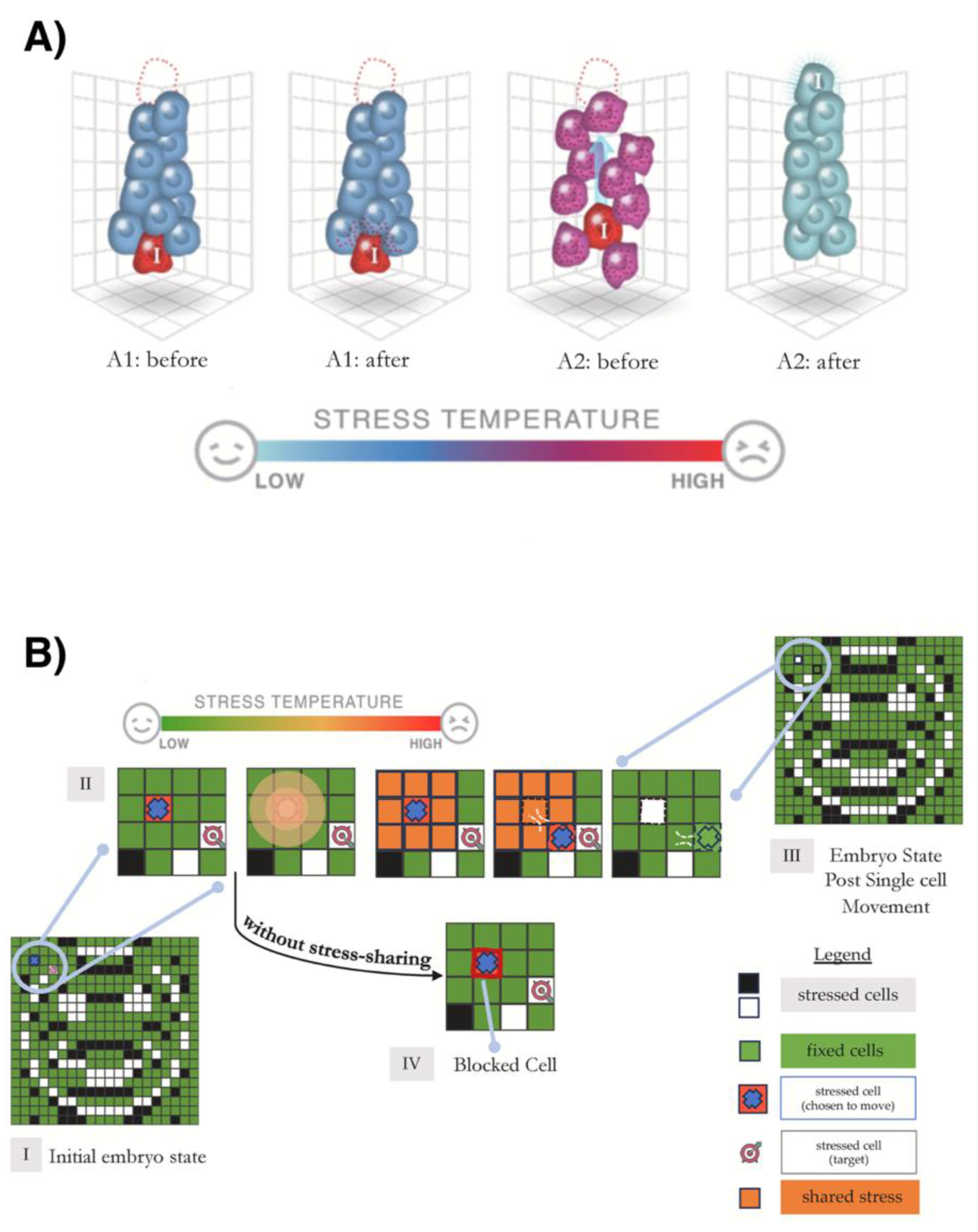
Figure 2.
Bioelectricity as a virtual governor. A) Ionic flux through membrane ion channels establishes each cell’s resting membrane potential. This voltage state can spread to neighboring cells through gap junctions, which function as electrical synapses. B) Coupled voltage changes across many cells can produce stable tissue-scale patterns; in developing embryos (e.g., the electrical face), such patterns can foreshadow the future positions and number of craniofacial structures like the eyes and mouth. C) Because these voltage gradients are generated by controllable physiological “hardware,” they can be deliberately edited using interventions such as drugs or light-gated methods that open or close ion channels and gap junctions, or by altering the movement of small signaling molecules (including neurotransmitters) that travel through these networks? D) Early in tumor formation, cells shift to a more depolarized membrane potential. Using voltage-sensitive fluorescent dyes, these depolarized regions can be visualized. E) Different bioelectrical patterns can lead to different morphologies in planaria. The bioelectrical pattern creates attractors in the morphological space.
Figure 2.
Bioelectricity as a virtual governor. A) Ionic flux through membrane ion channels establishes each cell’s resting membrane potential. This voltage state can spread to neighboring cells through gap junctions, which function as electrical synapses. B) Coupled voltage changes across many cells can produce stable tissue-scale patterns; in developing embryos (e.g., the electrical face), such patterns can foreshadow the future positions and number of craniofacial structures like the eyes and mouth. C) Because these voltage gradients are generated by controllable physiological “hardware,” they can be deliberately edited using interventions such as drugs or light-gated methods that open or close ion channels and gap junctions, or by altering the movement of small signaling molecules (including neurotransmitters) that travel through these networks? D) Early in tumor formation, cells shift to a more depolarized membrane potential. Using voltage-sensitive fluorescent dyes, these depolarized regions can be visualized. E) Different bioelectrical patterns can lead to different morphologies in planaria. The bioelectrical pattern creates attractors in the morphological space.
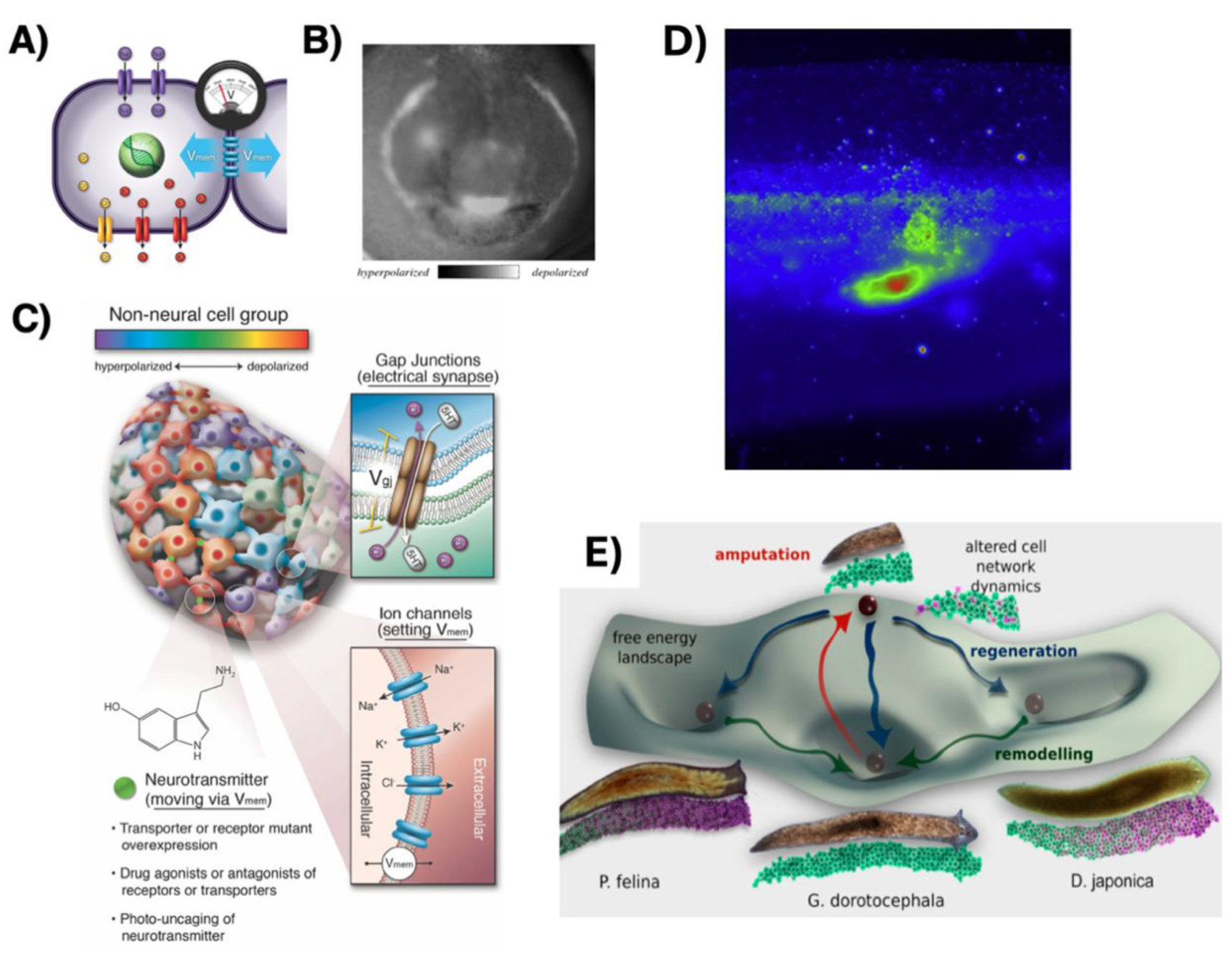
Figure 3.
The Ship of Theseus of the body. The classic problem of a large-scale form (ship of Theseus) remaining, while its constituent parts are changed out after damage (the wood) is a good metaphor for the maintenance phase of the living body (adulthood phase, resistance of aging). However, we make one key pivot based on the ideas of cellular multiscale collective intelligence working to implement patterns in anatomical space: the real “Ship of Theseus” (the species-specific target morphology) is not the ship. It is the representation of the ship in the mind of the repair machinery (the workmen, in the original metaphor, or now, the cellular collective and its bioelectric network, which stores pattern memories as homeostatic setpoints. Image by Jeremy Guay of Peregrine Creative.
Figure 3.
The Ship of Theseus of the body. The classic problem of a large-scale form (ship of Theseus) remaining, while its constituent parts are changed out after damage (the wood) is a good metaphor for the maintenance phase of the living body (adulthood phase, resistance of aging). However, we make one key pivot based on the ideas of cellular multiscale collective intelligence working to implement patterns in anatomical space: the real “Ship of Theseus” (the species-specific target morphology) is not the ship. It is the representation of the ship in the mind of the repair machinery (the workmen, in the original metaphor, or now, the cellular collective and its bioelectric network, which stores pattern memories as homeostatic setpoints. Image by Jeremy Guay of Peregrine Creative.
Disclaimer/Publisher’s Note: The statements, opinions and data contained in all publications are solely those of the individual author(s) and contributor(s) and not of MDPI and/or the editor(s). MDPI and/or the editor(s) disclaim responsibility for any injury to people or property resulting from any ideas, methods, instructions or products referred to in the content. |
© 2026 by the authors. Licensee MDPI, Basel, Switzerland. This article is an open access article distributed under the terms and conditions of the Creative Commons Attribution (CC BY) license (http://creativecommons.org/licenses/by/4.0/).
Copyright: This open access article is published under a Creative Commons CC BY 4.0 license, which permit the free download, distribution, and reuse, provided that the author and preprint are cited in any reuse.


