
Submitted:
02 July 2026
Posted:
02 July 2026
You are already at the latest version
Abstract
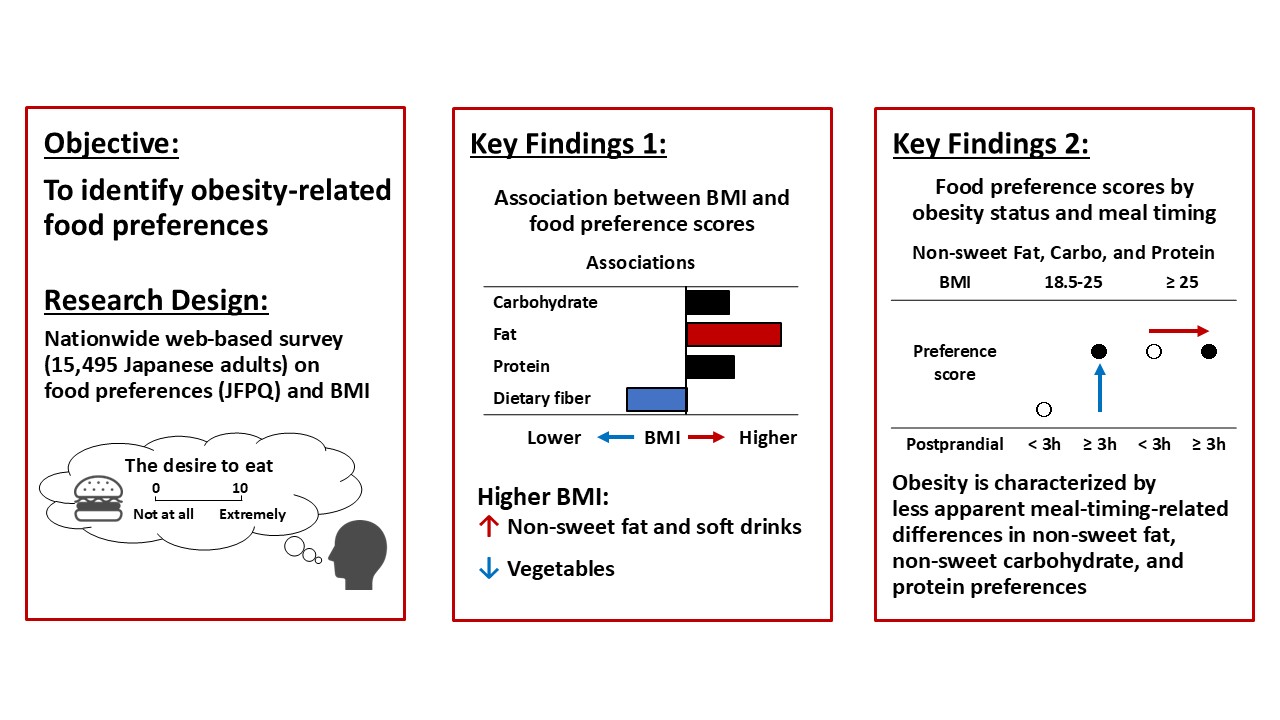
Background/Objectives: Patterns or biases in food preferences are thought to influence eating behavior. However, their associations with obesity remain unclear. We aimed to identify obesity-related food preference characteristics in the general population. Methods: We analyzed a nationwide web-based survey of adults in Japan (7,971 men and 7,524 women). Preferences for carbohydrates, fat, protein, and dietary fiber were assessed using the Japan Food Preference Questionnaire (JFPQ). Associations between food preference scores and BMI were evaluated in individuals with a BMI ≥18.5 kg/m2. Moreover, food preference scores were compared between individuals with normal weight (BMI 18.5 to <25.0 kg/m2) and those with obesity (BMI ≥25.0 kg/m2), stratified by time since the last meal (<3 vs. ≥3 h). Results: A higher BMI was associated with a greater preference for non-sweet fat and soft drinks and with a lower preference for dietary fiber, particularly vegetables, in both genders. Compared with individuals with normal weight, meal-timing-related differences in food preference scores were less apparent in individuals with obesity, accompanied by higher carbohydrate, fat, and protein preference scores at <3 h after the last meal. Conclusions: Obesity was associated with distinct self-reported food preference patterns that may influence food choices and weight gain. Food preference profiling could be useful for identifying individuals at risk of future obesity and for guiding nutritional counseling in weight management.
Keywords:
obesity
; food preference
; questionnaire
; population-based online survey
Copyright: This open access article is published under a Creative Commons CC BY 4.0 license, which permit the free download, distribution, and reuse, provided that the author and preprint are cited in any reuse.


