

Submitted:
30 June 2026
Posted:
02 July 2026
You are already at the latest version
Abstract
As artificial intelligence increasingly permeates healthcare, it remains unclear whether clinical medicine students and professionals are adequately prepared for this transformation. This study aimed to investigate AI awareness, usage patterns, teaching needs, and curriculum expectations among this population to inform evidence-based curricular reform. A cross-sectional online survey was administered to 930 students and professionals from a medical and pharmaceutical college and its affiliated hospitals; 619 valid responses were analyzed using descriptive statistics. While 75.93% of respondents were awareness with AI applications in healthcare, only 31.99% used AI tools frequently. Although 88.21% acknowledged the necessity of integrating AI into clinical medicine teaching, merely 48.47% reported that their institution offered relevant courses. Moderate trust in AI-assisted diagnosis was expressed by 70.76% of participants. The most desired teaching contents were case analysis and diagnostic simulation (75.61%), drug recommendation and dosage calculation (70.44%), and imaging/pathology recognition (65.91%). Respondents recommended that AI and data science courses constitute 23.34% of total credits, alongside Clinical Medicine (30.66%) and Basic Medical Sciences (25.37%). These findings show a pronounced "high demand, low training, moderate trust" paradox characterizes current AI medical education. A clinically grounded, progressively structured, and practice-oriented AI curriculum is needed to prepare future physicians for the AI-driven healthcare era.
Keywords:
artificial intelligence
; medical education
; clinical medicine
; teaching needs
; curriculum reform
1. Introduction
Artificial intelligence (AI) is fundamentally reshaping healthcare delivery across diagnostic imaging, clinical decision support, treatment planning, and operational efficiency(Abid et al., 2024; Ahmad et al., 2023; Boscardin et al., 2024). Deep learning algorithms now analyze complex medical data with remarkable accuracy, facilitating early disease detection and personalized patient care(Abid et al., 2024). As AI becomes increasingly embedded in clinical workflows, the competencies expected of medical students are undergoing a profound transformation(Michalczak et al., 2025).
This paradigm shift has generated an urgent imperative for medical education reform. Future clinicians must not only master traditional medical knowledge and clinical skills but also develop AI literacy—the ability to critically appraise AI-generated outputs, understand algorithmic limitations, and integrate AI tools safely into patient care. Recognizing this need, the Association of American Medical Colleges (AAMC) has developed AI competency frameworks for medical educators, and the Chinese medical education community has recently published the Expert Consensus on AI Literacy Competency Frameworks and Assessment for Medical Students (2025)(GONG et al., 2026). Several competency frameworks have been proposed globally: a scoping review synthesized seven domains including AI ethics, clinical applications of AI, critical appraisal of AI output, and theory and foundations of AI(Cai et al., 2025; Chang et al., 2026); other frameworks have proposed four-dimensional literacy models encompassing foundational knowledge, application skills, ethical reasoning, and critical engagement(Mastour et al., 2026; Mihalas et al., 2025). A medical AI competency framework integrating United Nations Educational, Scientific and Cultural Organization’s (UNESCO) AI framework with Miller’s pyramid model has also been validated(Cai et al., 2026).
Despite widespread recognition of AI‘s potential, its systematic integration into undergraduate medical education remains limited. A 2024 international survey of over 4,500 students across 192 medical, dental, and veterinary faculties found that more than 75% reported no formal AI education in their curriculum. This gap between technological advancement and educational preparedness has been documented across multiple national contexts. In India, 91.2% of medical students had no prior AI training(Salimi et al., 2025). In a large urban US medical school, both faculty and students self-identified as novice AI users with limited awareness and infrequent use of AI tools. Faculty and students cited lack of knowledge, limited time, and unclear benefits as key barriers, and both groups called for training, ethical guidance, and institutional support(Blanco et al., 2025). In Korea, medical students in a non-metropolitan setting rated their digital competence as moderate (59.2%) or low (19.2%), and only 15.8% reported a high level of AI knowledge(Si, 2025). In India, 87.1% of students hold positive views on incorporating AI education, and 80% believe that AI training should be experiential(Sorte et al., 2025). In Japan, a survey of first-year medical students found high use of generative AI (84.7%) but limited formal learning (49.2%), indicating a need for structured literacy(Tajima et al., 2025).
Yet the demand for AI education is unequivocal. A systematic review and meta-analysis of 26 studies comprising 20,963 medical students revealed that 78.0% held positive attitudes toward AI curriculum integration, and 83.1% agreed on the necessity of AI training. However, only 36.4% felt confident in applying AI in clinical practice, revealing a significant “optimism-competence gap”. The primary implementation challenges identified were curricular overcrowding (68%), lack of faculty expertise (52%), and ethical concerns (41%)(Mastour et al., 2026).
Despite this growing body of international evidence, there remains a notable gap in research focused on the specific needs of clinical medicine students in higher vocational settings, particularly those enrolled in AI Healthcare and Big Data concentrations. Existing studies from China have examined medical students’ awareness and attitudes toward AI language generation models in southern China and attitudes toward AI in Shandong Province(Liu et al., 2025; Zhang et al., 2025), but few have systematically assessed teaching needs and curriculum expectations in the context of a dedicated AI Healthcare and Big Data program. This study aims to fill this gap by systematically investigating the AI-related awareness, usage, attitudes, teaching needs, and curriculum expectations among students and professionals affiliated with a medical college and hospitals in China. The findings will provide empirical evidence to inform the design of a clinically grounded, competency-based AI curriculum for the Clinical Medicine program.
2. Materials and Methods
2.1. Study Design and Participants
A cross-sectional survey was conducted using a convenience sampling approach. The target population comprised clinical medicine students (including interns), clinical medicine graduates, hospital physicians, medical technicians, and health IT/informatics staff affiliated with a pharmaceutical college and hospitals in Chongqing, China. A total of 930 online questionnaires were distributed via a web-based platform, and 619 valid responses were received, yielding an effective response rate of 66.56%.
2.2. Survey Instrument
A self-designed questionnaire, titled Survey on Teaching Needs for the Clinical Medicine Program (AI Healthcare + Big Data), was developed based on a review of existing literature and expert consultation. The questionnaire consisted of 20 items organized into five domains: (1) respondent demographic and professional identity; (2) AI awareness and current usage (familiarity, frequency of use, trust level); (3) AI teaching needs and attitudes (perceived necessity, expected skill improvement, willingness to participate); (4) preferences for teaching content and methods (AI-assisted teaching areas, curriculum modules, pedagogical approaches); and (5) curriculum structure expectations (desired courses, credit allocation). Items included multiple-choice questions (single and multiple response), a credit allocation question, and open-ended questions (Table 1). Our detailed questionnaire is provided in the appendix A.
To minimize common method bias and social desirability bias, the survey introduction explicitly stated the anonymity and voluntary nature of participation. Harman’s single-factor test on the attitude-related items showed that the first factor accounted for 26.8% of the variance, below the 40% threshold, suggesting that common method bias was not a significant concern.
2.3. Data Analysis
Descriptive statistical methods were employed to analyze the survey data. Categorical variables were summarized as frequencies and percentages (%). For multiple-response questions, the mention rate (number of mentions/total valid respondents × 100%) was used as the primary statistical indicator. Statistical analyses were performed using Python 13.1 (Pandas, NumPy) and Microsoft Excel.
3. Results
This section may be divided by subheadings. It should provide a concise and precise description of the experimental results, their interpretation, as well as the experimental conclusions that can be drawn.
3.1. Respondent Characteristics and AI Awareness
Of the 619 valid respondents (352 females and 267 males), the majority were current clinical medicine students (including interns), accounting for 94.18% (n=583). Clinical medicine graduates comprised 4.36% (n=27), medical technicians 1.13% (n=7), hospital physicians 0.97% (n=6), health IT/informatics staff 0.65% (n=4), and other identities 1.78% (n=11). The sample was predominantly composed of clinical medicine students, providing strong professional representativeness.
The survey findings demonstrate a strong awareness of AI in healthcare. Of the 619 valid responses, 75.93% confirmed their familiarity with AI applications, highlighting that the awareness gap has narrowed considerably among participants (see Figure 1).
3.2. AI Teaching Needs and Current Usage
For the AI Teaching Needs/Necessity and Current Usage Survey, as shown in Figure 2, the vast majority recognized the necessity of incorporating AI into clinical medicine teaching. Specifically, 44.75% (n=277) considered it "very necessary," and 43.46% (n=269) considered it "necessary," yielding a combined positive response rate of 88.21%. Only 10.50% (n=65) remained neutral, while a mere 1.29% (n=8) viewed it as "not necessary".
Regarding the current utilization of AI healthcare tools, 36.35% (n=225) of respondents reported using them occasionally (1–2 times per week), while 31.99% (n=198) used them frequently (more than 3 times per week). In contrast, 21.16% (n=131) used them rarely (1–2 times per month), and 10.50% (n=65) had never used any AI healthcare tools. Overall, 68.34% of respondents used AI tools at least occasionally, though frequent use remained relatively limited (see Figure 3).
3.3. Trust in AI-Assisted Diagnosis and Impact of AI Teaching on Clinical Skills
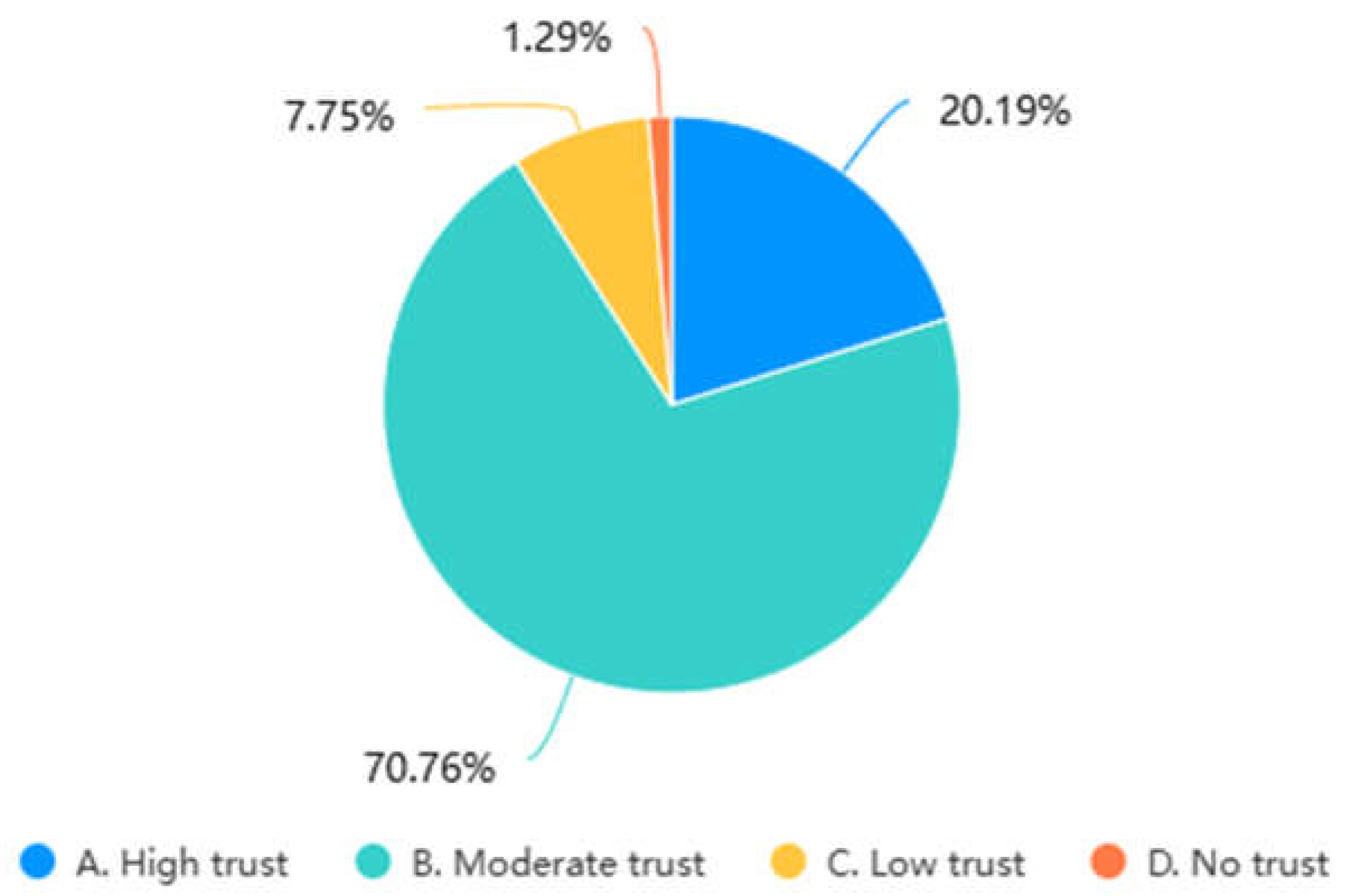
Regarding trust in AI-assisted diagnosis, the majority of respondents (70.76%, n=438) reported moderate trust, while 20.19% (n=125) expressed high trust. Only 7.75% (n=48) reported low trust, and a mere 1.29% (n=8) expressed no trust at all. Combined moderate-to-high trust reached 90.95% (see figure 4).
Figure 4.
Trust in AI-assisted diagnosis among respondents.
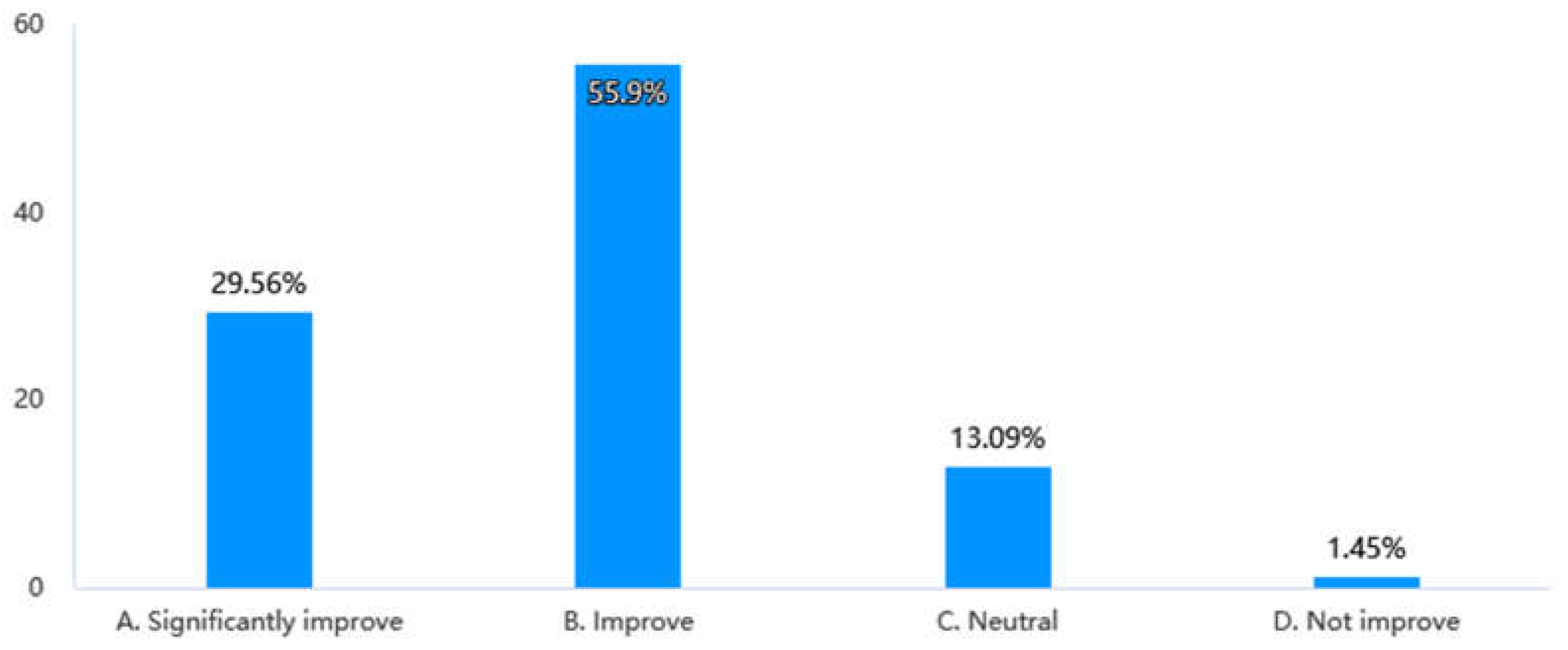
A substantial majority of respondents believed that AI teaching could enhance clinical skills. Specifically, 55.90% (n=346) believed it could "improve" clinical skills, and 29.56% (n=183) believed it could "significantly improve" them, yielding a combined positive response rate of 85.46%. In contrast, 13.09% (n=81) remained neutral, and only 1.45% (n=9) believed it would not improve clinical skills (see figure 5).
Figure 5.
Attitudes toward the impact of AI teaching on clinical skills.
3.4. Availability of AI-Related Training and Influencing Factors
Regarding the availability of AI-related courses or training at school or hospital, 48.47% (n=300) reported that such courses or training were offered, while 30.69% (n=190) reported none were available. Notably, 20.84% (n=129) were uncertain about whether their institution offered any AI-related educational opportunities. Given that those who were uncertain effectively lacked confirmed access, fewer than half of the respondents (48.47%) had actually received AI-related courses or training—meaning that the majority (51.53%) had not been offered such opportunities (see Figure 6).
When asked about factors that influence their use of AI tools, data security was the most frequently cited concern (71.08%, n=440), followed by ease of use (67.37%, n=417) and training support (64.14%, n=397). Cost-effectiveness was identified by 57.19% (n=354) of respondents, while institutional policies were mentioned by 37.80% (n=234). These findings suggest that while usability and training are important facilitators, data security remains the primary consideration affecting AI tool adoption among respondents (see Figure 7).
3.5. Desired Courses and Curricular Hours Allocation
Based on 619 valid responses, the most desired courses are clinically applied AI subjects. "AI-assisted diagnosis and treatment" ranks first (67.69%), closely followed by "AI imaging/pathology diagnosis" (62.04%). There is also substantial demand for technical skill-building, with over half of the respondents selecting "Python/Java and other programming courses" (54.77%). Foundational knowledge remains important, as "Introduction to Medical Artificial Intelligence" was chosen by 49.43%. Interest moderates for more specialized or infrastructure-oriented topics: robotics principles (41.2%), medical information analysis (40.87%), and statistical analysis of medical data (38.29%) were selected by roughly two-fifths of the participants, while cloud computing/big data processing (33.6%) and hands-on AI tools basics (32.15%) garnered around one-third. Only 2.1% suggested other courses. Overall, the data reveals a strong priority for direct clinical AI applications and core programming literacy (Table 2).
In the proportional allocation question, respondents distributed the total curriculum weight across four categories. On average, they recommended that "Computer, AI, and Big Data courses" (e.g., Introduction to Medical AI, Python Programming) should constitute 23.34% of the program. The largest share was assigned to clinical medicine courses (Internal Medicine, Surgery, etc.) at 30.66%, followed by basic medical sciences (Anatomy, Physiology, etc.) at 25.37%, and general education courses at 20.63%. The nearly one-quarter allocation to computing and AI underscores a clear consensus that digital and data competencies should form a significant, integrated pillar alongside traditional medical training (Figure 8).
3.6. Perceived Potential Risks in AI Usage
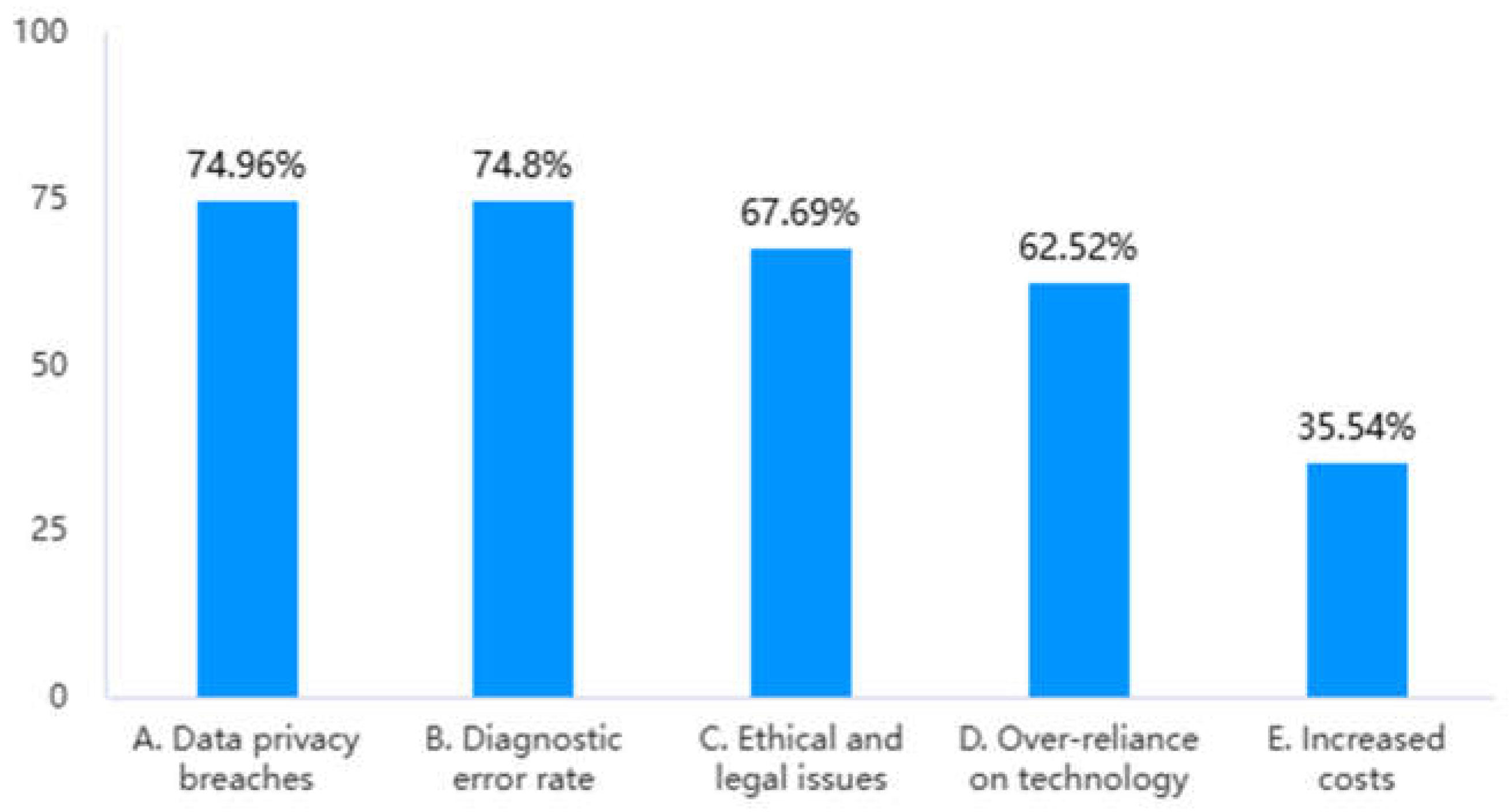
Regarding the potential risks associated with AI in diagnosis and treatment, data privacy breaches (74.96%, n=464) and diagnostic error rates (74.80%, n=463) were the most frequently cited concerns, identified by nearly three-quarters of respondents. Ethical and legal issues were also a major concern, reported by 67.69% (n=419) of respondents, followed by over-reliance on technology, which was cited by 62.52% (n=387). In contrast, increased costs were mentioned by only 35.54% (n=220) of respondents, suggesting that this was viewed as a less pressing risk compared to the others. In practice, while the use of AI is likely to enhance healthcare efficiency and potentially reduce costs, but considerable uncertainty remains. For instance, robotic surgery has been shown to be more expensive than traditional open surgery in some contexts(Sheetz et al., 2020; Waqar et al., 2025).
Figure 9.
Perceived potential risks in AI diagnosis and treatment among respondents.
4. Discussion
The findings of this survey provide a comprehensive snapshot of the current landscape of AI awareness, usage, teaching needs, and curriculum expectations among clinical medicine students and professionals enrolled in an AI Healthcare and Big Data concentration. Three overarching patterns emerge from the data: a “high awareness, moderate trust” paradox in AI perceptions, a pronounced “high demand, low training” gap in educational provision, and a clear preference for clinically grounded, practice-oriented AI content over purely technical instruction. These patterns collectively suggest that while students recognize the transformative potential of AI in medicine, their trust remains cautious, their institutional support remains inadequate, and their learning priorities remain firmly rooted in clinical application. The following subsections discuss each of these key findings in turn, situating them within the broader international evidence base and drawing implications for curriculum design and educational policy.
4.1. The "High Awareness, Moderate Trust" Paradox
This study found that 75.93% of respondents were awareness with AI applications in healthcare—a proportion notably higher than that reported in previous studies. For instance, in a Turkish non-metropolitan medical school, only 15.8% of students reported a high level of AI knowledge(Sanri, 2025); in Korea, healthcare students demonstrated slightly below-average AI literacy(Si, 2025). This discrepancy likely reflects the unique composition of our sample: respondents were specifically enrolled in or affiliated with an "AI Healthcare + Big Data" concentration, a population with inherently higher exposure to and interest in AI technologies(Hunt et al., 2026).
However, high awareness did not translate into high trust. While 90.95% of respondents expressed moderate-to-high trust in AI-assisted diagnosis, the majority (70.76%) reported only "moderate" trust, with merely 20.19% expressing "high trust." This "high awareness, moderate trust" pattern suggests that exposure to AI does not automatically engender deep trust—trust requires empirical experience, transparent algorithms, and demonstrable clinical success. This finding resonates with international research showing that while medical students generally hold positive attitudes toward AI, confidence in practical application remains low.
4.2. The "High Demand, Low Training" Supply-Demand Gap
A striking finding of this study is the pronounced gap between demand and supply. While 88.21% of respondents considered AI necessary in clinical medicine teaching, and 85.46% believed AI teaching could improve clinical skills, only 48.47% reported that their institution offered AI-related courses or training—and 20.84% were unsure whether any existed.
This "high demand, low training" contradiction has been documented across multiple national contexts. In India, 87.1% of students supported AI education integration, yet 91.2% had received no prior training(Sorte et al., 2025). In Japan, first-year medical students showed high use of generative AI (84.7%) but limited formal learning (49.2%)(Kim et al., 2025). In the US, both faculty and students at a large urban medical school cited lack of knowledge, limited time, and unclear benefits as key barriers(Blanco et al., 2025). A systematic review identified curricular overcrowding (68%), lack of faculty expertise (52%), and ethical concerns (41%) as the primary implementation challenges(Mastour et al., 2026).
This persistent gap reflects a systemic lag in medical education reform relative to technological advancement. With national policy frameworks now emerging—including China's Five-Ministry Implementation Opinions on Promoting and Regulating the Application of "AI + Healthcare" and the Expert Consensus on AI Literacy Competency Frameworks and Assessment for Medical Students (2025)—medical schools must urgently move AI education from an "elective supplement" to a "core requirement"(GONG et al., 2026).
4.3. The Primacy of Clinically Grounded Content
Respondents' preferences for AI-assisted teaching content revealed a clear hierarchy: case analysis and diagnostic simulation (75.61%), drug recommendation and dosage calculation (70.44%), and imaging/pathology recognition (65.91%) ranked highest. This preference order unmistakably signals a "clinically grounded" orientation—AI education should not remain at the level of abstract theory but must be tightly integrated with real clinical decision-making scenarios.
This finding aligns with the Indian study in which 80% of students believed AI training should be experiential(Salimi et al., 2025). It also echoes the recognition that effective AI education requires "balancing theoretical concepts with practical applications"(Corral-Gudino et al., 2026). The message is clear: AI is a tool for clinical practice, and its teaching must reflect that purpose.
4.4. Curriculum Structure: Positioning AI Courses Appropriately
Respondents recommended that Computer, AI, and Big Data courses constitute 23.34% of total credits, alongside Clinical Medicine courses (30.66%) and Basic Medical Sciences (25.37%). This tripartite structure reflects a recognition that AI competencies are not ancillary but co-equal with traditional medical disciplines.
In terms of specific course preferences, respondents most desired "AI-assisted diagnosis and treatment" (67.69%) and "AI imaging/pathology diagnosis" (62.04%), while showing relatively lower demand for purely technical courses such as "Cloud Computing and Big Data Processing" (33.60%) and "Hands-on Basics of AI Tools" (32.15%). This again reinforces the "clinically grounded" principle—technology is a means, not an end. This orientation aligns with the "New Medicine" paradigm's goal of cultivating "compound talents with both clinical competence and AI literacy"(Park et al., 2025; Sharma et al., 2024).
4.5. Risk Awareness and the Imperative of Ethics Education
Respondents demonstrated high concern regarding AI-related risks: data privacy breaches (74.96%), diagnostic error rates (74.80%), ethical and legal issues (67.69%), and over-reliance on technology (62.52%) were all identified by more than 60% of respondents. This finding underscores that AI education cannot focus exclusively on technical applications—it must simultaneously strengthen ethical and risk management education.
International evidence supports this imperative. AI curricula have been shown to enhance knowledge while potentially diminishing enthusiasm for AI integration, reflecting underlying ethical and professional concerns(Mastour et al., 2026). Research has highlighted risks including automation bias, cognitive off-loading, de-skilling (with greatest harm to novices), bias and inequity, and hallucinated content(Chang et al., 2026). The "black box" nature of some algorithms and the risk of provider dependency leading to disuse atrophy of skills present major obstacles. Competency frameworks have accordingly prioritized ethicolegal oversight and critical appraisal of AI outputs(Jiang, 2025).
Therefore, curriculum design must strike a balance between "technological empowerment" and "risk management." The curriculum's inclusion of ethics and legal considerations as one of four core modules, and the AAMC framework's emphasis on AI ethics, law, and professionalism, offer valuable models for emulation(Salimi et al., 2025; Shaw et al., 2025).
4.6. Limitations and Future Directions
This study has several limitations. First, the sample was predominantly composed of students from a single pharmaceutical college and its affiliated hospitals in Chongqing, limiting the generalizability of findings across different institutional types and geographic regions. Second, the cross-sectional design cannot capture dynamic changes in AI awareness and attitudes over time. Third, the reliance on self-reported data may introduce social desirability bias. Future research should expand the sample to include multiple institution types (undergraduate, graduate, and vocational levels) across different regions, employ longitudinal designs to evaluate the impact of AI curriculum implementation, and incorporate objective measures of AI competency alongside self-reported perceptions.
5. Conclusions
This survey of 619 clinical medicine students and related professionals reveals the current landscape of AI awareness, usage, teaching needs, and curriculum expectations in the context of an AI Healthcare and Big Data concentration. Four key conclusions emerge:
- First, respondents demonstrated high awareness (75.93%) but only moderate trust (70.76%) in AI-assisted diagnosis, suggesting that familiarity alone is insufficient to build trust—empirical evidence and transparent validation are essential.
- Second, a pronounced "high demand, low training" gap persists: while 88.21% considered AI teaching necessary, only 48.47% reported institutional AI course offerings. This supply-demand mismatch requires urgent institutional attention.
- Third, AI teaching content must be clinically grounded. Respondents most strongly desired case analysis (75.61%), drug calculation (70.44%), and imaging recognition (65.91%)—applications directly relevant to clinical practice.
- Fourth, respondents recommended that AI and Big Data courses constitute 23.34% of the total curriculum, alongside Clinical Medicine (30.66%) and Basic Medical Sciences (25.37%), reflecting a balanced tripartite structure.
Based on these findings, we propose the following principles for curriculum reform in the Clinical Medicine program (AI Healthcare + Big Data): (1) Clinically grounded—AI content should be tightly integrated with clinical scenarios and decision-making; (2) Progressively structured—curriculum should move from AI fundamentals to clinical applications to ethics and regulations in a scaffolder manner; (3) Practice-oriented—teaching methods should incorporate virtual simulation, online interactive learning, and clinical internship integration; (4) Ethically balanced—data privacy, algorithmic bias, over-reliance, and other risk issues must be embedded as compulsory content.
Only through such a comprehensive, balanced approach can medical education produce physicians who are not only clinically competent but also AI-literate—prepared to harness the transformative potential of AI while safeguarding patient safety and professional integrity in the evolving healthcare landscape.
Supplementary Materials
The following supporting information can be downloaded at: https://www.mdpi.com/article/doi/s1, Figure S1: title; Table S1: title; Video S1: title.
Author Contributions
Conceptualization, W.Z., L.G. and Y.Z.; Methodology, W.Z. and L.G.; Data Analysis, W.Z and K.Z.; Writing, W.Z. and W.Y.; Review and Editing, W.Z. and K.Z. All authors have read and agreed to the published version of the manuscript.
Funding
This research was funded by Science Foundation (Key Project) of Chongqing Medical and Pharmaceutical College, grant number ygzrc2023108.
Institutional Review Board Statement
The study was conducted in accordance with the Declaration of Helsinki, and approved by the Ethics Committee of Chongqing Medical and Pharmaceutical College (protocol code KYLLSC20260610024, approved on 10 June 2026).”.
Informed Consent Statement
Informed consent was obtained from all subjects involved in the study.
Data Availability Statement
The data presented in this study are openly available in the Mendeley Data database at https://data.mendeley.com/drafts/3k527pjjrx.
Acknowledgments
During the preparation and revision of this manuscript, the authors used deepseek-v4 for the purposes of language translate and expression optimization. The authors have reviewed and edited the output and take full responsibility for the content of this publication.”.
Conflicts of Interest
The authors declare no conflicts of interest.
Abbreviations
The following abbreviations are used in this manuscript:
| AI | artificial intelligence |
| UNESCO | United Nations Educational, Scientific and Cultural Organization |
| AAMC | Association of American Medical Colleges |
Appendix A. The Anonymous Questionnaire Used in This Study
Teaching Needs for the Clinical Medicine Program (AI Healthcare & Big Data)
Dear Respondent,
Thank you very much for taking the time to participate in this anonymous survey. We are researchers from the School of Clinical Medicine at Chongqing Pharmaceutical College. This survey aims to gather your valuable opinions on talent development, teaching, and curriculum design for the Clinical Medicine program (AI Healthcare + Big Data) at our college. The questionnaire is anonymous, Participation is entirely voluntary. Refusing or withdrawing will not affect your academic standing or grades in any way. Thank you for your support and cooperation!
1. What is your identity? [Multiple choice]
- □
- A. Current clinical medicine student (including interns)
- □
- B. Clinical medicine graduate
- □
- C. Hospital physician
- □
- D. Medical technician
- □
- E. Health IT/Informatics staff
- □
- Other _________________
2. Are you familiar with the application of AI in healthcare? [Single choice]
- ○
- A. Yes
- ○
- B. No
3. Do you think AI is necessary in clinical medicine teaching? [Single choice]
- ○
- A. Very necessary
- ○
- B. Necessary
- ○
- C. Neutral
- ○
- D. Not necessary
4. How often do you currently use AI healthcare tools? [Single choice]
- ○
- A. Frequently (more than 3 times a week)
- ○
- B. Occasionally (1–2 times a week)
- ○
- C. Rarely (1–2 times a month)
- ○
- D. Never
5. How much trust do you have in AI-assisted diagnosis? [Single choice]
- ○
- A. High trust
- ○
- B. Moderate trust
- ○
- C. Low trust
- ○
- D. No trust
6. Does your school/hospital offer AI-related courses or training? [Single choice]
- ○
- A. Yes
- ○
- B. No
- ○
- C. Not sure
7. Do you think AI teaching can improve clinical skills? [Single choice]
- ○
- A. Significantly improve
- ○
- B. Improve
- ○
- C. Neutral
- ○
- D. Not improve
8. Would you be willing to participate in AI healthcare teaching projects? [Single choice]
- ○
- A. Very willing
- ○
- B. Willing
- ○
- C. Neutral
- ○
- D. Unwilling
9. What aspects would you like AI to assist with in teaching? [Multiple choice]
- □
- A. Case analysis and diagnostic simulation
- □
- B. Drug recommendation and dosage calculation
- □
- C. Imaging/pathology recognition and interpretation
- □
- D. Patient data management
- □
- E. Surgical planning simulation
- □
- Other _________________
10. What types of AI healthcare tools have you used? [Multiple choice]
- □
- A. Medical imaging recognition systems
- □
- B. EMR (electronic medical record) assisted documentation
- □
- C. Disease prediction models
- □
- D. Remote monitoring devices
- □
- E. Not used any
- □
- Other _________________
11. What AI content modules do you think should be added to the curriculum? [Multiple choice]
- □
- A. Basic AI theory
- □
- B. Clinical practice applications
- □
- C. Ethics and regulations
- □
- D. Technical operation training
- □
- E. Case studies
12. What teaching methods should be used for AI education? [Multiple choice]
- □
- A. Online interactive courses
- □
- B. Virtual simulation software
- □
- C. Group discussions
- □
- D. Integration with clinical internships
- □
- E. Other _________________
13. In clinical practice, what tasks do you think AI can assist with? [Multiple choice]
- □
- A. Initial consultation and diagnosis
- □
- B. Treatment planning
- □
- C. Patient follow-up management
- □
- D. Resource optimization
- □
- E. Research data analysis
- □
- F. Surgery or clinical procedure assistance
14. What are your main expectations for the development of AI in healthcare? [Multiple choice]
- □
- A. Improve diagnostic accuracy
- □
- B. Reduce medical errors
- □
- C. Lower healthcare costs
- □
- D. Enhance patient experience
- □
- E. Promote research and innovation
15. What factors influence your use of AI tools? [Multiple choice]
- □
- A. Ease of use
- □
- B. Training support
- □
- C. Data security
- □
- D. Cost-effectiveness
- □
- E. Institutional policies
16. What potential risks do you focus on in AI diagnosis and treatment? [Multiple choice]
- □
- A. Data privacy breaches
- □
- B. Diagnostic error rate
- □
- C. Ethical and legal issues
- □
- D. Over-reliance on technology
- □
- E. Increased costs
17. What related courses would you like the school to offer in AI diagnosis and treatment teaching? [Multiple choice]
- □
- A. AI-assisted diagnosis and treatment
- □
- B. AI imaging/pathology diagnosis
- □
- C. Python/Java and other programming courses
- □
- D. Introduction to Medical Artificial Intelligence
- □
- E. Robotics principles
- □
- F. Medical information analysis
- □
- G. Statistical analysis of medical and pharmaceutical data
- □
- H. Cloud computing and big data processing
- □
- I. Hands-on basics of "AI tools"
- □
- J. Other _________________
18. In the curriculum for Clinical Medicine (with a minor in Medical Big Data and Cloud Computing), what proportion should the "Computer, AI, and Big Data" related courses account for? [Allocation question]
- Clinical medicine courses (e.g., Internal Medicine, Surgery, Pediatrics, Gynecology, etc.) ________________________
- General education courses (College English, Ideological and Political Education, etc.) ________________________
- Basic medical sciences (Anatomy, Physiology, etc.) ________________________
- Computer, AI, and Big Data courses (e.g., Introduction to Medical AI, Python Programming, etc.) ________________________
- Note: Please enter numbers. The sum of all items must equal 100.
19. What other related clinical medicine minor programs or courses would you like the school to offer? [Fill-in-the-blank]
20. Do you have any other comments or suggestions? [Fill-in-the-blank]
References
- Abid, A.; Murugan, A.; Banerjee, I.; Purkayastha, S.; Trivedi, H.; Gichoya, J. AI Education for Fourth-Year Medical Students: Two-Year Experience of a Web-Based, Self-Guided Curriculum and Mixed Methods Study. JMIR Med. Educ. 2024, 10, e46500. [Google Scholar] [CrossRef]
- Ahmad, M.N.; Abdallah, S.A.; Abbasi, S.A.; Abdallah, A.M. Student perspectives on the integration of artificial intelligence into healthcare services. Digit. HEALTH 2023, 9, 20552076231174095. [Google Scholar] [CrossRef]
- Blanco, M.A.; Nelson, S.W.; Ramesh, S.; Callahan, C.E.; Josephs, K.A.; Jacque, B.; Baecher-Lind, L.E. Integrating artificial intelligence into medical education: a roadmap informed by a survey of faculty and students. Med. Educ. Online 2025, 30, 2531177. [Google Scholar] [CrossRef] [PubMed]
- Boscardin, C.K.; Gin, B.; Golde, P.B.; Hauer, K.E. ChatGPT and Generative Artificial Intelligence for Medical Education: Potential Impact and Opportunity. Acad. Med. 2024, 99, 22–27. [Google Scholar] [CrossRef] [PubMed]
- Cai, C.; Duell, J.; Minghui Chen, D.; Kin Ho, W.; Kwong Lee, B.T.; Li, F.; Liu, S.; Ng, O.; Sudarshan, V.; Zhou, S.-M.; Zhu, G.; Fan, X. Advancing AI Literacy in Medical Education: A Medical AI Competency Framework Development. In Artificial Intelligence in Education, Lecture Notes in Computer Science; Cristea, A.I., Walker, E., Lu, Y., Santos, O.C., Isotani, S., Eds.; Springer Nature Switzerland: Cham, 2025; pp. 116–123. [Google Scholar] [CrossRef]
- Cai, C.; Zhu, G.; Zhou, S.-M.; Ng, O.; Duell, J.; Ho, W.K.; Chen, D.M.; Lee, B.; Li, F.; Liu, S.; Sudarshan, V.; Wang, L.R.; Choi, C.; Fan, X. A Competency Framework for Medical AI Education: Mixed Methods Study. JMIR Med. Educ. 2026, 12, e91116. [Google Scholar] [CrossRef] [PubMed]
- Chang, L.; Polansky, M.; Yi, D.; MacDowell, M.; Sreedhar, R.; Mosher, D.; Schwartz, A. Exploring health care learners’ perceptions of AI integration in the curriculum: a survey tool and findings. BMC Med. Educ. 2026, 26, 630. [Google Scholar] [CrossRef] [PubMed]
- Corral-Gudino, L.; Herrero-Montano, I.; De La Torre-Díez, I.; Miramontes-González, J.P. Integrating Generative Artificial Intelligence (AI) in Medical Education: A Framework for Preserving Clinical Reasoning. Appl. Sci. 2026, 16, 5946. [Google Scholar] [CrossRef]
- GONG, M.; PAN, H.; TONG, K.; LI, J.; LIU, H.; MA, Y.; CHEN, W.; HOU, Y.; HONG, L.; ZHANG; Bo, Z.H.A.N.G.; Bohan; ZENG, Z.; JI, X. Expert Consensus on the Artificial Intelligence Proficiency Competency List and Assessment Framework for Medical Students (2025 Edition). Acta Acad. Med. Sin. 2026, 48, 13–23. [Google Scholar] [CrossRef] [PubMed]
- Hunt, V.M.; Sprehe, L.K.; de Lomba, W.C.; Gameiro, R.R.; Woite, N.L.; Wade, C.G.; Chen, J.H.; Rougas, S.C.; Fraser, H.S.F.; Sullivan, A.M.; Fregni, F. What the AI era doctor should know: a scoping review of proposed artificial intelligence competencies for medical education. NPJ Digit Med 2026. [Google Scholar] [CrossRef] [PubMed]
- Jiang, J. Marathon Without a Finish Line: A Learner’s Perspective on AI in Medical Education. Acad. Med. 2025, 100, S43–S45. [Google Scholar] [CrossRef] [PubMed]
- Kim, D.-H.; Kang, Y.J.; Lee, Y.-M. Twelve tips for developing and implementing AI curriculum for undergraduate medical education. Med. Educ. Online 2025, 30, 2585637. [Google Scholar] [CrossRef] [PubMed]
- Liu, M.; Cheng, Y.; Li, S.; Wang, S.; Du, F.; Wei, X.; Ai, Z.; Yan, S. Exploring medical students’ attitudes and perceptions toward artificial intelligence in medicine in Shandong Province, China. BMC Med. Educ. 2025, 26, 106. [Google Scholar] [CrossRef] [PubMed]
- Mastour, H.; Mirzaei, S.; Sohrabi, S.; Toofaninejad, E. Is it time to introduce an artificial intelligence curriculum in undergraduate medical education? medical students’ perspectives: a systematic review and meta-analysis. BMC Med. Educ. 2026. [Google Scholar] [CrossRef] [PubMed]
- Michalczak, M.; Zgoda, W.; Michalczak, J.; Żądło, A.; Nasser, A.; Tokarek, T. Artificial Intelligence in Medical Education: A Narrative Review. AI 2025, 6, 322. [Google Scholar] [CrossRef]
- Mihalas, G.I.; Cotoraci, C.; Boru, C. Integrating Artificial Intelligence in the Medical Curriculum: Approaches and Strategies. Stud. Health Technol. Inf. 2025, 329, 1402–1406. [Google Scholar] [CrossRef] [PubMed]
- Park, T.I.; Seo, J.; Yoon, H.-J.; Lee, K.E. Institutionalizing convergence education for medical artificial intelligence. BioMed Eng. Lett. 2025, 15, 1073–1083. [Google Scholar] [CrossRef] [PubMed]
- Salimi, M.; Gunansyah, G.; Riyadi, A.R. Understanding AI Training Needs in Medical Education: An Alternative Perspective. J. Med. Educ. Curric. Dev. 2025, 12, 23821205251389393. [Google Scholar] [CrossRef] [PubMed]
- Sanri, E. Beyond metropolises: artificial intelligence awareness and educational needs among medical students in a developing country. Front. Med. 2025, 12, 1645484. [Google Scholar] [CrossRef] [PubMed]
- Sharma, A.; Al-Haidose, A.; Al-Asmakh, M.; Abdallah, A.M. Integrating Artificial Intelligence into Biomedical Science Curricula: Advancing Healthcare Education. Clin. Pract. 2024, 14, 1391–1403. [Google Scholar] [CrossRef] [PubMed]
- Shaw, K.; Henning, M.A.; Webster, C.S. Artificial Intelligence in Medical Education: a Scoping Review of the Evidence for Efficacy and Future Directions. Med. Sci. Educ. 2025, 35, 1803–1816. [Google Scholar] [CrossRef] [PubMed]
- Sheetz, K.H.; Claflin, J.; Dimick, J.B. Trends in the Adoption of Robotic Surgery for Common Surgical Procedures. JAMA Netw. Open 2020, 3, e1918911. [Google Scholar] [CrossRef] [PubMed]
- Si, J. Exploring AI literacy, attitudes toward AI, and intentions to use AI in clinical contexts among healthcare students in Korea: a cross-sectional study. BMC Med. Educ. 2025, 25, 1233. [Google Scholar] [CrossRef] [PubMed]
- Sorte, S.R.; Rawekar, A.T.; Rathod, S.B.; Surana Gandhi, N. Future-ready medicine: Assessing the need for A.I. education in Indian undergraduate medical curriculum: A mixed method survey of student perspectives. J. Educ. Health Promot. 2025, 14. [Google Scholar] [CrossRef] [PubMed]
- Tajima, H.; Kasai, H.; Shikino, K.; Shimizu, I.; Ito, S. Perceptions and Intentions to Use Generative AI Among First-Year Medical Students in Japan: Cross-Sectional Survey Study. JMIR Med. Educ. 2025, 11, e77552–e77552. [Google Scholar] [CrossRef] [PubMed]
- Waqar, U.; Rupji, M.; Liu, Y.; Uppal, A.; Rosen, S.A. Outcomes of robotic, laparoscopic, and open surgery across body mass index subgroups for colon and rectal cancer. Surg. Endosc. 2025, 39, 6132–6138. [Google Scholar] [CrossRef] [PubMed]
- Zhang, M.; Liu, T.; Peng, X.; Chen, Y.; Zhi, M. Awareness and Attitudes Toward Artificial Intelligence Language Generation Models in Medical Education: A Cross-Sectional Questionnaire Study Among Medical Students in Southern China. Cureus 2025, 17, e89425. [Google Scholar] [CrossRef] [PubMed]
Figure 1.
Awareness of AI in clinical medicine (n=619).
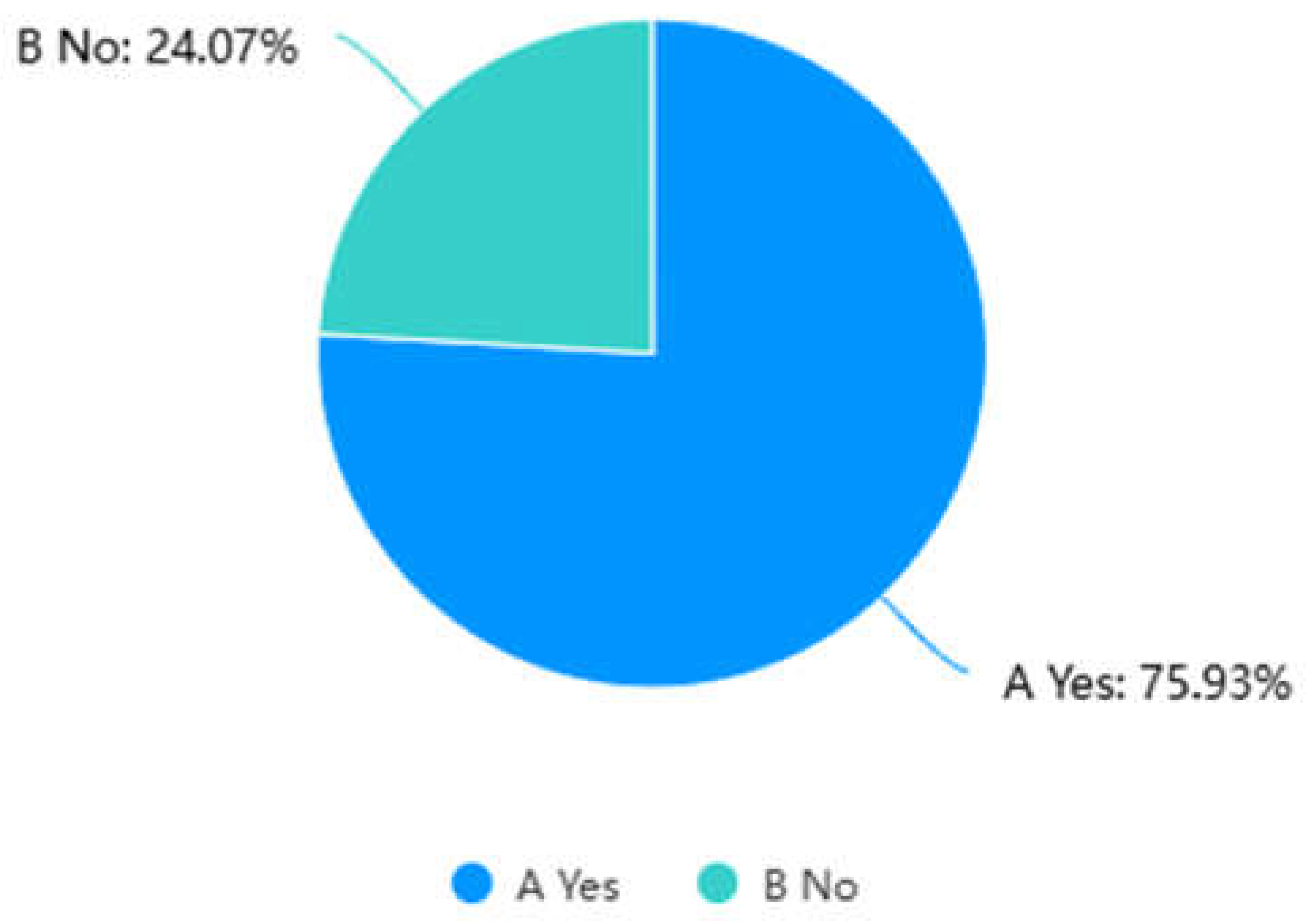
Figure 2.
Perceived necessity of AI in clinical medicine teaching (n=619).
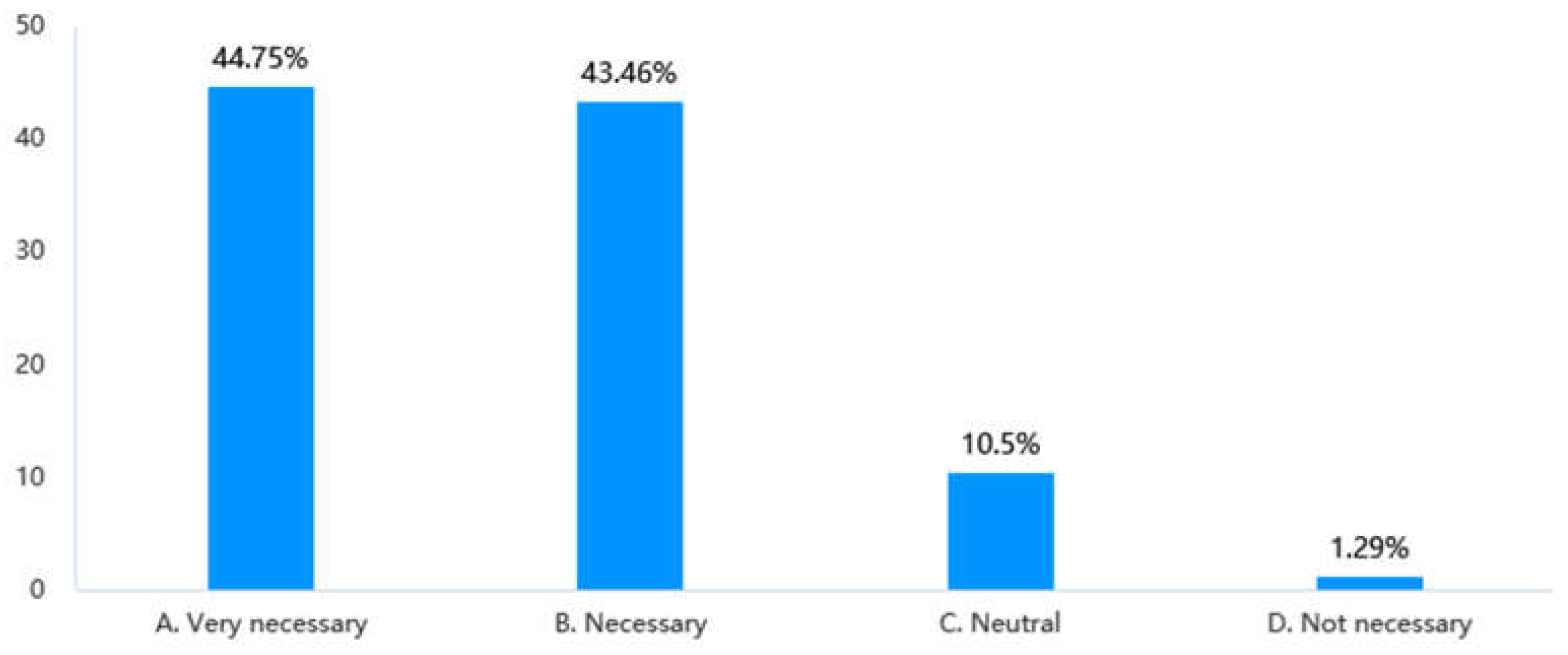
Figure 3.
Frequency of AI healthcare tool usage among respondents.
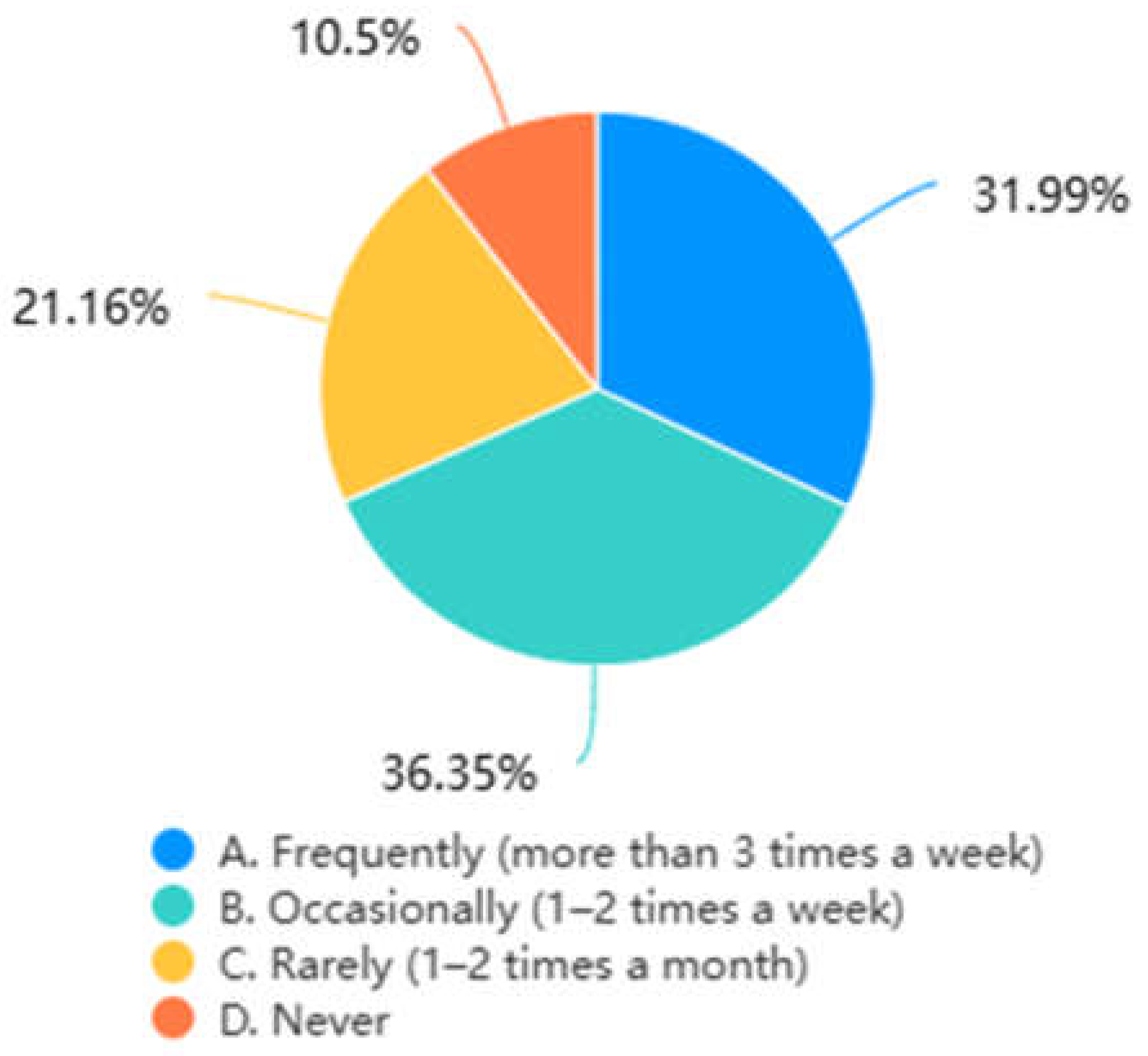
Figure 6.
Attitudes toward the impact of AI teaching on clinical skills.
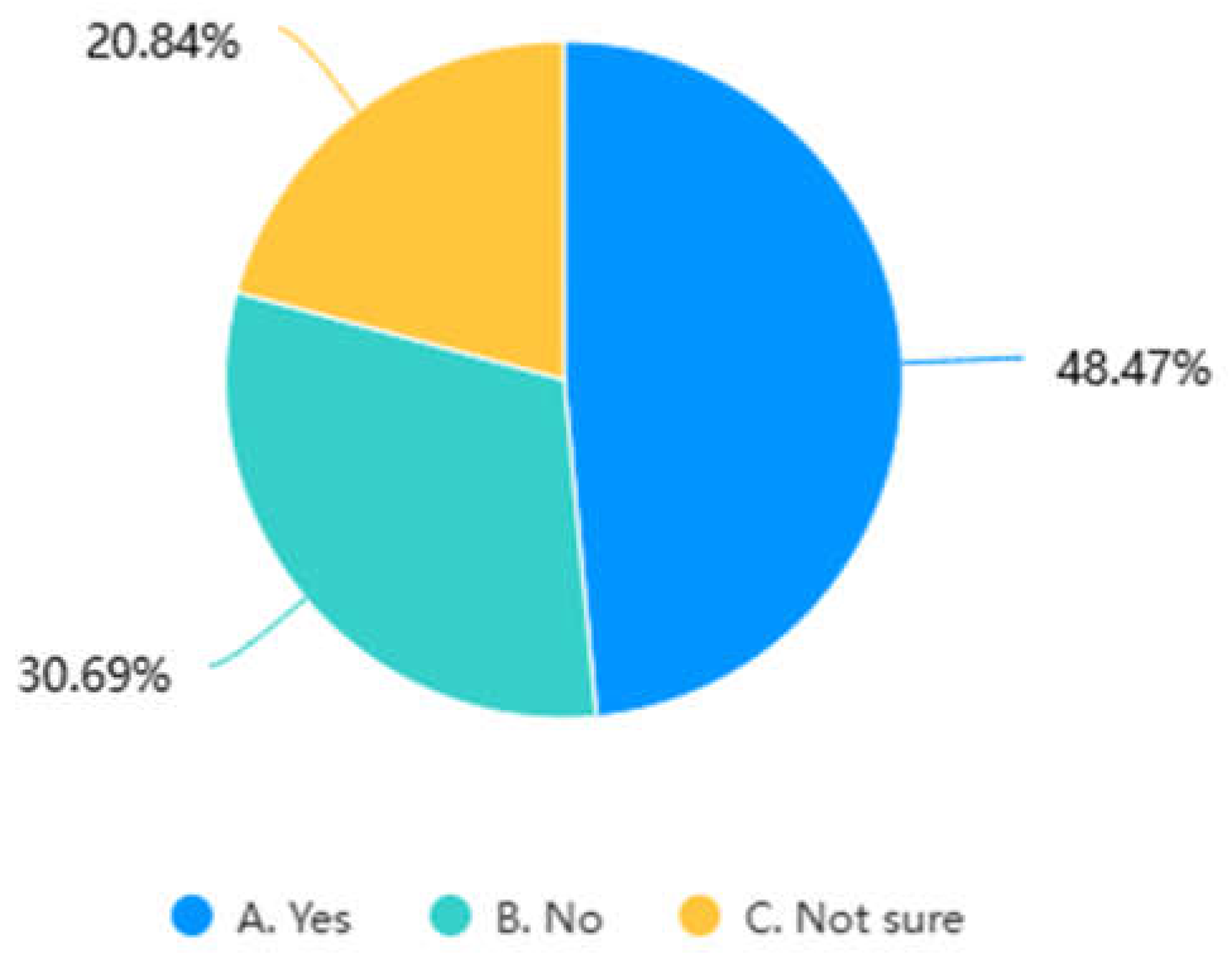
Figure 7.
Factors influencing the use of AI tools among respondents (n=619).
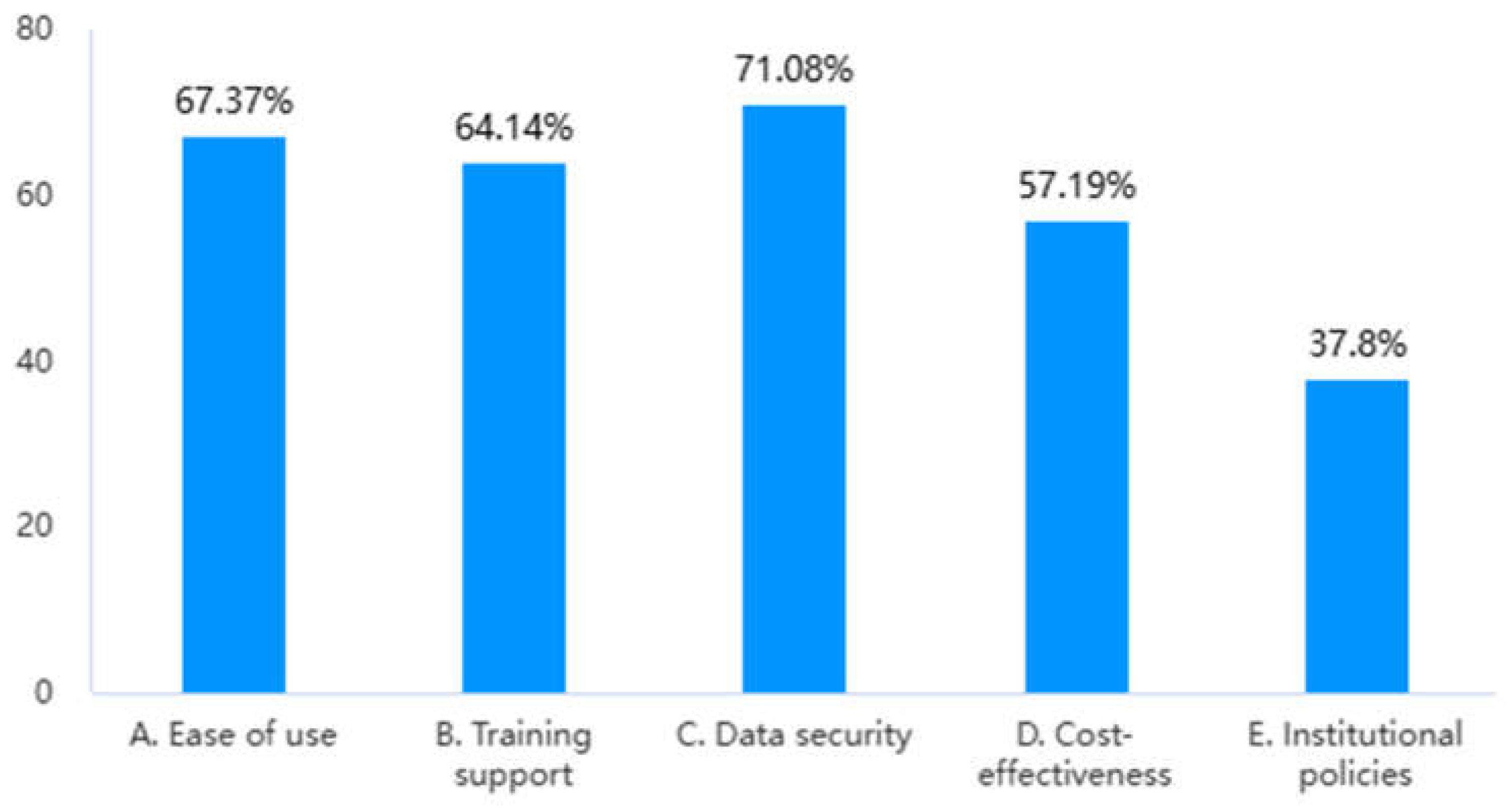
Figure 8.
Curricular hours allocation across four course categories.
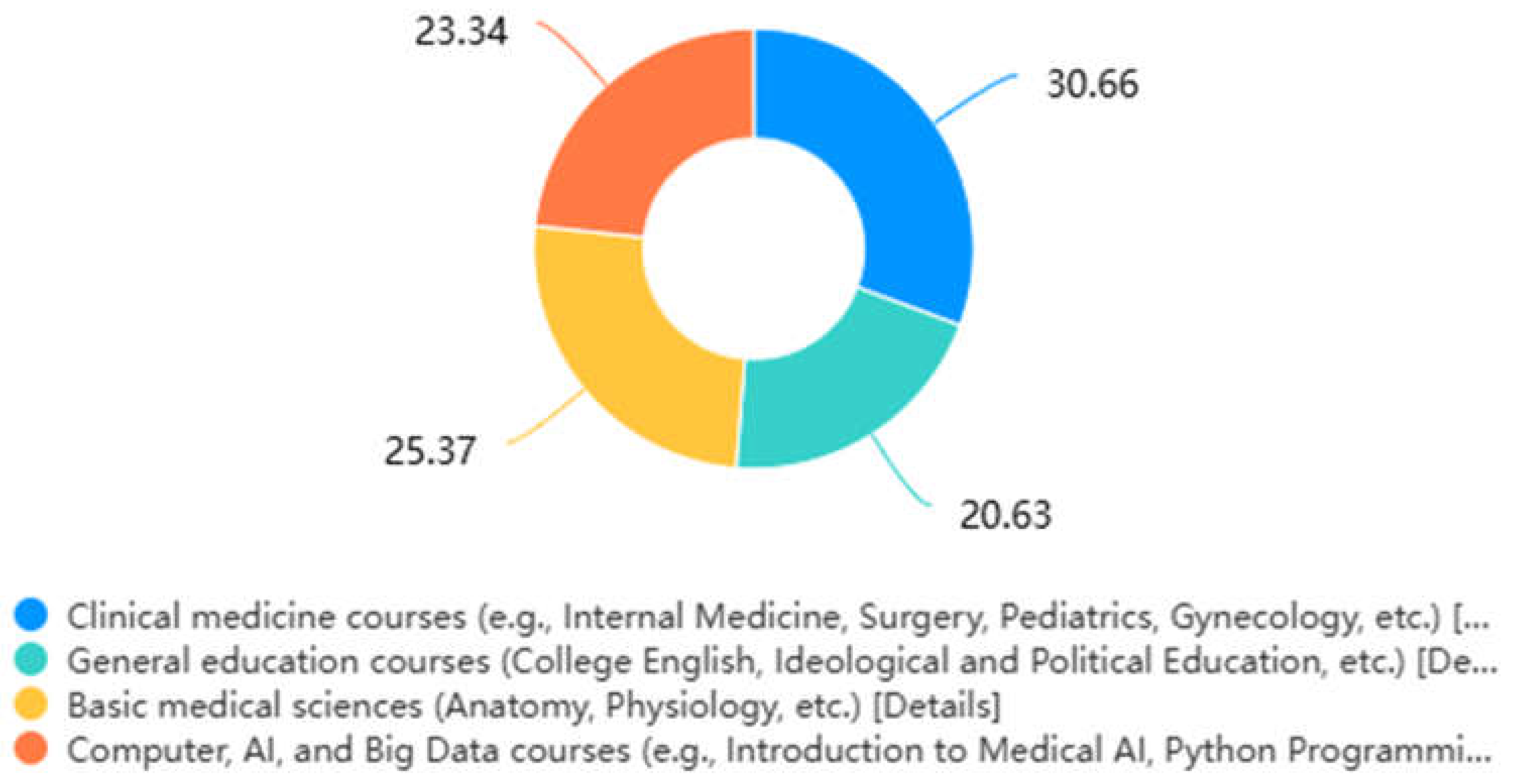

Table 1.
Structure and item distribution of the questionnaire.
| Domain | Corresponding Items | Item Type | Number of Items |
|---|---|---|---|
| Respondent demographic and professional identity | Q1 | Multiple choice | 1 |
| AI awareness and current usage | Q2, Q4, Q5, Q6 | Single choice | 4 |
| AI teaching needs and attitudes | Q3, Q7, Q8 | Single choice (attitude) | 3 |
| Preferences for teaching content and methods | Q9, Q10, Q11, Q12, Q13 | Multiple choice | 5 |
| Curriculum structure expectations | Q14, Q15, Q16, Q17, Q18 | Multiple choice/Allocation | 5 |
| Open-ended opinions | Q19, Q20 | Open-ended | 2 |
| Total | 20 |
Table 2.
AI-related courses desired by respondents (n=619).
| Courses | Subtotal | Percentage |
|---|---|---|
| A. AI-assisted diagnosis and treatment | 419 | 67.69% |
| B. AI imaging/pathology diagnosis | 384 | 62.04% |
| C. Python/Java and other programming courses | 339 | 54.77% |
| D. Introduction to Medical Artificial Intelligence | 306 | 49.43% |
| E. Robotics principles | 255 | 41.2% |
| F. Medical information analysis | 253 | 40.87% |
| G. Statistical analysis of medical and pharmaceutical data | 237 | 38.29% |
| H. Cloud computing and big data processing | 208 | 33.6% |
| I. Hands-on basics of "AI tools" | 199 | 32.15% |
Disclaimer/Publisher’s Note: The statements, opinions and data contained in all publications are solely those of the individual author(s) and contributor(s) and not of MDPI and/or the editor(s). MDPI and/or the editor(s) disclaim responsibility for any injury to people or property resulting from any ideas, methods, instructions or products referred to in the content. |
© 2026 by the authors. Licensee MDPI, Basel, Switzerland. This article is an open access article distributed under the terms and conditions of the Creative Commons Attribution (CC BY) license (http://creativecommons.org/licenses/by/4.0/).
Copyright: This open access article is published under a Creative Commons CC BY 4.0 license, which permit the free download, distribution, and reuse, provided that the author and preprint are cited in any reuse.


