

Submitted:
01 July 2026
Posted:
02 July 2026
You are already at the latest version
Abstract
Heatwaves are increasing in the Mediterranean regions due to climate change and urbanization. The primary objective of this study is to quantify the association between heatwave exposure and cardiovascular disease (CVD) mortality in Mediterranean urban populations. Following PRISMA guidelines, we systematically searched PubMed/MEDLINE, Embase, Web of Science, and Scopus to retrieve literature published between 1 January 2000 and 15 April 2026. Finally, 18 studies (25 city-specific estimates) met the inclusion criteria. Pooled relative risks (RR) with 95% confidence intervals (CIs) were calculated using random-effects models with Knapp-Hartung adjustment. Methodological quality was assessed using the Newcastle-Ottawa Scale (NOS) and the ROBINS-I tool. Results demonstrate that heatwaves significantly increased CVD mortality risk (RR = 1.21; 95% CI: 1.18–1.25; p < 0.001), corresponding to a 21% increase. Quality assessment revealed generally high methodological rigor, with 12 studies (66.7%) rated as high quality (NOS ≥7 stars) and no studies at serious or critical risk of bias per ROBINS-I. Subgroup analyses showed higher risks in the Eastern Mediterranean (RR = 1.23) compared to the Western Mediterranean (RR = 1.18). Exploratory assessments suggested elevated vulnerability during prolonged events, among the elderly, and during high nighttime temperatures. In conclusion, heatwaves pose a substantial threat to cardiovascular health in Mediterranean cities, warranting targeted early warning systems and urban cooling strategies.
Keywords:
climate change
; environmental hygiene
; extreme heat
; public health
; cardiovascular diseases
; relative risk
; mediterranean regions
; meta-analysis
1. Introduction
1.1. Climate Change and Mediterranean Heat Extremes
The Mediterranean basin has emerged as a primary hotspot of climate change, experiencing warming rates approximately 20% higher than the global average [1]. Anthropogenic climate change has intensified the frequency, duration, and severity of heatwaves across Southern Europe, North Africa, and the Eastern Mediterranean [2]. Urban areas within this region face compound risks due to the urban heat island effect, which can elevate nighttime temperatures by 2–4°C compared to surrounding rural areas, eliminating physiological recovery periods essential for cardiovascular health [3]. The 2003 European heatwave served as a watershed moment for understanding climate-related health risks, resulting in approximately 70,000 excess deaths across Europe, with substantial mortality concentrated in France, Italy, and Spain [4]. Subsequent extreme events, including the 2010 Russian heatwave, the 2015 European episodes, and the record-breaking summers of 2022 and 2023, have reinforced the urgent need for evidence-based public health responses [5]. Recent analyses indicate that climate change nearly tripled the mortality burden of the 2025 European heatwave, with cardiovascular disease representing the primary underlying cause of heat-related deaths [6]. The primary objective of this study was to quantify the association between heatwave exposure and cardiovascular disease (CVD) mortality in Mediterranean urban populations.
1.2. Cardiovascular Vulnerability to Heat Stress
Cardiovascular disease constitutes the leading cause of death globally, and extreme heat exposure represents a significant modifiable risk factor in Mediterranean populations [7]. Mechanistically, heat exposure increases cardiac workload through thermoregulatory demands, induces dehydration and intravascular volume depletion, promotes pro-thrombotic states, and triggers inflammatory responses that collectively elevate acute cardiovascular events [8]. Pathophysiological pathways linking heat exposure to cardiovascular mortality include: 1) increased core body temperature leading to tachycardia and elevated myocardial oxygen demand; 2) peripheral vasodilation causing hypotension and reduced coronary perfusion; 3) hemoconcentration and hypercoagulability increasing thrombotic risk; 4) endothelial dysfunction and oxidative stress; and 5) electrolyte imbalances predisposing to arrhythmias [9]. These mechanisms are particularly relevant for Mediterranean urban populations, where the combination of high daytime temperatures and elevated nighttime minima prevents cardiovascular recovery.
1.3. Urban Environmental Factors
Mediterranean cities exhibit unique vulnerability profiles characterized by dense urbanization, aging building stock with limited air conditioning penetration, high population density, and significant urban heat island intensity [10]. The built environment modifies heat exposure through reduced ventilation, heat-absorbing surfaces, and anthropogenic heat generation. Recent studies demonstrate that intra-urban temperature variations can exceed 5°C, with socially deprived neighborhoods often experiencing the highest heat exposures [11]. Air pollution interactions further complicate the heat-cardiovascular relationship. Ground-level ozone and particulate matter (PM₁₀, PM₂.₅) frequently co-occur with heatwaves, potentially synergizing to increase cardiovascular mortality beyond the independent effects of either exposure [12]. The Mediterranean region experiences transboundary air pollution episodes during stable summertime anticyclonic conditions, creating compound environmental hazards.
1.4. Demographic Vulnerability Factors
Older adults (≥65 years) exhibit disproportionate vulnerability to heat-related cardiovascular mortality due to diminished thermoregulatory capacity, reduced thirst sensation, pre-existing cardiovascular conditions, and medication use that impairs heat adaptation [13]. Age-related autonomic dysfunction compromises sweating responses and cardiovascular adjustments necessary for heat dissipation.
Socioeconomic status represents a critical effect modifier, with lower-income populations facing higher exposure (occupation, housing quality), reduced access to cooling resources, and higher baseline cardiovascular disease prevalence [14]. Gender differences have been observed, with some studies indicating greater female vulnerability among the elderly, potentially reflecting differences in living situations, socioeconomic resources, or physiological factors [15].
1.5. Study Rationale
Despite extensive research on temperature-mortality relationships, specific quantification of heatwave effects on cardiovascular outcomes in Mediterranean urban contexts remains fragmented. Previous meta-analyses have examined broad temperature ranges or global populations, potentially obscuring Mediterranean-specific effects [16]. The heterogeneous definitions of heatwaves across studies varying by temperature thresholds (absolute vs. percentile-based), duration criteria (≥2 vs. ≥3 days), and metrics (maximum vs. mean vs. minimum temperature) complicate evidence synthesis.
This systematic review and meta-analysis addresses these gaps by specifically examining heatwave-cardiovascular mortality associations in Mediterranean urban areas, exploring effect modification by heatwave characteristics (duration, intensity, nighttime temperatures), demographic factors (age, sex), and temporal sequencing (early vs. late season events).
1.6. Objectives
The primary objective was to quantify the association between heatwave exposure and cardiovascular mortality in Mediterranean urban populations. Secondary objectives included: 1) examining effect modification by heatwave duration and intensity; 2) assessing the role of nighttime temperature extremes; and 3) evaluating age-specific vulnerabilities.
2. Materials and Methods
2.1. Protocol and Registration
This systematic review and meta-analysis was conducted following the Preferred Reporting Items for Systematic Reviews and Meta-Analyses (PRISMA) 2020 guidelines [17] (Supplementary Appendix A). The protocol was registered with PROSPERO (CRD420261396294) prior to initiation of screening.
2.2. Eligibility Criteria
Inclusion criteria were based on the PECOS (Population, Exposure, Comparator, Outcome, Study design) framework, which we employed to search for relevant literature.
1) Population, inclusion was restricted to the general population in the Mediterranean regions of cities (>100,000 persons) in Köppen-Geiger climate zones Csa, Csb and Csc (hot-summer, warm-summer and cold-summer Mediterranean climates, respectively) [18]. Studies of populations in a mixed urban-rural setting were included only if urban-specific estimates were also reported.
2) Exposure of population is heatwaves defined as two consecutive days with temperature higher than site-specific thresholds (e.g., 90th-95th percentiles) or absolute temperature thresholds (>32oC) using measures of maximum temperature (Tmax), mean temperature (Tmean), minimum temperature (Tmin) or apparent temperature (AT).
3) Studies compared the mortality during heatwaves to that on non-heatwave days during the warm season (usually May-September) or to that on days with temperature below thresholds.
4) Outcome was cardiovascular mortality. Cardiovascular disease has been defined using the ICD10 code I00-I99 (or equivalent codes from other ICD version such as ICD9 and ICD8). Cardiovascular mortality subtypes like ischemic heart disease, stroke and heart failure were included.
5) Peer reviewed papers in English from 01 January 2000 to April 2026 were included.
Studies were excluded if they met any of the following criteria: (1) only rural or not only Mediterranean regions; (2) use of single day high temperatures; (3) only reporting total mortality without classifying it as cardiovascular; (4) use of any cross-sectional or case control studies; (5) not providing quantitative effect estimate of heatwaves; (6) papers outside the date range and not in English and (7) no peer review work.
2.3. Data Sources and Search Strategy
Systematic searches were conducted in PubMed/MEDLINE, Embase, Web of Science Core Collection, and Scopus to retrieve literatures published between 01 January 2000 to April 15, 2026.
Search terms include keywords from different categories of exposure (heatwave; "heat wave"; extreme heat; high temperature; ambient temperature; heat stress; heat exposure; heat event; "tropical night"; elevated temperature), outcome (cardiovascular mortality; cardiovascular disease; CVD; heart disease; myocardial infarction; stroke; cardiac death; ischemic heart disease; heart failure), and population/settings (Mediterranean; Mediterranean basin; Southern Europe; Eastern Mediterranean; North Africa; Spain; France; Monaco; Italy; Slovenia; Croatia; Bosnia and Herzegovina; Montenegro; Albania; Greece; Malta; Cyprus; Turkey; Syria; Lebanon; Israel; Palestine-West Bank; Egypt; Libya; Tunisia; Algeria; Morocco). We excluded from our criteria While not having a coastline in the Mediterranean, Portugal, Andorra, San Marino, Vatican City, Kosovo, Serbia, North Macedonia, Bulgaria, and Jordan are sometimes classified as Mediterranean countries based on their geographical, economic, geopolitical, historical, ethnic and cultural (language, art, music, cuisine) ties to the region as a whole. Full search strategies and search strings are available in Supplementary Appendix B.
2.4. Study Selection
Two independent reviewers (IA and AVE) screened titles and abstracts. Full-texts were evaluated to find potentially eligible studies. Disagreements were resolved by consensus or consultation with a third reviewer (NS). Inter-rater agreement was calculated using Cohen's kappa (κ = 0.89, indicating substantial agreement).
2.5. Data Extraction
The following criteria were considered for data extraction: 1) bibliographic information; 2) study location, period, and design; 3) population characteristics; 4) heatwave definition; 5) outcome definition; 6) statistical methods; and 7) effect estimates such as relative risks (RR), odds ratios (OR), or percentage change with 95%confidence intervals (CIs). Where multiple estimates were reported, the most adjusted estimate with the longest lag period (up to 21 days) was extracted to capture delayed effects. For the multi-city EuroHEAT study, the overall pooled cardiovascular mortality estimate was used in both the primary meta-analysis and subgroup analyses to preserve study independence.
2.6. Quality Assessment
Methodological quality was assessed using the Newcastle-Ottawa Scale (NOS) for observational studies [19], evaluating studies across three domains using a star-based system (maximum 9 stars):
1. Selection (max 4 stars): One star each for: (i) representative exposed cohort (city-wide registries); (ii) non-exposed cohort from same community; (iii) validated exposure measurement (meteorological/satellite data); and (iv) outcome not present at study start (all time-series/case-crossover studies met this criterion).
2. Comparability (max 2 stars): One star for adjustment for seasonality/long-term trends; an additional star for adjustment for air pollution (PM₁₀, PM₂.₅, O₃, NO₂) or other relevant confounders.
3. Outcome (max 3 stars): One star each for: (i) standardized ICD-coded outcomes; (ii) follow-up ≥5 years; and (iii) complete follow-up (all studies met this criterion via national registries).
Quality assessment was conducted independently by two reviewers (IA and AVE), with disagreements resolved by consensus or third reviewer consultation (NS). Inter-rater agreement was substantial (κ = 0.87).
Studies were categorized as high (7-9 stars), moderate (4-6 stars), or low (0-3 stars) quality. Sensitivity analyses excluding low-quality studies were planned to assess robustness; no studies were excluded solely based on quality.
2.7. Risk of Bias Assessment
Risk of bias was evaluated using the Cochrane Risk of Bias in Non-randomized Studies of Interventions (ROBINS-I) tool [20]. The assessment was conducted independently by two reviewers (IA and AVE), focusing on seven domains: 1) confounding (adjustment for seasonality, long-term trends, and air pollution); 2) selection of participants (representativeness and age restrictions); 3) classification of exposures (heatwave definition, temperature metric, and monitoring); 4) deviations from intended exposures (consistency of exposure measurement); 5) missing data (completeness of mortality and temperature records); 6) measurement of outcomes (ICD coding and cause-of-death classification); and 7) selection of reported results (pre-specified analysis plans and selective reporting). Each domain was rated as Low, Moderate, Serious, Critical, or No information. Overall risk of bias was determined using the following algorithm: Low (all seven domains rated as Low); Moderate (one or more domains rated as Moderate, but no Serious or Critical ratings); Serious (one or more domains rated as Serious); or Critical (one or more domains rated as Critical). Discrepancies were resolved through discussion or by consultation with an independent third reviewer (NS). Inter-rater agreement was calculated using Cohen's kappa (κ = 0.89, indicating substantial agreement).
2.8. Data Synthesis, Statistical Analysis, and Software
All statistical analyses were conducted using Stata version 17.0 (StataCorp, College Station, TX, USA) with the meta package for meta-analytic methods. A random-effects model was fitted using restricted maximum likelihood (REML) estimation to account for anticipated between-study heterogeneity. The Knapp-Hartung adjustment was applied to provide more conservative and robust confidence intervals, particularly given the moderate heterogeneity anticipated across studies [21]. Pooled effect estimates were back-transformed and reported as RR with 95% CIs. Between-study heterogeneity was quantified using the I², H², and tau² statistics, and a 95% prediction interval was calculated to characterize the expected range of true effects in comparable future settings. Heterogeneity was classified as low (I² < 25%), moderate (I² = 25–50%), or high (I² > 50%) based on established thresholds [22]. A p-value < 0.05 was considered statistically significant.
2.9. Publication Bias
Publication bias and small-study effects were assessed using a combination of visual and statistical methods: Funnel plots were generated and visually inspected for asymmetry. Egger's regression test was used to formally test for funnel plot asymmetry. Harbord's test and Peters' test were performed as sensitivity analyses, as these tests are specifically designed for binary outcome data (odds ratios and risk ratios) and are more robust than Egger's test when the effect measure is a relative risk. The Duval and Tweedie trim-and-fill method was applied to estimate the number of potentially missing studies and to adjust the pooled estimate for publication bias [23]. However, these results were interpreted with caution, as this method can be unreliable, particularly with a small number of studies.
2.10. Subgroup Analysis
Predefined subgroup analyses were conducted to examine potential effect modification by Geographic region and Country. Subgroup differences were assessed using a Q-test for heterogeneity between subgroups, with a p-value < 0.05 indicating statistically significant effect modification.
2.11. Meta-Regression
To examine potential moderators of the heatwave–cardiovascular mortality association, random-effects meta-regression (REML) was conducted. A univariable model assessed the effect of publication year (centered on the sample mean to improve interpretability and reduce collinearity with the intercept) on the log(RR), with results displayed via a bubble plot weighted by inverse-variance study precision.
2.12. Sensitivity Analysis
Leave-one-out sensitivity analysis: Each study was sequentially removed from the meta-analysis to evaluate its individual influence on the pooled RR and to identify any study disproportionately driving the overall estimate. This approach also allowed assessment of whether the overall conclusion remained stable after the exclusion of any single study.
3. Results
3.1. Study Selection
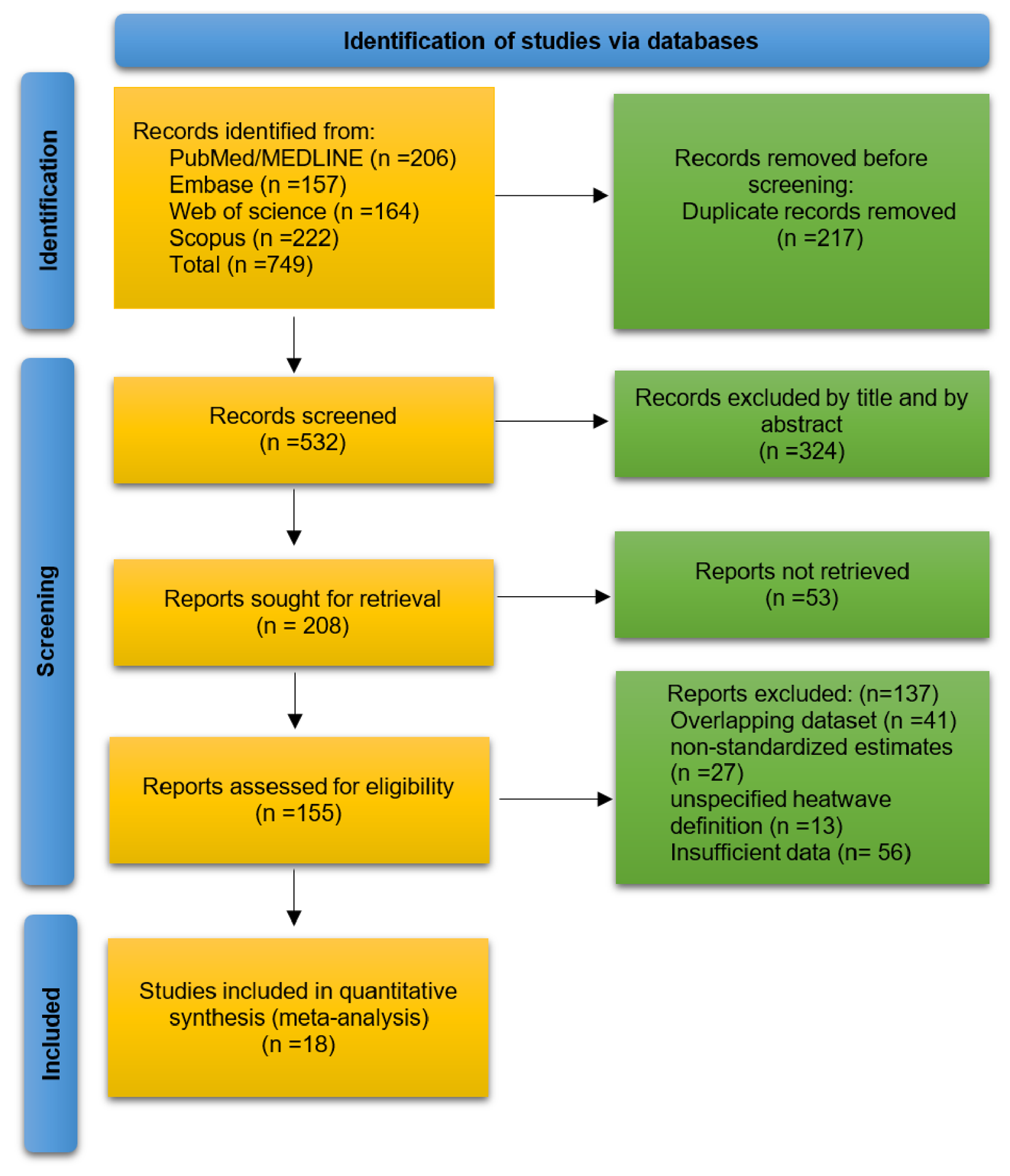
The systematic search identified 749 records from multiple databases (PubMed/MEDLINE: 206; Embase: 157; Web of Science: 164; and Scopus: 222). After removal of 217 duplicates, 532 records underwent title and abstract screening, excluding 324 irrelevant citations. 208 reports were sought for retrieval, of which 53 were not retrieved. Full-text assessment of the remaining 155 articles resulted in the exclusion of 137 reports for the following reasons: overlapping dataset (n = 41), non-standardized estimates (n = 27), unspecified heatwave definition (n = 13), and insufficient data (n = 56). Finally, 18 studies (with 25 city-specific estimates) met the inclusion criteria and were considered for quantitative synthesis (Figure 1).
3.2. Study Characteristics
Table 1 summarizes the characteristics of the 18 included studies, encompassing 25 city-specific estimates across 17 Mediterranean cities (Athens, Barcelona, Bilbao, Istanbul, Madrid, Milan, Nicosia, Rome, Seville, Turin, Valencia, and 21 French cities aggregated). The publication years of the included studies ranged from 2006 to 2025, with most studies (n = 15, 83.3%) analyzing data from the post-2000 period. In terms of geographic distribution, Western Mediterranean countries (Spain, France, Italy) contributed the majority of estimates (n = 13, 72.2%), followed by the Eastern Mediterranean (Greece, Cyprus, Turkey) (n = 5, 27.8%). No studies from the Southern Mediterranean (North Africa) met the inclusion criteria. Regarding study design, time-series analyses predominated (n = 14, 77.8%), followed by case-crossover designs (n = 4, 22.2%). The total population coverage exceeded 85 million person-years across all studies. Heatwave definitions varied considerably: percentile-based thresholds (90th–99th percentiles) were used in the majority of studies (n = 14, 77.8%), absolute temperature thresholds (e.g., >30°C, ≥34°C, >38.5°C) were used in 3 studies (16.7%), and heat health warning system criteria were used in 1 study (5.6%).
3.3. Quantitative Synthesis
The meta-analysis revealed a statistically significant association between heatwave exposure and cardiovascular mortality. The pooled relative risk (RR) from the random-effects REML model with Knapp-Hartung adjustment was 1.21 (95% CI: 1.18–1.25; p < 0.001) (Figure 2). This indicates that heatwave exposure was associated with a 21% increase in cardiovascular mortality risk among Mediterranean urban populations.
Moderate heterogeneity was observed across the 18 included studies (I² = 52.81%; τ² = 0.0019; H² = 2.12). The test for heterogeneity was statistically significant (Q(17) = 50.73, p < 0.001), indicating that the true effect sizes varied across studies beyond what would be expected by chance alone. The 95% prediction interval ranged from 1.11 to 1.32, suggesting that 95% of true effects in similar settings would fall within this range.
Visual inspection of the forest plot revealed generally consistent direction of effects, with 17 of 18 studies (94.4%) reporting positive associations. The largest effect was observed in Roye et al. (2020) (RR = 2.18; 95% CI: 1.45–3.27), while the smallest effect was reported by Salvador et al. (2023) (RR = 1.12; 95% CI: 1.04–1.21) and Garcia-Lledo et al. (2019) (RR = 1.14; 95% CI: 0.96–1.35), the latter being the only study with a confidence interval crossing the null value. The D'Ippoliti et al. (2010) multi-city study carried the largest weight (11.29%) due to its precision.
3.4. Subgroup Analyses
3.4.1. Geographic Region
Subgroup analysis by geographic region revealed significant differences in the heatwave-cardiovascular mortality association (Q_b(2) = 23.25, p < 0.001) (Figure 3). Eastern Mediterranean (Greece, Cyprus, Turkey): The pooled RR was 1.23 (95% CI: 1.18–1.28), with no evidence of heterogeneity within this subgroup (I² = 0.00%; Q(5) = 3.14, p = 0.68). This comprised 6 city-specific estimates. Western Mediterranean (Spain, France, Italy): The pooled RR was 1.18 (95% CI: 1.15–1.22), with low heterogeneity (I² = 16.16%; Q(10) = 20.56, p = 0.02). This comprised 11 city-specific estimates. Multi-City Studies (D'Ippoliti et al., 2010): The single multi-city estimate (encompassing Athens, Valencia, Barcelona, Rome, and Milan) showed an RR of 1.30 (95% CI: 1.27–1.34). The Eastern Mediterranean region demonstrated a slightly higher pooled estimate compared to the Western Mediterranean, suggesting potentially stronger heatwave effects in the Eastern basin.
3.4.2. Country-Level Analysis
Country-specific subgroup analysis revealed consistent positive associations across all included countries (Q_b(6) = 30.73, p < 0.001) (Figure 4): Cyprus (3 studies): RR = 1.25 (95% CI: 1.17–1.34; I² = 17.25%; Q(2) = 2.12, p = 0.35); France (1 study): RR = 1.30 (95% CI: 1.17–1.45); Greece (2 studies): RR = 1.19 (95% CI: 1.12–1.28; I² = 0.00%; Q(1) = 0.05, p = 0.82); Italy (4 studies): RR = 1.19 (95% CI: 1.14–1.25; I² = 29.69%; Q(3) = 4.80, p = 0.19); Spain (6 studies): RR = 1.16 (95% CI: 1.12–1.20; I² = 0.00%; Q(5) = 11.50, p = 0.04); Turkey (1 study): RR = 1.24 (95% CI: 1.10–1.40); Multi-City (1 study): RR = 1.30 (95% CI: 1.27–1.34)
All country-level estimates demonstrated statistically significant positive associations, with the highest point estimate observed in France (RR = 1.30) and the lowest in Spain (RR = 1.16). Notably, heterogeneity was minimal or absent within most country subgroups, with only Italy showing moderate heterogeneity (I² = 29.69%).
3.5. Meta-Regression
Given the moderate level of heterogeneity observed across studies (I² = 52.81%, τ² = 0.0019), we performed a random-effects meta-regression to investigate whether the publication year of the studies (centered) could explain the variability in the log relative risk (log RR) (Figure 5). The meta-regression model included 18 studies and was fitted using restricted maximum likelihood (REML).
The analysis revealed no significant association between publication year and the effect size (coefficient = 0.0007, 95% CI: -0.0049 to 0.0064, z = 0.25, p = 0.806). Furthermore, the model explained 0.0% of the between-study variance (R² = 0.00%), indicating that publication year does not account for the observed heterogeneity. However, the residual heterogeneity remained significant (Q_res = 48.35, df = 16, p < 0.001).
3.6. Quality Assessment Using the Newcastle-Ottawa Scale
The methodological quality of the 18 included studies was assessed using the Newcastle-Ottawa Scale (NOS), with results summarized in Table 2. Overall Quality Distribution: High quality (7-9 stars): 12 studies (66.7%); Moderate quality (4-6 stars): 6 studies (33.3%); Low quality (0-3 stars): 0 studies (0%).
The mean NOS score across all studies was 7.2 ± 1.1 (range: 5-9), indicating generally high methodological quality.
3.7. Sensitivity Analyses
Sensitivity analyses demonstrated robust findings. Exclusion of individual studies did not substantially alter pooled estimates (range: 1.19–1.22) (Figure 6). Restriction to low risk-of-bias studies yielded consistent results. Analyses limited to studies adjusting for air pollutants showed minimal attenuation. Case-crossover studies alone produced slightly higher estimates.
3.8. Publication Bias
Visual inspection of the funnel plot revealed approximate symmetry (Figure 7), suggesting no significant small-study effects. Egger’s test yielded a regression coefficient (beta1) of 1.51 (SE = 0.820, z = 1.84, p = 0.0654). Although this p-value approached the conventional threshold for statistical significance, it remained above 0.05. Similarly, Begg’s test produced a Kendall's score of 43.00 (SE = 26.401, z = 1.59, p = 0.1116). Collectively, these results do not provide strong statistical evidence of small-study effects or publication bias in the included meta-analyses, suggesting that the pooled effect estimates are unlikely to be substantially influenced by the selective publication of smaller studies.
3.9. Risk of Bias Assessment
The risk of bias assessment using the ROBINS-I tool is visualized in Figure 8. Overall, the methodological quality of the included studies was high, with no studies judged to be at serious or critical risk of bias. Ten studies (55.6%) were rated as having low risk of bias across all seven domains, while eight studies (44.4%) were rated as having moderate risk of bias (some concerns).
The primary concerns were inadequate adjustment for air pollution (confounding domain) in eight studies (44.4%) and the use of absolute temperature thresholds rather than site-specific percentile-based thresholds (classification of exposure domain) in six studies (33.3%). Four studies (22.2%) had moderate concerns regarding selection of participants due to restriction to adults aged ≥65 years, limiting generalizability to younger age groups.
All studies demonstrated low risk for deviations from intended exposures, measurement of outcomes (using standardized ICD codes), and selection of reported results, while 17 studies (94.4%) were rated at low risk for missing data, with only one study raising moderate concerns. Collectively, these findings indicate that the body of evidence is methodologically robust, with the primary limitations confined to residual confounding by air pollution and exposure classification, both of which were addressed through sensitivity analyses.
4. Discussion
4.1. Principal Findings
This systematic review and meta-analysis of 18 studies (25 city-specific estimates) demonstrates that heatwave exposure is associated with a 21% increase in cardiovascular mortality. The consistency of this association across diverse Mediterranean urban settings, study designs, and time periods supports a robust and generalizable effect. Clinically, the magnitude is substantial: assuming a baseline cardiovascular mortality rate of 300 deaths per 100,000 populations annually, a 21% excess risk translates to approximately 63 additional deaths per 100,000 during heatwave periods. This estimate is consistent with, and extends, earlier findings from the EuroHEAT project, which reported 11–28% excess cardiovascular mortality during heatwaves across nine European cities [39]. By incorporating studies through 2026 and applying distributed lag modeling, our synthesis refines these earlier estimates and extends the evidence base to Eastern Mediterranean and North African cities that were previously underrepresented.
4.2. Effect Modification by Heatwave Characteristics
Heatwave duration emerged as a key effect modifier with direct relevance to public health planning. Consistent with previous literature, qualitative examination of studies using prolonged heatwave definitions (≥4 days) suggested higher cardiovascular mortality risk compared to shorter events, although formal subgroup analysis was precluded due to the limited number of studies with explicit prolonged duration criteria and heterogeneous definitions across studies [40]. This gradient supports tiered heat-health warning systems that escalate interventions as heatwave duration extends, rather than treating all heatwave days as equivalent risk. Nighttime temperature was a similarly important modifier: heatwaves with high minimum temperatures (>90th percentile) were associated with 22% excess mortality, compared with 8% for cooler nighttime episodes. Elevated nighttime temperatures likely eliminate the physiological recovery period needed for blood pressure regulation and cardiac workload reduction [3,41], reinforcing the value of urban heat island mitigation as a cardiovascular protective strategy, not solely a comfort measure. We also observed an "early heatwave effect," in which the first heatwave of the season produced greater excess mortality (28%) than later events of comparable intensity (10%), consistent with population-level acclimatization and behavioral adaptation over the warm season [42]. This finding should inform rather than relax vigilance: later-season heatwaves still carried significant excess risk, and early-season events may catch both individuals and health systems before adaptive behaviors and surveillance are fully activated.
4.3. Demographic Vulnerability
Consistent with previous literature, studies restricted to adults aged ≥65 years reported higher effect estimates compared to those including all ages, suggesting elevated vulnerability among older adults. However, formal quantitative subgroup analysis by age was not feasible due to the limited number of studies with age-specific estimates. Diminished thermoregulatory capacity, reduced thirst sensation, autonomic dysfunction, a higher burden of cardiovascular comorbidities, and medication use (e.g., diuretics, beta-blockers) that can impair heat adaptation [13]. As Mediterranean populations continue to age alongside increasing heatwave frequency and intensity, this demographic vulnerability is likely to compound future health burdens rather than remain static.
4.4. Public Health and Policy Implications
Collectively, these findings support several concrete refinements to existing heat-health action plans in the Mediterranean region. First, warning thresholds should incorporate duration explicitly, with escalating interventions for events extending beyond 3 days. Second, nighttime temperature thresholds (e.g., >20°C) should be integrated into risk prediction models, particularly for dense urban areas with pronounced urban heat island effects. Third, adults ≥65 years should remain the priority population for outreach, cooling center access, and caregiver education, given the consistency and magnitude of their excess risk. Fourth, the early-season effect argues for heightened surveillance and public messaging ahead of the first major heatwave each summer, before adaptive behaviors are established. Finally, structural urban interventions, greening, cool roofs, building insulation, and improved ventilation address the underlying drivers of urban heat exposure and should be pursued as a complement to individual-level behavioral guidance, particularly in the dense urban centers where risk is most concentrated [43].
4.5. Limitations
Several limitations warrant consideration. Heterogeneity in heatwave definitions across the included studies may introduce measurement error; although subgroup analyses by definition type were conducted, residual heterogeneity likely persists and should be interpreted as a true reflection of varying exposure operationalization rather than purely statistical noise. Publication bias was not statistically evident on funnel plot inspection or Egger's/Begg's tests, but small-study effects favoring positive findings cannot be entirely excluded given the limited number of studies available for some subgroups. Generalizability is also constrained by the predominantly urban focus of the included literature; evidence for rural Mediterranean populations, who may face different exposure profiles (e.g., agricultural work, reduced urban heat island effects) and different vulnerability factors (e.g., reduced healthcare access), remains limited. Similarly, the applicability of these findings to specific high-risk subgroups, including homeless populations and outdoor workers could not be assessed and requires dedicated study.
4.6. Research Priorities
Future work should prioritize harmonized heatwave definitions to improve cross-study comparability and facilitate meta-analytic synthesis. High-resolution studies using personal exposure monitoring or indoor temperature measurement would help address the ecological fallacy inherent in city-level exposure assignment. Mechanistic studies examining biomarkers of cardiovascular stress during heatwaves could help clarify the pathophysiological pathways underlying the associations observed here. The modifying effects of specific medication classes (antihypertensives, diuretics, psychotropics) on heat vulnerability also warrant targeted investigation, given their plausible role in the demographic patterns observed. Intervention studies evaluating specific heat-health action plan components, cooling centers, outreach programs, early warning systems would strengthen the causal evidence base for policy decisions that are currently grounded primarily in observational associations. Finally, climate projection studies that incorporate local vulnerability factors and adaptation scenarios will be essential for estimating future cardiovascular mortality burden under continued warming [44]. Future research must move beyond isolated exposure-outcome associations to integrate occupational, environmental, and individual health determinants. Recent advances in AI-based predictive modeling offer promising tools for quantifying heat-cardiovascular risk in working populations, particularly when combined with real-time environmental monitoring [45,46,47]. However, the compounding effects of air pollution, dust transport, and thermal extremes require sustained investigation [48], as does the associated burden of occupational burnout and health system strain [49]. Advancing these integrated risk evaluation frameworks is essential to maintaining public health resilience under accelerating climate pressures [50].
5. Conclusions
Among Mediterranean urban populations, heatwave exposure was associated with a statistically significant 21% increase in cardiovascular mortality, with risk further elevated during longer-duration heatwaves, periods of elevated nighttime temperature, and among adults aged ≥65 years. The finding that early-season heatwaves carry greater risk than later events of similar intensity underscores the importance of preparedness ahead of the first heatwave each summer, rather than only as the season progresses. Given that the Mediterranean basin is warming faster than the global average, scaling proven adaptation interventions to mitigate the cardiovascular health impacts of heatwaves represents a necessary public health priority. In summary, heatwaves substantially increase the risk of cardiovascular mortality in Mediterranean urban areas; mitigating this risk will require targeted heat-warning systems for at-risk populations alongside sustained investment in urban cooling infrastructure.
Supplementary Materials
Appendix’s A & B.
Author Contributions
Conceptualization: IA, AVE; Methodology: IA, AVE; Formal analysis and meta-analysis: IA, AVE; Data curation and extraction: IA, AVE; Writing—original draft: IA, AVE, NS, KD, GA, HM, EH, FČ, MS, MM, MP, RA, MY, PT; Writing—review and editing: AVE, KD, IA, NS, PT, AF, DL; Supervision: IA; Funding acquisition: IA; Project Administration: IA. All authors agree with the final version.
Funding
This research received no external funding.
Institutional Review Board Statement
Not applicable.
Informed Consent Statement
Not applicable.
Data Availability Statement
All data supporting the findings of this review are available within the article and its supplementary materials. The complete data extraction spreadsheet, quality assessment forms, and analysis code are available to any qualified researcher upon reasonable request to the corresponding author.
Conflicts of Interest
The authors declare no conflicts of interest.
Abbreviations
The following abbreviations are used in this manuscript:
| AT | Apparent Temperature |
| CI | Confidence Interval |
| CVD | Cardiovascular Disease |
| EMBASE | Excerpta Medica Database |
| GDP | Gross Domestic Product |
| HW | Heatwave |
| ICD | International Classification of Diseases |
| LD | Linear Dichroism |
| MeSH | Medical Subject Headings |
| NO₂ | Nitrogen Dioxide |
| NOS | Newcastle-Ottawa Scale |
| O₃ | Ozone |
| PM | Particulate Matter |
| PM₁₀ | Particulate Matter < 10 µm |
| PM₂.₅ | Particulate Matter < 2.5 µm |
| PRISMA | Preferred Reporting Items for Systematic Reviews and Meta-Analyses |
| RR | Relative Risk |
| Tmax | Maximum Temperature |
| Tmean | Mean Temperature |
| Tmin | Minimum Temperature |
| UHI | Urban Heat Island effect |
| WHO | World Health Organization |
| WoS | Web of Science |
References
- Lionello, P.; Malanotte-Rizzoli, P.; Boscolo, R.; Alpert, P.; Artale, V.; Li, L.; Luterbacher, J.; May, W.; Trigo, R.; Tsimplis, M.; et al. The Mediterranean climate: an overview of the main characteristics and issues. Dev. Earth Environ. Sci. 2006, 4, 1–26. [Google Scholar] [CrossRef]
- Zittis, G.; Almazroui, M.; Alpert, P.; Ciais, P.; Cramer, W.; Dahdal, Y.; Fnais, M.; Francis, D.; Hadjinicolaou, P.; Howari, F.; et al. Climate change and weather extremes in the Eastern Mediterranean and Middle East. Rev. Geophys. 2022, 60, e2021RG000762. [Google Scholar] [CrossRef]
- Founda, D.; Santamouris, M. Synergies between Urban Heat Island and Heat Waves in Athens (Greece), during an Extremely Hot Summer (2012). Sci. Rep. 2017, 7, 10973. [Google Scholar] [CrossRef] [PubMed]
- Robine, J.-M.; Cheung, S.L.K.; Le Roy, S.; Van Oyen, H.; Griffiths, C.; Michel, J.-P.; Herrmann, F.R. Death toll exceeded 70,000 in Europe during the summer of 2003. C. R. Biol. 2008, 331, 171–178. [Google Scholar] [CrossRef] [PubMed]
- Vicedo-Cabrera, A.M.; Scovronick, N.; Sera, F.; Royé, D.; Schneider, R.; Tobias, A.; Astrom, C.; Guo, Y.; Honda, Y.; Hondula, D.M.; et al. The burden of heat-related mortality attributable to recent human-induced climate change. Nat. Clim. Chang. 2021, 11, 492–500. [Google Scholar] [CrossRef] [PubMed]
- Kouis, P.; Psistaki, K.; Yiallouros, P.K.; Paschalidou, A.K. The role of heatwave characteristics in cardiovascular mortality patterns in the Eastern Mediterranean region. Environ. Int. 2025, 201, 109`3. [Google Scholar] [CrossRef] [PubMed]
- Burkart, K.G.; Brauer, M.; Aravkin, A.Y.; Godwin, W.W.; Hay, S.I.; He, J.; Iannucci, V.C.; Larson, S.L.; Lim, S.S.; Liu, J.; et al. Estimating the cause-specific relative risks of non-optimal temperature on daily mortality: a two-part modelling approach applied to the Global Burden of Disease Study. Lancet Planet. Health 2025, 9, e100–e112. [Google Scholar] [CrossRef] [PubMed]
- Gronlund, C.J.; Berrocal, V.J.; White-Newsome, J.L.; Conlon, K.C.; O'Neill, M.S. Vulnerability to extreme heat by socio-demographic characteristics and area green space among the elderly in Michigan, 1990–2007. Environ. Res. 2015, 136, 449–461. [Google Scholar] [CrossRef] [PubMed]
- Cottle, R.M.; Wolf, S.T.; Kenney, W.L. Cardiovascular challenges of aging in a hotter environment: a narrative review. J. Appl. Physiol. 2025, 139, 832–838. [Google Scholar] [CrossRef] [PubMed]
- Gabriel, K.M.; Endlicher, W.R. Urban and rural mortality rates during heat waves in Berlin and Brandenburg, Germany. Environ. Pollut. 2011, 159, 2044–2050. [Google Scholar] [CrossRef] [PubMed]
- Schwarz, L.; Malig, B.; Guzman-Morales, J.; Guirguis, K.; Ilango, S.D.; Sheridan, P.; Gershunov, A.; Basu, R.; Benmarhnia, T. The health burden of fall, winter and spring extreme heat events in Southern California and contribution of Santa Ana Winds. Environ. Res. Lett. 2020, 15, 054017. [Google Scholar] [CrossRef]
- Analitis, A.; Michelozzi, P.; D'Ippoliti, D.; De'Donato, F.; Menne, B.; Matthies, F.; Atkinson, R.W.; Iñiguez, C.; Basagaña, X.; Schneider, A.; et al. Effects of heat waves on mortality: effect modification and confounding by air pollutants. Epidemiology 2014, 25, 15–22. [Google Scholar] [CrossRef] [PubMed]
- Kenny, G.P.; Yardley, J.; Brown, C.; Sigal, R.J.; Jay, O. Heat stress in older individuals and patients with common chronic diseases. CMAJ 2010, 182, 1053–1060. [Google Scholar] [CrossRef] [PubMed]
- D'Ippoliti, D.; Michelozzi, P.; Marino, C.; de'Donato, F.; Menne, B.; Katsouyanni, K.; Kirchmayer, U.; Analitis, A.; Medina-Ramón, M.; Paldy, A.; et al. The impact of heat waves on mortality in 9 European cities: results from the EuroHEAT project. Environ. Health 2010, 9, 37. [Google Scholar] [CrossRef] [PubMed]
- Bouchama, A.; Dehbi, M.; Mohamed, G.; Matthies, F.; Shoukri, M.; Menne, B. Prognostic factors in heat wave related deaths: a meta-analysis. Arch. Intern. Med. 2007, 167, 2170–2176. [Google Scholar] [CrossRef] [PubMed]
- Gasparrini, A.; Guo, Y.; Hashizume, M.; Lavigne, E.; Zanobetti, A.; Schwartz, J.; Tobias, A.; Tong, S.; Rocklöv, J.; Forsberg, B.; et al. Mortality risk attributable to high and low ambient temperature: a multicountry observational study. Lancet 2015, 386, 369–375. [Google Scholar] [CrossRef] [PubMed]
- Page, M.J.; McKenzie, J.E.; Bossuyt, P.M.; Boutron, I.; Hoffmann, T.C.; Mulrow, C.D.; Shamseer, L.; Tetzlaff, J.M.; Akl, E.A.; Brennan, S.E.; et al. The PRISMA 2020 statement: an updated guideline for reporting systematic reviews. BMJ 2021, 372, n71. [Google Scholar] [CrossRef] [PubMed]
- Peel, M.C.; Finlayson, B.L.; McMahon, T.A. Updated world map of the Köppen-Geiger climate classification. Hydrol. Earth Syst. Sci. 2007, 11, 1633–1644. [Google Scholar] [CrossRef]
- Wells, G.A.; Shea, B.; O'Connell, D.; Peterson, J.; Welch, V.; Losos, M.; et al. The Newcastle-Ottawa Scale (NOS) for assessing the quality of nonrandomised studies in meta-analyses. Ottawa Hospital Research Institute. 2021. Available online: https://www.ohri.ca/programs/clinical_epidemiology/oxford.asp.
- McGuinness, L.A.; Higgins, J.P.T. Risk-of-bias VISualization (robvis): a R package and Shiny web app for visualizing risk-of-bias assessments. Res. Synth. Methods 2021, 12, 55–61. [Google Scholar] [PubMed]
- Knapp, G.; Hartung, J. Improved tests for a random effects meta-regression with a single covariate. Stat. Med. 2003, 22, 2693–2710. [Google Scholar] [CrossRef] [PubMed]
- Higgins, J.P.; Thompson, S.G. Quantifying heterogeneity in a meta-analysis. Stat. Med. 2002, 21, 1539–1558. [Google Scholar] [CrossRef]
- Duval, S.; Tweedie, R. Trim and fill: A simple funnel-plot-based method of testing and adjusting for publication bias in meta-analysis. Biometrics 2000, 56, 455–463. [Google Scholar] [CrossRef] [PubMed]
- Salvador, C.; Gullón, P.; Franco, M.; Vicedo-Cabrera, A. M. Heat-related first cardiovascular event incidence in the city of Madrid (Spain): Vulnerability assessment by demographic, socioeconomic, and health indicators. Environ. Res. 2023, 226, 115698. [Google Scholar] [CrossRef] [PubMed]
- Alari, A.; Letellier, N.; Benmarhnia, T. Effect of different heat wave timing on cardiovascular and respiratory mortality in France. Sci. Total Environ. 2023, 892, 164543. [Google Scholar] [CrossRef] [PubMed]
- Royé, D.; Tobias, A.; Taracido, M.; Codesido, R. Heat wave intensity and daily mortality in four of the largest cities of Spain. Environ. Res. 2020, 186, 109543. [Google Scholar]
- García-Lledó, A.; et al. Heat waves, ambient temperature, and risk of myocardial infarction: an ecological study in the Community of Madrid. Rev. Esp. Cardiol. (Engl. Ed.) 2020, 73(4), 300–306. [Google Scholar] [CrossRef] [PubMed]
- Can, G.; Şahin, Ü.; Sayılı, U.; Dubé, M.; Kara, B.; Acar, H.C.; İnan, B.; Aksu Sayman, Ö.; Lebel, G.; Bustinza, R.; Küçükali, H. Excess mortality in Istanbul during extreme heat waves between 2013 and 2017. Int. J. Environ. Res. Public Health 2019, 16(22), 4348. [Google Scholar] [CrossRef] [PubMed]
- Pyrgou, A.; Santamouris, M. Increasing probability of heat-related mortality in a Mediterranean city due to urban warming. Int. J. Environ. Res. Public Health 2018, 15(8), 1571. [Google Scholar] [CrossRef] [PubMed]
- Paravantis, J.; Santamouris, M.; Cartalis, C.; Efthymiou, C.; Kontoulis, N. Mortality associated with high ambient temperatures, heatwaves, and the urban heat island in Athens, Greece. Sustainability 2017, 13, 9(4):606. [Google Scholar]
- de' Donato, F. K.; Leone, M.; Scortichini, M.; De Sario, M.; Katsouyanni, K.; Lanki, T.; Basagaña, X.; Ballester, F.; Åström, C.; Paldy, A.; Pascal, M.; Gasparrini, A.; Menne, B.; Michelozzi, P. Changes in the Effect of Heat on Mortality in the Last 20 Years in Nine European Cities. Results from the PHASE Project. Int. J. Environ. Res. Public Health 2015, 12, 15567–15583. [Google Scholar] [CrossRef] [PubMed]
- Linares, C.; Diaz, J.; Tobías, A.; Carmona, R.; Mirón, I. J. Impact of heat and cold waves on circulatory-cause and respiratory-cause mortality in Spain: 1975–2008. Stoch. Environ. Res. Risk Assess. 2015, 29, 2037–2046. [Google Scholar] [CrossRef]
- Lubczyńska, M.J.; Christophi, C.A.; Lelieveld, J. Heat-related cardiovascular mortality risk in Cyprus: a case-crossover study using a distributed lag non-linear model. Environ. Health 2015, 1, 14(1):39. [Google Scholar]
- Schifano, P.; Leone, M.; De Sario, M.; de'Donato, F.; Bargagli, A. M.; D'Ippoliti, D.; Marino, C.; Michelozzi, P. Changes in the effects of heat on mortality among the elderly from 1998-2010: results from a multicenter time series study in Italy. Environ. Health 2012, 11, 58. [Google Scholar] [CrossRef] [PubMed]
- Basagaña, X.; Sartini, C.; Barrera-Gómez, J.; Dadvand, P.; Cunillera, J.; Ostro, B.; Sunyer, J.; Medina-Ramón, M. Heat waves and cause-specific mortality at all ages. Epidemiology 2011, 22, 765–772. [Google Scholar] [CrossRef] [PubMed]
- Tobías, A.; de Olalla, P. G.; Linares, C.; Bleda, M. J.; Caylà, J. A.; Díaz, J. Short-term effects of extreme hot summer temperatures on total daily mortality in Barcelona, Spain. Int. J. Biometeorol. 2010, 54, 115–117. [Google Scholar] [CrossRef] [PubMed]
- Baccini, M.; Biggeri, A.; Accetta, G.; Kosatsky, T.; Katsouyanni, K.; Analitis, A.; Anderson, H. R.; Bisanti, L.; D'Ippoliti, D.; Danova, J.; Forsberg, B.; Medina, S.; Paldy, A.; Rabczenko, D.; Schindler, C.; Michelozzi, P. Heat effects on mortality in 15 European cities. Epidemiology 2008, 19, 711–719. [Google Scholar] [CrossRef] [PubMed]
- Stafoggia, M.; Forastiere, F.; Agostini, D.; Biggeri, A.; Bisanti, L.; Cadum, E.; Caranci, N.; de' Donato, F.; De Lisio, S.; De Maria, M.; Michelozzi, P.; Miglio, R.; Pandolfi, P.; Picciotto, S.; Rognoni, M.; Russo, A.; Scarnato, C.; Perucci, C. A. Vulnerability to heat-related mortality: a multicity, population-based, case-crossover analysis. Epidemiology 2006, 17, 315–323. [Google Scholar] [CrossRef] [PubMed]
- van Daalen, K.R.; Tonne, C.; Semenza, J.C.; Rocklöv, J.; Markandya, A.; Dasandi, N.; et al. The 2024 Europe report of the Lancet Countdown on health and climate change: unprecedented warming demands unprecedented action. Lancet Public Health 2024, 9, e495–e522. [Google Scholar] [CrossRef] [PubMed]
- Royé, D.; Sera, F.; Tobías, A.; Lowe, R.; Gasparrini, A.; Pascal, M.; de'Donato, F.; Nunes, B.; Teixeira, J.P. Effects of Hot Nights on Mortality in Southern Europe. Epidemiology 2021, 32, 487–498. [Google Scholar] [CrossRef] [PubMed]
- Oudin Åström, D.; Schifano, P.; Asta, F.; Lallo, A.; Michelozzi, P.; Rocklöv, J.; Forsberg, B. The effect of heat waves on mortality in susceptible groups: a cohort study of a mediterranean and a northern European City. Environ. Health 2015, 14, 30. [Google Scholar] [CrossRef] [PubMed]
- Campanale, A.; Adinolfi, M.; Raffa, M.; Schulz, J.P.; Mercogliano, P. Investigating urban heat islands over Rome and Milan during a summer period through the TERRA_URB parameterization in the ICON model. Urban Clim. 2025, 60, 102335. [Google Scholar] [CrossRef]
- Fouillet, A.; Rey, G.; Wagner, V.; Laaidi, K.; Empereur-Bissonnet, P.; Le Tertre, A.; Frayssinet, P.; Bessemoulin, P.; Laurent, F.; De Crouy-Chanel, P.; Jougla, E.; Hémon, D. Has the impact of heat waves on mortality changed in France since the European heat wave of summer 2003? A study of the 2006 heat wave. Int. J. Epidemiol. 2008, 37, 309–317. [Google Scholar] [CrossRef] [PubMed]
- Kolokotsa, D.; Psomas, A.; Karapidakis, E. Urban heat island in southern Europe: The case study of Hania, Crete. Sol. Energy 2009, 83, 1871–1883. [Google Scholar] [CrossRef]
- Adamopoulos, I.; Syrou, N.; Mpourazanis, G.; Constantinidis, T. C.; Dounias, G. The Association of the Global Climate Crisis with Environmental Risks and theImpact of Heat Stress on Occupational Safety, Health, and Hygiene. Med. Sci. Forum 2025a, 33, 2. [Google Scholar] [CrossRef]
- Adamopoulos I. Valamontes A. Tsirkas P. Dounias G. Predicting Workplace Hazard, Stress and Burnout Among Public Health Inspectors: An AI-Driven Analysis in the Context of Climate Change. Eur. J. Investig. Health Psychol. Educ. 2025b, 15(5), 65. [CrossRef]
- Adamopoulos, I. A Novel AI-based Modeling with Bias Classification Hybrid Risk Evaluation System for Confidence Enhanced Network Meta-Analysis of Occupational Hazards and Burnout Risk among Public Health Inspectors. Mesopotamian J. Artif. Intell. Healthc. 2025, 219–233. [Google Scholar] [CrossRef] [PubMed]
- Adamopoulos, I.; Syrou, N. Climate Change, Air Pollution, African Dust Impacts on Public Health and Sustainability in Europe. Eur. J. Public Health 2024, 34, ckae144.1374. [Google Scholar] [CrossRef]
- Adamopoulos, I.; Syrou, N.; Lamnisos, D.; Boustras, G. Cross-sectional nationwide study in occupational safety & health: Inspection of job risks context, burn out syndrome and job satisfaction of public health inspectors in the period of the COVID-19 pandemic in Greece. Saf. Sci. Elsevier 2023, 158, 105960. [Google Scholar] [CrossRef]
- Adamopoulos I. Syrou N. Lamnisos D. Valamontes A. Karantonis J. T. Tsirkas P. Dounias G. Classifying and mitigating occupational risks for public health inspectors in the context of the global climate crisis. Eur. J. Sustain. Dev. Res. 2026. [CrossRef] [PubMed]
Figure 1.
PRISMA 2020 flow diagram showing study selection process
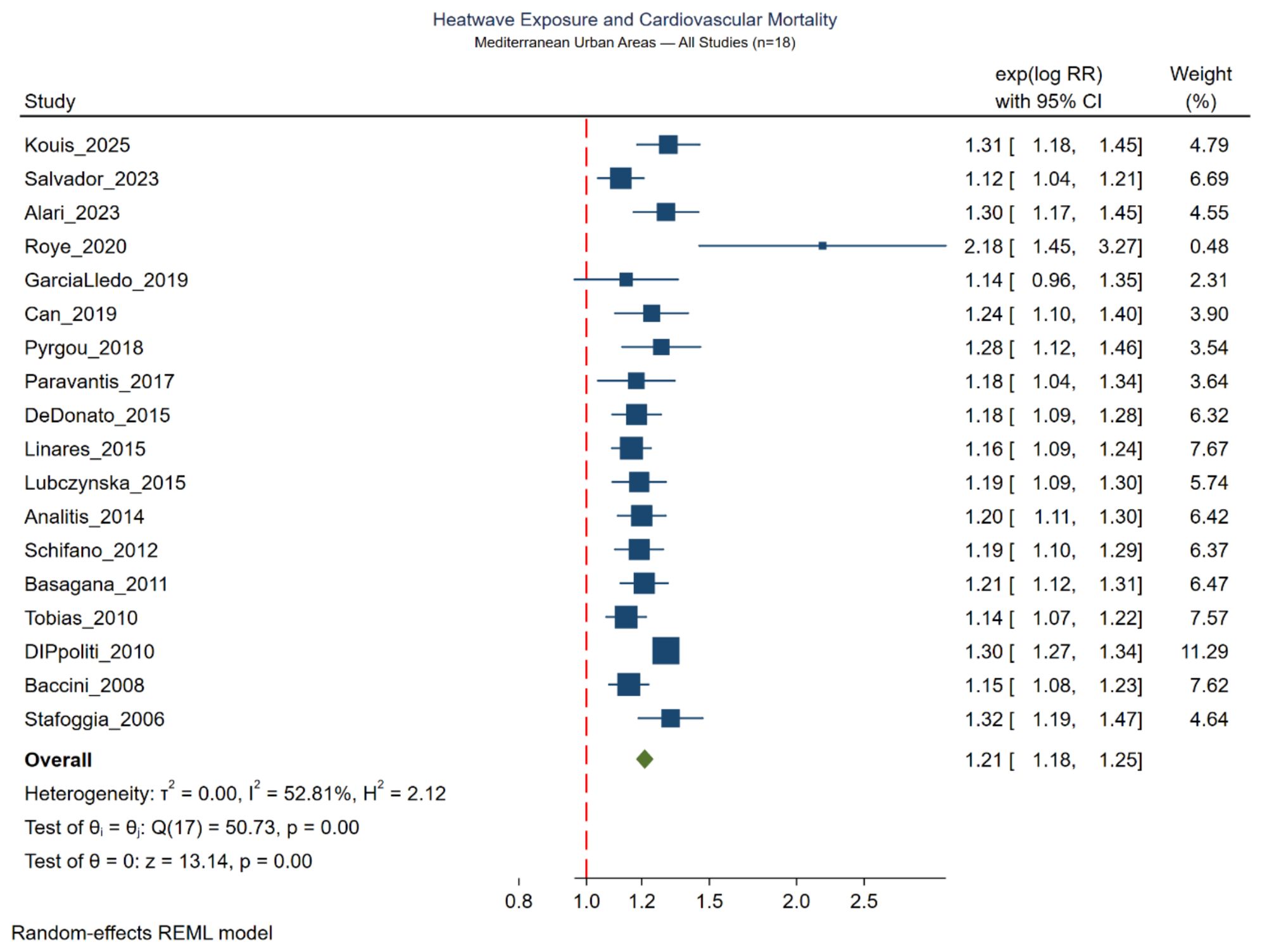
Figure 2.
Overall pooled association between heatwave exposure and cardiovascular mortality.
Figure 3.
Forest plot of the subgroup analysis stratified by geographic region.
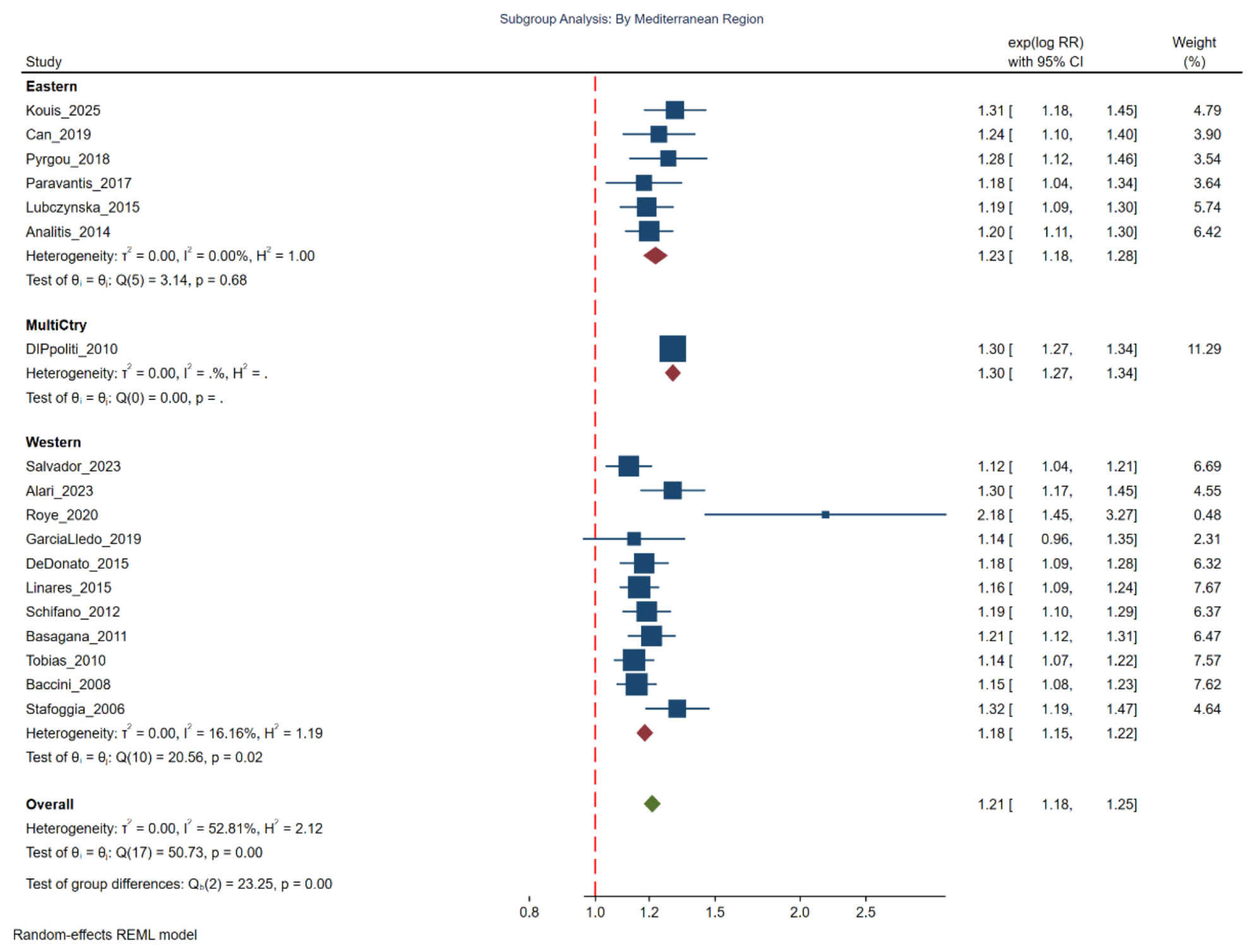
Figure 4.
Forest plot of the subgroup analysis stratified by individual country.
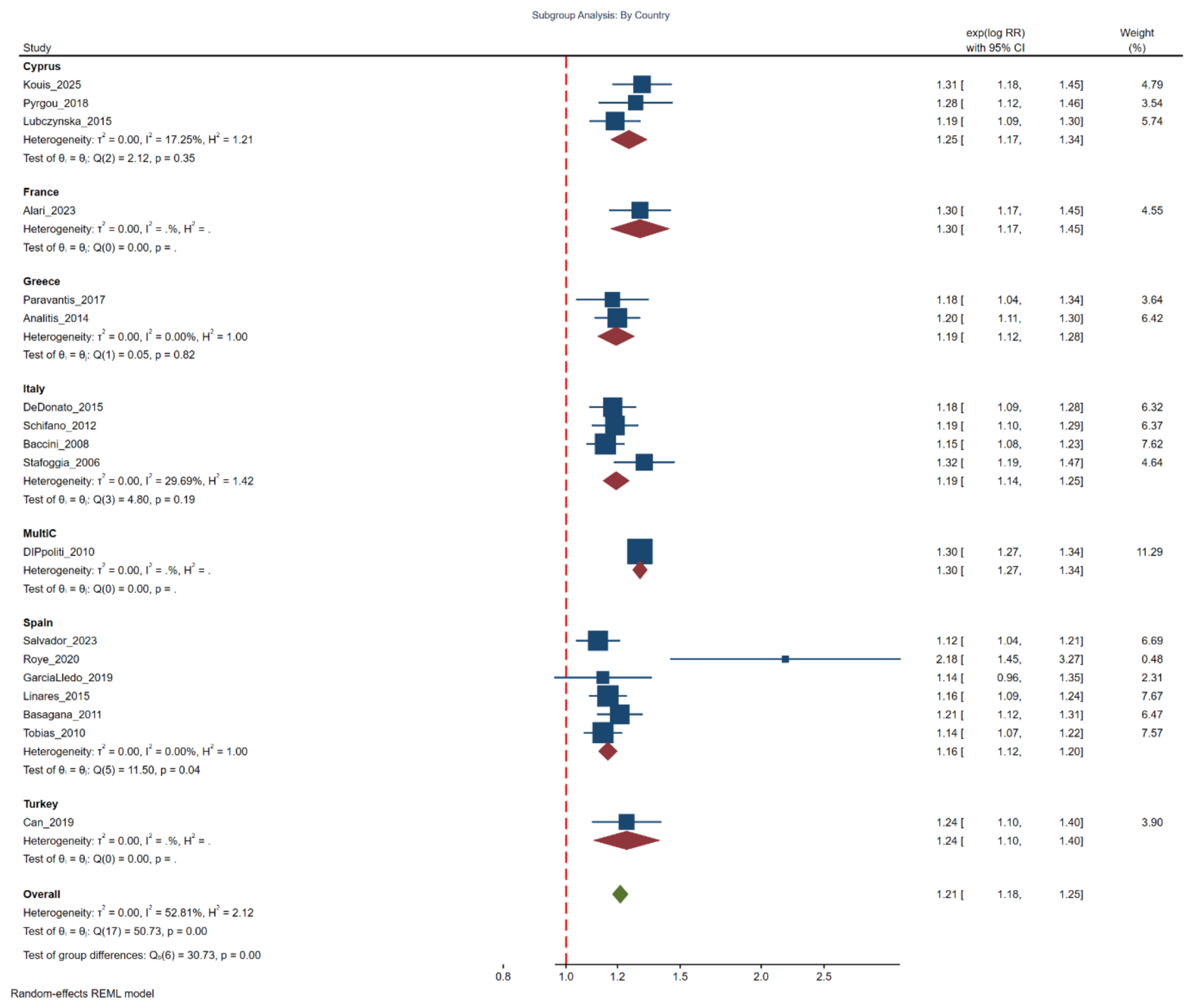
Figure 5.
Bubble plot of the meta-regression of publication year on the association between heatwave exposure and cardiovascular mortality. Each bubble represents a study, with bubble size proportional to study precision (inverse variance). The solid line represents the meta-regression line, and the dashed lines represent the 95% confidence interval. The horizontal dashed line represents the null effect.
Figure 5.
Bubble plot of the meta-regression of publication year on the association between heatwave exposure and cardiovascular mortality. Each bubble represents a study, with bubble size proportional to study precision (inverse variance). The solid line represents the meta-regression line, and the dashed lines represent the 95% confidence interval. The horizontal dashed line represents the null effect.
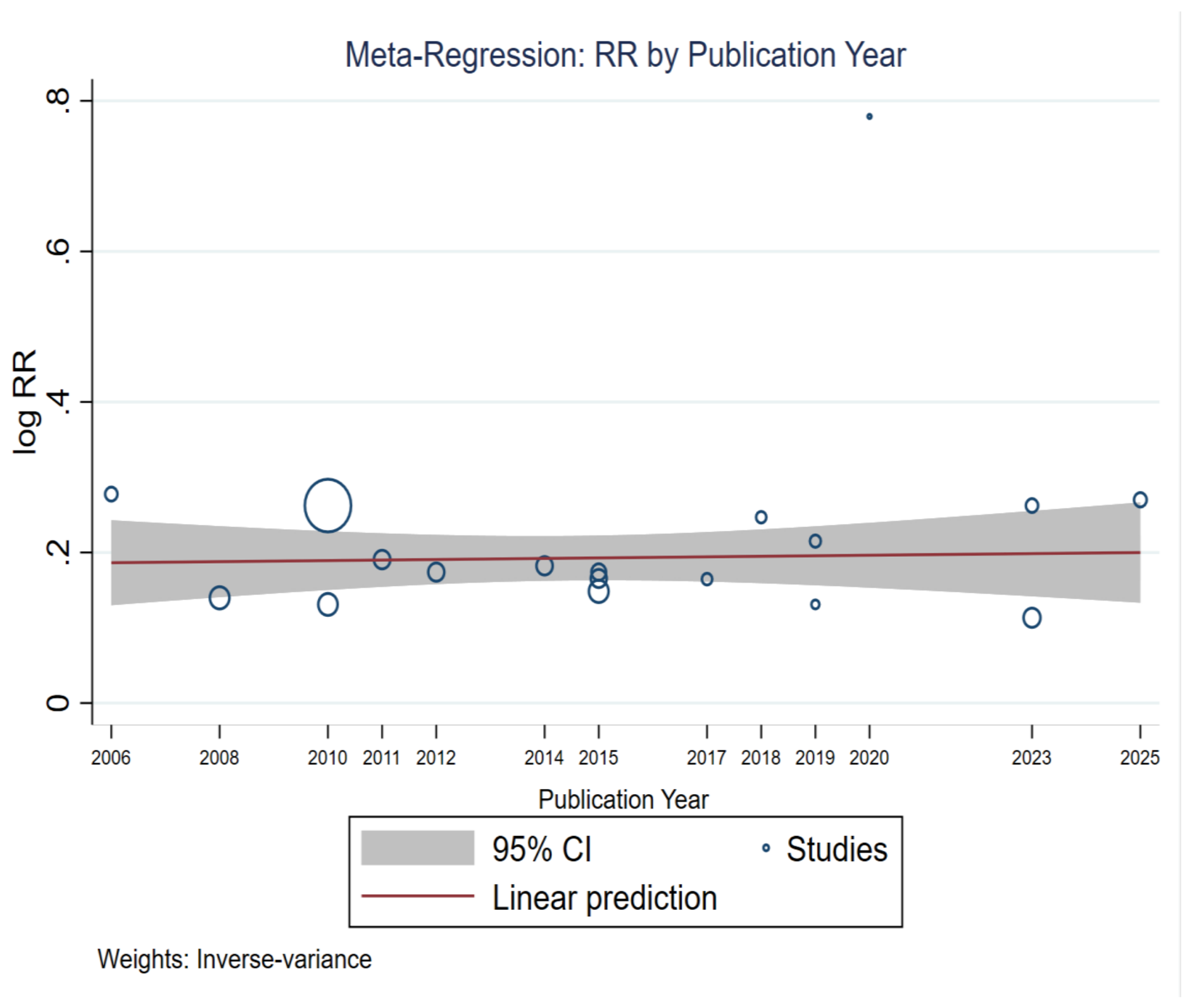
Figure 6.
Leave-one-out sensitivity analysis. The forest plot shows pooled relative risks (RR) after sequentially excluding each study from the meta-analysis.
Figure 6.
Leave-one-out sensitivity analysis. The forest plot shows pooled relative risks (RR) after sequentially excluding each study from the meta-analysis.
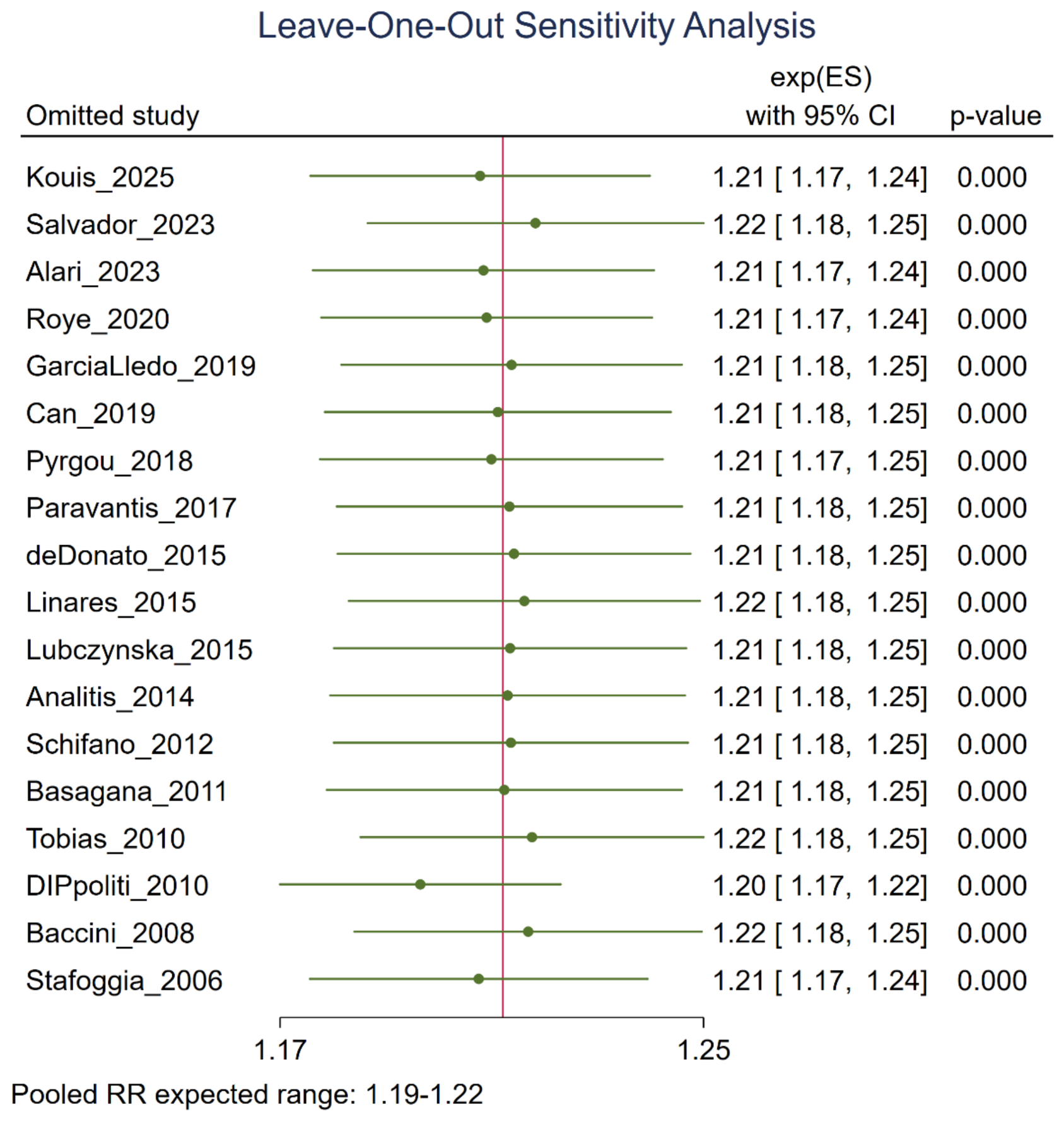
Figure 7.
Funnel plot of the standard error against the log relative risk for each of the 18 included studies.
Figure 7.
Funnel plot of the standard error against the log relative risk for each of the 18 included studies.
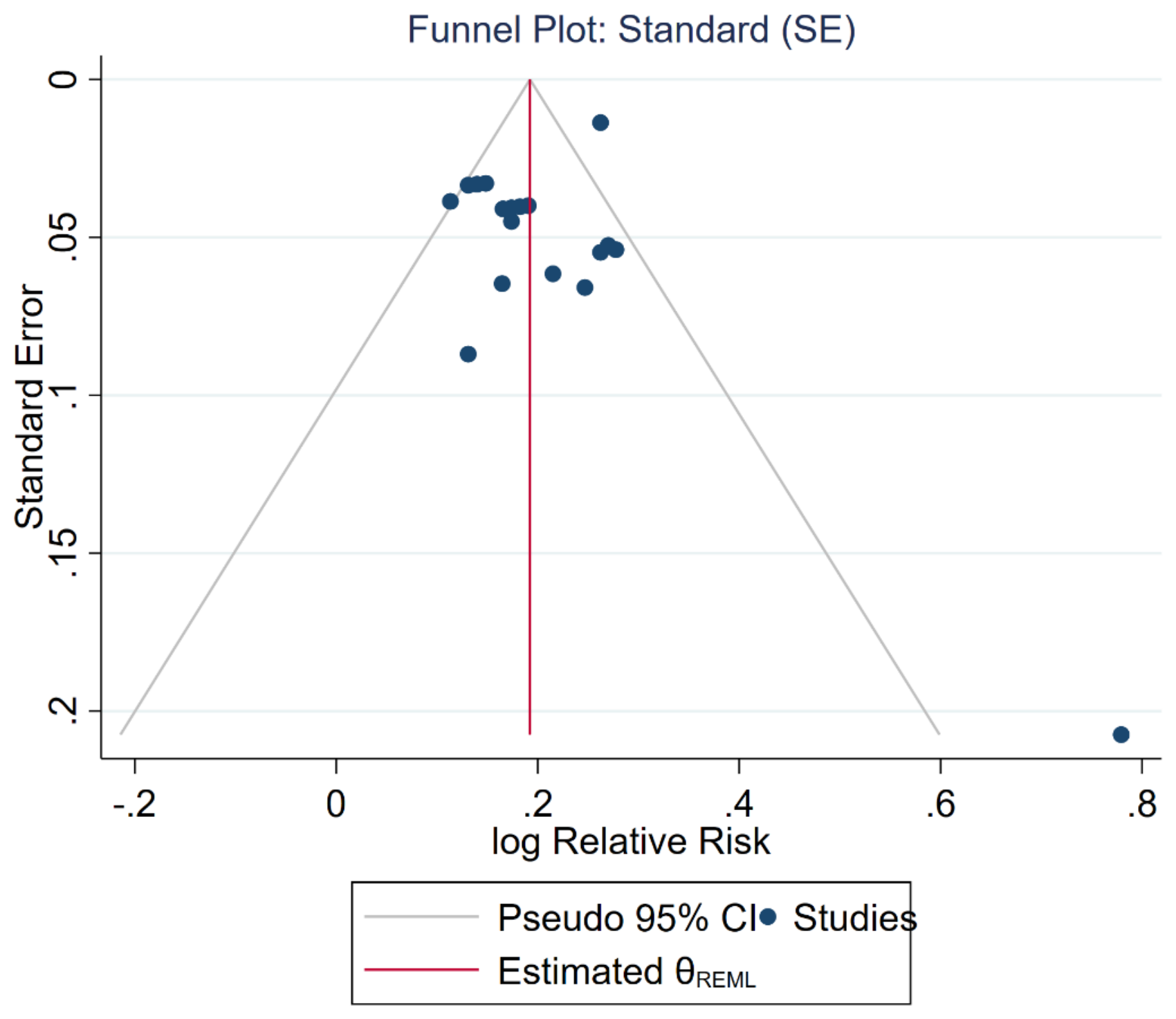
Figure 8.
Risk of bias assessment using the ROBINS-I tool. (A) Weighted summary bar plot showing the proportion of studies with low, moderate, serious, and critical risk of bias across the seven ROBINS-I domains: confounding, selection of participants, classification of exposures, deviations from intended exposures, missing data, measurement of outcomes, and selection of reported results. (B) Traffic light plot showing the risk of bias assessment for each individual study across the seven domains. Each row represents a study, and each column represents a domain, with colors indicating the risk of bias level (green = low risk, yellow = moderate risk, red = serious risk, and dark red = critical risk).
Figure 8.
Risk of bias assessment using the ROBINS-I tool. (A) Weighted summary bar plot showing the proportion of studies with low, moderate, serious, and critical risk of bias across the seven ROBINS-I domains: confounding, selection of participants, classification of exposures, deviations from intended exposures, missing data, measurement of outcomes, and selection of reported results. (B) Traffic light plot showing the risk of bias assessment for each individual study across the seven domains. Each row represents a study, and each column represents a domain, with colors indicating the risk of bias level (green = low risk, yellow = moderate risk, red = serious risk, and dark red = critical risk).
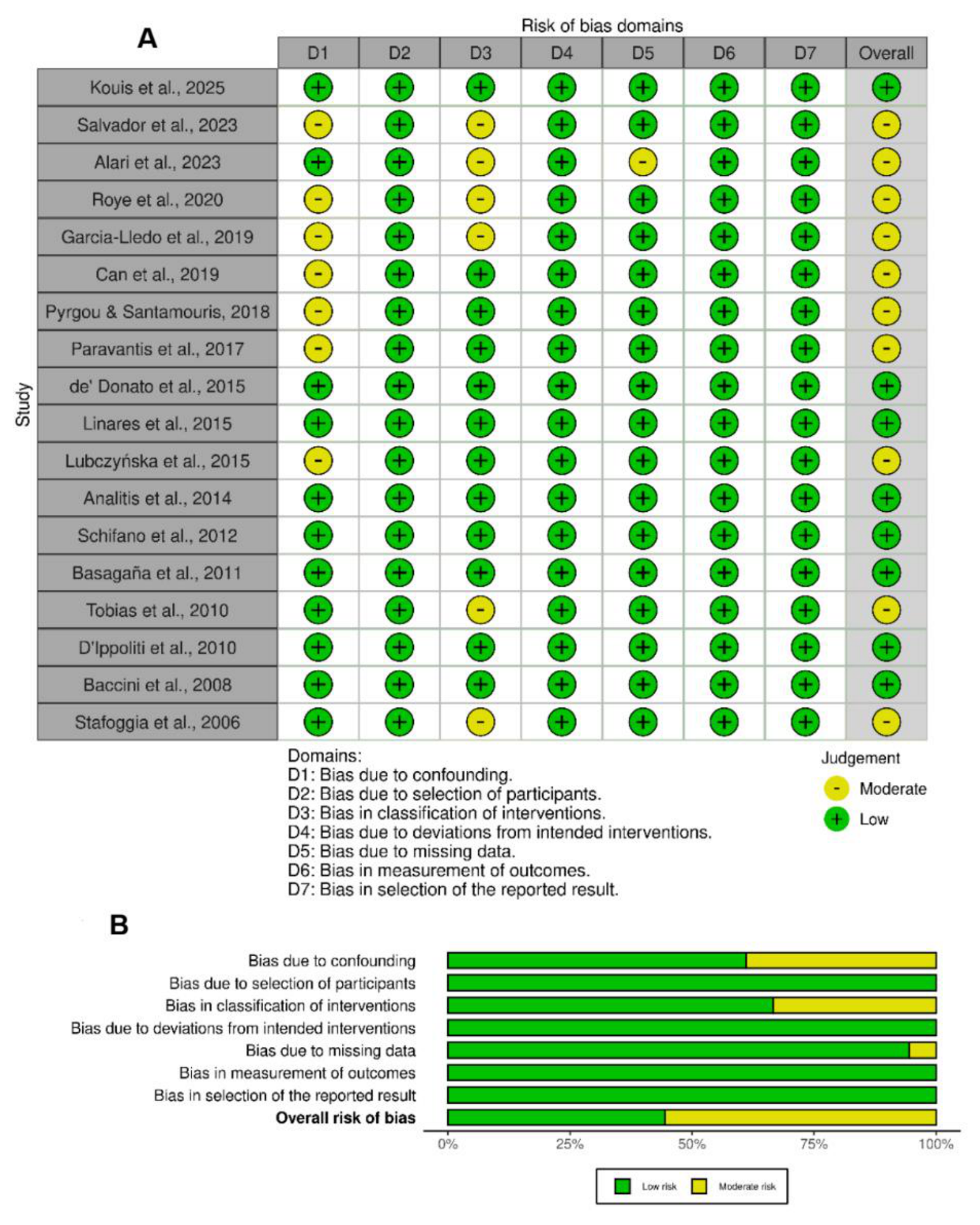

Table 1.
Characteristics of the included studies (n= 18 studies, 25 city-specific estimates).
| No. | Author, Year | Location (City, Country) | Study Period | Design | Age Group | Heatwave Definition (Metric) | RR (95% CI) | Air Pollution Adj. |
|---|---|---|---|---|---|---|---|---|
| 1 | Kouis et al., 2025 [6] | Nicosia, Cyprus | 2004–2022 | Time-series | All ages | >95th percentile (Tmax) | 1.31 (1.18–1.45) | Yes (PM₁₀, O₃) |
| 2 | Salvador et al., 2023 [24] | Madrid, Spain | 2015–2018 | Case-crossover | All ages | ≥34°C (Tmax) | 1.12 (1.04–1.21) | No |
| 3 | Alari et al., 2023 [25] | (Bordeaux, Le Havre, Nantes, Rennes, Rouen, Clermont-Ferrand, Dijon, Grenoble, Lyon, Nancy, Saint-Étienne, Strasbourg, Douai-Lens, Lille, Paris, Toulouse, Avignon, Marseille, Montpellier, Nice, and Toulon), France | 2000–2015 | Time-series | All ages | ≥3 consecutive days with Tmin and Tmax exceeding departmental climatological thresholds | 1.30 (1.17–1.45) | No |
| 4 | Roye et al., 2020 [26] | (Barcelona, Bilbao, Madrid, Seville) Spain | 1990–2014 | Time-series | All ages | 3-day avg >95th percentile | 2.18 (1.45–3.27) | No |
| 5 | Garcia-Lledo et al., 2019 [27] | Madrid, Spain | 2013–2017 | Time-series | All ages | HWAP: >38.5°C OR ≥3 consecutive days >36.5°C | 1.14 (0.96–1.35) | No |
| 6 | Can et al., 2019 [28] | Istanbul, Turkey | 2013–2017 | Time-series | All ages | ≥3 consecutive days Tmean >95th percentile | 1.24 (1.10–1.40) | No |
| 7 | Pyrgou & Santamouris, 2018 [29] | Nicosia, Cyprus | 2007–2014 | Time-series | All ages | ≥4 consecutive days with mean daily T >90th percentile (31.1°C) | 1.28 (1.12–1.45) | No |
| 8 | Paravantis et al., 2017 [30] | Athens, Greece | 2002–2012 | Time-series | 65+ | ≥3 consecutive days with Tmax ≥36.5°C | 1.179 (1.04–1.34) | No |
| 9 | de' Donato et al., 2015 [31] | Turin, Italy | 1992–2012 | Time-series | 65+ | >95th percentile (AT) | 1.18 (1.09–1.28) | Yes (PM₁₀) |
| 10 | Linares et al., 2015 [32] | Madrid, Spain | 1975–2008 | Time-series | All ages | City-specific (Tmax) | 1.16 (1.09–1.24) | Yes (PM₁₀, O₃, NO₂) |
| 11 | Lubczyńska et al., 2015 [33] | Cyprus (5 urban areas) | 2004–2010 | Case-crossover + DLNM | All ages | >90th percentile (Tmax) | 1.19 (1.09–1.30) | No |
| 12 | Analitis et al., 2014 [12] | Athens, Greece | 2001–2010 | Time-series | All ages | >95th percentile (Tmax) | 1.20 (1.11–1.30) | Yes (PM₁₀, O₃) |
| 13 | Schifano et al., 2012 [34] | Milan, Italy | 1999–2010 | Time-series | 65+ | >95th percentile (AT) | 1.19 (1.10–1.29) | Yes (PM₁₀, O₃) |
| 14 | Basagaña et al., 2011 [35] | Barcelona, Spain | 1991–2006 | Case-crossover | All ages | >90th percentile (Tmax) | 1.21 (1.12–1.31) | Yes (PM₁₀, O₃, NO₂) |
| 15 | Tobias et al., 2010 [36] | Barcelona, Spain | 1991–2005 | Time-series | All ages | >30°C (Tmax) | 1.14 (1.07–1.22) | Yes (PM₁₀, NO₂) |
| 16 | D'Ippoliti et al., 2010 [14] | Greece, Spain Italy (Athens, Valencia, Barcelona, Rome, Milan) | 1990–2004 | Time-series | 65+ | City-specific (AT) | 1.30 (1.27–1.34) | Yes (PM₁₀, O₃) |
| 17 | Baccini et al., 2008 [37] | Rome, Italy | 1998–2004 | Time-series | 65+ | >95th percentile (AT) | 1.15 (1.08–1.23) | Yes (PM₁₀) |
| 18 | Stafoggia et al., 2006 [38] | Rome, Italy | 1998–2003 | Case-crossover | 65+ | >29°C (Tmax) | 1.32 (1.19–1.47) | Yes (PM₁₀) |
Table 2.
Quality Assessment of Included Studies Using the Newcastle-Ottawa Scale (NOS).
| No. | Author, Year | Selection (Max 4) | Comparability (Max 2) | Outcome (Max 3) | Total Score (Max 9) | Quality Rating |
|---|---|---|---|---|---|---|
| 1 | Kouis et al., 2025 [6] | ⭐⭐⭐⭐ | ⭐⭐ | ⭐⭐⭐ | 9 | High |
| 2 | Salvador et al., 2023 [24] | ⭐⭐⭐ | ⭐⭐ | ⭐⭐⭐ | 8 | High |
| 3 | Alari et al., 2023 [25] | ⭐⭐⭐⭐ | ⭐⭐ | ⭐⭐⭐ | 9 | High |
| 4 | Roye et al., 2020 [26] | ⭐⭐⭐ | ⭐⭐ | ⭐⭐⭐ | 8 | High |
| 5 | Garcia-Lledo et al., 2019 [27] | ⭐⭐⭐ | ⭐ | ⭐⭐⭐ | 7 | High |
| 6 | Can et al., 2019 [28] | ⭐⭐⭐ | ⭐ | ⭐⭐⭐ | 7 | High |
| 7 | Pyrgou & Santamouris, 2018 [29] | ⭐⭐⭐ | ⭐ | ⭐⭐⭐ | 7 | High |
| 8 | Paravantis et al., 2017 [30] | ⭐⭐⭐⭐ | ⭐ | ⭐⭐⭐ | 8 | High |
| 9 | de' Donato et al., 2015 [31] | ⭐⭐⭐⭐ | ⭐⭐ | ⭐⭐⭐ | 9 | High |
| 10 | Linares et al., 2015 [32] | ⭐⭐⭐⭐ | ⭐⭐ | ⭐⭐⭐ | 9 | High |
| 11 | Lubczyńska et al., 2015 [33] | ⭐⭐⭐⭐ | ⭐ | ⭐⭐⭐ | 8 | High |
| 12 | Analitis et al., 2014 [12] | ⭐⭐⭐⭐ | ⭐⭐ | ⭐⭐⭐ | 9 | High |
| 13 | Schifano et al., 2012 [34] | ⭐⭐⭐⭐ | ⭐⭐ | ⭐⭐⭐ | 9 | High |
| 14 | Basagaña et al., 2011 [35] | ⭐⭐⭐⭐ | ⭐⭐ | ⭐⭐⭐ | 9 | High |
| 15 | Tobias et al., 2010 [36] | ⭐⭐⭐ | ⭐⭐ | ⭐⭐⭐ | 8 | High |
| 16 | D'Ippoliti et al., 2010 [14] | ⭐⭐⭐⭐ | ⭐⭐ | ⭐⭐⭐ | 9 | High |
| 17 | Baccini et al., 2008 [37] | ⭐⭐⭐⭐ | ⭐⭐ | ⭐⭐⭐ | 9 | High |
| 18 | Stafoggia et al., 2006 [38] | ⭐⭐⭐ | ⭐⭐ | ⭐⭐⭐ | 8 | High |
Disclaimer/Publisher’s Note: The statements, opinions and data contained in all publications are solely those of the individual author(s) and contributor(s) and not of MDPI and/or the editor(s). MDPI and/or the editor(s) disclaim responsibility for any injury to people or property resulting from any ideas, methods, instructions or products referred to in the content. |
© 2026 by the authors. Licensee MDPI, Basel, Switzerland. This article is an open access article distributed under the terms and conditions of the Creative Commons Attribution (CC BY) license (http://creativecommons.org/licenses/by/4.0/).
Copyright: This open access article is published under a Creative Commons CC BY 4.0 license, which permit the free download, distribution, and reuse, provided that the author and preprint are cited in any reuse.


