

Submitted:
29 June 2026
Posted:
01 July 2026
You are already at the latest version
Abstract
Background/Objectives: Epilepsy is a chronic neurological disorder affecting more than 50 million people worldwide. All antiseizure medications may cause adverse drug reac-tions (ADRs), including neurological, cognitive, mood-related, and systemic manifesta-tions. In Venezuela, epilepsy represents a public health challenge due to the lack of epi-demiological and pharmacogenetic data. This study evaluated the association between the CYP2C9*2 and CYP2C9*3 variants and the incidence of adverse drug reactions in patients receiving antiseizure therapy in the Venezuelan Andean region. Methods: An observa-tional, descriptive, and cross-sectional study in 72 patients, was conducted. Genomic DNA was extracted from venous blood samples, and genotypes were determined by re-al-time polymerase chain reaction (PCR) using TaqMan® probes for allelic discrimination. Results: The observed allele frequencies were 0.15 for CYP2C9*2 and 0.06 for CYP2C9*3. Patients with intermediate and poor metabolizer phenotypes exhibited a significantly higher risk of developing ADRs compared with normal metabolizers (OR = 16.33; 95% CI: 4.30–62.01; p < 0.001). Likewise, polytherapy markedly increased the risk of ADRs com-pared with monotherapy (OR = 25.71; 95% CI: 2.60–254.03; p = 0.005). Conclusion: The CYP2C9*2 and CYP2C9*3 variants may influence the safety of antisei-zure therapy in patients from the Venezuelan Andes by determining intermediate and poor metabolizer phenotypes and thereby affecting the pharmacokinetics of these medica-tions, as previously reported in international studies.
Keywords:
CYP2C9
; antiseizure medication
; adverse drug reactions
; pharmacogenetics
; Venezuelan patients
Introduction
1.1. Background
Epilepsy is a neurological disorder characterized by recurrent and unprovoked seizures. Its etiology may be genetic (inherited or arising de novo from a mutation) or non-genetic, resulting from acquired lesions, structural causes such as brain tumors, or causes of unknown origin [1,2]. It is estimated that more than 50 million people worldwide are affected by this condition, and approximately 80% reside in emerging economies [1,3]. However, in Venezuela, epidemiological data on epilepsy remain unavailable, thereby exacerbating a significant public health concern [4].
To control seizures, first-generation antiseizure medications (ASMs), including carbamazepine (CBZ), phenytoin (PHT), phenobarbital (PHB), and valproic acid (VPA), continue to be widely used, as well as second-generation agents such as lamotrigine (LTG), levetiracetam (LEV), and oxcarbazepine (OXC) [5]. These drugs possess a narrow therapeutic index, meaning that small variations in dosage may result in plasma concentrations below the minimum effective concentration, contributing to drug resistance and therapeutic failure, or above the minimum toxic concentration, leading to adverse drug reactions (ADRs) [6,7].
1.2. Genetic and Non-Genetic Factors Associated with Adverse Drug Reactions to Antiseizure Medications
In addition to non-individualized dosing, several non-genetic factors influence ASM metabolism and plasma concentration variability, including poor treatment adherence, impaired hepatic and/or renal function, age, body weight, and seizure type [8,9]. Among genetic factors, polymorphisms in genes encoding enzymes involved in ASM metabolism have been investigated, including CYP2C9, CYP2C19, CYP3A4, UGT1A4, UGT2B7, and UGT2B15 [8], as well as the C3435T variant of the ABCB1 gene, which encodes an efflux transporter protein [10].
1.3. Biotransformation, Pharmacogenomics and Precision Medicine
Precision or personalized medicine aims to individualize drug dosing from the initiation of pharmacotherapy by considering ethnicity, genetic admixture, sex, lifestyle, and the patient’s pharmacogenetic profile, thereby ensuring plasma drug concentrations remain within the therapeutic range [11]. In this context, the CYP2C9 gene warrants particular attention because it encodes one of the most important hepatic drug-metabolizing enzymes. CYP2C9 is responsible for the metabolism of approximately 20% of clinically prescribed medications and is especially relevant because it metabolizes drugs with a narrow therapeutic index, where even modest reductions in enzymatic activity may result in toxicity [12]. The CYP2C9 enzyme is involved in the metabolism of several first-generation ASMs, including PHT, PHB, and VPA [3].
The most clinically relevant CYP2C9 variants are CYP2C9*2 (rs1799853) and CYP2C9*3 (rs1057910), which encode enzymes with reduced metabolic activity and have been associated with altered pharmacokinetics and increased toxicity of several drugs, including antiseizure medications [13,14,15,16,17,18,19,20]. Figure 1 illustrates a schematic representation of chromosome 10, the structure of the CYP2C9 gene, and the two allelic variants investigated in the present study.
Schematic representation of the CYP2C9 gene on chromosome 10q24.1 showing the location of the CYP2C9*2 (c.430C>T; p. Arg144Cys) and CYP2C9*3 (c.1075A>C; p. Ile359Leu) variants in exons 3 and 7, respectively. Both variants encode enzymes with reduced metabolic activity and are associated with intermediate or poor metabolizer phenotypes depending on the allelic combination.
Several antiseizure medications are metabolized by cytochrome P450 enzymes, including CYP2C9. Carbamazepine undergoes biotransformation through CYP3A4, CYP3A5, CYP2C9, CYP2B6, and CYP3A7, generating metabolites such as carbamazepine-10,11-epoxide and carbamazepine catechol [21,22,23,24,25]. Valproic acid is metabolized by CYP2C9, CYP2C19, CYP2B6, and CYP2A6 into hydroxy- and ene-valproate metabolites [25,26]. Likewise, phenytoin is primarily metabolized by CYP2C9 and CYP2C19 to phenytoin-3′,4′-epoxide and its major metabolite, 5-(p-hydroxyphenyl)-5-phenylhydantoin (p-HPPH) [14,27]. Phenobarbital is also partially metabolized by CYP2C9, together with CYP2C19 and CYP2E1, to p-hydroxyphenobarbital [28].
1.4. Importance of Studying the CYP2C9 Gene in Venezuela
CYP2C9 was selected because of its established role in the metabolism of several commonly used antiseizure medications and the availability of clinically actionable pharmacogenetic guidelines [29]. Besides, CYP2C9*2 and CYP2C9*3 alleles were selected because they represent the allelic variants with the greatest clinical impact on the metabolism of antiseizure drugs such as phenytoin and valproic acid, both of which are widely used in Venezuela. These variants encode enzymes with reduced activity, leading to increased plasma drug concentrations and a higher risk of toxicity under standard dosing regimens [30,31].
Despite the clinical relevance of CYP2C9 in the metabolism of several antiseizure medications, pharmacogenetic studies in Venezuelan patients with epilepsy remain scarce. Consequently, the prevalence of clinically actionable CYP2C9 phenotypes and their potential association with adverse drug reactions are still largely unknown. Given this evidence gap, focusing on CYP2C9 variants with established clinical relevance represents a pragmatic approach to generate locally applicable pharmacogenetic evidence and support future implementation strategies in the region [32].
A review of the PubMed-NCBI database revealed that studies evaluating CYP2C9 allelic variants in Venezuelan patients with epilepsy remain scarce despite their clinical relevance. Consequently, this research is justified for three main reasons. First, to determine the frequencies of CYP2C9 alleles and genotypes among patients with epilepsy from the Venezuelan Andean region (Mérida State). Second, to evaluate whether the CYP2C9*2 and CYP2C9*3 variants are associated with adverse reactions to antiseizure medications. Third, to generate scientific evidence regarding CYP2C9 allelic variants and fourth, generate preliminary evidence regarding the clinical relevance of CYP2C9 variation in Venezuelan patients with epilepsy. The early identification of these polymorphisms may help predict susceptibility to adverse drug reactions [9].
1.5. Objective and Hypothesis
The objective of this study was to characterize CYP2C9*2 and CYP2C9*3 allele and genotype frequencies, infer CYP2C9 metabolizer phenotypes, and evaluate their association with adverse drug reactions in patients receiving antiseizure medications in the Venezuelan Andean region.
We hypothesized that carriers of reduced-function CYP2C*9 alleles (*2 and *3), corresponding to intermediate and poor metabolizer phenotypes, would exhibit a higher frequency of antiseizure medication-related adverse drug reactions than normal metabolizers.
2. Results
2.1. Demographic, Clinical, and Medication Data
Demographic and clinical characteristics of the study population are summarized in Table 1. Among the 72 patients with epilepsy who met the inclusion criteria, no significant differences were observed between females and males with respect to age or body weight. Monotherapy was the most frequently prescribed treatment regimen in both sexes (n = 65). Carbamazepine (CBZ) and valproic acid (VPA) were the most commonly prescribed antiseizure medications, with comparable dosages between female and male patients.
Polytherapy was prescribed to a relatively small proportion of patients (n = 7), with a similar distribution across sexes. Regarding seizure type and epilepsy control status, no statistically significant sex-related differences were identified. Likewise, no association was observed between sex and pharmacotherapy regimen (Fisher’s exact test, p = 1.000).
This homogeneity in treatment distribution according to sex reduces the likelihood of confounding when evaluating the association between CYP2C9 metabolizer phenotype and the occurrence of adverse drug reactions (ADRs).
2.2. CYP2C9 Allele and Genotype Frequencies
Genotype and allele frequencies were calculated for the two selected CYP2C9 single-nucleotide polymorphisms (SNPs). The observed allele frequencies for CYP2C9*2 and CYP2C9*3 were 0.15 and 0.06, respectively.
Regarding genotype frequencies, CYP2C9*1/*2, CYP2C9*1/*3, and CYP2C9*2/*2 were observed in 17%, 11%, and 7% of patients, respectively. No individuals carrying the CYP2C9*3/*3 genotype were identified (Table 2).
The genotypic frequencies of the *3 variant were found in Hardy-Weinberg equilibrium (EHW; χ² = 0.249, df = 1, p > 0.05). In contrast, variant *2 showed a significant deviation from the proportions expected by the EHW (χ² = 9.134, df = 1, p < 0.05).
The distribution of predicted CYP2C9 metabolizer phenotypes is shown in Table 3. Intermediate metabolizers (IMs) were more prevalent (26.38%) than poor metabolizers (PMs) (4.17%). Phenotype assignment was performed according to CYP2C9 diplotypes and corresponding activity scores, following established pharmacogenetic guidelines.
2.3. Metabolizer Phenotype and Adverse Drug Reactions
Table 4 summarizes the distribution of adverse drug reactions (ADRs) to antiseizure medications according to CYP2C9 metabolizer phenotype, ASM used as monotherapy, and treatment regimen.
A significant association was observed between CYP2C9 metabolizer phenotype and the occurrence of ADRs, with a higher frequency of adverse reactions among patients classified as intermediate or poor metabolizers (IMs/PMs) compared with normal metabolizers (NMs) (χ² = 16.52, p < 0.001).
No statistically significant association was found between the type of antiseizure medication administered as monotherapy and the incidence of ADRs (χ² test, p = 0.741).
Table 5 presents the distribution of ADRs associated with ASMs among normal metabolizers receiving polytherapy. The results indicate that polytherapy was associated with a higher frequency of ADRs compared with monotherapy (Fisher’s exact test, p = 0.043).
An exploratory analysis of carbamazepine-based treatment regimens, including CBZ + PHB + LTG and CBZ + LEV (n = 2), revealed no statistically significant differences between the therapeutic combinations evaluated (Fisher’s exact test, p = 1.000).
Owing to the limited sample size, no definitive conclusions could be drawn regarding the potential modulatory effect of these treatment regimens on the occurrence of ADRs.
Multivariable logistic regression analysis identified CYP2C9 intermediate and poor metabolizer phenotypes (IMs/PMs) as significant predictors of adverse drug reactions (ADRs). Patients carrying these phenotypes exhibited a substantially higher risk of developing at least one ADR compared with normal metabolizers (NMs) (OR = 16.33; 95% CI: 4.30–62.01; p < 0.001), after adjustment for potential confounding variables included in the model.
Similarly, polytherapy was significantly associated with an increased risk of ADRs compared with monotherapy (OR = 25.71; 95% CI: 2.60–254.03; p = 0.005). In contrast, epilepsy type was not significantly associated with ADR occurrence after multivariable adjustment (Table 6).
3. Discussion
3.1. Analysis and Interpretation of the Results
The distribution of CYP2C9 allele frequencies and genotype profiles observed in this study is consistent with the genetic landscape previously described in western Venezuela. The frequency of the CYP2C9*1/*2 genotype was comparable to that reported in Lara State [33], suggesting regional stability of this variant. However, the detection of the CYP2C9*2/*2 genotype and the slight variation in CYP2C9*1/*3 frequency indicate the presence of local genetic heterogeneity, potentially influenced by the admixed ancestry of the study population. In the study conducted by Flores-Gutiérrez et al. (2017) the frequencies of these three genotypes differed substantially between San Antonio (28.5% CYP2C9*1/*2, 0% CYP2C9*1/*3, and 3% CYP2C9*2/*2) and Macanilla de Apure (4.3% CYP2C9*1/*2, 4.3% CYP2C9*1/*3, and 0% CYP2C9*2/*2) [33].
Compared with other Latin American epilepsy populations, lower frequencies of CYP2C9*1/*2 (5.62%) and CYP2C9*2/*3 (1.12%) have been reported in Peruvian patients. In contrast, a remarkable genetic similarity was observed between Peruvian patients and individuals from the Venezuelan Andes with respect to CYP2C9*1/*3, with only a 1.32% difference between both groups [34]. Comparison with studies conducted in general Latin American populations also revealed substantial regional variation in genotype frequencies. The frequency of CYP2C9*1/*2 observed in the present study was higher than that previously reported in the Andean population of Mérida and fell within the range described for populations from Puerto Rico, Colombia (predominantly European ancestry), Mexico, the Dominican Republic, and Brazil (10.4 - 13.2%) [35]. In contrast, lower frequencies have been reported in Peru, ranging from 4.7% [35] to 5.96% [20]. For CYP2C9*1/*3, higher frequencies have been documented in Colombian, Brazilian, and Puerto Rican populations than in Mexican and Dominican populations, whereas frequencies reported in Peru vary considerably, ranging from 2.4% [35] to 9.17% [20]. The homozygous CYP2C9*2/*2 genotype has only been reported in Puerto Rican (1.9%), Brazilian (1.7%), and Dominican (1.6%) populations and was absent in most other Latin American cohorts [35]. Similarly, CYP2C9*2/*3 heterozygotes, identified in Colombian (2.1%), Brazilian (1.4%), Puerto Rican (1.0%), and Dominican (1.0%) populations, were not detected in most studies from Peru and Mexico [35], except for one Peruvian study reporting a frequency of 0.46% [20].
The metabolizer phenotype classification in the present study was based on the Activity Score (AS) system according to the pharmacogenomic guidelines of the Clinical Pharmacogenetics Implementation Consortium (CPIC) [36]. This approach identified prevalences of 26.38% for intermediate metabolizers (IMs) and 4.17% for poor metabolizers (PMs). These findings are clinically relevant because reduced CYP2C9 enzymatic activity may increase plasma drug concentrations and contribute to the development of adverse drug reactions (ADRs) associated with antiseizure medications (ASMs). Compared with other Venezuelan populations, the frequency of IMs was similar to that reported in San Antonio (28.5%) and Lara (24.4%), but substantially higher than that observed in Macanilla (8.6%). Notably, the prevalence of PMs in the Mérida cohort exceeded that reported in San Antonio (2.8%) and was absent in the remaining Venezuelan populations studied previously [33]. A similar pattern was observed when comparing our findings with those reported in Peruvian admixed populations, where the frequency of IMs (CYP2C9*1/*2 and CYP2C9*1/*3) was 8.2% lower than that observed in our cohort, whereas the prevalence of PMs was 3.05% lower [34].
Regarding the association between genotype-derived phenotypes and drug safety, CYP2C9 IM and PM phenotypes were associated with a significantly increased risk of ASM-induced ADRs (OR = 16.33; 95% CI: 4.30 - 62.01; p < 0.001). Likewise, polytherapy significantly increased the risk of toxicity compared with monotherapy (OR = 25.71; p = 0.005). However, the wide confidence interval (95% CI: 2.60 - 254.03) indicates limited statistical precision, likely attributable to the relatively small sample size and the low frequency of specific ADRs, including weight gain and neurological manifestations such as hand tremor, somnolence, vertigo, and lingual paresthesia.
The low incidence of ADRs may reflect the enzyme-inducing properties of carbamazepine. CBZ is known to induce several drug-metabolizing enzymes, including UGT1A4, CYP2C9, CYP2C19, CYP3A4, and microsomal epoxide hydrolase [37,38]. Consequently, plasma clearance of lamotrigine through the UGT1A4 pathway and levetiracetam through hydrolytic pathways may be enhanced [37,39]. This process may reduce plasma drug concentrations and potentially compromise therapeutic efficacy. Nevertheless, given the limited number of patients receiving polytherapy in the present study, the frequency and severity of ADRs should be interpreted cautiously. Although preliminary, these findings underscore the clinical importance of implementing active pharmacovigilance strategies in this subgroup and highlight the need to validate these associations in larger population-based cohorts.
Consistent with previous studies, the occurrence of ADRs depends largely on the specific ASM and dosing regimen employed [40]. Commonly reported adverse effects include sedation, asthenia, dizziness, ataxia, dysarthria, diplopia, tremor, cognitive impairment, mood disturbances, and sexual dysfunction [41]. Other studies have described gastrointestinal symptoms such as nausea, vomiting, and abdominal pain [42]. In addition, levetiracetam, topiramate, zonisamide, vigabatrin, and perampanel have been associated with anxiety, depression, irritability, mood changes, hyperactivity, attention difficulties, and, in rare cases, psychosis [43]. Valproic acid has been linked to weight gain, hand tremor [7,44], hepatic failure [45], and hyperammonemic encephalopathy in individuals with ornithine transcarbamylase deficiency [46]. Other ASMs, including carbamazepine, gabapentin, pregabalin, perampanel, and vigabatrin, have also been associated with weight gain [44], thereby increasing the risk of obesity and cardiovascular disease [47]. Conversely, lamotrigine has been associated with ventricular arrhythmias and cardiac arrest in individuals with underlying cardiac disorders [48,49]. In contrast, topiramate, zonisamide, and felbamate are generally associated with weight loss [44]. Phenytoin has been linked to hirsutism and gingival hyperplasia [44], whereas phenobarbital has been associated with somnolence, sedation, shoulder–hand syndrome, and Dupuytren’s contracture [44]. Furthermore, carbamazepine and oxcarbazepine may paradoxically exacerbate seizures, particularly in patients with juvenile myoclonic epilepsy or loss-of-function mutations affecting sodium channels [50].
3.2. Clinical Importance
Although this study is among the first to characterize CYP2C9 allelic variants and their association with adverse drug reactions in patients with epilepsy from the Andean region of Mérida, Venezuela, its observational design and the substantial genetic heterogeneity of the population require cautious interpretation of the findings. Nevertheless, the results highlight the need to implement clinical pharmacokinetic and personalized medicine strategies in the region to improve the safety of antiseizure pharmacotherapy.
3.3. Limitations and Contributions
The main limitations of this study include the evaluation of only two CYP2C9 variants (*2 and *3), without considering polymorphisms in CYP2C19, CYP3A4, or CYP3A5 genes. Additionally, variants in ABCB1 and ABCC2, encoding P-glycoprotein (P-gp) and multidrug resistance-associated protein 2 (MRP2), respectively, were not investigated despite their reported association with ASM-related adverse reactions. Furthermore, the absence of therapeutic drug monitoring precluded assessment of the relationship between pharmacogenetic findings and trough (Cmin) or steady-state drug concentrations. Another limitation is the relatively small sample size (n = 72), which warrants cautious interpretation of the findings in clinical practice. ADRs were based on clinical documentation and were not graded according to standardized toxicity scales, which may have introduced heterogeneity in outcome classification. These limitations represent important areas for future research and will be addressed in subsequent studies by our group.
4. Materials and Methods
4.1. Study Design and Setting
A cross-sectional observational study was conducted between January and December 2025 at the Neurology Teaching and Clinical Care Unit of the Autonomous Institute of the University Hospital of the Andes, Faculty of Medicine, Mérida, Venezuela.
4.2. Study Population and Sampling
Participants were recruited using a non-probability convenience sampling strategy with consecutive enrollment. Eligible subjects were patients diagnosed with focal epilepsy, generalized epilepsy, or combined focal and generalized epilepsy according to established clinical and electroencephalographic criteria.
After application of the inclusion and exclusion criteria, the final study population consisted of 72 patients. The cohort included 44 females (61.11%; age range: 20-94 years) and 28 males (38.89%; age range: 18-88 years).
4.3. Eligibility Criteria
Patients attending the Neurology Teaching and Clinical Care Unit of the Autonomous Institute of the University Hospital of the Andes (IAHULA) were invited to participate in the study. Following their routine neurological evaluation, patients received detailed information regarding the objectives and significance of the research.
A total of 100 patients were screened, of whom 72 met the eligibility criteria and were enrolled. Inclusion criteria were as follows: (i) diagnosis of epilepsy; (ii) treatment with antiseizure medications (ASMs) for at least one year, either as monotherapy (CBZ, VPA, PHT, PHB, or OXC) or polytherapy (VPA+LTG, VPA+LEV, PHB+CBZ+LTG, CBZ+LEV, or VPA+LTG+LEV); (iii) controlled or uncontrolled epilepsy, including patients classified as poor responders to polytherapy; (iv) adherence to prescribed treatment, defined as taking medications at the scheduled times with approximately 250 mL of water; (v) commitment to avoid self-medication and to report the use of any additional medications; (vi) birth in Mérida State, Venezuela; (vii) age ≥18 years; (viii) willingness to donate a 5-mL peripheral blood sample for CYP2C9 SNP analysis; and (ix) provision of written informed consent prior to enrollment.
Patients who did not meet the eligibility criteria were excluded, primarily due to pregnancy, incomplete pharmacotherapeutic follow-up data, or documented non-adherence to treatment.
4.4. Genomic DNA Extraction
Peripheral venous blood samples were collected by venipuncture. Genomic DNA (gDNA) was extracted from the leukocyte fraction using the DNeasy Blood & Tissue® Kit (QIAGEN, Hilden, Germany) according to the manufacturer's instructions. DNA concentration and purity were assessed spectrophotometrically using a DeNovix DS-11 FX Series Spectrophotometer™ (DeNovix Inc., Wilmington, DE, USA). DNA samples were considered suitable for downstream analyses when the A260/A280 and A260/A230 absorbance ratios were ≥1.7. Purified gDNA samples were stored at −20°C until genotyping analysis.
4.5. CYP2C9 Genotyping
CYP2C9 genotypes were determined by real-time polymerase chain reaction (real-time PCR) using TaqMan® SNP Genotyping Assays (Thermo Fisher Scientific Inc., Waltham, MA, USA) for the detection of the CYP2C9*2 (rs1799853) and CYP2C9*3 (rs1057910) allelic variants.
The assay context sequences corresponding to CYP2C9*2 (Assay ID: C_25625805_10) and CYP2C9*3 (Assay ID: C_27104892_10) are presented in Table 7. Amplification was performed using a Stratagene Mx3000P™ Real-Time PCR System (Agilent Technologies, Waldbronn, Germany).
4.6. Assessment of Adverse Drug Reactions
Adverse drug reactions (ADRs) were identified during routine neurological follow-up through clinical interviews and review of medical records. The ADRs evaluated included hand tremor, weight gain, somnolence, vertigo, and tongue paresthesia, which were considered clinically relevant when documented by the treating neurologist during antiseizure medication therapy. For statistical purposes, patients were classified as presenting at least one ADR or no ADRs during treatment. ADR severity was graded according to CTCAE version 6.0.
4.7. Statistical Analysis
Associations between epilepsy type and sex, as well as sex-related differences in valproic acid pharmacotherapy, were evaluated using Fisher’s exact test. Statistical significance was defined as a two-sided p-value < 0.05.
For carbamazepine, phenytoin, and phenobarbital, dose differences according to sex and antiseizure medication type were assessed using the Kruskal–Wallis test. Continuous variables were summarized as appropriate according to their distribution, and categorical variables were expressed as frequencies and percentages.
A multivariable logistic regression model was constructed to identify factors associated with adverse drug reactions (ADRs). Independent variables were selected based on clinical relevance and expert judgment and included CYP2C9 metabolizer phenotype, pharmacotherapy regimen (monotherapy versus polytherapy), number of antiseizure medications (ASMs), epilepsy type, sex, and age.
The results of the regression analyses were reported as odds ratios (ORs) with 95% confidence intervals (95% CIs). Statistical significance was established at p < 0.05.
All statistical analyses were performed using Python software (version 3.9). Data processing and management were conducted using the pandas library, whereas multivariable logistic regression analyses were performed using the statsmodels package. Model outputs were independently reviewed to ensure consistency and validity of the results.
4.8. Ethical Considerations
This study was conducted in collaboration with the Neurology Teaching and Clinical Care Unit of the Faculty of Medicine, Autonomous Institute of the University Hospital of the Andes (IAHULA), Mérida, Venezuela. The study protocol and informed consent form were reviewed and approved by the Neurology Committee of IAHULA as a minimal-risk investigation involving blood samples obtained during routine clinical practice (Approval No. 001-SN-IAHULA-2025).
The study was conducted in accordance with the ethical principles of the Belmont Report, the Declaration of Helsinki, and its current revisions. All participants provided written informed consent before enrollment and were considered volunteer patients.
To ensure participant anonymity and data confidentiality, the following measures were implemented: (i) each participant was assigned a unique study code used for the collection of clinical and research-related data; (ii) only authorized investigators had access to clinical records, pharmacological treatment information, and pharmacogenetic results; and (iii) the informed consent document explicitly described the objectives and significance of the study, the intended use of the data for scientific publication, confidentiality safeguards, and the participants’ right to withdraw at any time without penalty.
5. Conclusions
The present study demonstrated the presence of the CYP2C9*2 and CYP2C9*3 allelic variants in patients with epilepsy from the Venezuelan Andean region. These variants were associated with intermediate and poor metabolizer phenotypes and showed a significant association with the occurrence of ADRs in patients receiving ASMs.
The findings suggest that incorporating pharmacogenetic information into clinical decision-making may assist neurologists in individualizing or adjusting ASM dosing, thereby improving therapeutic efficacy and safety. The observed association between CYP2C9 metabolizer status and ADR risk highlights the potential clinical value of CYP2C9 genotyping as a component of personalized medicine strategies for epilepsy management.
Further clinical research is needed to investigate CYP2C9 polymorphisms in larger and more diverse populations from Mérida and other Latin American regions. In addition, the integration of therapeutic drug monitoring is essential to accurately correlate metabolizer phenotypes with plasma drug concentrations and the incidence of ASM-related adverse drug reactions. These efforts may contribute to the development of evidence-based pharmacogenetic approaches aimed at optimizing the safety and effectiveness of antiseizure therapy.
Author Contributions
Conceptualization and methodology, S.B.R.-S., G.P, A.V., A.M.-O., Z.G.B., L.A.Q., J.J.P.-J., M.R.B., J.A.G., H.CH., E.J.M.-M., P.A.C.-G., D.L.-A., P.E.Y.-C., M.P.-P., R.P.-L., F.L.I.-C., A.E.M.-I., B.L.-H., R.Y.-A., L.S.-D., N.M.V. and A.T.A; software, F.L.I.-C. and J.A.E.M.-I; validation, S.B.R.-S., G.P, A.V. and A.M.-O.; formal analysis, Z.G.B., L.A.Q., J.J.P.-J., M.R.B., J.A.G. B.L.-H. R.Y.-A., and L.S.-D.; investigation, S.B.R.-S., G.P, A.V., A.M.-O., Z.G.B., L.A.Q., J.J.P.-J., M.R.B., J.A.G., H.CH., E.J.M.-M., P.A.C.-G., D.L.-A., P.E.Y.-C., M.P.-P., R.P.-L., F.L.I.-C., A.E.M.-I., B.L.-H., R.Y.-A., L.S.-D., N.M.V. and A.T.A; resources, A.T.A. L.A.Q. and N.M.V.; data curation, CH., E.J.M.-M., P.A.C.-G., D.L.-A., P.E.Y.-C., M.P.-P., and R.P.-L.; writing-original draft preparation, A.T.A., J.A.G., M.R.B., H.CH. and A.M.-O.; writing-review and editing, N.M.V. and L.A.Q.; visualization, R.P.-L., F.L.I.-C., A.E.M.-I., B.L.-H., R.Y.-A., and L.S.-D.; supervision, S.B.R.-S.; project administration, G.P, A.V. All authors have read and agreed to the published version of the manuscript.
Funding
This research received no external funding.
Institutional Review Board Statement
This study was conducted in collaboration with the Neurology Teaching and Clinical Care Unit of the Faculty of Medicine, Autonomous Institute of the University Hospital of the Andes (IAHULA), Mérida, Venezuela. The study protocol and informed consent form were reviewed and approved by the Neurology Committee of IAHULA as a minimal-risk investigation involving blood samples obtained during routine clinical practice (Approval No. 001-SN-IAHULA-2025). The study was conducted in accordance with the ethical principles of the Belmont Report, the Declaration of Helsinki, and its current revisions. All participants provided written informed consent before enrollment and were considered volunteer patients.
Informed Consent Statement
Informed consent was obtained from all subjects involved in the study. Written informed consent has been obtained from the patient(s) to publish this paper.
Data Availability Statement
The original contributions presented in this study are included in the article. Further inquiries can be directed to the corresponding author. All the research data are described in the tables of the article.
Acknowledgments
To the members of the Molecular Pharmacology Society of Peru, for their fine contributions.
Conflicts of Interest
Authors declare that they have no competing interests.
Abbreviations
| ADRs | Adverse drug reactions |
| ASMs | Antiseizure medications |
| AIC | Akaike Information Criterion |
| CPIC | Clinical Pharmacogenetics Implementation Consortium |
| gDNA | Genomic DNA |
| ILAE | International League Against Epilepsy |
| IAHULA | Autonomous Institute of the University Hospital of the Andes |
| 95% CI | 95% confidence intervals |
| OR | Odds ratio |
| IM | Intermediate metabolizers |
| NM | Normal metabolizers |
| PM | Poor metabolizers |
| CBZ | Carbamazepine |
| LEV | Levetiracetam |
| LTG | Lamotrigine |
| OXC | Oxcarbazepine |
| PHT | Phenytoin |
| PHB | Phenobarbital |
| VPA | Valproic acid |
References
- World Health Organization. Epilepsy. 2021. Available online: https://www.who.int/news-room/fact-sheets/detail/epilepsy (Accessed on 10 May 2026).
- Yazbeck, H.; Youssef, J.; Nasreddine, W.; El Kurdi, A.; Zgheib, N.; Beydoun, A. The role of candidate pharmacogenetic variants in determining valproic acid efficacy, toxicity and concentrations in patients with epilepsy. Front Pharmacol. 2024, 15, 1483723. [CrossRef]
- McGinn, R.J.; Von Stein, E.L.; Summers Stromberg, J.E.; Li, Y. Precision medicine in epilepsy. Prog Mol Biol Transl Sci. 2022, 190, 147-188. [CrossRef]
- Jerez, J.; González-Delatorre, A. Frequency of epilepsy and the main ictal phenomenologies in patients attending the neurology outpatient clinic. ¨Dr Luis Razetti¨ general hospital, Barinas-Venezuela. July 2021 - January 2023. Revista GICOS 2023, 8, 28-42. [CrossRef]
- Hakami, T. Neuropharmacology of Antiseizure Drugs. Neuropsychopharmacol Rep. 2021, 41, 336-351. [CrossRef]
- Yacubian, E.M. Uso de fármacos antiepilépticos genéricos en el tratamiento de la epilepsia: ventajas, limitaciones y regulaciones. Rev. Med. Clin. Condes 2013, 24, 1004-1009.
- Alvarado, A.T.; Muñoz, A.M.; Varela, N.; Sullón-Dextre, L.; Pineda, M.; Bolarte-Arteaga, M.; Bendezú, M.R.; García, J.A.; Chávez, H.; Surco-Laos, F.; et al. Pharmacogenetic variants of CYP2C9 and CYP2C19 associated with adverse reactions induced by antiepileptic drugs used in Peru. Pharmacia 2023, 70, 603-618. [CrossRef]
- Urzì Brancati, V.; Pinto, Vraca T.; Minutoli, L.; Pallio G. Polymorphisms Affecting the Response to Novel Antiepileptic Drugs. Int. J. Mol. Sci. 2023, 24, 2535. [CrossRef]
- Thakkar, A.N.; Bendkhale, S.R.; Taur, S.R.; Gogtay, N.J.; Thatte, U.M. Association of CYP2C9 polymorphisms with phenytoin toxicity in Indian patients. Neurol India 2012, 60, 577-580. [CrossRef]
- Chouchi, M.; Kaabachi, W.; Klaa, H.; Tizaoui, K.; Turki, I.B.; Hila, L. Relationship between ABCB1 3435TT genotype and antiepileptic drugs resistance in Epilepsy: updated systematic review and meta-analysis. BMC Neurol. 2017, 17, 32. [CrossRef]
- Tabery, J. "Precision Medicine" Is Genomic Medicine. Am J Bioeth 2024, 24, 91-93. [CrossRef]
- Miners, J.O.; Birkett, D.J. Cytochrome P4502C9: an enzyme of major importance in human drug metabolism. Br J Clin Pharmacol. 1998, 45, 525-538. [CrossRef]
- Karnes, J.H.; Rettie, A.E.; Somogyi, A.A.; Huddart, R.; Fohner, A.E.; Formea, C.M.; Ta Michael Lee, M.; Llerena, A.; Whirl-Carrillo, M.; Klein, T.E.; Phillips, E.J.; Mintzer, S.; Gaedigk, A.; Caudle, K.E.; Callaghan, J.T. Clinical Pharmacogenetics Implementation Consortium (CPIC) Guideline for CYP2C9 and HLA-B Genotypes and Phenytoin Dosing: 2020 Update. Clin Pharmacol Ther. 2021, 109, 302-309. [CrossRef]
- Balestrini, S.; Sisodiya, S.M. Pharmacogenomics in epilepsy. Neurosci Lett. 2018, 667: 27-39. [CrossRef]
- Gaedigk, A.; Ingelman-Sundberg, M.; Miller, N. A.; Leeder, J. S.; Whirl-Carrillo, M.; Klein, T.E.; PharmVar Steering Committee. The Pharmacogene Variation (PharmVar) Consortium: Incorporation of the Human Cytochrome P450 (CYP) Allele Nomenclature Database. Clin Pharmacol Ther. 2018, 103, 399-401. [CrossRef]
- CPIC. CPIC® Guideline for Phenytoin and CYP2C9 and HLA-B. 2020. Available online: https://cpicpgx.org/guidelines/guideline-for-phenytoin-and-cyp2c9-and-hla-b (accessed on 15 January 2026).
- Garg, V.K.; Supriya.; Shree, R.; Prakash, A.; Takkar, A.; Khullar, M.; Saikia, B.; Medhi, B.; Modi, M. Genetic abnormality of cytochrome-P2C9*3 allele predisposes to epilepsy and phenytoin-induced adverse drug reactions: genotyping findings of cytochrome-alleles in the North Indian population. Futur J Pharm Sci. 2022, 8, 1-8. [CrossRef]
- Chaudhry, A.S.; Urban, T.J.; Lamba, J.K.; Birnbaum, A.K.; Remmel, R.P.; Subramanian, M.; Strom, S.; You, J.H.; Kasperaviciute, D.; Catarino, C.B.; Radtke, R.A.; Sisodiya, S.M.; Goldstein, D.B.; Schuetz, E.G. CYP2C9*1B promoter polymorphisms, in linkage with CYP2C19*2, affect phenytoin autoinduction of clearance and maintenance dose. J Pharmacol Exp Ther. 2010, 332, 599-611. [CrossRef]
- Caudle, K.E.; Rettie, A.E.; Whirl-Carrillo, M.; Smith, L.H.; Mintzer, S.; Lee, M.T.; Klein, T.E.; Callaghan, J.T.; Clinical Pharmacogenetics Implementation Consortium. Clinical pharmacogenetics implementation consortium guidelines for CYP2C9 and HLA-B genotypes and phenytoin dosing. Clin Pharmacol Ther 2014, 96, 542-548. [CrossRef]
- Alvarado, Á.T.; Muñoz, A.M.; Loja, B.; Miyasato, J.M.; García, J.A.; Cerro, R.A.; Quiñones, L.A.; Varela, N.M. Study of the allelic variants CYP2C9*2 and CYP2C9*3 in samples of the Peruvian mestizo population. [Estudio de las variantes alélicas CYP2C9*2 y CYP2C9*3 en muestras de población mestiza peruana]. Biomedica. 2019, 39, 601-610. [CrossRef]
- Ambrósio, A.F.; Soares-Da-Silva, P.; Carvalho, C.M.; Carvalho, A.P. Mechanisms of action of carbamazepine and its derivatives, oxcarbazepine, BIA 2-093, and BIA 2-024. Neurochem Res. 2002, 27, 121-130. [CrossRef]
- Passia, E.; Rock, N.; Pfister, R.E.; Ing Lorenzini, K.R.; Desmeules, J.; Samer, C.F. "Late" Withdrawal Syndrome after Carbamazepine In Utero Exposure in a CYP2C9 Slow Metabolizer Newborn. Front Pharmacol. 2017; 8:217. [CrossRef]
- Skadrić I.; Stojković O. Defining screening panel of functional variants of CYP1A1, CYP2C9, CYP2C19, CYP2D6, and CYP3A4 genes in Serbian population. Int J Legal Med. 2020; 134: 433-439. [CrossRef]
- Alvarado, A.T.; Paredes, G.; García, G.; Morales, A.; Muñoz, A.M.; Saravia, M.; Losno, R.; Bendezú, M.R.; Chávez, H.; García, J.A.; Pineda, M.; Sullón-Dextre, L. Serum monitoring of carbamazepine in patients with epilepsy and clinical implications. Pharmacia 2022, 69, 401-406. [CrossRef]
- Iannaccone, T.; Sellitto, C.; Manzo, V.; Colucci, F.; Giudice, V.; Stefanelli, B.; Iuliano, A.; Corrivetti, G.; Filippelli, A. Pharmacogenetics of Carbamazepine and Valproate: Focus on Polymorphisms of Drug Metabolizing Enzymes and Transporters. Pharmaceuticals 2021, 14, 204. [CrossRef]
- Alvarado, A.T.; Cotuá, J.; Delgado, M.; Morales, A.; Muñoz, A.M.; Li, C.; Bendezú, M.R.; García, J.A.; Laos-Anchante, D.; Surco-Laos, F.; et al. Serum concentrations of valproic acid in people with epilepsy: Clinical implication. J Pharm Pharmacogn Res. 2022, 10, 1117-1125. [CrossRef]
- Alvarado, A.; García, G.; Morales, A.; Paredes, G.; Mora, M.; Muñoz, A.M.; Pariona, R.; Bendezú, M.R.; Chávez, H.; García, J.A.; Laos-Anchante, D.; Loja-Herrera, B.; Bolarte-Arteaga, M.; Pineda, M. Phenytoin concentration in people with epilepsy: a comparative study in serum and saliva. Pharmacia 2022, 69, 809–814. [CrossRef]
- Methaneethorn, J.; Leelakanok, N. Predictive ability of published population pharmacokinetic models of valproic acid in Thai manic patients. J Clin Pharm Ther. 2021, 46, 198-207. [CrossRef]
- Daškevičiūtė, A.; Zaboras, E.; Navalinskas, J.; Baronas, K.; Jasionis, A.; Navickienė, E.; Mameniškienė, R. A Systematic Review of ABCB1 Polymorphisms and Antiseizure Medication Resistance: Insights from Effect Size and Study Power Analysis. Int J Mol Sci. 2025, 26, 5548. [CrossRef]
- Saldaña-Cruz, A.M.; Sánchez-Corona, J.; Márquez de Santiago, D.A.; García-Zapién, A.G.; Flores-Martínez, SE. Farmacogenética y metabolismo de fármacos antiepilépticos: implicación de variantes genéticas en citocromos P450. Rev Neurol. 2013, 56, 471-479.
- Cotuá-Urzola, J.; Morales-Ortiz, A.; Delgado-Niño, M.; Muñoz-Jáuregui, A.; Quiñones-Sepúlveda, L.; Salazar-Granara, A.; Alvarado, A. Determinación del nivel de dosis del ácido valproico e influencia de los fármacos inductores y no inductores enzimáticos en pacientes voluntarios de la ciudad de Mérida, Venezuela. Horiz Med. 2017, 17, 29-34. [CrossRef]
- Forero-Peña, D.A.; Carrión-Nessi, F.S.; Omaña-Ávila, Ó.D.; Mendoza-Millán, D.L.; Moncada-Ortega, A.; Landaeta, M.E. COVID-19 in Venezuela: Costs and Challenges of Management Severe Cases at Home in a Crisis Setting. Arch Med Res. 2025, 56, 103126. [CrossRef]
- Flores-Gutiérrez, S.; Rodríguez-Larralde, Á.; Vívenes de Lugo, M.; Castro de Guerra, D. Distribution of polymorphisms in the CYP2C9 gene and CYP2C19/CYP2C9 haplotypes among Venezuelan populations. Ann Hum Biol. 2017, 44, 191-198. [CrossRef]
- Alvarado, A.T.; Ignacio-Cconchoy, F.L.; Espinoza-Retuerto, J.C.; Contreras-Macazana, R.M.; Quiñones, L.A.; García, J.A.; Bendezú, M.R.; Chávez, H.; Surco-Laos, F.; Laos-Anchante, D.; Cuba-García, P.A.; Melgar-Merino, E.J.; Pari-Olarte, B.; Bonifaz-Hernández, M.; Almeida-Galindo, J.S.; Kong-Chirinos, J.; Pariona-Llanos, R.; Aguilar-Ramírez, P.; Varela, N.M. Association Between CYP2C9 and CYP2C19 Genetic Polymorphisms and Antiseizure Medication-Induced Adverse Reactions Among Peruvian Patients with Epilepsy. Pharmaceuticals 2025, 18, 1872. [CrossRef]
- Suarez-Kurtz, G. Pharmacogenomic implications of the differential distribution of CYP2C9 metabolic phenotypes among Latin American populations. Front Pharmacol. 2023, 14, 1246765. [CrossRef]
- Caudle, K.E.; Dunnenberger, H.M.; Freimuth, R.R.; Peterson, J.F.; Burlison, J.D.; Whirl-Carrillo, M.; Scott, S.A.; Rehm, H.L.; Williams, M.S.; Klein, T.E.; Relling, M. V.; Hoffman, J.M. Standardizing terms for clinical pharmacogenetic test results: consensus terms from the Clinical Pharmacogenetics Implementation Consortium (CPIC). Genet Med. 2017, 19, 215-223. [CrossRef]
- Perucca, E. Clinically relevant drug interactions with antiepileptic drugs. Br J Clin Pharmacol. 2006, 61, 246-255. [CrossRef]
- Alvarado, A.T.; Zavaleta, A.I.; Li-Amenero, C.; Bendezú, M.R.; García, J.A.; Chávez, H.; Palomino-Jhong, J.J.; Surco-Laos, F.; Laos-Anchante, D.; Melgar-Merino, E.J.; et al. Role of pharmacogenomics for prevention of hypersensitivity reactions induced by aromatic antiseizure medications. Front. Pharmacol. 2025,16, 1640401. [CrossRef]
- Milosheska, D.; Lorber, B.; Vovk, T.; Kastelic, M.; Dolžan, V.; Grabnar, I. Pharmacokinetics of lamotrigine and its metabolite N-2-glucuronide: Influence of polymorphism of UDP-glucuronosyltransferases and drug transporters. Br J Clin Pharmacol. 2016, 82, 399-411. [CrossRef]
- De Bellis, M.; d'Orsi, G.; Rubino, E. M.; Arigliano, C.; Carella, M.; Sciruicchio, V.; Liantonio, A.; De Luca, A.; Imbrici, P. Adverse effects of antiseizure medications: a review of the impact of pharmacogenetics and drugs interactions in clinical practice. Front. Pharmacol. 2025, 16, 1584566. [CrossRef]
- Perucca, P.; Gilliam, F.G. Adverse effects of antiepileptic drugs. Lancet Neurol. 2012, 11, 792-802. [CrossRef]
- Franco, V.; Barbieri, M. A.; Cutroneo, P. M.; Arena, I.; Cicala, G.; Marchione, P.; Spina, E.; Perucca, E. Pediatric adverse reactions to antiseizure medications - an analysis of data from the Italian spontaneous reporting system (2001-2019). Epilepsy Behav. 2021, 119, 107989. [CrossRef]
- Chen, B.; Choi, H.; Hirsch, L.J.; Katz, A.; Legge, A.; Buchsbaum, R.; Detyniecki, K. Psychiatric and behavioral side effects of antiepileptic drugs in adults with epilepsy. Epilepsy Behav. 2017, 76, 24-31. [CrossRef]
- León Ruiz, M.; Rodríguez Sarasa, M.L.; Sanjuán Rodríguez, L.; Pérez Nieves, M.T.; Ibáñez Estéllez, F.; Arce Arce, S.; García-Albea Ristol, E.; Benito-León, J. Guidelines for seizure management in palliative care: Proposal for an updated clinical practice model based on a systematic literature review. Neurologia 2019, 34, 165-197. [CrossRef]
- Meseguer, E.S.; Elizalde, M.U.; Borobia, A. M.; Ramírez, E. Valproic Acid-Induced Liver Injury: A Case-Control Study from a Prospective Pharmacovigilance Program in a Tertiary Hospital. J Clin Med. 2021, 10, 1153. [CrossRef]
- Kazmierski, D.; Sharma, N.; O'Leary, K.; Ochieng, P. Valproate-induced fatal acute hyperammonaemia-related encephalopathy in late-onset ornithine transcarbamylase deficiency. BMJ Case Rep. 2021, 14, e241429. [CrossRef]
- Chukwu, J.; Delanty, N.; Webb, D.; Cavalleri, G.L. Weight change, genetics and antiepileptic drugs. Expert Rev Clin Pharmacol. 2014, 7, 43-51. [CrossRef]
- Christensen, J.; Trabjerg, B.B.; Dreier, J.W. Cardiac morbidity and mortality associated with the use of lamotrigine. Epilepsia 2022, 63, 2371-2380. [CrossRef]
- Orts, L.; Flumian, C.; Montastruc, F. Lamotrigine and risk of arrhythmias: A global pharmacovigilance analysis. J Neurol Sci. 2023, 448, 120644. [CrossRef]
- Borowicz-Reutt, K.; Czernia, J.; Krawczyk, M. Genetic Background of Epilepsy and Antiepileptic Treatments. Int J Mol Sci. 2023, 24, 16280. [CrossRef]
Figure 1.
Genomic location and functional consequences of the CYP2C9*2 (rs1799853) and CYP2C9*3 (rs1057910) variants.
Figure 1.
Genomic location and functional consequences of the CYP2C9*2 (rs1799853) and CYP2C9*3 (rs1057910) variants.
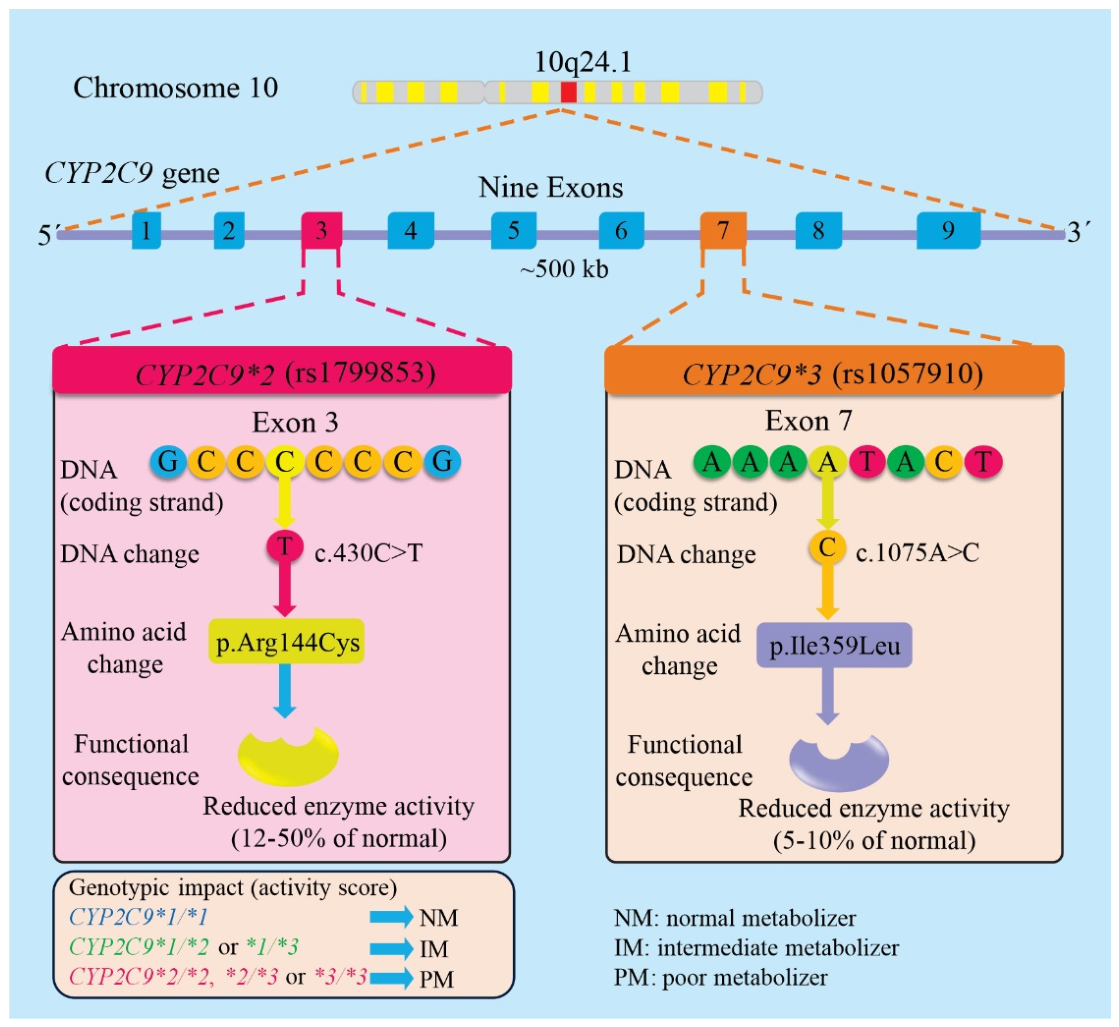

Table 1.
Demographic and Clinical Characteristics of Patients.
| Variable |
Female (n 44, 61.11%) |
Male (n 28, 38.89%) |
p -value | ||||
| Mean ± SD | Range | Mean ± SD | Range | ||||
| Age (years) | 46.45 ± 17.54 | 20-94 | 43.21 ± 18.85 | 18-88 | 0.429* | ||
| Peso (kg) | 60.79 ± 11.46 | 40-97 | 66.01± 14.46 | 39-97.50 | 0.066* | ||
| Monotherapy |
n = 40 (55.55%) | dose (mg/day) |
dose (mg/day) | n =25 (34.72%) | dose (mg/day) |
dose (mg/day) | 1.00** |
| CBZ (Mean ± SD) | 16 (22.22%) | 650 ± 89.44 | 600-800 | 4 (5.55%) | 650 ± 100 | 600-800 | |
| VPA (Mean ± SD) | 13 (18.05%) | 1730.77 ± 259.44 | 1500-2000 | 16 (22.22%) | 1593.75 ± 201.56 | 1500-2000 | |
| PHT | 10 (13.89%) | 300 | 300 | 2 (2.78%) | 300 | 300 | |
| PHB | 1 (1.39%) | 300 | 300 | 2 (2.78%) | 300 | 300 | |
| OXC | 0 (0.0) | 1 (1.39%) | 600 | 600 | |||
| Polytherapy |
n = 4 (5.56%) |
dose (mg/day) |
n = 3 (4.17%) |
dose (mg/day) | |||
| VPA LTG |
1 (1.39%) | 1500 100 |
1500 100 |
1 (1.39%) | 1500 100 |
1500 100 |
|
| VPA LEV |
1 (1.39%) | 1000 3000 |
1000 3000 |
1 (1.39%) | 1000 3000 |
1000 3000 |
|
| PHB CBZ LTG |
1 (1.39%) | 300 100 100 |
300 100 100 |
0 (0.0) | |||
| CBZ LEV |
1 (1.39%) | 300 3000 |
300 3000 |
0 (0.0) | |||
| VPA LTG LEV |
0 (0.0) | 1 (1.39%) | 1000 100 3000 |
1000 100 3000 |
|||
| Epilepsy type | |||||||
| Generalized | 23 (52.27%) | 13 (46.43%) | 0.848** | ||||
| Focal | 6 (13.64%) | 5 (17.86%) | |||||
| Combined | 15 (34.09%) | 10 (35.71%) | |||||
| Controlled (without recurrence | 13 (29.55%) | 11 (39.29%) | 0.550** | ||||
| Not controlled | 31 (70.45%) | 17 (60.71%) | |||||
| CBZ: carbamazepine; VPA: valproic acid; PHT: phenytoin; PHB: phenobarbital; OXC: oxcarbazepine; LTG: lamotrigine; LEV: levetiracetam; SD: Standard deviation; Combined (generalized and focal). *p-values were calculated using the Mann–Whitney U test for continuous variables. **Categorical variables were compared using Pearson’s chi-square test. | |||||||
Table 2.
CYP2C9 Allele and Genotype Frequencies in the Study Population of Patients.
| Gene | Allele | Genotype | |||
| Type | n | f | Type | n (%) | |
| CYP2C9 | *1 | 122 | 0.85 | *1/*1 | 55 (65) |
| *2 | 22 | 0.15 | *1/*2 | 12 (17) | |
| *2/*2 | 5 (7) | ||||
| 144 | 1.00 | 72 (100%) | |||
| CYP2C9 | *1 | 136 | 0.94 | *1/*1 | 64 (89) |
| *3 | 8 | 0.06 | *1/*3 | 08 (11) | |
| *3/*3 | 0 (0) | ||||
| 144 | 1.00 | 72 (100%) | |||
Table 3.
Distribution of CYP2C9 Genotypes and Predicted Metabolizer Phenotypes.
| Genotypes |
Activity Score | Metabolizer phenotype (%) |
|
| Type | n (%) | ||
| *1/*1 | 50 (69.45) | 2.0 | NM (69.45) |
| *1/*2 | 9 (12.50) | 1.5 | IM (26.38) |
| *1/*3 | 5 (6.94) | 1.0 | |
| *2/*2 | 5 (6.94) | 1.0 | |
| *2/*3 | 3 (4.17) | 0.5 | PM (4.17) |
| *3/*3 | 0 (0.00) | 0.0 | |
| 72 (100%) | |||
| NM: normal metabolizer; IM: intermediate metabolizer; PM: poor metabolizer. | |||
Table 4.
CYP2C9 Metabolizer Phenotypes and Adverse Drug Reactions Associated with Antiseizure Medication Monotherapy.
Table 4.
CYP2C9 Metabolizer Phenotypes and Adverse Drug Reactions Associated with Antiseizure Medication Monotherapy.
| Phenotype/ Genotype | ASM | Adverse drug reactions observed in the study | Any ADRs | No ADRs | Total | ||||
| Hand tremor | Body weight gain | Somnolence | Vertigo | Tongue paresthesia | |||||
| n (%) | n (%) | n (%) | n (%) | n (%) | n (%) | n (%) | n (%) | ||
| Normal metabolizer CYP2C9*1/*1 | CBZ | 0 (0.00) | 0 (0.00) | 3 (4.62) | 0 (0.00) | 0 (0.00) | 3 (4.62) | 12 (18.46) | 15 (23.08) |
| OXC | 0 (0.00) | 0 (0.00) | 0 (0.00) | 0 (0.00) | 0 (0.00) | 0 (0.00) | 1 (1.54) | 1 (1.54) | |
| PHB | 0 (0.00) | 0 (0.00) | 2 (3.08) | 0 (0.00) | 0 (0.00) | 2 (3.08) | 1 (1.54) | 3 (4.62) | |
| PHT | 0 (0.00) | 0 (0.00) | 0 (0.00) | 2 (3.08) | 0 (0.00) | 2 (3.08) | 8 (12.31) | 10 (15.38) | |
| VPA | 1 (1.54) | 1 (1.54) | 0 (0.00) | 0 (0.00) | 0 (0.00) | 2 (3.08) | 12 (18.46) | 14 (21.54) | |
| Intermediate metabolizer CYP2C9*1/*2 |
CBZ | 0 (0.00) | 0 (0.00) | 2 (3.08) | 0 (0.00) | 0 (0.00) | 2 (3.08) | 0 (0.00) | 2 (3.08) |
| VPA | 5 (7.69) | 0 (0.00) | 0 (0.00) | 0 (0.00) | 0 (0.00) | 5 (7.69) | 2 (3.08) | 7 (10.77) | |
| Intermediate metabolizer CYP2C9*1/*3 |
CBZ | 0 (0.00) | 0 (0.00) | 1 (1.54) | 0 (0.00) | 0 (0.00) | 1 (1.54) | 0 (0.00) | 1 (1.54) |
| PHT | 0 (0.00) | 0 (0.00) | 1 (1.54) | 0 (0.00) | 0 (0.00) | 1 (1.54) | 0 (0.00) | 1 (1.54) | |
| VPA | 2 (3.08) | 0 (0.00) | 0 (0.00) | 0 (0.00) | 0 (0.00) | 2 (3.08) | 1 (1.54) | 3 (4.62) | |
| Intermediate metabolizer CYP2C9*2/*2 |
CBZ | 0 (0.00) | 0 (0.00) | 1 (1.54) | 0 (0.00) | 0 (0.00) | 1 (1.54) | 0 (0.00) | 1 (1.54) |
| PHT | 0 (0.00) | 0 (0.00) | 0 (0.00) | 0 (0.00) | 1 (1.54) | 1 (1.54) | 0 (0.00) | 1 (1.54) | |
| VPA | 2 (3.08) | 1 (1.54) | 0 (0.00) | 0 (0.00) | 0 (0.00) | 3 (4.62) | 0 (0.00) | 3 (4.62) | |
| Poor metabolizer CYP2C9*2/*3 |
CBZ | 0 (0.00) | 0 (0.00) | 1 (1.54) | 0 (0.00) | 0 (0.00) | 1 (1.54) | 0 (0.00) | 1 (1.54) |
| VPA | 2 (3.08) | 0 (0.00) | 0 (0.00) | 0 (0.00) | 0 (0.00) | 2 (3.08) | 0 (0.00) | 2 (3.08) | |
| Total: | 12 (18.46) | 2 (3.08) | 11 (16.92) | 2 (3.08) | 1 (1.54) | 28 (43.08) | 37 (56.92) | 65 (100.00) | |
| ASM: anti-seizure medication; No ADRs: No adverse drug reactions. Chi-square test for the presence of ADRs according to CYP2C9 phenotype (p = 0.001). Chi-square test for the presence of ADRs according to ASM in monotherapy (p = 0.741). | |||||||||
Table 5.
CYP2C9 Metabolizer Phenotypes and Adverse Drug Reactions Associated with Antiseizure Medication Polytherapy.
Table 5.
CYP2C9 Metabolizer Phenotypes and Adverse Drug Reactions Associated with Antiseizure Medication Polytherapy.
| Phenotype/ Genotype | ASM | Adverse drug reactions observed in the study | Any ADRs | No ADRs | Total | ||||
| Hand tremor | Body weight gain | Somnolence | Vertigo | Tongue paresthesia | |||||
| n (%) | n (%) | n (%) | n (%) | n (%) | n (%) | n (%) | n (%) | ||
| Normal metabolizer CYP2C9*1/*1 | VPA + LTG |
2 (28.58) | 0 (0.00) | 0 (0.00) | 0 (0.00) | 0 (0.00) | 2 (28.57) | 0 (0.00) | 2 (28.57) |
| VPA + LEV |
1 (14.29) | 0 (0.00) | 0 (0.00) | 0 (0.00) | 0 (0.00) | 1 (14.29) | 1 (14.29) | 2 (28.57) | |
| PHB + CBZ + LTG |
0 (0.00) | 0 (0.00) | 1 (14.29) | 0 (0.00) | 0 (0.00) | 1 (14.29) | 0 (0.00) | 1 (14.29) | |
| CBZ + LEV |
0 (0.00) | 0 (0.00) | 1 (14.29) | 0 (0.00) | 0 (0.00) | 1 (14.29) | 0 (0.00) | 1 (14.29) | |
| VPA + LTG + LEV |
1 (14.29) | 0 (0.00) | 0 (0.00) | 0 (0.00) | 0 (0.00) | 1 (14.29) | 0 (0.00) | 1 (14.29) | |
| Total: | 4 (57.14) | 0 (0.00) | 2 (28.57) | 0 (0.00) | 0 (0.00) | 6 (85.71) | 1 (14.29) | 7 (100%) | |
| ASM: anti-seizure medication; No ADRs: No adverse drug reactions. Fisher’s exact test for the presence of ADRs according to type of therapy (monotherapy vs polytherapy) (p = 0.043). | |||||||||
Table 6.
Multivariable Logistic Regression Model for Factors Associated with Adverse Drug Reactions.
Table 6.
Multivariable Logistic Regression Model for Factors Associated with Adverse Drug Reactions.
| Independent variables/ Reference category | OR | 95%CI | p-value |
| Metabolic phenotype | |||
| NM (Referring) | - | - | - |
| IM and PM | 16.33 | 4.30 – 62.01 | < 0.001* |
| Type of pharmacotherapy | |||
| Monotherapy (Referring) | - | - | - |
| Polytherapy | 25.71 | 2.60 – 254.03 | 0.005* |
| Seizure type: | |||
| Focal (Referring) | - | - | - |
| Generalized | 1.58 | 0.28 – 8.85 | 0.601 |
| Combined | 0.68 | 0.11 – 4.28 | 0.677 |
| OR: odds ratio; 95% CI: 95% confidence intervals; Metabolic phenotype includes carriers of CYP2C9; NM: normal metabolizer; IM: intermediate metabolizer; PM: poor metabolizer. AIC: Akaike Information Criterion = 79.1; McFadden's Pseudo R² = 0.304; Significance: p <0.05 (*) | |||
Table 7.
TaqMan® assay context sequences for the CYP2C9 single-nucleotide polymorphisms (SNPs) investigated in this study.
Table 7.
TaqMan® assay context sequences for the CYP2C9 single-nucleotide polymorphisms (SNPs) investigated in this study.
| Alelle (dbSNP) | Context sequences | TaqMan® Assay |
| CYP2C9*2 (rs1799853) | GATGGGGAAGAGGACATTGAGGAC[C/T] GTGTTCAAGAGGAAGCCCGCTGCCT | C__25625805_10 |
| CYP2C9*3 (rs1057910) | TGTGGTGCACGAGGTCCAGAGATAC[C/A] TTGACCTTCTCCCCACCAGCCTGCC | C__27104892_10 |
| dbSNP: Database of Single Nucleotide Polymorphisms. | ||
Disclaimer/Publisher’s Note: The statements, opinions and data contained in all publications are solely those of the individual author(s) and contributor(s) and not of MDPI and/or the editor(s). MDPI and/or the editor(s) disclaim responsibility for any injury to people or property resulting from any ideas, methods, instructions or products referred to in the content. |
© 2026 by the authors. Licensee MDPI, Basel, Switzerland. This article is an open access article distributed under the terms and conditions of the Creative Commons Attribution (CC BY) license (http://creativecommons.org/licenses/by/4.0/).
Copyright: This open access article is published under a Creative Commons CC BY 4.0 license, which permit the free download, distribution, and reuse, provided that the author and preprint are cited in any reuse.