

Submitted:
29 June 2026
Posted:
30 June 2026
You are already at the latest version
Abstract
Thyroid hormone physiology has traditionally been interpreted through the hypothalamic–pituitary–thyroid (HPT) axis and genomic signaling mediated by triiodothyronine (T3). However, accumulating evidence indicates that thyroid hormone action extends beyond classical nuclear receptor pathways and involves rapid, non-genomic mechanisms that influence cellular metabolism. Among the metabolites generated during thyroid hormone metabolism, 3,5-diiodothyronine (3,5-T2) has emerged as a biologically active iodothyronine capable of modulating mitochondrial respiration and energy metabolism. Experimental studies demonstrate that T2 can rapidly increase oxygen consumption, enhance fatty acid oxidation, and stimulate resting metabolic rate, particularly in hepatic and skeletal muscle tissues. These metabolic effects have generated interest in T2 as a potential modulator of metabolic disorders characterized by mitochondrial dysfunction, including obesity and non-alcoholic fatty liver disease (NAFLD).
Despite these promising findings, important translational questions remain. Evidence from animal studies suggests that exogenous T2 administration may suppress the hypothalamic–pituitary–thyroid axis and induce central hypothyroidism, highlighting potential safety considerations. In addition, limited human data and challenges in reliably measuring circulating T2 have restricted understanding of its physiological relevance.
This review examines the biochemical origins, molecular mechanisms, and metabolic actions of 3,5-diiodothyronine within the broader framework of mitochondrial thyroid hormone signaling. We discuss experimental evidence supporting its metabolic effects, the analytical challenges involved in studying thyroid hormone metabolites, and the unresolved questions surrounding its physiological role in humans. A deeper understanding of T2 biology may expand current paradigms of thyroid hormone signaling and provide new insight into tissue-specific metabolic regulation.
Keywords:
3
; 5-diiodothyronine (3
; 5-T2)
; thyroid hormone metabolites
; non-genomic thyroid hormone signaling
; mitochondrial function
; energy metabolism
; fatty acid oxidation
; metabolic regulation
; hypothalamic–pituitary–thyroid axis
1. Introduction
Thyroid hormones play a fundamental role in regulating energy metabolism, thermogenesis, growth, and cellular differentiation. Traditionally, thyroid hormone physiology has been understood through the framework of the hypothalamic–pituitary–thyroid (HPT) axis, in which thyroxine (T4) produced by the thyroid gland is converted to the biologically active hormone triiodothyronine (T3), which then mediates its effects primarily through nuclear thyroid hormone receptors (TRs) to regulate gene transcription. This genomic signaling pathway has long been considered the principal mechanism by which thyroid hormones influence cellular physiology and metabolic homeostasis[1].
However, accumulating evidence over the past several decades suggests that thyroid hormone signaling is considerably more complex than originally appreciated. In addition to classical genomic actions mediated by nuclear receptors, thyroid hormones can initiate rapid non-genomic signaling events that occur at the plasma membrane, within the cytoplasm, and at the level of the mitochondrion [2,3,4]. These non-genomic mechanisms can influence intracellular signaling pathways, mitochondrial function, and cellular metabolism independent of direct transcriptional regulation. Thyroid hormone signaling extends beyond the classical hypothalamic–pituitary thyroid HPT axis as is shown in Figure 1. The recognition of these additional signaling pathways has expanded the conceptual framework of thyroid hormone biology and highlighted the importance of tissue-specific and subcellular regulation of thyroid hormone action.
An important contributor to this expanded view of thyroid hormone physiology is the growing recognition of biologically active thyroid hormone metabolites. Thyroid hormone metabolism involves the sequential deiodination of iodothyronines by selenoprotein deiodinases, generating a variety of metabolites that were historically considered inactive degradation products [5]. More recent investigations, however, suggest that several of these metabolites may possess distinct biological activities. Among them, 3,5-diiodothyronine (3,5-T2) has emerged as a metabolite of particular interest due to its ability to rapidly influence mitochondrial respiration and energy metabolism [6].
Experimental studies in animal models have demonstrated that administration of 3,5-T2 can increase oxygen consumption, enhance fatty acid oxidation, and stimulate resting metabolic rate, particularly in metabolically active tissues such as liver and skeletal muscle [6,7]. These findings have generated interest in the potential role of T2 in metabolic regulation and in diseases characterized by impaired mitochondrial function, including obesity and metabolic dysfunction-associated steatotic liver disease (MASLD). At the same time, emerging evidence suggests that exogenous T2 administration may suppress the HPT axis and induce central hypothyroidism in experimental models, raising important questions regarding its physiological role and translational potential [8].
Despite increasing experimental interest, the biological significance of T2 in human physiology remains incompletely defined. Limited clinical data, challenges in reliably measuring circulating T2 concentrations, and uncertainties regarding its endogenous production and tissue-specific actions have all contributed to ongoing debate regarding its role in thyroid hormone signaling. Advances in analytical techniques, including mass spectrometry-based approaches for iodothyronine measurement, may help clarify these questions and improve understanding of thyroid hormone metabolite biology [9].
In this review, the emerging role of 3,5-diiodothyronine within the broader framework of mitochondrial thyroid hormone signaling is presented. The current knowledge regarding the biochemical origins of T2, its molecular mechanisms of action, and the experimental evidence supporting its metabolic effects is explored. In addition, the translational challenges associated with studying thyroid hormone metabolites are explored and the key areas for future investigation that may expand our understanding of tissue-specific thyroid hormone regulation and metabolic physiology are highlighted.
2. Thyroid Hormone Metabolism and the Generation of 3,5-Diiodothyronine
Thyroid hormone signaling is tightly regulated not only at the level of hormone secretion but also through complex intracellular metabolic pathways that control the local availability and activity of iodothyronines. While the thyroid gland predominantly secretes T4, much of thyroid hormone action occurs following peripheral conversion of T4 into more biologically active or inactive metabolites. Central to this regulatory network are the iodothyronine deiodinases, a family of selenoprotein enzymes that catalyze the removal of iodine atoms from specific positions on the iodothyronine molecule [10].
Three deiodinase isoforms—type 1 (DIO1), type 2 (DIO2), and type 3 (DIO3)—play distinct roles in thyroid hormone metabolism and tissue-specific hormone signaling. DIO1 and DIO2 primarily catalyze outer-ring deiodination, converting T4 into the biologically active hormone T3. In contrast, DIO3 catalyzes inner-ring deiodination, converting T4 into reverse triiodothyronine (rT3) and T3 into 3,3′-diiodothyronine (T2), thereby inactivating thyroid hormone signaling. Through these coordinated enzymatic processes, deiodinases regulate intracellular thyroid hormone availability and allow tissues to fine-tune thyroid hormone signaling according to local metabolic demands [10,11,12]
In addition to regulating the balance between active and inactive thyroid hormones, deiodination pathways generate several iodothyronine metabolites that may possess distinct biological activities. Among these metabolites, 3,5-diiodothyronine (3,5-T2) has received increasing attention as a potential mediator of metabolic signaling. Although historically considered a degradation product of T3 metabolism, accumulating experimental evidence suggests that T2 may exert independent physiological effects, particularly in tissues with high metabolic activity [6].
The precise pathways responsible for endogenous T2 generation remain incompletely defined. Current evidence suggests that T2 can arise through sequential deiodination of T3 via outer-ring deiodination reactions mediated by deiodinase enzymes, although alternative metabolic pathways have also been proposed [11,13]. Importantly, the generation of T2 is likely to occur in a tissue-specific manner, reflecting the differential expression of deiodinases, thyroid hormone transporters, and intracellular binding proteins across organs. This localized metabolism contributes to the concept of tissue-specific thyroid hormone signaling, in which intracellular iodothyronine concentrations—and thus biological responses—may differ substantially from circulating hormone levels [10,12].
The recognition that thyroid hormone metabolism produces biologically active derivatives has expanded the traditional view of thyroid physiology beyond a simple T4-to-T3 conversion pathway. Instead, thyroid hormone signaling is increasingly understood as a dynamic metabolic network in which multiple iodothyronine metabolites may contribute to cellular energy regulation and metabolic adaptation. Within this framework, 3,5-T2 has emerged as a candidate mediator of rapid metabolic responses, particularly through mechanisms involving mitochondrial function and energy metabolism.
3. Genomic and Non-Genomic Thyroid Hormone Signaling
The biological actions of thyroid hormones have historically been attributed to genomic mechanisms mediated through nuclear thyroid hormone receptors (TRs). These receptors belong to the nuclear receptor superfamily and function as ligand-activated transcription factors that regulate gene expression by binding to thyroid hormone response elements within target genes. Upon binding of T3, TRs undergo conformational changes that facilitate recruitment of coactivator complexes and subsequent transcriptional activation of genes involved in metabolism, growth, and cellular differentiation [1]. This classical genomic mechanism explains many of the long-term physiological effects of thyroid hormone, including regulation of basal metabolic rate, thermogenesis, and developmental processes.
Over the past several decades, however, increasing evidence has demonstrated that thyroid hormones can also exert rapid cellular effects that occur independently of direct transcriptional regulation. These non-genomic actions occur on a much shorter timescale than classical genomic signaling and may be initiated at the plasma membrane, within the cytoplasm, or at intracellular organelles such as mitochondria [2,4]. Such mechanisms allow thyroid hormones to influence intracellular signaling cascades, ion transport, and metabolic pathways through processes that do not require changes in gene transcription.
One well-characterized site of non-genomic thyroid hormone action is the plasma membrane integrin αvβ3 receptor, which can bind thyroid hormones and activate downstream signaling pathways including mitogen-activated protein kinase (MAPK) and phosphatidylinositol-3-kinase (PI3K) [2]. These pathways influence a variety of cellular functions, including proliferation, angiogenesis, and metabolic regulation. In addition, thyroid hormone signaling has been reported within the cytoplasm through interactions with intracellular signaling proteins and kinase pathways, further expanding the repertoire of thyroid hormone–mediated cellular responses [3].
Mitochondria have also emerged as an important site of thyroid hormone action. Several studies have demonstrated the presence of thyroid hormone receptors and related signaling components within mitochondria, suggesting that thyroid hormones may directly influence mitochondrial function and bioenergetics [4,14]. Because mitochondria are the primary site of oxidative phosphorylation and cellular energy production, thyroid hormone–mediated regulation of mitochondrial activity represents a key mechanism through which thyroid hormones influence metabolic rate and energy expenditure [15].
These genomic and non-genomic mechanisms collectively illustrate the complexity of thyroid hormone signaling and underscore the importance of subcellular compartmentalization in determining the metabolic effects of iodothyronines. Within this expanded framework, thyroid hormone metabolites such as 3,5-T2 may participate in rapid metabolic signaling pathways that complement classical nuclear receptor–mediated mechanisms. Understanding how these metabolites interact with mitochondrial and non-genomic signaling pathways may provide important insight into the regulation of cellular metabolism and energy homeostasis.
4. Mitochondrial Thyroid Hormone Signaling
Mitochondria play a central role in cellular energy metabolism, serving as the primary site of oxidative phosphorylation and ATP generation. Through coordinated regulation of mitochondrial respiration, substrate utilization, and thermogenesis, these organelles serve as critical determinants of metabolic efficiency and cellular energy balance. Thyroid hormones have long been recognized as key regulators of mitochondrial function, contributing significantly to their well-established effects on basal metabolic rate and energy expenditure [15,16].
Early observations of thyroid hormone–induced changes in oxygen consumption and metabolic rate suggested that mitochondria represent an important target of thyroid hormone action. Subsequent studies have demonstrated that thyroid hormones influence mitochondrial activity through both genomic and non-genomic mechanisms. Genomic mechanisms include transcriptional regulation of nuclear genes encoding mitochondrial proteins involved in oxidative phosphorylation, mitochondrial biogenesis, and substrate metabolism [16]. These transcriptional effects help coordinate the long-term metabolic adaptations associated with thyroid hormone signaling.
In addition to these transcriptional effects, thyroid hormones can directly influence mitochondrial bioenergetics through more rapid mechanisms that appear to be independent of nuclear receptor–mediated gene transcription. Experimental studies have demonstrated that thyroid hormones can rapidly increase mitochondrial respiration, enhance electron transport chain activity, and stimulate ATP turnover [14,19]. These rapid responses suggest the existence of direct interactions between iodothyronines and mitochondrial components that modulate metabolic flux and energy production.
Several mechanisms have been proposed to explain these mitochondrial effects. Thyroid hormones have been shown to influence the activity of key mitochondrial enzymes involved in oxidative phosphorylation, including cytochrome c oxidase and other components of the electron transport chain [14]. Additionally, thyroid hormone signaling has been linked to regulation of mitochondrial membrane potential, substrate oxidation, and mitochondrial uncoupling processes that contribute to thermogenesis and metabolic heat production [17]. Collectively, these mechanisms provide a biochemical basis for the ability of thyroid hormones to modulate energy expenditure at the cellular level.
The recognition that mitochondria represent a direct target of thyroid hormone action has broadened the conceptual framework of thyroid physiology. Rather than functioning solely through nuclear transcriptional pathways, thyroid hormones appear capable of influencing cellular metabolism through rapid modulation of mitochondrial bioenergetics. Within this expanded model of thyroid hormone signaling, iodothyronine metabolites such as 3,5-T2 have attracted increasing interest because of their reported ability to exert rapid metabolic effects at the mitochondrial level. These observations suggest that thyroid hormone metabolites may participate in a dynamic network of mitochondrial regulatory mechanisms that fine-tune cellular energy metabolism in response to changing physiological demands.
5. Biological Actions of 3,5-Diiodothyronine
Among the metabolites generated through thyroid hormone metabolism, 3,5-T2 has emerged as one of the most extensively studied iodothyronine derivatives with potential biological activity. Historically regarded as an inactive product of T3 degradation, accumulating experimental evidence suggests that T2 may exert distinct metabolic effects that differ from those mediated by classical T3 signaling pathways [6,19]. Interest in T2 has grown in recent years because of its reported ability to rapidly influence mitochondrial respiration and energy metabolism.
A number of experimental studies have demonstrated that administration of T2 can produce rapid metabolic effects in animal models (Table 1). These effects include increases in resting metabolic rate, enhanced oxygen consumption, and stimulation of mitochondrial oxidative metabolism [6,19]. Notably, some of these responses occur within minutes to hours following T2 exposure, suggesting mechanisms that are at least partially independent of nuclear thyroid hormone receptor–mediated transcriptional regulation. Such observations have supported the hypothesis that T2 may act through non-genomic pathways that directly modulate mitochondrial bioenergetics.
One of the most consistently observed metabolic effects of T2 in experimental models is stimulation of fatty acid oxidation, particularly in hepatic and skeletal muscle tissues. T2 has been shown to increase mitochondrial β-oxidation of fatty acids and enhance the activity of enzymes involved in lipid metabolism, thereby promoting the utilization of lipid substrates for energy production [6,13]. These metabolic effects have been associated with reductions in hepatic lipid accumulation in animal models exposed to high-fat diets, suggesting a potential role for T2 in modulating lipid homeostasis.
In addition to effects on lipid metabolism, T2 has also been reported to influence mitochondrial respiratory chain activity. Experimental studies have demonstrated that T2 can stimulate the activity of key components of the electron transport chain, including cytochrome c oxidase, leading to increased mitochondrial respiration and energy expenditure [14]. These observations are consistent with the broader concept that thyroid hormone–derived metabolites may contribute to the fine-tuning of mitochondrial energy metabolism through rapid regulatory mechanisms.
Despite these promising findings, it remains unclear to what extent the metabolic effects of T2 observed in experimental models reflect physiological processes occurring in humans. Many studies demonstrating metabolic benefits of T2 have involved pharmacologic administration of the metabolite at supraphysiologic concentrations, and the endogenous role of T2 in normal metabolic regulation remains incompletely understood [6]. Furthermore, evidence suggesting that exogenous T2 administration may suppress the hypothalamic–pituitary–thyroid axis highlights the need for careful consideration of its potential physiological and therapeutic implications [8].
Taken together, current evidence suggests that 3,5-diiodothyronine may function as a rapid modulator of mitochondrial metabolism, influencing cellular energy expenditure and substrate utilization. While these findings have generated interest in the metabolic actions of T2, further investigation is required to clarify its endogenous regulation, physiological concentrations, and role in human metabolic homeostasis.
6. T2 and Metabolic Disease: Implications for MASLD and Metabolic Syndrome
Metabolic disorders characterized by impaired lipid handling and mitochondrial dysfunction have become increasingly prevalent worldwide. Among these conditions, MASLD has emerged as the most common chronic liver disease, affecting an estimated 25% of the global population [20]. MASLD encompasses a spectrum of liver pathology ranging from simple steatosis to MASLD, fibrosis, and ultimately cirrhosis. The pathogenesis of MASLD is multifactorial and involves complex interactions among insulin resistance, dysregulated lipid metabolism, oxidative stress, and mitochondrial dysfunction [20,22].
Mitochondria play a central role in hepatic lipid metabolism through their involvement in fatty acid oxidation and energy production. Impairments in mitochondrial oxidative capacity can lead to accumulation of triglycerides within hepatocytes, contributing to the development of hepatic steatosis and metabolic inflammation [22]. In this context, thyroid hormones have long been recognized as important regulators of hepatic metabolism and mitochondrial activity, influencing processes such as lipid oxidation, gluconeogenesis, and thermogenesis [15].
Interest in 3,5-T2 as a potential modulator of metabolic disease has largely arisen from experimental studies demonstrating beneficial metabolic effects in animal models of obesity and hepatic steatosis. In several rodent studies, administration of T2 has been shown to reduce hepatic lipid accumulation and improve markers of lipid metabolism, particularly in animals exposed to high-fat diets [6]. These effects have been attributed in part to increased mitochondrial fatty acid oxidation and enhanced oxidative metabolism within hepatocytes.
In addition to hepatic effects, T2 has also been reported to influence systemic metabolic parameters in experimental models, including reductions in body fat mass and improvements in lipid utilization [6]. These observations have generated interest in the potential therapeutic applications of T2 or related iodothyronine analogues in metabolic disorders characterized by impaired mitochondrial energy metabolism. Because thyroid hormones are key regulators of metabolic rate and substrate utilization, modulation of thyroid hormone–related pathways has been explored as a potential strategy for targeting metabolic diseases such as MASLD, obesity, and insulin resistance [23].
Despite these encouraging experimental findings, the translation of T2-based approaches to human metabolic disease remains uncertain. Much of the available evidence derives from animal studies using pharmacologic doses of T2, and the physiological role of endogenous T2 in human metabolism has not been clearly established. Furthermore, the complex interplay between thyroid hormone signaling and metabolic regulation raises concerns regarding potential endocrine feedback effects, including suppression of the HPT axis observed in some experimental models [8].
Collectively, current data suggest that T2 may influence metabolic pathways involved in hepatic lipid metabolism and energy expenditure. However, additional research is required to determine whether these experimental observations reflect physiologically relevant processes in humans and whether modulation of T2 signaling could represent a viable therapeutic approach for metabolic disease.
7. Axis Suppression and Translational Considerations
Although experimental studies have demonstrated promising metabolic effects of 3,5-T2 in animal models, important questions remain regarding its physiological role and potential clinical applications. One of the primary concerns raised by preclinical studies is the potential for HPT axis following exogenous T2 administration.
Evidence from experimental investigations suggests that administration of T2 may exert feedback effects on the central components of thyroid hormone regulation. In a notable animal study, Padron and colleagues demonstrated that administration of 3,5-T2 in rats resulted in suppression of serum TSH levels and reductions in circulating thyroid hormone concentrations consistent with central hypothyroidism [8]. Despite this suppression of the HPT axis, the investigators also observed stimulation of thyroid hormone–responsive tissues, suggesting that T2 may exert peripheral metabolic effects independent of classical endocrine regulation.
These findings highlight a key challenge in interpreting the metabolic effects of T2 observed in experimental models. While T2 may stimulate mitochondrial metabolism and energy expenditure at the tissue level, its ability to influence central thyroid hormone regulation raises important questions regarding its physiological role and safety profile. Pharmacologic administration of thyroid hormone metabolites could potentially disrupt the finely regulated endocrine feedback mechanisms that maintain systemic thyroid hormone homeostasis.
Another important consideration is that many experimental studies investigating the metabolic effects of T2 have utilized doses that exceed physiologic concentrations. The endogenous circulating levels of T2 in humans remain incompletely characterized, and it is not yet clear whether the metabolic effects observed in experimental models reflect normal physiological signaling pathways or pharmacologic responses to supraphysiologic exposure [6,7]. Furthermore, the tissue-specific generation and regulation of T2 remain poorly defined, complicating efforts to determine its contribution to normal metabolic physiology.
In addition to these endocrine considerations, challenges in the measurement of circulating T2 have limited progress in understanding its role in human physiology. Traditional immunoassays may lack sufficient specificity for iodothyronine metabolites, and advances in analytical techniques such as liquid chromatography–mass spectrometry (LC–MS) have only recently enabled more reliable detection of thyroid hormone derivatives [9]. These analytical limitations have contributed to the scarcity of human data regarding circulating T2 concentrations and their relationship to metabolic physiology.
Taken together, the available evidence suggests that while 3,5-T2 may exert important metabolic effects in experimental models, significant uncertainties remain regarding its physiological role, safety profile, and translational relevance. Future studies aimed at clarifying endogenous T2 concentrations, tissue-specific metabolism, and the impact of T2 on thyroid axis regulation will be essential for determining whether modulation of T2 signaling represents a viable strategy for metabolic intervention.
8. Measurement Challenges and Analytical Advances
A major limitation in understanding the physiological role of 3,5-T2 is the difficulty in accurately measuring iodothyronine metabolites in biological samples. While circulating concentrations of T4 and T3 can be readily quantified using widely available immunoassays, detection of thyroid hormone metabolites such as T2 presents significantly greater analytical challenges. These challenges have contributed to the limited availability of human data regarding circulating T2 concentrations and their relationship to metabolic physiology.
Traditional immunoassays used in clinical laboratories are optimized for the detection of T4, T3, and thyroid-stimulating hormone, but they often lack sufficient specificity to reliably distinguish structurally related iodothyronine metabolites. Cross-reactivity among iodothyronine derivatives can lead to inaccurate quantification, particularly when metabolite concentrations are substantially lower than those of circulating T3 and T4. As a result, early investigations of thyroid hormone metabolites were limited by methodological constraints that made precise measurement difficult [9].
Advances in analytical chemistry over the past two decades have improved the ability to detect and quantify iodothyronine metabolites. In particular, liquid chromatography coupled with LC–MS has emerged as a powerful tool for studying thyroid hormone metabolism. This approach allows for highly specific identification of iodothyronine species based on their molecular mass and fragmentation patterns, enabling simultaneous measurement of multiple thyroid hormone derivatives within a single biological sample [9].
Mass spectrometry–based techniques have expanded the ability to investigate the metabolic pathways of thyroid hormone metabolism and have facilitated the identification of previously underrecognized iodothyronine metabolites. These methods also provide improved sensitivity for detecting low-abundance metabolites such as T2, making it possible to explore their presence and potential physiological relevance in human tissues and circulation [9]. Despite these advances, the routine clinical measurement of T2 remains limited, and standardized reference ranges for circulating T2 concentrations have not yet been established.
Improved analytical approaches may ultimately help clarify several important unanswered questions regarding T2 biology. These include determining the normal physiological concentrations of T2 in human plasma, identifying tissue-specific sources of T2 production, and understanding how T2 levels may change in metabolic disorders or thyroid disease. As analytical technologies continue to evolve, the ability to accurately quantify iodothyronine metabolites may provide new insights into the complexity of thyroid hormone signaling and the potential metabolic roles of thyroid hormone derivatives.
9. Future Directions
Despite growing interest in 3,5-T2 as a potential regulator of mitochondrial metabolism, many aspects of its biology remain incompletely understood. Future research will be necessary to clarify the physiological relevance of T2 and its potential role within the broader framework of thyroid hormone signaling and metabolic regulation.
One important priority is the accurate characterization of endogenous T2 concentrations in humans. Although advances in mass spectrometry have improved the ability to detect iodothyronine metabolites, standardized methodologies and reference ranges for circulating T2 have not yet been established [9]. Reliable measurement of T2 in plasma and tissues will be essential for determining whether physiological fluctuations in T2 occur under normal conditions or in response to metabolic stress, thyroid disease, or alterations in deiodinase activity.
A second area of investigation involves understanding the pathways responsible for endogenous T2 production and tissue-specific regulation. While T2 is believed to arise primarily through sequential deiodination of T3, the precise enzymatic pathways and regulatory mechanisms governing its formation remain incompletely defined [10,11]. Because deiodinase expression varies substantially among tissues, it is possible that T2 generation may occur in a highly localized manner, contributing to tissue-specific modulation of mitochondrial metabolism.
Additional studies are also needed to clarify the molecular mechanisms underlying the mitochondrial actions of T2. Experimental evidence suggests that T2 can influence mitochondrial respiration and substrate utilization, yet the specific molecular targets and signaling pathways involved remain an area of active investigation [6,14]. Further work examining the interactions between T2 and mitochondrial enzymes, electron transport chain components, and cellular metabolic pathways may provide important insight into how thyroid hormone metabolites influence bioenergetic regulation.
From a translational perspective, future research should carefully evaluate the safety and endocrine consequences of exogenous T2 administration. While experimental models have demonstrated beneficial metabolic effects in certain contexts, concerns regarding suppression of the hypothalamic–pituitary–thyroid axis highlight the importance of defining physiologic versus pharmacologic actions of T2 [8]. Understanding the dose-dependent effects of T2 and its interaction with endogenous thyroid hormone signaling will be essential before potential therapeutic applications can be considered.
Finally, the emerging recognition that thyroid hormone metabolites may contribute to metabolic regulation suggests that thyroid physiology may be more complex than traditionally appreciated. Rather than functioning solely through circulating T3 and T4, thyroid hormone signaling may involve a broader network of iodothyronine metabolites that participate in tissue-specific metabolic adaptation [5,13]. Continued investigation of these metabolites, including T2, may ultimately expand current paradigms of thyroid hormone biology and improve understanding of how thyroid signaling influences metabolic health and disease.
10. Conclusions
Thyroid hormone signaling has traditionally been viewed through the framework of the HPT axis and genomic actions mediated primarily by T3. However, accumulating evidence indicates that thyroid hormone biology extends beyond classical nuclear receptor signaling and involves a complex network of intracellular pathways that regulate cellular metabolism. Among the iodothyronine metabolites generated through thyroid hormone metabolism, 3,5-T2 has emerged as a compound of particular interest due to its ability to rapidly influence mitochondrial respiration and energy metabolism.
Experimental studies have demonstrated that T2 can stimulate oxygen consumption, enhance fatty acid oxidation, and modulate mitochondrial bioenergetics, particularly in metabolically active tissues such as liver and skeletal muscle. These findings have generated interest in the potential role of T2 in metabolic regulation and in conditions characterized by mitochondrial dysfunction, including obesity and non-alcoholic fatty liver disease. At the same time, evidence suggesting that exogenous T2 administration may suppress the HPT axis underscores the importance of distinguishing physiological signaling from pharmacologic effects.
Despite increasing interest in T2, many aspects of its biology remain incompletely defined. Questions persist regarding the pathways responsible for endogenous T2 generation, the physiological concentrations present in human tissues, and the precise mechanisms by which T2 influences mitochondrial function. Advances in analytical techniques such as mass spectrometry are beginning to improve the ability to study iodothyronine metabolites, and these tools may provide new insights into the role of T2 within the broader landscape of thyroid hormone signaling.
Current evidence suggests that 3,5-T2 represents a potentially important component of mitochondrial thyroid hormone signaling, contributing to the regulation of cellular energy metabolism. Continued investigation of thyroid hormone metabolites may expand current paradigms of thyroid physiology and provide new perspectives on the integration of endocrine signaling and metabolic regulation.
Key Takeaways
• Thyroid hormone signaling extends beyond classical genomic pathways. In addition to nuclear receptor–mediated transcriptional regulation, thyroid hormones can initiate rapid non-genomic signaling within the cytoplasm and mitochondria.
• Mitochondria represent a key target of thyroid hormone action. Thyroid hormones influence mitochondrial respiration, oxidative phosphorylation, and energy expenditure, contributing to their well-established effects on metabolic rate.
• 3,5-diiodothyronine (3,5-T2) has emerged as a biologically active thyroid hormone metabolite. Experimental studies demonstrate that T2 can rapidly increase oxygen consumption, stimulate fatty acid oxidation, and modulate mitochondrial bioenergetics.
• Metabolic effects of T2 have been observed in experimental models of obesity and hepatic steatosis. These findings have generated interest in the potential role of T2 in metabolic diseases characterized by mitochondrial dysfunction, including non-alcoholic fatty liver disease.
• Important translational questions remain. Pharmacologic administration of T2 has been associated with suppression of the hypothalamic–pituitary–thyroid axis in animal models, highlighting the need to distinguish physiological signaling from pharmacologic effects.
• Future research is needed to define the physiological role of T2 in humans. Advances in analytical techniques such as mass spectrometry may improve measurement of iodothyronine metabolites and clarify the contribution of T2 to tissue-specific metabolic regulation.
Summary of representative experimental studies evaluating the metabolic and mitochondrial actions of the thyroid hormone metabolite 3,5-diiodothyronine. Studies across animal and cellular models demonstrate that T2 can influence mitochondrial respiration, fatty acid oxidation, and resting metabolic rate. However, pharmacologic administration of T2 has also been associated with suppression of the hypothalamic–pituitary–thyroid axis, highlighting important considerations regarding its physiological role and translational poten.
Funding
This research received no external funding.
Acknowledgments
AI has been used via BioRender for the production of the included figure. The author has reviewed and edited the output and takes full responsibility for the content of this publication.
Conflicts of Interest
The author declares no conflicts of interest.
References
- Cheng, S.Y.; Leonard, J.L.; Davis, P.J. Molecular aspects of thyroid hormone actions. Endocr. Rev. 2010, 31(2), 139–170. [Google Scholar] [CrossRef]
- Davis, P.J.; Goglia, F.; Leonard, J.L. Nongenomic actions of thyroid hormone. Nat. Rev. Endocrinol. 2016, 12(2), 111–121. [Google Scholar] [CrossRef] [PubMed]
- Giammanco, M.; Di Liegro, C.M.; Schiera, G.; et al. Genomic and non-genomic mechanisms of action of thyroid hormones and their catabolite 3,5-diiodo-L-thyronine in mammals. Int. J. Mol. Sci. 2020, 21(11), 4140. [Google Scholar] [CrossRef] [PubMed]
- Psarra, A.M.; Sekeris, C.E. Steroid and thyroid hormone receptors in mitochondria. IUBMB Life 2008, 60(4), 210–223. [Google Scholar] [CrossRef] [PubMed]
- Köhrle, J.; Frädrich, C. Deiodinases control local cellular and systemic thyroid hormone availability. Free Radic. Biol. Med. 2022, 193, 59–79. [Google Scholar] [CrossRef] [PubMed]
- Senese, R.; de Lange, P.; Petito, G.; et al. 3,5-diiodothyronine: A novel thyroid hormone metabolite and potent modulator of energy metabolism. Front Endocrinol. 2018, 9, 427. [Google Scholar] [CrossRef] [PubMed]
- Coppola, M.; Cioffi, F.; Moreno, M.; et al. 3,5-diiodo-L-thyronine: A possible pharmacological agent? Curr. Drug Deliv. 2016, 13(3), 330–338. [Google Scholar] [CrossRef] [PubMed]
- Padron, A.S.; Neto, R.A.; Pantaleão, T.U.; et al. Administration of 3,5-diiodothyronine (3,5-T2) causes central hypothyroidism and stimulates thyroid-sensitive tissues. J. Endocrinol. 2014, 221(3), 415–427. [Google Scholar] [CrossRef] [PubMed]
- Borsò, M.; Agretti, P.; Zucchi, R.; et al. Mass spectrometry in the diagnosis of thyroid disease and in the study of thyroid hormone metabolism. Mass Spectrom. Rev. 2022, 41(3), 443–468. [Google Scholar] [CrossRef] [PubMed]
- Qin, K.; Zhang, F.; Wu, Q.; Liu, Z.; Huang, Y.; Tan, J.; Zhou, Y.; An, Z.; Li, S.; Li, S. Thyroid Hormone Changes in Euthyroid Patients with Diabetes. Diabetes Metab. Syndr. Obes. 2020, 13, 2533–2540. [Google Scholar] [CrossRef] [PubMed] [PubMed Central]
- Bianco, A.C.; Kim, B.W. Deiodinases: implications of the local control of thyroid hormone action. J. Clin. Invest. 2006, 116(10), 2571–2579. [Google Scholar] [CrossRef] [PubMed]
- Deng, Y.; Han, Y.; Gao, S.; Dong, W.; Yu, Y. The physiological functions and polymorphisms of type II deiodinase. Endocrinol. Metab. 2023, 38(2), 190–202. [Google Scholar] [CrossRef] [PubMed]
- Mondal, S.; Raja, K.; Schweizer, U.; Mugesh, G. Chemistry and biology in the biosynthesis and action of thyroid hormones. Angew. Chem. Int. Ed. Engl. 2016, 55(27), 7606–7630. [Google Scholar] [CrossRef] [PubMed]
- Lanni, A.; Moreno, M.; Goglia, F. Mitochondrial actions of thyroid hormone. Compr. Physiol. 2016, 6(4), 1591–1607. [Google Scholar] [CrossRef] [PubMed]
- Yehuda-Shnaidman, E.; Kalderon, B.; Bar-Tana, J. Thyroid hormone, thyromimetics, and metabolic efficiency. Endocr. Rev. 2014, 35(1), 35–58. [Google Scholar] [CrossRef]
- Mazza, A.D. Thyroid Hormones and Aging: Modulators of Mitochondrial Health, Metabolic Flexibility, and Longevity Pathways. Horm. Metab. Res. 2026, 58(2), 50–55. [Google Scholar] [CrossRef] [PubMed]
- Glinsky, G.; Hercbergs, A.; Davis, P.J. Thyroid hormones, mitochondria, aging, and cancer. Front Endocrinol. 2026, 16, 1682089. [Google Scholar] [CrossRef] [PubMed]
- García-G, C.; López-Bojorquez, L.; Nuñez, J.; Valverde-R, C.; Orozco, A. 3,5-Diiodothyronine in vivo maintains euthyroidal expression of type 2 iodothyronine deiodinase, growth hormone, and thyroid hormone receptor beta1 in the killifish. Am. J. Physiol. Regul. Integr. Comp. Physiol. 2007, 293(2), R877–R883. [Google Scholar] [CrossRef] [PubMed]
- Senese, R.; de Lange, P.; Petito, G.; Moreno, M.; Goglia, F.; Lanni, A. 3,5-Diiodothyronine: a novel thyroid hormone metabolite and potent modulator of energy metabolism. Front Endocrinol. 2018, 9, 427. [Google Scholar] [CrossRef] [PubMed]
- Buzzetti, E.; Pinzani, M.; Tsochatzis, E.A. The multiple-hit pathogenesis of non-alcoholic fatty liver disease (NAFLD). Metabolism 2016, 65(8), 1038–1048. [Google Scholar] [CrossRef] [PubMed]
- Heeren, J.; Scheja, L. Metabolic-associated fatty liver disease and lipoprotein metabolism. Mol. Metab. 2021, 50, 101238. [Google Scholar] [CrossRef] [PubMed]
- Prasun, P. Mitochondrial dysfunction in metabolic syndrome. Biochim Biophys. Acta Mol. Basis Dis. 2020, 1866(10), 165838. [Google Scholar] [CrossRef] [PubMed]
- Ferguson, D.; Finck, B.N. Emerging therapeutic approaches for the treatment of NAFLD and type 2 diabetes mellitus. Nat. Rev. Endocrinol. 2021, 17(8), 484–495. [Google Scholar] [CrossRef] [PubMed]
Figure 1.
Thyroid hormone signaling extends beyond the classical hypothalamic–pituitary thyroid (HPT) axis. Following thyroidal secretion of thyroxine (T4), peripheral deiodinases generate triiodothyronine (T3) and metabolites including 3,5-diiodothyronine (3,5-T2). T3 regulates metabolism through genomic actions mediated by nuclear thyroid hormone receptors, while both T3 and T2 may also exert rapid non-genomic effects through intracellular signaling pathways and direct mitochondrial actions. Experimental evidence suggests that T2 influences oxidative phosphorylation, fatty acid oxidation, and energy expenditure, highlighting its potential role in mitochondrial bioenergetics and tissue-specific metabolic regulation. Abbreviations: AMPK, AMP-activated protein kinase; MAPK, mitogen-activated protein kinase; RXR, retinoid X receptor; TR, thyroid hormone receptor; TRH, thyrotropin-releasing hormone; TSH, thyroid-stimulating hormone; T4, thyroxine; T3, triiodothyronine; 3,5-T2, 3,5-diiodothyronine.
Figure 1.
Thyroid hormone signaling extends beyond the classical hypothalamic–pituitary thyroid (HPT) axis. Following thyroidal secretion of thyroxine (T4), peripheral deiodinases generate triiodothyronine (T3) and metabolites including 3,5-diiodothyronine (3,5-T2). T3 regulates metabolism through genomic actions mediated by nuclear thyroid hormone receptors, while both T3 and T2 may also exert rapid non-genomic effects through intracellular signaling pathways and direct mitochondrial actions. Experimental evidence suggests that T2 influences oxidative phosphorylation, fatty acid oxidation, and energy expenditure, highlighting its potential role in mitochondrial bioenergetics and tissue-specific metabolic regulation. Abbreviations: AMPK, AMP-activated protein kinase; MAPK, mitogen-activated protein kinase; RXR, retinoid X receptor; TR, thyroid hormone receptor; TRH, thyrotropin-releasing hormone; TSH, thyroid-stimulating hormone; T4, thyroxine; T3, triiodothyronine; 3,5-T2, 3,5-diiodothyronine.
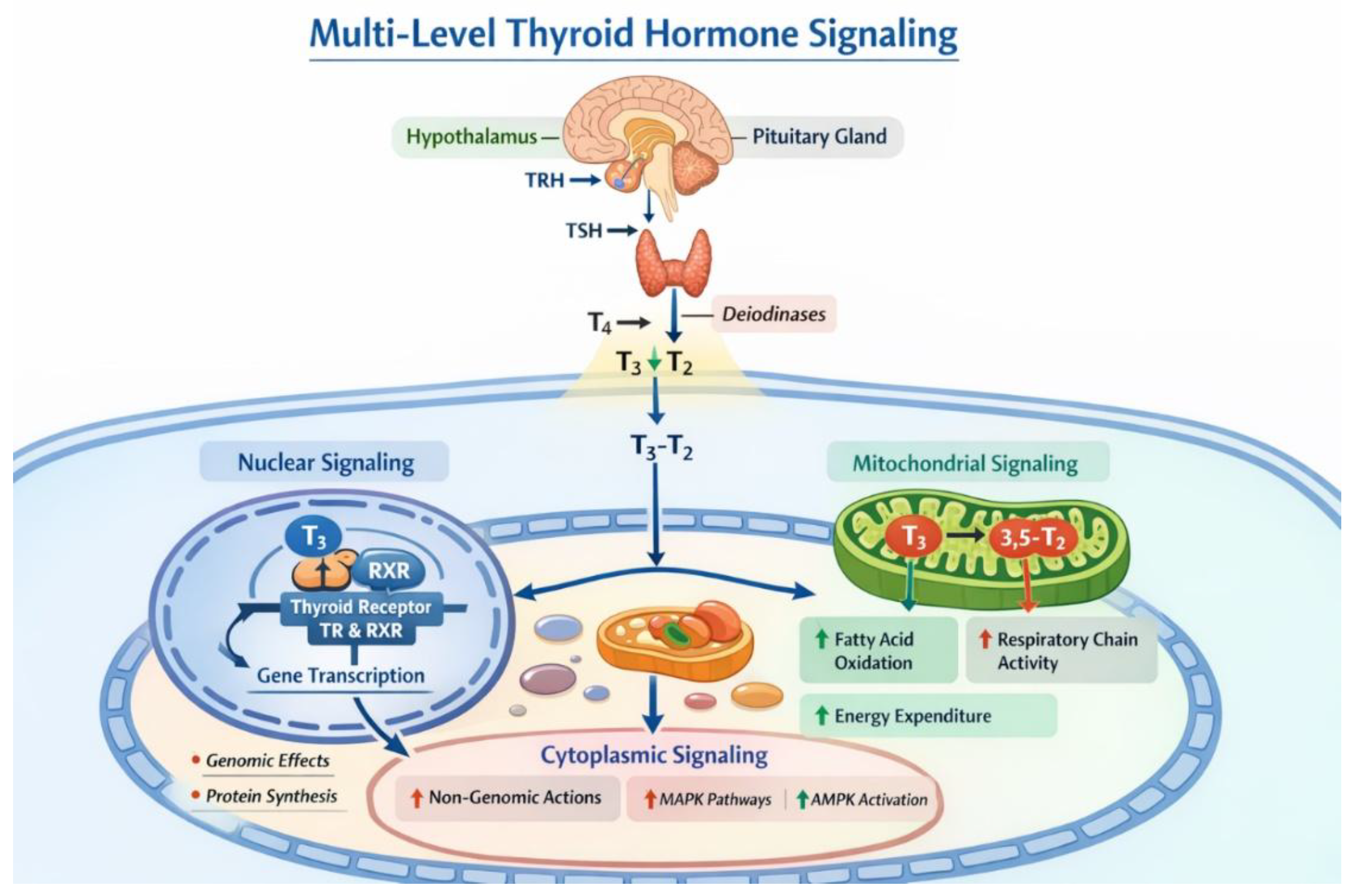

Table 1.
Experimental metabolic effects of 3,5-diiodothyronine (3,5-T2).
| Study | Model/System | Key Findings | Metabolic Implications |
|---|---|---|---|
| García-G et al., 200718 | Killifish (in vivo) | 3,5-T2 maintained euthyroid expression of type 2 deiodinase, growth hormone, and thyroid receptor β1 | Suggests biological activity of T2 distinct from T3 signaling |
| Senese et al., 20186 | Rodent models | Rapid increase in resting metabolic rate and oxygen consumption following T2 administration | Indicates rapid metabolic signaling independent of classical genomic pathways |
| Coppola et al., 20167 | Experimental models | Increased mitochondrial fatty acid oxidation and lipid utilization | Supports role of T2 in regulating lipid metabolism |
| Lanni et al., 201614 | Cellular and mitochondrial studies | Increased mitochondrial respiration and stimulation of oxidative phosphorylation | Demonstrates mitochondrial targeting of thyroid hormone metabolites |
| Padron et al., 20148 | Rat model | Suppression of TSH and induction of central hypothyroidism despite peripheral metabolic stimulation | Highlights endocrine feedback effects and translational concerns |
Disclaimer/Publisher’s Note: The statements, opinions and data contained in all publications are solely those of the individual author(s) and contributor(s) and not of MDPI and/or the editor(s). MDPI and/or the editor(s) disclaim responsibility for any injury to people or property resulting from any ideas, methods, instructions or products referred to in the content. |
© 2026 by the authors. Licensee MDPI, Basel, Switzerland. This article is an open access article distributed under the terms and conditions of the Creative Commons Attribution (CC BY) license (http://creativecommons.org/licenses/by/4.0/).
Copyright: This open access article is published under a Creative Commons CC BY 4.0 license, which permit the free download, distribution, and reuse, provided that the author and preprint are cited in any reuse.


