
Submitted:
29 June 2026
Posted:
30 June 2026
You are already at the latest version
Abstract
The therapeutic use of ketamine and other psychoactive substances in psychiatry is attracting growing research interest, particularly in treatment-resistant depression and related conditions refractory to conventional care. Ketamine exerts direct pharmacological antidepressant effects through NMDA receptor antagonism and downstream neuroplastic mechanisms; its combination with structured psychotherapy represents a promising augmentation strategy, though one that remains largely experimental and is currently recommended only for patients who have not responded to established treatments. By transiently attenuating self-referential processing and the dominance of habitual evaluative frameworks, psychoactive substances may enable new affective and cognitive connections — creating a window of opportunity for therapeutic change that is difficult to achieve through endogenous means alone. This potential appears transdiagnostic, extending beyond depression to trauma-related disorders, substance dependence, and other serious psychiatric conditions. The present article describes the theoretical and neurobiological foundations of altered states of consciousness relevant to this work, and presents preliminary clinical experience with ketamine-augmented hypnotherapy (KAHT) as a specific implementation of ketamine-assisted psychotherapy.
Keywords:
hypnosis
; ketamine augmented psychotherapy
1. Introduction: Psychotherapy with Psychedelics and Hypnosis
Modern psychotherapy is like a mansion with many extensions. The question is not whether we need another room, but whether certain rooms have been locked away for too long. The recent resurgence of interest in psychedelic-assisted treatment is not primarily about novelty; it concerns a class of agents whose mechanism of action — transient entropy amplification in the brain, dissolution of entrenched self-referential networks — differs fundamentally from what conventional psychotherapy can achieve endogenously. This is not a reason for uncritical enthusiasm, but it is a reason for serious inquiry.
For a subset of patients, particularly those refractory to conventional treatments, psychedelics may represent a qualitative step forward in psychotherapy. The evidence base, though constrained by methodological limitations, includes several striking results: a 2016 study (Griffiths et al. 2016) on psilocybin in patients with treatment-resistant depression and terminal cancer found that most participants were able to let go of their anxiety and depression after just one session, with lasting effects. One patient described his equanimity in the words: “Death is part of life.”,
What is most remarkable about psychedelic substances is that they reliably evoke profoundly altered states of consciousness - a property that applies, to a lesser degree, to hypnotic trance as well. Now, consciousness is an intuitive concept, yet one that is scientifically difficult to operationalize; its blanket characterization as the “perception that I am experiencing something” is too broad and vague to be researchable. To become more amenable empirical inquiry, it must be decomposed into components – much as, a century ago, the concept of life was demystified by breaking it down into specific processes such as growth, regeneration, nutrition, reproduction (Seth, 2021).
Candidates for a more detailed description consciousness - and in particular of its altered states - include subjectively perceived qualities such as dissociation, dissolution of ego boundaries; subjectively measurable qualities such as absorption, suggestibility; and objectively (physiologically) measurable correlates such as changes in cerebral functional connectivity and signal complexity in electrical brain activity, e.g. in MEG (Carhart-Harris, 2014) and EEG (De Benedettis and Sironi, 1988) studies, as well as in PET- and fMRI-based measures of regional cerebral blood flow and inter-regional coupling (Faymonville et al., 2003; Del Casale et al., 2012).
A dissolution of ego boundaries (ego dissolution) is considered a signature of psychedelic experience and is found in hypnotic trance in a more circumscribed form. A paradigmatic example is arm levitation, in which two distinct components of self-consciousness are selectively disrupted: a loss of the mine-ness (german: Meinigkeit)1 or bodily mine-ness: the sense that this body is my own — “the arm no longer seems to belong to me”, and a loss of sense of agency (german: Authorenschaft) for the movement: the sense that I am the author of my actions — the movement feels as though it happens by itself, involuntarily. Although these two qualities often co-occur, they are conceptually and empirically dissociable, which makes hypnotic phenomena a particularly valuable model for the fine-grained study of self-consciousness.
Changes in the connectivity patterns of prefrontal and parietal brain regions at rest, described as the Default Mode Network (DMN) can also be observed in psychedelic and hypnotic states (Cavanna & Trimble, 2006; McGeown et. al., 2009; Pyka et al., 2011; Menon, 2011; Cojan et al., 2009; Anticevic et al., 2012). Current evidence from neuroimaging studies indicates that psychedelics reduce DMN connectivity and activity — particularly in the medial prefrontal cortex (mPFC) and posterior cingulate cortex (PCC) — in a manner associated with ego-dissolution and disruption of narrative self-referential processing (Timmermann et al., 2023). Hypnotic induction produces partially overlapping effects, including reduced functional connectivity between the PCC and the executive control network, and attenuated activity in mPFC and related DMN nodes (McGeown et al., 2009; Timmermann et al., 2023). In both cases, increased flexibility in DMN connectivity following the non-ordinary state may reflect a form of belief- or schema-updating that outlasts the acute experience itself.
These brain regions are of particular interest here because of their central role in self-referential processing. The mPFC supports narrative self-referencing and habitual evaluative thinking — the substrate of what might be called everyday rationality. The PCC and precuneus, by contrast, are implicated in environmental monitoring and the representation of one’s relationship to the surrounding world (Faymonville et al., 2006). Together, these regions constitute the core of the DMN’s self-referential architecture. Disruption of these processes during non-ordinary states may temporarily loosen the rigidity of established self-schemas, creating a window of heightened psychological plasticity.
This is clinically relevant because psychotherapy is concerned, among other things, with changing self-image and habitual concepts of experience, precisely the processes subtended by DMN activity. It therefore makes sense to combine the altered information-processing states provoked by psychedelic substances with the content-focused and suggestion- and imagery-based methods of hypnotherapy: the psychedelic state reduces the stability of maladaptive self-models, while hypnotherapeutic suggestion provides directional content during this period of increased receptivity (Timmermann et al., 2023; Lemercier & Terhune, 2018).
2. Consciousness
Information processing in living organisms is understood as the construction of reality. According to the constructivist view, the brain cannot directly perceive objects in the environment. Instead, the brain creates models of objects and situations we encounter and acts as if the model were reality (e.g., children who grow up in a poor environment overestimate the physical size of coins). For the most part, these constructions are made unconsciously and are not accessible verbally.
And when the model makes inaccurate predictions, the brain receives error messages. The brain’s assignment is continuous correction of its models and the predictions they make, thus minimizing errors. Imagine driving a car unable to see the road with the windows taped shut, relying only on a navigation system, as in a video game. An error message then appears stating that the tires are making an unusual noise that is not predicted by the road model; the brain then corrects the direction of travel and the model.
To do this, a decision must first be made: has the vehicle veered off the road or is there a flat tire? According to Anil Seth’s (2021) theory of consciousness as a controlled hallucination, the brain derives a diagnosis from previous experience: namely, how likely is a flat tire in this car and how likely is it, given the condition of the driver (is he drunk?) to veer off the road, and how reliable is the error message (the noise) in either case. From this, the brain calculates the most likely situation and best possible correction (in the sense of Bayesian statistics).
According to this theory, organisms stay alive because the brain constantly reduces errors, i.e., uncertainty, by providing an orientation from a top-down prediction and initiating course-corrections based on bottom-up error messages. Following Friston’s (Friston, 2010) free energy principle, the brain can be understood as a prediction machine that continuously seeks to minimise uncertainty by updating its models of the world2. It is in this context that Carhart-Harris et al. (Carhart-Harris, 2014) introduced the concept of the entropic brain: under the influence of psychedelic substances, this uncertainty-minimising system is temporarily loosened, allowing neural entropy to increase — and with it, the possibility of new experiential and cognitive configurations. This may sound counterproductive, but it is not, because the increment of chaos - provided it takes place in a safe environment - allows new models to arise for both orientation in the environment and self-image.
The entropic brain framework describes how the brain transforms the constant chaotic flux of incoming information into ordered experience by computing revised predictions. This enables normal orientation in everyday life and counteracts the entropic dissolution that would otherwise follow from the organism’s constant exposure to uncertainty. This allows for normal orientation in everyday life and counteracts the breakdown of the organism by the decline of order3. If we consider these mental processes on the axis between entropy and order, there is a middle ground of everyday consciousness that involves functional rationality and more or less permanent self-reference in the sense of “can I do this, am I allowed to do this, what do others think of me” etc
The models of reality and self that arise from lived experience — both ontogenetic (individual) and phylogenetic (evolutionary) — become increasingly differentiated over the course of development. Laukkonen & Slagter (2021) suggested the image of a Pythagoras-fractal for the resulting cognitive structure by which a top-down orientation takes place in everyday life (Figure 2). It depicts how increasingly finer grained conceptual surface gives rise to a conceptual structure of a worldview and a self-image: First, by distinguishing between subject and object, then on the object side between friend and foe, on the subject side between active and passive, and so on until this mushroom-like structure emerges, which internally resembles the cross-section of a cauliflower. The idea is, that this hierarchical structure being far away from factual experience may be deconstructed and thereby returned to a more factual experience by consciousness altering techniques like meditation as focused on by the authors, but equally likely through hypnosis and psychedelic drugs.
3. Altered States of Consciousness
In certain altered states of consciousness, more entropy is allowed, which initially leads to a reduction in the order as usual. This can be found in arts creativity, childhood fantasies, hypnotic trance, REM sleep dreams, psychedelic experiences, and finally in the non-dual consciousness that is sought in meditation (see Figure 1). In all these states, the structure-giving surface of the cauliflower fractal is temporarily abandoned, which implies more entropy, uncertainty, chaos or however you name it to allow for less determinate, less well defined views of oneself and the environment. Schartner et al. (2017) were able to show that in certain regions of the brain, the indeterminacy (entropy) of electromagnetic patterns increases under the influence of psilocybin, ketamine, and LSD4 (see Figure 3).
Helpful for these considerations is to realize that two alternative cerebral networks are used in everyday consciousness: one for external orientation with the executive network of action control. This compound of brain regions activates sensory perception, motor skills, and attention control, among other things and thus keeps the organism navigating through everyday routines in a wake attentive manner. A different state of consciousness occurs when you close your eyes and let your mind wander without intention to solve problems or initiate action or being involved in maneuvering through difficult terrain: being in such a resting state is governed by the default mode network (DMN). It can be shown that this default mode of wandering thoughts connects to the networks of memory, emotionality, and self-reference.
This again can be distinguished from further state of consciousness different from both the executive control and the default mode, in which the usual and well paved pathways between the various networks are altered and opened. Thus, thinking and imagination can be derailed exploring roads less traveled, moving around in a more uncontrolled manner, as is the case in REM sleep dreams, hypnotic trance, and under the influence of hallucinogenic substances. Carhart Harris (2014) was able to show that the individual networks of the brain, which are represented in the following figure as colored dots in the margin of the graphic, are normally, i.e., under placebo conditions, connected by certain pathways (Figure 4, left); under psilocybin (Figure 4, right), these established pathways appear to weaken, while numerous novel cross-network connections emerge — making conceivable a reorganisation of mental associations and the formation of a new experiential order.
An anecdotal example: a medical doctor in stressful hospital occupation, having two children at home, one of which with a broken leg, has on top of all this to prepare for an exam and is working on it at night. She doesn’t manage do limit the study time to two hours and stop at midnight in order to get enough sleep for the next day. In hypnosis among other things she is told the story of Daedalus and his son Ikarus from the Greek mythology, who escape captivity on the isle of Crete by constructing wings of bird feathers and bees wax. Getting started Daedalus warns his son not to fly too high to avoid the sun melting the wax. But he does it anyway, the wings decompose and he crashes plummeting in the ocean. The story ends with Daedalus having no choice but continue his flight in medium cruising altitude and landing safely in Sicily. Later the patient reports, that she without difficulty manages now to stop after two hours and that medium cruising altitude had generalized: maybe she doesn’t need a third child and maybe she doesn’t still another doctorate.
Interestingly, the DMN includes parts of the prefrontal cortex and the precuneus as active components, which represent everyday reason and self-reflection, respectively. When the habitual connectivity patterns of the DMN are disrupted — as occurs during deep trance, psychedelic states, and certain stages of dreaming — the narrative self-referential processing that ordinarily structures experience is loosened. This can manifest as a sense of liberated, unbounded cognition, but it should be distinguished from ordinary mind-wandering, which actually reflects heightened DMN activity and increased self-referential thought. In dreams, the chaos sometimes becomes overwhelming so you more or less drown in the flood of images. But occasionally we have very meaningful dreams. Such as the dream that the chemist Kékulé reported (around 1861), when he was searching for the molecular structure of benzene and couldn’t make any progress with the then usual linear hydrocarbon chains, dozed off and dreamed of a snake biting its tail, which made the ring-shaped arrangement of the atoms clear to him.
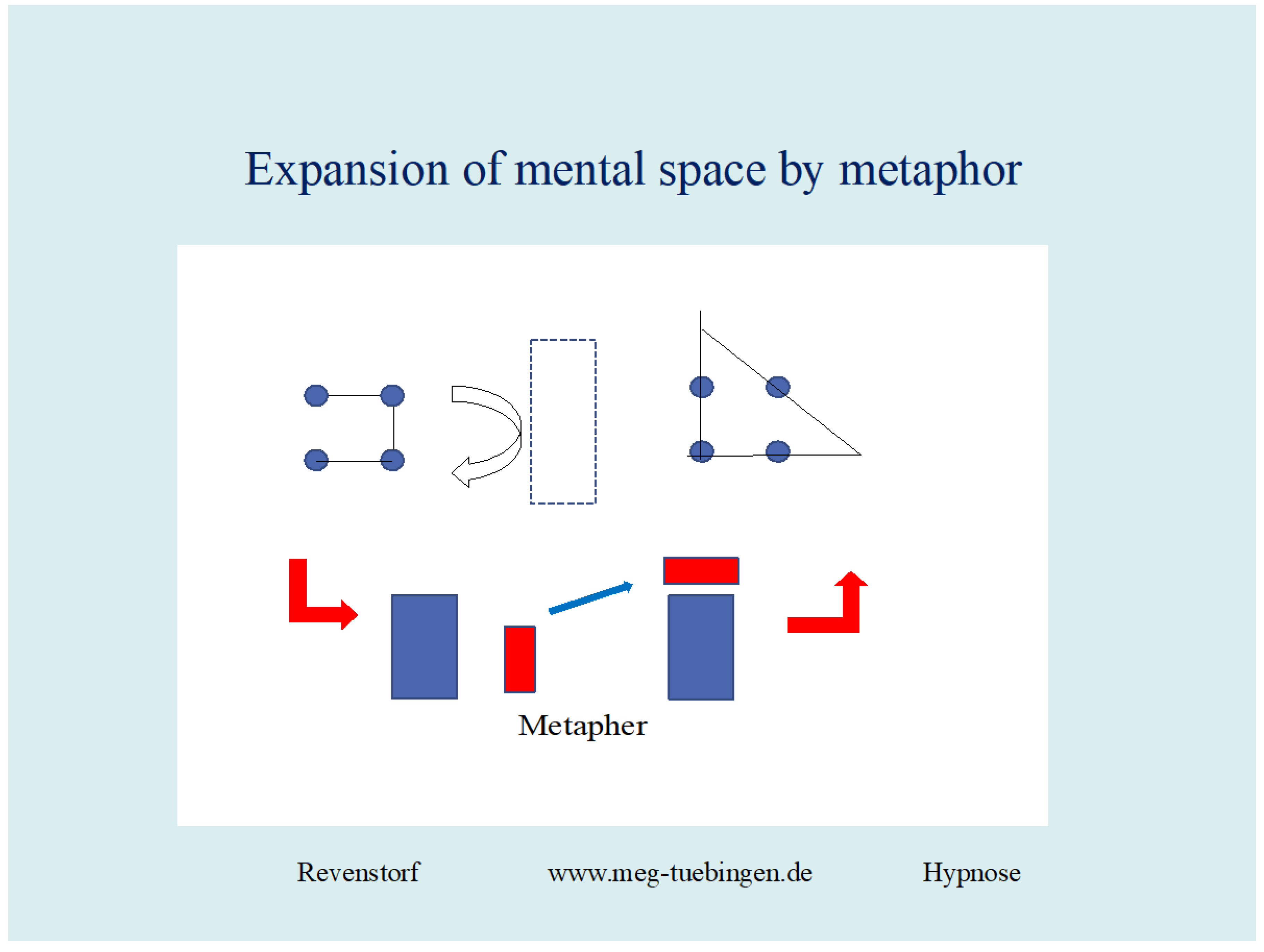
To illustrate how letting go of accustomed patterns thinking can increase creativity, the well-known enigma of connecting four points with only three lines may serve as a metaphor. The solution is found when we leave the intuitive limitation of the space defined by the four points5.
Figure 5.
Expansion of mental solution space through metaphor.
4. Ketamine Therapy
A phenomenological distinction is often drawn between substances that tend to broaden the scope of conscious experience — including LSD, psilocybin, mescaline, DMT6, and ketamine — and those that constrain or dampen it, such as alcohol, opiates, and sedative-hypnotics. This distinction is heuristically useful but should be understood as dimensional rather than categorical: the experiential effects of any substance are substantially modulated by dose, context, and individual variability.7 The therapeutic effect is more likely to be found in consciousness-expanding psychedelics, which include ketamine. The number of clinical publications on ketamine-augmented therapy has risen rapidly over the last 20 years (from practically zero in 2000 to 120 per year in 2020 (Walsh et al., 2021, p. 8). Subjectively, psychedelic experiences are characterized by
- ○
- a time-out from normal everyday rationality,
- ○
- the interruption of negativity,
- ○
- meditative presence,
- ○
- openness to expansion of thinking, and
- ○
- access to an expanded understanding of meaning.
It is as if, under the influence of these substances, one temporarily leaves the order that serves as a guide in everyday life. Under unfavorable conditions, this can take on a threatening character. For example, a patient who received a strong dose of ketamine for pain relief after a skiing accident with multiple tibia fractures reported horrific visions of snake-like monsters attacking him in his imagination. Therefore, an inner state of stress-free well-being and a protected environment are prerequisites for therapeutic use, which is not the case in accident situations or during preparation for surgery.
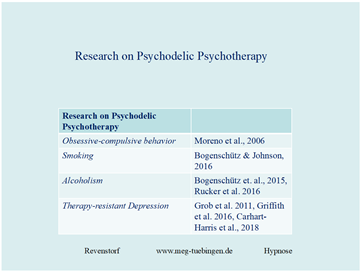
There have already been numerous studies on the use of psychoactive drugs in a clinical context for compulsive behavior, smoking, alcoholism, and depression.

Table 1.
Some studies on psychedelic therapy.
 |
Ketamine has been used since the 1960s as an anesthetic and substitute for phencyclidine (PCP, angel dust)8. The dissociative and hallucinogenic effects of ketamine were initially recorded as undesirable side effects (see example above) until it was discovered that they are psychotherapeutically effective.
Ketamine is an N-methyl-D-aspartate (NMDA) receptor antagonist, originally developed as an anaesthetic. Its antidepressant mechanism differs fundamentally from that of conventional antidepressants and unfolds at several levels (Mihaljević et al., 2020).
At the synaptic level, NMDA receptor antagonism produces a paradoxical chain reaction: blockade of the receptor reduces tonic neuronal excitation, which the organism compensates by transiently increasing glutamate release. This surge in glutamate preferentially activates α-amino-3-hydroxy-5-methyl-4-isoxazolepropionic acid receptors (AMPARs), driving a rapid enhancement of excitatory synaptic transmission. The resulting AMPAR-mediated signalling cascade stimulates the release of brain-derived neurotrophic factor (BDNF), a key neurotrophin that promotes neuronal growth, differentiation, and survival. BDNF in turn activates the mammalian target of rapamycin (mTOR) pathway, accelerating the synthesis of synaptic proteins and the formation of new dendritic spines within hours — a timeline that matches the clinically observed rapid onset of antidepressant action (Zanos et al, 2016; Hess et al. 2021).
At the systems level, the antidepressant effect is attributed to restoration of synaptic function in regions central to mood regulation and emotional behaviour — notably the anterior cingulate cortex, the prefrontal cortex, and the hippocampus. In depression, chronic stress impairs glutamatergic signalling and leads to retraction of dendritic arbours and loss of synaptic contacts in precisely these areas; ketamine reverses this atrophy within hours. Additionally, restoration of dopaminergic neurotransmission — involved in motivation, reward processing, and hedonic tone — and reduced activity in brain circuits associated with anhedonia may account for the rapid subjective sense of relief that many patients describe as qualitatively unlike anything achieved by conventional antidepressants.
Ketamine exists as two mirror-image enantiomers: the S(+)-enantiomer (esketamine) and the R(−)-enantiomer. The racemic mixture has been used clinically since the 1960s. Esketamine (Spravato®), approved in Europe and the USA since 2019 as an intranasal formulation, has approximately twice the binding affinity at the NMDA receptor compared to the R-enantiomer and a correspondingly higher potency. However, preclinical and clinical data suggest that the R-enantiomer may produce a more sustained antidepressant effect and a more favourable dissociative side-effect profile; esketamine’s side effects (dizziness, dissociation, nausea) are generally reported as more intense. A recent meta-analysis concluded that racemic ketamine is superior to esketamine in reducing depressive symptoms, though head-to-head RCT data remain limited (Bahji et. al. 2021). Esketamine is approved for use in combination with an oral antidepressant for the acute treatment of treatment-resistant depression and, in some jurisdictions, for depressive episodes with imminent risk of suicide in adults. In the ketamine-augmented hypnotherapy (KAHT) protocol described below, racemic ketamine is administered intravenously, which offers higher and more predictable bioavailability (80–95%) compared to the nasal (25%), sublingual (15%), or oral (10–20%) routes.
Conventional antidepressants (selective serotonin reuptake inhibitors, SSRIs, monoamine oxidase inhibitors, MAOIs) block the reuptake or breakdown of serotonin, dopamine, and other monoamines, causing their levels in the synaptic cleft to gradually increase. These adjustments can take several weeks9. Conventional antidepressants tend to cause emotional blunting.
Hallucinogens such as ketamine, on the other hand, primarily activate emotions and cause them to be expressed more strongly, whether in inner visions or in expressive behavior (crying, laughing, etc.). These different mechanisms result in opposing coping strategies. For example, a patient taking SSRI antidepressants may perceive bullying at work as less serious and be less likely to change the situation, remaining passive but more tolerant. A therapeutically moderated emotion-activating experience under the influence of hallucinogens, on the other hand, could lead the patient to actively seek to change the stressful situation (Jungaberle et al 2018).
In Walsh’s review (Walsh et al. 2021), 83 systematic reviews and controlled (RCT) studies on the therapeutic use of ketamine were found among more than 300 studies. Intravenous administration is the most common, although nasal spray via Spravato is also increasing – in most cases without psychotherapeutic support. The antidepressant effect has been studied most extensively; it lasts from two days to two weeks. Although fewer studies are available, the positive short-term effect of ketamine has also been demonstrated in a similar way for bipolar depression, anxiety disorders, substance dependence, and compulsive behavior.
Combination with psychotherapy seems desirable, but there are currently too few controlled studies on this. However, the results so far indicate that accompanying psychotherapy prolongs the effect of ketamine.
Before describing different Ketamine therapy models in detail, it is worth situating it within the treatment taxonomy recently proposed by Swainson et al. (2026), who distinguish three models of ketamine-based treatment: (1) Ketamine Pharmacotherapy (KP), in which ketamine is administered solely for its pharmacological effects and any dissociative experience is considered an adverse event; (2) Ketamine Combined with Psychotherapy (KCP), in which a structured, manualized therapy — such as CBT or ACT — runs in parallel with ketamine, exploiting its neuroplastic effects but remaining independent of the acute ketamine experience; and (3) Ketamine Assisted Psychotherapy (KAP), in which the acute dissociative or psycholytic state produced by ketamine is the therapeutic medium itself, with psychotherapy focused on preparation for and integration of that experience. Ketamine Assisted Hypnotherapy (KAHT), falls unambiguously within the KAP category: the altered state of consciousness induced by ketamine is not a side effect to be managed but the very condition under which hypnotherapeutic interventions are delivered. This distinction has practical importance. Regulatory frameworks in several jurisdictions (cf. Alberta Mental Health Services Protection Act, 2024) are beginning to apply specific accreditation requirements to KAP practices that do not apply to KP, KCP or KAHT. Consistent use of this terminology is therefore essential not only for scientific clarity but also for appropriate clinical governance.10
5. Ketamine-Augmented Psychotherapy (KAP)
Ketamine-augmented psychotherapy (KAP) encompasses a range of formats. Some practitioners deliver psychotherapy in the weeks following ketamine infusion (Wilkinson et al., 2019), others include preparatory and integration sessions around the infusion (Krupitsky et al., 1997, 2007), and others accompany the infusion itself with active psychotherapy (Dore et al., 2019). The modal psychotherapeutic approach has been cognitive-behavioural or mindfulness-based; emotion-focused and depth-psychological approaches are less represented in the literature. The length of psychotherapeutic support varied greatly, with a median of 11 sessions.
Some researchers offer psychotherapy in the weeks following the ketamine infusion (Wilkinson et al., 2019). Some provide preparatory sessions and subsequent integrative sessions (Krupitsky et al., 1997, 2007), while others accompany the infusion with psychotherapy sessions (Dore et al., 2019)11.
In the 17 studies included in the review by Drozdz (Drozdz, 2022), ketamine was administered intravenously over 40 minutes or intramuscularly (0.2 mg/kg to 2.0 mg/kg or 80-90 mg) in half of the cases, sublingually (200-250 mg) or nasally (Spravato 50 mg). The most common form of administration was a single or four doses of ketamine administered intravenously (at 0.5-0.7 mg/kg ketamine/body weight). There was also one case of continuous infusion over 5 days, increasing from 2 to 10 mg/kg body weight. It should be noted that bioavailability is significantly lower when administered nasally (25%), sublingually (15%), and orally (10%) than when administered intravenously and intramuscularly (80-95%). However, the IM and IV routes require more effort, and the nasal and sublingual forms allow for (therapeutically controlled) self-administration. In the 230 cases from three psychiatric practices reported by Dore et al. (2019), an intramuscular dose was administered in the presence of the therapists and, after calibration of the individually appropriate sublingual dose, this was prescribed for home self-administration.
According to Drozdz (Drozdz et al., 2022), the following can be said about the effectiveness of ketamine-augmented psychotherapy (KAP) to date: Ketamine without psychotherapy leads to a reduction in depressive symptoms, but 3-5 weeks later, most patients (58-100%) experience significant depressive symptoms again. The strong and rapid reduction of symptoms and the association with a psychedelic experience speak in favor of the positive interaction between psychotherapy and ketamine. Both presumably increase compliance and the expectation of a transformative process. Of course, the therapy also benefits from the increased neuroplasticity caused by ketamine.
In the 17 studies with a total of 603 patients reviewed (Drozdz et al., 2022), ketamine-augmented psychotherapy (KAP) initially produced similar immediate improvements as in studies without psychotherapeutic support (half of the patients had 50% fewer symptoms). However, even with ketamine-augmented psychotherapy, 25% of patients had depressive symptoms again after 8 weeks and 100% after 3 months. The authors suspect that unconscious psychological material is activated during the ketamine sessions; if this material is not worked through and integrated well enough, it could lead to negative emotions and psychosomatic problems. Good therapeutic support in the following sessions would probably minimize lasting adverse effects.
Six studies dealt with post-traumatic stress disorder, another six with major depression (MDD), six with substance abuse, two with obsessive-compulsive disorder (OCD), and two with neuropathic pain; in addition, bipolar depression and anxiety disorders, as well as ADHD, were addressed. Some of the studies have very small sample sizes. Only 7 of the 17 studies are randomized controlled trials (MDD, PTSD, alcohol, cocaine, and opioid abuse). Similarly, Dore et al. (2022) report that 230 patients from three psychiatric practices were treated for virtually all affective disorders with KAP, which generally resulted in a highly significant reduction in depression and anxiety scores compared to the waiting list. Patients with more severe symptoms at the start of therapy and suicidal tendencies in the previous year or with a history of psychiatric hospitalization benefited more from the therapy in terms of anxiety, depression, post-traumatic stress, and drug and medication abuse.
Ketamine was originally used only as a painkiller and anesthetic. Due to its rapid antidepressant effect, it is now also used as a kind of emergency medication without psychotherapeutic accompaniment. In this way, the power of the changes caused by ketamine in neuronal activity and thus in the way the brain perceives the world and the ego, is underused or missed completely.
6. Ketamine-Augmented Hypnotherapy (KAHT)
KAHT, as described here, falls within the KAP category but in a distinguished manner: the altered state of consciousness induced by ketamine is not a side effect to be managed but the very condition under which hypnotherapeutic interventions are delivered.
As described above, hypnotic trance is an altered state of consciousness that in some respects resembles the neurophysiological processes of sleep dreams and psychedelic experiences. Changes in the cerebral default mode network (DMN) can be detected in all three states. Although there is no clear neural signature of hypnosis to date, different brain regions are involved depending on the content of the trance (body movement, social confrontation, trauma exposure, self-image, visual imagery). Nevertheless, it can be assumed that in these states, activations and connectivities in the DMN change, which are associated with a reduction in self-centeredness and everyday rationality (Lou et al., 1999; Cavana & Trimble, 2006; Cojan et al., 2009; McGeown et al., 2009; Pyka et al., 2011; Menon, 2011; Qin & Northoff, 2011; Deeley et al., 2012; Anticevic et al., 2012; Palhano-Fontes, 2015; Lemercier & Terhune, 2018). Hypnotherapeutic interventions are therefore well suited for initiating and accompanying ketamine-augmented psychotherapy.
In contrast to cognitive and psychodynamic approaches, hypnotic support dispenses with the everyday language-based, discursive approach to the patient’s mental process and allows the therapist to communicate with the patient in a mental processing mode comparable to that under the influence of the psychedelic substance. The use of metaphors is also suitable for this purpose, as they create a framework for content but remain open-ended. Metaphors are not understood as pictorial descriptions of a specific suggestion (e.g., act in such and such a way), but as an extension of the semantic space with a polyvalent focus—such as change, change of perspective, distancing, indifference—each of which offers numerous opportunities for stimulating an individual approach to one’s own issue.
The induction of trance can take place before or during the administration of ketamine. As a form of induction, a simple relaxation induction or the levitation of the hand that is not connected to the infusion can be considered for patients who are usually lying down during the infusion. Depending on the patient’s preferences and previous experience, simple counting (1 to 10), diving into the sea (fish), or hiking in the mountains can be used for deepening. In all cases, more time can be allowed than is normally the case in a therapy session. In addition, it can be assumed that the substance will take over the maintenance of the altered state of consciousness after a short time. This is followed by various basic hypnotic interventions that are adapted to the patient’s specific issues:
Resource activation: Confronting a problem situation with the support of resources or through general access to a salutogenic state (the “healthy self,” “superego matrix”).
Inclusion of the biography through re-association of certain life experiences in the form of a metaphorical regression (“return to the source along a river”).
Retrospective view of the problem, i.e., the current situation, from the perspective of the future in the form of a progression into a stage of life in which the problem will be overcome or at the end of life.
Reconsolidation: Reducing the problem to a dilemma, a conflict between two contradictory parts (egostates) in the patient, and hypnotically juxtaposing these experiences or motives (using a split-screen technique). This creates cognitive dissonance that the patient cannot avoid through the usual confirmation bias, thus stimulating an inner search process for a solution.
Care for injured parts: Exposure and fictional continuation of stressful experiences (traumas) in the sense of completed emotional experiences.
Metaphors as a medium for expanding semantic space: metaphors that draw attention to relevant topics, e.g., independence (fairy tale “Pippi Longstocking”), overcoming dichotomous thinking (idea of a newly discovered third door), expression of anger (dam burst, volcano), distance (journey), perseverance (fairy tale of “The Devil’s Three Golden Hairs”), freedom (bird flight), etc.
These elements — preparatory session, therapeutic induction, hypnotherapeutic content work, and post-session integration — correspond to what the broader psychedelic-assisted therapy literature describes as the set (internal: the patient’s expectations, biographical material, motivations) and setting (external: the therapeutic relationship, the physical environment, the skill of the facilitator) dimensions of outcome determination (cf. Carhart-Harris et al., 2018; Timmermann et al., 2023). KAHT is thus not merely a pharmacological plus a psychotherapeutic intervention, but an integrated contextual protocol in which each element actively shapes the experiential and therapeutic trajectory.
The ketamine sessions are embedded in a preliminary discussion and an integration session within the first three days after ketamine administration. In addition, patients are usually undergoing ongoing psychotherapy. The entire ketamine session is mostly monological, with longer breaks at the end. However, questions are answered at any time and, if necessary, tactile contact (such as a hand on the shoulder) may be offered to provide grounding and reassurance.
7. Preliminary Experiences
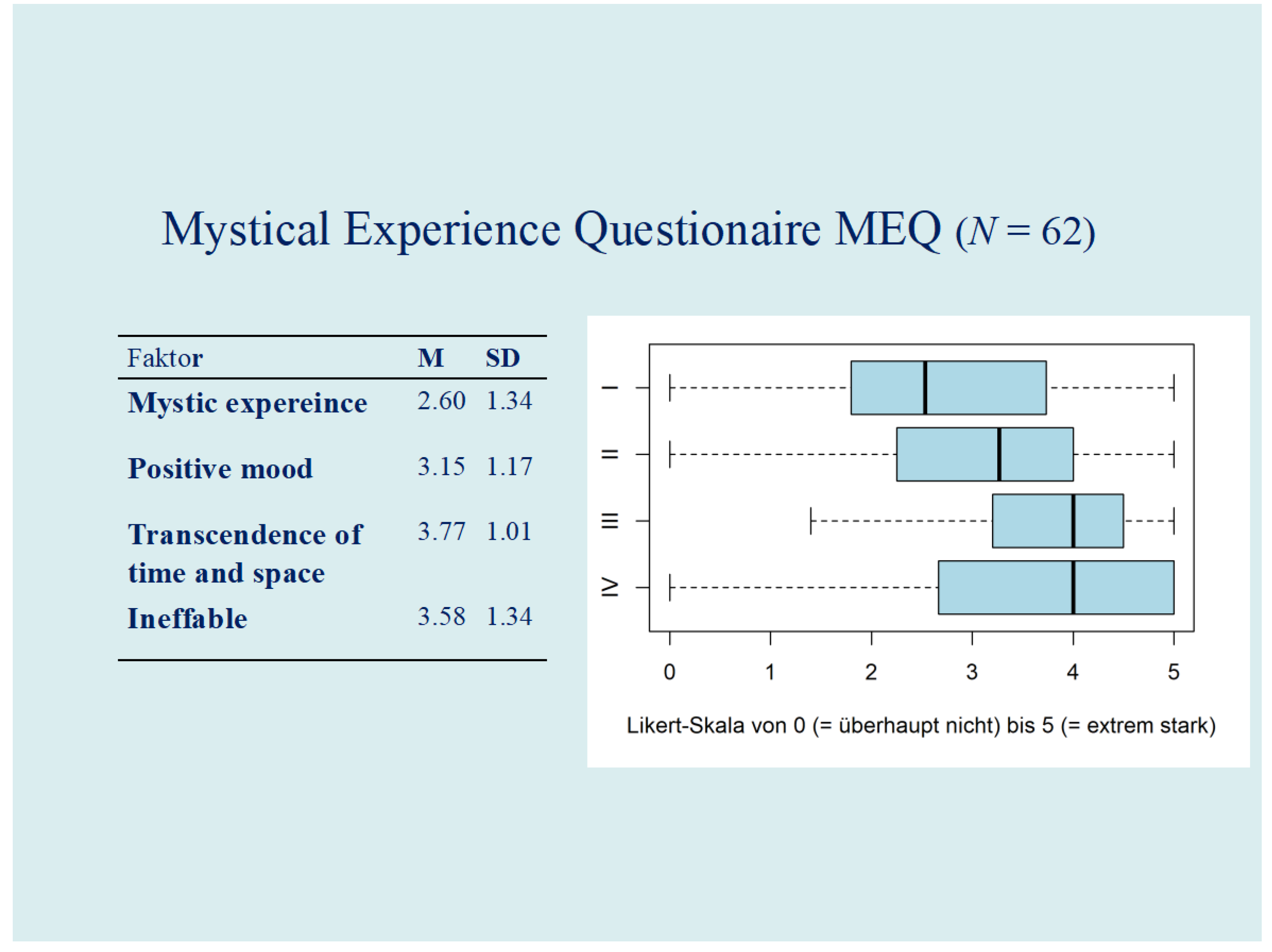
To date, we (Group of first author) have treated 89 patients with intravenous ketamine, most of whom described the experience as calming, euphoric, and psychedelic. In fact, certain non-rational components, such as the dissolution of time and space and a feeling of indescribable experiences, are particularly evident in the standard MEQ (Mystical Experience Questionnaire) (see Figure 6).
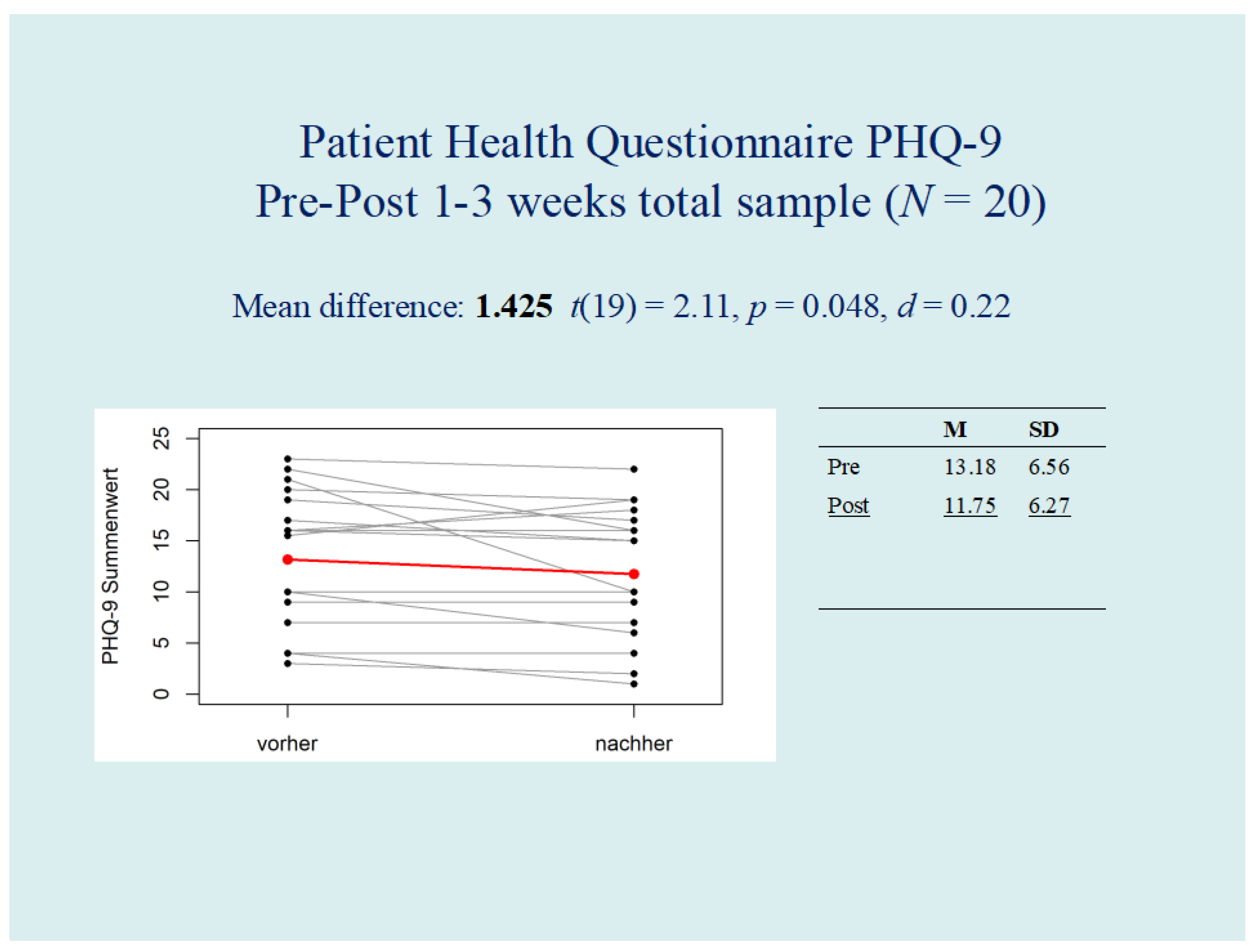
PHQ-9 depression scores decreased significantly in the full feasibility sample (t(19) = 2.11, p = 0.048). Among the subgroup meeting criteria for clinical depression, a similar trend was observed (t(13) = 1.86, p = 0.09), which did not reach conventional significance thresholds, likely reflecting reduced statistical power in this smaller subsample. These results should be interpreted with appropriate caution: the data derive from an uncontrolled feasibility study without a comparison condition (ketamine-only, hypnotherapy-only, or waitlist). As Swainson and Drozdz (Swainson et al., 2026; Drozdz et al., 2022) note, the central methodological challenge in this field is disentangling the pharmacological contribution of ketamine from the contribution of the psychedelic experience and from the psychotherapy itself. The present data are consistent with a KAHT effect but cannot isolate its active ingredients. Randomized designs comparing KP, KCP, and KAP (KAHT) conditions are required to establish the specific and incremental contribution of the hypnotherapeutic component.
In a feasibility study, the first 20 patients were asked to provide statements about the effects of the ketamine session. Similar to Figure 6, the sensations during the KAHT session were mostly positive, psychedelic, calm, “detached,” and not very anxious. In the long term, 12 positive changes, 6 no changes, and 2 negative changes were reported. On average, the effects were rated 3 on a scale from 0 (no effect) to 5 (very significant effect). In terms of content, the changes concerned:
- Impulses for new professional and personal decisions,
- letting go of emotional fixations (resentment, hurt feelings),
- Reduction of anxiety, depression, and compulsions,
- Psychosomatic improvements (reduction of migraines),
- Connection with one’s own body, inner peace, detachment.
Figure 7.
Changes in depression scores on the PHQ-9 in 20 patients undergoing ketamine-augmented hypnotherapy.
Figure 7.
Changes in depression scores on the PHQ-9 in 20 patients undergoing ketamine-augmented hypnotherapy.
There were some negative reactions, such as anger about the ineffectiveness of the treatment, worsening of symptoms and attitude towards life, and panic. One patient reported initially experiencing euphoria, then fragmented consciousness and loss of control, followed by prolonged nightmares. Another noted that without further therapeutic support, the effect of the drug disappears very quickly.
Alongside these adverse reactions, a number of patients reported substantial and clinically meaningful positive outcomes:
- ○
- One patient reports that she made a fundamental change in her life after the session, which she had certainly planned for a long time but had not yet implemented, namely to quit her job, move to another city, and start a new business.
- ○
- Another patient reported partial remission after 28 years of exhaustion depression.
- ○
- Another patient reported feeling more peaceful and no longer feeling aggression toward his deceased father.
- ○
- Yet another patient reported that he actually wanted to work through the grief and pain of being abandoned by his wife, but found that during the ketamine trance he was preoccupied with working through the grief of the death of his best friend, whom he had accompanied in his dying moments, merging with him in a kind of near-death experience and ultimately finding the loss of his loved one irrelevant.
A single case study currently underway (Mertens, in preparation) provides preliminary clinical illustration of this approach. The case involves a two-year naturalistic treatment course of a 55-year-old male professional presenting with persistent anhedonic depression, attention-deficit/hyperactivity disorder (inattentive presentation), and severe obstructive sleep apnoea (OSA) managed with continuous positive airway pressure (CPAP). Following inadequate response to four sequential pharmacological trials — escitalopram, duloxetine, bupropion, and aripiprazole augmentation — treatment was escalated to include intravenous and subsequently oral ketamine, delivered in collaboration with a specialised ketamine clinic (Phida, Almere), integrated with psychodynamic psychotherapy incorporating hypnotherapeutic elements. The combination of ketamine’s neuroplasticity-enhancing and rapidly acting antidepressant properties with hypnotherapeutically augmented psychotherapy was intended to exploit the window of increased sychological receptivity hypothesised to follow ketamine administration.
8. Discussion
Among the currently available means of modifying conscious experience, exogenous psychoactive substances such as psilocybin, ketamine, and LSD produce some of the most rapid and profound effects — effects that, at least transiently, exceed what endogenous methods such as meditation or hypnosis typically achieve. Compared to these, endogenous methods such as meditation, mindfulness, and hypnosis are relatively laborious and unreliable. However, therapy with psychoactive substances has a few distinctive features that pose a problem.
Scandalization: Psychedelics are a kind of enfant terrible, a femme fatale that tempts us to venture onto uncertain ground. Half a century ago, there was already a flood of reports and studies on the therapeutic effectiveness of psychedelics. But they fell into disrepute due to inflationary and uncritical consumption, which then led to their ban in 1971 (Nixon’s War on Drugs). Now they must first be freed from the stigma of abuse, illegality, criminalization, and esotericism. But they are already getting bad press again:
The NY Times of August 23, 2024 writes: The pharmaceutical company Lykos had expected “sales of MDMA (methylenedioxymethamphetamine, ecstasy) for the treatment of PTSD to soar to meteoric heights. On August 9, 2024, the US Food and Drug Administration (FDA) rejected the application. There were concerns about the studies submitted and suspicions of unethical behavior. The Journal of Pharmacology retracted three articles because the treatment had been carried out by unlicensed therapists. And yet MDMA was the substance that was hoped to play a pioneering role in the breakthrough of psychedelic medicine.
Therapeutic potency: Psychoactive substances temporarily trigger neurophysiological changes and enable a quality of curative processes that differs fundamentally from conventional methods of psychotherapy. They represent a breakthrough in working with affective and cognitive impasses, based on the fact that the neural structure of mental processing changes radically under the influence of these substances. However, the substance puts patients in a vulnerable state and they must be protected in order to process the changes that have been initiated and the fears that may have been triggered.
Intellectual integrity. There is a certain affinity for the use of psychoactive substances among people with specific expectations of healing and idealized visions of a better social order. This is expressed in the intellectual simplification believing that Huxley’s Doors of Perception might indeed open a path to a brave new world, made possible by psychedelics, and in the hope that they, as “natural teachers” of sorts—they are often of plant origin—will guide people to an enlightened or at least salutogenic state. Such a perspective would ennoble therapy with psychoactive substances by offering not only effortless healing but also a spiritual collateral gain, thus satisfying another deep human longing.
A recurring sociological pattern attends the introduction of psychoactive substances into therapeutic and countercultural contexts: heightened interest tends to cluster among individuals who bring to these substances not only therapeutic expectations but ideologically charged visions of personal and social transformation. A structurally similar pattern is observable in the history of lay hypnosis practice, where inflated expectations of healing, utopian visions of social transformation, and what might be termed spiritual overclaiming have periodically flourished outside — and sometimes within — professional clinical frameworks. The consequences have been predictable: as Huxley himself ironically anticipated in Brave New World, chemically mediated states of altered consciousness are as readily recruited in the service of social control and wishful thinking as of genuine liberation or healing.
This historical parallel carries a direct cautionary implication for the emerging field of ketamine-assisted therapy. As documented across the history of hypnosis, surges of clinical and popular interest in a promising therapeutic modality are recurrently succeeded by periods of scepticism and institutional neglect — typically when inflated claims encounter the friction of controlled evidence, adverse events, or misuse. The field of ketamine-assisted therapy would do well to anticipate this trajectory rather than repeat it: rigorous methodology, honest communication of effect sizes and limitations, and a clear separation of clinical practice from ideological advocacy are preconditions for sustainable integration into evidence-based psychiatry. And in order to counteract excessive expectations and narcissistic complacency, a certain degree of integrity on the part of the users and sober education of the patients who entrust themselves to the drug are required.
However, since the beneficial effects are evident in the empirical data (Krupitzky et al., 1997, 2007; Moreno et al., 2006; Griffiths et al., 2016; Grob et al., 2011; Bogenschütz & Johnson, 2016; Rucker et al., 2016; Vollenweider et al., 2020) and in the subjective comments of patients, there is sufficient reason to examine this approach, which – if administered in form of supervised clinical protocols, carries a lower addiction risk than many conventional substances, and promises a therapeutic opportunity especially in situations where therapy as usual has stagnated.
Added to this is the apparent transdiagnostic efficacy of psychoactive substances, which are therefore not limited to a specific indication, thus creating a new picture of psychopathology and its cure. Since one of the features of psychedelic therapies is dissolution, this might also be an new opportunity to consider inclusion of the spiritual dimension in psychotherapy in a sober way which has been proposed since decades (Metzner, 1989; Saad et al., 2017).
| 1 | The philosopher Metzinger (Metzinger, 2003) identifies four qualities of self-consciousness: Autorenschaft (sense of agency: I am sure that this is my body), Jetzigkeit (presentness: I am sure that I am experiencing the present and not the past or future), Autorenschaft (sense of agency: I am sure that I am the author of my actions), and Ichzentriertheit (egocentricity: that I experience things close to me more clearly than things far away). |
| 2 | This is similar to the case when symptoms of a certain disease are observed in a patient and the probability of the disease in this particular patient is calculated from the prevalence of the disease in the population the patient belongs to, the likelihood of the symptoms in the population and the reliability of the diagnosis on the basis of the symptoms. In this way the therapy with the best prognosis is derived from the data. |
| 3 | The decay of order and structure on the biological level corresponds to heat death, i.e., the second law of thermodynamics on the physical level. Decay begins immediately on the biological level when the organism dies and no longer counteracts entropy. |
| 4 | Measured in the EEG/MEG using the Lempel-Ziv complexity index |
| 5 | The test subjects who were initially unable to solve the task found the solution by showing that a small object can be used to cover a larger one, which is not possible in two dimensions, but becomes possible in three dimensions by covering the short edge of the larger object with the long edge of the smaller object. |
| 6 | The psychedelics mentioned occur naturally: lysergic acid as a precursor to LSD (lysergic acid dimethylamide) in ergot on grain infested with certain fungi; psilocybin in some fungi, mescaline in peyote cactus, DMT (N,N-dimethyltryptamine) in the ayahuasca drink |
| 7 | Cannabis (THC in medicinal hemp, marijuana) can have a potentially mind-expanding effect in the short term, but often has a mind-numbing effect in the long term or in high doses. |
| 8 | The anesthetic effect of ketamine is based on the interruption of pain transmission by blocking NMDA receptors, which leads to a reduction in excitatory signal transmission. It leads to a dissociation of consciousness from sensory input and a reduction in pain sensations, while physiological functions such as breathing and cardiovascular activity are largely preserved. Ketamine is therefore particularly suitable for use in anesthesia, emergency medicine, and pain therapy. Ketamine plays an important role in the transmission of signals in the synaptic cleft, which is important for neural plasticity, memory formation, and learning processes, for regulating the development of nerve cells, and for controlling neural excitability. |
| 9 | Racemic ketamine consists of two enantiomers: S(+)-ketamine (esketamine) and R(−)-ketamine. Esketamine has approximately twice the NMDA receptor affinity of its R-counterpart and has been commercially available as an intranasal formulation (Spravato®) since 2019. It is approved in combination with an oral antidepressant for treatment-resistant depression in adults. Despite its higher receptor affinity, the clinical antidepressant superiority of esketamine over the racemate remains debated: a recent meta-analysis found racemic ketamine to be superior in reducing depressive symptoms, and preclinical data suggest the R-enantiomer produces more sustained antidepressant effects. The dissociative and autonomic side effects of esketamine are generally reported as more pronounced. The psychological experiences during therapy with either compound do not appear to differ significantly in terms of overall impairment. See: Mihaljević S, Pavlović M, Reiner K, Ćaćić M. Therapeutic Mechanisms of Ketamine. Psychiatr Danub. 2020;32(3-4):325–333. |
| 10 | Swainson J, Brietzke E, Khullar A, McIntyre RS, Soares CN. Ketamine, Psychedelics, and Psychotherapy: Reframing, Redefining, Renaming Treatment Models. Can J Psychiatry. 2026;71(2):83–88. DOI: 10.1177/07067437251389090. The authors propose a three-part taxonomy distinguishing Ketamine Pharmacotherapy (KP), Ketamine Combined with Psychotherapy (KCP), and Ketamine Assisted Psychotherapy (KAP). KAHT as described in the present article corresponds to the KAP category. |
| 11 | A typical format (Wilkinson et al., 2021) consists of four ketamine sessions in two weeks (0.5 mg/kg) and twice-weekly cognitive behavioral therapy consisting of psychoeducation, cognitive restructuring, followed by 12 additional sessions of cognitive behavioral therapy over eight weeks. The studies reviewed by Drozdz et al. (2022) mention the following forms of therapy: cognitive behavioral therapy and MBSR (6 x each), stimulus exposure and motivational enhancement therapy (3 x each), and existential or analytical psychotherapy (1 x each). The duration varied between 4 and 60 sessions (median 11 sessions). |
References
- Anticevic, A.; Cole, M.W.; Murray, J.D.; Corlett, P.R.; Wang, X.J.; Krystal, J.H. The role of default network deactivation in cognition and disease. Trends Cogn Sci. 2012, 16(12), 584–592. [Google Scholar] [CrossRef] [PubMed]
- Bogenschutz, M. P.; Johnson, M. W. Classic hallucinogens in the treatment of addictions. Progress in Neuro-Psychopharmacology and Biological Psychiatry 2016, 64, 250–258. [Google Scholar] [CrossRef] [PubMed]
- Carhart-Harris, R.L.; Leech, R.; Hellyer, P.J.; Shanahan, M.; Feilding, A.; Tagliazucchi, E.; Chialvo, D.R.; Nutt, D. The entropic brain: a theory of conscious states informed by neuroimaging research with psychedelic drugs. Front Hum Neurosci. 2014, 8, 20. [Google Scholar] [CrossRef] [PubMed]
- Carhart-Harris, R.L.; Bolstridge, M.; Rucker, J.; Day, C.M.J.; Erritzoe, D.; Kaelen, M.; Bloomfield, M.; Rickard, J.A.; Forbes, B.; Feilding, A.; Taylor, D.; Pilling, S.; Curran, V.H.; Nutt, D.J. Psilocybin with psychological support for treatment-resistant depression: an open-label feasibility study. Lancet Psychiatry. 2016, 3(7), 619–627. [Google Scholar] [CrossRef] [PubMed]
- Carhart-Harris, R.L.; Roseman, L.; Haijen, E.; Erritzoe, D.; Watts, R.; Branchi, I.; Kaelen, M. Psychedelics and the essential importance of context. J Psychopharmacol. 2018, 32(7), 725–731. [Google Scholar] [CrossRef] [PubMed]
- Cavanna, A.E.; Trimble, M.R. The precuneus: a review of its functional anatomy and behavioural correlates. Brain. 2006, 129(3), 564–583. [Google Scholar] [CrossRef] [PubMed]
- Cojan, Y.; Waber, L.; Schwartz, S.; Rossier, L.; Forster, A.; Vuilleumier, P. The brain under self-control: modulation of inhibitory and monitoring cortical networks during hypnotic paralysis. Neuron 2009, 62(6), 862–875. [Google Scholar] [CrossRef] [PubMed]
- Bahji, A.; Vazquez, G.H.; Zarate, C.A., Jr. Comparative efficacy of racemic ketamine and esketamine for depression: A systematic review and meta-analysis. J Affect Disord. 2021, 278, 542–555. [Google Scholar] [CrossRef] [PubMed]
- De Benedittis, G.; Sironi, V.A. Arousal effects of electrical deep brain stimulation in hypnosis. Int J Clin Exp Hypn. 1988, 36(2), 96–106. [Google Scholar] [CrossRef]
- Deeley, Q.; Oakley, D.A.; Toone, B.; Giampietro, V.; Brammer, M.J.; Williams, S.C.R.; Halligan, P.W. Modulating the default mode network using hypnosis. Int J Clin Exp Hypn. 2012, 60(2), 206–228. [Google Scholar] [CrossRef] [PubMed]
- Del Casale, A.; Ferracuti, S.; Rapinesi, C.; Serata, D.; Sani, G.; Savoja, V.; Kotzalidis, G.D.; Tatarelli, R.; Girardi, P. Neurocognition under hypnosis: findings from recent functional neuroimaging studies. Int J Clin Exp Hypn. 2012, 60(3), 286–317. [Google Scholar] [CrossRef] [PubMed]
- Dore, J.; Turnipseed, B.; Dwyer, S.; Turnipseed, A.; Andries, J.; Ascani, G.; Monnette, C.; Huidekoper, A.; Strauss, N.; Wolfson, P. Ketamine assisted psychotherapy (KAP): patient demographics, clinical data and outcomes in three large practices administering ketamine with psychotherapy. J Psychoactive Drugs 2019, 51(2), 189–198. [Google Scholar] [CrossRef] [PubMed]
- Drozdz, S.J.; Goel, A.; McGarr, M.W.; Katz, J.; Ritvo, P.; Mattina, G.F.; Bhat, V.; Diep, C.; Ladha, K.S. Ketamine assisted psychotherapy: a systematic narrative review of the literature. J Pain Res. 2022, 15, 1691–1706. [Google Scholar] [CrossRef] [PubMed]
- Faymonville, M.E.; Roediger, L.; Del Fiore, G.; Degueldre, C.; Phillips, C.; Lamy, M.; Luxen, A.; Maquet, P.; Laureys, S. Increased cerebral functional connectivity underlying the antinociceptive effects of hypnosis. Cogn Brain Res. 2003, 17(2), 255–262. [Google Scholar] [CrossRef]
- Faymonville, M.E.; Boly, M.; Laureys, S. Functional neuroanatomy of the hypnotic state. J Physiol Paris. 2006, 99(4–6), 463–469. [Google Scholar] [CrossRef] [PubMed]
- Friston, K. The free-energy principle: a unified brain theory? Nat Rev Neurosci. 2010, 11(2), 127–138. [Google Scholar] [CrossRef] [PubMed]
- Griffiths, R.R.; Johnson, M.W.; Carducci, M.A.; Umbricht, A.; Richards, W.A.; Richards, B.D.; Cosimano, M.P.; Klinedinst, M.A. Psilocybin produces substantial and sustained decreases in depression and anxiety in patients with life-threatening cancer: a randomized double-blind trial. J Psychopharmacol. 2016, 30(12), 1181–1197. [Google Scholar] [CrossRef] [PubMed]
- Grob, C.S.; Danforth, A.L.; Chopra, G.S.; Hagerty, M.; McKay, C.R.; Halberstadt, A.L.; Greer, G.R. Pilot study of psilocybin treatment for anxiety in patients with advanced-stage cancer. Arch Gen Psychiatry 2011, 68(1), 71–78. [Google Scholar] [CrossRef] [PubMed]
- Hess, E.M.; Riggs, L.M.; Michaelides, M.; Gould, T.D. Mechanisms of ketamine and its metabolites as antidepressants. Biochem Pharmacol. 2022, 197, 114892. [Google Scholar] [CrossRef] [PubMed]
- Jungaberle, H.; Thal, S.; Zeuch, A.; Rougemont-Bücking, A.; von Heyden, M.; Aicher, H.; Scheidegger, M. Positive psychology in the investigation of psychedelics and entactogens: a critical review. Neuropharmacology 2018, 142, 179–199. [Google Scholar] [CrossRef] [PubMed]
- Krupitsky, E.M.; Burakov, A.M.; Dunaevsky, I.V.; Romanova, T.N.; Slavina, T.Y.; Grinenko, A.Y. Single versus repeated sessions of ketamine-assisted psychotherapy for people with heroin dependence. J Psychoactive Drugs 2007, 39(1), 13–19. [Google Scholar] [CrossRef] [PubMed]
- Krupitsky, E.M.; Grinenko, A.Y. Ketamine psychedelic therapy (KPT): a review of the results of ten years of research. J Psychoactive Drugs 1997, 29(2), 165–183. [Google Scholar] [CrossRef] [PubMed]
- Laukkonen, R.E.; Slagter, H.A. From many to (n)one: meditation and the plasticity of the predictive mind. Neurosci Biobehav Rev. 2021, 128, 199–217. [Google Scholar] [CrossRef] [PubMed]
- Lemercier, C.E.; Terhune, D.B. Psychedelics and hypnosis: commonalities and therapeutic implications. J Psychopharmacol. 2018, 32(7), 732–740. [Google Scholar] [CrossRef]
- Lou, H.C.; Kjaer, T.W.; Friberg, L.; Wildschiodtz, G.; Holm, S.; Nowak, M. A 15O-H2O PET study of meditation and the resting state of normal consciousness. Hum Brain Mapp. 1999, 7(2), 98–105. [Google Scholar] [CrossRef]
- McGeown, W.J.; Mazzoni, G.; Venneri, A.; Kirsch, I. Hypnotic induction decreases anterior default mode activity. Conscious Cogn. 2009, 18(4), 848–855. [Google Scholar] [CrossRef] [PubMed]
- Menon, V. Large-scale brain networks and psychopathology: a unifying triple network model. Trends Cogn Sci. 2011, 15(10), 483–506. [Google Scholar] [CrossRef] [PubMed]
- Metzinger, T. Being No One: The Self-Model Theory of Subjectivity; Cambridge, MA; MIT Press, 2003. [Google Scholar]
- Metzner, R. States of Consciousness and Transpersonal Psychology. In Existential and Phenomenological Perspectives in Psychology; Vallee, R., Halling, S., Eds.; Plenum Press, 1989; pp. 329–338. [Google Scholar]
- Mihaljević, S.; Pavlović, M.; Reiner, K.; Ćaćić, M. Therapeutic mechanisms of ketamine. Psychiatr Danub. 2020, 32(3–4), 325–333. [Google Scholar] [CrossRef] [PubMed]
- Moreno, F.A.; Wiegand, C.B.; Taitano, E.K.; Delgado, P.L. Safety, tolerability, and efficacy of psilocybin in 9 patients with obsessive-compulsive disorder. J Clin Psychiatry 2006, 67(11), 1735–1740. [Google Scholar] [CrossRef] [PubMed]
- Palhano-Fontes, F.; Andrade, K.C.; Tofoli, L.F.; Santos, A.C.; Crippa, J.A.S.; Hallak, J.E.C.; Ribeiro, S.; de Araujo, D.B. The psychedelic state induced by ayahuasca modulates the activity and connectivity of the default mode network. PLoS ONE 2015, 10(2), e0118143. [Google Scholar] [CrossRef] [PubMed]
- Pyka, M.; Burgmer, M.; Lenzen, T.; Pioch, R.; Dannlowski, U.; Pfleiderer, B.; Ewert, A.W.; Heuft, G.; Arolt, V.; Konrad, C. Brain correlates of hypnotic paralysis: a resting-state fMRI study. NeuroImage. 2011, 56(4), 2173–2182. [Google Scholar] [CrossRef] [PubMed]
- Qin, P.; Northoff, G. How is our self related to midline regions and default-mode network? NeuroImage 2011, 57(3), 1221–1233. [Google Scholar] [CrossRef] [PubMed]
- Rucker, J. J.; Jelen, L. A.; Flynn, S.; Frowde, K. D.; Young, A. H. Psychedelics in the treatment of unipolar mood disorders: a systematic review. Journal of Psychopharmacology 2016, 30, 1220–1229. [Google Scholar] [CrossRef] [PubMed]
- Saad, M.; de Medeiros, R.; Mosini, A.C. Are we ready for a true Biopsychosocial-Spiritual Model? Medicines 4 2017, 79. [Google Scholar] [CrossRef] [PubMed]
- Schartner, M.M.; Carhart-Harris, R.L.; Barrett, A.B.; Seth, A.K.; Muthukumaraswamy, S.D. Increased spontaneous MEG signal diversity for psychoactive doses of ketamine, LSD and psilocybin. Sci Rep. 2017, 7, 46421. [Google Scholar] [CrossRef] [PubMed]
- Seth, A.K. Being You: A New Science of Consciousness; New York; Dutton, 2021. [Google Scholar]
- Swainson, J.; Brietzke, E.; Khullar, A.; McIntyre, R.S.; Soares, C.N. Ketamine, Psychedelics, and Psychotherapy: Reframing, Redefining, Renaming Treatment Models. Can J Psychiatry 2026, 71(2), 83–88. [Google Scholar] [CrossRef] [PubMed]
- Timmermann, C.; Bauer, P.R.; Gosseries, O. A neurophenomenological approach to non-ordinary states of consciousness: hypnosis, meditation, and psychedelics. Trends Cogn Sci. 2023, 27(2), 139–159. [Google Scholar] [CrossRef] [PubMed]
- Vollenweider, F.X.; Preller, K.H. Psychedelic drugs: neurobiology and potential for treatment of psychiatric disorders. Nat Rev Neurosci. 2020, 21(11), 611–624. [Google Scholar] [CrossRef] [PubMed]
- Walsh, Z.; Mollaahmetoglu, O.M.; Rootman, J.; Golsof, S.; Keeler, J.; Marsh, B.; Nutt, D.J.; Morgan, C.J.A. Ketamine for the treatment of mental health and substance use disorders: comprehensive systematic review. BJPsych Open. 2021, 7(1), e19. [Google Scholar] [CrossRef] [PubMed]
- Wilkinson, S.; Howard, T.D.; Busch, H.S.H. Psychiatric practice patterns and barriers to the adoption of esketamine. JAMA 2019, 322(11), 1039. [Google Scholar] [CrossRef] [PubMed]
- Zanos, P.; Moaddel, R.; Morris, P.J. NMDAR inhibition-independent antidepressant actions of ketamine metabolites. Nature 2016, 533(7604), 481–486. [Google Scholar] [CrossRef] [PubMed]
Figure 1.
Everyday consciousness in between entropy and order.
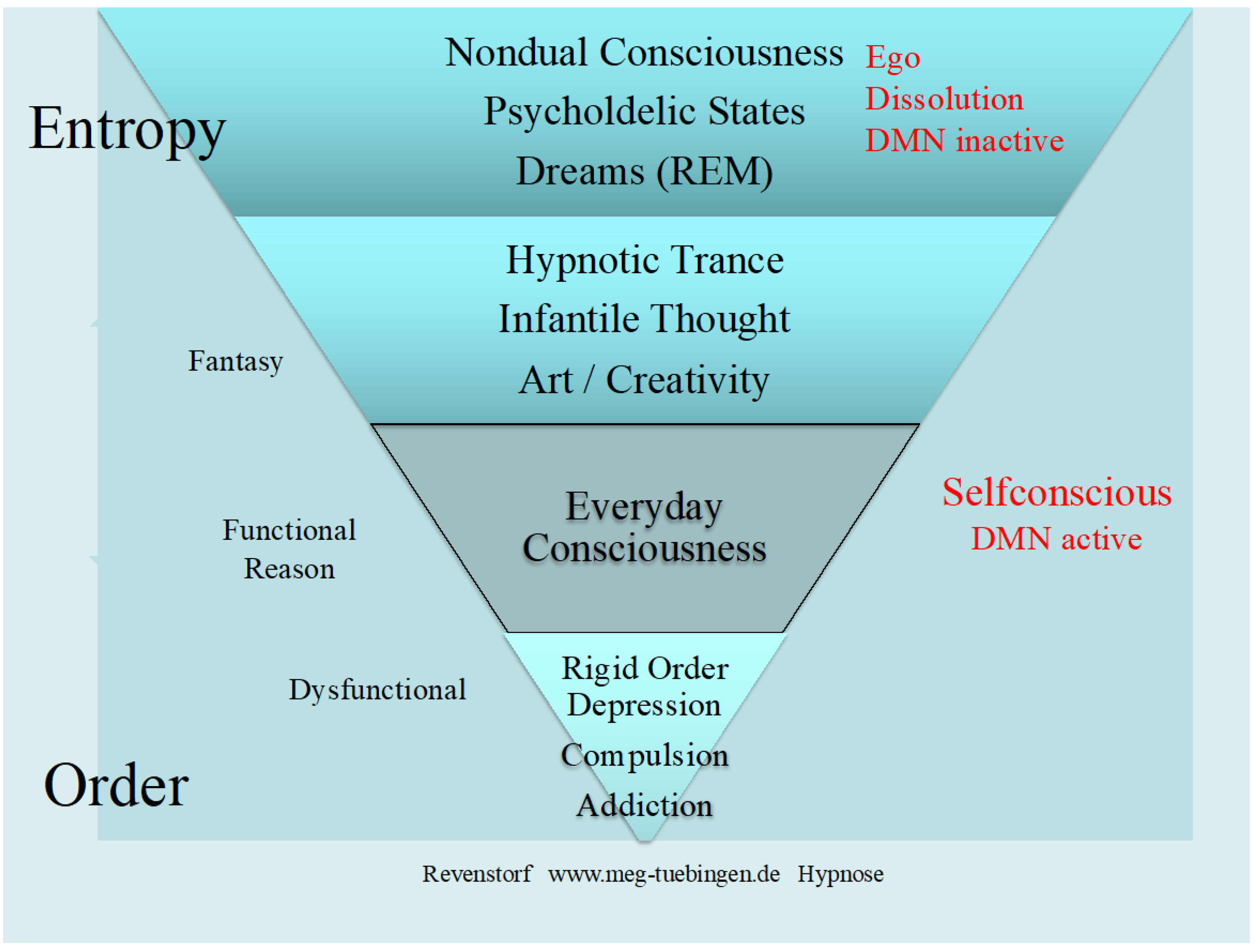
Figure 2.
Fractal representation of the top-down structure of conceptual differentiation of consciousness (Laukkonen & Slagter 2021); the principle of the Pythagoras fractal can be used to depict many natural phenomena, such as river deltas, tree crowns, and even cauliflower.
Figure 2.
Fractal representation of the top-down structure of conceptual differentiation of consciousness (Laukkonen & Slagter 2021); the principle of the Pythagoras fractal can be used to depict many natural phenomena, such as river deltas, tree crowns, and even cauliflower.
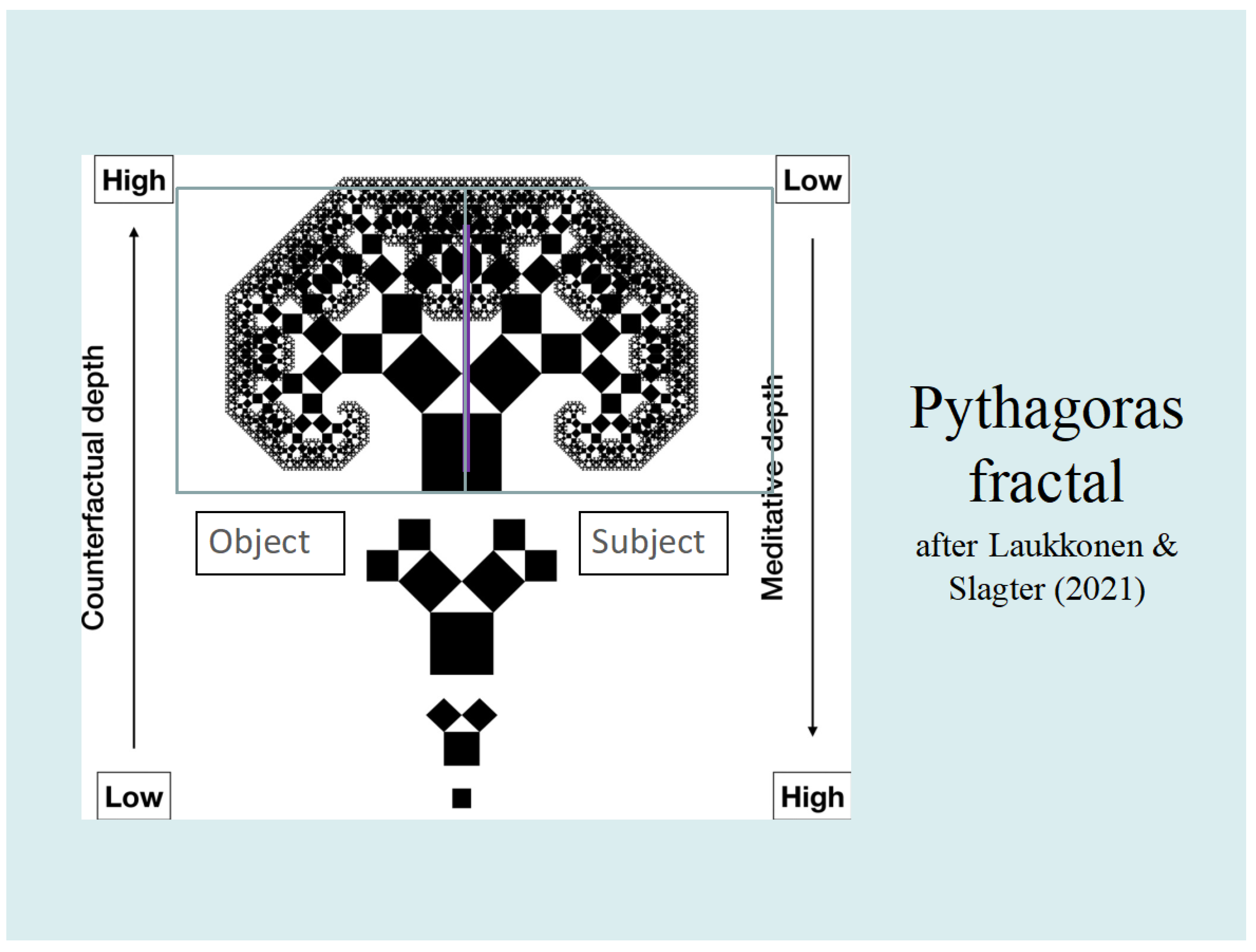
Figure 3.
Increase in entropy caused by the psychoactive substances psilocybin, ketamine, and LSD (Schartner et al. 2017).
Figure 3.
Increase in entropy caused by the psychoactive substances psilocybin, ketamine, and LSD (Schartner et al. 2017).
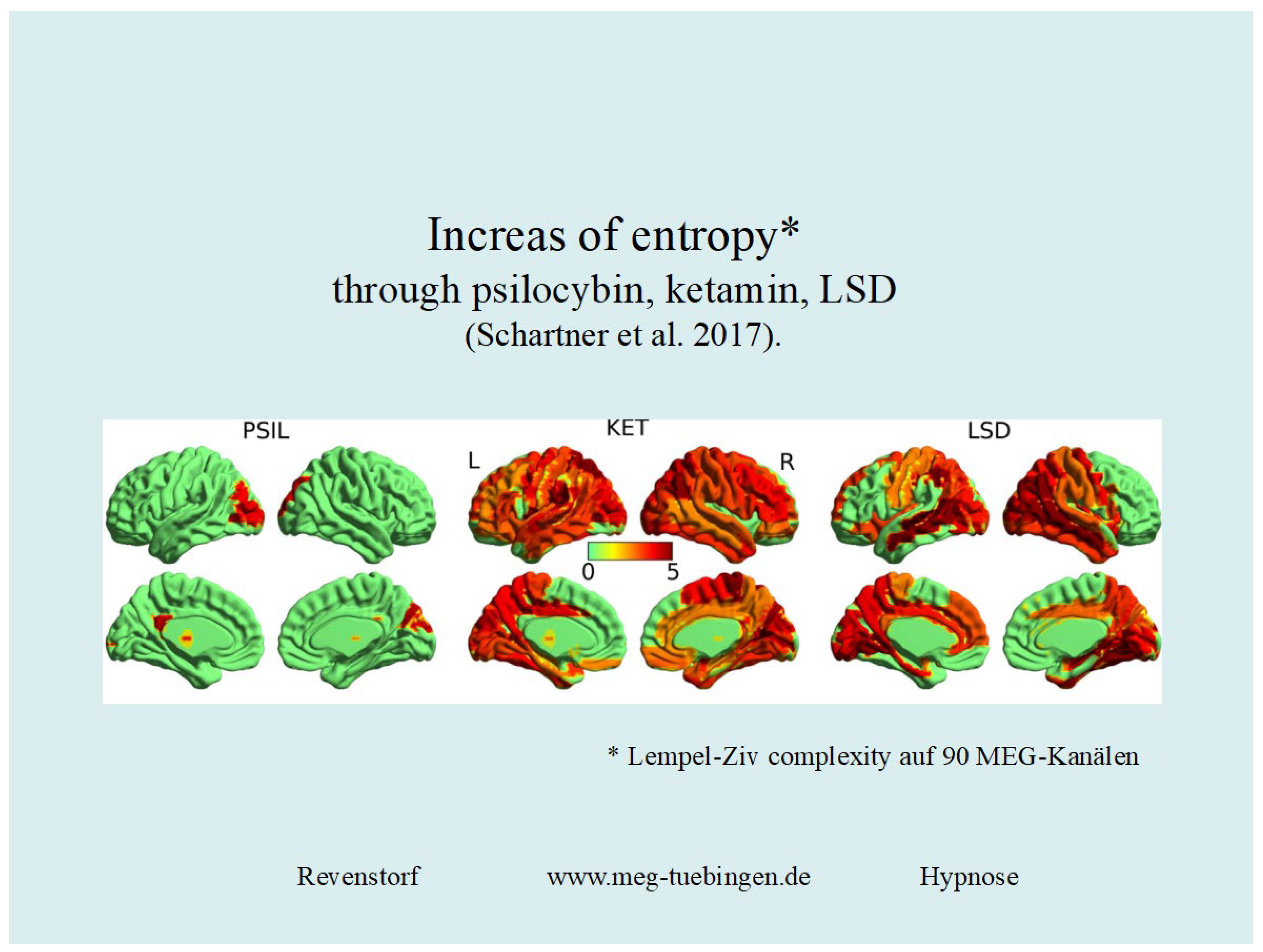
Figure 4.
Altered connectivity due to psilocybin (Carhart-Harris 2014).
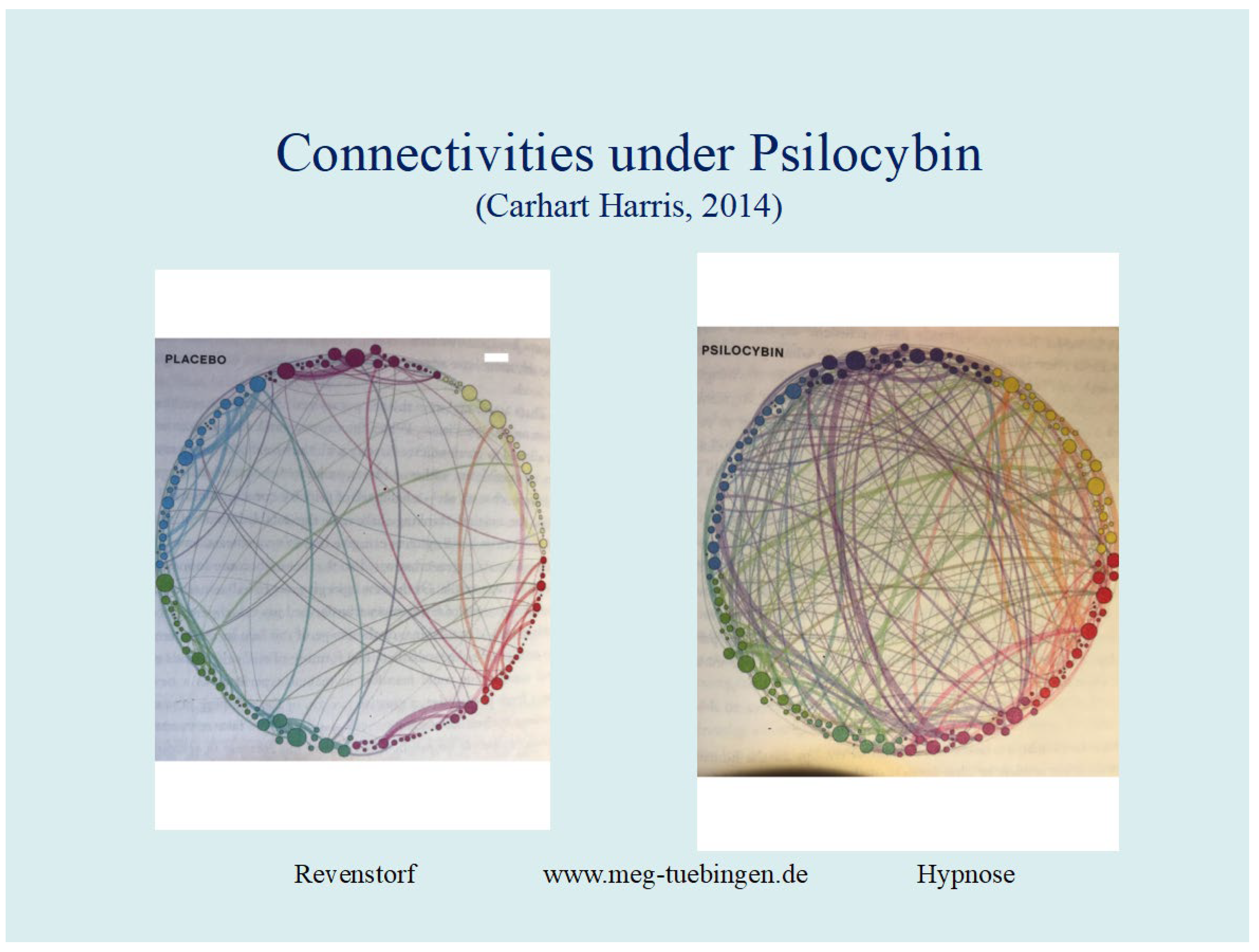
Figure 6.
Responses to ketamine-augmented hypnotherapy measured using the Mystical Experience Questionnaire (MEQ).
Figure 6.
Responses to ketamine-augmented hypnotherapy measured using the Mystical Experience Questionnaire (MEQ).
Disclaimer/Publisher’s Note: The statements, opinions and data contained in all publications are solely those of the individual author(s) and contributor(s) and not of MDPI and/or the editor(s). MDPI and/or the editor(s) disclaim responsibility for any injury to people or property resulting from any ideas, methods, instructions or products referred to in the content. |
© 2026 by the authors. Licensee MDPI, Basel, Switzerland. This article is an open access article distributed under the terms and conditions of the Creative Commons Attribution (CC BY) license (http://creativecommons.org/licenses/by/4.0/).
Copyright: This open access article is published under a Creative Commons CC BY 4.0 license, which permit the free download, distribution, and reuse, provided that the author and preprint are cited in any reuse.


