

Submitted:
29 June 2026
Posted:
30 June 2026
You are already at the latest version
Abstract
Desertification represents a critical environmental challenge in arid and semi-arid regions, driven by the synergistic impacts of climate change and unsustainable landuse practices. This review presents a comparative assessment of desertification dynamics, mitigation strategies, and ecological restoration approaches in the Ningxia Hui Autonomous Region (China) and Egypt. Both regions are characterized by severe water scarcity, increasing climatic variability, and fragile ecosystems; however, they differ in ecological conditions, institutional frameworks, and dominant land degradation processes. The study synthesizes major drivers of desertification, including rising temperatures, precipitation variability, recurrent droughts, soil salinization, overgrazing, wind erosion, and unsustainable agricultural expansion. It further evaluates key control measures implemented in both regions, such as afforestation and ecological engineering, sand dune stabilization, water-efficient irrigation systems, soil rehabilitation practices, and the integration of remote sensing and GIS-based monitoring technologies. The analysis highlights China’s large-scale, long-term ecological restoration programs, which have significantly improved vegetation cover and reduced land degradation, compared to Egypt’s focus on irrigation efficiency, land reclamation, and salinity management under extreme aridity constraints. The comparative synthesis demonstrates that effective desertification control requires integrated strategies combining ecological restoration, sustainable water resource management, technological innovation, and strong policy support. Despite contextual differences, both regions offer complementary lessons for dryland management. The study emphasizes the potential for enhanced China–Egypt cooperation in climate-smart agriculture, digital environmental monitoring, and nature-based solutions to advance sustainable land restoration under future climate change scenarios.
Keywords:
desertification control
; climatic changes
; soil degradation
; Ningxia
; China
; Egypt
1. Introduction
Desertification is one of the most pressing environmental challenges facing arid, semi-arid, and dry sub-humid regions worldwide, Desertification is a major environmental, social and economic problem to many countries in all parts of the world [1]. It is defined by the United Nations Convention to Combat Desertification (UNCCD) as land degradation in drylands resulting from various factors, including climatic variations and human activities [2]. Desertification threatens biodiversity, agricultural productivity, water security, and the livelihoods of more than three billion people globally, making it a critical issue for achieving sustainable development goals [2,3].
Climate change has significantly accelerated desertification processes through increasing temperatures, shifts in precipitation patterns, Persistent drought conditions, and more frequent extreme weather events. Rising temperatures enhance evapotranspiration rates, reduce soil moisture availability, and increase vegetation stress, thereby intensifying land degradation in vulnerable dryland ecosystems [3,4]. In addition, unsustainable land-use practices such as overgrazing, deforestation, excessive groundwater extraction, and unsustainable irrigation practices further exacerbate desertification risks and reduce ecosystem resilience.
China and Egypt represent important case studies for understanding desertification dynamics and the effectiveness of land restoration strategies in arid and semi-arid environments. Both countries facing significant environmental pressures associated with water scarcity, climate variability, and increasing demands on natural resources. However, they differ considerably in their ecological conditions, socio-economic contexts, and approaches to desertification control. China has implemented some of the world's largest ecological restoration programs, including the Three-North Shelterbelt Program and various sand stabilization projects, which have contributed to substantial improvements in vegetation cover and ecosystem services in many degraded regions [5,6].
Within China, the Ningxia Hui Autonomous Region represents a particularly relevant study area because of its strategic location in the upper and middle reaches of the Yellow River Basin and its susceptibility to desertification. Ningxia is characterized by an arid to semi-arid continental climate, limited precipitation, high evaporation rates, and fragile ecosystems. Historically, wind erosion, overgrazing, and inappropriate land management practices have accelerated land degradation across large areas of the region. Nevertheless, extensive ecological restoration initiatives, afforestation programs, shelterbelt construction, and sustainable water management practices have significantly contributed to controlling desertification and improving environmental conditions over recent decades [7,8].
Egypt faces similar challenges due to its predominantly arid climate, limited arable land resources, and growing pressure on water supplies. Desertification in Egypt is associated with soil salinization, wind erosion, sand dune encroachment, and unsustainable land-use practices, particularly in newly reclaimed areas and regions surrounding the Nile Valley and Delta. Climate change projections suggest that these challenges may become more severe in the coming decades, threatening agricultural productivity and food security [9,10].
With a total area of almost one million square kilometers, Egypt is located in an extremely dry region that stretches from North Africa to West Asia. The desert belt is under stress due to a lack of water supplies, rapid population development, and increased human activity. Additionally, there are several factors contributing to desertification in Egypt, such as urbanization, pollution, soil fertility depletion, salinity of water and soil, sand dunes, soil erosion, and other indirect causes of land degradation. In 1995, Egypt was among the first nations to sign the United Nations Convention to Combat Desertification. There are numerous effective initiatives in Egypt to aid in combat desertification; these initiatives are carried out by numerous national, regional, and international organizations as well as Egyptian researchers these worked in scientific institutes.
Despite numerous studies examining desertification in China and Egypt separately, comparative reviews focusing specifically on Ningxia and Egypt remain limited. Such comparisons are valuable because they provide opportunities to identify successful management practices, assess policy effectiveness, and explore transferable approaches for sustainable land restoration under changing climatic conditions. Furthermore, growing scientific cooperation between Chinese and Egyptian institutions creates new opportunities for knowledge exchange, technological innovation, and joint efforts to combat desertification in dryland environments.
Therefore, this review aims to (i) examine the current status and major drivers of desertification in Ningxia (China) and Egypt, (ii) evaluate the principal strategies and technologies employed for desertification control and ecological restoration, (iii) compare achievements and remaining challenges in both regions, and (iv) identify future opportunities for sustainable land management and China–Egypt cooperation under climate change scenarios.
2. Study Areas
2.1. Ningxia Hui Autonomous Region, China
2.1.1. Ningxia Location
The Ningxia Hui Autonomous Region is located in northwestern China between 35°14′–39°23′ N and 104°17′–107°39′ E, covering approximately 66,400 km². The region lies within the transitional zone between the Loess Plateau and the Inner Mongolia Plateau and represents an important ecological barrier within northern China's desertification control belt. Ningxia is characterized by a fragile ecological environment and is situated at the interface of agricultural and pastoral systems, making it highly vulnerable to land degradation and desertification processes [11,12].
The climate of Ningxia ranges from arid to semi-arid continental conditions, with mean annual precipitation varying between 200 and 400 mm, while annual potential evaporation often exceeds 2,000 mm. Rainfall is highly variable both spatially and temporally, with most precipitation concentrated during the summer months. Such climatic characteristics contribute to frequent drought events, water scarcity, and increased susceptibility to desertification [13,14].
Desertification has historically posed a major environmental challenge in Ningxia. Recent assessments indicate that approximately 26 % of the region's land area remains affected by desertification. However, large-scale ecological restoration programs, including afforestation, shelterbelt establishment, grassland restoration, and integrated water-saving technologies, have significantly improved vegetation cover and ecological resilience. By 2023, forest coverage had increased substantially, while major desertification control targets are expected to be achieved ahead of schedule [11].
The strategic importance of Ningxia for this review stems from its role as one of China's leading examples of integrated desertification control, combining ecological engineering, sustainable water management, and policy-driven land restoration under severe climatic constraints.
2.1.2. Environmental and Agro Ecological Characteristics of Ningxia
Ningxia Hui Autonomous Region, located in northwestern China along the upper reaches of the Yellow River, represents a typical arid to semi-arid agro-ecological system characterized by strong climatic variability and limited natural water availability. is considered one of China’s most environmentally fragile areas, where desert ecosystems, loess landscapes, and irrigated agricultural plains coexist under severe water constraints.
Agricultural land in Ningxia is highly limited and spatially heterogeneous, with cultivation primarily concentrated in the northern irrigated plain along the Yellow River. The region overall is dominated by desert and steppe ecosystems, while only a small fraction of land is suitable for intensive agriculture due to soil limitations and water scarcity [11,15]. The irrigated northern plain supports the majority of crop production, whereas southern Ningxia is largely mountainous and rainfed, with lower agricultural productivity and higher vulnerability to climatic stress.
Climatically, Ningxia exhibits a typical continental monsoon-influenced arid climate, characterized by hot, dry summers, cold winters, high evaporation rates, and strong seasonal and diurnal temperature fluctuations. Mean annual temperature generally ranges between 6–10°C, while precipitation is low and unevenly distributed spatially and temporally, typically ranging from 150 to 600 mm annually depending on topography and latitude .The southern mountainous areas receive relatively higher rainfall (up to approximately 700 mm in localized zones), whereas the northern irrigated plain is extremely dry, with precipitation often below 100–300 mm per year, making irrigation from the Yellow River the main driver of agricultural sustainability.
In terms of spatial distribution pattern, there is no desertified land in southern Ningxia, while moderately, severely and extremely severely desertified lands are distributed in strip-like concentrated zones along the fringes of the Tengger Desert and Mu Us Sandy Land in north,west and east of Ningxia. There exists a significant negative correlation between land desertification and vegetation coverage in Ningxia: the higher the vegetation coverage, the lower the desertification grade; arid wind-sand regions feature sparse vegetation and aggravated desertification (Figure 1)
Water scarcity is the most critical limiting factor for agricultural development in Ningxia. The region experiences frequent drought events, high evapotranspiration, and strong annual variability in precipitation, which together significantly affect crop productivity and rural livelihoods [11]. Despite these constraints, irrigation infrastructure supported by long-term Yellow River water diversion has enabled the development of intensive agriculture, including maize, wheat, rice, and horticultural systems in the northern plain.
From an agro-ecological perspective, Ningxia is commonly divided into three major zones: (i) the southern mountainous rainfed area characterized by higher precipitation and mixed farming systems; (ii) the central transition zone combining rainfed agriculture and grazing systems; and (iii) the northern irrigated plain, which represents the most productive agricultural zone due to controlled irrigation and relatively stable cropping systems [16]. These zones exhibit strong gradients in water availability, soil fertility, land use intensity, and climate exposure, which directly influence agricultural practices and vulnerability to climate variability.
The three main geographical areas, each with
quite distinct agricultural production systems, are as follows:
1. Southern mountainous area: rainfed cultivation in the region’s most humid area, with a range of average annual precipitation from 324 mm to 740 mm. Potato is the main crop and cattle, sheep, pigs and chickens the main livestock;
2. Central arid area: a mix of irrigation with some rainfed and extensive grazing (mixed irrigated and grazing). Average annual precipitation ranges from 173 mm to 559 mm. The dry conditions only allow corn, spring wheat, potato, and some cattle and sheep husbandry;
3. The northern irrigation area: arid with primarily irrigation using water diverted from the Yellow River. Annual precipitation ranges from 78 mm to 309 mm. Intercropping is the major planting system. The main crops are corn, spring wheat, paddy rice and potato. Cattle, sheep, pigs and chickens are the main livestock.
Overall, Ningxia represents a highly climate-sensitive agroecosystem where agriculture is strongly dependent on engineered water management systems rather than natural rainfall. The increasing pressure of climate change, particularly rising temperatures and persistent drought risk, is expected to further intensify water scarcity and exacerbate spatial disparities in agricultural productivity across agro ecological zones [16].
2.2. Egypt
2.2.1. Egypt Location
Egypt is located in northeastern Africa between latitudes 22° and 32° N and longitudes 25° and 35° E, covering approximately one million square kilometers. More than 95% of the country's territory is classified as hyper-arid desert, while the majority of the population and agricultural activities are concentrated within the Nile Valley and Nile Delta, which account for less than 5% of the total land area [17,18].
The Egyptian climate is predominantly arid, characterized by extremely low rainfall, high temperatures, and elevated evapotranspiration rates. Annual precipitation ranges from less than 25 mm in Upper Egypt and desert regions to approximately 200 mm along parts of the Mediterranean coast. Climate change projections indicate increasing temperatures, greater frequency of drought events, and heightened pressure on already limited water resources [3,10]
Desertification in Egypt is driven by a combination of climatic and anthropogenic factors. Major forms of land degradation include soil salinization, wind erosion, waterlogging, sand dune encroachment, and depletion of soil organic matter. These processes are particularly evident in reclaimed desert lands, coastal areas, and regions experiencing intensive agricultural expansion [17,18].
Water scarcity represents one of the most significant constraints to sustainable land management in Egypt. The country depends heavily on the Nile River for agricultural, industrial, and domestic water supplies. Rapid population growth, increasing food demand, and climate-induced stresses have intensified competition for water resources, creating additional challenges for desertification mitigation and sustainable agricultural development [10,19].
In response to these challenges, Egypt has implemented numerous initiatives aimed at combating desertification and enhancing land productivity, including desert land reclamation projects, sand dune stabilization programs, afforestation efforts, wastewater reuse, and the adoption of modern irrigation technologies. These interventions are increasingly integrated within national climate adaptation and sustainable development strategies, reflecting the growing recognition of desertification as a critical environmental and socio-economic issue [17,18].
The comparison between Ningxia and Egypt is particularly valuable because both regions operate under severe water limitations and arid climatic conditions, yet they employ distinct ecological restoration and land management approaches. Examining their experiences provides important insights into sustainable desertification control strategies applicable to dryland regions worldwide.
2.2.2. Environmental and Agro Ecological Characteristics of Egypt
Egypt is a predominantly arid to hyper-arid country where agricultural production is highly constrained by limited land and water resources. The total arable land accounts for only about 3.5–4% of the country’s total area, primarily concentrated within the Nile Valley and Nile Delta, which represent the principal agro-production zones supporting the national food system [20,21]. Despite its limited agricultural land base, Egypt plays a significant role in regional food security due to intensive land use and irrigation-dependent farming systems.
Egypt’s agricultural land is considered one of the most intensively utilized agricultural systems worldwide, with some areas supporting up to three crop cycles annually. This intensive land use places significant pressure on soil resources, accelerating land degradation processes and increasing dependence on external agricultural inputs such as irrigation, fertilizers, and pesticides. The imbalance between land productivity and sustainable land management has become more pronounced, particularly because the majority of Egyptian farmers are smallholders who often lack access to advanced land conservation practices [10,22].
In addition to cultivated lands, Egypt possesses extensive rangelands estimated at nearly 4 million hectares (approximately 9.5 million acres), as reported by the National Program to Combat Desertification. These grazing areas are mainly distributed along the northwestern coast and in scattered desert regions, where they remain vulnerable to overgrazing, vegetation degradation, and desertification under increasing environmental stress [23].
Climatically, Egypt exhibits strong spatial heterogeneity. The northern coastal zone is influenced by a Mediterranean climate characterized by relatively mild temperatures and higher humidity, while inland and southern regions experience a hot desert continental climate with extreme temperature fluctuations, often reaching up to 40°C in summer and dropping to around 13°C in winter [21]. Relative humidity also shows a clear north–south gradient, with values reaching approximately 70% along the northern coast during summer, compared to less than 15% in southern desert regions.
Precipitation is extremely limited and highly variable across the country. The national annual average rainfall is approximately 10–20 mm, although it may reach 150–200 mm along parts of the North Coast, while in southern Egypt rainfall is almost negligible (2 mm/year), confirming the classification of Egypt as a hyper-arid environment [24]. This severe water scarcity highlights the country’s strong dependence on the Nile River as the primary source of freshwater and irrigation.
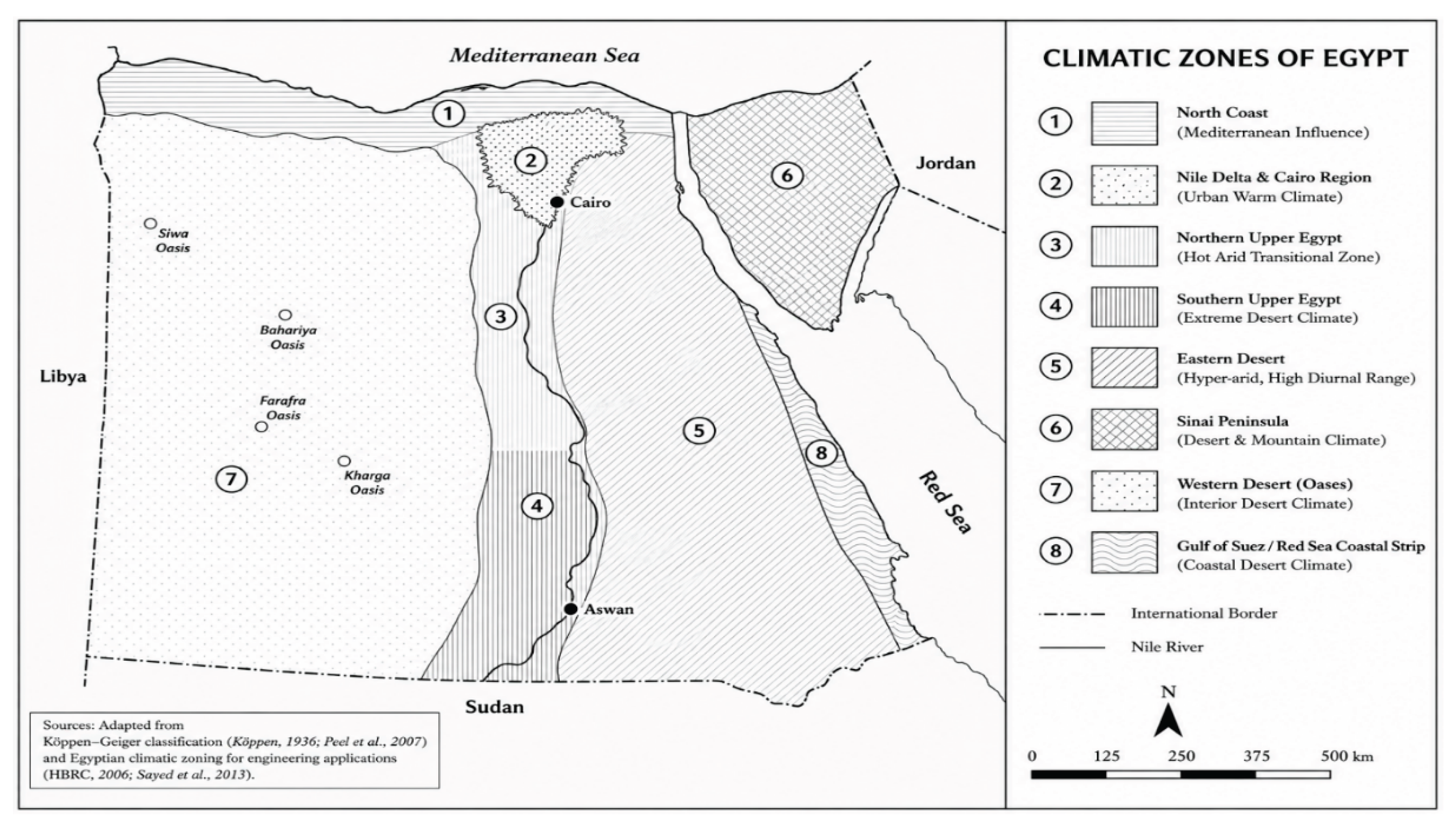
From an agro ecological perspective, Egypt is commonly divided into four main zones, each characterized by distinct environmental and resource conditions: (i) the Nile Valley and Nile Delta, which constitute the most fertile and intensively cultivated lands, including adjacent reclaimed desert areas; (ii) the North Coastal Zone, extending from the northwestern coast to the Sinai northern coast, characterized by rainfed agriculture and Mediterranean climatic influence; (iii) the Eastern Desert and Sinai Peninsula, which are predominantly arid mountainous and desert ecosystems with limited agricultural potential; and (iv) the Western Desert, which includes scattered oases and remote agricultural settlements dependent on groundwater resources [25]. These agroecological zones exhibit substantial variation in soil characteristics, water availability, and climatic constraints, which directly influence cropping systems and land use patterns across the country. According to the Housing and Building National Research Center (HBRC), Egypt is classified into eight climatic zones based on temperature, humidity, wind regime, and solar radiation characteristics. [26].
1. North Coastal Zone
Mediterranean influence, Mild temperatures and higher winter rainfall and Relatively humid compared to inland regions
2. Nile Delta and Cairo Region
Urbanized warm climate, Moderate humidity, Hot summers and mild winters
3. Northern Upper Egypt
Hot arid transitional zone, Very low rainfall, High summer temperatures
4. Southern Upper Egypt
Extremely hot desert climate, Minimal precipitation and One of the hottest inhabited regions globally
5. Eastern Desert
Hyper-arid conditions, Large diurnal temperature variation and Sparse population and vegetation
6. Sinai Peninsula
Mountainous and desert climate, Cooler winter temperatures in high elevations and Strong spatial microclimatic variation
7. Western Desert (Oases Regions)
Hyper-arid interior desert climate, Isolated oasis microclimates (e.g., Siwa, Bahariya), Very low humidity and rainfall
8. Gulf of Suez / Red Sea Coastal Strip
Strong wind influence, Slightly moderated temperatures due to maritime effects and Higher humidity than inland desert zones (Figure 2)
3. Drivers of Desertification in Ningxia (China) and Egypt
Desertification is a complex process resulting from the interaction between climatic stressors and anthropogenic pressures. In both Ningxia and Egypt, land degradation is influenced by a combination of natural environmental constraints and human-induced disturbances. Despite differences in geographical settings, the two regions share several common drivers, particularly water scarcity, climate variability, and unsustainable land management practices.
3.1. Climatic Drivers
3.1.1. Rising Temperatures and Climate Change
Climate change is recognized as one of the most significant drivers of desertification worldwide. Increasing temperatures accelerate evapotranspiration rates, reduce soil moisture availability, and increase vegetation water stress, thereby enhancing land degradation processes. Dryland ecosystems are particularly vulnerable because even small climatic changes can substantially affect ecosystem productivity and resilience [2,3].
In Ningxia, average temperatures have increased significantly during recent decades, accompanied by increased drought frequency and ecological vulnerability. These climatic changes have contributed to reduced vegetation productivity and increased susceptibility to wind erosion in fragile ecosystems of central and northern Ningxia [8,27]. Ecological vulnerability assessments indicate that water scarcity remains the primary limiting factor affecting ecosystem stability across large portions of the region.
Similarly, Egypt has experienced rising temperatures and increasing climatic variability, particularly in arid and semi-arid regions. Climate projections indicate further warming and increasing evapotranspiration rates, which may intensify water shortages and accelerate soil degradation processes in both existing agricultural lands and newly reclaimed desert areas [3.10].
3.1.2. Rainfall Variability and Drought
Rainfall variability is another major climatic driver of desertification. Reduced precipitation and prolonged drought periods limit vegetation growth and weaken soil protection against erosion.
In Ningxia, annual precipitation is both limited and highly variable, with most rainfall concentrated during short summer periods [15]. Such conditions frequently lead to drought stress and increased soil erosion risks, particularly in ecologically fragile zones located between agricultural and pastoral landscapes. Recent studies highlight the vulnerability of central Ningxia to drought-induced degradation and emphasize the importance of ecological restoration measures to maintain ecosystem stability [13,28]
Egypt experiences extremely low precipitation across most of its territory. Consequently, agricultural production depends almost entirely on irrigation from the Nile River [29]. Under climate change scenarios, increasing drought frequency and reduced water availability may further exacerbate desertification risks and limit sustainable land development opportunities [23,30].
3.2. Anthropogenic Drivers
3.2.1. Unsustainable Water Management
Water scarcity is a defining characteristic of both Ningxia and Egypt. However, inappropriate water management practices can significantly accelerate land degradation.
In Ningxia, extensive irrigation has historically supported agricultural development in the Yellow River Basin. Nevertheless, inefficient water use and groundwater depletion have occasionally contributed to soil degradation and ecological stress. Recent regional policies increasingly emphasize water-saving irrigation technologies and integrated watershed management to enhance sustainability [12].
In Egypt, dependence on the Nile River creates substantial pressure on available water resources. Population growth, agricultural expansion, and climate change have intensified competition for water. Improving irrigation efficiency, wastewater reuse, and integrated water resource management have therefore become central components of desertification control strategies [30,31].
3.2.2. Soil Salinization
Soil salinization is among the most serious forms of land degradation in arid regions. Excessive evaporation combined with irrigation can lead to salt accumulation in the root zone, reducing crop productivity and soil fertility.
Although salinization occurs in parts of Ningxia's irrigated agricultural lands [32], it is particularly severe in Egypt due to high evaporation rates, inadequate drainage systems, and seawater intrusion in coastal regions [33,34]. Recent studies indicate that effective irrigation management and improved drainage practices are essential for preventing secondary salinization and maintaining agricultural sustainability.
3.2.3. Overgrazing and Vegetation Degradation
Overgrazing has historically been an important contributor to desertification in Ningxia's grassland ecosystems. Excessive livestock pressure reduces vegetation cover, exposes soil surfaces to erosion, and decreases ecosystem resilience. Restoration programs involving grazing exclusion, grassland rehabilitation, and shelterbelt establishment have therefore become critical components of regional ecological policies [11].
3.2.4. Land Use Change and Agricultural Expansion
Rapid land-use changes may contribute to desertification when agricultural expansion exceeds ecological carrying capacity.
In Ningxia, historical cultivation of marginal lands and intensive resource utilization increased ecological pressures in fragile dryland environments. However, large-scale ecological restoration programs have reversed many degradation trends during the past two decades. Recent analyses indicate improvements in habitat quality and landscape stability resulting from restoration interventions [8,36].
In Egypt, large-scale desert reclamation projects have expanded agricultural production but simultaneously introduced challenges related to water demand, salinity management, and long-term sustainability. Successful reclamation therefore requires careful integration of water-saving technologies, soil improvement measures, and climate-adaptive management practices [37,38].
3.3. Synthesis of Desertification Drivers
Although Ningxia and Egypt differ in their ecological and socio-economic contexts, both regions are affected by a similar set of interacting drivers, including climate change, water scarcity, soil degradation, and unsustainable land use practices. The relative importance of these drivers varies between regions; wind erosion and grassland degradation are more prominent in Ningxia, whereas salinization and irrigation-related challenges are particularly significant in Egypt. Understanding these differences is essential for designing effective and region-specific desertification control strategies.
4. Desertification Control Strategies and Restoration Programs in Ningxia and Egypt
4.1. Afforestation and Ecological Restoration
Afforestation and vegetation restoration represent the cornerstone of desertification control strategies in many dryland regions. The establishment of shelterbelts, restoration of degraded grasslands, and rehabilitation of natural vegetation contribute significantly to reducing wind erosion, enhancing soil stability, improving microclimatic conditions, and increasing ecosystem resilience [2,6].
In Ningxia, large-scale ecological restoration programs have been implemented as part of China's broader national efforts to combat desertification. Programs such as the Three-North Shelterbelt Project, Grain for Green Program, and regional ecological conservation initiatives have significantly increased vegetation coverage and reduced desertified land. Monitoring data from 2004–2019 indicate a reduction of approximately 11.4% in desertified land and 15.2% in sandy land areas, reflecting the effectiveness of long-term restoration measures [39]. Furthermore, recent assessments indicate that climate-driven vegetation recovery and ecological engineering have jointly contributed to substantial improvements in ecosystem stability across northern China [7].
In Egypt, afforestation efforts have focused primarily on desert reclamation projects, urban green belts, and the utilization of treated wastewater for tree plantations. Several initiatives have been implemented around major cities and newly reclaimed areas to reduce sand encroachment and improve environmental quality. However, the scale of afforestation remains more limited than in China because of severe water constraints and the high costs associated with vegetation establishment under hyper-arid conditions [10,40].
4.2. Sand Dune Stabilization and Wind Erosion Control
Wind erosion and sand movement constitute major drivers of desertification in both Ningxia and Egypt. Effective dune stabilization techniques are therefore essential for protecting agricultural land, infrastructure, and settlements.
One of the most successful approaches implemented in Ningxia involves the use of straw checkerboard barriers combined with native vegetation establishment. This technique reduces wind velocity near the soil surface, traps moving sand particles, and creates favorable conditions for plant establishment. Over several decades, the approach has become a globally recognized model for desertification control in northwestern China [41].
Recent technological developments have also introduced innovative soil stabilization materials and biological crust enhancement methods. Large-scale field demonstrations have shown that environmentally friendly soil-binding technologies can effectively reduce sand and dust storms while improving vegetation establishment rates in degraded sandy ecosystems [30].
In Egypt, sand dune stabilization measures include mechanical barriers, windbreaks, vegetation planting, and geotextile applications. These techniques have been particularly important in protecting agricultural lands in Sinai, the Western Desert oases, and newly reclaimed areas vulnerable to sand encroachment. Nevertheless, maintaining long-term effectiveness remains challenging due to limited rainfall and harsh climatic conditions.
4.3. Sustainable Water Resource Management
Water scarcity is arguably the most critical constraint affecting sustainable land management in both Ningxia and Egypt. Consequently, efficient water resource management has become a central component of desertification mitigation strategies.
In Ningxia, the Yellow River provides the primary source of irrigation water. Recent policies emphasize water-saving agriculture, precision irrigation, groundwater conservation, and integrated watershed management. The adoption of drip irrigation systems, deficit irrigation practices, and digital water monitoring technologies has improved water-use efficiency while supporting ecological restoration efforts [42].
Similarly, Egypt has increasingly promoted modern irrigation technologies, including drip and sprinkler irrigation systems, to reduce water losses and improve agricultural productivity. Wastewater reuse and drainage water recycling have also become important strategies for expanding agricultural production while reducing pressure on freshwater resources. These measures are particularly critical given Egypt's dependence on the Nile River and growing water demand under climate change conditions [10,19].
4.4. Soil Rehabilitation and Salinity Management
Soil degradation and salinization represent major challenges in arid regions [32,43]. an essential role in restoring ecosystem functions and maintaining agricultural productivity.
In Ningxia, soil rehabilitation efforts include organic amendments, conservation tillage, grassland restoration, and ecological engineering approaches aimed at improving soil structure and reducing erosion risks. Long-term restoration programs have contributed to increased soil organic carbon storage and improved ecosystem services in previously degraded lands [44,45].
In Egypt, soil salinization remains one of the most serious threats to agricultural sustainability. High evaporation rates, inadequate drainage systems, and irrigation-induced salt accumulation frequently reduce crop productivity. Consequently, significant efforts have focused on improving drainage infrastructure, applying soil amendments such as gypsum and organic matter, and promoting salt-tolerant crop varieties [9,17].
Recently, innovative concepts such as desert soilization have been proposed to transform barren desert lands into productive agricultural ecosystems through integrated soil improvement technologies. Although still under evaluation, such approaches may offer additional opportunities for combating land degradation in hyper-arid environments [40].
4.5. Remote Sensing, GIS and Digital Monitoring
Technological innovation has become increasingly important for monitoring desertification dynamics and evaluating restoration effectiveness.
China has developed advanced monitoring systems integrating satellite remote sensing, geographic information systems (GIS), unmanned aerial vehicles (UAVs), and artificial intelligence technologies. These tools enable large-scale assessment of vegetation dynamics, soil degradation patterns, and ecological restoration outcomes. Remote sensing analyses indicate substantial improvements in vegetation cover and reductions in desertification intensity across many regions of northern China during the past two decades [7,14].
Egypt has also expanded the use of GIS and remote sensing applications for land degradation assessment, environmental sensitivity mapping, and desertification monitoring. Recent studies have demonstrated the effectiveness of geospatial technologies in identifying vulnerable areas, evaluating climate change impacts, and supporting sustainable land management planning [18].
4.6. Policy Frameworks and Institutional Approaches
The success of desertification control programs depends not only on technical interventions but also on effective policy frameworks and institutional support.
China's achievements in desertification mitigation have been strongly supported by long-term national policies, substantial financial investments, ecological compensation mechanisms, and coordinated implementation across multiple administrative levels. Large-scale restoration programs have demonstrated the importance of integrating scientific research, government commitment, and community participation in achieving sustainable land management objectives [5,6].
Egypt has similarly incorporated desertification mitigation into national sustainable development strategies and climate adaptation plans. However, challenges related to water availability, financial resources, and population growth continue to influence implementation effectiveness. Strengthening institutional coordination, expanding technological innovation, and enhancing international cooperation may further improve future outcomes [46].
4.7. Comparative Assessment
Although both Ningxia Hui Autonomous Region and Egypt face severe desertification pressures, their management approaches reflect different environmental and socio-economic contexts. Ningxia Hui Autonomous Region has achieved substantial success through large-scale ecological restoration, shelterbelt establishment, and integrated watershed management supported by strong governmental investment. Egypt, on the other hand, has focused primarily on water-efficient agriculture, land reclamation, salinity management, and targeted desert stabilization projects [38,45].
The comparison demonstrates that successful desertification control requires integrated approaches that combine ecological restoration, sustainable water management, technological innovation, and long-term policy commitment. Lessons learned from Ningxia Hui Autonomous Region’s large-scale restoration programs may provide valuable guidance for Egypt’s future desertification mitigation efforts, while Egypt’s expertise in water management under extreme aridity offers important insights applicable to dryland regions of northwestern China [37,38].
5. Comparative Analysis of Desertification Dynamics and Control Strategies in Ningxia and Egypt
5.1. Environmental and Climatic Characteristics
Although Ningxia and Egypt are both characterized by arid and semi-arid environments, important differences exist in their climatic conditions, water resources, and ecological settings. Ningxia receives annual precipitation ranging from approximately 200 to 600 mm depending on location and elevation, whereas most regions of Egypt receive less than 50 mm annually, except for parts of the northern coastal zone receive less than 200 mm annually [10,42].
The primary water source in Ningxia is the Yellow River, which supports extensive irrigation agriculture and ecological restoration programs. In contrast, Egypt relies almost exclusively on the Nile River, making water resource management a central component of national development and environmental sustainability strategies [19].
Furthermore, Ningxia's ecosystems include irrigated agricultural plains, desert-steppe systems, and mountainous regions, while Egypt is dominated by hyper-arid desert landscapes with agricultural activities concentrated in the Nile Valley, Nile Delta, and newly reclaimed lands [18].
5.2. Major Drivers of Desertification
The causes of desertification in Ningxia and Egypt share several similarities, including climate change, water scarcity, land-use pressures, and ecosystem degradation. However, the relative importance of these drivers differs between the two regions.
In Ningxia, wind erosion, grassland degradation, drought, and historical overgrazing have been major contributors to desertification. Ecological vulnerability is particularly pronounced in the central arid zone and desert transition areas bordering the Tengger and Mu Us deserts [14].
5.3. Comparison of Desertification Control Approaches
China's approach to desertification control has largely emphasized large-scale ecological engineering and landscape restoration. Programs such as the Three-North Shelterbelt Program, Grain for Green Program, and ecological compensation policies have transformed millions of hectares of degraded land and contributed significantly to vegetation recovery [5,6].
By contrast, Egypt's strategy has focused more heavily on water management, land reclamation, salinity control, and localized sand stabilization projects. Given the country's extreme aridity and limited water availability, interventions are often designed to maximize agricultural productivity while minimizing water consumption [10].
Recent studies indicate that China's restoration programs have generated measurable improvements in vegetation cover, ecosystem services, and carbon sequestration, while Egypt has achieved significant progress in expanding cultivated lands and improving irrigation efficiency through modern agricultural technologies [7,19].
5.4. Technological Innovations
Both regions have increasingly adopted advanced technologies to support sustainable land management.
China has become a global leader in the application of remote sensing, artificial intelligence, ecological modeling, and digital environmental monitoring systems. Satellite-based monitoring programs provide continuous assessments of vegetation dynamics, desertification trends, and restoration effectiveness across large landscapes [7,11].
Egypt has also expanded the use of geospatial technologies, particularly GIS-based desertification mapping, land suitability assessments, and climate vulnerability analyses. However, opportunities remain for further integration of artificial intelligence and real-time environmental monitoring systems into national desertification management frameworks [18].
5.5. Lessons Learned from Ningxia and Egypt
The experiences of Ningxia and Egypt highlight several important lessons for sustainable desertification control:
1. Long-term governmental commitment is essential for successful restoration programs.
2. Water resource management must be integrated with land restoration initiatives.
3. Nature-based solutions provide cost-effective approaches for enhancing ecosystem resilience.
4. Remote sensing and digital technologies significantly improve monitoring and decision-making.
5. Community participation enhances the sustainability of restoration efforts.
6. Climate adaptation measures should be incorporated into all desertification mitigation strategies.
The Ningxia experience demonstrates the effectiveness of large-scale ecological restoration supported by strong institutional frameworks and sustained financial investments. Conversely, Egypt provides valuable examples of agricultural adaptation and water-use efficiency under conditions of extreme aridity.

Table 1.
Comparative Characteristics of Ningxia and Egypt Relevant to Desertification Control.
| Indicator | Ningxia (China) | Egypt |
|---|---|---|
| Climate Type | Arid to Semi-arid Continental | Hyper-arid to Arid |
| Annual Rainfall | 200–600 mm | <50 mm in most regions |
| Main Water Source | Yellow River | Nile River |
| Major Degradation Processes | Wind erosion, overgrazing, drought | Salinization, sand encroachment, water scarcity |
| Dominant Restoration Strategy | Afforestation and ecological engineering | Water-efficient agriculture and land reclamation |
| Key Technology | Remote sensing, AI monitoring | GIS and irrigation modernization |
| Major Challenge | Ecosystem fragility and drought | Water scarcity and salinity |
| Future Priority | Climate-resilient ecosystem restoration | Sustainable water management |
6. Future Perspectives and Opportunities for China–Egypt Cooperation
6.1. Nature-Based Solutions for Desertification Mitigation
Nature-based solutions (NbS) have emerged as promising approaches for addressing environmental degradation while simultaneously enhancing biodiversity conservation, carbon sequestration, and climate resilience. Future desertification control programs in both Ningxia and Egypt should increasingly integrate ecosystem-based restoration approaches, including native vegetation rehabilitation, ecological corridors, grassland restoration, and sustainable watershed management [2].
6.2. Climate-Smart Desertification Management
Climate change is expected to intensify desertification risks in dryland ecosystems worldwide. Consequently, adaptive management strategies will become increasingly important. Climate-smart land management approaches should combine drought-resistant vegetation, precision irrigation systems, soil conservation practices, and early warning systems to enhance ecosystem resilience under future climatic conditions [3].
6.3. Digital Transformation and Artificial Intelligence
Rapid advances in digital technologies are creating new opportunities for environmental monitoring and decision-making. Artificial intelligence, machine learning, unmanned aerial vehicles (UAVs), and high-resolution satellite imagery can substantially improve the detection, assessment, and prediction of desertification processes [19].
China has already demonstrated the effectiveness of digital environmental monitoring systems, while Egypt is expanding its geospatial monitoring capabilities. Joint research initiatives could accelerate technology transfer and promote the development of integrated monitoring platforms applicable to arid regions worldwide [47,48].
6.4. Water–Energy–Food–Ecosystem (WEFE) Nexus and Integrated Strategies for Desertification Mitigation
The increasing severity of land degradation and desertification in arid and semi-arid regions has highlighted the limitations of sectoral resource management approaches. In response, the Water–Energy–Food–Ecosystem (WEFE) nexus has emerged as a holistic framework that emphasizes the interdependencies among water availability, energy systems, agricultural production, and ecosystem integrity. This integrated perspective supports more efficient resource allocation, reduces cross-sectoral trade-offs, and enhances system resilience under climate change and increasing resource scarcity [31,49,50].
From a conceptual standpoint, the WEFE nexus is particularly relevant to dryland systems where water scarcity constrains agricultural productivity, energy demand is closely linked to water extraction and irrigation, and ecosystem degradation further amplifies vulnerability. In such contexts, inefficiencies in one component of the nexus can propagate across the entire system. For example, inefficient irrigation practices increase water demand, which in turn raises energy consumption for pumping and reduces ecological flow availability, ultimately affecting soil quality and ecosystem stability.
In this regard, both Egypt and the Ningxia Hui Autonomous Region (China) provide representative and highly comparable dryland systems for applying the WEFE nexus framework. Egypt is characterized by extreme dependency on the Nile River system as its primary freshwater source, alongside rapidly increasing agricultural water demand and growing energy requirements associated with irrigation expansion and water supply infrastructure, including desalination. These pressures are further intensified by climate variability and upstream hydrological uncertainties.
Similarly, Ningxia operates under strict water allocation constraints from the Yellow River Basin, where water scarcity is compounded by expanding agricultural irrigation, industrial development, and ecological restoration demands. The region also faces strong linkages between energy use and water management, particularly through groundwater pumping and irrigation infrastructure, which increases system-wide resource pressures and ecological risks in fragile desert and semi-desert landscapes.
A comparative WEFE nexus assessment of Egypt and Ningxia reveals both convergence and divergence in resource challenges. While both regions share structural constraints related to aridity, limited freshwater availability, and ecosystem vulnerability, they differ in governance structures, technological capacity, and the scale of digital integration in environmental monitoring. China, including Ningxia, has advanced significantly in deploying digital monitoring systems, remote sensing technologies, and AI-based decision-support tools for land degradation assessment. In contrast, Egypt is progressively expanding its geospatial monitoring and smart agriculture initiatives, but integration across WEFE sectors remains at an earlier stage.
This comparative perspective suggests that inefficiencies in one sector can have cascading effects across others in both regions. In Egypt, irrigation inefficiencies increase pressure on energy systems and exacerbate ecosystem stress, while in Ningxia, energy-intensive water extraction and agricultural intensification similarly contribute to environmental degradation risks. Therefore, addressing desertification requires coordinated interventions across all WEFE components rather than isolated sectoral solutions.
In this context, Egypt–Ningxia cooperation offers a valuable opportunity to strengthen applied research on integrated resource management. Joint initiatives could focus on improving water productivity in irrigated agriculture, enhancing energy efficiency in water supply systems, and promoting ecosystem-based adaptation strategies for land restoration. Furthermore, collaboration in digital agriculture, artificial intelligence applications, and integrated monitoring platforms could facilitate real-time assessment of desertification risks and improve decision-making processes.
Overall, adopting a WEFE nexus-based comparative framework provides a robust analytical and policy-oriented approach for addressing desertification in arid regions. It enables the identification of systemic vulnerabilities, promotes cross-sectoral synergies, and supports the development of adaptive strategies tailored to the specific socio-ecological contexts of Egypt and Ningxia. Such integrated approaches are essential for achieving long-term sustainability, climate resilience, and land degradation neutrality in dryland environments.
6.5. China–Egypt Scientific Cooperation
Growing scientific cooperation between Chinese and Egyptian research institutions provides a valuable platform for knowledge exchange and joint innovation. Potential areas of collaboration include:
• Desertification monitoring using remote sensing and AI.
• Development of drought- and salinity-tolerant plant species.
• Sustainable irrigation and water-saving technologies.
• Sand dune stabilization and ecological restoration techniques.
• Carbon sequestration and ecosystem service assessment.
• Climate adaptation strategies for dryland agriculture.
Such collaborative efforts could contribute significantly to achieving the objectives of the UN Sustainable Development Goals (SDGs), the UNCCD Land Degradation Neutrality framework, and national climate adaptation strategies.
7. Conclusions
Desertification remains a major environmental challenge in both Ningxia and Egypt, threatening ecosystem sustainability, agricultural productivity, water security, and socio-economic development. Although the two regions differ in their environmental characteristics and management approaches, they share common challenges related to climate change, water scarcity, and land degradation.
Ningxia has demonstrated remarkable success through large-scale ecological restoration, afforestation, and integrated land management programs supported by strong governmental commitment. Egypt has achieved important advances in water-efficient agriculture, land reclamation, salinity management, and desert development initiatives despite operating under some of the world's most severe water constraints.
The comparative analysis presented in this review highlights the importance of integrating ecological restoration, sustainable water management, technological innovation, and climate adaptation into comprehensive desertification control frameworks. Future collaboration between China and Egypt offers significant opportunities for advancing sustainable land management practices and developing innovative solutions for combating desertification in arid and semi-arid regions worldwide.
Author Contributions
Xu Hao: Conceptualization, supervision, manuscript review, and editing. Tianying: Literature collection, critical review of the literature, figure preparation, editing, and proofreading. D.M. Sabra: Literature review, manuscript drafting, writing—original draft preparation, and visualization.
Funding
This study was supported by Ningxia Key Research and Development Program (Grant No. 2026BEG02060); Independent Innovation Project for High-Quality Agricultural Development of Ningxia Academy of Agriculture and Forestry Sciences (Grant No. NKYGZL-2026-02)
Institutional Review Board Statement
Not applicable.
Informed Consent Statement
Not applicable.
Data Availability Statement
The original contributions presented in this study are included in the article. Further inquiries can be directed to the corresponding author.
Conflicts of Interest
The authors declare no conflicts of interest.
References
- Breckle, S.W.; Veste, M.; Wucherer, W. Sustainable Land Use in Deserts; Springer: Berlin, Germany, 2001. [Google Scholar]
- UNCCD. Global Land Outlook 2: Land Restoration for Recovery and Resilience; United Nations Convention to Combat Desertification: Bonn, Germany, 2022. [Google Scholar]
- IPCC. Climate Change 2022: Impacts, Adaptation and Vulnerability. Contribution of Working Group II to the Sixth Assessment Report; Cambridge University Press: Cambridge, UK, 2022. [CrossRef]
- Huang, J.; Yu, H.; Guan, X.; Wang, G.; Guo, R. Accelerated dryland expansion under climate change. Nat. Clim. Change 2016, 6, 166–171. [Google Scholar] [CrossRef]
- Bryan, B.A.; Gao, L.; Ye, Y.; Sun, X.; Connor, J.D.; Crossman, N.D.; Stafford-Smith, M.; Wu, J.; He, C.; Yu, D.; et al. China's response to a national land-system sustainability emergency. Nature 2018, 559, 193–204. [Google Scholar] [PubMed]
- Wang, F.; Fu, B.; Lü, Y.; Chen, L. Ecological restoration programs and land degradation neutrality in northern China. J. Environ. Manag. 2023, 6 340, 117987. [Google Scholar]
- Li, H.; Yang, K.; Cui, Y.; et al. Desertification mitigation in northern China was promoted by climate drivers after 2000. Remote Sens. 2024, 16, 3706. [Google Scholar] [CrossRef]
- Wang, D.; Zhang, Y.; Li, X.; Ma, Q. Spatial–temporal changes of landscape and habitat quality in typical ecologically fragile areas of western China: A case study of Ningxia Hui Autonomous Region. Ecol. Evol. 2024, 14, e10847. [Google Scholar] [CrossRef] [PubMed]
- AbdelRahman, M.A.E.; Shalaby, A.; Mohamed, E.S.; Moghanm, F.S. Desertification sensitivity assessment and sustainable land management in arid regions of Egypt. Sustainability 2022, 14, 10935. [Google Scholar]
- El-Ramady, H.; Brevik, E.C.; Abdalla, N.; Taha, H.S.; Elsakhawy, T. Sustainable management of arid lands under climate change conditions in Egypt: Current status and future prospects. Environ. Dev. Sustain. 2023, 25, 11255–11287. [Google Scholar]
- Li, Y.; Zhang, C.; Wang, X.; Liu, H. Ecological restoration and desertification control in Ningxia, China: Progress and challenges. Land Degrad. Dev. 2023, 11 34, 4215–4231. [Google Scholar]
- Wang, X.; Li, J.; Zhao, Y.; et al. Water resource carrying capacity and ecological sustainability in Ningxia Hui Autonomous Region. Water 2025, 17, 792. [Google Scholar]
- Fang, Y.; Qian, H.; Chen, J.; Xu, H. Characteristics of spatial-temporal evolution of meteorological drought in the Ningxia Hui Autonomous Region of Northwest China. Water 2018, 10, 992. [Google Scholar] [CrossRef]
- Zhang, X.; Ma, Y.; Liu, J.; Chen, D. Desertification dynamics and ecological restoration effectiveness in Ningxia, Northwest China. CATENA 2024, 14 239, 107865. [Google Scholar]
- Zhang, H.; Wang, S.; Li, X.; et al. Association and driving factors of meteorological drought in Ningxia. Atmos. Res. 2023, 292, 106907. [Google Scholar]
- Li, Y.; Zhang, X.; Liu, W.; Wang, J. Rural livelihoods and climate variability in Ningxia, Northwest China. Clim. Change 2013, 16 119, 891–904. [Google Scholar] [CrossRef]
- Abdullahi, M. B.; Elnaggar, A. A.; Omar, M. M.; et al. Land degradation, causes, implications and sustainable management in arid and semi-arid regions: A case study of Egypt. Egypt. J. Soil Sci. 2023, 63(4), 659–676. [Google Scholar]
- Aboukota, M.E.S.; Hassaballa, H.; Elhini, M.; Ganzour, S.K. Land degradation and environmental sensitivity assessment in Egypt under climate change conditions. Egypt. J. Soil Sci. 2024, 18 64, 167–180. [Google Scholar]
- FAO. The Status of the World’s Land and Water Resources for Food and Agriculture—Systems at Breaking Point; FAO: Rome, Italy, 2023. [Google Scholar]
- FAO. Country Pasture/Forage Resource Profile: Egypt; Food and Agriculture Organization of the United Nations: Rome, 2021. [Google Scholar]
- World Bank. Climate Risk Country Profile: Egypt. World Bank Group, Washington, DC. 2021. Available online: https://climateknowledgeportal.worldbank.org/country/egypt.
- AbdelRahman, M.A.E. An overview of land degradation, desertification and sustainable land management using GIS and remote sensing applications. Rend. Fis. Acc. Lincei 2023, 22 34, 767–808. [Google Scholar] [CrossRef]
- OECD. Policies for the Future of Farming and Food in Egypt; OECD Publishing: Paris, France, 2025. [Google Scholar]
- FAO AQUASTAT. Egypt Country Profile – Water Resources. Food and Agriculture Organization of the United Nations. 2024, 24. Available online: https://www.fao.org/aquastat/en/countries-and-basins/country-profiles/country/EGY/.
- ICARDA Agroecological Zoning and Land Use in Egypt; International Center for Agricultural Research in the Dry Areas: Beirut, 2022.
- Sayed, M.A.; Mahmoud, A.H.A.; Abd Elhamed, M.S. Thermal comfort in urban spaces: The Egyptian climatic zoning approach based on HBRC classification. HBRC J. 2013, 26. [Google Scholar]
- Wu, X.; Li, Y.; Zhang, H.; et al. Ecological vulnerability assessment and climate-driven land degradation in Ningxia, China. Land 2025, 27 14, 145. [Google Scholar]
- Jiang, S.; Qi, T.; Niu, Z. The soil and water conservation effects of different plant communities and biological soil crust symbiosis patterns in the ecologically fragile area of central Ningxia. Land 2024, 28 13, 2069. [Google Scholar]
- El-Nashar, W.; Elyamany, M. Managing risks and impacts of climate change in Egypt. J. Environ. Prot. 2016, 7, 191–203. [Google Scholar]
- Amer, K.H. Issues and challenges in spatial and temporal water allocation in the Nile Delta. Sustainability 2016, 8, 383. [Google Scholar] [CrossRef]
- FAO. The Water-Energy-Food Nexus: A New Approach in Support of Food Security and Sustainable Agriculture; FAO: Rome, Italy, 2014. [Google Scholar]
- Qadir, M.; Quillérou, E.; Nangia, V.; Murtaza, G.; Singh, M.; Thomas, R.J.; Drechsel, P.; Noble, A.D. Economics of salt-induced land degradation and restoration. Nat. Resour. Forum 2014, 38, 282–295. [Google Scholar] [CrossRef]
- Hegazi, A.M.; Elwan, A.A.; El Demerdashe, S. Soil salinity and desertification hazards in arid lands of Egypt. Egypt. J. Soil Sci. 2017, 57, 321–334. [Google Scholar]
- Elnesr, M.N.; Alazba, A.A.; Abu-Zreig, M. Spatio-temporal monitoring of soil salinity in irrigated lands under arid environments. Agriculture 2019, 9, 45. [Google Scholar]
- El-Zeiny, A.; Nagy, A.; Nour-Eldin, H. Linking land development to ecological and atmospheric change: Remote sensing insights from Egypt’s New Delta. Environ. Syst. Res. 2026, 15, 23. [Google Scholar] [CrossRef]
- Cadavid Restrepo, A.M.; Ren, J.; Wang, H.; Li, C.; Liu, X. Land cover change during a period of extensive landscape restoration in Ningxia Hui Autonomous Region. Sci. Total Environ. 2017, 36 598, 669–679. [Google Scholar] [CrossRef]
- Shin, S.; Aziz, D.; El-Sayed, M.E.A.; et al. Systems thinking for planning sustainable desert agriculture systems with saline groundwater irrigation: A review. Water 2022, 14, 3343. [Google Scholar] [CrossRef]
- El-Agha, D.E.; Molle, F.; Metwally, M.I.; Emara, S.R.; Shalby, A.; Armanuos, A.A.; Negm, A. Toward sustainable management of groundwater in the deserts of Egypt. Hydrogeol. J. 2024, 32, 663–678. [Google Scholar]
- Tian, N.; Li, Q.; Guo, L.; et al. Dynamic analysis of desertification and sandification of Ningxia Province from 2004–2019. For. Grassl. Resour. Res. 2024, 5, 29–37. [Google Scholar]
- Abd-Elsalam, K.A.; Abdel-Momen, S.M. Desert soilization: Transforming arid landscapes into fertile oases. Egypt. J. Agric. Res. 2024, 40 102(1), 1–3. [Google Scholar] [CrossRef]
- Qian, G.X.; Wang, X.X.; Li, W.; Zhang, Q.N. Evolution and implementation pathways from desertification prevention and control to sandy land management and use in China. Chin. J. Appl. Ecol. 2024, 35, 8–16. [Google Scholar] [CrossRef]
- Wang, H.; Sun, X.; Miao, L.; et al. Sand and dust storms control for sustainable anti-desertification. Acta Geotech. 2025, 20, 2201–2219. [Google Scholar]
- Hassani, A.; Azapagic, A.; Shokri, N. Predicting long-term dynamics of soil salinity and sodicity on a global scale. Proc. Natl. Acad. Sci. USA 2021, 118, e2013771118. [Google Scholar]
- Su, Y.Z.; Zhao, H.L.; Zhang, T.H.; Zhao, X.Y. Soil properties following cultivation and non-grazing of a semi-arid sandy grassland in the Horqin Sandy Land, northern China. Soil Tillage Res. 2005, 75, 27–36. [Google Scholar]
- Deng, L.; Shangguan, Z. P.; Li, R. Effects of the Grain-for-Green program on soil erosion and carbon sequestration in China. Glob. Environ. Change 2014, 24, 452–461. [Google Scholar] [CrossRef]
- Abdelkhalek, A.; Darwish, K.M.; Saleh, A.M. Climate change adaptation and sustainable land management in arid regions: Challenges and opportunities in Egypt. Sustainability 2022, 14, 11462. [Google Scholar]
- Food and Agriculture Organization of the United Nations. The Status of Land and Water Resources for Food and Agriculture—Systems at Breaking Point; FAO: Rome, Italy, 2023. [Google Scholar]
- United Nations Convention to Combat Desertification. Global Land Outlook 2: Land Restoration for Recovery and Resilience; UNCCD: Bonn, Germany, 2024.
- Al-Saidi, M.; Elagib, N.A. Towards understanding the integrative approach of the water, energy and food nexus. Sci. Total Environ. 2017, 574, 1131–1139. [Google Scholar] [CrossRef] [PubMed]
- Ringler, C.; Bhaduri, A.; Lawford, R. The nexus across water, energy, land and food (WELF): Potential for improved resource use efficiency? Curr. Opin. Environ. Sustain. 2013, 5, 617–624. [Google Scholar] [CrossRef]
Figure 1.
Distribution and classification of desert land and vegetation cover of Ningxia.
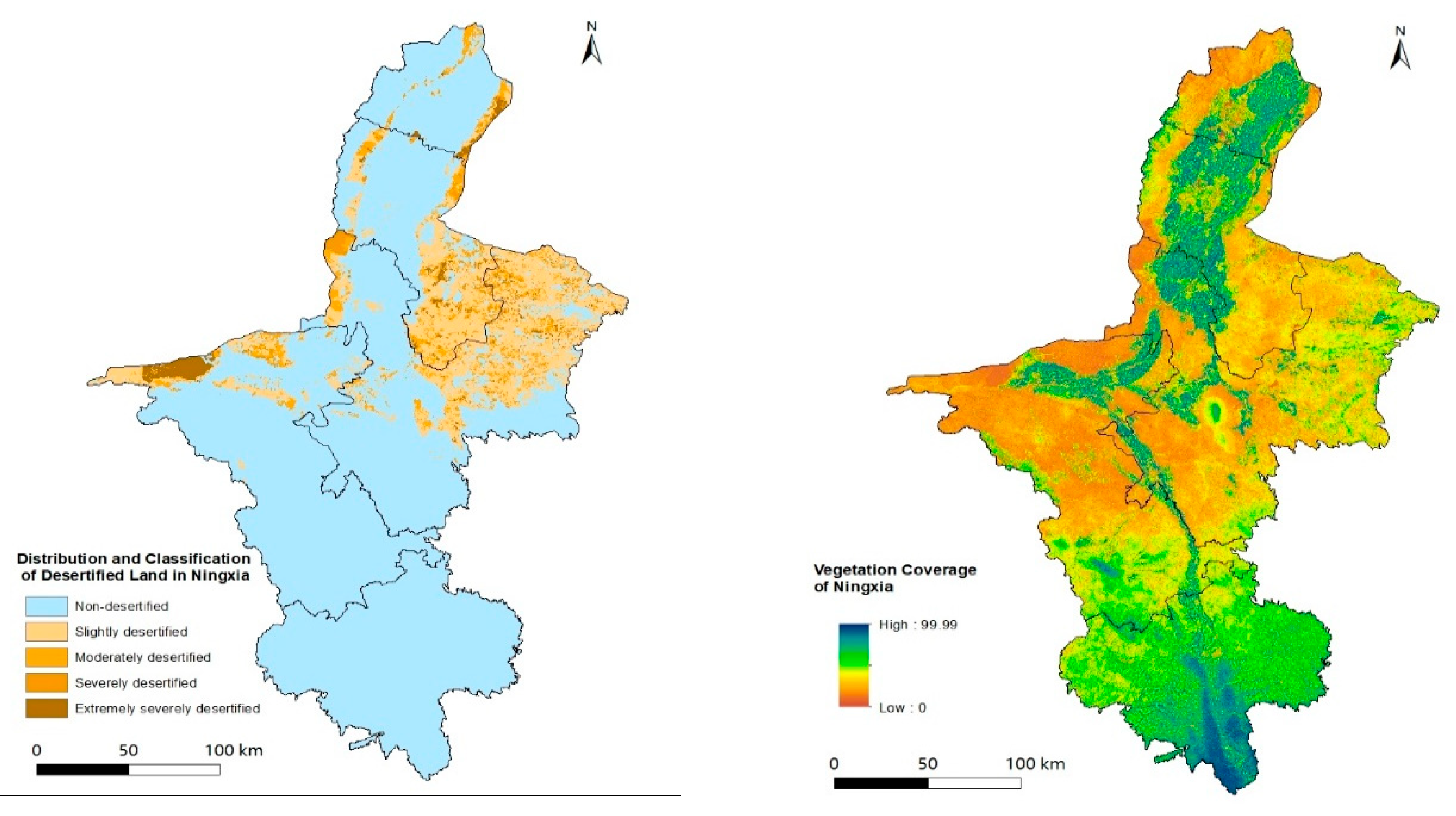
Figure 2.
Egyptian climatic zones according to HBRC, 2006 [26].
Figure 2.
Egyptian climatic zones according to HBRC, 2006 [26].
Disclaimer/Publisher’s Note: The statements, opinions and data contained in all publications are solely those of the individual author(s) and contributor(s) and not of MDPI and/or the editor(s). MDPI and/or the editor(s) disclaim responsibility for any injury to people or property resulting from any ideas, methods, instructions or products referred to in the content. |
© 2026 by the authors. Licensee MDPI, Basel, Switzerland. This article is an open access article distributed under the terms and conditions of the Creative Commons Attribution (CC BY) license (http://creativecommons.org/licenses/by/4.0/).
Copyright: This open access article is published under a Creative Commons CC BY 4.0 license, which permit the free download, distribution, and reuse, provided that the author and preprint are cited in any reuse.