

Submitted:
27 June 2026
Posted:
30 June 2026
You are already at the latest version
Abstract
Industry 5.0 offers new opportunities to rethink operational excellence by combining advanced technologies with sustainability, resilience, and human-centered value creation. This study examines how Industry 5.0 enabling technologies contribute to seven dimensions of operational excellence: efficiency and productivity, quality and reliability, organizational agility, continuous innovation, customer satisfaction, environmental sustainability, and organizational resilience. Based on survey data collected from 120 industrial companies that have begun integrating Industry 5.0 technologies, multiple regression analyses were conducted to assess the differentiated influence of these technologies on operational excellence outcomes. The results show that Industry 5.0 technologies do not contribute uniformly across all dimensions. Big Data emerges as a transversal lever, while Artificial Intelligence, Edge Computing, Digital Twins, Energy Efficiency Technologies, IoT, and Additive Manufacturing show more specific effects depending on the performance dimension considered. Environmental sustainability presents the strongest explanatory power, mainly supported by Energy Efficiency Technologies, Big Data, and Digital Twins. The findings suggest that Industry 5.0 adoption should follow a selective and contextual strategy aligned with firms’ operational, sustainability, and resilience objectives.
Keywords:
digital transformation
; Industry 5.0
; sustainable industry
; human-machine collaboration
; operational excellence
; agility
; resilience
; innovation
1. Introduction
The Operational excellence is recognized as an organizational strategy that aims for greater consistency and reliability while minimizing operational risk, reducing operating costs, and increasing revenues (1–5). For some organizations, this approach requires the rigorous implementation of structured methodologies, adapted to the specificities of their processes [2,3]. At a strategic level, it also involves efficient practices and optimal management of business processes [4]. However, simply mastering these methodologies, while essential, is not enough to guarantee success, especially in the manufacturing industry [5]. Operational excellence involves continuous improvement of key performance indicators [6]. The use of algorithms, machine learning, and other artificial intelligence applications can contribute to the automated generation of these indicators [5]. In addition, the integration of sensors and software technologies into operational processes supports operational excellence by enabling optimal process control [7].
In the emerging context of Industry 5.0, which prioritizes sustainability, human-centrity and resilience for design and value creation, operational excellence finds a new dynamic by exploiting the technological advances specific to this paradigm (12–14). Thus, research on operational excellence has given rise to a diversity of approaches, both theoretical and practical. Initially, studies focused on the efficiency and optimization of processes, in particular through maturity tools and performance indicators [11,12]. These approaches have gradually evolved towards a strategic perspective integrating organizational agility, a culture of continuous improvement and strategic alignment with the company’s overall objectives [7,13,14,15]. This transformation is also accompanied by a growing consideration of sustainable dimensions and social responsibility, reinforced by the introduction of digital technologies and the emergence of Industry 5.0, where people and sustainability are becoming central pillars [16,17,18,19].
In this perspective, Rahardjo et al. recently proposed a sustainable innovation framework based on integrative approaches combining Lean Six Sigma and Industry 5.0 technologies in order to achieve optimal process performance (22,23). Similarly, Cuevas et al. (2024) analysed how proven Lean Six Sigma methodologies effectively support the implementation of Industry 5.0, including human-machine collaboration, continuous learning, risk management and skills development [22]. In addition, Fani et al. (2024) highlighted the potential synergies between Lean, Industry 4.0 and Industry 5.0, thus developing a new paradigm called Lean 5.0, explicitly focused on people and sustainability [23].
However, despite these contributions, the empirical understanding of how specific Industry 5.0 technologies contribute to different dimensions of operational excellence remains limited. Some studies emphasize the direct potential of advanced technologies to improve performance, while others underline that their effects depend on organizational readiness, human capabilities, technological maturity, and contextual conditions. Current approaches still lack integrative empirical models that jointly articulate Industry 5.0 technologies, sustainability, resilience, and multiple dimensions of operational excellence. This gap is particularly important because technologies such as Big Data, Artificial Intelligence, Digital Twins, IoT, Additive Manufacturing, Edge Computing, Energy Efficiency Technologies, Cobots, 5G/6G networks, Internet of Everything, and Cyber-Physical Cognitive Production systems may not influence all dimensions of operational excellence in the same way.
Based on these observations, the central research question of this study is: how do Industry 5.0 technologies contribute to the improvement of the key dimensions of operational excellence from a sustainable performance perspective? The objective of this article is to analyze the differentiated influence of Industry 5.0 technologies on seven dimensions of operational excellence: efficiency and productivity, quality and reliability, organizational agility, continuous innovation, customer satisfaction, environmental sustainability, and organizational resilience. The study is based on an empirical survey conducted with industrial companies that have begun implementing Industry 5.0 technologies, and it uses multiple regression analysis to identify the specific contribution of each technology. The findings show that these technologies do not contribute uniformly across all dimensions. Big Data emerges as a transversal lever, while Artificial Intelligence, Edge Computing, Digital Twins, IoT, Additive Manufacturing, and Energy Efficiency Technologies show more specific effects depending on the performance dimension considered. Based on these results, an empirically supported operational excellence model is proposed to guide industrial companies toward sustainable, human-centred, and resilient performance.
2. Materials and Methods
The methodological approach adopted in this study is based on a quantitative, cross-sectional survey designed to assess how Industry 5.0 technologies contribute to different dimensions of operational excellence and to evaluate their perceived degree of impact. The study focused on eleven Industry 5.0 technologies in order to identify their concrete contributions to seven dimensions of operational excellence: efficiency and productivity, quality and reliability, organizational agility, continuous innovation, customer satisfaction, environmental sustainability, and organizational resilience.
The empirical study was conducted using a structured questionnaire. The questionnaire was developed based on a review of the literature on Industry 5.0, operational excellence, sustainable performance, digital transformation, and advanced manufacturing technologies. Relevant studies were identified from academic databases such as ScienceDirect, IEEE Xplore, Google Scholar, and MDPI, using keywords including “Industry 5.0”, “operational excellence”, “sustainable performance”, “digital transformation”, and “industrial resilience”. This literature review made it possible to identify the main Industry 5.0 technologies examined in the study and the key dimensions of operational excellence.
Before the final dissemination, the questionnaire was pre-tested and validated in collaboration with 10 operational excellence practitioners. This pre-test was used to assess the clarity, relevance, and comprehensibility of the questions and to ensure that the questionnaire was suitable for practitioners working in industrial contexts. Based on this validation step, the final version of the questionnaire was refined and then distributed internationally through professional contacts and networks.
The questionnaire was disseminated to 500 industrial companies worldwide. The target population consisted of companies that had adopted or begun integrating Industry 5.0 technologies into their operational or business processes. After filtering the collected responses, 120 complete and usable responses were retained for analysis. These responses came from operational excellence practitioners at different hierarchical levels, all working in industrial companies that had adopted Industry 5.0 technologies.
Participants were asked to identify the Industry 5.0 technologies implemented in their company and to assess their perceived contribution to each dimension of operational excellence. The eleven technologies considered in the study were Internet of Things, Big Data, Additive Manufacturing, Artificial Intelligence, Digital Twins, Cobots, 5G/6G Networks, Edge Computing, Energy Efficiency Technologies, Internet of Everything, and Cyber-Physical Cognitive Production systems. Each operational excellence dimension was assessed using a five-point Likert scale, where 1 indicated a very low perceived contribution and 5 indicated a very high perceived contribution.
The collected data were analyzed using IBM SPSS Statistics. Multiple regression analysis was used to examine the relationships between the independent variables, corresponding to the Industry 5.0 technologies implemented by the surveyed companies, and the dependent variables, corresponding to the seven dimensions of operational excellence. Separate regression models were estimated for each operational excellence dimension in order to identify the specific contribution of each technology. Model fit and predictor effects were assessed using standard regression indicators, including R, R², adjusted R², ANOVA F-tests, standardized beta coefficients, t-values, p-values, and diagnostic statistics. A significance threshold of p < 0.05 was used to identify statistically significant effects, while p < 0.10 was considered indicative of a marginal effect.
To support transparency and reproducibility, the questionnaire, analysis protocol, and anonymized data supporting the findings of this study are available from the corresponding author upon reasonable request. Due to confidentiality restrictions related to participating companies, the raw dataset cannot be made publicly available.
Figure 1 below illustrates the main methodological steps of the study.
3. Results
This section may be divided by subheadings. It should provide a concise and precise description of the experimental results, their interpretation, as well as the experimental conclusions that can be drawn.
3.1. Descriptive Overview
The sectoral diversity of the companies participating in the study reveals a balanced distribution between different industrial sectors, as illustrated in Figure 2. The most represented sectors are the automotive industry (27%) and the aeronautics industry (19%). This distribution allows a reasonable generalization of the results obtained and underlines the cross-cutting interest of Industry 5.0 technologies.
Figure 3 shows the frequency of adoption of the main technologies associated with Industry 5.0 within the companies represented. There are differentiated levels of technology adoption, with a wide deployment of analytics and connectivity tools, such as artificial intelligence (89%), the Internet of Things (77%), and big data (66%). In contrast, technologies such as Digital Twins, Additive Manufacturing, Cobots, 5G/6G networks and Cyber-Physical Cognitive Production systems remain less widely deployed, which is consistent with their relatively recent development and the varying levels of technological maturity across countries and sectors.
The perceived impact of Industry 5.0 technologies differs across the seven dimensions of operational excellence. The results (Figure 4) show that Industry 5.0 technologies have a perceived very strong impact (level 5) on organizational agility (40%) and environmental sustainability (38%). The impact is considered strong (level 4) on Efficiency & Productivity (51%), as well as on Quality and Reliability (43%); On the other hand, the impact on continuous innovation, customer satisfaction and organizational resilience is mostly at the moderate level (level 3), which testifies to a potential that is being consolidated.
3.2. Multiple Regression Analysis
Multiple regression statistics were used to analyse the impact of multiple independent variables (Industry 5.0 technologies) on a dependent variable (the dimensions of operational excellence). The analysis is based on three main elements:
- Evaluation of the overall quality of the model
- Analysis of variance (ANOVA)
- Interpretation of regression coefficients
The regression models are statistically significant for all seven dimensions of operational excellence (Table 1). This indicates that Industry 5.0 technologies collectively contribute to explaining variations in operational excellence outcomes. However, the explanatory power varies from one dimension to another, confirming that the contribution of Industry 5.0 technologies is differentiated rather than uniform.
The strongest explanatory power is observed for environmental sustainability, with an adjusted R² of 0.515. This indicates that 51.5% of the variance in environmental sustainability is explained by the Industry 5.0 technologies included in the model. Quality and reliability also show a relatively strong explanatory power, with an adjusted R² of 0.318. Efficiency and productivity, organizational agility and customer satisfaction show moderate explanatory power, while continuous innovation and organizational resilience show more modest levels of explanation.
These results are theoretically consistent. Environmental sustainability is more directly linked to technological levers such as energy efficiency technologies, data analytics and simulation tools. By contrast, innovation and resilience are more complex organizational capabilities that depend on technology, but also on human skills, leadership, organizational culture and long-term learning processes.
Table 2 reports the significant and marginal effects of Industry 5.0 technologies on each dimension of operational excellence, based on the standardized regression coefficients.
The regression model for efficiency and productivity is statistically significant, with an adjusted R² of 0.246. Big Data, Edge Computing and Artificial Intelligence have significant positive effects. These results indicate that efficiency gains in Industry 5.0 environments are mainly supported by technologies that improve data processing, real-time decision-making and intelligent automation.
Big Data contributes to operational efficiency by supporting process monitoring, bottleneck identification and evidence-based decision-making. Edge Computing enables faster processing of operational data close to production systems, reducing latency and improving responsiveness. Artificial Intelligence contributes through predictive analytics, automation and decision-support capabilities.
The model for quality and reliability shows an adjusted R² of 0.318. Big Data has the strongest significant effect, followed by Artificial Intelligence and Digital Twins. This suggests that quality and reliability are particularly influenced by technologies that support predictive control, anomaly detection and process simulation.
Big Data enables firms to detect patterns and deviations in production processes. Artificial Intelligence supports predictive maintenance and intelligent quality control. Digital Twins allow virtual testing and simulation of production systems, contributing to greater reliability and reduced process variability.
The regression model for organizational agility is statistically significant, with an adjusted R² of 0.221. Big Data and IoT are significant positive predictors. These results suggest that agility is mainly supported by the ability to collect, process and use information rapidly.
Big Data improves decision-making and helps organizations respond more quickly to operational changes. IoT strengthens real-time connectivity between machines, products and processes, increasing visibility and responsiveness. Other technologies, such as 5G/6G networks, Cobots and Internet of Everything, do not show significant direct effects in this model, which may be explained by their still-emerging level of deployment and their dependence on integration maturity.
The model for continuous innovation has a more modest explanatory power, with an adjusted R² of 0.173. Big Data and Digital Twins have significant positive effects. This indicates that innovation is supported by technologies that generate knowledge, enable experimentation and facilitate continuous improvement.
Big Data helps identify operational trends, customer needs and improvement opportunities. Digital Twins support innovation by enabling simulation, rapid testing and virtual experimentation. However, the moderate explanatory power of the model confirms that continuous innovation depends not only on technology, but also on organizational learning, leadership, employee involvement and innovation culture.
The customer satisfaction model is statistically significant, with an adjusted R² of 0.198. IoT and Additive Manufacturing have significant positive effects. These results suggest that customer satisfaction is mainly influenced by technologies that improve connectivity, customization and responsiveness.
IoT allows firms to collect real-time information about product use, service performance and customer needs. Additive Manufacturing enables greater customization, shorter development cycles and more flexible responses to specific customer requirements. However, customer satisfaction also depends on non-technological factors such as service quality, delivery reliability and communication with customers.
The environmental sustainability model shows the strongest explanatory power, with an adjusted R² of 0.515. Energy Efficiency Technologies have the strongest significant effect, followed by Big Data and Digital Twins.
This result confirms that environmental sustainability is the dimension most directly influenced by Industry 5.0 technologies. Energy Efficiency Technologies contribute to reducing energy consumption and improving resource use. Big Data supports environmental performance monitoring and optimization. Digital Twins allow firms to simulate production systems and optimize energy flows before implementation.
These results are consistent with the sustainability-oriented logic of Industry 5.0, where technological adoption is not limited to productivity gains but also supports greener, more responsible and more resource-efficient operations.
The model for organizational resilience is statistically significant but shows the lowest adjusted R², at 0.164. Energy Efficiency Technologies and Additive Manufacturing have significant positive effects, while Big Data shows a marginal positive effect.
Energy Efficiency Technologies can improve resilience by reducing vulnerability to energy-related disruptions and supporting more stable operations. Additive Manufacturing can strengthen resilience by increasing production flexibility, enabling localized production and reducing dependence on traditional supply chains. Big Data may also support resilience by improving risk anticipation and decision-making, although its effect remains marginal in this model.
The modest explanatory power of this model is theoretically acceptable, since organizational resilience is a multidimensional capability that depends not only on technology, but also on leadership, crisis management, workforce flexibility, supplier relationships and organizational learning.
4. Discussion
The results of this empirical study suggest that Industry 5.0 technologies exert a differentiated influence on the constituent dimensions of operational excellence. Rather than producing uniform effects across all performance dimensions, these technologies appear to contribute selectively according to the nature of the operational objective considered. This finding supports the idea that Industry 5.0 technologies should not be considered universal solutions, but rather strategic technological levers whose effects depend on the targeted performance dimension, the level of technological maturity, and the organizational context in which they are implemented.
A first important insight concerns the central role of data-driven capabilities. Big Data emerges as a transversal technological lever, with significant and recurring effects on several dimensions of operational excellence, including efficiency and productivity, quality and reliability, organizational agility, and continuous innovation. In production systems, Big Data supports process visibility, bottleneck identification, predictive decision-making, resource optimization, and real-time monitoring. These mechanisms help organizations improve productivity, reduce operational inefficiencies, strengthen quality control, and respond more rapidly to changes in their environment. Big Data analytics techniques also contribute to real-time decision-making by enabling the recognition and elimination of non-essential elements, maximizing predictability, and identifying new improvement opportunities [24]. These findings are consistent with previous research showing that Big Data has a significant impact on engineering and manufacturing by improving operational efficiency, product quality, and personalization capabilities [25].
Artificial Intelligence and Edge Computing also contribute positively to operational performance, although their effects appear more specific. Artificial Intelligence is mainly associated with efficiency and productivity as well as quality and reliability. This can be explained by its ability to support predictive analytics, anomaly detection, intelligent automation, decision support, and predictive maintenance. In Industry 5.0 environments, AI is not only a tool for automation but also a means of supporting human decision-making by reducing information overload, minimizing errors, improving safety, and enabling more sustainable products and services [24]. dge Computing, for its part, contributes particularly to efficiency and productivity by allowing data to be processed closer to machines and production systems. This reduces latency, improves operational responsiveness, and facilitates preventive failure detection through real-time communication and predictive analytics (26,28).
The results also highlight the importance of simulation and experimentation capabilities. Digital Twins contribute to quality and reliability, continuous innovation, and environmental sustainability. This suggests that their value lies in their ability to create virtual representations of physical systems, test alternative scenarios, anticipate failures, and optimize processes before implementation in real environments. Their contribution to continuous innovation is particularly relevant, since they facilitate experimentation, rapid testing, and learning without disrupting ongoing operations. In relation to environmental sustainability, Digital Twins can support the simulation of energy flows, the optimization of resource consumption, and the design of more sustainable production systems.
A particularly notable result concerns environmental sustainability, which presents the strongest explanatory power among the dimensions studied. Energy Efficiency Technologies are the most decisive predictor of this dimension, followed by Big Data and Digital Twins. This finding is consistent with the sustainability-oriented logic of Industry 5.0, which emphasizes not only productivity and technological performance, but also responsible and resource-efficient operations. Smart energy management systems can promote energy efficiency through real-time monitoring and control of energy systems, improve technical and operational efficiency, assess energy quality, and enhance the reliability of energy systems (29). he significant contribution of Big Data and Digital Twins further indicates that environmental sustainability benefits from the combination of measurement, analytics, and simulation capabilities.
The effects of IoT and Additive Manufacturing appear more specific. IoT contributes to organizational agility and customer satisfaction by improving connectivity, real-time visibility, and responsiveness. In customer-oriented contexts, IoT can help firms monitor product use, service performance, and customer needs more effectively. Additive Manufacturing contributes to customer satisfaction and organizational resilience. Its contribution to customer satisfaction may be related to customization, shorter development cycles, and greater flexibility in responding to specific customer requirements. Its contribution to resilience can be explained by its potential to support decentralized production, reduce dependence on traditional supply chains, and increase operational flexibility during disruptions.
Regarding organizational resilience, the overall explanatory power of the model remains more modest compared with other dimensions. Energy Efficiency Technologies and Additive Manufacturing show significant positive effects, while Big Data presents a marginal contribution. This result suggests that resilience is not determined by technology alone. Although technological tools can support risk anticipation, production flexibility, and operational stability, organizational resilience also depends on leadership, crisis management capabilities, workforce flexibility, supplier relationships, organizational learning, and the culture of adaptability. Therefore, the relatively lower explanatory power observed for resilience is theoretically acceptable and highlights the need to examine the interaction between technological, human, and organizational factors.
Some technologies, including 5G/6G networks, Cobots, Internet of Everything, and Cyber-Physical Cognitive Production systems, do not show significant direct effects across most models. This result should not be interpreted as evidence that these technologies are irrelevant. Rather, it suggests that their impact may be indirect, context-dependent, or conditioned by the level of technological integration and organizational maturity. These technologies are still at different stages of deployment across sectors and countries, and their potential benefits may become more visible when digital infrastructure, workforce skills, investment capacity, and integration capabilities reach a sufficient level of maturity.
The multi-country nature of the study provides a broader view of Industry 5.0 adoption, but it also introduces heterogeneity in terms of technological infrastructure, national digital maturity, industrial priorities, and organizational readiness. This heterogeneity may partly explain why some emerging technologies do not show significant direct effects. In countries or sectors where 5G/6G networks, Cobots, or Cyber-Physical Cognitive Production systems are still in an early stage of implementation, their contribution to operational excellence may not yet be fully measurable. Future research should therefore investigate country-level and sector-level differences more deeply, particularly by examining the moderating role of technological maturity, digital infrastructure, and organizational readiness.
From a managerial perspective, these findings support a selective and strategic approach to Industry 5.0 adoption. Companies seeking productivity gains may prioritize Big Data, Artificial Intelligence, and Edge Computing. Firms aiming to improve quality and reliability may benefit from Big Data, Artificial Intelligence, and Digital Twins. Organizations focusing on environmental sustainability should prioritize Energy Efficiency Technologies, supported by Big Data and Digital Twins. For customer-oriented performance, IoT and Additive Manufacturing appear particularly relevant, while resilience requires the combination of technological investments with organizational learning, flexibility, and risk management capabilities.
This study supports a contextual and capability-based view of Industry 5.0. Technologies create value when they are aligned with organizational objectives, embedded in appropriate processes, and supported by human skills and managerial commitment. Operational excellence in the Industry 5.0 era should therefore be understood not as the result of technology adoption alone, but as the outcome of a balanced integration of technological, human, organizational, and sustainability-oriented capabilities. The proposed operational excellence model reflects this differentiated logic by showing that each dimension can be supported by specific technological levers, while recognizing that their effectiveness depends on contextual and organizational conditions.
The analysis also highlights that the impact of technologies varies according to the dimensions, which legitimizes a differentiated approach to their adoption. It is therefore not a question of considering Industry 5.0 technologies as universal solutions, but rather as specific catalysts to be mobilized according to priority performance objectives.
This analysis provides a framework for understanding how Industry 5.0 technologies can be integrated into organizational practices to achieve sustainable and human-centered performance. These findings converge towards the proposal of an operational excellence model based on Industry 5.0 technologies (Figure 5), structured around the seven fundamental dimensions. Each dimension is supported by disruptive technologies acting as transversal catalysts to optimize processes and ensure sustainable, human-centric performance.
Practical Implications
Given the differentiated effects of Industry 5.0 technologies on the various dimensions of operational excellence, a targeted and contextual approach is recommended. The results indicate that the adoption of these technologies should not be considered a one-size-fits-all process, but rather a strategic decision aligned with the company’s performance priorities, internal capabilities and level of technological maturity. Therefore, before integrating Industry 5.0 technologies, companies should carefully assess their organizational readiness, digital infrastructure, human skills and sustainability objectives in order to maximize their potential benefits.
From a managerial perspective, this study encourages managers to develop an integrative and balanced vision of operational excellence. The proposed model, structured around the seven fundamental dimensions of operational excellence and the technological levers identified in the empirical analysis, provides a useful analytical framework for prioritizing technological investments. It can help managers align technology adoption with their strategic ambitions while ensuring consistency with the sustainability, resilience and human-centric objectives advocated by Industry 5.0.
In addition, the technological transformation associated with Industry 5.0 requires major adjustments in terms of human skills [28]. Companies should invest in continuous training and in the development of employees’ technological, analytical and problem-solving capabilities in order to maximize the benefits of the technologies adopted. Particular attention should also be paid to organizational and cultural integration, as the successful adoption of Industry 5.0 technologies depends not only on technological deployment, but also on employee involvement, change management and the ability of teams to use these tools effectively.
Finally, companies should adopt a proactive approach to risk management when implementing Industry 5.0 technologies. In particular, Digital Twins, intelligent monitoring systems and data-driven decision-support tools can help firms anticipate disruptions, simulate operational scenarios and strengthen organizational resilience. However, resilience should not be viewed as a purely technological outcome; it also depends on organizational learning, managerial preparedness, workforce flexibility and the capacity to adapt to changing conditions.
In short, this study contributes to the literature by proposing an empirical framework that links Industry 5.0 technologies with the dimensions of operational excellence. It highlights the value of an integrative vision combining economic performance, continuous innovation, environmental sustainability and organizational resilience. However, the cross-sectional nature of the study does not allow the evolution of technological impacts to be observed over time. Longitudinal research would therefore be necessary to better assess the dynamics of Industry 5.0 implementation and its delayed effects on organizational performance. Moreover, some emerging technologies, such as 5G/6G networks, Cobots, Internet of Everything and Cyber-Physical Cognitive Production systems, remain at different stages of deployment across companies, sectors and countries, which may explain their limited direct significance in the results. Future research could therefore focus on comparative sectoral or cross-country studies, longitudinal analyses of medium-term effects, and the evaluation of synergies between technological, methodological and behavioural levers. It would also be relevant to explore the conditions required for successful cultural change toward sustainable operational excellence
5. Conclusions
This study highlights the differentiated effects of Industry 5.0 technologies on the various dimensions of operational excellence. The results of the multiple regression analysis show that certain technologies, such as Big Data, Artificial Intelligence, Edge Computing, Digital Twins and Energy Efficiency Technologies, exert significant effects on specific dimensions of organizational performance, ranging from efficiency and productivity to environmental sustainability. Other technologies, such as 5G/6G networks, Cobots, Internet of Everything and Cyber-Physical Cognitive Production systems, appear to play a more contextual or indirect role, requiring specific implementation conditions and higher levels of technological maturity to deploy their full potential.
Beyond these findings, the results confirm that the adoption of Industry 5.0 technologies should not be approached as a one-size-fits-all strategy. Rather, it should be part of a targeted and contextual strategy aligned with the specific objectives, capabilities and maturity level of the organization. The integrative model proposed in this study, which articulates seven key dimensions of operational excellence with the relevant technological levers, offers a structuring framework to guide industrial companies toward sustainable, human-centred and resilient performance.
At the academic level, this study enriches the literature on digital transformation and operational excellence by integrating an Industry 5.0 perspective, which remains relatively underexplored empirically. From a managerial perspective, it provides decision-makers with practical guidance for prioritizing technological choices according to the most relevant performance levers and strategic objectives.
Future research may extend this analysis to specific sectors, compare different countries or regions, explore the combined effects of technologies with methodological and behavioural levers, or conduct longitudinal studies to assess the evolution of technological impacts over time. Such investigations would contribute to a deeper understanding of the complex dynamics of industrial transformation in the era of Industry 5.0.
Author Contributions
Conceptualization, Imane Boumsisse; Methodology, Imane Boumsisse; Software, Imane Boumsisse; Validation, Mariam Benhadou and Abdellah Haddout; Formal analysis, Imane Boumsisse; Investigation, Imane Boumsisse; Resources, Imane Boumsisse; Data curation, Imane Boumsisse; Writing—original draft, Imane Boumsisse; Writing—review & editing, Imane Boumsisse, Mariam Benhadou and Abdellah Haddout; Visualization, Imane Boumsisse; Supervision, Mariam Benhadou and Abdellah Haddout; Project administration, Mariam Benhadou and Abdellah Haddout. All authors have read and agreed to the published version of the manuscript.
Funding
This research received no external funding.
Institutional Review Board Statement
Not applicable.
Informed Consent Statement
Not applicable.
Data Availability Statement
Data supporting the findings of this study are available from the corresponding author upon reasonable request. Due to confidentiality restrictions related to participating companies, the raw dataset cannot be made publicly available.
Acknowledgments
We would like to express our sincere gratitude to the members of the Industrial Management and Technology of Plastic and Composite Materials team for their invaluable support and assistance throughout the research process. Their insights and contributions greatly enriched the quality of this work.
Conflicts of Interest
The authors declare no conflict of interest.
Abbreviations
The following abbreviations are used in this manuscript:
| MDPI | Multidisciplinary Digital Publishing Institute |
| DOAJ | Directory of open access journals |
| AI | Artificial Intelligence |
| ANOVA | Analysis of Variance |
| C-CCP | Cyber-Physical Cognitive Production systems |
| IoT | Internet of Things |
| MDPI | Multidisciplinary Digital Publishing Institute |
| R | Multiple correlation coefficient |
| R² | Coefficient of determination |
| Sig. | Significance |
| SPSS | Statistical Package for the Social Sciences |
| Std. Error | Standard Error |
| β | Standardized beta coefficient |
| p-value | Probability value |
| 5G/6G | Fifth-generation / sixth-generation mobile networks |
References
- Wojtkowiak, D.; Cyplik, P. Operational Excellence within Sustainable Development Concept-Systematic Literature Review. Sustainability 2020, 12(19), 7933. [Google Scholar] [CrossRef]
- Henríquez-Machado, R.; Muñoz-Villamizar, A.; Santos, J. Sustainability through Operational Excellence: An Emerging Country Perspective. Sustainability 2021, 13(6), 3165. [Google Scholar] [CrossRef]
- Aguilera, J.T.; Ruíz, N.L.T. Operational Excellence: Concept Review and Meaning Restructuration; IEOM Society, 2019; pp. 678–88. [Google Scholar]
- Sony, M. Implementing sustainable operational excellence in organizations: an integrative viewpoint. Prod. Manuf. Res. 2019, 7(1), 67–87. [Google Scholar] [CrossRef]
- Jengwa, E.; Pellissier, R. An operational excellence strategy implementation model for growth in a volatile, uncertain, complex, and ambiguous environment. Acta commer. 2022, 22(1). [Google Scholar] [CrossRef]
- Ramadan, M.A.; Al Dhaheri, M.K.; Maalouf, M.; Antony, J.; Bhat, S.; Gijo, E.V. Application of Six Sigma methodology to enhance the productivity and performance of a hotel in the UAE. TQM J. 2022, 35(2), 554–76. [Google Scholar] [CrossRef]
- Found, P.; Lahy, A.; Williams, S.; Hu, Q.; Mason, R. Towards a theory of operational excellence. Total Qual. Manag. Bus. Excell. 2018, 29(9–10), 1012–24. [Google Scholar] [CrossRef]
- Dev, N.K.; Shankar, R.; Qaiser, F.H. Industry 4.0 and circular economy: Operational excellence for sustainable reverse supply chain performance. Resour. Conserv. Recycl. 2020, 153, 104583. [Google Scholar] [CrossRef]
- Luz Tortorella, G.; Cauchick-Miguel, P.A.; Li, W.; Staines, J.; McFarlane, D. What does operational excellence mean in the Fourth Industrial Revolution era? Int. J. Prod. Res. 2022, 60(9), 2901–17. [Google Scholar] [CrossRef]
- Muhammad, N.; Upadhyay, A.; Kumar, A.; Gilani, H. Achieving operational excellence through the lens of lean and Six Sigma during the COVID-19 pandemic. Int. J. Logist. Manag. 2022, 33(3), 818–35. [Google Scholar] [CrossRef]
- Gupta, S.; Modgil, S.; Gunasekaran, A. Big data in lean six sigma: a review and further research directions. Int. J. Prod. Res. 2020, 58(3), 947–69. [Google Scholar] [CrossRef]
- Bezoui, M.; Almaktoom, A.T.; Bounceur, A.; Qaisar, S.M.; Chouman, M. Hybrid Metaheuristics for Industry 5.0 Multi-Objective Manufacturing and Supply Chain Optimization. 2024 21st Learning and Technology Conference (L&T) [Internet], 2024; pp. 245–9. Available online: https://ieeexplore.ieee.org/abstract/document/10469011. [CrossRef]
- Demir, K.A.; Döven, G.; Sezen, B. Industry 5.0 and Human-Robot Co-working. In Procedia Computer Science; 3rd WORLD CONFERENCE ON TECHNOLOGY, INNOVATION AND ENTREPRENEURSHIP”INDUSTRY 4.0 FOCUSED INNOVATION, TECHNOLOGY, ENTREPRENEURSHIP AND MANUFACTURE, 1 Jan 2019; Volume 2019158, pp. 688–95. [Google Scholar] [CrossRef]
- Nayeri, S.; Sazvar, Z.; Heydari, J. Towards a responsive supply chain based on the industry 5.0 dimensions: A novel decision-making method. Expert Syst. With Appl. 2023, 213, 119267. [Google Scholar] [CrossRef]
- Kovilage, Manori P.; Yapa, Saman T.W.S.; Hewagamage, Champa. A Comprehensive Definition for ‘Operational Excellence. VJM 2022, 8(II). [Google Scholar] [CrossRef]
- Kovilage, M.P.; Yapa, S.T.W.S.; Hewagamage, C. Research Areas, Gaps and Future Research Directions of Operational Excellence: A Systematic Literature Review. S Asian J. Bus. Insights 2022, 2(1), 3–32. [Google Scholar] [CrossRef]
- Carvalho, M.; Sá, J.C.; Marques, P.A.; Santos, G.; Pereira, A.M. Development of a conceptual model integrating management systems and the Shingo Model towards operational excellence. Total Qual. Manag. Bus. Excell. 2023, 34(3–4), 397–420. [Google Scholar] [CrossRef]
- Carvalho, A.M.; Sampaio, P.; Rebentisch, E.; McManus, H.; Carvalho, J.Á.; Saraiva, P. Operational excellence, organizational culture, and agility: bridging the gap between quality and adaptability. Total Qual. Manag. Bus. Excell. 2023, 34(11–12), 1598–628. [Google Scholar] [CrossRef]
- Carvalho, A.M.; Sampaio, P.; Rebentisch, E.; Carvalho, J.Á.; Saraiva, P. The influence of operational excellence on the culture and agility of organizations: evidence from industry. IJQRM 2021, 38(7), 1520–49. [Google Scholar] [CrossRef]
- Carvalho, A.M.; Sampaio, P.; Rebentisch, E. On Agile Metrics for Operations Management: Measuring and Aligning Agility with Operational Excellence. In 2019 IEEE International Conference on Industrial Engineering and Engineering Management (IEEM) [Internet]; IEEE: Macao, Macao, 2019; pp. 1601–5. Available online: https://ieeexplore.ieee.org/document/8978806/. [CrossRef]
- Antony, J.; Sony, M.; Jayaraman, R.; Swarnakar, V.; Tortorella, G.D.L.; Garza-Reyes, J.A.; et al. Global perspectives on operational excellence: unveiling critical failure factors and sustainable pathways. IJQRM 2024. [Google Scholar] [CrossRef]
- Rahardjo, B.; Wang, F.K.; Lo, S.C.; Chu, T.H. A Sustainable Innovation Framework Based on Lean Six Sigma and Industry 5.0. In Arab J Sci Eng; 18 Dec 2023. [Google Scholar] [CrossRef]
- Rahardjo, B.; Wang, F.K. Lean Six Sigma Tools in Industry 5.0: A Sustainable Innovation Framework. SSRN J. 2022. [Google Scholar] [CrossRef]
- Cuevas, C.; Mira-Solves, I.; Verdu-Jover, A. Industry 5.0’s pillars and Lean Six Sigma: mapping the current interrelationship and future research directions. In International Journal of Productivity and Performance Management; Located at; world, 20 Sep 2024; ahead-of-print(ahead-of-print). [Google Scholar] [CrossRef]
- Fani, V.; Bucci, I.; Rossi, M.; Bandinelli, R. Lean and industry 4.0 principles toward industry 5.0: a conceptual framework and empirical insights from fashion industry. In Journal of Manufacturing Technology Management; Located at; world, 2 Jul 2024; Volume 35, 9, pp. 122–41. [Google Scholar] [CrossRef]
- Maddikunta, P.K.R.; Pham, Q.V.; B, P.; Deepa, N.; Dev, K.; Gadekallu, T.R.; et al. Industry 5.0: A survey on enabling technologies and potential applications. J. Ind. Inf. Integr. 2022, 26, 100257. [Google Scholar] [CrossRef]
- Abell, J.A.; Chakraborty, D.; Escobar, C.A.; Im, K.H.; Wegner, D.M.; Wincek, M.A. Big Data-Driven Manufacturing—Process-Monitoring-for-Quality Philosophy. J. Manuf. Sci. Eng. 2017, 139, 101009. [Google Scholar] [CrossRef]
- Kubiak, K.; Dec, G.; Stadnicka, D. Possible Applications of Edge Computing in the Manufacturing Industry—Systematic Literature Review. Sensors 2022, 22(7), 7. [Google Scholar] [CrossRef] [PubMed]
- Kermani, M.; Adelmanesh, B.; Shirdare, E.; Sima, C.A.; Carnì, D.L.; Martirano, L. Intelligent energy management based on SCADA system in a real Microgrid for smart building applications. Renew. Energy 2021, 171, 1115–27. [Google Scholar] [CrossRef]
- Boumsisse, I.; Benhadou, M.; Haddout, A. Study of Behavioral Levers Enhancing Operational Excellence in the Context of the Industry 5.0 Transition. IJETT 2024, 72(8), 265–78. [Google Scholar] [CrossRef]
Figure 1.
Methodological approach of the study.
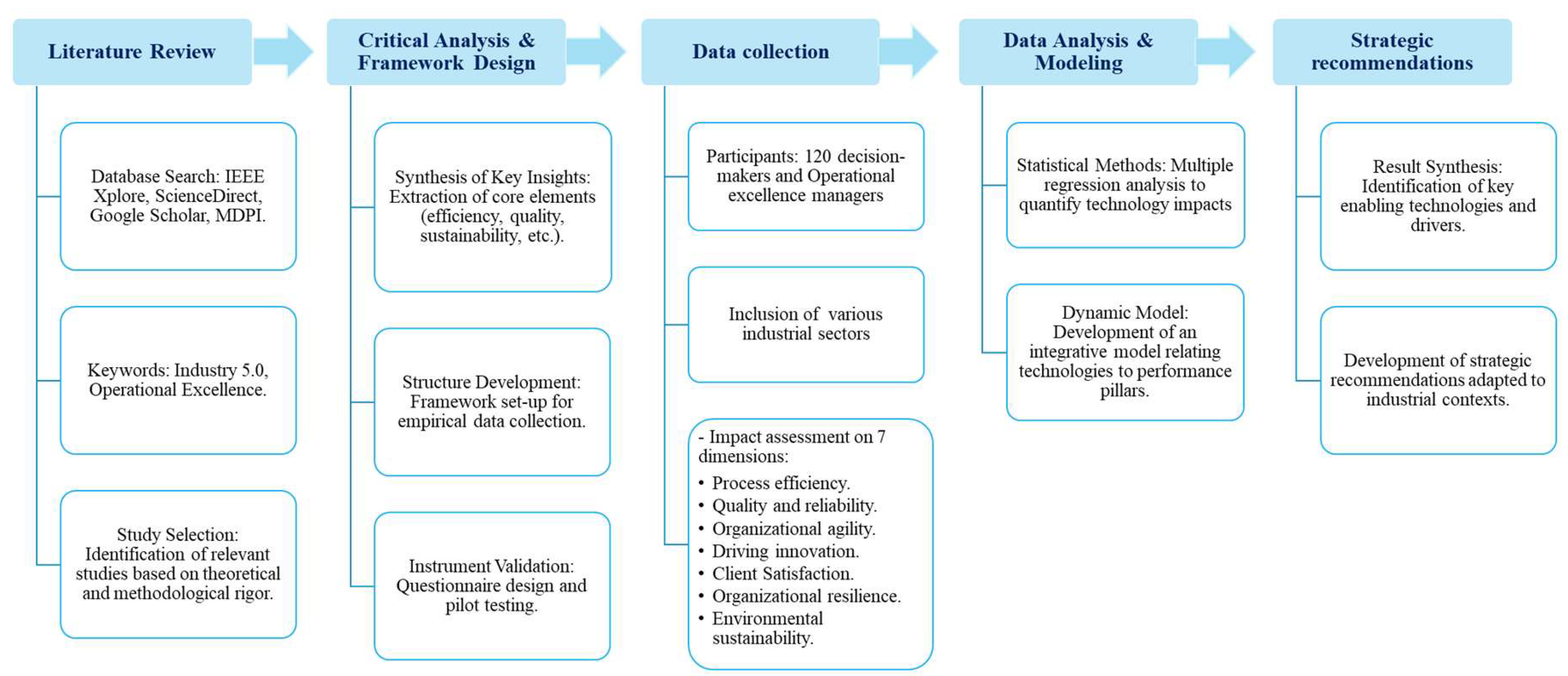
Figure 2.
Sector Representation of Surveyed Companies.
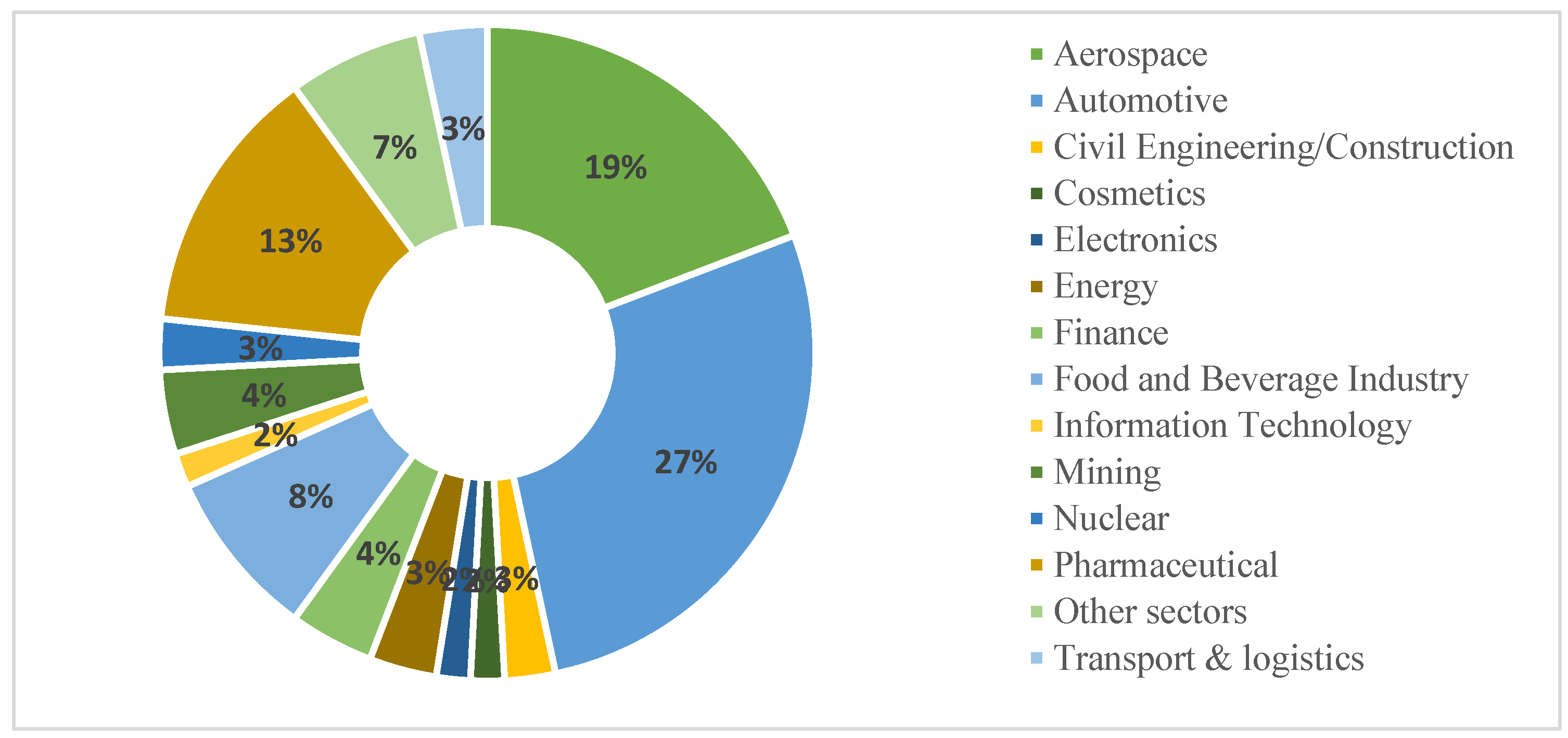
Figure 3.
Frequency of main Industry 5.0 Technologies Implemented in represented compagnies.
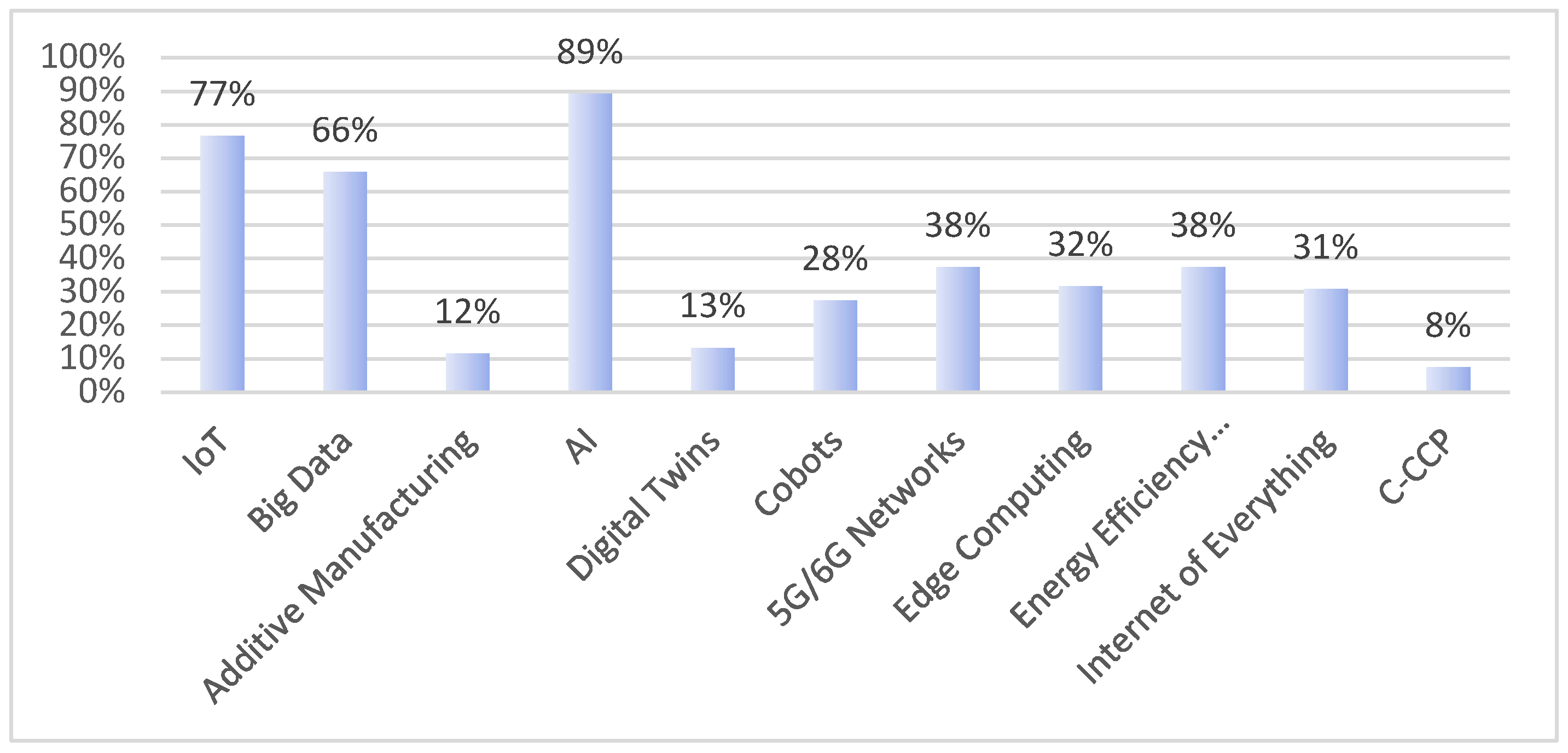
Figure 4.
Résultats de l’analyse de régression multiple.
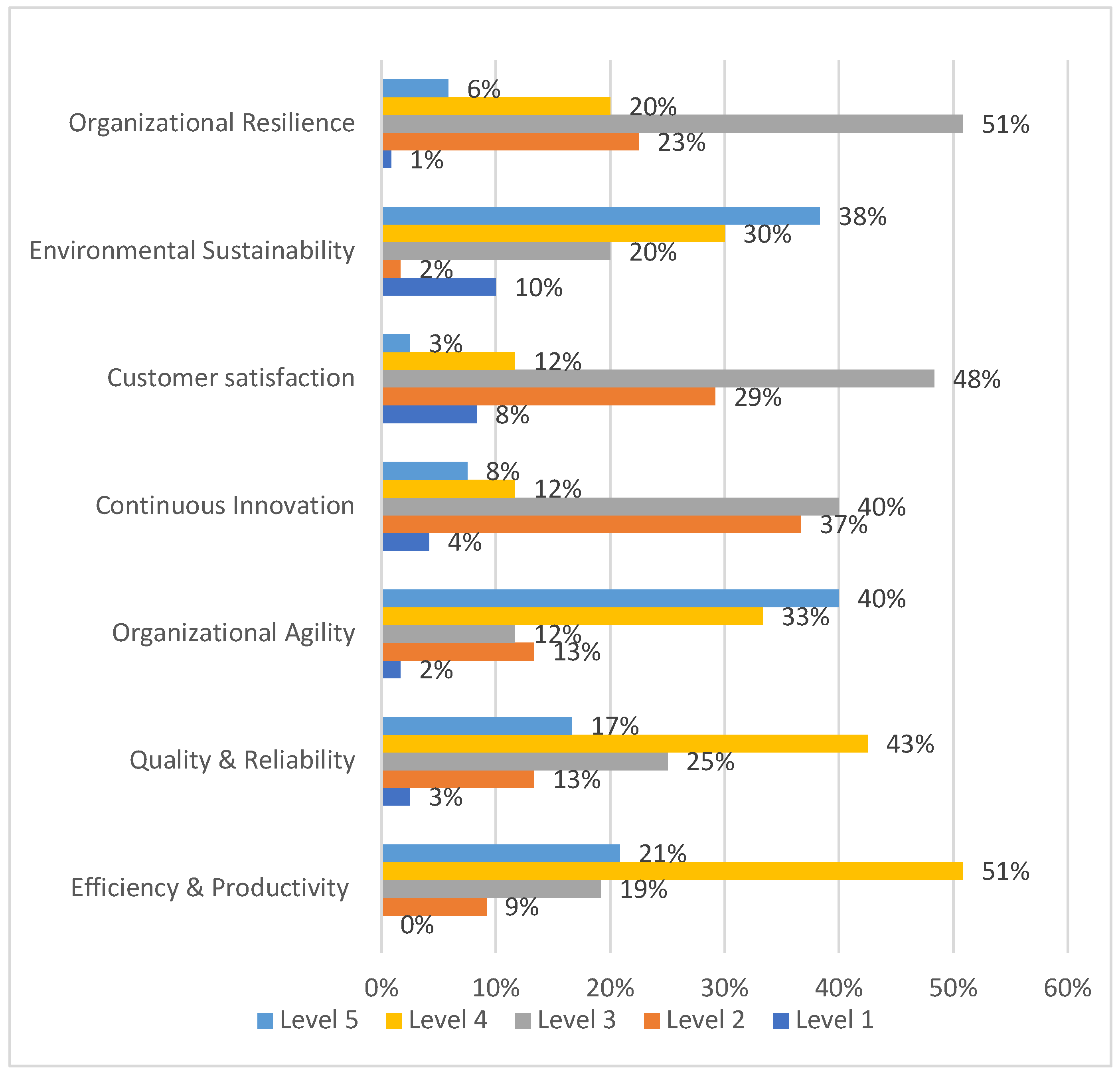
Figure 5.
Operational Excellence Model based on Industry 5.0 Technologies.
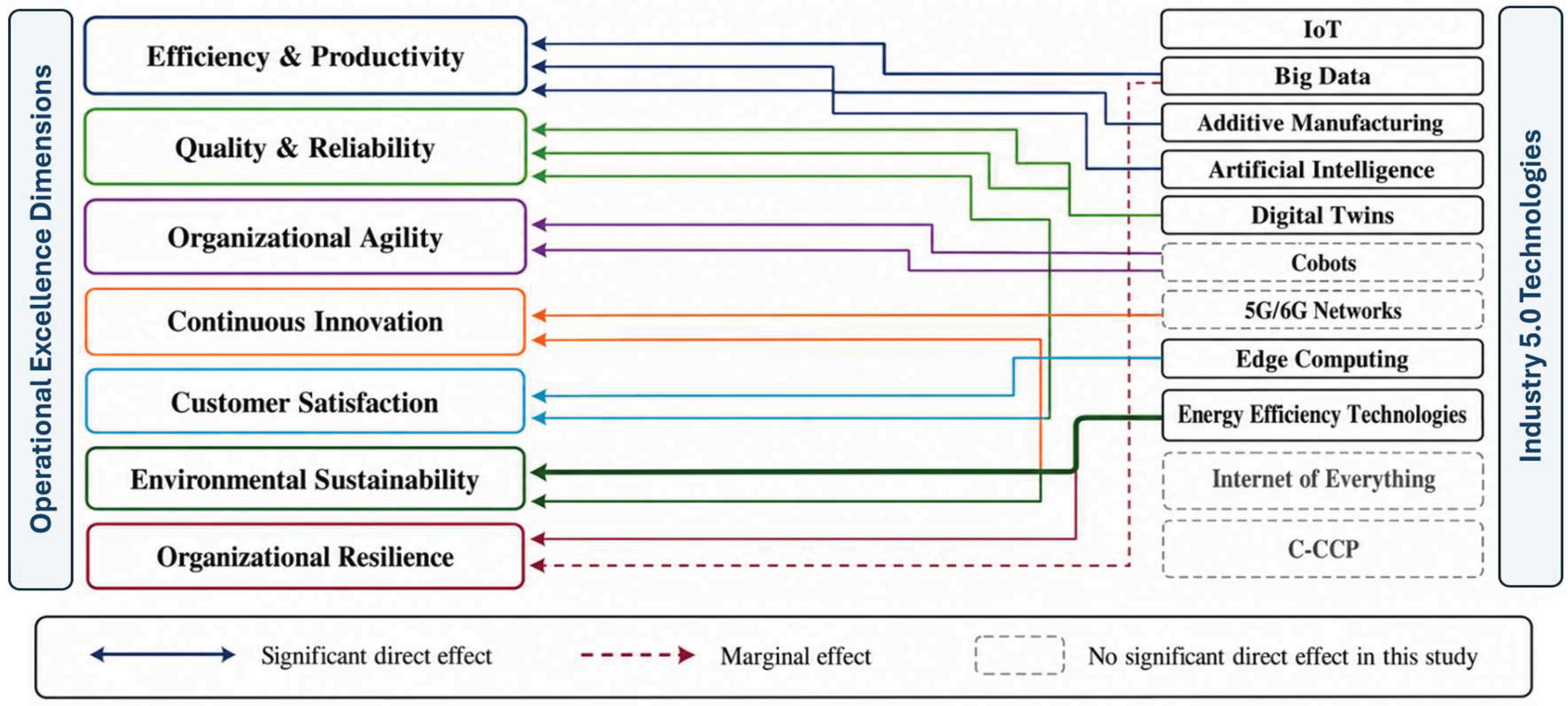

Table 1.
Summary of multiple regression models.
| Dependent variable | R | R² | Adjusted R² | Std. Error | Durbin-Watson | F | Sig. |
| Efficiency and Productivity | 0.562 | 0.316 | 0.246 | 0.763 | 2.014 | 4.54 | <0.001 |
| Quality and Reliability | 0.617 | 0.381 | 0.318 | 0.826 | 2.058 | 6.04 | <0.001 |
| Organizational Agility | 0.541 | 0.293 | 0.221 | 0.928 | 2.105 | 4.07 | <0.001 |
| Continuous Innovation | 0.499 | 0.249 | 0.173 | 0.850 | 2.012 | 3.26 | 0.001 |
| Customer Satisfaction | 0.522 | 0.272 | 0.198 | 0.810 | 2.025 | 3.67 | <0.001 |
| Environmental Sustainability | 0.748 | 0.560 | 0.515 | 0.864 | 2.000 | 12.49 | <0.001 |
| Organizational Resilience | 0.491 | 0.241 | 0.164 | 0.792 | 2.150 | 3.12 | 0.001 |
Table 2.
Significant and marginal effects of Industry 5.0 technologies.
| Dependent variable | Predictor | Standardized β | t-value | p-value |
| Efficiency and Productivity | Big Data | 0.226 | 2.56 | 0.012 |
| Efficiency and Productivity | Edge Computing | 0.214 | 2.35 | 0.021 |
| Efficiency and Productivity | Artificial Intelligence | 0.181 | 2.05 | 0.043 |
| Quality and Reliability | Big Data | 0.341 | 3.78 | <0.001 |
| Quality and Reliability | Artificial Intelligence | 0.205 | 2.40 | 0.018 |
| Quality and Reliability | Digital Twins | 0.176 | 2.02 | 0.046 |
| Organizational Agility | Big Data | 0.258 | 2.95 | 0.004 |
| Organizational Agility | IoT | 0.184 | 2.07 | 0.041 |
| Continuous Innovation | Big Data | 0.219 | 2.47 | 0.015 |
| Continuous Innovation | Digital Twins | 0.191 | 2.17 | 0.032 |
| Customer Satisfaction | IoT | 0.213 | 2.40 | 0.018 |
| Customer Satisfaction | Additive Manufacturing | 0.202 | 2.29 | 0.024 |
| Environmental Sustainability | Energy Efficiency Technologies | 0.552 | 7.45 | <0.001 |
| Environmental Sustainability | Big Data | 0.238 | 3.02 | 0.003 |
| Environmental Sustainability | Digital Twins | 0.184 | 2.23 | 0.028 |
| Organizational Resilience | Energy Efficiency Technologies | 0.247 | 2.81 | 0.006 |
| Organizational Resilience | Additive Manufacturing | 0.181 | 1.99 | 0.049 |
| Organizational Resilience | Big Data | 0.165 | 1.92 | 0.058 |
Disclaimer/Publisher’s Note: The statements, opinions and data contained in all publications are solely those of the individual author(s) and contributor(s) and not of MDPI and/or the editor(s). MDPI and/or the editor(s) disclaim responsibility for any injury to people or property resulting from any ideas, methods, instructions or products referred to in the content. |
© 2026 by the authors. Licensee MDPI, Basel, Switzerland. This article is an open access article distributed under the terms and conditions of the Creative Commons Attribution (CC BY) license (http://creativecommons.org/licenses/by/4.0/).
Copyright: This open access article is published under a Creative Commons CC BY 4.0 license, which permit the free download, distribution, and reuse, provided that the author and preprint are cited in any reuse.


