
Submitted:
26 June 2026
Posted:
29 June 2026
You are already at the latest version
Abstract
Background: Performance evaluation in MRI diagnostics traditionally focuses on op-erational metrics (e.g., waiting times), neglecting patient experience, which funda-mentally determines patients' future healthcare compliance. The aim of our study was to identify the key factors determining patient satisfaction, with particular regard to human interactions and the psychological impacts of the examination environment. Methods: A cross-sectional questionnaire survey was conducted at eight public diag-nostic centers in Hungary (N = 742). Predictors of overall satisfaction were analyzed using multivariate linear regression (IBM SPSS 27.0), examining the effects of structural (waiting list), environmental (noise, isolation, hygiene), and interpersonal (professional competence, information provision) variables (p < 0.05; 95%CI). Results: The model explained 48.8% of the variance in patient satisfaction. The most significant positive predictor was the competence of the healthcare staff (β = 0.349; p < 0.001), followed by confidence in the effectiveness of the examination (β = 0.208) and hygiene (β = 0.128). The distressing effect of loneliness (isolation) was identified as a key negative factor (β = -0.131; p < 0.001). In contrast, waiting time and acoustic load (noise) were not signifi-cant confounding factors in the final model. Conclusions: Our findings highlight that, according to patients' subjective experiences, the quality of radiological care is deter-mined by human factors and clinical trust rather than operational speed. To improve patient satisfaction, emphasis should be placed not only on technical advancements but also on enhancing staff communication competencies and mitigating the experience of isolation during examinations.
Keywords:
magnetic resonance imaging (MRI)
; patient pathway
; waiting time
; patient experience
; MRI-related anxiety
; imaging
; preventive imaging
; patient satisfaction
1. Introduction
Magnetic resonance imaging (MRI) has become one of the fundamental tools of diagnostic care in recent decades.[1,2] Consistent with international trends, the number of MRI examinations has increased significantly, which, on the one hand, contributes to improved diagnostic accuracy and, on the other hand, places increased pressure on the healthcare system.[3] This growing demand presents a particular challenge regarding waiting times and resource allocation.[4,5] Consequently, MRI services are often evaluated using structural performance indicators such as access, waiting lists, and capacity utilization.[6] As a result, access to MRI has become an issue of not only organizational relevance but also broader health policy significance.[7,8]
Optimizing structural access has been the focus of numerous studies. Streit et al. demonstrated through a detailed analysis of MRI workflows that scanner capacity is often underutilized, and that the organization of operational processes — such as patient registration, preparation, and exam scheduling — significantly influences the efficient use of resources.[9] Silva-Aravena et al. showed, using a digital twin and reinforcement learning approach, that optimized MRI scheduling can significantly improve equipment utilization while reducing waiting times.[10] These findings highlight that access to MRI can be enhanced through organizational and technological interventions; however, structural optimization alone does not necessarily capture the full spectrum of service quality.[7,11]
Patient satisfaction plays a central role in assessing healthcare quality. The literature clearly supports the notion that a positive patient experience and satisfaction are associated with clinical safety, treatment adherence, and the effectiveness of care.[12,13] According to the WHO, patient satisfaction is a fundamental indicator of healthcare quality, determining the quality of service as experienced by patients and confidence in the healthcare system.[14] In radiology services, where the diagnostic significance of examinations is paramount, it is particularly important to identify factors that influence patient satisfaction during examinations.[15,16,17]
The experience of an MRI examination is a complex phenomenon influenced by physical, psychological, and communication factors.[18,19] The enclosed space, acoustic noise, and the feeling of loss of control often trigger anxiety or a claustrophobic reaction.[20,21] Severe anxiety can lead to premature termination of the examination or patient movement during the procedure, compromising image quality and reducing diagnostic value. In clinical settings, the rate of examination interruptions attributable to claustrophobia can reach 1%.[20] Patient perceptions of the examination are further influenced by diagnostic uncertainty, indication for the examination, and concerns regarding the prognosis.[22] Effective communication, adequate pre-examination information, and the establishment of good rapport have been shown to reduce anxiety and improve patient cooperation during the examination.[23,24]
Al Shanbari et al. conducted an empirical study of anxiety associated with MRI examinations involving 465 patients and found that more than half of the participants experienced moderate anxiety during the examination; however, female patients reported significantly higher levels of anxiety. Their findings highlight that the psychological dimensions of MRI examinations are clinically relevant and may directly influence the assessment of examination quality.[25]
Alghamdi examined patient satisfaction with radiology services across ten hospitals, with the majority of patients reporting high satisfaction; however, waiting times were associated with lower satisfaction.[15] Another study evaluating service quality [26] emphasized that personal communication, detailed information, and emotional support are key factors in creating a positive MRI experience for patients. Experiences gained during the examination influence not only perceptions of the procedure itself but also the overall evaluation of service quality.[27]
Overall, it can be concluded that the evaluation of MRI services is based on two interrelated dimensions: on the one hand, structural access and waiting times[28]; on the other hand, the quality of care experienced during the examination and patient satisfaction.[29,30] Although these areas are well documented individually, few studies are available that analyze these two factors together within an integrated framework. For a comprehensive evaluation of the quality of diagnostic services, it is necessary to explore how access indicators and examination experience are related to each other and how they contribute to the quality of service as perceived by patients.
The aim of this study was to analyze the relationships among access to MRI examinations, the quality of the examination experience, and patient satisfaction using a multicenter sample within a structured research framework. An important objective was to provide, based on available data, comprehensive, gap-filling insights into waiting lists, patient experience (including psychological reactions), and long-term effects in relation to patient satisfaction.
2. Materials and Methods
Prior to the commencement of sampling, the study received official approval. The ethical clearance number certifying the ethical basis of the research is BM/26297-1/2023. Target institutions for the study were hospitals in Hungary equipped with MRI machines. Sampling was conducted through purposive selection, taking into account the institutions’ geographical locations and the availability of MRI services. During data collection, sampling was conducted across all NUTS 2 regions in Hungary (Figure 1). The selection of institutions within each region was based on the 2023 hospital bed count report published by the National Health Insurance Fund of Hungary.[31] University clinical centers within the NUTS 2 region were excluded because of their extremely large bed capacity, unique regional location, and level of progressiveness, which would have significantly distorted the comparison. As a result, the study better captured the institutional differences within the classic public hospital structure.
The study included one state-funded hospital located in a city with county rights in each NUTS 2 region, as specialized outpatient care capacities in Hungary are concentrated in these types of settlements. Although the Erzsébet Teaching Hospital and Rehabilitation Institute in Sopron (the second-largest in the region) and the Szent Borbála Hospital of Komárom-Esztergom County (Tatabánya) (the third-largest in the region) are not the institutions with the largest number of beds, it was with these institutions that collaboration during data collection could be realized.
In the case of the Budapest and Pest NUTS 2 region (formerly the Central Hungary region), two institutions were included in the analysis. A key consideration was ensuring representation of both a Buda-based and a Pest-based institution, given the differences in the socioeconomic characteristics of the patient populations.[31] On the Pest side, the Military Hospital currently has the largest number of beds among non-clinical-level institutions, while on the Buda side, János Hospital has the largest number of inpatient beds.
In total, the study was conducted at eight healthcare facilities.
Data were collected using a structured, paper-based questionnaire completed on-site by patients after the MRI scan examination.
During the study period in 2025, a total of 742 adult patients (aged ≥18) voluntarily participated in the survey at one of the eight designated institutions. The questionnaire was completed anonymously following written informed consent. Inclusion criteria for the study sample were: undergoing an MRI examination at a participating institution; being of legal age and legally competent; being able to complete the questionnaire independently; and completing and signing the consent form. Exclusion criteria were not meeting the inclusion criteria, and incomplete questionnaire responses (defined as <80% completion). A total of 756 responses were received, of which 14 were excluded for not meeting the minimum completion threshold.
Descriptive statistical analyses were also conducted during the quantitative research. In this context, mean, standard deviation, median, and minimum and maximum values were calculated for continuous variables, while frequency measures were used to present categorical variables. Multivariate regression analysis was performed to identify factors influencing overall satisfaction with the MRI examination. Variables representing organizational, communication, environmental, personal, and perceptual dimensions of the care process were included in the model. Factors examined included waiting lists, the quality of information provided, the distracting effect of the high-pitched noise during the scan, and the sense of isolation during the procedure. Additional considerations involved personal aspects of the MRI examination, such as staff competence and hygiene. Perceptions of the overall quality of the MRI examination were also assessed, particularly regarding effectiveness and safety. Data recording and statistical analyses were performed using IBM SPSS Statistics version 27.0. Results were considered statistically significant at a 95% confidence interval (p < 0.05).
3. Results
The satisfaction dimension was assessed using six variables, which were rated on a 1–4 Likert scale.
Overall patient evaluations of the MRI examination were favorable. The average overall satisfaction score was 3.76 ± 0.47. The most highly rated aspects were staff competence (3.87 ± 0.41), hygiene (3.77 ± 0.48), and confidence in the effectiveness (3.66 ± 0.52) and safety (3.67 ± 0.54) of the examination. The disruptive effect of the beeping sound received a lower rating (2.10 ± 0.94), whereas the perceived disruption of being alone was minimal (1.64 ± 0.85). Access to MRI scanning varied considerably, with a mean waiting time of 51.71 ± 53.7 days and a median of 31 days. Staff kindness was excluded from the regression analysis due to its strong correlation with competence (r = 0.769; p <0.001). The number of missing responses varied across variables, with the highest rates observed for waiting time (n = 115) and overall satisfaction (n = 43) (Table 1).
Overall patient satisfaction and factors influencing their evaluation of the MRI examination
Multivariate regression analysis was used to examine factors influencing overall satisfaction with the MRI examination, which included the following: waiting list, information provided, the distracting effect of the beeping sound, being alone during the examination, personal factors related to the MRI examination (staff competence and hygiene), and perceptions related to the quality of the MRI examination (effectiveness and safety of the MRI examination).
In the first model, staff competence has a statistically significant effect (β=0.591) on satisfaction with the MRI examination. As satisfaction with staff competence increases, overall satisfaction also increases. The model is significant, F=310.96, p<0.001.
In the second model, predictors of staff competence and confidence in the effectiveness of the examination account for 43.4% of the variance in satisfaction (R²=0.434). The predictor variable professional competence has a significant positive influence on overall satisfaction (β=0.482; t=14.430; p<0.001). In the second model, the inclusion of the variable confidence is also significantly associated with satisfaction (β=0.311; t=9.316; p<0.001) and accounts for 8.5% of the variance in satisfaction with the MRI examination.
The perception variable in the third model of the regression analysis accounted for 2.7% of the variance in satisfaction with the MRI examination. The disturbance effect of being alone significantly influences overall satisfaction; the effect of the predictor variable is negative (β = -0.166; t = -5.336; p<0.001).
Overall satisfaction with hygiene has a positive effect on satisfaction with the MRI examination (β=0.160; t=4.132; p<0.001). This predictor variable plays a relatively minor role in assessing satisfaction, increasing the explanatory power of the model by approximately 1.5%.
In the fifth model, the inclusion of the variable confidence in the safety of the examination is also significantly associated with satisfaction (β=0.101; t=3.007; p=0.011).
Finally, the sixth model shows that the quality of information provided regarding the MRI examination also influences overall satisfaction (β=0.0821; t=2.443; p=0.015). It can be concluded from the standardized regression coefficients that, among the confidence-related factors, confidence in the effectiveness of the examination (β=0.208) has a greater impact on overall satisfaction than the perception of safety (β=0.100). In terms of personal factors, the competence of healthcare professionals (β=0.349) is more significant for overall satisfaction than satisfaction with hygiene (β=0.128).
In the present study, the confounding effects of two variables—waiting list and the beeping sound - were excluded (t = −0.216, p = 0.829 and t = 1.476, p = 0.141).
In summary, 48.8% of the variance in satisfaction with the MRI examination is explained by the six predictor variables included in the model, while the remaining variance (over 50%) is accounted for by other factors not included in the model. A key determinant of satisfaction with the MRI examination was, on the one hand, the assessment of personal factors and staff competence, and on the other hand, patient perceptions of confidence in the effectiveness of the examination. In contrast, the feeling of isolation experienced during the MRI examination had a negative impact on satisfaction. Hygiene, perceived safety, and information provision had a comparatively smaller influence on overall satisfaction.
Key results of the hierarchical regression analysis are presented in Table 2.
4. Discussion
The aim of our study was to use a multivariate regression model to identify the most important factors determining patient satisfaction with MRI examinations. Our results are consistent with international findings, which indicate that experience with MRI is shaped by both technological and procedure-related factors, such as examination environment, noise levels, and waiting times, as well as by aspects of human interaction, particularly staff communication, patient-centered information provision, and establishment of confidence in the examination.[24,32,33] Previous studies in radiology and MRI settings indicate that staff behavior and communication, along with waiting time, are among the most important determinants of patient experience, while targeted, patient-centered communication has also been shown to reduce MRI-related anxiety.[16,28] The 48.8% of variance explained by the final model (Figure 2) can therefore be interpreted as indicating strong explanatory power within the context of regression models examining subjective, psychological, and attitudinal outcomes. This also corresponds to a substantial effect size according to Cohen’s traditional effect size logic.
The Role of Healthcare Professionals
The most important finding of our study is that the competence of healthcare professionals proved to be the strongest positive predictor. In fact, this variable was already dominant in the first model, and its effect remained significant even after the inclusion of other variables. Our results show that patients form their professional assessment of the staff not solely based on technical competence, but also on communication skills, empathy, and professional demeanor.[34,35] During MRI examinations, which are technologically complex and often anxiety-inducing for patients, staff competence can serve as a particularly important indicator of quality, as it contributes to the predictability of the procedure, the patient’s sense of security, and the development of confidence in the examination process.[35,36] Through the expertise of healthcare professionals, patients perceive not only technical competence but also empathetic attention and a confident, supportive presence, which significantly shape the overall experience of the examination.[34]
Confidence in the Effectiveness of the Examination and Sense of Safety
An interesting dichotomy emerges when analyzing confidence-related factors. Our data show that confidence in the effectiveness of the examination is a stronger determinant of satisfaction than the perceived sense of safety during the procedure. This shows that patient attitudes toward MRI examinations are fundamentally shaped by their hope and confidence in the diagnostic value: the primary goal for patients is to obtain an accurate diagnosis, and for this purpose, they appear willing to tolerate the discomfort associated with the examination. At the same time, appropriate communication and information provided in advance remain essential, as they reduce patient anxiety, enhance overall satisfaction, and help patients perceive the examination not only as safe but also as diagnostically meaningful. [19,24] For clinical practice, these findings imply that patient information should not focus solely on risk reduction; it is at least equally important to clearly communicate the purpose, expected benefits, and diagnostic significance of the examination for patients. [19]
Examination-Related Anxiety
The only consistently negative predictor in the model was the disruptive effect of being alone. This finding is consistent with the international literature on MRI, which indicates that the enclosed space of the examination room, the requirement to remain motionless, and the associated sense of loss of control cause significant stress for patients.[36,37] Qualitative studies similarly highlight that supportive interaction with the radiographer, trust-based communication, and adequate pre-examination preparation play key roles in managing fear, discomfort, and perceived loss of self-control, whereas the absence of these factors negatively affects the examination experience. [36] Our findings clearly demonstrate that the feeling of confinement alone can reduce patient satisfaction. Although hygiene and quality of information provided are important determinants of patient experience, a conclusion consistent with radiology satisfaction surveys in which cleanliness, comfort, access to information, and service organization are repeatedly identified as key factors; however, the literature shows that these positive factors do not necessarily fully offset the negative psychological burden associated with MRI examination conditions.[32]
Surprisingly Non-Significant Factors: Waiting List and Noise
One of the most interesting findings of the study is that, contrary to our initial expectations, the length of the waiting list and the high-pitched noise typical of MRI scans did not remain significant factors in the final model. Previous studies in the literature suggest that waiting time can influence patient satisfaction; however, this effect is often mediated more by patients’ perceived or subjectively experienced waiting time than by the actual duration of the wait.28 Accordingly, among patients who have already undergone the examination, earlier administrative delays may recede into the background, particularly if the experience during the procedure itself is positive.16 Similarly, MRI noise is widely recognized in the literature as an important source of physical discomfort. Nevertheless, reviews on patient experience indicate that overall satisfaction is primarily shaped by personal interactions, including the quality of communication, a sense of control, and confidence in the diagnostic value of the examination.[32,38] Our findings suggest that patients tend to regard technological characteristics and administrative constraints partly as given conditions, whereas factors directly influencing the perceived quality and usefulness of the examination have a greater impact on their assessment of satisfaction.
Strengths and Limitations
In addition to its large sample size and comprehensive nationwide coverage, a key strength of this study lies in its multidimensional assessment of patient satisfaction with MRI examinations, incorporating technological, organizational, psychological, and interpersonal interaction factors simultaneously. The use of a multivariate regression model enabled the identification of the relative contribution of individual predictors and highlighted that staff competence, confidence in the effectiveness of the examination, and the experience of isolation are key determinants of patient experience. The practical value of the study is further reinforced by the direct applicability of its findings to radiology quality improvement initiatives, particularly in the areas of patient-centered communication, pre-examination information provision, and examination support.[39]
The most significant limitation of this study is its cross-sectional design, which precludes causal interpretation of the observed associations. Patient satisfaction was assessed using a self-report questionnaire; therefore, the findings may have been affected by respondent bias, current emotional state, or the immediate experience of the examination. Although the model demonstrated meaningful explanatory power, the remaining variance indicates that additional factors such as prior MRI experience, predisposition to claustrophobia, clinical diagnosis, examination duration, or previous experiences with the healthcare system may also influence satisfaction. Furthermore, the study was conducted within a specific institutional setting; therefore, the generalizability of the findings to other levels of care or radiology departments with differing organizational structures should be interpreted with caution.
5. Conclusions
Our findings indicate that patient satisfaction with MRI examinations is not determined solely by technological or organizational factors but is also strongly shaped by the human and communicative environment experienced by patients. The competence of healthcare professionals, confidence in the effectiveness of the examination, and the disruptive effect of being alone emerged as key predictors, suggesting that a professional and supportive presence, along with a clear understanding of the purpose of the examination, are fundamental components of perceived quality of care. From a clinical perspective, these findings highlight that, alongside improvements in capacity and access, the development of MRI services requires a deliberate focus on strengthening patient-centered communication, providing adequate pre-examination information, and implementing interventions aimed at reducing the feeling of isolation. Future longitudinal and interventional studies should further examine the extent to which such targeted improvements translate into enhanced patient experience and satisfaction outcomes.
Author Contributions
Conceptualization, Á.R. and H.J.F.; methodology, Á.R. and H.J.F.; formal analysis, I.E.; writing—original draft preparation, Á.R. and I.E.; writing—review and editing, H.J.F.; supervision, H.J.F. All authors have read and agreed to the published version of the manuscript.
Funding
This publication and the scientific results presented herein were supported by the Gedeon Richter Talentum Foundation (registered seat: 19-21 Gyömrői út, 1103 Budapest), established by Gedeon Richter Plc., under the ‘Gedeon Richter PhD Scholarship for Excellence’ program.
Institutional Review Board Statement
The study was conducted in accordance with the Declaration of Helsinki, and approved by the Scientific and Research Ethics Committee of the Health Sciences Council (ETT TUKEB) (approval number: BM/26297-1/2023, date of approval: October 5, 2023).
Informed Consent Statement
Informed consent was obtained from all subjects involved in the study.
Data Availability Statement
The datasets generated and analyzed during the current study are available from the corresponding author on reasonable request. The data is not publicly available due to ethical reasons.
Conflicts of Interest
The authors declare no conflicts of interest.
References
- Azhar, S.; Chong, L.R. Clinician’s Guide to the Basic Principles of MRI. Postgrad. Med. J. 2023, 99, 894–903. [Google Scholar] [CrossRef] [PubMed]
- Kose, K. Physical and Technical Aspects of Human Magnetic Resonance Imaging: Present Status and 50 Years Historical Review. Adv. Phys. X 2021, 6, 1885310. [Google Scholar] [CrossRef]
- Smith-Bindman, R.; Kwan, M.L.; Marlow, E.C.; Theis, M.K.; Bolch, W.; Cheng, S.Y.; Bowles, E.J.A.; Duncan, J.R.; Greenlee, R.T.; Kushi, L.H.; et al. Trends in Use of Medical Imaging in US Health Care Systems and in Ontario, Canada, 2000-2016. JAMA 2019, 322, 843. [Google Scholar] [CrossRef] [PubMed]
- Nuti, S.; Vainieri, M. Managing Waiting Times in Diagnostic Medical Imaging. BMJ Open 2012, 2, e001255. [Google Scholar] [CrossRef] [PubMed]
- Becker, A.S.; Erinjeri, J.P.; Chaim, J.; Kastango, N.; Elnajjar, P.; Hricak, H.; Vargas, H.A. Automatic Forecasting of Radiology Examination Volume Trends for Optimal Resource Planning and Allocation. J. Digit Imaging 2022, 35, 1–8. [Google Scholar] [CrossRef] [PubMed]
- Sun, Y.-C.; Wu, H.-M.; Guo, W.-Y.; Ou, Y.-Y.; Yao, M.-J.; Lee, L.-H. Simulation and Evaluation of Increased Imaging Service Capacity at the MRI Department Using Reduced Coil-Setting Times. PLoS ONE 2023, 18, e0288546. [Google Scholar] [CrossRef] [PubMed]
- Bor, D.S.; Sharpe, R.E.; Bode, E.K.; Hunt, K.; Gozansky, W.S. Increasing Patient Access to MRI Examinations in an Integrated Multispecialty Practice. RadioGraphics 2021, 41, E1–E8. [Google Scholar] [CrossRef] [PubMed]
- Huang, X.; Wei, Y.; Sun, H.; Huang, J.; Chen, Y.; Cheng, J. Assessment of Equity and Efficiency of Magnetic Resonance Imaging Services in Henan Province, China. Cost. Eff. Resour. Alloc. 2023, 21, 32. [Google Scholar] [CrossRef] [PubMed]
- Streit, U.; Uhlig, J.; Lotz, J.; Panahi, B.; Seif Amir Hosseini, A. Analysis of Core Processes of the MRI Workflow for Improved Capacity Utilization. Eur. J. Radiol. 2021, 138, 109648. [Google Scholar] [CrossRef] [PubMed]
- Silva-Aravena, F.; Morales, J.; Jayabalan, M.; Sáez, P. Optimizing MRI Scheduling in High-Complexity Hospitals: A Digital Twin and Reinforcement Learning Approach. Bioengineering 2025, 12, 626. [Google Scholar] [CrossRef] [PubMed]
- Beker, K.; Garces-Descovich, A.; Mangosing, J.; Cabral-Goncalves, I.; Hallett, D.; Mortele, K.J. Optimizing MRI Logistics: Prospective Analysis of Performance, Efficiency, and Patient Throughput. Am. J. Roentgenol. 2017, 209, 836–844. [Google Scholar] [CrossRef] [PubMed]
- Doyle, C.; Lennox, L.; Bell, D. A Systematic Review of Evidence on the Links between Patient Experience and Clinical Safety and Effectiveness. BMJ Open 2013, 3, e001570. [Google Scholar] [CrossRef] [PubMed]
- Haskard Zolnierek, K.B.; DiMatteo, M.R. Physician Communication and Patient Adherence to Treatment: A Meta-Analysis. Med. Care 2009, 47, 826–834. [Google Scholar] [CrossRef] [PubMed]
- Bleich, S. How Does Satisfaction with the Health-Care System Relate to Patient Experience? Bull. World Health Org. 2009, 87, 271–278. [Google Scholar] [CrossRef] [PubMed]
- Alghamdi, S. Assessment of Patient Satisfaction With MRI Department Services and Staff in Saudi Hospitals. RMHP 2025, Volume 18, 419–428. [Google Scholar] [CrossRef] [PubMed]
- Rosenkrantz, A.B.; Pysarenko, K. The Patient Experience in Radiology: Observations From Over 3,500 Patient Feedback Reports in a Single Institution. J. Am. Coll. Radiol. 2016, 13, 1371–1377. [Google Scholar] [CrossRef] [PubMed]
- Munn, Z.; Pearson, A.; Jordan, Z.; Murphy, F.; Pilkington, D.; Anderson, A. Patient Anxiety and Satisfaction in a Magnetic Resonance Imaging Department: Initial Results from an Action Research Study. J. Med. Imaging Radiat. Sci. 2015, 46, 23–29. [Google Scholar] [CrossRef] [PubMed]
- Nieto Alvarez, I.; Madl, J.; Becker, L.; Amft, O. Magn. Reson. Imaging 2025, 61, 480–493. [CrossRef] [PubMed]
- Bolejko, A.; Hagell, P. Effects of an Information Booklet on Patient Anxiety and Satisfaction with Information in Magnetic Resonance Imaging: A Randomized, Single-Blind, Placebo-Controlled Trial. Radiography 2021, 27, 162–167. [Google Scholar] [CrossRef] [PubMed]
- Björkman-Burtscher, I.M. Claustrophobia—Empowering the Patient. Eur. Radiol. 2021, 31, 4481–4482. [Google Scholar] [CrossRef] [PubMed]
- Katz, R.C.; Wilson, L.; Frazer, N. Anxiety and Its Determinants in Patients Undergoing Magnetic Resonance Imaging. J. Behav. Ther. Exp. Psychiatry 1994, 25, 131–134. [Google Scholar] [CrossRef] [PubMed]
- Bui, K.T.; Liang, R.; Kiely, B.E.; Brown, C.; Dhillon, H.M.; Blinman, P. Scanxiety: A Scoping Review about Scan-Associated Anxiety. BMJ Open 2021, 11, e043215. [Google Scholar] [CrossRef] [PubMed]
- Hudson, D.M.; Heales, C.; Meertens, R. Review of Claustrophobia Incidence in MRI: A Service Evaluation of Current Rates across a Multi-Centre Service. Radiography 2022, 28, 780–787. [Google Scholar] [CrossRef] [PubMed]
- Santarém Semedo, C.; Moreira Diniz, A.; Herédia, V. Training Health Professionals in Patient-Centered Communication during Magnetic Resonance Imaging to Reduce Patients’ Perceived Anxiety. Patient Educ. Couns. 2020, 103, 152–158. [Google Scholar] [CrossRef] [PubMed]
- Al Shanbari, N.M.; Alobaidi, S.F.; Alhasawi, R.; Alzahrani, A.S.; Bin Laswad, B.M.; Alzahrani, A.A.; Alhashmi Alamer, L.F.; Alhazmi, T. Assessment of Anxiety Associated With MRI Examination Among the General Population in the Western Region of Saudi Arabia. Cureus 2023. [Google Scholar] [CrossRef] [PubMed]
- Hudson, D.M.; Evans Mbe, R.; Heales, C. Journey to the Center of the Bore: A Service Evaluation of the Patient Experience in Magnetic Resonance Imaging. J. Radiol. Nurs. 2023, 42, 296–304. [Google Scholar] [CrossRef]
- Anhang Price, R.; Elliott, M.N.; Zaslavsky, A.M.; Hays, R.D.; Lehrman, W.G.; Rybowski, L.; Edgman-Levitan, S.; Cleary, P.D. Examining the Role of Patient Experience Surveys in Measuring Health Care Quality. Med. Care Res. Rev. 2014, 71, 522–554. [Google Scholar] [CrossRef] [PubMed]
- Holbrook, A.; Glenn, H.; Mahmood, R.; Cai, Q.; Kang, J.; Duszak, R. Shorter Perceived Outpatient MRI Wait Times Associated With Higher Patient Satisfaction. J. Am. Coll. Radiol. 2016, 13, 505–509. [Google Scholar] [CrossRef] [PubMed]
- Rockall, A.; Visser, J.J.; Garcia-Villar, C.; Lev-Cohain, N.; Omoumi, P.; Revel, M.-P.; Strudwick, R.M. European Society of Radiology (ESR); ESR and ESR Value-based Radiology Subcommittee Feedback in Radiology: Essential Tool for Improving User Experience and Providing Value-Based Care. Insights Imaging 2025, 16, 132. [Google Scholar] [CrossRef] [PubMed]
- Lacson, R.; Pianykh, O.; Hartmann, S.; Johnston, H.; Daye, D.; Flores, E.; Kapoor, N.; Khorasani, R. Factors Associated With Timeliness and Equity of Access to Outpatient MRI Examinations. J. Am. Coll. Radiol. 2024, 21, 1049–1057. [Google Scholar] [CrossRef] [PubMed]
- Cecília, S. Kórházi ágyszám- és betegforgalmi kimutatás. Available online: https://www.neak.gov.hu/felso_menu/szakmai_oldalak/publikus_forgalmi_adatok/gyogyito_megelozo_forgalmi_adat/fekvobeteg_szakellatas_stat/korhazi_agyszam (accessed on 29 May 2026).
- Nieto Alvarez, I.; Madl, J.; Becker, L.; Amft, O. Patients’ Experience to MRI Examinations-A Systematic Qualitative Review With Meta-Synthesis. J. Magn. Reson Imaging 2025, 61, 480–493. [Google Scholar] [CrossRef] [PubMed]
- Zhou, S.; Wan, X.; Wang, X.; Zhang, X.; Yu, Y.; Wang, W. Investigation and Analysis of Magnetic Resonance Imaging Experience and Psychological Status of Patients. BMC Psychol. 2024, 12, 115. [Google Scholar] [CrossRef] [PubMed]
- Kwee, R.M.; Kwee, T.C. Communication and Empathy Skills: Essential Requisites for Patient-Centered Radiology Care. Eur. J. Radiol. 2021, 140, 109754. [Google Scholar] [CrossRef] [PubMed]
- Cheng, M.; Gunderman, R.B. Trust: The Foundation of Radiologic Excellence. Am. J. Roentgenol. 2020, 215, 1037–1038. [Google Scholar] [CrossRef] [PubMed]
- Carlsson, S.; Carlsson, E. ‘The Situation and the Uncertainty about the Coming Result Scared Me but Interaction with the Radiographers Helped Me through’: A Qualitative Study on Patients’ Experiences of Magnetic Resonance Imaging Examinations. J. Clin. Nurs. 2013, 22, 3225–3234. [Google Scholar] [CrossRef] [PubMed]
- Madl, J.; Janka, R.; Bay, S.; Rohleder, N. MRI as a Stressor: The Psychological and Physiological Response of Patients to MRI, Influencing Factors, and Consequences. J. Am. Coll. Radiol. 2022, 19, 423–432. [Google Scholar] [CrossRef] [PubMed]
- Sartoretti, E.; Sartoretti, T.; Wyss, M.; Van Smoorenburg, L.; Eichenberger, B.; Van Der Duim, S.; Cereghetti, D.; Binkert, C.A.; Sartoretti-Schefer, S.; Najafi, A. Impact of Acoustic Noise Reduction on Patient Experience in Routine Clinical Magnetic Resonance Imaging. Acad. Radiol. 2022, 29, 269–276. [Google Scholar] [CrossRef] [PubMed]
- Ajam, A.A.; Tahir, S.; Makary, M.S.; Longworth, S.; Lang, E.V.; Krishna, N.G.; Mayr, N.A.; Nguyen, X.V. Communication and Team Interactions to Improve Patient Experiences, Quality of Care, and Throughput in MRI. Top. Magn. Reson. Imaging 2020, 29, 131–134. [Google Scholar] [CrossRef] [PubMed]
Figure 1.
Institutions in cities with county rights included in the study.
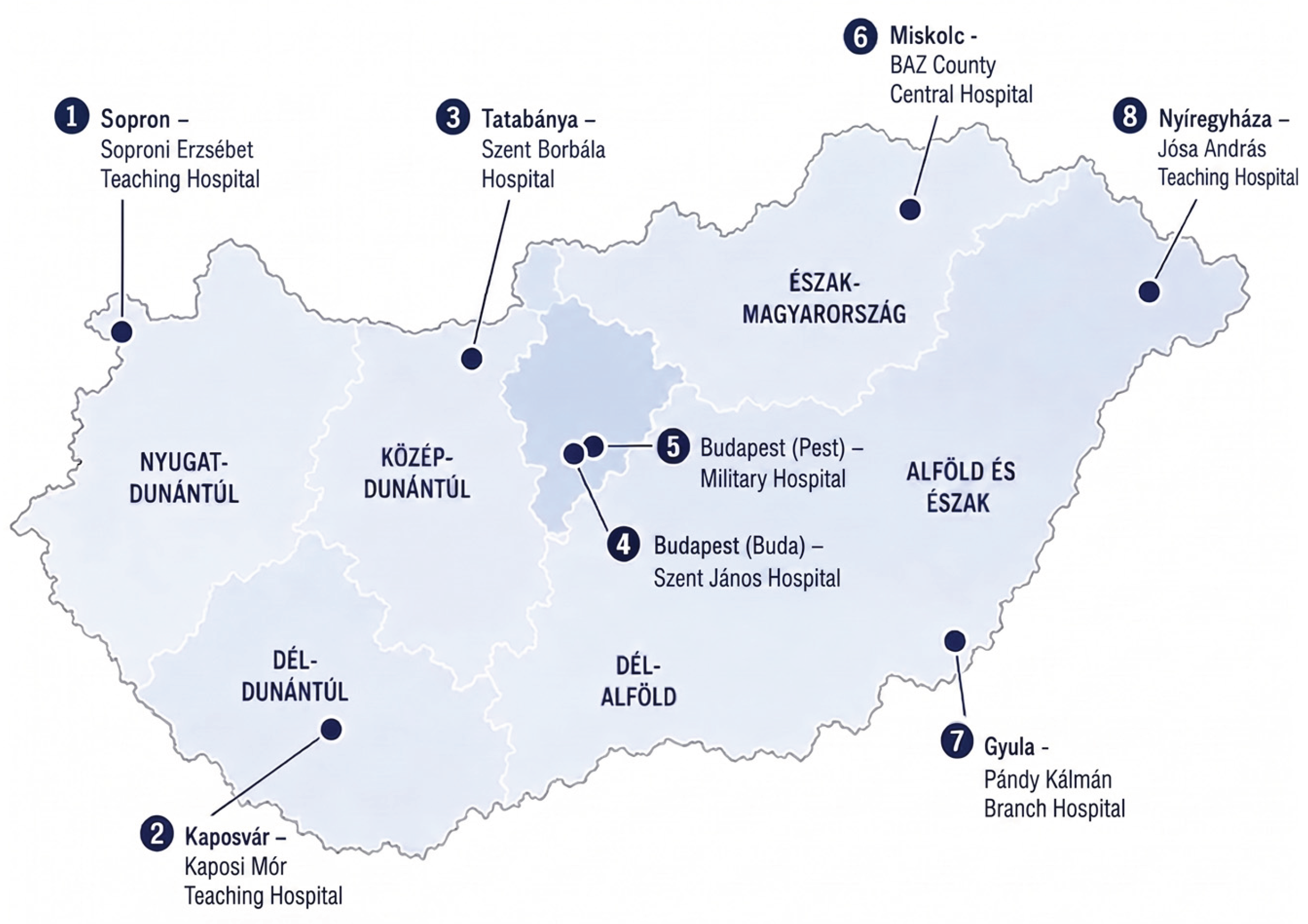
Figure 2.
Significant predictors of satisfaction with the MRI examination in the final regression model.
Figure 2.
Significant predictors of satisfaction with the MRI examination in the final regression model.
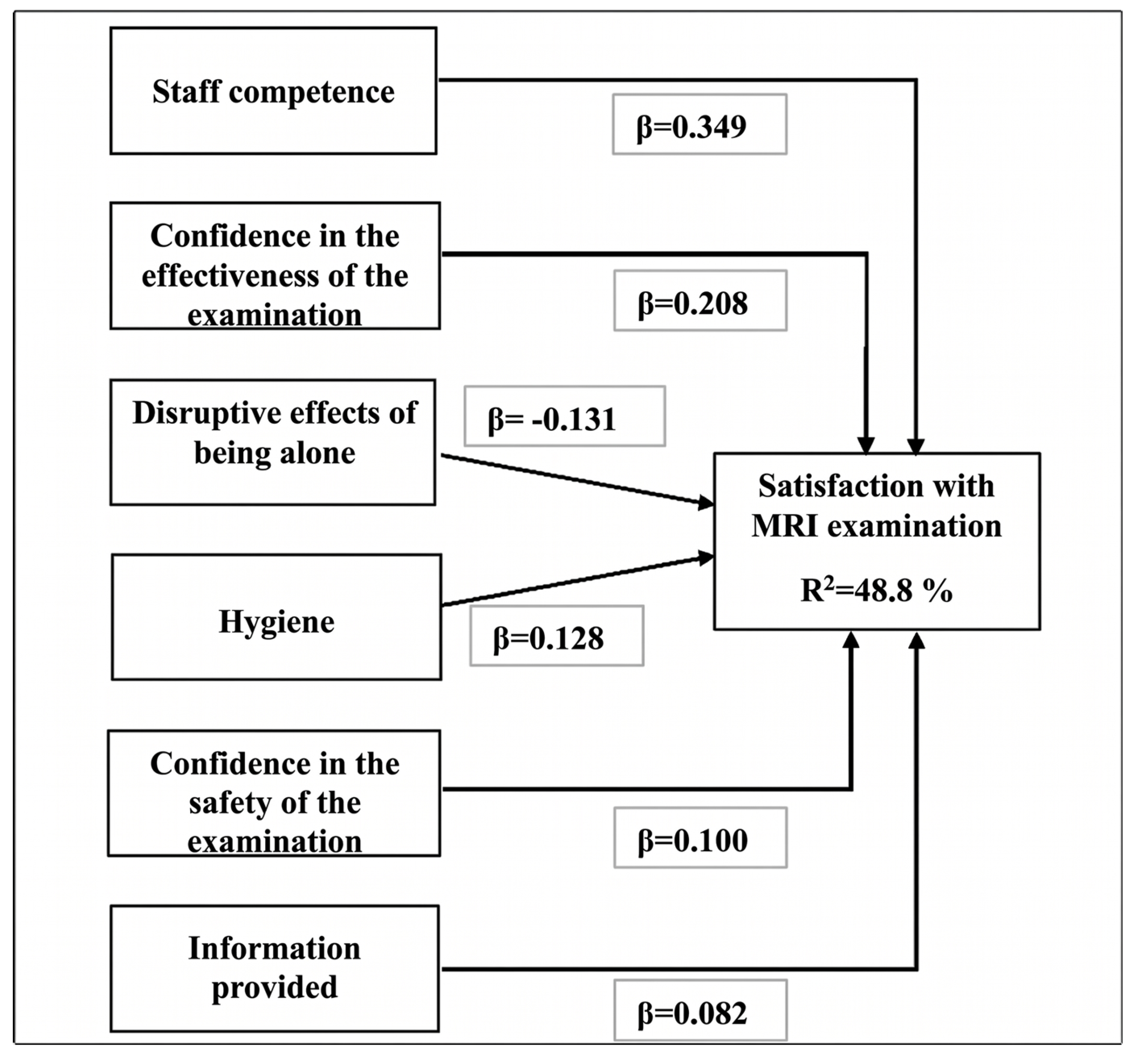

Table 1.
Summary table of descriptive statistics.
| Mean ± standard deviation | Median | Minimum - maximum | Number of respondents | |
| Overall satisfaction with the MRI examination (1–4) | 3.76 ± 0.473 | 4 | 1 - 4 | 699 |
| Access to MRI examination (days) | 51.71 ± 53,7 | 31 | 0 - 365 | 627 |
| Information provided (1-4) | 3.58 ± 0.640 | 2 | 1 - 4 | 723 |
| Disturbance caused by beeping sounds (1–4) | 2.10 ± 0.944 | 2 | 1 - 4 | 711 |
| Being alone during the examination (1–4) | 1.64 ± 0.845 | 1 | 1 - 4 | 717 |
| Professional competence of staff (1–4) | 3.87 ± 0.406 | 4 | 1 - 4 | 706 |
| Satisfaction with hygiene (1–4) | 3.77 ± 0.474 | 4 | 1 - 4 | 710 |
| Confidence in the effectiveness of the examination (1–4) | 3.66 ± 0.517 | 4 | 1 - 4 | 719 |
| Confidence in the safety of the examination (1–4) | 3.67 ± 0.537 | 4 | 1 - 4 | 716 |
Table 2.
Hierarchical multivariate regression model of factors explaining satisfaction with MRI examinations. Note: β: standardized regression coefficient. *p<0.05. **p<0.001.
Table 2.
Hierarchical multivariate regression model of factors explaining satisfaction with MRI examinations. Note: β: standardized regression coefficient. *p<0.05. **p<0.001.
| Model 1 (β) | Model 2 (β) | Model 3 (β) | Model 4 (β) | Model 5 (β) | Model 6 (β) | |
| Competence of healthcare professionals | 0.591** | 0.482** | 0.469** | 0.375** | 0.358** | 0.349** |
| R2 (%) | 34.9% | |||||
| F (p) | 310.96 (<0.001) | |||||
| Confidence in the effectiveness of the examination | 0.434** | 0.296** | 0.270** | 0.223** | 0.208** | |
| R2 (%) | 43.4% | |||||
| F (p) | 221.91 (<0.001) |
|||||
| Disruptive effects of being alone | -0.166** | -0.148** | -0.140** | -0.131** | ||
| R2 (%) | 46.1% | |||||
| F (p) | 164.46 (<0.001) | |||||
| Hygiene | 0.160** | 0.146** | 0.128** | |||
| R2 (%) | 47.6% | |||||
| F (p) | 131.15 (<0.001) |
|||||
| Confidence in the safety of the examination | 0.101* | 0.100** | ||||
| R2 (%) | 48.2% | |||||
| F (p) | 107.16 (<0.001) |
|||||
| Information provided | 0.082** | |||||
| R2 (%) | 48.8% | |||||
| F (p) | 91.07 (<0.001) |
Disclaimer/Publisher’s Note: The statements, opinions and data contained in all publications are solely those of the individual author(s) and contributor(s) and not of MDPI and/or the editor(s). MDPI and/or the editor(s) disclaim responsibility for any injury to people or property resulting from any ideas, methods, instructions or products referred to in the content. |
© 2026 by the authors. Licensee MDPI, Basel, Switzerland. This article is an open access article distributed under the terms and conditions of the Creative Commons Attribution (CC BY) license (http://creativecommons.org/licenses/by/4.0/).
Copyright: This open access article is published under a Creative Commons CC BY 4.0 license, which permit the free download, distribution, and reuse, provided that the author and preprint are cited in any reuse.


