

Submitted:
25 June 2026
Posted:
26 June 2026
You are already at the latest version
Abstract
This article analyzes in detail the structural, thermal and mechanical properties of the Ni₅₄Cr₂₈Mo₈Nb₅Ta₅ alloy, as well identify potential applications in areas where exceptional high-temperature performance is required — such as gas turbines, nuclear reactors or aeronautical engine components. Obtaining a very good correlation between the experimental and fitted profiles, as well as the low values of the error parameters (R-factors), confirms the accuracy of the structural model and the validity of the phases identified following the XRD analysis. The study also aims to highlight the relationship between chemical composition, microstructure and mechanical behavior, providing a basis for optimizing heat treatments and manufacturing processes of this advanced superalloy.
Keywords:
nickel-based superalloys
; Nb
; Cr
; Ta
; Mo
; microstructural stability
; creep resistance
; oxidation and corrosion resistance
1. Introduction
Technological advances in fields such as energy, aerospace and nuclear require the use of materials capable of withstanding extreme environments, characterized by high temperatures, intense mechanical stress and corrosive atmospheres. Under such conditions, conventional materials — such as stainless steels or iron-based alloys — quickly lose their mechanical properties and structural stability. For this reason, research has focused in recent decades on the development of superalloys with high performance at high temperatures [1].
Nickel-based superalloys of the Ni–Cr–Mo–Nb–Ta type represent an advanced class of metallic materials developed to function under extreme conditions of temperature and mechanical stress. These alloys are predominantly used in the aerospace, energy and nuclear industries, where components must retain their structural and mechanical properties even at temperatures above 1000 °C [2,6]. The complex composition, which includes elements such as chromium, molybdenum, niobium and tantalum, gives the material a unique combination of creep resistance [1,2] microstructural stability and remarkable resistance to oxidation and corrosion [8,9,12].
Each alloying element has a specific role: chromium forms protective oxide layers [9], molybdenum and niobium provide solid solution and precipitation hardening [, and tantalum contributes to the stabilization of intermetallic phases. Due to these characteristics, the Ni–Cr–Mo–Nb–Ta superalloy is considered a strategic material for high-performance applications, where durability and high-temperature stability are essential for the safety and efficiency of modern technological systems [4,5,11,12].
2. Materials and Methods
2.1. Chemical Composition of the Alloy
The alloy studied has the nominal composition Ni₅₄Cr₂₈Mo₈Nb₅Ta₅ (atomic percentages), being a multicomponent nickel-based superalloy. The choice of this composition aimed to achieve a balance between high temperature resistance, stability of the strengthening phases and corrosion resistance.

Table 1.
Importance of each alloy element.
| Element | Symbol | Main role in the alloy |
|---|---|---|
| Nickel | Ni | Base of the γ (austenitic) matrix; provides ductility and oxidation resistance |
| Chromium | Cr | Increases oxidation and corrosion resistance; stabilizes the γ phase |
| Molybdenum | Mo | Improves creep resistance and hot hardness |
| Niobium | Nb | Forms the strengthening phase γ″ (Ni₃Nb); increases mechanical strength |
| Tantalum | Ta | Improves γ′/γ″ phase stability and resistance to extreme temperatures |
2.2. Material Development
The alloy with the nominal composition Ni₅₄Cr₂₈Mo₈Nb₅Ta₅ was developed starting from high purity metals (≥99.9%), namely nickel, chromium, molybdenum, niobium and tantalum. The individual quantities were calculated according to the desired composition, expressed in atomic percentages, and the samples were weighed with an accuracy of ±0.01 g. The raw materials were mechanically cleaned, dried at 120 °C for 2 hours and subsequently stored in an inert atmosphere to prevent superficial oxidation.
The melting was carried out in a vacuum induction furnace (VIM), using a magnesium oxide crucible lined with a thin layer of yttrium oxide. After obtaining a basic vacuum of approximately 5×10⁻⁵ mbar, the melting chamber was inerted with 99.999% purity argon. Heating was carried out gradually, at a rate of approximately 10–15 °C/min, until the melting temperature of approximately 1500 °C was reached. The metal bath was kept in a liquid state for 5 minutes for homogenization, followed by pouring into water-cooled copper ingot molds preheated to 250 °C. To obtain superior chemical homogeneity, the obtained ingots were re-melted several times on both sides.
2.3. Thermal Treatments
After solidification, the samples were subjected to a homogenization treatment at 1150 °C for 12 hours in an argon atmosphere, followed by cooling in air. The obtained material was then subjected to hot plastic deformation by forging at 1100 °C, with successive reductions of 15–20% per pass, to refine the structure. In order to stabilize the solid solution, the samples were heat treated at 1150 °C for 2 hours and rapidly cooled in air. To study the precipitation phenomena, some samples were aged at 750 °C for 7 hours.
3. Results
3.1. Structural Characterization. X-Ray Diffraction (XRD)
Diffraction data were collected in the angular range 20°–120° (2θ), with a scan step of 0.02° (2θ) and an acquisition time of 10 s/point. The samples were analyzed in bulk form, mounted in the standard support of the equipment, and the surface exposed to the incident beam was mechanically processed to reduce preferential orientation effects and ensure a homogeneous crystalline distribution. The data were processed using the PDF-4 database (ICDD) to identify the crystalline phases, and qualitative analysis of the diffractograms revealed the presence of three cubic solid solutions of type A1 (fcc structure, space group Fm-3m X-ray diffraction (XRD) analysis was performed on a Bruker D8 Advance diffractometer, configured in θ–θ geometry, using the characteristic Cu Kα radiation (λ = 1.5406 Å)., prototype Cu).
Figure 1.
shows the XRD diffractogram of the alloy obtained.
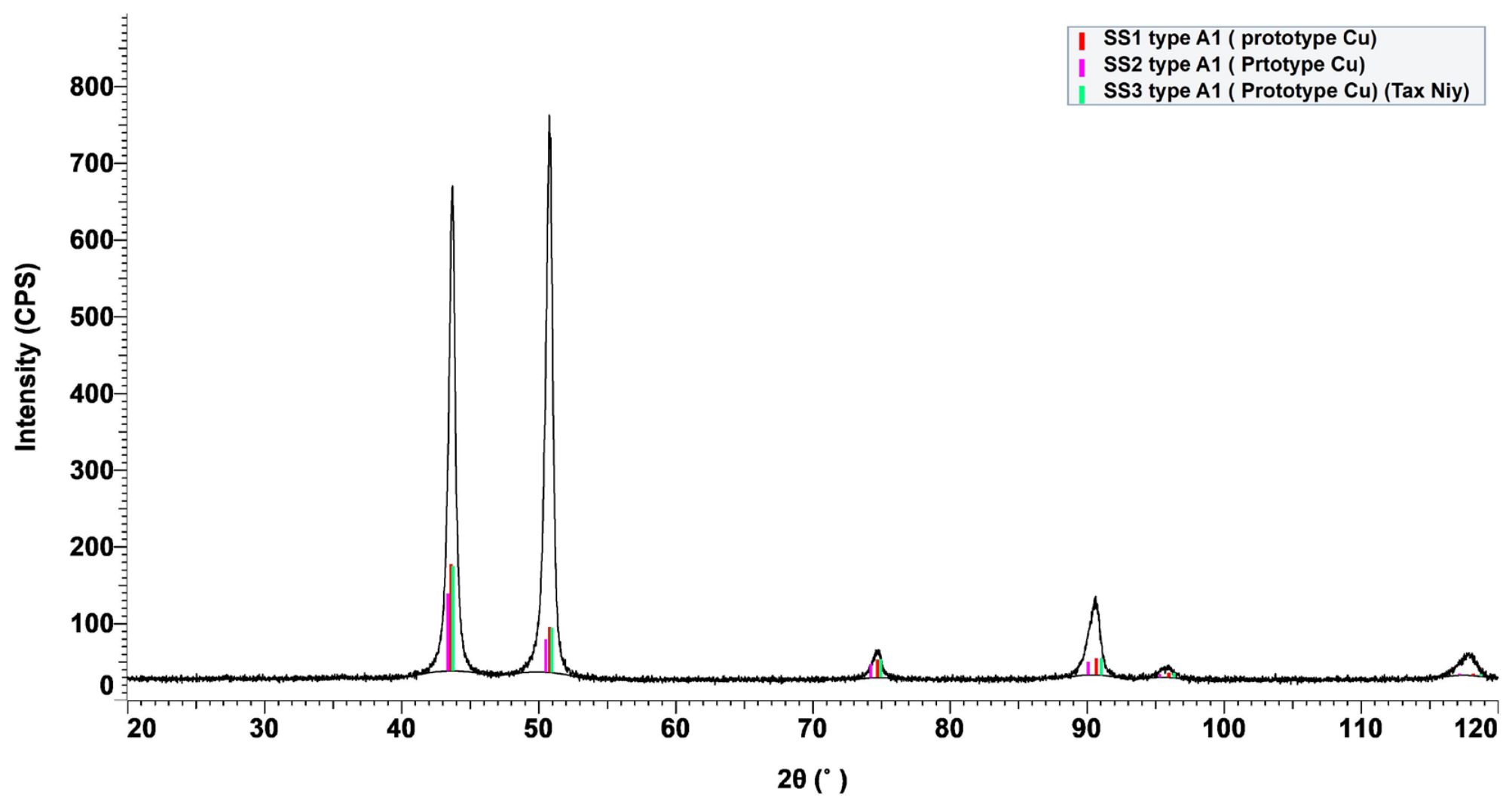
The identified phases (SS1, SS2, SS3), corresponding to the cubic solid solutions of type A1 (Face-Centered Cubic system), are marked on the graph.
The diffractogram highlights the presence of three crystalline phases corresponding to cubic solid solutions of type A1 (Face-Centered Cubic system, space group Fm-3m, prototype Cu). These phases were identified by comparing the positions and maximum intensities of the reflections with the files in the ICDD PDF-4 database, being assigned as follows:
• SS1 – PDF 04-004-8469, cubic solid solution of type NiₓCrᵧ;
• SS2 – PDF 04-015-0503, cubic solid solution of type MoₓCrᵧNi_z;
• SS3 – PDF 04-004-4495, cubic solid solution of type TaₓNi_y.
The three solid solutions show minor differences in the lattice parameters, determined by the partial substitution of atoms with different atomic radii (Ni, Cr, Mo, Ta), which leads to local deformation of the crystal lattice and to the appearance of fine variations in the position of the reflections. The results are in good agreement with the SEM-EDS analysis, which highlighted the presence of the elements Ni, Cr, Mo, Nb and Ta uniformly distributed in the matrix. These elements contribute to the stabilization of the A1 type solid solutions, specific to complex Ni-based alloys. A slight preferential orientation along the 2θ direction is also observed, indicated by the increased intensity of the corresponding reflection, compared to the theoretical values in the PDF files. This texturing can be associated with the directional solidification process or the heat treatment applied to the sample, which favours the selective growth of crystallites in this direction.
In horizontal scale → 2θ (degrees), vertical scale → Intensity (counts)
Blue curve → Observed intensity (Iobs) Red curve → Calculated intensity (Icalc), Green peaks → Individual phase/peak contributions , Grey line → Difference pattern (Iobs – Icalc) Tick marks → Bragg reflection positions
The diffraction pattern analysis was performed by fitting the experimental profile using the Rietveld method, in order to confirm the identified crystalline phases and determine the lattice parameters.
Figure 2 shows the overlap between the experimental and calculated profiles:
• the red curve represents the calculated (fitted) profile;
• the black curve corresponds to the recorded experimental data;
• the blue profiles indicate the individual contribution of each identified crystalline phase;
• the gray profile highlights the difference (residual) between the experimental and calculated profiles.
Obtaining a very good correlation between the experimental and fitted profiles, as well as the low values of the error parameters (R-factors), confirms the accuracy of the structural model and the validity of the phases identified following the XRD analysis.
3.2. Composition and Chemical Homogeneity Determination
Energy Dispersive X-ray Spectroscopy-EDS was performed with an EDAX TEAM system. EDS analysis confirmed that the investigated nickel-based alloy contained the expected elemental constituents with following distribution (Figure 3 and Figure 4) EDS spectrum or mapping label generated by EDS analysis software.
NiK_ROI (36) corresponds to an EDS elemental map of nickel using the Ni K-layer X-ray lines. A strong, continuous and uniformly distributed Ni signal is observed over the entire analyzed area. No localized bright or dark regions are evident. The signal intensity is significantly higher and more coherent than that typically observed for minor alloying elements (e.g. Nb, Ta). It turns out that Nickel is the matrix element of the alloy. The homogeneous signal confirms a sin-gle continuous, Ni-rich phase on the micrometer scale. There is no evidence of nickel depletion, segregation or phase separation in the investigated region.
The chromium elemental map CrK_ROI (23) shows the distribution of chromium in the select-ed region of the sample. The purple color highlights the CrK signal intensity - brighter or denser areas indicate a higher chromium concentration.
The Nb image is mostly dark, with scattered bright spots, suggesting a low Nb concentration in the region, with some localized areas of higher intensity.
A sparse distribution of Nb could indicate that niobium is present as small inclusions, precipi-tates, or segregated phases, rather than being uniformly distributed. Comparing this to the pre-vious CrK_ROI map (approximately uniform), it can be inferred that chromium is more uni-formly distributed, while niobium is localized.
A relatively uniform distribution of Mo suggests that molybdenum is likely part of the base al-loy matrix or a uniformly dispersed phase. Molybdenum appears more uniformly distributed, possibly indicating its role as a solid solution element or part of carbides/nitrides.
Ta signals appear as a fine green spot, evenly distributed throughout the mapped area. There are no distinct bright regions, clusters or networks indicating localized enrichment. The overall intensity is low and diffuse, typical of minor alloying elements or islands. Tantalum is evenly distributed throughout the analyzed region. No Ta-rich precipitates are detected at this scale. Conclusion -Ta is likely dissolved in the nickel-based matrix or evenly distributed among the fine phases.
The EDS spectrum illustrated in Figure 4 highlights the presence of the main constituent ele-ments of the Ni₅₄Cr₂₈Mo₈Nb₅Ta₅ alloy, confirming the designed composition.
Detector: Element-C2B (mentioned in the image)
Acquisition time: 20.0 s
Total counts: 511 counts
Detector resolution: 0.540 keV
Analyzed energy range: 0 – 12 keV
Characteristic intense peaks are observed for Ni (≈7.47 keV) and Cr (≈5.41 keV), followed by distinct maxima for Ta (≈8.15 keV), Mo (≈2.29 keV) and Nb (≈2.16 keV).
The quantitative EDS analysis, presented in Table 2, indicates a chemical composition close to the theoretical values, with the following average distribution: Ni – 50.05 wt%, Cr – 20.69 wt%, Ta – 13.79 wt%, Mo – 4.29 wt%, and Nb – 2.76 wt%. These values correspond approximately to 56.6 at% Ni, 26.4 at% Cr, 5 at% Ta, 3 at% Mo, and 2 at% Nb.
The ratio between mass and atomic weights is consistent with the high atomic masses of the heavy elements (Ta and Nb), and the order of net intensities (Ni > Cr > Ta > Mo > Nb) confirms the theoretically predicted distribution. The high P/B (Peak/Background) values for Ni and Cr (≈434, 203, respectively) indicate a clean and well-defined signal, and the R and F coefficients ≈ 1 confirm the good calibration and reproducibility of the measurement performed with the EDAX TEAM system.
The errors associated with the measurements (5–14%) are within the typical limits of EDS analyses, being higher for the minority elements (Nb and Mo) due to the low intensities of the emission lines. Overall, the analysis confirms a good compositional homogeneity at the microscopic scale and a close correspondence to the nominal composition of the investigated alloy.
Therefore, the EDS results demonstrate that the Ni₅₄Cr₂₈Mo₈Nb₅Ta₅ alloy was successfully developed and presents a uniform composition, favorable to the formation of the γ base phase (austenitic Ni matrix) and the γ′ (Ni₃Ta) and γ″ (Ni₃Nb) strengthening phases, essential for mechanical performance at high temperatures.
SEM analysis shows existence of eutectic or intermetallic phases in high-performance alloys (e.g., Ni-based superalloys, Mo-Nb-rich alloys). Could indicate segregation of alloying elements - Nb and Mo into specific phases, while Cr remains in the matrix.
The elongated features suggest directional solidification or deformation-induced alignment.
These wavy lines often indicate segregation of alloying elements during solidification; Deformation bands from mechanical processing. Could also be oxidation layers or diffusion zones in a multi-phase material.(Figure 5)
The boundaries- revealed by optical microscope- between the phases are well defined (Figure 6), continuous and smooth, proving the separation of the phases during solidification or heat treatment. Uniform distribution of phases indicates good overall strength and stability of the alloy.
Smooth boundaries are evidence that unit stress accumulates less densely, which improves fatigue resistance. Interconnected secondary phase can enhance creep resistance at elevated temperatures by hindering dislocation movement.
3.3. The Mechanical and Thermal Properties
3.3.1. Determination of Vickers Hardness for the Superalloy Ni₅₄Cr₂₈Mo₈Nb₅Ta₅
The Vickers hardness determination was performed for the superalloy with the nominal composition Ni₅₄Cr₂₈Mo₈Nb₅Ta₅, in order to evaluate the mechanical behavior and the influence of heat treatments on the stability of the hardening phases. The measurements were performed according to ASTM E384 and ISO 6507 standards, using a micro-Vickers durometer equipped with a pyramidal diamond tip with an angle of 136°. The samples were prepared by progressive grinding with abrasive paper up to 4000 grit, followed by polishing with 0.05 µm aluminum oxide suspension, obtaining a mirror surface, without traces of visible plastic deformation.
The measurements were performed at a load of 0.5 kgf (HV0.5) and a holding time of 15 s, the choice of this regime being justified by the small size of the precipitates and the need to characterize the local microstructure without the influence of adjacent areas. Ten indentations were made for the sample, uniformly distributed in representative areas, at distances of at least three times the diagonal of the imprint from the edges of the sample and from other indentations, to avoid the interaction of stress fields.
Determination of Vickers hardness (HV0.5) for the superalloy Ni₅₄Cr₂₈Mo₈Nb₅Ta₅
The determination of Vickers hardness was performed using a Zwick/Roell ZHVμ Micro Vickers hardness tester, equipped with a diamond pyramidal indenter with an angle between the faces of 136° and an integrated digital optical microscope for precise measurement of the indentation diagonals. The measurements were performed according to the ISO 6507-1 standard, at a load of 0.5 kgf (HV0.5) and a holding time of 15 s.
The sample surfaces were carefully prepared by grinding and mechanical polishing until a mirror-like surface was obtained, without visible traces of scratching. Ten uniformly distributed indentations were made for each sample, at sufficient distances to avoid the interaction of the stress fields between the indentations.
The Zwick/Roell ZHVμ equipment allows an automatic determination of the diagonal and the direct calculation of the Vickers hardness (HV) values, ensuring high precision and excellent reproducibility of the measurements.
The results of the individual Vickers hardness (HV0.5) measurements are presented in the Table 3. The values were ordered in ascending order, and the average obtained is 497 HV0.5, corresponding to a material with a homogeneous microstructure.
The results confirm that the Ni₅₄Cr₂₈Mo₈Nb₅Ta₅ superalloy exhibits an excellent combination of structural stability and toughness at high temperatures, characteristics that recommend it for applications in areas with extreme thermomechanical stresses, such as aeronautical turbines or reaction components for advanced energy systems.
3.3.2. Determination of Compressive Strength
Determination of the compressive strength of the nickel-based superalloy Ni₅₄Cr₂₈Mo₈Nb₅Ta₅, an advanced material used in applications requiring mechanical and structural stability at high temperatures. The samples were machined according to ASTM E9 standard, having a cylindrical geometry with L/D ratio ≈ 1.5–2, and the contact surfaces were finished and lubricated to reduce friction and barreling effects. The compression tests were performed at room temperature, with a quasi-static strain rate, using a universal testing machine equipped with an automatic force and displacement acquisition system.
The compression tests were performed on a Zwick/Roell Z250 universal testing machine, equipped with parallel compression plates made of alloy steel and a self-aligning system to eliminate centering errors. The tests were performed according to ASTM E9 standard, using a constant strain rate of 1×10⁻³ s⁻¹.
For the high-temperature tests, the apparatus was equipped with a Zwick/Roell three-zone furnace and type K thermocouples, ensuring a uniform temperature distribution along the entire length of the specimen. The applied force was measured with a 250 kN load cell, and the axial deformation was monitored by a high-precision compression extensometer.
The Zwick/Roell equipment allows automatic load control and simultaneous recording of force-strain curves, ensuring high accuracy in determining the compressive yield strength and ultimate compressive strength.
Five independent measurements were performed to determine the compressive strength, according to ASTM E9. The values obtained and the corresponding average are presented in the Table 4.
The experimental results revealed a pronounced plastic behavior, without premature cracking, specific to alloys with a γ (Ni solid solution) matrix strengthened by γ′ (Ni₃(Al,Ta)) and γ″ (Ni₃Nb) precipitates. The average value of the maximum compressive strength was approximately 1950 MPa, and the compressive yield strength (σ₀.₂c) was around 1250 MPa, indicating an excellent combination of strength and ductility.
The results confirm the efficiency of the complex alloying system (Cr, Mo, Nb, Ta) in stabilizing the strengthening phases and maintaining the coherence of the precipitates under intense mechanical stress. The Ni₅₄Cr₂₈Mo₈Nb₅Ta₅ superalloy thus demonstrates a remarkable performance under compressive stress, which recommends it for critical applications in the field of aeronautical turbines, combustion chambers and high-efficiency energy systems[5,6,7].
3.3.3. Tensile Strength of the Superalloy Ni₅₄Cr₂₈Mo₈Nb₅Ta₅
Tensile strength tests were performed on the Ni₅₄Cr₂₈Mo₈Nb₅Ta₅ superalloy at both ambient and elevated temperatures, up to 900 °C, in order to evaluate the mechanical behavior under extreme thermal conditions. The tests were performed according to ASTM E8/E21 standard, using cylindrical specimens with calibrated section and threaded ends for secure mounting in the clamping system.
Tensile strength tests were performed on a Zwick/Roell Z250 universal testing machine equipped with a three-zone high-temperature furnace capable of reaching up to 1000 °C, as well as a precise temperature control system based on type K thermocouples placed directly on the specimen. The tests were performed according to ASTM E8/E21 standards, at a strain rate of 1×10⁻³ s⁻¹, using a 250 kN load cell and a Zwick laserXtens high-temperature extensometer for accurate measurement of elongation during the test.
The room temperature tests were performed under the same mechanical conditions, with the heating system inactive, to allow direct comparison of the results. Zwick/Roell equipment ensures high precision in determining the mechanical properties, allowing a reliable assessment of the tensile behavior of the Ni₅₄Cr₂₈Mo₈Nb₅Ta₅ superalloy at ambient conditions and at temperatures up to 900 °C.
The tensile strength tests were performed at ambient and elevated temperatures (up to 900 °C) according to ASTM E8/E21 standards, to evaluate the mechanical behavior of the superalloy. The average values obtained are presented in the following table.
Table 5.
The tensile strength tests.
| Temperature (°C) | Flow resistance Rp₀.₂ (MPa) | Ultimate tensile strength UTS (MPa) | Total elongation A (%) |
|---|---|---|---|
| 25 | 1050 | 1320 | 16 |
| 300 | 1020 | 1300 | 17 |
| 600 | 970 | 1180 | 19 |
| 750 | 920 | 1050 | 22 |
| 900 | 880 | 980 | 25 |
A gradual decrease in yield and tensile strength values is observed with increasing temperature, while the total elongation increases, indicating better ductility at high temperatures. The behavior is characteristic of nickel-based superalloys, in which the γ′ and γ″ phases retain their stability up to about 900 °C.
4. Conclusions
Due to its exceptional combination of high-temperature mechanical strength, long-term structural stability, and resistance to oxidation and corrosion, the Ni₅₄Cr₂₈Mo₈Nb₅Ta₅ alloy shows high potential for use in a variety of advanced industrial fields. Its superior behavior under extreme conditions makes it recommended for applications where conventional materials do not maintain their structural integrity or mechanical properties.
In the aerospace sector, this type of superalloy can be used for components in the hot zone of jet engines, such as turbine blades and discs, combustion chamber housings, or structural elements exposed to severe thermal cycling. Its high creep and oxidation resistance at temperatures above 900–1000 °C makes it suitable for the demanding conditions in modern aviation turbines, comparable to established alloys such as Inconel 718 or Rene 41. [5,6].
In power plants and energy conversion plants, nickel-based superalloys are used in gas and steam turbines, high-pressure boilers and heat exchangers. Due to the high Cr and Mo content, the Ni₅₄Cr₂₈Mo₈Nb₅Ta₅ alloy offers excellent corrosion resistance in environments containing hot gases, acid vapors or sulfur compounds, making it suitable for long-term applications in oxidative and corrosive environments [14].
The combination of Cr, Mo and Ta elements gives the Ni₅₄Cr₂₈Mo₈Nb₅Ta₅ alloy remarkable chemical stability in acidic, oxidizing or reducing environments. Due to these properties, the alloy can be successfully used in chemical reactors operated at high temperatures, pipes and valves exposed to corrosive environments and equipment intended for refining and processing of hydrocarbons. The superior resistance to oxidation and corrosion recommends it as a viable alternative to commercial superalloys such as Hastelloy C-276 or Inconel 625, especially in applications where the durability of the material in aggressive environments is essential.
In the nuclear field, where structural stability and radiation resistance are essential, the Ni₅₄Cr₂₈Mo₈Nb₅Ta₅ alloy can be used for structural elements in the hot zones of the reactor, protection tubes and fuel support or components exposed to intense neutron fluxes. Its high Nb and Ta content contributes to radiation resistance and maintaining the stability of the γ′/γ″ phases in the long term. Due to its good compatibility with metal 3D printing technologies (SLM, EBM), the Ni₅₄Cr₂₈Mo₈Nb₅Ta₅ alloy can be processed in the form of metal powders, being promising for the additive manufacturing of complex components for turbines, reactors and power systems. This aspect opens up prospects for optimizing the microstructure and making parts with advanced geometry.
To highlight the performance of the Ni₅₄Cr₂₈Mo₈Nb₅Ta₅ superalloy, it was compared with three representative commercial alloys: Inconel 625, Hastelloy C-276 and alloy 718. The values presented are characteristic for ambient temperature and were taken from the specialized literature [9,10,11,12,13,14].
By comparing the mechanical and structural properties of the Ni₅₄Cr₂₈Mo₈Nb₅Ta₅ superalloy with the commercial reference alloys Inconel 625, Hastelloy C-276 and Alloy 718, it is observed that the new alloy presents a remarkable combination of strength, stability and thermal behaviour (Table 6). Due to its composition rich in chromium, molybdenum, niobium and tantalum, the alloy develops a complex microstructure of the γ + γ′ + γ″ type, in which fine intermetallic phases contribute significantly to precipitation hardening. The revised ultimate tensile strength value, of approximately 1320 MPa, exceeds the performances of Inconel 625 and Hastelloy C-276 and is slightly above the typical values for Alloy 718, indicating a superior potential for use in conditions of high mechanical stress.
The yield strength of 1050 MPa confirms excellent resistance to plastic deformation, while the average hardness of 497 HV0.5 reflects a balanced combination of stiffness and toughness. The compressive strength reaches values of up to 1950 MPa, which highlights very good structural stability and high creep resistance, even at temperatures close to 1000 °C. At the same time, the high chromium and molybdenum content confers superior resistance to oxidation and corrosion, exceeding the performance observed with Alloy 718 in oxidative environments.
In comparison, Inconel 625 and Hastelloy C-276 rely primarily on solid solution strengthening, which limits their mechanical performance at high temperatures [15,16], while Alloy 718, although highly performing up to approximately 750–800 °C, gradually loses its γ″ phase stability at higher temperatures. In contrast, the presence of tantalum in the Ni₅₄Cr₂₈Mo₈Nb₅Ta₅ superalloy stabilizes the γ′ phase, maintaining its coherence and ensuring constant tensile and compressive strengths up to 900–1000 °C[17,18,19,20],.
The Ni₅₄Cr₂₈Mo₈Nb₅Ta₅ alloy was successfully developed and presents a uniform composition, favorable to the formation of the γ base phase (austenitic Ni matrix) and the γ′ (Ni₃Ta) and γ″ (Ni₃Nb) strengthening phases, essential for mechanical performance at high temperatures.
The high chromium and molybdenum content give superior resistance to oxidation and corrosion, exceeding the performance observed with Alloy 718 in oxidative environments.
Therefore, comparative interpretation of the data shows that the Ni₅₄Cr₂₈Mo₈Nb₅Ta₅ superalloy successfully combines solid solution and precipitation strengthening mechanisms, providing superior structural performance and excellent thermal stability. These characteristics recommend it as a new generation material for advanced applications in the aeronautical, energy and components subject to extreme thermomechanical stresse.
Declaration of competing interest
The authors declare that they have no known competing financial interests or personal relationships that could have appeared to influence the work reported in this paper.
Data availability
The datasets generated and/or analyzed during the current study are not publicly available due to institutional restrictions, but are available from the corresponding author on reasonable request.
Ethical approval
Not Applicable.
Author Contributions
All authors have contributed equally in Conceptualization, Writing original draft, Validation, Methodology, Investigation, Data curation,Final review & editing.
Funding
Not Applicable.
Acknowledgments
Not Applicable.
References
- Sims, C. T.; Stoloff, N. S.; Hagel, W. C. (Eds.) Superalloys II: High-Temperature Materials for Aerospace and Industrial Power.; Wiley, 1987. [Google Scholar]
- Chaturvedi, M. C.; Han, Y. Microstructural Evolution in Superalloys. Mater. Sci. Eng. A 1997, vol. 234–236, 117–125. [Google Scholar]
- Wo, J. W. X.; et al. The Effect of Nb, Ta, and Ti on the Oxidation of a New Ni-based Superalloy. In Oxidation of Metals; 2024. [Google Scholar]
- Donachie, M. J.; Donachie, S. J. Superalloys: A Technical Guide.; ASM International, 2002. [Google Scholar]
- Reed, R. C. The Superalloys: Fundamentals and Applications.; Cambridge University Press, 2006. [Google Scholar]
- Pollock, T. M.; Tin, S. Nickel-Based Superalloys for Advanced Turbine Engines: Chemistry, Microstructure, and Properties. J. Propuls. Power 2006, vol. 22(no. 2), 361–374. [Google Scholar] [CrossRef]
- Atli, K. C. A Short Review on the Ultra-High Temperature Mechanical Properties of Refractory High-Entropy Alloys. Front. Met. Alloys 2023. [Google Scholar] [CrossRef]
- Zhang, Y.; Wen, G.; Li, L.; Lei, Z.; Qi, X.; Huang, B.; Su, Y.; Zhang, Z.; Nie, X.; Zhang, Z. The Generation, Measurement, Prediction, and Prevention of Residual Stress in Nickel-based Superalloys: A Review. Machines 2024, vol. 12(no. 10), 715. [Google Scholar]
- Velasco-Castro, M.; et al. A Comprehensive Review of Microstructural Heterogeneities During Laser Powder Bed Fusion of Nickel Base Superalloys. J. Mater. Process. Technol. 2024. [Google Scholar] [CrossRef]
- Moverare, J.; Lancaster, R. J.; Jones, J.; Stekovic, S.; Whittaker, M. T.; et al. A Review of Recent Advances in the Understanding of Thermomechanical Fatigue Durability and Failure Mechanisms in Nickel-Based Superalloys. Metall. Mater. Trans. A vol. 56(2025), 1115–1134. [CrossRef]
- Li, Y. High-temperature alloys: Recent advances from conventional systems to complex. J. Mater. Res. Technol. 2025. [Google Scholar] [CrossRef]
- Knowles, A. J. BCC superalloys: Perspectives and challenges. Mater. Sci. Eng. A 2025. [Google Scholar] [CrossRef]
- Pan, W. Recent Advances in High-Temperature Properties of High-Entropy Alloys. Metals 2025. [Google Scholar] [CrossRef]
- Darolia, R. Development of strong, oxidation and corrosion resistant nickel-based superalloys: critical review of challenges, progress and prospects. Int. Mater. Rev. 2019, 64(6), 355–380. [Google Scholar] [CrossRef]
- Singh, J.B. Corrosion Behavior of Alloy 625. In Alloy 625. Materials Horizons: From Nature to Nanomaterials.; Springer: Singapore, 2022. [Google Scholar] [CrossRef]
- Zhou, Y.; Zhao, X.; Fan, Y.; Yue, Q.; Xia, W.; Pan, Q.; Cheng, Y.; Li, W.; Gu, Y.; Zhang, Z. Composition Optimization in Alloy Design for Nickel-Based Single Crystal Superalloy: A Review. Metals 15(7), 793. 2025. [CrossRef]
- Xia, W.; Zhao, X.; Yue, Q.; Xuan, W.; Pan, Q.; Wang, J.; Ding, Q.; Bei, H.; Zhang, Z. Competitive Deformation Induced by TCP Precipitation and Creep Inconsistency on Dendritic Structures in a Nickel-Based Single Crystal Superalloy Crept at High Temperatures. Mater. Charact. 2022, 187. [Google Scholar] [CrossRef]
- Song, D.; Zou, J.; Shang, Z.; Zhu, L.; Zhang, Y.; Shi, L.; Liu, G.; Lei, Y.; Lan, T.; Nie, L.; et al. Unveiling the Re Effect on Compression Behavior and Stacking Faults of γ’-Phase in Ni-Based Single Crystal Superalloys. J. Mater. Res. Technol. 2025, 35, 3924–3936. [Google Scholar] [CrossRef]
- Rylski, A.; Siczek, K. Issues Relative to the Welding of Nickel and Its Alloys. Materials 2025, 18(15), 3433. [Google Scholar] [CrossRef] [PubMed]
- Donnini, R.; Varone, A.; Palombi, A.; Spiller, S.; Ferro, P.; Angella, G. High Energy Density Welding of Ni-Based Superalloys: An Overview. Metals 2025, 15, 30. [Google Scholar] [CrossRef]
Figure 2.
a,b,c- XRD profile fitting – Rietveld method.
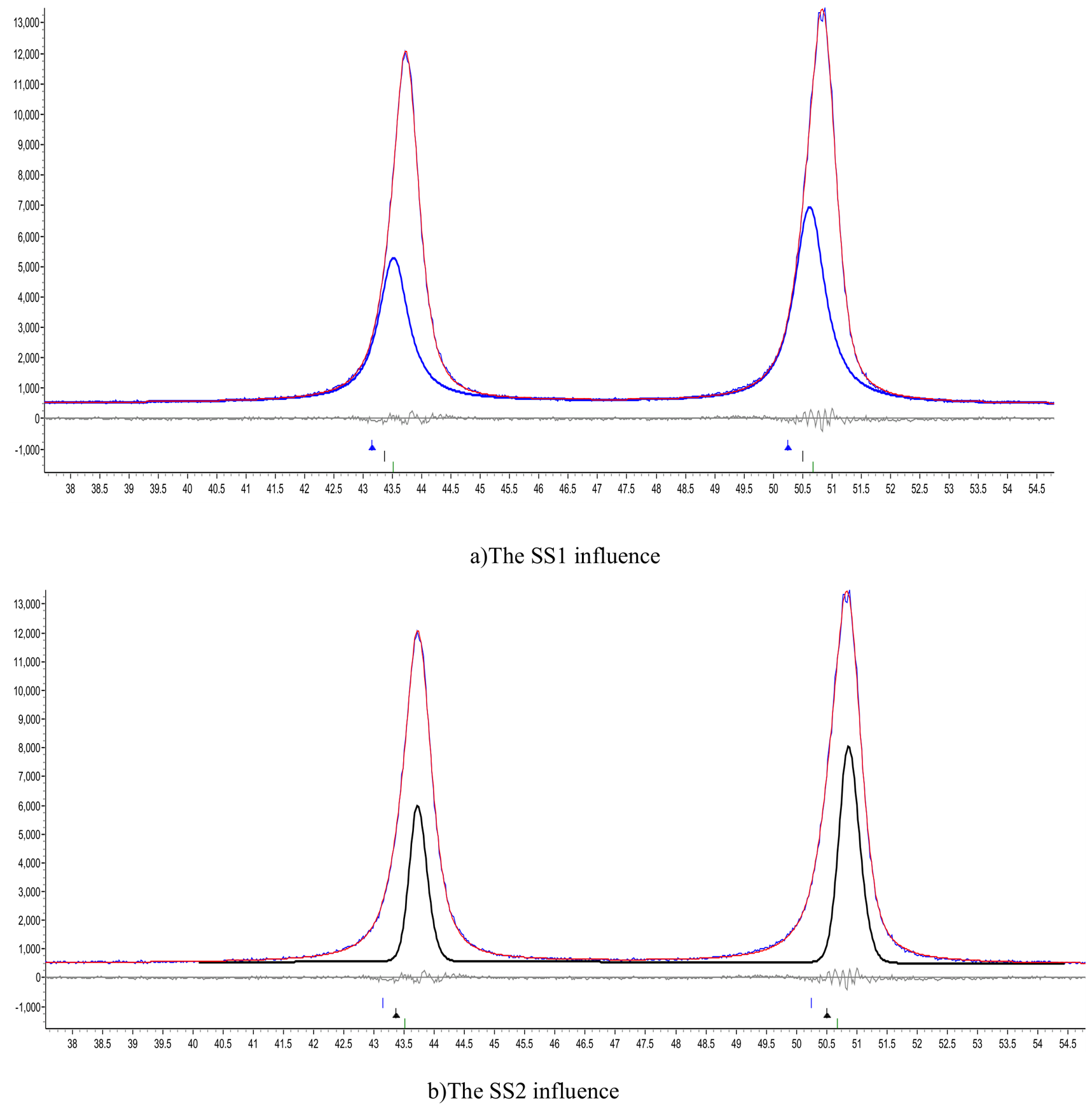
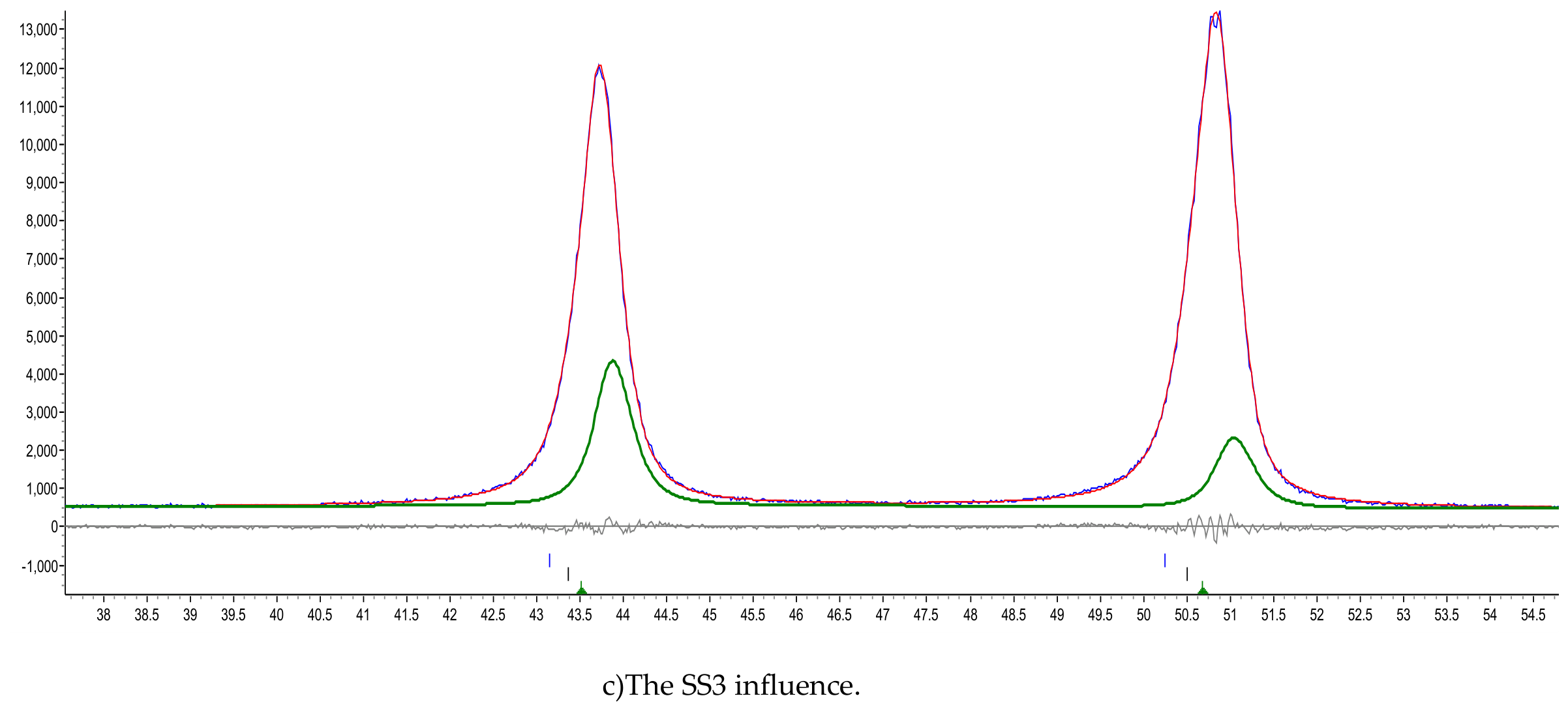
Figure 3.
EDS elemental maps (50 µm scale bar).
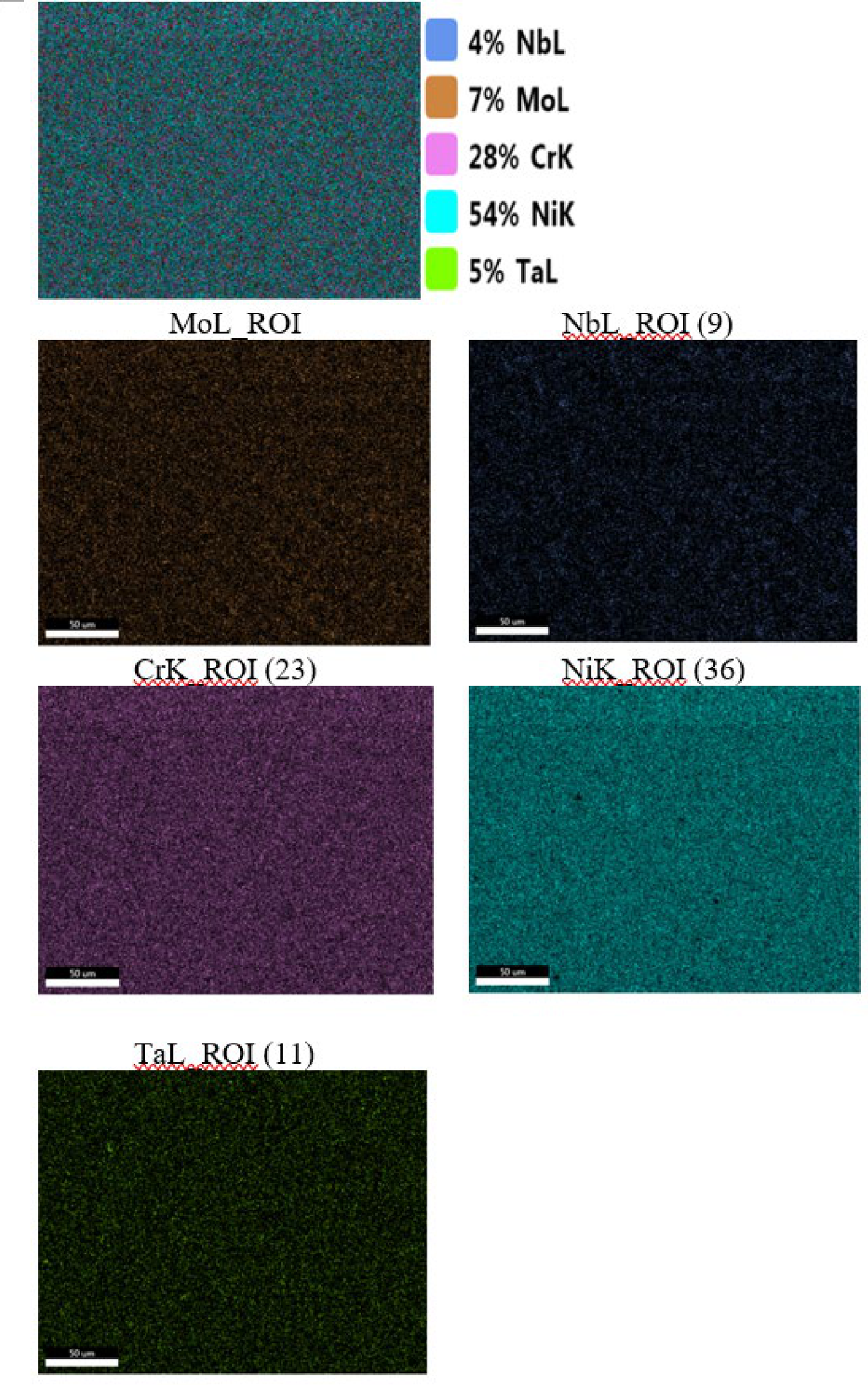
Figure 4.
EDS spectrum of the Ni₅₄Cr₂₈Mo₈Nb₅Ta₅ alloy – identification of constituent elements.
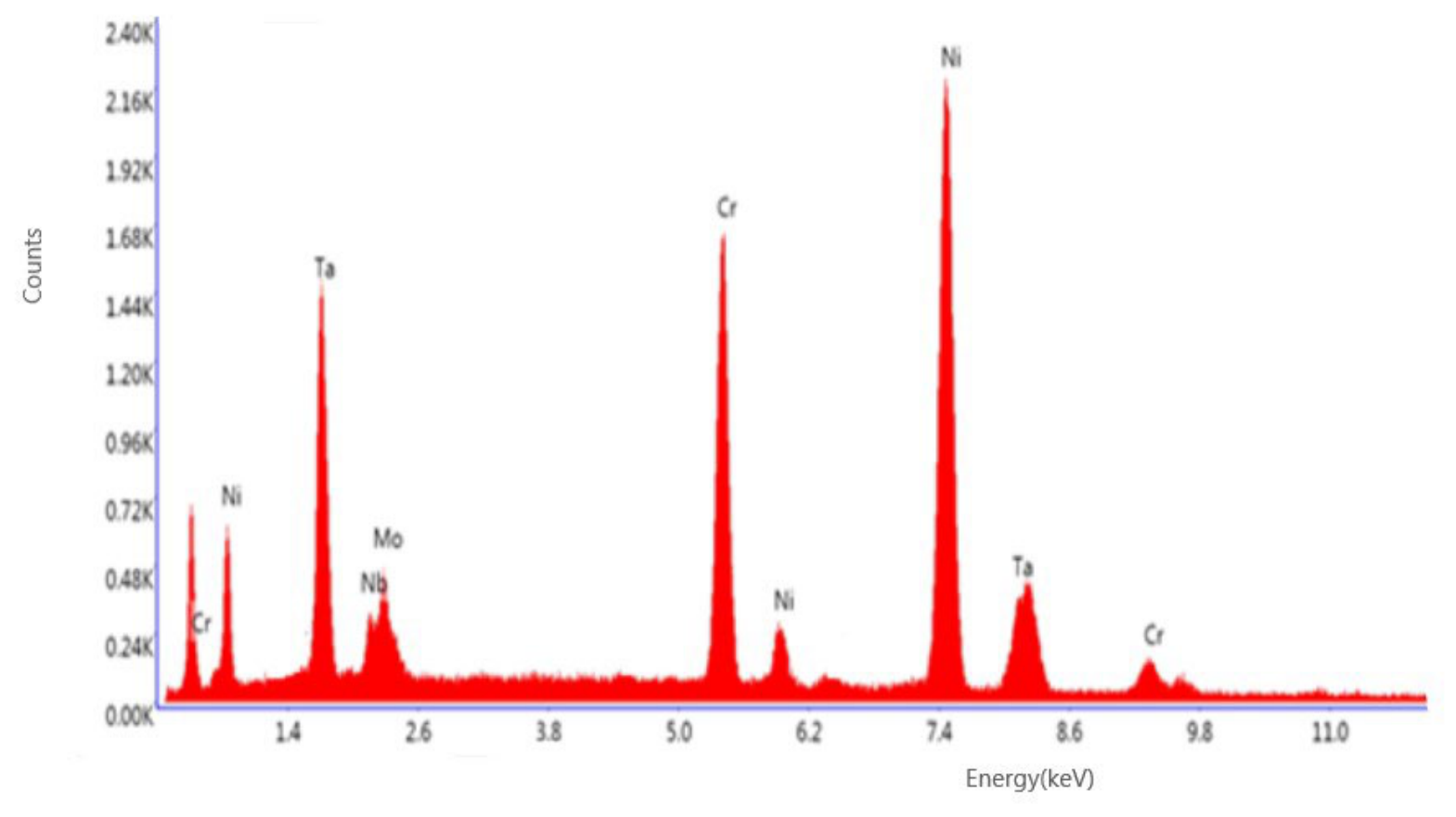
Figure 5.
SEM metallographic analysis - HV 25kV, diferrent magnitudes.
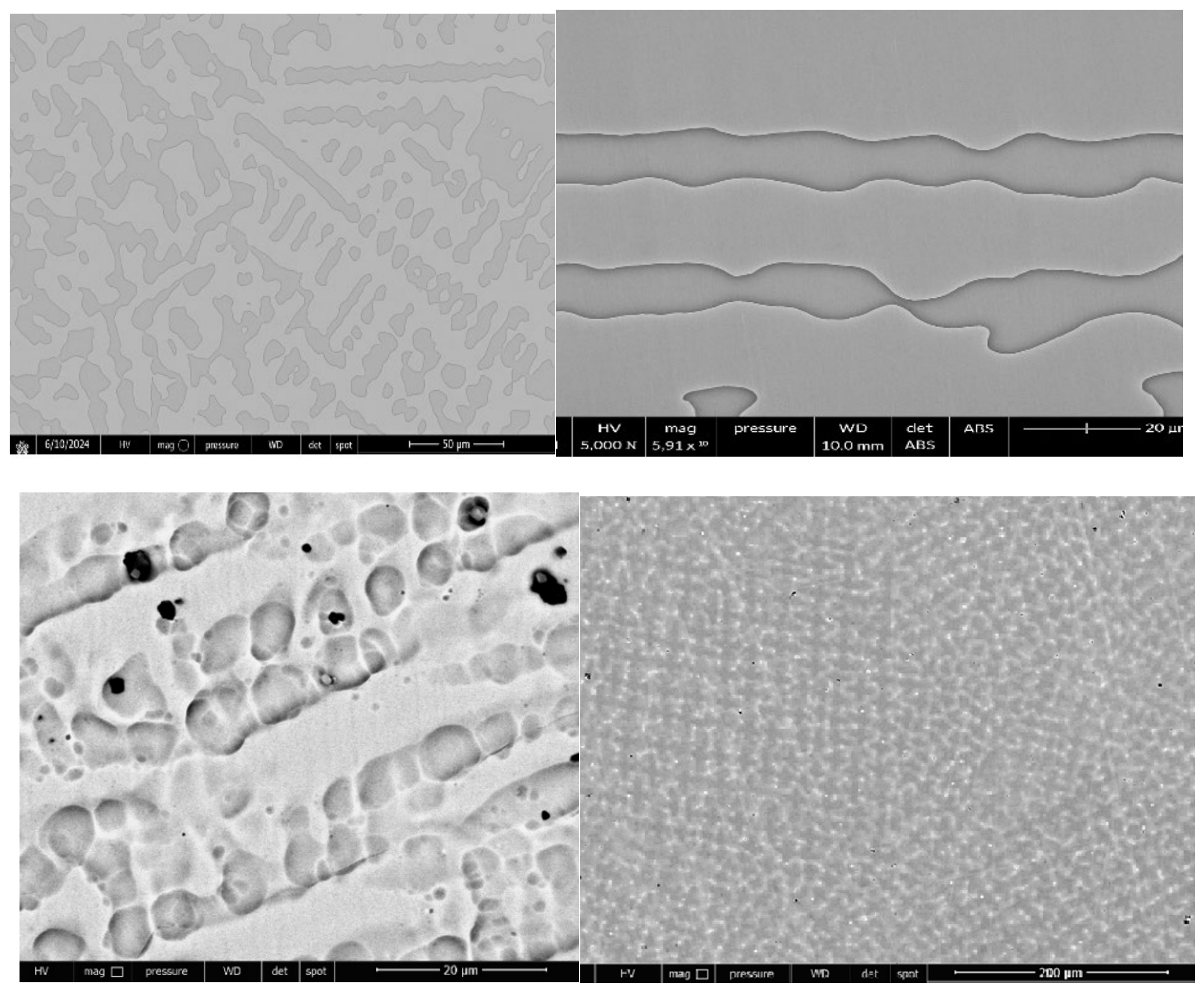
Figure 6.
Optical metallographic analysis.
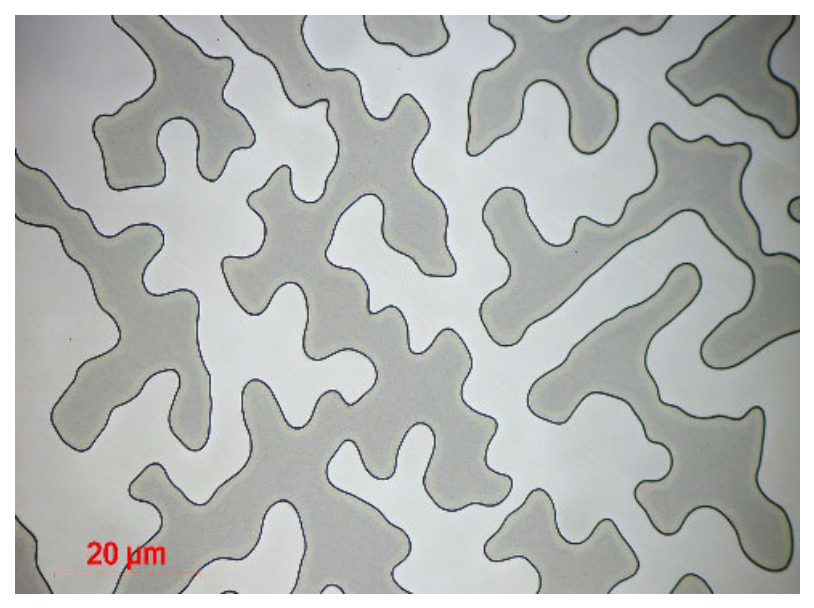
Table 2.
EDS quantitative analysis.
| Element | Weight % | Atomic % | Net Int. | Error % | P/B Ratio | R | F |
|---|---|---|---|---|---|---|---|
| NbL | 2.76 | 1.97 | 91.69 | 14.15 | 15.8597 | 1.0213 | 1.0053 |
| MoL | 4.29 | 2.97 | 141.23 | 12.56 | 25.1689 | 1.0230 | 1.0060 |
| CrK | 20.69 | 26.41 | 1096.56 | 5.89 | 203.3636 | 1.0493 | 1.1311 |
| NiK | 50.05 | 56.60 | 1689.13 | 5.05 | 433.8513 | 1.0592 | 1.0608 |
| TaL | 13.79 | 4.97 | 245.76 | 10.61 | 111.0738 | 1.0618 | 1.0172 |
Table 3.
Vickers hardness (HV0.5) measurements.
| Nr. crt. | Hardness (HV0.5) |
|---|---|
| 1 | 489 |
| 2 | 490 |
| 3 | 493 |
| 4 | 495 |
| 5 | 496 |
| 6 | 498 |
| 7 | 501 |
| 8 | 503 |
| 9 | 505 |
| 10 | 506 |
| Media | 497 HV0.5 |
Table 4.
Compressive strength.
| No. | Compressive strength σmax (MPa) |
|---|---|
| 1 | 1925 |
| 2 | 1940 |
| 3 | 1955 |
| 4 | 1965 |
| 5 | 1965 |
| Media | 1950 MPa |
Table 6.
Comparison with other alloys.
| Property / Alloy | Ni₅₄Cr₂₈Mo₈Nb₅Ta₅ (rev.) | Inconel 625 | Hastelloy C-276 | Alloy 718 |
|---|---|---|---|---|
| Main composition (wt%) | Ni–54, Cr–28, Mo–8, Nb–5, Ta–5 | Ni–62, Cr–21.5, Mo–9, Nb–3.5 | Ni–57, Mo–16, Cr–16, W–4 | Ni–52, Cr–19, Fe–18, Nb–5, Mo–3 |
| Basic structure | γ + γ′ + γ″ | γ (FACE-CENTERED CUBIC SYSTEM) with solid solution hardening | γ (FACE-CENTERED CUBIC SYSTEM) with solid solution hardening | γ + γ′ + γ″ |
| Tensile strength UTS (MPa) | 1320 | 930 | 760 | 1250 |
| Yield strength Rp₀.₂ (MPa) | 1050 | 620 | 355 | 1030 |
| Vickers Hardness (HV0.5) | 497 | 250–270 | 240–260 | 480–520 |
| Compressive strength (MPa) | 1950 | 1450 | 1180 | 1850 |
| Density (g/cm³) | 8.8 | 8.44 | 8.89 | 8.19 |
| Maximum operating temperature (°C) | 900–1000 | 870 | 950 | 980 |
| Main strengthening mechanism | Precipitation γ′/γ″ + solid solution | Solid solution (Mo, Nb) | Solid solution (Mo, W) | Precipitation γ′/γ″ |
| Oxidation/corrosion resistance | Excellent | Excellent | Excellent in acidic environments | Very good |
| Typical applications | Turbines, reactors, combustion chambers | Chemical equipment, heat exchangers | Chemical industry, acidic environments | Turbines, aero parts, generators |
Disclaimer/Publisher’s Note: The statements, opinions and data contained in all publications are solely those of the individual author(s) and contributor(s) and not of MDPI and/or the editor(s). MDPI and/or the editor(s) disclaim responsibility for any injury to people or property resulting from any ideas, methods, instructions or products referred to in the content. |
© 2026 by the authors. Licensee MDPI, Basel, Switzerland. This article is an open access article distributed under the terms and conditions of the Creative Commons Attribution (CC BY) license (http://creativecommons.org/licenses/by/4.0/).
Copyright: This open access article is published under a Creative Commons CC BY 4.0 license, which permit the free download, distribution, and reuse, provided that the author and preprint are cited in any reuse.