
Submitted:
20 June 2026
Posted:
26 June 2026
You are already at the latest version
Abstract
Indigenous youth in Canada experience disproportionately high rates of suicide, highlighting the need to identify protective factors that support wellbeing. This study examined the association between structured physical activity and suicidal ideation among Indigenous youth participating in the Smart Indigenous Youth (SIY) initiative. Cross-sectional survey data from 64 youth aged 13–18 years from two rural First Nations communities in Saskatchewan were analyzed. Structured physical activity was categorized as low (0–2 days/week) or high (3+ days/week), and suicidal ideation was assessed as a binary outcome. Analyses included descriptive statistics, age- and gender-stratified descriptives, Fisher’s and stratified Fisher’s exact tests, and logistic regression models. Higher levels of structured physical activity were associated with reduced odds of suicidal ideation in adjusted models (OR = 0.33, 95% CI [0.12, 0.97], p = .043). Bivariate and stratified analyses demonstrated consistent protective trends, although these did not reach statistical significance. Descriptive findings indicated similar physical activity participation across age groups, with slightly higher prevalence of suicidal ideation among older youth. These findings suggest that structured physical activity may represent a protective factor for suicidal ideation among Indigenous youth and highlight the importance of considering developmental and contextual factors in youth health research.
Keywords:
youth mental health
; physical activity
; indigenous youth
1. Introduction
Indigenous youth in Canada experience disproportionately higher rates of suicide and mental health challenges compared to non-Indigenous youth, reflecting the ongoing impacts of colonials, structural inequities, and disruptions to cultural continuity Recent data indicates that suicide rates among First Nations youth are several times higher than those of non-Indigenous youth, with some communities experiencing rates up to 5-6 times the national average (Government of Canada, 2023; Statistics Canada, 2023). These disparities are closely related to the intergenerational effects of colonial policies and ongoing social and structural inequities may Indigenous communities face (Bombay et al., 2014; Kirmayer et al., 2011). Suicide remains one of the leading causes of death among Indigenous adolescents (Ansloos, 2018; Indigenous Services Canada, 2024), underscoring the urgent need to identify protective factors that support youth wellbeing and resilience.
Physical activity has been widely recognized as an important determinant of mental health among young people. A growing body of evidence suggests that regular participation in physical activity is associated with reduced depressive symptoms, improved emotional regulation, and lower risk of suicidal behaviours (Biddle et al., 2019; Rodriguez-Ayllon et al., 2019). For example, a systematic review and meta-analysis of children aged 5-18 found that greater levels of moderate-to-vigorous physical activity- measured across studies as greater daily minutes, frequency of participation, or meeting recommended guidelines (i.e., >60 minutes per day)- were significantly associated with fewer depressive symptoms, with small to moderate effect sizes observed across studies (Rodrigues-Ayllon et al., 2019). These benefits are thought to operate through both physiological mechanisms, such as neurochemical changes, as psychosocial pathways including increased self-efficacy, social connection, and stress reduction (Biddle et al., 2019).
However, much of this research has been conducted in non-Indigenous populations and may not fully capture the social, cultural, and relational dimensions of health that are central to Indigenous understandings of wellbeing (Hatala et al., 2020; Reading & Wien, 2009). Indigenous conceptualizations of health emphasize holistic balance across physical, emotional, mental and spiritual domains, as well as the importance of relationships with family, community, culture, and land (Reading & Wien, 2009). Within this context, physical activity may serve not only as an individual behaviour, but as a relationally and culturally embedded practice that supports youth identity, belonging, and resilience.
Emerging research from Hatala et al., (2020), Thorburn et al., (2023) and the SIY study, a community-driven, mixed-methods study, has highlighted the importance of youth engagement, community-driven programming, and culturally grounded approaches to health promotion among Indigenous youth (Katapally, 2020; Kannan et al., 2022; Walker et al., 2023). The emphasis on community driven approaches reflects a shift away from externally imposed, deficit-based models, towards strength-based, self-determined frameworks that centre Indigenous knowledge systems, relationality, and local priorities (Bartlett et al., 2012; Hatala et al., 2020; Kirmayer et al., 2011). Such approaches ensure that interventions are culturally meaningful and contextually grounded, while fostering trust, enhancing youth engagement, and supporting the long-term sustainability and effectiveness of health promotion initiatives (Katapally, 2020; McCalman et al., 2017; Wexler et al., 2015). Research suggests that youth wellbeing is shaped by a combination of behavioural, social, and environmental factors, including opportunities for physical activity, peer connection, and community participation (Katapally, 2020; Kannan et al., 2025; Walker et al., 2023). Despite this, limited research has examined how structured physical activity is associated specifically with suicidal ideation among Indigenous youth. Given the importance of developmental, social, and cultural context in shaping Indigenous youth wellbeing, stratified and descriptive analytic approaches are particularly valuable for identifying subgroup-specific patterns that may not be captured through aggregate analyses alone.
The present study addresses this gap by examining the association between structured physical activity and suicidal ideation among Indigenous youth participating in the SIY initiative. In addition, this study explores how these relationships vary across developmental and contextual factors, including age, gender, and participation in land-based activities. Using a combination of descriptive, stratified, and regression-based analytic approaches, this study aims to provide a more nuanced understanding of behavioural and cultural factors associated with Indigenous youth wellbeing. Understanding these relationships may help inform culturally responsive strategies to support Indigenous youth wellbeing and suicide prevention.
2. Materials and Methods
2.1. Study Design and Context
This study used a cross-sectional design drawing on data from the SIY study, a community-driven, mixed-methods digital citizen science initiative conducted in rural First Nations communities in Saskatchewan, Canada. SIY was developed to address community-identified priorities related to youth mental health, substance use, and suicide prevention through the integration of culturally responsive, land-based active living programming within school curricula (Katapally, 2020; Kannan et al., 2025). The broader SIY initiative, launched in 2017, employs a longitudinal mixed-methods design that integrates quantitative survey data collected via custom smartphone application with qualitative data from focus groups and participatory engagement with youth and educators. This approach enabled real-time data collection, co-development of research priorities, and ongoing community engagement (Katapally et al., 2018; Katapally, 2020; Kannan et al., 2022). Although the original study design was longitudinal in nature, sampling challenges associated with the COVID-19 pandemic necessitated that the present study became cross-sectional, drawing from data collected in 2018 from youth participants aged 13-18 years old.
2.2. Land Based and Digital Programming
A defining feature of the SIY initiative is the integration of land-based active living programming within school settings. These programs were co-developed with community partners and tailored to reflect local culture, language, geography, and traditions (Walker et al., 2023). Activities varied by community, but commonly included outdoor physical activities such as walking, land-based games, traditional practices, and opportunities for engagement with Elders and knowledge keepers. These activities were designed not only to promote physical activity, but also to strengthen cultural identity, community connection, and intergenerational knowledge exchange.
The digital component of SIY is equally central to its design. Youth participants engaged with a custom-built smartphone platform that enabled the collection of near real-time data on health behaviours, environmental contexts, and lived experiences through ecological momentary assessments (Katapally et al., 2018). This approach allows for a more nuanced understanding of youth health behaviours as they occurred within daily life, while also supporting continuous engagement between participants and researchers.
Importantly, the integration of land-based and digital approaches reflects a hybrid model of health promotion that bridges Indigenous knowledge systems and contemporary technological tools. Recent SIY research has demonstrated that such approaches are both feasible and effective in engaging Indigenous youth, particularly in rural and remote contexts (Kannan et al., 2025).
SIY is guided by the Smart Framework, a digital epidemiological approach that integrates mobile health technologies, citizen science, and community-based participatory research to enable real-time data collection and integrated knowledge translation (Katapally, 2019; Katapally & Chu, 2020b). Central to this framework is the active engagement of community members, particularly youth, as partners in the research process, enhancing the relevance, cultural appropriateness, and application of findings (Katapally, 2020a).
In addition to the Smart Framework, this study was guided by a Two-Eyed Seeing approach (Etuaptmumk), originally articulated by Mi’kmaq Elder Albert Marshall, which emphasizes “learning to see from one eye with the strengths of Indigenous ways of knowing and from the other eye with the strengths of Western ways of knowing, and to use both these eyes together” (Bartlett et al., 2012). Rather than privileging one knowledge system over the other, this approach supports the respectful coexistence of multiple ways of knowing. In this study, it informed the conceptualization of the research question, the interpretation of findings, and ensured that behavioural health measures were considered alongside relational, cultural, and community dimensions of wellbeing.
2.3. Setting and Participants
Participants were Indigenous youth aged 13-18 years recruited from two rural First Nations high schools participating in the SIY initiative. A total of 76 youth were enrolled in the baseline phase of the study. These communities were engaged through long-standing partnerships with the research team, developed over multiple years of collaboration, in-person engagement, and community consultation prior to study implementation (Katapally, 2020a).
Youth were engaged as “citizen scientists,” meaning that they were not only participants, but also active contributors to the research and knowledge translation process. Citizen science broadly refers to the meaningful involvement of non-professional community members in scientific inquiry, including data generation, interpretation, co-creation of knowledge, and the application of findings to practice and policy (Vahidi et al., 2021; Katapally, 2020a). Within the SIY study, this approach was operationalized through a digital citizen science framework that integrated youth voice, community priorities, and culturally grounded programming within school and community settings (Katapally, 2020a; Walker et al., 2023).
More specifically, youth contributed to data collection through baseline surveys and focus group discussions, while also informing the interpretation of findings and the refinement of community- and school-based programming. Earlier SIY work describes the involvement of youth through the Youth Citizen Scientist Council, in which youth identified locally relevant priorities related to mental health, land-based learning, and active living, and provided feedback on how findings could be translated into culturally meaningful activities and supports (Katapally, 2020a; Kannan et al., 2022; Walker et al., 2023). In this way, youth contributed not only as respondents, but as active knowledge producers whose lived experiences shaped both the research process and the application of findings.
While this approach shares important similarities with community-based participatory research, particularly its emphasis on collaboration, reciprocity, and responsiveness to local priorities, the term “citizen scientists” is used intentionally to reflect youth’s role as active contributors to ongoing data generation and knowledge mobilization within a digital, real-time research platform (Katapally, 2020a; Ibrahim et al., 2023).
The participatory approach aligning with community-based research principles and has been identified as critical for ensuring culturally grounded and contextually relevant research in Indigenous health (Drawson et al., 2017; Kannan et al., 2022; Koster et al., 2012;Walker et al., 2023). Participation was voluntary, and informed consent was obtained in accordance with ethical guidelines for research involving Indigenous communities, including adherence to principles of Ownership, Control, Access, and Possession (OCAP) and the Tri-Council Policy Statement on ethical research involving Indigenous Peoples (FNIGC, 2023).
This study received ethical approval from a harmonized Research Ethics Board jointly administered by [Blind for peer-review]. The study was developed in partnership with participating First Nations communities and conducted in alignment with the principles outlined in Chapter 9 of the Tri-Council Policy Statement: Ethical Conduct for Research Involving Humans (TCPS2), which emphasizes respectful, reciprocal, and culturally appropriate engagement with Indigenous Peoples (Canadian Institutes of Health Research et al., 2022).
For the present study, which involved the secondary analysis of SIY data, additional ethical approval was obtained from [Blind for peer-review]. All analyses were conducted in accordance with approved data governance agreements and community-informed protocols to ensure respect for Indigenous data sovereignty and culturally appropriate use of findings.
2.4. Measures
2.4.1. Structured Physical Activity
Structured physical activity is defined as planned and intentional movement that involves physical exertion and may include a wide range of structured or recreational activities, such as sport, dance, fitness classes, games, and outdoor play (Rodríguez-Ayllón et al., 2019; Sañudo et al., 2024). It was assessed based on self-reported participation in organized or structured physical activities over the past week by asking, “in an average week when you are in school, how many days do you go to physical education classes?”, with response options represented numerically, ranging from 0 (representing no physical activity participation) to 5, with each increment representative of the number of days they engaged in structured physical activity per week. Responses were categorized into two groups: low participation (0-2 days per week) and high participation (3 or more days per week). This categorization aligns with prior youth physical activity research examining associations with mental health outcomes (Tamminen et al., 2020a).
2.4.2. Suicidal Ideation
Suicidal ideation was assessed by asking, “in the last 12 months, did you ever seriously consider attempting suicide?” with original response options being “yes or no”. This was coded a binary variable based on self-reported experience of suicidal thoughts within the past 12 months (yes/no). This measure is commonly used in adolescent mental health research and is considered an important indicator of psychological distress and suicide risk (Centers for Disease Control and Prevention, 2024; De Luca & Wyman, 2012; Rizvi et al., 2024).
2.4.3. Covariates
Covariates included gender (male/female) and participation in land-based activities (yes/no). Gender differences in mental health outcomes among Indigenous populations have documented (Bingham et al., 2019; Levesque & Quesnel-Vallée, 2019 ), therefore, participation in land-based activity was included to account for the potential influence of culturally grounded practices on mental health outcomes.
2.5. Statistical Analysis
Descriptive statistics were used to summarize sample characteristics and key study variables. Logistic regression analyses were conducted to examine the association between structured physical activity and suicidal ideation. An unadjusted model was first estimated, followed by an adjusted model controlling for gender and participation in land-based activity.
Missing data were addressed using multiple imputation, a statistical approach that allows for more robust estimation by reducing bias associated with incomplete data (Sterne et al., 2009). Given the relatively small sample size and community-based nature of the study, this approach was particularly important for maintaining analytic validity. An additional power-sensitivity analysis was conducted to serve as a further robustness check, and to explore relationships between sample and effect sizes.
In addition to regression-based analyses, stratified descriptive analyses were conducted to examine distributions of key variables across age groups (13-15 vs. 16-18 years) and gender (female/male). These analyses were used to explore subgroup differences in structured physical activity, land-based activity participation, and suicidal ideation.
Bivariate associations between structured physical activity, land-based activity, and suicidal ideation were also examined using Fisher’s exact tests due to small cell sizes and sparse data structure. To further explore potential variation across subgroups, stratified Fisher’s exact tests were conducted by gender and land-based activity participation. These analyses were intended to assess whether observed associations differed across demographic and culturally relevant contexts.
Given the modest sample size, findings from stratified and bivariate analyses were interpreted alongside regression results, with emphasis placed on consistency in effect direction, magnitude, and patterns across analytic approaches. All analyses were conducted using the R statistical software. Statistical significance was set at p < .05, with attention also given to effect sizes and confidence intervals to support interpretation.
3. Results
3.1. Sample Characteristics
The analytic sample included Indigenous youth aged 13–18 years (n=64). The sample included both male (n = 30) and female (n = 34) youth, with pre- and post-imputation sample characteristics shown in Table 1.
Several key study variables contained missing data prior to analysis. The extent of missingness varied across measures, ranging from 3.1% for land-based activities to 73.4% for household income, with notable missingness also observed for weekly physical activity (23.4%) and suicidal ideation (20.3%). To reduce potential bias and retain the full analytic sample (N=64), missing data was addressed by using multiple imputation through chained equations (MICE). A total of 20 imputed datasets were generated, and pooled estimates were derived using Rubin’s rules (Rubin, 1987; Sterne et al., 2009). The post-imputation descriptive statistics presented in Table 1 reflect the pooled analytic dataset used in subsequent inferential analyses.
Approximately half of participants (48.4%) reported experiencing suicidal ideation within the past 12 months, reflecting the significant mental health challenges faced by Indigenous youth in Canada (see Figure 1).
Participation in structured physical activity varied across the sample, with more than half of youth (60.9%) reporting high levels of engagement (3+ days per week). This variability provided an opportunity to examine differences in mental health outcomes associated with differing levels of activity.
3.2. Age- and Gender-Stratified Descriptive Analyses
Age-stratified descriptive analyses, presented in Table 2, demonstrated variation across developmental groups. Among youth aged 13–15 years (n = 51), 47.1% reported suicidal ideation, compared to 53.8% among youth aged 16–18 years (n = 13). Structured physical activity participation was relatively consistent across age groups, with 60.8% of younger youth and 61.5% of older youth reporting high levels of weekly physical activity.
Participation in land-based activities differed across age groups, with higher prevalence observed among older youth (69.2%) compared to younger youth (43.1%), suggesting increased engagement in culturally grounded practices across adolescence.
Gender-stratified descriptives, depicted in Table 3, indicated similar levels of structured physical activity participation between female (61.8%) and male youth (60.0%). However, male youth demonstrated higher participation in land-based activities (63.3%) compared to female youth (35.3%), indicating potential gender-related differences in engagement with culturally grounded activities. Additionally, female youth reported slightly higher levels of suicidal ideation than their male counterparts.
3.3. Association Between Structured Physical Activity and Suicidal Ideation
Multivariable logistic regression analyses were conducted to assess independent associations between structured physical activity, land-based activity, gender, and suicidal ideation. As presented in Table 4, higher levels of structured physical activity were associated with significantly lower odds of suicidal ideation (OR = 0.33, 95% CI [0.12, 0.97], p = 0.043). This finding suggests that youth who engaged more frequently in structured physical activity were less likely to report suicidal thoughts. Land-based activity was not significantly associated with suicidal ideation, while gender did not demonstrate a statistically significant relationship. These findings indicate that structured physical activity may have an independent protective association with suicidal ideation in this sample.
In models controlling for gender and participation in land-based activities, the association between structured physical activity and suicidal ideation was non-significant (OR = 0.33, 95% CI [0.11, 1.03], p = 0.057).
Bivariate analyses were conducted to examine the associations between structured physical activity, land-based activity, and suicidal ideation using Fisher’s exact tests. As shown in Table 5, higher levels of structured physical activity were associated with lower odds of suicidal ideation, although this relationship did not reach statistical significance (OR = 0.36, 95% CI [0.11, 1.12], p = 0.072). Land-based activity was not associated with suicidal ideation in bivariate analyses.
To further examine these relationships, the adjusted logistic regression models were visually represented in Figure 2. The dot plot displays odds ratios and 95% confidence intervals for each indicator, allowing for comparison of both the magnitude and direction of associations. This figure highlights the extent to which structured physical activity, land-based activity, and gender are associated with suicidal ideation after accounting for covariates.
Stratified Fisher’s exact tests further examined associations between structured physical activity and suicidal ideation across subgroups. Gender-stratified analyses demonstrated consistent directional associations across both female and male youth. Among female youth, higher physical activity was associated with lower odds of suicidal ideation (OR = 0.34, 95% CI [0.06–1.75], p = .172), with a similar pattern observed among male youth (OR = 0.37, 95% CI [0.06–2.03], p = .264).
Stratified analyses by land-based activity participation, presented in Table 6, similarly did not demonstrate statistically significant associations with suicidal ideation, although effect estimates remained directionally consistent across strata. Across all stratified analyses, the consistency in effect direction suggests a potential protective relationship between structured physical activity and suicidal ideation, despite limited statistical power.
4. Discussion
This study examined the association between structured physical activity and suicidal ideation among Indigenous youth participating in the SIY initiative (Katapally et al., 2018; Katapally, 2020a). Across multiple analytic approaches, including logistic regression, bivariate Fisher’s exact tests, and stratified analyses, higher levels of structured physical activity were consistently associated with lower odds of suicidal ideation. This relationship was statistically significant in adjusted regression models and directionally consistent across bivariate and subgroup analyses, although not all findings reached statistical significance. Together, these results suggest a potential protective role of structured physical activity, while also highlighting the importance of cautious interpretation given the modest sample size.
However, within Indigenous contexts, physical activity cannot be understood solely as an individual-level behaviour; rather, it is embedded within broader relational, cultural, and environmental systems that shape health and wellbeing (Reading & Wien, 2009; Greenwood et al., 2018). From a relational perspective, physical activity is often experienced through connections with family, community, and intergenerational knowledge sharing, where participation is guided by collective practices rather than individual goals (Toombs et al., 2022). Culturally, physical activity is closely tied to land-based practices, including hunting, fishing, ceremony, and traditional games, which serve not only as a form of movement, but also as mechanisms of cultural continuity, identity formation, spiritual wellbeing, and suicide prevention (Greenwood et al., 2018; Reading & Wien, 2009; Price et al., 2025). Recent evidence further suggests that land-based and outdoor programs for Indigenous youth consistently support coping skills, social connectedness, cultural identity, and mental wellness outcomes (Price et al., 2025; Weerasinghe et al., 2023).
Environmentally, access to land, safe spaces, and culturally relevant programming plays a critical role in enabling or constraining opportunities for meaningful engagement in physical activity, particularly in the context of structural in the context of ongoing structural inequities and colonial disruption of land relationships (Truth and Reconciliation Commission of Canada, 2015). Together, these dimensions reflect a holistic understanding of physical activity as interconnected with Indigenous determinants of health, where movement is inseparable from relationship to land, culture, and community (Nelson & Wilson, 2017) The SIY initiative provides a unique context in which these elements are integrated, situating physical activity within a broader framework of land-based programming, cultural engagement, and community participation though a community-driven digital citizen science approach (Katapally, 2019; Walker et al., 2023). As such, the observed association between physical activity and mental health may reflect not only behavioural mechanisms, but also relational and cultural processes.
While land-based programming was not a statistically significant indicator of suicidal ideation in the quantitative analyses, emerging evidence from SIY highlights the importance of these broader determinants. For example, qualitative SIY findings from Walker et al. (2023) demonstrate that participation in land-based programming was associated with increased cultural engagement, strengthened identity, and enhanced mental wellbeing among Indigenous youth. Participants described land-based activities as fostering a renewed connection to culture, including opportunities to learn traditional practices, engage with Elders, and develop a stronger sense of belonging within their communities. These experiences were further linked to improved emotional wellbeing, reduced stress, and a greater sense of purpose, highlighting the role of land-based programming as both a cultural and protective factor in youth mental health (Walker et al., 2023) Similarly, Kannan et al. (2025) found that disruptions to physical activity during COVID-19 school closures were closely related to increased psychological distress among Indigenous youth. Youth reported that reduced opportunities for structured and community-based physical activity contributed to feelings of isolation, decreased motivation, and poorer overall mental wellbeing. However, engagement in culturally grounded and community-based activities (i.e land-based programming and family-led practices) served as important protective factors, supporting resilience, strengthening social connections, and fostering emotional wellbeing (Kannan et al., 2025).
Stratified descriptive analyses further provided insight into how these relationships varied across developmental and gendered contexts. While structured physical activity participation was relatively consistent across age groups, older adolescents demonstrated slightly higher prevalence of suicidal ideation, suggesting that differences in risk may reflect broader developmental or contextual factors rather than differences in activity levels alone.
Gender-stratified analyses similarly revealed that while physical activity participation was comparable across female and male youth, notable differences emerged in land-based activity participation and substance use patterns. Male youth demonstrated substantially higher engagement in land-based activities, whereas female youth reported higher prevalence of alcohol use and slightly higher levels of suicidal ideation. These findings suggest that gender may shape behavioural and cultural contexts of health, while the protective association between structured physical activity remains consistent across groups.
These findings are consistent with emerging evidence demonstrating that culturally relevant physical and land-based programming supports positive identity development, community belonging, and mental wellbeing among Indigenous youth (Bunting, 2022; Carrier et al., 2022; Okpalauwaekwe et al., 2022). In addition, recent research on Indigenous youth mental health highlights the importance of community-driven, culturally grounded approaches, including peer support, cultural continuity, and intergenerational engagement in promoting resilience and reducing psychological distress (Mansell et al.,2024; Thorburn et al., 2023). Collectively, this growing body of evidence underscores the critical role of culturally embedded and relational forms of physical activity in supporting Indigenous youth wellbeing.
Additionally, these findings suggest that physical activity may function as a pathway to social connection, facilitating relationships with peers, community members, and cultural practices that are central to Indigenous conceptualizations of health. Previous research supports this, as it has been demonstrated that participation in sport and land-based physical activity creates opportunity for peer interaction, strengthens relationships with Elders and community members, and supports the development of social and cultural identity among Indigenous youth (Bruner et al., 2019; Price et al., 2025). Other qualitative and review-based evidence has shown that land-based and community driven programs foster connections to peers, Elders, and cultural knowledge, while simultaneously enhancing overall wellbeing (Price et al., 2025).
Similarly, research with Indigenous youth highlights how engagement with the land and nature supports relational connections and meaning-making processes that are central to resilience and wellbeing (Hatala et al., 2020). This aligns with Indigenous determinants of health frameworks, which emphasize the importance of relationality, cultural continuity, and connection to land as foundational components of wellbeing (Reading & Wien, 2009).
From a Two-Eyed Seeing perspective, the results of this study can be interpreted through both Western and Indigenous lenses. Western frameworks conceptualize physical activity as a modifiable health behaviour associated with psychological benefits such as improved mood, reduced stress, and enhanced cognitive functioning (World Health Organization, 2020; Faulkner et al., 2020). Additionally, research demonstrates that regular physical activity is associated with reductions in symptoms of depression and anxiety, as well as improvements in overall mental wellbeing among youth populations (Rosenbaum et al., 2014; Schuch et al., 2018). These frameworks emphasize individual-level behaviour change, as well as psychological and psychosocial mechanisms, as key drivers of mental health outcomes (Faulkner et al., 2020).
Within a Two-Eyed Seeing Framework, research integrating Indigenous and Western perspectives has demonstrated that sport and physical activity can support the development of Indigenous youth across psychological, cognitive, and social domains, particularly when grounded in cultural and community contexts (Bruner et al., 2019). Similarly, Two-Eyed Seeing informed models of physical activity promotion emphasize the integration of Indigenous knowledge systems, highlighting the interconnected roles of both culture and the community environment in shaping wellbeing (Lavallée & Lévesque, 2013; O’Keefe et al., 2023).
By bringing these perspectives together, a more comprehensive understanding of youth mental health emerges. Physical activity is not simply a behaviour to be promoted, but a context through which youth can experience belonging, identity, and connection. This distinction has important implications for intervention design, suggesting that culturally grounded, community-driven approaches may be more effective than individual-level interventions alone. Specifically, interventions should prioritize land-based and culturally relevant programming, incorporate Elder and community involvement, and create opportunities for collective participation. Additionally, these findings suggest that evaluation frameworks should move beyond individual level outcomes and include more relational and cultural indicators of wellbeing. At a broader level, this approach highlights the importance of supporting Indigenous-led program design and self-determination, as well as investing in community infrastructure that enables access to culturally meaningful forms of physical activity.
5. Strengths and Limitations
This study has several notable strengths. First, it is grounded in a community-driven, participatory citizen science framework that engages Indigenous youth as active contributors (Katapally, 2020a; Kannan et al., 2026). This approach enhances the cultural relevance and contextual validity of findings and aligns with best practices in Indigenous health research.
Second, the study is strengthened by the application of multiple quantitative analytic approaches, including both bivariate and multivariate models, which allow for a more nuanced examination between key variables. This analytic strategy enables the identification of both unadjusted relationships and those that persist after accounting for relevant covariates, enhancing the robustness and interpretability of the findings.
However, several limitations should be considered. The cross-sectional design limits the ability to draw causal inferences, and the relatively small sample size may reduce statistical power. A power sensitivity analysis indicated that the study was sufficiently powered to detect moderate to large effects but may have been underpowered to detect smaller associations. As such, the non-significant adjusted model should be interpreted cautiously, with consideration given to the consistency and magnitude of observed effect sizes and challenges associated with sampling in both mental health and Indigenous health research.
Another limitation is that structured physical activity was measured as a combined construct that included both light-intensity activity and moderate-to-vigorous physical activity. As a result, it was not possible to directly compare participants’ activity level with national physical activity guidelines, which are based specifically on recommended minutes of moderate-to-vigorous physical activity per day (Public Health Agency of Canada, 2024; Tremblay et al., 2016).
Additionally, reliance on self-reported measures may introduce recall or reporting bias. Digital inequities in rural and remote communities may also affect participation and data completeness, potentially influencing results (Kannan et al., 2025).
While multiple analytic approaches were used to strengthen interpretation, stratified analyses were limited by small subgroup sample sizes, which may have reduced statistical power and contributed to non-significant findings despite consistent effect directions. These limitations highlight the importance of interpreting results within the context of both statistical uncertainty and consistency across analytic approaches.
6. Conclusions
This study contributes to growing evidence that structured physical activity is an important protective factor for mental health among Indigenous youth. Findings suggest that structured physical activity is associated with reduced odds of suicidal ideation, highlighting its potential role in Indigenous youth mental health promotion.
References
- Ansloos, J. Rethinking Indigenous suicide. International J. Indig. Heal. 2018, 13(2), 8–28. [Google Scholar] [CrossRef]
- Bartlett, C.; Marshall, M.; Marshall, A. Two-Eyed Seeing and other lessons learned within a co-learning journey of bringing together Indigenous and mainstream knowledges and ways of knowing. J. Environ. Stud. Sci. 2012, 2(4), 331–340. [Google Scholar] [CrossRef]
- Biddle, S. J. H.; Ciaccioni, S.; Thomas, G.; Vergeer, I. Physical activity and mental health in children and adolescents: An updated review of reviews and an analysis of causality. Psychol. Sport Exerc. 2019, 42, 146–155. [Google Scholar] [CrossRef]
- Bingham, B.; Moniruzzaman, A.; Patterson, M.; Sareen, J.; Distasio, J.; O’Neil, J.; Somers, J. M. Gender differences among Indigenous Canadians experiencing homelessness and mental illness. BMC Psychol. 2019, 7(1), 57. [Google Scholar] [CrossRef] [PubMed]
- Bombay, A.; Matheson, K.; Anisman, H. The intergenerational effects of Indian Residential Schools: Implications for the concept of historical trauma. Transcult. Psychiatry 2014, 51(3), 320–338. [Google Scholar] [CrossRef] [PubMed]
- Bruner, M. W.; Hillier, S. E.; Baillie, C. P.; Lavallee, L. F.; Bruner, B. G.; Hare, K.; Lovelace, R.; Hare, T.; Lévesque, L. Indigenous youth development through sport and physical activity: Sharing voices, stories, and experiences. Int. J. Indig. Health 2019, 14(2), 222–251. [Google Scholar] [CrossRef]
- Bunting, J. Indigenous learners’ mental health needs report. Indspire. 2022. Available online: https://indspire.ca/wp-content/uploads/2025/09/2022-Indigenous-Learners-Mental-Health-Needs-Report-English.pdf.
- Canadian Institutes of Health Research; Natural Sciences and Engineering Research Council of Canada; Social Sciences and Humanities Research Council of Canada. Tri-council policy statement: Ethical conduct for research involving humans (TCPS 2). Government of Canada. 2022. Available online: https://ethics.gc.ca/eng/policy-politique_tcps2-eptc2_2022.html.
- Carrier, L.; Shin, H. D.; Rothfus, M. A.; Curran, J. A. Protective and resilience factors to promote mental health among Indigenous youth in Canada: a scoping review protocol. BMJ Open 2022, 12(1), e049285. [Google Scholar] [CrossRef] [PubMed]
- Centers for Disease Control and Prevention. 2023 Youth Risk Behavior Survey results. U.S. Department of Health and Human Services, 2024. Available online: https://www.cdc.gov/yrbs/results/2023-yrbs-results.html.
- De Luca, S. M.; Wyman, P. A. Association between school engagement and disclosure of suicidal ideation to adults among Latino adolescents. J. Prim. Prev. 2012, 33(2-3), 99–110. [Google Scholar] [CrossRef] [PubMed]
- Drawson, A. S.; Toombs, E.; Mushquash, C. J. Indigenous research methods: A systematic review. Int. Indig. Policy J. 2017, 8(2). [Google Scholar] [CrossRef]
- Faulkner, G.; Rhodes, R. E.; Vanderloo, L. M.; Chulak-Bozzer, T.; O’Reilly, N.; Ferguson, L.; Spence, J. C. Physical activity as a coping strategy for mental health due to the COVID-19 virus: A potential disconnect among Canadian adults? Front. Commun. 2020, 5, 571833. [Google Scholar] [CrossRef]
- First Nations Information Governance Centre. Ownership, control, access and possession (OCAP®): The path to First Nations information governance. FNIGC. 2014. Available online: https://achh.ca/wp-content/uploads/2018/07/OCAP_FNIGC.pdf.
- Greenwood, M.; de Leeuw, S.; Lindsay, N. M.; Reading, C. (Eds.) Determinants of Indigenous peoples’ health in Canada: Beyond the social, 2nd ed.; Canadian Scholars, 2018; Available online: https://books.google.ca/books?id=jblaDwAAQBAJ.
- Ibrahim, S. T.; Hammami, N.; Katapally, T. R. Traditional surveys versus ecological momentary assessments: Digital citizen science approaches to improve ethical physical activity surveillance among youth. PLoS Digit. Health 2023, 2(9), e0000294. [Google Scholar] [CrossRef] [PubMed]
- Indigenous Services Canada. Suicide prevention in Indigenous communities. Government of Canada. 8 February 2024. Available online: https://www.sac-isc.gc.ca/eng/1576089685593/1576089741803.
- Kannan, P.; Bhawra, J.; Patel, P.; Katapally, T. R. Preserving rural school health during the COVID-19 pandemic: Indigenous citizen scientist perspectives from a qualitative study. AIMS Public Heal. 2022, 9(2), 216–236. [Google Scholar] [CrossRef] [PubMed]
- Kannan, P.; Bhawra, J.; Wright, K.; Katapally, T. R. Mental health challenges and resilience strategies of Indigenous youth citizen scientists living in rural areas during COVID-19 school closures. PLoS Ment. Health 2025, 2(6), e0000256. [Google Scholar] [CrossRef] [PubMed]
- Kannan, P.; Bhawra, J.; Katapally, T.R. Strengthening Culturally Responsive Mental Health Supports for Crises Preparedness: Lessons From Indigenous Educator’s Experiences During COVID-19 Pandemic. J. Sch. Health96 2026, 4, e70130. [Google Scholar] [CrossRef] [PubMed]
- Katapally, T. R.; Bhawra, J.; Leatherdale, S. T.; Ferguson, L.; Longo, J.; Rainham, D.; Larouche, R.; Osgood, N. The SMART Study, a Mobile Health and Citizen Science Methodological Platform for Active Living Surveillance, Integrated Knowledge Translation, and Policy Interventions: Longitudinal Study. JMIR Public Health Surveill. 2018, 4(1), e31. [Google Scholar] [CrossRef] [PubMed]
- Katapally, T. R. The SMART framework: Integration of citizen science, community-based participatory research, and systems science for population health science in the digital age. JMIR mHealth uHealth 2019, 7(8), e14056. [Google Scholar] [CrossRef] [PubMed]
- Katapally, T. R. Smart Indigenous Youth: The Smart Platform Policy Solution for Systems Integration to Address Indigenous Youth Mental Health. JMIR Pediatr. Parent. 2020a, 3(2), e21155. [Google Scholar] [CrossRef] [PubMed]
- Katapally, T.R.; Chu, L.M. Digital epidemiological and citizen science methodology to capture prospective physical activity in free-living conditions: a SMART Platform study. BMJ Open 2020b, 10, e036787. [Google Scholar] [CrossRef] [PubMed]
- Kirmayer, L. J.; Dandeneau, S.; Marshall, E.; Phillips, M. K.; Williamson, K. J. Rethinking resilience from Indigenous perspectives. Can. J. Psychiatry 2011, 56(2), 84–91. [Google Scholar] [CrossRef] [PubMed]
- Koster, R.; Baccar, K.; Lemelin, R. H. Moving from research ON, to research WITH and FOR Indigenous communities: A critical reflection on community-based participatory research. Can. Geogr. Le. Géographe Can. 2012, 56(2), 195–210. [Google Scholar] [CrossRef]
- Lavallée, L. F.; Lévesque, L. Two-eyed seeing: Physical activity, sport, and recreation promotion in Indigenous communities. In Aboriginal peoples and sport in Canada: Historical foundations and contemporary issues; Forsyth, J., Giles, A. R., Eds.; UBC Press, 2013; pp. 206–228. [Google Scholar]
- Levesque, A.; Quesnel-Vallée, A. Gender variations in the relationship between social capital and mental health outcomes among the Indigenous populations of Canada. Int. J. Equity Health 2019, 18(1), 124. [Google Scholar] [CrossRef] [PubMed]
- Mansell, E.; Turnbull, D.; Yung, A.; Crumpen, S.; Winkenweder, H.; Reilly, R.; Rumbalara Wellbeing and Resilience Project Team. How community sport and recreation affect the health and wellbeing of Indigenous people: A qualitative systematic review and meta-aggregation. Ment. Health Prev. 2024, 34, 200336. [Google Scholar] [CrossRef]
- McCalman, J.; Bainbridge, R.; Percival, N.; Tsey, K. The effectiveness of implementation in Indigenous Australian healthcare: An overview of literature reviews. Int. Journal Equity Heal.> 2016, 15, 47. [Google Scholar] [CrossRef] [PubMed]
- Nelson, S. E.; Wilson, K. The mental health of Indigenous peoples in Canada: A critical review of research. Social Sci. Med.> (1982) 2017, 176, 93–112. [Google Scholar] [CrossRef] [PubMed]
- Oberle, E.; Ji, X. R.; Molyneux, T. M.; Guhn, M.; Forer, B.; Thomson, K.; Alkawaja, M.; Kassan, A.; Gadermann, A. M. Mental well-being trends and school-based protective factors among adolescents in British Columbia (2015–2022): A population-based study. Soc. Sci. Med. 380 2025, 118201. [Google Scholar] [CrossRef] [PubMed]
- O’Keefe, V. M.; Maudrie, T. L.; Cole, A. B.; Ullrich, J. S.; Fish, J.; Hill, K. X.; White, L. A.; Redvers, N.; Jernigan, V. B. B.; Lewis, J. P.; West, A. E.; Apok, C. A.; White, E. J.; Ivanich, J. D.; Schultz, K.; Lewis, M. E.; Sarche, M. C.; Gonzalez, M. B.; Parker, M.; Neuner Weinstein, S. E.; McCray, C. J.; Warne, D.; Black, J. C.; Richards, J. R.; Walls, M. L. Conceptualizing Indigenous strengths-based health and wellness research using group concept mapping. Arch. Public Health 2023, 81(1), 71. [Google Scholar] [CrossRef] [PubMed]
- Okpalauwaekwe, U.; Ballantyne, C.; Tunison, S.; Ramsden, V. R. Enhancing health and wellness by, for and with Indigenous youth in Canada: A scoping review. BMC Public Health 2022, 22(1), 1630. [Google Scholar] [CrossRef] [PubMed]
- Price, F. M.; Weaselhead-Running Crane, T. D.; Weybright, E. H. Scoping review of outdoor and land-based prevention programs for Indigenous youth in the United States and Canada. Int. J. Environ. Res. Public Health 2025, 22(2), 183. [Google Scholar] [CrossRef] [PubMed]
- Public Health Agency of Canada; Centre for Surveillance and Applied Research. Positive Mental Health Surveillance Indicator Framework, youth (12 to 17 years of age), Canada, 2024 edition; Public Health Agency of Canada: Ottawa, ON, 2024; Available online: https://health-infobase.canada.ca/positive-mental-health/data-tool/Index.
- Reading, C. L.; Wien, F. Health inequalities and social determinants of Aboriginal peoples’ health. National Collaborating Centre for Aboriginal Health. 2009. Available online: https://www.ccnsa-nccah.ca/docs/determinants/RPT-HealthInequalities-Reading-Wien-EN.pdf.
- Rizvi, A.; Harmer, B.; Saadabadi, A. Suicidal ideation . In StatPearls; StatPearls Publishing, 2024; https://www.ncbi.nlm.nih.gov/books/NBK565877/. [Google Scholar]
- Rodríguez-Ayllón, M.; Cadenas-Sánchez, C.; Estévez-López, F.; Muñoz, N. E.; Mora-Gonzalez, J.; Migueles, J. H.; Molina-García, P.; Henriksson, H.; Mena-Molina, A.; Martínez-Vizcaíno, V.; Catena, A.; Erickson, K. I.; Lubans, D. R.; Ortega, F. B.; Esteban-Cornejo, I. Role of physical activity and sedentary behavior in the mental health of preschoolers, children and adolescents: A systematic review and meta-analysis. Sports Med. 2019, 49(9), 1383–1410. [Google Scholar] [CrossRef] [PubMed]
- Rosenbaum, S.; Tiedemann, A.; Sherrington, C.; Curtis, J.; Ward, P. B. Physical activity interventions for people with mental illness: A systematic review and meta-analysis. J. Clin. Psychiatry 2014, 75(9), 964–974. [Google Scholar] [CrossRef] [PubMed]
- Rubin, D. B. Multiple imputation for nonresponse in surveys; John Wiley & Sons, 1987. [Google Scholar] [CrossRef]
- Sañudo, B.; Sánchez-Oliver, A. J.; Fernández-Gavira, J.; Gaser, D.; Stöcker, N.; Peralta, M.; Marques, A.; Papakonstantinou, S.; Nicolini, C.; Sitzberger, C. Physical and psychosocial benefits of sports participation among children and adolescents with chronic diseases: A systematic review. Sports Med. Open 2024, 10(1), 54. [Google Scholar] [CrossRef] [PubMed]
- Schuch, F. B.; Vancampfort, D.; Firth, J.; Rosenbaum, S.; Ward, P. B.; Silva, E. S.; Hallgren, M.; Ponce De Leon, A.; Dunn, A. L.; Deslandes, A. C.; Fleck, M. P.; Carvalho, A. F.; Stubbs, B. Physical activity and incident depression: A meta-analysis of prospective cohort studies. Am. J. Psychiatry 2018, 175(7), 631–648. [Google Scholar] [CrossRef] [PubMed]
- Statistics Canada. Canada’s Indigenous population . 21 June 2023. https://www.statcan.gc.ca/o1/en/plus/3920- canadas-indigenous-population.
- Sterne, J. A. C.; White, I. R.; Carlin, J. B.; Spratt, M.; Royston, P.; Kenward, M. G.; Wood, A. M.; Carpenter, J. R. Multiple imputation for missing data in epidemiological and clinical research: Potential and pitfalls. BMJ 2009, 338, b2393. [Google Scholar] [CrossRef] [PubMed]
- Tamminen, N.; Reinikainen, J.; Appelqvist-Schmidlechner, K.; Borodulin, K.; Mäki-Opas, T.; Solin, P. Associations of physical activity with positive mental health: A population-based study. Ment. Health Phys. Act. 18 2020, 100319. [Google Scholar] [CrossRef]
- Thorburn, R.; Ansloos, J.; McCormick, S.; Zantingh, D. The role of self-determination in health and wellness: A qualitative study with Indigenous youth health leaders across Canada. International J. Indig. Heal. 2023, 18(2). [Google Scholar] [CrossRef]
- Toombs, E.; Lund, J.; Mushquash, A. R.; Mushquash, C. J. Predictors of land-based activity participation in a national representative sample of Indigenous individuals living off-reserve. Int. J. Environ. Res. Public Health 2022, 19(13), 8029. [Google Scholar] [CrossRef] [PubMed]
- Tremblay, M. S.; Carson, V.; Chaput, J.-P.; et al. Canadian 24-hour movement guidelines for children and youth: An integration of physical activity, sedentary behaviour, and sleep. Appl. Physiol. Nutr. Metab. 2016, 41((6) Suppl. 3, S311–S327. [Google Scholar] [CrossRef] [PubMed]
- Truth and Reconciliation Commission of Canada. Honouring the truth, reconciling for the future: Summary of the final report of the Truth and Reconciliation Commission of Canada. Government of Canada. 2015. Available online: https://publications.gc.ca/site/eng/9.800288/publication.html.
- Vahidi, H.; Taleai, M.; Yan, W.; Shaw, R. Digital citizen science for responding to COVID-19 crisis: Experiences from Iran. Int. J. Environ. Res. Public Health 2021, 18(18), 9666. [Google Scholar] [CrossRef] [PubMed]
- Walker, S.; Kannan, P.; Bhawra, J.; Katapally, T.R. Evaluation of a longitudinal digital citizen science initiative to understand the impact of culture on Indigenous youth mental health: Findings from a quasi-experimental qualitative study. PLoS ONE 2023, 18(12), e0294234. [Google Scholar] [CrossRef] [PubMed]
- Weerasinghe, N.; Wright, A. L.; VanEvery, R.; Mohammed, S. A narrative review of mental health services for Indigenous youth in Canada: Intersectionality and cultural safety as a pathway for change. J. Recovery Ment. Health 2023, 6(2), 33–55. [Google Scholar] [CrossRef]
- Wexler, L.; Chandler, M.; Gone, J. P.; Cwik, M.; Kirmayer, L. J.; LaFromboise, T.; Brockie, T.; O’Keefe, V.; Walkup, J.; Allen, J. Advancing suicide prevention research with rural American Indian and Alaska Native populations. Am. J. Public Health 2015, 105(5), 891–899. [Google Scholar] [CrossRef] [PubMed]
- World Health Organization. WHO guidelines on physical activity and sedentary behaviour. World Health Organization; 2020; Available online: https://iris.who.int/handle/10665/336656.
Figure 1.
Weekly Physical Activity and Suicidal Ideation Distribution Graphs. Note: Values represent post-imputation proportions (N=64). Weekly physical activity was coded as 0=low and 1=high, and suicidal ideation as 0=no and 1=yes. The figure presents marginal distributions for each variable and does not reflect joint or cross-tabulated associations between physical activity and suicidal ideation.
Figure 1.
Weekly Physical Activity and Suicidal Ideation Distribution Graphs. Note: Values represent post-imputation proportions (N=64). Weekly physical activity was coded as 0=low and 1=high, and suicidal ideation as 0=no and 1=yes. The figure presents marginal distributions for each variable and does not reflect joint or cross-tabulated associations between physical activity and suicidal ideation.
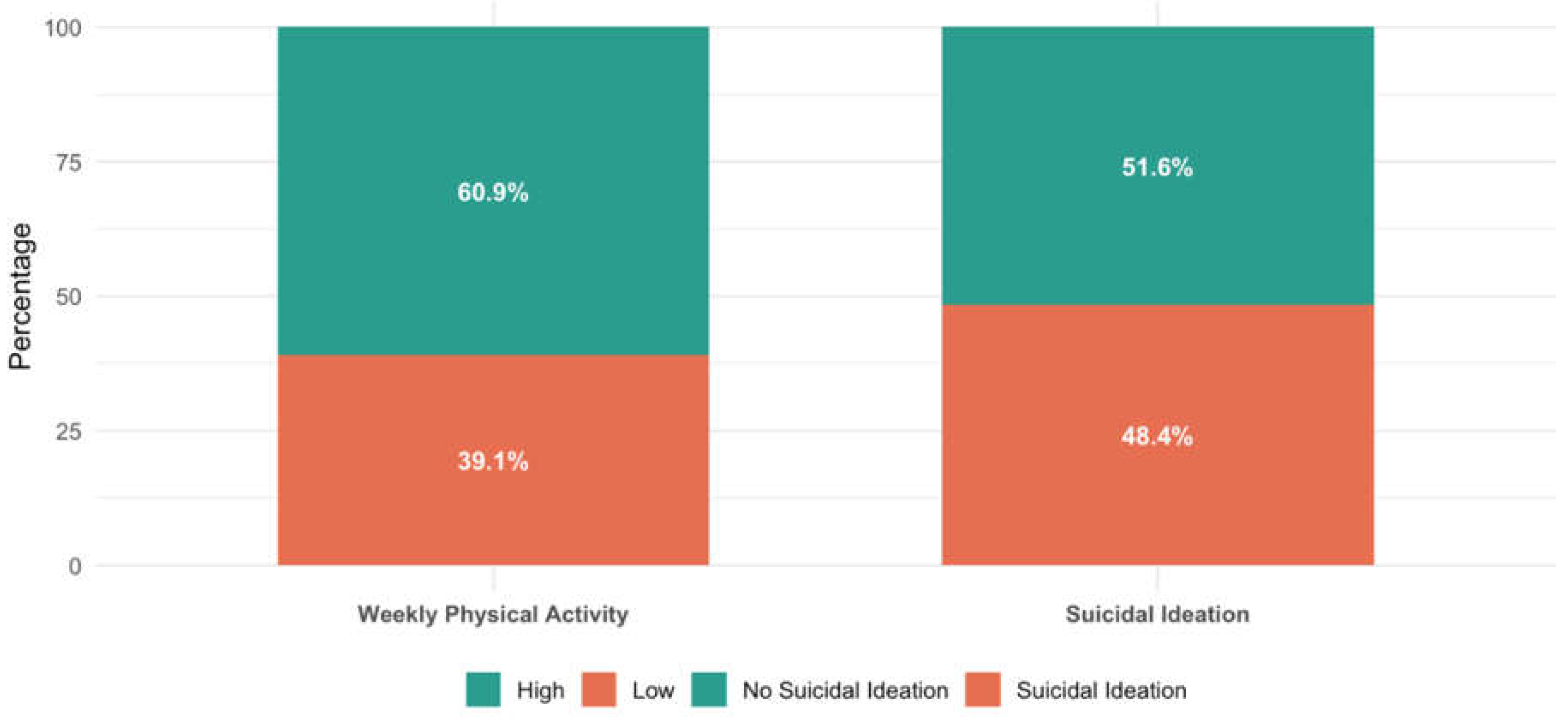
Figure 2.
Adjusted Odds Ratios for indicators of Suicidal Ideation. Note. OR = odds ratio; CI = confidence interval. Estimates reflect results from two adjusted logistic regression models examining the association between weekly physical activity and suicidal ideation. Model 1 adjusts for gender only, whereas Model 2 additionally includes land-based activity. The vertical dashed line denotes the null value (OR = 1.00), with estimates below 1.00 indicating reduced odds of suicidal ideation.
Figure 2.
Adjusted Odds Ratios for indicators of Suicidal Ideation. Note. OR = odds ratio; CI = confidence interval. Estimates reflect results from two adjusted logistic regression models examining the association between weekly physical activity and suicidal ideation. Model 1 adjusts for gender only, whereas Model 2 additionally includes land-based activity. The vertical dashed line denotes the null value (OR = 1.00), with estimates below 1.00 indicating reduced odds of suicidal ideation.
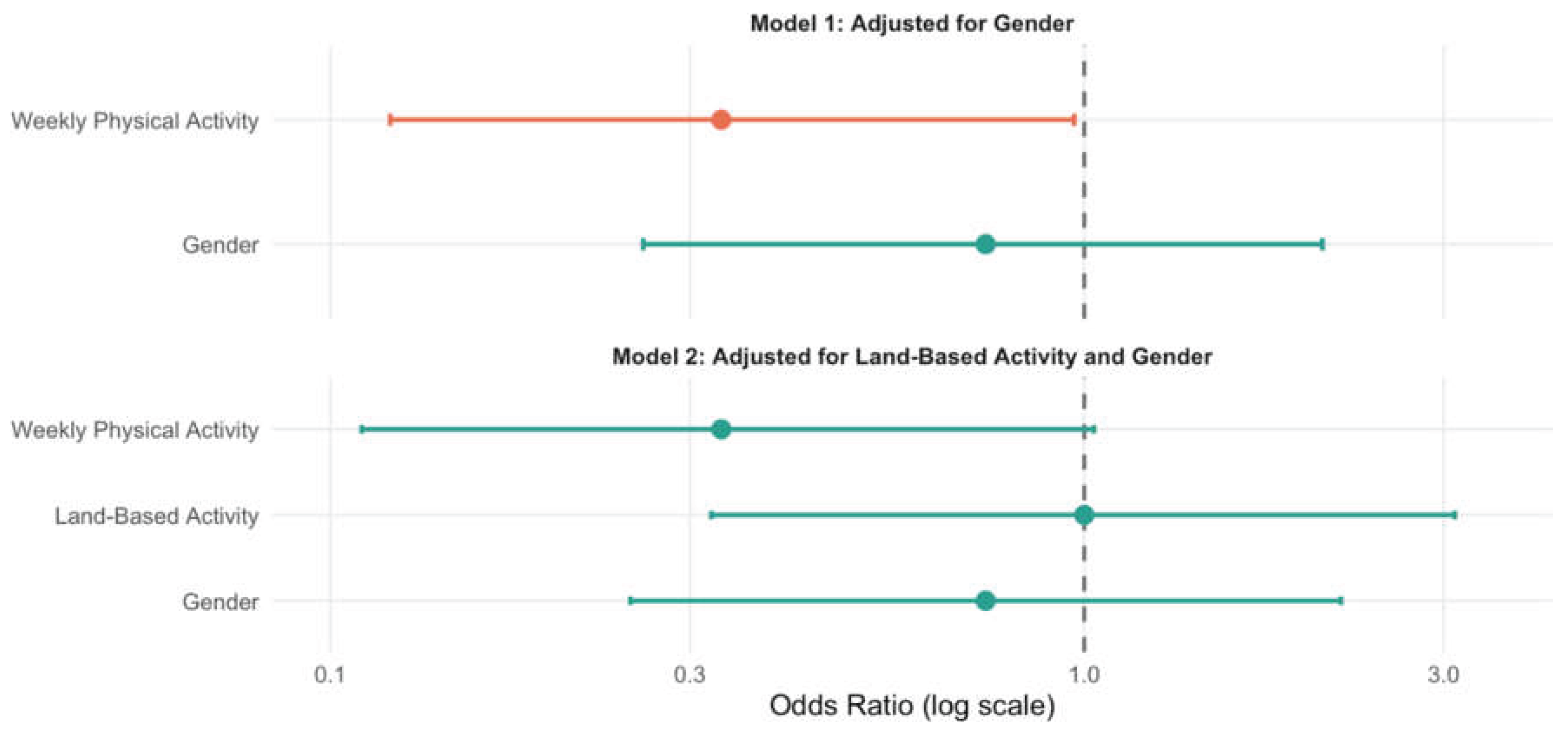

Table 1.
Pre- and Post-Imputation Descriptive Statistics and Rates of Missingness of Cross-Sectional Sample.
Table 1.
Pre- and Post-Imputation Descriptive Statistics and Rates of Missingness of Cross-Sectional Sample.
| Variable | Category |
Pre-imputation n (%) |
Post-imputation n (%) |
| Age | 13 | 1 (1.5%) | 1 (1.5%) |
| 14 | 35 (54.6%) | 35 (54.6%) | |
| 15 | 15 (23.4%) | 15 (23.4%) | |
| 16 | 1 (1.5%) | 1 (1.5%) | |
| 17 | 1 (1.5%) | 1 (1.5%) | |
| 18 | 11 (17.2%) | 11 (17.2%) | |
| Gender | Female | 32 (50.0%) | 34 (53.1%) |
| Male | 26 (40.6%) | 30 (46.9%) | |
| Missing | 6 (9.4%) | - | |
| Parent Education | Low | 48 (75.0%) | 48 (75.0%) |
| High | 10 (15.6%) | 16 (25.0%) | |
| Missing | 6 (9.4%) | - | |
| Household Income | Low | 13 (20.3%) | 36 (56.2%) |
| High | 4 (6.3%) | 28 (43.8%) | |
| Missing | 47 (73.4%) | - | |
| Missing | 33 (51.6%) | - | |
| Weekly Physical Activity | Low (0-2 days) | 18 (28.1%) | 25 (39.1%) |
| High (3 or more days) | 31 (48.4%) | 39 (60.9%) | |
| Missing | 15 (23.4%) | - | |
| Sense of Belonging | Low | 23 (35.9%) | 25 (39.1%) |
| High | 38 (59.4%) | 39 (60.9%) | |
| Missing | 3 (4.7%) | - |
Note. N = 64. Frequencies and percentages are based on the 2018 baseline analytic sample. Pre-imputation values reflect observed responses and missingness prior to multiple imputation, while post-imputation values represent pooled estimates across imputed datasets (m = 20). Percentages were calculated using the full analytic sample denominator.
Table 2.
Age-Stratified Descriptive Characteristics of Indigenous Youth Participants.
| Variable | 13–15 Years (N = 51) | 16–18 Years (N = 13) |
| Suicidal Ideation, n (%) | 24 (47.1%) | 7 (53.8%) |
| High Weekly Physical Activity, n (%) | 31 (60.8%) | 8 (61.5%) |
| Land-Based Activity Participation, n (%) | 22 (43.1%) | 9 (69.2%) |
Note. N=64. Values are presented as counts (n) and column percentages (%). These stratified age descriptives compare younger adolescents (13–15 years) and older adolescents (16–18 years). Percentages are calculated within each age group.
Table 3.
Gender-Stratified Descriptive Characteristics of Indigenous Youth Participants.
| Variable | Female (n = 34) | Male (n = 30) |
| Suicidal Ideation, n (%) | 18 (52.9% | 13 (43.3%) |
| High Weekly Physical Activity, n (%) | 21 (61.8%) | 18 (60.0%) |
| Land-Based Activity Participation, n (%) | 12 (35.3%) | 19 (63.3%) |
Note. N = 64. Values are presented as counts (n) and column percentages (%). Percentages are calculated within gender strata. Gender was coded as 0 = female and 1 = male. High weekly physical activity was defined as participation in physical education or structured physical activity ≥3 days per week. Suicidal ideation reflects self-reported history of seriously considering suicide within the past 12 months (yes/no).
Table 4.
Logistic Regression Model (N = 64).
| Variable | OR | 95% CI | p |
| Model 1: Adjusted for Gender | |||
| Weekly Physical Activity | 0.33 | [0.12, 0.97] | .043 |
| Gender | 0.74 | [0.26, 2.07] | .561 |
| Model 2: Adjusted for Land-Based Activity and Gender | |||
| Weekly Physical Activity | 0.33 | [0.11, 1.03] | .057 |
| Land-Based Activity | 1.00 | [0.32, 3.10] | .997 |
| Gender | 0.74 | [0.25, 2.19] | .575 |
Note. OR = odds ratio; CI = confidence interval. Model 1 presents pooled Firth logistic regression estimates from multiple imputed datasets. Model 2 presents pooled Firth logistic regression estimates from the same pooled dataset, with land-based activity included as an additional covariate. Suicidal ideation coded 1 = yes, 0 = no. Weekly physical activity coded 0= 0-2 active days, 1= 3+ active days. Gender coded 1 = male, 0= female. Land-based activity coded 0=no, and 1=yes.
Table 5.
Bivariate Associations Between Weekly Physical Activity, Land-Based Activity, and Suicidal Ideation (Fisher’s Exact Tests; N = 64).
Table 5.
Bivariate Associations Between Weekly Physical Activity, Land-Based Activity, and Suicidal Ideation (Fisher’s Exact Tests; N = 64).
| Variables | Outcome | OR | 95% CI | p |
| Weekly Physical Activity | Suicidal Ideation | 0.36 | [0.11, 1.12] | .072 |
| Land-Based Activity | Suicidal Ideation | 1.28 | [0.43, 3.83] | .803 |
Note: OR = odds ratio; CI = confidence interval; ns = non-significant. Fisher’s Exact Tests were used due to small cell sizes.
Table 6.
Gender-Stratified Fisher’s Exact Tests Examining Associations Between Suicidal Ideation, Physical Activity and Land-Based Activity Among Indigenous Youth Participants.
Table 6.
Gender-Stratified Fisher’s Exact Tests Examining Associations Between Suicidal Ideation, Physical Activity and Land-Based Activity Among Indigenous Youth Participants.
| Outcome Variable | Stratified By Gender | Variables | N | OR | 95% CI | p-value |
|
Suicidal Ideation |
Female (0) |
Weekly Physical Activity |
34 | 0.34 |
0.06 – 1.75 |
.172 |
| Male (1) | 30 | 0.37 | 0.06 – 2.03 | .264 | ||
|
Suicidal Ideation |
Female (0) |
Land-Based Activity |
34 |
1.39 |
0.27 – 7.45 |
.729 |
| Male (1) | 30 | 1.55 | 0.27 – 9.85 | .708 |
Note. Fisher’s Exact Tests were stratified by gender to examine associations separately among female and male participants. Odds ratios (ORs) greater than 1 indicate higher odds of the outcome associated with the indicator, whereas ORs less than 1 indicate lower odds.
Disclaimer/Publisher’s Note: The statements, opinions and data contained in all publications are solely those of the individual author(s) and contributor(s) and not of MDPI and/or the editor(s). MDPI and/or the editor(s) disclaim responsibility for any injury to people or property resulting from any ideas, methods, instructions or products referred to in the content. |
© 2026 by the authors. Licensee MDPI, Basel, Switzerland. This article is an open access article distributed under the terms and conditions of the Creative Commons Attribution (CC BY) license (http://creativecommons.org/licenses/by/4.0/).
Copyright: This open access article is published under a Creative Commons CC BY 4.0 license, which permit the free download, distribution, and reuse, provided that the author and preprint are cited in any reuse.


