
Submitted:
22 June 2026
Posted:
23 June 2026
You are already at the latest version
Abstract
An experiment focused on human-induced vibration monitoring was carried out on the structure of a demountable temporary grandstand for spectators at the Biathlon World Championship in Nové Město na Moravě, Czech Republic. Before the races, a modal analysis was carried out to improve the FE model of the grandstand. The spectators’ behavior was recorded on camera during the races and was statistically evaluated. The vibration of the demountable grandstand was measured during the races too and synchronized with the camera records. The activity of the spectators, the maximal accelerations and the RMS values of the grandstand vibration were evaluated and discussed at the end of the article.
Keywords:
grandstand
; modal analysis
; human-induced vibration
1. Introduction
Forces caused by the movement of the human crowd can be critical for certain types of structures. Significant dynamic loads can also be caused by common human activities such as walking, running, dancing, marching, or jumping. An even bigger problem can be a large group of people synchronously jumping, bouncing, or dancing at pop concerts [1] and sports matches [2,3] on light and flexible structures such as demountable grandstands. Excited vibrations may be unpleasant to viewers, even causing feelings of nausea [1,4]. Too big vibration can cause crowd panic and then a stampede or structural damage. In the worst case, excessive vibration can lead to the collapse of the structure [5,6]. This is why it is important to implement some recommendations for application and assessment of human induced dynamic loads on dynamic sensitive structures such as grandstands in standards.
According to Czech standards [7,8], a special analysis must be performed in case of possible occurrence of dynamic effects on the grandstand. The British standards [9,10] describe very well the dynamic behaviour of the crowd in the grandstands. In 2001, the Institution of Structural Engineers in Great Britain published a handbook [11]. The handbook recapitulates various research in the field of grandstand dynamics during music and sporting events. It mainly describes the values of the excitation frequencies of the dynamic forces caused by spectators on the stands during individual activities at the stadium (sports versus concerts). However, the handbook does not provide guidance on how to include dynamic forces in the calculation.
The use of temporary demountable grandstands for sports and music events and their collapse [12] led to an investigation of their dynamic behavior. The experimental and theoretical analysis was carried out on the temporary grandstand in [13]. One part of this work was also focused on a modal analysis of the grandstand as a 20-DOF system. The results of the modal analysis were quite different from those obtained on the FE model. Dynamic effects of spectators on a small temporary grandstand were also investigated in [14] and a FE dynamic analysis focused on the influence of different types of bracing system of the grandstand structure was carried out in [15].
As suggested, people can generate much greater dynamic loads through intensive activities such as walking or running than static loads with their self-weight. However, these dynamic loads are difficult to predict because their magnitude and frequency composition depend on the movements of the individual persons forming the moving mass. Specifically for the grandstands, appropriate dynamic loads are not currently mentioned in the valid standards with an acceptable precision. Nevertheless, dynamic load models that simulate the effects of the crowd of spectators based on stochastic approaches are created at present [16,17]. However, experiments confirming these models are not so common [18].
2. Demountable Grandstand in Nové Město na Moravě
The Vysočina Arena sports stadium in Nové Město na Moravě staged a Biathlon World Cup. With the successful domestic representatives in this sport, the fan base has increased, so it has been necessary to increase the capacity of the grandstands in this Arena by 11,500 spectators. Other requirements were the throughput of entry to the grandstands, the possibility of building grandstands in hard accessible terrain, 10 structures for large LED TV sets, and the structure of a new grandstand at the VIP tent with a passage for the biathlon racers. The customer was WCH Biathlon 2013, LLC.
The company PERI built these demountable structures. It delivered 560 tons of PERI UP Rosett Flex metal scaffolding to this project. The scaffolding is extremely versatile, adaptable to local conditions, and meets the strictest safety requirements at established workplaces. Its assembly and disassembly are quick, and the elements themselves are very light. The dimensions of the basic components of the modular system are 25 cm, or 50 cm respectively. The scaffolding is steel. The scaffolding is composed of columns Ø 48.3 × 3.2. The scaffold posts are equipped with four-hole rosettes to hook the horizontals (see Figure 2). The rosettes are half a meter apart. The element connecting the columns in the horizontal direction is called the horizontal and has dimensions 60 × 30 × 2 mm. The company states that due to the high stiffness of the joints, it is enough to stiffen the structure only with horizontal elements and the diagonals can be omitted. The high stiffness of the joint is then caused by the length of the pressed area of the wedge of the horizontal that fits into the rosette hole (see Figure 2).
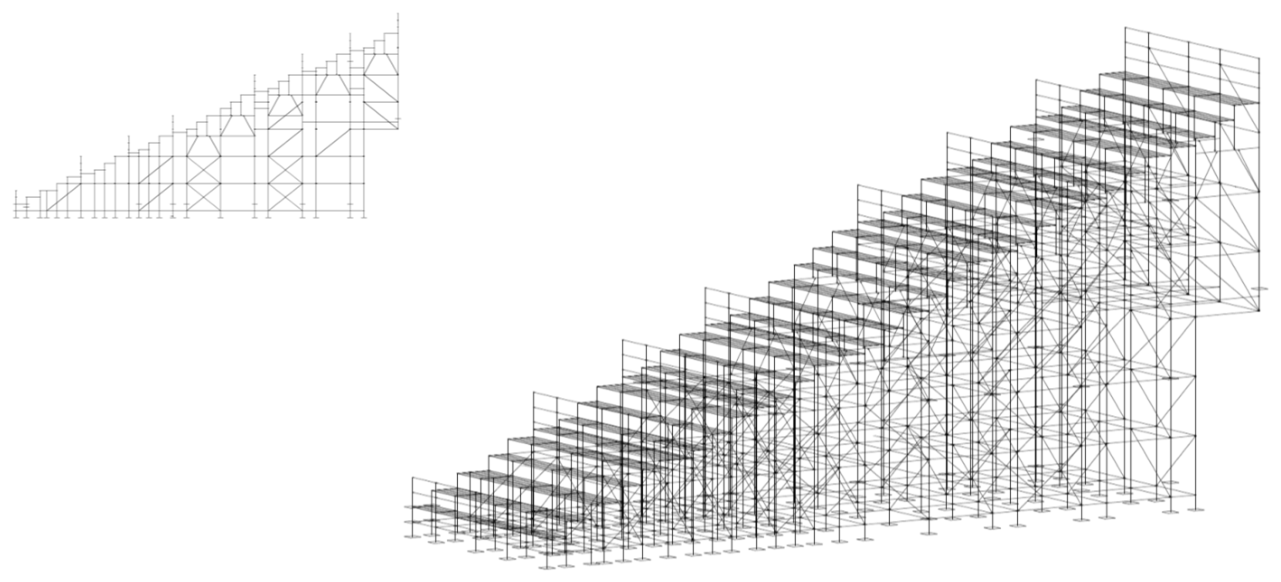
The tested section of the grandstand had 23 rows of columns, with 5 columns in each row. In the 23rd row, the grandstand had a console at a height of 6.5 m, which was extended to 2.5 m. The highest level of the grandstand was 13.5 m above ground. Its length without a console was 25.5 m, with the console 28 m. The width of the grandstand section was 8.5 m. The structure was stiffened horizontally by a diagonal. The structure had only one diagonal in the horizontal plane at the bottom of the console.
The observed grandstand section was connected to a side stand and a staircase using steel bars. The columns stood mostly on asphalt roads, part of them laid on gravel, and part of the columns stood on the ground. The columns were supported by wooden pads (Figure 3).
The character of the structure changes from the 15th row of columns. The grandstand was supported by support towers at a distance of 2.5 m. The towers had either the same central column, or they were connected by 1 m long horizontal bars. This whole area will be called the “back” (high) part of the grandstand. The remaining (low) section will be called the “front” part of the grandstand. Floors of the supporting towers laid on horizontal supports supported by columns. These columns stood on long perforated horizontals (2× U-shape ø80 × 20 × 3) supported by struts. The struts distribute the load to the main columns of the structure.
Looking at the stands from the area of the stadium, we will also mark the “left” part, the “middle” part, and the “right” part of the grandstand tribune, as shown in Figure 1.
3. Modal Analysis of the Demountable Grandstand
The experimental modal analysis of the observed grandstand section was carried out at the Vysočina Arena sports stadium in Nové Město na Moravě before the Biathlon World Cup.
Eight piezoelectric acceleration transducers Brüel & Kjær type 8344 and one 4507 B 005 were used for the experiment. One of these was used as a reference, the remaining eight were used to measure the response of the grandstand in the net of points on the structure. The sensors were placed on weights that allowed us to easily move the transducers to another measured point while preserving the relative positions of the sensors. The grandstand vibrations were measured in three directions in the X-axis (direction perpendicular to the spectator’s view), in the Y-axis (in the direction of the spectator’s view), and in the Z-direction (direction of gravity).
The reference sensor was placed on the twelve level of the grandstand on the second column from the staircase (Figure 4). The sensor was oriented horizontally obliquely with an angle of 45° to the longitudinal rows. The structure was excited by a rubber mace at the eighteenth level of the grandstand on the third column of the staircase (Figure 4). The excitation was realized by pulses that had the same direction as the reference transducer.
The dynamic response of the grandstand on the excitation was measured at 25 stages. The weights with sensors were placed in the position of the 1st, 3rd, and 4th columns from the staircase (see Figure 4—blue arrows, Figure 5) on each of the 25 stages. The positions of the sensors were chosen to be the mode shape character clearly recognizable after its evaluation. During the response measurement, only the person who excited the structure and the computer operator were on the grandstand to not affect the results by additional weight in the form of another person. After measuring in one row, the sensors were shifted to the second position (Figure 4—yellow arrows). One weight with sensors was placed on the staircase (Figure 4—yellow arrow on the right) to investigate the interaction between the grandstand and the stairs. Another weight with sensors was placed in the middle of the mat to see if it vibrates locally or not.
4. Spectators Induced Vibration
The experimental modal analysis of the observed grandstand section was carried out at the Vysočina Arena sports stadium in Nové Město na Moravě before the Biathlon World Cup.
During the races, we measured the dynamic response of the grandstand induced by spectators. Subsequently, the acceleration extremes were evaluated, and the response was sorted according to various kinds of spectator behavior. We used the piezoelectric acceleration transducers Brüel & Kjær of type 4507 B 005 to measure the response during the race. They were connected to the same measurement stations as during the modal analysis.
The accelerometers were attached to the structure by strong magnets. They were placed in the 13th row in three positions in all three directions (see Figure 6).
The dynamic response of the grandstand was measured before the race, during the filling of the grandstand, during the race, after the race, and during the departure of the spectators from the stand. The control software was set to automatically perform five-minute response records throughout the race. During the race, spectators were recorded on a camera located about 100 m from the grandstand. The types of spectators’ behavior were evaluated from the acquired video. After synchronizing the video with the record of grandstand vibration, we could assign significant response segments to certain types of behavior or select certain race situations and determine the dynamic effect of the reaction of spectators to this situation (e.g., successful shooting of the Czech representative).
5. FE Model of the Grandstand
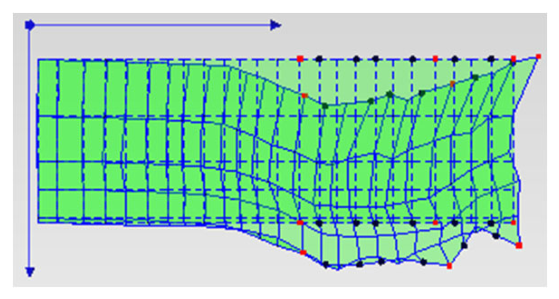
The finite element model of the grandstand was created in the Dlubal program, trying to capture the reality as accurately as possible. However, the grandstand structure has a lot of unknowns, e.g., stiffness of joints and supports.
For several cross-sections, we did not know the exact dimensions (Peri’s know-how). Then, these were chosen based on known outer diameters, length, and weight of the element. The column elements used in the model were tubes with dimensions of Ø 48.3 × 3.2 mm. The cross-section of the horizontals had a box shape of 60 × 30 × 2 mm, and the dimensions of the diagonal tubes were Ø 42 × 4 mm. All elements were modeled from steel material. The mass of the grandstand structure was calculated automatically based on the cross-section of used elements and material properties.
The floors were replaced by two rods that formed the sides of the floor, and the properties of the top plate were neglected. The rods replacing the floor were connected to the structure with a high torsional stiffness about the Z axis.
Figure 7.
The FE model of the grandstand.
The grandstand supports were modeled as simply supported. The diagonals were modeled with a hinged connection. The connection of the horizontal elements with columns was modeled as joints with torsional stiffness and it changed based on the comparison of the finite element analysis (FEA) results with experimental modal parameters. At the beginning, the hinge connection of horizontals and columns was used but the FEA results were far from the experimental ones. Then we separately changed the torsional stiffness of the joints for the horizontals oriented in X and Y directions. In the final version of the FE model, the stiffness of the connection of columns and horizontals in the X direction was set to 100 kN/m, and the connection of columns and horizontals in the Y direction was fixed.
6. Results of the Experimental Modal Analysis
The experimentally determined natural frequencies and mode shapes were evaluated using MeScope software. The measured time data records were transformed using the Fast Fourier Transform (FFT) from the time domain to the frequency domain. The natural frequencies were then specified from the resonance peaks of operational frequency response functions (OMA FRF). The nine natural frequencies and mode shapes were evaluated, see Table 1 and the first six mode shapes Figure 8, Figure 9, Figure 10, Figure 11 and Figure 12.
Figure 13.
The 6th measured mode shape, f6 = 5.25 Hz.
The first mode shape (see Figure 8) vibrates only in the Y direction (direction of view of spectators). The front lower part of the grandstand vibrates with small amplitudes. They increase with increasing height of the grandstand and from the 15th row of columns, from the beginning of the back part of the grandstand, the amplitudes are much higher.
The rows of columns in the Y direction behave independently of each other, probably because the diagonal bracings of the grandstand in the X direction are missing in the middle field. The shape then corresponds to the fact that the outer parts behave separately.
The second and the third mode shapes vibrate in the same direction as the first one, but the end part of the grandstand began to vibrate also in the X direction.
The higher modes vibrate especially in the X direction. From these modes, it is visible that the front part of the grandstand (the first 15 rows of columns) is stiffer than the back part. The boundary between these two parts is at the position where the distances between the columns are changing and where the bracing is missing.
7. Results of the FE Model of the Grandstand
The stiffnesses of the element joints of the FE model were changed to be the modal characteristics of the model close as much as possible to the reality described by the experimental results. The top views of the calculated mode shapes and the corresponding natural frequencies are shown in Figure 14, Figure 15, Figure 16, Figure 17 and Figure 18. The red rectangle indicates the measured part of the grandstand.
8. Comparison of the Measured and Calculated Mode Shapes of the Grandstand
The amplitudes of the calculated mode shapes at the same points, where the measurement was performed, were used for comparison of the calculated mode shapes with the measured ones. The results of the comparison are shown in Figure 19, Figure 20, Figure 21 and Figure 22.
At the end of the theoretical analysis, the agreement between calculated and measured natural frequencies and mode shapes was not as good as we had initially supposed. Therefore, the FE model was not used for further numerical analysis of the grandstand response to the biathlon spectators’ behavior. It is probably caused especially because of the individual stiffness of each joint and support. For example, two columns with a projected distance of 2 m can be placed on the ground with a deviation of +/− 5 mm. In the case of a smaller distance of the columns, the wedge of a horizontal element aligns better with the column and thus there is greater bending stiffness in the joint than in the case of a larger axial distance of columns. If the horizontal force is introduced into the structure, the structure will deform a little bit, and the stiffness of the individual joints will change again. The stiffness of the grandstand joints can therefore vary.
The supports of columns were laid on wooden pads or underlaid by different wooden cuttings for height adjustment (Figure 3). Some columns were placed on the grass and others on the asphalt. This also leads to different support conditions of the columns.
9. Results of the Spectators Induced Vibration
When measuring the vibration induced by spectators, it was a great advantage to record the behavior of spectators on video (Figure 23) and then evaluate how they behave during biathlon races. It was visible from the video record that the monitored grandstand section was uniformly loaded by spectators. The approximate number of spectators per square meter was 1.6–1.9. It was expected that the behavior of the biathlon spectators would be calmer than the spectators of pop concerts or football matches. However, the organizers were still afraid of the grandstand damage. This fear resulted in the commentators’ frequent remarks to the fans not jumping on the grandstands.
During the races, only four types of fan behavior or a combination of them appeared.
- Static race watching—Spectators passively watched the race, individuals warmed up occasionally by swinging, shaking hands, or light stamping. They showed this type of behavior most of the race at a time when racers were out of the track lying in front of the grandstand.
- Bouncing—The spectators bounced to the rhythm of the reproduced music.
- Hand clapping—The most common type of cheering was when spectators clapped their hands in front of their chest.
- Walking—It appeared before the race and after the end of the race when spectators came or left the grandstand.
The times of individual behaviors were evaluated from the beginning to the end of the race. The mass start race (MSR) of men lasted 37 min and 17 s, and the mass start race (MSR) of women took 36 min and 50 s.
Table 2 shows the duration of the individual activities and their percentage of the whole race time.
The spectators’ activities were statistically evaluated from both MSRs of women and men, showing how long (in percent of the whole race time) and how many percent of the spectators actively participated in the activity. The examples of both MSRs are shown in the Figure 24, Figure 25, Figure 26 and Figure 27. The measured data in the graphs are represented by red lines, and these data are interpolated by blue trend lines.
The records of spectators’ behavior were synchronized with the records of the grandstand dynamic response. The RMS values of the grandstand vibration in the acceleration scale were evaluated for identification of the type of spectators’ behavior causing the highest dynamic response of the grandstand. It means, they were evaluated for each type of behavior at all three measured points (Figure 6) for all three directions X, Y, and Z. The time of 10 s recommended in [20] was used to calculate the RMS values for assessing the comfort criterion of spectators present on the grandstand. The examples of the extreme grandstand vibrations at all three measured points in the direction Y (in graphs marked as 1Y, 2Y, and 3Y), in which the vibration levels were the highest, are shown in Figure 28, Figure 29, Figure 30 and Figure 31 and evaluated parameters of this vibration are mentioned in Table 3 and Table 4.
It can be seen in Figure 28 that the course of extreme acceleration changes over time and at the beginning of bouncing acceleration increases with an increasing number of actively involved fans. The percentage of active spectators’ changes over time and extreme acceleration decreases and increases again. Evaluated extreme RMS values do not exceed any comfort criteria [20]. The record of bouncing was transformed from the time domain to the frequency domain (Figure 29). The most significant peak in all directions is at the frequency of 2.69 Hz.
The largest RMS values of acceleration in the monitored points of the grandstand were recorded in the situation where the behavior of the spectators was “hand clapping”. It can be seen from Figure 30 that at first the applause that is heard when the racer arrives at the shooting range calms down and the spectators calm down too. They remain in this state during the shooting, only after a successful shot, the crowd applauds once, which is also shown in the response chart (Figure 30). After a successful shooting, giant applause starts, with 95–100% of the spectators involved. However, for the load-bearing structure of the observed grandstand, the RMS values of vibration in the observed positions do not exceed any comfort criterion limits. The record of hand clapping was also transformed from the time domain to the frequency domain (Figure 31). The most significant peak in all three directions is at the frequency of 1.81 Hz.
Other randomly selected segments of the dynamic response records also had a large representation of frequencies ranging from 1.78 Hz to 1.85 Hz. Other significant peaks are at frequencies 2.16 Hz and 4.33 Hz (a multiple of the previous frequency). These frequencies were compared with the calculated ones of the modified FE model of the grandstand, to which the weight of the spectators was added. Most likely, these frequencies are only frequencies of dynamic forces induced by the spectators’ movement and not the natural frequencies of the grandstand full of spectators.
10. Conclusions
The experimental modal analysis and vibration measurement of the demountable grandstand in the Vysočina Arena sports stadium in Nové Město na Moravě was carried out before and during the Biathlon World Cup.
The unusualness of the experiment described in this article is that it was conducted in situ in a large temporary grandstand at a real sporting event in the presence of real spectators, who were unaware of the ongoing experiment.
The results of the modal analysis, especially the mode shapes, show the independent behavior of the local parts of the grandstand structure. The “front” and “back” parts vibrate separately and the behavior of the “left” and “right” parts of the grandstand also differ. Individual structural parts of the grandstand in the observed section behave as local units.
The FE model was created to calculate the behavior of the grandstand. Unfortunately, the model did not perfectly match the experiment. The reason is a large number of unknowns and variable parameters (especially joint stiffnesses, the rigidity of the connection of structural members, the influence of adjacent structures, different support conditions, etc.) in this type of structure in which most of the elements are connected without screws. Therefore, the FE model was not used for further numerical analysis of the grandstand response to the biathlon spectators’ behavior.
The biathlon spectators’ behavior has been recorded on camera and synchronized with the measured response records of the grandstand. Spectators behaved calmly about half of the time of the race, their activity was excited by either the passage of racers around the grandstand or by the shooting of a popular representative of their nation. One hundred percent of spectators showed activity, which excites the dynamic load, only during a very small part of the race. The greatest activity occurs after a successful shooting and increases with the time of the race.
Compared to the behavior of spectators on the permanent football stadium [21] and ice hockey stadium [22] the biathlon spectators behave considerably more calmly. Only 4 types of spectators’ behavior were identified during biathlon races in contrary to 9 in [22]. The behavior of the biathlon spectators during top moments of the races (e.g., successful shooting of favorite racers) was much calmer compared to situations after goal scoring during football or ice hockey matches in [21] and [22].
The measured acceleration of the demountable grandstand was relatively low in comparison with the permanent steel one on football stadium, where the vibrations were so high that they were visible to the eye. The maximum acceleration value measured on the demountable grandstand structure was 1.19 m/s2 and it was measured in horizontal direction. The RMS values of the grandstand acceleration in the measured positions during the races did not exceed the comfort limits. Most of the spectators probably did not notice the vibration of the grandstand.
The results of the experiment showed that the initial fears of the organizers of the biathlon races about the excessive vibration of the temporary grandstand did not come true.
Author Contributions
The authors equally contributed in the present research, at all stages from the formulation of the problem to the final findings and solution.
Funding
The research of methods for determining and monitoring the dynamic properties of structures was co-funded by the European Union under the project INODIN, no. CZ.02.01.01/00/23_020/0008487.
Conflicts of Interest
The authors have no conflicts of interest to declare that are relevant to the content of this article.
References
- Van Staalduinen, P.; Courage, W. Dynamic Loading of Feyenoord Stadium During Pop Concerts. IABSE Symposium Report Vol 71: Places of Assembly and Long-span Buildings Structures, Birmingham, 1994. [CrossRef]
- Ellis, B.R.; Litter, J. The Response of Cantilever Grandstands to Crowd Loads. Part 1 Serviceability Evaluation. Proc. ICE Struct. Build. 2004, 157, 235–241. [Google Scholar] [CrossRef]
- Browning, G.G. Human Perception of Vibrations Due to Synchronized Crowd Loading in Grandstands. Ph.D. Thesis, University of Bath, Bath, UK, 2011. [Google Scholar]
- Bachman, H. Vibration Problems in Structures, Practical Guidelines; Springer Science & Business Media: Berlin/Heidelberg, Germany, 1995. [Google Scholar]
- Twenty Years Ago: The Bastia Stadium Disaster. Available online: http://www.stadiumguide.com/twenty-years-ago-the-bastia-stadium-disaster/ (accessed on 8 January 2018).
- Football Stand Collapsed at a Football Match in India. Available online: http://www.insideworldsoccer.com/2013/12/football-stand-collapsed-football-stadium-india.html (accessed on 8 January 2018).
- ČSN EN 13200-5 (735905); Spectator Facilities—Part 5: Telescopic Stands. Czech Standardization Agency: Prague, Czech Republic, 2007.
- ČSN EN 13200-5 (735905); Spectator Facilities—Part 6: Demountable (Temporary) Stands. Czech Standardization Agency: Prague, Czech Republic, 2013.
- BS 6399-1:1996; Loading for Buildings. Code of Practice for Dead and Imposed Loads. (Not Valid at Present). BSI: London, UK, 1999.
- BS EN 1991-1-1:2002; Eurocode 1. Actions on Structures. General Actions. Densities, Self-Weight, Imposed Loads for Buildings. Current. BSI: London, UK, 2002.
- IStructE Joint Working Group. Dynamic Performance Requirements for Permanent Grandstands Subject to Crowd Action; IStructE: London, UK, 2008. [Google Scholar]
- de Brito, V.L.; Pimentel, R.L. Cases of collapse of demountable grandstands. J. Perform. Constr. Facil. 2009, 23, 151–159. [Google Scholar] [CrossRef]
- Crick, D.; Grondin, G.Y. Monitoring and Analysis of a Temporary Grandstand; Structural Engineering Report No 275; Department of Civil and Environmental Engineering, University of Alberta: Edmonton, AB, Canada, 2008. [Google Scholar]
- He, L.; Yuan, J.; Fan, F.; Liu, C. Dynamic forces of swaying human and responses of temporary demountable grandstand based on experiment and simulation. Shock Vib. 2018, 2018, 22. [Google Scholar] [CrossRef]
- Lasowicz, N.; Falborski, T.; Jankowski, R. Analysis of temporary steel grandstand with different bracing systems exposed to crowd load. J. Meas. Eng. 2018, 2018, 256–262. [Google Scholar] [CrossRef]
- Rokos, O.; Maca, J. The Response of Grand-stands Driven by Filtered Gaussian White Noise Processes. Adv. Eng. Softw. 2014, 72, 85–94. [Google Scholar] [CrossRef]
- Rajic, V.; Pavic, A. Stochastic approach to modeling of near-periodic jumping loads. Mech. Syst. Signal Process. 2010, 24, 3037–3059. [Google Scholar] [CrossRef]
- Jones, C.A.; Reynolds, P.; Pavic, A. Vibration serviceability of stadia structures subjected to dynamic crowd loads: A literature review. J. Sound. Vib. 2011, 330, 1531–1566. [Google Scholar] [CrossRef]
- Verner, M.; Plachy, T.; Polak, M. An Experiment Focused on Fans Behaviour and Induced Grandstand Vibrations during a Football Match. Appl. Mech. Mater. 2016, 837, 75–78. [Google Scholar] [CrossRef]
- ISO 10137:2007; Bases for Design of Structures—Serviceability of Buildings and Walkways Against Vibrations. ISO: Geneva, Switzerland, 2007.
- Verner, M.; Polák, M.; Plachý, T. An Experimental Analysis of Grandstand Vibrations Caused by Crowd of Spectators during Two Football Matches. In Applied Methods of the Analysis of Static and Dynamic Loads of Structures and Machines II; Trans Tech Publications: Zurich, Switzerland, 2016; pp. 312–315. [Google Scholar] [CrossRef]
- Polák, M.; Plachý, T.; Verner, M. A Comparison of Spectators Induced Grandstand Vibrations and Fans Behavior during Two Ice Hockey Games between the Same Teams in the Regular Season and in the Playoffs. Procedia Eng. 2017, 190, 510–515. [Google Scholar] [CrossRef]
Figure 1.
The tested section of the grandstand.
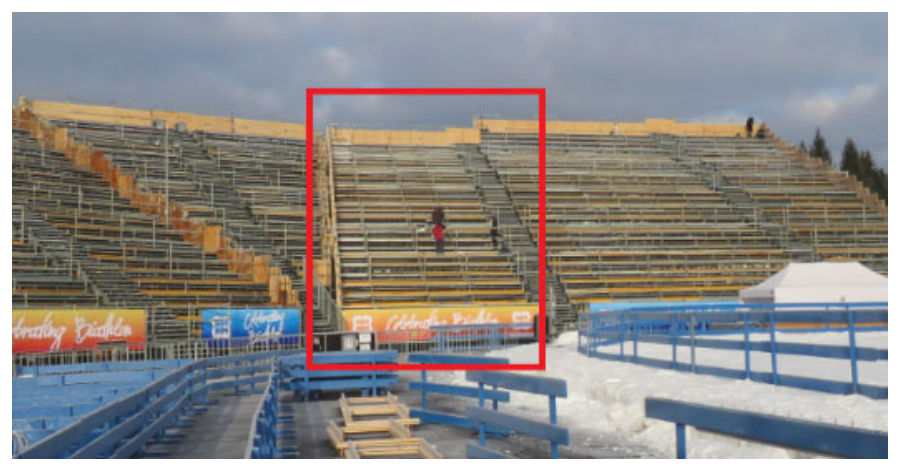
Figure 2.
The connection details of the wedge and the rosette.
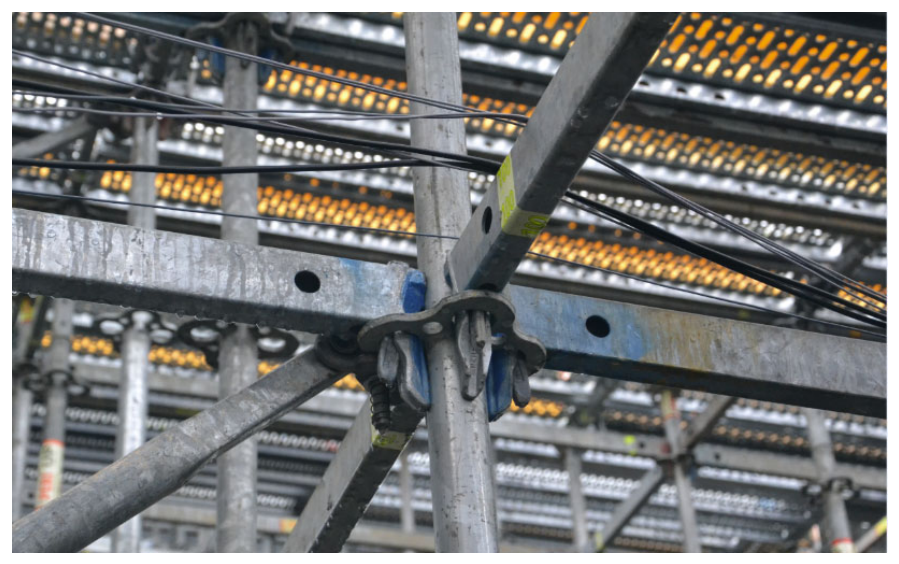
Figure 3.
The supports of the grandstand.
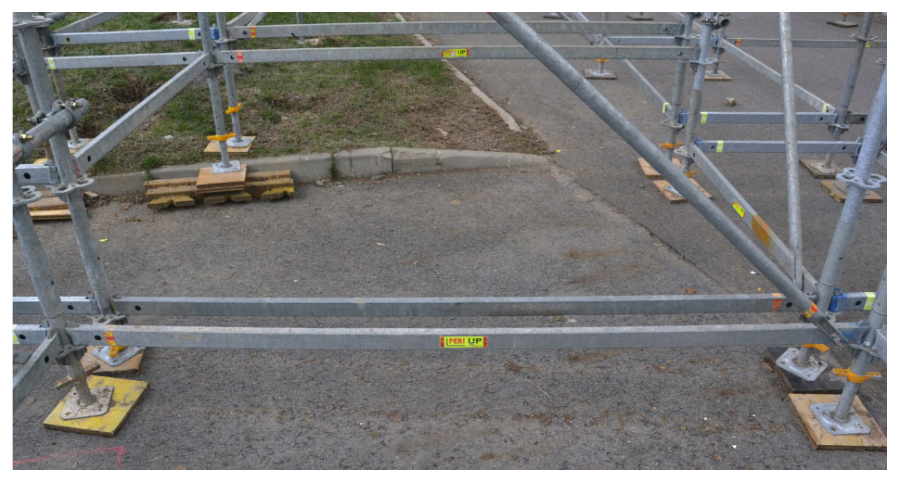
Figure 4.
Modal analysis of the grandstand.
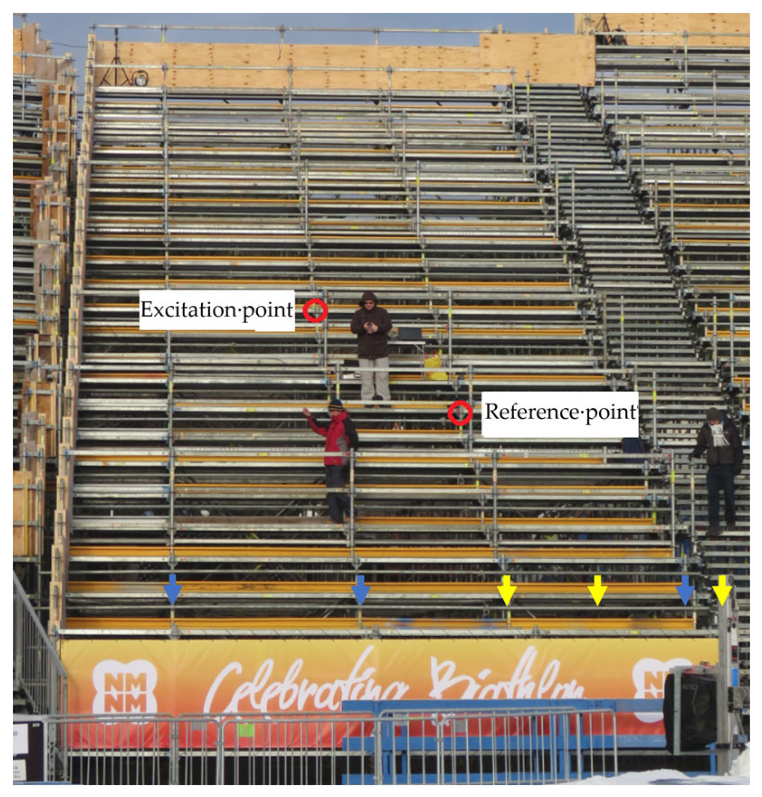
Figure 5.
The 1st position of the sensors in one row.
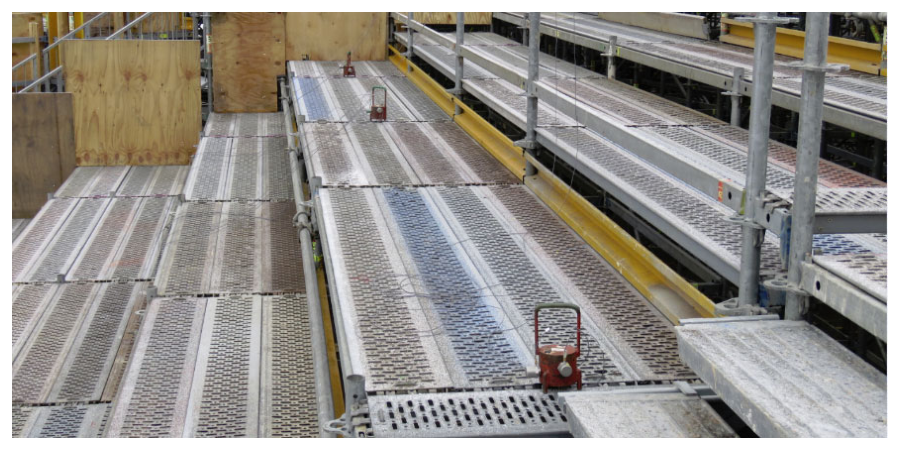
Figure 6.
The positions of the sensors during races.
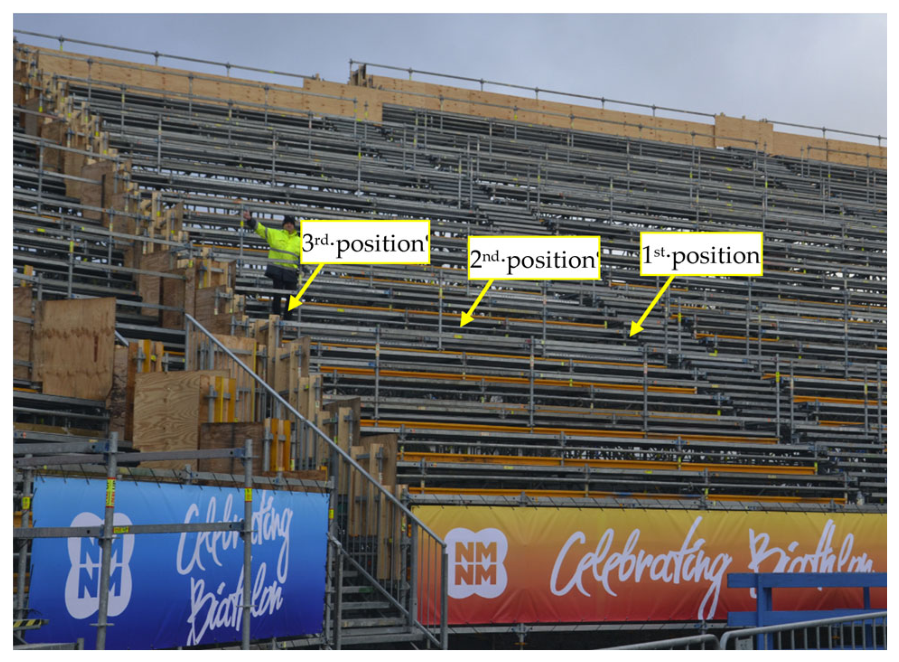
Figure 8.
The 1st measured mode shape, f1 = 3.00 Hz.
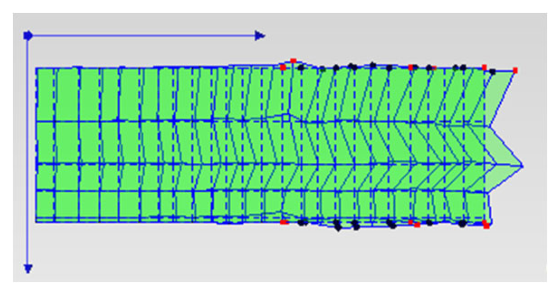
Figure 9.
The 2nd measured mode shape, f2 = 3.22 Hz.
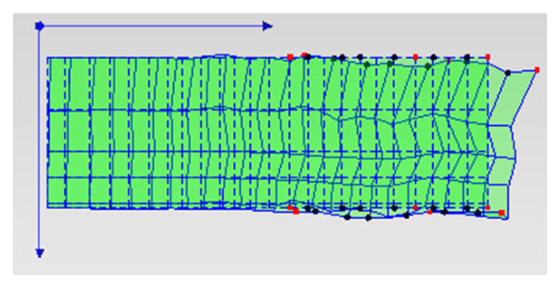
Figure 10.
The 3rd measured mode shape, f3 = 3.45 Hz.
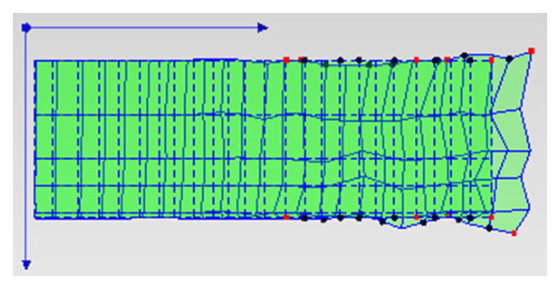
Figure 11.
The 4th measured mode shape, f4 = 4.09 Hz.
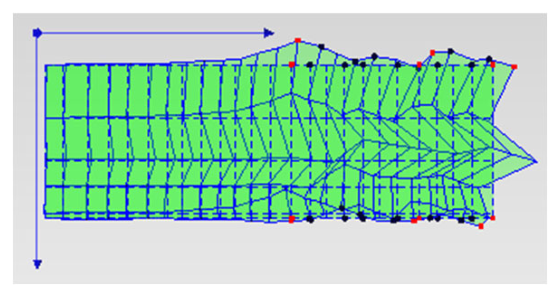
Figure 12.
The 5th measured mode shape, f5 = 4.50 Hz.
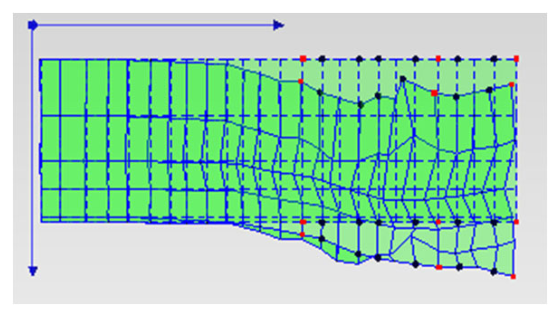
Figure 14.
The 1st calculated mode shape, f1 = 2.97 Hz.
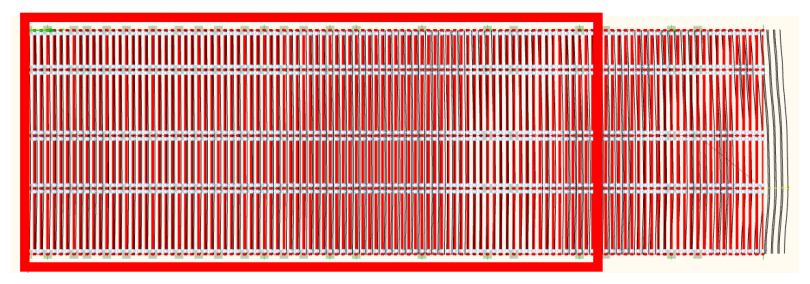
Figure 15.
The 2nd calculated mode shape, f2 = 3.64 Hz.
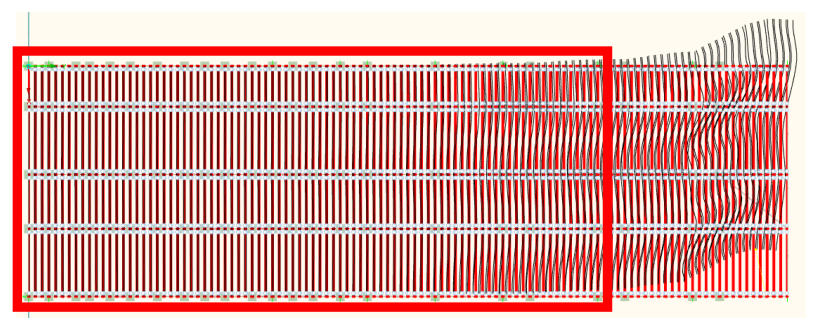
Figure 16.
The 3rd calculated mode shape, f3 = 3.91 Hz.
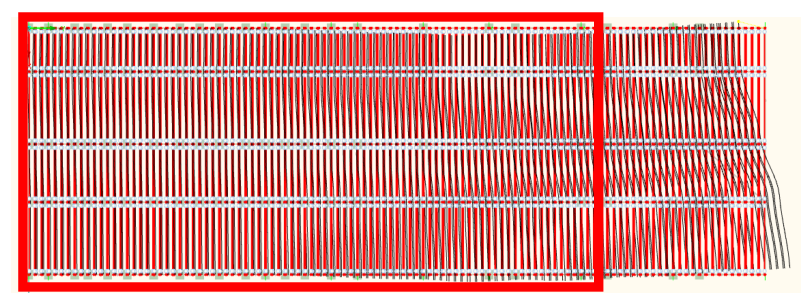
Figure 17.
The 4th calculated mode shape, f4 = 4.11 Hz.
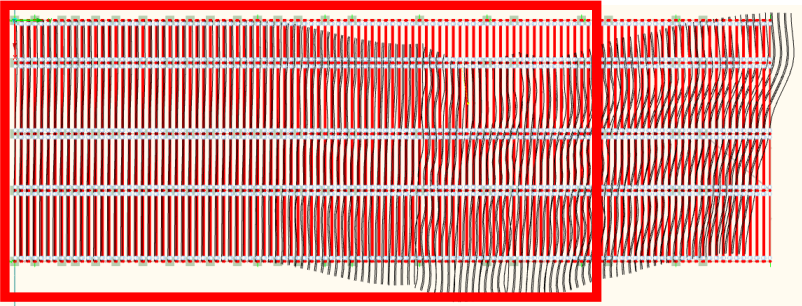
Figure 18.
The 5th calculated mode shape, f5 = 4.75 Hz.
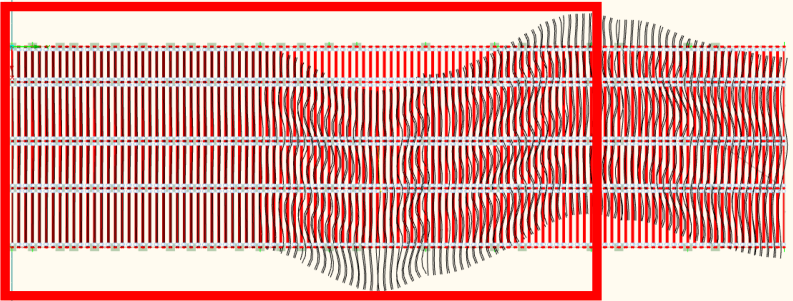
Figure 19.
Comparison of the 1st calculated and 1st measured mode shapes.
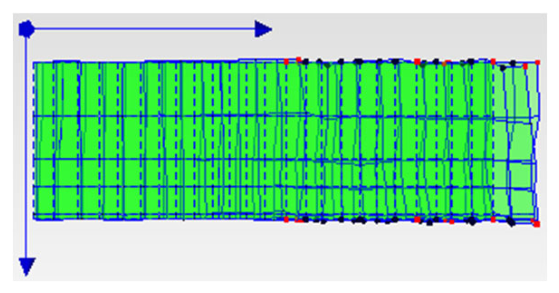
Figure 20.
Comparison of the 3rd calculated mode shape and the 4th measured one.
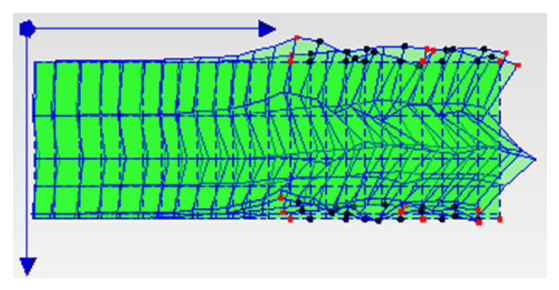
Figure 21.
Comparison of the 4th calculated mode shape and the 5th measured one.
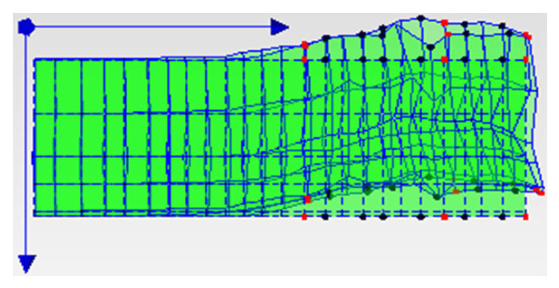
Figure 22.
Comparison of the 5th calculated mode shape and the 6th measured one.
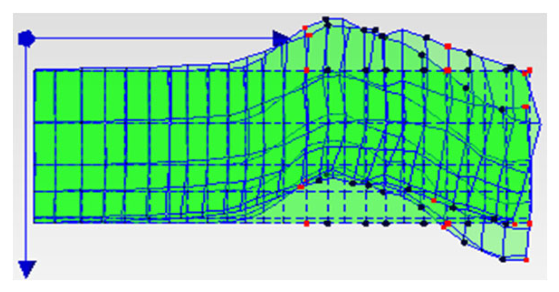
Figure 23.
The camera view of the grandstand full of spectators.
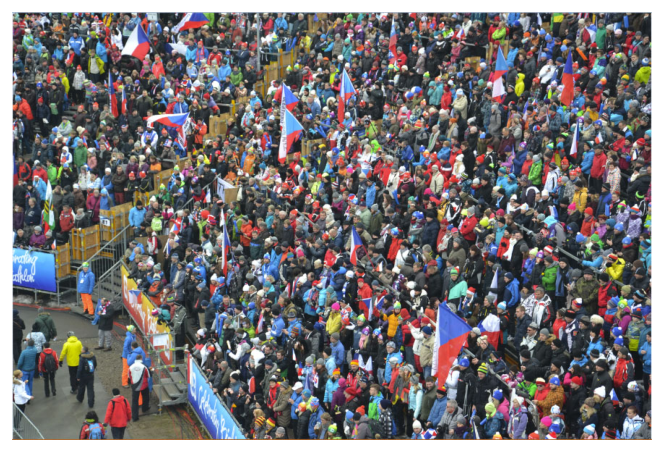
Figure 24.
Histogram of spectators’ activity—hand clapping during MSR-men.
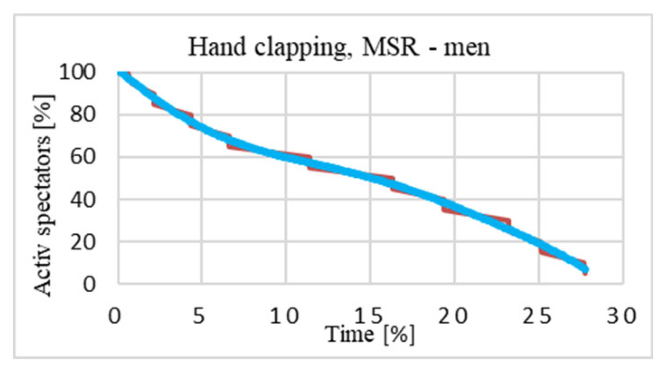
Figure 25.
Histogram of spectators’ activity—bouncing during MSR-men.
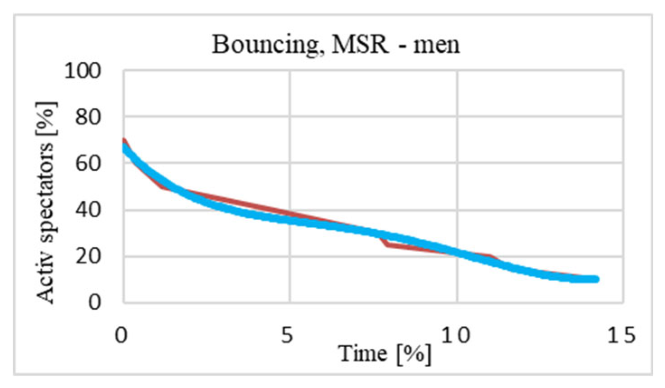
Figure 26.
Histogram of spectators’ activity—hand clapping during MSR-women.
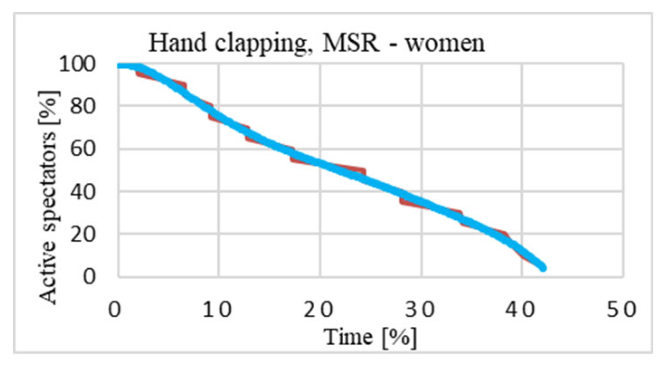
Figure 27.
Histogram of spectators’ activity—bouncing during MSR-women.
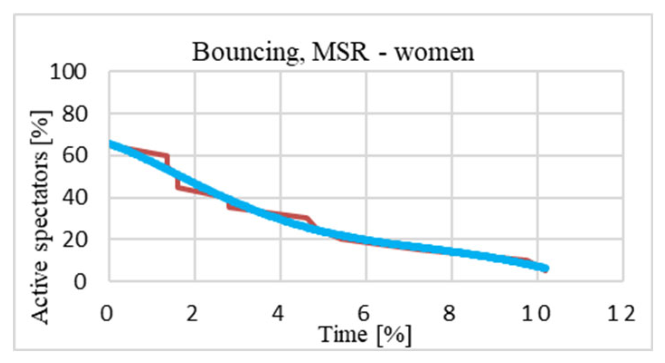
Figure 28.
The response of the grandstand caused by the bouncing of spectators—time domain.
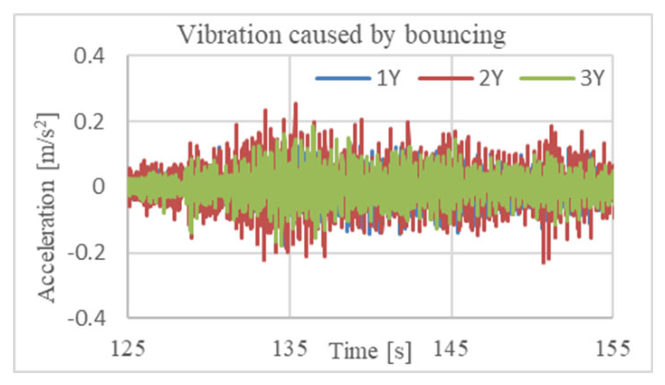
Figure 29.
The response of the grandstand caused by bouncing of spectators—frequency domain.
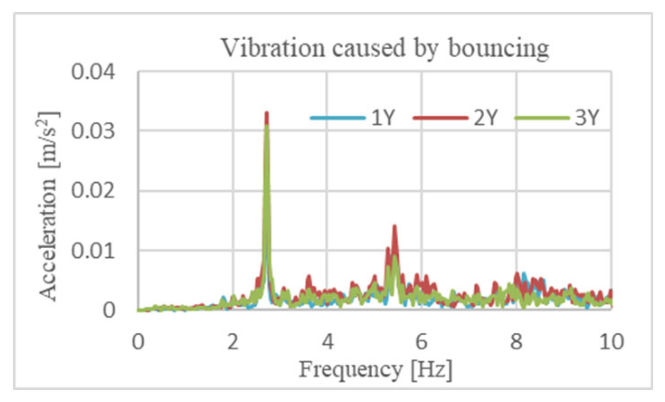
Figure 30.
The response of the grandstand caused by hand clapping of spectators—time domain.
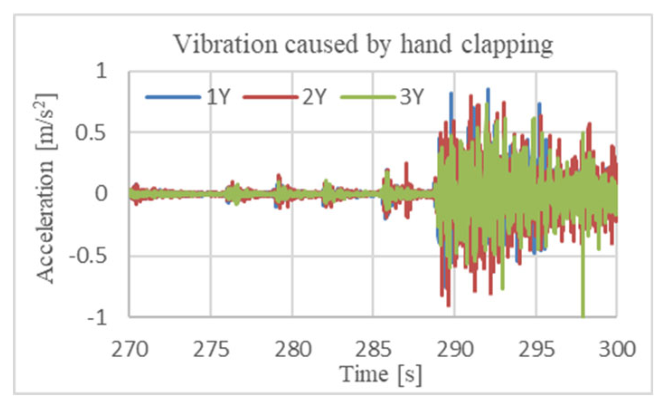
Figure 31.
The response of the grandstand caused by hand clapping of spectators—frequency domain.
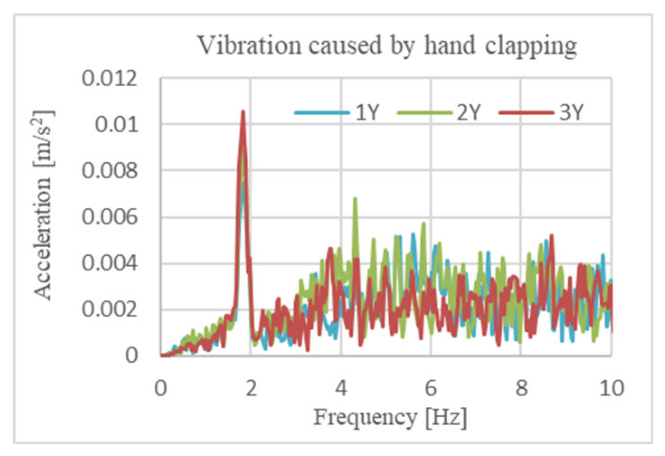

Table 1.
Natural frequencies of the grandstand determined experimentally.
| i | 1 | 2 | 3 | 4 | 5 | 6 | 7 | 8 | 9 |
| f(i) [Hz] | 3.00 | 3.22 | 3.45 | 4.09 | 4.50 | 5.25 | 5.63 | 6.61 | 6.94 |
Table 2.
The duration of the individual spectators‘ activities and their percentage of the whole race time.
Table 2.
The duration of the individual spectators‘ activities and their percentage of the whole race time.
| MSR—Men | MSR—Women | |||
|---|---|---|---|---|
| Behavior | Time [min:s] |
[%] | Time [min:s] |
[%] |
| Static | 21:40 | 58.1 | 17:36 | 47.8 |
| Bouncing | 05:17 | 14.2 | 03:45 | 10.2 |
| Clapping | 10:20 | 27.7 | 15:29 | 42.0 |
| Walking | 00:00 | 0.0 | 00:00 | 0.0 |
Table 3.
The response of the grandstand caused by bouncing of spectators—minimal, maximal, and RMS values of acceleration.
Table 3.
The response of the grandstand caused by bouncing of spectators—minimal, maximal, and RMS values of acceleration.
| Acceleration [mms−2] | |||||||||
|---|---|---|---|---|---|---|---|---|---|
| 1X | 1Y | 1Z | 2X | 2Y | 2Z | 3X | 3Y | 3Z | |
| min | −77 | −178 | −15 | −69 | −229 | −64 | −72 | −177 | −31 |
| max | 93 | 168 | 20 | 75 | 255 | 41 | 101 | 189 | 23 |
| RMS | 21 | 53 | 5 | 19 | 69 | 9 | 22 | 52 | 7 |
Table 4.
The response of the grandstand caused by hand clapping of spectators—minimal, maximal, and RMS values of acceleration.
Table 4.
The response of the grandstand caused by hand clapping of spectators—minimal, maximal, and RMS values of acceleration.
| Acceleration [mms−2] | |||||||||
|---|---|---|---|---|---|---|---|---|---|
| 1X | 1Y | 1Z | 2X | 2Y | 2Z | 3X | 3Y | 3Z | |
| min | −223 | −752 | −61 | −236 | −899 | −119 | −212 | −1194 | −88 |
| max | 241 | 849 | 69 | 222 | 793 | 91 | 326 | 732 | 104 |
| RMS | 58 | 179 | 18 | 55 | 215 | 29 | 63 | 193 | 23 |
Disclaimer/Publisher’s Note: The statements, opinions and data contained in all publications are solely those of the individual author(s) and contributor(s) and not of MDPI and/or the editor(s). MDPI and/or the editor(s) disclaim responsibility for any injury to people or property resulting from any ideas, methods, instructions or products referred to in the content. |
© 2026 by the authors. Licensee MDPI, Basel, Switzerland. This article is an open access article distributed under the terms and conditions of the Creative Commons Attribution (CC BY) license (http://creativecommons.org/licenses/by/4.0/).
Copyright: This open access article is published under a Creative Commons CC BY 4.0 license, which permit the free download, distribution, and reuse, provided that the author and preprint are cited in any reuse.


