

Submitted:
22 June 2026
Posted:
23 June 2026
You are already at the latest version
Abstract
The cycling of greenhouse gases (GHGs) in soils is fundamentally regulated by molecular oxygen, and trees restructure the local O₂ landscape through root macropore networks, rhizosphere oxygen demand, and canopy-mediated moisture redistribution, generating spatially structured redox transitions that govern CO₂, N₂O, and CH₄ fluxes across distances of just a few meters from the stem. Despite this inherent spatial heterogeneity, most studies measuring soil GHG emissions in tree-based systems report fluxes from single locations without documenting distance from trees, effectively assuming spatial homogeneity where none exists. We introduce triproximity, a conceptual framework that considers tree–soil GHG interactions across three spatial dimensions: (i) horizontal distance from tree stems, (ii) vertical soil profile depth, and (iii) structural position relative to tree components, including the stem itself as a gas conduit. Following PRISMA guidelines, we systematically reviewed 107 field-based studies published between 2010 and 2025 spanning shelterbelts, agroforestry, orchards, silvopastoral systems, and riparian buffers across temperate, subtropical, and arid climates. Only 37.4% of studies explicitly reported measurement distance from trees, a proportion that has not improved despite a near four-fold increase in publication volume since 2020. Methane uptake showed the most consistent spatial response, with higher oxidation rates in the near-tree zone across diverse system types, most plausibly reflecting root-mediated improvements in soil aeration and methanotrophic activity. Nitrous oxide responses were context-dependent, governed by competing substrate availability and moisture controls that the triproximity dimensions help disentangle. Carbon dioxide fluxes showed no universal spatial pattern, yet were responsive to specific proximity dimensions once the dominant source term was identified. Stem-level gas transport was virtually unmeasured across the dataset, likely biasing ecosystem GHG budgets toward underestimation. We propose a minimum triproximity-based sampling protocol specifying horizontal distances, vertical depths, structural positions, and replicate requirements for five major tree-based system types, and call for journals to adopt spatial reporting as a minimum submission standard for GHG studies in tree-based agricultural systems.
Keywords:
triproximity
; soil greenhouse gas emissions
; agroforestry
; tree-based systems
; spatial heterogeneity
; methane
; nitrous oxide
; systematic review
1. Introduction
The cycling of greenhouse gases (GHGs) in soils is fundamentally regulated by molecular oxygen. Aerobic conditions favor CO2 production through root and microbial respiration and CH4 oxidation by methanotrophs, while restricted O2 availability promotes anaerobic pathways including denitrification and methanogenesis, which are the primary sources of N2O and CH4 from soils [1,2,3]. Trees alter the local oxygen regime through multiple, spatially structured mechanisms: deep root systems create macropore networks that enhance gas diffusion [4], root oxygen demand generates radial O2 gradients in the rhizosphere [5], and canopy interception modifies soil moisture and hence gas-filled porosity [6]. Consequently, both the O2 landscape and the entire GHG balance of a tree-based system are not uniform but structured around the tree itself. Distances of just a few meters from the stem can separate aerobic, CH4-consuming rhizosphere soils from wetter inter-row soils where episodic anaerobiosis drives N2O and CH4 pulses [1,7]. These spatially structured redox transitions make tree-based systems fundamentally different from row-crop or grassland systems and demand a spatially explicit measurement approach that has, to date, been largely absent from literature.
In tree systems, these microenvironmental gradients develop progressively as trees increase their trunk diameter, plant height, and overall, below- and aboveground structural complexity as they mature. Early establishment stages are characterized by root expansion and rhizosphere development, while later development stages involve sustained organic matter inputs from litter and fine root turnover, leading to long-term changes in soil physical and biochemical properties [4,6,8]. These processes reinforce tree-driven controls over soil moisture, temperature buffering, bulk density, and aeration, thereby influencing the spatial distribution of microbial activity and the GHG fluxes across both horizontal and vertical dimensions.
The integration of trees into agricultural landscapes, including orchards, agroforestry systems, shelterbelts, riparian buffers, and silvopastoral systems, provides multiple ecosystem services such as carbon sequestration, microclimatic regulation, biodiversity enhancement, and improved system resilience [9]. However, the spatial heterogeneity resulting from tree incorporation makes interpretation of soil GHG measurements more challenging, as fluxes may differ substantially across positions under the same tree canopy and from these compared to within root zones, inter-row areas, and adjacent open fields. Numerous studies have reported either decreases [10,11,12] or increases [13,14,15,16] in the fluxes of CO2, N2O, and CH4 near trees depending on species, management practices, soil water status, and environmental conditions.
Despite the recognized importance of spatial heterogeneity in tree-based systems, most studies measuring soil GHG emissions report fluxes from a single location or from positions whose distance from trees is poorly described or not reported at all. Such a practice implicitly assumes spatial homogeneity of emissions within heterogeneous systems, potentially introducing substantial uncertainty in comparisons across studies and in the upscaling of fluxes from plot to landscape scales. Our systematic screening of the literature revealed that explicit reporting of measurement distance from trees is uncommon, and that studies employing spatial gradients or transects relative to tree position remain the exception rather than the rule [6,17,18,19,20].
Our overall objective was to address this methodological gap by introducing the concept of triproximity, a conceptual framework that considers tree–soil interactions across three spatial dimensions: (i) horizontal distance from tree stems, (ii) vertical soil profile depth, and (iii) structural position relative to tree components (soil surface, rhizosphere, and stem). This framework recognizes that GHG fluxes in tree-based systems are shaped by multi-dimensional proximity effects rather than by a single point measurement (Figure 1).
We systematically reviewed soil GHG studies in tree-based systems reporting spatial proximity to trees and distance-dependent patterns, examining diverse land-use systems such as commercial orchards, agroforestry, shelterbelts, and riparian environments to identify consistent spatial trends and major knowledge gaps. We discuss the implications of insufficient spatial reporting for modeling and upscaling emissions and highlight how spatially explicit measurements informed by the triproximity framework could improve the design of climate-smart tree-based agricultural systems.
2. Materials and Methods
We conducted a systematic literature review focused on soil N2O, CH4, and CO2 emission studies, following the Preferred Reporting Items for Systematic Reviews and Meta-Analyses (PRISMA) guidelines [21] to ensure scientific transparency. The literature search used Scopus to retrieve articles from the last fifteen years. RStudio (version 4.4.3) and the rscopus v0.9 package [22] were used to support the search process.
The search was carried out in December 2025 using the following Scopus query string:
TITLE-ABS-KEY("agroforestry" OR "alley cropping" OR "tree row" OR "hedgerow" OR "riparian buffer" OR "shelterbelt" OR "tree-based system" OR "silvoarable" OR "silvopastoral" OR "fruit trees" OR "woody crops" OR "orchards") AND TITLE-ABS-KEY("nitrous oxide" OR "methane" OR "greenhouse gas" OR "GHG flux" OR "soil gas flux") AND TITLE-ABS-KEY("soil" OR "nutrient cycling" OR "nitrogen cycling" OR "carbon cycling" OR "denitrification" OR "nitrification") AND TITLE-ABS-KEY("proximity" OR "influence" OR "tree-soil interaction" OR "effect" OR "spatial variability") AND PUBYEAR > [start_year]
Inclusion criteria were defined a priori as follows: (i) peer-reviewed original research articles published in English between 2010 and 2025; (ii) field-based measurements of at least one of CO2, N2O, or CH4 fluxes using static closed chambers or equivalent in situ flux methods; (iii) study system containing one or more woody perennial species integrated into an agricultural or managed landscape context; and (iv) sufficient methodological detail to assess chamber placement relative to trees. Studies were excluded if they: (i) were laboratory incubation experiments, greenhouse pot studies, or purely modeling exercises without field flux data; (ii) did not report original flux measurements (reviews, meta-analyses, book chapters); (iii) lacked a digital object identifier (DOI) or accessible full text; or (iv) were conference proceedings. No geographic or climatic restrictions were applied. The screening and data extraction were performed independently by three reviewers (G.S.C., G.D.G. and E. D. A.), with discrepancies resolved by consensus. For each included study, the following data were extracted: publication year, geographic location, system type, GHGs measured, chamber placement description, whether distance from trees was reported quantitatively, whether distance was used as an analytical variable, and whether stem-level or subsoil (>50 cm) measurements were included. The search yielded 1680 records, of which 1305 were exact duplicates. During eligibility assessment, records were excluded based on document type and relevance criteria: 3 conference reviews, 40 review articles, 3 books, and 33 book chapters were removed, leaving 299 records for further evaluation. Subsequently, 6 records lacking DOI information, 5 conference papers, and 3 conference reviews were excluded, as were records that implicitly indicated review content in the title, studies not relevant to the topic, and laboratory incubation experiments. This process resulted in 125 potentially eligible studies. A final duplicate check identified 18 additional duplicates, yielding a final dataset of 107 studies included in the analysis (Figure 2).
3. Results
The systematic review yielded 107 studies published between 2010 and 2025 that measured soil GHG emissions in tree-based agricultural systems. The dataset spans five major system types: shelterbelts, agroforestry, orchards, silvopastoral systems, and riparian buffers. These systems were distributed across temperate, subtropical, and arid climates. Studies from East Asia (primarily China) were the most numerous, followed by Europe and North America, although tropical and subtropical regions were underrepresented relative to their global extent of tree-based land use. Table 1 summarizes the temporal, geographic, and thematic distribution of the included studies.
Spatial reporting practices were markedly deficient across the literature. Of the 107 studies, only 40 (37.4%) explicitly reported the distance between measurement chambers and the nearest tree; 64 studies (59.8%) provided no quantitative spatial information, effectively treating tree-based systems as spatially homogeneous units. A further 3 studies (2.8%) offered qualitative positional descriptions only (e.g., 'under canopy' or 'tree row'). Reporting varied markedly by system type: shelterbelt studies consistently incorporated spatial gradients—with several employing transects extending beyond 100 m from tree rows—while orchard fertilization trials rarely documented chamber position despite inherently spatial management practices. Geographic differences were also pronounced: studies from North America reported spatial context more frequently than those from East Asia, suggesting that methodological conventions, rather than ecological constraints, drive current reporting practices.
Analytical engagement with spatial information was limited even among studies that did report distances. Only 32 studies (29.9%) included distance as an explanatory variable in their analyses, and just 11 (10.3%) employed explicit spatial gradients with three or more sampling positions. Twenty-one studies (19.6%) used pairwise comparisons between two fixed positions (e.g., tree row vs. alley center). Vertical sampling below 50 cm was rare, recorded in only 7 studies (6.5%), and stem-level flux measurements were virtually absent across the entire dataset, with a single study (0.9%) reporting N2O fluxes from tree trunks. A temporal analysis revealed that although the absolute number of publications increased sharply after 2020 (77.6% of all included studies published between 2021 and 2025), the fraction explicitly reporting measurement distance from trees did not increase proportionally, indicating methodological stagnation. The full breakdown of spatial reporting characteristics is presented in Table 2. The 11 studies that met criteria for spatially explicit reporting consistent with the triproximity framework are identified in Table 3.
Proximity-dependent patterns of GHG fluxes differed markedly among gases. Methane uptake showed the most consistent spatial response, with higher oxidation rates near trees documented across diverse climates and system types, most likely reflecting root-mediated improvements in soil aeration and enhanced methanotrophic activity in the rhizosphere. Nitrous oxide emissions exhibited context-dependent responses: elevated near trees in nitrogen-rich or high-moisture systems, but reduced or unchanged in systems dominated by plant nitrogen uptake or improved drainage. Carbon dioxide fluxes showed no consistent directional pattern. The spatial patterns identified for each gas are summarized in Table 4.
4. Discussion
4.1. Implications of Spatial Heterogeneity Omission
The widespread omission of spatial information in studies of GHG emissions from tree-based systems represents a critical methodological limitation. Tree–soil interactions are inherently spatial processes governed by gradients in root density, organic matter inputs, canopy shading, and soil moisture redistribution [5,6]. Ignoring these gradients assumes homogeneity where none exists and obscures the mechanisms controlling GHG production and consumption. Spatial heterogeneity in soil properties is a defining feature of agroforestry and orchard systems, where tree influence zones create patchy distributions of carbon and nitrogen availability [23].
Our findings indicate that experimental design choices, rather than logistical constraints, drive the lack of spatial reporting. Many studies prioritize treatment comparisons over spatial characterization, placing chambers at representative points without documenting their position relative to trees. This practice may yield valid within-experiment comparisons but undermines cross-study synthesis and predictive model development. Previous syntheses have emphasized that spatially explicit measurements are essential for scaling soil GHG fluxes from plot to landscape levels [2,20].
A further dimension of the omission problem is geographic. The dominance of Chinese studies in this dataset (35.5%; Table 1), concentrated in fruit tree monocultures under intensive fertilization, means that the available evidence on proximity-dependent GHG patterns is heavily weighted toward high-input, nitrogen-saturated systems. North American and European studies, which report spatial context more frequently, are disproportionately represented among the Golden Eleven (Table 3). This geographic imbalance in methodological rigor means that generalizations about proximity effects, particularly for N2O, may reflect the nitrogen-rich conditions of intensively managed East Asian orchards rather than the full range of tree-based agricultural contexts globally. Future triproximity-based studies should prioritize spatially explicit designs in underrepresented regions, particularly tropical agroforestry systems in sub-Saharan Africa and South/Southeast Asia, where tree-based land use is extensive and proximity effects on GHG emissions remain virtually uncharacterized.
4.2. Methane Uptake Patterns
The consistent enhancement of methane uptake near trees suggests that tree-mediated improvements in soil aeration and microbial community structure create favorable conditions for methanotrophic activity. In aerobic soils not permanently flooded, negative CH4 fluxes are expected, indicating net consumption [24], unless a fermentation source is present such as fresh cattle feces [25], sewage sludge [26], or organic waste.
Tree roots can increase soil porosity and oxygen diffusion, thereby promoting methane oxidation [1]. Similar patterns have been reported in agroforestry systems where tree rows function as hotspots of methane consumption due to enhanced microbial activity and altered soil physical structure [27]. These patterns have been confirmed in subtropical agroforestry systems with good soil aeration conditions [28].
Studies in temperate agroforestry and shelterbelt systems have consistently documented higher CH4 uptake near trees [29,30,31]. However, some studies in olive and litchi orchard systems have reported less consistent patterns [32,33], suggesting that species-specific root characteristics and management practices can modify the magnitude of methane uptake.
Framed within the triproximity dimensions, the CH4 uptake patterns reported across the Golden Eleven (Table 3) reveal a consistent horizontal proximity signal: uptake rates in the near-tree zone (0–3 m) were systematically higher than in mid-alley or open-field positions in all shelterbelt and agroforestry studies that reported explicit distances [34,35,36]. The vertical dimension adds a further layer of nuance: Lang et al. [37] demonstrated that CH4 diffusion rates declined with depth due to moisture-limited gas transport below 30 cm, meaning that surface-only measurements overestimate net oxidation at sites where subsoil anaerobiosis partly offsets surface uptake. The structural dimension represents the least quantified pathway for CH4 in agricultural systems, and its absence from all but one study in this dataset likely biases ecosystem CH4 budgets toward net-sink estimates [10,11].
4.3. Nitrous Oxide Response Complexity
In contrast, nitrous oxide responses are governed by competing controls of carbon supply, nitrogen availability, and soil moisture, resulting in divergent patterns across systems. In nitrogen-rich systems, increased litter inputs and rhizodeposition can stimulate denitrification and elevate N2O emissions near trees, whereas in nitrogen-limited systems, tree uptake may reduce nitrate availability and suppress emissions [2,38]. The addition of fertilizers, animal excreta, and plant residues increases the concentration of mineral nitrogen (NO3− and NH4+) in the soil thereby driving N2O emissions [39,40]. A study in a pecan orchard in the southern New Mexico, USA, found that soil nitrate and moisture influenced N2O emission due to fertigation application, with denitrification as the dominant mechanism [41].
Studies in coffee shade systems, cacao stands, and cork oak forests have reported higher N2O emissions near trees [34,42,43], while shelterbelt studies have documented lower emissions near trees [30,31]. Orchard systems show variable responses depending on management intensity and nitrogen fertilization practices [35,44,45].
The triproximity lens clarifies why N2O patterns are so context-dependent: the three proximity dimensions operate in opposing directions depending on system management. Along the horizontal dimension, the near-tree zone concentrates organic nitrogen inputs through litterfall and rhizodeposition, but simultaneously supports higher plant nitrogen uptake, meaning that the net effect on denitrification substrate availability depends on the nitrogen balance of the system. Along the vertical dimension, Bentzon-Tarp et al. [46] demonstrated that topographic position overrides horizontal distance in structuring N2O emissions within a hillslope coffee system, highlighting that vertical soil moisture gradients can be more important than horizontal proximity to the stem. At the structural level, Iddris et al. (2021) [43] documented N2O emissions from cacao stems that were comparable in magnitude to soil surface fluxes, illustrating that the omission of the structural proximity dimension leads to systematic underestimation of N2O budgets in woody crop systems.
4.4. Carbon Dioxide Dynamics
Carbon dioxide fluxes integrate the opposing contributions of root respiration, microbial decomposition, and soil moisture redistribution, which is why no universal directional pattern emerges across system types. This integrative nature does not imply, however, that CO2 is insensitive to spatial proximity; rather, the direction and magnitude of the proximity effect depend on which source term dominates in a given system. In shelterbelt and agroforestry systems with high tree biomass and organic matter accumulation, CO2 fluxes are consistently higher near trees than in the open field, driven by root respiration and accelerated decomposition of litter concentrated beneath the canopy [30,31]. By contrast, in silvopastoral systems with lower tree density and in orchards under subsurface drip irrigation, the spatial gradient is reversed: tree-mediated improvements in soil structure and water use efficiency reduce overall soil respiration in the near-tree zone relative to compacted inter-tree areas [47,48].
From a triproximity perspective, the horizontal gradient of CO2 is the most consistently documented dimension in the Golden Eleven (Table 3): Szajdak et al. [30] and Kwak et al. [36] reported monotonic decreases in CO2 flux with increasing distance from the shelterbelt tree row in both systems, with the strongest fluxes in the 0–0.2H zone. The vertical dimension is less studied for CO2 than for the other gases, but Gao et al. [48] demonstrated that subsurface drip irrigation compressed the spatial variability of CO2 by decoupling surface moisture from the proximity gradient, a management interaction with direct implications for flux upscaling in orchard systems. The structural dimension was not captured in any included study despite being a measurable and sometimes substantial component of tree carbon exchange [12]; this represents a gap as important for CO2 as it is for CH4 and N2O.
The fact that CO2 was the most frequently measured GHG in this dataset (88 studies, 82.2%; Table 1) yet generated the least spatially explicit evidence underscores a broader mismatch: CO2 is often measured as an indicator of overall soil biological activity rather than as a target gas for proximity analysis, and chamber placement is correspondingly less deliberate. Reframing CO2 measurement within the triproximity protocol would improve both the mechanistic interpretation of individual flux patterns and the comparability of carbon balance estimates across tree-based systems.
4.5. Management Practice Interactions
Irrigation practices emerged as a key modifier of spatial patterns, particularly in orchard systems where drip irrigation creates localized wet zones that decouple tree proximity from moisture availability. Localized water applications can override natural gradients created by tree roots and canopy interception, generating artificial hotspots of denitrification [1]. N2O emissions can further be boosted by a legacy effect of irrigation decreasing soil pH [49].
This interaction between irrigation design and tree proximity effects is particularly relevant for intensively managed perennial orchards. Future studies in such systems should explicitly document both the irrigation design and the position of gas chambers relative to drip emitters and tree stems, as either factor alone provides insufficient context for interpreting measured fluxes.
4.6. Stem Emissions and Complete Flux Accounting
The near absence of stem flux measurements in agricultural tree systems represents the most acute knowledge gap exposed by this review from a triproximity perspective: the structural proximity dimension is, for practical purposes, unmeasured. Trees can act as physical conduits connecting anaerobic soil layers where CH4 and N2O are produced to the atmosphere, bypassing the surface soil oxidation zones that otherwise attenuate these fluxes [15,16]. In forested wetland ecosystems, stem emissions of CH4 can account for up to 60–80% of total ecosystem emissions [32], and Gauci et al. [16] recently demonstrated that upland trees represent a globally significant pathway for CH4 uptake via bark-associated methanotrophs, a process entirely absent from soil-based accounting. For N2O, Iddris et al. [43] documented that stem emissions from cacao were of similar order of magnitude to soil surface fluxes in a humid tropical agroforestry system, while the single study in our dataset that measured stem N2O in an agricultural context confirmed detectable flux from tree trunks.
The relevance of stem fluxes to agricultural tree systems is not limited to wetland or tropical contexts. In silvopastoral and agroforestry systems where trees develop substantial root biomass in seasonally waterlogged soils, the conditions for anaerobic CH4 and N2O production and subsequent stem transport are met during wet seasons. The absence of stem measurements in 106 of the 107 included studies means that ecosystem GHG budgets for tree-based agricultural systems are, at best, incomplete and, at worst, systematically biased toward underestimation of total emissions or overestimation of net sink strength. Incorporating stem-level measurements at 1.3 m height using semi-rigid chambers [15] as part of the triproximity structural proximity dimension is therefore not an optional refinement but a necessary component of complete flux accounting, particularly in species with aerenchymatous root systems or in systems subject to seasonal waterlogging.
4.7. Toward a Triproximity-Based Sampling Protocol
The evidence synthesized across Section 4.1, Section 4.2, Section 4.3, Section 4.4, Section 4.5 and Section 4.6 consistently points to the same structural deficiency: most studies in tree-based systems measure GHG fluxes without documenting where those measurements were taken relative to trees. Addressing this gap requires a practical reference framework that field researchers can implement without prohibitive logistical costs. Drawing on the triproximity framework, we propose a minimum sampling protocol structured around the three proximity dimensions.
Horizontal proximity: At least three measurement positions along a transect from the tree stem into the open interspace are required to characterize the lateral gradient. For linear systems (orchards, shelterbelts, alley-cropping), transects where chambers are placed should run perpendicular to the tree row representing the following positions: tree row, 25 % of tree spacement (crown area projection) and 50 % of tree spacement; for isolated trees (silvopastoral, orchard), a radial design at increasing distances in at least two directions is recommended. Ideally, distances should be reported in absolute meters and normalized by a structural tree dimension (tree height) to enable cross-study comparison. We propose two ways of design: one represented in Fig. 3 and the other detailed in Table 5.
Vertical proximity: A minimum two-layer scheme (0–10 cm and 10–30 cm) should replace the near-universal reliance on surface-only measurements. Studies in systems with deep-rooted species or in soils with restricted drainage should add a third layer (30–60 cm) to capture subsoil denitrification dynamics. Auxiliary parameters such as bulk density and water-filled pore space (WFPS) should be reported at each sampled depth (Table 5).
Structural proximity: Three positional categories should be documented: (i) open soil surface in the reference zone (interrow or open field); (ii) soil surface within the root influence zone (within one canopy radius of the stem); and (iii) stem-level fluxes at 1.3 m height using semi-rigid chambers [15], particularly in species with aerenchymatous roots or in seasonally waterlogged conditions (Table 5).
Management co-documentation: In managed systems, the position of irrigation emitters, fertilizer bands, and grazing pressure relative to measurement chambers must be recorded alongside tree proximity. Without this information, spatially explicit measurements in managed orchards or fertilized agroforestry systems cannot be correctly analyzed and interpreted.
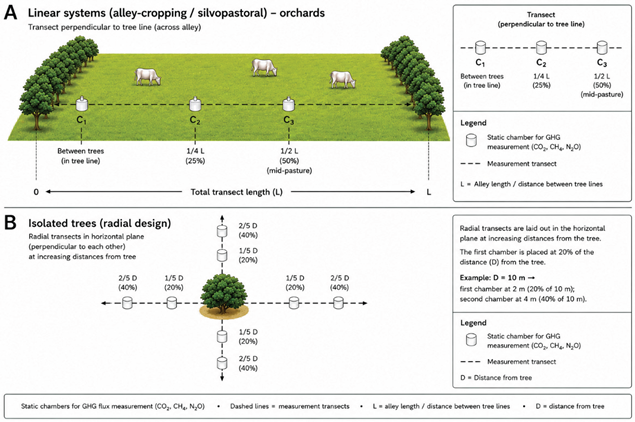

Table 5.
Minimum proposed triproximity-based sampling specifications for soil GHG flux measurements in five major tree-based agricultural system types. H = tree height. All distances in meters from the nearest tree stem. Stem measurements refer to semi-rigid chamber measurements at 1.3 m height. Replicate numbers refer to independent spatial replicates (trees or transects).
Table 5.
Minimum proposed triproximity-based sampling specifications for soil GHG flux measurements in five major tree-based agricultural system types. H = tree height. All distances in meters from the nearest tree stem. Stem measurements refer to semi-rigid chamber measurements at 1.3 m height. Replicate numbers refer to independent spatial replicates (trees or transects).
| System type | Horizontal distances (from stem) | Vertical depths (cm) | Structural positions | Sampling frequency | Min. replicates |
|---|---|---|---|---|---|
| Shelterbelts/windbreaks | 0H, 0.2H, 0.5H, 1.5H, 5H (H = tree height) | 0–10, 10–30, 30–60 | Soil surface; stem base (N2O, CH4) | Monthly; + after rain >20 mm | 3 transects |
| Alley-cropping agroforestry | 0.5, 1, 2, 4 m from tree row; alley center | 0–10, 10–30 | Soil surface; rhizosphere zone (0–1 m from stem) | Bi-monthly; growing season: monthly | 3 transects |
| Commercial orchards | 0–0.5 m (under canopy), 1 m, 2 m (inter-row), open field | 0–10, 10–30 | Soil surface; report relative to drip emitters | Monthly; align with irrigation events | 4 positions × 3 reps |
| Silvopastoral systems | 0–1 m (under canopy), 2–5 m, >10 m (open pasture) | 0–10, 10–30 | Soil surface; avoid compaction zones near water points | Bi-monthly; post-grazing events | 3 trees × 3 distances |
| Riparian buffers | 0–2 m (bank), 5 m, 10 m, >20 m (upland) | 0–10, 10–30, 30–60 | Soil surface; stem base for flooded species | Monthly; mandatory during flood events | 4 transects |
Beyond chamber placement, the protocol requires standardized metadata. At a minimum, publications should report: (i) exact chamber-to-stem distance in meters; (ii) tree age, height, and DBH at measurement time; (iii) soil depth interval sampled; (iv) WFPS or volumetric soil moisture and temperature at each position and date; (v) whether stem-level measurements were taken and, if not, a justification; and (vi) a diagram or map of chamber layout relative to tree positions. We encourage journals publishing soil GHG research in tree-based systems to adopt these as minimum submission requirements, analogous to the PRISMA reporting standard [21] and the established chamber measurement guidelines [50,51,52,53,54].
5. Conclusions
This review demonstrates that the measurement of soil GHG fluxes in tree-based systems has proceeded largely without spatial context. Our systematic screening of 107 studies reveals that nearly two-thirds fail to report measurement distance from trees, and fewer than one in ten employ the spatially explicit gradients needed to quantify proximity effects. Given the strong spatial heterogeneity inherent to tree-based systems, single-point measurements without positional information generate data that cannot be reliably compared across studies, upscaled to landscape levels, or incorporated into process-based models.
The triproximity framework introduced here provides a conceptual foundation for spatially explicit GHG measurements in tree-based systems by recognizing three spatial dimensions: horizontal distance from the stem, vertical soil profile depth, and structural position relative to tree components. Among the gases reviewed, CH4 uptake showed the most consistent enhancement near trees across diverse systems and climates, most plausibly driven by root-mediated improvements in soil aeration and methanotrophic activity. N2O responses were context-dependent, governed by competing substrate and moisture controls. CO2 fluxes showed no universal spatial pattern, consistent with their integrative nature as a product of multiple concurrent and often opposing processes.
Two knowledge gaps stand out as priorities for future research. First, stem emissions remain almost entirely unquantified in agricultural tree systems despite growing evidence from forest ecosystems that tree trunks are significant conduits for soil-produced gases, and their omission likely leads to systematic underestimation of ecosystem GHG budgets. Second, the temporal decline in spatial reporting identified here signals a methodological drift that should be addressed through standardized reporting guidelines and journal editorial policy.
As tree-based agricultural systems gain increasing policy and scientific attention for their climate change mitigation potential, the accuracy of their GHG accounting becomes consequential. The triproximity framework offers a practical and theoretically grounded tool for designing future studies that are spatially explicit, methodologically transparent, and capable of generating the data needed to reliably assess the climate performance of tree-based land use at scales relevant to global mitigation policy.
Author Contributions
Conceptualization, G.S.C..; Methodology, G.S.C.; Formal Analysis, G.S.C., G.D.G and E.D.A.; Investigation, G.S.C., G.D.G., E.-D.A. and F.F.G.D.L.; Writing—Original Draft Preparation, G.S.C., G.D.G., E.-D.A., F.F.G.D.L.; Writing—Review and Editing, G.S.C, F.F.G.D.L., M.B., O.S.U., E.B. and S.M.; Supervision, G.S.C. and M.B. All authors have read and agreed to the published version of the manuscript.
Funding
This research received no external funding.
Institutional Review Board Statement
Not applicable.
Informed Consent Statement
Not applicable.
Data Availability Statement
No new data were created or analyzed in this study. Data sharing is not applicable to this article.
Acknowledgments
The authors acknowledge the Global Research Alliance on Agricultural Greenhouse Gases (GRA) and, in particular, the Cliff Grads Programme for supporting the training and capacity development of co-authors Girmay Darcha Gebramlak, Emmanuella-Doekoos Awang, and Fernanda Figueiredo Granja Dorilêo Leite, whose participation in this work was facilitated through that initiative.
AI statement
During the preparation of this manuscript, the authors used generative AI tools for the purposes of language refinement, cross-checking references, table formatting and figures illustration. The authors have reviewed and edited the output and take full responsibility for the content of this publication.
Conflicts of Interest
The authors declare no conflicts of interest.
Abbreviations
The following abbreviations are used in this manuscript:
| GHG | Greenhouse gas |
| WFPS | Water-filled pore space |
| PRISMA | Preferred Reporting Items for Systematic Reviews and Meta-Analyses |
| DBH | Diameter at breast height |
| SOC | Soil organic carbon |
| SDI | Subsurface drip irrigation |
| GWP | Global warming potential |
| H | Tree height (used in shelterbelt distance normalization) |
References
- Butterbach-Bahl, K.; Baggs, E.M.; Dannenmann, M.; Kiese, R.; Zechmeister-Boltenstern, S. Nitrous oxide emissions from soils: how well do we understand the processes and their controls? Philos. Trans. R. Soc. B 2013, 368, 20130122. [Google Scholar] [CrossRef]
- Oertel, C.; Matschullat, J.; Zurba, K.; Zimmermann, F.; Erasmi, S. Greenhouse gas emissions from soils—A review. Chem. Erde 2016, 76, 327–352. [Google Scholar] [CrossRef]
- Babur, E.; Dindaroglu, T.; Solaiman, Z.; Battaglia, M.L. Microbial respiration, microbial biomass and activity are highly sensitive to forest tree species and seasonal patterns in the Eastern Mediterranean Karst Ecosystems. STOTEN 2021, 775, 145868. [Google Scholar] [CrossRef]
- Pierret, A.; Moran, C.J.; Doussan, C. Conventional detection methodology is limiting our ability to understand the roles and functions of fine roots. New Phytol. 2005, 174, 593–615. [Google Scholar] [CrossRef] [PubMed]
- Jose, S. Agroforestry for ecosystem services and environmental benefits: An overview. Agrofor. Syst. 2009, 76, 1–10. [Google Scholar] [CrossRef]
- Cardinael, R.; Chevallier, T.; Barthès, B.G.; Saby, N.P.A.; Parent, T.; Dupraz, C.; Bernoux, M.; Chenu, C. Tree rows in temperate agroforestry systems increase soil carbon stocks. Agric. Ecosyst. Environ. 2015, 214, 98–111. [Google Scholar]
- Battaglia, M.; Thomsen, M.; Oswald, B.P.; Williams, H.M.; Wu, X.B. Carbon cycling in a semiarid mixed-grass savanna: root activity and soil greenhouse gas fluxes. Catena 2022, 213, 106171. [Google Scholar] [CrossRef]
- Gregory, P.J.; Bengough, A.G.; Grinev, D.; Schmidt, S.; Thomas, W.T.B.; Wojciechowski, T.; Young, I.M. Root phenomics of crops: opportunities and challenges. Funct. Plant Biol. 2013, 40, 922–929. [Google Scholar] [CrossRef]
- Torralba, M.; Fagerholm, N.; Burgess, P.J.; Moreno, G.; Plieninger, T. Do European agroforestry systems enhance biodiversity and ecosystem services? A meta-analysis. Agric. Ecosyst. Environ. 2016, 230, 150–161. [Google Scholar] [CrossRef]
- Gauci, V.; Gowing, D.J.G.; Hornibrook, E.R.C.; Davis, J.M.; Dise, N.B. Woody stem methane emission in mature wetland alder trees. Atmos. Environ. 2010, 44, 2157–2160. [Google Scholar] [CrossRef]
- Jeffrey, L.C.; Reithmaier, G.; Sippo, J.Z.; Johnston, S.G.; Tait, D.R.; Harada, Y.; Maher, D.T. Bark-dwelling methanotrophic bacteria decrease methane emissions from trees. Nat. Commun. 2021, 12, 2127. [Google Scholar] [CrossRef] [PubMed]
- Machacova, K.; Papen, H.; Kreuzwieser, J.; Rennenberg, H. Trees as net sinks for methane (CH4) and nitrous oxide (N2O) in the lowland tropical rain forest on volcanic Réunion Island. New Phytol. 2021, 229, 1983–1994. [Google Scholar] [PubMed]
- Pangala, S.R.; Moore, S.; Hornibrook, E.R.C.; Gauci, V. Trees are major conduits for methane egress from tropical forested wetlands. New Phytol. 2013, 197, 524–531. [Google Scholar] [PubMed]
- Pangala, S.R.; Hornibrook, E.R.C.; Gowing, D.J.; Gauci, V. The contribution of trees to ecosystem methane emissions in a temperate forested wetland. Glob. Change Biol. 2015, 21, 2642–2654. [Google Scholar] [CrossRef]
- Terazawa, K.; Ishizuka, S.; Sakata, T.; Yamada, K.; Takahashi, M. Seasonal and weather-related controls on methane emissions from the stems of mature trees in a cool-temperate forested wetland. Biogeochemistry 2021, 156, 211–230. [Google Scholar] [CrossRef]
- Gauci, V.; Pangala, S.R.; Shenkin, A.; Barba, J.; Bastviken, D.; Koren, G.; Nisbet, E.G.; van der Laan-Luijkx, I.T. Global atmospheric methane uptake by upland tree woody surfaces. Nature 2024, 631, 796–800. [Google Scholar] [CrossRef] [PubMed]
- Gross, C. D.; Bork, E. W.; Carlyle, C. N.; Chang, S. X. Agroforestry perennials reduce nitrous oxide emissions and their live and dead trees increase ecosystem carbon storage. Glob. Change Biol. 2022, 28(20), 5956–5972. [Google Scholar] [CrossRef] [PubMed]
- Zentgraf, I.; Holz, M.; Monzón Díaz, O. R.; Lück, M.; Kramp, K.; Pusch, V.; Grahmann, K.; Hoffmann, M. How scale affects N2O emissions in heterogeneous fields of a diversified agricultural landscape. Sci. Rep. 2025, 15, 11201. [Google Scholar] [CrossRef] [PubMed]
- Kim, D. G.; Kirschbaum, M. U. F.; Beedy, T. L. Carbon sequestration and net emissions of CH4 and N2O under agroforestry: synthesizing available data and suggestions for future studies. Agric. Ecosyst. Environ. 2016, 226, 65–78. [Google Scholar] [CrossRef]
- Franzluebbers, A.J.; Chappell, J.C.; Shi, W.; et al. Greenhouse gas emissions in an agroforestry system of the southeastern USA. Nutr. Cycl. Agroecosyst 2017, 108, 85–100. [Google Scholar] [CrossRef]
- Page, M.J.; McKenzie, J.E.; Bossuyt, P.M.; Boutron, I.; Hoffmann, T.C.; Mulrow, C.D.; Shamseer, L.; Tetzlaff, J.M.; Akl, E.A.; Brennan, S.E.; et al. The PRISMA 2020 statement: an updated guideline for reporting systematic reviews. BMJ 2021, 372, n71. [Google Scholar] [CrossRef] [PubMed]
- Muschelli, J. rscopus: Interface to the Scopus API. R Package Version 0.9, 2025. Available online: https://CRAN.R-project.org/package=rscopus (accessed on 1 December 2025).
- Bardgett, R. D.; van der Putten, W. H. Belowground biodiversity and ecosystem functioning. Nature 2014, 515, 505–511. [Google Scholar] [CrossRef] [PubMed]
- Zhao, J.; Peng, S.; Chen, M.; Wang, G.; Cui, Y.; Liao, L.; Feng, J.; Zhu, B.; Liu, W.; Yang, L.; Tan, Z. Tropical forest soils serve as substantial and persistent methane sinks. In Scientific Reports;s. l.; 2019; Volume v. 9, n. 1, p. 16799. [Google Scholar]
- BRETAS, I. L.; PACIULLO, D. S. C.; ALVES, B. J. R.; MARTINS, M. R.; CARDOSO, A. S.; LIMA, M. A.; RODRIGUES, R. A. R.; SILVA, F. F.; CHIZZOTTI, F. H. M. Nitrous oxide, methane, and ammonia emissions from cattle excreta on Brachiaria decumbens growing in monoculture or silvopasture with Acacia mangium and Eucalyptus grandis. Agriculture, Ecosystems & Environment, [s. l.] 2020, v. 295, 106896. [Google Scholar]
- PARAMASIVAM, S.; FORTENBERRY, G. Z.; JULIUS, A.; SAJWAN, K. S.; ALVA, A. K. Evaluation of emission of greenhouse gases from soils amended with sewage sludge. J. Environ. Sci. Health Part A [s. l.] 2008, v. 43(n. 2), 178–185. [Google Scholar] [CrossRef]
- Livesley, S. J.; Grover, S.; Hutley, L. B.; Jamali, H.; Fest, B.; Beringer, J.; Butterbach-Bahl, K.; Arndt, S. K. Seasonal variation and fire effects on CH4, N2O and CO2 exchange in savanna soils of northern Australia. Agric. For. Meteorol. 2011, 151(11), 1440–1452. [Google Scholar] [CrossRef]
- DIECKOW, J.; PERGHER, M.; De MORAES, A.; PIVA, J. T.; BAYER, C.; SAKADEVAN, K. Soil nitrous oxide and methane fluxes in integrated crop-livestock systems in subtropics. Soils Newsletter, [s. l.] 2015, v. 37(n. 2). [Google Scholar]
- Shao, Y.; Ma, X.; Mao, R.; Lu, X.; Guo, J.; Li, J. Spatial patterns of soil methane uptake along distance gradients from shelterbelt trees in a temperate agroforestry system. Agric. For. Meteorol. 2025, 360, 110285. [Google Scholar] [CrossRef]
- Szajdak, L.W.; Jezierski, T.; Wegner, K.; Szatylowicz, J.; Meysner, T. Impact of shelterbelts on soil greenhouse gas (CO2, N2O, CH4) emissions. Environ. Sci. Pollut. Res. 2019, 26, 1411–1425. [Google Scholar] [CrossRef] [PubMed]
- Amadi, C. C.; Van Rees, K. C. J.; Farrell, R. E. Dynamics of soil-derived greenhouse gas emissions from shelterbelts under elevated soil moisture conditions in a semi-arid prairie environment. Agrofor. Syst. 2017, 92, 1235–1249. [Google Scholar] [CrossRef]
- de Sosa, L.L.; Glanville, H.C.; Marshall, M.R.; Williams, A.P.; Jones, D.L. Olive orchard soil carbon and greenhouse gas fluxes in a Mediterranean climate. Geoderma 2023, 430, 116331. [Google Scholar] [CrossRef]
- Chen, H.; Li, X.; Hu, F.; Shi, W. Soil greenhouse gas emissions following organic amendment in a litchi orchard. Appl. Soil Ecol. 2019, 143, 37–45. [Google Scholar] [CrossRef]
- Shvaleva, A.; Siljanen, H.M.P.; Correia, A.; Costa e Silva, F.; Lamprecht, R.E.; Lobo-do-Vale, R.; Bicho, C.; Fangueiro, D.; Anderson, M.; Pereira, J.S.; et al. Environmental and microbial factors influencing methane and nitrous oxide fluxes in Mediterranean cork oak woodlands. Front. Microbiol. 2015, 6, 1104. [Google Scholar] [CrossRef] [PubMed]
- Fentabil, M.M.; Nichol, C.F.; Neilsen, G.H.; Neilsen, D.; Hannam, K.D.; Forge, T.A.; Daniell, W.; Jones, M.D. Drip irrigation reduces N2O emissions from a semi-arid orchard in the southern interior of British Columbia. Agric. Ecosyst. Environ. 2017, 236, 175–185. [Google Scholar] [CrossRef]
- Kwak, J. H.; Lim, S. S.; Baah-Acheamfour, M.; Choi, W. J.; Fatemi, F.; Carlyle, C. N.; Chang, S. X. Introducing trees to agricultural lands increases greenhouse gas emission during spring thaw in Canadian agroforestry systems. Sci. Total Environ. 2019, 652, 800–809. [Google Scholar] [CrossRef] [PubMed]
- Lang, R.; Goldberg, S. D.; Blagodatsky, S.; Piepho, H. P.; Hoyt, A. M.; Harrison, R. D.; Cadisch, G. Mechanism of methane uptake in profiles of tropical soils converted from forest to rubber plantations. Soil Biol. Biochem. 2020, 145, 107796. [Google Scholar] [CrossRef]
- Rasse, D. P.; Rumpel, C.; Dignac, M.-F. Is soil carbon mostly root carbon? Plant Soil 2005, 269, 341–356. [Google Scholar] [CrossRef]
- Bayer, C.; Gomes, J.; Zanatta, J.A.; Vieira, F.C.B.; Piccolo, M.C.; Dieckow, J.; Six, J. Soil nitrous oxide emissions as affected by long-term tillage, cropping systems and nitrogen fertilization in Southern Brazil. Soil Tillage Res. 2015, 146, 213–222. [Google Scholar] [CrossRef]
- Bretas, I.L.; Paciullo, D.S.C.; Alves, B.J.R.; Martins, M.R.; Cardoso, A.S.; Lima, M.A.; Rodrigues, R.A.R.; Silva, F.F.; Chizzotti, F.H.M. Nitrous oxide, methane, and ammonia emissions from cattle excreta on Brachiaria decumbens growing in monoculture or silvopasture with Acacia mangium and Eucalyptus grandis. Agric. Ecosyst. Environ. 2020, 295, 106896. [Google Scholar] [CrossRef]
- Kellum, D.S.; Shukla, M.K.; Mexal, J.; Deb, S. Greenhouse gas emissions from pecan orchards in semiarid southern New Mexico. HortScience 2018, 53, 704–709. [Google Scholar] [CrossRef]
- Berhanu, A.; Kuyper, T.W.; Yimer, F.; Tahir, A. Soil N2O emissions under shade trees in coffee agroforestry systems in Ethiopia. Agric. Ecosyst. Environ. 2023, 349, 108452. [Google Scholar] [CrossRef]
- Iddris, N.A.-N.; Borken, W.; Mutéz, E.J.; Berauer, B.J.; Schulze, E.-D.; Matzner, E. Nitrous oxide emissions from stem, litter and soil across land-use types in a cacao agroforestry system. Biogeochemistry 2021, 153, 231–247. [Google Scholar] [CrossRef]
- Milkereit, J.; Hallama, M.; Weihermüller, L.; von Tucher, S.; Priesack, E.; Schulz, S. Spatial variability of soil N2O emissions in almond orchards. Eur. J. Soil Sci. 2025, 76, e13608. [Google Scholar] [CrossRef]
- Minikane, M.; Rees, R.M.; Lilly, A.; Ball, B.C. N2O emissions from date palm orchards under arid conditions in Saudi Arabia. Soil Use Manag. 2022, 38, 1252–1263. [Google Scholar] [CrossRef]
- Bentzon-Tarp, A.; Helgadóttir, D.; Van den Meersche, K.; Gay, F.; Priemé, A.; Roupsard, O.; Elberling, B. Spatial-temporal variations of nitrous oxide emissions in coffee agroforestry systems in Costa Rica. Agric. Ecosyst. Environ. 2023, 343, 108257. [Google Scholar]
- Silva, C.F.A.; Figueiredo, E.B.; Gonzalez, A.P.; Deb, S.; La Scala, N. Soil CO2 emissions in silvopastoral systems: effects of tree arrangement and distance. Agrofor. Syst. 2024, 98, 319–331. [Google Scholar] [CrossRef]
- Gao, X.; Gu, F.; Hao, W.; Wan, S.; Li, H.; Mei, X.; Gong, D. Carbon budget of a subsurface drip-irrigated apple orchard in a semi-arid region of northwest China. Sci. Total Environ. 2020, 715, 136918. [Google Scholar] [CrossRef] [PubMed]
- Russenes, A.L.; Korsaeth, A.; Bakken, L.R.; Dorsch, P. Spatial variation in soil pH controls off-season N2O emission in an agricultural soil. Soil Biol. Biochem. 2016, 99, 36–46. [Google Scholar]
- de Klein, C.; Harvey, M.; Clough, T.; Rochette, P.; Venterea, R.T.; Sitaula, B.K.; Saggar, S. Global Research Alliance nitrous oxide chamber methodology guidelines: Introduction, with health and safety considerations. J. Environ. Qual. 2020, 49, 1073–1080. [Google Scholar] [CrossRef] [PubMed]
- Clough, T.J.; Rochette, P.; Thomas, S.M.; Pihlatie, M.; Christiansen, J.R.; Thorman, R.E. Global Research Alliance N2O chamber methodology guidelines: Design considerations. J. Environ. Qual. 2020, 49, 1081–1091. [Google Scholar] [CrossRef] [PubMed]
- Charteris, A.F.; Chadwick, D.R.; Thorman, R.E.; Bhogal, A.; Williams, J.R.; Sherrock, D.M.; Yamulki, S. Global Research Alliance N2O chamber methodology guidelines: Recommendations for deployment and accounting for sources of variability. J. Environ. Qual. 2020, 49, 1092–1109. [Google Scholar] [CrossRef] [PubMed]
- de Klein, C.A.; Alfaro, M.A.; Giltrap, D.; Leytem, A.B.; Bekunda, M.A.; Dominati, E.J.; Saggar, S.; Grace, P.R. Global Research Alliance N2O chamber methodology guidelines: Statistical considerations, emission factor calculation, and data reporting. J. Environ. Qual. 2020, 49, 1156–1167. [Google Scholar] [CrossRef] [PubMed]
- Giltrap, D.; Yeluripati, J.; Smith, P.; Fitton, N.; Smith, J.; Williams, J.; Hillier, J.; Hastings, A.; Wattenbach, M.; Bellarby, J.; et al. Global Research Alliance N2O chamber methodology guidelines: Summary of modeling approaches. J. Environ. Qual. 2020, 49, 1168–1185. [Google Scholar] [CrossRef] [PubMed]
Figure 1.
The triproximity framework for greenhouse gas measurements in tree-based systems. (A) Conceptual representation of the three spatial dimensions of proximity to trees influencing soil greenhouse gas fluxes: (i) horizontal distance from the tree trunk (X-Axis; tree row–alleyway–open field), (ii) vertical soil depth (Y-Axis), and (iii) aboveground stem emissions relative to tree components. (B) Conceptual gradients illustrating how CO2, N2O, and CH4 fluxes may vary along horizontal and vertical proximity dimensions, highlighting the rhizosphere as a hotspot of biogeochemical activity.
Figure 1.
The triproximity framework for greenhouse gas measurements in tree-based systems. (A) Conceptual representation of the three spatial dimensions of proximity to trees influencing soil greenhouse gas fluxes: (i) horizontal distance from the tree trunk (X-Axis; tree row–alleyway–open field), (ii) vertical soil depth (Y-Axis), and (iii) aboveground stem emissions relative to tree components. (B) Conceptual gradients illustrating how CO2, N2O, and CH4 fluxes may vary along horizontal and vertical proximity dimensions, highlighting the rhizosphere as a hotspot of biogeochemical activity.
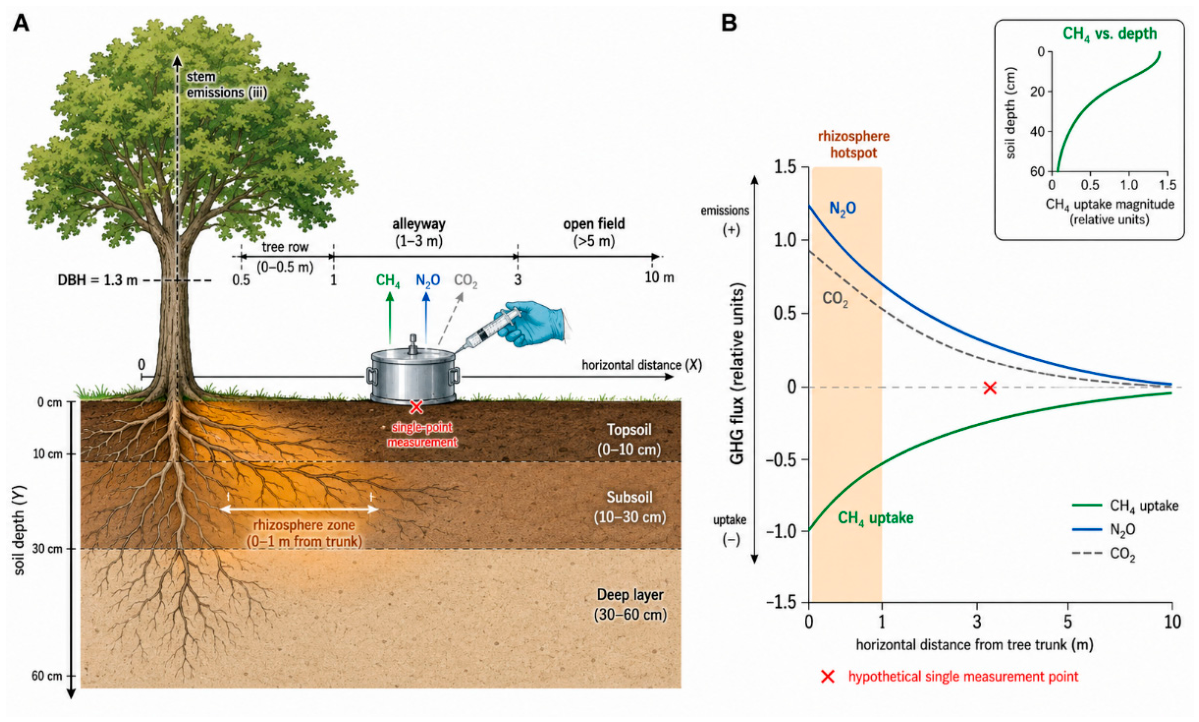
Figure 2.
Diagram of identified, excluded, and included studies following the PRISMA protocol. n = number of records.
Figure 2.
Diagram of identified, excluded, and included studies following the PRISMA protocol. n = number of records.
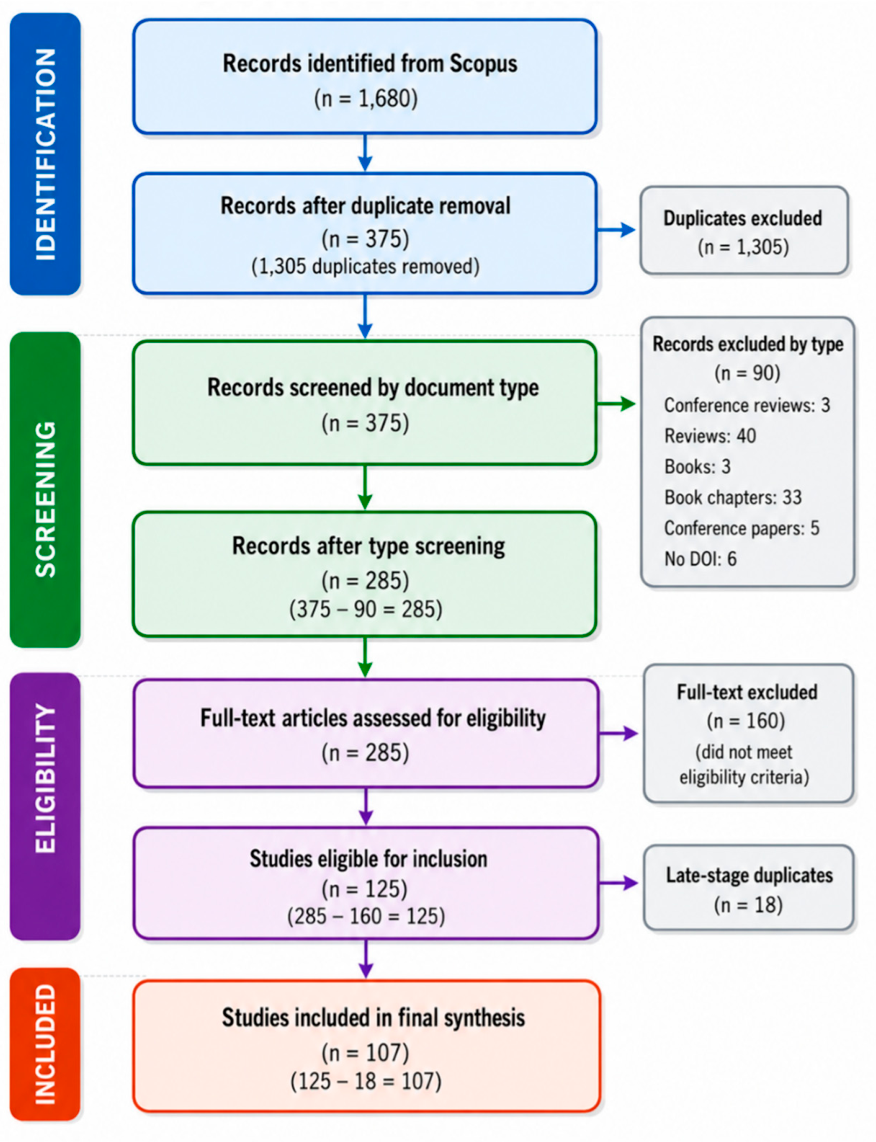
Table 1.
Characteristics of the 107 studies included in the systematic review. The first panel describes the temporal distribution by publication year. The second panel shows the geographic distribution by region. The third panel characterizes studies by agroecosystem type. The fourth panel shows the distribution by greenhouse gas measured (CO2, N2O, CH4, or combinations thereof).
Table 1.
Characteristics of the 107 studies included in the systematic review. The first panel describes the temporal distribution by publication year. The second panel shows the geographic distribution by region. The third panel characterizes studies by agroecosystem type. The fourth panel shows the distribution by greenhouse gas measured (CO2, N2O, CH4, or combinations thereof).
| Characteristic | Category | N | % |
|---|---|---|---|
| Year of publication | 2010–2015 | 11 | 10.3% |
| 2016–2020 | 13 | 12.1% | |
| 2021–2025 | 83 | 77.6% | |
| Geographic region | China (incl. Taiwan) | 38 | 35.5% |
| North America (USA/Canada) | 24 | 22.4% | |
| Europe (excl. Spain/Portugal) | 12 | 11.2% | |
| Brazil | 8 | 7.5% | |
| Spain/Portugal | 7 | 6.5% | |
| Australia | 6 | 5.6% | |
| Africa (Kenya, Cameroon) | 3 | 2.8% | |
| India | 3 | 2.8% | |
| Other | 6 | 5.6% | |
| System type | Fruit tree monoculture | 34 | 31.8% |
| Agroforestry | 26 | 24.3% | |
| INM/fertilization trials | 13 | 12.1% | |
| Silvopastoral | 9 | 8.4% | |
| Shelterbelt | 7 | 6.5% | |
| Riparian/buffer | 7 | 6.5% | |
| Other | 11 | 10.3% | |
| GHG measured | CO2 | 88 | 82.2% |
| N2O | 92 | 86.0% | |
| CH4 | 59 | 55.1% |
Table 2.
Summary of spatial reporting practices across the 107 studies included in the systematic review. The upper panel describes how studies reported (or failed to report) measurement distance from trees. The lower panel describes the degree to which distance was used as an analytical variable, the extent of vertical soil sampling, and the occurrence of stem-level GHG measurements. Percentages are calculated relative to the total number of included studies (n = 107).
Table 2.
Summary of spatial reporting practices across the 107 studies included in the systematic review. The upper panel describes how studies reported (or failed to report) measurement distance from trees. The lower panel describes the degree to which distance was used as an analytical variable, the extent of vertical soil sampling, and the occurrence of stem-level GHG measurements. Percentages are calculated relative to the total number of included studies (n = 107).
| Category | N | % | Notes |
|---|---|---|---|
| Reports distance from tree | 40 | 37.4% | Explicitly states measurement distance to tree |
| Does NOT report distance | 64 | 59.8% | No mention of distance; system treated as homogeneous |
| Partially reports | 3 | 2.8% | Qualitative only (e.g., "under canopy" without metrics) |
| Analyzes distance effect | 32 | 29.9% | Tests distance as explanatory variable |
| Explicit gradient (≥3 distances) | 11 | 10.3% | Transect or continuous spatial sampling |
| Pairwise comparison (2 positions) | 21 | 19.6% | E.g., tree row vs. alley, under canopy vs. open field |
| Stem emissions measured | 1 | 0.9% | N2O fluxes from tree trunks |
| Depth profile (>50 cm) | 7 | 6.5% | Subsoil measurements below standard 0–20 cm layer |
Table 3.
The "Golden Eleven": studies from the reviewed literature that explicitly reported GHG flux measurements across multiple spatial positions consistent with the triproximity framework, documenting at least horizontal distance from trees, soil depth, and system structural context. GHG: greenhouse gas measured. H = tree height. ↓ = decrease; ↑ = increase.
Table 3.
The "Golden Eleven": studies from the reviewed literature that explicitly reported GHG flux measurements across multiple spatial positions consistent with the triproximity framework, documenting at least horizontal distance from trees, soil depth, and system structural context. GHG: greenhouse gas measured. H = tree height. ↓ = decrease; ↑ = increase.
| Author | System | Country | GHG | Distances | Pattern | Mechanism |
|---|---|---|---|---|---|---|
| Benvenutti et al., 2025 | Riparian buffer | USA | N2O | 0–10 m | Higher N uptake near trees | Not specified |
| Silva et al., 2024 | Silvopastoral | Brazil | C, N | 0–10 m | Higher C, N near trees | Root biomass |
| Heimsch et al., 2023 | Boreal agroforestry | Finland | CO2, CH4, N2O | 0, 3, 6, 12 m | Effect only at 0–3 m | Microclimate, roots |
| Bentzon-Tarp et al., 2023 | Coffee hillslope | Costa Rica | N2O | 0–50 m | Higher N2O at valley bottom | Denitrification in wet areas |
| Lang et al., 2020 | Rubber profile | China | CH4 | 5, 10, 30, 70 cm depth | ↓ CH4 diffusion with moisture | Diffusive limitation |
| Zhang et al., 2020 | Apple N placement | China | N2O, CH4, CO2 | 0; 0.5–1 m | Nest placement ↓ GWP | Localized N concentration |
| Gao et al., 2020 | Pomegranate irrigation | Israel | CO2 | 0–0.5 m | SDI ↓ spatial variability | Lower surface moisture |
| Szajdak et al., 2019 | Prairie shelterbelt | Canada | CO2, CH4, N2O | 0, 40, 125 m | ↓ CO2; ↑ N2O with distance; ↑ CH4 near trees | Root biomass, temp., SOC |
| Kwak et al., 2019 | Parkland shelterbelt | Canada | CO2, CH4, N2O | 0H, 0.2H, 0.5H, 1.5H, 5H | ↓ CO2/CH4 uptake; ↑ N2O with distance | Root biomass, temp., SOC |
| Gauthier et al., 2016 | Tree-based intercropping | Canada | CH4 | Near row vs. mid-alley | ↓ CH4 near trees | Methanotrophy, NO3− inhibition |
| Alsina et al., 2015 | Almond fertigation | USA | N2O, CH4 | Drip vs. microsprinkler vs. driveway | Drip ↑ N2O; driveway ↓ CH4 | Water distribution, dry zones |
Table 4.
Summary of reported spatial patterns of soil CO2, N2O, and CH4 fluxes in relation to tree proximity across the 107 studies. Reference numbers correspond to the reference list.
Table 4.
Summary of reported spatial patterns of soil CO2, N2O, and CH4 fluxes in relation to tree proximity across the 107 studies. Reference numbers correspond to the reference list.
| GHG | Pattern | Studies | Context |
|---|---|---|---|
| CH4 | Higher uptake near trees | Shao et al., 2025 ; Szajdak et al., 2019 ; Amadi et al., 2018 | Temperate agroforestry, shelterbelts |
| No clear pattern | de Sosa et al., 2023; Chen et al., 2019 | Olive, litchi | |
| N2O | Higher near trees | Berhanu et al., 2023; Iddris et al., 2021; Shvaleva et al., 2015 | Coffee shade, cacao stem, cork oak |
| Lower near trees | Szajdak et al., 2019; Amadi et al., 2017 | Shelterbelts | |
| Higher in inter-row | Fentabil et al., 2017 | Apple orchards | |
| No difference | Milkereit et al., 2025; Minikane et al., 2022 | Almond, date palm | |
| CO2 | Higher near trees | Szajdak et al., 2019 ; Amadi et al., 2017 | Shelterbelts |
| Lower near trees | Silva et al., 2024 ; Gao et al., 2020 | Silvopastoral, SDI irrigation | |
| Higher in inter-row | Escanhoela et al., 2019 | Organic citrus |
Disclaimer/Publisher’s Note: The statements, opinions and data contained in all publications are solely those of the individual author(s) and contributor(s) and not of MDPI and/or the editor(s). MDPI and/or the editor(s) disclaim responsibility for any injury to people or property resulting from any ideas, methods, instructions or products referred to in the content. |
© 2026 by the authors. Licensee MDPI, Basel, Switzerland. This article is an open access article distributed under the terms and conditions of the Creative Commons Attribution (CC BY) license (http://creativecommons.org/licenses/by/4.0/).
Copyright: This open access article is published under a Creative Commons CC BY 4.0 license, which permit the free download, distribution, and reuse, provided that the author and preprint are cited in any reuse.