

Submitted:
19 June 2026
Posted:
22 June 2026
You are already at the latest version
Abstract
Aqueous two-phase systems (ATPSs) provide a versatile, fully aqueous platform for probing solute–water interactions and protein structure. This review first surveys the diversity and phase behavior of biphasic aqueous systems formed by polymers and salts. We describe how phase diagrams characterize ATPS formation and composition, and how both polymer chemistry and salt identity, more than molecular size alone, govern phase separation by modulating the solvent properties of water. Building on a modified binodal model, we show that phase separation and solute partitioning can be understood in terms of changes in aqueous solvent dipolarity/polarizability, hydrogen-bond donor/acceptor properties, hydrophobicity, and electrostatics, quantified via solvatochromic probes and homologous solute series. These measurements underpin solvent interaction analysis (SIA), in which the partition coefficients of small molecules and proteins across panels of ATPSs are used to generate “structural signatures” that sensitively report on amino acid substitutions, conformational changes, aggregation, ligand binding, osmolyte effects, and post-translational modifications, independent of protein size. We discuss how SIA can be implemented in vial-, plate-, and microfluidic formats and combined with diverse analytical readouts (HPLC, MS, colorimetric and immunoassays), and contrast this structure-focused approach with conventional concentration-only proteomic and biomarker strategies. Particular emphasis is placed on structure-based biomarker discovery, where disease-relevant shifts in proteoform distributions—especially glycosylation changes—are often more informative than bulk protein levels, and where SIA can complement or simplify complex glycomics and top-down proteomics workflows. As a case study, we describe the recently FDA approved isoPSA assay, which applies SIA principles to prostate-specific antigen by measuring cancer-associated structural alterations in circulating PSA via its partition behavior in a proprietary ATPS. IsoPSA generates a single index that discriminates high-grade prostate cancer from benign and low-grade conditions. Prospective, longitudinal, and MRI-integrated clinical studies demonstrate that IsoPSA® improves pre-biopsy risk stratification, reduces unnecessary biopsies, and provides robust negative and positive predictive characteristics within the PSA “gray zone.” Collectively, the data support aqueous solvent interaction analysis as a broadly applicable, mechanistically grounded technology for protein characterization, drug–protein interaction studies, and structure-centric biomarker development, exemplified by the clinical translation of IsoPSA.
Keywords:
aqueous two-phase systems
; solvent interaction analysis
; biomarker
; phase separation
; solvent properties
; protein properties
; proteoforms
; prostate-specific antigen
1. Introduction
Types of Biphasic and Multiphasic Systems in Water
The formation of multiple aqueous phases when different water-soluble compounds are mixed represents a widespread phenomenon. The number and characteristics of phases that are formed depend on the physicochemical properties of the constituent compounds. The complexity of these systems can be remarkable—Albertsson documented an aqueous system containing six polymers (including Dextran sulfate, Dextran, and four hydroxypropyl Dextrans with varying substitution levels) that separated into 18 distinct phases [1]. A comprehensive catalog by Mace et al. identified over 300 phase-separated systems, ranging from two to six aqueous phases, generated from mixtures of various polymers and surfactants [2]. While the relationship between the number of phase-forming components and the resulting number of phases remains unclear, all these systems share an important characteristic: they are reversible with respect to component concentrations. Diluting such a system below critical thresholds causes the originally separated phases to merge into a single phase, while restoring the component concentrations regenerates the multi-phase system.
These systems have proven valuable for creating stable density gradients in aqueous media, with phase density differences as small as 0.001 g/cm³. Such gradients have enabled the separation of nanoparticles [3] and the diagnosis of medical conditions through erythrocyte fractionation, including sickle cell disease [4] and iron deficiency anemia [4,5]. They have also facilitated the isolation of reticulocyte-enriched fractions from blood samples [6].
While multi-phase systems demonstrate the versatility of aqueous phase separation, most research has focused on simpler aqueous two-phase systems (ATPSs) formed by just two phase-forming compounds. In these binary systems, two immiscible aqueous phases emerge once the concentrations of both components exceed specific threshold values. Under controlled environmental conditions (constant temperature and composition), ATPS formation occurs spontaneously and reversibly, producing thermodynamically stable, equilibrium systems. A clear interface separates the two phases, each enriched in one of the phase-forming components while both retain substantial water content (typically exceeding 80% on a molal basis). The kinetics of phase separation vary considerably with system composition: polymer-salt systems generally separate rapidly (within minutes), whereas polymer-polymer systems (such as PEG-Ficoll) typically require longer equilibration times (hours).
ATPSs can also be formed in solutions of single compounds under appropriate conditions. Examples include the termo-responsive polymers [7,8], stimulus-responsive polypeptides [9,10], and surfactants [11,12,13]. In these cases, once a critical temperature threshold is reached, the system separates into two phases: one enriched in the compound and another essentially free of it.
The diversity of ATPS compositions is substantial. Common configurations include two different polymers [1,14,15,16,17], a polymer with a salt [1,14,15,16,17] or surfactant [18,19], two different surfactants [20], and ionic liquids [21]. Additionally, ATPSs can be formed from proteins and polysaccharides [22,23,24,25], a category that has attracted increased attention due to discoveries that living cells naturally generate multiple membrane-less organelles (MLOs, also known as biomolecular condensates, BMCs) through highly regulated biological liquid-liquid phase separation processes [26,27,28,29,30,31,32,33,34,35,36,37,38,39,40]. Importantly, cells represent highly sophisticated multi-phase systems, as they typically contain very large number of different MLOs/BMCs [41,42,43] .
2. Phase Diagrams as a Means to Describe ATPS
As depicted in Figure 1, phase diagram displays a curved boundary (binodal curve) that demarcates two distinct regions. Below this curve lies the single-phase region, where mixtures appear visually homogeneous. Above the binodal curve exists the two-phase region, where phase separation occurs. When a system’s composition falls within the two-phase region, it spontaneously separates into two coexisting phases, whose compositions are represented by points on the binodal curve. The tie line connects the two phases compositions and passes through the system overall composition point. As polymer (or polymer-salt) concentrations decrease, tie lines become progressively shorter, eventually converging at the critical point (labeled C in Figure 1), where the two phases become identical in composition [1,14,15,44,45].
A key feature of ATPS is their compositional flexibility. Multiple systems can share identical phase compositions while differing in volume ratios. For instance, points Ao, A1 and A2 in Figure 1 represent different overall compositions that all yield the same top phase (T) and bottom phase (B) compositions, but with varying phase volume ratios. Conversely, compositions located off a given tie line (such as point D) will produce phases with entirely different compositions.
ATPS preparation typically involves combining stock solutions of polymers and salts by mass. Since each component dilutes the others, careful calculation of stock solution concentrations is necessary to achieve the desired final composition. Stock solutions should be prepared gravimetrically. For hygroscopic polymers, like dextran and Ficoll, it is essential to prepare aqueous solutions first and then determine actual polymer content through freeze-drying or another suitable analytical method.
The binodal curve can be established through turbidimetric titration [46], while tie lines require analytical determination of polymer and/or salt concentrations in both phases. Unlike conventional organic solvent-water systems, a given polymer pair (or polymer-salt combination) can form numerous distinct two-phase systems with varying properties simply by adjusting the overall composition.
Polymer molecular weight significantly affects phase diagrams in both polymer-polymer and polymer-salt systems [14,47,48,49]. Generally, the binodal curve shifts downward as molecular weight increases, indicating that lower polymer concentrations suffice for phase separation at higher molecular weights. This trend supports the hypothesis that volume-exclusion effects drive phase separation [50].
However, polymer chemical nature proves more influential than size alone. Comparing phase diagrams for dextran-70/PVP and dextran-70/Ucon systems in identical media (0.15 M NaCl in 0.01 M sodium phosphate buffer, pH 7.4) reveals that dextran-PVP requires higher polymer concentrations for phase separation despite PVP's smaller size (~12 kDa) compared to Ucon (~4 kDa). Similarly, in polymer-salt ATPS [51,52,53], polypropylene glycol (PPG-725, 725 Da) forms two phases with sodium citrate at much lower concentrations than the larger PEG-4000 or Ucon-4000 (both ~4 kDa).
The binodal curves for PEG-4000 and Ucon-4000 (polymers of equivalent molecular weight) in sodium citrate mixtures are distinctly positioned relative to each other on the phase diagram. These observations demonstrate that chemical characteristics outweigh molecular size in determining phase separation behavior. These observations also hint to the important idea that phase separation might occur via the effect of solutes on the solvent properties of water (see below). The specific chemical or physicochemical features of polymers that govern phase separation in aqueous mixtures remain to be fully elucidated.
Salt identity dramatically influences polymer-salt ATPS phase diagrams as well. For example, binodal curves for potassium versus sodium carbonate in PPG-400 solutions [53,54,55] differ markedly, as do those for sodium chloride versus sodium nitrate with PPG-425 [53,56].
Salt additives also affect phase diagrams in polymer-polymer systems, with effects studied more extensively in these systems (pages 103-122 in [14]) than in PEG-salt systems, though some examples exist [57,58,59]. The magnitude and direction of salt additive effects vary depending on the specific polymer pair, salt type, and concentration. The influence of salts on dextran-PVP and dextran-polyvinyl alcohol (PVA) phase diagrams is considerably more pronounced than in dextran-PEG or dextran-Ficoll systems (pages 103-116 in [14]). Salt additions can alter phase volume ratios, signaling compositional changes even when binodal curves appear unchanged.
Interestingly, dextran and polyvinyl alcohol can form ATPS in water even when completely miscible in the dry state (pages 141-152 in [14]). This observation supports the conclusion [60] that phase separation in aqueous polymer mixtures originates from differential effects on water structure, resulting in the formation of immiscible hydrogen bond networks that share the same aqueous character.
Phase diagram analysis serves two important purposes. First, it provides fundamental insights into phase separation mechanisms across different ATPS types. Second, it guides rational optimization of conditions for protein and solute distribution. However, the accumulated phase diagram data has not yet yielded sufficient mechanistic understanding of phase separation processes.
Among theoretical frameworks developed to explain phase separation in aqueous polymer mixtures, the binodal model introduced by Guan and colleagues [61,62] remains the most effective for accurately representing phase diagrams. This semi-empirical approach conceptualizes each point along the binodal curve as representing a saturated solution of one phase-forming component within a solution of the other component. While the original model relied on excluded volume principles, Ferreira et al. [63] proposed that the dissolution behavior of one compound in solutions of another may be governed by how that second compound alters water's solvent characteristics.
Applying this modified binodal framework yielded excellent results when describing phase diagrams for various polymer-polymer aqueous two-phase systems, including combinations of dextran, Ficoll, poly(ethylene glycol)-8000, and Ucon. The model also successfully characterized both a newly investigated system containing trimethylamine N-oxide (TMAO) and polypropylene glycol-400, as well as a previously documented TMAO and poly(ethylene glycol)-600 system. Additionally, it was demonstrated that this modified approach applies effectively to single polymer-salt and polymer-ionic liquid aqueous two-phase systems as well.
The key finding from our investigation is that phase separation in mixtures of various compounds (including polymers and salts) results from how these substances modify water's solvent properties, thereby restructuring the water environment in their aqueous solutions. Regarding solute distribution manipulation, this relates directly to the properties of the coexisting phases themselves. These properties must be characterized for all ATPS, whether or not detailed phase diagram information is available. Importantly, comprehensive phase diagram knowledge is not essential for understanding and controlling solute partitioning in ATPS.
3. Physicochemical Fundamentals of Aqueous Two-Phase Partitioning
Research has demonstrated that solute partitioning in ATPSs—ranging from small organic molecules to proteins and nucleic acids—generally occurs independently of direct interactions between solutes and phase-forming polymers. This conclusion has been proposed and subsequently validated through multiple studies [64,65,66,67,68,69,70].
The driving force behind unequal solute distribution in ATPS is attributed to differential solute-solvent interactions between the coexisting phases. The primary interaction types contributing to this phenomenon include: dipole-dipole and dipole-induced dipole interactions; hydrogen bonding interactions; and electrostatic interactions (ion-ion, ion-dipole, ion-induced dipole). When these interaction contributions are characterized for a given solute in a particular ATPS, the partition coefficient in a newly designed ATPS with known solvent interaction properties can be predicted with 90-95% accuracy [64,65].
The nature and magnitude of solute-solvent interactions for any compound depend on solvent properties, though the relative contributions of different properties vary based on the solute's structural and physicochemical characteristics. Polarity represents the most commonly used classification term for solvents and refers to a solvent's ability to interact with and dissolve polar or ionic substances. Contemporary understanding defines polarity as encompassing all possible specific and non-specific interactions between solvent and potential solute, excluding interactions leading to chemical transformation of the solute. These interactions include electrostatic interactions, dipole-dipole and dipole-induced dipole interactions, hydrogen bonding, and electron pair donor-acceptor interactions.
Importantly, polarity describes the solvent's potential behavior in relationship with the solute rather than being an absolute property of the pure solvent. Numerous polarity scales exist based on different probes and spectroscopic techniques (NMR, IR, UV/Visible absorption, emission spectroscopy). As noted by Ab Rani et al. [71], no single universal measure of polarity exists; all scales provide estimates, and different scales yield different values for the same solvent. Rather than being "right" or "wrong," the utility of an empirical polarity scale lies in its ability to explain and predict other solvent-dependent phenomena [71].
Solvent polarity of aqueous media in solutions of several ATPS-forming polymers (dextran, Ficoll, and PEG of various molecular weights) has been measured using water-soluble carboxylate-substituted anionic betaine Reichardt's solvatochromic dye, thymol blue, sulfonephthalein dyes, fluorescein, and eosin [72,73]. Studies have demonstrated that the solvent polarity of coexisting phases in dextran-Ficoll and dextran-PEG ATPS differs measurably [64,65]. These differences in solvent polarity, combined with variations in hydrophobic and electrostatic properties between phases [14], provide the basis for considering polymer-polymer ATPS as analogous to organic solvent-water biphasic systems, with the critical distinction that both phases maintain aqueous character.
Since single-parameter polarity scales cannot adequately represent the multitude of possible solute-solvent interactions, Kamlet and Taft developed multi-parameter polarity scales based on the Linear Solvation Energy Relationship (LSER). This approach incorporates three scales: hydrogen bond d onor (HBD) acidity (α; which is a measure of a molecule's ability to provide a proton (H+) to a hydrogen-bond acceptor), hydrogen bond acceptor (HBA) basicity (β; which refers to the thermodynamic tendency of a molecule or atom to act as a hydrogen-bond acceptor), and dipolarity/polarizability (π*; which describe nonspecific intermolecular interactions that define a solvent's ability to stabilize a solute through electrostatic forces. Here, solvent dipolarity refers to the permanent dipole moment of solvent molecules that describes the solvent's ability to orient its molecules around a solute to stabilize charge or dipoles through electrostatic (Coulombic) interactions. It is considered an anisotropic effect because it depends on the direction and orientation of the molecules. On the other hand, solvent polarizability measures how easily the electron cloud of a solvent molecule can be distorted by an external electric field (such as that from a solute). This distortion induces a temporary dipole, facilitating dispersion and induction forces. Being an isotropic effect, it acts uniformly in all directions regardless of molecular orientation) [74,75,76]. The combination of these three scales provides a superior description of a solvent's ability to participate in solute-solvent interactions compared to any single-parameter scale. The LSER model [77] can be expressed as:
where XYZ is the solute property in a given solvent, (XYZ)₀ = same property in a reference state, s, a, b = solute-dependent coefficients, and π*, α, β = respective solvent parameters.
XYZ = (XYZ)₀ + sπ* + aα + bβ (1)
The π* scale was generated by averaging values from seven solvatochromic dyes with strong, symmetric solvatochromic absorption spectra. Subsequently, 45 different dyes have been employed to generate π*-values for over 200 solvents [78]. The use of multiple dyes aims to avoid dye-specific values.
For aqueous media in polymer solutions and ATPS phases, the selection of water-soluble solvatochromic dyes is limited. For studying π*-values, 4-nitroanisole was selected [64] based on commercial availability, chemical stability, and water solubility.
As emphasized for ionic liquid studies [71], the precise π*-value lacks fundamental physical meaning; rather, it serves as a guide to solvent effects on solute species sensitive to solvent dipole interactions. The magnitude of these effects must be considered in context: the π* difference between 40% Ucon solution and polymer-free media is 0.022, while the difference between methanol and ethanol is 0.06 (three times larger). In dextran-75-Ficoll-70 ATPS, the π* difference between coexisting phases is only 0.003, yet this small difference significantly affects the distribution of small compounds and proteins.
4-Nitrophenol is commonly used as the probe for β measurements, with β-values calculated from wavelength of maximum absorbance and π*-value. The polymer effects on β are relatively modest—the difference between β values for aqueous media in 40% dextran-75 solution versus polymer-free media is 0.033, compared to 0.15 for the methanol-ethanol difference. The β difference between coexisting phases in dextran-75-PEG-600 ATPS is merely 0.005.
Water-soluble solvatochromic Reichardt's carboxylated betaine dye sodium {2,6-diphenyl-4-[4-(4-carboxylato-phenyl)-2,6-diphenylpyridinium-1-yl])phenolate} is used as a single probe for α measurements. The α-value is calculated from wavelength of maximum absorbance and π*-value. Data indicate that solvent HBD acidity (α) decreases with increasing polymer concentration for all examined polymers. The polymer effects on α are quite substantial—the α-value difference between 40% dextran-40 solution and polymer-free media is 0.223, considerably larger than the 0.10 difference between methanol and ethanol. In polymer-polymer ATPS, α-value differences between coexisting phases range from 0.0 (Ficoll-70-PEG-6000) to 0.181 (dextran-75-Ucon), depending on polymer and salt composition. These findings align with previously reported data on PEG's effect on water's HBD acidity.
Electrostatic interactions between a partitioned solute and the aqueous media in the phases constitute important components of the forces governing solute partitioning. Analysis of partitioning behavior of a homologous series of dinitrophenylated (DNP) amino acid sodium salts with aliphatic alkyl side-chains of increasing length (glycine, alanine, norvaline, norleucine, α-amino-n-octanoic acid) enables characterization of phase electrostatic property differences. Partition coefficient logarithms for these compounds can be described as:
where KDNP-AAi = partition coefficient of DNP-amino acid sodium salt in i-th ATPS; Nc is equivalent number of CH₂ groups in side-chain; E and C = constants characterizing the i-th ATPS. Parameter E represents average logK per CH₂ group, readily convertible to free energy of transfer of this group between phases. This parameter characterizes the difference in hydrophobic properties between phases. In octanol-water systems, E ≈ 0.50, while in polymer-polymer ATPS it varies from ~0.005 to ~0.12. Parameter C represents the contribution of the polar moiety (DNP-NH-CH-COONa moiety in this case). The advantages and limitations of using this moiety as a probe for electrostatic properties have been extensively discussed. Solvent properties in typical polymer-polymer and polymer-salt ATPS vary with different additives, and these properties affect partition behavior of proteins such as lysozyme and α-chymotrypsinogen A.
log KDNP-AAi = Ci + Ei Nc (2)
Solvent dipolarity/polarizability (Δπ*) differences vary within similar ranges in both dextran-PEG and PEG-Na₂SO₄ ATPSs, as do electrostatic property differences (C). Hydrogen bond basicity (Δβ) differences are typically larger in PEG-Na₂SO₄ ATPS compared to dextran-PEG ATPS, a pattern also observed for hydrogen bond acidity (Δα). The only universal rule applicable to proteins and other soluble compounds is that for K > 1, partition coefficient increases with increasing phase polymer (or polymer and salt) concentrations, and for K < 1 partition coefficient decreases under similar conditions. Partition behavior of any solute (including proteins) in ATPS is independent of molecular weight and size. In a given ATPS, only the nature and spatial arrangement of chemical moieties exposed to the solvent determine partition behavior.
4. Characterization of Individual Proteins with Solvent Interaction Analysis
Experimental evidence shows [79] that two peptides sharing identical amino acid compositions but differing in sequence can exhibit partition coefficients that vary more than three-fold. The magnitude of these differences, as well as the actual partition coefficient values for small organic molecules, can fluctuate significantly depending on the specific polymer and ionic composition of the employed ATPS.
As mentioned earlier, the partition coefficient characterizes a solute's partition behavior and is calculated as the solute concentration ratio between the top and bottom phases. It has been demonstrated that a compound's partition behavior in an ATPS is extremely responsive to structural modifications of a solute [14,49,64,66,67,80,81,82,83,84]. This is further illustrated by Table 1 representing partition coefficients for different mutants of staphylococcal nuclease A and bacteriophage T4 lysozyme.
In fact, Table 1 presents an example of the impressive sensitivity of this approach. Protein partitioning has additionally been demonstrated to vary based on the nature and spatial organization of chemical groups accessible to the solvent [88,89].
For determining an individual protein's partition coefficient, the recommended procedure [90]. involves preparing multiple identical polymer and salt additive mixtures at concentrations above those desired in the selected ATPS. A "free volume" of water or sample solution must then be incorporated to reach the target polymer and salt composition. This free volume typically ranges from 50–250 μl for total ATPS volumes of approximately 400–1500 μl, depending on the specific ATPS composition. To achieve varied solute concentrations within the ATPS, different volumes of solute solution combined with corresponding water volumes (totaling the free volume) can be added.
Following solute addition, the systems undergo mixing and centrifugation to accelerate phase separation. Aliquots are then collected from the separated phases, diluted as necessary, and analyzed using appropriate concentration assays. This workflow can be performed manually in 2 mL vials (see video demonstration at www.youtube.com/watch?v=0h9bTSO7Zv4), using microtubes or deep-well plates with liquid-handling workstations [91,92,93,94], or in microchip formats [95,96,97,98,99,100,101,102,103,104,105,106]. Figure 2 provides a graphical representation of the complete process.
Various analytical techniques can measure protein concentrations in the diluted phase aliquots [92]. Available methods include: HPLC (sensitive yet relatively time-intensive); mass spectrometry/MS (rapid and sensitive, though requiring internal standards for concentration determination); o-phthaldialdehyde/OPA assay (fast, dependable, and highly sensitive for proteins containing adequate lysine residues); Bradford assay (straightforward and quick, albeit less sensitive than OPA); UV absorbance measurements (generally requiring larger protein quantities due to limited sensitivity); and ELISA or similar affinity-based assays (highly sensitive and suitable for analyzing specific proteins in biological fluids including serum, plasma, urine, cerebrospinal fluid/CSF, tissues, or cell extracts). Calibrating the analytical method in diluted phases from both top and bottom is advisable, though not invariably essential.
Once phase aliquots are withdrawn and diluted, they can be refrigerated or frozen prior to protein concentration measurement. The protein partition coefficient is calculated from the protein concentrations (or analytical signals proportional to concentration). During partition coefficient determination, protein concentrations (or analytical signals) measured in top phases are plotted against corresponding bottom phase measurements. Figure 3 shows a representative plot. The linear curve's slope represents the protein partition coefficient K, while the intercept relates to phase component interference with the analytical signal and may approach zero. The plot's linearity indicates the protein partition coefficient K remains independent of protein concentration, implying identical species distribute between the coexisting phases across the experimental protein concentration range. Deviation from linearity between upper and lower phase solute concentrations suggests that elevated protein concentrations can generate species exhibiting partition behavior distinct from species present at lower concentrations, typically indicating protein aggregate formation. Nonlinear curve in Figure 3 illustrates typical protein aggregation behavior. Partition coefficient K-value determination accuracy typically achieves values superior to 3%, though this depends on the analytical assay employed and may be considerably lower when immunoassays are utilized. The target protein concentration range to be examined depends on the particular application and analytical assay sensitivity. For diagnostic applications, economic and throughput considerations typically necessitate using single sample volumes.
The complete protein partition analysis process in ATPS encompasses two procedures: first, partitioning an individual protein or biological fluid in a specific ATPS, and second, measuring the given protein's concentration in each phase. Once phases are separated and diluted, they can be stored at low temperature and prepared for subsequent analytical assay.
For proteins, the partition coefficient varies with ATPS polymer composition. If the goal is protein isolation through aqueous two-phase extraction, achieving extreme protein distribution is desirable. For protein analysis/characterization purposes, the protein partition coefficient (K) should fall within an analytically reliable range, typically defined as 0.1 to 10. More extreme protein distributions prove difficult to measure accurately, as concentrations in the two phases differ by over an order of magnitude. Generally, ATPSs formed by dextran-70 or dextran-40 (molecular weights of 70 kDa or 40 kDa, respectively) combined with Ficoll-70 (molecular weight of 70 kDa), or Ficoll-70 combined with PEG (molecular weight ranging from 600 to 8000 Da) prove suitable for protein analysis/characterization, though PEG–salt ATPSs may also be employed.
Once an ATPS with suitable polymer composition that produces protein partitioning with K-values in the aforementioned range (0.1 < K < 10) is identified, the ATPS composition requires fine-tuning to deliver appropriate conditions for the selected objective. For instance, the objective might be detecting alterations in protein sequence (mutations, splicing), post-translational modifications (PTMs) including glycosylation or phosphorylation, conformational changes, partner binding, or chemical modifications, such as oxidation or deamidation. In these scenarios, the goal involves designing conditions, where the K-value differences between intact and modified proteins are sufficiently large to be analytically reliable. The optimal approach for achieving this objective is manipulation of the ionic compositions of the ATPS.
Table 2 presents examples of different K-values for human serum albumin when exposed to various concentrations of different drugs [107].
It merits noting that the data from [107] shown in Table 2 were generated with the objective of exploring conformational changes of the protein induced by binding of drugs.
The data listed in Table 2 showed that the ratio of partition coefficient of albumin at various drug concentrations on a logarithmic scale (lnKij) to the partition coefficient of HSA in the absence of the drug (lnK0) may be described as:
where A, B, and C are constants. These constants reflect the drug’s effect on the conformational change of HSA.
Ln(Kij/Ko) = A + B exp(C[drug]j), (3)
The clearance times for the drugs investigated in [107] are known [108], and the analysis showed that there is a linear relationship described as:
where CT is drug clearance time.
exp(-CT) = -0.42 ± 0.06 + 0.20 ± 0.031/C + 0.33 ± 0.04exp(-B) (4)
N = 10; r2 = 0.920; SD = 0.097; F = 40
These results showed that HSA's partitioning behavior in the ATPS is influenced by its interactions with various drugs in a manner that depends on drug concentration. While all examined drugs increased the HSA partition coefficient, each affected protein partitioning differently, with the concentration-dependent relationship for each drug following an exponential pattern. These findings suggest that all tested drugs alter the albumin's conformation. The relationship between the exponential equation parameters that describe HSA partitioning in the presence of a specific drug and that drug's clearance rate from the human body implies that drug-induced conformational changes in HSA, which are reflected in how the HSA-drug complex partitions in ATPS, are connected to the drug's blood clearance efficiency. This findings also demonstrate the practical value of using protein partitioning in ATPS as a useful analytical tool for diverse applications.
Finally, the reason for describing this technique as the solvent interaction analysis (SIA) will be addressed. It has been demonstrated by Madeira et al. [64,65,66,81,83,109], Ferreira et al. [68,110,111], and da Silva et al. [69,112] that Eq. (4) with an additional parameter representing electrostatic interactions in the phases of ATPSs describes partition coefficients of small organic compounds and proteins in ATPSs formed by different pairs of various polymers, but of the same ionic composition, or in polymer–salt ATPSs with fixed ionic composition. It has been established [64,65,66,68,69,81,83,109,110,111,112] that the contributions of different solute–solvent interactions (dipole–dipole, hydrogen bonding, and electrostatic interactions) are specific for a solute and are completely independent of the nature, molecular weights, and concentrations of phase-forming polymers or nonionic additives capable of affecting the solvent properties of the phases. This information validates the previously suggested [14] idea that solutes do not directly interact with phase-forming polymers, but interact only with the aqueous media in the two phases. The solvent properties of the aqueous media may be manipulated by different additives, such as osmolytes [68,69,110,111,112], and these manipulations affect the partition coefficients of proteins. Therefore, the partition coefficient of a solute (such as a protein) may serve as a measure of the difference between protein interactions with the aqueous media in the two coexisting aqueous phases, thereby defining this technique the solvent interaction analysis (SIA) technology.
Ferreira et al. [113] demonstrated that TMAO, a nonionic additive, can be used to control how solutes distribute themselves in aqueous two-phase systems. The researchers investigated the partitioning behavior of various proteins and small organic molecules in two different aqueous two-phase systems: one containing Dextran-75, Polyethylene glycol (PEG-600), 0.15 M sodium sulfate, and 0.01 M sodium/potassium phosphate buffer at pH 7.4, with TMAO concentrations ranging from 0 to 1.95 M; and another consisting of Ficoll-70, Polyethylene glycol (PEG-8000), and 0.01 M sodium/potassium phosphate buffer at pH 7.4, with TMAO concentrations between 0 and 1.5 M. The study revealed that protein partitioning responds to increasing TMAO concentrations in a protein-dependent manner. To characterize how the solvent properties of water differ between phases—including hydrophobicity, electrostatic characteristics, solvent dipolarity/polarizability, hydrogen bond donor acidity, and hydrogen bond acceptor basicity—the researchers employed two approaches: examining the partitioning patterns of homologous sodium salts of dinitrophenylated amino acids containing aliphatic alkyl side-chains, and applying the solvatochromic comparison technique. The findings indicate that TMAO influences solute partitioning by modifying the solvent characteristics of each phase, supporting the hypothesis that the distribution of proteins and small organic molecules is determined by solute-water interactions within the coexisting phases.
Figure 4 summarizes some of the major advantages of the ATPS-based SIA in application to proteins and shows that this technique represents a unique tool for characterizing various features ranging from 3D conformation, to structural dynamics, interactions, and posttranslational modifications. By measuring peculiarities of partition of proteins between two immiscible aqueous phases, it also represents a powerful label-free analytical platform to separate, identify, and characterize the diverse molecular forms (proteoforms) generated by genetic variations or modifications (like phosphorylation or glycosylation), which are notoriously difficult to separate using conventional methods.
5. Structure-Based Proteomic Approaches for Biomarker Discovery
The field of proteomics as the large-scale study of proteins, particularly, their structure and functions, may be compared to space exploration, because in the addition to the expected advancement of knowledge within the biological universe, there are developments and advancements of new technologies. The practical outcome of proteomic research is discovery of new drug targets and biomarkers that could be used in clinical and medical practice. In regards to biomarkers, it should be noted that the number of discovered biomarkers [114,115,116,117,118,119,120,121,122] at this time greatly exceeds those already validated and implemented in clinical laboratories [123,124,125,126,127,128,129,130,131,132,133,134]. It has been reported [135] that less than 1.5 new tests for protein biomarkers per year were implemented in clinical practice over the last 16 years. The term “biomarker” refers to “any substance, structure, or process that can be measured in the body or its products and influence or predict the incidence of outcome or disease” [136]. A protein biomarker is present in the body or excreted by the body and/or changed as a biological response to a particular disease.
Different types of natural compounds may be considered for potential disease biomarkers. Advantages of proteins in this regard are their immense diversity, dynamic turnover, and secretion in biological fluids. The number of different proteoforms (taking into account posttranslational modifications) exceeds number of genes, metabolites, and mRNA transcripts by more than an order of magnitude, which increases the chances of discovering a marker or a panel of markers for each disease state [126]. Because the ultimate goal of biomarker discovery is usually development of a blood test, blood is a logical fluid to use for protein biomarker discovery. Human plasma is viewed as the most comprehensive human proteome, representing all body tissues and both physiological and pathological processes. This comprehensiveness, together with the accessibility of plasma and the vast medical laboratory infrastructure already in place for its analysis, ensures that it will remain the preferred diagnostic material in the foreseeable future.
Proteins in a biological fluid have multiple features that may change under pathological conditions. Features for which changes are currently measurable with existing technologies include [137]: (i) concentration; (ii) structural features such as presence and ratio of different proteoforms, particular post-translational modifications (PTMs); presence of single or multiple point mutations, truncations, etc.; (iii) functional features, such as protein–protein, protein–nucleic acid, and protein–small molecule interactions.
Currently, the search for protein biomarkers is following a long established trend, in which essentially all existing diagnostic clinical tests measure the biomarker concentration in serum, plasma, urine, or CSF. There are two main reasons for this strategy. First, it is assumed that human pathologies or any physiological state are reflected as changes in the presence/absence or the levels of proteins in a given biological fluid [138,139]. Second, different technologies of affinity based measurements of the biomarker concentrations are available and being continuously improved and advanced [140,141,142,143,144,145,146,147,148,149,150]. The current clinical chemistry laboratory tests are based almost exclusively on affinity-based assays for measuring concentrations of proteins or other biomarkers in the patients' biological fluids.
The choice of the biomarker concentration as a diagnostic indicator is understandable based on its historic use; however, it may not be the optimal choice [138] of species (proteoforms) grouped under a single denominator [151,152,153]. According to Bults et al. [151] measuring a “protein” is meaningful only if the method it is measured with and the molecular property this method responds to are defined. Different proteoforms of plasma proteins may be quantified by mass spectrometric immunoassay (MSIA) [154,155,156,157,158,159,160,161,162,163,164,165,166,167,168]. Variability of a given protein biomarker level in plasma/serum among different individuals is, diagnostically, an even more important issue. An example of a systematic study of variability in proteins levels is presented by Liu et al. [169]. Levels of 342 different proteins in 232 plasma samples were collected longitudinally from pairs of healthy monozygotic and dizygotic twins at intervals of 2–7 years and examined [169] with SWATH-MS, a high-throughput targeting mass spectrometry method [170,171,172]. Substantial variability in plasma proteins levels were observed between individuals for 174 out of 342 proteins examined [169], especially, but not exclusively, for low abundance proteins generally considered to be promising biomarkers of diseases.
Vernardis et al. studied [173] changes in the plasma proteome using mass-spectrometry of blood plasma from several cohorts including from 10 to 200 participants before and after a glucose tolerance test at 4 time points (0, 30, 60, 120 minutes); and before and after caloric restriction. Proteins responded across individuals or in an individual-specific manner. Among the proteins, which changed in response to both caloric restriction (CR) and refeeding (RF), there were multiple proteins (with 60 biomarkers detected in total) that are known as disease biomarkers from previous studies [174]. For instance, acute CR decreased cystatin C (CST3) levels. CST3 is known as a biomarker of kidney function, since levels correlate with glomerular filtration rate [175]. Its decrease in plasma during refeeding may suggest, among other factors [176], an increase in kidney function. Other examples include α1-acid glycoprotein (AGP1, also known as orosomucoid-1, ORM1) and α1-acid glycoprotein ORM2, acute-phase proteins that might regulate energy homeostasis [177]. These proteins responded to CR and were restored under RF. Moreover, CR affected the levels of insulin-like growth factor 2 (IGF2), a growth factor important for fetal development as well as adipocyte proliferation [178]. IGF2 decreased under CR and increased under RF. Insulin-like growth factor binding protein 3 (IGFBP3) has high homology to IGF2 and one of its roles is to facilitate IGF’s transfer to receptors [179]. Coagulation factors like F9 (factor IX) and F13B (factor XIIIB) were also among the proteins significantly affected by caloric restriction.
It was found that short-term nutritional interventions result in a substantial change in the proteome. For instance, the CR experiment affected more than a tenth of the high-abundant functional plasma proteins in all study participants. The analysis also revealed a substantial individual-specific proteomic response that was not detected to the same degree at the metabolome level, but also that both complementary nutritional challenges affected a similar set of core proteins [173].
Chen et al. examined [180] effect of short-term (24 h) sleep deprivation on proteome of peripheral blood in 14 males and 18 females. The results of plasma proteomics analysis showed that, compared with Day1, expression levels of 316 proteins were changed on day 2 with most of the proteins (n = 292) expression reduced, and only for 24 proteins increased. Compared with Day1, expression levels of 372 proteins were changed on day 3, of which for78 proteins they were increased and for 294 proteins decreased. In addition, compared with day 2, the expression of 179 proteins was changed (100 increased and 79 decreased) on day 3.
Bjorkum et al examined [181] changed proteins in human blood serum after loss of 6 hour sleep at night in eight females recruited by volunteer request. Peripheral venous whole blood was sampled at 04:00 am, after 6 hours of sleep and after 6 hours of sleep deprivation. Blood serum from each subject was depleted before protein digestion by trypsin and iTRAQ (Isobaric Tags for Relative and Absolute Quantitation) labeling. Labeled peptides were analyzed by mass spectrometry connected to a LC system. Out of 725 proteins identified in human blood serum. 34 proteins were significantly differentially expressed after 6 h of sleep deprivation at night. Out of 34 proteins, 14 proteins were up-regulated, and 20 proteins were down-regulated. Histone H4 (H4) and protein S100-A6/Calcyclin (S10A6) were upregulated more than 1.5-fold.
The study reported in [181] suggested that acute sleep deprivation, at least in females, affects expression levels of proteins that also are changed under pathological conditions like impaired coagulation, oxidative stress, immune suppression, neurodegenerative related disorder, and cancer.
Robbins et al [182] studied changes in plasma proteomic in 654 healthy human participants caused by 20-week endurance exercise training. It was found that the expression levels of 453 proteins changed after exercise training. Of these, the levels of 306 proteins (68%) increased approximately 40% of which constituted secreted proteins.
Corlin et al [183] investigated effects of modifiable lifestyle risk factors for cardiovascular disease on expression levels of 1305 circulating plasma proteins in 897 participants with mean age 46±8 years and in 1121 participants with mean age 52 years. Participants were free of hypertension, diabetes mellitus, and clinical cardiovascular disease. It was found that expression levels of 53 proteins were significantly associated with current smoking, those of 49 proteins were correlated with number of packs of cigarettes smoked. Expression levels of 30 proteins were found to be associated with alcohol consumption, and 5 proteins correlated with at least 1 of the physical activity risk factors.
The common practice in clinical chemistry is to apply a single threshold rule. According to this rule, the presence of disease is detected when the biomarker concentration exceeds or falls off a common population wide threshold. Analysis [184] of longitudinal changes in the plasma level of cancer antigen 125 (CA-125) in women with ovarian cancer implied that using the population wide threshold may be not the optimal approach, likely due to CA-125 level variability [185]. CA-125 is used in clinical practice to monitor the effectiveness of treatment and to detect the recurrence of disease after treatment. It is not recommended for screening, as it is known to miss about 50% of ovarian cancer at early stages. According to Drescher et al. [184], CA-125 may be used as an ovarian cancer screening biomarker under longitudinal analysis. Annual measurements of CA-125 levels were conducted [184] in a serial fashion so that each patient had their own individual baseline. The above data imply that the concentration of a plasma protein biomarker may not be the optimal diagnostic characteristic.
Another important feature for protein biomarkers is the protein structure. It is widely recognized that essentially all proteins exist in plasma as a family of different proteoforms. The ratio of structurally different proteoforms as a diagnostic biomarker has been used in clinical practice for a long time. For example, transferrin occurs in serum as several proteoforms, with different sialic acid residue contents. Heavy alcohol consumption leads to up to 15-fold increases in the fraction of the proteoforms with reduced sialic acid residue contents. This fraction is called carbohydrate-deficient transferrin (CDT) [186]. The ratio of CDT to total transferrin concentrations in serum is an accepted clinical biomarker of chronic alcohol consumption and congenital disorder of glycosylation (CDG) [187]. The ratio of glycated albumin level to that of glycated hemoglobin (HbA1c) in serum is highly correlated with insulin secretory function [188] and is currently considered a better marker in type 1 diabetes for glycemic variability than HbA1c level alone [189]. The ratio of levels of structurally different isoforms of platelet amyloid precursor protein is reported [190] as a promising biomarker for presymptomatic stage Alzheimer disease. Creutzfeldt–Jakob disease may be differentiated from other dementias with the ratio of phosphorylated tau protein isoforms' levels to that of total tau protein in CSF [191]. The ratio of isoforms for a given protein is independent of the protein level in biological fluid, benefitting the performance of the ratio as a diagnostic biomarker.
Different proteoforms of a given protein in biological fluid may be quantified by the SIA method [154,155,156,157,158,159,160,161,162,163,164,165,166,167,168]. It is necessary, however, to establish what particular quality of proteoform or other features is related to a given disease state. Protein activity and function are mainly defined by structure, which can be regulated by PTMs, allowing rapid response to external/internal stimuli within (milli-) seconds [192]. The most stable PTMs observed for over 50% of all human proteins are different patterns of glycosylation [192]. Mass spectrometric analysis of carbohydrates in glycoproteins [193,194,195,196,197,198,199] demonstrated an association between particular glycosylation profiles and diseases for numerous proteins [199,200,201,202,203]. For example, glycomic profiling of serum samples from 52 women with low malignant potential tumors, 147 patients with epithelial ovarian cancer, and 100 healthy women showed [204] that the glycan compositions were significantly different and diagnostically promising. Differences between glycosylation profiles of following proteins in patients with ovarian cancer and healthy women were reported: CA-125 [205], haptoglobin [206,207], α1-acidglycoprotein and α1-anticymotrypsin [206], clusterin, complement factor H, and hemoplexin [208], leucine-rich alpha-2-glycoprotein [209], and other glycoproteins [210,211]. Furthermore, significant differences between the glycosylation profiles of proteins in plasma from patients with different types of breast cancer and controls were reported [212,213,214,215,216,217,218,219]. Glycosylation of several plasma proteins, such as α1-acidglycoprotein, α1-antitrypsin, fetuin, haptoglobin, transferrin [220,221], ceruloplasmin [222], thrombospondin-1 [223], alpha-2-macroglobulin [224], and certain other proteins [225,226,227,228] has changed in patients with pancreatic cancer relative to those in patients with chronic pancreatitis and healthy controls. Glycosylation of different plasma proteins changes in colorectal [229,230,231,232], gastric [233], liver [234,235,236,237,238], lung [239,240,241], brain cancer [212], and prostate cancers [242,243,244,245], melanoma [246], schizophrenia [247], and other diseases. Implementation of glycomic analysis in a clinical setting is currently a challenge. It might be easier to use the SIA method to display changes in the glycoprotein partition coefficient as an indication of altered glycosylation profile.
The method of solvent interaction analysis is suitable for the discovery and clinical monitoring of changes in all the above features of protein biomarkers as described below.
6. IsoPSA as an Illustration of the Power of SIA
Prostate-Specific Antigen (PSA)-based screening has substantially improved the early detection of prostate cancer (PCa); however, it is limited by poor specificity for clinically significant disease, particularly within the 4–10 ng/mL “gray zone,” where elevated PSA levels are frequently attributable to benign prostatic conditions rather than malignancy [248,249,250,251,252,253]. Consequently, contemporary clinical guidelines recommend a shared decision-making approach to PSA screening in average-risk men aged 55–69 years, emphasizing the need to balance the potential reduction in prostate cancer–specific mortality against the risks of overdiagnosis and overtreatment associated with indiscriminate biopsy and treatment [254,255,256]. Collectively, these limitations highlight a critical unmet need for a blood-based biomarker capable of more accurately identifying patients harboring actionable, high-grade prostate cancer.
At the molecular level, malignant transformation of prostate epithelium is associated with alterations in PSA isoforms, including post-translational changes in glycosylation patterns, protein conformation, and intermolecular interactions, relative to PSA derived from benign tissue [242,244,245,257,258] (see Figure 5). IsoPSA assay instead of only measuring the total amount of PSA in the blood analyzes the structural changes (isoforms) of the protein. It is designed to detect these variants using an ATPS, generating a ratiometric index that reflects the composite physicochemical properties of circulating PSA [259]. This index has been shown to discriminate high-grade prostate cancer (HG-PCa; Gleason score ≥7/Grade Group ≥2) from low-grade disease (LG-PCa) and benign histopathology on biopsy, using the proprietary IsoClear Platform (Cleveland Diagnostics, Inc.) [260,261,262].
The clinical value of IsoPSA in informing biopsy decision-making is grounded in the well-established limitations of total PSA, particularly within the “gray zone”, where confounding factors such as benign prostatic hyperplasia, inflammation, and pharmacologic influences can significantly impair specificity [254,255,256].
These factors limit the ability of total PSA to reliably distinguish HG-PCa from LG-PCa or non-malignant conditions. In parallel, multiparametric Magnetic Resonance Imaging (mpMRI), while an important adjunctive tool, demonstrates reduced diagnostic certainty in patients with PI-RADS 1–3 findings, where false-negative, indeterminate, and false-positive results remain clinically relevant limitations [263].
IsoPSA addresses these diagnostic challenges through a distinct, mechanism-based approach. Rather than quantifying total PSA concentration or targeting predefined molecular isoforms, the assay evaluates cancer-associated structural alterations in PSA in an agnostic manner. Malignant prostate cells produce PSA with altered glycosylation profiles, conformational states, and protein-binding characteristics, which collectively influence its partitioning behavior and are captured by the IsoPSA index [242,244,245,257,258,259].
In a prospective, multicenter clinical validation study of men aged ≥50 years with total PSA ≥4 ng/mL undergoing diagnostic biopsy, IsoPSA achieved an area under the receiver operating characteristic curve (AUC) of approximately 0.78 for the detection of high-grade prostate cancer [260]. At prespecified IsoPSA index cutoffs, the assay maintained high sensitivity for HG-PCa while enabling an estimated reduction of up to about 45% in unnecessary biopsies among men at low risk, reflecting favorable tradeoffs between sensitivity, specificity, and the proportion of avoided biopsies.
Longitudinal data further supports the prognostic relevance of baseline IsoPSA values. In a retrospective study of men with elevated PSA followed for up to 30 months, patients with low IsoPSA indices (IsoPSA index ≤ 6) demonstrated a very low subsequent risk of clinically significant prostate cancer (csPCa), with estimated risks of approximately 0.4%, 2.5%, and 6.3% at 12, 24, and 30 months, respectively, compared with roughly 5.9%, 31.7%, and 49.5% among those with high IsoPSA indices [261]. In this context, IsoPSA showed high sensitivity and specificity for csPCa and robust negative and positive predictive value at clinically relevant index thresholds, supporting its usefulness to inform biopsy decisions in important clinical contexts (e.g., early detection, monitoring, and active surveillance).
In addition, IsoPSA has been evaluated in combination with mpMRI and PI-RADS (Prostate Imaging Reporting and Data System) scoring to refine biopsy decision-making. In patients with elevated PSA who underwent MRI, an elevated IsoPSA Index (for example, ≥6.0) and PI-RADS 4–5 lesions were both significant predictors of csPCa. Among men with negative or equivocal MRI findings (PI-RADS 1–3), a low IsoPSA ratio (≤6) was associated with a predicted csPCa probability of <5%, suggesting that integration of IsoPSA with mpMRI can improve risk stratification in equivocal imaging scenarios and may permit safe omission of biopsy in carefully selected patients [262]. Taken together, these data from validation, longitudinal, and mpMRI-integrated studies demonstrate statistically informative, reliable, and clinically meaningful IsoPSA performance for pre-biopsy risk stratification, with strong negative and positive predictive characteristics, that directly supports its role in guiding biopsy decisions [260,261,262].
7. Conclusions
In conclusion, this review highlights several critical paradigm shifts in molecular diagnostics and biophysical analysis.
First, Solvent Interaction Analysis (SIA) stands out as a uniquely powerful methodology, offering unparalleled quantitative insights into protein-aqueous media interactions. Unlike conventional biophysical tools, SIA achieves an exceptional level of sensitivity, capturing subtle thermodynamic and hydration changes that were previously unmeasurable.
Second, the traditional reliance on monitoring the expression levels of protein biomarkers is proving inadequate for the molecular diagnostics of complex diseases. Quantitative abundance alone fails to account for the heterogeneous nature of these disorders, often leading to inconsistent diagnostic outcomes.
Finally, shifting the analytical focus to structural alterations in proteins represents a far more robust frontier. Detecting early changes in protein conformation, misfolding, or post-translational modifications can substantially improve the early detection of oncological and neurological disorders, ultimately paving the way for more timely and precise clinical interventions.
Author Contributions
B.Y.Z. and V.N.U. conceived the scope and structural framework of the review. B.Y.Z., M.S., and V.N.U. conducted the literature searches, extracted and analyzed the data, and wrote the original draft of the manuscript. B.Y.Z. and V.N.U. designed and generated the figures and tables. All authors have read and agreed to the published version of the manuscript.
Funding
This research received no external funding.
Institutional Review Board Statement
Not applicable.
Informed Consent Statement
Not applicable.
Data Availability Statement
Data sharing is not applicable to this article as no new datasets were generated or analyzed during the current study.
Conflicts of Interest
Dr. Boris Y. Zaslavsky and Dr. Mark Stovsky are employees of Cleveland Diagnostics, Inc. and hold equity positions in the company. Prof. Uversky is an Editor-in Chief of the "Molecular Biophysics" section in International Journal of Molecular Sciences. The funders had no role in the design of the study; in the collection, analyses, or interpretation of data; in the writing of the manuscript; or in the decision to publish the results.
Abbreviations
The following abbreviations are used in this manuscript:
| ATPS | Aqueous two-phase systems |
| AUC | area under the receiver operating characteristic curve |
| BMC | Biomolecular condensate |
| DNP | 2,4-Dinitrophenol |
| CA-125 | Cancer antigen 125 |
| CDG | Congenital disorder of glycosylation |
| CDT | Carbohydrate-deficient transferrin |
| CR | Caloric restriction |
| CSF | Cerebrospinal fluid |
| ELISA | Enzyme-Linked Immunosorbent Assay |
| HBA | Hydrogen bond acceptor |
| HBD | Hydrogen bond donor |
| HG-PCa | High grade prostate cancer |
| HPLC | High-performance liquid chromatography |
| HSA | Human serum albumin |
| IR | Infrared |
| iTRAQ | Isobaric tags for relative and absolute quantitation |
| LG-PCa | Lowgrade prostate cancer |
| LSER | Linear Solvation Energy Relationship |
| MLO | Membrane-less organelle |
| mpMRI | Multiparametric Magnetic Resonance Imaging |
| MS | Mass-spectrometry |
| MSIA | Mass spectrometric immunoassay |
| OPA | o-Phthalaldehyde assay |
| PEG | Polyethylene glycol |
| PPG | Polypropylene glyco |
| PSA | Prostate-specific antigen |
| PTM | Post-translational modification |
| PVP | Polyvinylpyrrolidone |
| RF | Refeeding |
| SIA | Solvent interaction analysis |
| SWATH-MS | Sequential window acquisition of all theoretical mass spectra |
| TMAO | Trimethylamine N-oxide |
References
- Albertsson, P.A. Partition of Cell Particles and Macromolecules, 3rd ed. ed.; Wiley: New York, 1986. [Google Scholar]
- Mace, C.R.; Akbulut, O.; Kumar, A.A.; Shapiro, N.D.; Derda, R.; Patton, M.R.; Whitesides, G.M. Aqueous multiphase systems of polymers and surfactants provide self-assembling step-gradients in density. J. Am. Chem. Soc. 2012, 134, 9094–9097. [Google Scholar] [CrossRef] [PubMed]
- Akbulut, O.; Mace, C.R.; Martinez, R.V.; Kumar, A.A.; Nie, Z.; Patton, M.R.; Whitesides, G.M. Separation of nanoparticles in aqueous multiphase systems through centrifugation. Nano Lett. 2012, 12, 4060–4064. [Google Scholar] [CrossRef] [PubMed]
- Kumar, A.A.; Patton, M.R.; Hennek, J.W.; Lee, S.Y.R.; D’Alesio-Spina, G.; Yang, X.; Kanter, J.; Shevkoplyas, S.S.; Brugnara, C.; Whitesides, G.M. Density-based separation in multiphase systems provides a simple method to identify sickle cell disease. Proc. Natl. Acad. Sci. 2014, 111, 14864–14869. [Google Scholar] [CrossRef] [PubMed]
- Hennek, J.W.; Kumar, A.A.; Wiltschko, A.B.; Patton, M.R.; Lee, S.Y.; Brugnara, C.; Adams, R.P.; Whitesides, G.M. Diagnosis of iron deficiency anemia using density-based fractionation of red blood cells. Lab Chip 2016, 16, 3929–3939. [Google Scholar] [CrossRef] [PubMed]
- Kumar, A.A.; Lim, C.; Moreno, Y.; Mace, C.R.; Syed, A.; Van Tyne, D.; Wirth, D.F.; Duraisingh, M.T.; Whitesides, G.M. Enrichment of reticulocytes from whole blood using aqueous multiphase systems of polymers. Am. J. Hematol. 2015, 90, 31–36. [Google Scholar] [CrossRef] [PubMed]
- Kepka, C.; Collet, E.; Persson, J.; Ståhl, Å.; Lagerstedt, T.; Tjerneld, F.; Veide, A. Pilot-scale extraction of an intracellular recombinant cutinase from E. coli cell homogenate using a thermoseparating aqueous two-phase system. J. Biotechnol. 2003, 103, 165–181. [Google Scholar] [PubMed]
- Kepka, C.; Rhodin, J.; Lemmens, R.; Tjerneld, F.; Gustavsson, P.E. Extraction of plasmid DNA from Escherichia coli cell lysate in a thermoseparating aqueous two-phase system. J. Chromatogr. A 2004, 1024, 95–104. [Google Scholar] [CrossRef] [PubMed]
- Chilkoti, A.; Christensen, T.; MacKay, J.A. Stimulus responsive elastin biopolymers: Applications in medicine and biotechnology. Curr. Opin. Chem. Biol. 2006, 10, 652–657. [Google Scholar] [CrossRef] [PubMed]
- MacEwan, S.R.; Chilkoti, A. Elastin-like polypeptides: biomedical applications of tunable biopolymers. Biopolymers 2010, 94, 60–77. [Google Scholar] [CrossRef] [PubMed]
- Tan, Z.J.; Li, F.F.; Xing, J.M. Cloud point extraction of aloe anthraquinones based on non-ionic surfactant aqueous two-phase system. Nat. Prod. Res. 2012, 26, 1423–1432. [Google Scholar] [CrossRef] [PubMed]
- Lam, H.; Kavoosi, M.; Haynes, C.A.; Wang, D.I.; Blankschtein, D. Affinity-enhanced protein partitioning in decyl beta-D-glucopyranoside two-phase aqueous micellar systems. Biotechnol. Bioeng. 2005, 89, 381–392. [Google Scholar] [CrossRef] [PubMed]
- Yue, L.; He, Z.; Zhu, Y.; Shang, Y.; Liu, H. Physicochemical characterization of novel aqueous two-phase system: Gemini surfactant 12-2-12/NaBr/H2O. Appl. Biochem. Biotechnol. 2015, 175, 3557–3570. [Google Scholar] [CrossRef] [PubMed]
- Zaslavsky, B.Y. Aqueous two-phase partitioning: physical chemistry and bioanalytical applications; CRC Press, 1994. [Google Scholar]
- Walter, H.; Brooks, D.E.; Fisher, D. (Eds.) Partitioning in Aqueous Two-Phase Systems: Theory, Methods, Use, and Applications to Biotechnology; Academic Press: Orlando, FL, 1985. [Google Scholar]
- Walter, H.; Johansson, G. (Eds.) Aqueous Two-Phase Systems; Academic Press: New York, 1994; Volume 228. [Google Scholar]
- Hatti-Kaul, R. (Ed.) Aqueous Two-Phase Systems. In Methods and Protocols; Humana Press: Totowa, 2000. [Google Scholar]
- Sivars, U.; Tjerneld, F. Mechanisms of phase behaviour and protein partitioning in detergent/polymer aqueous two-phase systems for purification of integral membrane proteins. Biochim Biophys. Acta 2000, 1474, 133–146. [Google Scholar] [CrossRef] [PubMed]
- Everberg, H.; Leiding, T.; Schioth, A.; Tjerneld, F.; Gustavsson, N. Efficient and non-denaturing membrane solubilization combined with enrichment of membrane protein complexes by detergent/polymer aqueous two-phase partitioning for proteome analysis. J. Chromatogr. A 2006, 1122, 35–46. [Google Scholar] [CrossRef] [PubMed]
- Xiao, J.X.; Sivars, U.; Tjerneld, F. Phase behavior and protein partitioning in aqueous two-phase systems of cationic--anionic surfactant mixtures. J. Chromatogr. B BioMed Sci. Appl. 2000, 743, 327–338. [Google Scholar] [CrossRef] [PubMed]
- Magalhães, F.F.; Tavares, A.P.; Freire, M.G. Advances in aqueous biphasic systems for biotechnology applications. Curr. Opin. Green Sustain. Chem. 2021, 27, 100417. [Google Scholar] [CrossRef]
- Polyakov, V.; Grinberg, V.Y.; Tolstoguzov, V. Thermodynamic incompatibility of proteins. Food Hydrocoll. 1997, 11, 171–180. [Google Scholar] [CrossRef]
- Grinberg, V.Y.; Tolstoguzov, V. Thermodynamic incompatibility of proteins and polysaccharides in solutions. Food Hydrocoll. 1997, 11, 145–158. [Google Scholar] [CrossRef]
- Tolstoguzov, V. Phase behaviour of macromolecular components in biological and food systems. Nahrung 2000, 44, 299–308. [Google Scholar] [CrossRef]
- Tolstoguzov, V. Compositions and phase diagrams for aqueous systems based on proteins and polysaccharides. Int. Rev. Cytol. 2000, 192, 3–31. [Google Scholar] [CrossRef] [PubMed]
- Brangwynne, C.P. Phase transitions and size scaling of membrane-less organelles. J. Cell Biol. 2013, 203, 875–881. [Google Scholar] [CrossRef] [PubMed]
- Dundr, M.; Misteli, T. Biogenesis of nuclear bodies. Cold Spring Harb. Perspect. Biol. 2010, 2, a000711. [Google Scholar] [CrossRef] [PubMed]
- Uversky, V.N.; Kuznetsova, I.M.; Turoverov, K.K.; Zaslavsky, B. Intrinsically disordered proteins as crucial constituents of cellular aqueous two phase systems and coacervates. FEBS Lett. 2015, 589, 15–22. [Google Scholar] [CrossRef] [PubMed]
- Zhu, L.; Brangwynne, C.P. Nuclear bodies: the emerging biophysics of nucleoplasmic phases. Curr. Opin. Cell Biol. 2015, 34, 23–30. [Google Scholar] [CrossRef] [PubMed]
- Feric, M.; Vaidya, N.; Harmon, T.S.; Mitrea, D.M.; Zhu, L.; Richardson, T.M.; Kriwacki, R.W.; Pappu, R.V.; Brangwynne, C.P. Coexisting Liquid Phases Underlie Nucleolar Subcompartments. Cell 2016, 165, 1686–1697. [Google Scholar] [CrossRef] [PubMed]
- Mitrea, D.M.; Kriwacki, R.W. Phase separation in biology; functional organization of a higher order. Cell Commun. Signal 2016, 14, 1. [Google Scholar] [CrossRef] [PubMed]
- Uversky, V.N. Intrinsically disordered proteins in overcrowded milieu: Membrane-less organelles, phase separation, and intrinsic disorder. Curr. Opin. Struct. Biol. 2017, 44, 18–30. [Google Scholar] [CrossRef] [PubMed]
- Uversky, V.N. Protein intrinsic disorder-based liquid-liquid phase transitions in biological systems: Complex coacervates and membrane-less organelles. Adv. Colloid Interface Sci. 2017, 239, 97–114. [Google Scholar] [CrossRef] [PubMed]
- Turoverov, K.K.; Kuznetsova, I.M.; Fonin, A.V.; Darling, A.L.; Zaslavsky, B.Y.; Uversky, V.N. Stochasticity of Biological Soft Matter: Emerging Concepts in Intrinsically Disordered Proteins and Biological Phase Separation. Trends Biochem Sci. 2019, 44, 716–728. [Google Scholar] [CrossRef] [PubMed]
- Laghmach, R.; Potoyan, D.A. Liquid-liquid phase separation driven compartmentalization of reactive nucleoplasm. Phys. Biol. 2021, 18, 015001. [Google Scholar] [CrossRef] [PubMed]
- Nesterov, S.V.; Ilyinsky, N.S.; Uversky, V.N. Liquid-liquid phase separation as a common organizing principle of intracellular space and biomembranes providing dynamic adaptive responses. Biochim Biophys. Acta Mol. Cell Res. 2021, 1868, 119102. [Google Scholar] [CrossRef] [PubMed]
- Antifeeva, I.A.; Fonin, A.V.; Fefilova, A.S.; Stepanenko, O.V.; Povarova, O.I.; Silonov, S.A.; Kuznetsova, I.M.; Uversky, V.N.; Turoverov, K.K. Liquid-liquid phase separation as an organizing principle of intracellular space: overview of the evolution of the cell compartmentalization concept. Cell Mol. Life Sci. 2022, 79, 251. [Google Scholar] [CrossRef] [PubMed]
- Nesterov, S.V.; Ilyinsky, N.S.; Fonin, A.V.; Uversky, V.N. Signal Transduction by Phase Separation-Unnoticed Revolution in Molecular Biology. J. Mol. Recognit. 2025, 38, e70003. [Google Scholar] [CrossRef] [PubMed]
- Brangwynne, C.P.; Tompa, P.; Pappu, R.V. Polymer physics of intracellular phase transitions. Nat. Phys. 2015, 11, 899–904. [Google Scholar] [CrossRef]
- Fonin, A.V.; Antifeeva, I.A.; Kuznetsova, I.M.; Turoverov, K.K.; Zaslavsky, B.Y.; Kulkarni, P.; Uversky, V.N. Biological soft matter: intrinsically disordered proteins in liquid-liquid phase separation and biomolecular condensates. Essays Biochem 2022, 66, 831–847. [Google Scholar] [CrossRef] [PubMed]
- Uversky, V.N. The roles of intrinsic disorder-based liquid-liquid phase transitions in the "Dr. Jekyll-Mr. Hyde" behavior of proteins involved in amyotrophic lateral sclerosis and frontotemporal lobar degeneration. Autophagy 2017, 13, 2115–2162. [Google Scholar] [CrossRef] [PubMed]
- Zaslavsky, B.Y.; Uversky, V.N. Aqua Veritas: The Indispensable yet Mostly Ignored Role of Water in Phase Separation and Membrane-less Organelles. Biochemistry 2018, 57, 2437–2451. [Google Scholar] [CrossRef] [PubMed]
- Darling, A.L.; Uversky, V.N. Known types of membrane-less organelles and biomolecular condensates. In Droplets of life; Elsevier, 2023; pp. 271–335. [Google Scholar]
- Walter, H.; Johansson, G. Aqueous two-phase systems; Academic Press: San Diego, 1994; Volume 228. [Google Scholar]
- Hatti-Kaul, R. (Ed.) Aqueous two-phase systems: methods and protocols; Humana Totowa, NJ, 2008; Volume 11. [Google Scholar]
- Kaul, A. The phase diagram. In Aqueous two-phase systems: methods and protocols; Hatti-Kaul, R., Ed.; Humana Totowa, NJ, 2000; pp. 11–21. [Google Scholar]
- Martins, J.P.; Coimbra, J.S.d.R.; de Oliveira, F.C.; Sanaiotti, G.; da Silva, C.A.; da Silva, L.H.M.; da Silva, M.d.C.H. Liquid− liquid equilibrium of aqueous two-phase system composed of poly (ethylene glycol) 400 and sulfate salts. J. Chem. Eng. Data 2010, 55, 1247–1251. [Google Scholar]
- Zafarani-Moattar, M.T.; Sadeghi, R.; Hamidi, A.A. Liquid–liquid equilibria of an aqueous two-phase system containing polyethylene glycol and sodium citrate: experiment and correlation. Fluid Phase Equilibria 2004, 219, 149–155. [Google Scholar] [CrossRef]
- Ferreira, L.A.; Teixeira, J.A.; Mikheeva, L.M.; Chait, A.; Zaslavsky, B.Y. Effect of salt additives on partition of nonionic solutes in aqueous PEG-sodium sulfate two-phase system. J. Chromatogr. A 2011, 1218, 5031–5039. [Google Scholar] [CrossRef] [PubMed]
- Asenjo, J.A.; Andrews, B.A. Aqueous two-phase systems for protein separation: a perspective. J. Chromatogr. A 2011, 1218, 8826–8835. [Google Scholar] [CrossRef] [PubMed]
- Tubio, G.; Nerli, B.B.; Picó, G.A.; Venâncio, A.; Teixeira, J. Liquid–liquid equilibrium of the Ucon 50-HB5100/sodium citrate aqueous two-phase systems. Sep. Purif. Technol. 2009, 65, 3–8. [Google Scholar]
- Shahbazinasab, M.-K.; Rahimpour, F. Liquid–liquid equilibrium data for aqueous two-phase systems containing PPG725 and salts at various pH values. J. Chem. Eng. Data 2012, 57, 1867–1874. [Google Scholar]
- de Oliveira, R.M.; Coimbra, J.S.d.R.; Minim, L.A.; da Silva, L.H.M.; Ferreira Fontes, M.P. Liquid–liquid equilibria of biphasic systems composed of sodium citrate+ polyethylene (glycol) 1500 or 4000 at different temperatures. J. Chem. Eng. Data 2008, 53, 895–899. [Google Scholar]
- Zafarani-Moattar, M.T.; Sadeghi, R. Phase diagram data for several PPG+ salt aqueous biphasic systems at 25 C. J. Chem. Eng. Data 2005, 50, 947–950. [Google Scholar] [CrossRef]
- Xie, X.; Han, J.; Wang, Y.; Yan, Y.; Yin, G.; Guan, W. Measurement and correlation of the phase diagram data for PPG400+(K3PO4, K2CO3, and K2HPO4)+ H2O aqueous two-phase systems at T= 298.15 K. J. Chem. Eng. Data 2010, 55, 4741–4745. [Google Scholar] [CrossRef]
- Cheluget, E.L.; Gelinas, S.; Vera, J.H.; Weber, M.E. Liquid-liquid equilibrium of aqueous mixtures of poly (propylene glycol) with sodium chloride. J. Chem. Eng. Data 1994, 39, 127–130. [Google Scholar] [CrossRef]
- Yankov, D.S.; Trusler, J.M.; Yordanov, B.Y.; Stateva, R.P. Influence of lactic acid on the formation of aqueous two-phase systems containing poly (ethylene glycol) and phosphates. J. Chem. Eng. Data 2008, 53, 1309–1315. [Google Scholar] [CrossRef]
- Ferreira, L.A.; Parpot, P.; Teixeira, J.A.; Mikheeva, L.M.; Zaslavsky, B.Y. Effect of NaCl additive on properties of aqueous PEG–sodium sulfate two-phase system. J. Chromatogr. A 2012, 1220, 14–20. [Google Scholar] [PubMed]
- Ferreira, L.A.; Teixeira, J.A. Salt effect on the (polyethylene glycol 8000+ sodium sulfate) aqueous two-phase system: Relative hydrophobicity of the equilibrium phases. J. Chem. Thermodyn. 2011, 43, 1299–1304. [Google Scholar]
- Zaslavsky, B.Y.; Bagirov, T.; Borovskaya, A.; Gulaeva, N.; Miheeva, L.; Mahmudov, A.; Rodnikova, M. Structure of water as a key factor of phase separation in aqueous mixtures of two nonionic polymers. Polymer 1989, 30, 2104–2111. [Google Scholar] [CrossRef]
- Guan, Y.; Lilley, T.; Garcia-Lisbona, M.; Treffry, T. New approaches to aqueous polymer systems: Theory, thermodynamics and applications to biomolecular separations. Pure Appl. Chem. 1995, 67, 955–962. [Google Scholar] [CrossRef]
- Guan, Y.; Lilley, T.H.; Treffry, T.E. Theory of phase equilibria for multicomponent aqueous solutions: applications to aqueous polymer two-phase systems. J. Chem. Soc. Faraday Trans. 1993, 89, 4283–4298. [Google Scholar] [CrossRef]
- Ferreira, L.A.; Uversky, V.N.; Zaslavsky, B.Y. Modified binodal model describes phase separation in aqueous two-phase systems in terms of the effects of phase-forming components on the solvent features of water. J. Chromatogr. A 2018, 1567, 226–232. [Google Scholar] [CrossRef] [PubMed]
- Madeira, P.P.; Reis, C.A.; Rodrigues, A.E.; Mikheeva, L.M.; Zaslavsky, B.Y. Solvent properties governing solute partitioning in polymer/polymer aqueous two-phase systems: nonionic compounds. J. Phys. Chem. B 2010, 114, 457–462. [Google Scholar] [CrossRef] [PubMed]
- Madeira, P.P.; Reis, C.A.; Rodrigues, A.E.; Mikheeva, L.M.; Chait, A.; Zaslavsky, B.Y. Solvent properties governing protein partitioning in polymer/polymer aqueous two-phase systems. J. Chromatogr. A 2011, 1218, 1379–1384. [Google Scholar] [CrossRef] [PubMed]
- Madeira, P.P.; Bessa, A.; de Barros, D.P.; Teixeira, M.A.; Alvares-Ribeiro, L.; Aires-Barros, M.R.; Rodrigues, A.E.; Chait, A.; Zaslavsky, B.Y. Solvatochromic relationship: prediction of distribution of ionic solutes in aqueous two-phase systems. J. Chromatogr. A 2013, 1271, 10–16. [Google Scholar] [CrossRef] [PubMed]
- Madeira, P.P.; Bessa, A.; Loureiro, J.A.; Alvares-Ribeiro, L.; Rodrigues, A.E.; Zaslavsky, B.Y. Cooperativity between various types of polar solute–solvent interactions in aqueous media. J. Chromatogr. A 2015, 1408, 108–117. [Google Scholar] [CrossRef] [PubMed]
- Ferreira, L.A.; Fan, X.; Madeira, P.P.; Kurgan, L.; Uversky, V.N.; Zaslavsky, B.Y. Analyzing the effects of protecting osmolytes on solute–water interactions by solvatochromic comparison method: II. Globular proteins. Rsc Adv. 2015, 5, 59780–59791. [Google Scholar] [CrossRef]
- da Silva, N.R.; Ferreira, L.A.; Madeira, P.P.; Teixeira, J.A.; Uversky, V.N.; Zaslavsky, B.Y. Effect of sodium chloride on solute-solvent interactions in aqueous polyethylene glycol-sodium sulfate two-phase systems. J. Chromatogr. A 2015, 1425, 51–61. [Google Scholar] [CrossRef] [PubMed]
- Ferreira, L.A.; Loureiro, J.A.; Gomes, J.; Uversky, V.N.; Madeira, P.P.; Zaslavsky, B.Y. Why physicochemical properties of aqueous solutions of various compounds are linearly interrelated. J. Mol. Liq. 2016, 221, 116–123. [Google Scholar] [CrossRef]
- Ab Rani, M.A.; Brant, A.; Crowhurst, L.; Dolan, A.; Lui, M.; Hassan, N.H.; Hallett, J.P.; Hunt, P.A.; Niedermeyer, H.; Perez-Arlandis, J.M.; et al. Understanding the polarity of ionic liquids. Phys. Chem. Chem. Phys. 2011, 13, 16831–16840. [Google Scholar] [CrossRef] [PubMed]
- Zaslavsky, B.Y.; Miheeva, L.M.; Masimov, E.A.; Djafarov, S.F.; Reichardt, C. Solvent polarity of aqueous polymer solutions as measured by the solvatochromic technique. J. Chem. Soc. Faraday Trans. 1990, 86, 519–524. [Google Scholar] [CrossRef]
- Zaslavsky, B.Y.; Miheeva, L.M.; Gulaeva, N.D.; Borovskaya, A.A.; Rubtsov, M.I.; Lukatskaya, L.L.; Mchedlov-Petrossyan, N.O. Influence of non-ionic polymers on solvent properties of water as detected by studies of acid–base equilibria of sulphonephthalein and fluorescein dyes. J. Chem. Soc. Faraday Trans. 1991, 87, 931–938. [Google Scholar]
- Taft, R.; Kamlet, M.J. The solvatochromic comparison method. 2. The. alpha.-scale of solvent hydrogen-bond donor (HBD) acidities. J. Am. Chem. Soc. 1976, 98, 2886–2894. [Google Scholar]
- Kamlet, M.J.; Taft, R. The solvatochromic comparison method. I. The. beta.-scale of solvent hydrogen-bond acceptor (HBA) basicities. J. Am. Chem. Soc. 1976, 98, 377–383. [Google Scholar]
- Kamlet, M.J.; Abboud, J.L.; Taft, R. The solvatochromic comparison method. 6. The. pi.* scale of solvent polarities. J. Am. Chem. Soc. 1977, 99, 6027–6038. [Google Scholar] [CrossRef]
- Kamlet, M.J.; Abboud, J.-L.M.; Abraham, M.H.; Taft, R.W. Linear Solvation Energy Relationships. 23. A comprehensive collection of the solvatochromic parameters, pi*, alpha, and beta, and some methods for simplifying the generalized solvatochromic equation. J. Org. Chem. 1983, 48, 2877–2887. [Google Scholar] [CrossRef]
- Reichardt, C.; Welton, T. Solvents and solvent effects in organic chemistry; John Wiley & Sons: Weinheim, 2011. [Google Scholar]
- Chen, W.-Y.; Shu, C.-G.; Chen, J.Y.; Lee, J.-F. The effects of amino acid sequence on the partition of peptides in aqueous two-phase system. J. Chem. Eng. Jpn. 1994, 27, 688–690. [Google Scholar] [CrossRef]
- da Silva, N.R.; Ferreira, L.A.; Mikheeva, L.M.; Teixeira, J.A.; Zaslavsky, B.Y. Origin of salt additive effect on solute partitioning in aqueous polyethylene glycol-8000-sodium sulfate two-phase system. J. Chromatogr. A 2014, 1337, 3–8. [Google Scholar] [CrossRef] [PubMed]
- Madeira, P.P.; Bessa, A.; Alvares-Ribeiro, L.; Aires-Barros, M.R.; Rodrigues, A.E.; Zaslavsky, B.Y. Analysis of amino acid-water interactions by partitioning in aqueous two-phase systems. I--amino acids with non-polar side-chains. J. Chromatogr. A 2013, 1274, 82–86. [Google Scholar] [CrossRef] [PubMed]
- Zaslavsky, B.Y. Bioanalytical applications of partitioning in aqueous polymer two-phase systems. Anal. Chem. 1992, 64, 765A–773A. [Google Scholar] [CrossRef] [PubMed]
- Madeira, P.P.; Bessa, A.; Teixeira, M.A.; Alvares-Ribeiro, L.; Aires-Barros, M.R.; Rodrigues, A.E.; Zaslavsky, B.Y. Study of organic compounds-water interactions by partition in aqueous two-phase systems. J. Chromatogr. A 2013, 1322, 97–104. [Google Scholar] [CrossRef] [PubMed]
- Titus, A.R.; Madeira, P.P.; Uversky, V.N.; Zaslavsky, B.Y. Correlation of Solvent Interaction Analysis Signatures with Thermodynamic Properties and In Silico Calculations of the Structural Effects of Point Mutations in Two Proteins. Int. J. Mol. Sci. 2024, 25, 9652. [Google Scholar] [CrossRef] [PubMed]
- Byrne, M.P.; Manuel, R.L.; Lowe, L.G.; Stites, W.E. Energetic contribution of side chain hydrogen bonding to the stability of staphylococcal nuclease. Biochemistry 1995, 34, 13949–13960. [Google Scholar] [CrossRef] [PubMed]
- Matthews, B.W. Studies on protein stability with T4 lysozyme. Adv. Protein Chem. 1995, 46, 249–278. [Google Scholar] [CrossRef] [PubMed]
- Baase, W.A.; Liu, L.; Tronrud, D.E.; Matthews, B.W. Lessons from the lysozyme of phage T4. Protein Sci. 2010, 19, 631–641. [Google Scholar] [CrossRef] [PubMed]
- Berggren, K.; Egmond, M.R.; Tjerneld, F. Substitutions of surface amino acid residues of cutinase probed by aqueous two-phase partitioning. Biochim Biophys. Acta 2000, 1481, 317–327. [Google Scholar] [CrossRef] [PubMed]
- Berggren, K.; Wolf, A.; Asenjo, J.A.; Andrews, B.A.; Tjerneld, F. The surface exposed amino acid residues of monomeric proteins determine the partitioning in aqueous two-phase systems. Biochim Biophys. Acta 2002, 1596, 253–268. [Google Scholar] [CrossRef] [PubMed]
- Mikheeva, L.; Madeira, P.; Zaslavsky, B. Protein characterization by partitioning in aqueous two-phase systems. In Intrinsically Disordered Protein Analysis; Springer, 2012; Volume 2, pp. 351–361. [Google Scholar]
- Amrhein, S.; Schwab, M.L.; Hoffmann, M.; Hubbuch, J. Characterization of aqueous two phase systems by combining lab-on-a-chip technology with robotic liquid handling stations. J. Chromatogr. A 2014, 1367, 68–77. [Google Scholar] [CrossRef] [PubMed]
- Mikheeva, L.; Madeira, P.; Zaslavsky, B. Protein characterization by partitioning in aqueous two-phase systems. Methods Mol. Biol. 2012, 896, 351–361. [Google Scholar] [CrossRef] [PubMed]
- Oelmeier, S.A.; Dismer, F.; Hubbuch, J. Application of an aqueous two-phase systems high-throughput screening method to evaluate mAb HCP separation. Biotechnol. Bioeng. 2011, 108, 69–81. [Google Scholar] [CrossRef] [PubMed]
- Wiendahl, M.; Oelmeier, S.A.; Dismer, F.; Hubbuch, J. High-throughput screening-based selection and scale-up of aqueous two-phase systems for pDNA purification. J. Sep. Sci. 2012, 35, 3197–3207. [Google Scholar] [CrossRef] [PubMed]
- Soares, R.R.; Novo, P.; Azevedo, A.M.; Fernandes, P.; Aires-Barros, M.R.; Chu, V.; Conde, J.P. On-chip sample preparation and analyte quantification using a microfluidic aqueous two-phase extraction coupled with an immunoassay. Lab Chip 2014, 14, 4284–4294. [Google Scholar] [CrossRef] [PubMed]
- Silva, D.F.; Azevedo, A.M.; Fernandes, P.; Chu, V.; Conde, J.P.; Aires-Barros, M.R. Determination of aqueous two phase system binodal curves using a microfluidic device. J. Chromatogr. A 2014, 1370, 115–120. [Google Scholar] [CrossRef] [PubMed]
- Moon, B.U.; Jones, S.G.; Hwang, D.K.; Tsai, S.S. Microfluidic generation of aqueous two-phase system (ATPS) droplets by controlled pulsating inlet pressures. Lab Chip 2015, 15, 2437–2444. [Google Scholar] [CrossRef] [PubMed]
- Zhu, B.; Murthy, S.K. Stem Cell Separation Technologies. Curr. Opin. Chem. Eng. 2013, 2, 3–7. [Google Scholar] [CrossRef] [PubMed]
- Silva, D.F.; Azevedo, A.M.; Fernandes, P.; Chu, V.; Conde, J.P.; Aires-Barros, M.R. Design of a microfluidic platform for monoclonal antibody extraction using an aqueous two-phase system. J. Chromatogr. A 2012, 1249, 1–7. [Google Scholar] [CrossRef] [PubMed]
- Cheung Shum, H.; Varnell, J.; Weitz, D.A. Microfluidic fabrication of water-in-water (w/w) jets and emulsions. Biomicrofluidics 2012, 6, 12808–128089. [Google Scholar] [CrossRef] [PubMed]
- Ahmed, T.; Yamanishi, C.; Kojima, T.; Takayama, S. Aqueous Two-Phase Systems and Microfluidics for Microscale Assays and Analytical Measurements. Annu Rev. Anal. Chem. 2021, 14, 231–255. [Google Scholar] [CrossRef] [PubMed]
- Hardt, S.; Hahn, T. Microfluidics with aqueous two-phase systems. Lab Chip 2012, 12, 434–442. [Google Scholar] [CrossRef] [PubMed]
- Frampton, J.P.; Lai, D.; Sriram, H.; Takayama, S. Precisely targeted delivery of cells and biomolecules within microchannels using aqueous two-phase systems. Biomed. Microdevices 2011, 13, 1043–1051. [Google Scholar] [CrossRef] [PubMed]
- Huh, Y.S.; Jeong, C.M.; Chang, H.N.; Lee, S.Y.; Hong, W.H.; Park, T.J. Rapid separation of bacteriorhodopsin using a laminar-flow extraction system in a microfluidic device. Biomicrofluidics 2010, 4, 14103. [Google Scholar] [CrossRef] [PubMed]
- Meagher, R.J.; Light, Y.K.; Singh, A.K. Rapid, continuous purification of proteins in a microfluidic device using genetically-engineered partition tags. Lab Chip 2008, 8, 527–532. [Google Scholar] [CrossRef] [PubMed]
- Soohoo, J.R.; Walker, G.M. Microfluidic aqueous two phase system for leukocyte concentration from whole blood. BioMed Microdevices 2009, 11, 323–329. [Google Scholar] [CrossRef] [PubMed]
- Madeira, P.P.; Uversky, V.N.; Zaslavsky, B.Y. Looking at the albumin-drug binding via partitioning in aqueous two-phase system. Biochem. Biophys. Res. Commun. 2025(745), 151245. [CrossRef]
- Gibbons, J.A.; Taylor, E.W.; Braeckman, R. ADME/PK Assays in Screening for Orally Active Drug Candidates; Wiley-Liss, Inc.: New York, 1998. [Google Scholar]
- Madeira, P.P.; Bessa, A.; Alvares-Ribeiro, L.; Raquel Aires-Barros, M.; Rodrigues, A.E.; Uversky, V.N.; Zaslavsky, B.Y. Amino acid/water interactions study: a new amino acid scale. J. Biomol. Struct. Dyn. 2014, 32, 959–968. [Google Scholar] [CrossRef] [PubMed]
- Ferreira, L.A.; Fedotoff, O.; Uversky, V.N.; Zaslavsky, B.Y. Effects of osmolytes on protein–solvent interactions in crowded environments: study of sucrose and trehalose effects on different proteins by solvent interaction analysis. Rsc Adv. 2015, 5, 27154–27162. [Google Scholar] [CrossRef]
- Ferreira, L.A.; Madeira, P.P.; Uversky, V.N.; Zaslavsky, B.Y. Analyzing the effects of protecting osmolytes on solute–water interactions by solvatochromic comparison method: I. Small organic compounds. Rsc Adv. 2015, 5, 59812–59822. [Google Scholar] [CrossRef]
- da Silva, N.R.; Ferreira, L.A.; Madeira, P.P.; Teixeira, J.A.; Uversky, V.N.; Zaslavsky, B.Y. Analysis of partitioning of organic compounds and proteins in aqueous polyethylene glycol-sodium sulfate aqueous two-phase systems in terms of solute-solvent interactions. J. Chromatogr. A 2015, 1415, 1–10. [Google Scholar] [CrossRef] [PubMed]
- Ferreira, L.A.; Wu, Z.; Kurgan, L.; Uversky, V.N.; Zaslavsky, B.Y. How to manipulate partition behavior of proteins in aqueous two-phase systems: Effect of trimethylamine N-oxide (TMAO). Fluid Phase Equilibria 2017, 449, 217–224. [Google Scholar] [CrossRef]
- Chan, A.; Prassas, I.; Dimitromanolakis, A.; Brand, R.E.; Serra, S.; Diamandis, E.P.; Blasutig, I.M. Validation of biomarkers that complement CA19. 9 in detecting early pancreatic cancer. Clin. Cancer Res. 2014, 20, 5787–5795. [Google Scholar] [PubMed]
- Guerra, E.N.; Acevedo, A.C.; Leite, A.F.; Gozal, D.; Chardin, H.; De Luca Canto, G. Diagnostic capability of salivary biomarkers in the assessment of head and neck cancer: A systematic review and meta-analysis. Oral Oncol. 2015, 51, 805–818. [Google Scholar] [CrossRef] [PubMed]
- Hsueh, M.F.; Onnerfjord, P.; Kraus, V.B. Biomarkers and proteomic analysis of osteoarthritis. Matrix Biol. 2014, 39, 56–66. [Google Scholar] [CrossRef] [PubMed]
- Hussain, S.; Barbarite, E.; Chaudhry, N.S.; Gupta, K.; Dellarole, A.; Peterson, E.C.; Elhammady, M.S. Search for Biomarkers of Intracranial Aneurysms: A Systematic Review. World Neurosurg. 2015, 84, 1473–1483. [Google Scholar] [CrossRef] [PubMed]
- Leung, F.; Diamandis, E.P.; Kulasingam, V. Ovarian cancer biomarkers: current state and future implications from high-throughput technologies. Adv. Clin. Chem. 2014, 66, 25–77. [Google Scholar] [PubMed]
- Nash, Z.; Menon, U. Ovarian cancer screening: Current status and future directions. Best Pract. Res. Clin. Obstet. Gynaecol. 2020, 65, 32–45. [Google Scholar] [CrossRef] [PubMed]
- Menon, U.; Griffin, M.; Gentry-Maharaj, A. Ovarian cancer screening--current status, future directions. Gynecol. Oncol. 2014, 132, 490–495. [Google Scholar] [CrossRef] [PubMed]
- Uemura, N.; Kondo, T. Current advances in esophageal cancer proteomics. Biochim Biophys. Acta 2015, 1854, 687–695. [Google Scholar] [CrossRef] [PubMed]
- Zetterberg, H. Cerebrospinal fluid biomarkers for Alzheimer's disease: current limitations and recent developments. Curr. Opin. Psychiatry 2015, 28, 402–409. [Google Scholar] [CrossRef] [PubMed]
- Barker, A.D.; Compton, C.C.; Poste, G. The National Biomarker Development Alliance accelerating the translation of biomarkers to the clinic. Biomark. Med. 2014, 8, 873–876. [Google Scholar] [CrossRef] [PubMed]
- Di Meo, A.; Diamandis, E.P.; Rodriguez, H.; Hoofnagle, A.N.; Ioannidis, J.; Lopez, M. What is wrong with clinical proteomics? Clin. Chem. 2014, 60, 1258–1266. [Google Scholar] [CrossRef] [PubMed]
- Diamandis, E.P. Towards identification of true cancer biomarkers. BMC Med. 2014, 12, 156. [Google Scholar] [CrossRef] [PubMed]
- Drabovich, A.P.; Martinez-Morillo, E.; Diamandis, E.P. Toward an integrated pipeline for protein biomarker development. Biochim Biophys. Acta 2015, 1854, 677–686. [Google Scholar] [CrossRef] [PubMed]
- Drucker, E.; Krapfenbauer, K. Pitfalls and limitations in translation from biomarker discovery to clinical utility in predictive and personalised medicine. EPMA J. 2013, 4, 7. [Google Scholar] [CrossRef] [PubMed]
- Duffy, M.J.; Sturgeon, C.M.; Soletormos, G.; Barak, V.; Molina, R.; Hayes, D.F.; Diamandis, E.P.; Bossuyt, P.M. Validation of new cancer biomarkers: a position statement from the European group on tumor markers. Clin. Chem. 2015, 61, 809–820. [Google Scholar] [CrossRef] [PubMed]
- Hathout, Y. Proteomic methods for biomarker discovery and validation. Are we there yet? Expert Rev. Proteom. 2015, 12, 329–331. [Google Scholar] [CrossRef]
- Issaq, H.J.; Waybright, T.J.; Veenstra, T.D. Cancer biomarker discovery: Opportunities and pitfalls in analytical methods. Electrophoresis 2011, 32, 967–975. [Google Scholar] [CrossRef] [PubMed]
- Poste, G. Bring on the biomarkers. Nature 2011, 469, 156–157. [Google Scholar] [CrossRef] [PubMed]
- Poste, G.; Raison, C. Breaking down silos for improved biomarker development: an interview with George Poste. Expert Rev. Mol. Diagn. 2015, 15, 975–978. [Google Scholar] [CrossRef] [PubMed]
- Poste, G.; Carbone, D.P.; Parkinson, D.R.; Verweij, J.; Hewitt, S.M.; Jessup, J.M. Leveling the playing field: bringing development of biomarkers and molecular diagnostics up to the standards for drug development. Clin. Cancer Res. 2012, 18, 1515–1523. [Google Scholar] [CrossRef] [PubMed]
- Yeat, N.C.; Lin, C.; Sager, M.; Lin, J. Cancer proteomics: developments in technology, clinical use and commercialization. Expert Rev. Proteom. 2015, 12, 391–405. [Google Scholar] [CrossRef] [PubMed]
- Anderson, N.L.; Ptolemy, A.S.; Rifai, N. The riddle of protein diagnostics: future bleak or bright? Clin. Chem. 2013, 59, 194–197. [Google Scholar] [CrossRef] [PubMed]
- Strimbu, K.; Tavel, J.A. What are biomarkers? Curr. Opin. HIV AIDS 2010, 5, 463–466. [Google Scholar] [CrossRef] [PubMed]
- Zaslavsky, B.Y.; Uversky, V.N.; Chait, A. Solvent interaction analysis as a proteomic approach to structure-based biomarker discovery and clinical diagnostics. Expert Rev. Proteom. 2016, 13, 9–17. [Google Scholar]
- Blonder, J.; Issaq, H.J.; Veenstra, T.D. Proteomic biomarker discovery: it's more than just mass spectrometry. Electrophoresis 2011, 32, 1541–1548. [Google Scholar] [CrossRef] [PubMed]
- Bermudez-Crespo, J.; Lopez, J.L. A better understanding of molecular mechanisms underlying human disease. Proteom. Clin. Appl. 2007, 1, 983–1003. [Google Scholar] [CrossRef] [PubMed]
- Chen, A.; Yang, S. Replacing antibodies with aptamers in lateral flow immunoassay. Biosens. Bioelectron. 2015, 71, 230–242. [Google Scholar] [CrossRef] [PubMed]
- Fischer, S.K.; Joyce, A.; Spengler, M.; Yang, T.Y.; Zhuang, Y.; Fjording, M.S.; Mikulskis, A. Emerging technologies to increase ligand binding assay sensitivity. AAPS J. 2015, 17, 93–101. [Google Scholar] [CrossRef] [PubMed]
- Gelpi, C.; Perez, E.; Roldan, C. Efficiency of a solid-phase chemiluminescence immunoassay for detection of antinuclear and cytoplasmic autoantibodies compared with gold standard immunoprecipitation. Auto. Immun. Highlights 2014, 5, 47–54. [Google Scholar] [CrossRef] [PubMed]
- Ismail, A.A. Identifying and reducing potentially wrong immunoassay results even when plausible and “not-unreasonable”. Adv. Clin. Chem. 2014, 66, 241–294. [Google Scholar] [CrossRef] [PubMed]
- Jacobs, J.F.; van der Molen, R.G.; Bossuyt, X.; Damoiseaux, J. Antigen excess in modern immunoassays: to anticipate on the unexpected. Autoimmun. Rev. 2015, 14, 160–167. [Google Scholar] [CrossRef] [PubMed]
- Lee, J.-M.; Gordon, N.; Trepel, J.B.; Lee, M.-J.; Yu, M.; Kohn, E.C. Development of a multiparameter flow cytometric assay as a potential biomarker for homologous recombination deficiency in women with high-grade serous ovarian cancer. J. Transl. Med. 2015, 13, 239. [Google Scholar] [CrossRef] [PubMed]
- Nezlin, R. Aptamers in immunological research. Immunol. Lett. 2014, 162, 252–255. [Google Scholar] [CrossRef] [PubMed]
- Pereira, P.; Westgard, J.O.; Encarnação, P.; Seghatchian, J.; de Sousa, G. The role of uncertainty regarding the results of screening immunoassays in blood establishments. Transfus. Apher. Sci. 2015, 52, 252–255. [Google Scholar] [CrossRef] [PubMed]
- Chen, X.; Wang, S.; Tan, Y.; Huang, J.; Yang, X.; Li, S. Nanoparticle-Based Lateral Flow Biosensors Integrated With Loop-Mediated Isothermal Amplification for the Rapid and Visual Diagnosis of Hepatitis B Virus in Clinical Application. Front Bioeng. Biotechnol. 2021, 9, 731415. [Google Scholar] [CrossRef] [PubMed]
- Quesada-Gonzalez, D.; Merkoci, A. Nanoparticle-based lateral flow biosensors. Biosens. Bioelectron. 2015, 73, 47–63. [Google Scholar] [CrossRef] [PubMed]
- Stenken, J.A.; Poschenrieder, A.J. Bioanalytical chemistry of cytokines--a review. Anal. Chim. Acta 2015, 853, 95–115. [Google Scholar] [CrossRef] [PubMed]
- Bults, P.; van de Merbel, N.C.; Bischoff, R. Quantification of biopharmaceuticals and biomarkers in complex biological matrices: a comparison of liquid chromatography coupled to tandem mass spectrometry and ligand binding assays. Expert Rev. Proteom. 2015, 12, 355–374. [Google Scholar] [CrossRef] [PubMed]
- Schluter, H.; Apweiler, R.; Holzhutter, H.G.; Jungblut, P.R. Finding one's way in proteomics: a protein species nomenclature. Chem. Cent. J. 2009, 3, 11. [Google Scholar] [CrossRef] [PubMed]
- Smith, L.M.; Kelleher, N.L.; Consortium for Top Down, P. Proteoform: a single term describing protein complexity. Nat. Methods 2013, 10, 186–187. [Google Scholar] [CrossRef] [PubMed]
- Nedelkov, D. Population proteomics: investigation of protein diversity in human populations. Proteomics 2008, 8, 779–786. [Google Scholar] [CrossRef] [PubMed]
- Nedelkov, D. Mass spectrometry-based protein assays for in vitro diagnostic testing. Expert Rev. Mol. Diagn. 2012, 12, 235–239. [Google Scholar] [CrossRef] [PubMed]
- Kiernan, U.A.; Phillips, D.A.; Trenchevska, O.; Nedelkov, D. Quantitative mass spectrometry evaluation of human retinol binding protein 4 and related variants. PLoS ONE 2011, 6, e17282. [Google Scholar] [CrossRef] [PubMed]
- Krastins, B.; Prakash, A.; Sarracino, D.A.; Nedelkov, D.; Niederkofler, E.E.; Kiernan, U.A.; Nelson, R.; Vogelsang, M.S.; Vadali, G.; Garces, A.; et al. Rapid development of sensitive, high-throughput, quantitative and highly selective mass spectrometric targeted immunoassays for clinically important proteins in human plasma and serum. Clin. Biochem 2013, 46, 399–410. [Google Scholar] [CrossRef] [PubMed]
- Niederkofler, E.E.; Phillips, D.A.; Krastins, B.; Kulasingam, V.; Kiernan, U.A.; Tubbs, K.A.; Peterman, S.M.; Prakash, A.; Diamandis, E.P.; Lopez, M.F.; et al. Targeted selected reaction monitoring mass spectrometric immunoassay for insulin-like growth factor 1. PLoS ONE 2013, 8, e81125. [Google Scholar] [CrossRef] [PubMed]
- Oran, P.E.; Trenchevska, O.; Nedelkov, D.; Borges, C.R.; Schaab, M.R.; Rehder, D.S.; Jarvis, J.W.; Sherma, N.D.; Shen, L.; Krastins, B. Parallel workflow for high-throughput (> 1,000 samples/day) quantitative analysis of human insulin-like growth factor 1 using mass spectrometric immunoassay. PLoS ONE 2014, 9, e92801. [Google Scholar] [PubMed]
- Peterman, S.; Niederkofler, E.E.; Phillips, D.A.; Krastins, B.; Kiernan, U.A.; Tubbs, K.A.; Nedelkov, D.; Prakash, A.; Vogelsang, M.S.; Schoeder, T.; et al. An automated, high-throughput method for targeted quantification of intact insulin and its therapeutic analogs in human serum or plasma coupling mass spectrometric immunoassay with high resolution and accurate mass detection (MSIA-HR/AM). Proteomics 2014, 14, 1445–1456. [Google Scholar] [CrossRef] [PubMed]
- Trenchevska, O.; Nedelkov, D. Targeted quantitative mass spectrometric immunoassay for human protein variants. Proteome Sci. 2011, 9, 19. [Google Scholar] [CrossRef] [PubMed]
- Trenchevska, O.; Phillips, D.A.; Nelson, R.W.; Nedelkov, D. Delineation of concentration ranges and longitudinal changes of human plasma protein variants. PLoS ONE 2014, 9, e100713. [Google Scholar] [CrossRef] [PubMed]
- Trenchevska, O.; Schaab, M.R.; Nelson, R.W.; Nedelkov, D. Development of multiplex mass spectrometric immunoassay for detection and quantification of apolipoproteins CI, C-II, C-III and their proteoforms. Methods 2015, 81, 86–92. [Google Scholar] [CrossRef] [PubMed]
- Trenchevska, O.; Sherma, N.D.; Oran, P.E.; Reaven, P.D.; Nelson, R.W.; Nedelkov, D. Quantitative mass spectrometric immunoassay for the chemokine RANTES and its variants. J. Proteom. 2015, 116, 15–23. [Google Scholar] [CrossRef] [PubMed]
- Sherma, N.D.; Borges, C.R.; Trenchevska, O.; Jarvis, J.W.; Rehder, D.S.; Oran, P.E.; Nelson, R.W.; Nedelkov, D. Mass Spectrometric Immunoassay for the qualitative and quantitative analysis of the cytokine Macrophage Migration Inhibitory Factor (MIF). Proteome Sci. 2014, 12, 52. [Google Scholar] [CrossRef] [PubMed]
- Trenchevska, O.; Kamcheva, E.; Nedelkov, D. Mass spectrometric immunoassay for quantitative determination of protein biomarker isoforms. J. Proteome Res. 2010, 9, 5969–5973. [Google Scholar] [CrossRef] [PubMed]
- Trenchevska, O.; Kamcheva, E.; Nedelkov, D. Mass spectrometric immunoassay for quantitative determination of transthyretin and its variants. Proteomics 2011, 11, 3633–3641. [Google Scholar] [CrossRef] [PubMed]
- Yassine, H.N.; Jackson, A.M.; Reaven, P.D.; Nedelkov, D.; Nelson, R.W.; Lau, S.S.; Borchers, C.H. The Application of Multiple Reaction Monitoring to Assess Apo A-I Methionine Oxidations in Diabetes and Cardiovascular Disease. Transl. Proteom. 2014, 4-5, 18–24. [Google Scholar] [CrossRef] [PubMed]
- Liu, Y.; Buil, A.; Collins, B.C.; Gillet, L.C.; Blum, L.C.; Cheng, L.Y.; Vitek, O.; Mouritsen, J.; Lachance, G.; Spector, T.D.; et al. Quantitative variability of 342 plasma proteins in a human twin population. Mol. Syst. Biol. 2015, 11, 786. [Google Scholar] [CrossRef] [PubMed]
- Gillet, L.C.; Navarro, P.; Tate, S.; Rost, H.; Selevsek, N.; Reiter, L.; Bonner, R.; Aebersold, R. Targeted data extraction of the MS/MS spectra generated by data-independent acquisition: a new concept for consistent and accurate proteome analysis. Mol. Cell Proteom. 2012, 11, O111 016717. [Google Scholar] [CrossRef] [PubMed]
- Law, K.P.; Lim, Y.P. Recent advances in mass spectrometry: data independent analysis and hyper reaction monitoring. Expert Rev. Proteom. 2013, 10, 551–566. [Google Scholar] [CrossRef] [PubMed]
- Rost, H.L.; Rosenberger, G.; Navarro, P.; Gillet, L.; Miladinovic, S.M.; Schubert, O.T.; Wolski, W.; Collins, B.C.; Malmstrom, J.; Malmstrom, L.; et al. OpenSWATH enables automated, targeted analysis of data-independent acquisition MS data. Nat. Biotechnol. 2014, 32, 219–223. [Google Scholar] [CrossRef] [PubMed]
- Vernardis, S.I.; Demichev, V.; Lemke, O.; Gruning, N.M.; Messner, C.; White, M.; Pietzner, M.; Peluso, A.; Collet, T.H.; Henning, E.; et al. The Impact of Acute Nutritional Interventions on the Plasma Proteome. J. Clin. Endocrinol. Metab. 2023, 108, 2087–2098. [Google Scholar] [CrossRef] [PubMed]
- Anderson, N.L. The clinical plasma proteome: a survey of clinical assays for proteins in plasma and serum. Clin. Chem. 2010, 56, 177–185. [Google Scholar] [CrossRef] [PubMed]
- Roos, J.F.; Doust, J.; Tett, S.E.; Kirkpatrick, C.M. Diagnostic accuracy of cystatin C compared to serum creatinine for the estimation of renal dysfunction in adults and children--a meta-analysis. Clin. Biochem 2007, 40, 383–391. [Google Scholar] [CrossRef] [PubMed]
- Anderson, A.H.; Yang, W.; Hsu, C.-y.; Joffe, M.M.; Leonard, M.B.; Xie, D.; Chen, J.; Greene, T.; Jaar, B.G.; Kao, P. Estimating GFR among participants in the Chronic Renal Insufficiency Cohort (CRIC) study. Am. J. Kidney Dis. 2012, 60, 250–261. [Google Scholar] [CrossRef] [PubMed]
- Sun, Y.; Yang, Y.; Qin, Z.; Cai, J.; Guo, X.; Tang, Y.; Wan, J.; Su, D.F.; Liu, X. The Acute-Phase Protein Orosomucoid Regulates Food Intake and Energy Homeostasis via Leptin Receptor Signaling Pathway. Diabetes 2016, 65, 1630–1641. [Google Scholar] [CrossRef] [PubMed]
- Kadakia, R.; Josefson, J. The Relationship of Insulin-Like Growth Factor 2 to Fetal Growth and Adiposity. Horm. Res. Paediatr. 2016, 85, 75–82. [Google Scholar] [CrossRef] [PubMed]
- Varma Shrivastav, S.; Bhardwaj, A.; Pathak, K.A.; Shrivastav, A. Insulin-like growth factor binding protein-3 (IGFBP-3): unraveling the role in mediating IGF-independent effects within the cell. Front. Cell Dev. Biol. 2020, 8, 286. [Google Scholar] [PubMed]
- Chen, C.; Wang, J.; Yang, C.; Yu, H.; Zhang, B.; Yang, X.; Xiong, B.; Xie, Y.; Li, S.; Zhang, Z. Multiomics analysis of human peripheral blood reveals marked molecular profiling changes caused by one night of sleep deprivation. MedComm 2023, 4, e252. [Google Scholar] [CrossRef] [PubMed]
- Bjørkum, A.A.; Carrasco Duran, A.; Frode, B.; Sinha Roy, D.; Rosendahl, K.; Birkeland, E.; Stuhr, L. Human blood serum proteome changes after 6 hours of sleep deprivation at night. Sleep Sci. Pract. 2021, 5, 14. [Google Scholar] [CrossRef]
- Robbins, J.M.; Rao, P.; Deng, S.; Keyes, M.J.; Tahir, U.A.; Katz, D.H.; Beltran, P.M.J.; Marchildon, F.; Barber, J.L.; Peterson, B.; et al. Plasma proteomic changes in response to exercise training are associated with cardiorespiratory fitness adaptations. JCI Insight 2023, 8. [Google Scholar] [CrossRef] [PubMed]
- Corlin, L.; Liu, C.; Lin, H.; Leone, D.; Yang, Q.; Ngo, D.; Levy, D.; Cupples, L.A.; Gerszten, R.E.; Larson, M.G.; et al. Proteomic Signatures of Lifestyle Risk Factors for Cardiovascular Disease: A Cross-Sectional Analysis of the Plasma Proteome in the Framingham Heart Study. J. Am. Heart Assoc. 2021, 10, e018020. [Google Scholar] [CrossRef] [PubMed]
- Drescher, C.W.; Shah, C.; Thorpe, J.; O'Briant, K.; Anderson, G.L.; Berg, C.D.; Urban, N.; McIntosh, M.W. Longitudinal screening algorithm that incorporates change over time in CA125 levels identifies ovarian cancer earlier than a single-threshold rule. J. Clin. Oncol. 2013, 31, 387–392. [Google Scholar] [CrossRef] [PubMed]
- Braga, F.; Ferraro, S.; Mozzi, R.; Panteghini, M. The importance of individual biology in the clinical use of serum biomarkers for ovarian cancer. Clin. Chem. Lab. Med. (CCLM) 2014, 52, 1625–1631. [Google Scholar] [CrossRef] [PubMed]
- Sogawa, K.; Iida, F.; Kawshima, Y.; Yamada, M.; Satoh, M.; Sanda, A.; Takizawa, H.; Maruyama, K.; Wada, Y.; Nomura, F. Evaluation of serum carbohydrate-deficient transferrin by HPLC and MALDI-TOF MS. Clin. Chim. Acta 2015, 448, 8–12. [Google Scholar] [CrossRef] [PubMed]
- Gough, G.; Heathers, L.; Puckett, D.; Westerhold, C.; Ren, X.; Yu, Z.; Crabb, D.W.; Liangpunsakul, S. The Utility of Commonly Used Laboratory Tests to Screen for Excessive Alcohol Use in Clinical Practice. Alcohol Clin. Exp. Res. 2015, 39, 1493–1500. [Google Scholar] [CrossRef] [PubMed]
- Kim, D.; Kim, K.J.; Huh, J.H.; Lee, B.W.; Kang, E.S.; Cha, B.S.; Lee, H.C. The ratio of glycated albumin to glycated haemoglobin correlates with insulin secretory function. Clin. Endocrinol. (Oxf) 2012, 77, 679–683. [Google Scholar] [CrossRef] [PubMed]
- Matsumoto, H.; Murase-Mishiba, Y.; Yamamoto, N.; Sugitatsu-Nakatsukasa, S.; Shibasaki, S.; Sano, H.; Terasaki, J.; Imagawa, A.; Hanafusa, T. Glycated albumin to glycated hemoglobin ratio is a sensitive indicator of blood glucose variability in patients with fulminant type 1 diabetes. Intern. Med. 2012, 51, 1315–1321. [Google Scholar] [CrossRef] [PubMed]
- Borroni, B.; Agosti, C.; Marcello, E.; Di Luca, M.; Padovani, A. Blood cell markers in Alzheimer Disease: Amyloid Precursor Protein form ratio in platelets. Exp. Gerontol. 2010, 45, 53–56. [Google Scholar] [CrossRef] [PubMed]
- Riemenschneider, M.; Wagenpfeil, S.; Vanderstichele, H.; Otto, M.; Wiltfang, J.; Kretzschmar, H.; Vanmechelen, E.; Forstl, H.; Kurz, A. Phospho-tau/total tau ratio in cerebrospinal fluid discriminates Creutzfeldt-Jakob disease from other dementias. Mol. Psychiatry 2003, 8, 343–347. [Google Scholar] [CrossRef] [PubMed]
- Pagel, O.; Loroch, S.; Sickmann, A.; Zahedi, R.P. Current strategies and findings in clinically relevant post-translational modification-specific proteomics. Expert Rev. Proteom. 2015, 12, 235–253. [Google Scholar] [CrossRef] [PubMed]
- Drake, R.R. Glycosylation and cancer: moving glycomics to the forefront. Adv. Cancer Res. 2015, 126, 1–10. [Google Scholar] [CrossRef] [PubMed]
- Bogyo, M.; Rudd, P.M. New technologies and their impact on ‘omics’ research Editorial overview. Curr. Opin. Chem. Biol. 2013, 17, 1–3. [Google Scholar] [PubMed]
- Liu, H.; Zhang, N.; Wan, D.; Cui, M.; Liu, Z.; Liu, S. Mass spectrometry-based analysis of glycoproteins and its clinical applications in cancer biomarker discovery. Clin. Proteom. 2014, 11, 14. [Google Scholar] [CrossRef] [PubMed]
- He, J.; Liu, Y.; Wu, J.; Lubman, D.M. Analysis of glycoproteins for biomarker discovery. Methods Mol. Biol. 2013, 1002, 115–122. [Google Scholar] [CrossRef] [PubMed]
- Lin, Z.; Lubman, D.M. Permethylated N-glycan analysis with mass spectrometry. Methods Mol. Biol. 2013, 1007, 289–300. [Google Scholar] [CrossRef] [PubMed]
- Shubhakar, A.; Reiding, K.R.; Gardner, R.A.; Spencer, D.I.; Fernandes, D.L.; Wuhrer, M. High-Throughput Analysis and Automation for Glycomics Studies. Chromatographia 2015, 78, 321–333. [Google Scholar] [CrossRef] [PubMed]
- Stavenhagen, K.; Kolarich, D.; Wuhrer, M. Clinical Glycomics Employing Graphitized Carbon Liquid Chromatography-Mass Spectrometry. Chromatographia 2015, 78, 307–320. [Google Scholar] [CrossRef] [PubMed]
- Dempsey, E.; Rudd, P.M. Acute phase glycoproteins: bystanders or participants in carcinogenesis? Ann. N Y Acad. Sci. 2012, 1253, 122–132. [Google Scholar] [CrossRef] [PubMed]
- Lin, Z.; Lo, A.; Simeone, D.M.; Ruffin, M.T.; Lubman, D.M. An N-glycosylation Analysis of Human Alpha-2-Macroglobulin Using an Integrated Approach. J. Proteom. Bioinform. 2012, 5, 127–134. [Google Scholar] [CrossRef] [PubMed]
- Marino, K.; Bones, J.; Kattla, J.J.; Rudd, P.M. A systematic approach to protein glycosylation analysis: a path through the maze. Nat. Chem. Biol. 2010, 6, 713–723. [Google Scholar] [CrossRef] [PubMed]
- Peracaula, R.; Barrabes, S.; Sarrats, A.; Rudd, P.M.; de Llorens, R. Altered glycosylation in tumours focused to cancer diagnosis. Dis. Markers 2008, 25, 207–218. [Google Scholar] [CrossRef] [PubMed]
- Kim, K.; Ruhaak, L.R.; Nguyen, U.T.; Taylor, S.L.; Dimapasoc, L.; Williams, C.; Stroble, C.; Ozcan, S.; Miyamoto, S.; Lebrilla, C.B. Evaluation of glycomic profiling as a diagnostic biomarker for epithelial ovarian cancer. Cancer Epidemiol. Biomark. Prev. 2014, 23, 611–621. [Google Scholar] [CrossRef]
- Saldova, R.; Piccard, H.; Perez-Garay, M.; Harvey, D.J.; Struwe, W.B.; Galligan, M.C.; Berghmans, N.; Madden, S.F.; Peracaula, R.; Opdenakker, G.; et al. Increase in sialylation and branching in the mouse serum N-glycome correlates with inflammation and ovarian tumour progression. PLoS ONE 2013, 8, e71159. [Google Scholar] [CrossRef] [PubMed]
- Saldova, R.; Royle, L.; Radcliffe, C.M.; Abd Hamid, U.M.; Evans, R.; Arnold, J.N.; Banks, R.E.; Hutson, R.; Harvey, D.J.; Antrobus, R.; et al. Ovarian cancer is associated with changes in glycosylation in both acute-phase proteins and IgG. Glycobiology 2007, 17, 1344–1356. [Google Scholar] [CrossRef] [PubMed]
- Wu, J.; Zhu, J.; Yin, H.; Buckanovich, R.J.; Lubman, D.M. Analysis of glycan variation on glycoproteins from serum by the reverse lectin-based ELISA assay. J. Proteome Res. 2014, 13, 2197–2204. [Google Scholar] [CrossRef] [PubMed]
- Wu, J.; Xie, X.; Nie, S.; Buckanovich, R.J.; Lubman, D.M. Altered expression of sialylated glycoproteins in ovarian cancer sera using lectin-based ELISA assay and quantitative glycoproteomics analysis. J. Proteome Res. 2013, 12, 3342–3352. [Google Scholar] [CrossRef] [PubMed]
- Wu, J.; Yin, H.; Zhu, J.; Buckanovich, R.J.; Thorpe, J.D.; Dai, J.; Urban, N.; Lubman, D.M. Validation of LRG1 as a potential biomarker for detection of epithelial ovarian cancer by a blinded study. PLoS ONE 2015, 10, e0121112. [Google Scholar] [CrossRef] [PubMed]
- O'Flaherty, R.; Muniyappa, M.; Walsh, I.; Stockmann, H.; Hilliard, M.; Hutson, R.; Saldova, R.; Rudd, P.M. A Robust and Versatile Automated Glycoanalytical Technology for Serum Antibodies and Acute Phase Proteins: Ovarian Cancer Case Study. Mol. Cell Proteom. 2019, 18, 2191–2206. [Google Scholar] [CrossRef] [PubMed]
- Vitiazeva, V.; Kattla, J.J.; Flowers, S.A.; Linden, S.K.; Premaratne, P.; Weijdegard, B.; Sundfeldt, K.; Karlsson, N.G. The O-Linked Glycome and Blood Group Antigens ABO on Mucin-Type Glycoproteins in Mucinous and Serous Epithelial Ovarian Tumors. PLoS ONE 2015, 10, e0130197. [Google Scholar] [CrossRef] [PubMed]
- Varadi, C.; Hajdu, V.; Farkas, F.; Gilanyi, I.; Olah, C.; Viskolcz, B. The Analysis of Human Serum N-Glycosylation in Patients with Primary and Metastatic Brain Tumors. Life 2021, 11. [Google Scholar] [CrossRef] [PubMed]
- Abd Hamid, U.M.; Royle, L.; Saldova, R.; Radcliffe, C.M.; Harvey, D.J.; Storr, S.J.; Pardo, M.; Antrobus, R.; Chapman, C.J.; Zitzmann, N.; et al. A strategy to reveal potential glycan markers from serum glycoproteins associated with breast cancer progression. Glycobiology 2008, 18, 1105–1118. [Google Scholar] [CrossRef] [PubMed]
- Carlsson, M.C.; Balog, C.I.; Kilsgård, O.; Hellmark, T.; Bakoush, O.; Segelmark, M.; Fernö, M.; Olsson, H.; Malmström, J.; Wuhrer, M. Different fractions of human serum glycoproteins bind galectin-1 or galectin-8, and their ratio may provide a refined biomarker for pathophysiological conditions in cancer and inflammatory disease. Biochim. Et. Biophys. Acta (BBA) -General. Subj. 2012, 1820, 1366–1372. [Google Scholar] [CrossRef]
- Saldova, R.; Asadi Shehni, A.; Haakensen, V.D.; Steinfeld, I.; Hilliard, M.; Kifer, I.; Helland, A.; Yakhini, Z.; Borresen-Dale, A.L.; Rudd, P.M. Association of N-glycosylation with breast carcinoma and systemic features using high-resolution quantitative UPLC. J. Proteome Res. 2014, 13, 2314–2327. [Google Scholar] [CrossRef] [PubMed]
- Saldova, R.; Reuben, J.M.; Abd Hamid, U.M.; Rudd, P.M.; Cristofanilli, M. Levels of specific serum N-glycans identify breast cancer patients with higher circulating tumor cell counts. Ann. Oncol. 2011, 22, 1113–1119. [Google Scholar] [CrossRef] [PubMed]
- Sjostrom, M.; Ossola, R.; Breslin, T.; Rinner, O.; Malmstrom, L.; Schmidt, A.; Aebersold, R.; Malmstrom, J.; Nimeus, E. A Combined Shotgun and Targeted Mass Spectrometry Strategy for Breast Cancer Biomarker Discovery. J. Proteome Res. 2015, 14, 2807–2818. [Google Scholar] [CrossRef] [PubMed]
- Uen, Y.H.; Liao, C.C.; Lin, J.C.; Pan, Y.H.; Liu, Y.C.; Chen, Y.C.; Chen, W.J.; Tai, C.C.; Lee, K.W.; Liu, Y.R.; et al. Analysis of differentially expressed novel post-translational modifications of plasma apolipoprotein E in Taiwanese females with breast cancer. J. Proteom. 2015, 126, 252–262. [Google Scholar] [CrossRef] [PubMed]
- Lobo, M.D.; Moreno, F.B.; Souza, G.H.; Verde, S.M.; Moreira, R.A.; Monteiro-Moreira, A.C. Label-Free Proteome Analysis of Plasma from Patients with Breast Cancer: Stage-Specific Protein Expression. Front Oncol. 2017, 7, 14. [Google Scholar] [CrossRef] [PubMed]
- Nie, S.; Lo, A.; Wu, J.; Zhu, J.; Tan, Z.; Simeone, D.M.; Anderson, M.A.; Shedden, K.A.; Ruffin, M.T.; Lubman, D.M. Glycoprotein biomarker panel for pancreatic cancer discovered by quantitative proteomics analysis. J. Proteome Res. 2014, 13, 1873–1884. [Google Scholar] [CrossRef] [PubMed]
- Sarrats, A.; Saldova, R.; Pla, E.; Fort, E.; Harvey, D.J.; Struwe, W.B.; de Llorens, R.; Rudd, P.M.; Peracaula, R. Glycosylation of liver acute-phase proteins in pancreatic cancer and chronic pancreatitis. Proteom. Clin. Appl. 2010, 4, 432–448. [Google Scholar] [CrossRef] [PubMed]
- Balmana, M.; Sarrats, A.; Llop, E.; Barrabes, S.; Saldova, R.; Ferri, M.J.; Figueras, J.; Fort, E.; de Llorens, R.; Rudd, P.M.; et al. Identification of potential pancreatic cancer serum markers: Increased sialyl-Lewis X on ceruloplasmin. Clin. Chim. Acta 2015, 442, 56–62. [Google Scholar] [CrossRef] [PubMed]
- Nie, S.; Yin, H.; Tan, Z.; Anderson, M.A.; Ruffin, M.T.; Simeone, D.M.; Lubman, D.M. Quantitative analysis of single amino acid variant peptides associated with pancreatic cancer in serum by an isobaric labeling quantitative method. J. Proteome Res. 2014, 13, 6058–6066. [Google Scholar] [CrossRef] [PubMed]
- Lin, Z.; Yin, H.; Lo, A.; Ruffin, M.T.; Anderson, M.A.; Simeone, D.M.; Lubman, D.M. Label-free relative quantification of alpha-2-macroglobulin site-specific core-fucosylation in pancreatic cancer by LC-MS/MS. Electrophoresis 2014, 35, 2108–2115. [Google Scholar] [CrossRef] [PubMed]
- Llop, E.; P, E.G.; Duran, A.; Barrabes, S.; Massaguer, A.; Jose Ferri, M.; Albiol-Quer, M.; de Llorens, R.; Peracaula, R. Glycoprotein biomarkers for the detection of pancreatic ductal adenocarcinoma. World J. Gastroenterol. 2018, 24, 2537–2554. [Google Scholar] [CrossRef] [PubMed]
- Aronsson, L.; Andersson, R.; Bauden, M.; Andersson, B.; Bygott, T.; Ansari, D. High-density and targeted glycoproteomic profiling of serum proteins in pancreatic cancer and intraductal papillary mucinous neoplasm. Scand. J. Gastroenterol. 2018, 53, 1597–1603. [Google Scholar] [CrossRef] [PubMed]
- Krishnan, S.; Whitwell, H.J.; Cuenco, J.; Gentry-Maharaj, A.; Menon, U.; Pereira, S.P.; Gaspari, M.; Timms, J.F. Evidence of Altered Glycosylation of Serum Proteins Prior to Pancreatic Cancer Diagnosis. Int. J. Mol. Sci. 2017, 18. [Google Scholar] [CrossRef] [PubMed]
- Tan, Z.; Yin, H.; Nie, S.; Lin, Z.; Zhu, J.; Ruffin, M.T.; Anderson, M.A.; Simeone, D.M.; Lubman, D.M. Large-scale identification of core-fucosylated glycopeptide sites in pancreatic cancer serum using mass spectrometry. J. Proteome Res. 2015, 14, 1968–1978. [Google Scholar] [CrossRef] [PubMed]
- Zámorová, M.; Holazová, A.; Miljuš, G.; Robajac, D.; Šunderić, M.; Malenković, V.; Đukanović, B.; Gemeiner, P.; Katrlík, J.; Nedić, O. Analysis of changes in the glycan composition of serum, cytosol and membrane glycoprotein biomarkers of colorectal cancer using a lectin-based protein microarray. Anal. Methods 2017, 9, 2660–2666. [Google Scholar] [CrossRef]
- Theodoratou, E.; Thaci, K.; Agakov, F.; Timofeeva, M.N.; Stambuk, J.; Pucic-Bakovic, M.; Vuckovic, F.; Orchard, P.; Agakova, A.; Din, F.V.; et al. Glycosylation of plasma IgG in colorectal cancer prognosis. Sci. Rep. 2016, 6, 28098. [Google Scholar] [CrossRef] [PubMed]
- Doherty, M.; Theodoratou, E.; Walsh, I.; Adamczyk, B.; Stockmann, H.; Agakov, F.; Timofeeva, M.; Trbojevic-Akmacic, I.; Vuckovic, F.; Duffy, F.; et al. Plasma N-glycans in colorectal cancer risk. Sci. Rep. 2018, 8, 8655. [Google Scholar] [CrossRef] [PubMed]
- Holst, S.; Wuhrer, M.; Rombouts, Y. Glycosylation characteristics of colorectal cancer. Adv. Cancer Res. 2015, 126, 203–256. [Google Scholar] [CrossRef] [PubMed]
- Ruhaak, L.R.; Barkauskas, D.A.; Torres, J.; Cooke, C.L.; Wu, L.D.; Stroble, C.; Ozcan, S.; Williams, C.C.; Camorlinga, M.; Rocke, D.M.; et al. The Serum Immunoglobulin G Glycosylation Signature of Gastric Cancer. EuPA Open Proteom. 2015, 6, 1–9. [Google Scholar] [CrossRef] [PubMed]
- Zhu, J.; Warner, E.; Parikh, N.D.; Lubman, D.M. Glycoproteomic markers of hepatocellular carcinoma-mass spectrometry based approaches. Mass Spectrom. Rev. 2019, 38, 265–290. [Google Scholar] [CrossRef] [PubMed]
- Li, P.; Pang, J.; Xu, S.; He, H.; Ma, Y.; Liu, Z. A Glycoform-Resolved Dual-Modal Ratiometric Immunoassay Improves the Diagnostic Precision for Hepatocellular Carcinoma. Angew. Chem. Int. Ed. Engl. 2022, 61, e202113528. [Google Scholar] [CrossRef] [PubMed]
- Yin, H.; Lin, Z.; Nie, S.; Wu, J.; Tan, Z.; Zhu, J.; Dai, J.; Feng, Z.; Marrero, J.; Lubman, D.M. Mass-selected site-specific core-fucosylation of ceruloplasmin in alcohol-related hepatocellular carcinoma. J. Proteome Res. 2014, 13, 2887–2896. [Google Scholar] [CrossRef] [PubMed]
- Zhu, J.; Lin, Z.; Wu, J.; Yin, H.; Dai, J.; Feng, Z.; Marrero, J.; Lubman, D.M. Analysis of serum haptoglobin fucosylation in hepatocellular carcinoma and liver cirrhosis of different etiologies. J. Proteome Res. 2014, 13, 2986–2997. [Google Scholar] [CrossRef] [PubMed]
- Zhang, D.; Peng, K.; Xu, H.; Chen, Y.; Wang, J. Proteomics-Empowered Microfluidic-SERS Immunoassay for Identifying and Detecting Biomarkers of Micropapillary Lung Adenocarcinoma. Adv. Sci. 2025, 12, 2501336. [Google Scholar]
- Arnold, J.N.; Saldova, R.; Galligan, M.C.; Murphy, T.B.; Mimura-Kimura, Y.; Telford, J.E.; Godwin, A.K.; Rudd, P.M. Novel glycan biomarkers for the detection of lung cancer. J. Proteome Res. 2011, 10, 1755–1764. [Google Scholar] [CrossRef] [PubMed]
- Zhou, Q.; Niu, X.; Zhang, Z.; O'Byrne, K.; Kulasinghe, A.; Fielding, D.; Moller, A.; Wuethrich, A.; Lobb, R.J.; Trau, M. Glycan Profiling in Small Extracellular Vesicles with a SERS Microfluidic Biosensor Identifies Early Malignant Development in Lung Cancer. Adv. Sci. (Weinh) 2024, 11, e2401818. [Google Scholar] [CrossRef] [PubMed]
- Alvarez, M.R.; Zhou, Q.; Tena, J.; Barboza, M.; Wong, M.; Xie, Y.; Lebrilla, C.B.; Cabanatan, M.; Barzaga, M.T.; Tan-Liu, N.; et al. Glycomic, Glycoproteomic, and Proteomic Profiling of Philippine Lung Cancer and Peritumoral Tissues: Case Series Study of Patients Stages I-III. Cancers 2023, 15. [Google Scholar] [CrossRef] [PubMed]
- Gilgunn, S.; Conroy, P.J.; Saldova, R.; Rudd, P.M.; O'Kennedy, R.J. Aberrant PSA glycosylation--a sweet predictor of prostate cancer. Nat. Rev. Urol. 2013, 10, 99–107. [Google Scholar] [CrossRef] [PubMed]
- Leymarie, N.; Griffin, P.J.; Jonscher, K.; Kolarich, D.; Orlando, R.; McComb, M.; Zaia, J.; Aguilan, J.; Alley, W.R.; Altmann, F.; et al. Interlaboratory study on differential analysis of protein glycosylation by mass spectrometry: the ABRF glycoprotein research multi-institutional study 2012. Mol. Cell Proteom. 2013, 12, 2935–2951. [Google Scholar] [CrossRef] [PubMed]
- Saldova, R.; Fan, Y.; Fitzpatrick, J.M.; Watson, R.W.; Rudd, P.M. Core fucosylation and alpha2-3 sialylation in serum N-glycome is significantly increased in prostate cancer comparing to benign prostate hyperplasia. Glycobiology 2011, 21, 195–205. [Google Scholar] [CrossRef] [PubMed]
- Vermassen, T.; Speeckaert, M.M.; Lumen, N.; Rottey, S.; Delanghe, J.R. Glycosylation of prostate specific antigen and its potential diagnostic applications. Clin. Chim. Acta 2012, 413, 1500–1505. [Google Scholar] [CrossRef] [PubMed]
- Sabel, M.S.; Liu, Y.; Lubman, D.M. Proteomics in melanoma biomarker discovery: great potential, many obstacles. Int. J. Proteom. 2011, 2011, 181890. [Google Scholar] [CrossRef] [PubMed]
- Stanta, J.L.; Saldova, R.; Struwe, W.B.; Byrne, J.C.; Leweke, F.M.; Rothermund, M.; Rahmoune, H.; Levin, Y.; Guest, P.C.; Bahn, S.; et al. Identification of N-glycosylation changes in the CSF and serum in patients with schizophrenia. J. Proteome Res. 2010, 9, 4476–4489. [Google Scholar] [CrossRef] [PubMed]
- Ilic, D.; Neuberger, M.M.; Djulbegovic, M.; Dahm, P. Screening for prostate cancer. Cochrane Database Syst. Rev. 2013. [Google Scholar] [CrossRef] [PubMed]
- Ilic, D.; Djulbegovic, M.; Jung, J.H.; Hwang, E.C.; Zhou, Q.; Cleves, A.; Agoritsas, T.; Dahm, P. Prostate cancer screening with prostate-specific antigen (PSA) test: a systematic review and meta-analysis. BMJ 2018, 362. [Google Scholar] [CrossRef] [PubMed]
- Force, U.S.P.S.T.; Grossman, D.C.; Curry, S.J.; Owens, D.K.; Bibbins-Domingo, K.; Caughey, A.B.; Davidson, K.W.; Doubeni, C.A.; Ebell, M.; Epling, J.W., Jr.; et al. Screening for Prostate Cancer: US Preventive Services Task Force Recommendation Statement. JAMA 2018, 319, 1901–1913. [Google Scholar] [CrossRef] [PubMed]
- Moyer, V.A.; Force, U.S.P.S.T. Screening for prostate cancer: U.S. Preventive Services Task Force recommendation statement. Ann. Intern Med. 2012, 157, 120–134. [Google Scholar] [CrossRef] [PubMed]
- Jung, J.H.; Vaimberg, O.; Ilic, D.; Cleves, A.; Dahm, P. Prostate-specific antigen (PSA) test for prostate cancer screening. In Cochrane Database of Systematic Reviews; 2026. [Google Scholar]
- Bergengren, O.; Pekala, K.R.; Matsoukas, K.; Fainberg, J.; Mungovan, S.F.; Bratt, O.; Bray, F.; Brawley, O.; Luckenbaugh, A.N.; Mucci, L. 2022 update on prostate cancer epidemiology and risk factors—a systematic review. Eur. Urol. 2023, 84, 191–206. [Google Scholar] [CrossRef] [PubMed]
- Wei, J.T.; Barocas, D.; Carlsson, S.; Coakley, F.; Eggener, S.; Etzioni, R.; Fine, S.W.; Han, M.; Kim, S.K.; Kirkby, E.; et al. Early Detection of Prostate Cancer: AUA/SUO Guideline Part I: Prostate Cancer Screening. J. Urol. 2023, 210, 46–53. [Google Scholar] [CrossRef] [PubMed]
- Wei, J.T.; Barocas, D.; Carlsson, S.; Coakley, F.; Eggener, S.; Etzioni, R.; Fine, S.W.; Han, M.; Kim, S.K.; Kirkby, E.; et al. Early Detection of Prostate Cancer: AUA/SUO Guideline Part II: Considerations for a Prostate Biopsy. J. Urol. 2023, 210, 54–63. [Google Scholar] [CrossRef] [PubMed]
- Force, U.P.S.T.; Grossman, D.C.; Curry, S.J.; Owens, D.K.; Bibbins-Domingo, K.; Caughey, A.B.; Davidson, K.W.; Doubeni, C.A.; Ebell, M.; Epling, J.W., Jr. Screening for prostate cancer: US Preventive Services Task Force recommendation statement. Jama 2018, 319, 1901–1913. [Google Scholar]
- Llop, E.; Ferrer-Batalle, M.; Barrabes, S.; Guerrero, P.E.; Ramirez, M.; Saldova, R.; Rudd, P.M.; Aleixandre, R.N.; Comet, J.; de Llorens, R.; et al. Improvement of Prostate Cancer Diagnosis by Detecting PSA Glycosylation-Specific Changes. Theranostics 2016, 6, 1190–1204. [Google Scholar] [CrossRef] [PubMed]
- Okihara, K.; Cheli, C.D.; Partin, A.W.; Fritche, H.A.; Chan, D.W.; Sokoll, L.J.; Brawer, M.K.; Schwartz, M.K.; Vessella, R.L.; Loughlin, K.R. Comparative analysis of complexed prostate specific antigen, free prostate specific antigen and their ratio in detecting prostate cancer. J. Urol. 2002, 167, 2017–2024. [Google Scholar] [CrossRef] [PubMed]
- Zaslavsky, B.Y.; Uversky, V.N.; Chait, A. Analytical applications of partitioning in aqueous two-phase systems: Exploring protein structural changes and protein-partner interactions in vitro and in vivo by solvent interaction analysis method. Biochim Biophys. Acta 2016, 1864, 622–644. [Google Scholar] [CrossRef] [PubMed]
- Klein, E.A.; Partin, A.; Lotan, Y.; Baniel, J.; Dineen, M.; Hafron, J.; Manickam, K.; Pliskin, M.; Wagner, M.; Kestranek, A.; et al. Clinical validation of IsoPSA, a single parameter, structure-focused assay for improved detection of prostate cancer: A prospective, multicenter study. Urol. Oncol. 2022, 40, 408 e409–408 e418. [Google Scholar] [CrossRef] [PubMed]
- Abdallah, N.; Campbell, R.A.; Benidir, T.; Wood, A.; Lone, Z.; Zhang, A.; Ergun, O.; Curry, C.; Michael, P.; Liao, R. Low baseline IsoPSA index is associated with a prolonged low risk of clinically significant prostate cancer diagnosis in men with an elevated PSA. Urology 2025, 201, 69–75. [Google Scholar] [CrossRef] [PubMed]
- Benidir, T.; Lone, Z.; Wood, A.; Abdallah, N.; Campbell, R.; Bajic, P.; Purysko, A.; Nguyen, J.K.; Kaouk, J.; Haber, G.P.; et al. Using IsoPSA With Prostate Imaging Reporting and Data System Score May Help Refine Biopsy Decision Making in Patients With Elevated PSA. Urology 2023, 176, 115–120. [Google Scholar] [CrossRef] [PubMed]
- Ahmed, H.U.; El-Shater Bosaily, A.; Brown, L.C.; Gabe, R.; Kaplan, R.; Parmar, M.K.; Collaco-Moraes, Y.; Ward, K.; Hindley, R.G.; Freeman, A.; et al. Diagnostic accuracy of multi-parametric MRI and TRUS biopsy in prostate cancer (PROMIS): a paired validating confirmatory study. Lancet 2017, 389, 815–822. [Google Scholar] [CrossRef] [PubMed]
Figure 1.
Typical phase diagram for aqueous two-phase system formed by polymer-1 or salt and polymer-2 in water. Bottom phase is enriched in polymer-1 (or salt), top phase is enriched in polymer-2. Binodal line separates the range of concentrations providing homogeneous mixture—under the curve, and the range of concentrations above the curve where two-phase systems are formed. Points Ao, A1, and A2 represent different total compositions of ATPS consisting of two immiscible phases of the same compositions of the phases—points T and B representing compositions of the top and bottom phases, correspondingly. C—critical point. For more detailed explanation, see text. Straight line between points T and B—tie line.
Figure 1.
Typical phase diagram for aqueous two-phase system formed by polymer-1 or salt and polymer-2 in water. Bottom phase is enriched in polymer-1 (or salt), top phase is enriched in polymer-2. Binodal line separates the range of concentrations providing homogeneous mixture—under the curve, and the range of concentrations above the curve where two-phase systems are formed. Points Ao, A1, and A2 represent different total compositions of ATPS consisting of two immiscible phases of the same compositions of the phases—points T and B representing compositions of the top and bottom phases, correspondingly. C—critical point. For more detailed explanation, see text. Straight line between points T and B—tie line.
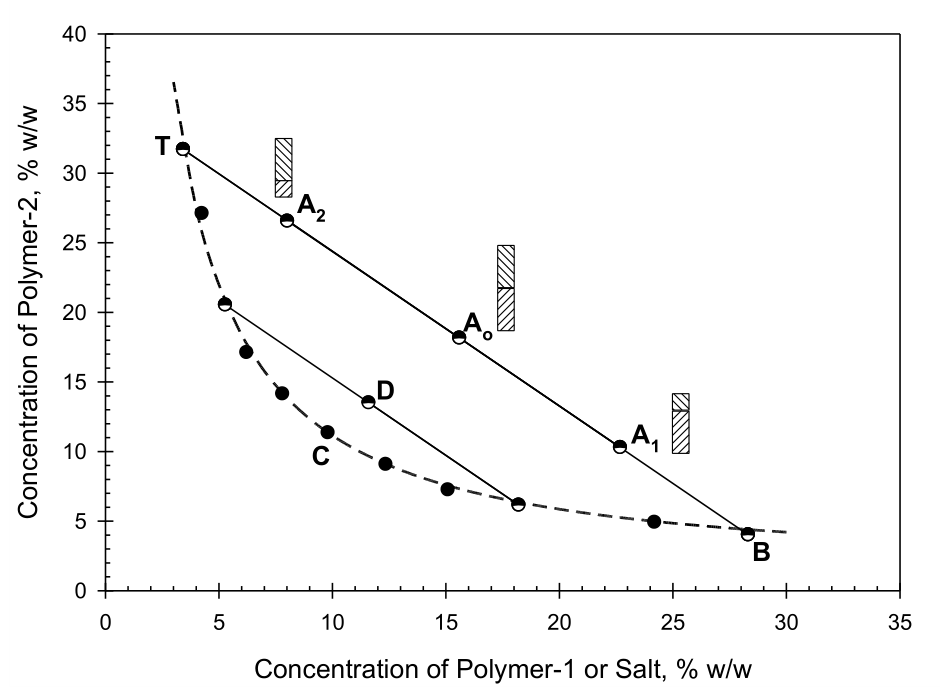
Figure 2.
Schematic of the solvent interaction analysis (SIA) process. The process is divided into two general stages: the SIA assay, and concentration assay. The first stage includes addition of samples to prepared aqueous two-phase systems (ATPSs) of different compositions (here, systems A, B, and C represent ATPSs of different ionic composition); mixing; centrifugation to speed phase settling; withdrawal of aliquots from both phases followed by appropriate dilutions of the aliquots; sample addition and withdrawal steps may be performed manually or using a liquid-handling workstation; followed by the next stage immediate ly or after storage of the aliquots in refrigerator or lowtemperature freezer. The second stage includes analytical assay for determination of analyte concentration in each aliquot; calculation of the partition coefficient K in each ATPS; constructing the structural signature for the analyte by combining K-values in different ATPSs; and calculating structural distance between the signature for the analyte and that for the chosen reference sample. Analytical assay for determination of analyte concentration in each aliquot may be performed using any appropriate bioanalytical assay (protein determination by OPA, Bradford or other assay, HPLC, LC–MS, any appropriate MS assay, single immunoassay or multiplexed immunoassays, etc.).
Figure 2.
Schematic of the solvent interaction analysis (SIA) process. The process is divided into two general stages: the SIA assay, and concentration assay. The first stage includes addition of samples to prepared aqueous two-phase systems (ATPSs) of different compositions (here, systems A, B, and C represent ATPSs of different ionic composition); mixing; centrifugation to speed phase settling; withdrawal of aliquots from both phases followed by appropriate dilutions of the aliquots; sample addition and withdrawal steps may be performed manually or using a liquid-handling workstation; followed by the next stage immediate ly or after storage of the aliquots in refrigerator or lowtemperature freezer. The second stage includes analytical assay for determination of analyte concentration in each aliquot; calculation of the partition coefficient K in each ATPS; constructing the structural signature for the analyte by combining K-values in different ATPSs; and calculating structural distance between the signature for the analyte and that for the chosen reference sample. Analytical assay for determination of analyte concentration in each aliquot may be performed using any appropriate bioanalytical assay (protein determination by OPA, Bradford or other assay, HPLC, LC–MS, any appropriate MS assay, single immunoassay or multiplexed immunoassays, etc.).
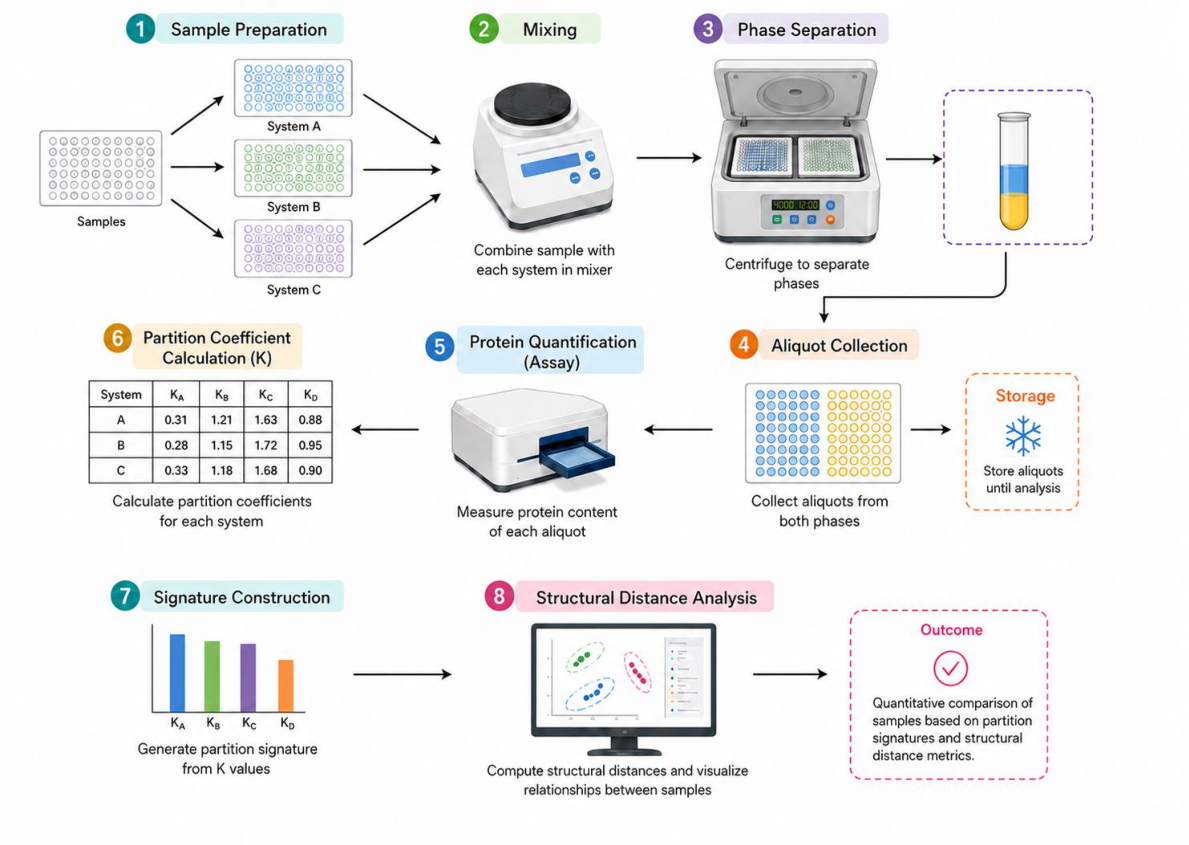
Figure 3.
Protein concentrations (analytical signals) determined in the top phases plotted against protein concentrations (analytical signals) determined in the bottom phases. Linear curve is typical for monomeric protein (partition coefficient is represented by the slope of the linear curve). Typical protein aggregation behavior is represented by the nonlinear curve.
Figure 3.
Protein concentrations (analytical signals) determined in the top phases plotted against protein concentrations (analytical signals) determined in the bottom phases. Linear curve is typical for monomeric protein (partition coefficient is represented by the slope of the linear curve). Typical protein aggregation behavior is represented by the nonlinear curve.
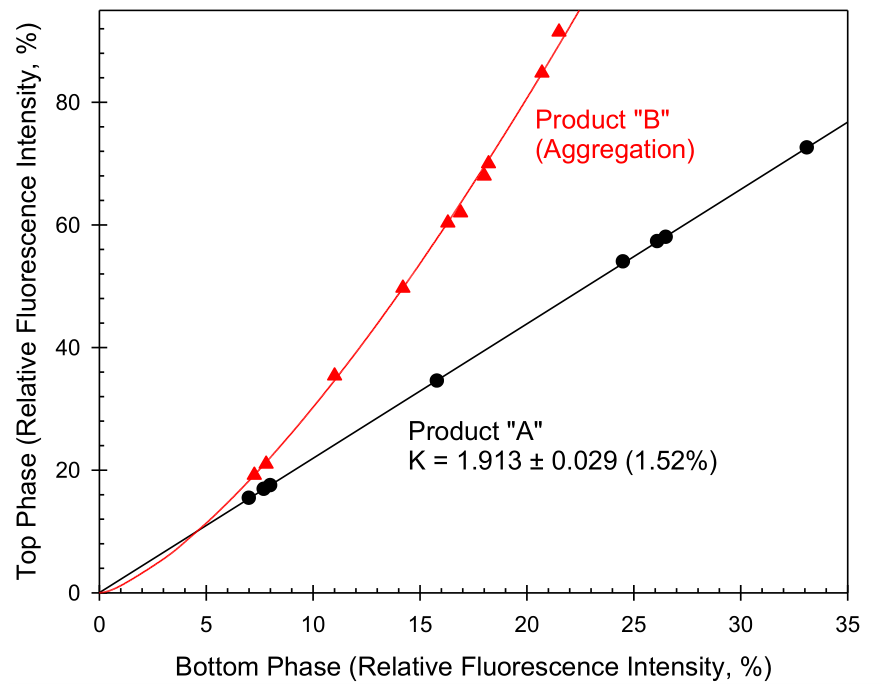
Figure 4.
Key protein characteristics that ATPS-based SIA can distinguish and analyze.
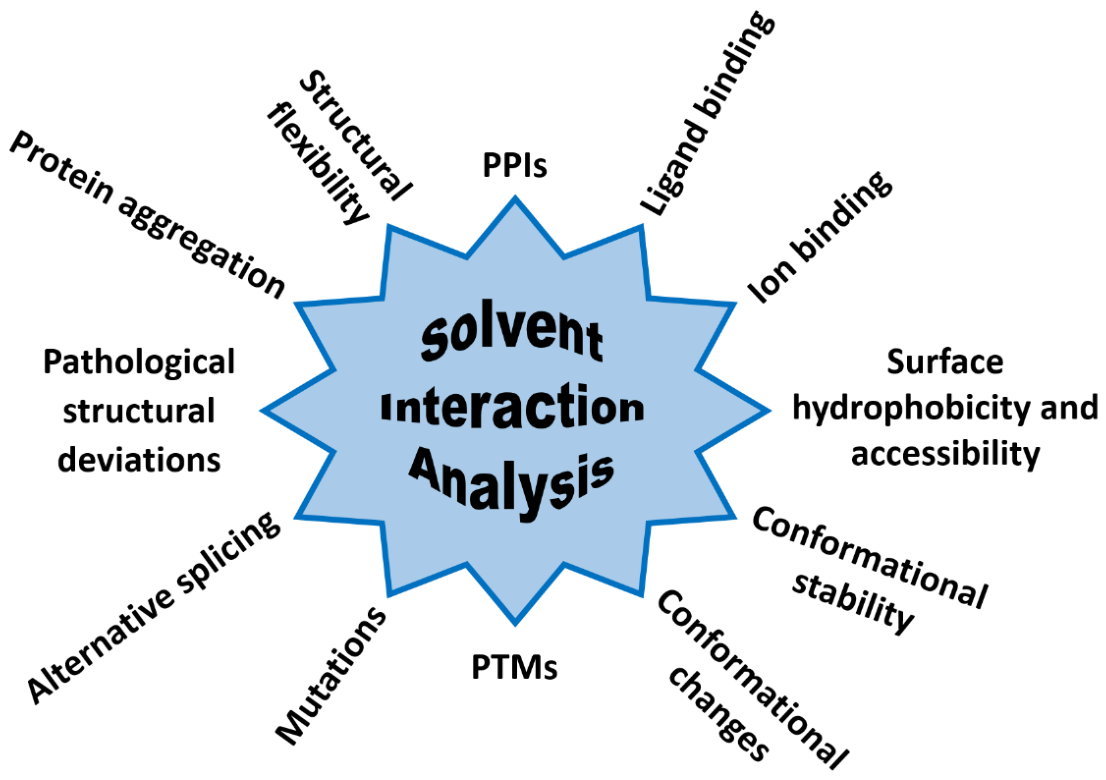
Figure 5.
Illustration highlighting the quantitative and qualitative differences in PSA protein secreted by healthy versus malignant cells.
Figure 5.
Illustration highlighting the quantitative and qualitative differences in PSA protein secreted by healthy versus malignant cells.
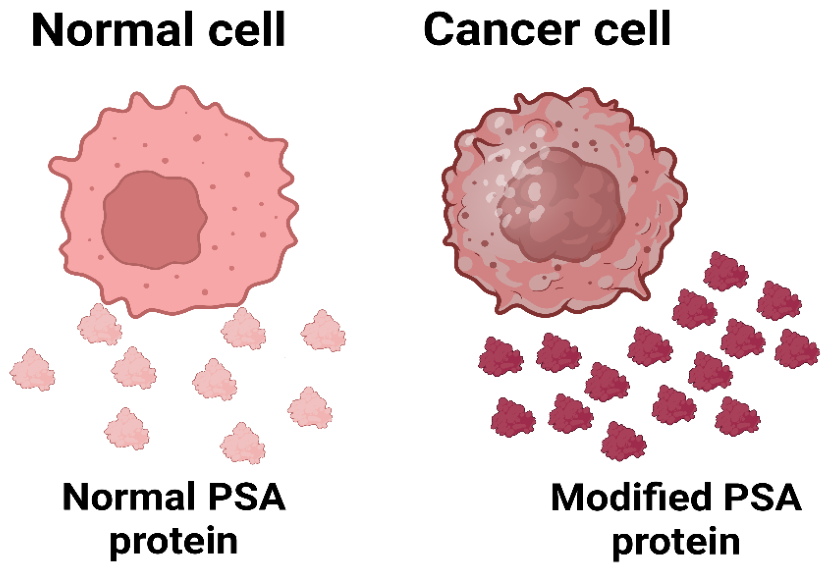

Table 1.
Partition coefficients for mutants of staphylococcal nuclease A [85] and mutants of bacteriophage T4 lysozyme [86,87]. ATPS #1: Dextran-Ficoll-0.15 M NaCl-0.01 M NaPB; ATPS #2: Dextran-Ficoll-0.15 M Na2SO4-0.01 M NaPB; ATPS #3: Dextran-Ficoll-0.11 M NaPB.
| Mutant | ATPS # 1 | ATPS # 2 | ATPS # 30 | Signature |
| Staphylococcal nuclease A | ||||
| WT | 0.97 ± 0.01 | 0.42 ± 0.01 | 0.29 ± 0.02 | 0.00 |
| I18L | 1.14 ± 0.03 | 0.64 ± 0.04 | 0.46 ± 0.05 | 2.41 |
| T33I | 1.10 ± 0.02 | 0.68 ± 0.03 | 0.52 ± 0.01 | 2.86 |
| L37I | 1.33 ± 0.10 | 1.25 ± 0.12 | 0.63 ± 0.06 | 5.50 |
| I72M | 1.18 ± 0.07 | 0.73 ± 0.07 | 0.62 ± 0.02 | 3.48 |
| T82V | 0.96 ± 0.03 | 0.60 ± 0.03 | 0.45 ± 0.04 | 2.12 |
| L108I | 1.73 ± 0.24 | 0.86 ± 0.05 | 0.73 ± 0.14 | 4.48 |
| L108V | 1.43 ± 0.06 | 0.79 ± 0.01 | 0.67 ± 0.02 | 3.95 |
| V114L | 1.05 ± 0.06 | 0.25 ± 0.07 | 0.26 ± 0.03 | 2.36 |
| Bacteriophage T4 lysozyme | ||||
| C54T/C97A | 1.30 ± 0.02 | 0.90 ± 0.02 | 0.68 ± 0.02 | 0.00 |
| G113E | 1.19 ± 0.02 | 0.86 ± 0.02 | 0.76 ± 0.01 | 1.33 |
| T115A | 1.32 ± 0.02 | 0.88 ± 0.02 | 0.64 ± 0.01 | 0.47 |
| T115A/S117A | 1.30 ± 0.02 | 0.85 ± 0.01 | 0.65 ± 0.01 | 0.87 |
| S117A/R119A | 1.28 ± 0.02 | 0.91 ± 0.01 | 0.73 ± 0.01 | 1.13 |
| R119A | 1.35 ± 0.02 | 0.92 ± 0.02 | 0.73 ± 0.01 | 0.53 |
Table 2.
Partition coefficient of Human Serum Albumin (HSA) when exposed to various concentrations of different drugs as indicated.
Table 2.
Partition coefficient of Human Serum Albumin (HSA) when exposed to various concentrations of different drugs as indicated.
| Drug | [Drug], mol/L | K | Drug | [Drug], mol/L | K |
| Oxacillin | 0 | 0.203 ± 0.006 | Verapamil | 0 | 0.203 ± 0.006 |
| 0.17 | 0.279 ± 0.008 | 0.05 | 0.236 ± 0.008 | ||
| 0.23 | 0.303 ± 0.007 | 0.10 | 0.265 ± 0.008 | ||
| 0.28 | 0.324 ± 0.009 | 0.15 | 0.299 ± 0.016 | ||
| 0.34 | 0.353 ± 0.010 | 0.20 | 0.326 ± 0.012 | ||
| Caffeine | 0 | 0.203 ± 0.006 | 0.25 | 0.327 ± 0.002 | |
| 0.13 | 0.207 ± 0.003 | 0.31 | 0.334 ± 0.006 | ||
| 0.26 | 0.211 ± 0.011 | Cefmetazole | 0 | 0.203 ± 0.006 | |
| 0.39 | 0.215 ± 0.005 | 0.07 | 0.208 ± 0.012 | ||
| 0.51 | 0.219 ± 0.007 | 0.13 | 0.214 ± 0.006 | ||
| 0.64 | 0.227 ± 0.008 | 0.20 | 0.217 ± 0.003 | ||
| Warfarin | 0 | 0.203 ± 0.006 | 0.26 | 0.221 ± 0.012 | |
| 0.08 | 0.227 ± 0.010 | 0.33 | 0.227 ± 0.015 | ||
| 0.11 | 0.238 ± 0.010 | 0.40 | 0.232 ± 0.015 | ||
| 0.15 | 0.238 ± 0.010 | Theophylline | 0 | 0.203 ± 0.006 | |
| 0.19 | 0.249 ± 0.010 | 0.14 | 0.253 ± 0.005 | ||
| 0.23 | 0.255 ± 0.004 | 0.29 | 0.262 ± 0.006 | ||
| Terbutalin | 0 | 0.203 ± 0.006 | 0.42 | 0.261 ± 0.001 | |
| 0.09 | 0.224 ± 0.010 | 0.56 | 0.265 ± 0.005 | ||
| 0.19 | 0.236 ± 0.008 | Diltiazem HCl | 0 | 0.203 ± 0.006 | |
| 0.28 | 0.244 ± 0.004 | 0.08 | 0.225 ± 0.004 | ||
| 0.37 | 0.250 ± 0.007 | 0.17 | 0.236 ± 0.010 | ||
| 0.46 | 0.255 ± 0.003 | 0.25 | 0.244 ± 0.011 | ||
| 0.56 | 0.257 ± 0.008 | 0.33 | 0.249 ± 0.009 | ||
| Atenolol | 0 | 0.203 ± 0.006 | 0.41 | 0.253 ± 0.005 | |
| 0.10 | 0.230 ± 0.009 | 0.50 | 0.255 ± 0.001 | ||
| 0.19 | 0.242 ± 0.014 | Propranolol | 0 | 0.203 ± 0.006 | |
| 0.29 | 0.247 ± 0.006 | 0.08 | 0.205 ± 0.005 | ||
| 0.38 | 0.250 ± 0.007 | 0.17 | 0.210 ± 0.009 | ||
| 0.48 | 0.252 ± 0.008 | 0.25 | 0.223 ± 0.014 | ||
| 0.57 | 0.257 ± 0.005 | 0.34 | 0.237 ± 0.004 | ||
| 0.42 | 0.251 ± 0.008 | ||||
| 0.51 | 0.270 ± 0.0015 |
Disclaimer/Publisher’s Note: The statements, opinions and data contained in all publications are solely those of the individual author(s) and contributor(s) and not of MDPI and/or the editor(s). MDPI and/or the editor(s) disclaim responsibility for any injury to people or property resulting from any ideas, methods, instructions or products referred to in the content. |
© 2026 by the authors. Licensee MDPI, Basel, Switzerland. This article is an open access article distributed under the terms and conditions of the Creative Commons Attribution (CC BY) license (http://creativecommons.org/licenses/by/4.0/).
Copyright: This open access article is published under a Creative Commons CC BY 4.0 license, which permit the free download, distribution, and reuse, provided that the author and preprint are cited in any reuse.