

Submitted:
19 June 2026
Posted:
22 June 2026
You are already at the latest version
Abstract
We conceptualized academic success in higher education as a multidimensional outcome shaped by multiple factors. The study examined environmental and sociocultural contexts, institutional support, and relational well-being as predictors of academic success of students in a private higher education institution in South Africa. The study adopted a quantitative cross-sectional survey design. Data from 497 undergraduate students across four campuses in Gauteng Province, were analysed using descriptive statistics, exploratory factor analysis, Pearson correlation analysis, and Partial Least Square Structural Equation Modelling (PLS-SEM). The results showed that relational well-being was the strongest predictor of academic success (β = 0.471, p < .001), demonstrating that relational well-being of students played a significant role in shaping academic success. Similarly, institutional support significantly predicted relational well-being (β = 0.194, p < .001), while sociocultural context also had a significant effect on relational well-being (β = 0.108, p < .05). The study contributes to our understanding of student success by advancing a relationally mediated model of academic performance within the South African higher education context. The findings suggest that institutions of higher learning seeking to improve academic performance must move beyond conventional academic support models with important implications for higher education policy and institutional practices.
Keywords:
relational well-being
; academic success
; institutional support
; sociocultural context in higher education
; student well-being
; private higher education
; South Africa
1. Introduction
Higher education, including Technical and Vocational Education and Training (TVET) colleges, polytechnics, and universities, is a critical period for students as it marks a profound social, emotional, and intellectual transition for them as young adults. This phase, representing a transition from a relatively dependent period into full adulthood, involves not only becoming independent from parents and protection from home but also navigating complex and unfamiliar environments, negotiating new peers, and establishing intimate interpersonal relationships, while simultaneously adjusting to the increased academic demands associated with higher education. Collectively, these experiences tend to shape what some scholars have conceptualized as relational well-being, which is the quality and satisfaction that students derive from their social connections and interpersonal interactions [1,2,3]. The concept of relational well-being has, over the years, gained much attention in educational research because of its importance in predicting both the mental health of students and their academic performance.
Various studies have shown that students’ social relationships with family members, intimate relationships, and acquaintances play important roles in determining and shaping their academic trajectories as they engage in the pursuit of knowledge at institutions of higher learning. Ref. [4], for example, demonstrates the integration of students into the social and academic fabric of universities as a key determinant of retention and success. Similarly, [5] highlights how students’ physical and psychological investment in their social and academic activities significantly predict learning outcomes. Furthermore, empirical studies have also shown the positive relationship between relational well-being and academic performance. For example, the study by [6] of university students demonstrates how supportive peer networks serve to buffer stress and promote adaptive coping strategies among first-year university students. In the same vein, [7] study has shown how high-quality relationships among students contribute to their sense of belonging, which in turn links to improved academic outcomes. On the other hand, poor relations such as social isolation and poor interpersonal support have been associated with increased psychological distress, disengagement, and lower academic performance [8]. Deriving from these foundational perspectives, academic performance and success of students in institutions of higher education is multi-layered and therefore cannot be isolated from their relational contexts.
Within the South African context, and by extension Sub-Saharan Africa, the dynamics associated with students’ academic performance in institutions of higher learning assume additional significance due to intersecting variables, including historical legacies such as colonialism and apartheid, socioeconomic inequalities, and cultural diversity, which continue to shape students lived experiences. Within this context, transitioning into higher education on the sub-continent involves not only academic adjustment but equally important are the complex negotiations involving social capital, identity, and belonging, especially for students moving from rural and peri-urban centers to big cities where campuses are mostly located. In South Africa, scholars have noted that students, especially those from historically marginalized backgrounds, face more challenges that are related to social integration, financial stress, and limited support systems, which affect their relational well-being and academic performance [9,10]. Despite the growing recognition in the literature of this relationship, however, there are few quantitative studies that focus on examining the relationship between relational well-being and academic success in the South African higher education context. Although some studies have focused on mental health outcomes or on structural determinants of academic success, very few have focused on the complex role interpersonal relationships play as both resources and potential stressors, especially in the private higher education setting, which is becoming critical in the South African education landscape. This gap underscores the need for empirically grounded analyses that integrate relational well-being into models of student academic performance and success. In recognizing this gap, this study adopted a quantitative research design that examined the extent relational well-being predicts academic performance among students in a private higher institution in South Africa. By situating relational well-being within the broader discourse on student success and well-being, the study contributes to ongoing efforts to recognize and develop holistic, contextually relevant frameworks for understanding academic achievements, and provides empirical evidence to inform institutional policies and interventions in enhancing student support systems and improving educational outcomes.
2. Literature Review
2.1. Academic Performance in Higher Education
Academic performance in higher education has traditionally been regarded as the central outcome of learning, measured through grades, progression, and completion rates. In recent times, however, researchers have conceptualized academic performance as a multi-dimensional construct that is influenced by seemingly disparate factors, including cognitive, psychological, social, and contextual. Hence, rather than being measured solely by intellectual ability, academic success is positively influenced by the well-being of students, their degree of engagement with their lecturers and peers, and the quality of environment in which they learn [11,12]. More recent studies such as those by [13,14] tend to reinforce this perspective by demonstrating that psychological well-being, and social connectedness in schools significantly predict academic achievement. These findings indicate that adopting a holistic understanding of academic performance integrates both individual and contextual determinants, highlighting the constellation of psychological, social, and contextual factors in relation to academic success.
2.2. Relational Well-Being and Academic Performance
Scholars have identified relational well-being as a critical factor that influences students’ academic performance and success in institutions of higher learning. This relationship involves the quality of students’ relationship with family members, intimate partners, peers, and their broader sense of social connectedness. Within this context, contemporary research continually frames well-being as inherently relational by emphasizing that individuals’ psychological functioning is embedded in their social environments. In this regard, empirical research supports a strong link between relational well-being and academic outcomes. Studies such as those by [15] show that students with strong social networks and supportive relationships tend to have higher academic engagement, better coping strategies, and overall improved academic performance. Studies carried out by [16], which analyzed social networks among high achievers, reveal that students who occupy central positions in peer networks perform better academically, while the reverse is the case with students who are socially isolated [17,18]. In South Africa, similar studies show that relational well-being among university students is shaped by interpersonal connections, cultural adjustment, and support systems, all of which influence academic experiences and outcomes [19]. On the other hand, a strain or a lack of support in students’ relationships within and outside the campus tend to negatively affect the academic performance of students by increasing their stress level thereby reducing their capacity to engage effectively with their studies [20,21]. Research in mental health further reveals that well-being, closely tied to relational experiences, significantly influences academic achievement, thereby positioning relational well-being as both a protective and enabling factor in student academic success [13,22,23,24].
2.3. Environmental Context and Student Outcomes
Students’ environmental context, defined as the campus on which students operate and interact, plays an important role in shaping academic experiences and outcomes. This environmental context, which includes the physical infrastructure on campus, the availability of learning spaces, campus safety, and the opportunities for social interaction, collectively influences students’ sense of belonging, engagement, and overall well-being. Studies have highlighted the importance of supportive and resource-rich campus environments in contributing positively to students’ well-being and their academic performance [25,26]. For instance, the availability of study resources has been shown to directly increase task performance and student well-being [27]. Similarly, positive academic outcome is a function of personal resources such as academic self-efficacy and strong social connectedness [28]. Conversely, a poorly resourced or socially fragmented campus environment may hinder student engagement and contribute to academic difficulties [29], thereby reinforcing the importance of considering environmental context as a key predictor of academic success, especially within institutions that are characterized by inequality in access to resources.
2.4. Sociocultural Context and Academic Performance
The sociocultural context of higher education institutions is another variable that tends to shape how students experience learning, interact with others, and construct their academic identities. The sociocultural context includes the cultural norms and values that are embedded in the campus community. It also includes the campus diversity, its inclusion traditions, and the student sense of belonging within the campus community. The existing literature shows the important role of sociocultural integration in student success. Students who feel socially or culturally included in the community are more likely to engage academically and persist in their studies [30,31]. On the other hand, students who feel marginalized or culturally dissonant may undermine both their well-being and academic performance [32]. In contexts where historical inequalities and cultural plurality intersect, such as those in South Africa, sociocultural dynamics assume a more salient position. Empirical studies have shown that student connectedness and belonging significantly predict academic achievement, which often operates with well-being and resilience [13,33,34]. Such findings demonstrate how sociocultural context is not merely a marginal variable but an active determinant of both relational well-being and academic outcomes.
2.5. Institutional Support and Academic Performance
Institutional support is a key structural component in determining students’ success in higher education. Institutional support includes relative access to learning materials both physically and electronically, the quality of teaching in the classroom, and the nature of relationship that exists between students and lecturers throughout the duration of the learning process. Contemporary research has shown that institutional support enhances both academic engagement of students and their academic performance. Access to adequate study materials has been identified by scholars as a key predictor of students’ well-being and their academic performance, with students who have better access to learning resources demonstrating improved academic outcomes [35]. Also, studies have shown that positive relationships between students and academic staff foster a supportive learning environment that tends to enhance motivation, engagement, and academic self-efficacy [36,37]. Existing literature consistently emphasizes the need to integrate relational and institutional approaches to well-being. For example, a study conducted in South Africa maintained that well-being in higher education is best understood through a combination of individual and relational perspectives, highlighting the role of institutional environments in shaping both relationships and outcomes [38,39]. These studies underscore the interconnectedness of institutional support and relational well-being in influencing academic performance.
2.6. Integrating Predictors of Academic Performance
In summary, the literature demonstrates that academic performance is a multi-dimensional outcome that is shaped by psychological, relational, and contextual factors. Secondly, literature highlights the central role relational well-being plays in supporting student engagement and academic performance. Furthermore, there is evidence that environmental and sociocultural contexts influence students’ sense of belonging and academic integration. Finally, the literature review highlights the critical role institutional support plays in providing critical resources and relationships that enable learning, leading to academic success.
However, while existing literature has made significant contributions to our understanding of individual determinants of academic performance, there is still a growing recognition of the need for integrated models to capture the interplay between relational, environmental, and sociocultural factors. Recent research trends point toward multi-variable and system-based approaches that account for the complexity of student experiences. For example, studies that use advanced analytical techniques show that academic performance is best predicted through the integration of multiple data sources, including behavioral, relational, and environmental variables [40]. In the same vein, research on well-being and academic success shows that multiple factors such as connectedness, resilience, and environmental support are mutually reinforcing in influencing academic success [41]. Although these findings advance our understanding, most studies examine these factors in isolation without integrating these domains into a single, comprehensive quantitative framework. With special reference to the Global South, this study examined the environmental and sociocultural contexts, as well as the institutional support and relational well-being of students within a single quantitative model. This gap is especially relevant in the South African education landscape, where students’ academic experiences are shaped by complex intersections of inequality, cultural diversity, and institutional transformation. In addressing this gap, this study examined how environmental context (within campus), sociocultural context, institutional support, student wellness, and relational well-being collectively predict academic success among students of a private higher education institution. By adopting an integrated approach, this study contributes to a more holistic understanding of student academic success that provides contextually relevant perceptions for higher education policy and practice.
3. Theoretical and Conceptual Framework
This study is framed within an integrated theoretical framework that draws on student integration theory, student involvement theory, and ecological theory, complemented by insights from relational well-being theory. Together, these perspectives provide a multi-level explanation of how environmental, sociocultural, institutional, and relational factors interact to influence academic performance among higher education students. At the foundational level, [4]’s theory of student integration provides a useful understanding that students’ academic success is largely determined by their degree of integration into the academic and social systems of universities. In the context of this study, [4]’s framework is useful for understanding how institutional support, including student relationships with lecturers, access to learning materials, sociocultural contexts such as belonging and inclusion, shape students’ academic outcomes.
Complementing this perspective is [5]'s student involvement theory, which emphasizes the role of students’ active participation in both academic and social activities. Aston perceptively observes that learning and development are directly proportional to the quality of student involvement. This theory provides an important lens for interpreting how environmental context within campus and institutional support create opportunities or constraints towards student engagement. Where [4] and [5] focus on institutional and engagement processes, [42]’s ecological systems theory extends the analysis to student experiences within nested environmental systems, such as the campus, that shape interactions across multiple levels, including the micro system which include dyadic relationships with family members and peers, and the macrosystem, which include social, cultural, and institutional structures. This perspective is relevant for this study as it allows for the examination of relational well-being in relation to the environment and sociocultural context associated with academic success in institutions of higher learning. Central to this integrated framework is relational well-being theory, articulated by [1,2]. This perspective conceptualizes well-being as inherently embedded in social relationships, emphasizing that individuals’ functioning cannot be separated from the quality of their interpersonal connections. Within this study, relational well-being, captured through students’ relationships with peers, family members, and intimate partners, is understood as a critical social resource that influences emotional stability, motivation and academic engagement. By integrating these theoretical perspectives, the present study advances a multi-level explanatory model in which academic performance is shaped by the interaction of four key domains of environmental context, sociocultural context, institutional context, and relational well-being. Within this framework, academic success (AS) is treated as the dependent variable, reflecting students’ measurable educational outcomes. It is conceptualized as being influenced by four key domains including, environmental context (EC) within the campus, sociocultural context (SC), institutional support (IS), wellness service (WS), and mediated by relational well-being (RW) as indicated in Figure 1 below.
4. Methodology
4.1. Research Design
This study adopted a quantitative, cross-sectional survey, which was considered appropriate because it enabled the systematic collection of standardized data from a large sample and statistical testing. Quantitative approaches are widely used in higher education research to model predictors of academic performance and to test theoretically derived relationships [12,14]. The cross-sectional design allowed assessment of students’ experiences at a specific point in time, which is particularly relevant for capturing the dynamic interplay between relational and contextual factors within university environments.
4.2. Study Setting and Population
Permission to embark on the study was granted by the private institution of higher learning (REC R.0002156) in South Africa. The study was conducted across four campuses of a private institution of higher learning in South Africa. The inclusion of multiple campuses enhances the generalizability of the findings and allows for the examination of relational and contextual dynamics across different institutional environments. The target population comprised undergraduate students enrolled across various faculties. Undergraduate students were selected because they are more likely to experience transitional challenges related to social integration, institutional adjustment, and relational well-being, all of which are central to the study.
Sampling Strategy and Sample Size
Within each campus, students were recruited using stratified convenience sampling techniques, ensuring representation across year levels, faculties, and demographic categories. The final sample consisted of a sufficiently large number of participants to support robust statistical analysis, including multivariate regression and Partial Least Square Structural Equation Modelling. Sample size adequacy was determined based on established guidelines for quantitative research, which requires a minimum of 10 to 15 participants per predictor variable for regression analysis [43].
4.3. Data Collection Instrument
Data was collected using a structured, self-administered questionnaire, designed based on existing validated instruments and aligned with the study's theoretical framework. The 35 items of the questionnaire were grouped according to components of the conceptual framework. Some of the items were derived from first was the Ryff Scales of Psychological Well-Being [44], a measure derived from Ryff's Psychological well-being (PWB) model which is rooted in a psychological approach which emphasises meaning-making, self-realisation and growth, relatedness and the quality of one’s relationships [44,45].
This scale was deemed suitable for this study since ‘Relational Well-being (RW)’ was also understood to be a second order factor, influenced by the environmental context (EvC), sociocultural context (SCC), institutional support (IS) and wellness services (WS) [44,46]. Firstly, environmental context (EvC), which measures students’ perceptions of campus infrastructure, availability of study spaces, safety and opportunities for interaction, items were adapted from studies on campus environments [7]. Secondly, there was the sociocultural context (SCC), which assessed students’ sense of belonging, inclusion, cultural recognition, and social integration within the campus. Thirdly, there was the Institutional support (IS), which captured students’ experiences of lecturer support, accessibility of academic staff, access to learning materials, and institutional resources. Items were adapted from research on student-faculty interaction and academic support [47]. Furthermore, relational well-being (RW) measured the quality of students’ interpersonal relationships, including family support and intimate relationships. This section was informed by the relational well-being framework of [1,2]. Finally, the academic performance (AP) variable assisted with students’ self-reported academic indicators, including grade point average or equivalent academic standing as well as perceived academic success. Self-reported academic performance has been widely used and validated in higher education research [11]. All items were measured using a 6-point Likert scale ranging from 1 (“Strongly disagree”) to 6 (“Strongly Agree”) [1]. The questionnaire was pilot tested with a small group of students to assess the clarity, reliability, and relevance of the items.
4.4. Data Collection Procedure
The questionnaire was administered with the help of recruited students over a specific period during the academic term. The survey was administered online and in person, depending on campus accessibility and student availability. Participation was voluntary, and students were invited through institutional communication channels, classroom announcements, and student networks. Before participating, respondents were provided with an information sheet outlining the purpose of the study, confidentiality assurances, and their right to withdraw at any time. Informed consent was obtained from all participants.
Data Analysis
The data was analysed using SPSS statistical software. Firstly, the descriptive statistics, frequencies, means, and standard deviations were computed to summarise the sample characteristics and key variables. Exploratory and confirmatory factor analyses were also conducted to assess constructs and validity. Correlational analysis using Pearson correlation coefficients was used to examine relationships between variables.
5. Results
5.1. Demographic Characteristics of Respondents
A total of 497 students completed the survey. This sample, as presented in Table 1 below, was relatively balanced in terms of gender (55.7% for females and 42.5% for males), and largely comprised students who were between their 1st, 2nd and 3rd year of study (a total of 66.4% combined), indicating a predominantly traditional undergraduate cohort. Two-thirds. Most of the participants lived with family members, consisting of 66.5% (n=331) of respondents, highlighting the continued importance of family-based relational context in the South African setting. Notable was the fact that, in 37.4% (n=186) of the students’ homes, the heads of household were both a mother and a father; whilst 28.4% (n=141) of the households were headed by the father only and another 28.0% (n=139) of the households headed solely by a mother. Moreover, 83.7% (n=416) of the sample had medical aid or insurance.
5.2. Exploratory Factor and Reliability Analysis
Exploratory factor analysis (EFA) confirmed the construct and factor validity of the measurement model [48]. The Kaiser-Meyer-Olkin Measure of Sampling Adequacy (KMO) value of 0.828 and a statistically significant Bartlett’s Test of Sphericity (p < .001) support the factorability of the data [49,50]. Reliability analysis showed that the constructs achieved acceptable internal consistency (Cronbach’s α ≥ 0.70), supporting the robustness of the measurement model [43,51] (see Table 2).
A Principal Components Analysis (PCA) with varimax rotation was performed on the 35 items. Applying Principal Component Analysis as the extraction method, and the Varimax with Kaiser Normalisation as the rotation method, six factors were extracted from the factor solution [49]. These six components EVC, SCC, IS, WS, RW and AP with eigenvalues exceeding 1, were retained in the factor solution for further analysis. The components explained a total of 58.82 % of the total variance, indicating a satisfactory model fit [52].
Factor 1, IS labelled, “Institutional Support” had an eigenvalue of 5.396 and high factor loadings from six items. This factor, accounted for 23.461% of the total variance. Factor 2, WS was named “wellness services, with an eigenvalue of 2.279 and explained 9.910% of the total variance. Factor 3, AP was then interpreted as “academic performance”; with eigenvalue of 1.735 contributing 7.543% of the total variance. Factor 4, RW, entitled “relational wellbeing” had an eigenvalue of 1.455 explaining 6.328% of the total variance. The fifth factor, SCC, “sociocultural context” had an eigen value of 1.423 and contributed to 6.186% of the total variance. The last factor, EVC was labelled “environmental context” with high loadings from four items. This factor gave an eigenvalue of 1.240 which explained 5.392% of the total variance. Twelve items were deleted from the factor solution due to low factor loadings below 0.4 (Pallant, 2016).
5.3. Structural Equation Modelling
Structural Equation Modelling was engaged to develop a multi-level framework for enhancing relational well-being to improve academic performance. Following the Partial Least Squares Structural Equation Modelling (PLS-SEM) guidelines, the structural model was evaluated after the measurement model. Evaluating the measurement model included examining the reliability, convergent and discriminant validity. Internal consistency reliability was assessed using the Cronbach’s Alpha coefficient (α) and Composite Reliability (CR ≥ 0.70). The Cronbach’s alpha values have been depicted in Table 2 above where most of the constructs met the recommended value of ≥ 0.70 [53]. Similarly, the composite reliability (CR) values across the six constructs met the recommended threshold values of 0.70 [54], with the lowest being 0.783 for ‘Socio-cultural context’ and the highest value of 0.907 for ‘Academic Performance’. The Cronbach`s alpha coefficient values and the composite reliability values were all above the 0.70 threshold values, indicating satisfactory internal consistency. Convergent validity was assessed using the factor loadings and the Average Variance Extracted (AVE) values. Factor loadings ranged from 0.549 to 0.859, suggesting a strong connection between the latent construct and the respective items [43]. The AVE values were above 0.5, ranging from 0.628 to 0.830, confirming that each construct explained more than 50% of the variance of its indicators [55]. Further analysis of the measurement model included the assessment of discriminant validity, which was assessed using the Fornell-Larcker criterion [56]. The measurement model was found to be valid since the bold values presented in Table 2 (square roots of the AVEs for each construct) are greater than the respective inter-construct correlation values.
5.4. Assessment of the Structural Model
The measurement model was found to be reliable, convergent, and discriminant valid, stemming from the reliability, convergent validity, and discriminant validity analyses, and as such, the structural model meant to develop a multi-level framework for enhancing relational well-being to improve academic performance among students was then evaluated. The structural model was assessed using the path coefficients, t-values, p-values, and the coefficient of determination (r2).
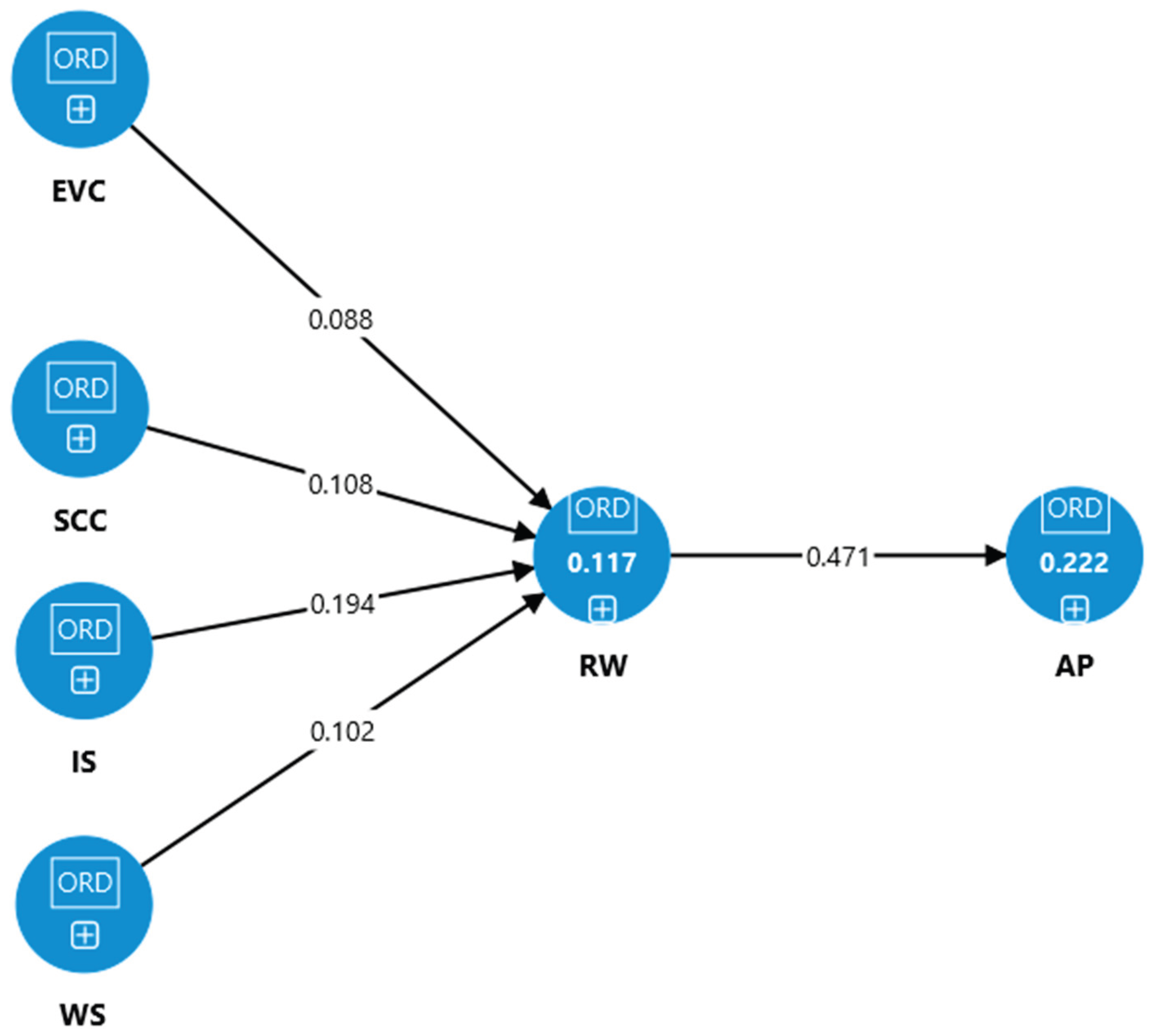
Table 3 and Figure 1 present the path coefficients, t-statistics, and p-values for the relationships among Environmental Context (EVC), Institutional Support (IS), Sociocultural Context (SCC), Wellness Services (WS), Relational Well-being (RW), and Academic Performance (AP). The results indicate that Institutional Support (β = 0.194, t = 3.826, p-value = 0.000) has the strongest positive and statistically significant effect on Relational Well-being, suggesting that greater institutional support substantially enhances students’ relational well-being. Sociocultural Context (β = 0.108, t = 2.218, p-value = 0.027) also has a positive and statistically significant influence on Relational Well-being. Similarly, Wellness Services (β = 0.102, t = 1.975, p = 0.048) demonstrate a positive and marginally significant effect. In contrast, Environmental Context (β = 0.088, t = 1.752, p-value = 0.080) shows a positive but statistically non-significant effect at the 0.05 level of significance. Although the relationship trends in the expected direction, it does not meet the conventional threshold for statistical significance. The R2 value for Relational Well-being is 0.117, indicating that Institutional Support, Sociocultural Context, and Wellness Services collectively explain 11.7% of the variance in Relational Well-being. Relational Well-being has a strong and significant positive effect on Academic Performance (β = 0.471, t = 13.162, p-value = 0.000), suggesting that improvements in relational well-being substantially enhance academic performance. The R2; value for Academic Performance is 0.222, meaning that Relational Well-being explains 22.2% of the variance in Academic Performance.
Figure 1.
Multi-disciplinary framework for enhancing relational well-being to improve academic performance.
Figure 1.
Multi-disciplinary framework for enhancing relational well-being to improve academic performance.
5.5. Key Findings and Interpretation
Several important insights emerge from the data analysis. Firstly, relational well-being is the strongest predictor of academic performance, both in correlation and structural modelling. Its large effect size (β=0.471) confirms its significant role in shaping student success. This suggests that improvements in relational well-being can substantially enhance students’ academic performance. Institutional support, as the most influential contextual factor, emerges as the strongest predictor of relational well-being, indicating that lecturer relationships, access to resources, and academic support systems are critical in shaping students’ relational experiences. Sociocultural context matters indirectly. Social and cultural inclusion significantly enhances relational well-being, suggesting that belonging and inclusion, as well as cultural acceptance, operate through relational mechanisms rather than direct academic pathways. Furthermore, the environmental context shows a limited direct impact. Contrary to expectations, environmental context does not significantly predict relational well-being or academic performance. This suggests that social and relational dynamics may outweigh physical environmental factors in this context.
The study confirms the theoretical proposition that relational well-being is a key mechanism linking context with outcomes. Overall, the findings demonstrate that academic performance among students is not primarily driven by environmental or structural factors alone, but by relational processes embedded within institutional and sociocultural contexts. This study provides strong empirical support for a multi-level, relationally mediated model of student success, in which institutional support and socio-cultural inclusion and enhanced relational well-being significantly improve academic performance.
6. Discussion
This study was set out to examine how environmental context, social and cultural context, institutional support, and relational well-being jointly influence academic performance among students in a private higher institution in South Africa. The findings provide strong empirical support for a relationally mediated model of student success in which relational well-being emerges as the most powerful predictor of academic performance and the key mechanism linking contextual factors to outcomes. Specifically, the results show that relational well-being is the strongest direct predictor of academic performance. Secondly, institutional support and sociocultural context significantly influence academic performance indirectly through relational well-being. Finally, environmental context does not exert a statistically significant effect either directly or indirectly. These findings contribute to a growing body of literature that reframes academic success as a relational and contextually embedded process, rather than a purely individual or cognitive outcome.
6.1. Relational Well-Being as Central to Academic Success
The most striking finding of this study is the significant role of relational well-being in predicting academic performance. This strong and statistically significant relationship between relational well-being and academic outcomes supports the argument that students’ interpersonal relationships are not peripheral, but rather foundational to their academic success. These findings align closely with relational well-being theory, particularly the work of [2], which conceptualises well-being as deeply embedded in social relationships. Similarly, it supports the work of [1], which emphasises that positive relations with others constitute a core dimension of psychological functioning. The present study extends these theoretical insights by demonstrating that relational well-being is not only important for mental health but also a strong predictor of academic performance in higher education.
Empirically, the findings are consistent with recent studies that show that social support, connectedness, and interpersonal relationships enhance academic engagement, resilience, and achievement [38,57,58,59]. In the South African context, where many students navigate financial, social, and institutional challenges, relational resources such as family support and peer networks appear to function as critical buffers against stress and academic disruption. Importantly, the findings also suggest that relational well-being operates as a resource for motivation and persistence, enabling students to remain engaged even in the face of adversity. This reinforces the argument that student success should be understood through a social relational lens rather than solely through individual attributes.
6.2. Institutional Support as a Driver of Relational Well-Being
Another key finding is the significant positive relationship between institutional support and relational well-being. This indicates that higher education institutions play a critical role both in providing academic resources and in shaping the relational environments within which students operate. This finding is strongly supported by student involvement theory as articulated by [5]), which emphasises the importance of student engagement with institutional structures. Positive interactions with lecturers, access to learning materials, and supportive academic environments appear to foster relational well-being by enhancing students’ sense of connection and belonging. The results also align with empirical studies demonstrating that lecturer-student relationships are key determinants of academic engagement and self-efficacy [12,47]. In the South African context, where many students are first-generation entrants to higher education, institutional support may be particularly important in facilitating adjustments and building relational capital. Crucially, the findings suggest that the effect of institutional support on academic performance is indirect rather than direct, operating through relational well-being. This highlights the importance of understanding institutional interventions not only in terms of resource provision but also in terms of their capacity to strengthen relational networks and social support systems.
6.3. Sociocultural Context and Belonging
This study also found that sociocultural contexts significantly predict relational well-being, which in turn influences academic performance, highlighting the importance of belonging, inclusion, and cultural integration in shaping student outcomes. This finding is consistent with student integration theory developed by [4], which emphasises the role of social and academic integration in student success. Students who feel accepted and valued within the university environment are more likely to develop positive relationships, engage in academic activities, and persist in their studies. The results also resonate with contemporary research on belongingness, which identifies it as a key predictor of academic engagement and performance [60,61]. In culturally diverse and historically unequal contexts such as those in South Africa, sociocultural inclusion is particularly significant as students from marginalised backgrounds may experience barriers to integration, which can negatively affect both their relational well-being and academic outcomes. By demonstrating that sociocultural context operates indirectly through relational well-being, this study highlights the importance of fostering inclusive environments that enable students to build meaningful relationships. This suggests that policies aimed at promoting diversity and inclusion should also prioritise relational engagement and social cohesion.
6.4. The Limited Role of Environmental Context
Contrary to expectations, the study found that environmental context (within campus) does not significantly predict either relational well-being or academic performance. These findings challenge assumptions derived from ecological and environmental models, which typically emphasise the importance of physical and structural conditions in shaping student outcomes. From a theoretical perspective, these results complicate the application of [42] ecological systems theory, which posits that proximal environments exert a strong influence on individual development. Whereas the campus environment remains an important context, the findings suggest that its effects may be overshadowed by relational and social dynamics. One possible explanation is that students may have adapted to varying environmental conditions, particularly in the post COVID-19 pandemic context, where hybrid and digital learning have become more common. Alternatively, it may indicate that social relationships are more salient than physical environments in shaping academic experiences. This finding does not negate the importance of environmental factors, but rather suggests that the impact may be indirect, conditional, or mediated by relational processes. It also points to the need for more nuanced measurement of environmental context in future research.
6.5. Evidence for a Relationally Mediated Model
A major contribution of this study is the empirical validation of a mediated model, in which relational well-being serves as the key mechanism linking contextual variables to academic performance. Both institutional support and sociocultural context were found to influence academic outcomes indirectly through relational well-being. This finding aligns with ecological and systems-based perspectives, which emphasise the interconnected nature of individual and contextual factors. It also supports recent calls for multi-level models of student success that move beyond isolated predictors to capture the complexity of higher education experiences [14,61]. The relatively modest explanatory power of the contextual variables alone, compared to the strong effect of relational well-being, further underscores the importance of considering mechanisms of influence rather than simply direct effects. In this sense, relational well-being can be understood as a central pathway through which institutional and socio-cultural conditions are translated into academic outcomes.
7. Implication for Policy and Practice
The results of this study have important implications for higher education policy and practice in South Africa. First, by prioritising relational well-being, institutions of higher education such as universities, Colleges of Education, TVETs, and polytechnics should invest in programs that strengthen students’ interpersonal relationships, including peer mentoring, counselling, and family engagement initiatives. Secondly, the enhancement of institutional support systems would improve the academic success of students through fostering relational well-being. Furthermore, the promotion of inclusive campus cultures that aim at diversity and inclusion should focus not only on representation but also on creating spaces for meaningful interaction and belonging among students. Finally, reframing student success strategies should adopt holistic approaches that integrate academic, social, and emotional dimensions of student development.
8. Implications for Theory
The findings make several important contributions to theory. This includes an extension of the relational well-being theory, which demonstrates that student relational well-being is not only a psychological construct but also a key determinant of academic performance, thereby extending its application to higher education research. Secondly, the integration of multiple theoretical perspectives provides a comprehensive framework that captures both direct and indirect influences on academic success. Finally, focusing on relational models of student success is an indication that supports a paradigm shift from individualistic models to relational and contextually embedded models, particularly in non-Western contexts.
9. Limitations and Future Research
While this study provides valuable insights, several limitations should be acknowledged. The cross-sectional design limits causal inference, while self-reported measures may be subject to bias. In addition, the non-significant findings for environmental context suggest the need for more refined measures and longitudinal approaches in exploring the complex relationship between environmental context, students’ well-being, and academic outcomes. Future research should also explore longitudinal relationships between relational well-being and academic performance. Because this study was based on a private institution of higher learning, the findings cannot be generalised to other institutions, such as public universities with more complex, diverse, and unequal student populations. There is therefore a need to conduct a comparative study of public versus private institutions to provide a more holistic understanding of the relationship between relational well-being and academic outcomes, as well as the specific dynamics across different types of institutions of higher learning within South Africa.
10. Conclusions
This study demonstrates that academic performance among students in a private higher institution of learning in South Africa is best understood as a relationally mediated and contextually embedded phenomenon. Relational well-being emerges as the central mechanism through which institutional and sociocultural factors influence student success. By highlighting the primacy of relationships in academic achievement, the findings call for a reorientation of higher education policy and practice toward relational, inclusive, and holistic models of student development.
Supplementary Materials
Supporting information can be downloaded at the website of this paper posted on Preprints.org.
Author Contributions
Conceptualization, A.A; methodology, A.A., N.M; validation, A.K; N.M., and A.A; formal analysis, A.K; N.M and A.A; investigation, A.A and N.M; data curation, A.A., N.M., and A.K writing—original draft preparation, A.A; writing—review and editing, A.A; N.M., and A.K funding acquisition, A.A. All authors have read and agreed to the published version of the manuscript.
Funding
This research was funded by the Independent Institute of Education, Johannesburg, South Africa.
Institutional Review Board Statement
The study was conducted in accordance with the Declaration of Helsinki, and approved by the Research Ethics Committee of The Independent Institute of Education, Johannesburg, South Africa (protocol reference number: (REC.0002156, 8-07-2025).
Informed Consent Statement
Informed consent was obtained from all subjects involved in the study. Written informed consent has been obtained from the participants to publish this paper.
Data Availability Statement
The data supporting this article are available upon reasonable request to the corresponding author.
Acknowledgments
Our thanks go to all participants, including students fieldworkers and respondents, for their time, support, and enthusiasm throughout the duration of the study.
Conflicts of Interest
The authors declare no conflict of interest.
References
- Ryff, C.D.; Keyes, C.L.M. The structure of psychological well-being Revisited. J. Personal. Soc. Psychol. 1995, 69, 719–727. [Google Scholar] [CrossRef] [PubMed]
- Keyes, C.L.M. The mental health continuum. J. Health Soc. Behav. 2002, 43, 207–222. [Google Scholar] [CrossRef]
- White, S.; Jha, S. Exploring the Relational in Relational Wellbeing. Soc. Sci. 2023, 12, 600. [Google Scholar] [CrossRef]
- Tinto, V. Leaving College: Rethinking the Causes and Cures of Student Attrition; University of Chicago Press, USA: Chicago, 1993. [Google Scholar]
- Astin, A.W. Student involvement: A developmental theory for higher education. J. Coll. Stud. Pers. 1984, 25, 297–308. [Google Scholar]
- Wilcox, P.; Winn, S.; Fyvie-Gauld, M. “It was nothing to do with the university…”: The role of social support. Stud. High. Educ. 30 2005, 707–722. [Google Scholar]
- Strayhorn, T.L. College Students’ Sense of Belonging; Routledge, USA: New York, 2019. [Google Scholar]
- Hefner, J.; Eisenberg, D. Social support and mental health among college students. Am. J. Orthopsychiatry 2009, 79, 491–499. [Google Scholar] [CrossRef] [PubMed]
- Letseka, M.; Maile, S. High university drop-out rates: A threat to South Africa’s future . In HSRC Policy Brief; HSRC Press: South Africa, 2008. [Google Scholar]
- Badat, S. The challenges of transformation in higher education and training institutions in South Africa ; Development Bank of Southern Africa, 2010. Available online: https://www.dbsa.org/sites/default/files/media/documents/2022-11/The%20Challenges%20of%20Transformation%20in%20Higher%20Education%20and%20Training%20Institutions%20-%202010.pdf.
- Richardson, M.; Abraham, C.; Bond, R. Psychological correlates of university students’ academic performance: A systematic review and meta-analysis. Psychol. Bull. 2012, 138, 353–387. [Google Scholar] [CrossRef] [PubMed]
- Schneider, M.; Preckel, F. Variables associated with achievement in higher education: A systematic review of meta-analyses. Psychol. Bull. 143 2017, 565–600. [Google Scholar] [CrossRef]
- Chaudhry, S.; Tandon, A.; Shinde, S.; Bhattacharya, A. Student psychological well-being in higher education: The role of internal team environment, institutional, friends and family support and academic engagement. PLoS ONE 2024, 19. [Google Scholar] [CrossRef] [PubMed]
- Martin, F.; Bolliger, D.U. Engagement Matters: Student Perceptions on the Importance of Engagement Strategies in the Online Learning Environment. Online Learn. J. 2022, 26, 30–46. [Google Scholar]
- Wilson Fadiji, A.; Wildschut, A.; Cromhout, A.; Shoko, P. Investigating the Relationship between Well-Being, Engagement and Learning Experiences among South African Publicly Funded Students in Higher Education. Psychol. Stud. 70 2025, 349–362. [Google Scholar] [CrossRef]
- Yadhg, C.C.; Osman, A. Configurations, dynamics, and temporality: Exploring the social networks of students and their relevance for successful transitions into higher education. Int. J. Educ. Res. Open 2025, 8. [Google Scholar] [CrossRef]
- Stenseng, F.; Tingstad, E.B.; Wichstrøm, L.; Skalicka, V. Social withdrawal and academic achievement, intertwined over years? Bidirectional effects from primary to upper secondary school. Brtitish J. Educ. Psychol. 2022, 92, 1354–1365. [Google Scholar] [CrossRef] [PubMed]
- Adenuga, I.; Tuncer; Macdonald, K.B.; Schermer, J.A. The relationship between loneliness and school dropout. Curr. Res. Behav. Sci. 2025, 9. [Google Scholar] [CrossRef]
- Letsoalo, T.S.; Chigeza, S.; Wilson Fadiji, A. An exploration of the relational well-being of African international students at a South African university. South Afr. J. High. Educ. 2024, 38. [Google Scholar] [CrossRef]
- Deng, Y.; Cherian, J.; Khan, N.U.N.; Kumari, K.; Sial, M.S.; Comite, U.; Gavurova, B.; Popp, J. Family and Academic Stress and Their Impact on Students' Depression Level and Academic Performance. Front Psychiatry 2022, 16. Available online: https://pmc.ncbi.nlm.nih.gov/articles/PMC9243415/.
- Akpanpaadgi, E.; Binpimbu, F.; Kuuyelleh, E.N. The impact of stress on students; academic performance. Eureka J. Educ. Res. 2023, 2023(2), 60–67. [Google Scholar] [CrossRef]
- Li, H. Students’ wellbeing in positive higher education: Conceptual frameworks and influencing factors. Front. Educ. 2025, 10. [Google Scholar] [CrossRef]
- Chu, T.; Liu, X.; Takayanagi, S.; Matsushita, T.; Kishimoto, H. Association between mental health and academic performance among university undergraduates: The interacting role of lifestyle behaviors. Int. J. Methods Psychiatr. Res. 2023, 32(1). [Google Scholar] [CrossRef] [PubMed]
- Ding, Y.; Lee, C.; Chen, X.; Song, Y.; Newman, G.; Lee, R.; Lee, S.; Li, D.; Sohn, W. Exploring the association between campus environment of higher education and student health: A systematic review of findings and measures. Urban Urban Green 2024, 91, 128168. [Google Scholar] [CrossRef]
- Puiu, S.; Udriștioiu, M.T.; Petrișor, I.; Yılmaz, S.E.; Pfefferová, M.S.; Raykova, Z.; Yildizhan, H.; Marekova, E. Students' Well-Being and Academic Engagement: A Multivariate Analysis of the Influencing Factors. Healthcare 2024, 12. [Google Scholar] [CrossRef] [PubMed]
- Shukor, S.A.M.; Dzulkhalnine, N.; Anwar, N.A.; Munir, Z.A. Assessing students‘ wellbeing by campus facilities. Int. Manag. Bus. Rev. 2025, 17, 668–678. [Google Scholar] [CrossRef] [PubMed]
- Johannes, C.; Roman, N.V.; Onagbiye, S.O.; Titus, S.; Leach, L.L. Physical activities among undergraduate students at a South African university: A social and environmental perspective. Afr. J. Phys. Act. Health Sci. 2024, 30, 347–375. [Google Scholar]
- Bagdžiūnienė, D.; Žukauskaitė, I.; Bulotaitė, L.; Sargautytė, R. Study and personal resources of university students' academic resilience and the relationship with positive psychological outcomes. Front Psychol. 16 2025. [Google Scholar] [CrossRef] [PubMed]
- Kassab, S.E.; Rathan, R.; Schmidt, H.G.; Hamdy, H. Influence of the university campus environment on sociocultural engagement and satisfaction of health professions education students: Role of the sense of belonging. BMC Med. Educ. 2024, 24. [Google Scholar] [CrossRef] [PubMed]
- Mtshweni, B.V. Perceived social support and academic persistence among undergraduate students: Mediation of sense of belonging and intrinsic motivation. J. Psychol. Afr. 2024, 34, 36–43. [Google Scholar] [CrossRef]
- Fong, C.J.; Owens, S.L.; Segovia, J.; Hoff, M. Indigenous cultural development and academic achievement of tribal community college students: Mediating roles of sense of belonging and support for student success. J. Divers. High. Educ. 2021, 16, 709–722. [Google Scholar]
- Zaman, R.A.; Sharma, U.; Round, P. Key factors influencing the sense of belonging in students experiencing marginalisation: A systematic literature review. Int. J. Incl. Educ. 2025, 1–22. [Google Scholar] [CrossRef]
- Britwum, F. A cross-sectional study of subjective well-being, academic resilience, sense of coherence, student school connectedness, and academic achievement among college of education students in Ghana. Discov. Educ. 4 2025. [Google Scholar] [CrossRef]
- Zhao, Y.; Gee, K.A.; Yuan, C.W. Relative Sense of Belonging and the Academic Achievement of Chinese Adolescents. J. Youth Adolesc. 55 2025, 918–932. [Google Scholar] [CrossRef] [PubMed]
- Olckers, C.; Harumavamwe, M. The relationship between study resources, task performance and subjective wellbeing among university students: The role of academic self-efficacy as personal resource. Rev. Educ. 2025, 13, e70023. [Google Scholar] [CrossRef]
- Dalimunthe, H.A.; Dewi, I.k.; Yunita, Y.; Faadhil, F. Building a supportive learning environment: The role of psychology in increasing student motivation and engagement. OPSearch Am. J. Open Res. 2024, 3, 934–939. [Google Scholar] [CrossRef]
- Cents-Boonstra, M.; Lichtwarck-Aschoff, A.; Denessen, E.; Aelterman, N.; Haerens, L. Fostering student engagement with motivating teaching: An observation study of teacher and student behaviours. Res. Pap. Educ. 2021, 36, 754–779. [Google Scholar] [CrossRef]
- Motsabi, S.; Diale, B.M.; van Zyl, A. The role of social support in the persistence of first-year first-generation African students in a higher education institution in South Africa. S. Afr. J. High. Edu 34 2020. [Google Scholar] [CrossRef]
- Mlambo, V.H.; Mpanza, S.E. Exploring the challenges of higher education in South Africa: A comprehensive literature review. Alustath J. Hum. Soc. Sci. 2024, 2024(63), 22–40. [Google Scholar]
- Adejo, O.W.; Connolly, T. Predicting student academic performance using a multi-model heterogeneous ensemble approach. J. Appl. Res. High. Educ. 2018, 10, 61–75. [Google Scholar] [CrossRef]
- Eloff, I.; O’Neil, S.; Kanengoni, H. Factors contributing to student wellbeing: Student perspectives. In Embracing Well-being in Diverse African Contexts: Research Perspectives; Schutte, L., Guse, T., Wissing, M.P., Eds.; Springer Cham: Switzerland, 2022; pp. Pp: 219–246. [Google Scholar]
- Bronfenbrenner, U. The Ecology of Human Development: Experiments by Nature and Design; Harvard University Press, USA: Massachusetts, 1979. [Google Scholar]
- Hair, J.F.; Risher, J.J.; Sarstedt, M.; Ringle, C.M. When to use and how to report the results of PLS-SEM. Eur. Bus. Rev. 2019, 31, 2–24. [Google Scholar] [CrossRef]
- Ryff, C.D. Happiness is everything, or is it? Explorations on the meaning of psychological well-being. J. Personal. Soc. Psychol. 1989, 57(6), 1069–1081. [Google Scholar] [CrossRef]
- Kállay, É.; Rus, C. Psychometric properties of the 44-item version of Ryff’s Psychological Well-Being Scale. Eur. J. Psychol. Assess. 30 2014, 15–21. [Google Scholar] [CrossRef]
- Abbott, R.A.; Ploubidis, G.B.; Huppert, F.A.; Kuh, D.; Croudace, T.J. An evaluation of the precision of measurement of Ryff’s Psychological Well-Being Scales in a population sample. Soc. Indic. Res. 2010, 97, 357–373. [Google Scholar] [PubMed]
- Komarraju, M.; Musulkin, S.; Bhattacharya, G. Role of student-faculty interactions in developing college students’ academic self-concept, motivation, and achievement. J. Coll. Stud. Dev. 2010, 51(3), 332–342. [Google Scholar] [CrossRef]
- Pallant, J. SPSS Survival Manual: A Step-by-Step Guide to Data Analysis Using SPSS Program, 6th ed.; McGraw-Hill Education, UK: London, UK, 2016. [Google Scholar]
- Tabachnick, B.G.; Fidell, L.S. Multivariate Analysis of Variance (MANOVA). In International Encyclopedia of Statistical Science.; Lovric, M., Ed.; Springer: Berlin, Heidelberg, Germany, 2025. [Google Scholar]
- Fields, D.A. Discovering Statistics Using SPSS; Sage publications, 2010. [Google Scholar]
- Wiid, J.A.; Diggines, C. Marketing Research; Juta & Company Limited: Cape Town, South Africa, 2013. [Google Scholar]
- Nunnally, J.C. An Overview of Psychological Measurement. In Clinical Diagnosis of Mental Disorders; Wolman, B.B., Ed.; Springer: Boston, MA, USA, 1978. [Google Scholar]
- Fornell, C.; Larcker, D. Evaluating Structural Equation Models with unobservable variables and measurement errors. J. Mark. Res. 1981, 18, 39–50. [Google Scholar] [CrossRef]
- Chitladaporn, P.; Kanchanawongpaisan, S. A Comprehensive Review of A Beginner’s Guide to Structural Equation Modeling: Enhancing Accessibility for New Researchers. Multidiscip. J. Shinawatra Univ. 2024, 1, 14–21. [Google Scholar]
- Kline, R.B. Principles and Practice of Structural Equation Modeling, 5th Edition; Guilford Publications: New York, USA, 2023. [Google Scholar]
- Zhang, X.; Qian, W. The effect of social support on academic performance among adolescents: The chain mediating roles of self-efficacy and learning engagement. PLoS One. 2024, 19. [Google Scholar] [CrossRef] [PubMed]
- Lin, S.; Mastrokoukou, S.; Longobardi, C.; Bozzato, P. The influence of resilience and future orientation on academic achievement during the transition to high school: The mediating role of social support. Int. J. Adolesc. Youth 2024, 29(1). [Google Scholar] [CrossRef]
- Vargas-Madriz, L.F.; Konishi, C. The Relationship Between Social Support and Student Academic Involvement: The Mediating Role of School Belonging. Can. J. Sch. Psychol. 2021, 36, 290–303. [Google Scholar] [CrossRef] [PubMed]
- Allen, K.A.; Kern, M.L.; Vella-Brodrick, D.; Hattie, J.; Waters, L. What schools need to know about fostering school belonging: A meta-analysis. Educ. Psychol. Rev. 2021, 33, 1–34. [Google Scholar] [CrossRef]
- Marginson, S. Student self-formation: An emerging paradigm in higher education. Stud. High. Educ. 2024, 49, 748–762. [Google Scholar] [CrossRef]
Figure 1.
Conceptual framework of multi-level interaction of key variables.
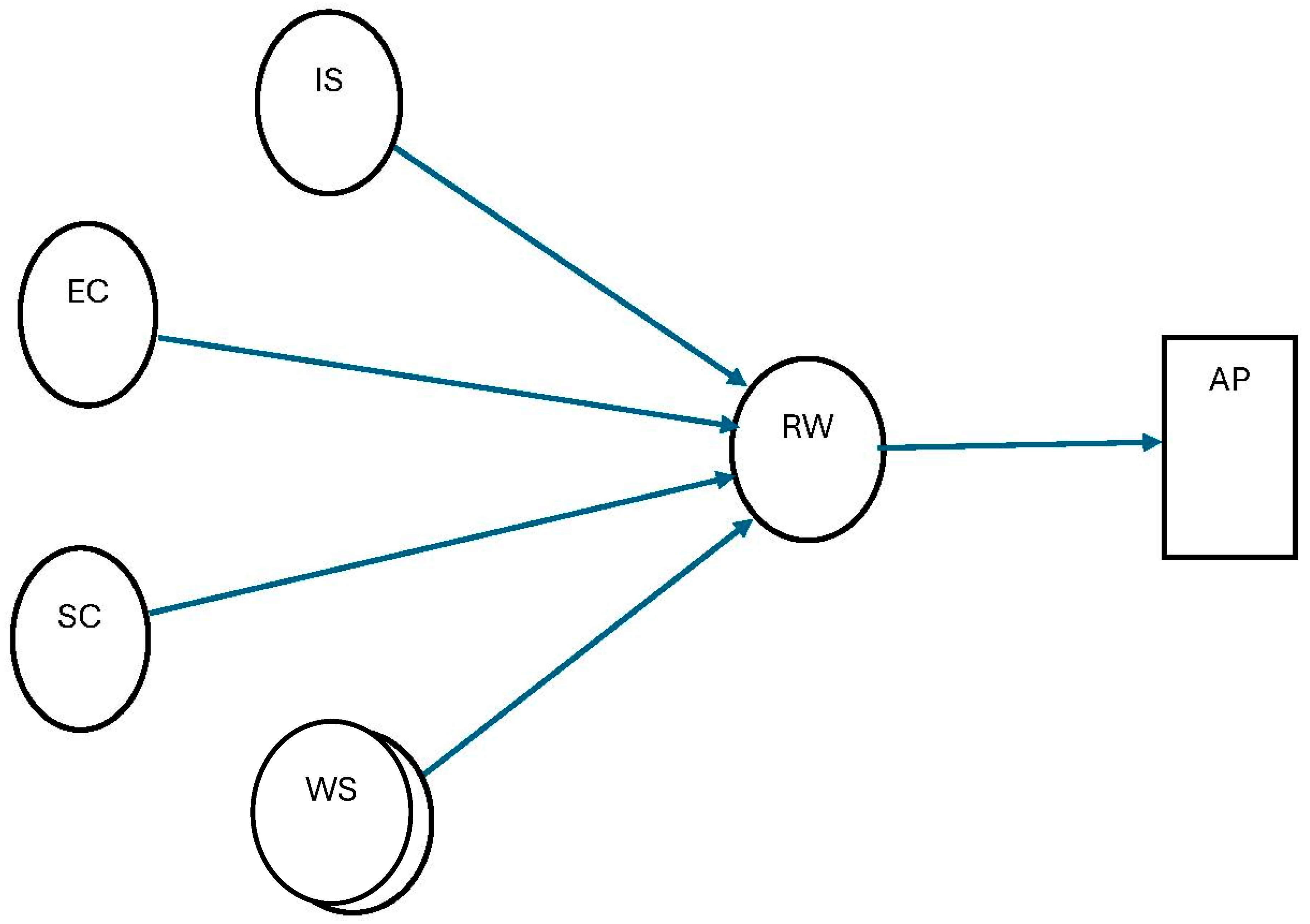

Table 1.
Sociodemographic Characteristics of Participants (N=497).
| Characteristic | Category | n | Percentage (%) |
| Gender | Male | 211 | 42.5 |
| Female | 277 | 55.7 | |
| LGBTQIA+ | 5 | 1.0 | |
| Prefer not to say | 4 | 0.8 | |
| Level of study (yrs) | Higher certificate | 153 | 30.8 |
| 1st Year | 146 | 29.4 | |
| 2nd Year | 149 | 30.0 | |
| 3rd Year | 35 | 7.0 | |
| Honours | 14 | 2.8 | |
| Living arrangements | With family | 331 | 66.6 |
| On campus residence with other roommates | 15 | 3.0 | |
| campus, on-campus residence without roommates | 13 | 2.6 | |
| Off-campus residence with other roommates | 52 | 10.5 | |
| Off-campus residence without roommates | 71 | 14.3 | |
| Other | 15 | 3.0 | |
| Head of Household | Mom | 139 | 28.0 |
| Dad | 141 | 28.4 | |
| Mom and Dad | 186 | 37.4 | |
| Grandparent | 6 | 1.2 | |
| Other | 16 | 3.2 | |
| Me/myself | 9 | 1.8 | |
| Health care | Public/state | 81 | 16.3 |
| Private (medical aid) | 416 | 83.7 | |
Table 2.
Exploratory Factor Analysis (EFA).
| KMO and Bartlett’s Test | |||||||
| Kaiser-Meyer-Olkin Measure of Sampling Adequacy | 0.828 | ||||||
| Bartlett's Test of Sphericity | <0.001 | ||||||
| Codes | Variable | Factor Loadings | |||||
| IS | WS | AP | RW | SCC | EVC | ||
| Factor 1: Institutional Support (IS) | |||||||
| IS1 | My campus does not have the necessary facilities to assist me with my studies (rs). | -.715 | -.118 | -.096 | .037 | .072 | -.132 |
| IS6 | I do not feel supported by my campus staff when I face challenges (rs). | -.662 | -.289 | -.038 | -.104 | .091 | -.172 |
| IS4 | I have easy access to my lecturers and other relevant resources when required. | .653 | .193 | .102 | .140 | .324 | -.044 |
| IS5 | My academic grades would improve if I had better support facilities and resources from my campus. | -.592 | .080 | -.107 | .005 | .194 | -.015 |
| IS2 | My lecturers have been a great source of support for my academic success. |
.587 | .180 | .042 | .175 | .336 | .038 |
| IS3 | Obtaining information for my assignments and what is required of me is easy at my campus. | .569 | .301 | .033 | .217 | .291 | .046 |
| Factor 2: Wellness Services (WS) | |||||||
| WS1 | I am aware of the wellness support facilities that my campus has to offer me | .072 | .803 | .055 | .003 | .171 | .126 |
| WS2 | My campus offers helpful mental health and counselling services | .202 | .740 | .135 | .071 | .110 | .082 |
| WS6 | I have no idea where I need to go for various wellness support services on my campus (rs) | -.096 | -.729 | -.133 | .029 | .117 | -.097 |
| WS5 | I find it easy to approach the wellness staff/team at my campus | .222 | .600 | .060 | .198 | .070 | .058 |
| Factor 3: Academic Performance (AP) | |||||||
| AP4 | I am satisfied with my grades and academic progress. | .147 | .132 | .818 | .220 | .101 | -.025 |
| AP1 | In general, I feel confident and positive about my academic progress and goals. | .172 | .096 | .720 | .324 | .167 | .086 |
| AP2 | In many ways, I feel disappointed about my academic achievements in my life. (rs) | -.192 | -.093 | -.714 | .034 | .164 | -.153 |
| AP3 | When I compare my academic progress with friends and acquaintances, it makes me feel good about my achievement. | -.076 | .083 | .678 | .166 | .034 | .026 |
| Factor 4: Relational Well Being (RW) | |||||||
| RW4 | In the past few months, I have felt calm and relaxed | .106 | .041 | .152 | .859 | .015 | .049 |
| RW5 | I usually wake up feeling fresh and rested | .057 | .077 | .192 | .785 | -.088 | .083 |
| RW3 | Lately, I have felt cheerful and in good spirits | .131 | .080 | .203 | .758 | .013 | .206 |
| Factor 5: Sociocultural Context (SCC) | |||||||
| SCC3 | I accept learning from other students with a different diverse cultural and ethnic backgrounds from mine. | .027 | .032 | .076 | .004 | .783 | .080 |
| SCC5 | In conversations about diverse cultural views with other students, I respect opinions that are different from mine | .021 | .061 | -.008 | -.100 | .740 | .100 |
| Factor 6: Environmental Context (EVC) | |||||||
| EVC4 | I do not fit in well with the people on my campus. (rs) | -.080 | -.127 | -.018 | -.043 | -.031 | -.745 |
| EVC2 | Maintaining close relationships is difficult and frustrating for me. (rs) | -.143 | .038 | -.140 | -.120 | .169 | -.692 |
| EVC5 | I enjoy personal and mutual conversations with friends or people on campus | -.006 | .153 | -.046 | .171 | .345 | .558 |
| EVC6 | I have many people whom I trust with personal and sensitive information about myself. |
.042 | .152 | .087 | .042 | .271 | .549 |
| Eigenvalues | 5.396 |
2.279 |
1.735 |
1.455 |
1.423 |
1.240 |
|
| % of Variance Explained | 23.461 |
9.910 |
7.543 |
6.328 |
6.186 |
5.392 |
|
| Average Variance Extracted (AVE) | .659 | .628 |
.830 |
.724 |
.644 |
.648 | |
| Cronbach’s alpha (α) | .743 |
714 |
764 | 810 | 536 | .519 | |
Table 3.
Assessment of the Structural Model Results.
| Path Coefficient | t-statistics | p-values | |
| Environmental Context -> Relational Wellbeing | 0.088 | 1.752 | 0.080 |
| Institutional Support -> Relational Wellbeing | 0.194 | 3.826 | 0.000 |
| Relational Wellbeing -> Academic Performance | 0.471 | 13.162 | 0.000 |
| Socio-Cultural Context -> Relational Wellbeing | 0.108 | 2.218 | 0.027 |
| Wellness Services -> Relational Wellbeing | 0.102 | 1.975 | 0.048 |
Disclaimer/Publisher’s Note: The statements, opinions and data contained in all publications are solely those of the individual author(s) and contributor(s) and not of MDPI and/or the editor(s). MDPI and/or the editor(s) disclaim responsibility for any injury to people or property resulting from any ideas, methods, instructions or products referred to in the content. |
© 2026 by the authors. Licensee MDPI, Basel, Switzerland. This article is an open access article distributed under the terms and conditions of the Creative Commons Attribution (CC BY) license.
Copyright: This open access article is published under a Creative Commons CC BY 4.0 license, which permit the free download, distribution, and reuse, provided that the author and preprint are cited in any reuse.


