

Submitted:
18 June 2026
Posted:
22 June 2026
You are already at the latest version
Abstract
Background/Objectives A systematic review and meta-analysis of polysomnographic sleep pa-rameters in bipolar disorder was conducted using articles identified through searches of major databases from inception to May 5, 2026. Methods: One hundred eight studies were identified in the systematic review. Forty-three case-control studies with 670 bipolar patients, 520 healthy con-trols and 280 unipolar depression patients were eligible for the meta-analyses. Total sleep time, sleep onset latency, sleep efficiency, wake after sleep onset, REM time and percentage, REM la-tency, REM density, stage 1, 2, time and percentage, slow wave sleep (DELTA) time and percent-age, of drug free patients with bipolar disorder were compared with case-control data of healthy controls and drug free patients with unipolar depression. The primary outcome was the standard mean difference. Data were fitted with a random-effects model. Publication bias assessment was checked by Egger's Regression and funnel plot asymmetry Results: Total sleep time and sleep ef-ficiency were reduced in both manic and depressive drug-free bipolar patients compared to healthy controls. Delta sleep time and percentage were reduced only in the depressive patients, whereas the manic patients showed decreased stage 2 sleep time, reduced REM sleep time, shortened REM la-tency and increased REM density. Drug free patients with unipolar depression showed reduced total sleep time and increased REM density compared to drug free patients with bipolar depression. Drug treated bipolar patients showed no differences compared to healthy controls, except for reduced % REM, increased REM latency and increased REM density. Conclusions: The results confirm the presence of sleep alterations in bipolar disorder, although sleep duration is reduced in both manic and depressive patients, reduced delta sleep in depressive patients and increased activity/pressure of REM in manic patients appear to characterize the two phases of the illness. Altered monoam-inergic activity during the depressive phase and increased cholinergic activity during the manic phase, might possibly be responsible for the sleep alterations also contributing to the mood changes and switch mechanisms.
Keywords:
bipolar disorder
; mania
; depression
; sleep
; REM sleep
; delta sleep
; meta-analysis
; REM density
; arousal
1. Introduction
Bipolar disorder (BD) is a chronic psychiatric condition [1,2] that is estimated to affect 0.5-3% of the population [2,3,4]. Periods of depressed mood, with hallmark loss of interest and pleasure, alternate with periods of hypomania (type II BD) or mania (type I BD), presenting with symptoms that range from unusually elated mood, disinhibition and restlessness to extreme irritation and anger [1,2,3,4,5]. Depressive episodes are nonetheless reported to account for 75% of the symptomatic time [1]. Both manic and depressive phases can present psychotic features [6], especially in those diagnosed with type I BD [7]. Psychotic symptoms can be congruent or incongruent with the mood phase, with incongruence being associated with a poorer outcome of the condition [6]. These abnormal mood periods are separated by “euthymic” intervals where mood appears normal, although residual symptoms are present in most cases [8,9]. Periods of euthymia can last weeks to years [10]. Such periods can be virtually absent in rapid-cycling patients, defined as experiencing at least four mood episodes in a year [11,12,13] and associated with poorer treatment response [14]. Similarly, BD patients with mixed features are associated with poorer treatment response and outcomes [15], experiencing overlapping symptoms of both manic/hypomanic and depressive phase [16,17,18]. Euthymia is often achieved with pharmacological treatment: despite lithium salts being the gold standard choice [19], other mood stabilizers like valproic acid [20] and lamotrigine [21] and antipsychotics like quetiapine [22,23] are widely used for the treatment of BD as well [24]. Antidepressants are generally avoided as monotherapy given their risk to trigger mania [24,25]. Nonetheless, poor compliance with pharmacological treatment is common in BD [1]. Patients with BD have the highest suicide rate among psychiatric disorders [26], with approximately 15-20% of patients dying by suicide [1,27].
Sleep disturbances in BD have been reported since early studies on the “manic-depressive illness” [28,29,30] and associated with poorer quality of life [31,32,33] and cognitive functioning [34,35], suicide attempts [36,37] and higher mood episode relapse [38,39]. The circadian rhythm disturbances observed in BD are believed to play a pivotal role in the genesis and outcome of BD [40,41,42,43,44]. Sleep reduction has been proposed to be the common pathway of various biological and psychosocial factors triggering the onset of mania, creating a self-reinforcing cycle [45]. Decreased need for sleep and insomnia is, in fact, observed in hypomania and mania [46], whereas the depressive phase is associated with both insomnia and hypersomnia [38,47,48], although the latter appears to be more related to anergia rather than to increased sleep propensity [49]. High prevalence of sleep disturbances was nonetheless observed prior to a mood episode [50].
1.1. Polysomnographic Studies of Bipolar Disorder and Healthy Controls
Polysomnography (PSG) case-control investigations of sleep in BD and in healthy controls (HC) have been conducted in the last decades with heterogeneous results. Total sleep time (TST) was consistently found to be decreased in drug-free manic patients [51,52,53] and normal in drug-free depressed BD patients [54,55,56,57,58,59]. Nonetheless, a decreased TST in bipolar depression was also found [51,60,61]. Sleep onset latency (SOL) was found to be prolonged in bipolar depression [51,54,60,61], although other studies reported normal SOL in both the depressive [55,57,58,59] and manic/hypomanic phase [52,53,62,63]. Sleep efficiency (SE) was reported to be decreased in mania [51,53], hypomania [63] and bipolar depression [51,54,61], although several studies reported normal SE in mania [52,62] and bipolar depression [55,57,58,60]. Wake after sleep onset (WASO) was mostly reported to be normal in both mania [51,52,53,62] and bipolar depression [51,54,55,57,58,59,60].
Reports on NREM sleep in bipolar disorder are not consistent. Some studies reported no abnormalities in drug-free BD [52,62,64], while others reported abnormalities in either or both sleep stage 1 and 2 duration (ST1, ST2) and percentage (%ST1, %ST2) [53,56,57,59,60,61,63]. Regarding slow-wave sleep (SWS), several studies found no differences in either delta sleep time (DELTA) or percentage (%DELTA) regardless of the mood phase [51,52,54,58,59,61], while few studies reported reduced stage 3 sleep duration (ST3) [62] or increased percentage (%ST3) [53]. %DELTA was found to be reduced in hypomania [63].
Reports on REM sleep in bipolar disorder are similarly heterogeneous: REM sleep time (REMT) and percentage (%REM) were found to be normal regardless of the mood phase [51,53,54,56,57,58,59,60,62,63,65]. REM latency (REML) was mainly reported to be shortened in the depressive phase [51,54,55,58,60,61,66] and in mania [51,52,53] or hypomania [63], although not different in other studies [57,59,62,65,67]. REM density (REMD) was reported to be increased [52,53,58] in mania, hypomania [63] and in bipolar depression [60,61], although other studies reported normal REMD in each phase [51,54,55,57,59,65].
1.2. Polysomnographic Studies of Bipolar and Unipolar Depression
Since early studies, patients with bipolar depression have been reported to have longer TST [54,55,58,60,72,73,74] and increased SE [54,55,58,73] than patients with unipolar depression (UD). Reports on SOL and WASO [51,54,55,60,73] in BD depression compared to UD, conversely, provided very heterogeneous results.
A similar heterogeneity of findings concerns both NREM sleep [51,60,73,74,75], including SWS [51,54,56,58,72,73,76], and REM sleep parameters [51,54,55,56,58,59,60,61,64,67,72,73,74,77]
A recent study reported reduced %ST2, %DELTA and REML and increased %REM in minimally treated, first-episode BD compared to UD [78].
1.3. Polysomnographic Studies of Pharmacological Treatment in Bipolar Disorder
The effect of lithium on BD sleep parameters has been investigated in a limited number of studies, most of which reported an increase in TST and SE, a reduction in SOL but no consistent beneficial effect on WASO. NREM sleep increased, especially through an increase in ST2 and SWS, as REMT increased and REML was prolonged [79,80,81]. Some studies investigated the effect of tricyclic antidepressant amitriptyline or monoamine oxidase inhibitor tranylcypromine on bipolar depression sleep, both showing a marked REM-suppressing effect [82,83]. Regarding the effect of antipsychotic treatment on sleep during the manic phase, olanzapine was found to be more effective than haloperidol in stabilizing sleep, increasing SE and decreasing WASO [84], and quetiapine was reported to increase TST and REML [85].
When BD patients receiving stable lithium treatment were compared to HC, some studies found no effect of lithium on sleep parameters [86] or that TST, SE and NREM sleep were still decreased in BD [87]. Nonetheless, another study found increased NREM and significant REM suppression after long-term lithium treatment [88]. PSG studies of BD patients on stable combination pharmacotherapy (mood stabilizers, antipsychotics, antidepressants, benzodiazepines) reported an overall stabilization of sleep parameters, although with an increase of REMD and a longer SOL, compared to HC [89,90,91,92,93,94].
The present study aims to systematically review the available literature on sleep parameters in bipolar disorder patients, in the different phases of the illness, when drug free or under drug treatment, and in comparison, with normal controls and unipolar depression. A meta-analysis was also conducted on the available case-control studies.
2. Methods
The literature search was conducted querying PubMed, Web of Science (WoS) and PsycINFO databases from inception to 2026. The main keywords combination used to ensure the identification of all the relevant studies was: “(sleep OR sleep∗) AND bipol*”, although different other keywords were combined to perform a thorough research: “mania OR manic OR manic-depressive”, “PSG OR polysomnogra∗”, “EEG OR electroencephalogra∗”, “REM OR REMS OR rapid-eye-movement OR rapid-eye-movements”, “”NREM or non-REM”, “SWS OR slow-wave”, “paradox OR paradox∗”, “print OR print∗”, “D-phase OR dream OR dream∗”, “night OR night∗”, “monit∗”, “architect∗”. Specific attention was devoted to identifying studies regarding the effect of drugs on BD patients, therefore further keywords also based on both molecule and brand name were implemented in the search, such as: “mood stabilizer”, “anticonvulsant”, “lithium”, “antipsychotic”, “Depakote”, “Lamictal” and so on. These queries provided 3702 studies from PubMed, 4543 studies from WoS and 72 studies from PsycINFO. Out of these 8317 studies, 4541 resulted in duplicates present on multiple databases. The remaining 3776 studies were entirely read to assess their usefulness: 3670 studies were excluded due to lack of sleep data provided. 106 studies were assessed as eligible and all of them were retrieved, although 5 of these were excluded due to presenting a patient's sample (and their sleep data) already entirely presented in a previous study by the same author or co-author. 107 studies were included in the study: 101 studies were included in database research, and 6 other eligible studies were manually researched and found (due to not being indexed in any database previously searched). 43 studies were assessed as eligible for meta-analysis, while the remaining 64 studies were assessed as eligible for the systematic review only. The eligibility decision was made after a full-text article reading by the authors (GB, BT and DM), all agreeing on the inclusion or exclusion of each study. The meta-analysis was conducted in order to investigate sleep parameters differences between the following groups: drug-free BD and HC (Table 1), drug-free BD and drug-free UD (Table 2), treated BD and HC (Table 3), drug-naive/drug-free BD and treated BD (pre and post-treatment) (Table 4). Case-control studies included in the systematic review only are reported in Table 5 (with the relative reason for exclusion) [93,95,96,97,98,99,100,101,102,103,104,105,106,107]. All the other non-case-control studies included in the systematic review only are reported in Table 6 [29,30,49,85,108,109,110,111,112,113,114,115,116,117,118,119,120,121,122,123,124,125,126,127,128,129,130,131,132,133,134,135,136,137,138,139,140,141,142,143,144,145,146,147,148,149,150,151,152,153]. Two studies [85,93] provided separate datasets, one eligible for inclusion in the meta-analysis and the other only for the systematic review. Figure 1 presents the PRISMA (Preferred reporting items for systematic reviews and meta-analyses) diagram of the systematic review.
2.1. Eligibility Criteria
Studies were considered eligible for inclusion in the meta-analysis if they met the following criteria:
1) Case-control studies including at least one sample of patients with BD, whether drug-naive, drug-free, or treated, and one HC sample.
2) Studies including at least one sample of patients with BD and one sample of patients with UD, both of whom were drug-naive or drug-free.
3) Studies including at least one sample of patients with BD assessed before (while drug-naive or drug-free) and after treatment with at least one antipsychotic, antidepressant or mood stabilizer.
4) Studies in which the drug-free period was clearly reported.
5) Studies in which BD was diagnosed according to DSM and/or ICD criteria.
6) Studies in which sleep was assessed using PSG and scored according to the AASM or Rechtschaffen & Kales criteria.
Studies were excluded based on the following criteria:
1) Studies without an HC sample.
2) Studies in which the BD sample included more than 5% of participants with diagnoses other than BD (e.g., a mixed BD and UD sample).
3) Studies in which more than 5% of the BD sample differed from the majority of the sample with respect to treatment status (e.g., 90% drug-free and 10% treated).
4) Studies with a BD patient sample with comorbidities (e.g., ADHD, GAD).
5) Studies in which the mood phase of the BD sample was not specified.6) Single-case studies.
7) Studies describing PSG measurements in BD patients without reporting clear data.
The excluded studies were included in the systematic review.
As specified above, studies were excluded if the BD sample was not sufficiently homogeneous with respect to diagnosis and medication status. A conservative threshold (>5% of the sample) was applied to minimize potential confounding (154,155) resulting from the inclusion of participants with different diagnoses and/or exposure to psychotropic medications, both of which may substantially influence sleep architecture and polysomnographic parameters.
The quality of each study included in the systematic review and/or meta-analysis was assessed using the Newcastle-Ottawa Scale, and only studies with a score of at least 6 were included in the meta-analysis.
2.2. Data Extraction
Data extracted from each study were: sample size, age, gender, diagnosis, medication status, type of medication (if reported), mean and standard deviation (SD) of TST, SOL, SE, WASO, REMT, %REM, REML, REMD, ST1, ST2, ST3, ST4, %ST1, %ST2, %ST3, %ST4,
DELTA, %DELTA. Some studies did not report SD for their sleep data; therefore, SD has been estimated as follows. In each meta-analysis (e.g. REM density, BD vs HC), the average SD was estimated by calculating the weighted average (based on the number of participants of each study) of all the available SDs. To the studies participating in the very same meta-analysis and whose sleep parameters were reported without SD, this estimated, weighted average SD was attributed. This estimation method for SD is regarded as reliable (Higgins et al., 2024) and is the only estimation process regarding missing data conducted in this study. In a limited number of studies some sleep parameters were not reported clearly but could be extractable by calculating them from other parameters (e.g., REMT = TST/100 x %REM). All these cases of data extraction have been properly highlighted in the supplementary material, where meta-analysis and systematic review data is displayed in extended form.
Some studies were reported multiple times in several tables for they included multiple independent patient samples or diagnostic subgroups that constituted separate datasets to the analyses. Therefore, repeated citations do not represent duplicate inclusion of the same sample, but distinct patient samples analyzed separately within the original study.
2.3. Statistical Analysis
Jamovi 2.6.44 (desktop Windows x64 solid version) was used to conduct the meta-analysis. R 4.6.0 (desktop Windows x64 version) with meta power 0.2.2 package was used to compute statistical power for each meta-analysis. A minimum of three data sets from studies was required to perform a meta-analysis for each parameter. The analysis was carried out using the standardized mean difference as the outcome measure. A random-effects model was fitted to the data. The amount of heterogeneity (i.e., tau2), was estimated using the restricted maximum-likelihood estimator. In addition to the estimate of tau2, the Q-test for heterogeneity and the I2 statistic are reported. In case any amount of heterogeneity is detected (i.e., tau2 > 0, regardless of the results of the Q-test), a prediction interval for the true outcomes is also provided. Studentized residuals and Cook's distances are used to examine whether studies may be outliers and/or influential in the context of the model. Studies with a studentized residual larger than the 100 x (1 - 0.05/(2 X k)) th percentile of a standard normal distribution are considered potential outliers (i.e., using a Bonferroni correction with two-sided alpha = 0.05 for k studies included in the meta-analysis). Studies with a Cook's distance larger than the median plus six times the interquartile range of the Cook's distances are influential. The rank correlation test and the regression test, using the standard error of the observed outcomes as predictor, are used to check for funnel plot asymmetry. The Knapp-Hartung correction was applied in meta-analyses including fewer than 10 studies to reduce the risk of underestimating standard errors and producing overly narrow confidence intervals.
3. Results
A total of 43 case-control studies with 670 bipolar patients, 520 healthy controls, and 280 patients with unipolar depression satisfied the criteria to be eligible for the meta-analysis [51,52,53,54,55,56,57,58,59,60,61,62,63,64,65,66,67,68,69,70,71,72,73,74,75,76,77,79,80,81,82,83,84,85,86,87,88,89,90,91,92,93,94]. The results of the extended meta-analysis are reported in Table 7. Parameters relating to heterogeneity, publication bias, the presence of outliers or particularly influential studies, and tests for possible funnel plot asymmetry are reported in Table 8. Figure 2 shows Forest plot of sleep parameter differences between drug-free BD and HC.
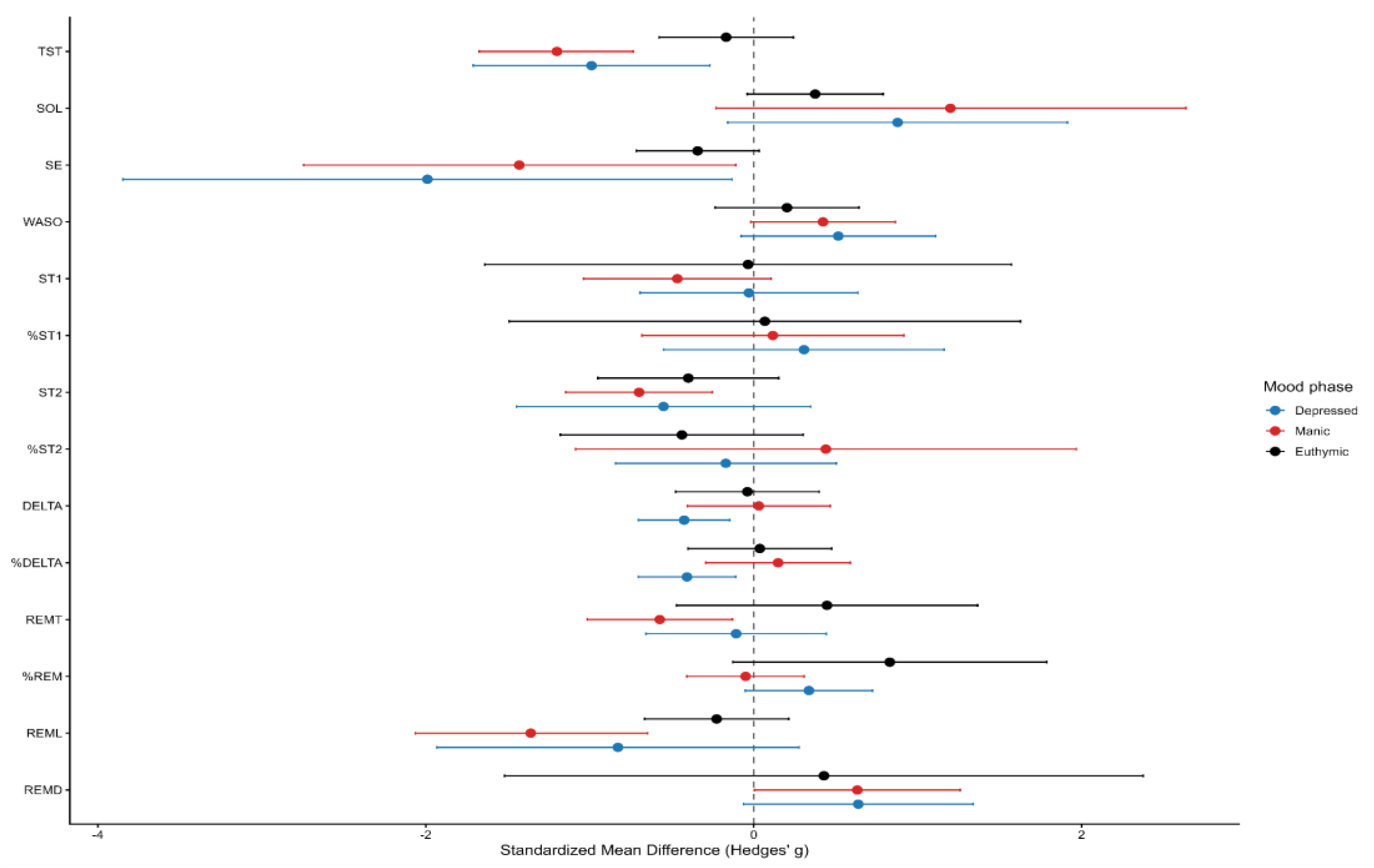
Figure 2.
Figure 3 shows Forest plot of sleep parameter differences between drug-free depressed BD and UD.
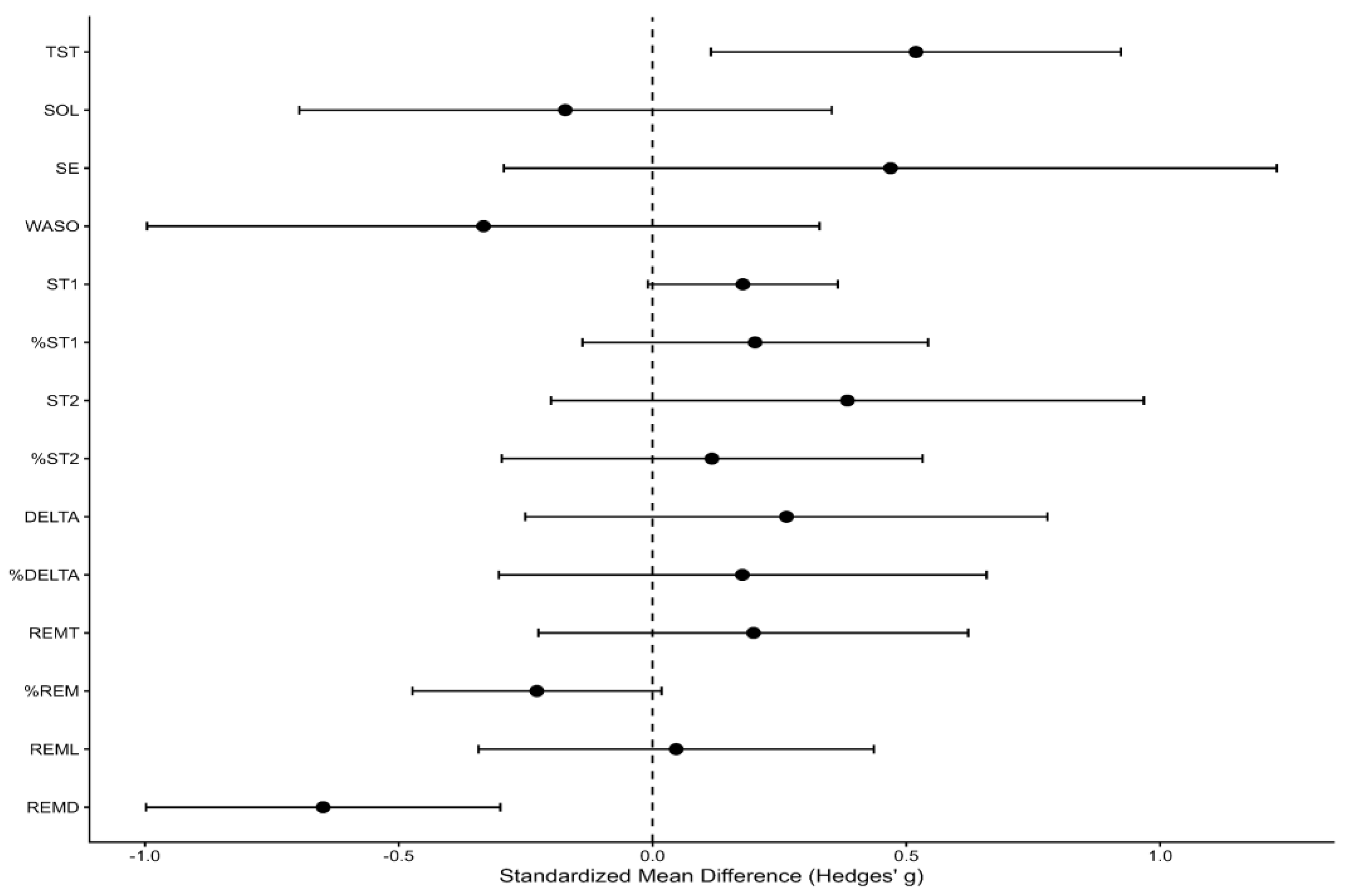
Figure 3.
Figure 4 shows Forest plot of sleep parameter differences between treated BD and HC.
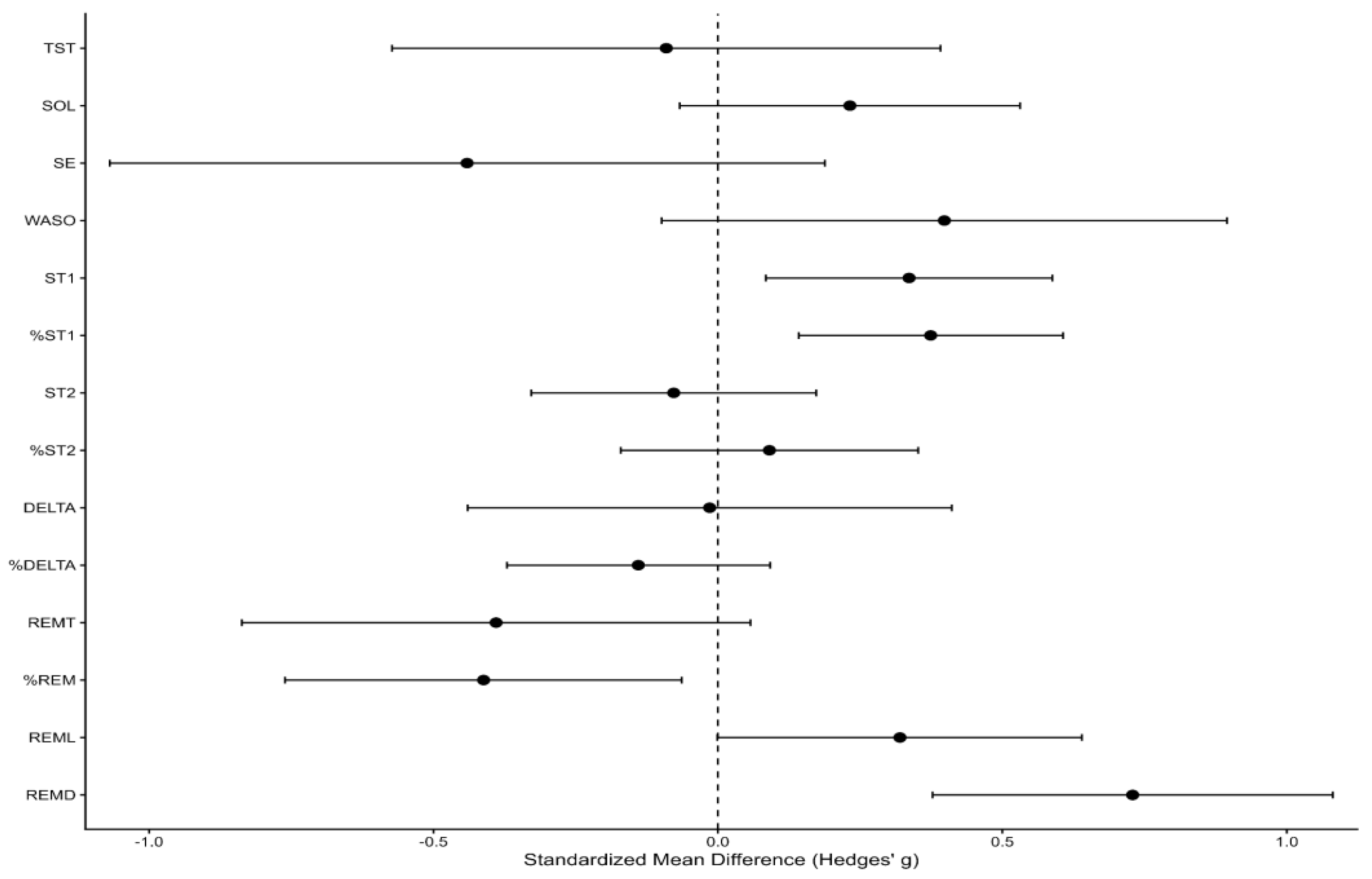
Figure 4.
Figure 5 shows Forest plot of sleep parameter differences between pre-post treatment BD
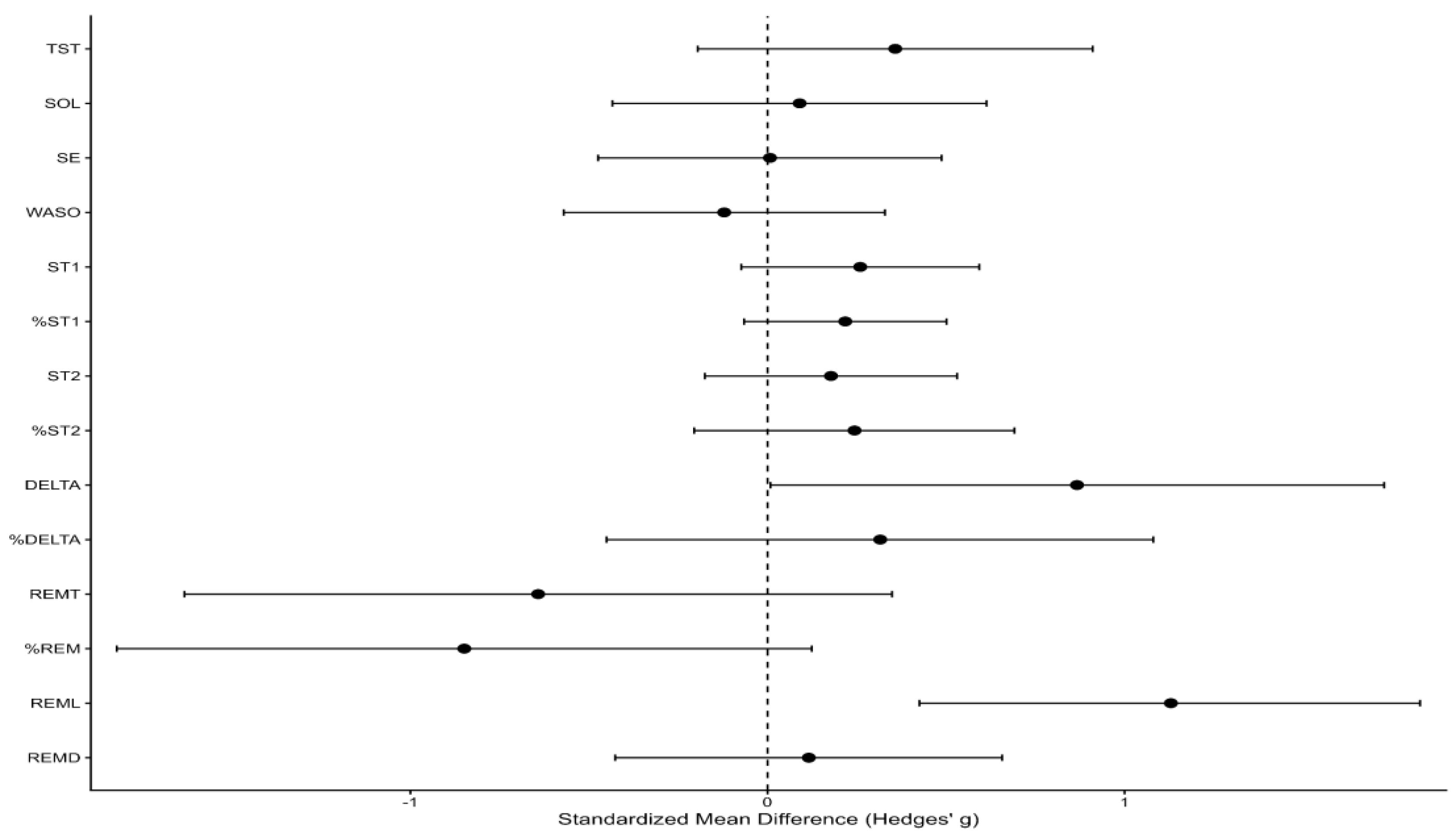
Figure 5.
3.1. Sleep Duration and Continuity
The TST in drug-free BD patients, either in the depressive (369.24 ± 54.57 VS 403.39 ± 31.39; p=0.007) and manic (311.88 ± 84.76 VS 391.24 ± 42.93; p=0.001) patients were reduced compared to HCs. Unipolar drug-free depressive patients showed a reduced TST compared to drug-free BD depressive patients (372.28 ± 61.40 VS 348.66 ± 63.33; p=0.012). Pharmacological treatment appeared to normalize the TST in BD patients when compared to HCs (386.97 ± 73.72 VS 391.01 ± 66.82; p=0.712). The SOL of drug-free BD depressive patients did not significantly differ compared to HCs (32.53 ± 19.95 VS 19.49 ± 10.06; p=0.097) or drug-free UD patients (37.11 ± 22.09 VS 36.23 ± 13.71; 0.520). The SE of drug-free BD patients was reduced in depressive (81.22 ± 8.18 VS 88.60 ± 5.32; p=0.036) and manic (74.76 ± 14.66 VS 87.90 ± 5.20; p=0.034) patients compared to HCs, while it did not appear to differ from that of drug-free UDs (p=0.227). Pharmacological treatment appeared to normalize the SE of BD patients (p=0.169). The WASO parameter was not different in drug-free BD patients compared to HC or UD patients.
3.2. NREM Sleep
ST2 was reduced in drug-free BD manic patients compared to HCs (176.11 ± 95.00 VS 229.25 ± 41.00; p=0.002), DELTA and % DELTA were reduced in drug-free BD depressive patients compared to HCs, respectively (44.10 ± 34.00 VS 68.87 ± 30.33; p=0.003) and (11.98 ± 7.74 VS 16.86 ± 6.16; p=0.007). Drug treatment appeared to normalize the DELTA of treated BD patients (59.75 ± 35.64 VS 63.91 ± 32.15; p=0.946); comparison of pre- and post-treatment DELTA values in BD patients showed higher post-treatment values (37.01 ± 16.83 VS 48.84 ± 25.88; p=0.048). Treated BD patients had also increased ST1 (47.80 ± 30.73 VS 39.95 ± 21.53; p=0.009), and %ST1 (12.16 ± 8.54 VS 9.63 ± 5.21; p=0.002) compared to Healthy controls.
3.3. REM Sleep
REMT was reduced in drug-free BD manic patients (61.48 ± 29.62 VS 75.79 ± 18.29; p=0.011) compared to HCs. Drug-treated BD patients showed a reduced %REM compared to HCs (16.47 ± 6.66 VS 19.79 ± 7.04; p=0.020). REML in drug-free BD patients, compared to HCs, was reduced in manic patients (54.58 ± 15.35 VS 75.76 ± 20.75; p<0.001). Treated BD patients showed reduced %REM (16.47 ± 6.66 VS 19.79 ± 7.04; p=0.020) increased REM latency (108.43 ± 53.54 VS 90.27 ± 40.95; p=0.050) and increased REM density (12.06 ± 7.91 VS 7.37 ± 4.92; p=0.001), compared to healthy controls. Post-treatment values showed increased REML in BD patients compared to pre-treatment values (61.67 ± 31.46 VS 126.89 ± 61.83; p=0.002).
REMD was increased in drug-free BP manic patients compared to HCs (8.14 ± 5.07 VS 7.24 ± 0.44; p=0.048). Drug-free BD depressive patients had reduced REMD compared to drug-free UD patients (1.84 ± 0.50 VS 2.14 ± 0.49; p<0.001).
4. Discussion
Studies on polysomnographic EEG in bipolar patients have been frequently inconclusive, due to small sample size, with most of the studies referring to single case reports, clinical heterogeneity of patients, different phases of the illness and medication status.
A review (156) on EEG sleep alterations of bipolar patients across different clinical stages and of high-risk individuals, including a total of 22 studies, described as the most consistent findings across all stages of the disorder, increased sleep onset latency and increased REM density. Of the total sample included, six studies had patients during drug treatment and 14 studies during a medication-free period.
A recent meta-analysis (157) on sleep of bipolar patients across mood phases has reported that during depressive phase, patients had higher percentage of REM sleep, while in manic/mixed phase patients exhibited shorter total sleep time, lower sleep efficiency, and longer sleep onset latency. The study did not differentiate patients according to their drug status and included sleep parameters assessed by either actigraphy, polysomnography or sleep diary, for several of EEG sleep architecture variables, meta-analysis was not applicable, while for others the number of studies considered was between 2 and 3.
In our study, which included a total of 43 polysomnographic studies, alterations of sleep duration and of the different sleep stages were found in each phase of the bipolar disorder, but with some differences according to the phase of the illness.
Drug free bipolar depressive patients showed reduction of total sleep time, sleep efficiency, and of delta sleep duration and percentage compared to healthy controls. They also showed differences with drug-free patients with unipolar depression that had reduced total sleep time and increased REM density compared to patients with bipolar depression.
Reduction of SWS is a consistent feature in major depression (158), Borbely and Wirz Justice (159) have proposed that process S is deficient in depression and that rebound of SWS following sleep deprivation might restore SWS and improve depression.
Drug free manic patients showed reduction in total sleep time and sleep efficiency. A reduced need for sleep in manic patients was confirmed by both reduced stage 2 time and reduced REM time; they also had shortened REM latency and increased REM density. Early and seminal work on rapid cycling bipolar patients (111)described that the shifts to an elevated mood were accompanied by increased REM activity (number of REMs in the REM period) during the second half of the night while the shifts to depressed mood were associated with decreased REM activity during the second half of the night, furthermore the REM index (ratio of REM activity to REM time) was decreased on “depressive” nights. The presence of these REM alterations, suggestive of an increased activity of REM in the manic phase, might reflect enhanced cholinergic activity. possibly contributing or correlating to mood changes and switch mechanisms.
Treated bipolar patients showed no differences compared to healthy controls, except for reduced % REM, increased REM latency and REM density. Although most of the patients were on mood stabilizers, the use of antidepressants was not negligible in the sample analyzed, thus a reduced REM % and increased REM latency can be attributed to the well-known REM suppressing effect of antidepressants. Results of the comparison between pre and post treatment also showed increased REM latency following treatment.
REM density has been considered as a possible trait marker in depressed patients, also present in high-risk individuals. It has also been suggested that REM density may reflect sleep satiety (160), Aserinsky found that in extended sleep REM density increased with each successive REM episode, approaching a maximum value, with no further changes with additional sleep. According to Aserinsky, REM density reflects the satisfaction of a sleep need or the build-up of a pressure to awaken. Feinberg et al. (161) first proposed that REM density may also be related to level of arousal, with REM density being lower when sleep is deeper. A recent paper has proposed REM density as a physiological marker which indicate during sleep the “time to wake”. (162)
Patients with unipolar depression showed reduced total sleep time and increased REM density compared to patients with bipolar depression, suggesting that EEG sleep might serve as a possible tool to differentiate the two diagnostic categories. At clinical level unipolar patients show more frequently insomnia, whereas bipolar patients show either insomnia or (not restorative) hypersomnia. A recent meta-analysis (163) has reported that depression in unipolar disorder was associated with a shorter total sleep time and poorer sleep efficiency than patients diagnosed with bipolar depression.
Although the present study addressed all the available data in literature some aspects should be considered in interpreting the results. The meta-analyses concerning manic and euthymic bipolar disorder samples were based on a small number of datasets, reflecting limited availability of eligible studies and resulting in imprecise and unstable effect estimates. Consequently, statistical power was limited, with wide confidence intervals and reduced reliability of the pooled results. Several analyses also exhibited substantial heterogeneity, which constrains the robustness of quantitative inferences, although this is a frequent issue in all psychiatric samples. Also, the imputation of missing standard deviations, applied in a limited number of analyses, may have affected effect size precision and between-study variability, representing a potential source of bias. It should also be considered that a major limitation of studies assessing a biological variable in a clinical population is the medication status, drug treatment can clearly influence the measures addressed. Drug treatments in bipolar patients include mood stabilizers such as lithium and valproate, antidepressants, antipsychotics and benzodiazepine. All these classes of drugs have been shown to affect sleep. In the data analyzed, most of the drug free patients had a wash-out period of at least two weeks, with very few studies with a shorter wash-out period. Although two weeks is the gold-standard when studying a drug-free patient, a residual effect of the drugs cannot be excluded, especially when considering rebound effects on the sleep variables from withdrawal of previous treatment (i.e. REM rebound following REM suppressing effects from antidepressants).
Conclusion
Several lines of evidence suggest a close relationship between mechanisms governing sleep and mood in bipolar disorder. Sleep disturbances are core clinical features either in the depressive and manic phases, sleep deprivation induces a rapid although temporary antidepressant effect in the depressive phase and can induce mania when the patient is euthymic, most of drugs used to treat the illness have also effects on sleep parameters.
The results of the present study confirm the presence of polysomnographic EEG sleep alterations in bipolar disorder. Although the duration of sleep is reduced in both depressive and manic patients, differences in the two main sleep components, Delta and REM sleep, appear to characterize the two ill phases.
The meta-analysis shows that delta sleep is consistently reduced in drug free depressed bipolar patients, whereas reduced REM latency and increased REM density in drug free manic bipolar patients are found. Interestingly, when treated, patients show no major differences with healthy controls, suggesting that most sleep alterations can be state dependent. Altered monoaminergic activity during the depressive phase and increased cholinergic activity during the manic phase, might possibly be responsible for the sleep alterations also contributing to the mood changes and switch mechanisms. Further studies should better assess the significance of increased REM density that appears to be elevated even in treated BP patients.
Author Contributions
“Conceptualization, G.B. and D.M.; methodology, D.M and G.B.; validation, D.M. B.T.; formal analysis, D.M. B.T..; writing—original draft preparation, G.B. D.M..; writing—review and editing, G.B. D.M..;. All authors have read and agreed to the published version of the manuscript.
Funding
Please add: “This research received no external funding”.
Institutional Review Board Statement
the study did not require ethical approval.
Informed Consent Statement
Not applicable.
Data Availability Statement
no new data were created.
Conflicts of Interest
The authors declare no conflicts of interest.
Abbreviations
The following abbreviations are used in this manuscript:
| BD | Bipolar disorder |
| DELTA | Delta sleep time |
| %DELTA | Delta sleep percentage |
| HC | Healthy controls |
| NREM | Non-rapid-eye-movement |
| PRISMA | Preferred reporting items for systematic reviews and meta-analyses |
| PSG | Polysomnography |
| REM | Rapid-eye-movement |
| REMD | Rapid-eye-movement density |
| REML | Rapid-eye-movement latency |
| REMT | Rapid-eye-movement time |
| %REM | Rapid-eye-movement percentage |
| SD | Standard deviation |
| SE | Sleep efficiency |
| SOL | Sleep onset latency |
| ST1 | Stage 1 sleep time |
| ST2 | Stage 2 sleep time |
| %ST1 | Stage 1 sleep percentage |
| %ST2 | Stage 2 sleep percentage |
| SWS | Slow-wave sleep |
| TST | Total sleep time |
| UD | Unipolar depression |
| WASO | Wake after sleep onset |
| WoS | Web of Science |
References
- Nierenberg, A. A.; Agustini, B.; Köhler-Forsberg, O.; Cusin, C.; Katz, D.; Sylvia, L. G.; Peters, A.; Berk, M. Diagnosis and Treatment of Bipolar Disorder: A Review. JAMA 2023, 330(14), 1370–1380. [Google Scholar] [CrossRef] [PubMed]
- Singh, B.; Swartz, H. A.; Cuellar-Barboza, A. B.; Schaffer, A.; Kato, T.; Dols, A.; Sperry, S. H.; Vassilev, A. B.; Burdick, K. E.; Frye, M. A. Bipolar disorder. Lancet 2025, 406(10506), 963–978. [Google Scholar] [CrossRef] [PubMed]
- Keck, P. E., Jr.; McElroy, S. L.; Arnold, L. M. Bipolar disorder. Med. Clin. N. Am. 2001, 85(3), 645–ix. [Google Scholar] [CrossRef] [PubMed]
- Bauer, M. S. Bipolar Disorder. Ann. Intern. Med. 2022, 175(7), ITC97–ITC112. [Google Scholar] [CrossRef] [PubMed]
- Kessing, L. V.; González-Pinto, A.; Fagiolini, A.; Bechdolf, A.; Reif, A.; Yildiz, A.; Etain, B.; Henry, C.; Severus, E.; Reininghaus, E. Z.; Morken, G.; Goodwin, G. M.; Scott, J.; Geddes, J. R.; Rietschel, M.; Landén, M.; Manchia, M.; Bauer, M.; Martinez-Cengotitabengoa, M.; Andreassen, O. A.; Vieta, E. DSM-5 and ICD-11 criteria for bipolar disorder: Implications for the prevalence of bipolar disorder and validity of the diagnosis - A narrative review from the ECNP bipolar disorders network. Eur. Neuropsychopharmacol. J. Eur. Coll. Neuropsychopharmacol. 2021, 47, 54–61. [Google Scholar] [CrossRef] [PubMed]
- Chakrabarti, S.; Singh, N. Psychotic symptoms in bipolar disorder and their impact on the illness: A systematic review. World J. Psychiatry 2022, 12(9), 1204–1232. [Google Scholar] [CrossRef] [PubMed]
- Goes, F. S.; Sadler, B.; Toolan, J.; Zamoiski, R. D.; Mondimore, F. M.; Mackinnon, D. F.; Schweizer, B.; Bipolar Disorder Phenome Group; Raymond Depaulo, J., Jr.; Potash, J. B. Psychotic features in bipolar and unipolar depression. Bipolar Disord. 2007, 9(8), 901–906. [Google Scholar] [CrossRef] [PubMed]
- Grover, S.; Avasthi, A.; Chakravarty, R.; Dan, A.; Chakraborty, K.; Neogi, R.; Desouza, A.; Nayak, O.; Praharaj, S. K.; Menon, V.; Deep, R.; Bathla, M.; Subramanyam, A. A.; Nebhinani, N.; Ghosh, P.; Lakdawala, B.; Bhattacharya, R.; Ghosh, P. Residual symptoms in bipolar disorders: Findings from the bipolar Disorder course and outcome study from India (BiD-CoIN study). Psychiatry Res. 2021, 302, 113995. [Google Scholar] [CrossRef] [PubMed]
- Choi, J. W.; Lee, J. H.; MacDougall, A.; Sharma, V.; Elfakhani, M.; Liu, A.; Kim, B. J.; Lee, S. J.; Lee, Y. J.; Lim, E. J.; Kang, N.; Cha, B.; Lee, D. Residual subjective depressive symptoms and resilience in patients with bipolar disorder. J. Affect. Disord. 2025, 380, 631–636. [Google Scholar] [CrossRef] [PubMed]
- Vidal-Rubio, S. L.; Balanzá-Martínez, V.; Cuenca, M.; Vila-Francés, J.; Vieta, E.; Romeu, J. E. Duration of euthymia and predominant polarity in bipolar disorder. J. Affect. Disord. 2018, 241, 356–359. [Google Scholar] [CrossRef] [PubMed]
- Barrios, C.; Chaudhry, T. A.; Goodnick, P. J. Rapid cycling bipolar disorder. Expert Opin. Pharmacother. 2001, 2(12), 1963–1973. [Google Scholar] [CrossRef] [PubMed]
- Bauer, M.; Beaulieu, S.; Dunner, D. L.; Lafer, B.; Kupka, R. Rapid cycling bipolar disorder--diagnostic concepts. Bipolar Disord. 2008, 10 1 Pt 2, 153–162. [Google Scholar] [CrossRef] [PubMed]
- Carvalho, A. F.; Dimellis, D.; Gonda, X.; Vieta, E.; McIntyre, R. S.; Fountoulakis, K. N. Rapid cycling in bipolar disorder: a systematic review. J. Clin. Psychiatry 2014, 75(6), e578–e586. [Google Scholar] [CrossRef] [PubMed]
- Miola, A.; Fountoulakis, K. N.; Baldessarini, R. J.; Veldic, M.; Solmi, M.; Rasgon, N.; Ozerdem, A.; Perugi, G.; Frye, M. A.; Preti, A. Prevalence and outcomes of rapid cycling bipolar disorder: Mixed method systematic meta-review. J. Psychiatr. Res. 2023, 164, 404–415. [Google Scholar] [CrossRef] [PubMed]
- Rosenblat, J. D.; McIntyre, R. S. Treatment of mixed features in bipolar disorder. CNS Spectr. 2017, 22(2), 141–146. [Google Scholar] [CrossRef] [PubMed]
- Muneer, A. Mixed States in Bipolar Disorder: Etiology, Pathogenesis and Treatment. Chonnam Med. J. 2017, 53(1), 1–13. [Google Scholar] [CrossRef] [PubMed]
- Bartoli, F.; Crocamo, C.; Carrà, G. Clinical correlates of DSM-5 mixed features in bipolar disorder: A meta-analysis. J. Affect. Disord. 2020, 276, 234–240. [Google Scholar] [CrossRef] [PubMed]
- Grasso, V.; Hernandorena, C.; Dines, M.; Tondo, L.; Baldessarini, R. J.; Vázquez, G. Mixed features in depressive and bipolar disorders: An updated systematic review. J. Affect. Disord. 2026, 398, 120929. [Google Scholar] [CrossRef] [PubMed]
- McIntyre, R. S.; Berk, M.; Brietzke, E.; Goldstein, B. I.; López-Jaramillo, C.; Kessing, L. V.; Malhi, G. S.; Nierenberg, A. A.; Rosenblat, J. D.; Majeed, A.; Vieta, E.; Vinberg, M.; Young, A. H.; Mansur, R. B. Bipolar disorders. Lancet 2020, 396(10265), 1841–1856. [Google Scholar] [CrossRef] [PubMed]
- Fontana, E.; Mandolini, G. M.; Delvecchio, G.; Bressi, C.; Soares, J. C.; Brambilla, P. Intravenous valproate in the treatment of acute manic episode in bipolar disorder: A review. J. Affect. Disord. 2020, 260, 738–743. [Google Scholar] [CrossRef] [PubMed]
- Hashimoto, Y.; Kotake, K.; Watanabe, N.; Fujiwara, T.; Sakamoto, S. Lamotrigine in the maintenance treatment of bipolar disorder. Cochrane Database Syst. Rev. 2021, 9(9), CD013575. [Google Scholar] [CrossRef] [PubMed]
- Janicak, P. G.; Rado, J. T. Quetiapine monotherapy for bipolar depression. Expert Opin. Pharmacother. 2011, 12(10), 1643–1651. [Google Scholar] [CrossRef] [PubMed]
- Chiesa, A.; Chierzi, F.; De Ronchi, D.; Serretti, A. Quetiapine for bipolar depression: a systematic review and meta-analysis. Int. Clin. Psychopharmacol. 2012, 27(2), 76–90. [Google Scholar] [CrossRef] [PubMed]
- Fellendorf, F. T.; Caboni, E.; Paribello, P.; Pinna, M.; D'Aloja, E.; Carucci, S.; Pinna, F.; Reininghaus, E. Z.; Carpiniello, B.; Manchia, M. Pharmacological Treatment of Bipolar Depression: A Review of Observational Studies. Pharmaceuticals 2023, 16(2), 182. [Google Scholar] [CrossRef] [PubMed]
- Melhuish Beaupre, L. M.; Tiwari, A. K.; Gonçalves, V. F.; Lisoway, A. J.; Harripaul, R. S.; Müller, D. J.; Zai, C. C.; Kennedy, J. L. Antidepressant-Associated Mania in Bipolar Disorder: A Review and Meta-analysis of Potential Clinical and Genetic Risk Factors. J. Clin. Psychopharmacol. 2020, 40(2), 180–185. [Google Scholar] [CrossRef] [PubMed]
- Miller, J. N.; Black, D. W. Bipolar Disorder and Suicide: a Review. Curr. Psychiatry Rep. 2020, 22(2), 6. [Google Scholar] [CrossRef] [PubMed]
- Schaffer, A.; Isometsä, E. T.; Tondo, L.; Moreno, D. H.; Sinyor, M.; Kessing, L. V.; Turecki, G.; Weizman, A.; Azorin, J. M.; Ha, K.; Reis, C.; Cassidy, F.; Goldstein, T.; Rihmer, Z.; Beautrais, A.; Chou, Y. H.; Diazgranados, N.; Levitt, A. J.; Zarate, C. A., Jr.; Yatham, L. Epidemiology, neurobiology and pharmacological interventions related to suicide deaths and suicide attempts in bipolar disorder: Part I of a report of the International Society for Bipolar Disorders Task Force on Suicide in Bipolar Disorder. Aust. N. Z. J. Psychiatry 2015, 49(9), 785–802. [Google Scholar] [CrossRef] [PubMed]
- Diaz-Guerrero, R.; Gottlieb, J. S.; Knott, J. R. The sleep of patients with manic-depressive psychosis, depressive type; an electroencephalographic study. Psychosom. Med. 1946, 8(6), 399–404. [Google Scholar] [CrossRef] [PubMed]
- Hartmann, E.; Verdone, P.; Snyder, F. Longitudinal studies of sleep and dreaming patterns in psychiatric patients. J. Nerv. Ment. Dis. 1966, 142(2), 117–126. [Google Scholar] [CrossRef] [PubMed]
- Hartmann, E. Longitudinal studies of sleep and dream patterns in manic-depressive patients. Arch. General. Psychiatry 1968, 19(3), 312–329. [Google Scholar] [CrossRef] [PubMed]
- De la Fuente-Tomás, L.; Sierra, P.; Sanchez-Autet, M.; García-Blanco, A.; Safont, G.; Arranz, B.; García-Portilla, M. P. Sleep disturbances, functioning, and quality of life in euthymic patients with bipolar disorder. Psychiatry Res. 2018, 269, 501–507. [Google Scholar] [CrossRef] [PubMed]
- Slyepchenko, A.; Allega, O. R.; Leng, X.; Minuzzi, L.; Eltayebani, M. M.; Skelly, M.; Sassi, R. B.; Soares, C. N.; Kennedy, S. H.; Frey, B. N. Association of functioning and quality of life with objective and subjective measures of sleep and biological rhythms in major depressive and bipolar disorder. Aust. N. Z. J. Psychiatry 2019, 53(7), 683–696. [Google Scholar] [CrossRef] [PubMed]
- Jermann, F.; Perroud, N.; Favre, S.; Aubry, J. M.; Richard-Lepouriel, H. Quality of life and subjective sleep-related measures in bipolar disorder and major depressive disorder. Quality of life research: an international journal of quality of life aspects of treatment, care and rehabilitation 2022, 31(1), 117–124. [Google Scholar] [CrossRef] [PubMed]
- Bradley, A. J.; Anderson, K. N.; Gallagher, P.; McAllister-Williams, R. H. The association between sleep and cognitive abnormalities in bipolar disorder. Psychol. Med. 2020, 50(1), 125–132. [Google Scholar] [CrossRef] [PubMed]
- Pearson, O.; Uglik-Marucha, N.; Miskowiak, K. W.; Cairney, S. A.; Rosenzweig, I.; Young, A. H.; Stokes, P. R. A. The relationship between sleep disturbance and cognitive impairment in mood disorders: A systematic review. J. Affect. Disord. 2023, 327, 207–216. [Google Scholar] [CrossRef] [PubMed]
- Benard, V.; Etain, B.; Vaiva, G.; Boudebesse, C.; Yeim, S.; Benizri, C.; Brochard, H.; Bellivier, F.; Geoffroy, P. A. Sleep and circadian rhythms as possible trait markers of suicide attempt in bipolar disorders: An actigraphy study. J. Affect. Disord. 2019, 244, 1–8. [Google Scholar] [CrossRef] [PubMed]
- Goldschmied, J. R.; Palermo, E.; Yocum, A.; McInnis, M.; Gehrman, P. The relationship between sleep and circadian patterns with risk for suicide in bipolar disorder varies by subtype. J. Psychiatr. Res. 2025, 181, 23–28. [Google Scholar] [CrossRef] [PubMed]
- Kaplan, K. A.; McGlinchey, E. L.; Soehner, A.; Gershon, A.; Talbot, L. S.; Eidelman, P.; Gruber, J.; Harvey, A. G. Hypersomnia subtypes, sleep and relapse in bipolar disorder. Psychol. Med. 2015, 45(8), 1751–1763. [Google Scholar] [CrossRef] [PubMed]
- Gershon, A.; Do, D.; Satyanarayana, S.; Shah, S.; Yuen, L. D.; Hooshmand, F.; Miller, S.; Wang, P. W.; Ketter, T. A. Abnormal sleep duration associated with hastened depressive recurrence in bipolar disorder. J. Affect. Disord. 2017, 218, 374–379. [Google Scholar] [CrossRef] [PubMed]
- McClung, C. A. Circadian genes, rhythms and the biology of mood disorders. Pharmacol. Ther. 2007, 114(2), 222–232. [Google Scholar] [CrossRef] [PubMed]
- Milhiet, V.; Etain, B.; Boudebesse, C.; Bellivier, F. Circadian biomarkers, circadian genes and bipolar disorders. J. Physiol. Paris 2011, 105(4-6), 183–189. [Google Scholar] [CrossRef] [PubMed]
- Geoffroy, P. A.; Scott, J.; Boudebesse, C.; Lajnef, M.; Henry, C.; Leboyer, M.; Bellivier, F.; Etain, B. Sleep in patients with remitted bipolar disorders: a meta-analysis of actigraphy studies. Acta Psychiatr. Scand. 2015, 131(2), 89–99. [Google Scholar] [CrossRef] [PubMed]
- Bradley, A. J.; Webb-Mitchell, R.; Hazu, A.; Slater, N.; Middleton, B.; Gallagher, P.; McAllister-Williams, H.; Anderson, K. N. Sleep and circadian rhythm disturbance in bipolar disorder. Psychol. Med. 2017, 47(9), 1678–1689. [Google Scholar] [CrossRef] [PubMed]
- Steardo, L., Jr.; de Filippis, R.; Carbone, E. A.; Segura-Garcia, C.; Verkhratsky, A.; De Fazio, P. Sleep Disturbance in Bipolar Disorder: Neuroglia and Circadian Rhythms. Front. Psychiatry 2019, 10, 501. [Google Scholar] [CrossRef] [PubMed]
- Wehr, T. A.; Sack, D. A.; Rosenthal, N. E. Sleep reduction as a final common pathway in the genesis of mania. Am. J. Psychiatry 1987, 144(2), 201–204. [Google Scholar] [CrossRef] [PubMed]
- Dailey, M. W.; Saadabadi, A. Mania. In StatPearls; StatPearls Publishing, 2023. [Google Scholar]
- Detre, T.; Himmelhoch, J.; Swartzburg, M.; Anderson, C. M.; Byck, R.; Kupfer, D. J. Hypersomnia and manic-depressive disease. Am. J. Psychiatry 1972, 128(10), 1303–1305. [Google Scholar] [CrossRef] [PubMed]
- Giglio, L. M.; Andreazza, A. C.; Andersen, M.; Ceresér, K. M.; Walz, J. C.; Sterz, L.; Kapczinski, F. Sleep in bipolar patients. Sleep Breath. Schlaf Atm. 2009, 13(2), 169–173. [Google Scholar] [CrossRef] [PubMed]
- Nofzinger, E. A.; Thase, M. E.; Reynolds, C. F., 3rd; Himmelhoch, J. M.; Mallinger, A.; Houck, P.; Kupfer, D. J. Hypersomnia in bipolar depression: a comparison with narcolepsy using the multiple sleep latency test. Am. J. Psychiatry 1991, 148(9), 1177–1181. [Google Scholar] [CrossRef] [PubMed]
- Basquin, L.; Maruani, J.; Leseur, J.; Mauries, S.; Bazin, B.; Pineau, G.; Henry, C.; Lejoyeux, M.; Geoffroy, P. A. Study of the different sleep disturbances during the prodromal phase of depression and mania in bipolar disorders. Bipolar Disord. 2024, 26(5), 454–467. [Google Scholar] [CrossRef] [PubMed]
- Linkowski, P.; Kerkhofs, M.; Rielaert, C.; Mendlewicz, J. Sleep during mania in manic-depressive males. Eur. Arch. Psychiatry Neurol. Sci. 1986, 235(6), 339–341. [Google Scholar] [CrossRef] [PubMed]
- Hudson, J. I.; Lipinski, J. F.; Frankenburg, F. R.; Grochocinski, V. J.; Kupfer, D. J. Electroencephalographic sleep in mania. Arch. General. Psychiatry 1988, 45(3), 267–273. [Google Scholar] [CrossRef] [PubMed]
- Hudson, J. I.; Lipinski, J. F.; Keck, P. E., Jr.; Aizley, H. G.; Lukas, S. E.; Rothschild, A. J.; Waternaux, C. M.; Kupfer, D. J. Polysomnographic characteristics of young manic patients. Comparison with unipolar depressed patients and normal control subjects. Arch. General. Psychiatry 1992, 49(5), 378–383. [Google Scholar] [CrossRef] [PubMed]
- Duncan, W. C., Jr.; Pettigrew, K. D.; Gillin, J. C. REM architecture changes in bipolar and unipolar depression. Am. J. Psychiatry 1979, 136(11), 1424–1427. [Google Scholar] [CrossRef] [PubMed]
- Feinberg, M.; Gillin, J. C.; Carroll, B. J.; Greden, J. F.; Zis, A. P. EEG studies of sleep in the diagnosis of depression. Biol. Psychiatry 1982, 17(3), 305–316. [Google Scholar] [PubMed]
- Mendlewicz, J.; Linkowski, P.; Kerkhofs, M.; Desmedt, D.; Golstein, J.; Copinschi, G.; Van Cauter, E. Diurnal hypersecretion of growth hormone in depression. J. Clin. Endocrinol. Metab. 1985, 60(3), 505–512. [Google Scholar] [CrossRef] [PubMed]
- Thase, M. E.; Himmelhoch, J. M.; Mallinger, A. G.; Jarrett, D. B.; Kupfer, D. J. Sleep EEG and DST findings in anergic bipolar depression. Am. J. Psychiatry 1989, 146(3), 329–333. [Google Scholar] [CrossRef] [PubMed]
- Lauer, C. J.; Wiegand, M.; Krieg, J. C. All-night electroencephalographic sleep and cranial computed tomography in depression. A study of unipolar and bipolar patients. Eur. Arch. Psychiatry Clin. Neurosci. 1992, 242(2-3), 59–68. [Google Scholar] [CrossRef] [PubMed]
- Rao, U.; Dahl, R. E.; Ryan, N. D.; Birmaher, B.; Williamson, D. E.; Rao, R.; Kaufman, J. Heterogeneity in EEG sleep findings in adolescent depression: unipolar versus bipolar clinical course. J. Affect. Disord. 2002, 70(3), 273–280. [Google Scholar] [CrossRef] [PubMed]
- de Maertelaer, V.; Hoffman, G.; Lemaire, M.; Mendlewicz, J. Sleep spindle activity changes in patients with affective disorders. Sleep 1987, 10(5), 443–451. [Google Scholar] [CrossRef] [PubMed]
- Hudson, J. I.; Lipinski, J. F.; Keck, P. E., Jr.; Aizley, H. G.; Vuckovic, A.; Zierk, K. C.; Pope, H. G., Jr. Polysomnographic characteristics of schizophrenia in comparison with mania and depression. Biol. Psychiatry 1993, 34(3), 191–193. [Google Scholar] [CrossRef] [PubMed]
- Linkowski, P.; Kerkhofs, M.; Van Onderbergen, A.; Hubain, P.; Copinschi, G.; L'Hermite-Balériaux, M.; Leclercq, R.; Brasseur, M.; Mendlewicz, J.; Van Cauter, E. The 24-hour profiles of cortisol, prolactin, and growth hormone secretion in mania. Arch. General. Psychiatry 1994, 51(8), 616–624. [Google Scholar] [CrossRef] [PubMed]
- Asaad, T.; Sabry, W.; Rabie, M.; El-Rassas, H. Polysomnographic characteristics of bipolar hypomanic patients: Comparison with unipolar depressed patients. J. Affect. Disord. 2016, 191, 274–279. [Google Scholar] [CrossRef] [PubMed]
- Linkowski, P.; Mendlewicz, J.; Leclercq, R.; Brasseur, M.; Hubain, P.; Golstein, J.; Copinschi, G.; Van Cauter, E. The 24-hour profile of adrenocorticotropin and cortisol in major depressive illness. J. Clin. Endocrinol. Metab. 1985, 61(3), 429–438. [Google Scholar] [CrossRef] [PubMed]
- Jernajczyk, W. Latency of eye movement and other REM sleep parameters in bipolar depression. Biol. Psychiatry 1986, 21(5-6), 465–472. [Google Scholar] [CrossRef] [PubMed]
- Linkowski, P.; Mendlewicz, J.; Kerkhofs, M.; Leclercq, R.; Golstein, J.; Brasseur, M.; Copinschi, G.; Van Cauter, E. 24-hour profiles of adrenocorticotropin, cortisol, and growth hormone in major depressive illness: effect of antidepressant treatment. J. Clin. Endocrinol. Metab. 1987, 65(1), 141–152. [Google Scholar] [CrossRef] [PubMed]
- Avery, D. H.; Wildschiødtz, G.; Smallwood, R. G.; Martin, D.; Rafaelsen, O. J. REM latency and core temperature relationships in primary depression. Acta Psychiatr. Scand. 1986, 74(3), 269–280. [Google Scholar] [CrossRef] [PubMed]
- Sitaram, N.; Nurnberger, J. I., Jr.; Gershon, E. S.; Gillin, J. C. Cholinergic regulation of mood and REM sleep: potential model and marker of vulnerability to affective disorder. Am. J. Psychiatry 1982, 139(5), 571–576. [Google Scholar] [CrossRef] [PubMed]
- Nurnberger, J., Jr.; Berrettini, W.; Mendelson, W.; Sack, D.; Gershon, E. S. Measuring cholinergic sensitivity: I. Arecoline effects in bipolar patients. Biol. Psychiatry 1989, 25(5), 610–617. [Google Scholar] [CrossRef] [PubMed]
- Knowles, J. B.; Cairns, J.; MacLean, A. W.; Delva, N.; Prowse, A.; Waldron, J.; Letemendia, F. J. The sleep of remitted bipolar depressives: comparison with sex and age-matched controls. Can. J. Psychiatry. Rev. Can. De Psychiatr. 1986, 31(4), 295–298. [Google Scholar] [CrossRef] [PubMed]
- Sack, D. A.; James, S. P.; Rosenthal, N. E.; Wehr, T. A. Deficient nocturnal surge of TSH secretion during sleep and sleep deprivation in rapid-cycling bipolar illness. Psychiatry Res. 1988, 23(2), 179–191. [Google Scholar] [CrossRef] [PubMed]
- Mendels, J.; Chernik, D. A. Sleep of manic-depressives and recurrent depressives. Sleep Res. 1972, 1, 142. [Google Scholar]
- Kupfer, D. J.; Weiss, B. L.; Detre, T. P.; Foster, F. G. First night effect revisited: a clinical note. J. Nerv. Ment. Dis. 1974, 159(3), 205–209. [Google Scholar] [CrossRef] [PubMed]
- Giles, D. E.; Rush, A. J.; Roffwarg, H. P. Sleep parameters in bipolar I, bipolar II, and unipolar depressions. Biol. Psychiatry 1986, 21(13), 1340–1343. [Google Scholar] [CrossRef] [PubMed]
- Fossion, P.; Staner, L.; Dramaix, M.; Kempenaers, C.; Kerkhofs, M.; Hubain, P.; Verbanck, P.; Mendlewicz, J.; Linkowski, P. Does sleep EEG data distinguish between UP, BPI or BPII major depressions? An age and gender controlled study. J. Affect. Disord. 1998, 49(3), 181–187. [Google Scholar] [CrossRef] [PubMed]
- Kerkhofs, M.; Kempenaers, C.; Linkowski, P.; de Maertelaer, V.; Mendlewicz, J. Multivariate study of sleep EEG in depression. Acta Psychiatr. Scand. 1988, 77(4), 463–468. [Google Scholar] [CrossRef] [PubMed]
- Giles, D. E.; Roffwarg, H. P.; Rush, A. J. REM latency concordance in depressed family members. Biol. Psychiatry 1987, 22(7), 910–914. [Google Scholar] [CrossRef] [PubMed]
- Xiu, M.; Li, W.; Lan, Y.; Li, K.; Lang, X. Differentiation Across Bipolar Disorder and Major Depressive Disorder by Whole-Night Polysomnographic Findings. J. Clin. Psychiatry 2024, 85(3), 23m15210. [Google Scholar] [CrossRef] [PubMed]
- Maggini, C.; Andreoli, V.; Guazzelli, M. Studio poligrafico del sonno in maniaci ed ipomaniaci trattati con carbonato di Litio. Riv. Neurol. 1975, 45, 209–216. [Google Scholar] [PubMed]
- Kupfer, D. J.; Reynolds, C. F., 3rd; Weiss, B. L.; Foster, F. G. Lithium carbonate and sleep in affective disorders. Further considerations. Arch. General. Psychiatry 1974, 30(1), 79–84. [Google Scholar] [CrossRef] [PubMed]
- Hudson, J. I.; Lipinski, J. F.; Frankenburg, F. R.; Tohen, M.; Kupfer, D. J. Effects of lithium on sleep in mania. Biol. Psychiatry 1989, 25(5), 665–668. [Google Scholar] [CrossRef] [PubMed]
- Ekiert, H.; Gogol, Z. [Effect of treatment of patients with bipolar depression with optimal doses of amitriptyline on the EEG patterns during sleep and wakefulness]. Psychiatr. Pol. 1983, 17(1), 39–46. [Google Scholar] [PubMed]
- Jindal, R. D.; Fasiczka, A. L.; Himmelhoch, J. M.; Mallinger, A. G.; Thase, M. E. Effects of tranylcypromine on the sleep of patients with anergic bipolar depression. Psychopharmacol. Bull. 2003, 37(3), 118–126. [Google Scholar] [PubMed]
- Moreno, R. A.; Hanna, M. M.; Tavares, S. M.; Wang, Y. P. A double-blind comparison of the effect of the antipsychotics haloperidol and olanzapine on sleep in mania. Brazilian journal of medical and biological research = Revista brasileira de pesquisas medicas e biologicas 2007, 40(3), 357–366. [Google Scholar] [CrossRef] [PubMed]
- Cohrs, S.; Gade, K.; Meier, A.; Jordan, W.; Falkai, P.; Rüther, E.; Rodenbeck, A. Quetiapine improves sleep disturbance in acute bipolar disorder: a case series. Pharmacopsychiatry 2010, 43(4), 154–155. [Google Scholar] [CrossRef] [PubMed]
- Brebbia, D. R.; Altshuler, K. Z.; Kline, N. S. Lithium and the electroencephalogram during sleep. Dis. Nerv. Syst. 1969, 30(8), 541–546. [Google Scholar] [PubMed]
- Ekiert, H.; Gogol, Z.; Kłosiewicz, L. [EEG pattern of sleep in patients with bipolar affective disorder during treatment with lithium salts]. Psychiatr. Pol. 1983, 17(4), 295–301. [Google Scholar] [PubMed]
- Bert, J.; Saier, J.; Dufour, H.; Scotto, J. C.; Julien, R.; Sutter, J. M. Alterations of sleep caused by acute and chronic adminstration of lithium. Electroencephalogr. Clin. Neurophysiol. 1977, 43(5), 745–748. [Google Scholar] [CrossRef] [PubMed]
- Talbot, L. S.; Hairston, I. S.; Eidelman, P.; Gruber, J.; Harvey, A. G. The effect of mood on sleep onset latency and REM sleep in interepisode bipolar disorder. J. Abnorm. Psychol. 2009, 118(3), 448–458. [Google Scholar] [CrossRef] [PubMed]
- Eidelman, P.; Talbot, L. S.; Gruber, J.; Harvey, A. G. Sleep, illness course, and concurrent symptoms in inter-episode bipolar disorder. J. Behav. Ther. Exp. Psychiatry 2010, 41(2), 145–149. [Google Scholar] [CrossRef] [PubMed]
- Kaplan, K. A.; Talbot, L. S.; Gruber, J.; Harvey, A. G. Evaluating sleep in bipolar disorder: comparison between actigraphy, polysomnography, and sleep diary. Bipolar Disord. 2012, 14(8), 870–879. [Google Scholar] [CrossRef] [PubMed]
- Soehner, A. M.; Kaplan, K. A.; Saletin, J. M.; Talbot, L. S.; Hairston, I. S.; Gruber, J.; Eidelman, P.; Walker, M. P.; Harvey, A. G. You'll feel better in the morning: slow wave activity and overnight mood regulation in interepisode bipolar disorder. Psychol. Med. 2018, 48(2), 249–260. [Google Scholar] [CrossRef] [PubMed]
- Leveille, C.; Saad, M.; Brabant, D.; Birnie, D.; Fonseca, K.; Lee, E. K.; Douglass, A.; Northoff, G.; Nikolitch, K.; Carrier, J.; Fogel, S.; Higginson, C.; Kendzerska, T.; Robillard, R. Modulation of cardiac autonomic activity across consciousness states and levels of sleep depth in individuals with sleep complaints and bipolar disorder or unipolar depressive disorders. J. Psychosom. Res. 2025, 189, 111996. [Google Scholar] [CrossRef] [PubMed]
- Del Giudice, R.; Stefanelli, R.; Donati, F.; Nisticò, V.; Casetta, C.; Castelnovo, A.; Zangani, C.; Sanguineti, C.; Sala, M.; Zambrelli, E.; Canevini, M. P.; D'Agostino, A. Elevated gamma activity in left frontotemporal regions preceding sleep signals emotional arousal in Bipolar Disorders: Insights from a high-density EEG investigation. J. Affect. Disord. 2026, 394 Pt A, 120517. [Google Scholar] [CrossRef] [PubMed]
- Kupfer, D. J.; Wyatt, R. J.; Greenspan, K.; Scott, J.; Snyder, F. Lithium carbonate and sleep in affective illness. Arch. General. Psychiatry 1970, 23(1), 35–40. [Google Scholar] [CrossRef] [PubMed]
- De Barros-Ferreira, M. Les phases transitionnelles du sommeil: Effet de facteurs psychologiques et psychopathologiques sur l'organisation du premier cycle. Rev. d'Electroencéphalographie Et. De Neurophysiol. Clin. 1973, 3(1), 137–152. [Google Scholar]
- Gerner, R. H.; Post, R. M.; Gillin, J. C.; Bunney, W. E., Jr. Biological and behavioral effects of one night's sleep deprivation in depressed patients and normals. J. Psychiatr. Res. 1979, 15(1), 21–40. [Google Scholar] [CrossRef] [PubMed]
- Ekiert, H.; Gogol, Z. EEG records in sleep in patients with endogenous depression. Psychiatr. Pol. 1981, 15(3), 261–269. [Google Scholar] [PubMed]
- Mendelson, W. B.; Sack, D. A.; James, S. P.; Martin, J. V.; Wagner, R.; Garnett, D.; Wehr, T. A. Frequency analysis of the sleep EEG in depression. Psychiatry Res. 1987, 21(2), 89–94. [Google Scholar] [CrossRef] [PubMed]
- Armitage, R.; Cole, D.; Suppes, T.; Ozcan, M. E. Effects of clozapine on sleep in bipolar and schizoaffective disorders. Prog. Neuro-Psychopharmacol. Biol. Psychiatry 2004, 28(7), 1065–1070. [Google Scholar] [CrossRef] [PubMed]
- Bernert, R. A.; Luckenbaugh, D. A.; Duncan, W. C.; Iwata, N. G.; Ballard, E. D.; Zarate, C. A. Sleep architecture parameters as a putative biomarker of suicidal ideation in treatment-resistant depression. J. Affect. Disord. 2017, 208, 309–315. [Google Scholar] [CrossRef] [PubMed]
- Estrada-Prat, X.; Álvarez-Guerrico, I.; Batlle-Vila, S.; Camprodon-Rosanas, E.; Martín-López, L. M.; Álvarez, E.; Romero, S.; Elices, M.; Pérez, V. Sleep alterations in pediatric bipolar disorder versus attention deficit disorder. Psychiatry Res. 2019, 275, 39–45. [Google Scholar] [CrossRef] [PubMed]
- Okada, I.; Miyata, S.; Iwamoto, K.; Fujishiro, H.; Noda, A.; Ozaki, N. Prevalence of obstructive sleep apnea as assessed by polysomnography in psychiatric patients with sleep-related problems. Sleep Breath. Schlaf Atm. 2022, 26(4), 1983–1991. [Google Scholar] [CrossRef] [PubMed]
- Xu, X.; Wang, Q.; Zhang, Z.; Jiao, Z.; Ouyang, X.; Tao, H.; Zhao, Y.; Guo, H.; Liu, T.; Tan, L. Polysomnographic features of insomnia occurring in major depressive disorder, generalized anxiety disorder and bipolar mania: Comparison with primary insomnia and association with metabolic indicators. J. Affect. Disord. 2024, 351, 449–457. [Google Scholar] [CrossRef] [PubMed]
- Xiu, M.; Li, W.; Lan, Y.; Li, K.; Lang, X. Differentiation Across Bipolar Disorder and Major Depressive Disorder by Whole-Night Polysomnographic Findings. J. Clin. Psychiatry 2024, 85(3), 23m15210. [Google Scholar] [CrossRef] [PubMed]
- Salmeron, A.; Geoffroy, P. A.; Vissouze, L.; Leseur, J.; Rach, H.; Lejoyeux, M.; Frija, J.; d'Ortho, M. P.; Maruani, J. Phenotypic Variability in Slow-Wave Sleep in Depression: Associations With Clinical Profiles and Disorder Severity. In Journal of sleep research; Advance online publication, 2026; p. e70332. [Google Scholar] [CrossRef] [PubMed]
- Ma, Z. J.; Zou, T. T.; Zhou, Y. S.; Li, X. Y.; Hu, Z. Y.; Liu, G. X.; Xia, L.; Chen, G. H. A multidimensional astrocytic framework links serum biomarkers to depression subtypes cognition and sleep EEG. In Discover mental health; Advance online publication, 2026. [Google Scholar] [CrossRef] [PubMed]
- Hawkins, D. R.; Lipton, M.; Mendels, J. Sleep studies in a hypomanic patient. In Psychophysiology; 1968. [Google Scholar]
- Meltzer, H. Y.; Kupfer, D. J.; Wyatt, R.; Snyder, F. Sleep disturbance and serum CPK activity in acute psychosis. Arch. General. Psychiatry 1970, 22(5), 398–405. [Google Scholar] [CrossRef]
- Mendels, J.; Hawkins, D. R. Longitudinal sleep study in hypomania. Arch. General. Psychiatry 1971, 25(3), 274–277. [Google Scholar] [CrossRef]
- Kupfer, D. J.; Heninger, G. R. REM activity as a correlate of mood changes throughout the night: Electroencephalographic sleep patterns in a patient with a 48-hour cyclic mood disorder. Arch. General. Psychiatry 1972, 27(3), 368–373. [Google Scholar]
- Gillin, J. C.; Post, R.; Stoddard, R. Changes in sleep and activity in a bipolar depressed patient with regularly occurring manic and depressive phases. Sleep Res. 1974, 3, 124. [Google Scholar]
- Chernik, D. A.; Cochrane, C.; Mendels, J. Effects of lithium carbonate on sleep. J. Psychiatr. Res. 1974. [Google Scholar] [CrossRef] [PubMed]
- Schilkrut, R.; Chandra, O.; Osswald, M.; Rüther, E.; Baarfüsser, B.; Matussek, N. Growth hormone release during sleep and with thermal stimulation in depressed patients. Neuropsychobiology 1975, 1(2), 70–79. [Google Scholar] [CrossRef] [PubMed]
- Gillin, J. C.; Mazure, C.; Post, R. M.; Jimerson, D.; Bunney, W. E., Jr. An EEG sleep study of a bipolar (manic-depressive) patient with a nocturnal switch process. Biol. Psychiatry 1977, 12(6), 711–718. [Google Scholar] [PubMed]
- Post, R. M.; Stoddard, F. J.; Gillin, J. C.; Buchsbaum, M. S.; Runkle, D. C.; Black, K. E.; Bunney, W. E. Alterations in motor activity, sleep, and biochemistry in a cycling manic-depressive patient. Arch. General. Psychiatry 1977, 34(4), 470–477. [Google Scholar] [CrossRef]
- Jovanović, U. J. The sleep profile in manic-depressive patients in the depressive phase: Studies to compare these patients with healthy human subjects. In Waking & Sleeping; 1977. [Google Scholar]
- Knowles, J.; Waldron, J.; Cairns, J. Sleep preceding the onset of a manic episode. Biol. Psychiatry 1979, 14(4), 671–675. [Google Scholar] [PubMed]
- Wehr, T. A.; Sack, D. A.; Duncan, W. C.; Mendelson, W. B.; Rosenthal, N. E.; Gillin, J. C.; Goodwin, F. K. Sleep and circadian rhythms in affective patients isolated from external time cues. Psychiatry Res. 1985, 15(4), 327–339. [Google Scholar] [CrossRef] [PubMed]
- Hanna, S. M.; Jenner, F. A.; Souster, L. P. Electro-oculogram changes at the switch in a manic-depressive patient. Br. J. Psychiatry 1986, 149(2), 229–232. [Google Scholar] [CrossRef] [PubMed]
- Campbell, S. S.; Gillin, J. C.; Kripke, D. F.; Janowsky, D. S.; Risch, S. C. Lithium delays circadian phase of temperature and REM sleep in a bipolar depressive: a case report. Psychiatry Res. 1989, 27(1), 23–29. [Google Scholar] [CrossRef] [PubMed]
- Zarcone, V.; Gulevich, G.; Dement, W. Sleep and electroconvulsive therapy. Arch. General. Psychiatry 1967, 16(5), 567–573. [Google Scholar] [CrossRef]
- de Barros-Ferreira, M.; Mattos, E. Étude évolutive du sommeil de nuit au cours d'épisodes maniaques ou dépressifs aigus. Rev. neurol. 1969, 3, 348–357. [Google Scholar]
- Wehr, T. A.; Wirz-Justice, A.; Goodwin, F. K.; Duncan, W.; Gillin, J. C. Phase advance of the circadian sleep-wake cycle as an antidepressant. Science 1979, 206(4419), 710–713. [Google Scholar] [CrossRef] [PubMed]
- Kupfer, D. J.; Himmelhoch, J. M.; Swartzburg, M.; Anderson, C.; Byck, R.; Detre, T. P. Hypersomnia in manic-depressive disease (a preliminary report). Dis. Nerv. Syst. 1972, 33(11), 720–724. [Google Scholar] [PubMed]
- Nakamura, S.; Yamadera, H.; Kimura, M.; Suzuki, H.; Yamaguchi, T.; Mori, T.; Endo, S.; Kajimura, N. Clinical EEG study of biological rhythm on manic state and remission state in MDI case (compared to monopolar depression case). Jpn. J. Psychiatry Neurol. 1993, 47(2), 449–451. [Google Scholar] [CrossRef] [PubMed]
- Fukuyama, H.; Nakamura, J.; Sakamoto, T.; Mukasa, H.; Nakazawa, Y. A case of late onset rapid cycling affective disorder: changes in sleep pattern and rectal temperature in manic and depressive states. Jpn. J. Psychiatry Neurol. 1993, 47(2), 452–454. [Google Scholar] [CrossRef] [PubMed]
- Riemann, D.; Gann, H.; Hohagen, F.; Bahro, M.; Müller, W. E.; Berger, M. The effect of carbamazepine on endocrine and sleep EEG variables in a patient with 48-hour rapid cycling, and healthy controls. Neuropsychobiology 1993, 27(3), 163–170. [Google Scholar] [CrossRef] [PubMed]
- Sack, D. A.; Duncan, W.; Rosenthal, N. E.; Mendelson, W. E.; Wehr, T. A. The timing and duration of sleep in partial sleep deprivation therapy of depression. Acta Psychiatr. Scand. 1988, 77(2), 219–224. [Google Scholar] [CrossRef] [PubMed]
- Mehl, R. C.; O'Brien, L. M.; Jones, J. H.; Dreisbach, J. K.; Mervis, C. B.; Gozal, D. Correlates of sleep and pediatric bipolar disorder. Sleep 2006, 29(2), 193–197. [Google Scholar] [CrossRef] [PubMed]
- Pacchioni, F.; Cavallini, M. C.; Fregna, L.; Casoni, F.; Sarzetto, A.; Attanasio, F.; Barbini, B.; Locatelli, M.; Colombo, C. Sleep changes during a spontaneous manic episode: PSG assessment in a clinical context. Psychiatry Res. 2023, 323, 115136. [Google Scholar] [CrossRef] [PubMed]
- Lazowski, L. K.; Townsend, B.; Hawken, E. R.; Jokic, R.; du Toit, R.; Milev, R. Sleep architecture and cognitive changes in olanzapine-treated patients with depression: a double blind randomized placebo controlled trial. BMC Psychiatry 2014, 14, 202. [Google Scholar] [CrossRef] [PubMed]
- Post, R. M.; Gillin, J. C.; Wyatt, R. J.; Goodwin, F. K. The effect of orally administered cocaine on sleep of depressed patients. Psychopharmacologia 1974, 37(1), 59–66. [Google Scholar] [CrossRef] [PubMed]
- Silberman, E. K.; Post, R. M. Atypicality in primary depressive illness: a preliminary survey. Biol. Psychiatry 1982, 17(3), 285–304. [Google Scholar] [PubMed]
- Kerkhofs, M.; Missa, J. N.; Mendlewicz, J. Sleep electroencephalographic measures in primary major depressive disorder: distinction between DST suppressor and nonsuppressor patients. Biol. Psychiatry 1986, 21(2), 228–232. [Google Scholar] [CrossRef] [PubMed]
- Mieczkowski, B. P.; Oduguwa, A.; Kowatch, R. A.; Splaingard, M. Risk factors for sleep apnea in children with bipolar disorder. J. Affect. Disord. 2014, 167, 20–24. [Google Scholar] [CrossRef] [PubMed]
- Sarzetto, A.; Cavallini, M. C.; Pacchioni, F.; Casoni, F.; Attanasio, F.; Fregna, L.; Strambi, L. F.; Colombo, C. Duration of major depressive episodes and sleep architecture: an exploratory study. J. Psychiatr. Res. 2025, 181, 596–598. [Google Scholar] [CrossRef] [PubMed]
- Bunney, W. E., Jr.; Murphy, D. L.; Goodwin, F. K.; Borge, G. F. The switch process from depression to mania: relationship to drugs which alter brain amines. Lancet 1970, 1(7655), 1022–1027. [Google Scholar] [CrossRef] [PubMed]
- Shirakura, K. Effects of isocarboxazid on sleep. Folia Psychiatr. Et. Neurol. Jpn. 1973, 27(2), 117–142. [Google Scholar] [CrossRef] [PubMed]
- Schreiner, R.; Mirisch, S.; Vesely, Z.; Wiegand, M. H. Sleep and sleep-wake cycle in an 81-year-old patient with de novo ultra-rapid cycling bipolar disorder. Eur. Arch. Psychiatry Clin. Neurosci. 2001, 251(1), 29–31. [Google Scholar] [CrossRef] [PubMed]
- Chernik, D. A.; Mendels, J. Longitudinal study of the effects of lithium carbonate on the sleep of hospitalized depressed patients. Biol. Psychiatry 1974, 9(2), 117–123. [Google Scholar] [PubMed]
- Berger, M.; Doerr, P.; Lund, R.; Bronisch, T.; von Zerssen, D. Neuroendocrinological and neurophysiological studies in major depressive disorders: are there biological markers for the endogenous subtype? Biol. Psychiatry 1982, 17(11), 1217–1242. [Google Scholar] [CrossRef] [PubMed]
- Feinberg, M.; Carroll, B. J. Biological 'markers' for endogenous depression. Effect of age, severity of illness, weight loss, and polarity. Arch. General. Psychiatry 1984, 41(11), 1080–1085. [Google Scholar] [CrossRef] [PubMed]
- Ansseau, M.; Kupfer, D. J.; Reynolds, C. F., 3rd. Internight variability of REM latency in major depression: implications for the use of REM latency as a biological correlate. Biol. Psychiatry 1985, 20(5), 489–505. [Google Scholar] [CrossRef] [PubMed]
- Welsh, D. K.; Nino-Murcia, G.; Gander, P. H.; Keenan, S.; Dement, W. C. Regular 48-hour cycling of sleep duration and mood in a 35-year-old woman: use of lithium in time isolation. Biol. Psychiatry 1986, 21(5-6), 527–537. [Google Scholar] [CrossRef] [PubMed]
- Kumar, A.; Shipley, J. E.; Eiser, A. S.; Feinberg, M.; Flegel, P.; Grunhaus, L.; Haskett, R. F. Clinical correlates of sleep onset REM periods in depression. Biol. Psychiatry 1987, 22(12), 1477–1481. [Google Scholar] [CrossRef] [PubMed]
- Sholomskas, A. J.; Watson, R. K. Coexisting bipolar disorder and narcolepsy. Psychosomatics 1988, 29(4), 453–453. [Google Scholar] [CrossRef] [PubMed]
- Gann, H.; Riemann, D.; Hohagen, F.; Strauss, L. G.; Dressing, H.; Müller, W. E.; Berger, M. 48-hour rapid cycling: results of psychopathometric, polysomnographic, PET imaging and neuro-endocrine longitudinal investigations in a single case. J. Affect. Disord. 1993, 28(2), 133–140. [Google Scholar] [CrossRef] [PubMed]
- Fossion, P.; Staner, L.; Hubain, P.; Kerkhofs, M.; Mendlewicz, J.; Linkowski, P. Comparative analysis of clinical and biological findings in major depression in unipolar and bipolar patients. Acta Psychiatr. Belg. 1994, 94(1), 61–62. [Google Scholar] [PubMed]
- Lauer, C. J.; Schreiber, W.; Holsboer, F.; Krieg, J. C. In quest of identifying vulnerability markers for psychiatric disorders by all-night polysomnography. Arch. General. Psychiatry 1995, 52(2), 145–153. [Google Scholar] [CrossRef] [PubMed]
- Rush, A. J.; Giles, D. E.; Schlesser, M. A.; Orsulak, P. J.; Weissenburger, J. E.; Fulton, C. L.; Fairchild, C. J.; Roffwarg, H. P. Dexamethasone response, thyrotropin-releasing hormone stimulation, rapid eye movement latency, and subtypes of depression. Biol. Psychiatry 1997, 41(9), 915–928. [Google Scholar] [CrossRef] [PubMed]
- Voderholzer, U.; Weske, G.; Ecker, S.; Riemann, D.; Gann, H.; Berger, M. Neurobiological findings before and during successful lithium therapy of a patient with 48-hour rapid-cycling bipolar disorder. Neuropsychobiology 2002, 45 Suppl 1, 13–19. [Google Scholar] [CrossRef] [PubMed]
- De Silva, D. A.; Ling, L. L.; Yeong, N. B.; Puvanendran, K. An unusual case of episodic stupor. Sleep Med. 2006, 7(4), 380–381. [Google Scholar] [CrossRef] [PubMed]
- Morra, D.; Barbato, G. REM sleep in schizophrenia: a systematic review and meta-analysis. Sleep Med. Rev. 2025, 83, 102134. [Google Scholar] [CrossRef] [PubMed]
- Morra, D.; Ficca, G.; Barbato, G. Polysomnographic parameters in schizoaffective disorder: a systematic review and meta-analysis. Alpha Psychiatry in press. [Google Scholar]
- Zangani, C.; Casetta, C.; Saunders, A.S.; Donati, F.; Maggioni, E.; D'Agostino, A. Sleep abnormalities across different clinical stages of Bipolar Disorder: A review of EEG studies. Neurosci. Biobehav Rev. 2020, 118, 247–257. [Google Scholar] [CrossRef] [PubMed]
- Marchetti, M.; Mayeli, A.; Sanguineti, C.; Donati, F.L.; Chaichian, O.; Kim, A.; Piskun, K.; D'Agostino, A.; Meyer, N.; Wilson, J.D.; Fusar-Poli, P.; Phillips, M.L.; Ferrarelli, F. Sleep abnormalities in bipolar disorders across mood phases: A systematic review and meta-analysis. Sleep Med. Rev. 2025, 83, 102137. [Google Scholar] [CrossRef] [PubMed] [PubMed Central]
- Riemann, D.; Krone, L.B.; Wulff, K.; Nissen, C. Sleep, insomnia, and depression. Neuropsychopharmacology 2020, 45(1), 74–89. [Google Scholar] [CrossRef] [PubMed] [PubMed Central]
- Borbély, A.A.; Wirz-Justice, A. Sleep, sleep deprivation and depression. A hypothesis derived from a model of sleep regulation. Hum. Neurobiol. 1982, 1(3), 205–10. [Google Scholar] [PubMed]
- Aserinsky, E. The maximal capacity for sleep: rapid eye movement density as an index of sleep satiety. Biol. Psychiatry 1969, 1(2), 147–59. [Google Scholar] [PubMed]
- Feinberg, I.; Baker, T.; Leder, R.; March, J.D. Response of delta (0-3 Hz) EEG and eye movement density to a night with 100 minutes of sleep. Sleep 1988, 11(5), 473–87. [Google Scholar] [CrossRef]
- Barbato, G. Is REM Density a Measure of Arousal during Sleep? Brain Sci. 2023, 13(3), 378. [Google Scholar] [CrossRef] [PubMed] [PubMed Central]
- Leseur, J.; Maruani, J.; Palagini, L.; Lejoyeux, M.; Geoffroy, P.A. Objective sleep markers to differentiate unipolar and bipolar depression: A systematic review and meta-analysis. Neurosci. Biobehav Rev. 2025, 171, 106070. [Google Scholar] [CrossRef] [PubMed]
Figure 1.
PRISMAdiagram.
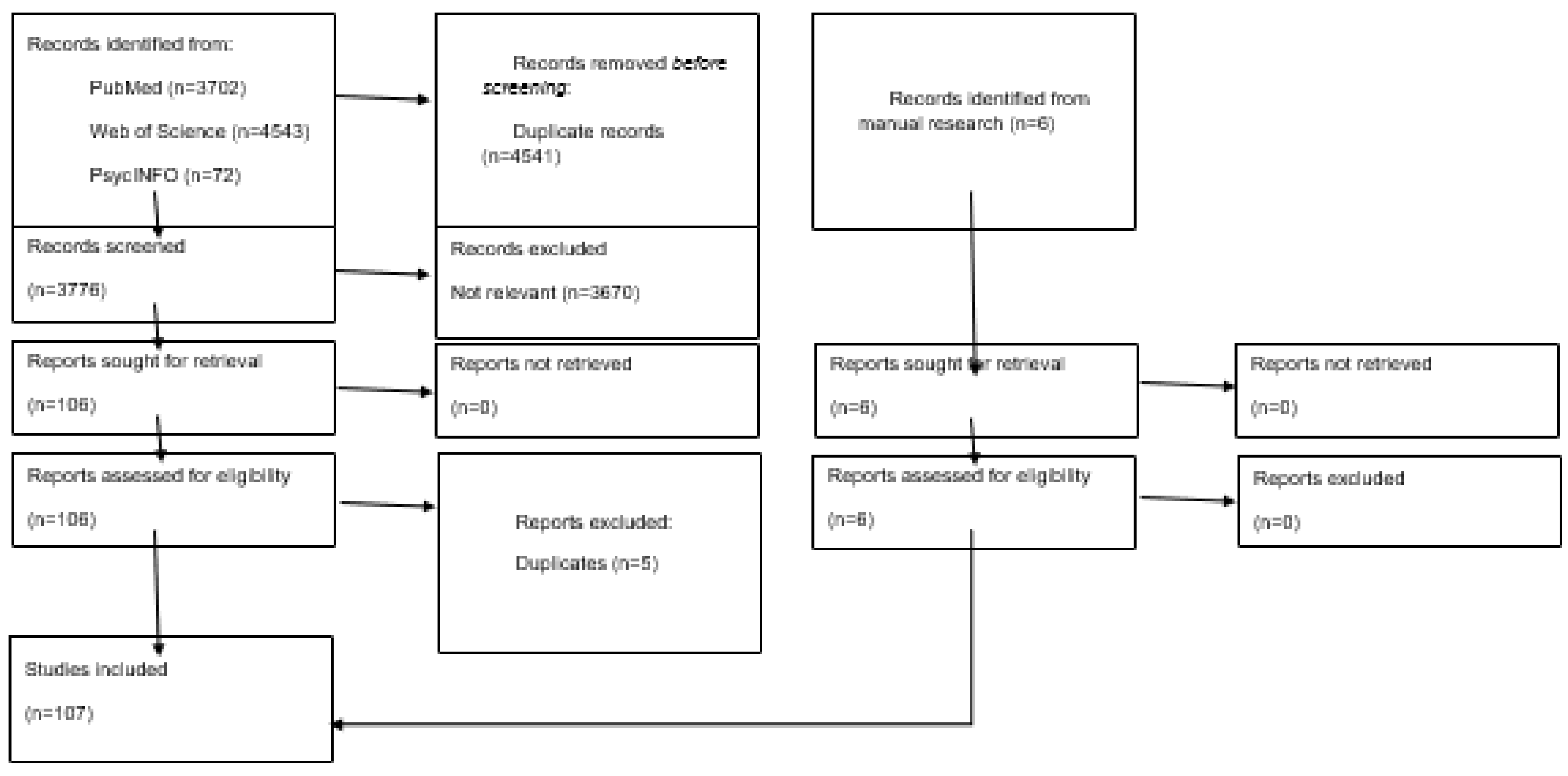

Table 1.
Drug-free BD vs HC studies included in the meta-analysis.
| Study | N. (BD/HC) | Age (BD/HC) | Males % (BD/HC) | Diagnosis (BD/HC) | Medication status |
| Duncan et al. (1979) | 22/36 | ?/? | 32/44 | Bipolar disorder (depressed) | Drug-free (≥ 2 weeks) |
| Feinberg et al. (1982) | 15/41 | 38.91/44 | 27/45 | Bipolar disorder (depressed) | Drug-free (≥ 2 weeks) |
| Sitaram et al. (1982) | 14/15 | 30/26.8 | 43/53 | Bipolar disorder (euthymia) | 8 Drug-free (≥ 2 weeks) 2 Drug-free (≥ 12 weeks) 4 Drug-naive |
| Linkowski et al. (1985) | 10/3 | 45/47 | 100/100 | Bipolar disorder (depressed) | Drug-free (≥ 15 days) |
| Mendlewicz et al. (1985) | 8/8 | 44/48 | 100/100 | Bipolar disorder (depressed) | Drug-free (≥ 15 days) |
| Linkowski et al. (1986) | 6/3 | 51/44 | 100/100 | Bipolar disorder I (manic) | Drug-free (≥ 8 days) |
| Linkowski et al. (1986) | 6/3 | 49/44 | 100/100 | Bipolar disorder I (depressed) | Drug-free (≥ 2 weeks) |
| Jernajczyk (1986) | 10/10 | (26-56)/(25-54) | 50/50 | Bipolar disorder (depressed) | Drug-free (≥ 2 weeks) |
| Knowles et al. (1986) | 10/10 | 35.5/? | 70/? | Bipolar disorder I (euthymia) | Drug-free (≥ 3 weeks) |
| Avery et al. (1986) | 2/11 | ?/52 | ?/36 | Bipolar disorder (depressed) | Drug-free (≥ 6 days) |
| De Maertelaer et al. (1987) | 11/9 | 41/35 | 100/100 | Bipolar disorder (depressed) | Drug-free (≥ 2 weeks) |
| Sack et al. (1988) | 6/6 | ?/? | 0/0 | Bipolar disorder (euthymia) | Drug-free (≥ 3 weeks) |
| Linkowski et al. (1987) | 5/3 | 47.6/47 | 100/100 | Bipolar disorder (depressed) | Drug-free (≥ 2 weeks) |
| Hudson et al. (1988) | 9/18 | 30.4/30.1 | 44/44 | Bipolar disorder I (manic) | Drug-free (≥ 8 days) |
| Thase et al. (1989) | 26/26 | 37.2/? | 35/? | 7 Bipolar disorder I (depressed) 19 Bipolar disorder II (depressed) |
Drug-free (≥ 2 weeks) |
| Nurnberger et al. (1989) | 18/14 | 32/32 | 28/71 | Bipolar disorder I (euthymic) Bipolar disorder II (euthymic) |
Drug-free (≥ 1 week) |
| Lauer et al. (1992) | 10/12 | 36.7/36.4 | ?/42 | Bipolar disorder I (depressed) | Drug-free (≥ 1 week) |
| Hudson et al. (1992) | 19/12 | 26.8/24.5 | 63/37 | Bipolar disorder I (manic) | Drug-free (≥ 2 weeks) |
| Hudson et al. (1993) | 10/7 | 27.5/24.5 | ?/37 | Bipolar disorder (depressed) | Drug-free (≥ 2 weeks) |
| Linkowski et al. (1994) | 8/14 | 41/39 | 100/100 | Bipolar disorder (manic) | Drug-free (≥ 8 days) |
| Rao et al. (2002) | 5/20 | ?/? (adolescents) | ?/? | Bipolar disorder (depressed) | Drug-free (2 weeks) |
| Asaad et al. (2016) | 20/20 | 38.05/36.8 | 65/65 | Bipolar disorder II (hypomanic) | Drug-free (1 week) |
Table 2.
Drug-free BD vs drug-free UD studies included in the meta-analysis.
| Study | N. (BD/UD) | Age (BD/UD) | Males % (BD/UD) | Diagnosis (BD/UD) | Medication status |
| Mendels & Chernik (1972) | 4/7 | ?/? | ?/? | Bipolar disorder (depressed)/UD | Drug-free (≥ 1 day) |
| Kupfer et al. (1974) | 5/12 | ?/? | ?/? | Bipolar disorder (depressed)/UD | Drug-free (≥ 2 weeks) |
| Duncan et al. (1979) | 22/36 | ?/? | 32/28 | Bipolar disorder (depressed)/UD | Drug-free (≥ 2 weeks) |
| Feinberg et al. (1982) | 15/18 | 38.9/57.1 | 27/28 | Bipolar disorder (depressed)/UD | Drug-free (≥ 2 weeks) |
| Linkowski et al. (1985) | 10/8 | 45/50 | 100/100 | Bipolar disorder (depressed)/UD | Drug-free (≥ 15 days) |
| Mendlewicz et al. (1985) | 8/8 | 44/50 | 100/100 | Bipolar disorder (depressed)/UD | Drug-free (≥ 15 days) |
| Linkowski et al. (1986) | 6/3 | 49/44 | 100/100 | Bipolar disorder I (depressed)/UD | Drug-free (≥ 2 weeks) |
| Giles et al. (1986) | 10/10 | 32/30.8 | 50/50 | Bipolar disorder I (depressed)/UD | Drug-free (≥ 2 weeks) |
| Giles et al. (1986) | 12/12 | 38.4/37.3 | 83/83 | Bipolar disorder II (depressed)/UD | Drug-free (≥ 2 weeks) |
| Avery et al. (1986) | 2/7 | ?/? | ?/? | Bipolar disorder (depressed)/UD | Drug-free (≥ 6 days) |
| De Maertelaer et al. (1987) | 11/8 | 41/42 | 100/100 | Bipolar disorder (depressed)/UD | Drug-free (≥ 2 weeks) |
| Linkowski et al. (1987) | 5/6 | 47.6/51.3 | 100/100 | Bipolar disorder (depressed)/UD | Drug-free (≥ 2 weeks) |
| Giles et al. (1987) | 5/5 | 24/42.8 | 40/40 | Bipolar disorder (depressed)/UD | Drug-free (≥ 2 weeks) |
| Lauer et al. (1992) | 10/14 | 36.7/40.7 | ?/? | Bipolar disorder I (depressed)/UD | Drug-free (≥ 1 week) |
| Hudson et al. (1993) | 10/7 | 27.5/24.4 | ?/37 | Bipolar disorder (depressed)/UD | Drug-free (≥ 2 weeks) |
| Fossion et al. (1998) | 14/7 | 42.7/42.9 | 36/36 | Bipolar disorder I (depressed)/UD | Drug-free (2 weeks) |
| Fossion et al. (1998) | 14/7 | 42.8/42.9 | 36/36 | Bipolar disorder II (depressed)/UD | Drug-free (2 weeks) |
| Kerkhofs et al. (1988) | 23/45 | ?/? | ?/? | Bipolar disorder I (depressed)/UD | Drug-free (2 weeks) |
| Kerkhofs et al. (1988) | 40/45 | ?/? | ?/? | Bipolar disorder II (depressed)/UD | Drug-free (2 weeks) |
| Rao et al. (2002) | 5/19 | ?/? (adolescents) | ?/? | Bipolar disorder (depressed)/UD | Drug-free (2 weeks) |
Table 3.
Treated BD vs HC studies included in the meta-analysis.
| Study | N. (BD/HC) | Age (BD/HC) | Males % (BD/HC) | Diagnosis (BD/HC) | Treatment |
| Brebbia & Altshuler (1969) | 3/3 | ?/23 | 100/100 | Bipolar disorder (remitted) | Lithium carbonate |
| Bert et al. (1977) | 10/10 | 39/29 | ?/? | Bipolar disorder (remitted) | Lithium |
| Ekiert & Gogol (1983) | 12/24 | 42.6/? | 50/? | Bipolar disorder (remitted) | Lithium salts |
| Talbot et al. (2009) | 28/28 | 33.5/37.8 | 14/29 | 24 Bipolar disorder I (interepisode) 4 Bipolar disorder II (interepisode) |
71% Mood stabilizers 82% Antidepressants 50% Antipsychotics 21% Anxiolytics 7% Sleep aids |
| Eidelman et al. (2010) | 22/22 | 34/40 | 9.1/22.7 | Bipolar disorder I (interepisode) Bipolar disorder II (interepisode) |
"Psychotropic medications" |
| Kaplan et al. (2012) | 27/27 | 33.1/38.1 | 14.8/29.6 | 23 Bipolar disorder I (interepisode) 4 Bipolar disorder II (interepisode) |
11.1% Monotherapy 70.4% Mood stabilizers 81.% Antidepressants 48.1% Antipsychotics 22.2% Anxiolytics 3.7% Hypnotics 3.7% Drug-free |
| Soehner et al. (2017) | 16/21 | ?/? | ?/? | Bipolar disorder I (interepisode) | 75% Mood stabilizers 50% Antipsychotics 75% Antidepressants 20% Anxiolytic 10% Hypnotic 5% Stimulant |
| Leveille et al. (2025) | 60/60 | 43.4/43.4 | 58/59 | Bipolar disorder I (depressed) Bipolar disorder II (depressed) |
96% Treated (mood stabilizers, antidepressants, antipsychotics, BZD, hypnotics) 2 Drug-free |
| Del Giudice et al. (2025) | 16/16 | 42.2/40.8 | 63/63 | Bipolar disorder I (euthymia) Bipolar disorder II (euthymia) |
62.5% Lithium 56.3% Antipsychotics 18.8% Antidepressants 12.5% Benzodiazepines 18.8% Anticonvulsants |
Table 4.
Drug-free BD vs treated BD (pre vs post-treatment) studies included in the meta-analysis.
| Study | N. (BD/BD) | Age (BD/BD) | Males % (BD/BD) | Diagnosis (BD/BD) | Treatment |
| Maggini et al. (1974) | 8 | 58.2 | ? | 3 Bipolar disorder I (manic) 5 Bipolar disorder II (hypomanic) |
Drug-free (≥ 5 days) -> Lithium carbonate |
| Kupfer et al. (1974) | 6 | 32.8 | 17 | 1 Bipolar disorder I (manic) 2 Bipolar disorder II (hypomanic) 2 Bipolar disorder (depressed) 1 Bipolar disorder (unclear) |
Drug-free (≥ 2 weeks) -> Lithium carbonate |
| Ekiert & Gogol (1983) | 10 | 42.7 | 50 | Bipolar disorder (depressed) | Drug-free (≥ 2 weeks) -> Amitryptiline |
| Hudson et al. (1989) | 5 | 33 | 25 | Bipolar disorder I (manic) | Drug-free (≥ 8 days) -> Lithium |
| Jindal et al. (2003) | 23 | 38.6 | 35 | 6 Bipolar disorder I (depressed) 17 Bipolar disorder II (depressed) |
Drug-free (2 weeks) -> Tranylcypromine |
| Moreno et al. (2007) | 5 | 39.2 | 0 | Bipolar disorder I (manic) | Drug-free (≥ 4 days) -> Haloperidol |
| Moreno et al. (2007) | 7 | 38.6 | 43 | Bipolar disorder I (manic) | Drug-free (≥ 4 days) -> Olanzapine |
| Cohrs et al. (2010) | 3 | 38 | 67 | Bipolar disorder I (manic) | Drug-free (?) -> Quetiapine |
Table 5.
Case-control studies included in the systematic review only.
| Study (excluded) | N. (BD)/N. (CTRL) | Age (BD/CTRL) | Males % (BD/CTRL) | Diagnosis (BD/CTRL) | Treatment | Reason of exclusion |
| Kupfer et al. (1970) | 7 | 44.9 | 29.00 | 6 Bipolar disorder (?) + 1 Psychotic depression |
Drug-free (≥10 days) -> Lithium carbonate |
Mixed sample |
| De Barros-Ferreira (1973) | 3/2 | 35.7/31 | ?/? | 3 Bipolar disorder (manic?) /HC |
1° Gen. Antipsychotics | No mood stabilizers |
| Gerner et al. (1979) | 10/9 | 45/36 | ?/? | ? Bipolar disorder (depressed) + ? UD/HC |
Drug-free (≥1 week) | Unknown size, mixed sample |
| Ekiert & Gogol (1981) | 9/9 | 42.1/42.3 | 56/56 | 5 Bipolar disorder (depressed) + 4 UD/HC |
Drug-free (≥2 weeks) | Mixed sample |
| Mendelson et al. (1987) | 8/8 | 43.9/? | 13/13 | 7 Bipolar disorder (depressed) + 1 UD/HC |
Drug-free (≥2 weeks) | Mixed sample |
| Armitage et al. (2004) | 14 | 40.9 | 29.00 | 11 Bipolar disorder (?) + 3 Schizoaffective disorder |
Mood stabilizers + BZD -> Mood stabilizers + Clozapine + BZD |
Change of treatment |
| Bernert et al. (2017) | 24/30 | 44.4/46.1 | 29.7/50 | Bipolar disorder (depressed)/UD | Mood stabilizers /drug-free |
Mixed treatment status |
| Estrada-Prat et al. (2019) | 13/13 | 13.9/13.9 | 53.8/53.8 | Bipolar disorder (euthymia) + ADHD + GAD + DBD/HC |
? | Comorbidities/ Unclear treatment status |
| Okada et al. (2022) | 43/81 | 50.6/53.3 | 58/62 | Bipolar disorder (?)/UD | Mood stabilizers + Antipsychotics + Antidepressants + BZD |
Both groups treated |
| Xu et al. (2024) | 19/44 | 20/48.3 | 26.3/15.8 | Bipolar disorder (manic)/UD | ? | Unclear treatment status |
| Xiu et al. (2024) | 107/256 | 22/23 | 40/86 | 83 Bipolar disorder I (first-episode) 24 Bipolar disorder II (first-episode) |
Drug-free (?) | Unclear treatment status |
| Leveille et al. (2025) | 60/60 | 43.4/43.2 | 30/32 | Bipolar disorder (depressed)/UD | 96% Treated (mood stabilizers, antidepressants, antipsychotics, BZD, hypnotics) 2 Drug-free |
Both groups treated |
| Salmeron et al. (2026) | 23/43 | ?/? | ?/? | Bipolar disorder (depressed)/UD | Mood stabilizers + Antipsychotics + Antidepressants + Hypnotics + Anxiolytics |
Both groups treated |
| Ma et al. (2026) | 45/10 | 48.8/37.4 | 20/40 | 27 Bipolar disorder (depressed) + 18 UD/HC |
Drug-free (2 weeks) | Mixed sample |
Table 6.
Non-case-control studies included in the systematic review only.
| Study | N (age, phase/diagnosis) | Treatment |
| Hartmann et al. (1966) | 1M (39, depressed) | Drug-free (1 week) |
| Hartmann et al. (1968) | 1M (39, euthymia) | Drug-free (1 week) |
| Hawkins et al. (1968) | 1M (45, hypomanic) | Drug-free (?) |
| Meltzer et al. (1970) | 1F (19, manic) | Drug-free (≥2 weeks) |
| Mendels & Hawkins (1971) | 1M (45, hypomanic) | Drug-free (1 week) |
| Kupfer & Heninger (1972) | 1M (70, depressed) | Drug-free (>10 days) |
| Kupfer & Heninger (1972) | 1M (70, manic) | Drug-free (>10 days) |
| Gillin et al. (1974) | 1F (43, depressed) | Drug-free (≥2 weeks) |
| Gillin et al. (1974) | 1F (43, hypomanic) | Drug-free (≥2 weeks) |
| Chernik et al. (1974) | 1M (37, mixed state) | Drug-free (≥8 weeks) |
| Chernik et al. (1974) | 1M (55, depressed) | Drug-free (≥8 weeks) |
| Schilkrut et al. (1975) | 1F (26, depressed) | Drug-free (≥3 weeks) |
| Gillin et al. (1977) | 1F (36, depressed) | Drug-free (15 days) |
| Gillin et al. (1977) | 1F (36, manic) | Drug-free (15 days) |
| Post et al. (1977) | 1F (39, depressed) | Drug-free (≥2 weeks) |
| Post et al. (1977) | 1F (39, manic) | Drug-free (≥2 weeks) |
| Nofzinger et al. (1977) | 10M, 15F (36.6, depressed) | Drug-free (2 weeks) |
| Jovanovic et al. (1977) | 22M, 38F (28.1, depressed) | Drug-free (?) |
| Knowles et al. (1979) | 1M (38, euthymia) | Drug-free (2 weeks) |
| Wehr et al. (1985) | 1F (48, depressed) | Drug-free (12 weeks) |
| Wehr et al. (1985) | 1F (48, manic) | Drug-free (12 weeks) |
| Wehr et al. (1985) | 1F (36, depressed) | Drug-free (3 weeks) |
| Wehr et al. (1985) | 1F (56, manic) | Clorgyline |
| Hanna et al. (1986) | 1M (53, depressed) | Drug-free (?) |
| Hanna et al. (1986) | 1M (53, manic) | Drug-free (?) |
| Campbell et al. (1989) | 1M (45, hypomanic) | Drug-free (>6 weeks) |
| Cohrs et al. (2010) | 1M (39, depressed) | Drug-free (?) |
| Zarcone et al. (1967) | 1M (44, depressed) | Phenotiazines/Amitriptyline |
| Zarcone et al. (1967) | 1M (49, depressed) | Phenotiazines/Amitriptyline |
| Hartmann et al. (1968) | 1F (48, depressed) | Chlorpromazine |
| Hartmann et al. (1968) | 1F (48, euthymia) | Chlorpromazine |
| Hartmann et al. (1968) | 1F (48, manic) | Chlorpromazine |
| Hartmann et al. (1968) | 1F (60, depressed) | Chlorpromazine |
| Hartmann et al. (1968) | 1F (60, euthymia) | Chlorpromazine |
| Hartmann et al. (1968) | 1F (60, manic) | Chlorpromazine |
| Hartmann et al. (1968) | 1F (60, depressed) | Chlorpromazine |
| Hartmann et al. (1968) | 1F (60, euthymia) | Chlorpromazine |
| Hartmann et al. (1968) | 1F (60, manic) | Chlorpromazine |
| De Barros-Ferreira (1969) | 1M (42, mixed state) | Haloperidol + Chlorpromazine |
| De Barros-Ferreira (1969) | 1F (35, mixed state) | Haloperidol + Chlorpromazine |
| Hartmann et al. (1968) | 1M (58, depressed) | Drug-free + ECT |
| Hartmann et al. (1968) | 1M (58, euthymia) | Drug-free + ECT |
| Hartmann et al. (1968) | 1M (58, manic) | Drug-free + ECT |
| Hartmann et al. (1968) | 1F (31, depressed) | Drug-free + ECT |
| Hartmann et al. (1968) | 1F (31, euthymia) | Drug-free + ECT |
| Wehr et al. (1979) | 1F (57, depressed) | Drug-free + ECT |
| Kupfer et al. (1972) | 3F, 1M (depressed) | Lithium carbonate |
| Chernik et al. (1974) | 1M (37, mixed state) | Lithium carbonate |
| Chernik et al. (1974) | 1M (55, depressed) | Lithium carbonate |
| Campbell et al. (1989) | 1M (45, hypomanic) | Lithium carbonate |
| Campbell et al. (1989) | 1M (45, hypomanic) | Lithium carbonate + desipramine |
| Nakamura et al. (1993) | 1F (44, manic) | Lithium carbonate + levomepromazine + alprazolam + flunitrazepam |
| Nakamura et al. (1993) | 1F (44, euthymia) | Lithium carbonate + levomepromazine + alprazolam + flunitrazepam |
| Fukuyama et al. (1993) | 1F (61, depressed) | Lithium carbonate + flunitrazepam |
| Fukuyama et al. (1993) | 1F (61, manic) | Lithium carbonate + flunitrazepam |
| Fukuyama et al. (1993) | 1F (61, euthymia) | Lithium carbonate + flunitrazepam |
| Riemann et al. (1993) | 1M (64, ?) | Carbamazepine |
| Meltzer et al. (1970) | 1M (?, ?) | Drug-free (≥2 weeks) |
| Sack et al. (1988) | 6F (?, ?) | Drug-free (3 weeks) |
| Riemann et al. (1993) | 1M (64, ?) | Drug-free (2 weeks) |
| Mehl et al. (2006) | 7M, 6F (6.7, pediatric BD) | ? |
| Cohrs et al. (2010) | 1M (39, depressed) | Quetiapine |
| Pacchioni et al. (2023) | 17? (?, manic) | Mood stabilizers + antipsychotics + BZD |
| Lazowski et al. (2014) | 5? (?, depressed) + 5 UD |
Mood stabilizers + antipsychotics + BZD |
| Lazowski et al. (2014) | 8? (?, depressed) + 7 UD |
Mood stabilizers + antipsychotics + BZD |
| Post et al. (1974) | 3M (?, depressed) + 2 UD |
Drug-free (≥1 week) |
| Chernik & Mendels (1974) | 8M (?, depressed) + 2 UD |
Drug-free (≥2 weeks) |
| Chernik & Mendels (1974) | 8M (?, depressed) + 2 UD |
Drug-free (≥2 weeks) |
| Post et al. (1978) | 3M, 4F (42.7, depressed) + 4 UD |
Drug-free (≥2 weeks) |
| Silberman et al. (1981) | 28? (?, depressed) + 16 UD |
Drug-free (≥2 weeks) |
| Kerkhofs et al. (1986) | 16? (?, depressed) + 11 UP |
? |
| Sack et al. (1988) | 8? (?, depressed) + 6 UD |
Drug-free (≥2 weeks) |
| Mieczkowski et al. (2014) | 3M, 3F (15.1, pediatric BD + OSA + ADHD + GAD) |
Antidepressants + antipsychotics + mood stabilizers |
| Mieczkowski et al. (2014) | 14M, 7F (13.3, pediatric BD + ADHD + GAD) |
Antidepressants + antipsychotics + mood stabilizers + stimulants |
| Sarzetto et al. (2025) | 13M, 22F (55.5, 15 BPI, 6 BPII) + 14 UD |
Antidepressants + antipsychotics + mood stabilizers + hypnotics/anxiolytics |
| De Barros-Ferreira (1969) | 1M (42, mixed state) | Drug-free (?) |
| De Barros-Ferreira (1969) | 1F (35, mixed state) | Drug-free (?) |
| Bunney Jr. et al. (1970) | 3? (?, rapid cycling) | Imipramine |
| Shirakura (1973) | 1M, 2F (?, depressed) | ? -> Isocarboxazid |
| Schreiner et al. (2001) | 1M (81, rapid cycling) | Drug-free (?) |
| Berger et al. (1982) | 6M, 2F (26.9, depressed) + 12 UD |
Drug-free (≥1 week) |
| Feinberg & Carroll (1984) | 25? (?, depressed) | Drug-free (2 weeks) |
| Ansseau et al. (1985) | 9? (?, depressed) | Drug-free (2 weeks) |
| Welsh et al. (1986) | 1F (35, rapid cycling) | Drug-free (≥5 days) -> Lithium carbonate |
| Kumar et al. (1987) | 9? (?, depressed) + 17 UD |
Drug-free (2 weeks) |
| Kumar et al. (1987) | 11? (?, depressed) + 19 UD |
Drug-free (2 weeks) |
| Sholomskas et al. (1988) | 1F (67, hypomanic + narcolepsy) |
Drug-free (?) |
| Gann et al. (1993) | 1M (64, rapid cycling) | Drug-free (?) -> Carbamazepine |
| Fossion et al. (1994) | 68? (43, depressed) | Drug-free (15 days) |
| Lauer et al. (1995) | 7? (?, ?) + 11 UD |
Drug-free (≥1 week) |
| Rush et al. (1997) | 15? (?, depressed) + 49 UD |
Drug-free (≥2 weeks) |
| Voderholtzer et al. (2002) | 1M (40, rapid cycling) | Drug-free (?) -> Lithium |
| De Silva et al. (2006) | 1M (47, rapid cycling) | Drug-free (?) |
Table 7.
Meta-analysis results.
| Meta-analysis | |||||
| TST | N. of studies | N. of subjects | Mean ± SD | RE Model | p-value |
| Drug-free BD (depressed) vs HC | 10 | 125 VS 172 | 369.24 ± 54.57 VS 403.39 ± 31.39 | -0.989 (-1.711 to -0.267) | 0.007 |
| Drug-free BD (manic) vs HC | 4 | 42 VS 47 | 311.88 ± 84.76 VS 391.24 ± 42.93 | -1.20 (-1.675 to -0.735) | <0.001 |
| Drug-free BD (euthymic) vs HC | 4 | 48 VS 45 | 360.33 ± 71.02 VS 378.95 ± 45.98 | -0.168 (-0.577 to 0.242) | 0.422 |
| Drug-free BD (depressed) vs UD | 16 | 211 VS 258 | 372.28 ± 61.40 VS 348.66 ± 63.33 | 0.519 (0.115 to 0.923) | 0.012 |
| Treated BD vs HC | 7 | 144 VS 161 | 386.97 ± 73.72 VS 391.01 ± 66.82 | -0.0908 (-0.573 to 0.391) | 0.712 |
| Pre VS post-treatment | 8 | 67 VS 67 | 344.10 ± 69.51 VS 361.97 ± 70.41 | -0.358 (-0.911 to 0.195) | 0.204 |
| SOL | N. of studies | N. of subjects | Mean ± SD | RE Model | p-value |
| Drug-free BD (depressed) vs HC | 8 | 105 VS 154 | 32.53 ± 19.95 VS 19.49 ± 10.06 | 0.878 (-0.158 to 1.914) | 0.097 |
| Drug-free BD (manic) vs HC | 5 | 62 VS 67 | 37.65 ± 28.95 VS 22.08 ± 11.45 | 1.20 (-0.230 to 2.636) | 0.100 |
| Drug-free BD (euthymic) vs HC | 4 | 48 VS 45 | 32.9 ± 27.74 VS 21.81 ± 18.62 | 0.375 (-0.039 to 0.790) | 0.076 |
| Drug-free BD (depressed) vs UD | 8 | 84 VS 117 | 37.11 ± 22.09 VS 36.23 ± 13.71 | -0.172 (-0.696 to 0.3529) | 0.520 |
| Treated BD vs HC | 4 | 83 VS 95 | 22.86 ± 28.68 VS 15.34 ± 18.25 | 0.232 (-0.067 to 0.531) | 0.128 |
| Pre VS post-treatment | 7 | 64 VS 64 | 23.94 ± 23.77 VS 26.39 ± 26.58 | -0.0903 (-0.614 to 0.434) | 0.735 |
| SE | N. of studies | N. of subjects | Mean ± SD | RE Model | p-value |
| Drug-free BD (depressed) vs HC | 7 | 100 VS 134 | 81.22 ± 8.18 VS 88.60 ± 5.32 | -1.99 (-3.847 to -0.132) | 0.036 |
| Drug-free BD (manic) vs HC | 5 | 62 VS 67 | 74.76 ± 14.66 VS 87.90 ± 5.20 | -1.43 (-2.746 to -0.109) | 0.034 |
| Drug-free BD (euthymic) vs HC | 3 | 42 VS 39 | 86.39 ± 9.63 VS 89.78 ± 7.46 | -0.342 (-0.716 to 0.033) | 0.059 |
| Drug-free BD (depressed) vs UD | 11 | 164 VS 210 | 79.47 ± 9.92 VS 74.04 ± 12.43 | 0.469 (-0.293 to 1.230) | 0.227 |
| Treated BD vs HC | 4 | 115 VS 127 | 84.47 ± 9.76 VS 86.85 ± 9.14 | -0.441 (-1.069 to 0.188) | 0.169 |
| Pre VS post-treatment | 6 | 56 VS 56 | 83.21 ± 22.95 VS 83.48 ± 13.08 | -0.0072 (-0.488 to 0.474) | 0.976 |
| WASO | N. of studies | N. of subjects | Mean ± SD | RE Model | p-value |
| Drug-free BD (depressed) vs HC | 8 | 105 VS 155 | 42.37 ± 31.40 VS 27.42 ± 18.49 | 0.516 (-0.077 to 1.110) | 0.088 |
| Drug-free BD (manic) vs HC | 4 | 42 VS 47 | 33.61 ± 37.59 VS 30.54 ± 21.83 | 0.423 (-0.018 to 0.864) | 0.060 |
| Drug-free BD (euthymic) vs HC | 3 | 42 VS 39 | 16.68 ± 24.44 VS 12.33 ± 15.91 | 0.203 (-0.235 to 0.642) | 0.364 |
| Drug-free BD (depressed) vs UD | 11 | 116 VS 139 | 58.14 ± 28.16 VS 56.38 ± 30.11 | -0.333 (-0.996 to 0.329) | 0.324 |
| Treated BD vs HC | 5 | 131 VS 148 | 54.91 ± 43.61 VS 44.06 ± 36.29 | 0.398 (-0.099 to 0.895) | 0.116 |
| Pre VS post-treatment | 7 | 64 VS 64 | 45.36 ± 48.23 VS 37.52 ± 31.76 | 0.121 (-0.329 to 0.570) | 0.598 |
| Meta-analysis | |||||
| ST1 | N. of studies | N. of subjects | Mean ± SD | RE Model | p-value |
| Drug-free BD (depressed) vs HC | 5 | 58 VS 65 | 42.92 ± 36.52 VS 35.06 ± 18.33 | -0.0291 (-0.694 to 0.636) | 0.932 |
| Drug-free BD (manic) vs HC | 4 | 42 VS 47 | 25.06 ± 24.00 VS 38.85 ± 28.00 | -0.466 (-1.038 to 0.106) | 0.111 |
| Drug-free BD (euthymic) vs HC | 2 | 28 vs 24 | 25.44 ± 10.6 VS 29.96 ± 28.60 | -0.0343 (-1.640 to 1.572) | 0.966 |
| Drug-free BD (depressed) vs UD | 9 | 87 VS 85 | 56.49 ± 63.37 VS 38.22 ± 15.9 | 0.178 (-0.009 to 0.365) | 0.060 |
| Treated BD vs HC | 6 | 117 VS 134 | 47.80 ± 30.73 VS 39.95 ± 21.53 | 0.336 (0.084 to 0.588) | 0.009 |
| Pre VS post-treatment | 7 | 64 VS 64 | 26.66 ± 21.83 VS 32.49 ± 15.94 | -0.260 (-0.593 to 0.073) | 0.104 |
| %ST1 | N. of studies | N. of subjects | Mean ± SD | RE Model | p-value |
| Drug-free BD (depressed) vs HC | 5 | 58 VS 65 | 11.67 ± 6.07 VS 8.88 ± 4.17 | 0.307 (-0.549 to 1.162) | 0.482 |
| Drug-free BD (manic) vs HC | 5 | 62 VS 67 | 7.41 ± 3.05 VS 8.32 ± 3.36 | 0.117 (-0.682 to 0.916) | 0.774 |
| Drug-free BD (euthymic) vs HC | 2 | 28 vs 24 | 6.89 ± 5.53 VS 7.60 ± 4.44 | 0.0681 (-1.492 to 1.628) | 0.923 |
| Drug-free BD (depressed) vs UD | 9 | 87 VS 85 | 14.49 ± 8.84 VS 11.00 ± 5.09 | 0.202 (-0.138 to 0.543) | 0.244 |
| Treated BD vs HC | 7 | 139 VS 156 | 12.16 ± 8.54 VS 9.63 ± 5.21 | 0.374 (0.142 to 0.607) | 0.002 |
| Pre VS post-treatment | 7 | 64 VS 64 | 8.05 ± 4.57 VS 8.93 ± 4.22 | -0.218 (-0.502 to 0.065) | 0.108 |
| ST2 | N. of studies | N. of subjects | Mean ± SD | RE Model | p-value |
| Drug-free BD (depressed) vs HC | 5 | 58 VS 65 | 207.11 ± 46.32 VS 228.60 ± 38.43 | -0.550 (-1.447 to 0.347) | 0.229 |
| Drug-free BD (manic) vs HC | 4 | 42 VS 47 | 176.11 ± 95.00 VS 229.25 ± 41.00 | -0.699 (-1.146 to -0.253) | 0.002 |
| Drug-free BD (euthymic) vs HC | 2 | 28 vs 24 | 185.95 ± 60.70 VS 209.09 ± 47.90 | -0.3989 (-0.951 to 0.153) | 0.157 |
| Drug-free BD (depressed) vs UD | 9 | 87 VS 85 | 183.21 ± 50.38 VS 186.36 ± 20.16 | 0.384 (-0.200 to 0.968) | 0.198 |
| Treated BD vs HC | 6 | 117 VS 134 | 207.25 ± 58.20 VS 211.92 ± 49.64 | -0.0777 (-0.328 to 0.173) | 0.543 |
| Pre VS post-treatment | 7 | 64 VS 64 | 202.31 ± 51.44 VS 214.53 ± 55.31 | -0.178 (-0.531 to 0.175) | 0.323 |
| %ST2 | N. of studies | N. of subjects | Mean ± SD | RE Model | p-value |
| Drug-free BD (depressed) vs HC | 5 | 58 VS 65 | 55.89 ± 7.97 VS 55.84 ± 8.34 | -0.170 (-0.843 to 0.503) | 0.621 |
| Drug-free BD (manic) vs HC | 5 | 62 VS 67 | 55.09 ± 8.05 VS 56.05 ± 4.73 | 0.440 (-1.087 to 1.968) | 0.468 |
| Drug-free BD (euthymic) vs HC | 2 | 28 vs 24 | 55.84 ± 10.06 VS 57.58 ± 6.03 | -0.438 (-1.179 to 0.302) | 0.246 |
| Drug-free BD (depressed) vs UD | 9 | 87 VS 85 | 47.31 ± 10.68 VS 49.42 ± 9.89 | 0.117 (-0.297 to 0.532) | 0.579 |
| Treated BD vs HC | 7 | 139 VS 156 | 55.25 ± 11.79 VS 53.75 ± 8.64 | 0.0905 (-0.171 to 0.352) | 0.497 |
| Pre VS post-treatment | 7 | 64 VS 64 | 56.64 ± 9.62 VS 58.93 ± 10.82 | -0.244 (-0.692 to 0.205) | 0.198 |
| DELTA | N. of studies | N. of subjects | Mean ± SD | RE Model | p-value |
| Drug-free BD (depressed) vs HC | 8 | 100 VS 121 | 44.10 ± 34.00 VS 68.87 ± 30.33 | -0.424 (-0.704 to -0.145) | 0.003 |
| Drug-free BD (manic) vs HC | 4 | 42 VS 47 | 47.91 ± 34.00 VS 45.57 ± 33.00 | 0.0313 (-0.405 to 0.467) | 0.888 |
| Drug-free BD (euthymic) vs HC | 3 | 42 VS 39 | 49.64 ± 32.70 VS 53.27 ± 22.40 | -0.0384 (-0.476 to 0.399) | 0.864 |
| Drug-free BD (depressed) vs UD | 15 | 196 VS 240 | 53.60 ± 25.33 VS 42.36 ± 20.30 | 0.264 (-0.251 to 0.778) | 0.315 |
| Treated BD vs HC | 6 | 117 VS 134 | 59.75 ± 35.64 VS 63.91 ± 32.15 | -0.0146 (-0.440 to 0.411) | 0.946 |
| Pre VS post-treatment | 7 | 64 VS 64 | 37.01 ± 16.83 VS 48.84 ± 25.88 | -0.867 (-1.727 to -0.008) | 0.048 |
| %DELTA | N. of studies | N. of subjects | Mean ± SD | RE Model | p-value |
| Drug-free BD (depressed) vs HC | 8 | 100 VS 121 | 11.98 ± 7.74 VS 16.86 ± 6.16 | -0.407 (-0.704 to -0.110) | 0.007 |
| Drug-free BD (manic) vs HC | 5 | 62 VS 67 | 16.71 ± 6.73 VS 15.08 ± 11.06 | 0.149 (-0.292 to 0.590) | 0.507 |
| Drug-free BD (euthymic) vs HC | 3 | 42 VS 39 | 14.26 ± 9.43 VS 14.10 ± 7.08 | 0.0374 (-0.401 to 0.476) | 0.867 |
| Drug-free BD (depressed) vs UD | 15 | 196 VS 240 | 14.51 ± 14.93 VS 11.57 ± 8.42 | 0.177 (-0.303 to 0.658) | 0.469 |
| Treated BD vs HC | 7 | 139 VS 156 | 15.51 ± 10.60 VS 16.63 ± 7.99 | -0.140 (-0.371 to 0.092) | 0.236 |
| Pre VS post-treatment | 8 | 67 VS 67 | 12.70 ± 7.74 VS 13.84 ± 9.81 | -0.316 (-1.081 to 0.450) | 0.419 |
| Meta-analysis | |||||
| REMT | N. of studies | N. of subjects | Mean ± SD | RE Model | p-value |
| Drug-free BD (depressed) vs HC | 9 | 110 VS 131 | 80.06 ± 17.38 VS 84.50 ± 13.51 | -0.107 (-0.657 to 0.443) | 0.703 |
| Drug-free BD (manic) vs HC | 4 | 42 VS 47 | 61.48 ± 29.62 VS 75.79 ± 18.29 | -0.573 (-1.015 to -0.130) | 0.011 |
| Drug-free BD (euthymic) vs HC | 3 | 42 VS 39 | 90.06 ± 26.40 VS 80.91 ± 19.60 | 0.447 (-0.471 to 1.366) | 0.171 |
| Drug-free BD (depressed) vs UD | 13 | 133 VS 150 | 79.43 ± 24.26 VS 81.88 ± 16.17 | 0.199 (-0.225 to 0.622) | 0.358 |
| Treated BD vs HC | 6 | 117 VS 134 | 62.73 ± 30.98 VS 77.71 ± 31.56 | -0.390 (-0.837 to 0.057) | 0.087 |
| Pre VS post-treatment | 7 | 64 VS 64 | 73.20 ± 24.74 VS 57.14 ± 23.32 | 0.642 (-0.349 to 1.633) | 0.204 |
| %REM | N. of studies | N. of subjects | Mean ± SD | RE Model | p-value |
| Drug-free BD (depressed) vs HC | 9 | 110 VS 131 | 21.38 ± 5.03 VS 20.99 ± 3.12 | 0.337 (-0.051 to 0.725) | 0.089 |
| Drug-free BD (manic) vs HC | 5 | 62 VS 67 | 20.24 ± 4.66 VS 20.23 ± 2.80 | -0.0491 (-0.407 to 0.308) | 0.788 |
| Drug-free BD (euthymic) vs HC | 3 | 42 VS 39 | 24.92 ± 5.65 VS 20.81 ± 4.78 | 0.830 (-0.128 to 1.788) | 0.065 |
| Drug-free BD (depressed) vs UD | 13 | 133 VS 150 | 20.63 ± 5.48 VS 22.91 ± 4.53 | -0.228 (-0.473 to 0.018) | 0.069 |
| Treated BD vs HC | 6 | 123 VS 135 | 16.47 ± 6.66 VS 19.79 ± 7.04 | -0.412 (-0.761 to -0.064) | 0.020 |
| Pre VS post-treatment | 7 | 64 VS 64 | 19.91 ± 4.79 VS 17.58 ± 6.02 | 0.849 (-0.124 to 1.822) | 0.087 |
| REML | N. of studies | N. of subjects | Mean ± SD | RE Model | p-value |
| Drug-free BD (depressed) vs HC | 13 | 142 VS 197 | 64.91 ± 44.70 VS 81.95 ± 25.95 | -0.828 (-1.933 to 0.277) | 0.142 |
| Drug-free BD (manic) vs HC | 5 | 62 VS 67 | 54.58 ± 15.35 VS 75.76 ± 20.75 | -1.36 (-2.064 to -0.647) | <0.001 |
| Drug-free BD (euthymic) vs HC | 3 | 42 VS 39 | 74.60 ± 33.40 VS 79.98 ± 29.21 | -0.226 (-0.666 to 0.213) | 0.313 |
| Drug-free BD (depressed) vs UD | 19 | 229 VS 273 | 61.86 ± 43.76 VS 55.55 ± 32.73 | 0.0466 (-0.343 to 0.436) | 0.815 |
| Treated BD vs HC | 4 | 72 VS 84 | 108.43 ± 53.54 VS 90.27 ± 40.95 | 0.320 (-0.001 to 0.640) | 0.050 |
| Pre VS post-treatment | 8 | 67 VS 67 | 61.67 ± 31.46 VS 126.89 ± 61.83 | -1.13 (-1.828 to -0.426) | 0.002 |
| REMD | N. of studies | N. of subjects | Mean ± SD | RE Model | p-value |
| Drug-free BD (depressed) vs HC | 9 | 115 VS 164 | 2.29 ± 0.86 VS 1.85 ± 0.56 | 0.638 (-0.062 to 1.339) | 0.074 |
| Drug-free BD (manic) vs HC | 4 | 54 VS 53 | 8.14 ± 5.07 VS 7.24 ± 0.44 | 0.632 (0.004 to 1.259) | 0.048 |
| Drug-free BD (euthymic) vs HC | 2 | 32 VS 29 | 1.7 ± 0.65 VS 1.45 ± 0.52 | 0.4284 (-1.520 to 2.376) | 0.218 |
| Drug-free BD (depressed) vs UD | 10 | 106 VS 139 | 1.84 ± 0.50 VS 2.14 ± 0.49 | -0.649 (-0.998 to -0.300) | <0.001 |
| Treated BD vs HC | 3 | 66 VS 66 | 12.06 ± 7.91 VS 7.37 ± 4.92 | 0.729 (0.377 to 1.081) | <0.001 |
| Pre VS post-treatment | 5 | 46 VS 46 | 1.17 ± 0.27 VS 1.26 ± 0.49 | -0.116 (-0.657 to 0.426) | 0.675 |
Table 8.
Heterogeneity, publication bias and funnel plot asymmetry analysis.
| Heterogeneity | Publication Bias | Funnel plot asymmetry | |||||||
| TST | Q | I² | p-value | Fail-Safe N | p-value | Outlier | Overly influential | Rank correlation (p-value) | Regression test (p-value) |
| Drug-free BD (depressed) vs HC | 66.772 | 85.79% | <0.001 | 145 | <0.001 | Duncan et al. (1979) | Duncan et al. (1979) | 0.0466* | 0.2848 |
| Drug-free BD (manic) vs HC | 1.317 | 0.00% | 0.725 | 32 | <0.001 | - | - | 0.3333 | 0.9804 |
| Drug-free BD (euthymic) vs HC | 1.133 | 0.00% | 0.769 | 0 | 0.199 | - | - | 1 | 0.76 |
| Drug-free BD (depressed) vs UD | 55.747 | 73.84% | <0.001 | 123 | <0.001 | Duncan et al. (1979) | Duncan et al. (1979) | 0.5056 | 0.9856 |
| Treated BD vs HC | 20.455 | 71.94% | 0.002 | 0 | 0.218 | - | - | 0.3813 | 0.7937 |
| Pre VS post-treatment | 15.666 | 53.96% | 0.028 | 1 | 0.041 | - | Maggini et al. (1974) | 0.1789 | 0.0070* |
| SOL | Q | I² | p-value | Fail-Safe N | p-value | Outlier | Overly influential | Rank correlation (p-value) | Regression test (p-value) |
| Drug-free BD (depressed) vs HC | 73.08 | 91.85% | <0.001 | 68 | <0.001 | Duncan et al. (1979) | Duncan et al. (1979) | 0.2751 | 0.5093 |
| Drug-free BD (manic) vs HC | 39.03 | 91.42% | <0.001 | 43 | <0.001 | Asaad et al. (2016) | Asaad et al. (2016) | 0.8167 | 0.4907 |
| Drug-free BD (euthymic) vs HC | 1.452 | 0.00% | 0.484 | 0 | 0.104 | - | - | 1 | 0.6896 |
| Drug-free BD (depressed) vs UD | 17.484 | 64.15% | 0.015 | 0 | 0.151 | Kupfer et al. (1974) | - | 0.5484 | 0.6367 |
| Treated BD vs HC | 2.043 | 0.00% | 0.563 | 0 | 0.05 | - | - | 0.3333 | 0.3328 |
| Pre VS post-treatment | 11.524 | 48.18% | 0.073 | 0 | 0.302 | - | - | 0.5619 | 0.3322 |
| SE | Q | I² | p-value | Fail-Safe N | p-value | Outlier | Overly influential | Rank correlation (p-value) | Regression test (p-value) |
| Drug-free BD (depressed) vs HC | 104.484 | 96.72% | <0.001 | 148 | <0.001 | Duncan et al. (1979) | Duncan et al. (1979) | 0.0107* | 0.0198* |
| Drug-free BD (manic) vs HC | 32.325 | 89.54% | <0.001 | 66 | <0.001 | Asaad et al. (2016) | Asaad et al. (2016) | 0.4833 | 0.5932 |
| Drug-free BD (euthymic) vs HC | 0.3 | 0.00% | 0.861 | 0 | 0.06 | - | - | 1 | 0.6948 |
| Drug-free BD (depressed) vs UD | 60.229 | 90.72% | <0.001 | 58 | <0.001 | Hudson et al. (1993) | - | 1 | 0.714 |
| Treated BD vs HC | 13.961 | 79.82% | 0.003 | 6 | 0.006 | Ekierg & Gogol (1983) | - | 0.0833 | 0.0005* |
| Pre VS post-treatment | 7.04 | 31.06% | 0.218 | 0 | 0.444 | - | - | 0.4694 | 0.0781 |
| WASO | Q | I² | p-value | Fail-Safe N | p-value | Outlier | Overly influential | Rank correlation (p-value) | Regression test (p-value) |
| Drug-free BD (depressed) vs HC | 37.39 | 77.44% | <0.001 | 26 | <0.001 | Feinberg et al. (1982) | - | 0.3988 | 0.4175 |
| Drug-free BD (manic) vs HC | 2.46 | 0.00% | 0.483 | 1 | 0.04 | - | - | 0.75 | 0.6811 |
| Drug-free BD (euthymic) vs HC | 0.203 | 0.00% | 0.904 | 0 | 0.18 | - | - | 1 | 0.8948 |
| Drug-free BD (depressed) vs UD | 49.813 | 81.75% | <0.001 | 20 | 0.003 | Fossion et al. (1998) | - | 0.1646 | 0.5607 |
| Treated BD vs HC | 16.829 | 73.04% | 0.002 | 8 | 0.005 | Leveille et al. (2025) | - | 0.0833 | <0.0001* |
| Pre VS post-treatment | 9.145 | 31.44% | 0.166 | 0 | 0.248 | - | - | 1 | 0.6502 |
| Heterogeneity | Publication Bias | Funnel plot asymmetry | |||||||
| ST1 | Q | I² | p-value | Fail-Safe N | p-value | Outlier | Overly influential | Rank correlation (p-value) | Regression test (p-value) |
| Drug-free BD (depressed) vs HC | 12.201 | 62.12% | 0.016 | 0 | 0.337 | Thase et al. (1989) | Thase et al. (1989) | 0.8167 | 0.0023* |
| Drug-free BD (manic) vs HC | 4.961 | 35.26% | 0.175 | 4 | 0.014 | - | - | 0.3333 | 0.0565 |
| Drug-free BD (euthymic) vs HC | 7.482 | 86.64% | 0.006 | 0 | 0.3627 | - | - | 1 | - |
| Drug-free BD (depressed) vs UD | 2.02 | 0.00% | 0.98 | 0 | 0.126 | - | Kupfer et al. (1974) | 0.7614 | 0.4473 |
| Treated BD vs HC | 2.22 | 0.00% | 0.818 | 3 | 0.025 | - | - | 0.2722 | 0.2796 |
| Pre VS post-treatment | 3.469 | 0.00% | 0.748 | 0 | 0.09 | Maggini et al. (1974) | Maggini et al. (1974) | 0.069 | 0.8125 |
| %ST1 | Q | I² | p-value | Fail-Safe N | p-value | Outlier | Overly influential | Rank correlation (p-value) | Regression test (p-value) |
| Drug-free BD (depressed) vs HC | 21.255 | 76.22% | <0.001 | 0 | 0.205 | Thase et al. (1989) | Thase et al. (1989) | 0.2333 | 0.0001* |
| Drug-free BD (manic) vs HC | 18.44 | 76.90% | 0.001 | 0 | 0.181 | - | - | 0-4833 | 0.2051 |
| Drug-free BD (euthymic) vs HC | 7.045 | 85.81% | 0.008 | 0 | 0.495 | - | - | 1 | - |
| Drug-free BD (depressed) vs UD | 9.413 | 10.98% | 0.309 | 0 | 0.076 | - | - | 0.1194 | 0.0789 |
| Treated BD vs HC | 3.022 | 0.00% | 0.806 | 9 | 0.007 | - | Leveille et al. (2025) | 0.5619 | 0.2082 |
| Pre VS post-treatment | 2.535 | 0.00% | 0.865 | 0 | 0.218 | Jindal et al. (2003) | Jindal et al. (2003) | 0.0028* | 0.0014* |
| ST2 | Q | I² | p-value | Fail-Safe N | p-value | Outlier | Overly influential | Rank correlation (p-value) | Regression test (p-value) |
| Drug-free BD (depressed) vs HC | 17.947 | 77.41% | 0.001 | 3 | 0.023 | - | - | 0.2333 | 0.0531 |
| Drug-free BD (manic) vs HC | 1.004 | 0.00% | 0.8 | 10 | 0.001 | - | - | 1 | 0.9388 |
| Drug-free BD (euthymic) vs HC | 0.095 | 0.00% | 0.758 | 0 | 0.0849 | - | - | 1 | - |
| Drug-free BD (depressed) vs UD | 23.912 | 67.36% | 0.002 | 9 | 0.012 | - | - | 0.3585 | 0.9517 |
| Treated BD vs HC | 2.756 | 0.00% | 0.738 | 0 | 0.221 | ||||
| Pre VS post-treatment | 8.057 | 0.00% | 0.234 | 0 | 0.175 | - | - | 0.7726 | 0.851 |
| %ST2 | Q | I² | p-value | Fail-Safe N | p-value | Outlier | Overly influential | Rank correlation (p-value) | Regression test (p-value) |
| Drug-free BD (depressed) vs HC | 10.632 | 62.29% | 0.031 | 0 | 0.259 | - | - | 0.4833 | 0.3786 |
| Drug-free BD (manic) vs HC | 34.03 | 86.94% | <0.001 | 4 | 0.014 | Asaad et al. (2016) | - | 0.4833 | 0.8518 |
| Drug-free BD (euthymic) vs HC | 1.67 | 40.13% | 0.196 | 0 | 0.059 | - | - | 1 | - |
| Drug-free BD (depressed) vs UD | 12.96 | 38.76% | 0.113 | 0 | 0.239 | - | - | 1 | 0.9594 |
| Treated BD vs HC | 5.248 | 13.86% | 0.512 | 0 | 0.332 | - | - | 0.7726 | 0.1737 |
| Pre VS post-treatment | 8.588 | 31.67% | 0.198 | 0 | 0.118 | - | - | 0.3813 | 0.0398* |
| ST3 | Q | I² | p-value | Fail-Safe N | p-value | Outlier | Overly influential | Rank correlation (p-value) | Regression test (p-value) |
| Drug-free BD (depressed) vs HC | 0.905 | 0.00% | 0.824 | 0 | 0.096 | - | - | 1 | 0.7724 |
| Drug-free BD (manic) vs HC | 5.994 | 68.21% | 0.05 | 0 | 0.263 | Linkowski et al. (1994) | - | 0.3333 | 0.2205 |
| Drug-free BD (euthymic) vs HC | 0.173 | 0.00% | 0.677 | 0 | 0.471 | - | - | 1 | - |
| Drug-free BD (depressed) vs UD | 1.055 | 0.00% | 0.983 | 0 | 0.408 | - | - | 0.1361 | 0.1135 |
| Treated BD vs HC | 0.4672 | 0.00% | 0.494 | 2 | 0.015 | - | - | 1 | - |
| Pre VS post-treatment | 21.043 | 86.40% | <0.001 | 23 | <0.001 | - | - | 0.75 | 0.1504 |
| %ST3 | Q | I² | p-value | Fail-Safe N | p-value | Outlier | Overly influential | Rank correlation (p-value) | Regression test (p-value) |
| Drug-free BD (depressed) vs HC | 0.822 | 0.00% | 0.844 | 0 | 0.144 | - | - | 0.75 | 0.9135 |
| Drug-free BD (manic) vs HC | 6.649 | 71.07% | 0.036 | 0 | 0.261 | Linkowski et al. (1994) | - | 0.3333 | 0.225 |
| Drug-free BD (euthymic) vs HC | 0.836 | 0.00% | 0.361 | 2 | 0.018 | - | - | 1 | - |
| Drug-free BD (depressed) vs UD | 0.32 | 0.00% | 0.999 | 0 | 0.422 | - | - | 0.3813 | 0.3998 |
| Pre VS post-treatment | 13.793 | 78.64% | 0.003 | 0 | 0.416 | - | - | 0.75 | 0.5392 |
| ST4 | Q | I² | p-value | Fail-Safe N | p-value | Outlier | Overly influential | Rank correlation (p-value) | Regression test (p-value) |
| Drug-free BD (depressed) vs HC | 6.424 | 53.93% | 0.093 | 0 | 0.056 | - | - | 0.0833 | 0.1178 |
| Drug-free BD (manic) vs HC | 0.443 | 0.00% | 0.801 | 0 | 0.295 | - | - | 1 | 0.6167 |
| Drug-free BD (euthymic) vs HC | 0.8 | 0.00% | 0.371 | 0 | 0.439 | - | - | 1 | - |
| Drug-free BD (depressed) vs UD | 2.82 | 0.00% | 0.831 | 0 | 0.124 | Rao et al. (2002) | - | 0.2389 | 0.0731 |
| Treated BD vs HC | 0.1685 | 47.26% | 0.169 | 0 | 0.468 | - | - | 1 | - |
| Pre VS post-treatment | 3.687 | 18.15% | 0.297 | 1 | 0.05 | - | - | 0.75 | 0.5869 |
| %ST4 | Q | I² | p-value | Fail-Safe N | p-value | Outlier | Overly influential | Rank correlation (p-value) | Regression test (p-value) |
| Drug-free BD (depressed) vs HC | 4.597 | 30.20% | 0.204 | 0 | 0.09 | - | - | 0.0833 | 0.1182 |
| Drug-free BD (manic) vs HC | 1.714 | 0.00% | 0.424 | 2 | 0.017 | - | - | 1 | 0.4722 |
| Drug-free BD (euthymic) vs HC | 0.4514 | 0.00% | 0.502 | 0 | 0.458 | - | - | 1 | - |
| Drug-free BD (depressed) vs UD | 2.641 | 0.00% | 0.852 | 0 | 0.067 | - | - | 0.1361 | 0.0584 |
| Pre VS post-treatment | 0.909 | 0.00% | 0.823 | 0 | 0.188 | Maggini et al. (1974) | - | 0.3333 | 0.177 |
| DELTA | Q | I² | p-value | Fail-Safe N | p-value | Outlier | Overly influential | Rank correlation (p-value) | Regression test (p-value) |
| Drug-free BD (depressed) vs HC | 5.497 | 1.14% | 0.600 | 20 | 0.001 | - | - | 0.5484 | 0.4931 |
| Drug-free BD (manic) vs HC | 2.271 | 0.00% | 0.518 | 0 | 0.487 | - | - | 0.75 | 0.4345 |
| Drug-free BD (euthymic) vs HC | 0.577 | 0.00% | 0.749 | 0 | 0.407 | - | - | 0.3333 | 0.5001 |
| Drug-free BD (depressed) vs UD | 93.952 | 82.20% | <0.001 | 39 | <0.001 | - | - | 0.6265 | 0.1258 |
| Treated BD vs HC | 10.224 | 54.00% | 0.069 | 0 | 0.429 | - | - | 0.4694 | 0.2089 |
| Pre VS post-treatment | 22.747 | 78.28% | <0.001 | 28 | <0.001 | Kupfer et al. (1974) | . | 0.2389 | 0.0060* |
| %DELTA | Q | I² | p-value | Fail-Safe N | p-value | Outlier | Overly influential | Rank correlation (p-value) | Regression test (p-value) |
| Drug-free BD (depressed) vs HC | 6.124 | 9.23% | 0.525 | 15 | 0.003 | - | - | 0.7195 | 0.8928 |
| Drug-free BD (manic) vs HC | 5.109 | 29.77% | 0.276 | 0 | 0.21 | - | - | 0.8167 | 0.795 |
| Drug-free BD (euthymic) vs HC | 1.016 | 0.00% | 0.602 | 0 | 0.465 | - | - | 0.3333 | 0.4132 |
| Drug-free BD (depressed) vs UD | 69.212 | 80.25% | <0.001 | 6 | 0.028 | - | - | 0.9226 | 0.3738 |
| Treated BD vs HC | 6.102 | 0.00% | 0.412 | 0 | 0.295 | - | - | 0.2389 | 0.1365 |
| Pre VS post-treatment | 20.39 | 74.73% | 0.005 | 0 | 0.083 | Kupfer et al. (1974) | - | 0.3988 | 0.0316* |
| Heterogeneity | Publication Bias | Funnel plot asymmetry | |||||||
| REMT | Q | I² | p-value | Fail-Safe N | p-value | Outlier | Overly influential | Rank correlation (p-value) |
Regression test (p-value) |
| Drug-free BD (depressed) vs HC | 32.689 | 73.40% | <0.001 | 0 | 0.238 | - | - | 1 | 0.6818 |
| Drug-free BD (manic) vs HC | 0.633 | 0.00% | 0.889 | 6 | 0.005 | - | - | 0.3333 | 0.5762 |
| Drug-free BD (euthymic) vs HC | 1.771 | 0.57% | 0.413 | 2 | 0.022 | - | - | 1 | 0.7268 |
| Drug-free BD (depressed) vs UD | 35.97 | 62.71% | <0.001 | 2 | 0.041 | Duncan et al. (1979) | - | 0.1289 | 0.0045* |
| Treated BD vs HC | 12.234 | 57.65% | 0.032 | 14 | 0.001 | Soehner et al. (2017) | - | 0.4694 | 0.9055 |
| Pre VS post-treatment | 33.69 | 83.67% | <0.001 | 21 | <0.001 | - | - | 1 | 0.4055 |
| %REM | Q | I² | p-value | Fail-Safe N | p-value | Outlier | Overly influential | Rank correlation (p-value) |
Regression test (p-value) |
| Drug-free BD (depressed) vs HC | 14.793 | 47.45% | 0.063 | 10 | 0.009 | - | - | 0.2595 | 0.3198 |
| Drug-free BD (manic) vs HC | 3.328 | 0.00% | 0.504 | 0 | 0.337 | - | - | 0.4833 | 0.5047 |
| Drug-free BD (euthymic) vs HC | 1.817 | 0.00% | 0.403 | 11 | <0.001 | - | - | 1 | 0.9550 |
| Drug-free BD (depressed) vs UD | 9.368 | 0.00% | 1 | 4 | 0.03 | - | - | 0.1000 | 0.6315 |
| Treated BD vs HC | 6.921 | 36.38% | 0.227 | 15 | 0.001 | - | - | 0.4694 | 0.7645 |
| Pre VS post-treatment | 30.511 | 82.74% | <0.001 | 27 | <0.001 | - | - | 1 | 0.2377 |
| REML | Q | I² | p-value | Fail-Safe N | p-value | Outlier | Overly influential | Rank correlation (p-value) |
Regression test (p-value) |
| Drug-free BD (depressed) vs HC | 110.988 | 94.56% | <0.001 | 113 | <0.001 | Duncan et al. (1979) | Duncan et al. (1979) | 0.6754 | 0.2205 |
| Drug-free BD (manic) vs HC | 11.733 | 65.52% | 0.019 | 74 | <0.001 | - | - | 0.2333 | 0.2575 |
| Drug-free BD (euthymic) vs HC | 0.641 | 0.00% | 0.726 | 0 | 0.151 | - | - | 1 | 0.7892 |
| Drug-free BD (depressed) vs UD | 68.333 | 73.78% | <0.001 | 0 | 0.433 | Duncan et al. (1979) | - | 0.1863 | 0.0315* |
| Treated BD vs HC | 1.59 | 0.00% | 0.662 | 3 | 0.019 | - | - | 0.7500 | 0.4133 |
| Pre VS post-treatment | 22.583 | 67.04% | 0.002 | 88 | <0.001 | - | - | 0.7195 | 0.8350 |
| REMD | Q | I² | p-value | Fail-Safe N | p-value | Outlier | Overly influential | Rank correlation (p-value) |
Regression Test (p-value) |
| Drug-free BD (depressed) vs HC | 57.321 | 84.47% | <0.001 | 54 | <0.001 | Duncan et al. (1979) | - | 1 | 0.9472 |
| Drug-free BD (manic) vs HC | 6.598 | 53.54% | 0.086 | 9 | 0.002 | - | - | 0.7500 | 0.5173 |
| Drug-free BD (euthymic) vs HC | 0.345 | 0.00% | 0.556 | 1 | 0.049 | - | - | 1 | 1 |
| Drug-free BD (depressed) vs UD | 16.296 | 35.52% | 0.061 | 78 | <0.001 | - | - | 0.2912 | 0.0318* |
| Treated BD vs HC | 0.102 | 0.00% | 0.95 | 16 | <0.001 | - | - | 1 | 0.8004 |
| Pre VS post-treatment | 6.211 | 30.13% | 0.184 | 0 | 0.326 | - | - | 0.8167 | 0.6750 |
| *Asymmetry found | |||||||||
Disclaimer/Publisher’s Note: The statements, opinions and data contained in all publications are solely those of the individual author(s) and contributor(s) and not of MDPI and/or the editor(s). MDPI and/or the editor(s) disclaim responsibility for any injury to people or property resulting from any ideas, methods, instructions or products referred to in the content. |
© 2026 by the authors. Licensee MDPI, Basel, Switzerland. This article is an open access article distributed under the terms and conditions of the Creative Commons Attribution (CC BY) license (http://creativecommons.org/licenses/by/4.0/).
Copyright: This open access article is published under a Creative Commons CC BY 4.0 license, which permit the free download, distribution, and reuse, provided that the author and preprint are cited in any reuse.


