

Submitted:
17 June 2026
Posted:
23 June 2026
You are already at the latest version
Abstract
This paper presents a diagnostic case study of a underground shooting range tunnel affected by recurrent groundwater ingress, with emphasis on diagnosis-driven, low-impact remediation. Despite the demolition and reconstruction of the tunnel be-tween 2019 and 2022, the problem of water ingress was not eliminated, and leakage with water ponding continued to occur after rainfall events. The assessment, conducted in June and July 2024, included documentation review, site inspections, evaluation of previous repairs, ultrasonic concrete testing, bottom slab tomography, verification of the wall-bottom slab interface, and geotechnical investigation. The concrete met strength class C30/37 and was not the primary cause of leakage. Water ingress was mainly caused by underestimated ground and groundwater conditions, water accumulation in the backfilled excavation, lack of drainage, defective waterproofing, and ineffective injection works. The most vulnerable zones were the wall-bottom slab interface, the internal expansion joint, and the connection with the existing building. The original geotechnical investigation was too shallow, and the ground conditions should have been classified as difficult, corresponding to geotechnical category II. Based on the diagnosis, reinjection and sealing of critical joints were selected as the less invasive repair strategy, limiting excavation works, interference with the existing structure, and disruption to facility use.
Keywords:
underground tunnel
; groundwater ingress
; waterproofing
; ground and groundwater conditions
; geotechnical investigation
; non-destructive testing
; sustainable repair
; low-impact remediation
; durability
; resilience
1. Introduction
Underground structures constitute an increasingly important component of urban infrastructure, particularly in densely developed areas where the demand for efficient land use, transport facilities, technical infrastructure, storage space, and public or service functions continues to grow [1]. Their location below ground level, however, makes them inherently exposed to complex soil-structure interaction and to adverse ground and groundwater conditions [2]. In contrast to above-ground structures, underground facilities operate in direct and continuous contact with the surrounding ground, which means that their long-term durability, serviceability, and operational reliability depend not only on structural capacity, but also on the correct identification of subsoil conditions and the effective management of groundwater. Therefore, the design of underground structures should integrate structural, geotechnical, hydrogeological, and material-related aspects from the earliest project stages.
One of the most critical threats to underground structures is water ingress [3,4]. Groundwater, perched water, infiltrating rainwater, or water accumulating in low-permeability soils and backfilled excavations may generate hydrostatic pressure on structural elements and waterproofing systems. Even local discontinuities in the structure or in its waterproofing layer can then lead to leakage, dampness, flooding, deterioration of concrete and finishing materials, biological corrosion, and limitations or interruption of facility use. Particularly vulnerable locations include interfaces between structural elements and the surrounding ground, construction joints, expansion joints, including wall-slab connections and zones where new structural elements are connected to existing facilities [5]. For this reason, reliable geotechnical investigation and properly designed waterproofing systems are essential in the design and construction of underground buildings [6]. Insufficient recognition of the ground and groundwater conditions may lead to incorrect geotechnical classification, inadequate design assumptions, inappropriate selection of damp-proofing instead of waterproofing solutions, and the omission of drainage systems where water accumulation may occur [7]. In consequence, these deficiencies may create unfavorable conditions around the structure, increasing the risk of leakage, material degradation, loss of serviceability, and failure.
In practice, underground structures frequently experience serviceability problems. In such cases, technical assessments and diagnostic investigations are often necessary to identify the actual causes of damage and select an appropriate repair strategy. From the perspective of sustainable construction, the diagnosis of existing underground structures is particularly important because it enables repair strategies to be selected on the basis of actual damage mechanisms rather than assumptions [8]. Targeted diagnostic procedures, including non-destructive testing and focused geotechnical investigation, may reduce the need for excessive demolition, material consumption, and waste generation [9]. In this context, repair strategies for underground structures should be considered not only as technical interventions, but also as measures contributing to durability, service-life extension, and enhance resilience while minimizing structural intervention, excavation works, and disruption to facility use [10].
Although the general principles of waterproofing and geotechnical design of underground structures are well recognized, documented case studies showing the complete diagnostic pathway from insufficient subsoil investigation and groundwater misinterpretation, through observed leakage and unsuccessful remedial works, to the identification of failure mechanisms and selection of sustainable repair strategies are still relatively limited [11,12,13]. Such cases are particularly valuable because they connect design assumptions, construction practice, field observations, diagnostic testing, and remedial decision-making in a single engineering context. This paper presents a diagnostic case study of a reconstructed underground shooting range tunnel affected by recurring water ingress and flooding [14]. The analysis includes a review of archival design and construction documentation, field inspections, assessment of previous remedial works, non-destructive testing of the concrete structure, destructive verification of selected construction details, and geotechnical investigation of the subsoil. The aim of the study is to identify the causes and mechanisms of water ingress and to demonstrate how diagnosis-driven assessment can support the selection of a low-impact repair strategy improving the durability and resilience of underground structures exposed to groundwater.
2. Case Study Description
The case study concerns an underground shooting range tunnel located on the premises of a secondary school in southern Poland. For confidentiality reasons, the exact location and identifying details of the facility are not provided. The shooting range had been in operation since 1972 (Figure 1a) and formed part of a larger educational and sports complex [15]. After several decades of intensive use, the structure exhibited significant technical deterioration, including damp areas, cracking of load-bearing elements, and local detachment of concrete fragments. Earlier repair attempts aimed at limiting groundwater migration into the tunnel had not provided satisfactory results. As the observed damage was progressive, a technical assessment carried out in 2018 [16,17] recommended complete uncovering and demolition of the existing tunnel structure (Figure 1b), followed by its reconstruction (Figure 1c,d).
The reconstructed shooting range tunnel (Figure 1c,d) was designed as a reinforced concrete underground structure consisting of a bottom slab and an arched reinforced concrete shell [18]. The bottom slab was designed not only to transfer loads to the subsoil, but also to act as a tie element for the supports of the arched shell. According to the structural design [18], the bottom slab was to be 30 cm thick and founded on a 10 cm thick lean concrete layer cast directly on the native soil. The arched shell was designed with a thickness of 20 cm. The structure was designed using C30/37 concrete and ribbed reinforcing steel [18]. Particular attention in the design was given to discontinuity-prone zones, such as the construction joint between the bottom slab and the arched shell, and the expansion joint located approximately at mid-length of the tunnel. These areas were intended to be sealed before subsequent concreting stages or by using dedicated sealing systems. The entire tunnel cover was also to be protected by surface waterproofing, including dispersion-based products and torch-applied bituminous membrane.
Figure 1.
History of the underground shooting range tunnel: (a) initial construction [15], (b) demolition [19], (c) reconstruction [19], (d) condition after reconstruction [photo: authors].
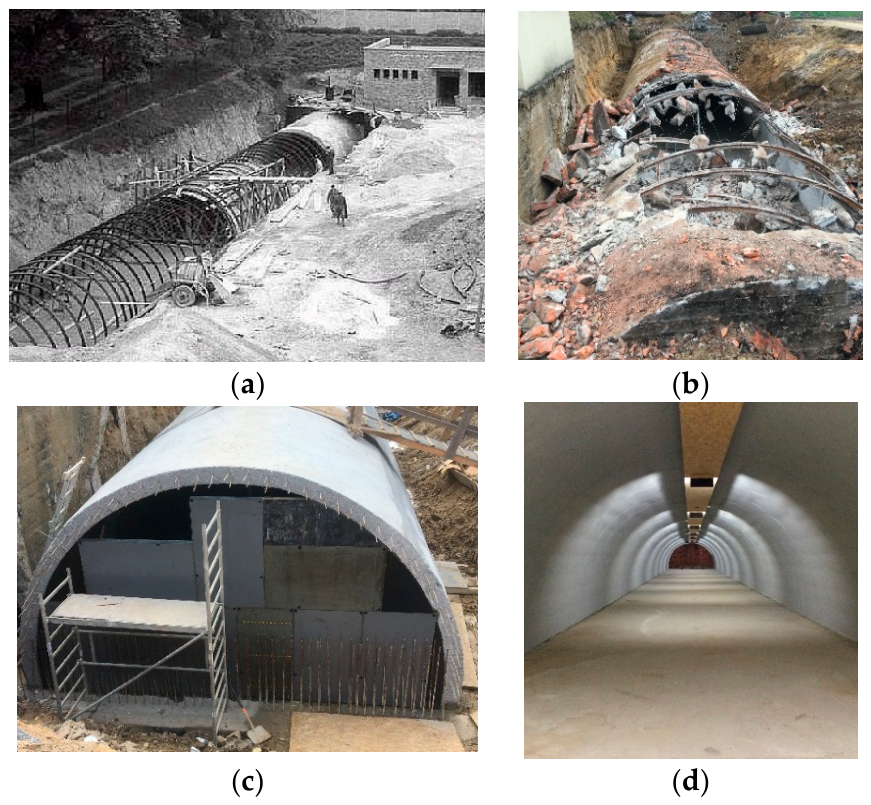
The demolition works started in September 2019 and were completed in October 2019. After removal of the existing structure and floor layers, the excavation bottom was profiled and compacted. Construction of the new tunnel structure was carried out between October 2019 and May 2020. This was followed by backfilling works and by construction of the subbase and surface layers of the sports field located above the tunnel. Although the main tunnel structure was completed in 2020, subsequent works related to the surrounding school complex, finishing works, and remedial interventions continued until the beginning of 2022. During this period, recurrent water accumulation and leakage were observed, particularly after rainfall events, which indicated that the problem of water ingress had not been eliminated.
During and after reconstruction, several symptoms of adverse ground and groundwater conditions were recorded. According to the construction log [20], construction works within the school complex were repeatedly interrupted between June 2020 and May 2021 due to rainfall and the need to dewater excavations. Archival photographic documentation [19] also confirmed water ponding in the drainage channels of the existing shooting range building adjacent to the tunnel (Figure 2a). In May 2021, seepage water was identified beneath a removed floor section in this area (Figure 2b). Despite injection sealing of the wall-floor interface, drying of the tunnel, application of cementitious waterproof slurry, and installation of torch-applied bituminous membrane, renewed groundwater ingress and seepage was observed (Figure 3). Further remedial works, including wall injections, expansion joint sealing, and installation of waterproofing tapes, were carried out in December 2021 (Figure 4). Nevertheless, periodic water ponding and leakage continued to occur after rainfall. Although the reconstructed tunnel was officially completed at the beginning of 2022, the problem of water ingress was not fully resolved.
Consequently, in 2024, the City Hall commissioned the authors to carry out a comprehensive technical assessment [21]. The aim of this study was to evaluate the current condition of the underground structure, review the effectiveness of the previously implemented remedial measures, identify the underlying causes of recurrent water ingress, and propose appropriate repair and protection strategies to prevent further flooding.
3. Observed Damage and Water Ingress Locations
As part of the technical assessment [21], three site inspections were carried out on 18 March 2024, 30 April 2024, and 29 May 2024. The observations revealed several characteristic types of damage and locations of water ingress.
Water ponding was observed along the entire length of the shooting range tunnel, particularly during the first inspection (Figure 5a). Although the amount of water was significantly lower during the second inspection, clear traces of previous ponding remained visible on the tunnel floor (Figure 5b). Local accumulation of water was also identified at the drainage pump location (Figure 5c). These observations indicated that water periodically enters the structure, especially following rainfall events, and is not effectively removed.
It was identified that a significant zone of water ingress was the interface between the tunnel walls and the bottom slab, i.e., the construction joint. Water ponding was particularly visible along this contact (Figure 3 and Figure 5), indicating that it constitutes a preferential path for water penetration. This type of discontinuity is known to be highly vulnerable, especially if not properly sealed during construction. A critical location of water ingress was also the expansion joint in the bottom slab at mid-span of the tunnel (Figure 6). Standing water was observed in this joint during all site inspections (Figure 7), and its presence was confirmed at a depth of approximately 8 cm below the top surface of the slab. It must be emphasized that the use of polystyrene foam at this location was clearly inappropriate, as it does not provide any watertight sealing. Consequently, water could freely infiltrate through the joint and enter the tunnel interior. The observed condition confirms that the expansion joint was not properly sealed with a dedicated waterproofing system.
Moisture-related damage was also observed in the finishing elements of the tunnel structure and in the adjacent shooting range building. Dampness of gypsum plasterboards, deterioration of wall finishes, and mold growth were identified (Figure 8). In addition, timber elements of the bullet trap exhibited signs of prolonged moisture exposure and biological degradation. In this area, water most likely entered the tunnel through the joint between the timber wall and the tunnel floor (Figure 4d).
The conducted inspections and analysis of archival documentation also demonstrated that previously implemented remedial measures were not fully effective. Although injection works and local sealing improved the situation to some extent, they did not eliminate water ingress. In particular, attention was drawn to the injection technique applied at the wall-slab interface. According to accepted practice [22], packer holes should be drilled in the wall to intersect the construction joint at approximately mid-thickness (Figure 9). In the analyzed case, however, the injections were carried out through the slab (Figure 4c), which suggests that the treated zone was the interface between the slab and the lean concrete rather than the actual wall-slab joint. This may explain the limited effectiveness of the applied remedial measures.
4. Diagnostic Methods
The diagnostic procedure adopted in this study was based on a multi-stage assessment combining archival document analysis, field inspections, non-destructive testing of the concrete structure, destructive verification of selected construction details, and geotechnical investigation of the subsoil. The diagnostic strategy was intended to limit unnecessary destructive intervention. Non-destructive testing and targeted verification of selected details were used to obtain reliable information on the condition of the structure while minimizing additional damage to the facility [23]. The purpose of the diagnosis was to identify both the technical condition of the reconstructed tunnel and the potential mechanisms responsible for recurrent water ingress.
4.1. Non-Destructive Testing of the Structure
Non-destructive ultrasonic testing was performed to evaluate the quality and homogeneity of the concrete in the reconstructed underground tunnel. The tests were carried out using a UK1401 Surfer ultrasonic concrete tester manufactured by Acoustic Control Systems – Solutions GmbH (Figure 10a). Measurements were taken at 24 selected locations on the reinforced concrete arched shell and the bottom slab (Figure 11a). The obtained ultrasonic test results were used to estimate the compressive strength of concrete and to verify whether the constructed structure corresponded to the design assumptions. The mean estimated compressive strength was 36.9 MPa, with a standard deviation of 2.16 MPa and a coefficient of variation of 5.86% (Table 1). These results indicated good concrete homogeneity and confirmed that the tested concrete could be classified as strength class C30/37, consistent with the design requirements. This finding was important for defining the repair strategy, as it indicated that the concrete structure itself did not require structural replacement or strengthening.
Ultrasonic tomography was applied to determine the thickness and internal condition of the reinforced concrete bottom slab. The tests were conducted from the upper surface of the slab using a Pundit PD 8000 ultrasonic tomograph manufactured by Proceq (Figure 10b). Eight B-scans, each approximately 160 cm long, were performed at selected locations (Figure 11b). The tomography results indicated that the actual thickness of the foundation slab was approximately 25 cm, which was slightly lower than the design value of 30 cm (Figure 12). At the same time, the thickness of the underlying lean concrete layer was found to be approximately 20 cm, exceeding the design assumption of 10 cm (Figure 12). Within the scope and resolution of the applied method, no defects or anomalies in the immediate subsoil beneath the slab were identified.
4.2. Destructive Testing of the Structure
The archival documentation review revealed uncertainties regarding the execution of the designed sealing element at the construction joint between the bottom slab and the tunnel wall. The construction log [20] did not contain a clear entry confirming the installation or acceptance of a waterstop or swelling profile in this location. Although other waterproofing works, such as the horizontal waterproofing beneath the slab and waterproofing of the tunnel arch, were recorded in the construction log [20], no equivalent confirmation was found for the wall-slab construction joint. Photographic documentation from the reconstruction stage [19] was also analyzed (Figure 13). However, none of the available photographs allowed the presence of a waterstop or swelling profile at the wall-bottom slab interface to be unambiguously confirmed. Therefore, targeted destructive verification was carried out to inspect this critical detail.
An opening was made at the wall-bottom slab interface on 25 June 2024 (Figure 14). The core hole was 100 mm deep and 102 mm in diameter and was located 5.35 m from the expansion joint situated at mid-span of the tunnel (Figure 11b). The inspection revealed the presence of a bentonite cord/tape at the interface between the arched shell and the foundation slab (Figure 14c). However, the exposed material was in poor apparent condition, which raised additional doubts regarding its effectiveness as a sealing element. Moreover, due to the lack of photographic or acceptance documentation from the installation stage, it was not possible to verify the correctness of substrate preparation, continuity of the sealing element, its positioning, or compliance with the manufacturer’s installation requirements. It also cannot be excluded that the bentonite element was locally damaged, displaced, or interrupted during concreting.
4.3. Geotechnical Investigations
A geotechnical investigation was performed to determine the ground and groundwater conditions directly adjacent to and beneath the tunnel and to assess their potential influence on water ingress. The assessment included both a review of the pre-construction geotechnical opinion prepared in 2017 [24] and new field investigations carried out in 2024 [21].
The archival geotechnical opinion [24] was based on five boreholes with depths ranging from 0.5 to 3.0 m below ground level (Figure 15a). However, only part of these investigations was located in the vicinity of the shooting range, and the maximum investigation depth was smaller than the tunnel foundation depth, which was approximately 4.3 m below ground level. As a result, the previous investigation [24] did not provide reliable information on the ground and groundwater conditions at and below the foundation level of the tunnel. In addition to this limitation, no groundwater was identified within the investigated depth, and the ground conditions were classified as simple.
Due to the recurring water ingress observed in the tunnel, new geotechnical investigations [21] were planned in 2024. Five boreholes to a depth of 7.5 m below ground level were initially planned in the vicinity of the tunnel, with drilling locations selected to account for existing underground utilities and to avoid the sports field surface (Figure 15b). The investigations were performed mechanically using dry spiral auger drilling with a diameter of 96 mm (Figure 15c). Boreholes nos. 1-3 were completed in full. However, during drilling at point no. 4, an electric cable was encountered, therefore, due to safety concerns and inconsistencies between the actual utility location and the available map, boreholes nos. 4 and 5 were abandoned.
The completed boreholes allowed the subsoil structure and groundwater conditions around the tunnel to be identified. The upper layers consisted mainly of engineered fills composed of medium sands with clay and gravel, as well as clayey sands (Figure 15c and Figure 16). Their thickness ranged from approximately 2.5 m to 4.2 m below ground level and was related to the backfilling of the excavation after tunnel reconstruction. Beneath the fill layers, sandy clays with gravel were encountered, ranging in consistency from soft (IVc) to firm (IVb) and stiff (IVa), locally interbedded with permeable sandy layers. Groundwater was identified in the form of seepage through sandy interbeds, locally saturated sand layers, and perched water within the fill zone. In particular, water inflow was observed at depths of approximately 3.2 m, 5.7 m, and 6.3 m below ground level (Figure 16). These investigations provided the basis for evaluating the hydrogeotechnical mechanism of water accumulation around the tunnel and its possible migration into the tunnel structure through discontinuities.
The results indicated that water migrates through permeable sandy interbeds within cohesive soil layers and accumulates within the non-cohesive backfill surrounding the tunnel. Due to the presence of low-permeability clay layers at the base and around the excavation, natural drainage is limited, which promotes water accumulation and may lead to the development of hydrostatic pressure conditions. Although the groundwater level measured during the 2024 investigation [21] was still slightly below the upper level of the foundation slab, archival observations and repair works demonstrated that, after prolonged rainfall, the water level may rise above both the tunnel foundation level and the bottom slab level. This was confirmed during sealing works, when water flowed into the tunnel through a hole drilled in the wall (Figure 17). This demonstrates that the resilience of underground structures should be assessed not only for average groundwater conditions, but also for transient hydrological states associated with prolonged rainfall and water accumulation in backfilled excavations. Under such circumstances, any discontinuity in the structure or in its waterproofing system may become a preferential pathway for water ingress into the tunnel.
Furthermore, the geotechnical conditions identified in the 2024 investigation [21] showed that the ground conditions had been underestimated at the design stage [24]. Consequently, the original classification of the ground conditions as simple was not justified. Based on the later investigation, the subsoil conditions should be classified as difficult, and the analyzed structure should be assigned to geotechnical category II.
4.4. Waterproofing and Drainage
Considering the groundwater conditions identified at the site (impermeable sandy clays interbedded with permeable sandy layers), the tunnel should have been protected by a continuous waterproofing system capable of resisting water pressure rather than by standard damp-proofing measures [25]. Under such conditions, particular attention should be paid to construction joints, expansion joints, including wall-slab interfaces, and connections with existing structural elements, as these zones are especially vulnerable to leakage. The archival geotechnical opinion [24] classified the ground conditions as simple and did not identify groundwater within the investigated depth. This may have influenced the design assumptions and the selection of protection materials. Although the design documentation indicated the need for waterproofing, the adopted guidelines [18] were not sufficiently detailed. In particular, the documentation did not clearly specify the materials, system solutions, or execution requirements for the most critical zones of the tunnel. Based on the available acceptance documentation [26] and construction log entries [20], it was also not possible to unequivocally determine whether the applied waterproofing solutions met the requirements for protection against groundwater pressure.
An important observation from the archival construction records [20] was the presence of an undocumented protective brick layer on mortar, discovered during partial exposure of the original tunnel structure. In the authors’ opinion, this layer may have functioned as part of a heavy waterproofing system. Its presence should have drawn attention to the possibility of significant groundwater-related actions affecting the structure. In addition, construction log entries [20] indicate that excavations within the site required frequent dewatering after rainfall events. This was another indication that water accumulation in the ground was not incidental and should have been considered in the design of both waterproofing and drainage systems. Given the limited natural outflow of water from the backfilled excavation, a drainage system would have been justified to reduce water accumulation and limit the hydraulic load acting on the structure and its waterproofing system [25]. However, no drainage system was installed in the area of the underground shooting range. As a result, water could be retained around the tunnel, increasing the risk of hydrostatic pressure development. In the presence of any discontinuity or local defect in the waterproofing system or structural joints, such conditions could lead to water ingress into the tunnel interior.
From a sustainability perspective, drainage and waterproofing should be regarded as durability-oriented construction strategies and treated as integral components of resilient design, not merely as finishing or secondary protection measures. Their proper design reduces the risk of premature deterioration, repeated repairs, functional interruptions, and additional material consumption over the life cycle of the structure. In the analyzed case, this durability-oriented function was not achieved, as the waterproofing system was insufficiently effective and no drainage system was provided, allowing water to accumulate around the tunnel and enter its interior through local discontinuities.
5. Low-Impact Repair Works
The analyzed case demonstrates that reliable diagnostics can directly support sustainable decision-making in the repair of underground structures. The non-destructive tests confirmed that the concrete structure met the design strength class. Therefore, extensive demolition or replacement of the reconstructed tunnel was not technically justified. Instead, the repair strategy could be focused on the actual weak points of the system, namely waterproofing discontinuities, construction joints, expansion joints, and the wall-bottom slab interface.
Two remedial strategies were considered for the underground shooting range tunnel: (1) targeted reinjection and sealing of critical joints, or (2) excavation of the tunnel combined with drainage installation. The first option was selected as a less invasive approach. Namely, from a sustainability perspective, such a diagnosis-driven intervention may reduce construction disturbance, material consumption, waste generation, and interruption of facility use. However, the case also shows that low-impact repair can be effective only when the actual hydrogeotechnical conditions are properly recognized and when the sealing works are correctly designed and executed. After the effective remedial works, the renovated underground shooting range tunnel was reopened in January 2025 (Figure 18).
6. Summary
The conducted diagnostic assessment showed that the recurring water ingress into the underground shooting range tunnel was not primarily related to insufficient concrete quality or general structural degradation of the reconstructed tunnel. Non-destructive testing confirmed good concrete homogeneity and indicated that the concrete met the requirements of strength class C30/37, consistent with the design assumptions. Therefore, the main cause of leakage should be attributed to the combined effect of unfavorable ground and groundwater conditions, insufficiently controlled waterproofing details, and local discontinuities in critical structural joints. The most probable water ingress locations were identified as the wall-bottom slab interface, the internal expansion joint, and the connection zone between the tunnel and the existing shooting range building. These zones are particularly vulnerable because they require continuous and properly executed waterproofing. Site inspections confirmed water ponding along the wall-slab contact, standing water in the expansion joint, and moisture-related damage to finishing elements.
The geotechnical investigation showed that the pre-construction subsoil recognition was insufficient. The archival boreholes did not reach the tunnel foundation level and did not identify groundwater, which contributed to the initial classification of the ground conditions as simple. Later investigations demonstrated more difficult ground and groundwater conditions, including seepage through sandy interbeds and water accumulation in the backfilled excavation. Therefore, the analyzed structure should have been assigned to geotechnical category II.
Under these conditions, the use of damp-proofing solutions would have been inadequate. The tunnel required a continuous waterproofing system capable of resisting water pressure, particularly at construction joints, expansion joints, and wall-bottom slab interfaces. However, the available documentation did not allow the proper execution and continuity of all waterproofing details to be unequivocally confirmed. In addition, the inspection opening at the wall-bottom slab interface revealed a bentonite cord/tape, but its apparent condition and the lack of installation documentation raised doubts regarding its long-term sealing effectiveness. Moreover, previous injection works at the wall-bottom slab interface were carried out through the slab rather than through the wall toward the actual construction joint, which limited their effectiveness. The absence of a drainage system around the tunnel was also an important factor contributing to the persistence of the problem. Due to the limited natural outflow of water from the backfilled excavation and the presence of low-permeability cohesive soils, water could accumulate around the structure after rainfall events. In such conditions, any local defect or discontinuity in the waterproofing system could become a preferential pathway for water ingress into the tunnel interior.
Based on the assessment, two remedial strategies were considered: (1) targeted reinjection and sealing of critical joints, or (2) excavation of the tunnel combined with drainage installation. For practical and technological reasons, the first option was selected as the less invasive repair strategy, as it limited excavation works, reduced interference with the existing structure, and minimized disruption to facility use. After the effective remedial works, the renovated underground shooting range tunnel was reopened in January 2025.
The case demonstrates that even a structurally sound reinforced concrete underground facility may suffer recurring leakage if groundwater conditions are underestimated and critical waterproofing details are not properly designed, documented, and executed. At the same time, it shows that comprehensive diagnostics can support more sustainable repair decisions by directing interventions to the actual failure mechanisms, limiting unnecessary construction works, and extending the service life and resilience of existing underground infrastructure.
This article is a revised and expanded version of the paper entitled “Analysis of Damage to an Underground Shooting Range Tunnel”, presented at the conference “Building Failures: Prevention, Diagnostics, Repairs, and Reconstructions”, held in Szczecin, Poland, on 18-22 May 2026 [14].
Author Contributions
Conceptualization, Ł.D. and S.K.; methodology, Ł.D., J.B., and S.K.; software. Ł.D. and S.K.; validation, J.B.; formal analysis, J.B.; investigation, Ł.D., J.B., and S.K.; resources, J.B.; data curation, Ł.D., J.B., and S.K.; writing—original draft preparation, J.B.; writing—review and editing, Ł.D. and S.K.; visualization, J.B.; supervision, Ł.D. and S.K.; project administration, Ł.D.; funding acquisition, Ł.D. All authors have read and agreed to the published version of the manuscript.
Funding
The APC was funded by Silesian University of Technology (Poland) within the projects BKM-500/RB-2/2026; 03/020/BKM_26/0204 and BK-206/RB-2/2026; 03/020/BK_26/0197.
Institutional Review Board Statement
Not applicable.
Data Availability Statement
Dataset available on request from the authors.
Acknowledgments
During the preparation of this manuscript, the authors used Microsoft 365 Copilot powered by GPT-5 for the purposes of language editing of the manuscript. Additionally, Google Gemini with Imagen 4 image generation was used to modify selected graphical materials. The authors have reviewed and edited the output and take full responsibility for the content of this publication.
Conflicts of Interest
The authors declare no conflicts of interest.
References
- Wei, X.; Wang, X.; Wei, G.; Li, S.; Yan, Z.; Yan, J.; Xu, J. Theoretical Analysis of the Jacking Force During the Vertical Pipe Jacking Process. Buildings 2026, 16, 2173. [Google Scholar] [CrossRef]
- Yang, B.; Li, Y.; Lin, H.; Li, Y.; Liu, X.; Liu, J. Life Prediction of Underground Concrete Structures: From Mechanism-Based Models to Digital Twin Frameworks. Buildings 2026, 16, 2047. [Google Scholar] [CrossRef]
- Nazarchuk, A. Water intrusion in underground structures; Massachusetts Institute of Technology, 2008. [Google Scholar]
- Shen, Y.; Zhang, T.; Liu, H.; Zhu, J.; Yang, P.; Wang, Y. Research on Leakage Mechanism of Underwater Shield Tunnels with Different Soil Layers during Operation Period. Sustainability 2022, 14, 14276. [Google Scholar] [CrossRef]
- Sherif, A.S.; Kudsi, T.N. Reliability of underground concrete structures under water ingress attack. In Proceedings of the Fourth International Symposium on Uncertainty Modeling and Analysis, College Park, 2003; pp. 40–44. [Google Scholar]
- Lazarus, D. Water, water everywhere: ingress in underground structures. In Proceedings of the Proceedings of the Institution of Civil Engineers-Forensic Engineering; 2013; Volume 166, pp. 189–197. [Google Scholar]
- Lehman, E.L.; Stieve, D.R. Waterproofing Challenges in Hydrostatic Conditions. IBEC Interface 2023, 10–16. [Google Scholar]
- Martha, A.; Pires, C.; Lanzinha, G. Building Rehabilitation: A Sustainable Strategy for the Preservation of the Built Environment. Sustainability 2024, 16, 553. [Google Scholar] [CrossRef]
- Hedjazi, S. Non-Destructive Testing as a Sustainability Assessment Tool for Detecting Chloride and Sulfate Ion Deterioration in Reinforced Concrete. Sustainability 2026, 18, 5484. [Google Scholar] [CrossRef]
- Yuan, P.; Ma, C.; Liu, Y.; Qiu, J.; Liu, T.; Luo, Y.; Chen, Y. Recent Progress in the Cracking Mechanism and Control Measures of Tunnel Lining Cracking under the Freeze – Thaw Cycle. Sustainability 2023, 15, 12629. [Google Scholar] [CrossRef]
- Francke, B.; Kula, D. Analysis of the Durability of Thermal Insulation Properties in Inverted Foundation Slab Systems of Single-Family Buildings in Poland. Buildings 2025, 15, 3579. [Google Scholar] [CrossRef]
- An, K.; Kim, B. A Study on Verification of Waterproofing Method Properties for Performance Grading in Apartment Houses - Upper Slab of the Underground Structures. Buildings 2023, 13, 2164. [Google Scholar] [CrossRef]
- Man, K.; Liu, R.; Liu, X.; Song, Z.; Liu, Z.; Cao, Z.; Wu, L. Water Leakage and Crack Identification in Tunnels Based on Transfer-Learning and Convolutional Neural Networks. Water 2022, 14, 1462. [Google Scholar] [CrossRef]
- Kaszyńska, M. (Ed.) Analysis of Damage to the Underground Shooting Range Tunnel (in Polish). In Building Failures. Prevention, Diagnostics, Repairs, Reconstructions; Publishing House of the West Pomeranian University of Technology in Szczecin: Szczecin, 2026; pp. 361–372. [Google Scholar]
- Klimurczyk, M.; Łuków, T.; Matwiejew, A.; Wojtynek, B.; Pękała, M.; Jabłoński, M.W.M. St. Joseph’s Convictus (in Polish). Available online: http://www.gliwiczanie.pl/Reportaz/szkoly/konwikt/konwikt2.htm (accessed on 26 January 2026).
- 2mm Architecture Studio Marcin Konieczniak Construction Design for the Construction of a Multi-purpose Sports Field, Retaining Wall, Waste Collection Area, Reconstruction of the Shooting Range Tunnel, Stormwater Sewer Connection, and Renovation of the Historic Fence Together with Site Development; Katowice. 2018.
- DZ – Konstrukcje Budowlane Technical Expertise. Structure of the Underground Shooting Range (in Polish); Katowice. 2018.
- DZ – Konstrukcje Budowlane Construction Design. Underground Shooting Range. Structural Design (in Polish); Katowice. 2018.
- Archival photographic documentation provided by the City Office; Gliwice. 2024.
- Archival documentation provided by the City Office (construction logbook no. 60/2019 issued on 18.01.2019, Volumes I and II) (in Polish); Gliwice. 2024.
- Łukasz, D.; Kwiecień, S.; Blazy, J. IV Secondary School at [...] – Shooting Range Equipment Together with the Modernization of Existing Rooms – Technical Expertise (in Polish); Gliwice. 2024. [Google Scholar]
- OPW Izolacje. Reconstruction of Horizontal Insulation at the Junction of the Foundation Slab and Wall Using the Pressure Injection Method (in Polish). Available online: http://izolacjewodne.pl/iniekcja_rys_i_pekniec.html (accessed on 26 January 2026).
- Miano, A.; Ebrahimian, H.; Jalayer, F.; Prota, A. Reliability Estimation of the Compressive Concrete Strength Based on Non-Destructive Tests. Sustainability 2023, 15, 14644. [Google Scholar] [CrossRef]
- Bazet Geotechnical Opinion Determining the Soil and Water Conditions of Plot No. 540 for the Purposes of School Sports Field Modernization and the Construction of a Shooting Range at the Complex of General Education Schools; Pawłowice, 2017. Pawłowice.
- Francke, B. Modern Waterproofing of Buildings. Volume 1. Waterproof Protection of Underground Parts of Buildings (in Polish); Wydawnictwo Naukowe PWN: Warszawa, 2021; Volume 1. [Google Scholar]
- TORAKOL Sp. z o.o. Technical Documentation Concerning the Modernization of School Sports Fields of the IV General Secondary School (in Polish); TORAKOL Sp. z o.o.: Gliwice, 2022. [Google Scholar]
Figure 2.
Existing shooting range building adjacent to the tunnel: (a) water ponding, February 2021 [19]; (b) seepage water beneath the removed floor, April 2021 [19].
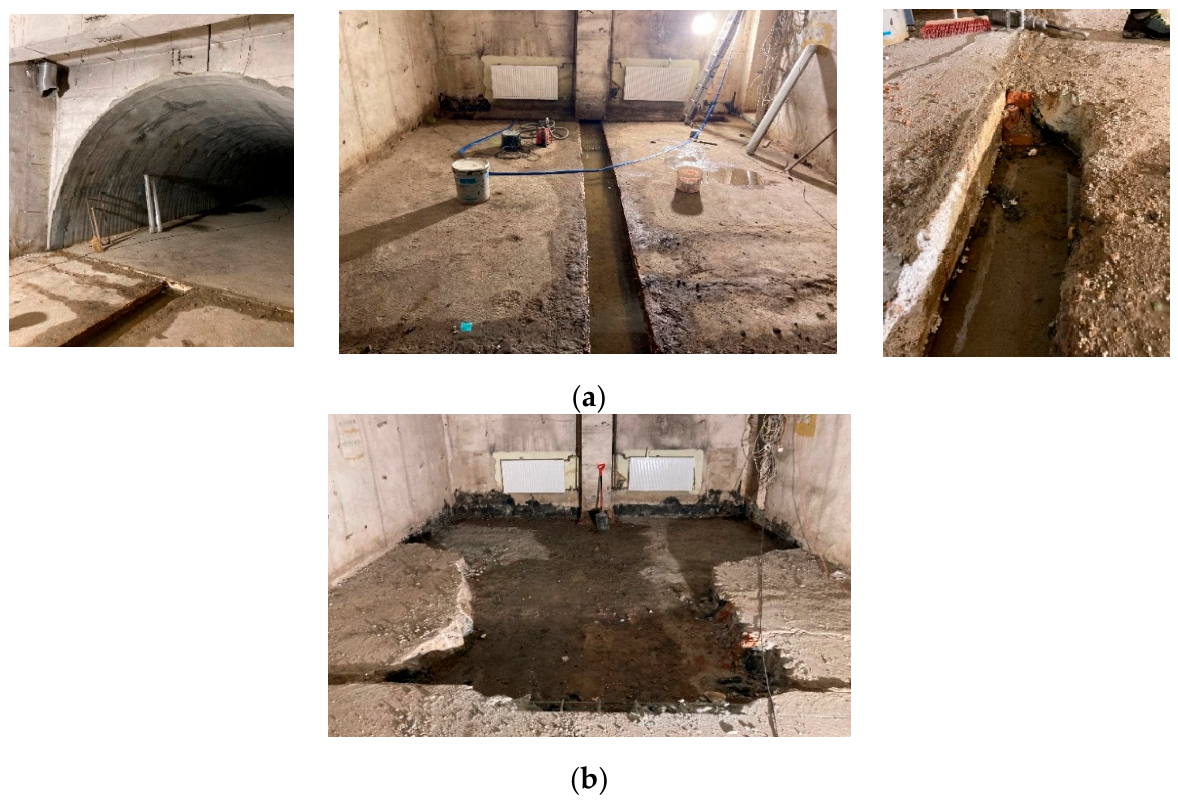
Figure 3.
Water ponding observed in the underground shooting range tunnel: (a) 24 June 2021 [19]; (b) 15 September 2021 [19].
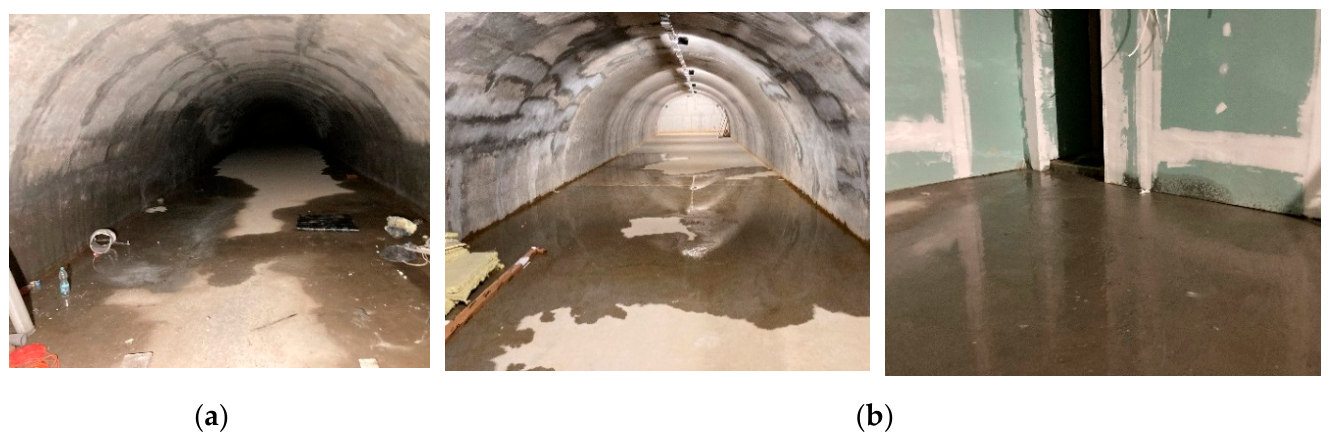
Figure 4.
Locations of remedial injection works: (a) connection between the tunnel and the existing shooting range building [19]; (b) expansion joint at mid-span of the tunnel [19]; (c) along tunnel walls [photo: authors]; (d) tunnel end [photo: authors].
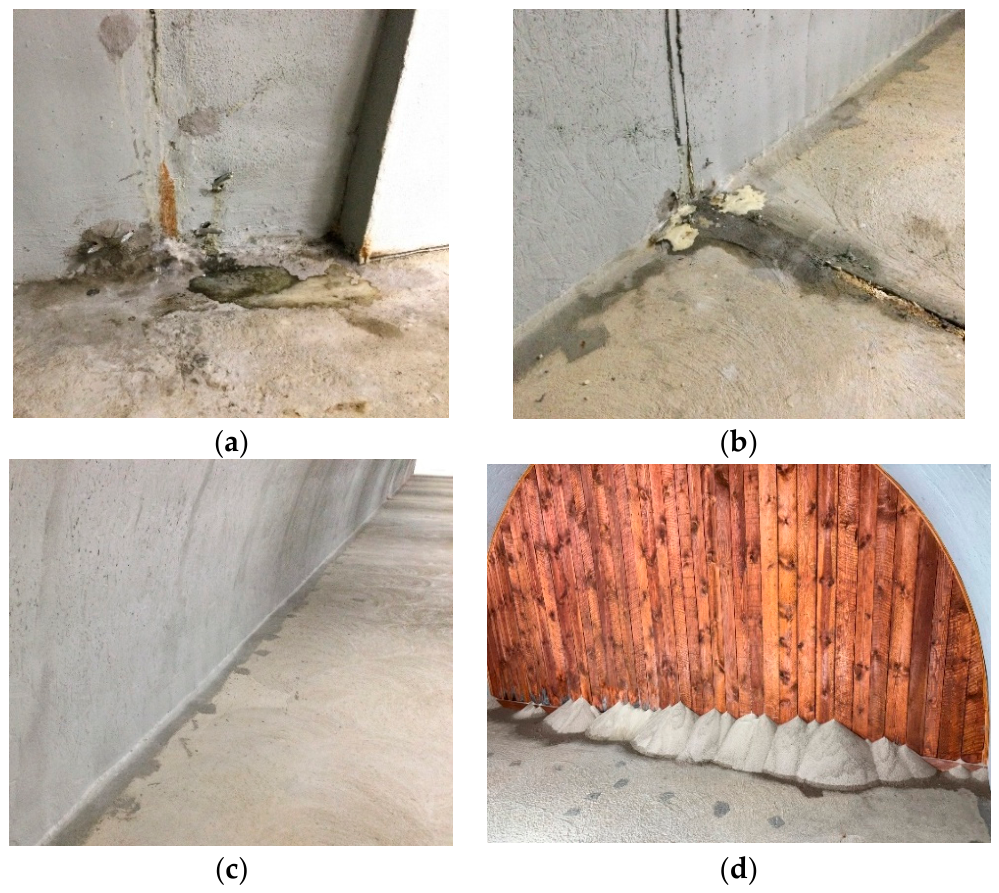
Figure 5.
Site inspection observations: (a) water ponding, 18 March 2024; (b) stains after previous water ponding, 30 April 2024; (c) water accumulation at the drainage pump location, 30 April 2024 [photos: authors].
Figure 5.
Site inspection observations: (a) water ponding, 18 March 2024; (b) stains after previous water ponding, 30 April 2024; (c) water accumulation at the drainage pump location, 30 April 2024 [photos: authors].
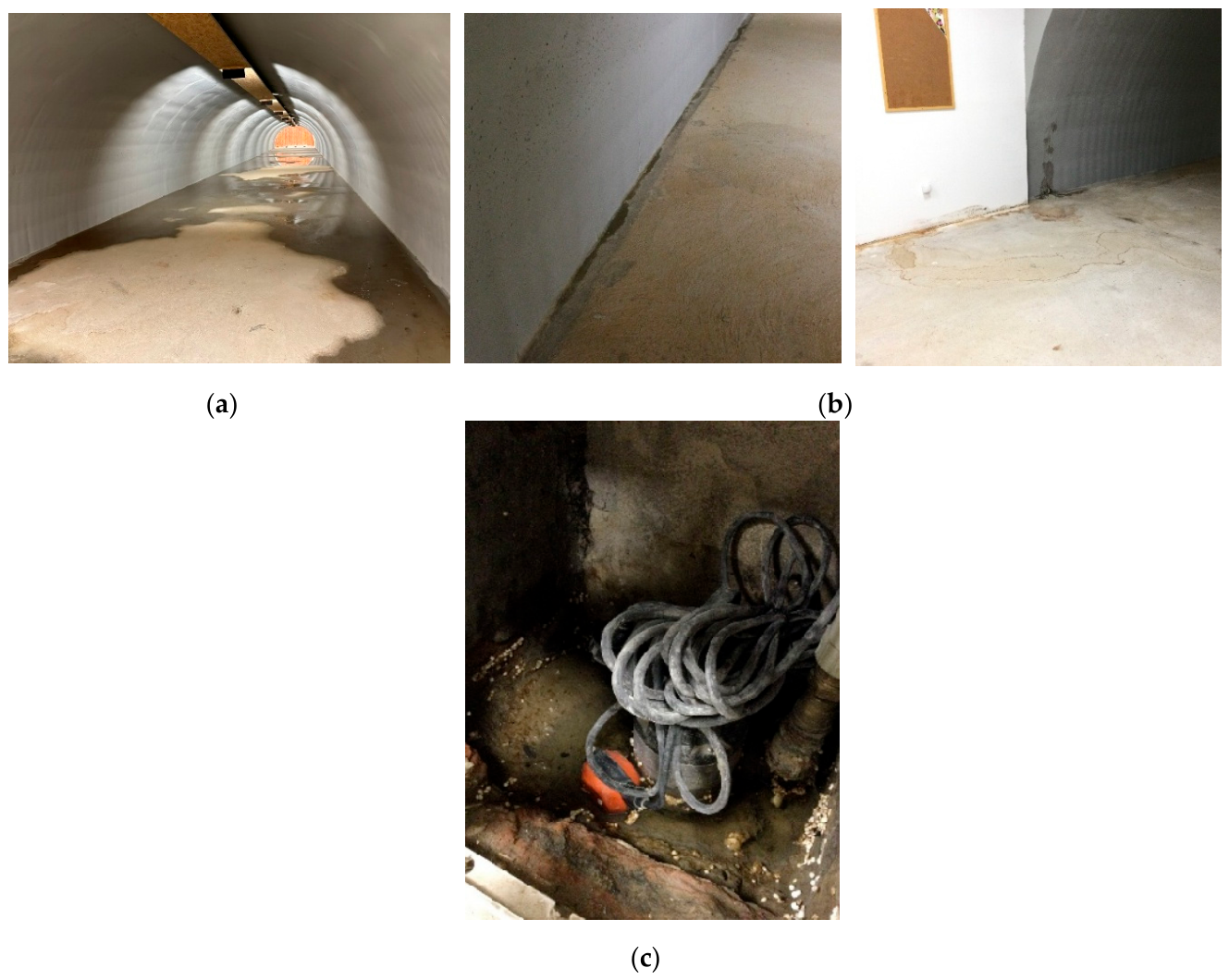
Figure 6.
Expansion joint in the bottom slab located at the mid-span of the shooting range tunnel [19].
Figure 6.
Expansion joint in the bottom slab located at the mid-span of the shooting range tunnel [19].
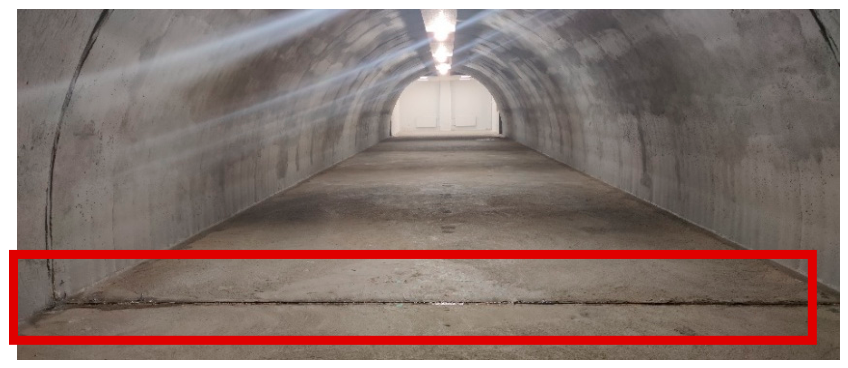
Figure 7.
Standing water observed in the expansion joint of the bottom slab during site inspections: (a) 18 March 2024, (b) 30 April 2024, and (c) 29 May 2024 [photos: authors].
Figure 7.
Standing water observed in the expansion joint of the bottom slab during site inspections: (a) 18 March 2024, (b) 30 April 2024, and (c) 29 May 2024 [photos: authors].
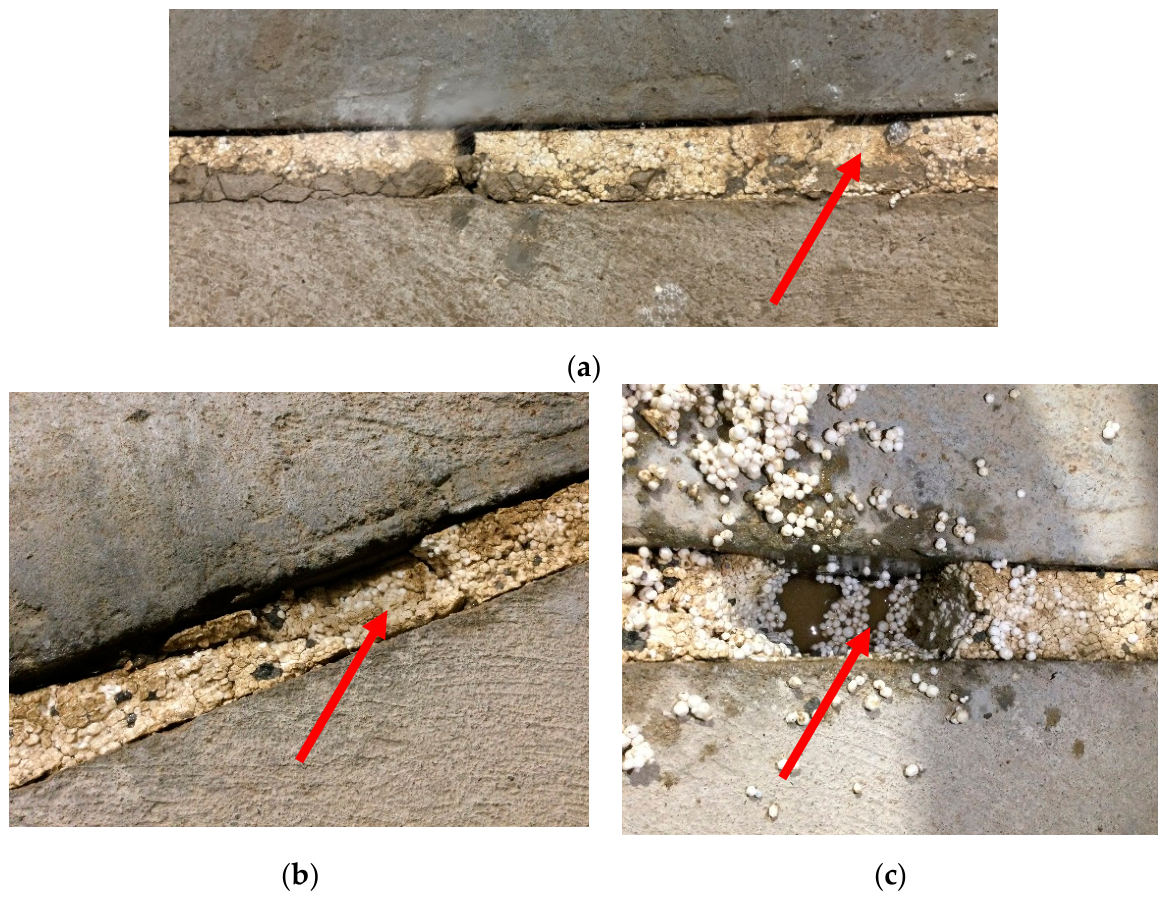
Figure 8.
Moisture-related damage to finishing elements: (a) dampness of gypsum plasterboards with mold growth; (b) dampness of walls in the existing shooting range building with paint peeling; (c) dampness of timber beams with mold growth [photos: authors].
Figure 8.
Moisture-related damage to finishing elements: (a) dampness of gypsum plasterboards with mold growth; (b) dampness of walls in the existing shooting range building with paint peeling; (c) dampness of timber beams with mold growth [photos: authors].
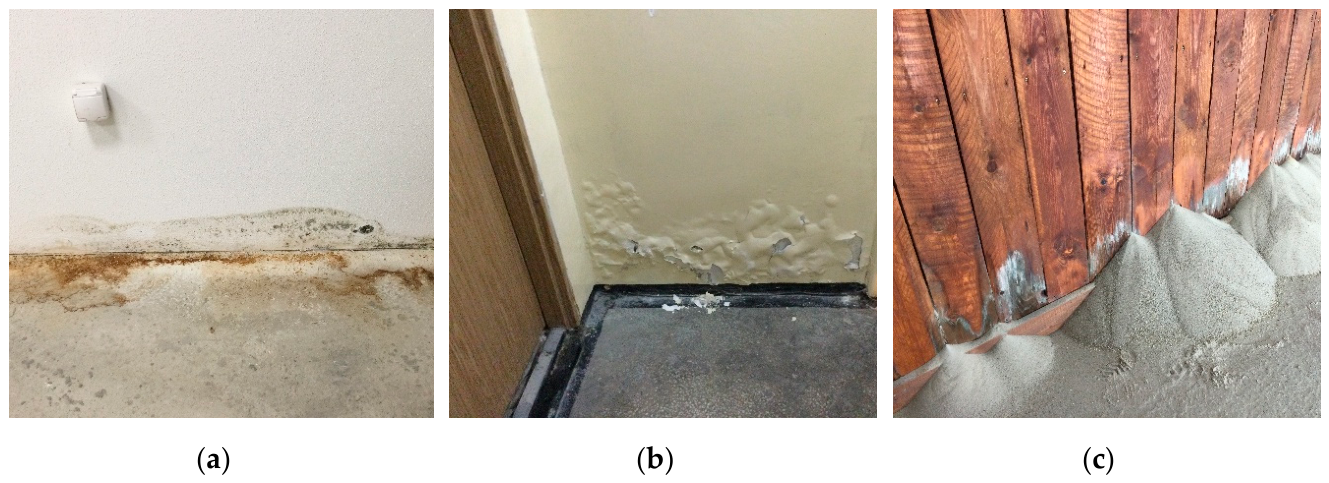
Figure 9.
Method of sealing construction joints with injection resin, where 1 – packer holes, 2 – injection pump, 3 – injection resin [image modified by AI based on [22]].
Figure 9.
Method of sealing construction joints with injection resin, where 1 – packer holes, 2 – injection pump, 3 – injection resin [image modified by AI based on [22]].
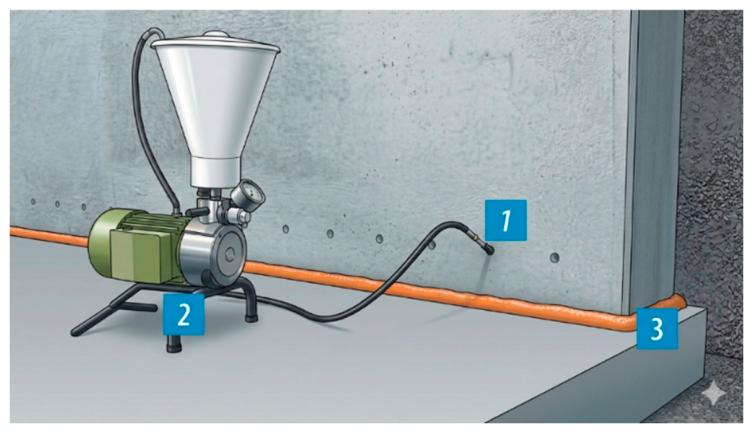
Figure 10.
Non-destructive testing equipment: (a) UK1401 Surfer concrete tester; (b) Pundit PD 8000 ultrasonic tomograph [photos: authors].
Figure 10.
Non-destructive testing equipment: (a) UK1401 Surfer concrete tester; (b) Pundit PD 8000 ultrasonic tomograph [photos: authors].
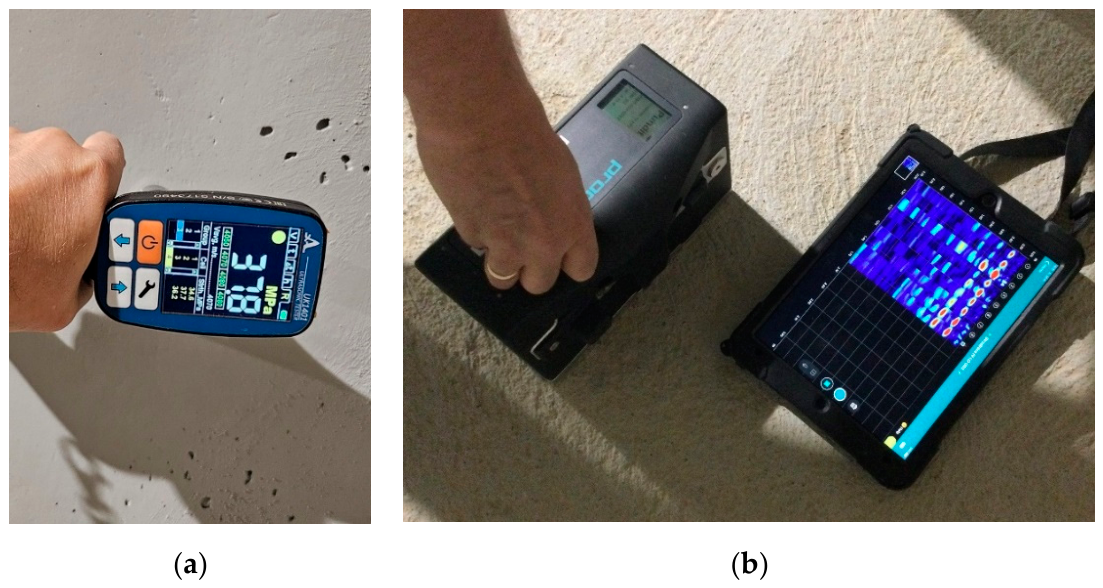
Figure 11.
Locations of diagnostic tests: (a) ultrasonic testing of concrete; (b) ultrasonic tomography of the bottom slab [photos: authors].
Figure 11.
Locations of diagnostic tests: (a) ultrasonic testing of concrete; (b) ultrasonic tomography of the bottom slab [photos: authors].
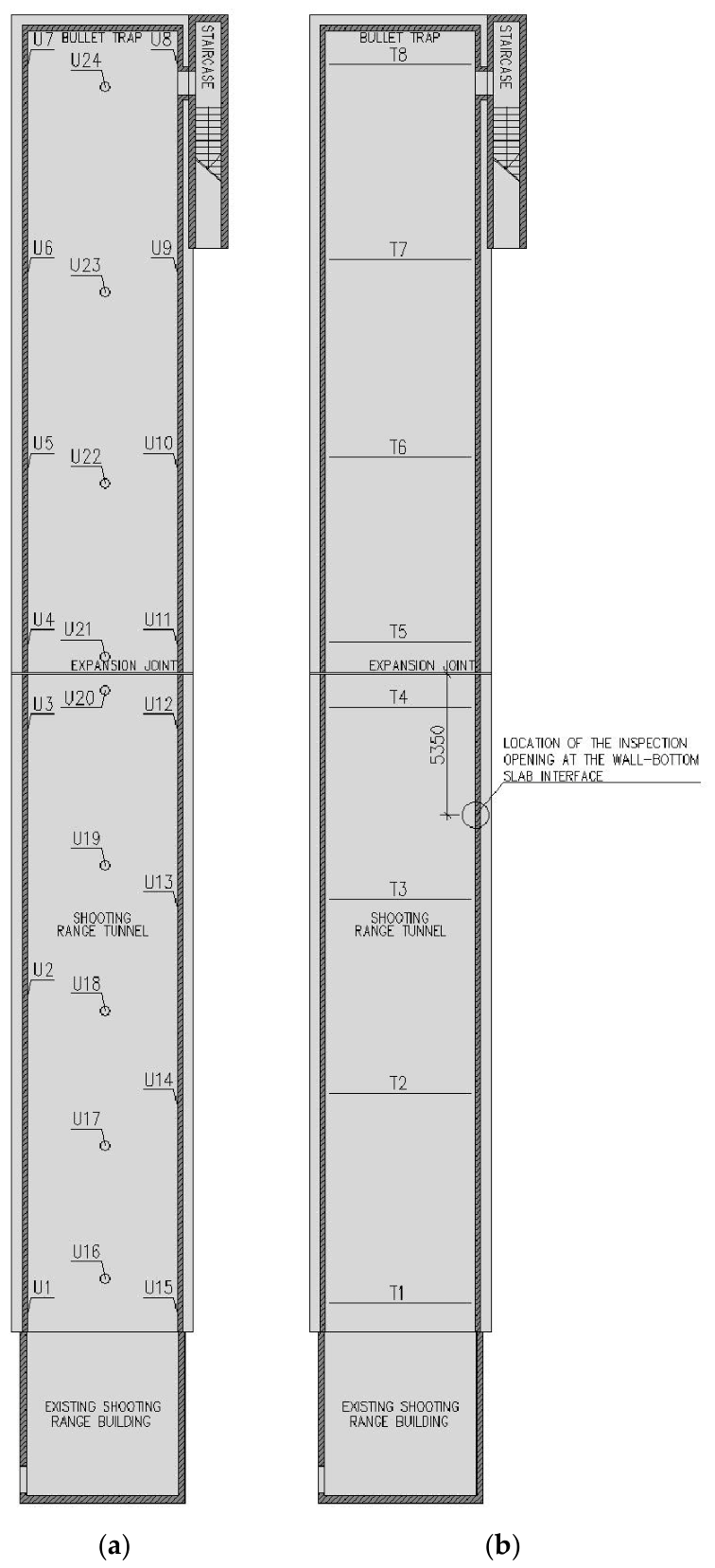
Figure 12.
Ultrasonic tomograph scans of the bottom slab: (a) T1; (b) T2; (c) T7 [photos: authors].
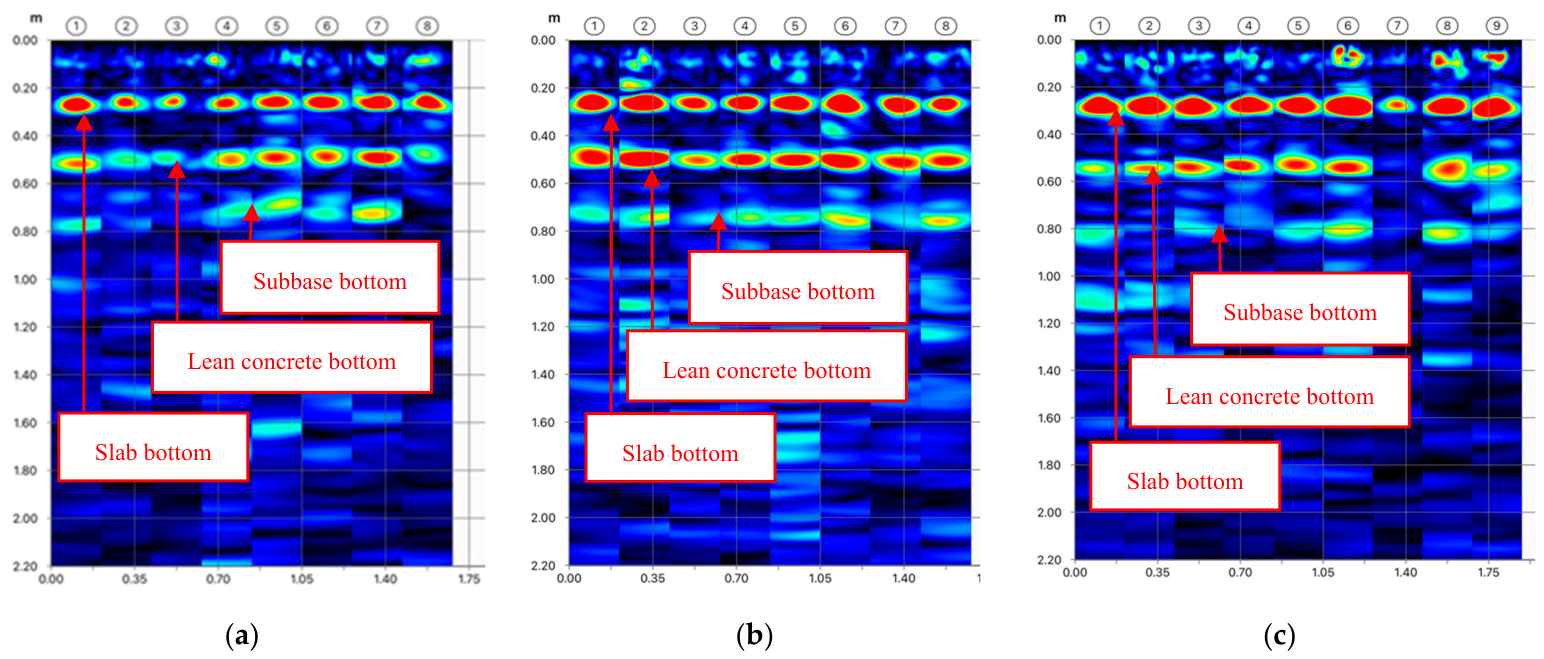
Figure 13.
Reconstruction stage of the shooting range tunnel – no clearly identifiable waterproofing element, such as a waterstop or swelling profile at the construction joint between the bottom slab and the tunnel wall [19].
Figure 13.
Reconstruction stage of the shooting range tunnel – no clearly identifiable waterproofing element, such as a waterstop or swelling profile at the construction joint between the bottom slab and the tunnel wall [19].
Figure 14.
Verification of the wall-bottom slab interface: (a) HILTI DD 250 diamond drilling rig on a stand with a core bit; (b) inspection opening with visible bentonite cord/tape; (c) bentonite cord/tape [photos: authors].
Figure 14.
Verification of the wall-bottom slab interface: (a) HILTI DD 250 diamond drilling rig on a stand with a core bit; (b) inspection opening with visible bentonite cord/tape; (c) bentonite cord/tape [photos: authors].
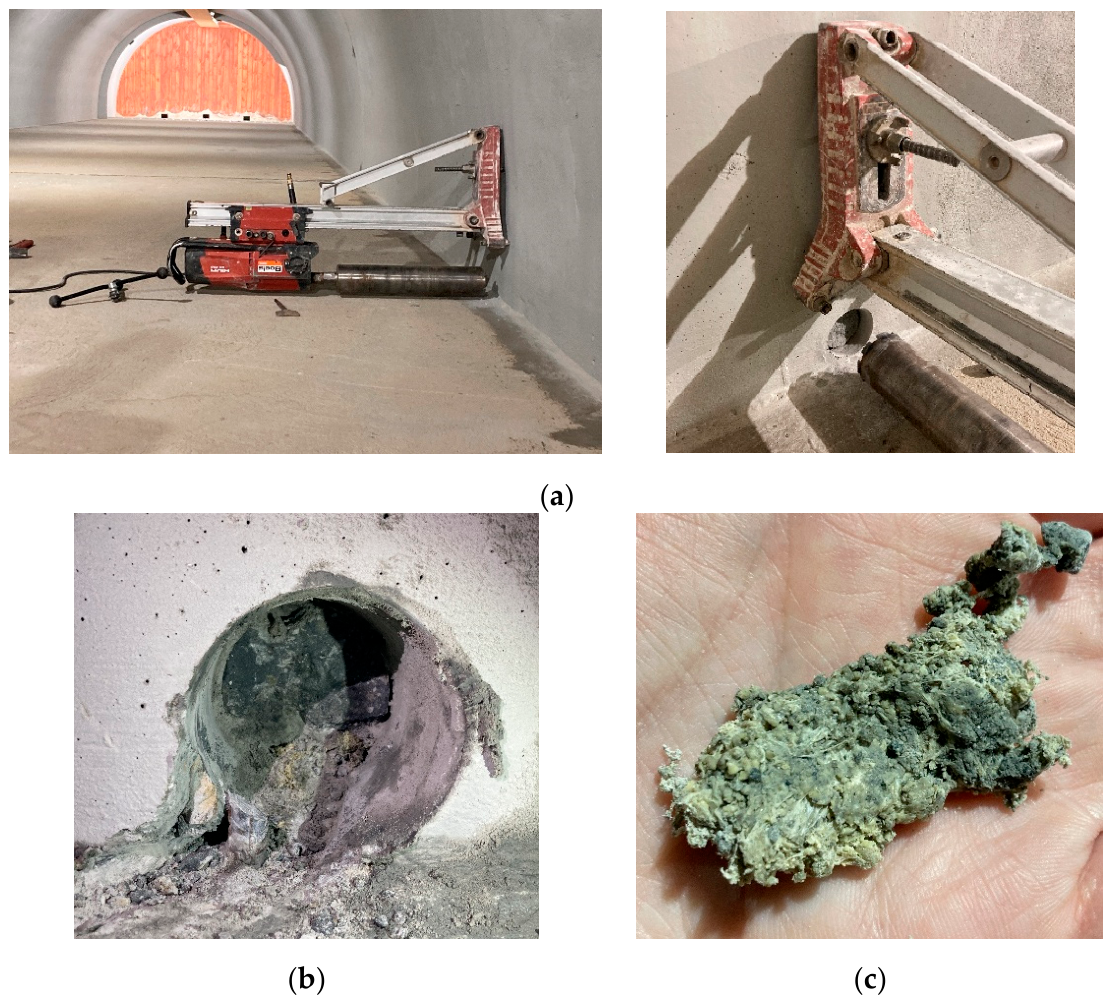
Figure 15.
Locations of investigation boreholes performed as part of the geotechnical opinion: (a) in 2017 [24]; (b) in 2024 [21]; (c) drilling of borehole no. 2 [photo: authors]; (d) extracted soil material [photo: authors].
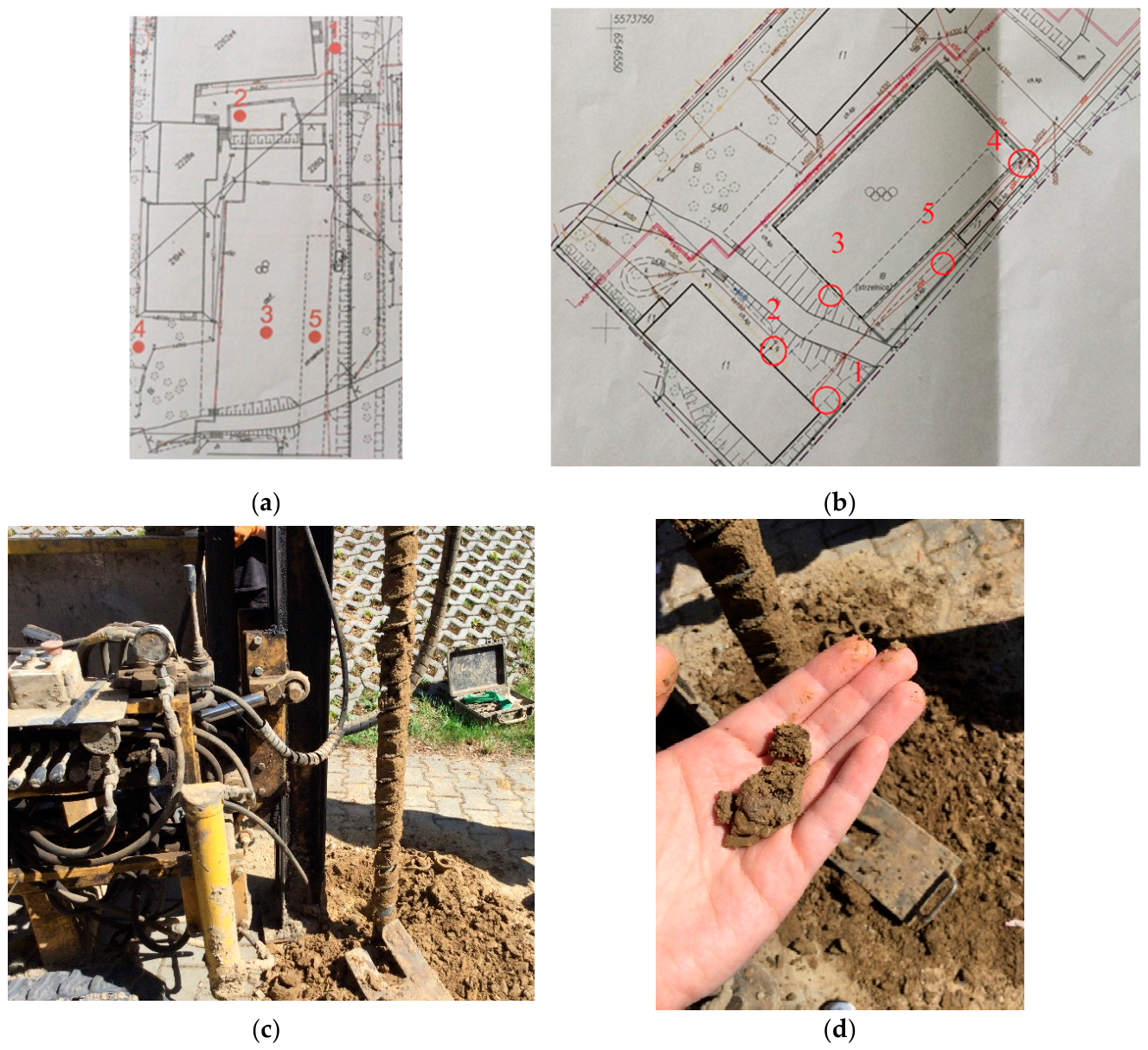
Figure 16.
Geotechnical cross-sections: (a) 1-2; (b) 1-3 [photos: authors].
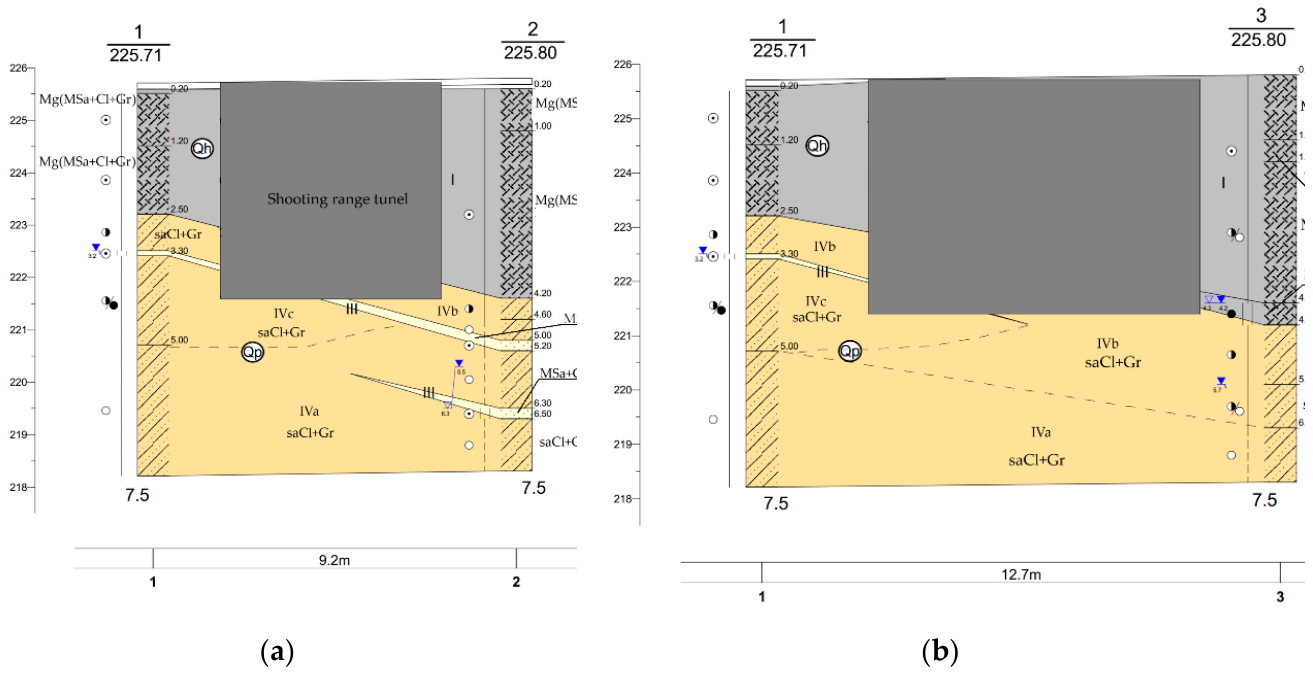
Figure 17.
Water outflow from a hole drilled in the wall of the shooting range tunnel during sealing works [19].
Figure 17.
Water outflow from a hole drilled in the wall of the shooting range tunnel during sealing works [19].
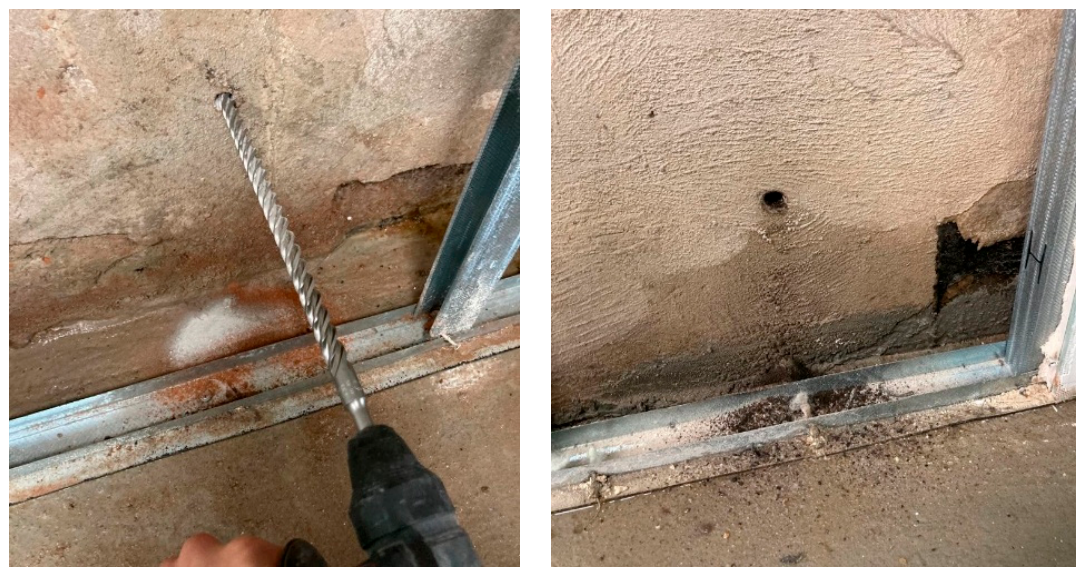
Figure 18.
Underground shooting range tunnel after modernization [photos: authors].
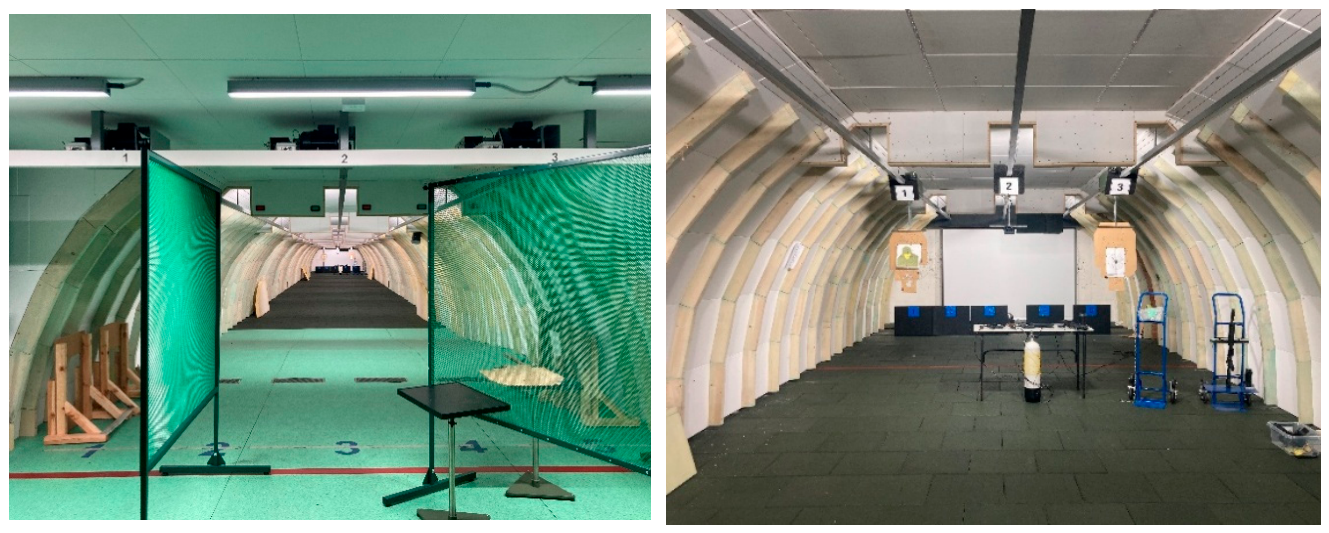

Table 1.
Ultrasonic test results.
| No. | Location | Average ultrasonic velocity (m/s) | Concrete strength (MPa) |
|---|---|---|---|
| U1 | arched shell | 4063 | 37.7 |
| U2 | arched shell | 3968 | 36.2 |
| U3 | arched shell | 4070 | 37.8 |
| U4 | arched shell | 3855 | 34.4 |
| U5 | arched shell | 4040 | 37.3 |
| U6 | arched shell | 3923 | 35.5 |
| U7 | arched shell | 4163 | 39.3 |
| U8 | arched shell | 4190 | 39.7 |
| U9 | arched shell | 4038 | 37.3 |
| U10 | arched shell | 4138 | 38.9 |
| U11 | arched shell | 4088 | 38.1 |
| U12 | arched shell | 3950 | 35.9 |
| U13 | arched shell | 4213 | 40.1 |
| U14 | arched shell | 4255 | 40.8 |
| U15 | arched shell | 3703 | 31.9 |
| U16 | bottom slab | 4068 | 37.8 |
| U17 | bottom slab | 3940 | 35.7 |
| U18 | bottom slab | 3985 | 36.5 |
| U19 | bottom slab | 3865 | 34.5 |
| U20 | bottom slab | 4168 | 39.4 |
| U21 | bottom slab | 3905 | 35.2 |
| U22 | bottom slab | 3890 | 34.9 |
| U23 | bottom slab | 3873 | 34.7 |
| U24 | bottom slab | 3970 | 36.2 |
| Mean (MPa) | 36.9 | ||
| Standard deviation (MPa) | 2.16 | ||
| Coefficient of variation (%) | 5.86 | ||
Disclaimer/Publisher’s Note: The statements, opinions and data contained in all publications are solely those of the individual author(s) and contributor(s) and not of MDPI and/or the editor(s). MDPI and/or the editor(s) disclaim responsibility for any injury to people or property resulting from any ideas, methods, instructions or products referred to in the content. |
© 2026 by the authors. Licensee MDPI, Basel, Switzerland. This article is an open access article distributed under the terms and conditions of the Creative Commons Attribution (CC BY) license.
Copyright: This open access article is published under a Creative Commons CC BY 4.0 license, which permit the free download, distribution, and reuse, provided that the author and preprint are cited in any reuse.


