

Submitted:
17 June 2026
Posted:
18 June 2026
You are already at the latest version
Abstract
Uterine leiomyosarcoma (uLMS) is an aggressive uterine cancer with limited durable benefit from current systemic therapy. Genomic profiling shows recurrent inactivation of TP53, RB1, and ATRX, leading to genomic instability, complex copy-number alterations, and telomere dysfunction via alternative lengthening of telomeres. Additional events in the PTEN and PI3K–AKT–mTOR pathways occur, and a minority of tumors harbor homologous recombination repair defects, most often involving BRCA2, with RAD51B being reported less frequently. These features create actionable liabilities rather than a single dominant driver. Opportunities include DNA damage response approaches such as PARP inhibition in HRR-deficient disease, and checkpoint targeting of replication stress through ATR, CHK1, or WEE1. Pathway-directed strategies targeting the PI3K-AKT-mTOR axis, as well as epigenetic or transcriptional interventions, and endocrine therapy for selected ER- or PR-positive, indolent, low-volume tumors broaden treatment options. Circulating tumor DNA is emerging as a tool to monitor response. We propose biomarker-enriched trial designs, such as basket or umbrella trials, that assign patients to genotype-defined cohorts and integrate endpoints, including HRD and ATRX or ALT, aiming to transition from empiric therapy toward molecular selection in uLMS. These studies should also incorporate patient-reported outcomes, health-related quality of life metrics, and time-to-next-treatment measures to better capture clinically meaningful benefit of precision oncology strategies.
Keywords:
uterine leiomyosarcoma
; precision oncology
; TP53
; RB1
; ATRX
; homologous recombination repair
; BRCA2
; PI3K-AKT-mTOR pathway
; PARP inhibitors
; circulating tumor DNA
1. Introduction
Uterine leiomyosarcoma (uLMS) is the most common subtype of uterine sarcoma, accounting for 60–70% of cases and approximately 1–2% of all uterine malignancies [1,2]. It is an aggressive disease with a high risk of relapse and poor survival in advanced stages [1]. Management relies primarily on surgical resection for localized disease and systemic therapy for advanced or recurrent cases; however, outcomes remain modest despite the availability of multiple treatment regimens [1,3].
Genomic profiling shows that uLMS is characterized by recurrent tumor suppressor inactivation, most notably TP53, RB1, and ATRX, leading to genomic instability, complex copy-number alterations, and telomere dysfunction through alternative lengthening of telomeres (ALT) [2,4,5,6,7]. Additional recurrent events include alterations in PTEN and dysregulation of the PI3K–AKT–mTOR pathway, and a subset of tumors displays homologous recombination repair (HHR) defects, most often involving BRCA2, with RAD51B reported less frequently [2,4,7,8,9].
These molecular findings fundamentally reframe uLMS as a tumor suppressor–driven genomic instability disease rather than an oncogene-driven sarcoma, which has direct implications for therapeutic prioritization. Unlike malignancies characterized by dominant oncogenic drivers that can be targeted through direct inhibition, uLMS requires strategies that exploit the vulnerabilities created by loss of checkpoint control, DNA repair defects, and replication stress [7,10,11]. This distinction shifts the therapeutic focus from blocking gain-of-function alterations to leveraging synthetic lethality, checkpoint collapse, and pathway dependencies that emerge in the setting of pervasive tumor suppressor loss. The following sections outline how this genomics-first perspective can guide biomarker-enriched trial design and precision therapy selection in uLMS.”
2. Disease Background
uLMS often presents with nonspecific symptoms such as abnormal uterine bleeding, pelvic pain, or rapid uterine enlargement and may be clinically indistinguishable from benign leiomyomas, making preoperative diagnosis difficult [1,12]. Prognosis is strongly influenced by stage, with five-year survival exceeding 50% in stage I but falling below 15% in stage IV [1]. Even after complete resection, recurrence is common and predominantly distant, most often pulmonary. Relapses typically occur within 12–24 months of surgery, underscoring the systemic nature of the disease and the limited curative potential of local therapy alone [1].
Compared with other uterine malignancies, outcomes in uLMS remain distinctly inferior. Even relative to endometrial carcinoma, uLMS demonstrates significantly poorer stage-matched survival, reflecting its aggressive clinical course and unique behavior within the spectrum of uterine cancers [1,13].
For localized tumors, the National Comprehensive Cancer Network (NCCN) Clinical Practice Guidelines in Oncology for Uterine Neoplasms, Version 3.2025, recommend total hysterectomy with or without bilateral salpingo-oophorectomy, with lymphadenectomy reserved for clinically suspicious nodes [3]. The value of adjuvant chemotherapy remains controversial, as randomized data have not consistently shown an improvement in survival [14,15]. Unrecognized disease at the time of surgery remains a significant concern, particularly when power morcellation is performed for presumed benign leiomyoma.
Randomized studies, including the NRG/GOG-0277 trial and the SARCGYN trial, did not demonstrate meaningful improvements in relapse-free or overall survival compared with observation or radiotherapy alone [14,15]. As a result, NCCN recommends individualized decision-making based on stage, performance status, and patient preference, rather than standardized postoperative chemotherapy [3].
Adjuvant pelvic radiation has been primarily evaluated for its potential to improve local control in early-stage disease, although its effect on overall survival remains unproven [1]. Current guidelines consider adjuvant radiation an option for carefully selected patients with localized disease who present with features associated with a high risk of pelvic relapse [3].
In the advanced or recurrent setting, systemic therapy is the mainstay of treatment [3]. Doxorubicin is the standard first-line option, either alone or in combination with dacarbazine or ifosfamide [3]. Alternative regimens include gemcitabine with docetaxel, trabectedin, pazopanib, and eribulin [3]. Progression-free survival varies substantially by regimen and line of therapy and is often measured in months [1,3]. Targeted and immune-based therapies are limited to rare, biomarker-defined subsets, including TRK inhibitors for NTRK fusions and PD-1–based therapy for MSI-H/dMMR or TMB-high tumors [3]. Hormonal therapy is an option for estrogen receptor- or progesterone receptor-positive disease [3]. Despite these available treatments, durable disease control remains uncommon, underscoring the ongoing need for genomics-guided strategies [1,3].
3. Genomic Landscape of uLMS
Comprehensive sequencing demonstrates that uLMS is characterized by recurrent tumor suppressor inactivation, with TP53, RB1, and ATRX forming the molecular backbone of the disease [4,5,6,7,8]. These alterations frequently co-occur, and many tumors harbor alterations in ≥2 landmark tumor suppressor genes [4,6,7]. Their combined effects disrupt DNA damage sensing, cell cycle regulation, and telomere maintenance, promoting genomic instability and widespread structural variation [5,6,7]. Across cohorts, uLMS displays marked copy number alteration, chromosomal rearrangements, and aneuploidy [5,6,7]. Chromothripsis and whole-genome doubling have been reported in multiple studies [5,7,11]. This genomic architecture contrasts with more oncogene-driven gynecologic malignancies and supports the view that tumor suppressor loss, rather than classic oncogenic activation, defines the genomic identity of uLMS [4] (Table 1).
3.1. TP53
Mutations in TP53 occur in 55%–61% of uLMS, making it the most frequently altered gene in this disease [4,7,8]. Most alterations are missense mutations affecting the DNA-binding domain and impair transcriptional activation of downstream targets involved in DNA repair, apoptosis, and cell-cycle arrest [2,16]. A smaller proportion consists of nonsense or frameshift events that result in truncation and further disruption of TP53 function [4,9]. Loss of TP53 weakens cell-cycle and DNA damage response checkpoint control, enabling tolerance of ongoing genomic injury [2,16]. TP53 alterations are common in genomically complex uLMS cohorts in which chromothripsis and/or whole-genome doubling have been reported [5,7,11]. TP53 inactivation often co-occurs with RB1 alterations, compounding genomic instability [6,17].
3.2. RB1
RB1 is altered in approximately 50%–55% of uLMS [5,6,8]. Homozygous deletion is the predominant mechanism, although loss-of-function mutations are also observed [6,8]. Loss of RB1 disrupts G1–S checkpoint regulation, promoting uncontrolled cell cycle entry and increased replication stress [17]. This deregulated proliferation is thought to contribute to genomic instability. RB1 inactivation frequently co-occurs with TP53 loss, and this dual disruption has been linked to heightened genomic instability and replication stress phenotypes [4,6,17].
3.3. ATRX
ATRX alterations occur in approximately 30%–35% of uLMS, most often as loss-of-function mutations or copy-number loss [4,5,6,7,8]. ATRX loss affects chromatin remodeling and telomere biology and is strongly associated with the alternative lengthening of telomeres (ALT) phenotype [5,6]. ALT-positive tumors exhibit marked genomic instability characterized by aneuploidy and structural rearrangements, and a replication stress–linked biology has been proposed [2,5]. Several studies associate ATRX alteration with shorter overall survival, supporting its use as both a prognostic marker and a stratification factor in clinical trials. ATRX alterations frequently co-occur with TP53 and RB1 loss across sequencing cohorts [4,6,7].
3.4. PTEN and the PI3K-AKT-mTOR Pathway
PTEN alterations are observed in approximately 18%–24% of uLMS, most often through deletions, and several series report a higher frequency in metastatic samples [4,5,6,7]. PTEN is a negative regulator of PI3K–AKT–mTOR signaling, and its loss is associated with increased AKT pathway activation and enhanced tumor cell survival and proliferation [2,10]. A smaller fraction of tumors harbor copy-number gains or activating alterations in PIK3CA, AKT1, or MTOR, which contribute further to pathway activation [5,7]. These alterations support evaluation of PI3K–AKT–mTOR pathway-targeted therapy in selected patients [2,10].
3.5. Homologous Recombination Repair Alterations
Homologous recombination repair (HHR) maintains genomic stability by repairing DNA double-strand breaks. Alterations in HRR pathway genes, including BRCA1/2 and other homologous recombination components, can lead to homologous recombination deficiency (HRD) and promote genomic instability [5,9].
Across extended HRR panels, HRR pathway alterations are observed in approximately 39% of uLMS [5]. BRCA1/2 alterations are reported in 8%–11% of tumors overall, with BRCA2 alterations most frequently observed (5%–8% in representative cohorts), while RAD51B is also reported in some series [4,18]. In a prospective clinical profiling cohort, approximately 5% of tumors demonstrated somatic homozygous BRCA2 deletion, supporting a biological rationale for sensitivity to PARP inhibition [8]. Mutational signature analyses have further identified HRD-associated SBS3 patterns in approximately 25% of tumors, consistent with a broader “BRCAness” phenotype extending beyond classical BRCA1/2 alterations [5].
3.6. MED12
MED12 mutations, which are common in benign uterine leiomyomas, are detected in a minority of uLMS, typically in approximately 7%–16% of tumors across representative cohorts [2,5,6,7,8]. This pattern suggests that most uLMS arise through molecular pathways distinct from classic MED12-mutant leiomyomas, although MED12-mutant uLMS represents a small biologically distinct subset [2,5,6]. Although transformation from a MED12-mutant leiomyoma may occur in rare instances, whether such tumors arise from dedifferentiation of benign precursors remains unproven, and MED12 alterations do not define the dominant tumor suppressor–driven genomic pattern observed in the majority of uLMS [5,6].
3.7. Other Uncommon Alterations
Less common genomic events in uLMS include sporadic alterations in additional cell-cycle regulators such as CDKN2A/B, as well as less frequent involvement of other low-frequency alterations that vary by cohort [4,5,6,7]. Each of these events occurs in only a small subset of tumors and shows no consistent pattern across studies. Their clinical relevance remains uncertain, although they contribute to the overall molecular heterogeneity of uLMS and may represent alternative oncogenic mechanisms [19].
Taken together, the genomic architecture of uterine leiomyosarcoma is defined by coordinated inactivation of TP53, RB1, and ATRX, with additional contributions from homologous recombination repair defects, alterations in the PI3K–AKT–mTOR pathway, and occasional MED12 mutations [4,5,6]. These lesions drive pervasive genomic instability, catastrophic structural events, and telomere dysfunction through the alternative lengthening of telomeres (ALT) phenotype. This biology provides a mechanistic explanation for the aggressive clinical course of uLMS and identifies multiple rational entry points for genomics-driven therapeutic development.
4. Therapeutic Vulnerabilities
As discussed above, large-scale genomic studies of uLMS consistently demonstrate recurrent inactivation of TP53, RB1, and ATRX, which together define a molecular background of replication stress, checkpoint failure, and telomere dysfunction [2,5,6,7]. These core alterations often coexist with secondary events involving PTEN and components of the PI3K–AKT–mTOR pathway [2,4,5,7,8]. These combinations drive profound genomic instability characterized by complex copy number variation, chromothripsis, and whole genome doubling across multiple published cohorts [5,7,11] (Table 2).
These genomic features define biologically distinct vulnerabilities that can be exploited therapeutically. Tumors with HRR deficiency may respond to PARP inhibition or other DNA damage response–directed strategies [5,8,9,20,21]. Loss of TP53 and RB1 may confer sensitivity to agents that target replication stress, including ATR, CHK1, or WEE1 inhibitors [2,16]. Alterations in PTEN or dysregulation of the PI3K–AKT–mTOR pathway suggest potential benefit from pathway-directed inhibitors [2,5]. ATRX loss, together with an ALT phenotype, supports evaluation of DNA damage response–focused combination strategies [2,5]. Rare but actionable genomic outliers, including ALK or NTRK fusions, may also be identified through comprehensive sequencing and can redirect management in appropriate cases [3,5,8].
4.1. DNA Damage Response and Homologous Recombination Repair Deficiency
Although HRR alterations occur in only a subset of uLMS, they represent a rational therapeutic vulnerability. Across integrated cohorts, BRCA2 is among the most frequently affected HRR genes, including biallelic loss in approximately 5% of prospectively sequenced tumors [8,9].
This biology provides a rationale for synthetic lethality with PARP inhibition. Preclinical models, including patient-derived xenografts, demonstrate growth inhibition with olaparib in HRD-signature tumors [5], and review syntheses summarize concordant preclinical activity across leiomyosarcoma cell line and xenograft models [2,16]. Clinically, case-level responses to PARP inhibitors have been reported in BRCA2-inactivated uLMS, including patients identified through prospective sequencing efforts [8,16]. In a phase II study of rucaparib plus nivolumab in refractory leiomyosarcoma, the only partial response occurred in a tumor with somatic BRCA2 deep deletion, and ctDNA dynamics mirrored radiographic response and progression [21].
A phase II study of olaparib plus temozolomide in heavily pretreated leiomyosarcoma demonstrated an objective response rate close to 25% and a median progression-free survival of nearly 7 months, with expected hematologic toxicity [2,10]. Together, these findings, along with case-level benefit in BRCA2-altered uLMS and HRD signals observed across sequencing studies, support enrichment of PARP-based therapeutic strategies for patients with BRCA2 alterations or HRD-signature uLMS [2,5,8,9,21]. Prospective validation is underway. The JGOG2052 phase II study is evaluating niraparib in three biomarker-defined cohorts that include BRCA-mutant uLMS and HRD-positive, BRCA wild-type uLMS [20].
In contrast, single-agent PD-1 blockade has demonstrated minimal activity in leiomyosarcoma, with responses largely restricted to tumors that are microsatellite instability–high, mismatch repair deficient, or have high tumor mutational burden [3,21]. Given that TP53 and RB1 loss create replication stress and checkpoint dependence, combinatorial strategies integrating PARP inhibitors with ATR, CHK1, or WEE1 inhibitors represents complementary approaches for molecularly selected uLMS [2,16].
4.2. Replication Stress and Cell Cycle Checkpoint Targeting
Co-occurring TP53 and RB1 inactivation, as outlined in Section 3.1 and Section 3.2, creates replication stress and checkpoint dependence [5,6,7,8]. Loss of RB1 deregulates the G1-to-S transition and increases replication stress, while TP53 loss weakens DNA damage checkpoints, permitting tolerance of aneuploidy [5,7,11]. This biology suggests that uLMS relies on S-phase and G2-to-M checkpoint mechanisms for survival under chronic DNA damage, supporting evaluation of checkpoint-directed therapeutic strategies [2,16].
ATR and CHK1 stabilize stalled replication forks and prevent premature mitosis, while WEE1 restrains CDK1 to enforce the G2-to-M checkpoint. Inhibition of these targets can collapse replication forks and trigger mitotic catastrophe in TP53- or RB1-deficient settings, a strategy supported by translational synthesis and preclinical rationale [2,16]. Biomarker-selected early-phase trials that enrich for TP53- or RB1-inactivated tumors and incorporate pharmacodynamic measures such as serial ctDNA monitoring are warranted [21].
4.3. PI3K-AKT-mTOR Pathway
Alterations that activate PI3K–AKT–mTOR signaling are recurrent in uLMS. PTEN loss is the most frequent event (see Section 3.4) and is more common in metastatic than primary samples in some retrospective cohorts [4,8]. Less frequent lesions involving PIK3CA, AKT, or MTOR also support pathway activation [5,7]. These events coexist with a tumor suppressor background dominated by TP53, RB1, and ATRX and contribute to proliferation and survival consistent with the aggressive behavior of uLMS.
Translational models support therapeutic targeting of this axis. In a uLMS patient-derived xenograft harboring PI3K–AKT–mTOR pathway alterations, the PI3K inhibitor copanlisib inhibited tumor growth, providing proof of concept for pathway-directed therapy in selected cases [5]. Contemporary syntheses note that single-node inhibition, such as mTOR blockade, is limited by feedback loops and pathway redundancy, and that dual-node or combination strategies warrant investigation when feasible [2,16].
Beyond its role in pathway activation, PTEN loss may also influence the immunologic behavior of LMS [2]. LMS generally exhibits an immune-cold tumor microenvironment with limited responsiveness to PD-1 blockade [21]. Although LMS-specific immunotherapy combinations remain investigational, these observations provide a rationale for exploring biomarker-selected strategies integrating pathway inhibition with immune-modulating approaches. Trials of PI3K- or mTOR-directed therapies should prioritize tumors with PTEN loss or clear pathway activation and incorporate pharmacodynamic assessments, consistent with guideline support for comprehensive molecular profiling in uLMS [3,8]
4.4. Telomere Biology, ATRX and ALT
As described in 3,.3, ALT-positive, ATRX-deficient tumors exhibit high levels of replication stress and structural genomic instability, providing a biological rationale for evaluating DNA damage response-directed strategies that exploit these pressures. Such approaches include agents targeting S-phase and G2-to-M checkpoint control, as well as PARP-based combinations in biomarker-selected settings [2,5,10]. Incorporation of ATRX or ALT status into trial stratification supports biomarker-driven selection and interpretation of DDR-focused therapeutic combinations.
4.5. Epigenetic and Transcriptional Programs
Epigenetic and transcriptional dysregulation has been described in uLMS. Alterations in chromatin-modifying genes and DNA methylation patterns can influence transcriptional output without changes in DNA sequence. Loss of ATRX provides a mechanistic link between chromatin remodeling, the alternative lengthening of telomeres (ALT) phenotype, and the genomic instability characteristic of this subset [2,5,18]. Less frequent abnormalities in other epigenetic regulators, including chromatin remodeling and histone-modifying genes, have also been reported across sequencing cohorts, supporting the view that transcriptional control is disrupted in a subset of tumors [2,5,7].
Patient-derived xenograft models demonstrate antitumor activity with a BET inhibitor in uLMS, consistent with dependence on MYC-driven transcription in at least some tumors [5]. BET inhibitors block bromodomain proteins that support oncogenic transcriptional programs, including MYC, and warrant biomarker-enriched evaluation in uLMS [2,16]. Other analyses outline a rationale for DNA methyltransferase inhibitors based on methylation abnormalities and potential synergy with DNA damage response or replication stress–targeting agents, although clinical data remain limited [2].
Epigenetic strategies should be biomarker-led. Practical approaches include selecting tumors with MYC program activity or related transcriptional hallmarks for BET inhibitor studies and documenting ATRX status given its role in chromatin organization and telomere biology [2,16]. Early-phase trials should incorporate pharmacodynamic measures to confirm target engagement and preserve eligibility for sequencing-based stratification or rational combination with DNA damage response or PI3K pathway–directed agents when supported by preclinical data [2,16].
4.6. Hormone Receptors and Endocrine Therapy
A clinically relevant subset of uLMS expresses estrogen and progesterone receptors, with variable frequency across cohorts [1,16]. Clinical and molecular profiling studies demonstrate that ER expression is enriched in uterine compared with soft tissue leiomyosarcoma, supporting a uterine hormonal context [16].
Guidelines list aromatase inhibitors such as anastrozole, letrozole, or exemestane for ER- or PR-positive uterine sarcomas, and gonadotropin-releasing hormone analogs may be considered for premenopausal patients who retain ovarian function [3]. Endocrine therapy is most reasonable for receptor-positive disease with indolent behavior or as a low-toxicity option between cytotoxic regimens, noting that most evidence in uLMS is derived from nonrandomized series [1,3,16]. Selection should rely on expert pathology review with confirmatory ER or PR immunohistochemistry and be integrated with molecular profiling to support enrollment in biomarker-selected trials [3,6].
4.7. Integrating Biomarkers into Trial Design
Trial programs in uLMS should begin with comprehensive tissue-based genomic profiling and a standardized pathology panel to assign patients to genotype-defined cohorts [3,6,8]. Practical anchors include next-generation sequencing for BRCA2 and other HRR genes, PTEN and PI3K–AKT–mTOR pathway alterations, and ATRX, alongside surrogate immunohistochemistry for p53, Rb, PTEN, and ATRX to support classification and quality control [6]. When the differential diagnosis includes leiomyoma, integrative molecular profiling can reduce diagnostic misclassification and preserve access to genomically selected studies [6,8,18]. NCCN guidelines favor tissue-based assays for molecular evaluation, with plasma-based testing considered when tissue is unavailable [3].
Assignment rules should be prespecified. Patients with BRCA2-altered or HRD-signature tumors should be enrolled in PARP-based cohorts [5,8,9,20,21]. Patients with PTEN-altered or PI3K-activated tumors should be enrolled in PI3K or mTOR-directed cohorts [2,4,5,8,10,22]. Tumors with TP53 or RB1 inactivation should be enriched for checkpoint-targeted strategies such as ATR, CHK1, or WEE1 inhibition [2,5]. Tumors with ATRX alteration or ALT positivity may be assigned to DNA damage response-oriented combinations [2,16]. Protocols should specify admissible HRD assays and thresholds and include sensitivity analyses across HRD definitions to improve interpretability [5,9,20].
Figure 1.
Genomic instability–directed therapeutic framework in uLMS.
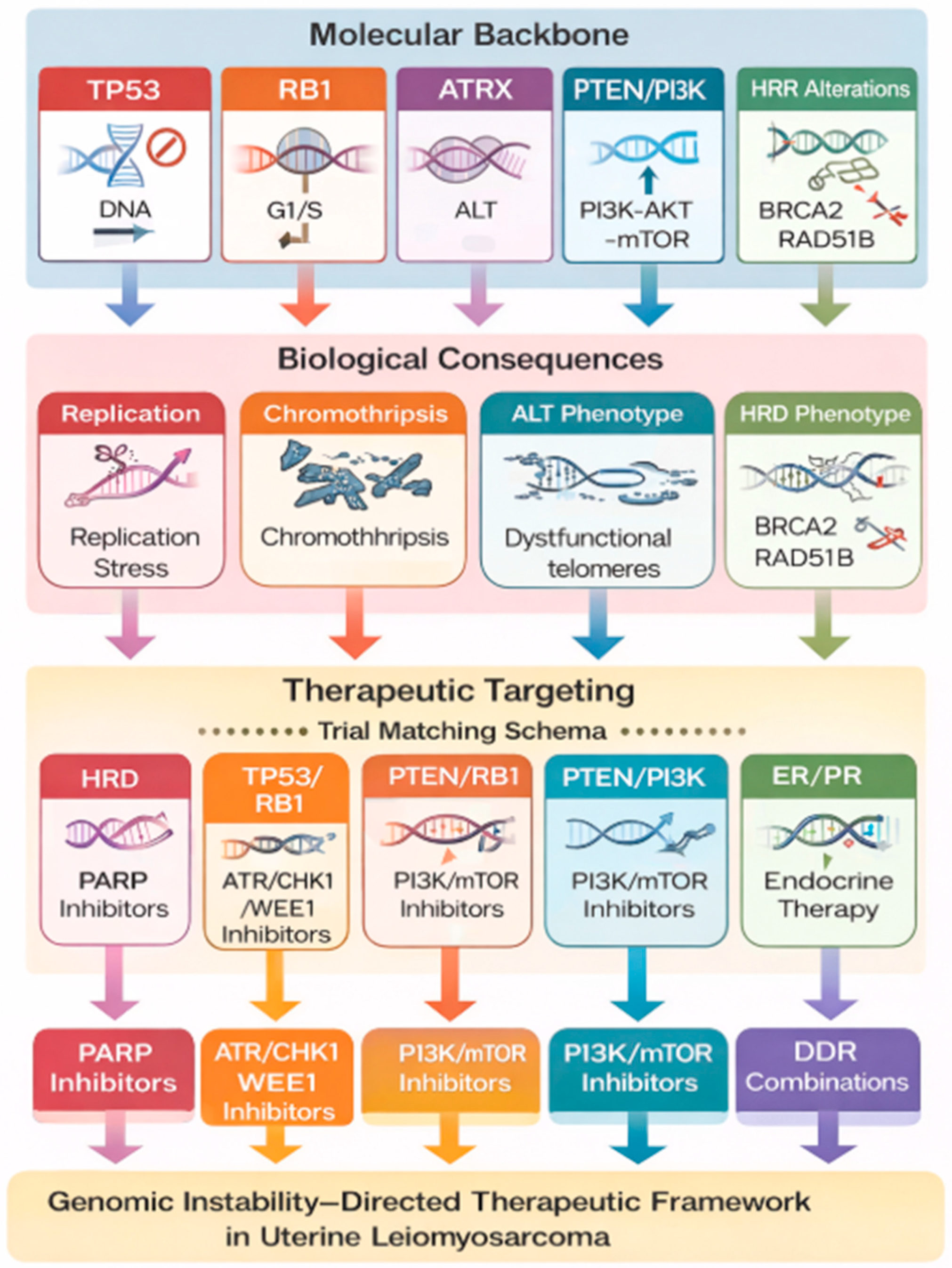
Genomic endpoints should be incorporated into uLMS trials. Serial ctDNA has tracked response and progression in leiomyosarcoma treated with rucaparib plus nivolumab and can be embedded alongside RECIST as a pharmacodynamic measure [21]. Baseline documentation of BRCA2 loss or other HRR alterations, PI3K–AKT–mTOR pathway activation, and ATRX or ALT status, with optional on-treatment tissue or ctDNA sampling, enables correlative genomics and iterative refinement of biomarker selection [2,8,21]. Centralized pathology review and enrollment at sarcoma expert centers help maintain assay quality and ensure consistent eligibility criteria [3,6].
5. Diagnostic and Prognostic Applications from Genomics
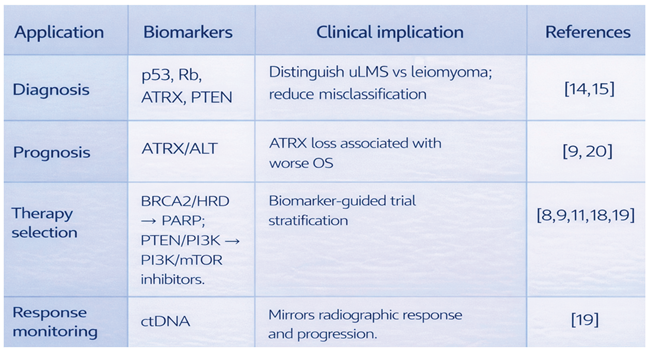
Accurate distinction of uLMS from leiomyoma is difficult before surgery, and genomic and molecular tools improve diagnostic confidence when used alongside expert pathology [1,3]. A practical approach applies a molecularly oriented immunohistochemistry panel for smooth muscle tumors, using aberrant p53 staining and loss of Rb, PTEN, or ATRX interpreted in morphologic context, then escalates to targeted tumor sequencing to document the characteristic constellation of alterations that include TP53, RB1, ATRX, and PTEN [6,7,8] and to detect less common changes in HRR and the PI3K–AKT–mTOR pathway [7,8,9]. When the differential includes leiomyoma, an RNA-based signature or classifier that separates leiomyosarcoma from leiomyoma provides diagnostic support in challenging cases and provides an independent line of evidence [18] (Table 3).
Genomic profiling also has direct clinical consequences. In a prospective clinical sequencing series, tumors initially labeled as uLMS were reclassified as ALK-rearranged inflammatory myofibroblastic tumor with clinical benefit from crizotinib, or as BCOR-rearranged high-grade endometrial stromal sarcoma, with a shift to diagnosis-appropriate therapy [8]. Within confirmed uLMS, uncommon molecular outliers such as ALK fusions have been reported, which can open access to tumor-agnostic targeted therapies when verified [5]. Detection of an ALK fusion in a putative uLMS should prompt reconsideration of the diagnosis, since ALK-rearranged inflammatory myofibroblastic tumor can mimic leiomyosarcoma morphologically [8]. Consistent with these scenarios, NCCN notes that molecular analysis can help classify difficult uterine sarcoma cases and recommends comprehensive genomic profiling in metastatic disease to identify rare pan-tumor targeted therapy opportunities (including at least NTRK, MSI, and TMB testing) [3].
For prognosis, ATRX alteration, which is closely linked to the alternative lengthening of telomeres phenotype, has been associated with worse overall survival in uLMS, supporting its incorporation into risk discussions and use as a stratification factor in clinical studies [5,7]. Additional markers such as IMP3 overexpression have been described, although effect sizes vary across cohorts and assay methods [23]. Integrating ATRX or alternative lengthening of telomeres status with established clinical factors provides a practical genomics-informed framework to refine risk beyond stage alone in uLMS [7].
6. Circulating Tumor DNA and Response Monitoring
Circulating tumor DNA (ctDNA) offers a genomic tool that complements imaging and tissue profiling in uterine leiomyosarcoma. In a phase II study of rucaparib plus nivolumab in refractory leiomyosarcoma, which included uterine primaries, serial ctDNA levels decreased in patients with radiographic response and increased at progression. The only partial response occurred in a tumor with somatic BRCA2 deep deletion, and ctDNA dynamics tracked the clinical course, supporting feasibility as a correlative biomarker alongside RECIST criteria [21].
In broader leiomyosarcoma cohorts, ctDNA was detectable in approximately 69% of patients with progressive disease and higher tumor burden and correlated with disease dynamics, with levels declining after resection and rising at relapse [24]. Preliminary data from molecular residual disease assays suggest potential utility, though uterine-specific validation remains limited [21,24].
NCCN emphasizes comprehensive tissue-based molecular evaluation, with ctDNA best incorporated in prospective studies rather than standard care [3].
7. Conclusions and Future Directions
Genomic profiling has reframed uterine leiomyosarcoma as a tumor suppressor–driven malignancy marked by frequent inactivation of TP53, RB1, and ATRX, with additional alterations in PTEN and a subset demonstrating HRR alterations involving BRCA2 and, less frequently, RAD51B [2,4,5,6,7,8,18]. These lesions generate pervasive replication stress and complex structural variation [5,7,11,17]. In ATRX-deficient cases, they are associated with an alternative lengthening of telomeres phenotype that creates exploitable therapeutic liabilities rather than a single dominant oncogenic driver [2,5,6]. Clinical management remains anchored in cytotoxic therapy according to guideline standards, yet emerging molecular subsets now support biomarker-enriched strategies that can be prospectively evaluated [1,2,3,7,11,20].
Priority therapeutic avenues are increasingly clear. HRR–deficient uLMS, particularly BRCA2-altered tumors, has demonstrated case-level sensitivity to PARP inhibitors, with prospective evaluation ongoing in BRCA-mutant and HRD-signature uLMS cohorts [8,20,21]. Given the high prevalence of TP53 and RB1 loss, trials that target replication stress checkpoints such as ATR, CHK1, or WEE1 warrant prospective evaluation with pharmacodynamic assessment and rational combination strategies [2,10,16]. For tumors with PTEN loss or clear PI3K–AKT–mTOR pathway activation, pathway-directed therapy is supported by translational models and should prioritize molecular selection [2,5]. ATRX or alternative lengthening of telomeres status is both prognostic and mechanistically informative, and its incorporation into study design can guide deployment of DNA damage response–oriented combinations [5,7,11]. Additional opportunities include epigenetic and transcriptional approaches such as BET inhibition in tumors with MYC program dependence, evaluated with prespecified transcriptional or epigenetic biomarkers [5].
As biomarker-driven trials expand in uLMS, incorporation of patient-reported outcomes and health-related quality-of-life metrics is increasingly important. These measures capture patient experiences related to treatment-associated symptoms, functioning, and overall well-being. Randomized oncology studies demonstrate that systematic patient-reported outcome collection improves symptom recognition, strengthens communication, and is associated with higher quality-of-life scores and improved overall survival compared with standard monitoring approaches [25].
Time to next treatment has emerged as a practical endpoint that reflects treatment durability and tolerability by integrating disease control and quality of life between therapies. In other malignancies, time to next treatment has been proposed as a pragmatic endpoint that may correlate with clinical benefit; however, its application in uLMS should be considered exploratory and would require prospective validation [26]. Applying this endpoint in uLMS trials would allow investigators to quantify the duration for which a therapy delays subsequent treatment, a measure particularly relevant for patients who undergo multiple lines of therapy. When analyzed alongside patient-reported outcomes and quality-of-life metrics, time to next treatment provides a patient-centered framework that complements molecular endpoints and ensures that advances in precision oncology are judged by sustained well-being, reduced toxicity, and extended treatment-free intervals.
Integrated diagnostic strategies can further accelerate translation. Algorithms combining molecular immunohistochemistry, targeted sequencing, and RNA-based classifiers can improve diagnostic accuracy and reduce misclassification with mimics such as ALK-rearranged inflammatory myofibroblastic tumor or BCOR-rearranged high-grade endometrial stromal sarcoma, with corresponding implications for management [6,8,18]. ATRX alteration is associated with worse overall survival and can inform risk discussions and stratification [5,7,11]. Serial circulating tumor DNA assessment has tracked response and progression in leiomyosarcoma treated with PARP-based therapy, and incorporation alongside RECIST criteria provides a pragmatic pharmacodynamic measure for prospective studies [21,24]. Centralized pathology review and management at sarcoma expert centers, together with guideline-endorsed comprehensive molecular evaluation, remain critical enablers of genomics-driven approaches [3,6].
Overall, the evidence supports a development path that aligns uLMS genotypes with mechanism-based therapies, embeds genomic endpoints such as HRD and ATRX or alternative lengthening of telomeres status, and incorporates circulating tumor DNA to complement imaging. Early enrichment strategies with predefined expansion rules may identify approaches that warrant broader evaluation, with the goal of shifting from empiric therapy toward biomarker-selected interventions in this challenging disease.
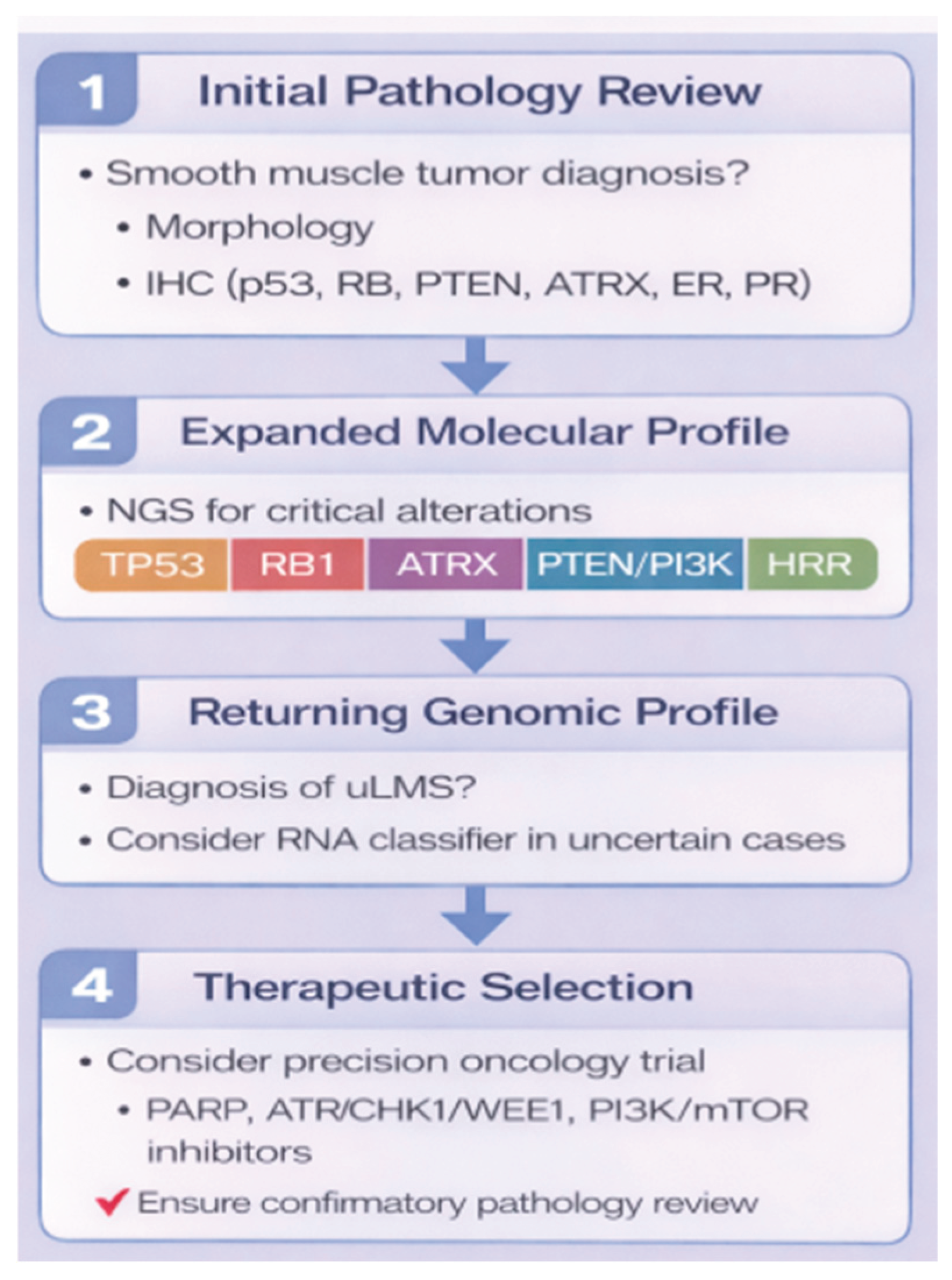
Figure 2.
Proposed Clinical Workflow for Genomic Testing in uLMS.
Box 1. Outstanding Questions in Genomics-Driven Management of uLMS
- Does HRD score predict PARP response in uLMS?
- Is ATRX prognostic independent of stage?
- ATRX loss associates with worse survival, but whether this effect persists after adjustment for stage and established prognostic factors is unknown.
- Should HRD be defined by mutation, signature, or functional assay?
- Can ctDNA detect minimal residual disease?
Author Contributions
A.L.O.-T. performed the literature review, drafted the manuscript, and prepared the tables/figures. M.S. contributed to the interpretation of the literature, offered mentorship throughout manuscript development, and critically revised the manuscript. All authors reviewed and approved the final version for submission.
Funding
This case report received no external funding.
Institutional Review Board Statement
Not applicable.
Conflicts of Interest
A.L.O.-T. reports honoraria from Onviv. M.S. reports advisory board participation for Deciphera, Springworks, and Immunocore.
Abbreviations
The following abbreviations are used in this manuscript:
| ALT | Alternative lengthening of telomeres |
| ATR | Ataxia telangiectasia and Rad3-related |
| ATRX | Alpha-thalassemia/mental retardation syndrome X-linked |
| BET | Bromodomain and extra-terminal |
| BRCA | Breast cancer gene |
| CHK1 | Checkpoint kinase 1 |
| ctDNA | Circulating tumor DNA |
| DDR | DNA damage response |
| DMMR | Deficient mismatch repair |
| ER | Estrogen receptor |
| HRD | Homologous recombination deficiency |
| HRR | Homologous recombination repair |
| ICIs | Immune checkpoint inhibitors |
| IHC | Immunohistochemistry |
| IMP3 | Insulin-like growth factor 2 mRNA binding protein 3 |
| LMS | Leiomyosarcoma |
| LM | Leiomyoma |
| mTOR | Mechanistic target of rapamycin |
| NGS | Next-generation sequencing |
| NTRK | Neurotrophic tropomyosin receptor kinase |
| PARP | Poly(ADP-ribose) polymerase |
| PD-1 | Programmed cell death protein 1 |
| PFS | Progression-free survival |
| PI3K | Phosphatidylinositol 3-kinase |
| PR | Progesterone receptor |
| PRO | Patient-reported outcomes |
| PTEN | Phosphatase and tensin homolog |
| RB1 | Retinoblastoma 1 |
| RECIST | Response Evaluation Criteria in Solid Tumors |
| SBS | Single base substitution |
| TMB | Tumor mutational burden |
| TTNT | Time to next treatment |
| uLMS | Uterine leiomyosarcoma |
References
- Bogani, G.; Caruso, G.; Ray-Coquard, I.; Ramirez, P.T.; Coleman, R.L.; Mariani, A.; et al. Uterine leiomyosarcoma. Int. J. Gynecol. Cancer 2025, 35(1), 3–11. [Google Scholar] [CrossRef] [PubMed]
- Dall, G.V.; Hamilton, A.; Ratnayake, G.; Scott, C.; Barker, H. Interrogating the genomic landscape of uterine leiomyosarcoma: a potential for patient benefit. Cancers 2022, 14(6), 1561. [Google Scholar] [CrossRef] [PubMed]
- National Comprehensive Cancer Network. NCCN Clinical Practice Guidelines in Oncology: Uterine Neoplasms. Version 3; NCCN: Plymouth Meeting, PA, 2025; Available online: https://www.nccn.org/guidelines/category_1.
- Astolfi, A.; Nannini, M.; Indio, V.; Schipani, A.; Rizzo, A.; Perrone, A.M.; et al. Genomic database analysis of uterine leiomyosarcoma mutational profile. Cancers 2020, 12(8), 2126. [Google Scholar] [CrossRef] [PubMed]
- Choi, J.; Manzano, A.; Dong, W.; Bellone, S.; Bonazzoli, E.; Zammataro, L.; et al. Integrated mutational landscape analysis of uterine leiomyosarcomas. Proc. Natl. Acad. Sci. U S A 2021, 118(15), e2025182118. [Google Scholar] [CrossRef] [PubMed]
- Momeni-Boroujeni, A.; Yousefi, E.; Balakrishnan, R.; Riviere, S.; Kertowidjojo, E.; Hensley, M.L.; et al. Molecular-based immunohistochemical algorithm for uterine leiomyosarcoma diagnosis. Mod. Pathol. 2024, 37(4), 1000537. [Google Scholar] [CrossRef]
- Dermawan, J.K.; Chiang, S.; Singer, S.; Jadeja, B.; Hensley, M.L.; Tap, W.D.; et al. Developing novel genomic risk stratification models in soft tissue and uterine leiomyosarcoma. Clin. Cancer Res. 2024, 30(10), 2260–71. [Google Scholar] [CrossRef] [PubMed]
- Hensley, M.L.; Chavan, S.S.; Solit, D.B.; Murali, R.; Soslow, R.A.; Chiang, S.; et al. Genomic landscape of uterine sarcomas defined through prospective clinical sequencing. Clin. Cancer Res. 2020, 26(14), 3881–8. [Google Scholar] [CrossRef] [PubMed]
- Ciccarone, F.; Bruno, M.; De Paolis, E.; Piermattei, A.; De Bonis, M.; Lorusso, D.; et al. Role of homologous recombination repair (HRR) genes in uterine leiomyosarcomas: a retrospective analysis. Cancers 2022, 14(8), 1934. [Google Scholar] [CrossRef] [PubMed]
- Denu, R.A.; Dann, A.M.; Keung, E.Z.; Nakazawa, M.S.; Nassif Haddad, E.F. The future of targeted therapy for leiomyosarcoma. Cancers 2024, 16(5), 938. [Google Scholar] [CrossRef] [PubMed]
- Falcao, R.M.; de Souza, J.E.S.; Gonzalez-Molina, J.; Mathieson, W.; Carlson, J.W.; Petta, T.B. Deep multi-omics integration approach reveals new molecular features of uterine leiomyosarcoma. Biochim Biophys. Acta Mol. Basis Dis. 2025, 1871, 167632. [Google Scholar] [CrossRef] [PubMed]
- Cope, B.M.; Traweek, R.S.; Lazcano, R.; Keung, E.Z.; Lazar, A.J.; Roland, C.L.; et al. Targeting the molecular and immunologic features of leiomyosarcoma. Cancers 2023, 15(7), 2099. [Google Scholar] [CrossRef] [PubMed]
- American Cancer Society. Survival rates for endometrial cancer. June 2025. Available online: https://www.cancer.org/cancer/types/endometrial-cancer/detection-diagnosis-staging/survival-rates.html (accessed on 02.12.2026).
- Hensley, M.L.; Enserro, D.; et al. Adjuvant Gemcitabine Plus Docetaxel Followed by Doxorubicin Versus Observation for High-Grade Uterine Leiomyosarcoma: A Phase III NRG Oncology/Gynecologic Oncology Group Study. J. Clin. Oncol. 2018, 36, 3324–3330. [Google Scholar] [CrossRef] [PubMed]
- Pautier, P.; Floquet, A.; Gladieff, L.; et al. A Randomized Clinical Trial of Adjuvant Chemotherapy with Doxorubicin, Ifosfamide, and Cisplatin Followed by Radiotherapy versus Radiotherapy Alone in Patients with Localized Uterine Sarcomas (SARCGYN Study). Ann. Oncol. 2013, 24, 1099–1104. [Google Scholar] [CrossRef] [PubMed]
- Kerrison, W.G.J.; Thway, K.; Jones, R.L.; Huang, P.H. The biology and treatment of leiomyosarcomas. Crit. Rev. Oncol. Hematol. 2023, 184, 103955. [Google Scholar] [CrossRef] [PubMed]
- Schaefer, I.M.; Lundberg, M.Z.; Demicco, E.G.; Przybyl, J.; Matusiak, M.; Chibon, F.; et al. Relationships between highly recurrent tumor suppressor alterations in 489 leiomyosarcomas. Cancer 2021, 127(15), 2666–73. [Google Scholar] [CrossRef] [PubMed]
- Machado-Lopez, A.; Alonso, R.; Lago, V.; Jimenez-Almazan, J.; Garcia, M.; Monleon, J.; et al. Integrative genomic and transcriptomic profiling reveals a differential molecular signature in uterine leiomyoma versus leiomyosarcoma. Int. J. Mol. Sci. 2022, 23(4), 2190. [Google Scholar] [CrossRef] [PubMed]
- Chen, L.; Li, J.; Wu, X.; Zheng, Z. Identification of somatic genetic alterations using whole-exome sequencing of uterine leiomyosarcoma tumors. Front Oncol. 2021, 11, 687899. [Google Scholar] [CrossRef] [PubMed]
- Asano, H.; Oda, K.; Yoshihara, K.; Ito, Y.M.; Matsumura, N.; Shimada, M.; et al. Phase II study of niraparib in recurrent or persistent rare fraction of gynecologic malignancies with homologous recombination deficiency (JGOG2052). J. Gynecol. Oncol. 2022, 33(4), e55. [Google Scholar] [CrossRef] [PubMed]
- Movva, S.; Seier, K.; Bradic, M.; Charalambous, K.; Rosenbaum, E.; Kelly, C.M.; et al. Phase II study of rucaparib and nivolumab in patients with leiomyosarcoma. J. Immunother. Cancer 2025, 13, e012020. [Google Scholar] [CrossRef] [PubMed]
- Cuppens, T.; Moisse, M.; Depreeuw, J.; Annibali, D.; Colas, E.; Gil-Moreno, A.; et al. Integrated genome analysis of uterine leiomyosarcoma to identify novel driver genes and targetable pathways. Int. J. Cancer 2018, 142(6), 1230–43. [Google Scholar] [CrossRef] [PubMed]
- Tsuyoshi, H.; Yoshida, Y. Molecular biomarkers for uterine leiomyosarcoma and endometrial stromal sarcoma. Cancer Sci. 2018, 109(6), 1744–55. [Google Scholar] [CrossRef] [PubMed]
- Hemming, M.L.; Klega, K.; Rhoades, J.; Ha, G.; Acker, K.E.; Andersen, J.L.; et al. Detection of circulating tumor DNA in patients with leiomyosarcoma. Clin. Cancer Res. 2019, 25(19), 5791–5800. [Google Scholar] [CrossRef]
- Hassett, M.J.; Cronin, C. Patient-Reported Outcome Measures Help Patients With Cancer. JAMA Netw. Open. 2024, 7(8), e2424748. [Google Scholar] [CrossRef] [PubMed]
- Campbell, B.A.; Scarisbrick, J.J.; Kim, Y.H.; Wilcox, R.A.; McCormack, C.; Prince, H.M. Time to Next Treatment as a Meaningful Endpoint for Trials of Primary Cutaneous T-Cell Lymphomas. Cancers 2020, 12(8), 2311. [Google Scholar] [CrossRef] [PubMed]

Table 1.
Common Genomic Alterations in uLMS.
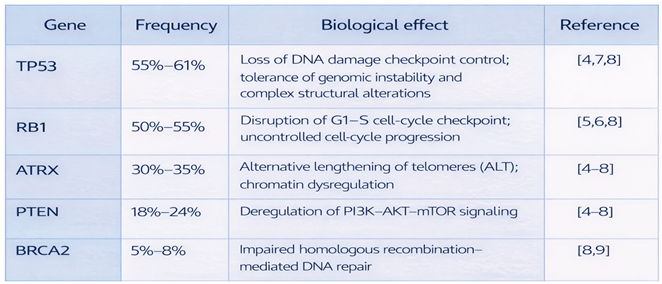 |
Table 2.
Genomic instability–directed therapeutic framework in uLMS.
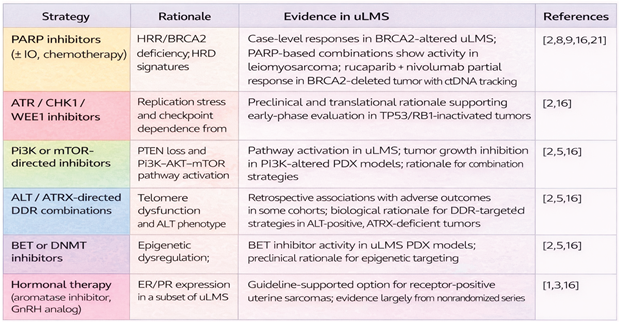 |
Table 3.
Biomarker Applications in uLMS.
 |
Disclaimer/Publisher’s Note: The statements, opinions and data contained in all publications are solely those of the individual author(s) and contributor(s) and not of MDPI and/or the editor(s). MDPI and/or the editor(s) disclaim responsibility for any injury to people or property resulting from any ideas, methods, instructions or products referred to in the content. |
© 2026 by the authors. Licensee MDPI, Basel, Switzerland. This article is an open access article distributed under the terms and conditions of the Creative Commons Attribution (CC BY) license (http://creativecommons.org/licenses/by/4.0/).
Copyright: This open access article is published under a Creative Commons CC BY 4.0 license, which permit the free download, distribution, and reuse, provided that the author and preprint are cited in any reuse.


