

Submitted:
16 June 2026
Posted:
18 June 2026
You are already at the latest version
Abstract
Background and Purpose: This study aimed to investigate the therapeutic synergetic actions of valproic acid and nimesulide in combination with a ketogenic diet on PTZ-induced epilepsy in mice. Method: 40 Balb/c mice were used and divided into five groups, normal saline, PTZ (40 mg/kg), diazepam (3 mg/kg) + PTZ, Valproic acid (200 mg/kg) + nimesulide (2.5 mg/kg) + ketogenic diet + PTZ, and Valproic acid (200 mg/kg) + nimesulide (5 mg/kg) + ketogenic diet + PTZ. EEG recordings were performed on alternate days from 1 to 21 days. After day 22, behavioral tests were performed, including the open field, hole board, and social recognition tests. Results: The PTZ control group showed a significantly higher number of recorded spikes. By the 11th Injection, the PTZ-induced group exhibited seizures of stage 3–4 in 87.5% of the mice. In contrast, both healthy and standard control groups recorded very little seizure activity. In the open field test, treated and healthy groups both demonstrated significantly higher central zone entries (p<0.05). Conclusion: This combination therapy resulted in a remarkable reduction in seizure frequency and EEG spike activity; however, behavior tests showed inconsistent results.
Keywords:
epilepsy
; valproic acid
; nimesulide
; ketogenic diet
; EEG
; cognitive function
1. Introduction
Epilepsy, the fourth most common neurological disorder, leads to hyper-synchronized activity of the brain and recurrent seizures [1,2]. Epilepsy also has a strong association with several psychiatric conditions and cognitive dysfunction [2,3,4]. Hence, understanding the mechanisms that lead to epilepsy (Epileptogenesis) is crucial to therapy and prevention. EEG abnormalities in epilepsy [5]. Epilepsy affects about 50–70 million people worldwide with 20–30% people are those, who develop resistance to antiepileptic medications [4,6,7,8].
Epileptogenesis requires the study of specific, appropriate animal models. Common seizure-inducing agents include pilocarpine, kainic acid, and pentylenetetrazol (PTZ) [9,10,11]. VPA elevates GABA levels in the central nervous system (CNS) [12]. It also ameliorates the behavioral and EEG changes observed in PTZ models [13]. Ketogenic diet comprises 90%, 6% & 4% of total calories as a fat, protein and carbohydrate respectively. The anticonvulsant action of KD is still under investigation and is primarily associated with ketone bodies and polyunsaturated fatty acids. [14,15].
Cyclooxygenase-2 (COX-2) is another contributing factor to the neuro-inflammation associated with epilepsy [16]. Approximately one in three patients (30-40%) diagnosed with epilepsy live with drug-resistant epilepsy (DRE) [17]. More recently, the focus of treatment has been non-pharmacological, including the ketogenic diet (KD), neurostimulation, and surgical interventions [18,19]. KD ketosis exerts four main therapeutic effects: reduction of neural excitability, increased efficiency of mitochondria, decreased neural anaplerosis, and increased adenosine [20,21].
The objective of the study is following:
- To evaluate the effects of combining Valproic acid, Ketogenic diet, and Nimesulide on EEG activity in mice subjected to PTZ-induced seizure.
To investigate the impact of combining Valproic acid, a Ketogenic diet, and Nimesulide on cognitive functions in mice subjected to PTZ-induced seizures.
2. Methods
2.1. Experimental Station
The study was conducted at the Institute of Pharmaceutical Sciences, University of Veterinary and Animal Sciences (UVAS), Lahore.
2.2. Animal and Housing
- Female BALB/c mice aged 4-6 weeks (25-35 g) were acquired from the animal facility of Institute of Pharmaceutical Sciences, UVAS Lahore. Under hygienic conditions, the mice were kept in polycarbonate cages at 24 ± 2 °C, with a 12-hour light/dark cycle, and with ad libitum access to standard food and water. As per the UVAS Institutional Ethics Committee approval (protocol code DR/320, dated 7 July 2022), all procedures were performed from 8 a.m. to 6 p.m. in accordance with the institution’s guidelines and the ARRIVE 2.0 guidelines [5].
2.3. Chemicals and Drugs
- Valproic acid: 200mg/kg was prepared in normal saline and was given i.p. 30 minutes prior to PTZ dose [15].
- Nimesulide: Each dose of either 2.5mg/kg or 5mg/kg was incorporated into a carboxymethylcellulose (CMC) formulation of 0.25% and given orally before priming the PTZ dose [22].
- Pentylenetetrazole (PTZ) Injection: A 40mg/kg dose of PTZ was prepared in normal saline and administered via the intraperitoneal route. This was used as a chemical agent to induce seizures in the test animals.
- EEG variations were noted in the test mice after the administration of PTZ and behavioral alterations were recorded following the experimental procedures [9].
- Mice were maintained on a ketogenic diet of 4:3:1 ratio, comprising of 75.1% fat, 8.6% protein, and 3.2% carbohydrates [15].
- Prior to EEG electrode implantation, each mouse was anaesthetized using intraperitoneal administration of chloral hydrate 380mg/kg [23].
- The preparation of all the drugs was done on the day of the experiment.
2.4. Study Design
For this research, 40 BALB/c female mice were distributed into five groups, with eight animals in each group. The details of the groups and respective treatments are given as under.
- Group I (Negative control group) received normal saline 10ml/ kg.
- Group II (Positive control group) received only PTZ 40mg/kg.
- Group III (PTZ+ Diazepam group) received diazepam 3mg/kg + PTZ 40mg/kg.
- Group IV (Low dose Nimesulide) received a combination of Valproic acid 200mg/kg + Nimesulide 2.5mg/kg while being fed on a Ketogenic diet 4:3:1 + PTZ 40mg/kg.
- Group V (High dose Nimesulide) received a combination of Valproic acid 200mg/kg + Nimesulide 5mg/kg while being fed on a Ketogenic diet 4:3:1 + PTZ 40mg/kg.
- Treatment drugs were administered concomitantly 30 minutes before the administration of PTZ. After PTZ injection, mice were observed through video EEG recording for 30-45 minutes.
- Mice that exhibited three consecutive seizures of stages 4-5 on the modified Racine scale were classified as fully kindled.
- The drug treatments were continued for 21 days, and PTZ injections were administered every other day.
- Implantation of cortical electrodes for EEG recordings was done under chloral hydrate anesthesia (380mg/kg) using a stereotaxic apparatus. EEG was recorded intermittently on the 1st, 3rd, 5th, 7th, 9th, 11th, 13th, 15th, 17th, 19th, and 21st day of study, immediately after PTZ injections.
- Behavior analysis was started from the 22nd day of research to assess behavioral and cognitive function alterations. Open field, hole board, and Social recognition tests were performed on 22, 24, 26 days respectively.
2.5. Stereotaxic Surgery
Stereotaxic surgery was performed using a precision stereotaxic apparatus to implant cortical electrodes for EEG recording. Mice were anesthetized with intraperitoneal chloral hydrate (380 mg/kg). The procedure ensured minimal tissue trauma and stable electrode placement throughout the experimental period, allowing for consistent and reproducible EEG data acquisition [24,25].
2.6. Statistical Analysis
Assessing the normality and performing subsequent parametric tests on the dataset, One-way ANOVA with subsequent Dunnett’s post hoc test was used for multiple group comparisons, where the results were formulated as mean ± SD and considered statistically significant at p < 0.05. The use of ANOVA was warranted as there were more than two groups [10,26].
3. Results
3.1. Epileptic Seizure Development and Treatment Effects
A significant difference in seizure incidence across groups was observed using Fisher’s exact tests (p = 0.0003). The PTZ group had the highest seizure rate (87.5%) while the negative control, PTZ + Diazepam, and treatment groups had considerably lower incidences (0% and 12.5% respectively) suggesting the treatments might have had a protective effect against PTZ-induced seizures and graphical and tabular representation is given in Figure 1 (a), Table 1 & Table 2
3.1.1. Seizure Score
One-way ANOVA confirmed the significant difference of seizure severity intergroup. After the third PTZ injection, the PTZ group displayed increasing seizure intensities, starting with mild myoclonic (stage 1-3) and progressing to generalized tonic-clonic seizures (stages 4-5) with hind limb extension.
In contrast, the groups receiving diazepam, valproic acid, nimesulide, and the ketogenic diet demonstrated substantial resistance to kindling, with only 12.5% of the animals suffering stage 4 seizures. The 21-day study showed that all treated animals survived, demonstrating that these interventions reduced PTZ severity and altered seizure progression. Graphical and tabular representations are provided in Figure 1(b) and Table 1 & Table 2.
The combination of diazepam, valproic acid, the ketogenic diet, and nimesulide produced a marked reduction in seizure scores, demonstrating a strong anticonvulsant effect. These findings suggest that PTZ alone induces seizures relatively consistently; however, the combination of therapies markedly reduces both the progression and the intensity of the induced seizures. Graphical and tabular representations are provided in Figure 1(c) and Table 1 and Table 2.
Electrophysiological shifts during kindling were monitored using Video-EEG recordings taken 30 minutes after each PTZ injection (1-11). Compared to healthy controls, PTZ controls displayed significantly greater spike activity. By the 11th PTZ injection, the nimesulide, valproic acid, and ketogenic diet treatment groups had significantly decreased spike frequency compared to the PTZ control, indicating effective reduction of PTZ-induced epileptiform activity.
3.2. Behavioral Analysis
3.2.1. Open Field Test
The open field test assessed locomotor activity and anxiety-related behavior for each treatment condition. One-way ANOVA analyses indicated significant differences between the groups for the measure of distance traveled (F (4,35) =5, p=0.002), confirming the treatment effects on locomotion. These results are consistent with the significant differences between groups for the measure of average speed (F (4,29=11.95, p<0.0001; R2=0.6225): average speeds were greater in the healthy control (0.072±0.0036 m/s) and PTZ+Diazepam (0.0846±0.0074 m/s) groups relative to the PTZ control (0.041±0.0076 m/s). Treatment groups, however, showed a slight, non-significant increase. Treatment combination with valproic acid, ketogenic diet, and nimesulide only showed minor and partial improvements. This suggests a little effect on both the locomotor and anxiety behaviors. Graphical and tabular representation is given in Figure 2 (A, B, C, D, E), Table 1 & Table 2.
3.2.2. Head-Dipping Frequency and Duration of Hole Poking
Compared to healthy controls, the kindled mice displayed diminished head-dipping frequency. However, ANOVA tests showed no significant differences between the groups (F=0.8378, p=0.5159), implying that kindling or the treatments had little effect on this measure. The ANOVA results for this parameter showed that there were significant differences among the groups F (82.02, p<0.0001). This was because kindled mice spent less time head dipping, and therefore, more time in the hole, which is suggestive of greater anxiety relative to treatment groups, which had longer durations of 34.75 ± 1.38 s and 35.75 ± 1.50 s compared to the PTZ control, but did not reach the time of healthy controls, which was 37.13 ± 1.20 s. Dunnett’s test showed that there were significant differences between the negative and positive controls (p<0.0001). However, there was no significant difference between treatment and PTZ groups (p>0.05) Figure 3 (A, B, C), Table 1 & Table 2.
3.2.3. Social Recognition Test
In this test, short-term social memory was evaluated as a mouse’s capacity to recall a familiar conspecific or distinguish it from a novel, unfamiliar one. Each mouse was assigned to a training session and a test session, which each lasted 5 minutes. Each mouse was paired with conspecifics in cages and containers and left to socialize, and in the testing stage, one conspecific was familiar, and the other was a novel one.
A one-way ANOVA test indicated the presence of differences across groups on the socially recognition index (SRI) (F=3.072, p=0.040; R2=0.3806). Even so, there were no significant differences in pairwise comparisons with regard to treatment and control groups, as demonstrated with Dunnett’s post hoc test (p>0.05). This suggests the treatment effect was very mild. In the analysis of the interaction time, the findings were in line with the previously stated conclusions (F=3.266, p=0.0325; R2=0.3951). The post hoc analysis indicated that the group assigned the PTZ as a positive control spent significantly less time than the negative control in social interaction with the new mouse (p=0.0263) as well as the high dose VA+Nim+KD group (p=0.0378).
The combination of treatments provided a small degree of enhancement to social interaction and recognition. The enhancement was, however, not consistent across all treatments. The social recognition enhancement was still significant when compared to the deficit that PTZ was able to induce. Graphical and tabular representations are given in Figure 4 (A & B), data Table 1 & 2.
3.2.4. Y-Maze Test (Spontaneous Alternation)
Spatial working memory was assessed using the Y-maze spontaneous alternation test. One-way ANOVA revealed a significant difference among groups (F = 10.93, p < 0.0001; R2 = 0.7234). The PTZ control group demonstrated reduced spontaneous alternation compared to the negative control group. However, Dunnett’s post hoc test indicated no statistically significant pairwise differences between the PTZ control and individual treatment groups (PTZ vs. low dose VA+KD+Nims: p = 0.0584; PTZ vs. high dose VA+KD+Nims: p = 0.0714), suggesting that while a trend toward improvement was observed in the treatment groups, the enhancement in spatial working memory did not reach statistical significance. Graphical and tabular representations are given in Figure 3 (C) and Table 1 & Table 2.
4. Discussion
Throughout the 21-day research period, significant differences in the incidence of seizures were noted between the experimental groups. More specifically, seven out of eight animals in the PTZ control group had seizures, whereas there were no seizures in the negative control group. Both treatment groups, indicating a possible therapeutic benefit in reducing seizure incidence as compared to the PTZ-induced model, showed comparable low seizure rates of 12.5%. These results highlight how promisingly the therapies have affected seizure susceptibility under experimental settings. Previous studies have consistently highlighted the anticonvulsant properties of VPA, demonstrating its ability to elevate seizure threshold, prolong latency to initial seizure onset, and reduce both the duration and frequency of seizure episodes [29]. The effects of CBZ, VPA, ESM, LTG, and VGB on spontaneous seizures were assessed in a prior investigation, with VPA showing particularly noteworthy results. In particular, compared to baseline measurements, the VPA-treated group showed a significant reduction in seizure frequency, ranging from 50% to 75% [30]. Prior studies underscore the effectiveness of the ketogenic diet in seizure reduction; patients receiving the ketogenic diet (KD) therapy report a significant decrease in seizures. To be precise, during a three-month period, at least 38% of patients on the KD report a 50% or higher decrease in seizures as compared to control groups [31]. A retrospective long-term study at the University of São Paulo involved seventy children with drug-resistant epilepsy who were to be evaluated for the effectiveness and tolerance of the ketogenic diet (KD). Results showed that 55% of those who used the KD for at least a year had significant seizure control, and 70% had seen a decrease in seizure frequency of more than 75%. These findings demonstrate the KD’s potential as a successful treatment for drug-resistant epilepsy, especially in cases of generalized seizure disorders [8].
A decrease in seizure intensity was observed in a dose-dependent manner. The PTZ-only group reached stage 4-5 seizures after the 11th injection while diazepam and VA+KD+Nims groups effectively delayed or prevented kindling with only 12.5% of the treated mice showing mild seizures. This correlates with findings by [22] on the significant suppression of PTZ-induced kindling by nimesulide and with findings by [32] on the reduction of seizure severity by VPA alone or in combination with other agents. KD also extended seizure latency and reduced Racine scores [33]. The present findings highlight the synergistic anticonvulsant effect of combining metabolic (KD), anti-inflammatory (Nim), and GABAergic (VPA) strategies.
The results of the mean seizure score highlight the effectiveness of combining valproic acid (VA), ketogenic diet (KD), and nimesulide (Nims) in significantly reducing seizure scores in a PTZ-induced seizure model. The PTZ-only group displayed persistently high seizure scores across injections, consistent with its established role as a potent pro-convulsant that induces and intensifies seizure activity [22]. The marked reduction in seizure scores observed in the VA+KD+Nims groups, particularly at higher doses, aligns with existing evidence of the anticonvulsant efficacy of each component of this combination. Previous research has shown that VA is effective in raising the seizure threshold and reducing seizure frequency through its GABAergic mechanisms, making it a widely used agent in epilepsy management [29]. The ketogenic diet has similarly been shown to significantly reduce seizure frequency, particularly in patients with drug-resistant epilepsy, by providing an alternative energy source to neurons and modulating brain excitability [31]. Moreover, Nimesulide, known for its anti-inflammatory properties, may contribute to reducing neuroinflammation (a factor often implicated in the progression of epileptic activity) thereby enhancing seizure control [16].
PTZ control mice had the greatest frequency of epileptic spikes and the treated groups had significant reductions of that spike frequency, especially after the fifth injection, revealed by EEG analysis. This outcome correlates with findings by [34] on VPA and other drug combinations reducing epileptic spike activity, and findings by [35] on the KD reducing interictal discharges and normalizing the EEG. Nimesulide most likely provided the greatest contribution with anti-excitation signaling and homeostatic neuronal stabilization as a result of the inflammation-mitigating effects of nimesulide.
According to the behavioral assessments, treatment showed some degree of reduction in the anxiety-like behaviors. In the open-field test, the PTZ-kindled mice are observed to cover shorter distances and spend less time in the central zone when considered to the diazepam and high-dose treatment groups, but not all the differences were significant. In the previous work, the authors observed VPA exposure to increasing locomotion and central exploration as well. In the hole-board test, the treatment mice gained greater time in the head dips and were quicker in the dips relative to the PTZ controls, thus indicating less anxiety. This is comparable to the previous reports where kindling was stated to elevate the anxiety-like behaviors, and the combined treatment was restoring the exploratory behavior P30 [36]. As the ketogenic diet (KD) is stated to enhance cognitive outcomes, the effect on anxiety, however, is still ambiguous, as some open field test results indicate behavioral changes to be no significant [37].
Comparative cognitive assessments conducted on PTZ control mice underscored the decline within their short-and long-term memories as evidenced by the less frequent entries within the new arm, the Y-maze test, with memory recall and recognition capacities still improved within the VPA- and KD-treated groups. Similar, results were reported in a reputable study [38]. PTZ control participants with diminished novel mouse interaction time in contrast to the KD+Nimsulide+valproic acid treatment, which substantially improved social recognition memory as evidenced by improved interaction time.
In summary, the use of VPA, KD, and nimesulide showed a positive synergistic effect on decreasing seizure frequency and intensity, improving EEG findings, and advancing behavior and cognitive functions in PTZ-kindled mice. These effects further highlight the importance of combining strategies with different mechanisms, such as the adjunction of metabolic stabilization, inflammation control, and neurotransmitter balance. These findings confirm previous indications that interventions on different epileptogenic mechanisms result in a significantly better seizure control, as well as the neurobehavioral comorbidities. Subsequent studies should characterize the mechanisms and prolonged effects of this combination to demonstrate the combination therapy potential use in clinical practice for patients with refractory epilepsy.
5. Conclusions
In the PTZ-induced epilepsy model, the combination of VPA, Nimesulide, and KD was associated with a reduction in seizure activity and, to a lesser extent, seizure frequency. However, the results of the behavioral assessments were quite mixed. The treated groups had some improvements in social recognition and greater locomotor activity than the PTZ-only controls, but these were not consistently statistically significant. The open field and hole board tests indicated there might be a slight reduction in anxiety, but the impact of the various treatments was marginal. The combination of VPA, Nimesulide, and KD will likely reduce the activity of epilepsy to some extent, but the ambiguity regarding the impact on behavior and cognition will be far greater.
Author Contributions
Somia Sarfraz carried out the research work, designed the experiments, performed the EEG recordings and behavioral assessments, interpreted the statistical results, and analyzed the data, compiling the entire write-up independently under supervision. This work was carried out under the supervision of Dr. Muhammad Faisal Nadeem, who continuously guided and monitored the research process as a whole. He provided exceptional mentorship throughout the study and played a pivotal role in the experimental design, statistical analysis, and critical evaluation of the manuscript. His continuous supervision and insightful feedback greatly strengthened the quality and direction of this research. Dr. Adeel Masood Butt and Dr. Muhammad Shahbaz Yousaf helped in selecting the research topic, designing the study, and providing valuable input during troubleshooting and experimental execution. Dr. Muneeb Anjum helped me to learn and perform complex stereotaxic surgery, animal handling, and EEG interpretation critical components of this research. The research would not be possible without his continuous mentorship and help. Ms. Samra Mukhtar assisted in behavioral analysis, and Dr. Zia-ur-Rahman and Dr. Abida Khan for their constructive feedback during EEG data analysis and critical manuscript review.
Institutional Review Board Statement
The animal study protocol was approved by the Institutional Review Board (Ethics Committee) of the University of Veterinary and Animal Sciences (UVAS), Lahore, Pakistan (protocol code DR/320, date of approval 7 July 2022).
Acknowledgments
The authors extend their appreciation to Northern Border University, Saudi Arabia, for supporting this work through project number (NBU-CRP-2025-2042).
Conflicts of Interest
The author declares no conflict of interest. The research work was conducted purely for academic purposes without any financial or personal relationships that could have influenced the outcome or interpretation of the results.
Ethics Approval
All experimental procedures were reviewed and approved by the Institutional Ethics Committee, University of Veterinary and Animal Sciences (UVAS), Lahore, and conducted in accordance with institutional guidelines and the ARRIVE 2.0 standards for the ethical use of animals in research. Ethical approval for this study was obtained prior to the initiation of animal experimentation, as mentioned in the methodology section of this manuscript.
References
- Dhir, A. An update of cyclooxygenase (COX)-inhibitors in epilepsy disorders. Expert Opin. Inv Drugs 2019, 28(2), 191–205. [Google Scholar]
- Arend, J.; Kegler, A.; Caprara, A.L.F.; Almeida, C.; Gabbi, P.; Pascotini, E.T.; et al. Depressive, inflammatory, and metabolic factors associated with cognitive impairment in patients with epilepsy. Epilepsy Behav. 2018, 86, 49–57. [Google Scholar] [CrossRef] [PubMed]
- Rojas, A.; Jiang, J.; Ganesh, T.; Yang, M.S.; Lelutiu, N.; Gueorguieva, P.; et al. Cyclooxygenase-2 in epilepsy. Epilepsia 2014, 55(1), 17–25. [Google Scholar] [PubMed]
- Trinka, E.; Kwan, P.; Lee, B.; Dash, A. Epilepsy in Asia: disease burden, management barriers, and challenges. Epilepsia 2019, 60, 7–21. [Google Scholar] [CrossRef] [PubMed]
- Javaid, S.; Alqahtani, F.; Ashraf, W.; Anjum, S.M.M.; Rasool, M.F.; Ahmad, T.; et al. Tiagabine suppresses pentylenetetrazole-induced seizures in mice and improves behavioral and cognitive parameters by modulating BDNF/TrkB expression and neuroinflammatory markers. BioMed Pharmacother. 2023, 160, 114406. [Google Scholar] [CrossRef] [PubMed]
- Radu, B.M.; Epureanu, F.B.; Radu, M.; Fabene, P.F.; Bertini, G. Nonsteroidal anti-inflammatory drugs in clinical and experimental epilepsy. Epilepsy Res. 2017, 131, 15–27. [Google Scholar] [CrossRef] [PubMed]
- Falco-Walter, J. (Ed.) Epilepsy—definition, classification, pathophysiology, and epidemiology. In Semin neurol; Thieme Medical Publishers, Inc, 2020. [Google Scholar]
- Ułamek-Kozioł, M.; Czuczwar, S.J.; Januszewski, S.; Pluta, R. Ketogenic diet and epilepsy. Nutrients 2019, 11(10), 2510. [Google Scholar] [CrossRef] [PubMed]
- Shimada, T.; Yamagata, K. Pentylenetetrazole-induced kindling mouse model. J. Vis. Exp. 2018, 136, e56573. [Google Scholar] [CrossRef]
- Ahlatcı, A.; Yıldızhan, K.; Tülüce, Y.; Bektaş, M. Valproic Acid Attenuated PTZ-induced Oxidative Stress, Inflammation, and Apoptosis in the SH-SY5Y Cells via Modulating the TRPM2 Channel. Neuro Res. 2022, 1–10. [Google Scholar]
- Balagura, G.; Iapadre, G.; Verrotti, A.; Striano, P. Moving beyond sodium valproate: choosing the right anti-epileptic drug in children. Expert Opin. Pharmacother. 2019, 20(12), 1449–56. [Google Scholar] [CrossRef] [PubMed]
- Lammer, E.J.; Sever, L.E.; Oakley, G.P., Jr. Valproic acid. Teratology 1987, 35(3), 465–73. [Google Scholar] [CrossRef] [PubMed]
- Watanabe, Y.; Takechi, K.; Fujiwara, A.; Kamei, C. Effects of antiepileptics on behavioral and electroencephalographic seizure induced by pentetrazol in mice. J. Pharmacol. Sci. 2010, 112(3), 282–9. [Google Scholar] [CrossRef] [PubMed]
- Barzegar, M.; Afghan, M.; Tarmahi, V.; Behtari, M.; Rahimi Khamaneh, S.; Raeisi, S. Ketogenic diet: overview, types, and possible anti-seizure mechanisms. Nutr. Neurosci. 2021, 24(4), 307–16. [Google Scholar] [PubMed]
- Lusardi, T.A.; Akula, K.K.; Coffman, S.Q.; Ruskin, D.N.; Masino, S.A.; Boison, D. Ketogenic diet prevents epileptogenesis and disease progression in adult mice and rats. Neuropharmacol 2015, 99, 500–9. [Google Scholar] [CrossRef] [PubMed]
- Vezzani, A.; Balosso, S.; Ravizza, T. Neuroinflammatory pathways as treatment targets and biomarkers in epilepsy. Nat. Rev. Neurol. 2019, 15(8), 459–72. [Google Scholar] [CrossRef] [PubMed]
- Borowicz-Reutt, K.; Krawczyk, M.; Czernia, J. Ketogenic Diet in the Treatment of Epilepsy. Nutrients 2024, 16(9), 1258. [Google Scholar] [CrossRef] [PubMed]
- Kim, J.-M. Ketogenic diet: Old treatment, new beginning. Clin. Neurophysiol. Pract. 2017, 2, 161. [Google Scholar] [CrossRef] [PubMed]
- Loup, F.; Wieser, H.-G.; Yonekawa, Y.; Aguzzi, A.; Fritschy, J.-M. Selective alterations in GABAA receptor subtypes in human temporal lobe epilepsy. J. Neurosci. 2000, 20(14), 5401–19. [Google Scholar] [CrossRef] [PubMed]
- Rogawski, M.A.; Löscher, W.; Rho, J.M. Mechanisms of action of antiseizure drugs and the ketogenic diet. Cold Spring Harb. Perspect. Med. 2016, 6(5), a022780. [Google Scholar] [CrossRef] [PubMed]
- Masino, S.A.; Geiger, J.D. Are purines mediators of the anticonvulsant/neuroprotective effects of ketogenic diets? Trends Neurosci. 2008, 31(6), 273–8. [Google Scholar] [CrossRef] [PubMed]
- Dhir, A.; Naidu, P.S.; Kulkarni, S.K. Neuroprotective effect of nimesulide, a preferential COX-2 inhibitor, against pentylenetetrazol (PTZ)-induced chemical kindling and associated biochemical parameters in mice. Seizure 2007, 16(8), 691–7. [Google Scholar] [CrossRef] [PubMed]
- Schidlitzki, A.; Twele, F.; Klee, R.; Waltl, I.; Römermann, K.; Bröer, S.; et al. A combination of NMDA and AMPA receptor antagonists retards granule cell dispersion and epileptogenesis in a model of acquired epilepsy. Sci. Rep. 2017, 7(1), 12191. [Google Scholar] [CrossRef] [PubMed]
- Cecyn, M.N.; Abrahao, K.P. Where do you measure the Bregma for rodent stereotaxic surgery? IBRO Neurosci. Rep. 2023, 15, 143–8. [Google Scholar] [CrossRef] [PubMed]
- Messier, C.; Émond, S.; Ethier, K. New techniques in stereotaxic surgery and anesthesia in the mouse. Pharmacol. Biochem Beh 1999, 63(2), 313–8. [Google Scholar] [CrossRef] [PubMed]
- Citraro, R.; Leo, A.; De Caro, C.; Nesci, V.; Gallo Cantafio, M.E.; Amodio, N.; et al. Effects of histone deacetylase inhibitors on the development of epilepsy and psychiatric comorbidity in WAG/Rij rats. Mol. Neurobiol. 2020, 57, 408–21. [Google Scholar] [CrossRef] [PubMed]
- Skrobas, U.; Duda, P.; Bryliński, Ł.; Drożak, P.; Pelczar, M.; Rejdak, K. Ketogenic diets in the management of lennox-gastaut syndrome—review of literature. Nutrients 2022, 14(23), 4977. [Google Scholar] [CrossRef] [PubMed]
- Wang, X.; Huang, S.; Liu, Y.; Li, D.; Dang, Y.; Yang, L. Effects of ketogenic diet on cognitive function in pentylenetetrazol-kindled rats. Epilepsy Res. 2021, 170, 106534. [Google Scholar] [CrossRef] [PubMed]
- Romoli, M.; Mazzocchetti, P.; D’Alonzo, R.; Siliquini, S.; Rinaldi, V.E.; Verrotti, A.; et al. Valproic acid and epilepsy: from molecular mechanisms to clinical evidences. Curr. Neuropharmacol. 2019, 17(10), 926–46. [Google Scholar] [CrossRef] [PubMed]
- Nissinen, J.; Pitkänen, A. Effect of antiepileptic drugs on spontaneous seizures in epileptic rats. Epilepsy Res. 2007, 73(2), 181–91. [Google Scholar] [CrossRef] [PubMed]
- Zhang, Y.; Xu, J.; Zhang, K.; Yang, W.; Li, B. The anticonvulsant effects of ketogenic diet on epileptic seizures and potential mechanisms. Curr. Neuropharmacol. 2018, 16(1), 66–70. [Google Scholar] [PubMed]
- Sedky, A.A.; El Serafy, O.M.H.; Hassan, O.A.; Abdel-Kawy, H.S.; Hasanin, A.H.; Raafat, M.H. Trimetazidine potentiates the antiepileptic activity and ameliorates the metabolic changes associated with pentylenetetrazole kindling in rats treated with valproic acid. Can. J. Physiol. Pharmacol. 2017, 95(6), 686–96. [Google Scholar] [CrossRef] [PubMed]
- Eor, J.Y.; Son, Y.J.; Kim, J.-Y.; Kang, H.-C.; Youn, S.E.; Kim, J.H.; et al. Neuroprotective effect of both synbiotics and ketogenic diet in a pentylenetetrazol-induced acute seizure murine model. Epilepsy Res. 2021, 174, 106668. [Google Scholar] [CrossRef] [PubMed]
- Samadianzakaria, A.; Abdolmaleki, Z.; Faedmaleki, F. The effect of valproic acid and furosemide on the regulation of the inflammasome complex (NLRP1 and NLRP3 mRNA) in the brain of epileptic animal model. Brain Res. Bull. 2022, 191, 20–9. [Google Scholar] [CrossRef] [PubMed]
- Kessler, S.K.; Gallagher, P.R.; Shellhaas, R.A.; Clancy, R.R.; Bergqvist, A.C. Early EEG improvement after ketogenic diet initiation. Epilepsy Res. 2011, 94(1-2), 94–101. [Google Scholar] [CrossRef] [PubMed]
- Fereshetyan, K.; Chavushyan, V.; Danielyan, M.; Yenkoyan, K. Assessment of behavioral, morphological and electrophysiological changes in prenatal and postnatal valproate induced rat models of autism spectrum disorder. Sci. Rep. 2021, 11(1), 23471. [Google Scholar] [CrossRef] [PubMed]
- Ródenas-González, F.; Blanco-Gandía, M.C.; Miñarro, J.; Rodríguez-Arias, M. Cognitive profile of male mice exposed to a ketogenic diet. Physiol. Behav. 2022, 254, 113883. [Google Scholar] [CrossRef] [PubMed]
- Hidaka, N.; Suemaru, K.; Takechi, K.; Li, B.; Araki, H. Inhibitory effects of valproate on impairment of Y-maze alternation behavior induced by repeated electroconvulsive seizures and c-Fos protein levels in rat brains. Acta Med. Okayama 2011, 65(4), 269–77. [Google Scholar] [PubMed]
- Fukushima, A.; Ogura, Y.; Furuta, M.; Kakehashi, C.; Funabashi, T.; Akema, T. Ketogenic diet does not impair spatial ability controlled by the hippocampus in male rats. Brain Res. 2015, 1622, 36–42. [Google Scholar] [CrossRef] [PubMed]
- Grabowska, K.; Grabowski, M.; Przybyła, M.; Pondel, N.; Barski, J.J.; Nowacka-Chmielewska, M.; et al. Ketogenic diet and behavior: insights from experimental studies. Front Nutr. 2024, 11, 1322509. [Google Scholar] [CrossRef] [PubMed]
Figure 1.
(A) Fisher exact test showing seizures and no-seizures. (B) Stages of seizures after 1st–11th PTZ injection. (C) Mean seizure score across PTZ injections.
Figure 1.
(A) Fisher exact test showing seizures and no-seizures. (B) Stages of seizures after 1st–11th PTZ injection. (C) Mean seizure score across PTZ injections.
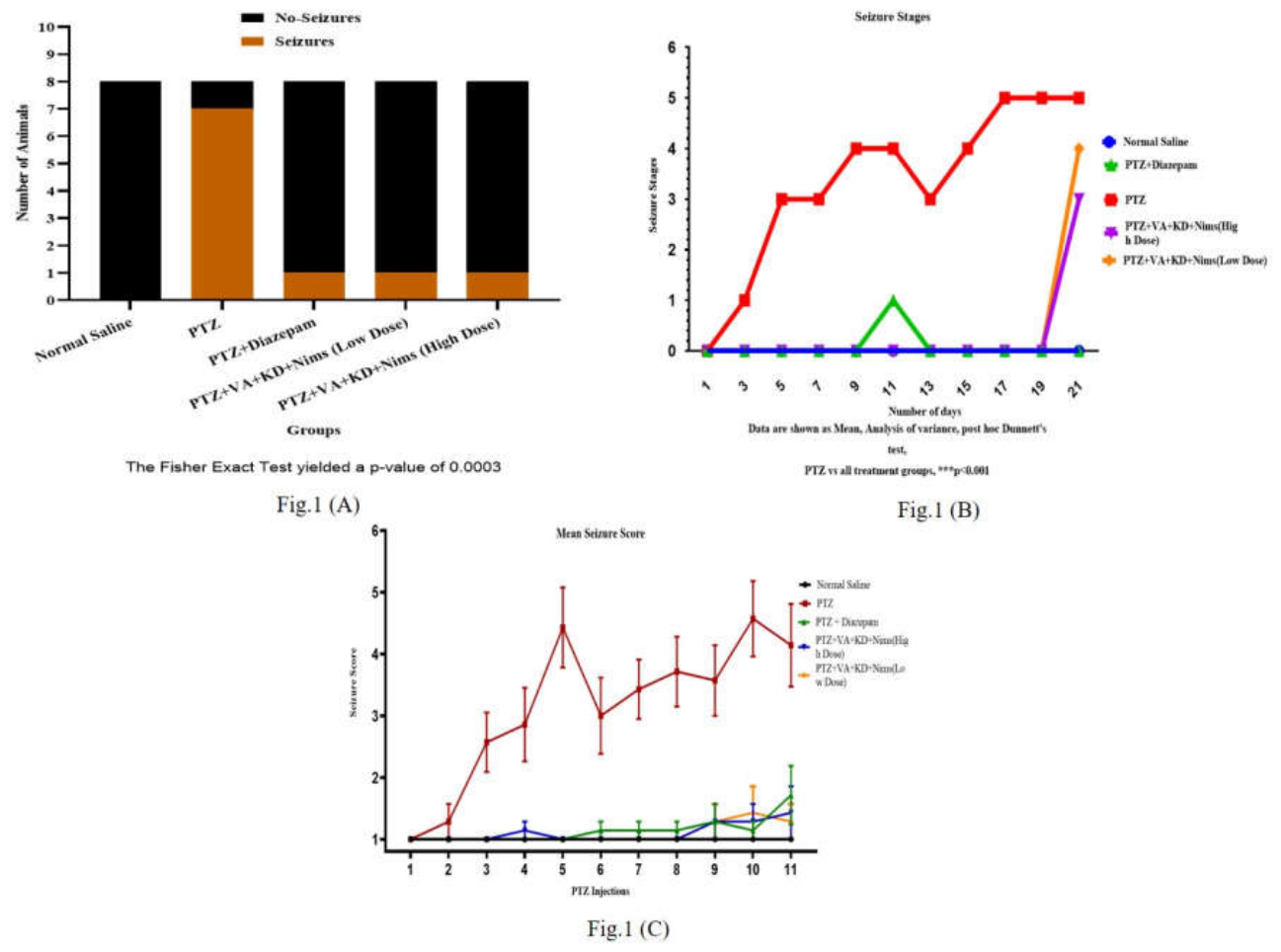
Figure 2.
Open field test results. (A) Average movement speed. (B) Total distance travelled. (C) Time spent in central zone. (D–E) Representative tracking images of treatment and PTZ groups.
Figure 2.
Open field test results. (A) Average movement speed. (B) Total distance travelled. (C) Time spent in central zone. (D–E) Representative tracking images of treatment and PTZ groups.
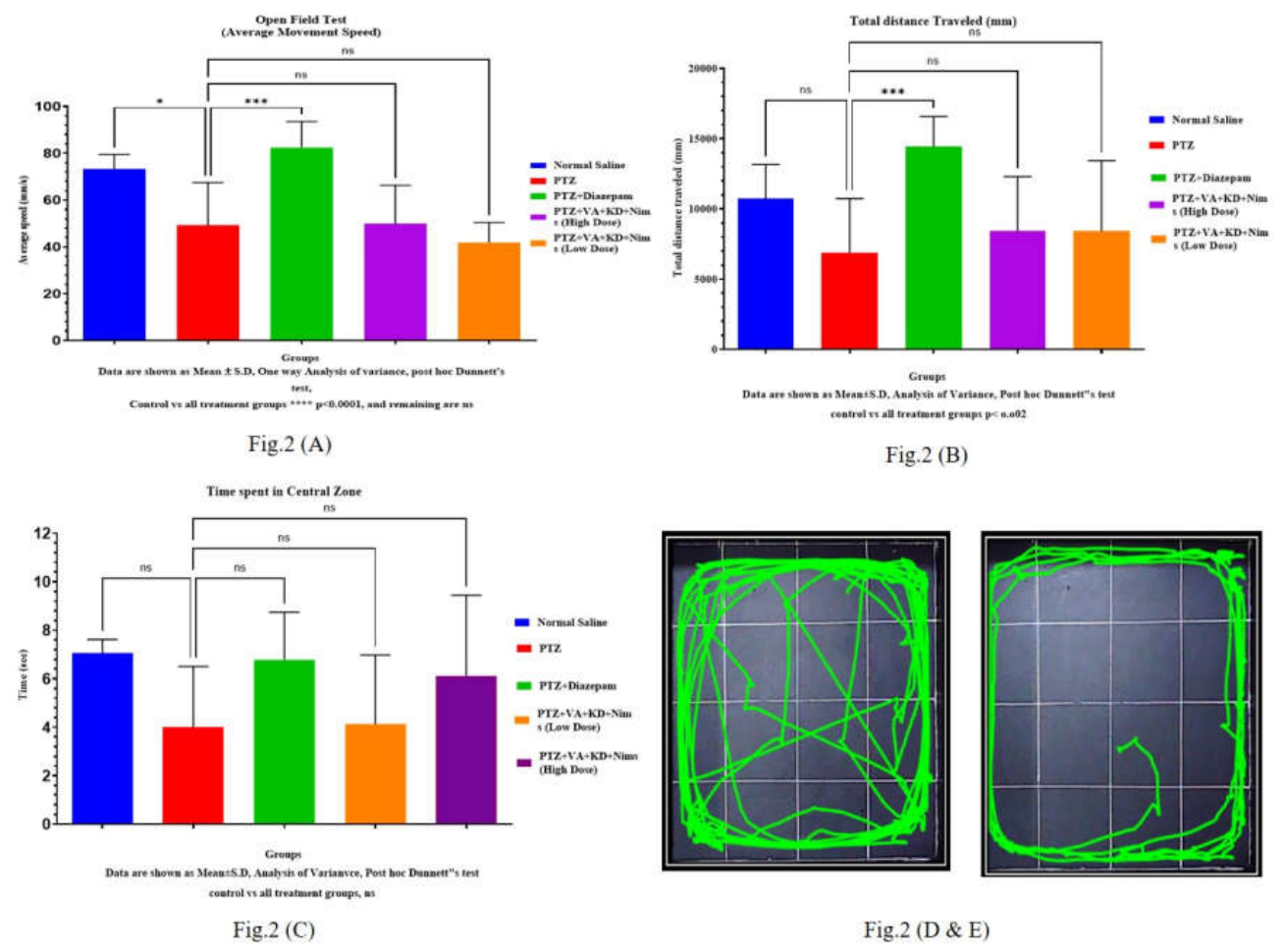
Figure 3.
(A) Duration of hole poking. (B) Latency to first head dip. (C) Y-maze spontaneous alternation (%).
Figure 3.
(A) Duration of hole poking. (B) Latency to first head dip. (C) Y-maze spontaneous alternation (%).
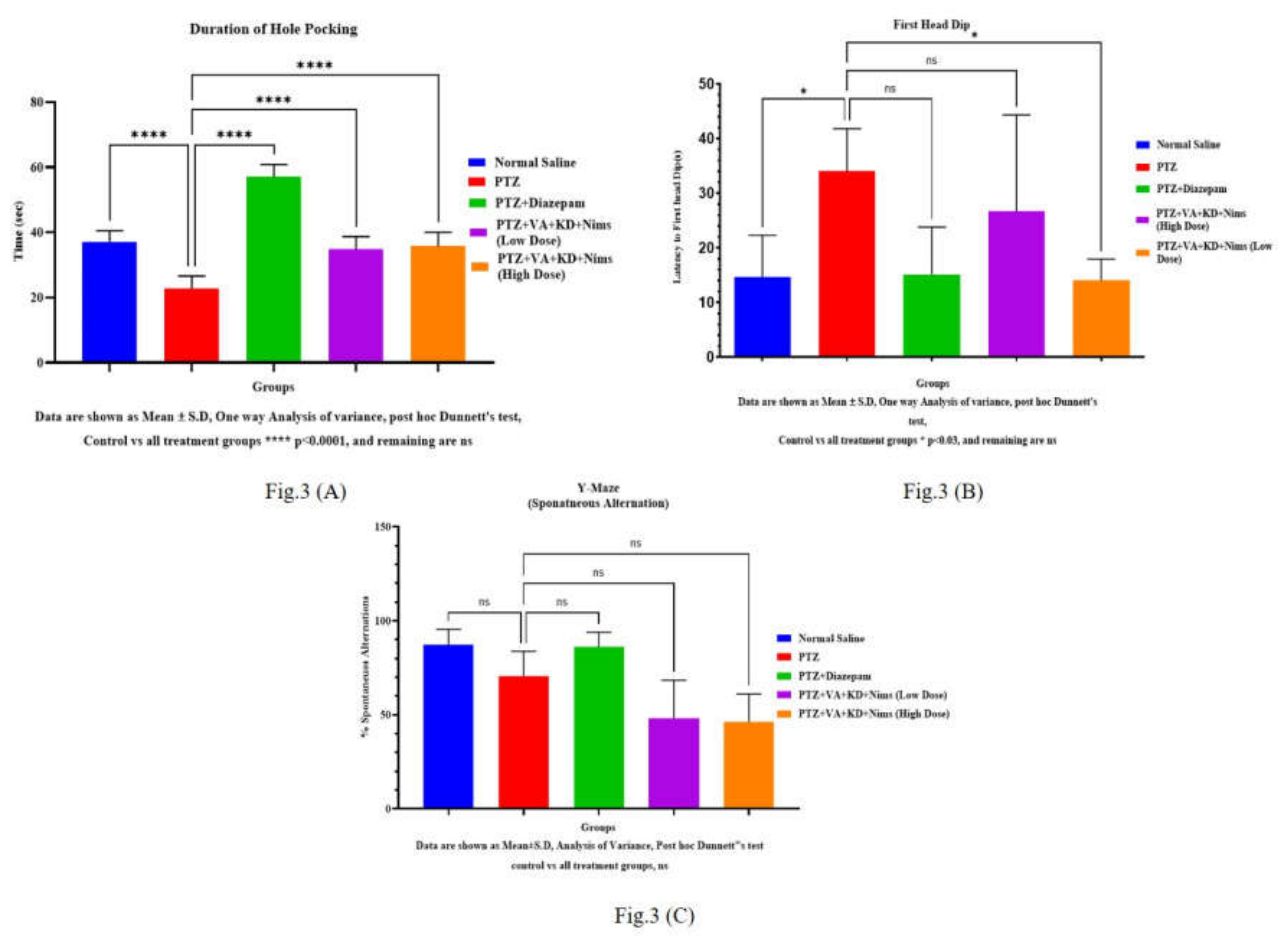
Figure 4.
Social recognition test. (A) Social recognition index. (B) Time spent with novel mouse.
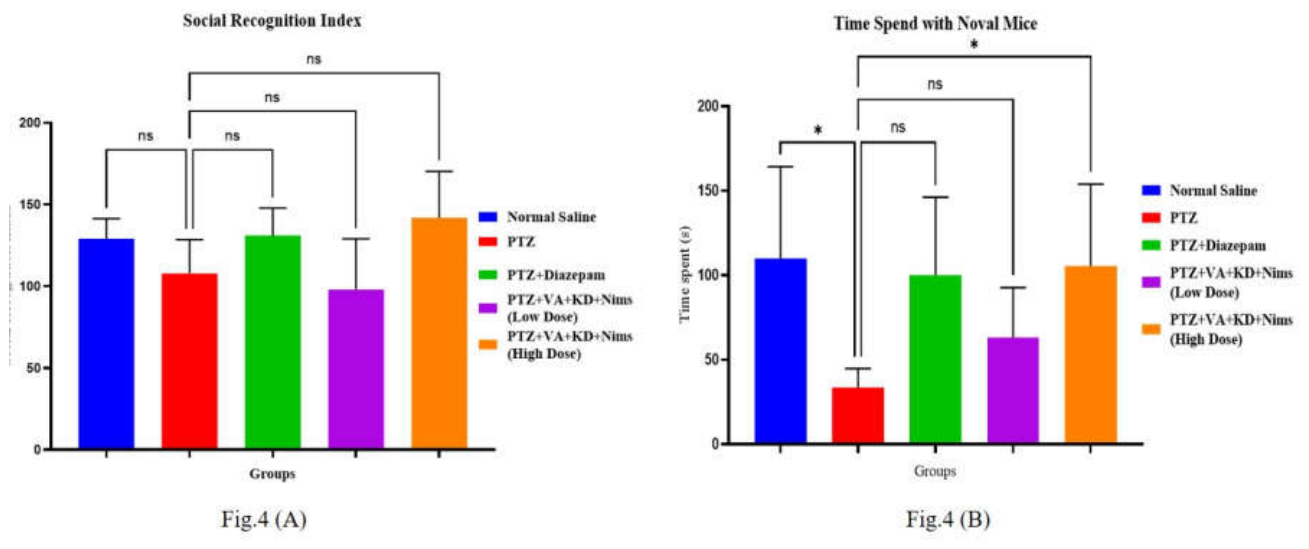

Table 1.
Statistical Analysis Summary of all tests and parameters.
| Parameters / Tests | F Value | P value | Significant diff. among means (P < 0.05)? | R square |
| Fisher’s Exact Test | 0.0003 | Yes(***) | ||
| Spikes Over Time | 13.48 | <0.0001 | Yes(****) | 0.5930 |
| Mean Seizure Score | <0.0001 | Yes(****) | ||
| Distance Travelled | 5.280 | 0.0020 | Yes(**) | 0.3763 |
| Average Movement Speed | 11.95 | <0.0001 | Yes(****) | 0.6225 |
| Time Spent in Central Zone | 1.070 | 0.3904 | No | 0.1369 |
| Head Dipping | 0.8378 | 0.5159 | No | 0.1322 |
| Duration of Hole Poking | 82.02 | <0.0001 | Yes(****) | 0.9036 |
| Y-Maze (Spontaneous Alternation) | 10.93 | <0.0001 | Yes(****) | 0.7234 |
| Social Recognition Index | 3.072 | 0.0400 | Yes(*) | 0.3806 |
Table 2.
Dunnett’s multiple comparisons test of all tests and parameters.
| Parameters / Tests | PTZ vs. Normal Saline | PTZ vs. PTZ+Diazepam |
PTZ vs. PTZ+VA+KD+ Nims (Low Dose) |
PTZ vs. PTZ+VA+KD+Nims (High Dose) | |
| Spikes Over Time | Adjusted P Value | <0.0001 | 0.0357 | 0.0004 | <0.0001 |
| Significant? | Yes(****) | Yes(*) | Yes(***) | Yes(****) | |
| Distance Travelled | Adjusted P Value | 0.1254 | 0.0007 | 0.8113 | 0.8096 |
| Significant? | No | Yes(***) | No | No | |
| Average Movement Speed | Adjusted P Value | 0.0110 | 0.0005 | 0.9999 | 0.6720 |
| Significant? | Yes(*) | Yes(***) | No | No | |
| Time Spent in Central Zone | Adjusted P Value | 0.0542 | 0.0897 | 0.9999 | 0.2558 |
| Significant? | No | No | No | No | |
| Head Dipping | Adjusted P Value | 0.6555 | 0.5868 | >0.9999 | 0.5643 |
| Significant? | No | No | No | No | |
| Duration of Hole Poking | Adjusted P Value | <0.0001 | <0.0001 | 0.5522 | 0.8848 |
| Significant? | Yes(****) | Yes(****) | No | No | |
| Y-Maze (Spontaneous Alternation) | Adjusted P Value | 0.1789 | 0.2267 | 0.0584 | 0.0714 |
| Significant? | No | No | No | No | |
| Social Recognition Index | Adjusted P Value | 0.4246 | 0.3550 | 0.8973 | 0.0927 |
| Significant? | No | No | No | No |
Disclaimer/Publisher’s Note: The statements, opinions and data contained in all publications are solely those of the individual author(s) and contributor(s) and not of MDPI and/or the editor(s). MDPI and/or the editor(s) disclaim responsibility for any injury to people or property resulting from any ideas, methods, instructions or products referred to in the content. |
© 2026 by the authors. Licensee MDPI, Basel, Switzerland. This article is an open access article distributed under the terms and conditions of the Creative Commons Attribution (CC BY) license (http://creativecommons.org/licenses/by/4.0/).
Copyright: This open access article is published under a Creative Commons CC BY 4.0 license, which permit the free download, distribution, and reuse, provided that the author and preprint are cited in any reuse.


