

Submitted:
16 June 2026
Posted:
17 June 2026
You are already at the latest version
Abstract
The increase in antimicrobial resistant infections has fueled a resurgent interest in bacteriophage (phage) therapy. We conducted a systematic review of personalized phage therapy cases in the peer-reviewed, English-language literature reported between 1/1/2005, to 8/31/2025 for which individual patient data were available, for a total of 323 patients in 83 studies. Most patients (68%, 221/323) were treated with ≥2 phages (a phage cocktail). The median concentrations of phages was 108 PFU/mL (IQR 107-109). Most patients (76%, 246/323) received antibiotics concurrent with phage therapy. The median duration of therapy was 10 days (IQR 5-21). The most common indications for phage therapy were skin/soft tissue, pulmonary, orthopedic, osteoarticular, and genitourinary infections. 144 patients received fixed (off-the shelf) phage preparations whereas 179 received bespoke phage preparations in which all of these were screened for in vitro efficacy against the patient’s clinical isolates prior to treatment initiation (e.g. personalized therapy). For cases where outcomes data were available, 78% (253/323), experienced clinical improvement while the targeted pathogen was eradicated in 61% (177/290) of cases. Nine patients had treatment withdrawn due to tolerability concerns. These data indicate that there is substantial heterogeneity in current personalized phage therapy clinical practices but that this approach can be successful.
Keywords:
bacteriophage
; therapy
; systematic review
; bacteriophage therapy
; antimicrobial resistance
; phage therapy
; antibiotic resistance
; case report
; compassionate use
1. Introduction
Antimicrobial resistance (AMR) to antibiotics is a growing critical threat to global health outcomes, requiring new therapeutic approaches. Lytic bacteriophages (phages), viruses that kill bacteria, are a promising therapeutic approach in the fight against AMR infections [1,2,3,4]. In the past, phage therapy was largely sidelined in Western Europe and North America in favor of small molecule antibiotics [5,6]. However, as conventional antibiotics become increasingly ineffective against resistant infections, Western researchers have begun to reexamine phage therapy as a possible therapeutic modality [7,8].
Currently, most phage therapy is implemented in a personalized manner, where phages are matched to a patient’s particular bacterial pathogen [9,10]. Personalized phage preparations are either bespoke, that is to say, isolated anew or selected from a library, or matched to a pre-established set of fixed phages [11]. The phages used in these cases are typically unique to each facility. There also remains substantial variation in phage production and quality control practices, though evidence-based protocols are starting to emerge [12,13]. Non-personalized, off-the shelf phage therapy is also used, typically in the context of randomized clinical trials (RCT). Most RCTs conducted to date have largely failed to demonstrate efficacy, although there are several recent studies reporting promising results [14,15,16]. Nonetheless, at present most phage therapy cases involved personalized regimens.
There are some areas of emerging consensus around phage therapy practices [17]. For example, multiple phages are typically administered simultaneous as a “cocktail” to limit the emergence of bacterial resistance to phage; however, the number of phages in cocktails can vary [18,19,20,21]. Phages are also usually administered together with small molecule antibiotics which are given as standard of care [22,23].
However, there is also substantial heterogeneity in the phage administration protocols, including in regards to the dose, route, frequency, and duration of phage therapy [24,25,26]. Moreover, most clinical data published in the medical literature from personalized phage therapy are from case reports, case series, or small uncontrolled studies, making the optimal practices unclear [27]. There are several systematic reviews that have interpreted this literature [26,28,29,30]. However, there has been rapid growth in the number of published cases such that an updated assessment is warranted. Moreover, those studies are typically not limited to personalized phage therapy cases.
Here, we have performed a systematic review of personalized phage therapy cases reported in the peer-reviewed, English-language literature between January 1, 2005, to August 31, 2025. By focusing on reports where individual patient data is available, we hope to gain both an understanding of current practices as well as to facilitate an appreciation of best practices in personalized phage therapy.
2. Materials and Methods
2.1. Electronic Search
Two investigators (PMB and GC) independently completed literature searches using the Medline database (PubMed) from January 1, 2005, to August 31, 2025. The search terms, “phage”, “phages”, “bacteriophage”, and “treatment”, “administration,” “intervention”, or “therapy” were used with the filters for “case reports”, “clinical trial”, “randomized controlled trial” were used. A list of potentially eligible studies was compiled from this list using the 2020 Preferred Reporting Items for Systematic reviews and Meta-Analyses (PRISMA) recommendations.
2.2. Inclusion/Exclusion
We sought to include studies with consistent patient data to conduct our review. Studies were included if they met the following criteria: (1) published in a peer-reviewed English-language journal between January 1, 2005 and August 31, 2025, (2) phage therapy was administered in human subjects for the purpose of treating a bacterial infection, (3) individual patient data reported included (a) phage concentration or titer of administered dose, (b) frequency and duration of phage therapy, (c) clinical outcome posttreatment, and (d) safety data. Studies that did not meet these criteria were excluded from our report. Some studies included patients that had previously been described in multiple case reports. Here, the first published study was included and the patient listed in subsequent reports were omitted so as not to duplicate patient cases. If the case series provided new or missing information to the individual case report, this was included and referenced. Due to this strict individual patient data inclusion criteria, many clinical trials lacking this information were excluded.
2.3. Data Extraction
The following information was extracted from the studies and compiled into a database: author, year, article PMID, patient sex and age, patient history, type of infection, hardware infection (yes/no), species of the targeted pathogens, whether surgery was concurrent (yes/no), number of and administration route(s), frequency and duration of phage administration, whether phages were ‘off the shelf’, number of phage types, phage treatment log, in vitro phage susceptibility testing (yes/no; this was considered to be positive if at least one phage had lytic plaque activity against at least one of the target pathogens), use of concurrent anti-infectives (yes/no), host bacteria eradication (yes/no), clinical efficacy defined as perceived clinical improvement and/or resolution of the infection attributed to phage therapy, patient survival, and adverse effects attributed to phage therapy. When multiple sites of infection were involved, typically the primary site of infection was used for disease categorization. When multiple phage concentrations were administered, the highest concentration reported was documented. When multiple frequencies of administration were reported and multiple modalities were used, the most common frequency of administration was recorded. Duration was calculated as the total number of days, consecutive and non-consecutive, phage administered.
Lastly, we examined site(s) of infection and pathogen for each patient, as well as whether therapy was given with surgical revision surgery. We categorized patient outcomes by whether the infection was eradicated, or if the patient substantially improved over a 1+ month period, and presence of suspected adverse effects.
Summary statistics were performed to assess each treatment modality. Due to the heterogeneity of the treatment protocols, phage preparations, and treatment centers, no further statistical analysis could be performed.
3. Results
3.1. Literature Search
A total of 263 articles were obtained from two independent searches done by two investigators (PB and GC). Eighty-three studies and eighty-five reports met criteria for inclusion (Figure 1). Note, two articles or studies published data on the same case, hence the distinction of 83 studies and 85 reports. These two reports included additional information on previously described patients. The information was merged to provide a more accurate clinical picture, references of the included studies were manually searched for additional relevant publications. Major case reports and clinical trials not found in our literature search were included [9,14,31,32]. From these articles, 323 individual patient cases were identified after duplicates from multiple reports removed.
3.2. Patient Characteristics
A total of 323 patients who received personalized phage therapy were included in this study. Sex was reported for 156 patients; 55% were males (85/156). Age was reported in ranges for 219 patients, with exact age being disclosed for 119 patients with a median age of 52 (IQR 35-68, minimum 1, maximum 96). The age and gender of patients is shown in Figure 2.
3.3. Indications
The most common pathogens involved in phage therapy in this dataset were Staphylococcus aureus and Pseudomonas aeruginosa. Smaller numbers of patients were treated for other Staphylococcus spp, Klebsiella pneumoniae, Acinetobacter baumannii, and other pathogens (Figure 3).
Patients were treated with phage therapy for the following indications: skin and soft tissue infections (56/323), pulmonary infections (54/323), orthopedic hardware infections (53/323), osteoarticular infections (40/323), genitourinary infection (32/323), upper respiratory tract infections (29/323), cardiac hardware infections (26/323), otitis infections (14/323), abdominal infections (8/323), native infective endocarditis (5/323), sepsis (3/323), other hardware infections (2/323), and one central nervous system infections.
3.4. Regimens
Most patients (68%, 221/323) were treated with 2 or more phages, (i.e. a “cocktail” of phages) while 32% (102/323) were treated with a single phage. The median concentration was 108 (IQR 107-109). Most patients (76%, 246/323) received antibiotics concurrently with phage therapy.
Phage therapy was administered in a variety of routes, with the most common being intravenous, intraoperative, and topical (Figure 4). Local routes of administration were defined as phages delivered to a specific non-cutaneous, non-mucosal anatomical site to achieve a localized effect, whereas topical administration was defined specifically as application of phage to skin surface. Intranasal was defined as delivery through the nasal cavity without aerosolization, while nebulized phage was defined as aerosolized phage delivered through the nasal or oral cavity. Most patients received phage by only one route (195/323, 60%), with a median of 1 (IQR 1-2) route of delivery.
Patients received phage therapy in varying frequencies. The mean cumulative duration of therapy was 24 days (1-1492), median duration was 10 days (IQR 5-21). For the subset of 290 cases where outcomes data were available, bacterial eradication rates were 57% (106/186) for one route vs 68% (71/104) for multiple routes of administration.
3.5. Safety of Phage Therapy
Phage therapy was generally well-tolerated. Overall, 10% (31/323) of patients experienced adverse events possibly or probably related to phage therapy. These adverse events, some of which occurred in the same patient, included 9 fevers, 7 transient tachycardic events, 7 afebrile chills, 9 transaminitis events, 2 instances of local pain, 2 instances of leukopenia, and one instance of wheezing, vasopressor dependency, shortness of breath, lip rash, local redness, fatigue, dizziness, cytokine storm, coughing, and abdominal discomfort. (Figure 5).
3.5.1. Phage Therapy Efficacy
Phage therapy efficacy was assessed by reports of clinical improvement or cure as well as bacterial eradication. Most patients, 78% (253/323), experienced clinical improvement or cure following phage therapy. Phage therapy eradicated the targeted pathogen in 61% (177/290) of cases whereas 39% (113/290) of patients had persistent bacterial infection despite phage therapy. Pathogen eradication was unknown in 6% (24/323) of total cases and 9 patients had their therapy withdrawn due to transient tachycardia and chills in the singular study’s other participants (Figure 6).
3.5.2. Skin and Soft Tissue Infections
A total of 56 patients across 8 studies [9,31,33,34,35,36,37,38,39] were treated for difficult-to-treat soft tissue infections with phage. Common indications were chronic non-healing ulcers (n=21), diabetic foot infections with amputation risk (n=10), infection secondary to burns (n=9), and infection secondary to surgical wounds (n=5), among other indications (Table 1). The pathogens involved in these cases included S. aureus (n=30), P. aeruginosa (n=22), E. coli (n=6), S. hominis, S. maltophilia, Streptococcus spp., and A. baumanii (n=1 each).
Patients with these infections were given phage therapy primarily via topical administration (n=44), but also through IV (n=7), orally (n=4), locally (n=4), intraoperatively (n=4), nebulized (n=2), and via catheter (n=1).
The median titer of administered phage was 109 PFU/mL (IQR 107-109 PFU/mL) given at frequency of every 8 hours to every 48 hours. Four interventions were one-time administrations. Excluding one-time administrations, the median treatment duration was 7 days (IQR 5-14). A total of 30 patients had phage therapy concurrent with antibiotic therapy.
Out of 56 patients, 84% experienced clinical recovery (47/56). 61% showed total eradication of pathogen (35/56). One patient experienced fever with dubious links to therapy [34]. No other adverse events were attributed to phage therapy.
3.5.3. Pulmonary Infections
A total of 54 patients across 23 studies [9,38,40,41,42,43,44,45,46,47,48,49,50,51,52,53,54,55,56,57,58,59,60] were given therapy for difficult-to-treat pulmonary infections with phage therapy. The treated indications were cystic fibrosis related complications (n=14), COVID-19 related complications (n=8), surgical related infections (n=7), and COPD (n=4) (Table 2). The pathogens involved in these cases included P. aeruginosa (n=31), A. baumanii (n=6), A. xylosoxidans (n=5), M. abscessus (n=5), K. pneumoniae (n=3), S. aureus (n=2), and 1 patient each for B. dolosa, B. multivorans, S. marcescens, and S. maltophilia.
Patients with these infections were given therapy primarily via nebulizer (n=46), IV (n=14), via catheter or drain (n=4), oral administration (n=7), and locally (n=1). Several routes of administration, including topical, catheter, rectal, and intrathoracic administrations were provided for 1 patient each.
The median titer of phage administered was 109 PFU/mL (IQR 108-109 PFU/mL) given at a frequency from hourly to daily, with no instances of single administration. The median treatment duration was 15 days (IQR 7-42). A total of 43 patients had phage therapy concurrent with antibiotic therapy.
Out of 54 patients, 68% experienced clinical improvement (37/54), while 63% showed total eradication of pathogens (34/54). Three patients experienced adverse reactions to phage therapy, transient fever [53], cytokine storm [46], and coughing during nebulized administration [9]. No other adverse events were linked to therapy.
3.5.4. Native Osteoarticular Infections
A total of 40 patients across 10 studies [9,31,35,38,44,61,62,63,64,65] were given phage therapy for osteomyelitis (37 patients), septic arthritis (2 patients), and joint infection (1 patient). The pathogens involved in these cases included S. aureus (n=22), P. aeruginosa (n=15), S. epidermidis (n=3), E. faecalis (n=3), K. pneumoniae (n=2), B. fragilis (n=1), and A. baumannii (n=1), E. coli (n=1). Patients with these infections were given phage therapy primarily by drain or catheter (n=13), intraoperatively (n=13), IV (n=12), topically (n=4), locally (n=10), orally (n=2).
The median titer of phage administered was 107 PFU/mL (IQR 107-109 PFU/mL). Phages were administered over a range of every 8 hours to four times a year. The median treatment duration was 14 days (IQR 10-28). All but one patient received phage with concurrent antibiotics. 15 patients received therapy as a part of a surgical intervention, with all but one of these patients showing clinical improvement.
Out of 40 patients who received phage therapy for native osteoarticular infections, 83% experienced clinical improvement (33/40), while 58% showed total eradication of pathogens (23/40). Four patients experienced adverse events: local irritation and pain [63], one fever [9], one experiencing dizziness and fatigue, and another experiencing transaminitis and leukopenia [31]. No other adverse events were linked to therapy.
3.5.5. Orthopedic Hardware
A total of 53 patients across 20 studies [9,31,35,66,67,68,69,70,71,72,73,74,75,76,77,78,79,80,81,82] were given therapy for difficult-to-treat orthopedic hardware infections with phage. All but one of these infections were prosthetic joint infections, with one allograft infection. The pathogens involved in these cases included Staphylococcus spp. (n=28), S. aureus (n=12), P. aeruginosa (n=6), S. epidermidis (n=3), K. pneumoniae (n=2), E. faecalis (n=2), E. coli (n=1). Patients with these infections were given phage intraoperatively (n=45) or via drain or catheter (n=29), IV (n=16), local application (n=5), orally (n=1), intra-arterial (n=1), topically (n=1).
The median titer of phage administered was 107 PFU/mL (IQR 105-109 PFU/mL). This was administered over a range of every 8 hours to daily. Eight patients received a single treatment. Excluding one-time treatments, the median treatment duration was 10 days (IQR 5-10). All but two patients received concurrent antibiotic therapy. All but four patients received phage therapy as a part of surgical revision.
Out of 53 patients, 92% experienced clinical improvement (49/53), while 87% showed total eradication of pathogens (40/46). Ten patients experienced adverse reactions, 4 fever (one patient with local pain as well) [9,75,80] and 6 elevated transferase concerns [68,77,78,82]. No other adverse events were linked to therapy.
3.5.6. Cardiac Hardware
A total of 26 patients across 16 studies [9,31,38,44,83,84,85,86,87,88,89,90,91,92,93,94] were given therapy for difficult-to-treat cardiac device and vascular graft infections: infected grafts (8 patients), LVADs (12), and prosthetic valves (6). The pathogens involved in these cases included S. aureus (n=16), P. aeruginosa (n=11), E. coli (n=1), C. acnes (n=1), E. faecium (n=1), and P mirabilis (n=1).
Patients with these infections were given phage via IV (n=16), intraoperatively (n=9), via drain or catheter (n=9), orally (n=2), topically (n=2), and intranasally (n=1). The median titer of phage administered was 109 PFU/mL (IQR 107-109 PFU/mL) with a range of every 8 hours to daily. Four patients received one time treatment. Excluding one-time treatments, the median treatment duration was 14 days (IQR 7-25). All patients received concurrent antibiotic therapy. 14 patients received therapy as a part of surgical revision, with all but 1 of these patients experiencing clinical improvement.
Out of 26 patients, 60% experienced clinical improvement (18/26), while 65% showed total eradication of pathogens (17/26). One patient experienced shortness of breath and fever at 1011 PFU/mL which was well tolerated with a log reduction of dose, suggesting concentration dependent adverse event relationship [88]. Two patients experienced fever, with one of these patients experiencing multiple recurring fevers [31]. No other adverse events were linked to therapy.
3.5.7. Genitourinary Infections
32 patients across 9 studies were treated for genitourinary infections with phage [50,88,95,96,97,98,99,100,101]. Most of these patients were treated as a part of a UTI clinical trial Kim et al. with 24 patients with per-patient information. Patients were treated primarily for UTI (n=29), transplant related infection (n=2), and vaginitis (n=1). The pathogens involved in these cases were E. coli (n=26), K. pneumonia (n=4), E. faecalis (n=1), P. aeruginosa (n=6), S. epidermidis (n=3), E. faecalis (n=2), K. pneumonia (n=2), E. coli (n=1), S. aureus (n=1).
Patients were treated for these infections with IV (n=27), via drain or catheter (n=16), oral (n=5), per rectum (n=3), and vaginal suppositories (n=1). The median titer of phage administered was 1012 PFU/mL (IQR 1011-1012 PFU/mL) with a range of twice a day to q24h. Treatment lasted a median of 4 days (IQR 3 – 6 days) with all but 2 patients receiving concurrent antibiotic treatment.
Out of 32 patients, 69% experienced clinical improvement (22/32) while 56% experienced pathogenic eradication (18/32). 7 patients all in the Kim et al. study experienced mild transient tachycardia and afebrile chills. Notably, this study had 9 patients which had therapy withdrawn due to safety signal before intravenous titer was reduced by a log due to these adverse events. After the reduction of titer, therapy was well tolerated [95]. No adverse events were otherwise noted.
3.5.8. Upper Respiratory
A total of 29 patients across 5 studies [9,31,32,35,102] were given therapy for difficult-to-treat head and neck infections. 18 patients presented as sinusitis, 10 patients as rhinosinusitis, with 1 patient presenting with a skin infection with nasal colonization. The pathogens involved in these cases included S. aureus (n=24), P. aeruginosa (n=5), and A. xylosoxidans (n=2).
Patients with these infections were given therapy primarily intranasally (n=25), but also orally (n=4), locally (n=4), and via IV (n=1).
The median titer of phage administered was 107 PFU/mL (IQR 107-108 PFU/mL) with a range of every 8 hours to daily. The median treatment duration was 21 days (IQR 14-21). 28% of patients received concurrent antibiotic therapy (8/29). None of these interventions were associated with surgical revision.
Out of 29 patients, 69% experienced clinical improvement (20/29), while only 27% experienced eradication of pathogen (8/29). One patient experienced an adverse reaction of lip rash with a possible link to therapy while one patient experienced abdominal discomfort [9].
3.5.9. Otitis
A total of 14 patients across 3 studies [103] were given therapy for ear infections. Wright et al. reported that 12 patients were treated for P. aeruginosa ear infections with intra-otic administration of a phage cocktail in a randomized clinical trial [31,103]. Treatment was given on day 1 of the study. Out of these 12 patients, 91% experienced clinical improvement (11/12) by 6 weeks and 25% experienced bacterial eradication. No adverse events were attributed to therapy. Two other successful cases of otitis treatment were documented in Onallah et al, with IV phage therapy with a titer of 1010 PFU/mL – 1011 PFU/mL was given to patients suffering from P. aeruginosa infections over the span of 8 – 10 days[31].
3.5.10. Native Infective Endocarditis
5 patients across 3 studies [44,104,105] were treated for bloodstream infections secondary to endocarditis with intravenous phage administration. One patient died during surgical intervention [44] but this was not attributed to phage therapy, while all others fully recovered with no adverse effects.
3.5.11. Abdominal Infections
8 patients across 4 studies [9,31,106,107,108] were treated for abdominal infections with phage. 6 patients fully recovered with clearance of pathogen while one patient died from their illness during treatment. One patient that experienced leukopenia and vasopressor dependency died, though this was not linked to phage therapy [31]. No adverse events were noted.
3.5.12. Other
2 patients were treated for hardware infections that could not be categorized as either cardiac or orthopedic [9,38], both experiencing clinical improvement and eradication of bacteria without adverse events. 3 patients were treated for non-specific systemic bacteremia, with one patient making a full recovery [109], one patient experiencing clinical improvement but persistent infection [110], and one patient died from their illness [111]. Only 1 patient was treated for a central nervous system infection with phage and died from their illness during treatment [112].
3.5.13. Phage Formulations
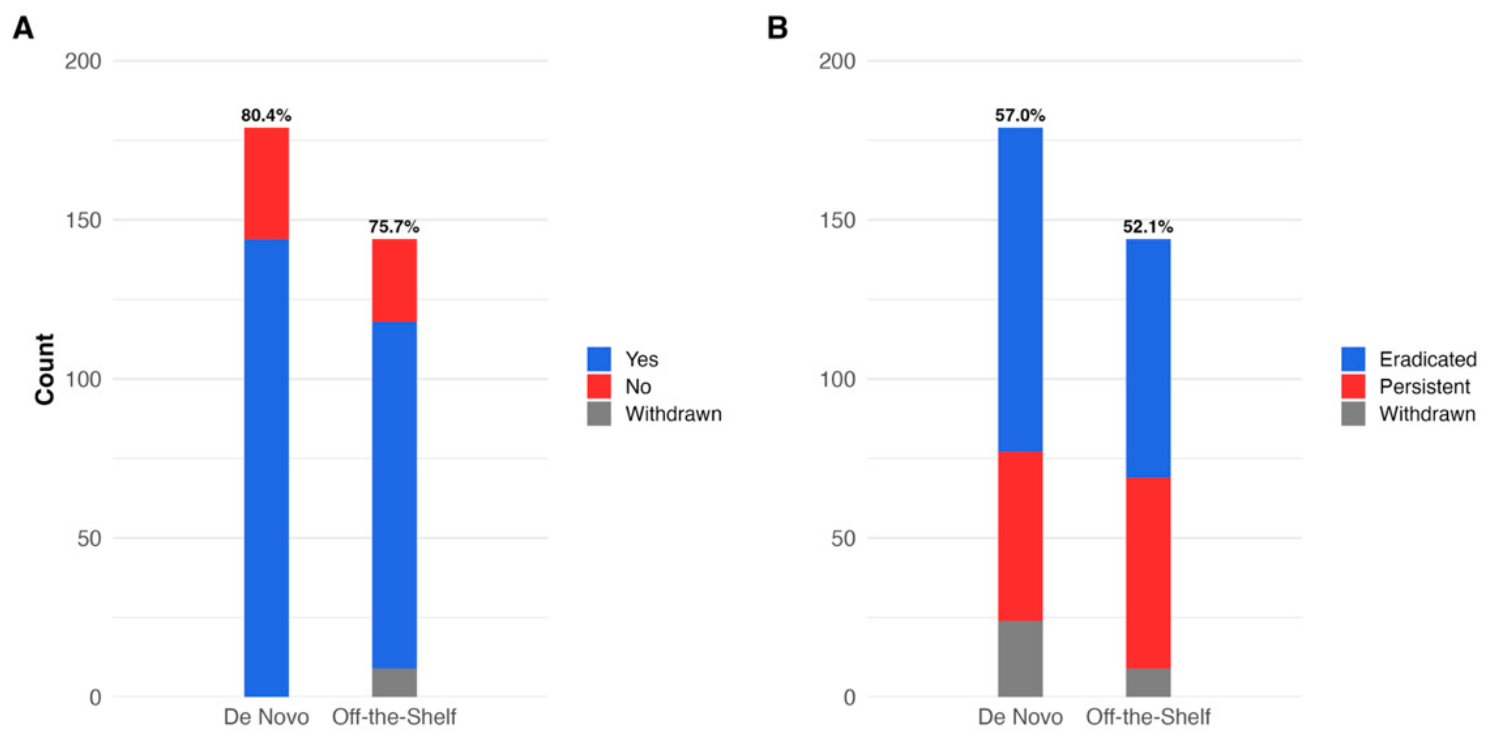
A total of 144 patients across 29 studies [9,32,33,35,36,41,42,43,44,45,50,63,65,76,80,84,85,86,88,90,91,92,95,96,103,104,106,108,111] received phage therapy using only fixed (off-the-shelf) cocktails. Of these 144 patients, 75 experienced bacterial eradication (52%) and 109 experienced clinical improvement (76%). In contrast 179 patients across 59 studies [34,35,37,38,40,42,46,47,48,49,50,51,52,61,62,64,66,67,68,69,71,72,73,74,75,77,82,83,87,88,89,97,98,99,102,107,110,112] received bespoke phage preparations formulated de novo for the patient and infection in question. Out of these, 102 experienced bacterial eradication (57%) and 144 experienced clinical improvement (80%). 6 patients were given a phage genetically engineered against the patient isolate [50,52,97,110], 2 of which had total bacterial eradication while 5 experienced clinical improvement. (Figure 7).
4. Discussion
We performed a systematic review of personalized phage therapy cases reported in the peer-reviewed, English-language literature for which individual patient data were available. Together, these data indicate that there is substantial heterogeneity in the current clinical practices involved in personalized phage therapy. However, several patterns emerge from this analysis.
Most patients who received personalized phage were treated with phage cocktails. This is consistent with extensive in vitro and in vivo data supporting the use of phage cocktails to prevent the emergence of resistant isolates [18,19,20,21].
Most patients received antibiotics concurrently with phage therapy. This is consistent with use of phages as an adjunctive treatment superimposed upon the standard of care in many cases. As with phage cocktails, is it also supported by extensive in vitro and in vivo data [22,23]. 144 patients received fixed (off-the-shelf) phage preparations whereas 179 received bespoke phage preparations. The rates of bacterial eradication were similar for these groups, though it is difficult to draw many conclusions from this given the heterogenous formulations and practices involved at each facility.
Most phage therapy is administered over a relatively narrow range of phage concentrations in these cases (median 108 PFU/mL; IQR 107-109).
In contrast, there was more heterogeneity regarding the route, frequency, and duration of phage administration, reflecting the many different indications and pathogens targeted by these treatments.
For cases where outcomes data were available, 78% (253/323), experienced clinical improvement following phage therapy while the targeted pathogen was eradicated in 61% (177/290) of cases. These numbers agree with the other recent reviews of the literature. Uyttebrook et al. examined 59 published studies prior to 2021 and reported a bacterial eradication rate of 87% and clinical improvement rate of 79% [28]. However, negative trials are less likely to be published, and the results may overly represent good outcomes.
Another assessment of personalized phage therapy efficacy should be drawn from the comprehensive report from the Belgian consortium (Queen Astrid Military Hospital) of 100 consecutive patients who received magistral therapy. They reported a bacterial eradication rate of 61% and a clinical improvement rate of 77% [9]. Of note, the present study of 323 cases includes 85 of these Belgian patients; when the remaining 238 patients are directly compared with Belgium, we find a similar eradication rate of 62% (137/222, reported) and 80% (190/238) clinical improvement rate. Taken together, these results are highly encouraging, particularly when one considers that phages are typically only used as salvage therapy in patients who have failed conventional antibiotic regimens.
Our review has multiple limitations in addition to the publication bias noted above. This dataset is a small and heterogenous. Moreover, 100 of these cases come from a single case series (Pirnay et al,) Additional randomized controlled trials are needed to better identify best practices. The definition of “clinical improvement” is also heterogeneous and includes patients with appreciable clinical effect as well as complete cure. Many key details were missing from these reports. For example, the actual total dose given to patients was missing in some reports. We encourage development of a phage therapy reporting standard to assess future case reports to address these concerns.
Despite these limitations the data presented here provides an encouraging snapshot of personalized phage therapy. There is clearly room for improvement but the fundamental outstanding questions in the field are clear.
Supplementary Materials
The following supporting information can be downloaded at the website of this paper posted on Preprints.org.
Acknowledgments
This work was supported by grants KL2TR003143, R21AI133370, R21AI133240, R01AI12492093, P01AI1960471, K24 AI166718, R01 AI182349-01A1, R01EB038154, and grants from Stanford SPARK, the Falk Medical Research Trust, the Orthopedic Research and Education Foundation (OREF), and the Cystic Fibrosis Foundation (CFF).
Conflicts of Interest
The authors declare no conflict of interest.
Abbreviations
Food and Drug Administration (FDA); European Medicines Agency (EMA); Good Manufacturing Practice (GMP); Intravenous (I.V.); Intraperitoneal (I.P.); Oral (P.O.); Intramuscular (I.M.); Infusion related reactions (IRR); Endotoxin release (ER); Erythrocyte sedimentation rate (ESR); C-reactive protein (CRP); Endotoxin units (EU); Bacteriophage therapy (BT); Plaque forming units (PFU); Every 24 hours (q24h); Every 8 hours (q8h); Every 12 hours (q12h); Species (spp.)
References
- Tacconelli E, Carrara E, Savoldi A, Harbarth S, Mendelson M, Monnet DL, et al. Discovery, research, and development of new antibiotics: the WHO priority list of antibiotic-resistant bacteria and tuberculosis. Lancet Infect Dis. 2018 Mar;18(3):318–27. [CrossRef]
- Kadri SS. Key Takeaways From the U.S. CDC’s 2019 Antibiotic Resistance Threats Report for Frontline Providers. Crit Care Med. 2020 Jul;48(7):939–45. PubMed PMID: 32282351; PubMed Central PMCID: PMC7176261. [CrossRef]
- Strathdee SA, Hatfull GF, Mutalik VK, Schooley RT. Phage therapy: From biological mechanisms to future directions. Cell. 2023 Jan;186(1):17–31. [CrossRef]
- Kortright KE, Chan BK, Koff JL, Turner PE. Phage Therapy: A Renewed Approach to Combat Antibiotic-Resistant Bacteria. Cell Host Microbe. 2019 Feb 13;25(2):219–32. PubMed PMID: 30763536. [CrossRef]
- Salmond GPC, Fineran PC. A century of the phage: past, present and future. Nat Rev Microbiol. 2015 Dec;13(12):777–86. [CrossRef]
- Chanishvili N. Phage Therapy—History from Twort and d’Herelle Through Soviet Experience to Current Approaches. In: Advances in Virus Research [Internet]. Elsevier; 2012 [cited 2025 Mar 26]. p. 3–40. Available from: https://linkinghub.elsevier.com/retrieve/pii/B9780123944382000013. [CrossRef]
- McCallin S, Sacher JC, Zheng J, Chan BK. Current State of Compassionate Phage Therapy. Viruses. 2019 Apr 12;11(4):343. [CrossRef]
- Gordillo Altamirano FL, Barr JJ. Phage Therapy in the Postantibiotic Era. Clin Microbiol Rev. 2019 Apr;32(2):e00066-18. PubMed PMID: 30651225; PubMed Central PMCID: PMC6431132. [CrossRef]
- Pirnay JP, Djebara S, Steurs G, Griselain J, Cochez C, De Soir S, et al. Personalized bacteriophage therapy outcomes for 100 consecutive cases: a multicentre, multinational, retrospective observational study. Nat Microbiol. 2024 Jun;9(6):1434–53. PubMed PMID: 38834776; PubMed Central PMCID: PMC11153159. [CrossRef]
- Djebara S, Lavigne R, Pirnay JP. Implementation challenges of personalised phage therapy. Lancet. 2025 May 31;405(10493):1901–3. PubMed PMID: 40449960. [CrossRef]
- Kim MK, Suh GA, Cullen GD, Perez Rodriguez S, Dharmaraj T, Chang THW, et al. Bacteriophage therapy for multidrug-resistant infections: current technologies and therapeutic approaches. J Clin Invest. 2025 Mar 3;135(5):e187996. PubMed PMID: 40026251; PubMed Central PMCID: PMC11870740. [CrossRef]
- Kosznik-Kwaśnicka K, Topka G, Mantej J, Grabowski Ł, Necel A, Węgrzyn G, et al. Propagation, Purification, and Characterization of Bacteriophages for Phage Therapy. Methods Mol Biol. 2024;2738:357–400. PubMed PMID: 37966610. [CrossRef]
- Binte Mohamed Yakob Adil SS, Tucci J, Irving H, Cianciarulo C, Kabwe M. Evaluation of effectiveness of bacteriophage purification methods. Virol J. 2024 Dec 19;21(1):318. PubMed PMID: 39702256; PubMed Central PMCID: PMC11656862. [CrossRef]
- Kim P, Sanchez AM, Penke TJR, Tuson HH, Kime JC, McKee RW, et al. Safety, pharmacokinetics, and pharmacodynamics of LBP-EC01, a CRISPR-Cas3-enhanced bacteriophage cocktail, in uncomplicated urinary tract infections due to Escherichia coli (ELIMINATE): the randomised, open-label, first part of a two-part phase 2 trial. Lancet Infect Dis. 2024 Dec;24(12):1319–32. PubMed PMID: 39134085. [CrossRef]
- Nir-Paz R, Onallah H, Dekel M, Gellman YN, Haze A, Ben-Ami R, et al. Randomized double-blind study on safety and tolerability of TP-102 phage cocktail in patients with infected and non-infected diabetic foot ulcers. Med. 2025 May 9;6(5):100565. PubMed PMID: 39740667. [CrossRef]
- Weiner I, Kahan-Hanum M, Buchstab N, Zelcbuch L, Navok S, Sherman I, et al. Phage therapy with nebulized cocktail BX004-A for chronic Pseudomonas aeruginosa infections in cystic fibrosis: a randomized first-in-human trial. Nat Commun. 2025 Jul 1;16(1):5579. PubMed PMID: 40593506; PubMed Central PMCID: PMC12216271. [CrossRef]
- Suh GA, Lodise TP, Tamma PD, Knisely JM, Alexander J, Aslam S, et al. Considerations for the Use of Phage Therapy in Clinical Practice. Antimicrob Agents Chemother. 2022 Mar 15;66(3). [CrossRef]
- Abedon ST, Danis-Wlodarczyk KM, Wozniak DJ. Phage Cocktail Development for Bacteriophage Therapy: Toward Improving Spectrum of Activity Breadth and Depth. Pharm Basel Switz. 2021 Oct 3;14(10):1019. PubMed PMID: 34681243; PubMed Central PMCID: PMC8541335. [CrossRef]
- Kim MK, Chen Q, Echterhof A, Pennetzdorfer N, McBride RC, Banaei N, et al. A blueprint for broadly effective bacteriophage-antibiotic cocktails against bacterial infections. Nat Commun. 2024 Nov 28;15(1):9987. PubMed PMID: 39609398; PubMed Central PMCID: PMC11604943. [CrossRef]
- Oromí-Bosch A, Antani JD, Turner PE. Developing Phage Therapy That Overcomes the Evolution of Bacterial Resistance. Annu Rev Virol. 2023 Sep 29;10(1):503–24. [CrossRef]
- Yu H, Zhang L, Feng C, Chi T, Qi Y, Abbas Raza SH, et al. A phage cocktail in controlling phage resistance development in multidrug resistant Aeromonas hydrophila with great therapeutic potential. Microb Pathog. 2022 Jan;162:105374. [CrossRef]
- Supina BSI, Dennis JJ. The Current Landscape of Phage-Antibiotic Synergistic (PAS) Interactions. Antibiotics. 2025 May 27;14(6):545. PubMed PMID: 40558135; PubMed Central PMCID: PMC12190067. [CrossRef]
- Nicholls P, Clark JR, Gu Liu C, Terwilliger A, Maresso AW. Class-Driven Synergy and Antagonism between a Pseudomonas Phage and Antibiotics. Infect Immun. 2023 Aug 16;91(8):e0006523. PubMed PMID: 37404162; PubMed Central PMCID: PMC10429645. [CrossRef]
- Gómez-Ochoa SA, Pitton M, Valente LG, Sosa Vesga CD, Largo J, Quiroga-Centeno AC, et al. Efficacy of phage therapy in preclinical models of bacterial infection: a systematic review and meta-analysis. Lancet Microbe. 2022 Dec;3(12):e956–68. [CrossRef]
- Ali Y, Inusa I, Sanghvi G, Mandaliya VB, Bishoyi AK. The current status of phage therapy and its advancement towards establishing standard antimicrobials for combating multi drug-resistant bacterial pathogens. Microb Pathog. 2023 Aug;181:106199. PubMed PMID: 37336428. [CrossRef]
- Larcher R, Dinh A, Monnin B, Laffont-Lozes P, Loubet P, Lavigne JP, et al. Phage therapy in patients with urinary tract infections: a systematic review. Expert Rev Anti Infect Ther. 2025 Jun 4;1–12. [CrossRef]
- Moon K, Coxon C, Årdal C, Botgros R, Djebara S, Durno L, et al. Considerations and perspectives on phage therapy from the transatlantic taskforce on antimicrobial resistance. Nat Commun. 2025 Dec 4;16(1):10883. PubMed PMID: 41345089; PubMed Central PMCID: PMC12678583. [CrossRef]
- Uyttebroek S, Chen B, Onsea J, Ruythooren F, Debaveye Y, Devolder D, et al. Safety and efficacy of phage therapy in difficult-to-treat infections: a systematic review. Lancet Infect Dis. 2022 Aug;22(8):e208–20. PubMed PMID: 35248167. [CrossRef]
- Onallah H, Hazan R, Nir-Paz R, Israeli Phage Therapy Center (IPTC) Study Team. Compassionate Use of Bacteriophages for Failed Persistent Infections During the First 5 Years of the Israeli Phage Therapy Center. Open Forum Infect Dis. 2023 May;10(5):ofad221. PubMed PMID: 37234511; PubMed Central PMCID: PMC10205549. [CrossRef]
- Fang Q, Yin X, He Y, Feng Y, Zhang L, Luo H, et al. Safety and efficacy of phage application in bacterial decolonisation: a systematic review. Lancet Microbe. 2024 May;5(5):e489–99. [CrossRef]
- Onallah H, Hazan R, Nir-Paz R, PASA16 study group, Brownstein MJ, Fackler JR, et al. Refractory Pseudomonas aeruginosa infections treated with phage PASA16: A compassionate use case series. Med. 2023 Sep 8;4(9):600-611.e4. PubMed PMID: 37562400. [CrossRef]
- Ooi ML, Drilling AJ, Morales S, Fong S, Moraitis S, Macias-Valle L, et al. Safety and Tolerability of Bacteriophage Therapy for Chronic Rhinosinusitis Due to Staphylococcus aureus. JAMA Otolaryngol-- Head Neck Surg. 2019 Aug 1;145(8):723–9. PubMed PMID: 31219531; PubMed Central PMCID: PMC6587246. [CrossRef]
- Jikia D, Chkhaidze N, Imedashvili E, Mgaloblishvili I, Tsitlanadze G, Katsarava R, et al. The use of a novel biodegradable preparation capable of the sustained release of bacteriophages and ciprofloxacin, in the complex treatment of multidrug-resistant Staphylococcus aureus-infected local radiation injuries caused by exposure to Sr90. Clin Exp Dermatol. 2005 Jan;30(1):23–6. PubMed PMID: 15663496. [CrossRef]
- Marza JAS, Soothill JS, Boydell P, Collyns TA. Multiplication of therapeutically administered bacteriophages in Pseudomonas aeruginosa infected patients. Burns J Int Soc Burn Inj. 2006 Aug;32(5):644–6. PubMed PMID: 16781080. [CrossRef]
- Żaczek M, Łusiak-Szelachowska M, Jończyk-Matysiak E, Weber-Dąbrowska B, Międzybrodzki R, Owczarek B, et al. Antibody Production in Response to Staphylococcal MS-1 Phage Cocktail in Patients Undergoing Phage Therapy. Front Microbiol. 2016;7:1681. PubMed PMID: 27822205; PubMed Central PMCID: PMC5075762. [CrossRef]
- Zhvania P, Hoyle NS, Nadareishvili L, Nizharadze D, Kutateladze M. Phage Therapy in a 16-Year-Old Boy with Netherton Syndrome. Front Med. 2017;4:94. PubMed PMID: 28717637; PubMed Central PMCID: PMC5494523. [CrossRef]
- Gupta P, Singh HS, Shukla VK, Nath G, Bhartiya SK. Bacteriophage Therapy of Chronic Nonhealing Wound: Clinical Study. Int J Low Extrem Wounds. 2019 Jun;18(2):171–5. PubMed PMID: 31081402. [CrossRef]
- Teney C, Poupelin JC, Briot T, Le Bouar M, Fevre C, Brosset S, et al. Phage Therapy in a Burn Patient Colonized with Extensively Drug-Resistant Pseudomonas aeruginosa Responsible for Relapsing Ventilator-Associated Pneumonia and Bacteriemia. Viruses. 2024 Jul 5;16(7):1080. PubMed PMID: 39066242; PubMed Central PMCID: PMC11281479. [CrossRef]
- Hoyle N, Zhvaniya P, Balarjishvili N, Bolkvadze D, Nadareishvili L, Nizharadze D, et al. Phage therapy against Achromobacter xylosoxidans lung infection in a patient with cystic fibrosis: a case report. Res Microbiol. 2018 Nov;169(9):540–2. PubMed PMID: 29777836. [CrossRef]
- Law N, Logan C, Yung G, Furr CLL, Lehman SM, Morales S, et al. Successful adjunctive use of bacteriophage therapy for treatment of multidrug-resistant Pseudomonas aeruginosa infection in a cystic fibrosis patient. Infection. 2019 Aug;47(4):665–8. PubMed PMID: 31102236. [CrossRef]
- Aslam S, Courtwright AM, Koval C, Lehman SM, Morales S, Furr CLL, et al. Early clinical experience of bacteriophage therapy in 3 lung transplant recipients. Am J Transplant Off J Am Soc Transplant Am Soc Transpl Surg. 2019 Sep;19(9):2631–9. PubMed PMID: 31207123; PubMed Central PMCID: PMC6711787. [CrossRef]
- Maddocks S, Fabijan AP, Ho J, Lin RCY, Ben Zakour NL, Dugan C, et al. Bacteriophage Therapy of Ventilator-associated Pneumonia and Empyema Caused by Pseudomonas aeruginosa. Am J Respir Crit Care Med. 2019 Nov 1;200(9):1179–81. PubMed PMID: 31437402. [CrossRef]
- Petrovic Fabijan A, Lin RCY, Ho J, Maddocks S, Ben Zakour NL, Iredell JR, et al. Safety of bacteriophage therapy in severe Staphylococcus aureus infection. Nat Microbiol. 2020 Mar;5(3):465–72. PubMed PMID: 32066959. [CrossRef]
- Lebeaux D, Merabishvili M, Caudron E, Lannoy D, Van Simaey L, Duyvejonck H, et al. A Case of Phage Therapy against Pandrug-Resistant Achromobacter xylosoxidans in a 12-Year-Old Lung-Transplanted Cystic Fibrosis Patient. Viruses. 2021 Jan 5;13(1):60. PubMed PMID: 33466377; PubMed Central PMCID: PMC7824836. [CrossRef]
- Wu N, Dai J, Guo M, Li J, Zhou X, Li F, et al. Pre-optimized phage therapy on secondary Acinetobacter baumannii infection in four critical COVID-19 patients. Emerg Microbes Infect. 2021 Dec;10(1):612–8. PubMed PMID: 33703996; PubMed Central PMCID: PMC8032346. [CrossRef]
- Tan X, Chen H, Zhang M, Zhao Y, Jiang Y, Liu X, et al. Clinical Experience of Personalized Phage Therapy Against Carbapenem-Resistant Acinetobacter baumannii Lung Infection in a Patient With Chronic Obstructive Pulmonary Disease. Front Cell Infect Microbiol. 2021;11:631585. PubMed PMID: 33718279; PubMed Central PMCID: PMC7952606. [CrossRef]
- Dedrick RM, Freeman KG, Nguyen JA, Bahadirli-Talbott A, Smith BE, Wu AE, et al. Potent antibody-mediated neutralization limits bacteriophage treatment of a pulmonary Mycobacterium abscessus infection. Nat Med. 2021 Aug;27(8):1357–61. PubMed PMID: 34239133; PubMed Central PMCID: PMC8571776. [CrossRef]
- Rao S, Betancourt-Garcia M, Kare-Opaneye YO, Swierczewski BE, Bennett JW, Horne B, et al. Critically Ill Patient with Multidrug-Resistant Acinetobacter baumannii Respiratory Infection Successfully Treated with Intravenous and Nebulized Bacteriophage Therapy. Antimicrob Agents Chemother. 2022 Jan 18;66(1):e0082421. PubMed PMID: 34662188; PubMed Central PMCID: PMC8765271. [CrossRef]
- Zaldastanishvili E, Leshkasheli L, Dadiani M, Nadareishvili L, Askilashvili L, Kvatadze N, et al. Phage Therapy Experience at the Eliava Phage Therapy Center: Three Cases of Bacterial Persistence. Viruses. 2021 Sep 23;13(10):1901. PubMed PMID: 34696331; PubMed Central PMCID: PMC8540005. [CrossRef]
- Chen P, Liu Z, Tan X, Wang H, Liang Y, Kong Y, et al. Bacteriophage therapy for empyema caused by carbapenem-resistant Pseudomonas aeruginosa. Biosci Trends. 2022 May 17;16(2):158–62. PubMed PMID: 35444073. [CrossRef]
- Nick JA, Dedrick RM, Gray AL, Vladar EK, Smith BE, Freeman KG, et al. Host and pathogen response to bacteriophage engineered against Mycobacterium abscessus lung infection. Cell. 2022 May 26;185(11):1860-1874.e12. PubMed PMID: 35568033; PubMed Central PMCID: PMC9840467. [CrossRef]
- Li L, Zhong Q, Zhao Y, Bao J, Liu B, Zhong Z, et al. First-in-human application of double-stranded RNA bacteriophage in the treatment of pulmonary Pseudomonas aeruginosa infection. Microb Biotechnol. 2023 Apr;16(4):862–7. PubMed PMID: 36636832; PubMed Central PMCID: PMC10034620. [CrossRef]
- Haidar G, Chan BK, Cho ST, Hughes Kramer K, Nordstrom HR, Wallace NR, et al. Phage therapy in a lung transplant recipient with cystic fibrosis infected with multidrug-resistant Burkholderia multivorans. Transpl Infect Dis Off J Transplant Soc. 2023 Apr;25(2):e14041. PubMed PMID: 36864824; PubMed Central PMCID: PMC10085838. [CrossRef]
- Bradley JS, Hajama H, Akong K, Jordan M, Stout D, Rowe RS, et al. Bacteriophage Therapy of Multidrug-resistant Achromobacter in an 11-Year-old Boy With Cystic Fibrosis Assessed by Metagenome Analysis. Pediatr Infect Dis J. 2023 Sep 1;42(9):754–9. PubMed PMID: 37343220. [CrossRef]
- Köhler T, Luscher A, Falconnet L, Resch G, McBride R, Mai QA, et al. Personalized aerosolised bacteriophage treatment of a chronic lung infection due to multidrug-resistant Pseudomonas aeruginosa. Nat Commun. 2023 Jun 27;14(1):3629. PubMed PMID: 37369702; PubMed Central PMCID: PMC10300124. [CrossRef]
- Levêque M, Cassir N, Mathias F, Fevre C, Daviet F, Bermudez J, et al. Refractory Pseudomonas aeruginosa Bronchopulmonary Infection After Lung Transplantation for Common Variable Immunodeficiency Despite Maximal Treatment Including IgM/IgA-Enriched Immunoglobulins and Bacteriophage Therapy. Infect Drug Resist. 2023;16:4265–71. PubMed PMID: 37409241; PubMed Central PMCID: PMC10319284. [CrossRef]
- Hahn A, Sami I, Chaney H, Koumbourlis AC, Del Valle Mojica C, Cochrane C, et al. Bacteriophage Therapy for Pan-Drug-Resistant Pseudomonas aeruginosa in Two Persons With Cystic Fibrosis. J Investig Med High Impact Case Rep. 2023;11:23247096231188243. PubMed PMID: 37515541; PubMed Central PMCID: PMC10387758. [CrossRef]
- Li J, Yan B, He B, Li L, Zhou X, Wu N, et al. Development of phage resistance in multidrug-resistant Klebsiella pneumoniae is associated with reduced virulence: a case report of a personalised phage therapy. Clin Microbiol Infect Off Publ Eur Soc Clin Microbiol Infect Dis. 2023 Dec;29(12):1601.e1-1601.e7. PubMed PMID: 37652124. [CrossRef]
- Duan X, Liu W, Xiao Y, Rao M, Ji L, Wan X, et al. Exploration of the feasibility of clinical application of phage treatment for multidrug-resistant Serratia marcescens-induced pulmonary infection. Emerg Microbes Infect. 2025 Dec;14(1):2451048. PubMed PMID: 39764739; PubMed Central PMCID: PMC11740298. [CrossRef]
- Ferry T, Boucher F, Fevre C, Perpoint T, Chateau J, Petitjean C, et al. Innovations for the treatment of a complex bone and joint infection due to XDR Pseudomonas aeruginosa including local application of a selected cocktail of bacteriophages. J Antimicrob Chemother. 2018 Oct 1;73(10):2901–3. PubMed PMID: 30060002. [CrossRef]
- Nir-Paz R, Gelman D, Khouri A, Sisson BM, Fackler J, Alkalay-Oren S, et al. Successful Treatment of Antibiotic-resistant, Poly-microbial Bone Infection With Bacteriophages and Antibiotics Combination. Clin Infect Dis Off Publ Infect Dis Soc Am. 2019 Nov 13;69(11):2015–8. PubMed PMID: 30869755. [CrossRef]
- Onsea J, Soentjens P, Djebara S, Merabishvili M, Depypere M, Spriet I, et al. Bacteriophage Application for Difficult-to-treat Musculoskeletal Infections: Development of a Standardized Multidisciplinary Treatment Protocol. Viruses. 2019 Sep 23;11(10):891. PubMed PMID: 31548497; PubMed Central PMCID: PMC6832313. [CrossRef]
- Eskenazi A, Lood C, Wubbolts J, Hites M, Balarjishvili N, Leshkasheli L, et al. Combination of pre-adapted bacteriophage therapy and antibiotics for treatment of fracture-related infection due to pandrug-resistant Klebsiella pneumoniae. Nat Commun. 2022 Jan 18;13(1):302. PubMed PMID: 35042848; PubMed Central PMCID: PMC8766457. [CrossRef]
- Racenis K, Rezevska D, Madelane M, Lavrinovics E, Djebara S, Petersons A, et al. Use of Phage Cocktail BFC 1.10 in Combination With Ceftazidime-Avibactam in the Treatment of Multidrug-Resistant Pseudomonas aeruginosa Femur Osteomyelitis-A Case Report. Front Med. 2022;9:851310. PubMed PMID: 35547216; PubMed Central PMCID: PMC9081798. [CrossRef]
- Ferry T, Leboucher G, Fevre C, Herry Y, Conrad A, Josse J, et al. Salvage Debridement, Antibiotics and Implant Retention (“DAIR”) With Local Injection of a Selected Cocktail of Bacteriophages: Is It an Option for an Elderly Patient With Relapsing Staphylococcus aureus Prosthetic-Joint Infection? Open Forum Infect Dis. 2018 Nov;5(11):ofy269. PubMed PMID: 30474047; PubMed Central PMCID: PMC6240628. [CrossRef]
- Tkhilaishvili T, Winkler T, Müller M, Perka C, Trampuz A. Bacteriophages as Adjuvant to Antibiotics for the Treatment of Periprosthetic Joint Infection Caused by Multidrug-Resistant Pseudomonas aeruginosa. Antimicrob Agents Chemother. 2019 Dec 20;64(1):e00924-19. PubMed PMID: 31527029; PubMed Central PMCID: PMC7187616. [CrossRef]
- Doub JB, Ng VY, Johnson AJ, Slomka M, Fackler J, Horne B, et al. Salvage Bacteriophage Therapy for a Chronic MRSA Prosthetic Joint Infection. Antibiot Basel Switz. 2020 May 9;9(5):241. PubMed PMID: 32397354; PubMed Central PMCID: PMC7277870. [CrossRef]
- Cano EJ, Caflisch KM, Bollyky PL, Van Belleghem JD, Patel R, Fackler J, et al. Phage Therapy for Limb-threatening Prosthetic Knee Klebsiella pneumoniae Infection: Case Report and In Vitro Characterization of Anti-biofilm Activity. Clin Infect Dis Off Publ Infect Dis Soc Am. 2021 Jul 1;73(1):e144–51. PubMed PMID: 32699879; PubMed Central PMCID: PMC8246933. [CrossRef]
- Ferry T, Batailler C, Petitjean C, Chateau J, Fevre C, Forestier E, et al. The Potential Innovative Use of Bacteriophages Within the DAC® Hydrogel to Treat Patients With Knee Megaprosthesis Infection Requiring “Debridement Antibiotics and Implant Retention” and Soft Tissue Coverage as Salvage Therapy. Front Med. 2020;7:342. PubMed PMID: 32850878; PubMed Central PMCID: PMC7410981. [CrossRef]
- Ferry T, Kolenda C, Batailler C, Gustave CA, Lustig S, Malatray M, et al. Phage Therapy as Adjuvant to Conservative Surgery and Antibiotics to Salvage Patients With Relapsing S. aureus Prosthetic Knee Infection. Front Med. 2020;7:570572. PubMed PMID: 33304911; PubMed Central PMCID: PMC7701306. [CrossRef]
- Doub JB, Ng VY, Wilson E, Corsini L, Chan BK. Successful Treatment of a Recalcitrant Staphylococcus epidermidis Prosthetic Knee Infection with Intraoperative Bacteriophage Therapy. Pharm Basel Switz. 2021 Mar 8;14(3):231. PubMed PMID: 33800146; PubMed Central PMCID: PMC7998749. [CrossRef]
- Ferry T, Kolenda C, Batailler C, Gaillard R, Gustave CA, Lustig S, et al. Case Report: Arthroscopic “Debridement Antibiotics and Implant Retention” With Local Injection of Personalized Phage Therapy to Salvage a Relapsing Pseudomonas Aeruginosa Prosthetic Knee Infection. Front Med. 2021;8:569159. PubMed PMID: 34026768; PubMed Central PMCID: PMC8132876. [CrossRef]
- Ramirez-Sanchez C, Gonzales F, Buckley M, Biswas B, Henry M, Deschenes MV, et al. Successful Treatment of Staphylococcus aureus Prosthetic Joint Infection with Bacteriophage Therapy. Viruses. 2021 Jun 21;13(6):1182. PubMed PMID: 34205687; PubMed Central PMCID: PMC8233819. [CrossRef]
- Khatami A, Lin RCY, Petrovic-Fabijan A, Alkalay-Oren S, Almuzam S, Britton PN, et al. Bacterial lysis, autophagy and innate immune responses during adjunctive phage therapy in a child. EMBO Mol Med. 2021 Sep 7;13(9):e13936. PubMed PMID: 34369652; PubMed Central PMCID: PMC8422068. [CrossRef]
- Van Nieuwenhuyse B, Galant C, Brichard B, Docquier PL, Djebara S, Pirnay JP, et al. A Case of In Situ Phage Therapy against Staphylococcus aureus in a Bone Allograft Polymicrobial Biofilm Infection: Outcomes and Phage-Antibiotic Interactions. Viruses. 2021 Sep 22;13(10):1898. PubMed PMID: 34696328; PubMed Central PMCID: PMC8539586. [CrossRef]
- Schoeffel J, Wang EW, Gill D, Frackler J, Horne B, Manson T, et al. Successful Use of Salvage Bacteriophage Therapy for a Recalcitrant MRSA Knee and Hip Prosthetic Joint Infection. Pharm Basel Switz. 2022 Jan 31;15(2):177. PubMed PMID: 35215290; PubMed Central PMCID: PMC8877365. [CrossRef]
- Doub JB, Ng VY, Lee M, Chi A, Lee A, Würstle S, et al. Salphage: Salvage Bacteriophage Therapy for Recalcitrant MRSA Prosthetic Joint Infection. Antibiot Basel Switz. 2022 May 4;11(5):616. PubMed PMID: 35625260; PubMed Central PMCID: PMC9137795. [CrossRef]
- Doub JB, Shishido A, Srikumaran U, Haskoor J, Tran-Nguyen P, Lee M, et al. Salphage: salvage bacteriophage therapy for a recalcitrant Klebsiella pneumoniae prosthetic shoulder infection - a case report. Acta Orthop. 2022 Sep 20;93:756–9. PubMed PMID: 36148618; PubMed Central PMCID: PMC9500534. [CrossRef]
- Fedorov E, Samokhin A, Kozlova Y, Kretien S, Sheraliev T, Morozova V, et al. Short-Term Outcomes of Phage-Antibiotic Combination Treatment in Adult Patients with Periprosthetic Hip Joint Infection. Viruses. 2023 Feb 10;15(2):499. PubMed PMID: 36851713; PubMed Central PMCID: PMC9964274. [CrossRef]
- Doub JB, Chan B, Johnson AJ. Salphage: Salvage bacteriophage therapy for a chronic Enterococcus faecalis prosthetic joint infection. IDCases. 2023;33:e01854. PubMed PMID: 37577050; PubMed Central PMCID: PMC10413068. [CrossRef]
- Doub JB, Johnson AJ, Nandi S, Ng V, Manson T, Lee M, et al. Experience Using Adjuvant Bacteriophage Therapy for the Treatment of 10 Recalcitrant Periprosthetic Joint Infections: A Case Series. Clin Infect Dis Off Publ Infect Dis Soc Am. 2023 Feb 8;76(3):e1463–6. PubMed PMID: 36104853. [CrossRef]
- Chan BK, Turner PE, Kim S, Mojibian HR, Elefteriades JA, Narayan D. Phage treatment of an aortic graft infected with Pseudomonas aeruginosa. Evol Med Public Health. 2018 Jan 1;2018(1):60–6. PubMed PMID: 29588855; PubMed Central PMCID: PMC5842392. [CrossRef]
- Aslam S, Pretorius V, Lehman SM, Morales S, Schooley RT. Novel bacteriophage therapy for treatment of left ventricular assist device infection. J Heart Lung Transplant Off Publ Int Soc Heart Transplant. 2019 Apr;38(4):475–6. PubMed PMID: 30661974. [CrossRef]
- Gilbey T, Ho J, Cooley LA, Petrovic Fabijan A, Iredell JR. Adjunctive bacteriophage therapy for prosthetic valve endocarditis due to Staphylococcus aureus. Med J Aust. 2019 Aug;211(3):142-143.e1. PubMed PMID: 31281964; PubMed Central PMCID: PMC6852547. [CrossRef]
- Mulzer J, Trampuz A, Potapov EV. Treatment of chronic left ventricular assist device infection with local application of bacteriophages. Eur J Cardio-Thorac Surg Off J Eur Assoc Cardio-Thorac Surg. 2020 May 1;57(5):1003–4. PubMed PMID: 31651936. [CrossRef]
- Exarchos V, Tkhilaishvili T, Potapov E, Starck C, Trampuz A, Schoenrath F. Successful bacteriophage treatment of infection involving cardiac implantable electronic device and aortic graft: a Trojan horse concept. Eur Eur Pacing Arrhythm Card Electrophysiol J Work Groups Card Pacing Arrhythm Card Cell Electrophysiol Eur Soc Cardiol. 2020 Apr 1;22(4):597. PubMed PMID: 31740948. [CrossRef]
- Aslam S, Lampley E, Wooten D, Karris M, Benson C, Strathdee S, et al. Lessons Learned From the First 10 Consecutive Cases of Intravenous Bacteriophage Therapy to Treat Multidrug-Resistant Bacterial Infections at a Single Center in the United States. Open Forum Infect Dis. 2020 Sep;7(9):ofaa389. PubMed PMID: 33005701; PubMed Central PMCID: PMC7519779. [CrossRef]
- Tkhilaishvili T, Merabishvili M, Pirnay JP, Starck C, Potapov E, Falk V, et al. Successful case of adjunctive intravenous bacteriophage therapy to treat left ventricular assist device infection. J Infect. 2021 Sep;83(3):e1–3. PubMed PMID: 34058260. [CrossRef]
- Rojas SV, Junghans S, Fox H, Lazouski K, Schramm R, Morshuis M, et al. Bacteriophage-Enriched Galenic for Intrapericardial Ventricular Assist Device Infection. Antibiot Basel Switz. 2022 Apr 29;11(5):602. PubMed PMID: 35625246; PubMed Central PMCID: PMC9137613. [CrossRef]
- Grambow E, Junghans S, Kröger JC, Reisinger EC, Krause BJ, Groß J. Treatment of an Infected TEVAR with Extra- and Endovascular Bacteriophage Application. EJVES Vasc Forum. 2022;56:20–3. PubMed PMID: 35812072; PubMed Central PMCID: PMC9257328. [CrossRef]
- Püschel A, Skusa R, Bollensdorf A, Gross J. Local Treatment of Driveline Infection with Bacteriophages. Antibiot Basel Switz. 2022 Sep 27;11(10):1310. PubMed PMID: 36289968; PubMed Central PMCID: PMC9598463. [CrossRef]
- Racenis K, Lacis J, Rezevska D, Mukane L, Vilde A, Putnins I, et al. Successful Bacteriophage-Antibiotic Combination Therapy against Multidrug-Resistant Pseudomonas aeruginosa Left Ventricular Assist Device Driveline Infection. Viruses. 2023 May 20;15(5):1210. PubMed PMID: 37243293; PubMed Central PMCID: PMC10223274. [CrossRef]
- Blasco L, López-Hernández I, Rodríguez-Fernández M, Pérez-Florido J, Casimiro-Soriguer CS, Djebara S, et al. Case report: Analysis of phage therapy failure in a patient with a Pseudomonas aeruginosa prosthetic vascular graft infection. Front Med. 2023;10:1199657. PubMed PMID: 37275366; PubMed Central PMCID: PMC10235614. [CrossRef]
- Kim P, Sanchez AM, Penke TJR, Tuson HH, Kime JC, McKee RW, et al. Safety, pharmacokinetics, and pharmacodynamics of LBP-EC01, a CRISPR-Cas3-enhanced bacteriophage cocktail, in uncomplicated urinary tract infections due to Escherichia coli (ELIMINATE): the randomised, open-label, first part of a two-part phase 2 trial. Lancet Infect Dis. 2024 Dec;24(12):1319–32. PubMed PMID: 39134085. [CrossRef]
- Khawaldeh A, Morales S, Dillon B, Alavidze Z, Ginn AN, Thomas L, et al. Bacteriophage therapy for refractory Pseudomonas aeruginosa urinary tract infection. J Med Microbiol. 2011 Nov;60(Pt 11):1697–700. PubMed PMID: 21737541. [CrossRef]
- Corbellino M, Kieffer N, Kutateladze M, Balarjishvili N, Leshkasheli L, Askilashvili L, et al. Eradication of a Multidrug-Resistant, Carbapenemase-Producing Klebsiella pneumoniae Isolate Following Oral and Intra-rectal Therapy With a Custom Made, Lytic Bacteriophage Preparation. Clin Infect Dis Off Publ Infect Dis Soc Am. 2020 Apr 15;70(9):1998–2001. PubMed PMID: 31414123. [CrossRef]
- Bao J, Wu N, Zeng Y, Chen L, Li L, Yang L, et al. Non-active antibiotic and bacteriophage synergism to successfully treat recurrent urinary tract infection caused by extensively drug-resistant Klebsiella pneumoniae. Emerg Microbes Infect. 2020 Dec;9(1):771–4. PubMed PMID: 32212918; PubMed Central PMCID: PMC7170350. [CrossRef]
- Johri AV, Johri P, Hoyle N, Pipia L, Nadareishvili L, Nizharadze D. Case Report: Chronic Bacterial Prostatitis Treated With Phage Therapy After Multiple Failed Antibiotic Treatments. Front Pharmacol. 2021;12:692614. PubMed PMID: 34177601; PubMed Central PMCID: PMC8222915. [CrossRef]
- Gainey AB, Daniels R, Burch AK, Hawn J, Fackler J, Biswas B, et al. Recurrent ESBL Escherichia coli Urosepsis in a Pediatric Renal Transplant Patient Treated With Antibiotics and Bacteriophage Therapy. Pediatr Infect Dis J. 2023 Jan 1;42(1):43–6. PubMed PMID: 36201671. [CrossRef]
- Le T, Nang SC, Zhao J, Yu HH, Li J, Gill JJ, et al. Therapeutic Potential of Intravenous Phage as Standalone Therapy for Recurrent Drug-Resistant Urinary Tract Infections. Antimicrob Agents Chemother. 2023 Apr 18;67(4):e0003723. PubMed PMID: 36975787; PubMed Central PMCID: PMC10112157. [CrossRef]
- Rodriguez JM, Woodworth BA, Horne B, Fackler J, Brownstein MJ. Case Report: successful use of phage therapy in refractory MRSA chronic rhinosinusitis. Int J Infect Dis IJID Off Publ Int Soc Infect Dis. 2022 Aug;121:14–6. PubMed PMID: 35472526. [CrossRef]
- Wright A, Hawkins CH, Anggård EE, Harper DR. A controlled clinical trial of a therapeutic bacteriophage preparation in chronic otitis due to antibiotic-resistant Pseudomonas aeruginosa; a preliminary report of efficacy. Clin Otolaryngol Off J ENT-UK Off J Neth Soc Oto-Rhino-Laryngol Cervico-Facial Surg. 2009 Aug;34(4):349–57. PubMed PMID: 19673983. [CrossRef]
- Fabijan AP, Ben Zakour NL, Ho J, Lin RCY, Iredell J, Westmead Bacteriophage Therapy Team (WBTT) and AmpliPhi Biosciences Corporation. Polyclonal Staphylococcus aureus Bacteremia. Ann Intern Med. 2019 Dec 17;171(12):940–1. PubMed PMID: 31525739. [CrossRef]
- Eiferman V, Vion PA, Bleibtreu A. Phage Therapy as a Rescue Treatment for Recurrent Pseudomonas aeruginosa Bentall Infection. Viruses. 2025 Jan 17;17(1):123. PubMed PMID: 39861912; PubMed Central PMCID: PMC11768548. [CrossRef]
- Schooley RT, Biswas B, Gill JJ, Hernandez-Morales A, Lancaster J, Lessor L, et al. Development and Use of Personalized Bacteriophage-Based Therapeutic Cocktails To Treat a Patient with a Disseminated Resistant Acinetobacter baumannii Infection. Antimicrob Agents Chemother. 2017 Oct;61(10):e00954-17. PubMed PMID: 28807909; PubMed Central PMCID: PMC5610518. [CrossRef]
- Paul K, Merabishvili M, Hazan R, Christner M, Herden U, Gelman D, et al. Bacteriophage Rescue Therapy of a Vancomycin-Resistant Enterococcus faecium Infection in a One-Year-Old Child following a Third Liver Transplantation. Viruses. 2021 Sep 7;13(9):1785. PubMed PMID: 34578366; PubMed Central PMCID: PMC8472888. [CrossRef]
- Van Nieuwenhuyse B, Van der Linden D, Chatzis O, Lood C, Wagemans J, Lavigne R, et al. Bacteriophage-antibiotic combination therapy against extensively drug-resistant Pseudomonas aeruginosa infection to allow liver transplantation in a toddler. Nat Commun. 2022 Sep 29;13(1):5725. PubMed PMID: 36175406; PubMed Central PMCID: PMC9523064. [CrossRef]
- Van Nieuwenhuyse B, Balcaen M, Chatzis O, Haenecour A, Derycke E, Detaille T, et al. Case report: Personalized triple phage-antibiotic combination therapy to rescue necrotizing fasciitis caused by Panton-Valentine leukocidin-producing MRSA in a 12-year-old boy. Front Cell Infect Microbiol. 2024;14:1354681. PubMed PMID: 39355265; PubMed Central PMCID: PMC11442429. [CrossRef]
- Dedrick RM, Guerrero-Bustamante CA, Garlena RA, Russell DA, Ford K, Harris K, et al. Engineered bacteriophages for treatment of a patient with a disseminated drug-resistant Mycobacterium abscessus. Nat Med. 2019 May;25(5):730–3. PubMed PMID: 31068712; PubMed Central PMCID: PMC6557439. [CrossRef]
- Duplessis C, Biswas B, Hanisch B, Perkins M, Henry M, Quinones J, et al. Refractory Pseudomonas Bacteremia in a 2-Year-Old Sterilized by Bacteriophage Therapy. J Pediatr Infect Dis Soc. 2018 Aug 17;7(3):253–6. PubMed PMID: 28992111. [CrossRef]
- LaVergne S, Hamilton T, Biswas B, Kumaraswamy M, Schooley RT, Wooten D. Phage Therapy for a Multidrug-Resistant Acinetobacter baumannii Craniectomy Site Infection. Open Forum Infect Dis. 2018 Apr;5(4):ofy064. PubMed PMID: 29687015; PubMed Central PMCID: PMC5905571. [CrossRef]
Figure 1.
PRISMA 2020 flow diagram illustrating the study selection process. Adapted from Page MJ, et al. BMJ 2021;372. doi: 10.1136/bmj.n71. Used under the terms of the Creative Commons Attribution License (CC BY 4.0).
Figure 1.
PRISMA 2020 flow diagram illustrating the study selection process. Adapted from Page MJ, et al. BMJ 2021;372. doi: 10.1136/bmj.n71. Used under the terms of the Creative Commons Attribution License (CC BY 4.0).
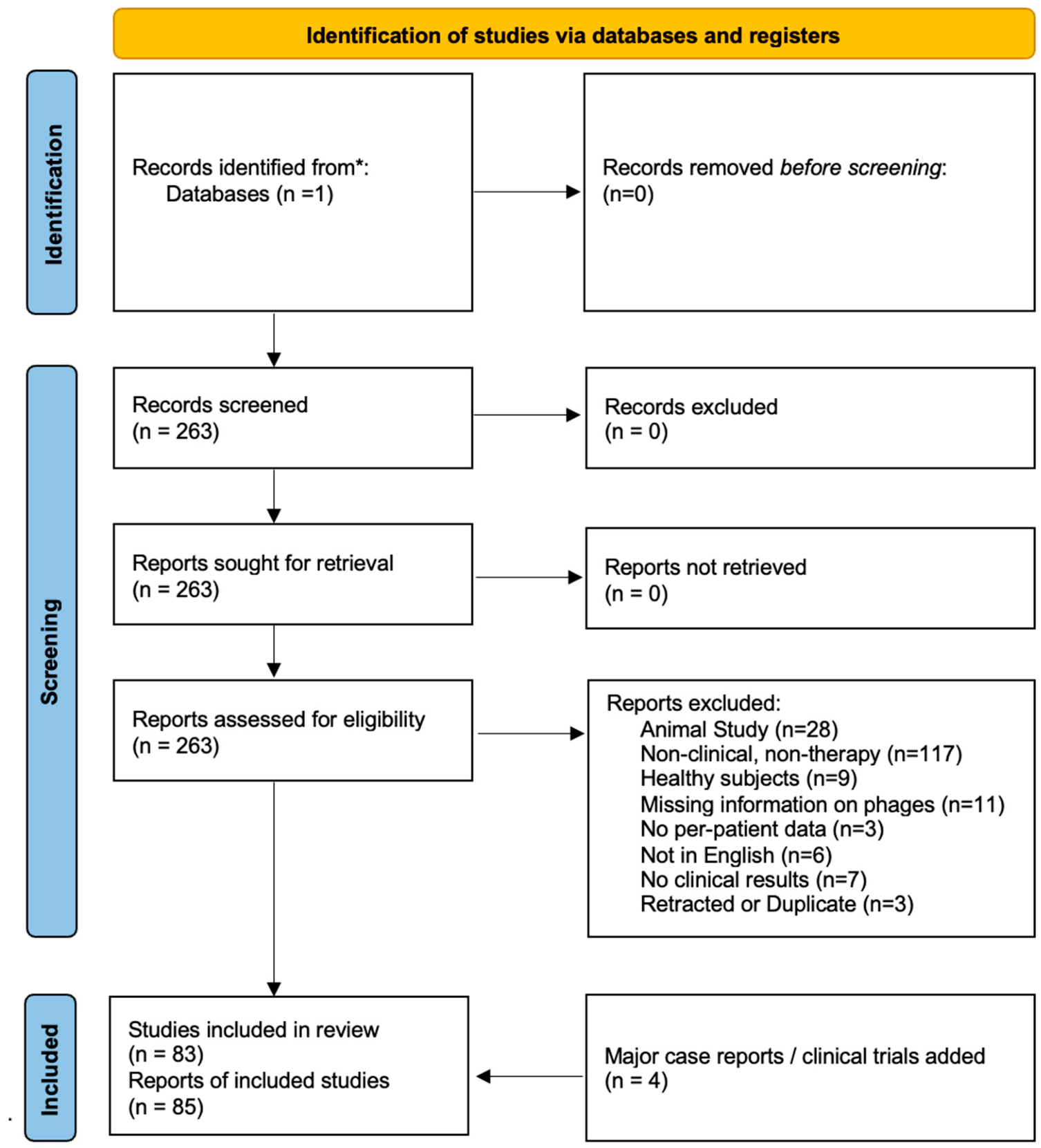
Figure 2.
Data Describing Patient Demographics, Indications, and Pathogens. a) Distribution of patients by sex and age for the 119 patients in this dataset for whom exact age was available.
Figure 2.
Data Describing Patient Demographics, Indications, and Pathogens. a) Distribution of patients by sex and age for the 119 patients in this dataset for whom exact age was available.
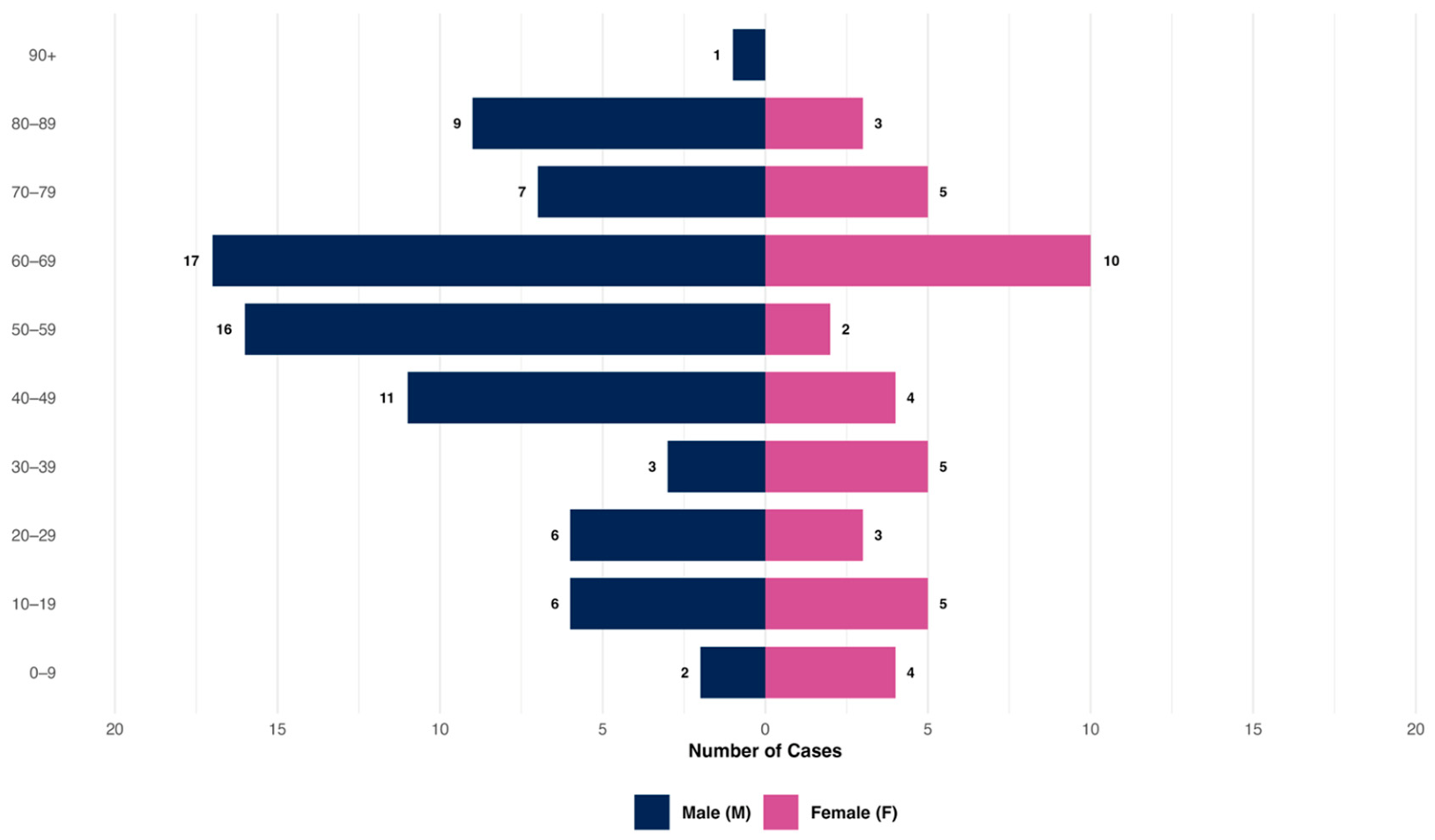
Figure 3.
Graphic comparing the number of patients afflicted with a given bacterial species. On the X-axis, the type of bacterial species. On the y-axis, the count of how many patients were affected by the given bacterial species. Note the total number shown exceeds 323 patients due to polyclonal infections.
Figure 3.
Graphic comparing the number of patients afflicted with a given bacterial species. On the X-axis, the type of bacterial species. On the y-axis, the count of how many patients were affected by the given bacterial species. Note the total number shown exceeds 323 patients due to polyclonal infections.
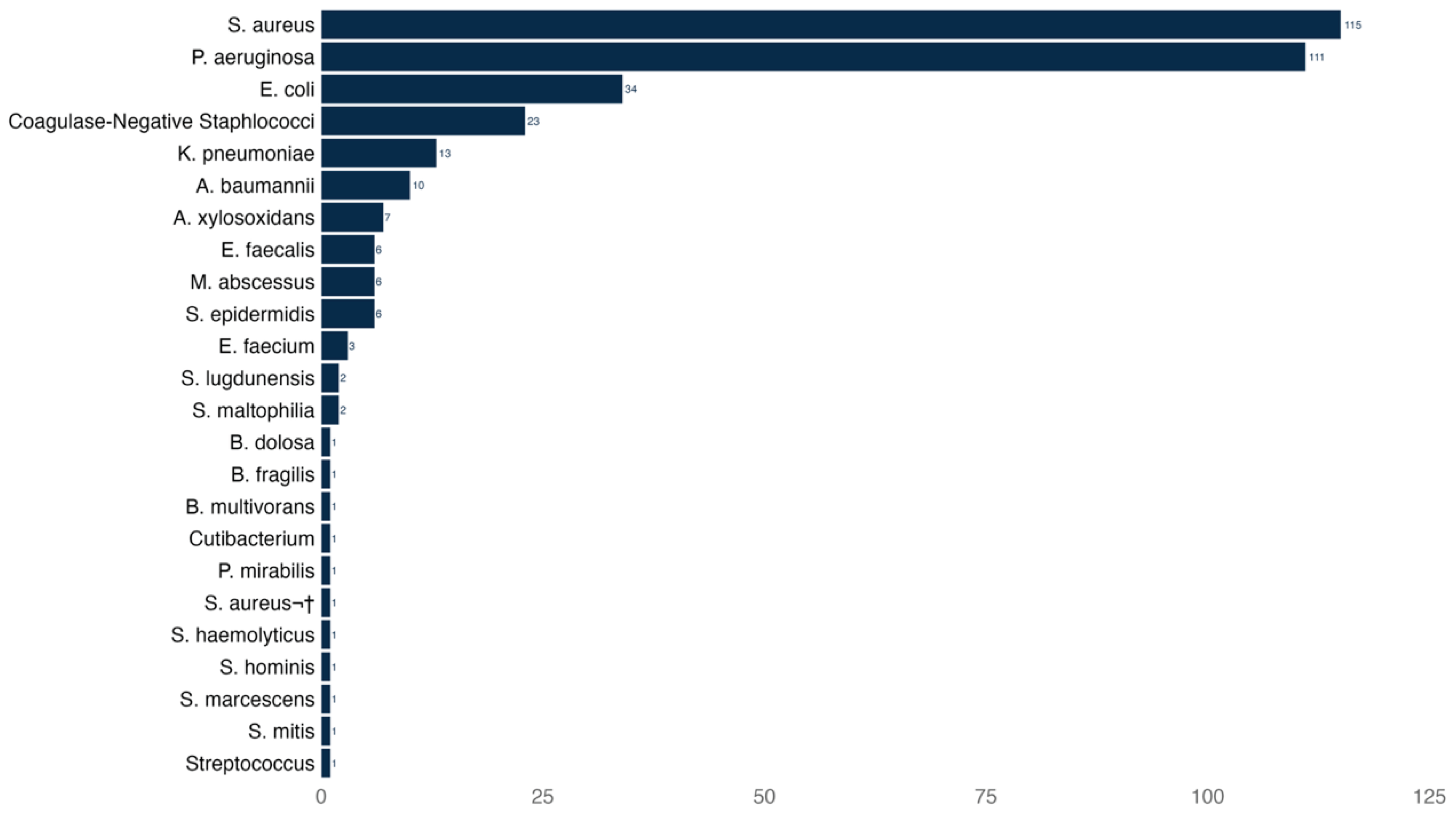
Figure 4.
Distribution of phage route administrations. The total number exceeds the number of patients as some patients received phage via more than 1 route.
Figure 4.
Distribution of phage route administrations. The total number exceeds the number of patients as some patients received phage via more than 1 route.
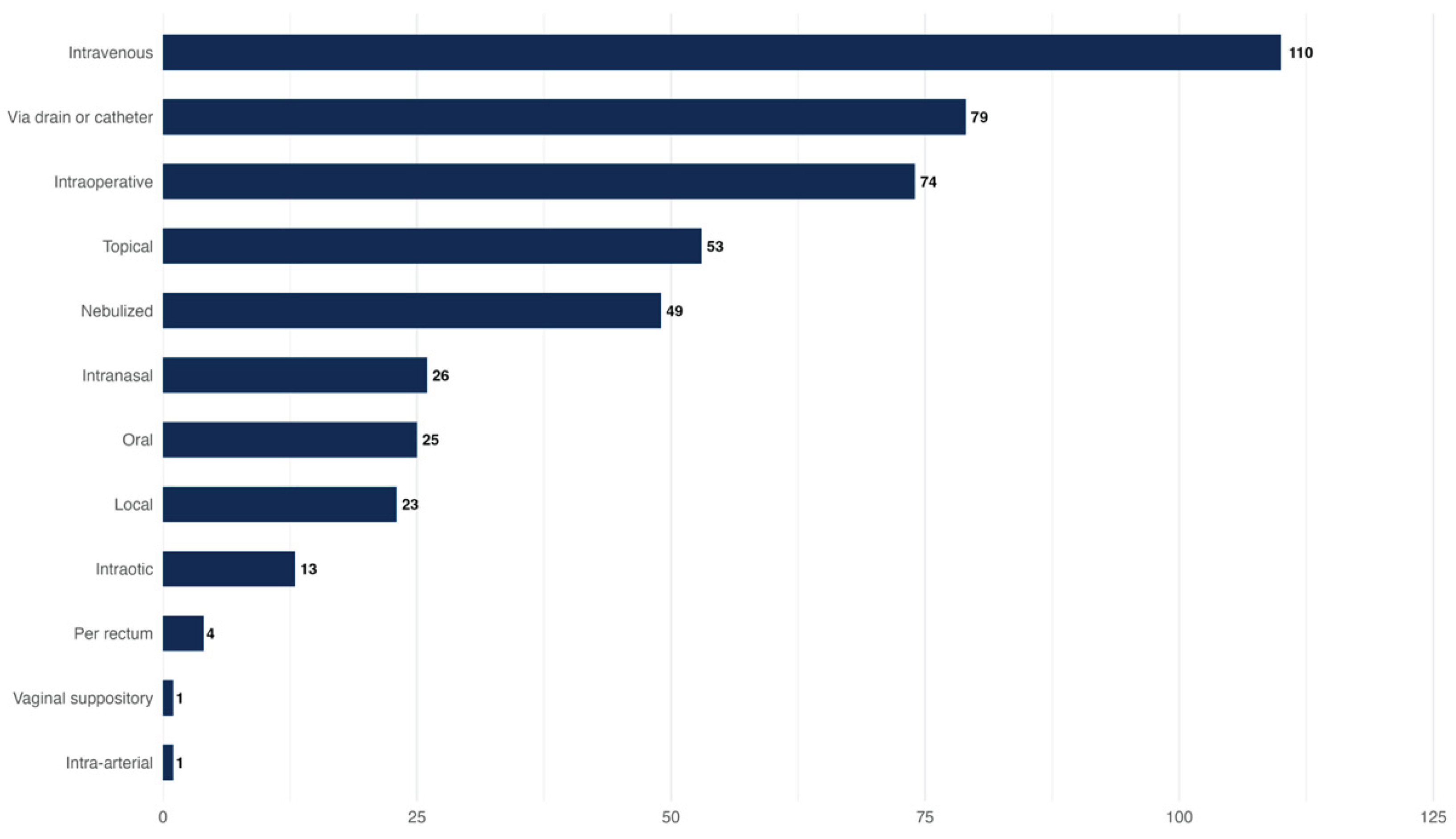
Figure 5.
Description of phage adverse events. A. The number and B. type of adverse events is shown. Overall, 292 of the 323 cases (90%) evaluated here were well-tolerated without adverse events.
Figure 5.
Description of phage adverse events. A. The number and B. type of adverse events is shown. Overall, 292 of the 323 cases (90%) evaluated here were well-tolerated without adverse events.
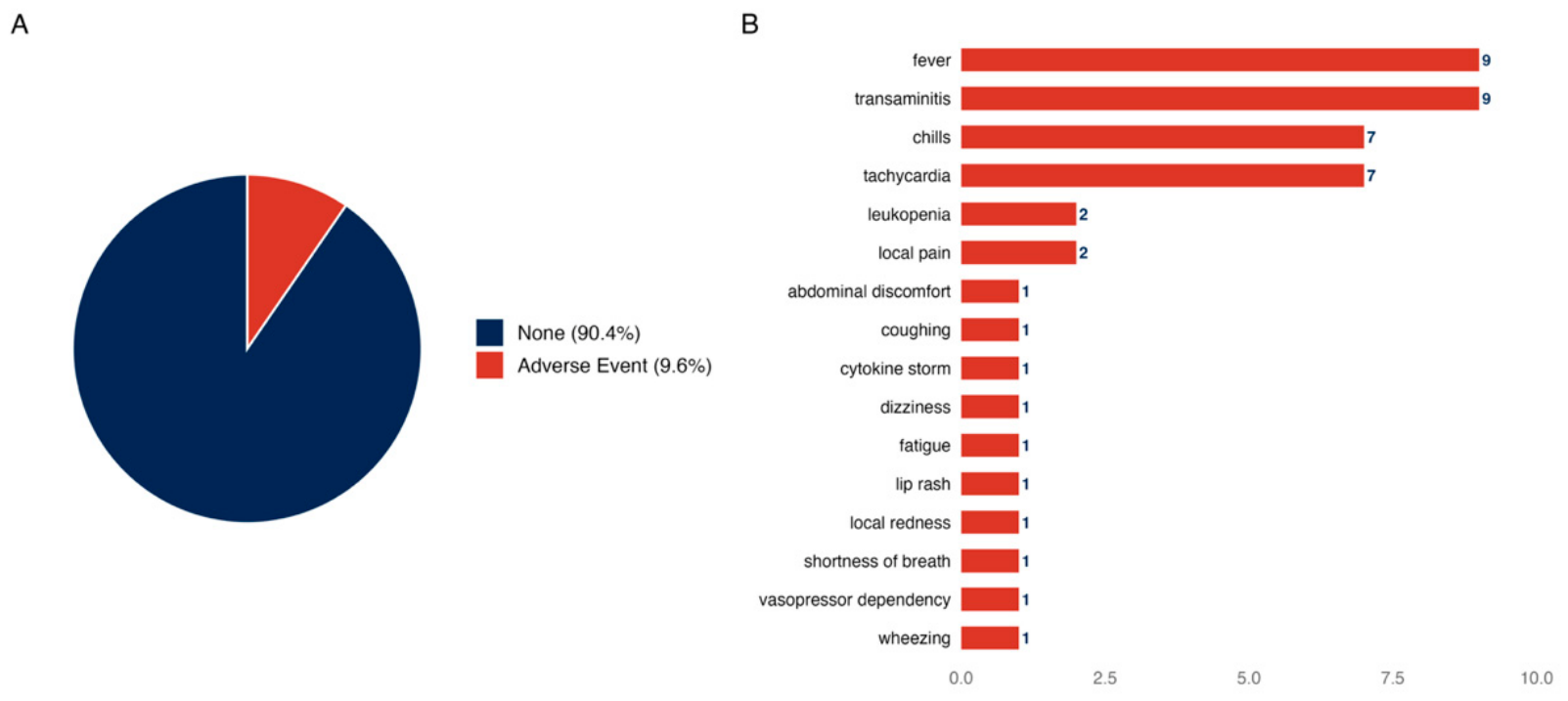
Figure 6.
Bacterial eradication rates following phage therapy grouped by indication. On the X axis the different indications are shown while on the y axis the number of patients for that infectious group are shown. Data are shown for the number of cases successfully eradicated (blue), cases where the infection persisted (red), cases where the outcome was unknown (green), and cases where therapy was withdrawn before an outcome could be determined due to safety signal(gray).
Figure 6.
Bacterial eradication rates following phage therapy grouped by indication. On the X axis the different indications are shown while on the y axis the number of patients for that infectious group are shown. Data are shown for the number of cases successfully eradicated (blue), cases where the infection persisted (red), cases where the outcome was unknown (green), and cases where therapy was withdrawn before an outcome could be determined due to safety signal(gray).
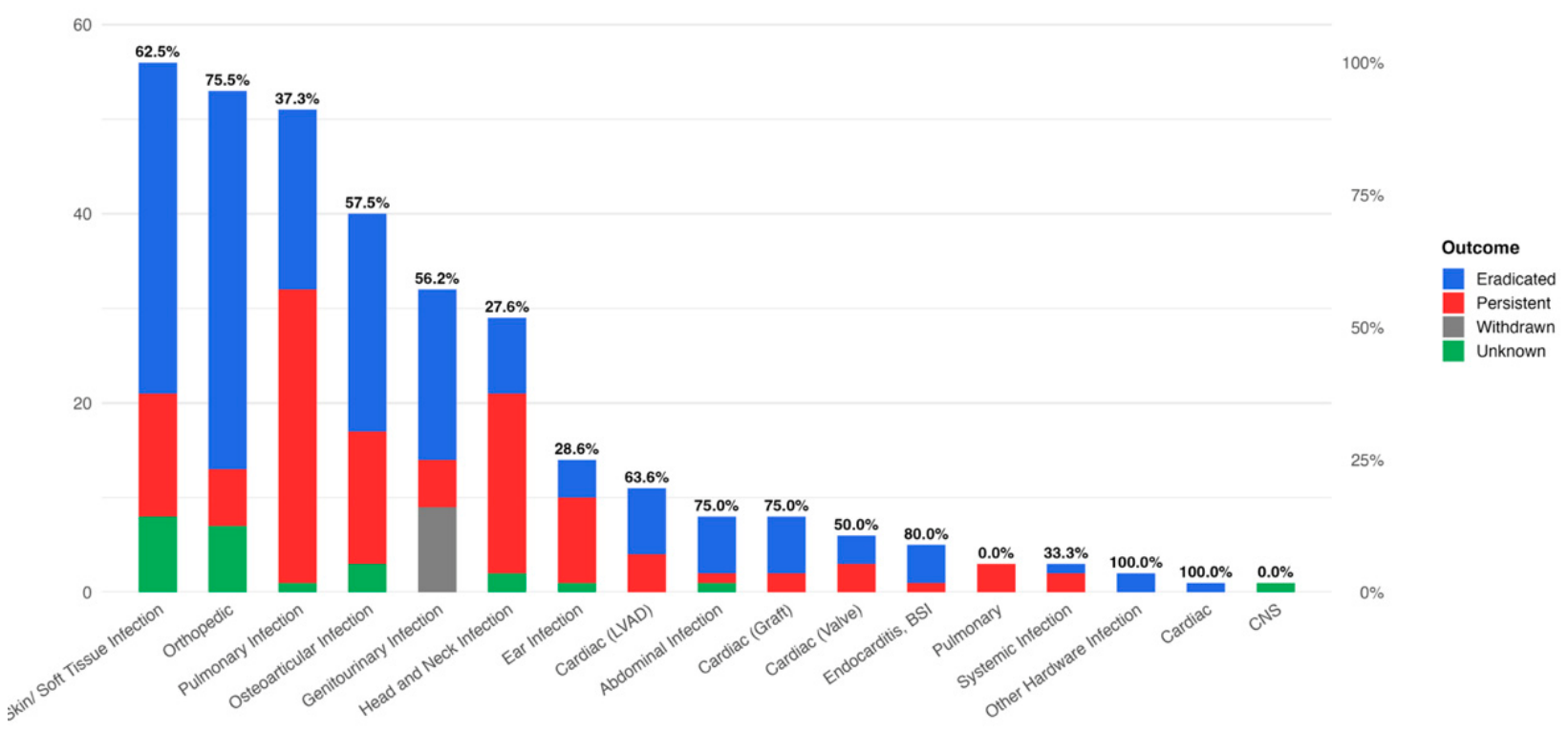
Figure 7.
Graphic comparing the clinical outcomes of patients by the selection criteria for the phage therapy. A: outcome determined by clinical improvement. B: outcome determined by bacterial eradication.
Figure 7.
Graphic comparing the clinical outcomes of patients by the selection criteria for the phage therapy. A: outcome determined by clinical improvement. B: outcome determined by bacterial eradication.
Disclaimer/Publisher’s Note: The statements, opinions and data contained in all publications are solely those of the individual author(s) and contributor(s) and not of MDPI and/or the editor(s). MDPI and/or the editor(s) disclaim responsibility for any injury to people or property resulting from any ideas, methods, instructions or products referred to in the content. |
© 2026 by the authors. Licensee MDPI, Basel, Switzerland. This article is an open access article distributed under the terms and conditions of the Creative Commons Attribution (CC BY) license (http://creativecommons.org/licenses/by/4.0/).
Copyright: This open access article is published under a Creative Commons CC BY 4.0 license, which permit the free download, distribution, and reuse, provided that the author and preprint are cited in any reuse.


