

Submitted:
16 June 2026
Posted:
17 June 2026
You are already at the latest version
Abstract
Background: Hereditary haemorrhagic telangiectasia (HHT) is an autosomal dominant vascular disorder characterised by abnormal angiogenesis resulting from dysregulation of the BMP9/10–ALK1–ENG–SMAD signalling axis. The disease is clinically characterised by recurrent epistaxis, iron-deficiency anaemia, gastrointestinal bleeding and visceral arteriovenous malformations. Increasing knowledge of the molecular mechanisms underlying endothelial dysfunction has led to the development of targeted therapeutic approaches aimed at modulating angiogenic pathways involved in disease progression. Methods: A narrative review with a clinical and translational perspective was performed using publications identified in PubMed/MEDLINE, Scopus, Web of Science and ClinicalTrials.gov from January 2012 to May 2026. Medical Subject Headings (MeSH) and free-text terms related to HHT, angiogenesis, VEGF, FGFR, PI3K/AKT/mTOR, ANGPT2 and currently available or emerging therapies were used. Priority was given to randomised clinical trials, prospective studies, observational cohorts, systematic reviews, meta-analyses, international guidelines and consensus documents. Results: Bevacizumab remains the systemic anti-VEGF therapy with the strongest clinical evidence for severe bleeding, transfusion-dependent anaemia and symptomatic hepatic involvement. Pomalidomide has provided the most robust randomised evidence for the treatment of moderate-to-severe epistaxis and improvement of quality of life. Multikinase inhibitors such as nintedanib and pazopanib, together with tacrolimus, sirolimus and beta-blockers, have expanded the therapeutic landscape, although additional evidence is still required for several of these approaches. More recently, the AKT inhibitor engasertib demonstrated clinically meaningful reductions in epistaxis frequency and severity, providing the first direct clinical validation of AKT as a therapeutic target in HHT. Emerging strategies targeting ANGPT2/Tie2 and other vascular stabilisation pathways may further broaden future treatment options. Conclusions: The therapeutic management of HHT is moving progressively towards a precision medicine model integrating genotype, haemorrhagic phenotype, visceral involvement, angiogenic biomarkers and treatment tolerability. Bevacizumab and pomalidomide currently represent the most established systemic therapies, whereas AKT inhibition has emerged as one of the most promising developments in the field. Future progress will depend on international collaboration, standardised outcome measures, biomarker-guided patient selection and the development of personalised therapeutic strategies.
Keywords:
hereditary haemorrhagic telangiectasia
; angiogenesis
; VEGF
; PI3K/AKT/mTOR
; epistaxis
; vascular malformations
; targeted therapy
; precision medicine
1. Introduction
Hereditary haemorrhagic telangiectasia (HHT), also known as Osler–Weber–Rendu syndrome, is a rare autosomal dominant vascular disorder characterised by the development of mucocutaneous telangiectases and visceral arteriovenous malformations resulting from abnormal angiogenesis and defective vascular remodelling. The disease affects approximately one in 5,000 individuals worldwide, although significant geographical variation exists due to founder effects and regional clustering. [1,2]
From a clinical perspective, HHT is primarily recognised as a chronic haemorrhagic disease. Recurrent epistaxis is the most frequent manifestation and affects the vast majority of adult patients. Over time, repeated bleeding episodes frequently result in iron-deficiency anaemia, impaired quality of life and, in severe cases, transfusion dependence. Gastrointestinal telangiectases become increasingly common with age and contribute substantially to chronic blood loss. In addition, pulmonary, hepatic and cerebral arteriovenous malformations may cause severe complications, including paradoxical embolism, stroke, brain abscess, high-output cardiac failure and intracranial haemorrhage. [1,2,3,4,5,6]
The molecular basis of HHT has been progressively clarified during the last two decades. Most patients carry pathogenic variants in either ENG or ACVRL1, whereas a smaller proportion harbour mutations in SMAD4, frequently associated with juvenile polyposis syndrome. These genetic alterations disrupt signalling through the BMP9/10–ALK1–ENG–SMAD pathway, a key regulator of endothelial quiescence and vascular homeostasis. [1,3,4,5]
The resulting endothelial dysfunction leads to abnormal vascular responses characterised by excessive angiogenesis, defective vessel maturation and impaired recruitment of supporting mural cells. Increasing evidence also suggests that additional somatic mutations may contribute to lesion development through a “second-hit” mechanism, helping to explain the focal distribution of telangiectases and arteriovenous malformations despite the presence of a germline mutation in all cells. [7]
Although supportive measures and local interventions remain fundamental components of patient management, a deeper understanding of the molecular mechanisms underlying HHT has stimulated the development of targeted therapeutic strategies. Several signalling pathways have emerged as potential therapeutic targets, including VEGF-mediated angiogenesis, fibroblast growth factor signalling and intracellular pathways such as PI3K/AKT/mTOR. In parallel, increasing attention has been directed towards vascular stabilisation mechanisms involving ANGPT2/Tie2 signalling and restoration of ALK1-dependent endothelial homeostasis. [3,6,8,9,10,11,12]
At present, no pharmacological therapy has received formal regulatory approval specifically for HHT. Consequently, clinical practice relies largely on drug repurposing and on evidence generated from clinical trials, observational cohorts and translational studies. Nevertheless, the rapid expansion of therapeutic options during the last decade suggests that HHT may soon enter a new era of mechanism-based and increasingly personalised treatment. [1,10,11]
The aim of this review is to provide a comprehensive and clinically oriented overview of current and emerging anti-angiogenic therapies in HHT, with particular emphasis on VEGF inhibition, vascular stabilisation strategies, intracellular signalling pathways and future precision medicine approaches.
2. Methods
This narrative review was conducted according to a predefined literature search strategy aimed at identifying clinically relevant evidence regarding anti-angiogenic and targeted therapies in hereditary haemorrhagic telangiectasia.
Publications were retrieved from PubMed/MEDLINE, Scopus, Web of Science and ClinicalTrials.gov between January 2012 and May 2026. The search combined Medical Subject Headings (MeSH) and free-text terms, including [Hereditary Haemorrhagic Telangiectasia]; [HHT]; [Osler-Weber-Rendu Syndrome]; [Angiogenesis]; [VEGF]; [VEGFR]; [FGF]; [FGFR]; [PDGF]; [PDGFR]; [BMP9]; [BMP10]; [ALK1]; [Endoglin]; [SMAD4]; [PI3K]; [AKT]; [mTOR]; [ANGPT2]; [Tie2]; [Bevacizumab]; [Pazopanib]; [Nintedanib]; [Thalidomide]; [Pomalidomide]; [Tacrolimus]; [Sirolimus]; [Engasertib]; [TER-1754]; [Propranolol]; [Timolol]; [Etamsylate]; [Clinical Trial]; [Systematic Review]; and [Meta-analysis].
Priority was given to randomised controlled trials, prospective studies, observational cohorts, systematic reviews, meta-analyses, international guidelines and expert consensus documents. Preclinical studies were included when they provided mechanistic evidence supporting therapeutic development.
Study selection, critical appraisal of the literature and narrative synthesis were performed by the author.
2.1. Pathophysiological Basis of Therapeutic Targeting in HHT
The development of targeted therapies in hereditary haemorrhagic telangiectasia has been driven by a progressively deeper understanding of the molecular mechanisms responsible for vascular dysplasia. HHT is no longer considered simply a haemorrhagic disorder but rather a disease of abnormal vascular remodelling in which endothelial dysfunction, impaired vessel maturation and excessive angiogenic signalling interact to produce fragile and unstable vascular structures. The identification of these mechanisms has transformed the therapeutic landscape and has opened opportunities for interventions aimed at specific molecular pathways rather than exclusively controlling symptoms. [1,3,6,8]
The central molecular defect in HHT involves disruption of the BMP9/10–ALK1–ENG–SMAD signalling axis. Under physiological conditions, circulating BMP9 and BMP10 bind to ALK1 and endoglin receptors on endothelial cells, activating SMAD-dependent transcriptional programmes that promote vascular quiescence and maintain endothelial stability. Mutations affecting ENG, ACVRL1 or SMAD4 impair this regulatory mechanism, leading to excessive endothelial proliferation, defective recruitment of pericytes and abnormal vascular architecture. [3,4,12]
Experimental evidence has demonstrated that loss of ALK1 signalling results in increased endothelial sensitivity to pro-angiogenic stimuli. As a consequence, pathways involving vascular endothelial growth factor (VEGF), fibroblast growth factors (FGF) and platelet-derived growth factor (PDGF) become relatively overactive, promoting the formation of fragile vascular networks prone to bleeding. [8,12,13,14]
In addition to these extracellular growth factor pathways, intracellular signalling cascades such as PI3K/AKT/mTOR have emerged as important regulators of pathological angiogenesis in HHT. Increased activation of AKT and mTOR has been demonstrated in several experimental models, and pharmacological inhibition of these pathways has been associated with reduced vascular lesion formation and improved vascular stability. [8]
More recently, increasing attention has been directed towards vascular stabilisation pathways involving angiopoietin-2 (ANGPT2) and its receptor Tie2. Elevated ANGPT2 expression has been linked to endothelial instability and may contribute to the development and progression of vascular malformations. Although clinical validation remains limited, these observations have generated considerable interest in ANGPT2/Tie2 as a future therapeutic target. [5,6]
Another important concept is the so-called “second-hit” hypothesis. While germline mutations create a permissive environment for disease development, additional local somatic events appear necessary for the formation of individual telangiectases and arteriovenous malformations. This model helps explain the focal nature of vascular lesions despite the presence of constitutional mutations in all endothelial cells. [7]
Taken together, these discoveries have established a strong biological rationale for therapies targeting VEGF, FGF, PI3K/AKT/mTOR and vascular stabilisation pathways. The progressive transition from empirical treatments towards mechanism-based interventions represents one of the most important advances in the management of HHT during the last decade.
Figure 1 Main Pro-Angiogenic and Anti-Angiogenic Pathways Involved in Hereditary Haemorrhagic Telangiectasia and Localisation of Current Therapeutic Targets. (It is sent separately from the text as an image)
Figure 1.
.
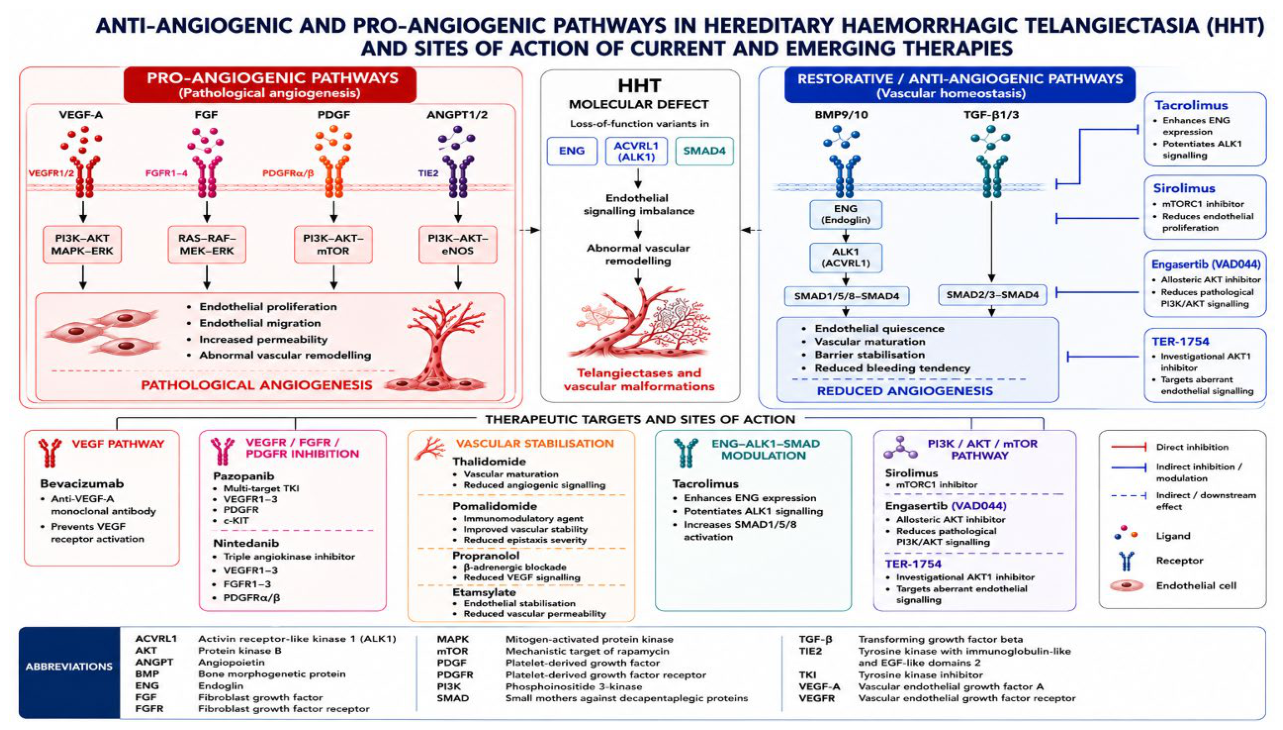

Table 1.
Cronological milestone in HHT.
| Year | Milestone |
|---|---|
| 2012 | Propranolol proposed as anti-angiogenic therapy in HHT (↓HIF-1α/VEGF). [43] |
| 2015 | Phase II thalidomide trial demonstrates reduction in epistaxis and transfusion requirements. [32] |
| 2016 | Consolidation of anti-VEGF therapy and VEGF/VEGFR2 signalling as major therapeutic targets. [9] |
| 2017 | Experimental validation of multikinase inhibitors in HHT models and first clinical report with nintedanib. [29,30] |
| 2019 | Intranasal etamsylate shows reduction in epistaxis severity score. [26] |
| 2020 | International HHT guidelines published; increasing interest in mTOR and VEGFR2 signalling. [2,8] |
| 2021 | Publication of the InHIBIT-Bleed study with intravenous bevacizumab (n=238). [15] |
| 2023 | National randomised trial of intravenous bevacizumab demonstrates haemoglobin improvement. [19] |
| 2024 | EPICURE trial evaluates nintedanib in HHT-related epistaxis. [27] |
| 2024 | PATH-HHT randomised trial establishes pomalidomide efficacy. [33] |
| 2025 | Meta-analysis of systemic bevacizumab and publication of BEST follow-up study. [18,20] |
| 2025 | International consensus on standardised bleeding outcomes in HHT. [49] |
| 2025 | Engasertib phase II trial validates AKT inhibition in HHT. [41] |
| 2026 | PATH-HHT ATLAS confirms sustained pomalidomide benefit and dose optimisation. [34,36] |
Schematic representation of the main signalling pathways involved in the pathophysiology of HHT. Alterations in the BMP9/10–ALK1–ENG–SMAD axis promote secondary activation of VEGF-, FGF- and PDGF-dependent pathways, together with intracellular PI3K/AKT/mTOR signalling. The figure illustrates the site of action of the principal therapies evaluated in HHT, including bevacizumab, pazopanib, nintedanib, thalidomide, pomalidomide, tacrolimus, sirolimus, propranolol, etamsylate, engasertib and TER-1754. Emerging pathways involving ANGPT2/Tie2 and vascular stabilisation mechanisms are also represented. [3,5,6,8,12,13,14,23,24,25,26,27,28,29,30,31,32,33,34,35,36,37,38,39,40,41,42].
2.2. VEGF-Targeted Therapies
Among all molecular pathways implicated in HHT, VEGF signalling has received the greatest therapeutic attention. VEGF plays a central role in endothelial proliferation, migration and vascular permeability, and increased VEGF activity has been documented in patients with HHT as well as in experimental models of the disease. [5,9]
The observation that abnormal VEGF signalling contributes to pathological angiogenesis provided the rationale for the use of anti-VEGF therapies in HHT. Over the last fifteen years, VEGF inhibition has evolved from an experimental concept to the most widely accepted systemic pharmacological strategy for severe bleeding manifestations. [9,10,11]
Although several anti-VEGF approaches have been investigated, bevacizumab remains the best studied and most widely used therapy in clinical practice. More recently, oral multikinase inhibitors such as pazopanib have expanded therapeutic possibilities by simultaneously targeting VEGF receptors and other angiogenic pathways.
2.3. Bevacizumab
Bevacizumab is a humanised monoclonal antibody directed against VEGF-A. By neutralising circulating VEGF, the drug reduces endothelial activation, decreases vascular permeability and limits pathological angiogenesis. Since its introduction into oncology, bevacizumab has become the prototype anti-angiogenic therapy and has subsequently been repurposed for several vascular disorders, including HHT. [9]
The strongest evidence supporting bevacizumab in HHT comes from observational cohorts and prospective studies involving patients with severe bleeding, transfusion dependence and symptomatic hepatic vascular malformations. These studies consistently demonstrated improvements in haemoglobin levels, reductions in transfusion requirements and clinically meaningful decreases in epistaxis severity. [15,16,17]
A major milestone was achieved with the publication of the InHIBIT-Bleed study, an international multicentre cohort including 238 patients treated with intravenous bevacizumab. This study showed significant improvements in haemoglobin concentration, reductions in red blood cell transfusion requirements and favourable effects on bleeding-related outcomes. Importantly, benefits were observed across different clinical phenotypes, supporting the broad applicability of systemic VEGF inhibition in severe disease. [15]
Further support was provided by the national multicentre randomised trial conducted by Dupuis-Girod and colleagues. Although the primary endpoint related to transfusion reduction was not fully achieved, the study demonstrated significant improvements in haemoglobin levels and reinforced the clinical value of intravenous bevacizumab in patients with severe HHT-related bleeding. [19]
More recently, the BEST follow-up study confirmed the durability of these benefits during prolonged treatment. Long-term observations suggested that repeated administration could maintain bleeding control and improve anaemia in selected patients, although treatment schedules often required individual adaptation according to clinical response. [20]
A systematic review and meta-analysis published in 2025 further consolidated the evidence base. Across multiple studies, systemic bevacizumab was associated with significant improvements in haemoglobin concentration, epistaxis severity and transfusion burden. These findings confirmed its position as the systemic therapy with the strongest overall evidence in HHT. [18]
The role of intranasal bevacizumab remains less clear. Early studies generated considerable enthusiasm because local administration offered the possibility of targeting nasal telangiectases while avoiding systemic toxicity. However, subsequent clinical trials produced inconsistent results, and the magnitude of benefit appears substantially smaller than that observed with intravenous treatment. Consequently, intranasal bevacizumab has not achieved widespread acceptance as a standard therapeutic option. [21,22]
In current clinical practice, intravenous bevacizumab is generally considered the preferred systemic therapy for patients with severe recurrent bleeding, transfusion-dependent anaemia or symptomatic hepatic vascular malformations. Nevertheless, treatment requires careful monitoring because hypertension, proteinuria, thromboembolic events and impaired wound healing remain important safety considerations. [15,16,17,18,19,20]
2.4. Pazopanib
Pazopanib is an oral multikinase inhibitor targeting VEGFR1, VEGFR2, VEGFR3, PDGFR and c-KIT. Unlike bevacizumab, which selectively neutralises VEGF-A, pazopanib simultaneously interferes with several angiogenic pathways involved in endothelial proliferation and vascular remodelling. [23,24,25]
Interest in pazopanib emerged from clinical observations suggesting that some patients with HHT who had failed or incompletely responded to bevacizumab could still experience meaningful clinical improvement with multikinase inhibition. Early case reports described reductions in epistaxis severity and transfusion requirements, raising the possibility that pathways beyond VEGF alone might contribute to disease activity. [23]
Subsequent case series and observational experiences reported favourable effects on both epistaxis and gastrointestinal bleeding. Although patient numbers remained small, these studies suggested that oral administration and broader anti-angiogenic activity could make pazopanib an attractive alternative for selected individuals. [24]
The ongoing PAZ study is expected to provide more robust evidence regarding efficacy, optimal dosing strategies and safety. Until these data become available, the role of pazopanib remains investigational but promising. [25]
The main limitations of pazopanib include hepatotoxicity, hypertension, fatigue and gastrointestinal adverse events. As with other tyrosine kinase inhibitors, careful patient selection and monitoring are required. [23,24,25]
Overall, pazopanib represents one of the most interesting oral anti-angiogenic therapies currently under evaluation in HHT and may eventually become an important option for patients who are unsuitable for, or insufficiently responsive to, bevacizumab.
2.5. FGF Signalling and Multikinase Inhibition
Although VEGF has historically dominated therapeutic development in HHT, increasing evidence suggests that fibroblast growth factor signalling also contributes to pathological angiogenesis. FGF pathways interact closely with VEGF signalling and may compensate for VEGF inhibition, providing a potential explanation for incomplete responses observed in some patients. [14,26,27,28,29,30]
These observations have stimulated interest in therapeutic strategies capable of simultaneously targeting multiple angiogenic pathways. Among these approaches, nintedanib has emerged as the most extensively investigated multikinase inhibitor in HHT.
2.6. Nintedanib
Nintedanib is an oral tyrosine kinase inhibitor that blocks VEGFR, FGFR and PDGFR signalling, thereby targeting several complementary mechanisms involved in pathological angiogenesis. Preclinical studies demonstrated reductions in vascular lesion formation and provided a strong rationale for clinical evaluation in HHT. [29,30]
The EPICURE trial represented the first large randomised controlled study evaluating nintedanib in HHT. Although the trial did not meet its primary endpoint, several secondary outcomes suggested potential clinical benefit, particularly regarding bleeding-related measures. These findings indicate biological activity but also highlight the complexity of defining optimal endpoints in HHT clinical trials. [27]
The ongoing EPISTOP study is expected to clarify the therapeutic role of nintedanib and determine whether specific patient subgroups may derive greater benefit from multikinase inhibition. [28]
The principal adverse effects observed with nintedanib include diarrhoea, nausea, abdominal discomfort and elevations in liver enzymes. While generally manageable, these toxicities may limit long-term treatment in some patients. [27,28]
Despite the negative primary outcome of EPICURE, nintedanib remains one of the most biologically attractive therapies under investigation because of its ability to simultaneously inhibit VEGF-, FGF- and PDGF-mediated angiogenesis. Future studies will determine whether this broader mechanism translates into clinically meaningful advantages over selective VEGF inhibition.
2.7. Anti-Angiogenic Immunomodulatory Agents
The search for therapies capable of improving vascular stability in HHT has led to increasing interest in immunomodulatory drugs with anti-angiogenic properties. Unlike VEGF-targeted therapies, which primarily suppress endothelial proliferation and vascular permeability, these agents appear to promote vessel maturation and stabilisation. This alternative mechanism of action has generated considerable interest because defective vascular maturation is a central pathological feature of HHT. [31]
Among the available agents, thalidomide and pomalidomide have attracted particular attention. Their clinical development has provided some of the most important advances in pharmacological treatment since the introduction of systemic bevacizumab.
2.8. Thalidomide
Thalidomide was the first immunomodulatory drug to demonstrate significant clinical efficacy in HHT. Although originally developed in the 1950s and later withdrawn because of its well-known teratogenic effects, subsequent research revealed potent anti-inflammatory and anti-angiogenic properties that renewed interest in its therapeutic potential. [31,32]
Experimental studies suggested that thalidomide exerts its effects through several complementary mechanisms. These include downregulation of VEGF activity, modulation of inflammatory cytokines such as TNF-α and enhancement of PDGF-B-mediated recruitment of pericytes. Through these actions, thalidomide may promote vascular maturation and improve the structural integrity of abnormal vessels. [31,32]
The landmark phase II trial published by Invernizzi and colleagues in 2015 represented a turning point in the pharmacological management of HHT. In this study, patients with severe recurrent epistaxis experienced significant reductions in bleeding severity, improvements in haemoglobin concentration and decreased transfusion requirements. The magnitude of clinical benefit demonstrated that pharmacological stabilisation of abnormal vasculature could effectively modify bleeding outcomes in HHT. [32]
The study also provided proof of concept that therapeutic efficacy could be achieved through mechanisms extending beyond direct VEGF inhibition. This observation broadened the understanding of HHT pathophysiology and encouraged further exploration of vascular stabilisation strategies. [31,32]
Despite these encouraging results, long-term use of thalidomide remains limited by its toxicity profile. Peripheral neuropathy is the most important adverse effect and may become irreversible if treatment is prolonged. Additional concerns include sedation, constipation, fatigue, thromboembolic complications and teratogenicity. These limitations have prevented widespread adoption despite the drug's proven efficacy. [31,32]
As a consequence, thalidomide is currently reserved for selected situations in which alternative therapies are unavailable, contraindicated or ineffective. Nevertheless, its historical importance remains considerable because it established vascular stabilisation as a valid therapeutic concept in HHT and paved the way for the development of newer and better tolerated immunomodulatory agents. [31]
2.9. Pomalidomide
Pomalidomide is a third-generation immunomodulatory drug developed to retain the beneficial anti-angiogenic and vascular stabilising properties of thalidomide while reducing treatment-related toxicity. It is currently considered one of the most important therapeutic advances in HHT and has generated the strongest randomised evidence available for an oral treatment in this disease. [31,33]
Mechanistically, pomalidomide appears to promote endothelial stabilisation, improve vascular maturation and modulate inflammatory pathways involved in abnormal angiogenesis. Although some aspects of its mechanism remain incompletely understood, experimental data suggest that it may enhance endothelial integrity while reducing pathological vascular remodelling. [31,33]
The pivotal PATH-HHT trial, published in the New England Journal of Medicine in 2024, represented a major milestone in HHT therapeutics. This multicentre, randomised, placebo-controlled study demonstrated significant reductions in epistaxis severity together with meaningful improvements in patient-reported quality of life. Importantly, the study provided robust evidence derived from a rigorous trial design, overcoming many of the limitations associated with previous observational studies. [33]
The PATH-HHT results established pomalidomide as the first oral therapy supported by high-quality randomised evidence in HHT. For many experts, this study represented the strongest therapeutic advance since the introduction of systemic bevacizumab. [33]
Long-term observations have subsequently reinforced these findings. Follow-up analyses from PATH-HHT and the PATH-HHT ATLAS programme demonstrated sustained clinical benefit in a substantial proportion of patients. These studies also suggested that treatment responses could often be maintained with lower doses than those initially employed, potentially improving long-term tolerability and reducing toxicity. [34,35,36]
The safety profile of pomalidomide is generally more favourable than that of thalidomide, particularly regarding neurological toxicity. Nevertheless, adverse effects remain important and include neutropenia, fatigue, thromboembolic risk and treatment costs. Careful monitoring is therefore required, especially during prolonged therapy. [33,34,35,36]
From a practical perspective, pomalidomide now occupies a unique position within the therapeutic landscape of HHT. It combines oral administration, robust clinical evidence and a mechanism of action distinct from VEGF inhibitors and intracellular signalling inhibitors. As a result, many specialists consider pomalidomide one of the most attractive options for patients with moderate-to-severe epistaxis who require systemic treatment. [31,33,34,35,36]
More broadly, the success of pomalidomide has reinforced the concept that restoration of vascular stability may be as important as suppression of angiogenic signalling. This principle is likely to influence the development of future therapies aimed at correcting endothelial dysfunction rather than simply inhibiting angiogenesis.
2.10. Intracellular Signalling Pathways
The identification of abnormal intracellular signalling has opened a new chapter in the treatment of HHT. While anti-VEGF and immunomodulatory therapies primarily target extracellular pathways, increasing evidence indicates that key intracellular signalling networks also contribute to vascular dysregulation.
Among these pathways, PI3K/AKT/mTOR has emerged as one of the most relevant. Experimental models have demonstrated increased activation of this signalling cascade in endothelial cells affected by HHT-related mutations. Pharmacological inhibition has been associated with reductions in pathological angiogenesis and improvements in vascular architecture. [8]
These observations have provided the rationale for evaluating therapies targeting mTOR and AKT, including tacrolimus, sirolimus, engasertib and the next-generation AKT1 inhibitor TER-1754.
2.11. Tacrolimus
Tacrolimus was initially investigated because of its potential ability to restore signalling through the ALK1–SMAD pathway. Experimental studies suggested that tacrolimus may enhance endothelial responses downstream of ALK1 and partially compensate for defects associated with HHT-related mutations. [37,38,39]
Open-label pilot studies reported reductions in epistaxis severity and improvements in gastrointestinal bleeding in some patients. Although these studies were relatively small, the results suggested that tacrolimus may have disease-modifying potential beyond its conventional immunosuppressive effects. [37,38]
However, a randomised trial evaluating intranasal tacrolimus failed to demonstrate a clear clinical benefit, highlighting the need for further investigation. [39]
2.12. Sirolimus
Sirolimus inhibits mTORC1, a critical downstream component of the PI3K/AKT signalling pathway. Experimental work has shown that mTOR inhibition can correct several pathological abnormalities observed in HHT models, including excessive endothelial proliferation and abnormal vascular remodelling. [8]
Interest in sirolimus has increased because it targets a pathway distinct from VEGF and may therefore provide complementary therapeutic effects. Furthermore, preclinical studies have suggested potential synergy between mTOR inhibition and multikinase inhibitors such as nintedanib. [8]
Clinical evidence remains limited. However, the ongoing phase II pilot study evaluating sirolimus in HHT-related epistaxis is expected to provide important information regarding efficacy and safety. [40]
At present, sirolimus should be considered an experimental therapy with strong biological rationale but insufficient clinical validation.
2.13. Engasertib
Among all emerging therapies currently under investigation in hereditary haemorrhagic telangiectasia (HHT), engasertib has probably generated the greatest scientific and clinical interest because it represents the first direct attempt to therapeutically inhibit AKT signalling in patients with HHT. The relevance of this approach extends beyond the evaluation of a single drug, since it provides the first clinical validation of intracellular PI3K/AKT pathway inhibition as a potentially effective therapeutic strategy in this disease. [8,41]
The rationale for engasertib originated from several experimental observations demonstrating that endothelial cells affected by HHT-associated mutations exhibit abnormal activation of the PI3K/AKT/mTOR signalling cascade. This intracellular pathway regulates multiple endothelial functions, including proliferation, migration, metabolic adaptation, survival and vascular remodelling. Persistent activation of AKT signalling has been associated with excessive endothelial proliferation and defective vascular maturation, both of which are central pathological mechanisms in HHT. [8]
Preclinical studies showed that pharmacological modulation of AKT and mTOR signalling could partially reverse pathological vascular phenotypes in experimental HHT models. These findings suggested that intracellular signalling inhibition might complement, or even in some situations overcome, the limitations of therapies directed exclusively against extracellular angiogenic mediators such as VEGF. [8]
Against this biological background, the phase II randomised placebo-controlled trial evaluating engasertib represented a major milestone in translational vascular medicine. Published in the New England Journal of Medicine in 2025 by Al-Samkari and colleagues, the study provided the first robust clinical evidence that AKT inhibition can significantly reduce bleeding manifestations in HHT. [41]
The trial included patients with clinically significant HHT-related bleeding, particularly recurrent epistaxis. Participants receiving engasertib demonstrated meaningful reductions in epistaxis frequency and duration compared with placebo. Importantly, improvements were observed not only in quantitative bleeding parameters but also in patient-reported outcomes related to disease burden and daily functioning. [41]
One of the most relevant aspects of the study was the consistency of the therapeutic signal across several bleeding-related endpoints. In contrast to some previous HHT trials in which isolated endpoints improved without broader clinical coherence, engasertib showed simultaneous benefit in multiple dimensions of bleeding severity. This observation strengthens the biological plausibility of the results and suggests that AKT inhibition may exert a genuine disease-modifying effect rather than merely producing symptomatic fluctuation. [41]
Another particularly important contribution of the trial was the validation of intracellular signalling as a clinically actionable target. Until recently, most therapeutic strategies in HHT had focused on extracellular mediators such as VEGF or on indirect vascular stabilisation mechanisms. Engasertib demonstrated that targeting intracellular endothelial signalling can also translate into clinically meaningful benefit. This finding substantially broadens the therapeutic framework of HHT and may have implications extending beyond this specific disease. [8,41]
From a mechanistic perspective, AKT inhibition may provide several theoretical advantages. Because AKT acts downstream of multiple angiogenic receptors, including VEGFR and FGFR, its inhibition could potentially suppress pathological signalling originating from several redundant angiogenic pathways simultaneously. This characteristic may become particularly relevant in patients with incomplete responses to VEGF inhibition alone. [8,27,41]
The study also generated interest because the observed clinical benefit appeared relatively rapid. This temporal profile suggests that abnormal endothelial signalling in HHT remains dynamically active even in established disease and may therefore be amenable to pharmacological modulation despite longstanding vascular lesions. [41]
The safety profile of engasertib deserves careful analysis. The most frequently reported adverse events included cutaneous rash and hyperglycaemia, both consistent with the known biological effects of AKT pathway inhibition. Importantly, these adverse events were generally reversible and manageable with appropriate monitoring and dose adjustments. Severe treatment-limiting toxicity appeared relatively uncommon within the duration of the phase II study. [41]
Nevertheless, longer-term safety remains an important unresolved question. Since AKT signalling participates in multiple physiological processes, chronic inhibition could theoretically affect metabolic regulation, immune responses and tissue repair. Consequently, future phase III studies and post-marketing experience will be essential to better define the long-term tolerability profile of this therapeutic strategy. [41]
Another unresolved issue concerns optimal patient selection. It remains unclear whether all HHT genotypes derive similar benefit from AKT inhibition or whether specific molecular or phenotypic subgroups may respond more favourably. Future biomarker-driven studies may help clarify whether AKT activation signatures, circulating angiogenic mediators or genotype-specific characteristics can predict therapeutic response. [4,5,41,49,50]
The publication of the engasertib trial has also stimulated broader interest in intracellular pathway modulation. The development of TER-1754, a selective AKT1 inhibitor currently undergoing early clinical evaluation, reflects growing confidence in AKT signalling as a therapeutic target. [42]
From a broader perspective, engasertib may represent a conceptual turning point in HHT therapeutics. Whereas previous therapeutic advances largely focused on suppressing VEGF-mediated angiogenesis, AKT inhibition introduces the possibility of directly modulating intracellular endothelial dysfunction. This shift may eventually facilitate combination strategies integrating extracellular angiogenic blockade, vascular stabilisation and intracellular pathway modulation. [8,41]
Although confirmation in phase III studies remains necessary, engasertib is already widely regarded as one of the most promising therapeutic developments in HHT during the last decade. If future studies confirm its efficacy and long-term safety, AKT inhibition could become a central component of precision medicine strategies for patients with severe or refractory disease. [41,42]
2.13. TER-1754
TER-1754 is a next-generation selective AKT1 inhibitor currently undergoing early clinical evaluation. Unlike engasertib, which broadly targets AKT signalling, TER-1754 has been designed to selectively inhibit AKT1, potentially improving efficacy while reducing off-target toxicity. [42]
The ongoing phase 1a/1b clinical study represents the first evaluation of this molecule in adults with HHT. At present, no efficacy results have been published. Nevertheless, the initiation of clinical development reflects growing confidence in AKT signalling as a therapeutic target and suggests that intracellular pathway modulation may become a major area of future research. [42]
2.14. Emerging Therapeutic Targets
Despite the considerable advances achieved with anti-VEGF therapies, immunomodulatory agents and intracellular signalling inhibitors, several aspects of HHT pathophysiology remain incompletely addressed by currently available treatments. As a result, increasing attention has focused on emerging therapeutic targets that may provide additional opportunities for disease modification.
Among these, the ANGPT2/Tie2 pathway has attracted particular interest. Angiopoietin-2 is a key regulator of endothelial stability and vascular remodelling. Under physiological conditions, balanced signalling through the Tie2 receptor contributes to vessel maturation and maintenance of vascular integrity. Elevated ANGPT2 levels, however, promote endothelial destabilisation, increased vascular permeability and enhanced susceptibility to pathological angiogenesis. [5,6]
Several translational studies have demonstrated increased ANGPT2 expression in HHT and have suggested a potential contribution to the development of telangiectases and arteriovenous malformations. These observations support the hypothesis that therapeutic modulation of ANGPT2/Tie2 signalling may improve vascular stability and reduce bleeding. [5,6,12]
Similarly, phosphoinositide 3-kinase (PI3K) has emerged as another attractive target. Since PI3K lies upstream of AKT and mTOR, selective inhibition could theoretically provide broader control of pathological angiogenic signalling. Although clinical experience remains limited, preclinical studies have produced encouraging results and justify further investigation. [8]
Combination therapies also represent an important area of future development. Given the complexity of angiogenic signalling, simultaneous modulation of complementary pathways may achieve greater efficacy than single-agent therapy. Examples currently under consideration include combinations of VEGF inhibitors with mTOR inhibitors, AKT inhibitors with vascular stabilisation agents and multikinase inhibitors targeting both VEGF and FGF pathways. [8,27,41]
The challenge for future studies will be to maximise therapeutic efficacy while avoiding excessive toxicity resulting from combined pathway inhibition. Nevertheless, the increasing availability of targeted therapies suggests that combination strategies may eventually become an important component of personalised treatment approaches in HHT.
2.15. Beta-Blockers and Local Anti-Angiogenic Therapies
Although systemic targeted therapies have attracted the greatest attention, several lower-cost and more accessible treatments continue to play an important role in the management of mild-to-moderate disease.
2.16. Propranolol
Propranolol is a non-selective beta-adrenergic antagonist that has demonstrated anti-angiogenic effects through downregulation of HIF-1α and VEGF signalling. Interest in propranolol emerged after its successful use in infantile haemangiomas and subsequent observations suggesting similar mechanisms might be relevant in HHT. [43,44]
Experimental studies demonstrated that propranolol could reduce endothelial proliferation and angiogenic activity. These findings provided the rationale for clinical investigation in patients with recurrent epistaxis. [43]
Subsequent observational studies and retrospective analyses reported reductions in epistaxis frequency and improvements in bleeding control. The largest retrospective study published to date suggested meaningful reductions in bleeding burden in a substantial proportion of treated patients. [45]
Topical propranolol formulations have also been evaluated in randomised clinical trials. Although results have generally been favourable, the magnitude of benefit has varied between studies, and improvements have been more consistent for bleeding frequency than for overall disease severity. [46]
The safety profile of propranolol is well established. Bradycardia, hypotension and fatigue represent the principal adverse effects, although these are generally manageable with appropriate dose adjustment. [43,44,45,46]
Given its low cost, widespread availability and favourable safety profile, propranolol remains an attractive adjunctive option, particularly in patients with mild-to-moderate epistaxis or when access to more complex therapies is limited.
2.17. Timolol
Timolol is another non-selective beta-blocker that has been investigated as a topical treatment for HHT-related epistaxis. The rationale for its use is similar to that of propranolol, although local administration may reduce systemic adverse effects. [47,48]
Randomised controlled trials evaluating intranasal timolol formulations have demonstrated modest improvements in bleeding outcomes. While some patients experienced reductions in epistaxis severity, the benefits were generally transient and less pronounced than those achieved with systemic targeted therapies. [47,48]
Consequently, timolol is currently viewed as an adjunctive treatment rather than a replacement for established systemic approaches. Nevertheless, its favourable tolerability profile may justify use in selected patients with mild disease or as part of a multimodal treatment strategy.
2.17. Etamsylate
Etamsylate, also referred to in some studies as dobesilate, represents a different therapeutic approach in HHT because it is mainly conceived as a local anti-angiogenic treatment. Its interest is based on the modulation of fibroblast growth factor (FGF) signalling, a pathway that may participate in pathological angiogenesis and may also act as a compensatory mechanism when VEGF signalling is inhibited. [14,26]
The biological rationale for etamsylate in HHT is supported by the concept that FGF contributes to endothelial proliferation, vascular remodelling and maintenance of immature vascular structures. Since HHT lesions are characterised by fragile and poorly stabilised vessels, local inhibition of FGF-related signalling may theoretically reduce bleeding from nasal telangiectases without exposing the patient to the systemic toxicity associated with broader anti-angiogenic therapies. [14,26]
Albiñana and colleagues evaluated topically applied etamsylate as a potential orphan drug for HHT-related epistaxis. In this pilot study, intranasal treatment was associated with reductions in epistaxis severity and was generally well tolerated. The results suggested that local modulation of FGF signalling could have clinical relevance, especially in patients with mild or moderate epistaxis or as an adjunct to other measures. [26]
One of the main advantages of etamsylate is its local route of administration. This may be particularly useful in a disease where epistaxis is often the dominant clinical manifestation and where many patients require repeated local interventions over time. A topical treatment with acceptable tolerability could reduce bleeding burden while avoiding some of the risks of systemic VEGF inhibition, immunomodulatory therapy or intracellular pathway blockade. [26]
However, the current level of evidence remains limited. Available data are based on small studies with short follow-up, and there is still insufficient information regarding optimal dosing, duration of treatment, long-term efficacy and comparative effectiveness against other topical or systemic therapies. For these reasons, etamsylate cannot yet be considered an established treatment for HHT-related epistaxis. [26]
From a practical perspective, etamsylate may be considered an experimental or adjunctive local therapy with an interesting biological rationale. Its future role will depend on larger controlled studies able to confirm whether the reduction in epistaxis severity observed in early investigations can be reproduced in broader patient populations. If confirmed, this strategy could become particularly useful for patients with predominantly nasal disease who do not require systemic treatment or in whom systemic therapy is contraindicated. [26]
Overall, etamsylate highlights the importance of local anti-angiogenic approaches in HHT. Although systemic therapies are increasingly important for severe disease, many patients may benefit from treatments directed specifically at the nasal mucosa. In this context, modulation of FGF signalling remains a promising but still insufficiently validated therapeutic strategy. [14,26]
2.18. Precision Medicine and Biomarkers
The growing diversity of therapeutic options has increased the importance of patient selection. It is becoming increasingly clear that HHT should not be considered a single homogeneous disease but rather a spectrum of vascular disorders characterised by distinct genetic, biological and clinical profiles. [3,4,5,11]
Genotype–phenotype correlations provide one of the most promising tools for therapeutic stratification. Patients carrying ENG mutations tend to exhibit a higher prevalence of pulmonary and cerebral vascular malformations, whereas ACVRL1 mutations are more frequently associated with hepatic involvement. Understanding these differences may help guide therapeutic decisions and improve clinical trial design. [3,4]
The identification of circulating biomarkers represents another important area of research. Several studies have reported abnormalities in angiogenic mediators, inflammatory cytokines and endothelial activation markers in patients with HHT. Potential biomarkers include VEGF, ANGPT2, BMP9, inflammatory mediators and markers of endothelial dysfunction. [5,50]
Although none of these biomarkers has yet entered routine clinical practice, future validation studies may allow clinicians to identify patients most likely to benefit from specific therapeutic strategies. Biomarker-guided treatment selection could improve efficacy, reduce unnecessary exposure to adverse effects and facilitate the implementation of precision medicine approaches. [5,49,50]
The publication of the international consensus report on bleeding outcomes in HHT represents a major step forward in this regard. Standardised definitions and outcome measures will improve comparability across studies and facilitate future biomarker validation. [49]
2.19. Current Therapeutic Positioning
The current therapeutic landscape of HHT is considerably broader than it was a decade ago. Nevertheless, important differences remain in the quality of evidence supporting individual treatments.
At present, intravenous bevacizumab remains the preferred systemic therapy for patients with severe bleeding, transfusion-dependent anaemia or symptomatic hepatic vascular malformations. The consistency of evidence across observational studies, randomised trials and meta-analyses supports its position as the most established pharmacological treatment available. [15,16,17,18,19,20]
Pomalidomide has emerged as the most important oral therapy and currently possesses the strongest randomised evidence for the treatment of moderate-to-severe epistaxis. Its favourable balance between efficacy and tolerability makes it an attractive option for long-term management. [33,34,35,36]
Nintedanib and pazopanib represent promising anti-angiogenic strategies, particularly for patients requiring oral treatment. However, additional studies are needed before their precise therapeutic role can be defined. [23,24,25,26,27,28,29,30]
Tacrolimus and sirolimus continue to be considered investigational therapies with strong biological rationale but limited clinical evidence. Their use is therefore generally restricted to specialised centres and research settings. [37,38,39,40]
Engasertib has recently become one of the most exciting developments in the field. The successful phase II trial published in the New England Journal of Medicine has provided the first direct validation of AKT inhibition as a therapeutic strategy in HHT. Although phase III confirmation remains necessary, engasertib may ultimately become one of the most important additions to the therapeutic armamentarium. [41]
Lower-cost therapies such as propranolol, timolol and etamsylate continue to have value, particularly in patients with milder disease or as adjunctive treatments within a comprehensive management strategy. [26,43,44,45,46,47,48]
Table 2.
Therapeutic Positioning, Mechanisms of Action and Level of Evidence of Pharmacological Agents Evaluated in HHT.
Table 2.
Therapeutic Positioning, Mechanisms of Action and Level of Evidence of Pharmacological Agents Evaluated in HHT.
| Agent | Main Molecular Target | Route | Main Evidence | Main Limitations |
|---|---|---|---|---|
| Bevacizumab | VEGF-A | Intravenous; intranasal | InHIBIT-Bleed [15]; randomised trial [19]; BEST [20]; meta-analysis [18] | Hypertension, proteinuria, thrombosis |
| Pazopanib | VEGFR1/2/3, PDGFR-β, c-KIT | Oral | Case reports and series [23,24]; PAZ study [25] | Hepatotoxicity, hypertension |
| Nintedanib | VEGFR, FGFR, PDGFR | Oral | EPICURE trial [27]; EPISTOP study [28] | Gastrointestinal toxicity |
| Thalidomide | VEGF inhibition; vascular stabilisation | Oral | Phase II trial [32]; systematic review [31] | Neuropathy, thrombosis, teratogenicity |
| Pomalidomide | Anti-angiogenic immunomodulation | Oral | PATH-HHT [33]; ATLAS [34,35,36] | Neutropenia, cost |
| Tacrolimus | ALK1/SMAD restoration | Oral; intranasal | Pilot studies [37,38]; TACRO trial [39] | Nephrotoxicity, hypertension |
| Sirolimus | mTORC1 | Oral | Preclinical evidence [8]; pilot study [40] | Limited clinical evidence |
| Engasertib | AKT | Oral | Phase II NEJM trial [41] | Awaiting phase III validation |
| TER-1754 | AKT1 | Oral | Phase 1a/1b study [42] | No efficacy data available |
| Anti-ANGPT2 / PI3K inhibitors | ANGPT2/Tie2; PI3K | Experimental | Translational studies [6,8,12] | No clinical validation |
| Etamsylate / Dobesilate | FGF | Intranasal topical | Pilot study [26] | Small sample size |
| Propranolol | HIF-1α; VEGF | Oral; topical | Retrospective studies [45]; clinical trials [46] | Variable efficacy |
| Timolol | HIF-1α; VEGF | Intranasal topical | Controlled trials [47,48] | Modest benefit |
Table 2 Legend: Summary of the principal pharmacological therapies used or investigated in hereditary haemorrhagic telangiectasia, including their molecular targets, route of administration, available clinical evidence and major limitations. Evidence ranges from preclinical studies and observational cohorts to multicentre randomised controlled trials.
3. Expert Opinion and Future Directions
The therapeutic management of HHT is currently undergoing a profound transformation. Historically, treatment focused primarily on symptom control through local procedures and supportive care. While these approaches remain important, increasing knowledge of disease mechanisms has shifted attention towards targeted interventions capable of modifying the biological processes underlying vascular dysplasia.
Among currently available therapies, bevacizumab and pomalidomide have achieved the strongest level of clinical validation and now occupy central positions in the management of severe bleeding manifestations. Their success demonstrates that pharmacological modulation of angiogenesis can substantially improve patient outcomes. [15,16,17,18,19,20,33,34,35,36]
The emergence of engasertib represents another important milestone. By validating AKT inhibition in a controlled clinical trial, this therapy has expanded the therapeutic framework of HHT beyond extracellular growth factor signalling and highlighted the relevance of intracellular pathways as therapeutic targets. [41]
Future progress will likely depend on three major developments. First, improved understanding of genotype–phenotype relationships may facilitate personalised treatment selection. Second, biomarker-driven approaches may allow more accurate prediction of therapeutic response. Third, rational combinations of complementary therapies may enhance efficacy while preserving acceptable safety profiles. [4,5,8,11,49,50]
Table 3.
Comparative Characteristics of the Main Systemic Targeted Therapies in HHT.
| Drug | Most Plausible Indication | Evidence | Main Adverse Effects | Current Therapeutic Position |
|---|---|---|---|---|
| Bevacizumab | Severe bleeding, transfusion-dependent anaemia, hepatic involvement | High | Hypertension, proteinuria, thrombosis | Reference systemic therapy |
| Pomalidomide | Moderate-to-severe epistaxis | High | Neutropenia, fatigue, thrombotic risk | Preferred oral therapy |
| Engasertib | Recurrent bleeding with intracellular angiogenic activation | Moderate-high | Rash, hyperglycaemia | Promising; phase III pending |
| Nintedanib | Refractory epistaxis | Moderate | Diarrhoea, nausea, liver toxicity | Under investigation |
| Pazopanib | Refractory bleeding | Low-moderate | Hepatotoxicity, hypertension | Investigational |
| Tacrolimus | Selected patients in expert centres | Low-moderate | Nephrotoxicity, hypertension | Experimental |
| Sirolimus | Complex vascular phenotypes | Low | Mucositis, dyslipidaemia | Experimental |
| TER-1754 | Future selective AKT inhibition | Very low | Unknown | Early clinical development |
Table 3 Legend: Comparative overview of the main systemic targeted therapies currently available or under investigation for HHT. Bevacizumab and pomalidomide currently have the strongest clinical support, whereas engasertib represents one of the most promising emerging therapies based on intracellular pathway inhibition.
International collaboration will remain essential because the rarity of HHT limits the feasibility of large single-centre studies. Continued cooperation between specialised centres, patient organisations and research networks such as VASCERN will be crucial for accelerating therapeutic development. [2,11]
4. Conclusions
HHT is a complex vascular disorder characterised by abnormal angiogenesis and endothelial dysfunction involving multiple interconnected signalling pathways. Advances in the understanding of VEGF, FGF and PI3K/AKT/mTOR signalling have transformed the therapeutic landscape and created opportunities for mechanism-based interventions. [1,3,6,8,9,12]
Bevacizumab remains the most established systemic therapy for severe bleeding manifestations and symptomatic hepatic involvement. [15,16,17,18,19,20].Pomalidomide provides the strongest randomised evidence for the treatment of moderate-to-severe epistaxis and represents one of the most important advances in oral therapy. [33,34,35,36].Nintedanib, pazopanib, tacrolimus, sirolimus and emerging vascular stabilisation strategies continue to expand the range of therapeutic options, although further clinical validation is required. [23,24,25,26,27,28,29,30,37,38,39,40].The publication of the engasertib phase II trial has provided the first direct clinical validation of AKT inhibition in HHT and may herald a new generation of intracellular targeted therapies. [41,42].Future therapeutic development should focus on precision medicine approaches integrating genotype, phenotype, angiogenic biomarkers and safety considerations. The combination of personalised treatment strategies and international collaborative research offers the greatest opportunity for improving outcomes in patients with HHT [4,11,49].
Author Contributions
José Luis Patier-de la Peña conceived the review, performed the literature search, critically evaluated the evidence, drafted the manuscript, revised the final version and approved the manuscript for publication.
Funding
No specific funding was received for the preparation of this manuscript.
Data Availability Statement
Not applicable. No new datasets were generated or analysed in this review.
Acknowledgments
The author thanks colleagues involved in the care and research of patients with hereditary haemorrhagic telangiectasia for their continuous contribution to the field.
Conflicts of Interest
The author declares no competing interests.
Ethics Approval and Consent to Participate
Not applicable.
Consent for Publication
Not applicable.
Abbreviations
HHT, hereditary haemorrhagic telangiectasia; VEGF, vascular endothelial growth factor; VEGFR, vascular endothelial growth factor receptor; FGF, fibroblast growth factor; FGFR, fibroblast growth factor receptor; PDGF, platelet-derived growth factor; PDGFR, platelet-derived growth factor receptor; PI3K, phosphoinositide 3-kinase; AKT, protein kinase B; mTOR, mammalian target of rapamycin; ANGPT2, angiopoietin-2; AVM, arteriovenous malformation; ESS, Epistaxis Severity Score.
References
- Kim, A.Y.; Parikh, M.A.; Kobayashi, Y.; Frishman, W.H.; Peterson, S.J. Hereditary hemorrhagic telangiectasia: a review of gene targets and emerging therapies. Cardiol. Rev. 2025. [Google Scholar] [CrossRef] [PubMed]
- Faughnan, M.E.; Mager, J.J.; Hetts, S.W.; Palda, V.A.; Lang-Robertson, K.; Buscarini, E.; et al. Second international guidelines for the diagnosis and management of hereditary hemorrhagic telangiectasia. Ann. Intern Med. 2020, 173, 989–1001. [Google Scholar] [CrossRef] [PubMed]
- Viteri-Noël, A.; González-García, A.; Patier, J.L.; Fabregate, M.; Bara-Ledesma, N.; López-Rodríguez, M.; et al. Hereditary hemorrhagic telangiectasia: genetics, pathophysiology, diagnosis, and management. J. Clin. Med. 2022, 11, 5245. [Google Scholar] [CrossRef] [PubMed]
- Sánchez-Martínez, R.; Iriarte, A.; Mora-Luján, J.M.; et al. Genetic variants and genotype-phenotype correlation in hereditary hemorrhagic telangiectasia: RiHHTa registry. Orphanet J. Rare Dis. 2020, 15, 265. [Google Scholar] [CrossRef] [PubMed]
- Iriarte, A.; Mora-Luján, J.M.; Cerdà, P.; Corbella, X.; Ribas, J.; Castellote, J.; et al. Potential angiogenic biomarkers in hereditary haemorrhagic telangiectasia. Rev. Clin. Esp. 2023, 223, 401–409. [Google Scholar] [CrossRef]
- Żyła, D.; Zych, K.; Krawczyk, M.; Nowakowska, J. Hereditary hemorrhagic telangiectasia — current therapies and future prospects. J. Vasc. Dis. 2025, 4(4), 43. [Google Scholar] [CrossRef]
- Bernabeu, C.; Bayrak-Toydemir, P.; McDonald, J.; Letarte, M. Potential second-hits in hereditary haemorrhagic telangiectasia. J. Clin. Med. 2020, 9, 3571. [Google Scholar] [CrossRef] [PubMed]
- Ruiz, S.; Zhao, H.; Chandakkar, P.; et al. Correcting Smad1/5/8, mTOR, and VEGFR2 treats pathology in hereditary hemorrhagic telangiectasia models. J. Clin. Invest. 2020, 130, 942–957. [Google Scholar] [CrossRef] [PubMed]
- Ferrara, N.; Adamis, A.P. Ten years of anti-vascular endothelial growth factor therapy. Nat. Rev. Drug Discov. 2016, 15, 385–403. [Google Scholar] [CrossRef] [PubMed]
- Taha, A.M.; Fareed, A.; Elewa, M.; et al. Efficacy of bevacizumab in hereditary hemorrhagic telangiectasia: a systematic review and network meta-analysis. Eur. Arch. Otorhinolaryngol. 2025. [Google Scholar] [CrossRef] [PubMed]
- Cerrone, A.; Buscarini, E.; Berté, R.; Alicante, S.; Bertolazzi, S.; Moreschi, O.; et al. Hereditary hemorrhagic telangiectasia: on the brink of a new treatment era? Semin Thromb. Hemost. 2025, 51(1), 91–97. [Google Scholar] [CrossRef] [PubMed]
- Choi, H.; Kim, B.; Kim, Y.; et al. BMP10 functions independently from BMP9 for the development of a proper arteriovenous network. Angiogenesis 2023, 26, 167–186. [Google Scholar] [CrossRef] [PubMed]
- Wilhelm, K.; Happel, K.; Eelen, G.; et al. FOXO1 couples metabolic activity and growth state in the vascular endothelium. Nature 2016, 529, 216–220. [Google Scholar] [CrossRef] [PubMed]
- Botella, L.M.; Albiñana, V.; Ojeda-Fernandez, L.; Recio-Poveda, L.; Bernabéu, C. Research on HHT in Spain. Orphanet J. Rare Dis. 2020, 15, 213. [Google Scholar] [CrossRef]
- Al-Samkari, H.; Kritharis, A.; Rodriguez-Lopez, J.M.; et al. An international, multicenter study of intravenous bevacizumab for bleeding in hereditary hemorrhagic telangiectasia: the InHIBIT-Bleed study. Haematologica 2021, 106, 2161–2169. [Google Scholar] [CrossRef] [PubMed]
- Dupuis-Girod, S.; Shovlin, C.L.; Kjeldsen, A.D.; Botella, L.M.; et al. When and how to use intravenous bevacizumab in hereditary haemorrhagic telangiectasia? Eur. J. Med. Genet. 2022, 65, 104575. [Google Scholar] [CrossRef] [PubMed]
- Al-Samkari, H. Even effective drugs require adequately powered trials: systemic bevacizumab in HHT. J. Intern Med. 2023, 294, 684–686. [Google Scholar] [CrossRef] [PubMed]
- Li, W.; Bai, J.; Symons, A.; Banting, J.; et al. The effect of systemic bevacizumab on epistaxis-related outcomes in hereditary hemorrhagic telangiectasia: a systematic review and meta-analysis. Int. Forum Allergy Rhinol. 2025. [Google Scholar] [CrossRef] [PubMed]
- Dupuis-Girod, S.; Fargeton, A.E.; Grobost, V.; Rivière, S.; Decullier, E.; Hermann, R.; et al. Efficacy and safety of intravenous bevacizumab on severe bleeding associated with hereditary hemorrhagic telangiectasia: a national, randomized multicenter trial. J. Intern Med. 2023, 294, 761–774. [Google Scholar] [CrossRef] [PubMed]
- Dupuis-Girod, S.; Decullier, E.; Rivière, S.; et al. BEST study: one-year descriptive follow-up of bevacizumab treatment in hereditary haemorrhagic telangiectasia post-BABH interventional study. Ther. Adv. Hematol. 2025, 16, 20406207241300828. [Google Scholar] [CrossRef] [PubMed]
- The ELLIPSE Study: A Phase-1 Study Evaluating the Tolerance of Bevacizumab Nasal Spray to Treat Epistaxis in Hereditary Hemorrhagic Telangiectasia. ClinicalTrials.gov Identifier: NCT01507480.
- Vincent, L.; Robard, L.; Creveuil, C.; Babin, E.; Perreard, M.; Humbert, M. Treatment of epistaxis in Osler-Weber-Rendu disease by bevacizumab nasal spray. The EROSB study: determining the effective dose. Eur. Ann. Otorhinolaryngol. Head. Neck Dis. 2025, 142, 67–73. [Google Scholar] [CrossRef] [PubMed]
- Parambil, J.G.; Woodard, T.D.; Koç, O.N. Pazopanib effective for bevacizumab-unresponsive epistaxis in hereditary hemorrhagic telangiectasia. Laryngoscope 2018, 128, 2234–2236. [Google Scholar] [CrossRef] [PubMed]
- Lewandowska, M.D.; Gordon, S.; Betbadal, A.; Shapiro, A.D. Pazopanib in treatment of hereditary hemorrhagic telangiectasia-related epistaxis and gastrointestinal bleeding. J. Thromb. Haemost. 2025, 23, 525–530. [Google Scholar] [CrossRef] [PubMed]
- Effects of Pazopanib on Hereditary Haemorrhagic Telangiectasia Related Epistaxis and Anaemia (PAZ). ClinicalTrials.gov Identifier: NCT03850964.
- Albiñana, V.; Giménez-Gallego, G.; García-Mato, A.; Recio-Poveda, L.; Sánchez-Martín, M.; Bernabéu, C.; et al. Topically applied etamsylate: a new orphan drug for HHT-derived epistaxis (antiangiogenesis through FGF pathway inhibition). TH Open. 2019, 3(3), e230–e243. [Google Scholar] [CrossRef] [PubMed]
- Hermann, R.; Grobost, V.; Le-Guillou, X.; Pitiot, V.; Decullier, E.; Riviere, S.; et al. Effect of oral nintedanib vs placebo on epistaxis in hereditary hemorrhagic telangiectasia: the EPICURE multicenter randomized double-blind trial. Angiogenesis 2024, 28, 9. [Google Scholar] [CrossRef] [PubMed]
- Efficacy of Nintedanib for Treatment of Epistaxis in Hereditary Hemorrhagic Telangiectasia Patients (EPISTOP). ClinicalTrials.gov Identifier: NCT04976036.
- Kovacs-Sipos, E.; Holzmann, D.; Scherer, T.; Soyka, M.B. Nintedanib as a novel treatment option in hereditary haemorrhagic telangiectasia. BMJ Case Rep. 2017, 2017, bcr2017219393. [Google Scholar] [CrossRef] [PubMed]
- Kim, Y.H.; Kim, M.J.; Choe, S.W.; Sprecher, D.; Lee, Y.J.; Poh, S. Selective effects of oral antiangiogenic tyrosine kinase inhibitors on an animal model of hereditary hemorrhagic telangiectasia. J. Thromb. Haemost. 2017, 15, 1095–1102. [Google Scholar] [CrossRef] [PubMed]
- Ugur, M.C.; Baysal, M.; Umit, E.G. The role of thalidomide and its analogs in the treatment of hereditary hemorrhagic telangiectasia: a systematic review. J. Clin. Med. 2024, 13, 5452. [Google Scholar] [CrossRef] [PubMed]
- Invernizzi, R.; Quaglia, F.; Klersy, C.; et al. Efficacy and safety of thalidomide for the treatment of severe recurrent epistaxis in hereditary haemorrhagic telangiectasia. Lancet Haematol. 2015, 2, e465–e473. [Google Scholar] [CrossRef] [PubMed]
- Al-Samkari, H.; Kasthuri, R.S.; Parambil, J.G.; et al. Pomalidomide for epistaxis in hereditary hemorrhagic telangiectasia. N Engl. J. Med. 2024, 391, 1015–1027. [Google Scholar] [CrossRef] [PubMed]
- Zhang, E.; Kasthuri, R.S.; Parambil, J.G.; Prasad, V.; Iyer, V.N.; Whitehead, K.J.; et al. Pomalidomide for hereditary hemorrhagic telangiectasia: After Trial Longitudinal Assessment Study (PATH-HHT ATLAS). Blood Adv. 2026, 10(5), 1799–1809. [Google Scholar] [CrossRef] [PubMed]
- Zhang, E.; et al. Long-term pomalidomide for HHT: follow-up from PATH-HHT. ASH Annual Meeting, 2024. [Google Scholar]
- Pomalidomide for the Treatment of Bleeding in Hereditary Hemorrhagic Telangiectasia (PATH-HHT ATLAS). ClinicalTrials.gov. p. Identifier: NCT07018401.
- Hessels, J.; Kroon, S.; Boerman, S.; Nelissen, R.C.; Grutters, J.C.; Snijder, R.J.; et al. Efficacy and safety of tacrolimus as treatment for bleeding caused by hereditary hemorrhagic telangiectasia: an open-label, pilot study. J. Clin. Med. 2022, 11, 5280. [Google Scholar] [CrossRef] [PubMed]
- Álvarez-Hernández, P.; Patier, J.L.; Marcos, S.; Gómez del Olmo, V.; Lorente-Herraiz, L.; Recio-Poveda, L.; et al. Tacrolimus as a promising drug for epistaxis and gastrointestinal bleeding in HHT. J. Clin. Med. 2023, 12, 7410. [Google Scholar] [CrossRef] [PubMed]
- Dupuis-Girod, S.; Fargeton, A.E.; Grobost, V.; et al. Efficacy and safety of a 0.1% tacrolimus nasal ointment as a treatment for epistaxis in hereditary hemorrhagic telangiectasia: a double-blind, randomized, placebo-controlled, multicenter trial. J. Clin. Med. 2020, 9, 1262. [Google Scholar] [CrossRef] [PubMed]
- Sirolimus for Nosebleeds in HHT: Phase II Pilot Study. ClinicalTrials.gov Identifier: NCT05269849.
- Al-Samkari, H.; Hessels, J.; Riera-Mestre, A.; Dupuis-Girod, S.; Van Zele, T.; Gómez del Olmo, V.; et al. Engasertib versus placebo for bleeding in hereditary hemorrhagic telangiectasia. N Engl. J. Med. 2025, 393(21), 2131–2141. [Google Scholar] [CrossRef] [PubMed]
- Terremoto Biosciences Inc. A phase 1a/1b study of TER-1754 in adults with hereditary hemorrhagic telangiectasia. ClinicalTrials.gov Identifier: NCT07255846.
- Albiñana, V.; Recio-Poveda, L.; Zarrabeitia, R.; Bernabéu, C.; Botella, L.M. Propranolol as antiangiogenic candidate for the therapy of hereditary haemorrhagic telangiectasia. Thromb. Haemost. 2012, 108(1), 41–53. [Google Scholar] [CrossRef] [PubMed]
- Cuesta, A.M.; Gallardo-Vara, E.; Casado-Vela, J. The role of propranolol as a repurposed drug in rare vascular diseases. Int. J. Mol. Sci. 2022, 23, 4217. [Google Scholar] [CrossRef] [PubMed]
- Serra, M.M.; Pagotto, V.; Botella, L.M.; Bernabéu, C. Propranolol reduces epistaxis in hereditary hemorrhagic telangiectasia: a large retrospective study. J. Clin. Med. 2026, 15(1), 372. [Google Scholar] [CrossRef] [PubMed]
- Mei-Zahav, M.; Blau, H.; Bruckheimer, E.; et al. Topical propranolol improves epistaxis control in hereditary hemorrhagic telangiectasia: a randomized double-blind placebo-controlled trial. J. Clin. Med. 2020, 9, 3130. [Google Scholar] [CrossRef] [PubMed]
- Andorfer, K.E.C.; Zeman, F.; Koller, M.; et al. TIMolol nasal spray as a treatment for epistaxis in hereditary hemorrhagic telangiectasia (TIM-HHT): a prospective, randomized, double-blind, controlled, cross-over trial. Pharmaceutics 2022, 14, 2335. [Google Scholar] [CrossRef] [PubMed]
- Peterson, A.M.; Lee, J.J.; Kallogjeri, D.; et al. Efficacy of timolol in a novel intranasal thermosensitive gel for hereditary hemorrhagic telangiectasia-associated epistaxis: a randomized clinical trial. JAMA Otolaryngol. Head. Neck Surg. 2020, 146, 1006–1014. [Google Scholar] [CrossRef] [PubMed]
- Al-Samkari, H.; Kasthuri, R.S.; Mager, H.J.; Zhou, J.Y.; Serra, M.M.; Samuelson-Bannow, B.T.; et al. Standardization of terminology, definitions, and outcome criteria for bleeding in hereditary hemorrhagic telangiectasia: international consensus report. Am. J. Hematol. 2025, 100(10), 1813–1827. [Google Scholar] [CrossRef] [PubMed]
- Villanueva, B.; Figueras, A.; Torres-Iglesias, R.; Muñoz, M.; et al. Evolution of angiogenic and inflammatory biomarkers in patients with hereditary hemorrhagic telangiectasia during treatment with bevacizumab: study protocol. Rev. Clin. Esp. (Barc) Epub. 2025, 225(9), 502370. [Google Scholar] [CrossRef] [PubMed]
Disclaimer/Publisher’s Note: The statements, opinions and data contained in all publications are solely those of the individual author(s) and contributor(s) and not of MDPI and/or the editor(s). MDPI and/or the editor(s) disclaim responsibility for any injury to people or property resulting from any ideas, methods, instructions or products referred to in the content. |
© 2026 by the authors. Licensee MDPI, Basel, Switzerland. This article is an open access article distributed under the terms and conditions of the Creative Commons Attribution (CC BY) license (http://creativecommons.org/licenses/by/4.0/).
Copyright: This open access article is published under a Creative Commons CC BY 4.0 license, which permit the free download, distribution, and reuse, provided that the author and preprint are cited in any reuse.


