

Submitted:
16 June 2026
Posted:
17 June 2026
You are already at the latest version
Abstract
Pasture quality monitoring is essential for optimizing grazing management and reducing the incidence of nutritional and metabolic disorders in ruminants, yet conventional field-based measurements remain labor-intensive and limited in spatial coverage. This review examines how remote sensing (RS) technologies can support pasture-based livestock systems by providing timely, scalable assessments of biomass, botanical composition, and nutritive attributes. Data from multispectral, hyperspectral, Radio Detection and Ranging (RADAR), and Light Detection and Ranging (LiDAR) sensors, acquired via satellite, unmanned aerial vehicle (UAV), and proximal platforms, are combined with machine learning (ML) methods and radiative transfer models to derive pasture biophysical and quality indicators. The reviewed evidence shows that RS reliably estimates pasture biomass and structural traits, while advances in spectral unmixing, data fusion, and artificial intelligence (AI) improve the characterization of heterogeneous swards and support emerging indicators related to forage quality. Integrating these remotely sensed metrics into grassland decision-support frameworks can enhance grazing allocation, inform fertilization and irrigation decisions, and help detect conditions associated with nutritional imbalances. Overall, the synthesis demonstrates that RS particularly when combined with advanced modelling and cloud-based processing offers a robust pathway for improving pasture monitoring and strengthening the nutritional management of ruminants, thereby supporting more sustainable and health-focused grazing systems.
Keywords:
precision animal nutrition
; biomass estimation
; machine learning
; sward heterogeneity
; decision support systems
; precision livestock farming
1. Introduction
Grasslands play a vital role in terrestrial ecosystems, covering a significant portion of the Earth’s land surface. They provide essential forage for grazing animals and offer important ecosystem services such as storing carbon and supporting wildlife habitats, which help reduce the impacts of climate change and protect biodiversity. In well managed livestock systems, pastures remain the main source of feed for animals [1].
In recent decades, the use of pastureland in Europe has declined by about 30%, largely due to the higher efficiency and greater control over feed that indoor confined systems provide. In contrast, when climates are suitable, pasture-based systems can offer both economic and environmental advantages over indoor feeding. However, these systems face challenges because grasslands vary in space and time, making feed availability harder to control. The amount of grazeable herbage in a pasture can fluctuate widely due to selective grazing, the presence of dung patches, and seasonal changes in grass growth. This variability makes it difficult to accurately estimate and manage the feed available to grazing animals [2]. As a result, incorporating precision technologies has become essential for tracking environmental conditions and managing grazing animals more effectively. Precision livestock farming is an emerging, multidisciplinary field that uses advanced technological tools to improve the overall management of farming systems, supporting more informed decisions regarding grazing practices and the land’s ability to sustain livestock [3]. Remote sensing (RS), alongside other technologies, has evolved into a vital tool across agriculture, earth science, and environmental studies, providing valuable information on shifts in land use, changes in climate, and the management of natural resources [4].
Cow–calf operations worldwide largely rely on natural grazing pastures, whose productivity and energy content are strongly influenced by climate. Maintaining optimal grazing intensity throughout the year ensures that forage remains in a young, productive stage, which maximizes both biomass yield and metabolizable energy (ME) availability. This approach not only provides a more consistent and high-quality energy source for the grazing herd but also supports the long-term ecological health and sustainability of the pasture ecosystem [5]. And to make decisions effectively, farmers require information on key biophysical features of pastures. This includes above-ground biomass, canopy cover, plant density, and height to assess pasture quantity, as well as species composition, palatability, digestibility, and nutritional attributes, such as nitrogen (N), crude protein (CP), neutral detergent fiber (NDF), and acid detergent fiber (ADF), to evaluate pasture quality [1]. This information can be crucial when aiming to prevent nutritional and metabolic disorders in grazing ruminants, improving animal health and performance.
According to Wu [6], metabolic disorders on farms often arise when animals experience overlapping nutrient imbalances, whether deficiencies or excesses, which can also make them more vulnerable to bacterial, viral, fungal, or parasitic infections. When normal metabolic processes are disrupted, a range of conditions may appear. Carbohydrate-related imbalances can lead to issues such as ruminal acidosis or bloat, while irregularities in lipid metabolism contribute to problems like bovine fatty liver syndrome, ketosis in high-producing dairy cows, low-fat milk syndrome, and pregnancy toxemia. These disorders pose a significant challenge in cattle production, impacting both animal welfare and farm productivity. Effectively preventing and treating these conditions requires a clear understanding of their causes and management options [7].
Current modeling approaches that utilize satellite observations include parametric, nonparametric, and physically based frameworks. Parametric models—often reliant on vegetation indices—are computationally efficient but may be constrained by factors such as dense canopy structure or soil reflectance effects. In contrast, nonparametric models, including Machine Learning (ML) techniques such as random forest (RF) and support vector regression, offer greater adaptability and improved performance for estimating forage biomass and nutritional attributes. Physically based approaches, such as canopy radiative transfer models, further enhance predictive capability by simulating vegetation processes directly from satellite-derived inputs. These RS methodologies enable near real-time evaluation of rangeland and grassland conditions, facilitating dynamic grazing management decisions, including stocking rate adjustments and forecasts of animal performance. Increasing evidence shows that integrating satellite data with field measurements and mechanistic models can optimize forage allocation, enhance livestock productivity, and advance the long-term sustainability of grazing systems [8].
Based on the existing literature, this review is guided by the hypothesis that the integration of remote sensing technologies with calibrated proximal and animal-based sensors can substantially improve pasture monitoring and decision support systems (DSS), thereby contributing to the prevention of nutritional and metabolic disorders in grazing ruminants (Figure 1). The main objective of this review is to critically synthesize recent advances in remote sensing, sensor technologies, and DSS applied to pasture-based livestock systems, with particular emphasis on pasture quality assessment, sward heterogeneity, and supplementation strategies. In addition, this review aims to identify current limitations and research gaps related to sensor calibration, data integration, and practical implementation, highlighting future research directions to enhance sustainable grazing management and animal health.
To address this hypothesis, this review is structured to progressively connect pasture biophysical attributes with their nutritional implications and the technological pathways available to monitor them. Section 3 defines the key parameters of pasture quantity and quality that underpin nutritional management, while Section 4 critically evaluates how remote and proximal sensing technologies estimate these indicators and where their limitations lie. Section 5 establishes the physiological link between pasture attributes and rumen function, providing the biological basis for understanding how imbalances in dry matter, crude protein and fiber fractions contribute to metabolic disorders, which are examined in Section 6. Section 7 and Section 8 synthesize recent advances in machine learning, IoT architectures and decision-support systems that integrate multi-source sensor data to support grazing decisions. Finally, Section 9 and Section 10 consolidate the main limitations identified in the literature and outline specific research priorities needed to operationalize integrated sensing frameworks capable of improving pasture monitoring and reducing metabolic risks in grazing ruminants.
2. Review Search Methodology
The literature search for this review was conducted using Google Scholar as the primary search engine, complemented by targeted searches in major scientific databases and publishers, including Scopus-indexed journals, NCBI (PubMed Central), ScienceDirect, Elsevier, IEEE Xplore, and MDPI. The search focused on peer-reviewed studies published between 2021 and 2025. This time window was selected because it corresponds to the period in which remote and proximal sensing technologies, UAV-based imaging, and machine-learning applications for pasture monitoring became widely adopted in the scientific literature, ensuring that the review captures the most recent and operationally relevant developments.
Search strings were applied to the title, abstract, and keyword fields, combining terms related to pasture and grassland monitoring with sensing and analytical approaches, such as (“pasture quality” OR “forage quality” OR “grassland monitoring”) AND (“remote sensing” OR “proximal sensing” OR “NDVI” OR “spectroscopy” OR “sensor technologies”), as well as (“precision livestock farming” OR “decision support systems”) AND (“animal nutrition” OR “metabolic disorders”). Minor variations of these strings were used depending on database-specific search rules.
The review process followed an iterative, narrative approach, with searches refined over time and complemented by backward citation tracking from the reference lists of selected articles. “Because this review followed a narrative, topic-focused approach rather than a formal systematic-review protocol, the screening process prioritized conceptual relevance and scientific quality rather than exhaustive record counting.” Articles were included based on their contribution to the themes of sensing technologies, pasture quality assessment, animal nutrition, and decision-support frameworks.
Studies were screened for relevance to the scope of the review, focusing on peer-reviewed articles written in English and published in leading journals within the fields of remote sensing, agronomy, precision agriculture, sensors, and animal science. These included Remote Sensing, Agronomy, Sensors, and Agriculture, all of which are represented in the final reference list.
3. Pasture Availability and Quality Parameters
Pasture quantity, or availability (plant biomass/above-ground biomass, canopy coverage, density, and height [1]) can be assessed using metrics such as dry matter yield (DM) or fodder units [9], being commonly expressed as DM yield per unit area (DM, kg ha⁻¹) [10] but unlike monoculture crops or those grown in rotation, pastures are complex natural ecosystems composed of multiple plant species, each of which may be grazed at different times, making pasture quality a more complex parameter, as it encompasses multiple nutritional variables that determine overall forage value, and is typically evaluated through indicators related to the nutrient content and digestibility of plant material (9). From a sensing perspective, these parameters differ markedly in how detectable they are through remote or proximal technologies. Structural traits such (biomass, height and canopy cover) tend to be more reliably estimated using multispectral indices or radar-derived metrics, whereas chemical traits like CP, NDF or water-soluble carbohydrates (WSC) require sensors with higher spectral resolution. This distinction is essential because it determines which technologies are realistically capable of supporting pasture monitoring on a scale.
But as mentioned above, the principal parameters routinely used for the assessment and reporting of pasture feed quality include CP (or N concentration), fiber fractions—specifically ADF and NDF—together with metabolizable energy (ME), organic matter digestibility (OMD) and WSC [2]. In addition to these core indicators, a broad range of other macro- and micro-nutrient constituents may be determined, depending on the pasture type and the characteristics of the production system [11]. Other parameters include pasture moisture content (PMC), which reflects the nutritional value, fiber content, and water status of the vegetation, respectively, and vegetative vigor, often estimated using the Normalized Difference Vegetation Index (NDVI), which provides a non-destructive indicator of chlorophyll content and overall pasture health [[10], [12] . Although NDVI and similar indices are widely used, their sensitivity to biochemical traits is limited, especially under dense canopies where spectral saturation occurs. This highlights the need for complementary sensing approaches when the goal is to estimate quality-related parameters rather than only structural ones.
In recent research, a novel Pasture Quality Index (PQI) was developed by Adar et., al. [9], to integrate multiple forage nutritional attributes into a single metric and enable large-scale pasture quality assessment. The PQI is calibrated using field measurements of pasture composition and nutritional parameters, which are then linked to spectral information derived from high-resolution RS data. By modeling relationships between pasture quality and vegetation spectral signatures, the PQI can be spatially and temporally predicted using satellite imagery [9]. The development of composite indices such as PQI illustrates a broader trend: individual nutritional parameters are often difficult to estimate in isolation, but their combined spectral expression can be more robustly captured through multivariate or ML models. This reinforces the importance of integrating multiple sensing modalities, a theme further explored in Section 4.
Nevertheless, CP and NDF are still the most widely applied, and the parameters for which RS studies report the greatest variability in predictive accuracy. While biomass estimation often achieves R² values above 0.70, CP and NDF typically show lower and more inconsistent performance, reflecting their biochemical complexity and the influence of phenological stage. This variability underscores the need for sensor fusion and advanced modelling approaches to improve reliability. But considering, in most occasions, that high-quality pastures should have higher CP levels (greater than 20% DM), and lower values of fiber (NDF; approximately 40% of DM) [10], depending on factors such as the breed of the grazing species or production status (dry period/lactation phase), the correct proportion of these two parameters may vary [13].
Table 1 presents a synthesis of the grass and forage quality indicators employed in recent studies for pre-grazing quality assessment.
From a sustainable and economical perspective, increased N utilization efficiency by cattle has a positive correlation not only with grater economical return, but also with decreased N losses to the environment (nitrous oxide, nitrates and ammonia) [20], avoiding atmospheric emissions and contamination of both surface and groundwater [21].
It has already been demonstrated that several animal and dietary factors affect N output [22] [23], but dietary N concentration and intake show greater correlation with N output in manure in dairy cows [21]. In the light of this, 69% of inquired nutritionists in the United States of America reported a lower CP content in their nutritional formulations, in the last 3–5 years [24]. Regarding grass-based systems, it is known that grazing dairy cattle have a less efficient dietary N utilization, which can be mitigated by combining full-time grazing with in-barn supplementation of fresh forage and hay, thereby supporting low-input dairy operations while keeping nitrogen losses at moderate levels [25].
These nutritional dynamics further justify the need for accurate monitoring of CP, NDF and DM through sensing technologies, as small deviations in these parameters can have disproportionate effects on nitrogen use efficiency and metabolic stability. Therefore, understanding which parameters are most critical—and how well each sensing technology can estimate them—provides the analytical foundation for the technological assessment presented in Section 4.
4. Technologies Available for Pasture Monitoring
Effective grassland management relies on the availability of accurate, timely information on pasture status to support informed decision-making. Precise herbage allocation to livestock is a key component of efficient pasture management, as oversupply of pasture can result in biomass losses and a decline in sward quality, whereas insufficient herbage availability restricts animal intake and leads to reduced milk and meat production. This makes regular and reliable assessment of pasture biomass and nutritive quality a fundamental way for maximizing pasture utilization and productivity in grazing-based farming systems [2], enabling an increase of up to 15% in farm profitability [26]. However, the reliability of these assessments depends strongly on the sensing technology used, as different sensors vary widely in their ability to capture structural versus biochemical traits. This means that technology choice directly influences the accuracy of biomass estimation, CP prediction, or NDF assessment, and therefore the quality of grazing decisions.
In recent years, numerous studies have demonstrated the application of emerging technologies and methodologies for the assessment of pasture quality. Among the most successful approaches are those based on vegetation indices (VI), which are derived from measurements of plant reflectance in different spectral regions. These indices can be rapidly obtained over large spatial extents using RS and, to a lesser extent, proximal sensing (PS) technologies, enabling efficient monitoring of pasture conditions and variability [27]. Despite their operational simplicity, VIs such as NDVI tend to saturate at moderate-to-high biomass levels and show limited sensitivity to biochemical traits like CP or NDF. This limitation reinforces the need for complementary sensing approaches, particularly when the objective extends beyond structural assessment to include nutritional quality.
RS encompasses all sensing techniques that operate at distances greater than two meters above ground level [28]. This category includes methodologies based on unmanned aerial vehicles (UAVs), manned aircraft, and satellite platforms. Over the past decade, research on the application of RS for predicting grass yield and quality has expanded substantially, driven by its capacity to monitor large areas with minimal labor input [2]. Satellite-based optical sensors, such as those onboard the Sentinel-2 mission, are widely used to monitor grassland canopy properties and derive vegetation indices based on spectral reflectance [29]. In addition to optical data, synthetic aperture radar (SAR) sensors provide complementary information on pasture structure and height, particularly under cloudy conditions. Optical sensors excel at capturing chlorophyll-related signals and canopy vigor, but they struggle with structural complexity and cloud cover. SAR, by contrast, penetrates clouds and provides structural information, yet its sensitivity to moisture and surface roughness can introduce noise. These complementary strengths explain why multi-sensor fusion (optical + SAR) consistently outperforms single sensor approaches in biomass estimation.
Unmanned aerial vehicles (UAVs) equipped with multispectral or hyperspectral sensors have been extensively applied to estimate fresh and dry biomass, nitrogen content, and quality-related traits of grasslands with high spatial resolution. Airborne Light Detection and Ranging (LiDAR) systems further contribute by accurately characterizing the horizontal and vertical structure of vegetation, while aerial photogrammetry offers an effective alternative for three-dimensional pasture reconstruction and biomass estimation [29]. UAV-based hyperspectral systems are currently the most powerful tools for predicting CP, NDF and other biochemical traits, often achieving higher accuracy than satellite platforms due to their finer spectral and spatial resolution. LiDAR, although blind to chemical composition, provides unmatched structural detail, making it ideal for biomass modelling when combined with spectral data. This highlights a recurring pattern: no single technology captures all relevant pasture attributes, and integrated approaches consistently yield superior results.
A substantial body of work has also focused on machine-mounted sensing systems integrated into harvesting and mowing equipment, including load cells, capacitance-controlled oscillators, mass-flow sensors, pendulum sensors, and forage-throughput sensors. These systems enable continuous, on-the-go measurement of biomass yield, moisture content, and material flow [29]. Machine-mounted sensors offer high accuracy at field scale but lack the spatial coverage of RS. Their greatest value emerges when used for calibration or validation of satellite and UAV models, reducing uncertainty and improving generalizability across heterogeneous swards. Additional proximal approaches include bale-weighing systems combined with GPS for spatial yield mapping, constant weighing methods on windrowers, curved plate sensors on mowing machines, and torque, pressure, or spring-force sensors mounted on windrowing devices and silage choppers.
Beyond machine-mounted systems, handheld and walking-based proximal sensing tools remain widely used for routine pasture assessment at farm level. The rising plate meter (RPM) is one of the most established non-destructive tools for pasture measurement, particularly in temperate grazing systems. The RPM estimates herbage mass based on compressed sward height, which integrates pasture height and density through the interaction between a weighted plate and the sward canopy. While its simplicity and compatibility with decision-support tools have contributed to its widespread adoption, measurement accuracy can be influenced by sward heterogeneity and variation in pasture structure [2]. RPM remains operationally attractive but its accuracy declines in heterogeneous or clumpy swards, making it less reliable in mixed-species pastures. This limitation is particularly relevant in Mediterranean and tropical systems, where structural variability is high.
Capacitance-based probes, such as Grassmaster II, represent an alternative proximal sensing approach for estimating pasture biomass. This technology relies on changes in an electrical signal generated by the surrounding vegetation and has been evaluated under a range of pasture conditions. Studies by Serrano et al. [30]demonstrated that Grassmaster II can provide in-situ estimates of green and dry matter yield, although its performance is strongly affected by pasture and soil moisture conditions, necessitating site-specific or dynamic calibration models. Comparative analyses further indicate that, while operationally useful, the accuracy of capacitance probes is generally lower than that of the RPM, highlighting the importance of calibration and environmental context when applying proximal pasture measurement technologies. Together, RPM and capacitance probes illustrate a broader principle: proximal sensors offer high-frequency, low-cost measurements, but their performance is highly context-dependent. Their greatest value emerges when used to calibrate or validate remote sensing models, reducing bias and improving transferability across sites.
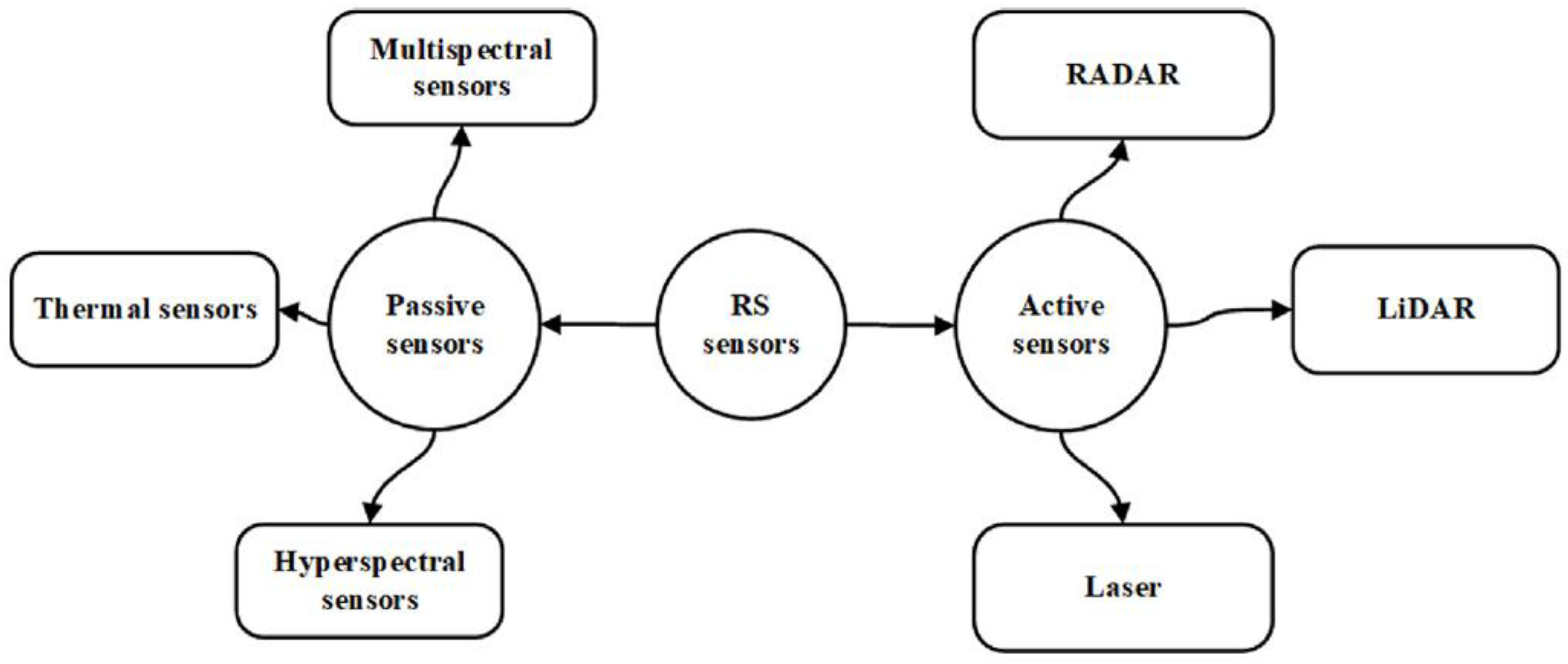
These proximal sensing approaches complement remote sensing methodologies, which are commonly classified according to sensor type as either passive or active systems, encompassing multispectral, hyperspectral, thermal, radar, and LiDAR sensors, as illustrated in Figure 1. Collectively, these proximal sensing technologies provide high-accuracy, operational measurements that complement RS data, enabling comprehensive and scalable pasture monitoring frameworks for improved grassland management and productivity[29].
Figure 2.
The typical classification of RS sensors used in pasture monitoring [1].
Figure 2.
The typical classification of RS sensors used in pasture monitoring [1].
5. Pasture Parameters and Ruminal Activity in Grazing Ruminants
Ruminants possess a specialized digestive system, that besides mechanical and chemical processing, also relies on a symbiotic relationship between the host animal and rumen microorganisms, which enables the efficient conversion of fibrous plant materials into metabolizable nutrients through microbial fermentation [31]. This system comprises multiple specialized anatomical compartments and coordinated physiological processes that enable efficient digestion and nutrient absorption [32] and allows ruminants to utilize pasture resources that are largely inaccessible to non-ruminant species [31]. During the digestion process, saliva provides buffering capacity to maintain rumen pH, and the muscular esophagus enables both forward and reverse movement of ingesta, facilitating regurgitation and rumination. This process allows mechanical breakdown of food, increasing surface area for microbial action [32]. At the core of digestion is ruminal microbial fermentation, where bacteria, protozoa, and fungi break down complex carbohydrates (like cellulose) into volatile fatty acids (VFA), which supply most of the ruminant’s energy. Effective rumination and salivary buffering are essential to optimize this microbial activity, supporting nutrient absorption and overall health [32]. These specialized digestive characteristics (Table 2), however, also make ruminants particularly vulnerable to nutritional, metabolic, and digestive imbalances and disorders when feeding management is poor, emphasizing the need for careful dietary monitoring. From a pasture-monitoring perspective, this means that variations in all parameters that can be estimated to varying degrees by remote and proximal sensing have direct physiological consequences in the rumen. Therefore, the ability to monitor these parameters in real time is not merely agronomic; it is central to maintaining rumen stability.
This leads us to the role that variations in dietary nutritional levels can have on changes in rumen bacterial communities. The roughage source included in the diet can modify both the rumen microbiota and the associated carbohydrate-active enzyme profiles [33], being the nutrient composition of the feeds also correlated with that change [34] Hao et., al demonstrated that the fluctuations in dietary composition in CP, NDF, Ether Extract (EE) and Starch can contribute to 32.49% of ruminal bacteria variation, correlating the rumen bacterial population and microbiota functions with rumen fermentation ability, which makes nutritional management a tool for regulating ruminal population [35]. These findings reinforce the importance of accurately characterizing pasture quality, as shifts in CP, NDF, WSC or DM translate into measurable changes in microbial populations and fermentation dynamics. In practical terms, sensing technologies capable of detecting early deviations in these parameters can serve as indirect indicators of rumen stability or impending dysfunction. For example, low DM and high WSC pastures (common in early vegetative stages) increase the risk of rapid fermentation and pH decline, while high NDF and low CP pastures (typical of mature swards) reduce intake and slow rumen turnover. These dynamics illustrate why pasture phenology is a critical determinant of rumen function and why real-time monitoring of these parameters is essential for anticipating metabolic imbalances.

Table 2.
Characteristics of the reticulo-ruminal environment [36].
Table 2.
Characteristics of the reticulo-ruminal environment [36].
| Variable | Value/comment |
|---|---|
| Temperature | 38–41 °C (slightly warmer than core temperature due to heat of fermentation but at times colder due to cold water and feed inputs) |
| pH | 5.0–7.4 (typically 6.2–7.0); buffered by saliva, and absorption of undissociated acids |
| Anaerobic | –350 mV (Eh) (but with pockets of oxygen inside feed particles and near the ruminal wall where blood oxygen tension is high) |
| Osmolarity | 200–400 mOsm kg-1 |
| Gas phase | CO2 65%, CH4 27%, H2 0.2%, O2 0.6%, N2 7.9% |
| Microenvironments for microbes | Wide substrate range (starches, cellulose, hemicelluloses, pectins, proteins, non-protein nitrogen, lipids, soluble sugars) Microbes attached to plant surfaces, free-floating, attached to reticulo-rumen epithelia, in consortia with other microbes, attached to other microbes, motile microbes follow substrates (e.g., ciliates) Heterogeneous contents (small, medium, large particles, variable chemical composition dorso-ventral and cranio-caudal) |
| Other | Constant substrate mixing Constant removal of end products and gases Rapid removal of oxygen (e.g., in swallowed feeds or diffusing through the rumen epithelium) by facultative anaerobes |
Figure 3.
Growth curve of pastures over the growing season showing the three phases of growth and the changes in feeding value as the plants transition through each phase [36].
Figure 3.
Growth curve of pastures over the growing season showing the three phases of growth and the changes in feeding value as the plants transition through each phase [36].
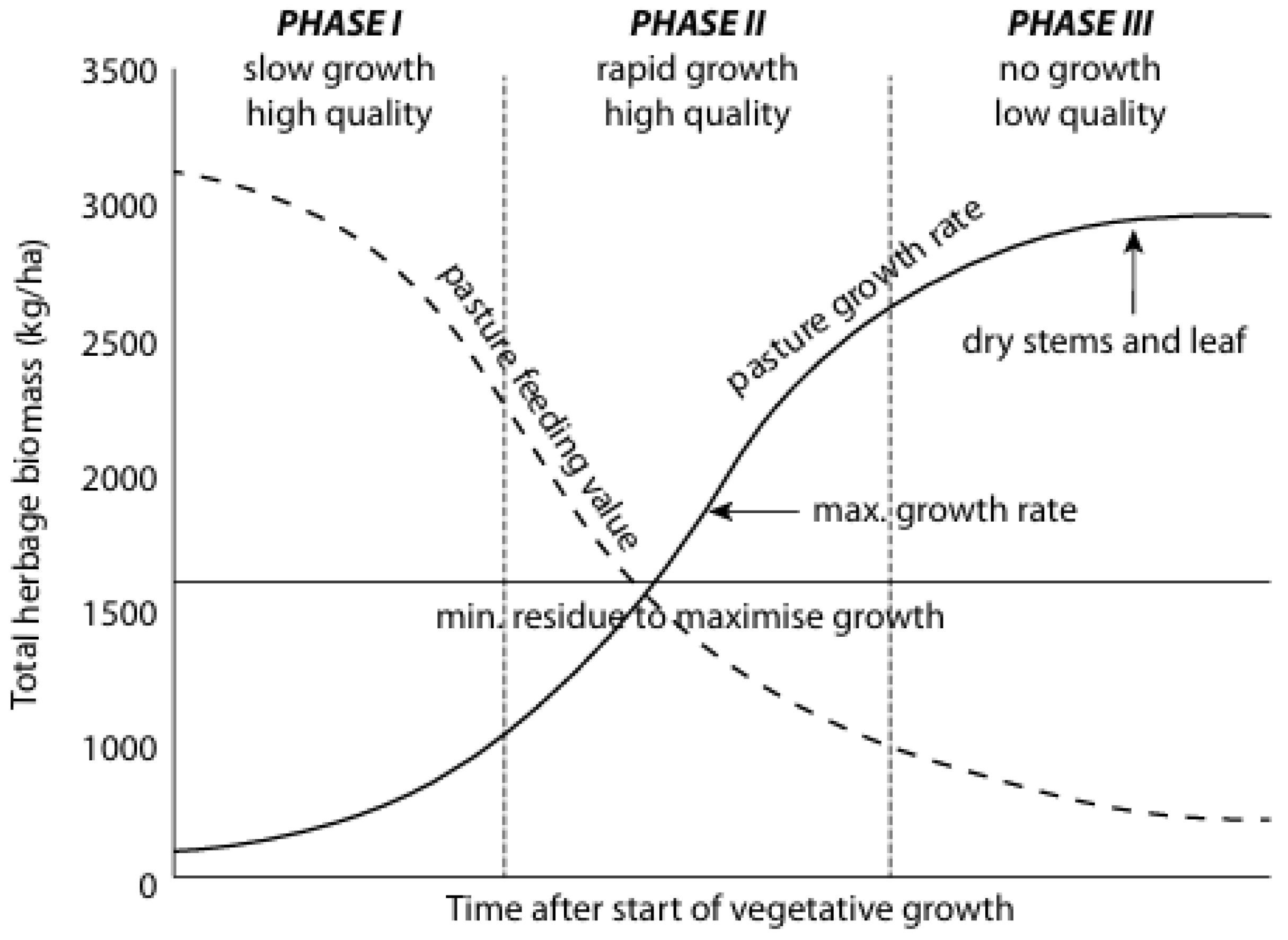
As explained in Figure 2, from a nutritional standpoint, grasslands exhibit considerable variation in both their chemical composition and fermentative properties [37], due to spatial variability of soil and pasture characteristics and the pronounced temporal dynamics of grass species [38]. In addition, other factors such as environment, pasture conditions, stakeholders’ requirements, and herd behavior can also impact the nutrient demands of cattle, and that is when supplementation shows up as a tool for herd performance maintenance and improvement, however, performing the correct supplementation process can be tricky, especially when choosing the correct dosage and characteristics of the supplementation given [39]. Through PA technologies for pasture monitoring, like RS and PS, it is now possible to build supplementation Decision Support Systems (DSS), enabling a more precise nutritional management of ruminants in grasslands, based on real time data, and, as rumen responds rapidly to changes in pasture composition, and many of the parameters that drive these responses are precisely those that remote and proximal sensing technologies can monitor, it is possible understand the mechanistic link between pasture quality sensing and metabolic disorder prevention in grazing ruminants.
6. Nutritional and Metabolic Disorders in Ruminants
Animal metabolism is controlled through a complex interplay of hormonal regulation, redox mediated signaling, protein covalent modifications, dietary inputs, environmental influences, and the intracellular availability of substrates and metabolites. These regulatory mechanisms collectively underpin essential biological functions, including growth, development, immune competence, productivity, overall health, and survival. Through coordinated short- and long-term metabolic adjustments, animals can respond effectively to nutritional, physiological, and environmental challenges, ensuring the integration of biochemical reactions, metabolic pathways, and acid–base regulation required to preserve physiological homeostasis [6]. Sustained disruption of physiological homeostasis can lead to the onset of disease, broadly described as an alteration in normal body structure or function that presents identifiable clinical signs and symptoms. In animal systems, metabolic disorders arise from a wide range of nutritional and metabolic disturbances, including poor dietary quality, insufficient or excessive nutrient intake, and failures in nutrient digestion, absorption, utilization, storage, or retention [6]. From a pasture-monitoring perspective, many of these disturbances originate from shifts in parameters that RS and PS technologies can estimate with varying accuracy. This means that deviations in these pasture attributes can serve as an early indirect indicator of metabolic instability, allowing risk to be detected before clinical signs appear.
Additional contributing factors include nutrient imbalances or antagonistic interactions, elevated nutrient losses, increased metabolic demands driven by physiological or environmental stressors, dysregulation of metabolic control mechanisms, dehydration, and exposure to dietary or environmental toxins. Other deleterious factors in pasture plants encompass a wide range of chemical and physical components that limit the ability of grazing animals to achieve their full productive potential. These include compounds that predispose animals to ruminal bloat, excessive nitrate accumulation that can impair oxygen transport, and naturally occurring plant toxins such as glycosides, alkaloids, and neurotoxins that disrupt normal metabolic and neurological functions. In addition, mycotoxins produced by fungi or endophytic organisms may induce conditions such as facial eczema, photosensitization, and other endophyte-associated disorders. Pasture plants may also contain anti-mineral and anti-vitamin factors that reduce nutrient bioavailability, as well as structural features including high lignin content, tannins, thorns, awns, and burs, which can restrict voluntary feed intake and hinder digestive efficiency [36].
Consequently, metabolic disorders encompass—but are not limited to—nutritional and acquired conditions, even though these are typically the primary focus in animal production practice. While specific nutrient deficiencies or excesses can experimentally induce well-defined syndromes, such as iodine deficiency leading to goiter or excessive calcium intake causing metastatic calcification, field conditions on farms more commonly involve complex interactions among multiple nutrient imbalances [6]. Among the nutrient-related disorders directly linked to pasture conditions, hypomagnesaemia (grass tetany) represents a prominent example where forage quality, soil chemistry, and animal physiology intersect. Grazing cattle are particularly susceptible during periods of rapid pasture growth, when lush grasses contain low magnesium (Mg) and elevated potassium and nitrogen concentrations that depress Mg absorption in the rumen. This imbalance has been identified as a major cause of morbidity and mortality in beef herds grazing improved natural grasslands [40]. Because forage Mg content reflects both plant composition and underlying soil characteristics, the risk of hypomagnesaemia is further amplified on acidic soils where low pH limits grass productivity and reduces plant-available Mg. Improving soil conditions through liming—especially with Mg-rich lime—raises soil pH and increases soil Mg concentrations, thereby enhancing the Mg content of forage and providing an effective preventive strategy against hypomagnesaemia in grazing cattle [41]. Importantly, several of these risk factors correlate with pasture conditions that can be monitored remotely. For example, lush, high-CP, low-fiber swards, common in early spring or legume-rich paddocks, are associated with increased risk of frothy bloat. Conversely, mature, lignified pastures with high NDF and low energy availability predispose animals to negative energy balance and subclinical ketosis. Because these nutritional patterns are linked to phenological stage, canopy structure and spectral signatures, sensing technologies can help identify high-risk conditions without destructive sampling.
With this in mind, the prevention of alimentary metabolic disorders is fundamental to optimizing productivity and economic returns in breeding livestock. In high-producing dairy cows for example, the risk of such disorders can be substantially reduced through the provision of well-balanced diets and the use of high-quality forages that are specifically formulated to meet the animals’ physiological and production requirements [42], which bring us again to the pasture monitoring technologies as a tool for nutritional and metabolic disorders prevention in grazing ruminants.
7. ML, AI and IoT Role in Predictive Models
The incorporation of IoT technologies into agricultural systems is transforming food production, management, and distribution processes. Through the integration of intelligent sensor networks, robust communication frameworks, distributed computing infrastructures, and AI, IoT-enabled smart farming platforms support precise, data-driven monitoring and optimized management of agricultural inputs and resources [43]. In addition, ML approaches have also become increasingly prominent in pasture monitoring applications [1]. This growing adoption is largely driven by the expanding availability of digital data generated on farms through in-field sensors, GPS systems, IoT devices, UAVs, and satellite-based platforms [1]. ML algorithms adaptively learn from experimental datasets, enabling the identification of complex relationships and the derivation of actionable insights [44] extracting meaningful patterns from data, which can be achieved using either supervised or unsupervised learning strategies. Supervised learning techniques—including support vector machines, decision trees, random forests, Naive Bayes regressors, and multi-layer perceptron neural networks—rely on labelled datasets to develop predictive models tailored to specific tasks [1]. For example, Zwick et al. [45] demonstrated that combining machine learning with high-resolution multispectral remote sensing data allows accurate prediction of pasture biomass and key nutrient quality indicators such as crude protein and digestibility in tropical grasslands; their work highlights the strong performance of ensemble learners like Random Forests and meta-learning stacks for supporting data-driven, real-time grassland monitoring and sustainable management decisions.
The integration of these 3 key components (ML, AI and IoT) enables real-time data collection, analysis, and decision-making [46], allowing predictive models development. IoT sensors constitute the backbone of precision agriculture, creating a continuous pipeline that transmits real-time field data to cloud-based platforms for analysis and decision-making [47] trough hardware that include soil sensors (moisture, pH, and electrical conductivity), weather monitoring stations (temperature, humidity, solar radiation, and wind speed) and UAVs (equipped with multispectral and hyperspectral cameras), enabling the collection of detailed information on soil chemistry, microclimate forecasting calculation and NDVI [43]. Integration with RS technologies (such as satellites, aerial imagery, and LiDAR platforms – Figure 4) complements this data collection system by providing broader spatial coverage and temporal frequency, allowing large-scale assessment of crop health, growth patterns, and environmental variability beyond the limits of in-field sensors and UAV flights.
By integrating multiple types of sensors, comprehensive monitoring systems can be established to meet a wide range of agricultural needs. Ensuring efficient data transmission is critical, particularly in areas with limited connectivity, to maintain the reliability of these networks. The incorporation of renewable energy sources further enhances both the sustainability and operational stability of IoT deployments. At the same time, advanced neural network models improve the accuracy of weather forecasts, which are essential for effective agricultural planning. Although these models require substantial computational resources, modern cloud infrastructure enables their practical implementation, allowing real-time analysis and decision-making [47]. In recent work, Tariq et al. [49] proposed an edge-centric framework that enables low-cost, robust, and autonomous decision-making. Their approach demonstrates that actionable context can be achieved by fusing two camera-derived signals—crop identity and weather classification—without introducing additional specialized sensors. Lightweight MiT-B0 vision models operating on low-resolution inputs were shown to run efficiently on resource-constrained edge devices, significantly reducing latency, bandwidth usage, and cloud dependency. System robustness and maintainability were further enhanced using two decoupled vision models, eliminating the need for multi-sensor calibration and allowing independent updates, optimization, or replacement (Figure 5).
Crucially, the framework extends beyond perception by integrating a rule-based agentic AI layer that translates model predictions into real-world actions. This decision engine supports both joint-condition rules and fallback single-condition logic, enabling coordinated actuation across multiple IoT components, including smart irrigation systems, NDVI sensors, frost alarms, drones, and pest detection units. Python-based case studies validated seamless interaction between perception models, decision logic, and IoT actuators under both combined and independent operating scenarios. By minimizing communication overhead, enabling low-power operation, and preserving data privacy through on-device inference, the proposed system demonstrates strong potential for scalable, resilient, and sustainable smart farming [49]
In a different approach, Chourlias et al. [50]demonstrated that ML-based virtual sensors can reliably estimate key environmental variables, such as soil moisture, temperature, humidity, light, and UV radiation, providing a scalable and cost-effective alternative to physical sensors in smart farming. Among the evaluated models, the Light Gradient Boosting Machine achieved the highest accuracy, with prediction errors below 1% in most cases, demonstrating the reliability of virtual sensing (Figure 6). Additionally, the results indicate that, under certain conditions, virtual sensors can be powered solely by open weather data, highlighting the potential for hardware-independent monitoring solutions.
In a recent systematic review, Miller et al. [51] explain the emerging trends in smart agriculture and emphasizes the increasing role of Edge AI, blockchain, and robotic systems in enhancing the efficiency, scalability, and autonomy of agricultural operations. Edge AI enables local data processing and real-time decision-making directly at the sensor or device level, reducing latency and dependence on continuous cloud connectivity. Blockchain technologies are highlighted to ensure secure, transparent, and decentralized management of agricultural data, while robotics supports automated field operations such as precision planting, monitoring, and harvesting. Despite these advances, the review reveals a critical research gap in the calibration and validation of existing and newly developed sensors, which remains essential for ensuring data reliability and consistency. Addressing this gap is fundamental to enabling the development of novel sensing hardware and robust data collection systems capable of delivering high-quality real-time data [51]
8. Decision-Support Frameworks and Management Support Systems
DSS are increasingly being adopted in precision agriculture, particularly for forage and grassland management. A wide range of applications has demonstrated significant benefits across areas such as nutrient management, insect pest control, and livestock production [29] For pasture management, DSS has become essential tools for farms that rely heavily on pasture as a primary feed source. These systems improve pastureland management by optimizing pasture supply, quality, and utilization, which in turn enhances farm profitability. Common DSS tools include the pasture wedge, pasture budget, and spring and autumn rotation planners, which assist farmers in short- to medium-term management decisions. More advanced pasture DSS can incorporate historical pasture growth data to estimate long-term production capacity, supporting strategic choices such as optimal stocking rates and paddock reseeding schedules—factors closely linked to the economic performance of pasture-based operations [52].
Many DSS for pasture monitoring are now available as web-based applications or mobile platforms, enabling farmers to monitor and manage operations remotely. As examples, Ali and Kaul [34] referred to several DSS in their recent review article, including AgroMANAGER®, which supports farm record-keeping and online monitoring, as well as open-source tools in Europe such as MesParcelles® in France, AgrarCommander® in Austria, NMP Online® in Ireland, MarkOnline® in Denmark, and Web Module Düngung® in Germany. Additionally, the European project GrassQ® applies this approach to precision grassland management, integrating proximal sensor measurements and satellite data to provide actionable insights directly through accessible digital platforms[29].
Despite this, and as mentioned above, decision support frameworks and management support systems can be built to incorporate more variables. Asher and Brosh [5], discussed in their study a Herd-Management System, which integrates RS technology with behavioral and location data from GPS-equipped collars on grazing cows. This system continuously collects data on individual cows’ activity (grazing time, resting, walking), herd movement patterns, and spatial position, and analyzes these data to support grazing and herd management decisions [5]. Niloofar et al. [53] proposes a more holistic framework for assessing DSS in livestock farming, focusing on environmental, economic, and social sustainability dimensions [53]. Panda et al. [54] developed a mobile-phone-based automated DSS aimed at improving livestock management for resource-poor farmers, particularly in southern Africa. They focused on optimizing the production of anti-parasitic, tannin-rich forage legumes adapted to local environmental conditions, monitoring animal health through RFID-supported telemetry to detect early signs of disease, and integrated this information into a smartphone application to provide real-time alerts. The DSS also incorporates educational components to train farmers on sustainable worm management and best practices, with the overall goal of enhancing livestock productivity and supporting the economic well-being of farming communities [42].
Reeves et al. [55], developed a system that, by leveraging increased data availability and computational power, enabled the calculation of stocking rate estimates over large areas while simultaneously accounting for both spatial and temporal variations in forage production, capabilities that were not previously available at this scale. This research gave life to the StockSmart® calculator [55].
For Zhang et al. [56] new sensor and computer vision technologies laid a solid foundation for continuous, high-resolution big data collection in animal nutrition and feeding, overcoming the limitations of traditional manual measurements. Wearable, environmental, ingestible, in-line, and bolus sensors enable real-time monitoring of physiological, behavioral, intake, and environmental parameters, while RFID supports individual animal identification and data integration. In parallel, NIR, MIR, and hyperspectral imaging allow rapid, on-site assessment of feed nutrient composition, and computer vision provides non-invasive estimation of feed intake, body weight, body condition, and animal behavior. As indicated in Figure 7, together these approaches can generate detailed and continuous data streams that provide stronger evidence of how animals respond to feed and nutrient supply, despite remaining challenges related to cost, data processing, and system integration [56].
Recent Mediterranean-focused reviews further reinforce the strategic role of remote sensing within broader pasture management and decision-support contexts. Patera et al. [64] highlight how multispectral, hyperspectral, radar, and LiDAR data—combined with machine learning approaches such as Random Forest, Support Vector Machines, and gradient boosting algorithms—are increasingly used to support large-scale monitoring of pasture biomass, vegetation dynamics, and land-use changes. Their synthesis emphasizes that remote sensing outputs can inform adaptive grazing strategies, degradation assessment, and climate-resilient management planning, particularly in heterogeneous Mediterranean rangelands. However, while these frameworks significantly advance landscape-scale monitoring and sustainable pasture management, their integration with animal-level nutritional indicators and metabolic risk assessment remains limited. This gap underscores the importance of coupling remote sensing-based pasture evaluation with animal-centered DSS architectures capable of translating vegetation dynamics into actionable supplementation and health management decisions.
Defalque et al. [57] identify RS, PS, livestock welfare wearables, Walk-Over Weighting (WOW) scales, and climate stations as state-of-the-art technologies for estimating supplementation related parameters. An IoT architecture that integrates these heterogeneous data sources constitutes a key tool for the implementation of a DSS for cattle supplementation. Sensor derived data are systematically organized within the control and storage layer, which comprises a cloud-based database and dedicated services for data storage, management, and retrieval. These integrated datasets are subsequently employed to train ML models for the estimation of pasture quality parameters such as CP, ADF, and total digestible nutrients (TDN) and to support the decision-making process aimed at defining optimal supplementation strategies. Moreover, the decision-making process can be coupled with actuation mechanisms, enabling the automatic configuration of supplementation levels delivered by a Programmable Automatic Feeder (PAF) according to predefined performance targets. Ultimately, this framework allows the dynamic adjustment of supplementation requirements necessary to achieve predefined targets of average daily gain (ADG) in cattle. Figure 8 details the DSS described in this study, illustrating the integrated IoT architecture for cattle supplementation. The figure highlights the flow of data from environmental, pasture, and animal related sensing technologies to the DSS, as well as the resulting supplementation decision making process and its interaction with automatic feeding systems.
Despite all these advances, delineating sward heterogeneity in mixed grasslands remains challenging due to spectral similarities among species and the limitations of remote indices such as NDVI [29]. To overcome these constraints, Ali and Kaul [34] recommend the use of diversity interactions models combined with spectral unmixing approaches and hyperspectral imaging techniques, including super pixel segmentation and multi-level data fusion procedures. They emphasize that sustainable grassland management requires a multifunctional framework capable of balancing ecological, socioeconomic, and policy tradeoffs, including implementation costs and ecosystem service benefits [54]. The integration of digital technologies for data acquisition and augmentation, such as electronic identification systems, RFID, soil and plant sensors, smartphones, high throughput proximal and remote sensing platforms, ML, AI based algorithms, and automatic application controllers, is considered essential for improving grassland monitoring and management across diverse environments [29] improving sustainable farming and reducing metabolic and nutritional disorders in grazing ruminants.
Table 3 consolidates the main sensing technologies used in pasture monitoring and aligns them with the forage attributes each system can estimate, together with the physiological mechanisms through which these attributes influence rumen function and metabolic balance. By structuring the information across proximal sensors, remote platforms, multisensor fusion, and analytical approaches, the table clarifies how different technologies capture complementary aspects of pasture structure, composition, and nutritional value.
Proximal sensors (RPM, Grassmaster®, OptRx) provide high resolution measurements of structural and biochemical attributes that determine digestibility and intake dynamics. Remote sensing platforms (UAV and satellite) extend these assessments to larger spatial scales, capturing canopy structure, biochemical composition, and moisture status with increasing predictive reliability. Multisensor fusion approaches improve trait estimation by combining structural and spectral information, particularly for CP, NDF, and WSC. Finally, ML based and DSM approaches integrate multi temporal and multi sensor data to model pasture quality and metabolic risk more holistically.
From this synthesis, it becomes evident that integrating measurements across scales and sensor types enables earlier detection of shifts in key traits—such as CP, NDF, ADF, WSC, and ME—that precede metabolic instability in grazing ruminants. Because these traits are mechanistically linked to disorders such as hypomagnesemia, SARA, ketosis, and energy deficiency, their continuous monitoring provides actionable indicators for timely management adjustments.
In practical terms, combining proximal, UAV, satellite, and model-based approaches support a more informed and anticipatory grazing strategy, allowing managers to adjust stocking rate, supplementation, and pasture allocation before nutritional imbalances escalate into metabolic disorders. This integrated monitoring framework therefore strengthens preventive management and enhances metabolic resilience in grazing systems.
9. Conclusions
This review synthesizes recent advances in pasture monitoring, precision grassland management, RS, and DSS applications for grazing livestock systems. Recent evidence shows that different sensing modalities vary in their sensitivity to structural, biochemical, and moisture-related traits, and that combining these traits improves the capacity to anticipate nutritional imbalances. The literature consistently also shows that integrating RS with PS, automated data acquisition, improves the understanding of spatial-temporal variability in pasture growth, quality, and utilization, enabling the building of web-based or mobile DSS .These tools support more informed short, medium, and long-term management decisions related to grazing management, stocking rate adjustment, and supplementation strategies, with clear implications for farm productivity and sustainability. The increasing availability of high-resolution data, combined with advances in data processing and modeling capacity, enables decision-making at spatial and temporal scales that were previously unattainable in pasture-based systems. This is particularly relevant because shifts in CP, NDF, WSC, ME and fiber fractions often precede metabolic instability, and their early detection enhances the preventive value of DSS.
The review also highlights the growing convergence between pasture monitoring technologies and animal-based sensing. Wearable sensors, RFID-based identification, and environmental monitoring systems strengthen the link between pasture conditions, animal behavior, and physiological responses. This integration enhances the capacity of DSS to support animal health and nutritional management by moving beyond static indicators toward dynamic, real-time assessments. In this context, DSS increasingly functions as integrative platforms that combine pasture, animal, and environmental data rather than isolated decision tools. This multi-layer perspective aligns with current research showing that metabolic disorders emerge from interacting nutritional drivers rather than single isolated parameters.
A key conclusion is that novel sensor technologies, particularly when calibrated and integrated with remote sensing data, represent a critical opportunity to reduce nutritional and metabolic disorders in grazing ruminants. Improved pasture characterization derived from satellite, UAV, and ground-based sensing, particularly of biomass availability, botanical composition, and nutritional value, supports more accurate supplementation DSS and reduces the risk of energy and protein imbalances. However, the reliability of these outcomes depends strongly on sensor calibration, validation across environments, and integration into user-friendly DSS frameworks. Without robust calibration and contextualization, the practical value of advanced sensing technologies remains limited. The literature consistently indicates that predictive reliability is highest for structural traits such as biomass and canopy height, while biochemical attributes—especially CP, NDF and WSC—show greater variability, reinforcing the need for multi-modal sensing strategies.
10. Future Research
Future research should prioritize the development, calibration, and validation of emerging sensor technologies in combination with remote sensing for pasture and animal monitoring under diverse grazing conditions. Given that different sensing modalities vary in their sensitivity to structural versus biochemical traits, calibration must explicitly account for these differences to avoid systematic bias in DSS inputs. Particular attention is needed for sensors capable of capturing pasture quality parameters relevant to ruminant nutrition—including energy, protein, fiber fractions, and secondary compounds—and for their calibration against satellite- and UAV-derived indicators. Calibrating these sensors across heterogeneous grasslands and mixed swards remains essential to ensure accurate inputs for DSS-based supplementation and grazing management.
Further work is required to strengthen the integration of pasture monitoring with animal health and nutrition indicators within DSS. Linking pasture dynamics derived from remote sensing with real-time animal responses—such as behavior, intake proxies, and physiological status—offers significant potential to anticipate nutritional stress and metabolic disorders before clinical symptoms occur. This requires linking pasture-derived indicators such as CP, NDF, ME and WSC with animal-level proxies of intake, rumen function and energy balance, an area where current evidence remains fragmented. Such integration supports the transition from reactive to preventive management strategies in grazing systems.
Research should also address the scalability and accessibility of DSS, particularly through mobile and web-based platforms. Cost-effective sensor deployment, standardized data protocols, and interoperability among systems are necessary to enable adoption across farms of different sizes and production contexts. In parallel, user-centered design and training components remain critical to ensure that DSS outputs translate into actionable management decisions. Future systems should be capable of integrating heterogeneous data streams—proximal, UAV, satellite, and animal-based—into unified nutritional indicators that are interpretable by farmers.
Finally, future studies should explore the application of advanced analytics, including ML and AI-based models, to improve data fusion, uncertainty handling, and predictive capacity within DSS. Advanced analytics are particularly needed to reconcile discrepancies between structural and biochemical predictions, and to model how combinations of pasture traits contribute to metabolic risk. When combined with calibrated sensors and robust pasture monitoring, these approaches can enhance supplementation strategies, improve animal health outcomes, and contribute to more resilient and sustainable grazing ruminant systems.
Author Contributions
Conceptualization, H.P., R.S., G.D., F.J.M. and J.S.; methodology, H.P. and J.S.; software, H.P.; validation, H.P., R.S., G.D., F.J.M. and J.S.; formal analysis, H.P., R.S., G.D., F.J.M. and J.S.; investigation, H.P. and J.S.; resources, J.S.; data curation, H.P.; writing—original draft preparation, H.P.; writing—review and editing, J.S., G.D., R.S. and F.J.M.; visualization, H.P.; supervision, J.S.; project administration, J.S.; funding acquisition, J.S. All authors have read and agreed to the published version of the manuscript.
Funding
This work was funded by National Funds through FCT (Foundation for Science and Technology) under the Project UIDB/05183/2025.
Data Availability Statement
The original contributions presented in this study are included in the article. Further inquiries can be directed to the corresponding author.
Acknowledgments
This work was supported by MED—Mediterranean Institute for Agriculture, Environment and Development through the projects UIDB/05183/2020 and UIDP/05183/2020 (https://doi.org/10.54499/UIDB/05183/2020; https://doi.org/10.54499/UIDP/05183/2020, accessed on 12 October 2020), and by CHANGE—Global Change and Sustainability Institute through the project LA/P/0121/2020 (https://doi.org/10.54499/LA/P/0121/2020, accessed on 12 October 2020). During the preparation of this manuscript, the authors used ChatGPT (OpenAI) to assist in the generation of the Graphical Abstract and Figure 1. The authors have reviewed and edited the output and take full responsibility for the content of this publication.
Conflicts of Interest
The authors declare no conflicts of interest.
Abbreviations
The following abbreviations are used in this manuscript:
| ADF | Acid Detergent Fiber |
| AI | Artificial Intelligence |
| CNN | Convolutional Neural Network |
| CP | Crude Protein |
| DM | Dry Matter |
| DSS | Decision Support System |
| EE | Ether Extract |
| GPS | Global Positioning System |
| HSI | Hyperspectral Imaging |
| IoT | Internet of Things |
| LAI | Leaf Area Index |
| ME | Metabolizable Energy |
| MIR | Mid-Infrared Spectroscopy |
| ML | Machine Learning |
| NDF | Neutral Detergent Fiber |
| NDVI | Normalized Difference Vegetation Index |
| NIR | Near-Infrared |
| PAN | Precision Animal Nutrition |
| RFID | Radio-Frequency Identification |
| SARA | Subacute Ruminal Acidosis |
| UAV | Unmanned Aerial Vehicle |
| WOW | Walk-Over Weighting |
| WSC | Water-Soluble Carbohydrates |
References
- Shahi, T. B.; Balasubramaniam, T.; Sabir, K.; Nayak, R. Pasture monitoring using remote sensing and machine learning: A review of methods and applications. In Elsevier B.V.; 01 Jan 2025. [Google Scholar] [CrossRef]
- Murphy, D. J.; Murphy, M. D.; O’brien, B.; O’donovan, M. A review of precision technologies for optimising pasture measurement on irish grassland. In MDPI AG; 01 Jul 2021. [Google Scholar] [CrossRef]
- Bernabucci, G.; et al. Precision livestock farming: an overview on the application in extensive systems. In Taylor and Francis Ltd.; 2025. [Google Scholar] [CrossRef]
- Lottering, R.; Peerbhay, K.; Adelabu, S. “Remote Sensing Applications in Agricultural, Earth and Environmental Sciences,” Apr. 01, 2025. In Multidisciplinary Digital Publishing Institute (MDPI). [CrossRef]
- Asher; Brosh, A. Decision Support System (DSS) for Managing a Beef Herd and Its Grazing Habitat’s Sustainability: Biological/Agricultural Basis of the Technology and Its Validation. Agronomy 2022, vol. 12(no. 2). [Google Scholar] [CrossRef]
- Wu, G. Management of metabolic disorders (including metabolic diseases) in ruminant and nonruminant animals. In Animal Agriculture: Sustainability, Challenges and Innovations; Elsevier, 2019; pp. 471–491. [Google Scholar] [CrossRef]
- Kang, D.; et al. Animal health and nutrition: metabolic disorders in cattle and improvement strategies. In Frontiers Media SA; 2025. [Google Scholar] [CrossRef] [PubMed]
- Fernandes, M. H. M. D. R.; Tedeschi, L. O. ASAS-NANP symposium: mathematical modeling in animal nutrition: application of modeling innovations to support satellite remote sensing for sustainable grazing cattle management. In Oxford University Press; 2025. [Google Scholar] [CrossRef] [PubMed]
- Adar, S.; et al. Testing a novel pasture quality index using remote sensing tools in semiarid and Mediterranean grasslands. Agric. Ecosyst. Environ. 2023, vol. 357. [Google Scholar] [CrossRef]
- Serrano, J.; Shahidian, S.; Paixão, L.; Marques da Silva, J.; Paniágua, L. L. Pasture Quality Assessment through NDVI Obtained by Remote Sensing: A Validation Study in the Mediterranean Silvo-Pastoral Ecosystem. Agriculture 2024, vol. 14(no. 8). [Google Scholar] [CrossRef]
- R. R. Pullanagari, A.; et al. Assessment and impact of grass and forage quality Remote sensing of pasture quality; 2013. [Google Scholar]
- Serrano, J.; Shahidian, S.; da Silva, J. M. Evaluation of normalized difference water index as a tool for monitoring pasture seasonal and inter-annual variability in a Mediterranean agro-silvo-pastoral system. Water 2019, vol. 11(no. 1). [Google Scholar] [CrossRef]
- Yang, C. T.; Ferris, C. P.; Yan, T. Effects of dietary crude protein concentration on animal performance and nitrogen utilisation efficiency at different stages of lactation in Holstein-Friesian dairy cows. animal 2022, vol. 16(no. 7), 100562. [Google Scholar] [CrossRef] [PubMed]
- Zhang, M.; et al. Determination of water content in corn stover silage using near-infrared spectroscopy. Int. J. Agric. Biol. Eng. 2019, vol. 12(no. 6), 143–148. [Google Scholar] [CrossRef]
- Cozzolino, D. Use of infrared spectroscopy for in-field measurement and phenotyping of plant properties: Instrumentation, data analysis, and examples. Appl. Spectrosc. Rev. 2014, vol. 49(no. 7), 564–584. [Google Scholar] [CrossRef]
- Castro, P.; Fernández-lorenzo, B.; Valladares, J. ANÁLISIS DE PASTOS MEDIANTE NIRS; Villaviciosa, 2005. [Google Scholar]
- Molano, M. L.; Cortés, M. L.; Ávila, P.; Martens, S. D.; Muñoz, L. S. Ecuaciones de calibración en espectroscopía de reflectancia en el infrarrojo cercano (NIRS) para predicción de parámetros nutritivos en forrajes tropicales. Trop. Grassl.-Forrajes Trop. 2016, vol. 4(no. 3), 139–145. [Google Scholar] [CrossRef]
- Ullmann; Herrmann, A.; Hasler, M.; Taube, F. Influence of the critical phase of stem elongation on yield and forage quality of perennial ryegrass genotypes in the first reproductive growth. Field Crops Res. 2017, vol. 205, 23–33. [Google Scholar] [CrossRef]
- Baath, G. S.; et al. Predicting forage quality of warm-season legumes by near infrared spectroscopy coupled with machine learning techniques. Sensors 2020, vol. 20(no. 3). [Google Scholar] [CrossRef]
- Chen, X.; et al. Modern Holstein-origin dairy cows within grassland-based systems partition more feed nitrogen into milk and excrete less in manure. Sci. Total Environ. 2020, vol. 727, 138561. [Google Scholar] [CrossRef] [PubMed]
- Barros, T.; et al. Effects of dietary crude protein concentration on late-lactation dairy cow performance and indicators of nitrogen utilization. J. Dairy Sci. 2017, vol. 100(no. 7), 5434–5448. [Google Scholar] [CrossRef] [PubMed]
- Kidane; Øverland, M.; Mydland, L. T.; Prestløkken, E. Interaction between feed use efficiency and level of dietary crude protein on enteric methane emission and apparent nitrogen use efficiency with Norwegian Red dairy cows. J. Anim. Sci. 2018, vol. 96(no. 9), 3967–3982. [Google Scholar] [CrossRef] [PubMed]
- Nichols; Dijkstra, J.; van Laar, H.; Pacheco, S.; van Valenberg, H. J.; Bannink, A. Energy and nitrogen partitioning in dairy cows at low or high metabolizable protein levels is affected differently by postrumen glucogenic and lipogenic substrates. J. Dairy Sci. 2019, vol. 102(no. 1), 395–412. [Google Scholar] [CrossRef] [PubMed]
- Prestegaard-Wilson, M.; Daley, V. L.; Drape, T. A.; Hanigan, M. D. A survey of United States dairy cattle nutritionists’ practices and perceptions of reducing crude protein in lactating dairy cow diets. Appl. Anim. Sci. 2021, vol. 37(no. 6), 697–709. [Google Scholar] [CrossRef]
- Perdana-Decker, S.; Velasco, E.; Werner, J.; Dickhoefer, U. Nitrogen excretion and utilisation of dairy cows grazing temperate semi-natural grasslands. animal 2024, vol. 18(no. 12), 101358. [Google Scholar] [CrossRef] [PubMed]
- Beukes, P. C.; McCarthy, S.; Wims, C. M.; Gregorini, P.; Romera, A. J. Regular estimates of herbage mass can improve profitability of pasture-based dairy systems. Anim. Prod. Sci. 2019, vol. 59(no. 2), 359–367. [Google Scholar] [CrossRef]
- Serrano, J.; Mendes, S.; Shahidian, S.; Marques da Silva, J. Pasture Quality Monitoring Based on Proximal and Remote Optical Sensors: A Case Study in the Montado Mediterranean Ecosystem. AgriEngineering 2023, vol. 5(no. 1). [Google Scholar] [CrossRef]
- Viscarra Rossel, R. A.; Adamchuk, V. I.; Sudduth, K. A.; McKenzie, N. J.; Lobsey, C. Proximal Soil Sensing: An Effective Approach for Soil Measurements in Space and Time. Adv. Agron. 2011, vol. 113, 243–291. [Google Scholar] [CrossRef]
- Ali; Kaul, H. P. Monitoring Yield and Quality of Forages and Grassland in the View of Precision Agriculture Applications—A Review. In Multidisciplinary Digital Publishing Institute (MDPI); 01 Jan 2025. [Google Scholar] [CrossRef]
- Serrano, J.; Franco, J.; Shahidian, S.; Moral, F. J. Estimation of Dry Matter Yield in Mediterranean Pastures: Comparative Study between Rising Plate Meter and Grassmaster II Probe. 2024. [Google Scholar] [CrossRef]
- Petrovski, R.; Kirkwood, R. N.; Teixeira Rodrigues de Almeida, S.; Caetano, M. A Proposed Framework for Nutritional Assessment in Compromised Ruminants. Ruminants 2025, vol. 5(no. 4), 57. [Google Scholar] [CrossRef]
- Reddy, B. Sudhakara; Sivajothi, S.; Raghavi, D. Narmada; Karthik, P. Clinical Physiology of Digestive Disorders in Ruminants. In Fundamentals of Veterinary Pathophysiology, 1st ed.; CRC Press: Boca Raton, 2025; p. ch. 11. [Google Scholar] [CrossRef]
- Bohra, V.; Dafale, N. A.; Purohit, H. J. Understanding the alteration in rumen microbiome and CAZymes profile with diet and host through comparative metagenomic approach. Arch. Microbiol. 2019, vol. 201(no. 10), 1385–1397. [Google Scholar] [CrossRef] [PubMed]
- Gruninger, R. J.; Ribeiro, G. O.; Cameron, A.; McAllister, T. A. Invited review: Application of meta-omics to understand the dynamic nature of the rumen microbiome and how it responds to diet in ruminants. In Cambridge University Press; 01 Sep 2019. [Google Scholar] [CrossRef] [PubMed]
- Hao, Y.; et al. Effects of age, diet cp, ndf, ee, and starch on the rumen bacteria community and function in dairy cattle. Microorganisms 2021, vol. 9(no. 8). [Google Scholar] [CrossRef]
- Hynd, P. Animal Nutrition From Theory to Practice, 1st ed.; CSIRO: Clayton South, 2019; vol. 1. [Google Scholar]
- Hummel, J.; Südekum, K. H.; Clauss, M. Grass and browse – how forage type affects digestive physiology in ruminants. Paleobiodivers. Paleoenviron. 2025. [Google Scholar] [CrossRef]
- Serrano, J.; Shahidian, S.; Moral, F. J. Crude Protein as an Indicator of Pasture Availability and Quality: A Validation of Two Complementary Sensors. Agronomy 2024, vol. 14(no. 10). [Google Scholar] [CrossRef]
- Defalque, G.; Santos, R.; Pache, M.; Defalque, C. A review on beef cattle supplementation technologies. Inf. Process. Agric. 2024, vol. 11(no. 4), 559–572. [Google Scholar] [CrossRef]
- Doncel, B.; Puentes, J. D.; Caffarena, R. D.; Riet-Correa, F.; Costa, R. A.; Giannitti, F. Hypomagnesemia in beef cattle. Pesqui. Vet. Bras. 2021, vol. 41. [Google Scholar] [CrossRef]
- Bide, T.; Ander, E. L.; Broadley, M. R. A spatial analysis of lime resources and their potential for improving soil magnesium concentrations and pH in grassland areas of England and Wales. Sci. Rep. 2021, vol. 11(no. 1). [Google Scholar] [CrossRef]
- Kapusniaková, et al. Alimentary metabolic disorders in high-producing dairy cows: A review. In Slovak University of Agriculture in Nitra; 2023. [Google Scholar] [CrossRef]
- Irfan, Engr. Faiza; Zaka, Engr. Rukhsar; Rehman, Engr. Sidra; Sattar, Bushra; Haider, Syed Arsalan; Hayat, Muhammad Ahsan. An IOT-Driven Smart Agriculture Framework for Precision Farming, Resource Optimization, and Crop Health Monitoring. Acad. Int. J. Soc. Sci. 2025, vol. 4(no. 3), 3329–3342. [Google Scholar] [CrossRef]
- Lopez, M.; Savage, S.; Zhou, Z. Novel machine learning unlocks high lipid productivity and resolves trade-offs in algal biofuel production. Renew. Energy 2026, vol. 256, 123901. [Google Scholar] [CrossRef]
- Zwick, et al. Pixels to pasture: Using machine learning and multispectral remote sensing to predict biomass and nutrient quality in tropical grasslands. Remote Sens. Appl. 2024, vol. 36. [Google Scholar] [CrossRef]
- Singh, K.; et al. Integration of AI and IoT for Yield Optimization in Precision Farming. J. Exp. Agric. Int. 2025, vol. 47(no. 3), 233–241. [Google Scholar] [CrossRef]
- Alex. The Technological Revolution in Agriculture: Cloud Computing as the Backbone of Smart Farming; 2025. [Google Scholar] [CrossRef] [PubMed]
- Feigl, J.; Frey, J.; Seifert, T.; Koch, B. Close-Range Remote Sensing of Forest Structure for Biodiversity Assessments: A Systematic Literature Review. Curr. For. Rep. 2025, vol. 11(no. 1). [Google Scholar] [CrossRef]
- Tariq, M. U.; Saqib, S. M.; Mazhar, T.; Khan, M. A.; Shahzad, T.; Hamam, H. Edge-enabled smart agriculture framework: Integrating IoT, lightweight deep learning, and agentic AI for context-aware farming. Results Eng. 2025, vol. 28, 107342. [Google Scholar] [CrossRef]
- Chourlias, J. Violos; Leivadeas, A. Virtual sensors for smart farming: An IoT- and AI-enabled approach. Internet Things (The Netherlands) 2025, vol. 32. [Google Scholar] [CrossRef]
- Miller, T.; Mikiciuk, G.; Durlik, I.; Mikiciuk, M.; Łobodzińska, A.; Śnieg, M. “The IoT and AI in Agriculture: The Time Is Now—A Systematic Review of Smart Sensing Technologies,” Jun. 01. In Multidisciplinary Digital Publishing Institute (MDPI); 2025. [Google Scholar] [CrossRef] [PubMed]
- Shalloo, L.; et al. A review of precision technologies in pasture-based dairying systems. In Compuscript Ltd; 2021. [Google Scholar] [CrossRef]
- Niloofar; Lazarova-Molnar, S.; Thumba, D. A.; Shahin, K. I. A conceptual framework for holistic assessment of decision support systems for sustainable livestock farming. Ecol. Indic. 2023, vol. 155, 111029. [Google Scholar] [CrossRef]
- Panda, S. S.; et al. Development of a Decision Support System for Animal Health Management Using Geo-Information Technology: A Novel Approach to Precision Livestock Management. Agriculture 2024, vol. 14(no. 5). [Google Scholar] [CrossRef]
- Reeves, M. C.; et al. Data-Driven Decision Support to Guide Sustainable Grazing Management. Land . 2025, vol. 14(no. 1). [Google Scholar] [CrossRef]
- Zhang, S.; Lai, C.; Zhao, J.; Wang, J. Big Data and AI-Powered Modeling: A Pathway to Sustainable Precision Animal Nutrition. In John Wiley and Sons Inc; 06 Nov 2025. [Google Scholar] [CrossRef] [PubMed]
- Defalque, G.; Santos, R.; Pache, M.; Defalque, C. A review on beef cattle supplementation technologies. Inf. Process. Agric. 2024, vol. 11(no. 4), 559–572. [Google Scholar] [CrossRef]
- Ali; Kaul, H. P. Monitoring Yield and Quality of Forages and Grassland in the View of Precision Agriculture Applications—A Review. In Multidisciplinary Digital Publishing Institute (MDPI); 01 Jan 2025. [Google Scholar] [CrossRef]
- Susruthan, V.; Donaghy, D. J.; Kenyon, P. R.; Sneddon, N. W.; Cartmill, A. D. “Measuring Herbage Mass: A Review,” Oct. 01. In Multidisciplinary Digital Publishing Institute (MDPI); 2025. [Google Scholar] [CrossRef]
- Wróbel; Zielewicz, W.; Paszkiewicz-Jasińska, A. Improving Forage Quality from Permanent Grasslands to Enhance Ruminant Productivity. In Multidisciplinary Digital Publishing Institute (MDPI); 01 Jul 2025. [Google Scholar] [CrossRef]
- Serrano, J.; Shahidian, S.; Moral, F.; Carvajal-Ramirez, F.; da Silva, J. M. Estimation of Productivity in Dryland Mediterranean Pastures: Long-Term Field Tests to Calibration and Validation of the Grassmaster II Probe. AgriEngineering 2020, vol. 2(no. 2), 240–255. [Google Scholar] [CrossRef]
Figure 1.
Integration of remote sensing, proximal sensing, IoT, and decision support systems (DSS) for pasture management and animal nutrition to prevent metabolic disorders in grazing livestock.
Figure 1.
Integration of remote sensing, proximal sensing, IoT, and decision support systems (DSS) for pasture management and animal nutrition to prevent metabolic disorders in grazing livestock.
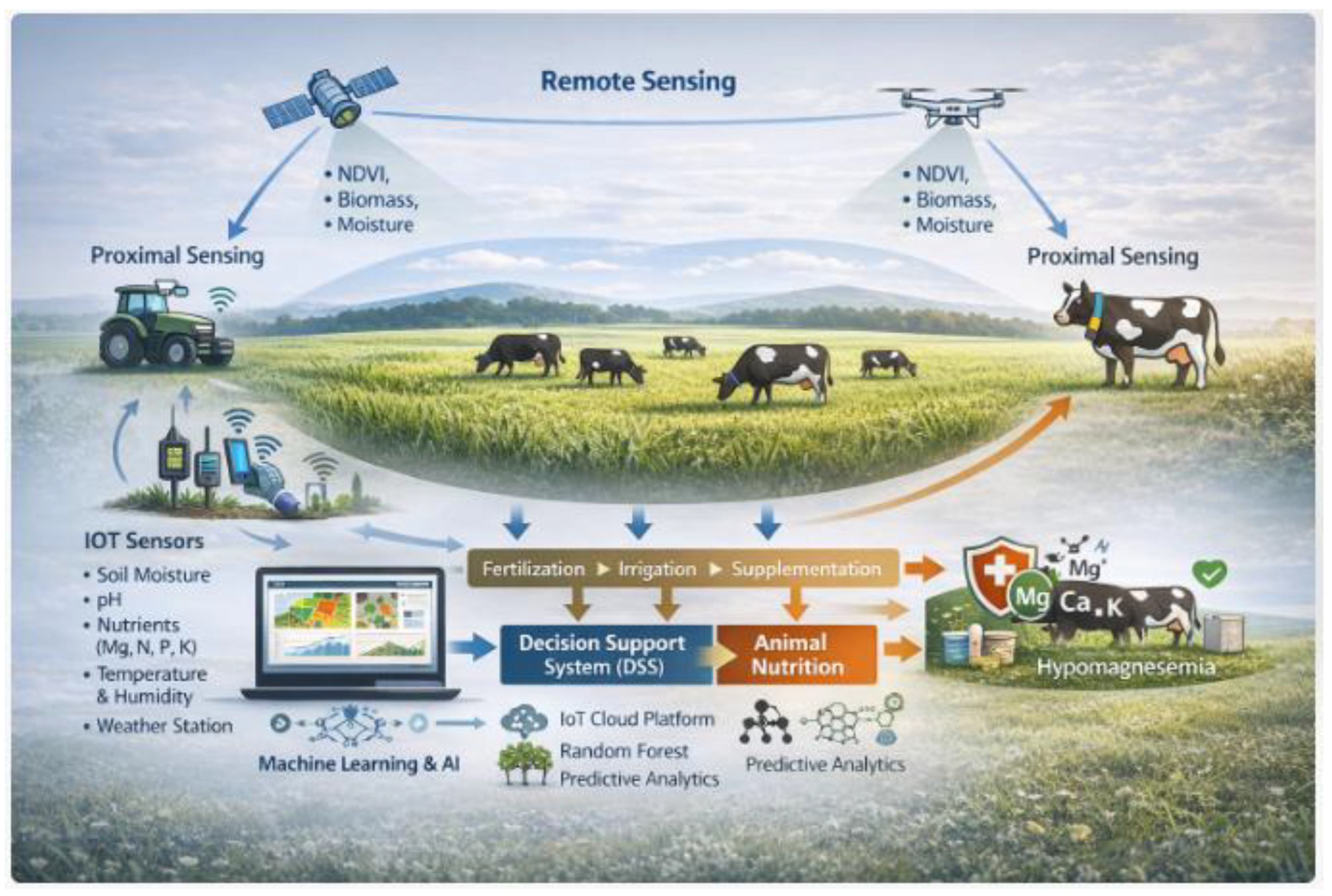
Figure 4.
Overview of LiDAR platforms and their respective perspectives in a forest structure for biodiversity assessments [48].
Figure 4.
Overview of LiDAR platforms and their respective perspectives in a forest structure for biodiversity assessments [48].
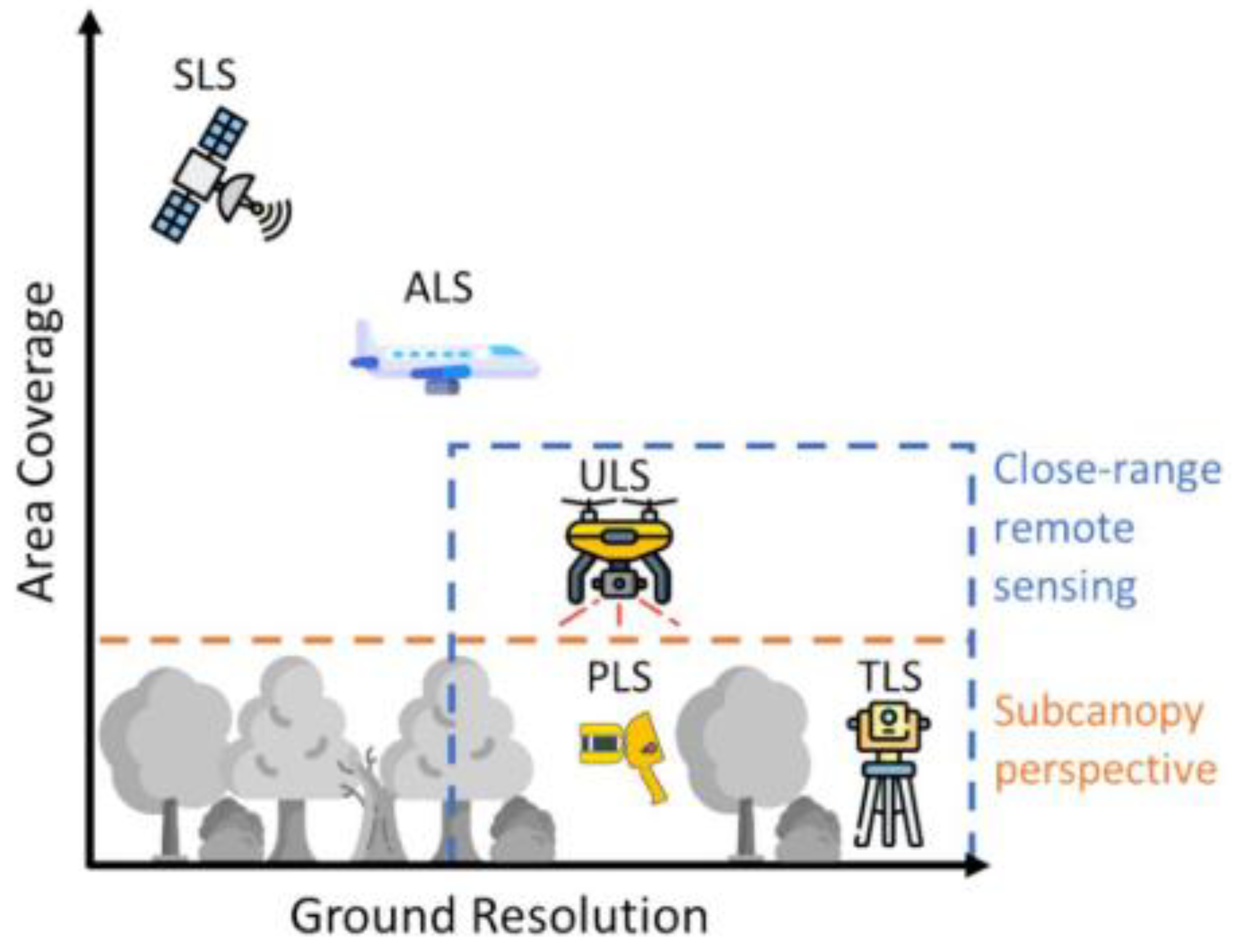
Figure 5.
IoT-enabled smart agriculture simulation with agentic-AI decision support and deep learning integration [49].
Figure 5.
IoT-enabled smart agriculture simulation with agentic-AI decision support and deep learning integration [49].
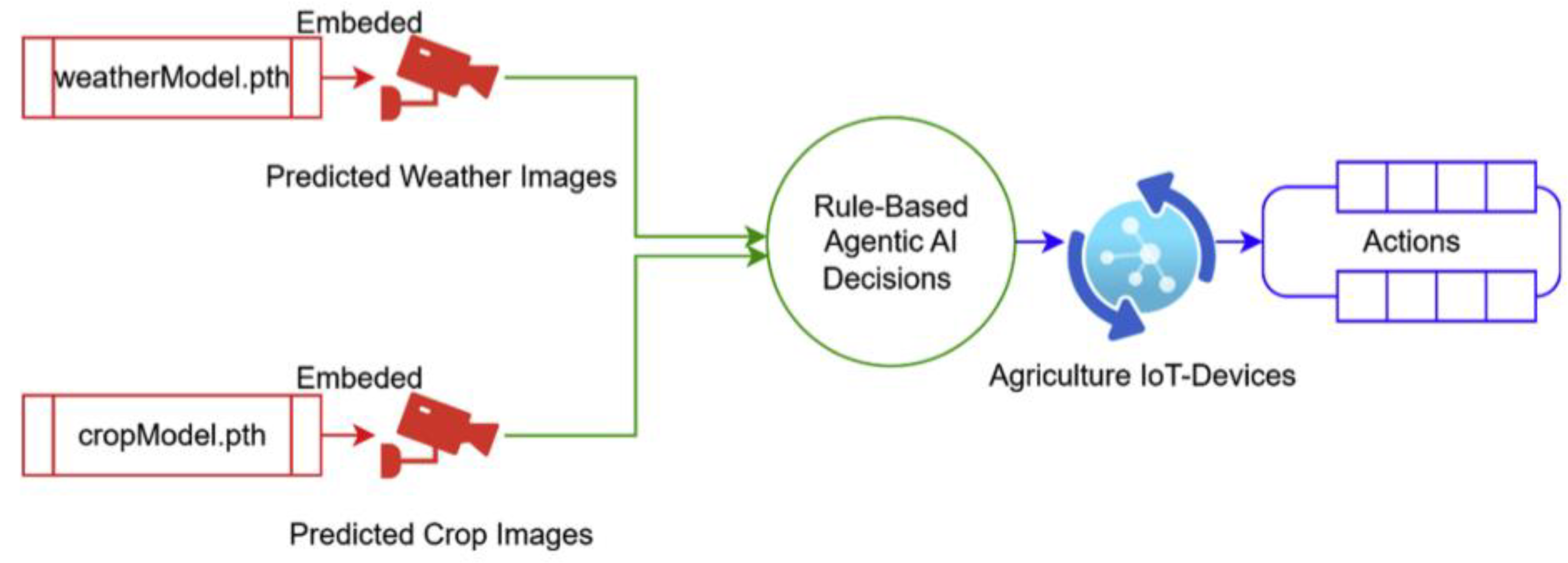
Figure 6.
The logical workflow of building virtual sensors [50].
Figure 6.
The logical workflow of building virtual sensors [50].
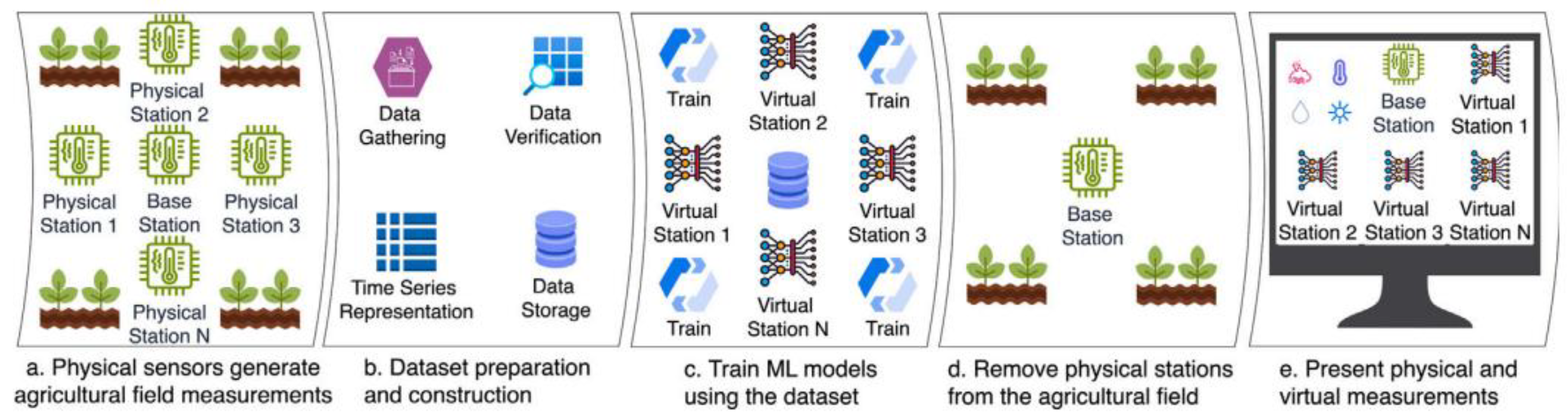
Figure 7.
Schematic of big data and artificial intelligence (AI)-powered modeling in animal nutrition and feeding. GANs: generative adversarial networks; HIMM: hybrid intelligent mechanistic models; VAE: variational autoencoders; XAI: explainable artificial intelligence [56].
Figure 7.
Schematic of big data and artificial intelligence (AI)-powered modeling in animal nutrition and feeding. GANs: generative adversarial networks; HIMM: hybrid intelligent mechanistic models; VAE: variational autoencoders; XAI: explainable artificial intelligence [56].
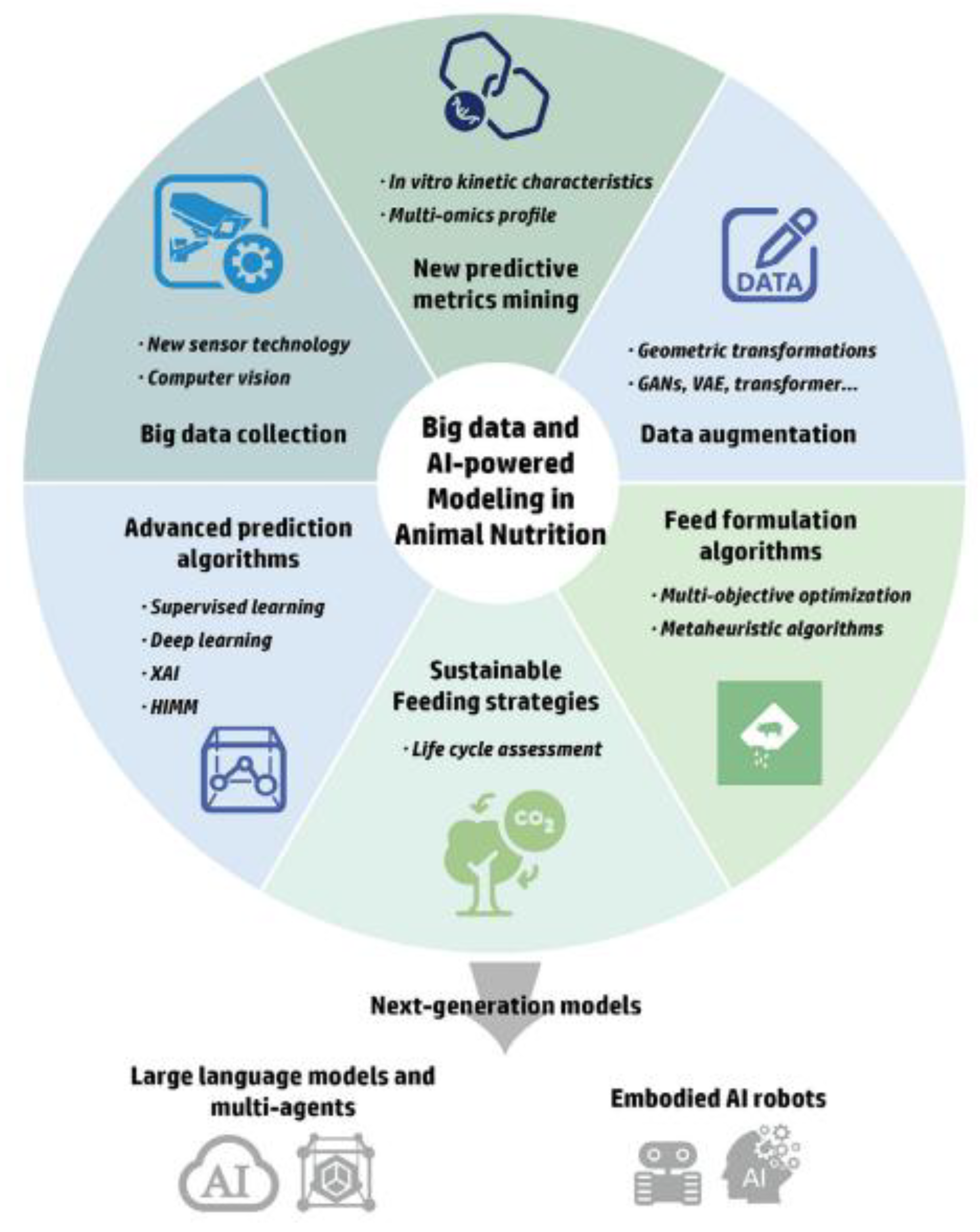
Figure 8.
A high-level view of an IoT architecture for cattle supplementation basis for the Decision Support System for Cattle Supplementation [57].
Figure 8.
A high-level view of an IoT architecture for cattle supplementation basis for the Decision Support System for Cattle Supplementation [57].
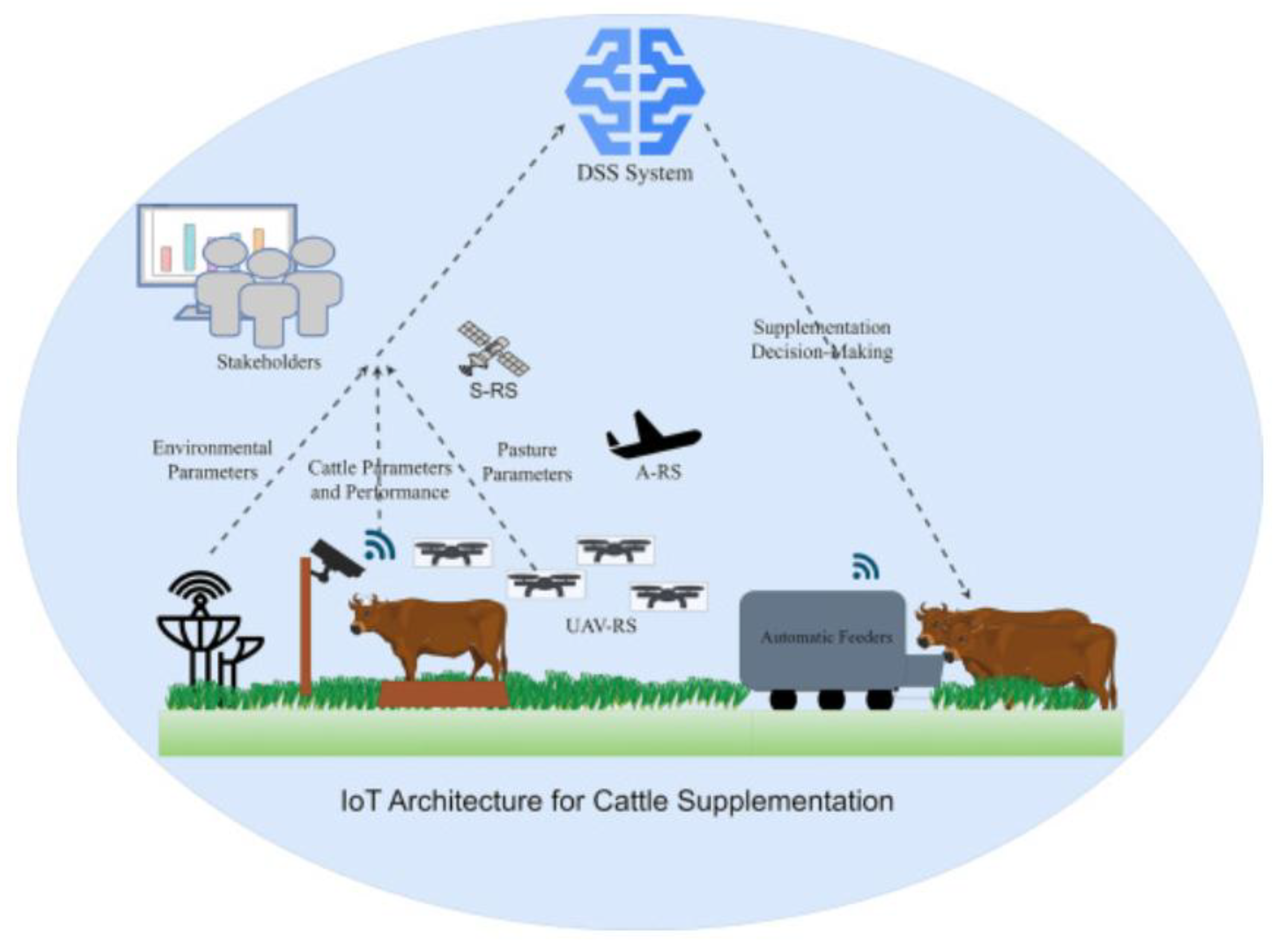
Table 1.
Summary of grass quality indicators applied in recent studies.
| Quality Indicator | What is Measured | Application for Grass/ Forage Monitoring |
Ref. |
|---|---|---|---|
| Moisture content / Water content |
Proportion of water in plant material | Determines optimal harvest timing and feed conservation quality | [14] |
| DM | Total solids in forage (excluding water) | Standardizers forage quality assessment across fresh and processed samples | [15] |
| OM | Combustible fraction of dry matter | Indicator of nutritive fraction excluding ash | [16] |
| CP | Total nitrogen × 6.25 | Core indicator of forage nutritive value | [17] |
| N | Nitrogen concentration in plant tissue | Basis for crude protein estimation and plant nutritional status | [17] |
| NDF | Total cell wall fraction | Structural indicator related to forage bulk and maturity | [17] |
| ADF | Cellulose + lignin fraction | Indicator of potential digestibility and forage maturity | [17] |
| ADL | Lignin concentration | Proxy for indigestible plant material and advanced maturity | [17] |
| Fat / Lipid content | Ether-extractable lipids | Minor forage quality component, difficult to predict with NIR | [18] |
| WSC | Soluble sugars in plant tissue | Indicator of readily available energy and forage conservation quality | [19] |
| Ash content | Total mineral residue after combustion | Indicator of mineral content and possible soil contamination | [18] |
| PQI | Composite index integrating multiple quality traits | Integrative grass quality monitoring metric for spatial and temporal assessment | [9] |
| Spectral vegetation indices (NIR-derived) |
Reflectance-based indices linked to chemical traits | Rapid, non-destructive monitoring of forage quality proxies | [19] |
Ref. – References; DM- Dry matter; OM- Organic matter; CP- Crude protein; N- Nitrogen; NDF-Neutral detergent fiber; ADF-Acid detergent fiber; ADL- Acid detergent lignin; WSC- Water-soluble carbohydrates; PQI- Pasture quality index; NIR- Near-infrared.
Table 3.
Integrated overview of proximal, remote, and fused sensing technologies, pasture quality indicators, mechanisms of action, predictive performance, and associated metabolic risks in grazing ruminants.
Table 3.
Integrated overview of proximal, remote, and fused sensing technologies, pasture quality indicators, mechanisms of action, predictive performance, and associated metabolic risks in grazing ruminants.
| Sensor / Technique | Pasture Parameters | Mechanism of Action [60] | Predictive Reliability | Ref. | Associated Metabolic Disorders |
|---|---|---|---|---|---|
|
Proximal Sensors Rising Plate Meter (RPM) |
SSH, biomass, DM |
DM → determines energy availability and intake potential |
R² ≈ 0.70–0.85; RMSE ≈ 0.25 kg DM m⁻² |
[59] |
Under- or over-grazing → acidosis; ketosis |
| Electronic Capacitance Probe (Grassmaster®) | GM, DM, NDF | NDF → determines rate of digestion and intake potential | R² = 0.92 (GM); R² = 0.91 (DM); RMSE ≈ 647 kg ha⁻¹ | [61] | Low DM → energy deficiency; high NDF → ruminal acidosis |
| Optical Proximal Sensor (OptRx / GreenSeeker) | CP, PMC, NDF | CP → microbial protein synthesis; NDF → intake potential | PMC (R² = 0.88); CP (R² = 0.67); NDF (R² = 0.50) | [27] | Low CP → hypomagnesemia; high NDF → SARA |
|
Remote Sensors UAV Hyperspectral / LiDAR |
CP, NDF, ADF, digestibility, ME |
CP → microbial protein synthesis; ADF → limits digestibility; ME → energy availability |
R² ≈ 0.75–0.90; RMSE ≈ 0.15–0.25 kg DM m⁻² |
[58,59] |
Low ME → fatty liver; low digestibility → reduced milk yield |
| Satellite Optical / SAR Fusion (Sentinel-1 + Sentinel-2) | CP, NDF, DM, moisture | CP → microbial protein synthesis; NDF → intake potential; moisture → fermentation efficiency | R² ≈ 0.65–0.85; RMSE ≈ 0.25–0.40 kg DM m⁻² | [58,59] | Low biomass → energy deficiency; moisture stress → ketosis |
|
Sensor Fusion RPM + Spectral Calibration |
CP, NDF, DM, WSC |
CP → microbial protein synthesis; WSC → enhances microbial efficiency |
R² ≈ 0.70–0.88; RMSE ≈ 0.20–0.30 kg DM m⁻² |
[58] |
Low WSC → energy deficiency; CP/NDF imbalance → acidosis |
| RPM + OptRx (Optical Proximal Sensor) | CP | CP → nitrogen supply for microbial protein synthesis | R² ≈ 0.74–0.86 | [38] | Low CP → hypomagnesemia; high NDF → ruminal acidosis |
|
ML / DSM / Trait Integration Machine Learning / AI |
CP, NDF, DM, digestibility |
CP → microbial protein synthesis; digestibility → energy utilization |
R² ≈ 0.70–0.90 |
[58] |
Low CP → hypomagnesemia; low ME → fatty liver |
| Decision Support Models (DSM) | Biomass, CP, NDF, ME | CP → protein synthesis; ME → energy availability; NDF → intake potential | R² ≈ 0.65–0.85 | [59] | CP/NDF imbalance → acidosis; low ME → energy deficiency |
| Forage Trait Integration | CP, NDF, WSC, lignin, fatty acids | WSC → microbial efficiency; lignin → indigestible; fatty acids → modulate rumen fermentation | R² ≈ 0.40–0.85 | [60] | Low CP → hypomagnesemia; low WSC → ketosis; high lignin → digestive inefficiency |
Ref.- References; SSH = Sward Surface Height; CSH = Compressed Sward Height; DM = Dry Matter; GM-Green matter; CP = Crude Prtein; NDF = Neutral Detergent Fiber; ADF = Acid Detergent Fiber; WSC = Water-Soluble Carbohydrates; ME = Metabolizable Energy; PMC = Pasture Moisture Content. DSM- Decision Support Models; ML/AI- Machine Learning/Artificial Intelligence; SARA - Subacute Ruminal Acidosis.
Disclaimer/Publisher’s Note: The statements, opinions and data contained in all publications are solely those of the individual author(s) and contributor(s) and not of MDPI and/or the editor(s). MDPI and/or the editor(s) disclaim responsibility for any injury to people or property resulting from any ideas, methods, instructions or products referred to in the content. |
© 2026 by the authors. Licensee MDPI, Basel, Switzerland. This article is an open access article distributed under the terms and conditions of the Creative Commons Attribution (CC BY) license (http://creativecommons.org/licenses/by/4.0/).
Copyright: This open access article is published under a Creative Commons CC BY 4.0 license, which permit the free download, distribution, and reuse, provided that the author and preprint are cited in any reuse.


