Preprint
Review

This version is not peer-reviewed.

Streptomyces from Dynamic Coastal Environments: Specialized Metabolites, Ecological Adaptation, and Metabolomics-Guided Natural Product Discovery

Submitted:

16 June 2026

Posted:

17 June 2026

You are already at the latest version

Abstract

The genus Streptomyces remains one of the most important sources of bioactive natural products. While terrestrial Streptomyces have been extensively explored, strains inhabiting dynamic coastal environments, including tidal flats, estuaries, salterns, mangrove-associated sediments, and coastal wetlands, remain comparatively under investigated. These habitats are characterized by fluctuating salinity, oxygen availability, nutrient availability, and microbial competition, factors that may shape specialized metabolism and biosynthetic diversity. This review summarizes the ecological characteristics of coastal Streptomyces, the diversity of specialized metabolites reported from these environments, and recent advances in discovery strategies, including OSMAC cultivation, co-culture, metabolomics, molecular networking, and genome mining. By integrating ecological perspectives with modern analytical approaches, coastal Streptomyces emerge as a promising platform for natural product discovery and biosynthetic exploration.

Keywords: 
;  ;  ;  ;  ;  

1. Introduction

Microbial natural products have shaped modern pharmacology, agricultural chemistry and chemical biology by providing antibiotics, anticancer agents, immunosuppressants, antiparasitic agents, enzyme inhibitors and molecular probes. Within microbial natural product research, Streptomyces occupies a uniquely important position because members of this genus combine a complex filamentous life cycle, extensive extracellular enzymology and unusually rich specialized metabolism. Classical soil-derived Streptomyces supplied many foundational antibiotics and bioactive scaffolds of the twentieth century, and genome sequencing has shown that individual strains usually encode more biosynthetic gene clusters than are expressed under standard fermentation conditions [1,2,3,4,5,6,7].
The repeated rediscovery of known metabolites from well-studied terrestrial strains has encouraged exploration of less examined environments. However, habitat novelty alone is not a sufficient discovery argument. A strain isolated from an unusual site can still produce familiar chemistry, whereas a common genus may reveal new metabolites when its physiology is challenged by appropriate culture conditions. Marine and marine-related ecosystems are attractive because they combine steep physicochemical gradients, high microbial biomass, strong particle-associated competition and specialized host-, plant- or sediment-linked interactions. A coastal Streptomyces isolate should therefore not be interpreted simply as a soil microorganism washed into seawater, nor should it automatically be treated as obligately marine. The more useful question is how repeated exposure to salinity, desiccation, oxygen limitation, tidal mixing and nutrient pulses may influence Streptomyces regulation and metabolite expression [8,9,10,11,12,13,14].
Among coastal habitats, tidal flats and intertidal sediments are particularly informative. They alternate between submerged and exposed conditions and contain centimeter-scale gradients in oxygen, sulfide, salinity, organic matter, particle size and temperature. For microorganisms attached to sediment particles or organic detritus, these changes can occur over hours rather than seasons. Such spatial and temporal heterogeneity provides numerous micro-niches for actinomycetes and creates a rationale for treating tidal flats as dynamic ecological filters rather than as generic marine sediments. Recent reviews of mudflat-derived actinomycetes show that mudflats have already yielded diverse secondary metabolites and that Streptomyces accounts for a substantial fraction of reported producers [15].
The present review focuses on Streptomyces from dynamic coastal environments, especially tidal flats, intertidal mudflats, estuarine sediments, salterns, salt marshes, mangrove-associated sediments and nearshore marine sediments. The review intentionally excludes non-Streptomyces actinomycetes from the main survey unless they are needed for ecological comparison or reference context. Its central argument is that coastal Streptomyces discovery will be most productive when three elements are connected: habitat metadata, condition-dependent metabolomics and genome-informed biosynthetic prioritization. This framing is timely because LC-MS/MS-based metabolomics, molecular networking, genome mining and BGC-metabolite linking now allow researchers to move beyond strain cataloguing toward hypothesis-driven, ecology-informed discovery.
Specifically, the review contributes three linked perspectives. First, it separates operational coastal origin from stronger claims of marine adaptation. Second, it evaluates representative metabolites by asking what chemical, biosynthetic or methodological lesson each example provides. Third, it proposes a workflow in which ecology-informed sampling, OSMAC cultivation, LC-MS/MS molecular networking, genome mining and mechanism-aware bioassays reinforce one another.

2. Scope, Terminology and Rationale for a Streptomyces-Only Coastal Review

The term "coastal Streptomyces" is used here in a practical, discovery-oriented sense. It includes strains isolated from marine-related coastal matrices such as tidal-flat sediments, intertidal sediments, salt-marsh soils, solar salterns, estuarine sediments, mangrove-associated sediments, coastal wetlands and nearby marine sediments. The term does not necessarily imply that every isolate is obligately marine, taxonomically unique, or evolutionarily endemic to seawater-influenced habitats. Instead, it indicates that the strain was recovered from an environment shaped by tides, seawater intrusion, salinity gradients or coastal sediment processes.
This distinction is important because Streptomyces ecology can be complicated by spore dispersal, sediment transport, freshwater inflow, terrestrial runoff and dormant propagules. A strain isolated from a mudflat may be a persistent coastal resident, a transient organism introduced by riverine or tidal transport, or a dormant soil-derived spore that germinated under laboratory conditions. From a natural product perspective, the coastal origin is still meaningful when it is linked to isolation conditions, strain physiology, metabolite expression or genome content. It is much less meaningful when used only as a label for novelty.
The Streptomyces-only focus is justified by three factors. First, the special issue context emphasizes marine Streptomyces-derived natural products, making genus-level focus more appropriate than a general actinomycete survey. Second, Streptomyces remains the best-developed actinomycete model for biosynthetic logic, genome mining, regulatory analysis and engineering-oriented discovery. Third, the mudflat and coastal literature now contains enough Streptomyces examples to support a focused synthesis while still leaving room for conceptual advances in ecological interpretation and BGC-metabolite linkage.
A deliberate scope also helps avoid a common weakness of environmental natural product reviews: treating every isolate from an unusual habitat as intrinsically novel. The present review instead asks what coastal habitats add to Streptomyces discovery. The answer is not simply a new source of strains, but a combination of environmental fluctuation, inducible metabolism, analogue-family expansion and compatibility with modern dereplication and genome-mining workflows.
The inclusion threshold is therefore discovery oriented. The main survey emphasizes reports in which the producing strain, habitat, isolated compound, structural class and at least preliminary activity or biosynthetic context are available. Studies that report only crude-extract antimicrobial activity, without compound-level identification, are better treated as screening literature rather than as evidence for specialized metabolite diversity.

3. Dynamic Coastal Environments as Ecological Filters

Coastal environments can influence Streptomyces discovery at two related levels. At the ecological level, they may select for strains capable of tolerating salt, desiccation, oxygen fluctuation and strong microbial competition. At the experimental level, these same variables can be reintroduced as culture parameters to activate otherwise weakly expressed metabolites. Distinguishing selection from laboratory induction is essential because both can produce valuable chemistry, but they support different biological claims.

3.1. Tidal Flats and Intertidal Sediments

Tidal flats are sedimentary intertidal zones alternately submerged and exposed by tidal cycles. Fine-grained mudflats often contain high organic matter and steep gradients in oxygen, sulfide and redox potential, whereas sandier flats drain more rapidly and experience stronger advective exchange. A sediment particle can shift from oxic, light-exposed and partially desiccated conditions at low tide to submerged, salt-saturated and oxygen-limited conditions at high tide. These cycles can influence sporulation, dormancy, osmoprotection, pigment production, extracellular enzyme secretion and secondary metabolism.
Streptomyces are well suited to exploit heterogeneous sediment surfaces because filamentous growth, spore formation and extracellular enzymology allow colonization of particulate organic matter. In tidal flats, decaying halophyte material, algal debris, invertebrate-associated substrates and microbial biofilms create competitive microhabitats. Specialized metabolites produced in this context may function as antibacterials, antifungals, signaling molecules, redox-active compounds, siderophores, surfactants or developmental cues. These functions usually remain hypotheses unless tested directly, but they provide a stronger ecological rationale than simple habitat novelty.
Natural product examples from mudflat-derived Streptomyces include buanmycin and buanquinone from a Buan tidal mudflat isolate, mohangic acids from Mohang and Nakdong River estuary mudflat isolates, cystargamides C and D from tidal mudflat-derived Streptomyces sp. JMS132, epoxinnamide from intertidal mudflat-derived Streptomyces sp. OID44, WS9326H and hormaomycins from Streptomyces sp. SNM55, dentigerumycin E from an intertidal mudflat co-culture system, anithiactins from a mudflat-derived Streptomyces sp. 10A085 and violapyrone derivatives from marine mudflat isolates [16,17,18,19,20,21,22,23,24,25,26,27,28,29,30]. Together, these examples show that mudflats yield multiple structural classes rather than only salt-tolerant variants of familiar soil metabolites.

3.2. Estuaries, Deltas and Coastal Wetlands

Estuaries and deltas combine freshwater inflow with seawater intrusion and often receive high loads of organic matter, minerals and anthropogenic nutrients. Salinity can fluctuate daily, seasonally and after storms. Sediment textures can range from fine muds to sandy deposits, and redox conditions can shift rapidly with tidal movement and microbial respiration. These features make estuarine sediments promising habitats for Streptomyces isolation, especially when sampling designs capture gradients from river-dominated to marine-dominated zones.
From a discovery viewpoint, estuarine Streptomyces are most informative when environmental metadata are recorded together with strain and metabolite information. Salinity, pH, sediment depth, total organic carbon, grain size, temperature, dissolved oxygen, tidal phase and season can help interpret strain distribution and metabolite expression. Without metadata, estuarine isolates become simple additions to strain libraries; with metadata, they become test cases for ecology-informed prioritization.

3.3. Salterns and Salt Marshes

Salterns and salt marshes are especially relevant for halotolerant and halophilic actinomycetes. Solar salterns expose microorganisms to sustained high ionic strength, evaporation stress and low water activity, whereas salt marshes combine halophytic vegetation, organic-rich sediment and periodic seawater influence. Streptomyces from these habitats may encode osmoprotection systems, salt-tolerant enzymes and regulatory networks that respond to ionic strength and water availability. These physiological traits matter for natural product discovery because osmotic stress can alter growth rate, morphology and secondary metabolite expression.
The salternamide series illustrates the value and the interpretive limits of salt-associated Streptomyces. Salternamides A-E were obtained from Streptomyces sp. HK10 isolated from a saltern-related environment, and the series includes chlorinated and highly substituted manumycin-family members with cytotoxic activity [18,19]. Chlorination, analogue diversity and culture-condition dependence make this example useful for discussing saline habitats, but the saltern origin alone does not prove that the compounds are adaptive to hypersalinity. Future work should test whether salt concentration directly affects production, regulation or biological function.

3.4. Mangrove-Associated Sediments and Coastal Vegetation Zones

Mangrove-associated sediments are globally recognized as productive sources of actinomycetes and secondary metabolites. Although mangrove systems are ecologically distinct from unvegetated tidal flats, they share coastal salinity gradients, anoxic sediments, high organic matter and dynamic plant-microbe interactions. Streptomyces associated with mangrove roots, rhizosphere sediments and decaying plant material may experience selective pressures related to plant defense, lignocellulose degradation and competition with fungi and Gram-negative bacteria.
In a coastal Streptomyces review, mangrove-derived examples should be used selectively. Their value is comparative: they help identify shared mechanisms such as salt adaptation, substrate specialization, plant-associated competition, co-culture inducibility and genome-metabolome mismatch. Over-inclusion would shift the article toward a general mangrove natural products survey, so the main emphasis here remains on dynamic sedimentary environments. The major coastal niches relevant to Streptomyces natural product discovery are summarized in Table 1, and their ecological links to specialized metabolite expression are illustrated in Figure 1.

4. Isolation, Cultivation and Physiological Considerations

4.1. Selective Isolation Strategies

The recovery of Streptomyces from coastal samples depends strongly on pretreatment, medium composition, salinity and incubation time. Common approaches include actinomycete isolation media, A1/A5 media, ISP-based media, starch-casein media, Gause media, humic acid-vitamin media, chitin-containing media, seawater-based media and media supplemented with artificial sea salts. Heat drying, air drying, calcium carbonate treatment, phenol treatment, selective antibiotics and prolonged incubation can suppress fast-growing bacteria and fungi while favoring spore-forming actinomycetes.
For dynamic coastal environments, culture conditions should be treated not merely as methodological details but as discovery variables. The same strain may show different growth, morphology and metabolite profiles in freshwater medium, natural seawater medium, artificial sea-salt medium or defined NaCl gradients. Carbon source, nitrogen source, trace metals, phosphate, aeration, solid versus liquid format and adsorbent resin can all influence Streptomyces secondary metabolism. Isolation and production media should therefore be recorded with the same care as spectral and genomic data.
A practical approach is to build an isolation matrix rather than rely on a single medium. Sediment suspensions can be plated on low-nutrient seawater agar, chitin-seawater agar, humic acid-vitamin agar, A1 agar and starch-casein agar across several salinity levels. Parallel pretreatments such as dry heat, wet heat and air-drying can enrich different physiological groups. The resulting collection should be dereplicated by 16S rRNA gene sequencing or genome-based methods, and isolates should be preserved early to avoid losing slow-growing or condition-sensitive strains.

4.2. OSMAC, Time-Course Cultivation and Co-Culture

The OSMAC concept, "one strain-many compounds," is particularly relevant to coastal Streptomyces because environmental fluctuation is central to their habitat. A mudflat strain experiences alternating salt, oxygen and nutrient states in nature, so a static laboratory fermentation may capture only part of its chemical potential. OSMAC designs can vary salinity, carbon source, nitrogen source, trace metals, pH, aeration, culture format, resin addition and culture duration [31,32]. For coastal strains, salinity should be treated quantitatively rather than as a binary seawater versus non-seawater variable.
Time-course profiling is often underused in Streptomyces discovery. Early stationary phase may reveal signaling molecules, shunt products or pathway intermediates, whereas later cultures may accumulate mature polyketides, peptides or degradation products. In coastal strains, temporal changes may also correspond to stress responses as nutrients deplete, pH changes or salt stress accumulates. LC-MS/MS time-course data can identify metabolite families that appear only within narrow windows and can prevent harvest decisions based solely on total biomass or extract mass.
Co-culture can be especially effective for strains from competitive sedimentary habitats. Streptomyces may respond to fungi, Bacillus, Gram-negative bacteria, mycolic-acid-containing bacteria or other actinomycetes by activating otherwise silent pathways. In the coastal context, co-culture designs can be ecologically motivated by pairing strains isolated from the same sediment microenvironment or by recreating competition between decomposers of marine plant and algal material. Co-culture metabolites should be assigned carefully using monoculture controls, time-course comparisons, isotope labeling, imaging mass spectrometry or genome-informed reasoning.
Physiological characterization should accompany chemical screening when possible. Growth across NaCl concentrations, pH ranges and temperatures; tolerance to desiccation or oxidative stress; extracellular enzyme profiles; pigment production; sporulation; and biofilm formation can help determine whether a coastal isolate behaves differently from standard terrestrial Streptomyces strains. These measurements do not prove ecological function, but they help link habitat, cultivation and metabolite expression.

5. Specialized Metabolites from Coastal and Intertidal Streptomyces

The coastal Streptomyces literature spans multiple scaffold classes. The following sections organize representative compounds by broad structural logic rather than strict biosynthetic taxonomy. This arrangement highlights discovery patterns: aromatic polyketide-derived compounds, highly substituted polyketides, peptide/depsipeptide families, cinnamoyl-containing metabolites, heterocyclic small molecules and glycosylated products. Table 2 summarizes selected examples from tidal-flat, intertidal, saltern and marine sediment-derived Streptomyces.
Because the present review is aimed at a Streptomyces-focused special issue, non-Streptomyces compounds are excluded from the main table. This means that important mudflat-derived non-Streptomyces metabolites are not treated in detail. The omission is deliberate and distinguishes this review from broader actinomycete surveys. Non-Streptomyces examples are mentioned only when they clarify scaffold history, ecological comparison or biosynthetic context.
In evaluating each metabolite class, three questions are useful. What is the chemical increment relative to known Streptomyces chemistry? What biological or ecological hypothesis does the compound suggest? What discovery workflow lesson does the case provide? This approach prevents the review from becoming a simple compound list and highlights examples that can guide future study design.

5.1. Aromatic Polyketides and Phenolic Scaffolds
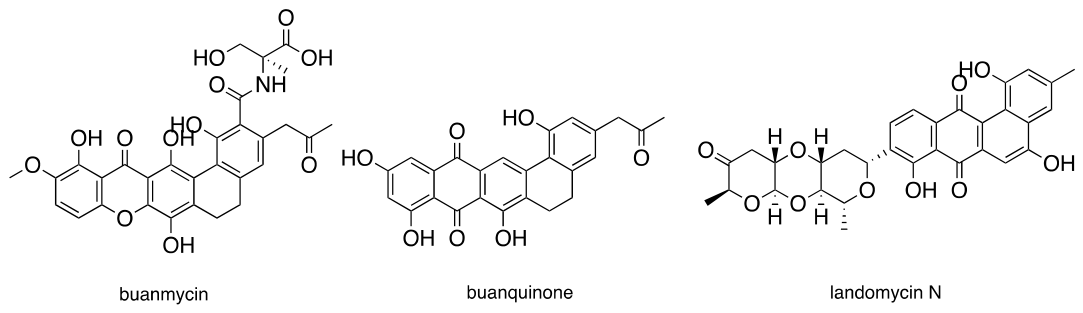
Aromatic polyketides are central to Streptomyces chemistry and remain prominent in coastal isolates. Buanmycin and Buanquinone, isolated from a tidal mudflat-derived Streptomyces strain from Buan, Republic of Korea, provide a strong example. Buanmycin is a pentacyclic xanthone, whereas buanquinone is a pentacyclic anthraquinone. Buanmycin displayed antibacterial activity against Bacillus subtilis and Salmonella enterica, antifungal activity against Candida albicans, inhibition of Staphylococcus aureus sortase A and cytotoxicity against several human cancer cell lines [16]. The pair is useful for this review because closely related aromatic scaffolds show different activity profiles, emphasizing that analogue-level resolution is needed rather than simple class-level annotation.
Preprints 218796 i001
Intertidal sediment-derived Streptomyces sp. LL-31F508 produced bioxalomycins, naphthyridinomycin-like antibiotics with activity against Gram-positive bacteria [17]. Although reported before the current metabolomics era, bioxalomycins remain relevant because they illustrate both the promise and the risk of coastal Streptomyces discovery. Potent antibacterial activity can lead to valuable scaffolds, but structural similarity to known antibiotics also makes early dereplication essential. A modern investigation of similar extracts would ideally combine LC-MS/MS dereplication, UV data, genome mining and activity-guided prioritization before large-scale isolation.
Additional aromatic polyketides from coastal Streptomyces include angucycline glycosides such as landomycin N, galtamycin C, vineomycin D and saquayamycin B from Streptomyces sp. OC1610.4 [22]. Because angucyclines and related aromatic polyketides are common in Streptomyces, their discovery from coastal isolates is most valuable when new glycosylation patterns, unusual tailoring, activity differences or condition-dependent expression can be demonstrated. In this way, the review avoids overstating novelty based only on isolation source.

5.2. Salternamides, Mohangic Acids and Other Polyketide-Derived Metabolites
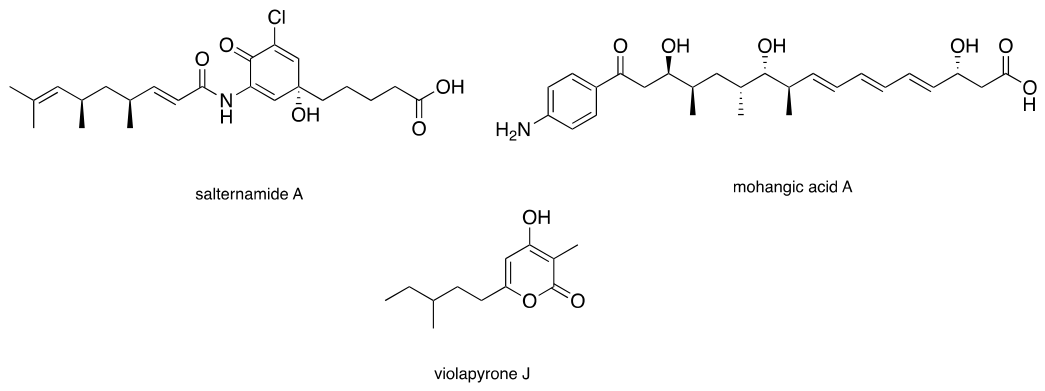
Salternamides A-E represent a notable family from Streptomyces sp. HK10. These compounds are highly substituted manumycin-related polyketide metabolites, including salternamide A as a chlorinated member, and several show cytotoxicity against cancer cell lines [18,19]. The salternamide series links salt-influenced habitat, halophilic physiology, halogenated chemistry and analogue-family expansion. It also illustrates why a compound series is more informative than a single isolate: related analogues allow comparison of halogenation, side-chain architecture and bioactivity.
Preprints 218796 i002
Mohangic acids A-E were discovered from marine mudflat-derived Streptomyces sp. SNM31 and represent p-aminoacetophenonic acid derivatives [20]. More recently, mohangic acid H and mohangiol were reported from Streptomyces sp. AWH31-250, isolated from a tidal mudflat in the Nakdong River estuary in Busan, Republic of Korea [21]. This later study is particularly useful for the present review because it integrates structure elucidation, DP4+ calculations, whole-genome sequencing, ketoreductase-domain analysis and a plausible candicidin-related biosynthetic pathway. Mohangic acid H and mohangiol also displayed moderate inhibition of Candida albicans isocitrate lyase, connecting the compound family to a more mechanism-aware antifungal endpoint [21].
Violapyrones provide another small-polyketide example. Violapyrone J and previously described violapyrones B and C were reported from marine mudflat-derived Streptomyces, with anti-inflammatory activity noted for selected members of the series [29,30]. In a metabolomics-guided framework, violapyrones are good examples of compounds that could be recognized as a molecular family and compared across culture conditions to identify analogues, production windows and possible biosynthetic relationships.

5.3. Peptides, Lipopeptides and Depsipeptides
Peptide- and lipopeptide-derived metabolites are highly prominent in coastal Streptomyces. Cystargamides C and D from tidal mudflat-derived Streptomyces sp. JMS132 are representative cyclic lipodepsipeptides bearing an epoxy fatty-acid side chain [23]. Their report included whole-genome-sequence-based proposal of the nonribosomal peptide synthetase pathway, and the compounds displayed antioxidant effects in DPPH and ABTS assays. Cystargamide and cystargamide B, reported from other actinomycete sources, provide useful scaffold context but should not be conflated with the tidal mudflat JMS132 discovery [24,25].
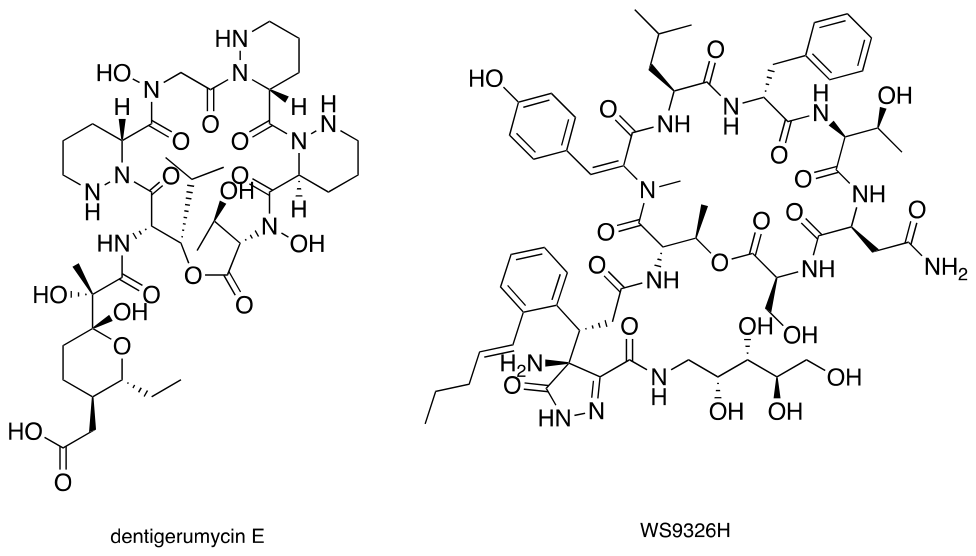
Dentigerumycin E demonstrates the value of ecologically motivated co-culture. It was discovered from co-cultivation of marine Streptomyces sp. JB5 with a Bacillus strain isolated from an intertidal mudflat, and the metabolite was essentially detectable only under co-culture conditions [26]. The compound is a piperazic-acid-bearing cyclic peptide with a PKS-derived acyl chain, and genomic analysis supported Streptomyces as the producer. This example should be used not merely as another peptide entry but as evidence that microbial interaction can reveal chemistry missed by monoculture screening.
Preprints 218796 i003
WS9326H and hormaomycins B and C from marine mudflat-derived Streptomyces sp. SNM55 are particularly compelling. WS9326H is a pyrazolone-bearing peptide reported with antiangiogenic activity, whereas hormaomycins B and C are cyclic depsipeptides with antibiotic activity [27,28]. These metabolites illustrate how a single coastal Streptomyces strain can produce multiple bioactive peptide families under suitable conditions. They also strengthen the argument that coastal Streptomyces deserve metabolomics-guided, multi-condition analysis rather than one-time extraction.
Preprints 218796 i004
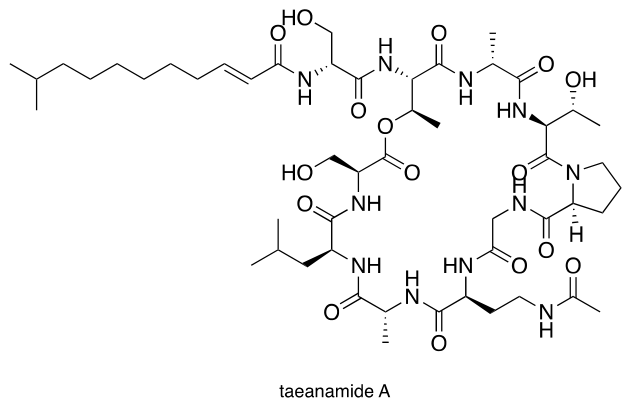
Taeanamides A and B are additional nonribosomal lipo-decapeptides from intertidal-mudflat-derived Streptomyces sp. AMD43 isolated from a mudflat sample from Anmyeondo, Korea [33]. The taeanamide study is useful because it combined NMR-based structural elucidation, Marfey-type stereochemical analysis, bioinformatics and whole-genome-guided NRPS pathway proposal. Reported biological activities differed between analogues, with taeanamide A showing mild anti-tuberculosis activity and taeanamide B showing cytotoxicity against several cancer cell lines [33].
Taken together, these peptide examples show why coastal Streptomyces should be examined as multi-pathway producers. NRPS and hybrid PKS-NRPS systems often generate analogue families, and production can be sensitive to co-culture, nutrient status and time. Therefore, peptide discovery from coastal isolates benefits from combining genome mining, MS/MS molecular-family analysis and targeted stereochemical methods.

5.4. Cinnamoyl-Containing and Phenylpropanoid-like Metabolites

Epoxinnamide, an epoxy cinnamoyl-containing nonribosomal peptide-derived metabolite from intertidal mudflat-derived Streptomyces sp. OID44, is an excellent example of scaffold hybridization in coastal Streptomyces [34]. Cinnamoyl or phenylpropanoid-like units can connect aromatic amino acid metabolism, acyl activation and NRPS logic. Such metabolites are attractive for metabolomics because UV signatures, diagnostic fragments and substructure-specific MS/MS patterns can support analogue searching.
The broader significance of epoxinnamide is methodological. A compound with a distinctive substructure can become a seed for molecular networking, enabling recognition of related nodes that may correspond to analogues, shunt products, biosynthetic intermediates or media-derived adducts. In a review aimed at modern discovery, such examples should be used to show how one structure discovery feeds back into future LC-MS/MS prioritization.

5.5. Nitrogenous Small Molecules and Enzyme Inhibitors
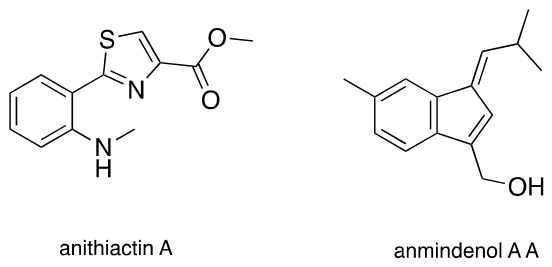
Anithiactins A-C, reported from mudflat-derived Streptomyces sp. 10A085, are modified 2-phenylthiazole metabolites with reported acetylcholinesterase inhibitory activity, and subsequent work reported monoamine oxidase inhibitory activity [35,36]. Anithiactin D, later isolated from the same mudflat-derived Streptomyces lineage, expanded the phenylthiazole family and was reported to suppress cancer-cell motility by affecting epithelial-to-mesenchymal-transition-related markers and Rho GTPase signaling [37]. These examples connect compact heterocyclic metabolites to enzyme inhibition and cell-behavior assays rather than only antimicrobial screening.
Preprints 218796 i005
Anmindenols A and B from a marine-derived Streptomyces strain are indene-containing sesquiterpenoid metabolites with inducible nitric oxide synthase inhibitory activity in stimulated macrophage cells [38]. Along with indole-derived and beta-carboline-type metabolites reported from coastal Streptomyces strains, these examples remind us that the chemical output of coastal Streptomyces is not limited to classical antibiotic-like scaffolds. Small nitrogenous and terpene-like metabolites may have signaling, anti-inflammatory or regulatory roles that are missed when screening focuses only on growth inhibition.

5.6. Glycosides and Rare Tailoring Chemistry

Actinoflavosides B-D from tidal mudflat-derived actinomycete strains JML48 and JMS33 illustrate glycosylated natural product diversity in coastal environments [39]. These flavonoid-type glycosides contain rare amino-sugar features, displayed antibacterial activity against Pseudomonas aeruginosa and showed immunomodulatory activity in splenocyte assays for selected analogues.
Rare tailoring chemistry should be highlighted throughout the review because it provides a stronger discovery argument than habitat novelty alone. Chlorination in salternamides, glycosylation in actinoflavosides, pyrazolone features in WS9326H, piperazic acid units in dentigerumycin E, thiazole units in anithiactins and cinnamoyl-containing motifs in epoxinnamide demonstrate the range of biosynthetic modifications accessible in coastal Streptomyces. Such features also make these compounds valuable training examples for annotation workflows.
Across these classes, three patterns emerge. First, many discoveries are analogue expansions of known families rather than completely unprecedented scaffolds, which makes dereplication and family-level annotation essential. Second, the most persuasive examples connect chemistry to biosynthetic information, such as NRPS/PKS logic or BGC similarity. Third, coastal origin becomes scientifically meaningful when paired with condition-dependent production, ecological metadata or a testable hypothesis about metabolite function.

6. Bioactivity Patterns and Translational Relevance

The bioactivities reported for coastal Streptomyces metabolites span antibacterial, antifungal, cytotoxic, antiangiogenic, antioxidant, anti-inflammatory, enzyme-inhibitory, immunomodulatory and cell-motility-related endpoints. This diversity reflects the chemical breadth of the genus, but it also reveals a practical challenge: different studies use different screening panels, concentrations, endpoints and reporting standards. A compound described as inactive in one assay may remain interesting for another biological context, especially if its scaffold is rare or if genomic evidence suggests ecological function.
Antibacterial and antifungal activity remain historically important endpoints for Streptomyces discovery. Buanmycin, bioxalomycins and hormaomycins demonstrate that coastal isolates can produce compounds with antimicrobial effects [16,17,28]. Translation requires more than potency: spectrum, selectivity, cytotoxicity, mechanism, resistance frequency, solubility and stability must all be evaluated. Coastal Streptomyces are valuable not because every compound is a drug lead, but because they provide analogue series and biosynthetic systems that may be optimized through semi-synthesis, pathway engineering or mechanism-guided screening.
Cytotoxicity, antiangiogenic activity and anti-motility activity are also prominent. Salternamides show cytotoxicity against cancer cell lines, WS9326H was reported as an antiangiogenic pyrazolone-bearing peptide, taeanamide B showed cytotoxicity against several cancer cell lines, and anithiactin D was reported to suppress cancer-cell migration and invasion [18,19,27,33,37]. Cytotoxicity alone should not be overinterpreted, but it can guide mechanistic studies when the scaffold is distinctive and when selectivity or pathway-specific assays are included.
Enzyme-inhibitory, anti-inflammatory and immunomodulatory activities provide additional routes to translational relevance. Anithiactins connect mudflat Streptomyces chemistry to acetylcholinesterase and monoamine oxidase inhibition [35,36]; anmindenols inhibit inducible nitric oxide synthase [38]; mohangic acid H and mohangiol inhibit Candida albicans isocitrate lyase [21]; violapyrones provide anti-inflammatory examples [29,30]; and actinoflavosides show antibacterial and immune-modulatory activity [39]. These cases show that coastal Streptomyces are not only antibiotic sources but also providers of small molecules for neurochemical, inflammatory, antifungal-virulence and signaling-related studies.
For future studies, bioactivity should be integrated earlier with metabolomics. Instead of purifying every visible peak, researchers can compare active and inactive cultures, fractions, molecular-network nodes and BGC predictions. Bioactivity-guided molecular networking, multivariate correlation and orthogonal assays can identify candidate metabolite families responsible for observed effects. This is particularly useful when OSMAC conditions produce many analogues or when activity arises from a minor metabolite masked by abundant known compounds.
A practical improvement for future reviews and primary papers would be to report activity in comparable units whenever possible: MIC values for antimicrobial assays, IC50 or EC50 values for enzyme and cell-based assays, selectivity indices when available, and clear statements of inactive concentration ranges. Such reporting would make it easier to compare coastal Streptomyces metabolites across studies and to distinguish strong leads from chemically interesting but weakly active scaffolds.

7. Metabolomics-Guided Discovery Strategies

7.1. LC-MS/MS Dereplication and Molecular Networking

Modern coastal Streptomyces discovery should begin with dereplication. Because Streptomyces frequently produces known metabolites, early LC-MS/MS comparison with spectral libraries, literature data and in-house natural product databases can prevent unnecessary purification of rediscovered compounds. GNPS molecular networking and feature-based molecular networking provide practical frameworks to visualize MS/MS similarity, connect analogues and propagate annotations across molecular families [40,41].
Feature-based molecular networking is particularly useful for Streptomyces extracts because it combines chromatographic feature detection, retention-time alignment and MS/MS similarity. Researchers can compare metabolite families across strains, media, salinity levels, time points or co-culture conditions. For a coastal strain, such a workflow can reveal which molecular families are salt-induced, co-culture-induced, resin-enhanced or time-dependent. It can also identify minor analogue nodes that are more interesting than the most abundant known metabolite.
Dereplication should not be limited to exact spectral matches. Many coastal Streptomyces metabolites are new analogues of known families, and exact library spectra may be absent. Molecular networking can identify family-level relationships, while neutral losses, diagnostic fragments, isotope patterns, UV spectra and retention behavior guide targeted purification. Annotation confidence should be stated clearly, because a molecular-network neighbor is not equivalent to a fully elucidated structure.
Quality control is critical. Media blanks, extraction blanks, solvent blanks, pooled quality-control samples, replicate cultures and consistent normalization reduce false prioritization. Coastal media can contain salts, humic substances and detrital components that complicate ionization and adduct formation; therefore, blank subtraction and careful interpretation of sodium, potassium and chloride adducts are particularly important.

7.2. Genome Mining and Biosynthetic Gene Cluster Prioritization

Streptomyces genomes typically encode more biosynthetic gene clusters than are expressed under standard laboratory conditions. Genome mining therefore provides a map of latent chemical potential. antiSMASH remains a central tool for identifying and annotating BGCs, while MIBiG provides curated links between characterized BGCs and known metabolites [42,43,44]. For coastal Streptomyces, genome mining can reveal whether a strain contains NRPS, PKS, RiPP, terpene, siderophore, ectoine, lantipeptide or hybrid clusters that fit observed metabolomic features.
The practical value of genome mining is highest when it is integrated with LC-MS/MS data. A strain with many predicted BGCs but no metabolomics is only a promise; an extract with many MS features but no genome is difficult to interpret biosynthetically. Paired genome-metabolome analysis enables hypotheses: a chlorine-containing metabolite may point toward a halogenase-containing BGC, a lipopeptide molecular family may point toward an NRPS with fatty-acyl loading logic, and a glycoside may point toward glycosyltransferases and deoxysugar genes.
BGC similarity tools, including BiG-SCAPE/CORASON, help organize large coastal Streptomyces collections into gene cluster families [45]. This allows prioritization of strains with unique or divergent BGCs rather than repeated fermentation of closely related isolates. NPLinker and related tools attempt to connect metabolomic molecular families with BGC families using correlation, strain occurrence and spectrum-genome relationships [46]. For coastal libraries, these approaches are most useful when strain metadata, culture conditions and LC-MS/MS processing are standardized.

7.3. Integrating OSMAC with Metabolomics and Genomics

OSMAC experiments become much more powerful when designed as data-rich matrices. Rather than testing several media and manually inspecting chromatograms, researchers can combine medium, salinity, carbon source, nitrogen source, co-culture and time-point variables with LC-MS/MS feature tables. Statistical analysis can identify features specifically induced by salt, late-stage growth, nutrient limitation or microbial interaction. Genome mining then helps infer which induced features may correspond to cryptic BGCs.
A recommended workflow is to screen many conditions at small scale, acquire standardized LC-MS/MS data, build molecular networks, remove known compounds, prioritize unique molecular families, check whether the strain genome contains compatible BGCs and then scale up the most informative conditions. This workflow reduces the risk of choosing a fermentation medium based only on total extract mass or a single bioassay result. It also generates a defensible rationale for compound isolation, which is increasingly important for reviewers who expect more than conventional activity-guided fractionation.
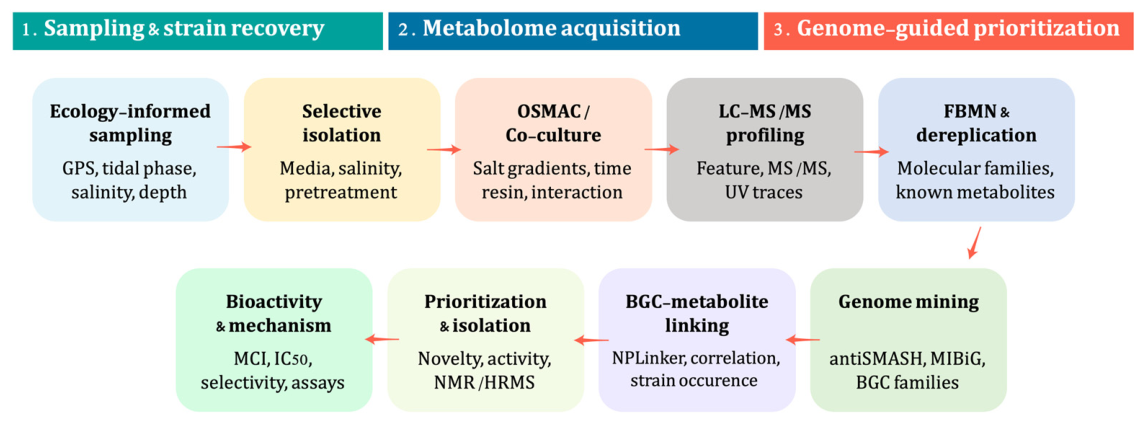
For coastal Streptomyces, salinity should be treated as a primary OSMAC axis. Many studies add seawater or NaCl during isolation, but fewer systematically test salt concentration during metabolite production. Because osmotic stress can affect growth, sporulation, morphology and transcriptional regulation, salt-gradient fermentations may reveal metabolites absent under standard freshwater conditions. Similar logic applies to oxygen availability, solid-state culture and sediment-mimicking particulate substrates. A practical workflow for metabolomics- and genome-guided coastal Streptomyces discovery is summarized in Table 3 and Figure 2.

8. Ecological Interpretation of Specialized Metabolism

Natural products are often discussed primarily as drug leads, but in microbial ecology they can act as signals, inhibitors, developmental cues, metal-binding agents, redox-active molecules, stress protectants or mediators of community interactions. Dynamic coastal environments offer an opportunity to connect these ecological roles with discovery. A metabolite induced only under high salt may reflect osmotic stress or salt-responsive regulation. A metabolite induced during co-culture may function in competition or communication. A pigment or redox-active aromatic metabolite may participate in oxidative stress management or electron transfer.
This ecological interpretation must remain cautious. Isolation of a compound from a coastal strain does not prove that the compound functions in the sediment. Laboratory culture conditions are artificial, and many metabolites may be produced only under nutrient-rich fermentation. Nevertheless, ecological hypotheses can guide experiments. If a strain is isolated from an anoxic mudflat layer but produces a redox-active aromatic compound under oxygen-limited culture, that observation can motivate controlled redox assays. If a lipopeptide is induced by co-culture with a sediment fungus, it can motivate microscopy, inhibition-zone assays, transcriptomics or imaging mass spectrometry.
Future coastal Streptomyces papers should report ecological metadata and induction conditions in enough detail to support such hypotheses. Without this information, natural product reports remain disconnected case studies. With metadata, each compound contributes to a larger map of how coastal gradients influence Streptomyces chemistry. Over time, this map could support predictive sampling in which specific habitats are targeted for features such as halogenation, siderophore production, lipopeptides, osmoprotectant-related metabolites or co-culture-responsive BGCs.

9. From Strain Catalogues to Prioritized Chemical Space

Many environmental actinomycete studies begin by collecting a large number of strains and screening extracts for activity. While useful, this catalogue approach is inefficient when the goal is new chemistry. A modern coastal Streptomyces program should prioritize interpretable chemical space rather than strain count. Ten well-characterized strains with genomes, metabolomes, OSMAC profiles and ecological metadata may be more valuable than hundreds of poorly annotated isolates.
Prioritization can occur at several levels. At the strain level, genome mining can identify isolates with unique BGC repertoires or divergent gene cluster families. At the extract level, LC-MS/MS can identify unusual molecular families, halogenated ions, peptidic isotope patterns, glycosylated features or metabolites absent from databases. At the bioactivity level, active extracts can be compared with inactive controls to identify correlated features. At the ecological level, strains from unusual salinity, redox or organic-rich microhabitats can be prioritized if they produce distinctive chemistry.
This strategy is particularly important for Streptomyces because the genus is both productive and repetitive. A coastal isolate may produce known compounds at high abundance while also encoding cryptic BGCs for new scaffolds. Without dereplication and genome-informed prioritization, researchers may spend substantial effort purifying known metabolites. Conversely, without cultivation optimization, a genome with novel BGCs may never reveal its chemistry. The most effective studies will move iteratively among genome, culture, metabolome and bioactivity.

10. Future Perspectives

The next stage of coastal Streptomyces research should be driven by integration. Sampling should be guided by ecological gradients, isolation should preserve habitat-relevant variables, metabolomics should be used before large-scale purification, genome mining should prioritize cryptic and divergent BGCs, and bioactivity should be connected to molecular families. This approach will reduce rediscovery and make each new compound report more informative.
This recommendation is consistent with broader trends in natural product discovery. Metabolomics-genomics integration and activation of silent BGCs are now central strategies [50,51]. Minimum-information and BGC-family resources provide standards for reusable biosynthetic data [52,53,54]. Marine Streptomyces, associated actinomycete surveys and MAR4-focused analyses provide the broader context for genus-level prioritization [55,56,57,58,59,60,61,62]. Coastal wetland, intertidal and classic marine actinomycete studies further show why environmental metadata and informed systematics remain essential [63,64,65,66,67,68,69,70].
Artificial intelligence and machine learning may further improve prioritization, but only if high-quality data are available. Models that predict chemical novelty, BGC product class, fragmentation pattern or bioactivity require standardized metadata, curated structures and accurate spectra. Coastal Streptomyces studies can contribute by depositing clean MS/MS data, high-quality genomes, strain metadata and culture-condition information. In this sense, every well-reported discovery paper becomes part of a future predictive ecosystem.
Another promising direction is mechanism-aware ecology. Rather than only testing extracts against pathogens or cancer cells, researchers can ask how metabolites affect microbial competitors, biofilm formation, motility, sporulation, iron acquisition, oxidative stress, fungal virulence pathways or interactions with sediment particles. Such assays may reveal ecological functions that are also pharmacologically relevant. Anti-biofilm, anti-virulence, anti-inflammatory or quorum-sensing activities may be discovered by assays designed around coastal microbial interaction rather than standard growth inhibition alone.
Finally, coastal Streptomyces research should remain collaborative across microbiology, chemistry, ocean science, ecology, computational biology and pharmacology. The most compelling future papers will not simply state that a strain was isolated from a marine environment; they will explain why that environment matters, how the strain was prioritized, how the metabolite was connected to a biosynthetic pathway and why the compound or pathway advances natural product science.

Funding

This research was supported by the National Research Foundation of Korea (NRF) grant funded by the Korea government (MSIT) (RS-2025-00557311).

Data Availability Statement

No new data were generated or analyzed in this review. Data sharing is not applicable to this article.

Conflicts of Interest

The author declares no conflict of interest.

References

  1. Newman, D. J.; Cragg, G. M. Natural Products as Sources of New Drugs over the Nearly Four Decades from 01/1981 to 09/2019. J. Nat. Prod. 2020, 83, 770–803. [Google Scholar] [CrossRef] [PubMed]
  2. Berdy, J. Bioactive Microbial Metabolites. J. Antibiot. 2005, 58, 1–26. [Google Scholar] [CrossRef] [PubMed]
  3. Genilloud, O. Actinomycetes: Still a Source of Novel Antibiotics. Nat. Prod. Rep. 2017, 34, 1203–1232. [Google Scholar] [CrossRef] [PubMed]
  4. Barka, E. A.; Vatsa, P.; Sanchez, L.; Gaveau-Vaillant, N.; Jacquard, C.; Klenk, H.-P.; Clement, C.; Ouhdouch, Y.; van Wezel, G. P. Taxonomy, Physiology, and Natural Products of Actinobacteria. Microbiol. Mol. Biol. Rev. 2016, 80, 1–43. [Google Scholar] [CrossRef] [PubMed]
  5. Donald, L.; Pipite, A.; Subramani, R.; Owen, J.; Keyzers, R. A.; Taufa, T. Streptomyces: Still the Biggest Producer of New Natural Secondary Metabolites, a Current Perspective. Microbiol. Res. 2022, 13, 418–465. [Google Scholar] [CrossRef]
  6. Baltz, R. H. Renaissance in Antibacterial Discovery from Actinomycetes. Curr. Opin. Pharmacol. 2008, 8, 557–563. [Google Scholar] [CrossRef] [PubMed]
  7. van der Meij, A.; Worsley, S. F.; Hutchings, M. I.; van Wezel, G. P. Chemical Ecology of Antibiotic Production by Actinomycetes. FEMS Microbiol. Rev. 2017, 41, 392–416. [Google Scholar] [CrossRef] [PubMed]
  8. Dyer, K. R. The Typology of Intertidal Mudflats. Geol. Soc. Lond. Spec. Publ. 1998, 139, 11–24. [Google Scholar] [CrossRef]
  9. Dyer, K. R.; Christie, M. C.; Wright, E. W. The Classification of Intertidal Mudflats. Cont. Shelf Res. 2000, 20, 1039–1060. [Google Scholar] [CrossRef]
  10. Dissanayake, N. G.; Frid, C. L. J.; Drylie, T. P.; Caswell, B. A. Ecological Functioning of Mudflats: Global Analysis Reveals Both Regional Differences and Widespread Conservation of Functioning. Mar. Ecol. Prog. Ser. 2018, 604, 1–20. [Google Scholar] [CrossRef]
  11. Duncan, K.; Haltli, B.; Gill, K. A.; Kerr, R. G. Bioprospecting from Marine Sediments of New Brunswick, Canada: Exploring the Relationship between Total Bacterial Diversity and Actinobacteria Diversity. Mar. Drugs 2014, 12, 899–925. [Google Scholar] [CrossRef] [PubMed]
  12. Jose, P. A.; Jha, B. Intertidal Marine Sediment Harbours Actinobacteria with Promising Bioactive and Biosynthetic Potential. Sci. Rep. 2017, 7, 10041. [Google Scholar] [CrossRef]
  13. Mohapatra, M.; Yadav, R.; Rajput, V.; Dharne, M. S.; Rastogi, G. Metagenomic Analysis Reveals Genetic Insights on Biogeochemical Cycling, Xenobiotic Degradation, and Stress Resistance in Mudflat Microbiome. J. Environ. Manag. 2021, 292, 112738. [Google Scholar] [CrossRef] [PubMed]
  14. Yan, Y. W.; Jiang, Q. Y.; Wang, J. G.; Zhu, T.; Zou, B.; Qiu, Q. F.; Quan, Z. X. Microbial Communities and Diversities in Mudflat Sediments Analyzed Using a Modified Metatranscriptomic Method. Front. Microbiol. 2018, 9, 93. [Google Scholar] [CrossRef] [PubMed]
  15. Ryu, D.; Hillman, P. F.; Akinniyi, G. A.; Nam, S.-J.; Yang, I. Marine Mudflat Actinomycetes as a Novel Natural Products Source. Front. Mar. Sci. 2023, 10, 1297446. [Google Scholar] [CrossRef]
  16. Moon, K.; Chung, B.; Shin, Y.; Rheingold, A. L.; Moore, C. E.; Park, S. J.; Park, S.; Lee, S. K.; Oh, K.-B.; Shin, J.; Oh, D.-C. Pentacyclic Antibiotics from a Tidal Mud Flat-Derived Actinomycete. J. Nat. Prod. 2015, 78, 524–529. [Google Scholar] [CrossRef]
  17. Bernan, V. S.; Montenegro, D. A.; Korshalla, J. D.; Steinberg, D. A.; Greenstein, M.; Maiese, W. M. Bioxalomycins, New Antibiotics Produced by the Marine Streptomyces sp. LL-31F508: Taxonomy and Fermentation. J. Antibiot. 1994, 47, 1417–1424. [Google Scholar] [CrossRef]
  18. Kim, S. H.; Shin, Y.; Lee, S. H.; Oh, K.-B.; Lee, S. K.; Shin, J.; Oh, D.-C. Salternamides A-D from a Halophilic Streptomyces sp. Actinobacterium. J. Nat. Prod. 2015, 78, 836–843. [Google Scholar] [CrossRef] [PubMed]
  19. Kim, S. H.; Ha, T. K. Q.; Shin, J.; Oh, D.-C. Salternamide E from a Saltern-Derived Streptomyces sp. Nat. Prod. Sci. 2015, 21, 273–277. [Google Scholar] [CrossRef]
  20. Bae, M.; Moon, K.; Kim, J.; Park, H. J.; Lee, S. K.; Shin, J.; Nam, S.-J.; Oh, D.-C. Mohangic Acids A-E, p-Aminoacetophenonic Acids from a Marine-Mudflat-Derived Streptomyces sp. J. Nat. Prod. 2016, 79, 332–339. [Google Scholar] [CrossRef] [PubMed]
  21. Son, J.; Lee, J. H.; Cho, Y.-J.; Moon, K.; Bae, M. Mohangic Acid H and Mohangiol: New p-Aminoacetophenone Derivatives from a Mudflat-Derived Streptomyces sp. Mar. Drugs 2025, 23, 307. [Google Scholar] [CrossRef]
  22. Peng, A.; Qu, X.; Liu, F.; Li, X.; Li, E.; Xie, W. Angucycline Glycosides from an Intertidal Sediments Strain Streptomyces sp. and Their Cytotoxic Activity against Hepatoma Carcinoma Cells. Mar. Drugs 2018, 16, 470. [Google Scholar] [CrossRef] [PubMed]
  23. Seo, J.; Shin, Y.-H.; Jo, S. J.; Du, Y. E.; Um, S.; Kim, Y. R.; Moon, K. Cystargamides C and D, New Cyclic Lipopeptides from a Tidal Mudflat-Derived Streptomyces sp. JMS132. Front. Microbiol. 2022, 13, 904954. [Google Scholar] [CrossRef] [PubMed]
  24. Gill, K. A.; Berrue, F.; Arens, J. C.; Carr, G.; Kerr, R. G. Isolation and Structure Elucidation of Cystargamide, a Lipopeptide from Kitasatospora cystarginea. J. Nat. Prod. 2014, 77, 1372–1376. [Google Scholar] [CrossRef] [PubMed]
  25. Kitani, S.; Yoshida, M.; Boonlucksanawong, O.; Panbangred, W.; Anuegoonpipat, A.; Kurosu, T.; Ikuta, K.; Igarashi, Y.; Nihira, T. Cystargamide B, a Cyclic Lipodepsipeptide with Protease Inhibitory Activity from Streptomyces sp. J. Antibiot. 2018, 71, 662–666. [Google Scholar] [CrossRef] [PubMed]
  26. Shin, D.; Byun, W. S.; Moon, K.; Kwon, Y.; Bae, M.; Um, S.; Lee, S. K.; Oh, K.-B.; Shin, J.; Oh, D.-C. Coculture of Marine Streptomyces sp. with Bacillus sp. Produces a New Piperazic Acid-Bearing Cyclic Peptide. Front. Chem. 2018, 6, 498. [Google Scholar] [CrossRef] [PubMed]
  27. Bae, M.; Oh, J.; Bae, E. S.; Oh, J.; Hur, J.; Suh, Y.-G.; Lee, S. K.; Shin, J.; Oh, D.-C. WS9326H, an Antiangiogenic Pyrazolone-Bearing Peptide from an Intertidal Mudflat Actinomycete. Org. Lett. 2018, 20, 1999–2002. [Google Scholar] [CrossRef]
  28. Bae, M.; Chung, B.; Oh, K.-B.; Shin, J.; Oh, D.-C. Hormaomycins B and C: New Antibiotic Cyclic Depsipeptides from a Marine Mudflat-Derived Streptomyces sp. Mar. Drugs 2015, 13, 5187–5200. [Google Scholar] [CrossRef] [PubMed]
  29. Leutou, A. S.; Yang, I.; Seong, C. N.; Ko, J.; Nam, S.-J. Violapyrone J, a New Alpha-Pyrone Derivative from a Marine-Derived Streptomyces sp. Nat. Prod. Sci. 2015, 21, 248–250. [Google Scholar] [CrossRef]
  30. Lee, H.-S.; An, B.-J.; Kim, H.; Cho, Y.-H.; Kim, D. I.; Jang, J. Y.; Kwak, J.-H.; Lee, H.-S.; Lee, Y. J.; Lee, J. S.; Shin, H. J. Anti-Inflammatory Effect of Violapyrones B and C from a Marine-Derived Streptomyces sp. Nat. Prod. Sci. 2015, 21, 251–254. [Google Scholar] [CrossRef]
  31. Bode, H. B.; Bethe, B.; Hofs, R.; Zeeck, A. Big Effects from Small Changes: Possible Ways to Explore Nature's Chemical Diversity. ChemBioChem 2002, 3, 619–627. [Google Scholar] [CrossRef] [PubMed]
  32. Pan, R.; Bai, X.; Chen, J.; Zhang, H.; Wang, H. Exploring Structural Diversity of Microbe Secondary Metabolites Using OSMAC Strategy: A Literature Review. Front. Microbiol. 2019, 10, 294. [Google Scholar] [CrossRef] [PubMed]
  33. Cui, J.; Kim, E.; Moon, D. H.; Kim, T. H.; Kang, I.; Lim, Y.; Shin, D.; Hwang, S.; Du, Y. E.; Song, M. C. Taeanamides A and B, Nonribosomal Lipo-Decapeptides Isolated from an Intertidal-Mudflat-Derived Streptomyces sp. Mar. Drugs 2022, 20, 400. [Google Scholar] [CrossRef] [PubMed]
  34. Kang, S.; Han, J.; Jang, S. C.; An, J. S.; Kang, I.; Kwon, Y.; Nam, S.-J.; Shim, S. H.; Cho, J.-C.; Oh, D.-C. Epoxinnamide: An Epoxy Cinnamoyl-Containing Nonribosomal Peptide from an Intertidal Mudflat-Derived Streptomyces sp. Mar. Drugs 2022, 20, 455. [Google Scholar] [CrossRef]
  35. Kim, H.; Yang, I.; Patil, R. S.; Kang, S.; Lee, J.; Choi, H.; Nam, S.-J.; Kang, H. Anithiactins A-C, Modified 2-Phenylthiazoles from a Mudflat-Derived Streptomyces sp. J. Nat. Prod. 2014, 77, 2716–2719. [Google Scholar] [CrossRef] [PubMed]
  36. Lee, H. W.; Jung, W. K.; Kim, H. J.; Jeong, Y. S.; Nam, S.-J.; Kang, H.; Kim, H. Inhibition of Monoamine Oxidase by Anithiactins from Streptomyces sp. J. Microbiol. Biotechnol. 2015, 25, 1425–1428. [Google Scholar] [CrossRef] [PubMed]
  37. Pulat, S.; Yang, I.; Lee, J.; Hwang, S.; Zhou, R.; Gamage, C. D. B.; Varli, M.; Tas, I.; Yang, Y.; Park, S.-Y.; et al. Anithiactin D, a Phenylthiazole Natural Product from Mudflat-Derived Streptomyces sp., Suppresses Motility of Cancer Cells. Mar. Drugs 2024, 22, 88. [Google Scholar] [CrossRef] [PubMed]
  38. Lee, J.; Kim, H.; Lee, T. G.; Yang, I.; Won, D. H.; Choi, H.; Nam, S.-J.; Kang, H. Anmindenols A and B, Inducible Nitric Oxide Synthase Inhibitors from a Marine-Derived Streptomyces sp. J. Nat. Prod. 2014, 77, 1528–1531. [Google Scholar] [CrossRef] [PubMed]
  39. Jeong, H.; Jo, S. J.; Bae, M.; Kim, Y. R.; Moon, K. Actinoflavosides B-D, Flavonoid Type Glycosides from Tidal Mudflat-Derived Actinomyces. Mar. Drugs 2022, 20, 565. [Google Scholar] [CrossRef] [PubMed]
  40. Wang, M.; Carver, J. J.; Phelan, V. V.; Sanchez, L. M.; Garg, N.; Peng, Y.; Nguyen, D. D.; Watrous, J.; Kapono, C. A.; Luzzatto-Knaan, T.; et al. Sharing and Community Curation of Mass Spectrometry Data with Global Natural Products Social Molecular Networking. Nat. Biotechnol. 2016, 34, 828–837. [Google Scholar] [CrossRef] [PubMed]
  41. Nothias, L.-F.; Petras, D.; Schmid, R.; Duhrkop, K.; Rainer, J.; Sarvepalli, A.; Protsyuk, I.; Ernst, M.; Tsugawa, H.; Fleischauer, M.; et al. Feature-Based Molecular Networking in the GNPS Analysis Environment. Nat. Methods 2020, 17, 905–908. [Google Scholar] [CrossRef] [PubMed]
  42. Blin, K.; Shaw, S.; Medema, M. H.; Weber, T. The antiSMASH Database Version 4: Additional Genomes and BGCs, New Sequence-Based Searches and More. Nucleic Acids Res. 2024, 52, D586–D589. [Google Scholar] [CrossRef] [PubMed]
  43. Blin, K.; Shaw, S.; Medema, M. H.; Weber, T.; et al. antiSMASH 8.0: Extended Gene Cluster Detection Capabilities and Analyses of Chemistry, Enzymology and Regulation. Nucleic Acids Res. 2025, 53, W32–W38. [Google Scholar] [CrossRef] [PubMed]
  44. Zdouc, M. M.; Blin, K.; Louwen, N. L. L.; et al. MIBiG 4.0: Advancing Biosynthetic Gene Cluster Curation through Global Collaboration. Nucleic Acids Res. 2025, 53, D678–D690. [Google Scholar] [CrossRef] [PubMed]
  45. Navarro-Munoz, J. C.; Selem-Mojica, N.; Mullowney, M. W.; Kautsar, S. A.; Tryon, J. H.; Parkinson, E. I.; De Los Santos, E. L. C.; Yeong, M.; Cruz-Morales, P.; Abubucker, S.; et al. A Computational Framework to Explore Large-Scale Biosynthetic Diversity. Nat. Chem. Biol. 2020, 16, 60–68. [Google Scholar] [CrossRef] [PubMed]
  46. Eldjarn, G. H.; Ramsay, A.; van der Hooft, J. J. J.; Duncan, K. R.; Soldatou, S.; Rousu, J.; Wandy, J.; Rogers, S. NPLinker: A System for Integrating Metabolomic and Genomic Data for Natural Product Discovery. PLoS Comput. Biol. 2021, 17, e1008920. [Google Scholar] [CrossRef]
  47. van Santen, J. A.; Jacob, G.; Singh, A. L.; Aniebok, V.; Balunas, M. J.; Bunsko, D.; Neto, F. C.; Castano-Espriu, L.; Chang, C.; Clark, T. N.; et al. The Natural Products Atlas: An Open Access Knowledge Base for Microbial Natural Products Discovery. ACS Cent. Sci. 2019, 5, 1824–1833. [Google Scholar] [CrossRef] [PubMed]
  48. Duhrkop, K.; Fleischauer, M.; Ludwig, M.; Aksenov, A. A.; Melnik, A. V.; Meusel, M.; Dorrestein, P. C.; Rousu, J.; Bocker, S. SIRIUS 4: A Rapid Tool for Turning Tandem Mass Spectra into Metabolite Structure Information. Nat. Methods 2019, 16, 299–302. [Google Scholar] [CrossRef] [PubMed]
  49. Duhrkop, K.; Nothias, L.-F.; Fleischauer, M.; Reher, R.; Ludwig, M.; Hoffmann, M. A.; Petras, D.; Gerwick, W. H.; Rousu, J.; Dorrestein, P. C.; Bocker, S. Systematic Classification of Unknown Metabolites Using High-Resolution Fragmentation Mass Spectra. Nat. Biotechnol. 2021, 39, 462–471. [Google Scholar] [CrossRef] [PubMed]
  50. Caesar, L. K.; Kvalheim, O. M.; Cech, N. B. Metabolomics and Genomics in Natural Products Research: Complementary Tools for Targeting New Chemical Entities. Nat. Prod. Rep. 2021, 38, 2041–2065. [Google Scholar] [CrossRef] [PubMed]
  51. Rutledge, P. J.; Challis, G. L. Discovery of Microbial Natural Products by Activation of Silent Biosynthetic Gene Clusters. Nat. Rev. Microbiol. 2015, 13, 509–523. [Google Scholar] [CrossRef] [PubMed]
  52. Medema, M. H.; Kottmann, R.; Yilmaz, P.; Cummings, M.; Biggins, J. B.; Blin, K.; de Bruijn, I.; Chooi, Y.-H.; Claesen, J.; Coates, R. C.; et al. Minimum Information about a Biosynthetic Gene Cluster. Nat. Chem. Biol. 2015, 11, 625–631. [Google Scholar] [CrossRef] [PubMed]
  53. Kautsar, S. A.; Blin, K.; Shaw, S.; Navarro-Munoz, J. C.; Terlouw, B. R.; van der Hooft, J. J. J.; van Santen, J. A.; Tracanna, V.; Suarez Duran, H. G.; Pascal Andreu, V.; et al. MIBiG 2.0: A Repository for Biosynthetic Gene Clusters of Known Function. Nucleic Acids Res. 2020, 48, D454–D458. [Google Scholar] [CrossRef] [PubMed]
  54. Kautsar, S. A.; van der Hooft, J. J. J.; de Ridder, D.; Medema, M. H. BiG-FAM: The Biosynthetic Gene Cluster Families Database. Nucleic Acids Res. 2021, 49, D490–D497. [Google Scholar] [CrossRef] [PubMed]
  55. Yang, Z.; He, J.; Wei, X.; Ju, J.; Ma, J. Exploration and Genome Mining of Natural Products from Marine Streptomyces. Appl. Microbiol. Biotechnol. 2020, 104, 67–76. [Google Scholar] [CrossRef] [PubMed]
  56. Chen, J.; Xu, L.; Zhou, Y.; Han, B. Natural Products from Actinomycetes Associated with Marine Organisms. Mar. Drugs 2021, 19, 629. [Google Scholar] [CrossRef] [PubMed]
  57. Jose, P. A.; Maharshi, A.; Jha, B. Actinobacteria in Natural Products Research: Progress and Prospects. Microbiol. Res. 2021, 246, 126708. [Google Scholar] [CrossRef] [PubMed]
  58. Bull, A. T.; Goodfellow, M. Dark, Rare and Inspirational Microbial Matter in the Extremobiosphere: 16,000 m of Bioprospecting Campaigns. Microbiology 2019, 165, 1252–1264. [Google Scholar] [CrossRef] [PubMed]
  59. Williams, P. G.; Buchanan, G. O.; Feling, R. H.; Kauffman, C. A.; Jensen, P. R.; Fenical, W. New Cytotoxic Salinosporamides from the Marine Actinomycete Salinispora tropica. J. Org. Chem. 2005, 70, 6196–6203. [Google Scholar] [CrossRef] [PubMed]
  60. Riedlinger, J.; Reicke, A.; Zahner, H.; Krismer, B.; Bull, A. T.; Maldonado, L. A.; Ward, A. C.; Goodfellow, M.; Bister, B.; Bischoff, D.; et al. Abyssomicins, Inhibitors of the para-Aminobenzoic Acid Pathway Produced by the Marine Verrucosispora Strain AB-18-032. J. Antibiot. 2004, 57, 271–279. [Google Scholar] [CrossRef] [PubMed]
  61. Carroll, A. R.; Copp, B. R.; Davis, R. A.; Keyzers, R. A.; Prinsep, M. R. Marine Natural Products. Nat. Prod. Rep. 2021, 38, 362–413. [Google Scholar] [CrossRef] [PubMed]
  62. Sweeney, D.; Chase, A. B.; Bogdanov, A.; Jensen, P. R MAR4 Streptomyces: A Unique Resource for Natural Product Discovery. J. Nat. Prod. 2024, 87, 439–452. [Google Scholar] [CrossRef] [PubMed]
  63. Li, J.; Chen, Q.; Li, Q.; Zhao, C.; Feng, Y. Influence of Plants and Environmental Variables on the Diversity of Soil Microbial Communities in the Yellow River Delta Wetland, China. Chemosphere 2021, 274, 129967. [Google Scholar] [CrossRef] [PubMed]
  64. Tambadou, F.; Lanneluc, I.; Sable, S.; Klein, G.; Doghri, I.; Sopena, V.; Didelot, S.; Barthelemy, C.; Eparvier, V.; Chevrot, R.; et al. Novel Nonribosomal Peptide Synthetase (NRPS) Genes Sequenced from Intertidal Mudflat Bacteria. FEMS Microbiol. Lett. 2014, 357, 123–130. [Google Scholar] [CrossRef] [PubMed]
  65. Chen, L.; Wang, Z.; Du, S.; Wang, G. Antimicrobial Activity and Functional Genes of Actinobacteria from Coastal Wetland. Curr. Microbiol. 2021, 78, 3058–3067. [Google Scholar] [CrossRef] [PubMed]
  66. Shigemori, H.; Ohsaki, A.; Kobayashi, J. Bioactive Metabolites from Marine Microorganisms. J. Nat. Prod. 1994, 57, 1486–1491. [Google Scholar] [CrossRef] [PubMed]
  67. Fenical, W.; Jensen, P. R. Developing a New Resource for Drug Discovery: Marine Actinomycete Bacteria. Nat. Chem. Biol. 2006, 2, 666–673. [Google Scholar] [CrossRef] [PubMed]
  68. Jensen, P. R.; Moore, B. S.; Fenical, W. The Marine Actinomycete Genus Salinispora: A Model Organism for Secondary Metabolite Discovery. Nat. Prod. Rep. 2015, 32, 738–751. [Google Scholar] [CrossRef] [PubMed]
  69. Subramani, R.; Aalbersberg, W. Marine Actinomycetes: An Ongoing Source of Novel Bioactive Metabolites. Microbiol. Res. 2012, 167, 571–580. [Google Scholar] [CrossRef] [PubMed]
  70. Goodfellow, M.; Fiedler, H.-P. A Guide to Successful Bioprospecting: Informed by Actinobacterial Systematics. Antonie Van. Leeuwenhoek 2010, 98, 119–142. [Google Scholar] [CrossRef] [PubMed]
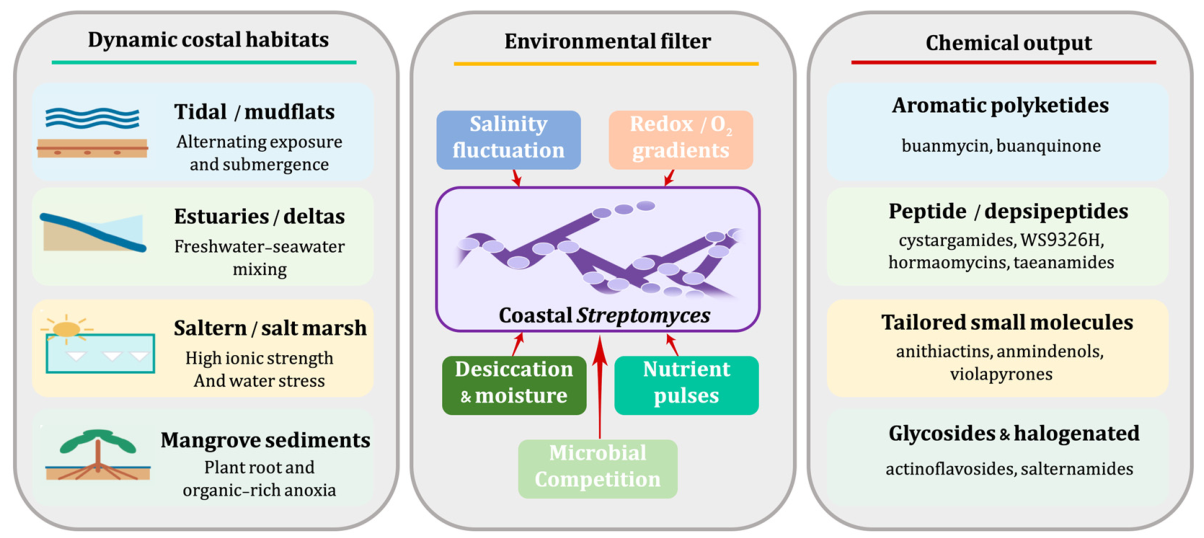
Figure 1. Coastal Streptomyces chemical ecology in dynamic coastal environments. Dynamic habitats such as tidal flats, estuaries, salterns, salt marshes and mangrove-associated sediments expose Streptomyces populations to fluctuating salinity, redox gradients, desiccation, nutrient pulses and microbial competition. These environmental filters may influence condition-dependent expression of specialized metabolites, including aromatic polyketides, peptides and depsipeptides, tailored small molecules, glycosides and halogenated analogues.
Preprints 218796 g001
Figure 2. Metabolomics- and genome-guided workflow for coastal Streptomyces natural product discovery. An integrated workflow connects ecology-informed sampling, selective isolation, OSMAC cultivation, co-culture, LC-MS/MS profiling, feature-based molecular networking, genome mining, BGC-metabolite linking, compound prioritization, isolation and mechanism-aware bioactivity evaluation. Quality controls, including media blanks, replicate cultures, pooled QC samples, adduct-aware annotation and transparent data deposition, are essential for reproducible prioritization.
Preprints 218796 g002
Table 1. Dynamic coastal niches relevant to Streptomyces natural product discovery.
Coastal niche Key environmental features Discovery rationale for Streptomyces Recommended metadata
Tidal flats / mudflats Alternating submergence and exposure; fine sediments; redox gradients; high microbial biomass Strong temporal stress and microbial competition may favor inducible specialized metabolism Tidal phase, depth, salinity, pH, redox, grain size, organic matter, temperature
Intertidal sediments Wave/tide mixing; oxygen gradients; particle-associated biofilms Useful for isolating strains adapted to fluctuating moisture and oxygen Sediment depth, distance from shore, conductivity, dissolved oxygen, texture
Estuaries / deltas Freshwater-seawater mixing; nutrient pulses; seasonal salinity shifts Gradient sampling can link strain distribution and metabolite expression to salinity and nutrients Salinity transect, river flow, nutrient load, organic carbon, sampling season
Solar salterns / salt marshes High ionic strength; evaporation; halophyte influence; osmotic stress Halotolerant Streptomyces may express salt-responsive metabolites and enzymes NaCl concentration, water activity, brine chemistry, vegetation type
Mangrove-associated sediments Plant roots, anoxic sediments, high organic matter, tannins and lignocellulose Plant-microbe and fungus-bacterium interactions may activate defensive metabolites Host plant, rhizosphere status, sediment depth, salinity, organic matter
Coastal wetlands Mixed terrestrial-marine organic input; fluctuating water level Broadly accessible habitat for strain libraries and comparative ecology Water level, vegetation, conductivity, pH, seasonal conditions
Table 2. Selected specialized metabolites from coastal, intertidal, saltern or marine sediment-derived Streptomyces relevant to this review.
Habitat / region Producer Representative metabolites Structural class / feature Reported activity or significance Refs.
Buan tidal mudflat, Republic of Korea Streptomyces sp. SNR69 Buanmycin; buanquinone Pentacyclic xanthone / anthraquinone Buanmycin: antibacterial, antifungal, sortase A inhibition, cytotoxicity [16]
Intertidal sediment, Key West, Florida Streptomyces sp. LL-31F508 Bioxalomycins Naphthyridinomycin-like antibiotics Antimicrobial activity against Staphylococcus and Enterococcus species [17]
Salt-influenced coastal environment, Republic of Korea Streptomyces sp. HK10 Salternamides A-E Highly substituted polyketide-related metabolites, chlorinated analogue Cytotoxicity; weak Na+/K+-ATPase inhibition for selected members [18,19]
Mohang mudflat, Republic of Korea Streptomyces sp. SNM31 Mohangic acids A-E p-Aminoacetophenonic acid derivatives Chemical novelty; scaffold family expansion [20]
Nakdong River estuary tidal mudflat, Republic of Korea Streptomyces sp. AWH31-250 Mohangic acid H; mohangiol p-Aminoacetophenone derivatives; candicidin-related precursor chemistry WGS/DP4+ and biosynthetic proposal; moderate Candida albicans isocitrate lyase inhibition [21]
Marine sediment/coastal isolate Streptomyces sp. OC1610.4 Landomycin N; galtamycin C; vineomycin D; saquayamycin B; beta-carboline; indole-3-acetic acid Angucyclines and nitrogenous small molecules Cytotoxicity/chemical diversity depending on compound [22]
Tidal mudflat, Republic of Korea Streptomyces sp. JMS132 Cystargamides C and D Cyclic lipopeptides / NRPS products Antioxidant activity; WGS-based NRPS pathway proposal; cystargamide and cystargamide B provide scaffold context from other sources [23,24,25]
Mudflat-derived isolate Streptomyces sp. JB5 Dentigerumycin E Cyclic peptide family Co-culture-induced piperazic-acid peptide; antiproliferative/antimetastatic context; PKS-NRPS BGC support [26]
Intertidal mudflat Streptomyces sp. OID44 Epoxinnamide Epoxy cinnamoyl-containing natural product Scaffold novelty; metabolomics-friendly substructure [34]
Marine mudflat-derived isolate Streptomyces sp. SNM55 WS9326H Pyrazolone-bearing peptide Antiangiogenic activity [27]
Marine mudflat-derived isolate Streptomyces sp. SNM55 Hormaomycins B and C Cyclic depsipeptides Antibiotic activity [28]
Tidal flat-derived isolates Streptomyces sp. JML48 / JMS33 Actinoflavosides B-D Glycosides / flavonoid-like metabolites Antibacterial activity against Pseudomonas aeruginosa; immunomodulatory activity for selected analogue [39]
Coastal/marine-derived isolate Streptomyces sp. CMDD10D111 Anmindenols A and B Indene-containing sesquiterpenoids Inducible nitric oxide synthase inhibition [38]
Mudflat-derived isolate Streptomyces sp. 10A085 Anithiactins A-C Modified 2-phenylthiazoles Acetylcholinesterase and monoamine oxidase inhibition [35,36]
Mudflat-derived isolate Streptomyces sp. 10A085 Anithiactin D Phenylthiazole analogue Suppression of cancer-cell motility; analogue expansion [37]
Marine mudflat-derived isolate Streptomyces sp. SCO0718 Violapyrone J; violapyrones B and C Small alpha-pyrone / polyketide derivatives Anti-inflammatory activity reported for selected analogues [29,30]
Intertidal mudflat, Anmyeondo, Republic of Korea Streptomyces sp. AMD43 Taeanamides A and B Nonribosomal lipo-decapeptides Genome-informed NRPS proposal; taeanamide A mild anti-tuberculosis activity; taeanamide B cytotoxicity [33]
Table 3. Practical workflow for metabolomics- and genome-guided coastal Streptomyces discovery.
Stage Recommended action Main output Critical comment
Sampling Collect sediment across tidal phase, depth and salinity gradients Field metadata sheet; GPS; sediment chemistry; sample photographs Sampling without metadata prevents ecological interpretation
Isolation Use multiple media and salinity levels; apply pretreatments Diverse Streptomyces library; 16S or genome-based taxonomic dereplication Avoid overgrowth by fast bacteria/fungi; reduce duplicate isolates
Small-scale fermentation OSMAC matrix with media, salt, time, resin and co-culture variables Extract library under standardized conditions Include biological/culture replicates where possible
Metabolomics Acquire LC-MS/MS and UV data; process with MZmine/MS-DIAL/XCMS; submit to GNPS/FBMN Feature table; molecular networks; putative molecular families Normalize extraction/injection; include blanks, media controls, pooled QCs and adduct-aware annotation
Genome mining Sequence prioritized strains; annotate BGCs with antiSMASH and compare with MIBiG BGC inventory and novelty assessment Draft genome quality affects BGC boundaries
Prioritization Integrate bioactivity, uniqueness, BGC novelty and molecular-family size Ranked list of compounds and conditions for scale-up Avoid prioritizing abundant known compounds
Isolation Scale up condition producing prioritized molecular family Purified compound(s); HRMS/NMR data Track target nodes during fractionation
Biosynthetic validation Use feeding, isotope labeling, gene context, knockouts or heterologous expression where feasible Proposed or validated pathway Full genetic validation may be beyond first report but should be discussed
Data deposition Deposit MS/MS data, genome assemblies and BGC annotations when possible Reproducible discovery record Improves reuse and reviewer confidence
Disclaimer/Publisher’s Note: The statements, opinions and data contained in all publications are solely those of the individual author(s) and contributor(s) and not of MDPI and/or the editor(s). MDPI and/or the editor(s) disclaim responsibility for any injury to people or property resulting from any ideas, methods, instructions or products referred to in the content.
Copyright: This open access article is published under a Creative Commons CC BY 4.0 license, which permit the free download, distribution, and reuse, provided that the author and preprint are cited in any reuse.
Prerpints.org logo

Preprints.org is a free preprint server supported by MDPI in Basel, Switzerland.

Subscribe

© 2026 MDPI (Basel, Switzerland) unless otherwise stated

Accessibility

Disclaimer

Terms of Use

Privacy Policy

Privacy Settings