
Submitted:
15 June 2026
Posted:
16 June 2026
You are already at the latest version
Abstract
Artificial Intelligence (AI) based support systems are transforming the educational landscape by enhancing teaching efficiency, personalized learning, and accessibility. Despite rapid technological progress, educational institutions face persistent challenges such as unequal access to quality learning resources, limited teacher support, and the need for individualized student engagement. These issues hinder effective learning outcomes and inclusivity in modern classrooms. This paper explores the design and implementation of sustainable and AI-based educational support systems that address these challenges through intelligent tutoring, adaptive learning analytics, and automated feedback mechanisms. By integrating natural language processing, machine learning, and predictive modelling, the proposed framework provides real-time assistance to educators and learners, fostering data-driven decision-making and inclusive pedagogy. Qualitative research demonstrates that AI-driven systems can significantly improve academic performance, teacher productivity, and learner motivation, offering a scalable and equitable solution for the future of education in both traditional and digital environments.
Keywords:
artificial intelligence
; support
; module
; educational systems
1. Introduction
The rapid advancement of artificial intelligence is increasingly shaping the educational domain, heralding profound changes in how teaching and learning are conceived and delivered. Traditional instruction-often based on uniform pacing and content delivery-struggles to accommodate diverse student needs, varying learning styles, and the demand for inclusive and equitable learning environments [1]. In response, AI-based support systems have emerged as promising solutions to personalise learning trajectories, optimise teacher support, and enhance educational outcomes. Studies in the field of AI in education (AIEd) reveal several key trends. For instance, research indicates that adaptive learning platforms powered by AI can tailor content, pace, and feedback to individual learners, thereby improving engagement and achievement [1]. Moreover, systematic reviews highlight that intelligent tutoring systems (ITSs) and other AI-driven tools show positive effects on students’ performance, though the impact varies across contexts and designs [2]. According to Wang et al. [3], AI-powered systems within learning management frameworks are supporting teaching and learning in ways previously not feasible.
Despite these advances, persistent challenges remain. Educational inequalities, limited teacher capacity, and rigid one-size-fits-all models continue to hinder the effectiveness of conventional approaches [4]. Additionally, the integration of AI in education raises questions of data privacy, algorithmic bias, alignment with pedagogical goals, and the role of the teacher in AI-based settings [2,4]. These concerns underscore the need for frameworks that not only deliver adaptive, intelligent support but also align with inclusive, ethical, and evidence-based educational practices.
The integration of artificial intelligence in educational settings has become increasingly pertinent as schools and higher-education institutions face mounting pressures to accommodate diverse learner needs, improve equity, and harness digital transformation. AI’s relevance stems from its capacity to personalise learning trajectories, automate routine tasks, and provide analytic insights that were previously difficult or impossible to realise at scale [6]. For instance, systematic reviews show that the volume of research in AI in education has surged in recent years, especially in higher-education contexts. One review found that publications in 2021-2022 more than doubled compared to earlier years [7].
Beyond mere volume, the types of AI applications are expanding from adaptive learning systems and intelligent tutoring systems to learning analytics, predictive modelling, and generative AI. These systems promise to enhance instructional quality, support individualized feedback, and improve learning outcomes [8].
Furthermore, in the context of inclusive education, ensuring that all learners, including those with disabilities or from disadvantaged backgrounds, receive equitable opportunities, AI can potentially offer tailored support, scaffolded interaction, and real-time analytics that help educators differentiate instruction more feasibly than ever before. This aligns directly with contemporary priorities in education policy around accessibility and personalised pedagogy. In short, the relevance of AI in education is underpinned by both technological advances and systemic educational needs: the need for scalable personalization, teacher support, inclusive pedagogy, and efficient analytics in increasingly complex educational environments.
Despite the growing body of research on AI in education, existing studies tend to focus on isolated solutions, such as intelligent tutoring systems, adaptive learning platforms, or learning analytics tools. Limited attention has been paid to integrated frameworks that simultaneously support students, teachers, and educational administrators in a unified educational support environment. Furthermore, empirical evidence on the implementation of such frameworks in higher education remains limited. This gap motivates the development of the framework proposed in this study.
In this paper, we propose a comprehensive framework for AI-based support systems in education that addresses these gaps by combining adaptive analytics, real-time feedback, and teacher-centred design. The goal is to equip both educators and learners with tools that foster personalised engagement, data-driven decision-making, and scalable support, while maintaining a commitment to inclusivity, transparency and pedagogical alignment. Through this work, we aim to contribute to the evolving discourse on how AI can meaningfully transform education in equitable and effective ways. Therefore, the aim of this study is to develop and evaluate an AI-based educational support framework for higher education. The main contributions of this research are: (1) the development of an integrated AI-based educational support framework that combines adaptive learning pathways, AI-supported feedback, learner analytics, and teacher-decision support tools; and (2) the evaluation of the proposed framework through expert evaluation in the master's level module Educational Support Systems. Accordingly, the study addresses the following research question:
RQ1: How do effective can be the pedagogical suitability of the proposed AI-based support framework?
The proposed framework addresses the need for continuous educational support by integrating adaptive learning, intelligent feedback, and learning analytics in a unified educational environment. Moreover, authors investigate how effective the pedagogical suitability of the proposed AI-based support framework is in enhancing teaching and learning processes. Specifically, it examines whether the integration of adaptive learning mechanisms, intelligent feedback systems, and learning analytics can meaningfully support diverse learners within a unified educational environment. The question focuses on the extent to which the framework aligns with established pedagogical principles such as learner-centered instruction, differentiation, continuous assessment, and formative feedback. It also explores how well the system responds to individual learner needs by adapting content difficulty, pacing, and instructional strategies in real time. In addition, RQ1 evaluates the quality and educational value of AI-generated feedback, particularly whether it is timely, understandable, and actionable for improving student performance. Another important aspect is the use of learning analytics to support teachers in monitoring progress, identifying learning gaps, and making informed instructional decisions however, research question aims to determine whether the proposed AI framework not only functions technically, but also provides pedagogical benefits that enhance engagement, learning outcomes, and teaching efficiency in modern educational settings.
Adaptive analytics, real-time feedback, and teacher-centred design form a complementary triad for effective higher-education course support systems. Adaptive analytics combine learner models, interaction traces, and item/sequence modelling to generate individualized learning pathways that respond to evolving student proficiency [9,10]. Empirical reviews indicate adaptive analytics can increase engagement and improve targeted learning gains when systems use fine-grained diagnostics and continuous profile updating [9,11]. Importantly, adaptive pipelines must surface understandable recommendations (not opaque scores), so instructors and learners can act on them; human-interpretable indicators increase trust and adoption [12].
Real-time feedback extends adaptive analytics by delivering immediate, formative guidance at the moment of learning: on quizzes, discussion posts, and draft submissions [13,14]. Studies report that timeliness strongly moderates feedback effects – feedback delivered within days (ideally minutes to hours in active learning tasks) better supports revision cycles and motivation than delayed responses [13,15]. Automated feedback engines leveraging NLP and rubric mapping can provide consistent, rapid comments on structure and concept coverage and suggest next steps or resources; however, they are most effective when paired with teacher review loops so that nuance and disciplinary judgement are preserved [16,17].
Teacher-centred design is the linchpin that makes analytics and automated feedback pedagogically useful. Research on teacher-facing dashboards and tools emphasises co-design, iterative prototyping, and situating indicators in teachers’ workflows [18,19,20]. Teacher involvement aligns analytics outputs with curriculum goals, reduces data fatigue, and ensures interventions are contextually appropriate [21,22]. Dashboards that combine at-a-glance alerts (risk flags) with interactive drilldowns and recommended pedagogical actions (e.g., grouping suggestions, targeted prompts) improve teacher decision-making and increase uptake compared to static visualizations [16,23].
Integrative designs that connect adaptive analytics, real-time feedback, and teacher dashboards follow three practical patterns. First, a learner model layer fuses pretest diagnostics, time-on-task, and assignment performance to maintain an evolving competency vector for each student; this vector drives resource recommendation and difficulty adaptation [24,25]. Second, a feedback orchestration layer generates immediate formative messages and suggests corrective tasks; messages are versioned so teachers can audit and refine automated feedback templates [13,16]. Third, a teacher interface surfaces cohorts and individuals needing intervention, explains why a student was flagged (feature-level explanations), and offers concrete interventions aligned to learning objectives [17,26].
Evidence from higher-education pilots suggests measurable benefits but also important caveats. Adaptive pathways and timely feedback improve assignment revision rates, self-regulated learning behaviours, and short-term assessment scores when systems are transparent and integrated into course activities [11,27]. However, gains vary by discipline, prior attainment, and students’ digital literacies; subgroup analyses are essential to detect differential effects and to prevent widening achievement gaps [28,29]. Studies also show that teacher training and workload redesign (time to interpret dashboards and to act on recommendations) are critical mediators of success [20,30].
Design recommendations emerging from the literature converge on four principles. (1) Transparency: make data sources, indicators, and algorithmic logic intelligible to teachers and students. (2) Actionability: pair analytics with recommended, low-cost pedagogical actions (e.g., targeted formative tasks, adaptive grouping). (3) Timeliness: optimize the latency of feedback to match pedagogical cycles (instant for low-stakes practice; short delays for drafted assessments). (4) Teacher agency: enable teachers to edit thresholds, tune recommendations, and author feedback templates so systems augment – not replace – pedagogical judgement [12,14,17].
Artificial Intelligence-based support systems in higher education are commonly conceptualized through integrated frameworks that combine learning analytics, adaptive technologies, and human-centred pedagogical design. Several studies emphasize that effective AI support systems must be grounded in learning analytics architectures that collect, process, and interpret learner data to inform instructional decision-making [10,31]. Within these frameworks, learner modelling and adaptive mechanisms are used to personalize content, pace, and feedback based on students’ evolving needs and interaction patterns [6].
Teacher-centred frameworks highlight the importance of instructor-facing components, such as dashboards and recommendation systems, which translate complex analytics into actionable pedagogical insights. Research demonstrates that teacher-facing learning analytics dashboards support instructors’ awareness of student engagement, learning progress, and collaboration dynamics, enabling timely and targeted interventions [17,21]. These frameworks stress that AI systems should augment, rather than replace, teachers’ professional judgement by providing interpretable indicators and flexible control over instructional actions [12].
Implementation challenges are nontrivial. Data quality and interoperability across LMS, assessment platforms, and external tools limit robust learner modelling [32]. Privacy, consent, and ethical use of constraints require anonymisation, minimal data retention, and transparent governance [10]. Algorithmic bias and differential impacts demand ongoing monitoring and subgroup evaluation. Finally, teachers need professional development that blends dashboard literacy with pedagogical strategies for adaptive and feedback-rich instruction [19,32].
The literature highlights that adaptive analytics, real-time feedback, and teacher-centered design are key components of effective AI-based educational support systems. Together, these elements provide a theoretical foundation for the development of integrated educational support frameworks that enhance personalization, instructional decision-making, and support for learners in higher education.
2. Materials and Methods
The Materials and Methods should be described with sufficient details to allow others to replicate and build on the published results. Please note that the publication of your manuscript implicates that you must make all materials, data, computer code, and protocols associated with the publication available to readers. Please disclose at the submission stage any restrictions on the availability of materials or information. New methods and protocols should be described in detail while well-established methods can be briefly described and appropriately cited.
This methodology describes the adaptation and implementation of the Educational Support Systems module for fully distance online delivery within a master’s degree programme. The module was redesigned to support 22 graduate students through AI-based educational support tools, ensuring flexibility, personalization, and active engagement in a fully virtual learning environment.
Research Design
The study employed a qualitative expert evaluation approach to assess the pedagogical suitability and effectiveness of the proposed AI-based educational support framework implemented in the Educational Support Systems module. The module involved 22 master's-level students. All students had prior experience with online learning platforms. The course was delivered entirely online over eight weeks using a learning management system (LMS) and synchronous video conferencing.
Study Context
The module was structured around weekly thematic units combining asynchronous and synchronous activities. AI-based support systems included: (1) an adaptive learning pathway that recommended readings, case studies, and practical tasks based on prior knowledge and interaction patterns; (2) an AI-supported feedback engine that generated formative feedback on assignments and discussion contributions; (3) a learner analytics component that monitored engagement, progress, and collaboration patterns; and (4) an instructor dashboard providing real-time insights into student performance and suggested pedagogical interventions. The design emphasized self-regulated learning, peer interaction, and reflective practice, aligned with master’s level learning outcomes.
Students completed an online diagnostic assessment at the start of the course to initialize learner profiles. Weekly activities included guided readings, interactive simulations, collaborative forums, and project-based tasks. Synchronous sessions focused on discussion, problem-solving, and reflection, supported by AI-generated summaries and prompts. The instructor used dashboard insights to adjust pacing, provide targeted support, and facilitate group work.
Participants and Expert Evaluation
During the expert evaluation, experts analysed the design and implementation of the proposed AI-based educational support framework and evaluated its suitability for supporting learners in higher education. The aim of this evaluation process is to validate the developed model.
Experts were selected based on the following criteria: at least five years of experience in the field of online course development, experience in the field of online course delivery, experience in working in a virtual learning environment, and experience related to e-learning research or practice (see Table 1).
Expert group consisted of six experts working in different areas of e-learning, information technology, computer engineering, teaching technology and systems engineering. Experts reviewed the proposed framework and provided evaluations regarding its strengths, limitations, and potential areas for improvement. Since the study employed qualitative expert evaluation and thematic analysis, the emphasis was placed on the relevance and diversity of expertise rather than on large sample sizes. Previous methodological research suggests that meaningful thematic patterns can be identified within relatively small samples, particularly when participants possess specialised domain expertise and are selected according to clearly defined criteria [33].
The main criteria for evaluation of the multifunctional model identified: (1) accessibility and usability; (2) efficiency; (3) effectiveness, and (4) functionality and importance of functions.
Figure 1 presents the qualitative research process used to investigate AI-based support in the module Educational Support Systems. The process begins with concept formation, where the research problem is identified and supported by a review of relevant literature on AI in education. This stage establishes the theoretical background and defines the focus of the study. The second stage introduces the research question that guides the investigation into how AI can support teaching, learning, and accessibility within Educational Support Systems (see Figure 1).
The third stage focuses on the practical application of the study through the course Educational Support Systems review. At this stage, AI-based tools and strategies are explored and applied in the educational context. The fourth stage involves research results, where experts conduct evaluations and qualitative data are reviewed to identify themes, perceptions, and the effectiveness of AI support. Finally, the findings are synthesized to identify the benefits, challenges, and future potential of AI-based educational support systems.
Data Collection and Analysis
Data were collected through semi-structured expert interviews. Six experts evaluated the AI-based educational support framework and the course implementation. The interview protocol consisted of seven open-ended questions addressing teaching tools, assessment methods, support mechanisms, quality of feedback, communication, learner engagement, and potential challenges.
Qualitative data obtained from expert interviews were analyzed using thematic analysis. The analysis involved reviewing the experts’ responses, identifying recurring patterns, grouping them into broader themes, and interpreting similarities and differences in the experts’ opinions. The identified themes were used to assess the strengths, weaknesses, and opportunities for improvement of the proposed AI-based educational support framework.
Ethical Considerations
All experts participated voluntarily and were informed about the purpose of the study. The evaluation data were anonymized to ensure confidentiality and used only for research purposes. The study was conducted in accordance with the ethical principles of informed consent, data protection and responsible use of information.
3. Results
3.1. Proposed AI-Based Educational Support Framework
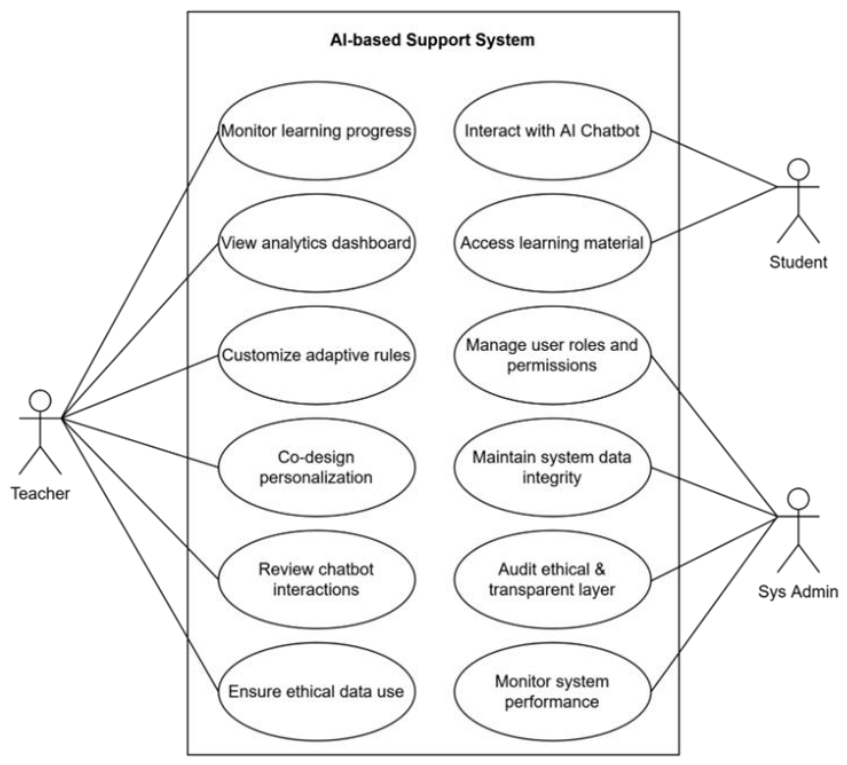
The proposed framework for AI-based support systems in education addresses these challenges through a multi-layered, inclusive, teacher-centred, and data-driven design. The proposed AI-based Support System framework involving three main actors: Teacher, Student, and System Administrator. The system is designed to improve personalized learning, monitoring, and ethical management through artificial intelligence technologies. Teachers interact with the system to monitor student learning progress, view analytics dashboards, customize adaptive learning rules, co-design personalized learning experiences, review chatbot interactions, and ensure ethical data usage. Students mainly use the platform to interact with the AI chatbot and access learning materials that support their educational needs. The System Administrator is responsible for maintaining the technical and ethical aspects of the system, including managing user roles and permissions, maintaining system data integrity, auditing ethical and transparent AI layers, and monitoring overall system performance. The framework (Figure 1) demonstrates collaboration between educational stakeholders and AI tools to create an adaptive, transparent, and efficient learning environment.
Figure 2.
AI-based support system framework.
The proposed framework incorporates an Adaptive Learning Pathway designed to personalize learning content, activities, and pacing according to individual learner needs (Figure 3). The Adaptive Learning Pathway is essential because students enter courses with varying prior knowledge, learning speeds, and goals; adaptive pathways personalize content, tasks, and pacing, ensuring that each learner receives appropriate challenge and support rather than a one-size-fits-all curriculum.
Figure 4 presents the internal structure of the proposed AI-Based Educational Support System, consisting of four interconnected components: Adaptive Learning Pathway, AI-Supported Feedback Engine, Learner Analytics Component, and Instructor Dashboard. Each module contributes to improving teaching effectiveness and student learning outcomes through artificial intelligence technologies.
AI-based educational support framework will ensure clear use of support system in education and ensure the (1) adaptive learning partway implementation, use of (2) AI-Supported Feedback Engine, (3) Learner Analytics Component helping teachers to analyse real time students data, (4) use of instructor dashboard.
Adaptive Learning Pathway. The Adaptive Learning Pathway is responsible for personalizing the learning experience for each master’s level student in the fully online course. It begins with prior knowledge analysis, which uses an initial diagnostic assessment, self-reported competencies, and previous academic experience to establish a baseline learner profile. This profile is continuously updated through interaction pattern analysis, including frequency of LMS access, navigation paths, time spent on learning materials, revision behaviour, and completion of activities. Based on these data, the content recommendation engine dynamically suggests relevant readings, research articles, multimedia resources, and case studies aligned with the module’s learning outcomes. Practical tasks are adapted in complexity and scope, offering scaffolded activities for students needing support and advanced challenges for high-performing learners. The pathway also integrates self-regulation support by proposing weekly goals, pacing recommendations, and reflective prompts, enabling students to manage their learning autonomously while maintaining alignment with course objectives.
AI-Supported Feedback Engine. The AI-Supported Feedback Engine provides timely, formative, and pedagogically grounded feedback to support deep learning. It analyses written assignments using predefined rubrics, assessing conceptual understanding, argument coherence, methodological rigor, and alignment with academic standards. In discussion forums, the engine evaluates contributions based on relevance, critical thinking indicators, and engagement with peers’ ideas. Using natural language processing, the system generates personalized feedback comments that highlight strengths, identify gaps, and suggest concrete improvements. Feedback is delivered shortly after submission to maximize its formative value and may include references to exemplary responses or additional learning resources. The engine supports iterative learning by adapting subsequent feedback based on prior revisions, encouraging reflection and continuous improvement. This component reduces instructor workload while maintaining consistent, transparent, and learner-centred feedback practices.
Learner Analytics Component. The Learner Analytics Component continuously monitors and interprets student learning behaviours within the online environment. Engagement metrics include login frequency, duration of learning sessions, activity completion rates, and participation intensity in collaborative tasks. Progress tracking focuses on the achievement of learning milestones, the development of targeted competencies, and performance trends across assessments. The component also analyses collaboration patterns by examining peer interactions, discussion networks, and the balance of contributions in group work. Using these indicators, the system identifies early warning signs of disengagement, overload, or underperformance. Analytics outputs are designed to be interpretable rather than predictive alone, emphasizing transparency and educational relevance. By transforming raw interaction data into meaningful insights, this component supports both students’ self-awareness of learning behaviours and informed instructional decision-making by the course instructor.
Instructor Dashboard. The Instructor Dashboard serves as the central interface for pedagogical decision support in the fully online master’s course. It provides real-time visualizations of individual and cohort-level performance, engagement trends, and progress toward learning outcomes. Pedagogical alerts notify the instructor of at-risk students, sudden drops in participation, or persistent misconceptions. Based on learner analytics and feedback data, the dashboard offers evidence-informed intervention suggestions, such as targeted feedback, adaptive grouping for collaborative tasks, or adjustments to workload and pacing. Course-level insights highlight content effectiveness, assessment difficulty, and alignment between learning activities and outcomes. The dashboard is designed to support reflective teaching practice, enabling instructors to fine-tune instructional strategies while maintaining academic rigor and personalized support in a distance learning context.
To ensure pedagogical alignment, the proposed AI-based educational support framework was integrated into a constructivist course design model. Constructivist learning emphasizes interaction, collaboration, reflection, and problem-solving, enabling learners to actively construct knowledge rather than passively receive information.
An integrated support system strengthens this learning model by providing continuous guidance, resources, and feedback throughout the learning process. The support system may include generative artificial intelligence, digital learning platforms, assessment tools, and collaborative environments that help students engage more effectively with course content. AI-based support can deliver personalized learning materials, answer questions, assist with administrative tasks, and adapt learning activities to individual needs. This increases accessibility, flexibility, and learner motivation.
The model also ensures strong alignment between programme competencies, course objectives, module outcomes, and learning activities. Each module is directly connected to measurable learning outcomes, helping students clearly understand what they are expected to achieve. At the same time, teachers can monitor progress more efficiently and provide targeted support when needed.
Moreover, the integrated constructivist approach promotes active participation through group work, reflection, discussion, and assessment activities. Students become responsible participants in their own learning process rather than passive listeners. This creates a more engaging, inclusive, and student-centered educational environment that supports deeper understanding, lifelong learning, and professional competence development. The integration of these pedagogical principles within the proposed framework is illustrated in Figure 5.
Figure 5 presents a learner-centered, constructivist learning model integrated with generative artificial intelligence in higher education. At the study programme level, broader professional competencies and specific learning outcomes guide course design and content selection. At the course level, the selected content is linked to course-specific competencies, ensuring that learning objectives are clearly aligned with teaching activities. The course content is divided into modules delivered throughout the semester, with each module connected to measurable learning outcomes (MO1–MO5) and related learning activities. The model emphasizes that all learning content must directly support learning activities in every module. Generative AI functions as an educational agent by providing learning materials and course administrative support. Learners actively participate by reflecting on content, collaborating in group tasks, and completing assessments.
3.2. Expert Evaluation Findings
The main characteristics of the course were briefly described to provide context for the expert evaluation findings. The course is a fully online, constructivist-oriented learning experience designed to empower students to actively construct understanding of complex information technologies through engagement, collaboration, and real-world problem solving. The course leverages Massive Open Online Course (MOOC) principles, such as flexibility, open access, and self-paced learning, while embedding pedagogical features that promote deep learning, reflection, and social interaction rather than passive content consumption. In constructivist terms, learners are not recipients of information but co-creators of knowledge: they interpret and integrate new concepts through exploration, discussion, and authentic challenge activities. Constructivist strategies such as problem-based tasks, mini-challenge teamwork, and interactive forums support meaning-making and critical thinking.
The course content is organized into modular units that introduce foundational concepts (e.g., data processing with Python and R, time-series analysis, and low-code visualization frameworks) alongside practical applications and collaborative challenges. Learners engage with video lectures and reading materials, reflect on key ideas, engage in technology-mediated discussion spaces, and participate in team-based mini-projects that tackle real data problems – allowing learners to connect theory with practice. Weekly assessments and team interactions create opportunities for reflection, peer learning, and continuous self-assessment, all aligned with constructivist learning theory, which emphasizes active engagement, multiple perspectives, and situated cognition. MOOC methodology enhances this constructivist design by facilitating global learner access, flexible pacing, and community interaction across diverse contexts. Learners can revisit materials, contribute to discussion forums, and receive peer and instructor support asynchronously, fostering a distributed community of practice that mirrors social constructivism (knowledge built through interaction and shared meaning). Through these mechanisms, the course supports not only the acquisition of technical skills in big data analytics but also the development of learner autonomy, collaborative competencies, and reflective judgment, core objectives of constructivist learning in online environments. To assess the effectiveness of the AI-based support system, which was implemented in the master’s-level course module Educational Support Systems, a qualitative evaluation of the module’s online course was conducted. The evaluation focused primarily on ease of use, perceived usefulness, and the quality of learning support. The evaluation methodology involved inductive thematic analysis of evaluation data, conducted by reviewing experts’ responses to the questions posed, identifying recurring themes (codes), determining similarities and differences, and formulating recommendations.
Qualitative evaluation data were collected through semi-structured online interviews with 6 educators and experts in distance learning and support systems (E1–E6). The findings are presented according to the seven interview questions used during the expert evaluation:
- Have appropriate teaching tools been selected for the course?
- Are appropriate teaching and assessment methods being used in the course?
- Does the course include appropriate support mechanisms?
- Is there adequate feedback in the course?
- What makes the collaborative learning process and its participants in the course unique?
- How is communication conducted in the course, what measures are used to encourage participant engagement and learning, and how is support provided?
- What problems and threats are identified in the course, how could they be addressed, and what steps could be taken to improve the course?
A review of the experts’ (E1–E6) responses to the first interview question “Were appropriate teaching tools selected for the course?” revealed recurring positive themes such as an overall positive assessment of the tools’ suitability, the use of multimodal content, the use of tools relevant to NM principles, and the use of additional AI-based support tools. The following gaps and risks were also identified: an excessive abundance of tools that could hinder learning, and minor inconsistencies in terminology.
Teaching Tools for Support
The experts’ evaluations indicate that the teaching tools used in the course generally align with the principles of distance and technology-based learning and facilitate consistent theoretical and practical progress among students. Experts highlight the structured theoretical content (slides, notes, supplementary literature) and the multimodal nature of the content: audio and video lectures, independent study of materials, and the completion of practical activities using Colab notebooks and mini-project assignments. According to the experts, this combination of tools facilitates differentiated and self-directed learning, as students can individually adjust their learning pace, revisit more complex topics, apply knowledge in practical situations, and assess their progress through tests. In addition, some experts find it useful to integrate additional AI tools, such as audio summaries or content generated by Perplexity.ai, to provide further clarification of information and a theoretical foundation.
Experts identify several challenges that may limit the effectiveness of the tools used. Some experts note that the abundance of teaching materials in the Moodle environment can lead to information overload. Attention is also drawn to the varying levels of IT proficiency among learners, which may make practical tasks too complex for some students. To address this issue, it is recommended to include an introduction to the IT tools used in the course. Nevertheless, the experts’ overall assessment indicates that the teaching tools used in the course are appropriately selected, systematically linked to the course objectives, and align with contemporary distance learning practices in higher education, thereby facilitating effective content mastery and the development of practical competencies.
A review of the experts’ responses to the second interview question “Are appropriate teaching and assessment methods used in the course?” revealed recurring positive themes such as blended methodology, an emphasis on self-directed learning, and the assessment framework. Gaps and risks were also identified, such as a lack of reflection of real-world skills in practical tasks, a lack of feedback and objectivity in assessment, and the complexity of assessing teamwork.
Teaching and Assessment Methods
The expert evaluation revealed that the teaching and assessment methods used in the course are appropriate and consistently integrate theoretical and practical components. A blended learning approach was identified, where learning is combined with structured lectures and notes, while the practical component is based on assignments and team projects. Assessment includes knowledge assessment using automated tests designed for self-assessment, and practical skills assessment through teamwork, which involves both internal and external evaluation of assignments. This combination accommodates different learning styles and supports self-paced learning within the context of an open online course.
To improve the quality of the course, experts identified several areas for improvement. First, strengthening practical assessment to ensure that knowledge assessment through tests is balanced with real-world tasks.
Additionally, clearer assessment criteria and instructor moderation would help ensure the objectivity of peer assessment, while regular, qualitative feedback would increase the perceived fairness of assessment and the visibility of learning progress. Furthermore, it is recommended to facilitate the coordination of teamwork by defining clear roles and interim checkpoints. Although teamwork is viewed as an element of significant added value, its logistics sometimes pose challenges.
Assistance and Support Mechanisms
A review of the experts’ responses to the third interview question “Does the course provide appropriate assistance and support mechanisms?” revealed recurring positive themes such as the availability of support channels and the strengths of asynchronous support. Gaps and risks were also identified, such as the need for synchronous support and varying experiences regarding participation in discussion forums.
The experts’ assessments indicate that the help and support mechanisms provided in the course generally function well and are appropriate for the context of distance learning. The main support channels mentioned include: the Chatbot AI tool, the instructor’s general information posts in the “Teacher’s announcements” section, the Notes discussion tool, Chat, as well as peer support fostered through group work, which enables students to quickly receive answers to content-related questions and share experiences while solving practical tasks. Some experts also highlight the benefits of the forum and Perplexity.ai integration for self-directed learning.
Identified areas for improvement: there is a lack of direct (synchronous) consultations for more complex technical inquiries; the purpose of support channels and response times are not clearly defined, especially in the case of Chat and Notes; student experiences regarding forum usage vary. It is recommended to create a map of support channels with estimated response times, introduce regular Q&A sessions at scheduled times, and standardize guidelines for AI use to establish boundaries between automated and instructor-provided support.
Upon reviewing the experts’ responses to the fourth interview question, “Is there adequate feedback in the course?”, the following positive recurring themes emerge: an ecosystem of feedback mechanisms, timely self-assessment, and the benefits of collaborative learning. Gaps and risks were also identified, such as a lack of personalization and inconsistent intensity, transparency, and access.
Feedback in the System
Expert evaluations indicate that feedback in the course is organized through several mechanisms that allow students to assess their progress and adjust their learning strategies. First, after tests, students immediately receive automated feedback showing correct and incorrect answers. Following practical assignments, internal and external peer assessment is applied, helping teams understand the strengths and weaknesses of their solutions. Additionally, channels such as Notes, Chat, an AI-powered Chatbot, and a forum are utilized to provide targeted assistance on specific content sections.
However, gaps in the quality and availability of feedback have been identified. Experts highlight the lack of personalized instructor comments and inconsistent frequency—often, students receive only a grade or a general conclusion, without clear guidance on what to improve. Furthermore, experts evaluating the course in “guest” mode were unable to experience the test feedback firsthand, so the transparency of its format and criteria remains limited. It is recommended to establish minimum standards for providing feedback, use brief, personalized comments based on criteria, and calibrate peer evaluation with clear rubrics and instructor moderation. It is also recommended to increase structural transparency (examples, screenshots) and optimize the use of communication channels.
After reviewing the experts’ responses to the 5th interview question, “What makes the NM process organized in the course and its participants unique?”, the following recurring themes emerged: clear, structured, and logical course organization; an emphasis on independence and individual pace; the instructor’s role as a consultant; the promotion of practical application of knowledge and real-world problem-solving; and communication as a natural part of the course. Gaps and risks were also identified, such as a lack of face-to-face consultations, varying levels of student preparation, and the fact that tasks may be too difficult or too easy for some students.
Collaborative Learning Process
An analysis of the expert evaluations revealed that the learning process organized within the course is clearly structured, logical, and focused on independent and practical learning. The course begins with basic concepts and gradually moves on to more complex topics, both theoretical and practical. The material is presented in clearly defined topics and subtopics. The sequence of lectures allows students to orient themselves and plan their learning. Meanwhile, practical assignments, team projects, and real-world data analysis cases enable students to directly apply their knowledge and develop problem-solving competencies. This demonstrates that the course is organized in a methodical, pedagogically sound manner and is well-suited for independent learning, focusing not on passive information reception but on active engagement. Course participants have varying skill levels, but this creates opportunities for collaboration and learning from one another. The instructor’s role is more consultative, and teaching is based on solving real-world problems. This fosters student engagement, problem-solving, and the development of self-directed learning skills.
To improve the learning process so that it is even more engaging and supportive, aspects such as balancing different competencies, ensuring the availability of consultations, and fostering emotional engagement could be strengthened. These insights indicate that the learning process is effective but could be strengthened through synchronous activities and individualized support. According to the experts, the lack of face-to-face consultations weakens the connection with the instructor and may lead to a sense of isolation.
Reviewing the responses of experts to the 6th interview question, “How is communication conducted in the course, what measures are used to encourage participant activity/learning, and how is support provided?”, the following positive recurring themes were identified: the organization of asynchronous communication, collaboration and teamwork as a key pillar of the course, measures to encourage participant engagement, and the support mechanisms in place. Gaps and risks were also identified, such as a lack of live communication and consultations, a lack of interactive elements that encourage active discussions, in some cases a weak connection with the instructor, and an insufficiently transparent communication structure.
Communication Models
An analysis of expert evaluations revealed that the communication model used in the course is primarily asynchronous and based on the interaction of several virtual channels. The main communication takes place via Notes, Chat, AI-based support agents, and official instructor announcements. The discussion forum and team activities provide opportunities for student interaction and knowledge sharing. This course model facilitates flexible, self-directed learning but limits the ability to address more complex issues in real time.
Participant engagement in the course is fostered through challenge-based learning, teamwork, practical tasks, and self-assessment tests, which help track progress and maintain motivation. Although these measures are considered effective, several experts note a lack of interactivity and recommend incorporating more live discussions and dynamic activities that can reduce the sense of isolation caused by distance learning.
The support system in the course is evaluated as functional but varies in intensity. Students most often rely on peer support and structured materials, while access to the instructor’s consultations is limited. In the experts’ opinion, a greater availability of synchronous consultations and a clearer definition of the purpose of communication channels would enhance the accessibility of support and the overall learning experience.
Problems and Threats
A review of the experts’ responses to the 7th interview question, “What problems and threats are identified in the course, how could they be addressed, and what actions could be taken to improve the course?”, the following problems and threats were identified: high dropout rates and lack of motivation, uneven student preparedness, unreliable communication and limited availability of in-person consultations, limitations in communication structures, technical difficulties, and constraints on independent problem-solving, ambiguities in the assessment process, and limited feedback. Solutions such as structured deadlines, introductory modules for weaker students, more synchronous communication, an active discussion space/forum, a technical support procedure, a clearer assessment structure, and feedback are also proposed.
An analysis of expert evaluations revealed several key problems and risks related to the organization of the course and the learning experience. First and foremost, the high dropout rate and the varying levels of IT proficiency among participants were highlighted. This results in varying learning paces among students and poses the risk that beginners may fall behind. Also highlighted are the limited availability of face-to-face interaction with instructors and an insufficiently clear communication structure, which complicates the resolution of more complex issues and weakens the sense of community. Additionally, technical issues, insufficient feedback, and a lack of transparency in the assessment process are highlighted. Automated tests provide only basic information, and peer assessment is not always considered objective. This limits the ability to accurately understand progress and improve in a targeted manner.
4. Discussion
Regarding the research question we discussed how do effective can be the pedagogical suitability of the AI-based support framework in learning process as in nowadays education artificial intelligence (AI) has emerged as one of the most influential technologies in the development of modern educational support systems, offering innovative solutions that improve both teaching and learning processes. AI-based support modules enable personalized learning experiences by adapting educational content, assessment methods, and learning pathways to the individual needs and abilities of students. AI in personalized learning facilitates adaptive content delivery, enabling students to learn at their own pace and according to their individual strengths and weaknesses. Intelligent tutoring systems, for instance, offer customized feedback, explanations, and recommendations based on real-time student interactions, fostering deeper comprehension and engagement. Moreover, AI-powered recommendation engines provide personalized learning resources and materials that align with students’ interests, preferences, and skill levels, creating a more tailored and immersive learning experience [34]. Through machine learning algorithms and learning analytics, these systems can continuously monitor learner performance [35], identify knowledge gaps, and provide timely recommendations for improvement. Such adaptive functionality contributes to higher learning effectiveness and increased student engagement. Another significant advantage of AI integration is the automation of repetitive educational tasks, including grading assignments, generating feedback, and managing administrative activities. This allows educators to dedicate more time to instructional planning, mentoring, and individualized student support. AI-powered intelligent tutoring systems can also provide immediate assistance outside classroom hours, promoting self-directed learning and continuous knowledge acquisition [36].
AI-based educational support systems play an important role in fostering inclusive education [37] by offering accessible learning materials, speech and text recognition, automatic translation, and assistive technologies for learners with disabilities or diverse educational needs. These capabilities contribute to reducing educational inequalities and creating more equitable learning environments. In addition, predictive analytics can identify students at risk of poor academic performance or dropout, enabling early interventions that improve retention and academic success.
Despite these considerable benefits, successful AI implementation requires careful consideration of ethical issues, data privacy, algorithm transparency, and the evolving role of educators. Human supervision remains essential to ensure fairness, accountability, and pedagogical quality in AI-assisted learning environments. Overall, AI-based educational support systems enhance learning efficiency, accessibility, personalization, and institutional effectiveness, representing a key technological advancement that supports the transition toward more adaptive, inclusive, and student-centered education in the digital era. Moreover, the experts identified several key aspects on AI-based support in the module (Table 2).
Improvement measures proposed by experts include strengthening the course’s pace, introducing weekly deadlines, and organizing synchronous consultations to increase external accountability and reduce the risk of dropout. It is also recommended to create introductory modules to help standardize student readiness, as well as active discussion forums to foster a sense of community and knowledge sharing. Improved feedback, clearer assessment rubrics, and technical support tools would be important steps toward higher course quality and a better learning experience.
5. Conclusions
This section is not mandatory but can be added to the manuscript if the discussion is unusually long or complex.
The results of the expert evaluation indicate that the proposed AI-based educational support framework is pedagogically appropriate and effective for supporting teaching and learning in higher education. Experts positively evaluated the integration of adaptive learning, AI-supported feedback, learner analytics, and instructor support mechanisms. At the same time, several areas for improvement were identified, including the need for stronger synchronous communication, improved feedback practices, clearer assessment procedures, and additional support for learners with different levels of digital competence. These findings support the applicability of the proposed framework in online and blended learning environments.
By implementing such a framework, educational institutions can expect several outcomes:
- Enhanced learner engagement, personalized scaffolding and improved academic outcomes for diverse learner groups.
- Reduced teacher workload on routine feedback generation and monitoring – allowing more time for human interaction, mentoring, and differentiation.
- Data-driven insights for educators and administrators, enabling timely interventions and resource allocation.
- More inclusive access to quality teaching support, particularly for learners in under-resourced or remote settings.
- Ethical, transparent AI deployments that ensure trust, fairness and alignment with school values and policy.
A scalable architecture and implementation strategy that supports rolling out AI support systems across schools, while preserving context-sensitivity and teacher agency.
Moreover, the paper aims to contribute both to the theoretical discourse on AIEd (by synthesizing literature, identifying gaps, and proposing a coherent framework) and to practical implementation (by offering educators, system designers and policymakers a solution for integrating AI-support systems in inclusive, sustainable, pedagogically sound ways).
5. Future Works
Future work on AI-based educational support systems in higher education should focus on strengthening pedagogical impact, transparency, and long-term sustainability. First, further research is needed to improve adaptive analytics models by incorporating multimodal data sources, such as learning artifacts, peer interaction patterns, and reflective writing, to obtain a more holistic representation of learner progress. These models should move beyond performance prediction toward explanatory analytics that clearly justify recommendations and make underlying assumptions visible to both students and instructors.
Second, real-time feedback mechanisms should be extended to support higher-order learning outcomes, including critical thinking, methodological reasoning, and collaborative knowledge construction. Future systems should combine automated feedback with structured instructor moderation, allowing teachers to refine feedback templates and intervene at key learning moments. Longitudinal studies are required to examine how continuous formative feedback influences self-regulated learning skills, motivation, and academic persistence across multiple courses or programs.
Third, teacher-centered design must remain a priority. Future work should emphasize participatory co-design with instructors from diverse disciplines to ensure that dashboards and analytics align with pedagogical practices and assessment cultures. Professional development frameworks should be developed to support teachers in interpreting analytics, making evidence-based interventions, and critically evaluating AI recommendations rather than relying on them unreflectively. Additionally, ethical and governance considerations require deeper attention. Future systems should embed privacy-by-design principles, bias detection mechanisms, and student agency features that allow learners to understand, contest, or opt out of certain automated decisions. Cross-institutional validation studies are also needed to assess transferability and scalability across different educational contexts.
Finally, future research should explore the integration of educational support systems within broader digital learning ecosystems, ensuring interoperability with learning management systems and institutional data infrastructures. By addressing these directions, future work can contribute to more trustworthy, pedagogically grounded, and human-centered AI support systems in higher education.
Author Contributions
For research articles with several authors, a short paragraph specifying their individual contributions must be provided. The following statements should be used “Conceptualization D.G., R.K., V.K., S.D, E.S., J.C.; methodology, D.G.; software, S.D.; validation, D.G. and R.K..; formal analysis, R.K. V.K.; investigation, R.K. V.K..; resources, D.G. J.C.; data curation, J.C.; writing—original draft preparation, E.S., R.K. J.C.; writing—review and editing, D.G.; visualization, S.D.; supervision, D.G.; project administration, D.G. All authors have read and agreed to the published version of the manuscript.
Institutional Review Board Statement
Ethical review and approval were waived for this study, as this study involves no more than minimal risk to subjects.
Informed Consent Statement
: Informed consent was obtained from all subjects involved in the study.
Data Availability Statement
The data presented in this study are available on request from the corresponding author. The data are not publicly available due to privacy.
Acknowledgments
The scientific paper was developed in the frames of the international project “Renewable Energy for Bolstering Ukraine`s Infrastructure by Learning and Design”, REBUILD, No.: IMPRESS 246.
Conflicts of Interest
D The authors declare no conflict of interest.
References
- Katonane Gyonyoru, K. I. The role of AI-based adaptive learning systems in digital education. J. Appl. Tech. Educ. Sci. 2024, 14(2), 1–12. [Google Scholar]
- Létourneau, A.; Deslandes Martineau, M.; Charland, P.; Karran, J. A.; Boasen, J.; Léger, P. M. A systematic review of AI-driven intelligent tutoring systems (ITS) in K-12 education. npj Sci. Learn. 2025, 10(1), 29. [Google Scholar] [CrossRef] [PubMed]
- Wang, S.; Wang, F.; Zhu, Z.; Wang, J.; Tran, T.; Du, Z. Artificial intelligence in education: A systematic literature review. Expert Syst. With Appl. 2024, 252, 124167. [Google Scholar] [CrossRef]
- U.S. Department of Education. Artificial Intelligence and the Future of Teaching and Learning. 2023. Available online: https://www.ed.gov/sites/ed/files/documents/ai-report/ai-report.pdf.
- Lin, H.; Chen, Q. Artificial intelligence (AI)-integrated educational applications and college students’ creativity and academic emotions: students and teachers’ perceptions and attitudes. BMC Psychol. 2024, 12(1), 487. [Google Scholar] [PubMed]
- Zhai, X.; Chu, X.; Chai, C. S.; Jong, M. S. Y.; Istenic, A.; Spector, M.; Li, Y. A Review of Artificial Intelligence (AI) in Education from 2010 to 2020. Complexity 2021, 2021(1), 8812542. [Google Scholar] [CrossRef]
- Crompton, H.; Burke, D. Artificial intelligence in higher education: the state of the field. Int. J. Educ. Technol. High. Educ. 2023, 20(1), 22. [Google Scholar] [CrossRef]
- Garzón, J.; Patiño, E.; Marulanda, C. Systematic review of artificial intelligence in education: Trends, benefits, and challenges. Multimodal Technol. Interact. 2025, 9(8), 84. [Google Scholar] [CrossRef]
- Papamitsiou, Z.; Economides, A. A. Learning analytics and educational data mining in practice: A systematic literature review of empirical evidence. J. Educ. Technol. Soc. 2014, 17(4), 49–64. [Google Scholar]
- Long, P.; Siemens, G. Penetrating the fog: analytics in learning and education. Ital. J. Educ. Technol. 2014, 22(3), 132–137. [Google Scholar]
- Du Plooy, E.; Casteleijn, D.; Franzsen, D. Personalized adaptive learning in higher education: A scoping review of key characteristics and impact on academic performance and engagement. Heliyon 2024, 10(21). [Google Scholar] [CrossRef] [PubMed]
- Williamson, K.; Kizilcec, R. A review of learning analytics dashboard research in higher education: Implications for justice, equity, diversity, and inclusion. LAK22: 12th international learning analytics and knowledge conference, 2022, March; pp. 260–270. [Google Scholar]
- Martinez, C.; Serra, R.; Sundaramoorthy, P.; Booij, T.; Vertegaal, C.; Bounik, Z.; Bentum, M. Content-Focused Formative Feedback Combining Achievement, Qualitative and Learning Analytics Data. Educ. Sci. 2023, 13(10), 1014. [Google Scholar] [CrossRef]
- Khosravi, H.; Shabaninejad, S.; Bakharia, A.; Sadiq, S.; Indulska, M.; Gasevic, D. Intelligent Learning Analytics Dashboards: Automated Drill-Down Recommendations to Support Teacher Data Exploration. J. Learn. Anal. 2021, 8(3), 133–154. [Google Scholar] [CrossRef]
- Fisher, D. P.; Brotto, G.; Lim, I.; Southam, C. The impact of timely formative feedback on university student motivation. Assess. Eval. High. Educ. 2025, 1–10. [Google Scholar]
- Khosravi, H.; Shabaninejad, S.; Bakharia, A.; Sadiq, S.; Indulska, M.; Gasevic, D. Intelligent Learning Analytics Dashboards: Automated Drill-Down Recommendations to Support Teacher Data Exploration. J. Learn. Anal. 2021, 8(3), 133–154. [Google Scholar] [CrossRef]
- Dourado, R. A.; Rodrigues, R. L.; Ferreira, N.; Mello, R. F.; Gomes, A. S.; Verbert, K. A teacher-facing learning analytics dashboard for process-oriented feedback in online learning. In LAK21: 11th International Learning Analytics and Knowledge Conference; 2021, April, pp. 482–489.
- AlZoubi, D.; Baran, E.; Karabulut-Ilgu, A.; Morales, A. S.; Gilbert, S. B. From concept to classroom: Developing instructor dashboards through human centered design. Comput. Educ. Open 2024, 7, 100234. [Google Scholar] [CrossRef]
- Nguyen, N. B. C.; Lithander, M.; Östlund, C. M.; Karunaratne, T.; Jobe, W. TEADASH: Implementing and Evaluating a Teacher-Facing Dashboard Using Design Science Research. Informatics 2024, 11, 61. [Google Scholar]
- Mohseni, Z.; Masiello, I. Co-designing, developing, and implementing multiple learning analytics dashboards for data-driven decision-making in education: a design-based research approach. Educ. Technol. Res. Dev. 2025, 1–32. [Google Scholar]
- Kaliisa, R.; Dolonen, J. A. CADA: a teacher-facing learning analytics dashboard to foster teachers’ awareness of students’ participation and discourse patterns in online discussions. Technol. Knowl. Learn. 2023, 28(3), 937–958. [Google Scholar]
- Mohseni, Z.; Masiello, I. Co-designing, developing, and implementing multiple learning analytics dashboards for data-driven decision-making in education: a design-based research approach. Educ. Technol. Res. Dev. 2025, 1–32. [Google Scholar]
- Claassen, A.; Mirriahi, N.; Kovanović, V.; Dawson, S. From data to design: Integrating learning analytics into educational design for effective decision-making: From Data to Design. In Proceedings of the 15th International Learning Analytics and Knowledge Conference; March; 2025, March, 2025; pp. 558–567. [Google Scholar]
- Fernández-Morante, C.; Cebreiro-López, B.; Rodríguez-Malmierca, M. J.; Casal-Otero, L. Adaptive learning supported by learning analytics for student teachers’ personalized training during in-school practices. Sustainability 2021, 14(1), 124. [Google Scholar] [CrossRef]
- Barbé, R.; Encelle, B.; Sehaba, K. Adaptation in learning analytics dashboards: a systematic review. In 16th International Conference on Computer Supported Education (CSEDU 2024); 2024, May.
- AlZoubi, D.; Baran, E.; Karabulut-Ilgu, A.; Morales, A. S.; Gilbert, S. B. From concept to classroom: Developing instructor dashboards through human centered design. Comput. Educ. Open 2024, 7, 100234. [Google Scholar] [CrossRef]
- Merino-Campos, C. The impact of artificial intelligence on personalized learning in higher education: A systematic review. Trends High. Educ. 2025, 4(2), 17. [Google Scholar] [CrossRef]
- Banihashem, S. K.; Noroozi, O.; Van Ginkel, S.; Macfadyen, L. P.; Biemans, H. J. A systematic review of the role of learning analytics in enhancing feedback practices in higher education. Educ. Res. Rev. 2022, 37, 100489. [Google Scholar] [CrossRef]
- Ali, M.; Wahab, I. A.; Huri, H. Z.; Yusoff, M. S. Personalised learning in higher education for health sciences: a scoping review. BMC Med. Educ. 2025, 25(1), 969. [Google Scholar] [CrossRef] [PubMed]
- Zandvliet, D. Towards effective learning analytics for higher education: returning meaningful dashboards to teachers. In Vrije Universiteit; 2020. [Google Scholar]
- Kazanidis, I.; Pellas, N.; Christopoulos, A. A learning analytics conceptual framework for augmented reality-supported educational case studies. Multimodal Technol. Interact. 2021, 5(3), 9. [Google Scholar] [CrossRef]
- Gašević, D.; Kovanović, V.; Joksimović, S. Piecing the learning analytics puzzle: A consolidated model of a field of research and practice. Learn. Res. Pract. 2017, 3(1), 63–78. [Google Scholar] [CrossRef]
- Wutich, A.; Beresford, M.; Bernard, H. R. Sample sizes for 10 types of qualitative data analysis: an integrative review, empirical guidance, and next steps. International J. Qual. Methods 2024, 23, 16094069241296206. [Google Scholar] [CrossRef]
- Kaswan, K. S.; Dhatterwal, J. S.; Ojha, R. P. AI in personalized learning. In Advances in technological innovations in higher education; CRC Press, 2024; pp. 103–117. [Google Scholar]
- Qazdar, A.; Hasidi, O.; Qassimi, S.; Abdelwahed, E. H. Newly Proposed Student Performance Indicators Based on Learning Analytics for Continuous Monitoring in Learning Management Systems. Int. J. Online Biomed. Eng. 2023, 19(11). [Google Scholar] [CrossRef]
- Younas, M.; El-Dakhs, D. A. S.; Jiang, Y. A comprehensive systematic review of AI-driven approaches to self-directed learning. IEEE Access 2025. [Google Scholar]
- Fitas, R. Inclusive education with AI: Supporting special needs and tackling language barriers. AI Ethics 2025, 5(6), 5729–5757. [Google Scholar] [CrossRef]
Figure 1.
Research design and expert evaluation process.

Figure 3.
Personalized AI-based support.
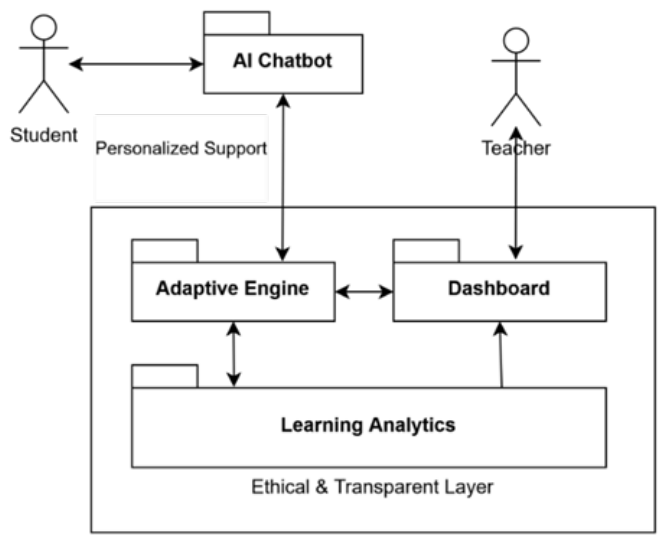
Figure 4.
AI-based educational support framework diagram.
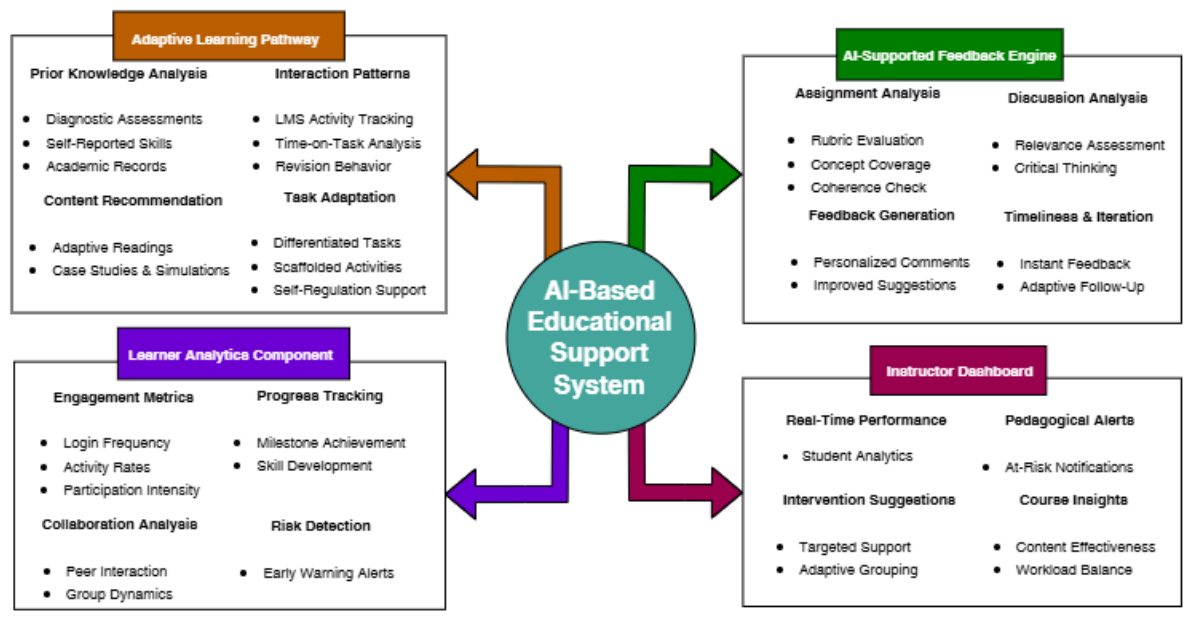
Figure 5.
A constructivist theory-based course concept with an integrated support system.
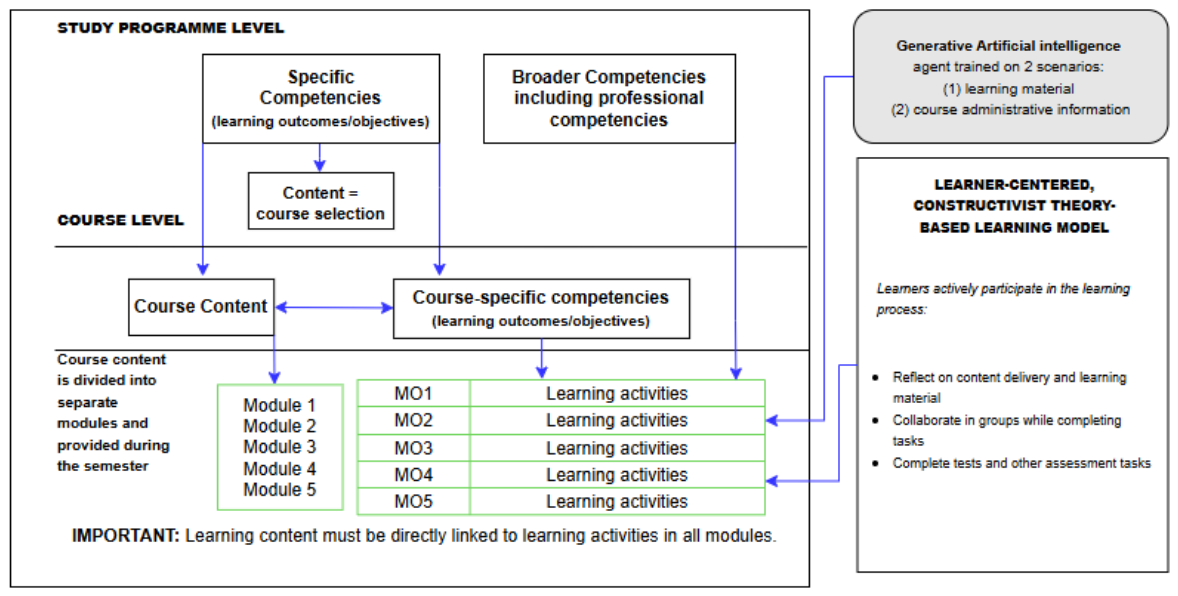

Table 1.
Characteristics of the expert group.
| Expert | Field of expertise | Years of experience | Relevant experience |
| E1 | E-learning | 15 | Educational technologies |
| E2 | E-learning | 8 | Virtual Learning Environments |
| E3 | E-learning | 9 | Technologies and applications |
| E4 | Artificial intelligence | 10 | Big data, security |
| E5 | Artificial intelligence | 8 | GenAI, big data |
| E6 | Artificial intelligence | 3 | GenAI |
Table 2.
Key aspects identified.
| Key Criteria | Advantages of AI-based support | Challenges of AI-based support |
| Strengthen synchronous communication and consultations | •AI chatbots and virtual assistants provide 24/7 support. • Automated scheduling and reminders improve consultation management. • Real-time translation and speech-to-text tools enhance accessibility for students with disabilities. • AI can personalize responses based on student needs. |
• Lack of human empathy and emotional understanding. • AI may provide inaccurate or overly generic answers. • Technical issues can disrupt live communication. • Students may become overly dependent on automated support. |
| Create an active discussion forum | • AI moderation tools can encourage respectful and organized discussions. • Recommendation systems can suggest relevant topics and resources. • Automated summarization helps students review discussions efficiently. • AI can stimulate participation through prompts and engagement analytics. |
• Discussions may become less authentic if overly AI-driven. • Risk of misinformation generated by AI tools. • Privacy concerns regarding student interactions and data collection. • Some students may feel uncomfortable interacting in AI-monitored environments. |
| Develop introductory modules for students with special needs | • AI enables adaptive learning tailored to individual abilities and learning speeds. • Assistive technologies (text-to-speech, speech-to-text, sign language avatars) improve accessibility. • Personalized pathways reduce barriers to learning. • AI analytics help identify learning difficulties early. |
• High development and implementation costs. • AI systems may not fully understand complex or diverse special needs. • Accessibility tools may vary in quality and language support. • Ethical concerns related to student profiling and data use. |
| Simplify the structure of the course material | • AI can automatically summarize complex content into simpler formats. • Intelligent tutoring systems can recommend step-by-step learning paths. • Content can be personalized according to learner performance. • Visual and interactive AI tools improve comprehension. |
• Oversimplification may reduce academic depth. • AI-generated summaries may omit critical concepts. • Students may rely too heavily on simplified materials instead of developing critical thinking. • Requires continuous monitoring by instructors for accuracy. |
| Include more practical and laboratory activities | • AI-powered simulations and virtual labs allow safe and flexible experimentation. • Virtual reality and intelligent simulations support remote learning. • Students can practice repeatedly without material limitations. • AI can provide instant feedback during experiments. |
• Virtual labs cannot fully replace hands-on physical experiences. • Advanced simulation technologies can be expensive. • Technical limitations may affect realism and engagement. • Unequal access to devices and internet connectivity can create disparities. |
| Improve the quality of feedback and transparency of assessment | • AI provides immediate feedback and automated grading. • Learning analytics helps identify strengths and weaknesses quickly. • Transparent rubrics and performance tracking improve fairness. • Personalized feedback can support student improvement. |
• Automated grading may misinterpret creative or complex answers. • Bias in AI algorithms can affect assessment fairness. • Students may question the reliability of machine-generated evaluations. • Reduced human interaction in feedback processes. |
| Regularly update the course in line with current technological trends | • AI can monitor emerging trends and recommend updated content. • Automated content curation reduces instructor workload. • Courses remain aligned with industry and technological developments. • Faster integration of new learning resources and tools. |
• Constant updates may overwhelm students and instructors. • Dependence on AI recommendations may reduce academic autonomy. • Risk of prioritizing trends over pedagogical quality. • Requires continuous technical maintenance and staff training. |
Disclaimer/Publisher’s Note: The statements, opinions and data contained in all publications are solely those of the individual author(s) and contributor(s) and not of MDPI and/or the editor(s). MDPI and/or the editor(s) disclaim responsibility for any injury to people or property resulting from any ideas, methods, instructions or products referred to in the content. |
© 2026 by the authors. Licensee MDPI, Basel, Switzerland. This article is an open access article distributed under the terms and conditions of the Creative Commons Attribution (CC BY) license (http://creativecommons.org/licenses/by/4.0/).
Copyright: This open access article is published under a Creative Commons CC BY 4.0 license, which permit the free download, distribution, and reuse, provided that the author and preprint are cited in any reuse.


