
Submitted:
15 June 2026
Posted:
17 June 2026
You are already at the latest version
Abstract
Human noroviruses (HuNoV) represent a significant cause of gastroenteritis worldwide, especially in pediatric populations, and outbreaks are common in closed and semi-closed settings. In Russia, norovirus infection (NovI) is also common and considered as a notifiable disease since 2009, after its global upsurge in the mid-2000s. To estimate the burden of the disease, overall and by specific genotypes of HuNoV, we performed a pilot hospital-based surveillance in patients admitted to a main pediatric clinic in Ekaterinburg, Russia. During the study, a total of 495 patients were screened for the agent of interest by real time PCR, and 68 of them were positive (prevalence 13.7%, 95% CI 10.8 – 17.1). A total of 61 HuNoV samples were successfully genotyped using Sanger sequencing, and the most prevalent genotype was GII.4 (44%, 27/61), followed by GII.17 (23%, 14/61) and GII.3 (16%, 10/61). Further phylogenetic analysis reveals high genetic diversity of GII.4 strains that was similar to isolates previously detected in Russia as well as in Europe and the Asia-Pacific region. In contrast, observed GII.17 strains were genetically similar with those that circulated in Russia. Based on this preliminary results, we plan to scale-up the study as sentinel surveillance network in Ekaterinburg, the capital of the Sverdlovsk region, for capturing the true epidemiological scale of norovirus and guiding future prevention strategies.
Keywords:
HuNoV
; genotype distribution
; molecular surveillance
; phylogenetic analysis
1. Introduction
Human norovirus (HuNoV) is a prevalent cause of acute gastroenteritis (AGE), associated with approximately 18% of cases [1] with significant mortality [2] and economic burden [3] worldwide. In addition, based on notification data, norovirus infection (NovI) is a common cause of acute gastroenteritis in Sverdlovsk Oblast with annual incidence rate up to 147 cases per 100,000 inhabitants with yearly seasonal peak from November to April [4].
The HuNoV genome consists of a positive-sense single-stranded RNA and organized in three open reading frame (from ORF1 to ORF3), with specific importance of ORF1 coding the RNA-dependent RNA polymerase (RdRp) and ORF2 coding the major capsid protein (VP1). Based on VP1 structure, HuNoV are classified into seven genogroups, with at least three (I, II, IV) are known for causing disease in human. HuNoV GII genogroup is significantly more prevalent. As it has been proposed previously, HuNoV are classified using a dual typing system by sequencing RdRp and VP1 [5]. Among all HuNoV types, the GII.4 strain is overrepresented and has been associated with the most of the outbreaks and sporadic cases globally over the least two decades. Nevertheless, high prevalence of GII.17, another common genotype, was also observed [6].
In contrast to rotavirus, another common etiological agent of AGE, norovirus vaccine is unavailable due to a high genetic diversity of the virus, a poor knowledge of immunity characteristics and the lack of high-performance cultivation technique [7]. Therefore, ongoing surveillance for the circulation of is HuNoV strongly recommended to estimate diseases’ burden and track its genetic diversity [8].
The aim of this study is to estimate the prevalence of HuNoV in patients with AGE in Ekaterinburg, Russian Federation, overall and by specific genotypes, to further consider a sentinel surveillance program in the studied area.
2. Materials and Methods
2.1. Sample Collection
The study was approved by the Ethical Board of the Ural State Medical University (protocol N26, date of approval 10 May 2020). All clinical samples were collected after obtaining written informed consent from the children’s legal guardian. Additional personal information, allowing participant identification, were not provided.
From November 2020 to April 2023 (three consecutive epidemic seasons), we collected fecal samples from all pediatric patients with AGE, admitted to the Infectious disease unit of the main pediatric hospital in Ekaterinburg, Sverdlovsk Oblast, Russian Federation – Municipal Clinical Hospital No 15. The city studied is the Capital of the corresponding region with total population approximately 1.5 millions including 122,000 children under the age of six – the main affected cohort for NovI. The samples were collected during routine clinical testing for patients with gastroenteritis. 10% fecal suspensions were prepared in PBS and stored at –20℃.
2.2. Nucleic Acid Extraction and Sample Screening for HuNoV
Nucleic acid from fecal suspensions were extracted by an alcohol precipitation technique using “RIBO-prep” nucleic acid extraction kit followed by reverse transcription using “REVERTA-L” kit (both purchased from FBIS CRIE of Rospotrebnadzor, Moscow, Russia). Later, samples were screened for HuNoV using “Amplisens Norovirus GI/GII” qPCR assay (FBIS CRIE of Rospotrebnadzor, Moscow, Russia) according to manufacturer’s instructions. Amplification and detection were performed on a StepOne Plus Real Time PCR System (ThermoFisher Scientific, Foster City, CA, USA).
2.3. Sanger Sequencing and HuNoV Typing
Positive samples with detected HuNoV strains were genotyped as it has been described previously using the Sanger sequencing technique [9]. Briefly, we amplified a part of HuNoV genome corresponding to ORF 1/2 junction, that make it possible to type both RdRp and VP1 genes. We used MON432 or MON431 primers (for GI and GII genogroups, respectively) targeting RdRp [10] and GISKR or GIISKR for VP1 [11] (this set has been described previously by Chhabra et al. [9]). As it will be described below, there were no samples positive for HuNoV GI genogroup in qPCR, therefore, sequencing reactions for this target were not performed. In addition, to study genetic diversity of most significant strains we used sequence analysis of highly variable P2 domain as it has been described previously [12]. All these reactions were performed using Evrogen 5x ScreenMix Ready Reaction Mix (Evrogen JSC, Moscow, Russia) following manufacturer’s protocol on a Veriti Thermal Cycler (Life Technologies, Carlsbad, CA, USA).
PCR products were separated on a 1% agarose gel by electrophoresis. Bands with length of approximately 570bp (for the ORF1/2 junction) and 900bp (for the P2 domain) were extracted and purified using CleanUp Standard Kit (Evrogen JSC, Moscow, Russia). Further, target genome fragment amplification was followed by chain termination through the incorporation of dideoxynucleotides utilizing the BrilliantDye Terminator v3.1 (NimaGen, Nijmegen, the Netherlands) Cycle Sequencing Kit for the sequencing reaction. Sequencing products were purified using the iX-Pure DyeTerminator Cleanup Kit (NimaGen). These later were sequenced on a ABI 3130 Genetic Analyzer (Applied Biosystems, Foster City, CA, USA). Sequences were assigned to specific genotypes using the Norovirus Genotyping Tool (RIVM, The Netherlands). For phylogenetic analysis, we used the BEAST software (version 1.10.4.) and the FigTree software (version 1.4.4) to visualize results.

Table 1.
HuNoV strains included to phylogenetic analysis in this study.
| Sample ID | GenBank Accession number | Year of sample collection | Age of patient, years |
| GII.4 | |||
| 474_20 | PZ251255 | 2020 | 4 |
| 916_21 | PZ251256 | 2021 | 3 |
| 917_21 | PZ251257 | 2021 | 3 |
| 926_21 | PZ251258 | 2021 | 4 |
| 934_21 | PZ251259 | 2021 | 3 |
| 1380_21 | PZ251252 | 2021 | 3 |
| 159_22 | PZ251253 | 2022 | 4 |
| 942_22 | PZ251260 | 2022 | 3 |
| 3051_22 | PZ251254 | 2022 | 3 |
| GII.17 | |||
| 3066_22 | PZ251267 | 2022 | 3 |
| 3450_22 | PZ251266 | 2022 | 3 |
| 3454_22 | PZ251265 | 2022 | 3 |
| 109_23 | PZ251268 | 2023 | 3 |
3. Results
3.1. Incidence of Norovirus Infection Based on Notification Data
In the Russian Federation, NovI is a notifiable disease since 2009. Over the studied period, the total number of cases in our study area was 5883 (373.67 per 100,000 inhabitants), and crude incidence rate was for 29% more than average for the Sverdlovsk Oblast (289.76). The disease was most common in children under the age of six (76.0%), including infants in first year of life (18.8%). The seasonality was typical for a temperate climate with the highest number of cases were observed from October/November to March/April (excluding 2020-2021, when seasonal peak was vague, Figure 1) [13].
3.2. Norovirus Prevalence and Genotype Distribution
Over the studied period, a total of 495 patients were enrolled, and 68 of them tested positive for HuNoV genome (prevalence 13.7%, 95% CI 10.8 – 17.1). The median age of the included patients was 3 years (IQR 3-4), with a male to female ratio 1.03 to 1. No lethal cases were reported during the study period.
Seasonality of sampling and positive for HuNoV cases was typical for NoVI with an increase during cold months (Figure 2).
A total of 61 HuNoV samples were successfully genotyped (both for VP1 and RdRp), while 7 samples did not amplify by PCR and thus were not available for sequencing. The most prevalent genotype was GII.4 (44%, 27/61), followed by GII.17 (23%, 14/61) and GII.3 (16%, 10/61). Other rare genotypes were also detected: GII.2, GII.6, GII.8, GII.14 (Figure 3). Surprisingly, in 2022 the number of GII.4 and GII.17 cases were equal (n=11). No GI genotypes were detected in the study.
First, among the GII.4 strains, the most prevalent RdRp type was recombinant GII.4[P16] (81%, 22/27), followed by GII.4[P4] (11%, 3/27) and GII.4[P31] (7%, 2/27). Second, all detected GII.17 strains were GII.17[P17]. Finally, most of GII.3 isolates (9/10) were GII.3[P12].
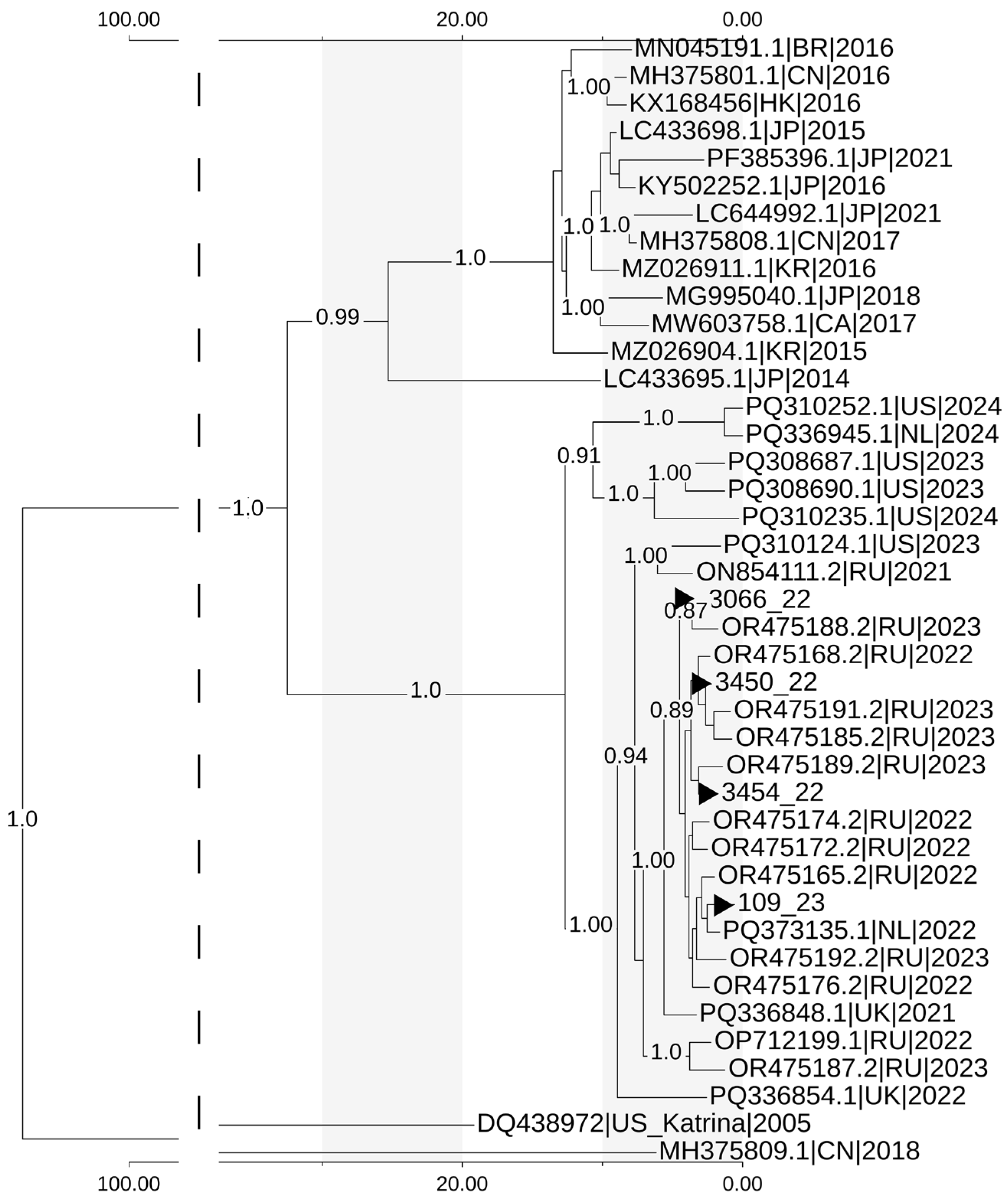
Phylogenetic analysis of GII.4 strains demonstrates its genetic diversity with at least six independent clusters. These clusters correspond to previously detected isolates from Russia as well as the Asia-Pacific Region and Europe (Figure 4). In contrast, GII.17 strains were genetically similar with those circulated in Russia (Figure 5).
4. Discussion
In defiance of intensive studying of NovI epidemiology in European Russia [14,15] and Western Siberia [16,17], this is the first hospital-based surveillance study for HuNoV in Ekaterinburg, Russia Federation, central city of the Sverdlovsk oblast. In this study, we estimated the prevalence of HuNoV in hospitalized AGE cases in study area. Despite limited number of positive cases, our estimation seems lower than previous studies including a meta-analysis by Farahmand et al. [1], but similar to previous results from Novosibirsk (Eastern Siberia) [16,17] and another Russian cities (Moscow, St. Petersburg, Chelyabinsk, Nizhniy Novgorod, Tyumen, Khabarovsk, Makhachkala, and Yakutsk) [14].
Despite high incidence of rotavirus infection, another common diarrheal pathogen, available rotavirus vaccines are not mandatory in the national vaccine schedule in Russia, therefore vaccination is almost absent in the Sverdlovsk region. Therefore, a large proportion of diarrhea cases associated with rotaviruses may be due to the absence of rotavirus vaccination in the studied area [18].
The observed predominance of GII.4 genotype is consistent with main body of literature, including Russia [19], but in contrast to previous studies [20,21,22], the proportion of GII.17 was surprisingly high. As opposed to our previous study, we did not detect wide proportion of HuNoV GI, possibly because of a different study design (voluntary collecting of specimens previously) [19] and the non-inclusion of other communities in the Sverdlovsk region.
The main limitation of the study is the small number of enrolled, therefore we plan to include additional hospitals for further analysis. In addition, the study was conducted only in hospital, not in out-patient facility, that may introduce selection bias in terms of disease severity.
Over the studied period, the incidence of NovI in Ekaterinburg was higher than average in the region, that may be explained by more largescale diagnostics and a large proportion of children due to ongoing urbanization. Therefore, we consider continuing the study as a sentinel surveillance network in Ekaterinburg as the capital of the region to enroll additional patient groups and to perform longitudinal analysis of circulated genotypes.
Beyond regional implications, these data reaffirm that integrated hospital-based surveillance is vital for capturing the true epidemiological scale of norovirus in Russia and guiding future vaccination or prevention strategies.
Supplementary Materials
The following supporting information can be downloaded at the website of this paper posted on Preprints.org. Table S1: Primers used in the study for typing and sequencing of HuNoV.
Author Contributions
Conceptualization, T.I. A.K. and A.S.; methodology, T.I., A.K. and V.C., formal analysis, V.C. and A.P., investigation, T.I. and V.C., data curation, V.C., writing—original draft preparation, V.C. and T.I., writing—review and editing, T.I., A.S. and A.K.; visualization, V.C. and T.I.; supervision, T.I., A.S. and A.K.; project administration, T.I.
Funding
This research was funded by the Russian Federal Service for Surveillance on Consumer Rights Protection and Human Wellbeing Grant number 126021217199-9.
Institutional Review Board Statement
The study was approved by the Ethics Committee of the Ural State Medical University (protocol code N26, date of approval 10 May 2020).
Informed Consent Statement
According to national regulations, the use of anonymous samples and data from state epidemiological surveillance does not require informed consent (Federal Act N323, 21 October 2011).
Data Availability Statement
The original data presented in the study are openly available in GenBank (https://www.ncbi.nlm.nih.gov/nuccore/, accessed on 1 June 2026) at PZ251252- PZ251260; PZ251265-PZ251268.
Conflicts of Interest
The authors declare no conflicts of interest.
References
- Farahmand, M.; Moghoofei, M.; Dorost, A.; Shoja, Z.; Ghorbani, S.; Kiani, S.J.; Khales, P.; Esteghamati, A.; Sayyahfar, S.; Jafarzadeh, M.; et al. Global Prevalence and Genotype Distribution of Norovirus Infection in Children with Gastroenteritis: A Meta-Analysis on 6 Years of Research from 2015 to 2020. Rev. Med. Virol. 2021, 32, e2237. [Google Scholar] [CrossRef] [PubMed]
- Pires, S.M.; Fischer-Walker, C.L.; Lanata, C.F.; Devleesschauwer, B.; Hall, A.J.; Kirk, M.D.; Duarte, A.S.R.; Black, R.E.; Angulo, F.J. Aetiology-Specific Estimates of the Global and Regional Incidence and Mortality of Diarrhoeal Diseases Commonly Transmitted through Food. PLoS ONE 2015, 10, e0142927. [Google Scholar] [CrossRef] [PubMed]
- Bartsch, S.M.; Lopman, B.A.; Ozawa, S.; Hall, A.J.; Lee, B.Y. Global Economic Burden of Norovirus Gastroenteritis. PLoS ONE 2016, 11, e0151219. [Google Scholar] [CrossRef] [PubMed]
- Chalapa, V.I.; Kosova, A.A.; Mashin, T.I.; An, R.N. Norovirus Infection in the Sverdlovsk Region, 2009–2022: Retrospective Epidemiological Analysis and Statistical Modeling Results. Public Health Life Environ. 2023, 100, 87–94. [Google Scholar] [CrossRef]
- Chhabra, P.; de Graaf, M.; Parra, G.I.; Chan, M.C.-W.; Green, K.; Martella, V.; Wang, Q.; White, P.A.; Katayama, K.; Vennema, H.; et al. Updated Classification of Norovirus Genogroups and Genotypes. J. General. Virol. 2019, 100, 1393. [Google Scholar] [CrossRef] [PubMed]
- Chhabra, P.; Wong, S.; Niendorf, S.; Lederer, I.; Vennema, H.; Faber, M.; Nisavanh, A.; Jacobsen, S.; Williams, R.; Colgan, A.; et al. Increased Circulation of GII.17 Noroviruses, Six European Countries and the United States, 2023 to 2024. Euro Surveill. 2024, 29, 2400625. [Google Scholar] [CrossRef] [PubMed]
- Esposito, S.; Principi, N. Norovirus Vaccine: Priorities for Future Research and Development. Front Immunol. 2020, 11, 1383. [Google Scholar] [CrossRef] [PubMed]
- Liao, Y.; Hong, X.; Wu, A.; Jiang, Y.; Liang, Y.; Gao, J.; Xue, L.; Kou, X. Global Prevalence of Norovirus in Cases of Acute Gastroenteritis from 1997 to 2021: An Updated Systematic Review and Meta-Analysis. Microb. Pathog. 2021, 161, 105259. [Google Scholar] [CrossRef] [PubMed]
- Chhabra, P.; Browne, H.; Huynh, T.; Diez-Valcarce, M.; Barclay, L.; Kosek, M.N.; Ahmed, T.; Lopez, M.R.; Pan, C.-Y.; Vinjé, J. Single-Step RT-PCR Assay for Dual Genotyping of GI and GII Norovirus Strains. J. Clin. Virol. 2021, 134, 104689. [Google Scholar] [CrossRef] [PubMed]
- Anderson, A.D.; Garrett, V.D.; Sobel, J.; Monroe, S.S.; Fankhauser, R.L.; Schwab, K.J.; Bresee, J.S.; Mead, P.S.; Higgins, C.; Campana, J.; et al. Multistate Outbreak of Norwalk-like Virus Gastroenteritis Associated with a Common Caterer. Am. J. Epidemiol. 2001, 154, 1013–1019. [Google Scholar] [CrossRef] [PubMed]
- Kojima, S.; Kageyama, T.; Fukushi, S.; Hoshino, F.B.; Shinohara, M.; Uchida, K.; Natori, K.; Takeda, N.; Katayama, K. Genogroup-Specific PCR Primers for Detection of Norwalk-like Viruses. J. Virol. Methods 2002, 100, 107–114. [Google Scholar] [CrossRef] [PubMed]
- Höhne, M.; Niendorf, S.; Mas Marques, A.; Bock, C.-T. Use of Sequence Analysis of the P2 Domain for Characterization of Norovirus Strains Causing a Large Multistate Outbreak of Norovirus Gastroenteritis in Germany 2012. Int. J. Med. Microbiol. 2015, 305, 612–618. [Google Scholar] [CrossRef] [PubMed]
- Ahmed, S.M.; Lopman, B.A.; Levy, K. A Systematic Review and Meta-Analysis of the Global Seasonality of Norovirus. PLoS ONE 2013, 8, e75922. [Google Scholar] [CrossRef] [PubMed]
- Podkolzin, A.T.; Fenske, E.B.; Abramycheva, N.Y.; Shipulin, G.A.; Sagalova, O.I.; Mazepa, V.N.; Ivanova, G.N.; Semena, A.V.; Tagirova, Z.G.; Alekseeva, M.N.; et al. Hospital-Based Surveillance of Rotavirus and Other Viral Agents of Diarrhea in Children and Adults in Russia, 2005-2007. J. Infect. Dis. 2009, 200 Suppl 1, S228–233. [Google Scholar] [CrossRef] [PubMed]
- Epifanova, N.V.; Sashina, T.A.; Morozova, O.V.; Oparina, S.V.; Novikova, N.A. An Increase in Prevalence of Recombinant GII.3[P12] Norovirus in Sporadic Acute Diarrhea in Children in Nizhny Novgorod, Russia, 2018-2021. Virus Genes 2022, 58, 467–472. [Google Scholar] [CrossRef] [PubMed]
- Zhirakovskaia, E.V.; Tikunov, A.Y.; Bodnev, S.A.; Klemesheva, V.V.; Netesov, S.V.; Tikunova, N.V. Molecular Epidemiology of Noroviruses Associated with Sporadic Gastroenteritis in Children in Novosibirsk, Russia, 2003-2012. J. Med. Virol. 2015, 87, 740–753. [Google Scholar] [CrossRef] [PubMed]
- Zhirakovskaia, E.; Tikunov, A.; Tymentsev, A.; Sokolov, S.; Sedelnikova, D.; Tikunova, N. Changing Pattern of Prevalence and Genetic Diversity of Rotavirus, Norovirus, Astrovirus, and Bocavirus Associated with Childhood Diarrhea in Asian Russia, 2009-2012. Infect. Genet Evol. 2019, 67, 167–182. [Google Scholar] [CrossRef] [PubMed]
- Morozova, O.V.; Sashina, T.A.; Epifanova, N.V.; Kashnikov, A.Y.; Novikova, N.A. Increasing Detection of Rotavirus G2P [4] Strains in Nizhny Novgorod, Russia, between 2016 and 2019. Arch. Virol. 2021, 166, 115–124. [Google Scholar] [CrossRef] [PubMed]
- Bykov, R.; Itani, T.; Starikova, P.; Skryabina, S.; Kilyachina, A.; Koltunov, S.; Romanov, S.; Semenov, A. Genetic Diversity and Phylogenetic Relationship of Human Norovirus Sequences Derived from Municipalities within the Sverdlovsk Region of Russia. Viruses 2024, 16, 1001. [Google Scholar] [CrossRef] [PubMed]
- Pham, N.T.K.; Khamrin, P.; Shimizu-Onda, Y.; Hoque, S.A.; Trinh, Q.D.; Komine-Aizawa, S.; Okitsu, S.; Maneekarn, N.; Hayakawa, S.; Yoshimune, K.; et al. Genetic Diversity and Declining Norovirus Prevalence in Infants and Children during Japan’s COVID-19 Pandemic: A Three-Year Molecular Surveillance. Arch. Virol. 2023, 168, 231. [Google Scholar] [CrossRef] [PubMed]
- Shirai, T.; Phadungsombat, J.; Ushikai, Y.; Yoshikaie, K.; Shioda, T.; Sakon, N. Epidemiological Features of Human Norovirus Genotypes before and after COVID-19 Countermeasures in Osaka, Japan. Viruses 2024, 16, 654. [Google Scholar] [CrossRef] [PubMed]
- Bruggink, L.D.; Thorley, B. Changes in Norovirus Incidence in Victoria, Australia, 2022: Are We Back to Normal yet after COVID? Commun. Dis. Intell. (2018) 2024, 48. [Google Scholar] [CrossRef] [PubMed]
Figure 1.
Monthly dynamics of NoVI in Ekaterinburg, Russian Federation, based on notification data (incidence rate per 100,000 inhabitants).
Figure 1.
Monthly dynamics of NoVI in Ekaterinburg, Russian Federation, based on notification data (incidence rate per 100,000 inhabitants).
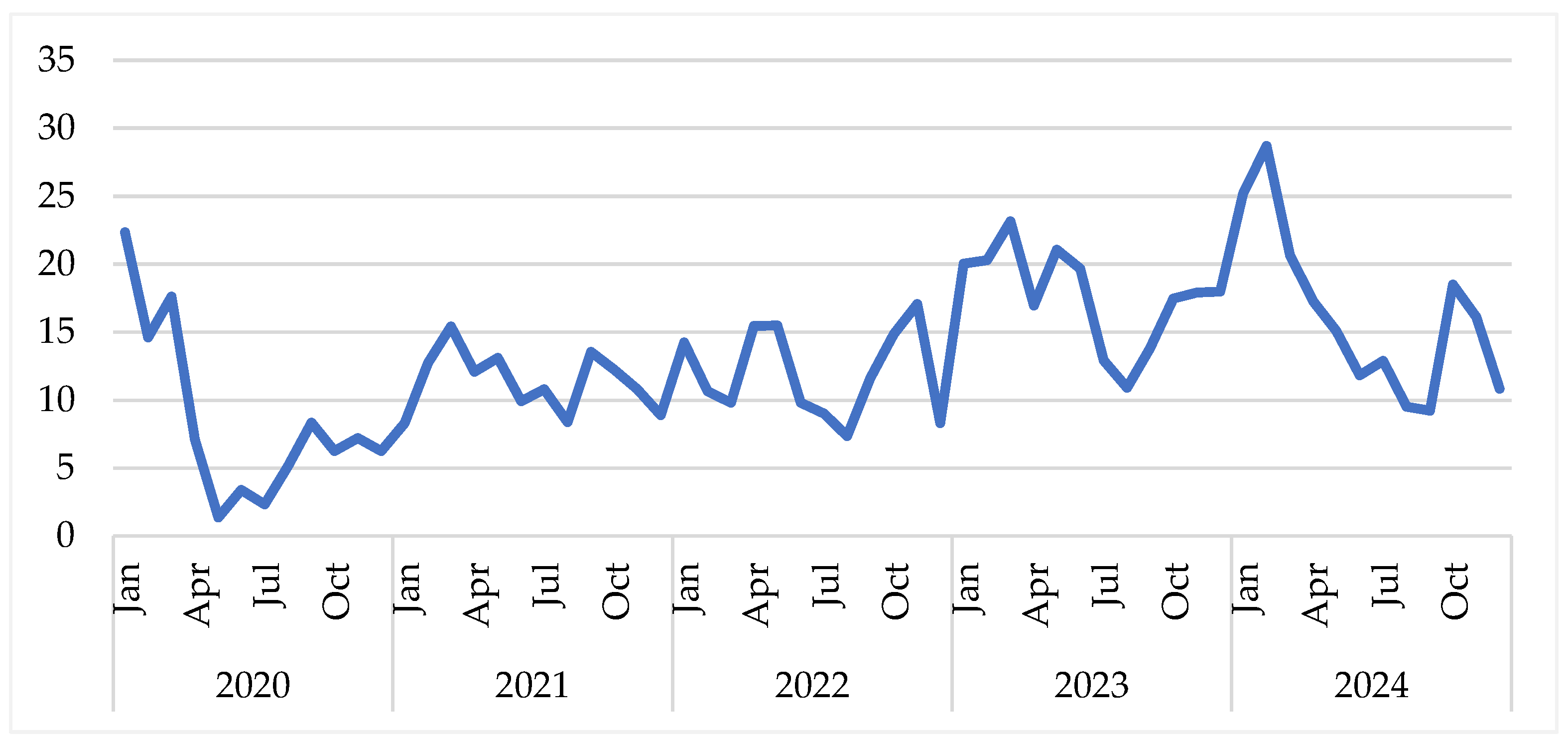
Figure 2.
Seasonality of AGE cases and positive cases for HuNoV (Ekaterinburg, Russian Federation, from November 2020 to April 2023 – three consecutive seasons combined).
Figure 2.
Seasonality of AGE cases and positive cases for HuNoV (Ekaterinburg, Russian Federation, from November 2020 to April 2023 – three consecutive seasons combined).
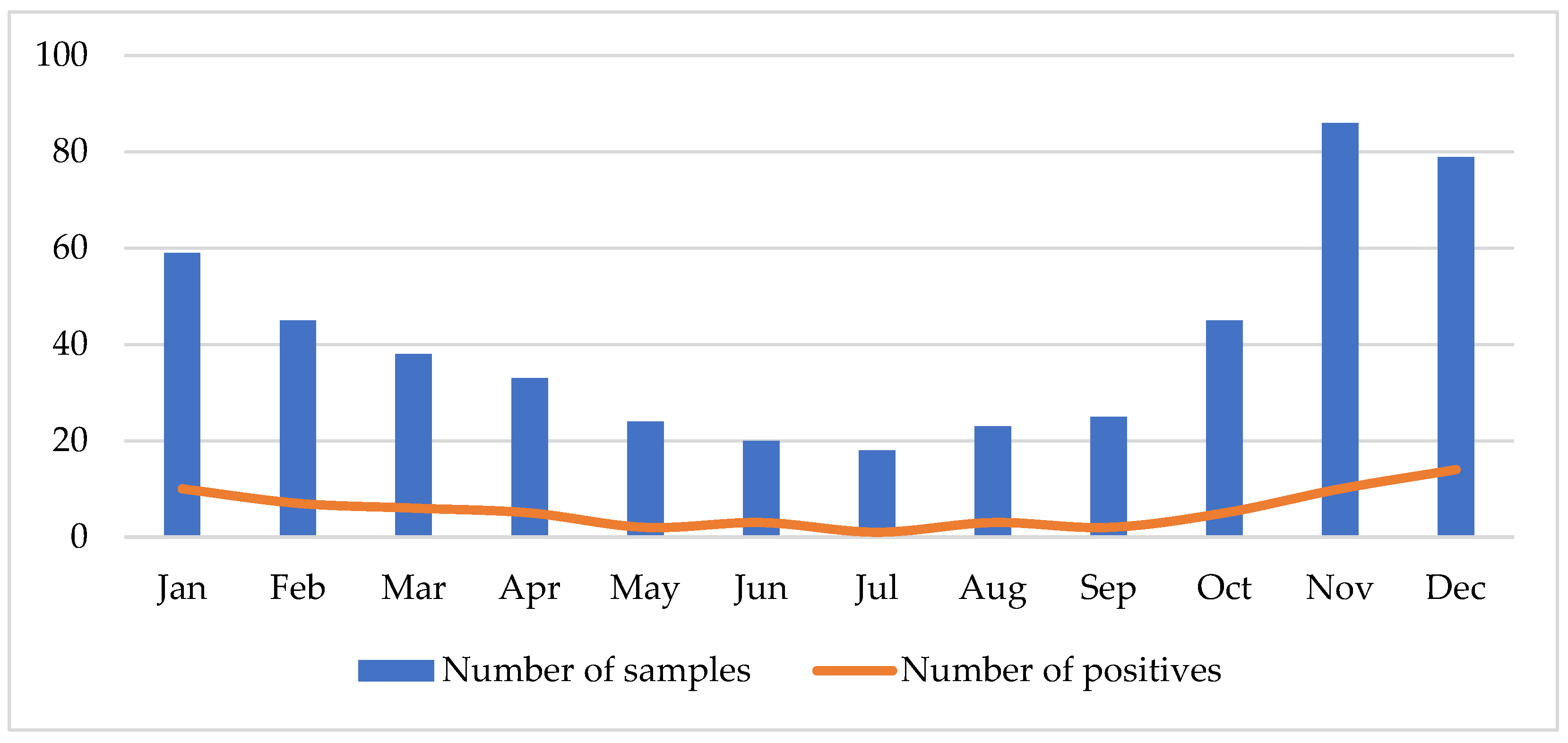
Figure 3.
Number of HuNoV genotypes (VP1 and RdRp), detected during the study (Ekaterinburg, Russian Federation, from November 2020 to April 2023).
Figure 3.
Number of HuNoV genotypes (VP1 and RdRp), detected during the study (Ekaterinburg, Russian Federation, from November 2020 to April 2023).
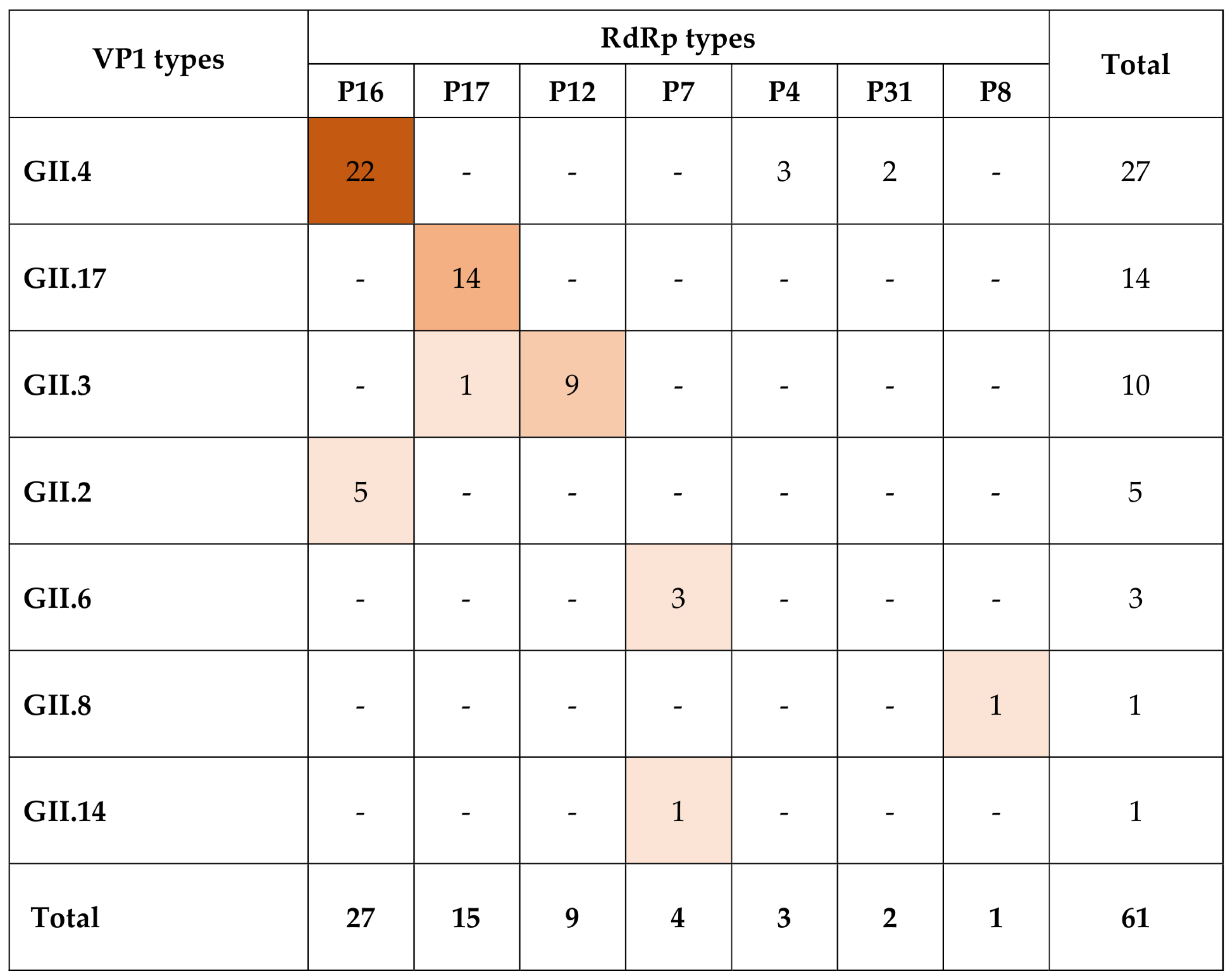
Figure 4.
Bayesian phylogenetic tree of GII.4 isolates based on VP1 gene fragment (950 bp). Strains from this study are marked with triangles (n=9), corresponding phylogenetic clusters are marked with vertical lines. Period starting approximately 40 years before the last observation was collapsed (dashed line). Posterior values are depicted at nodes, values lower than 80 are omitted. Posteriors in the collapsed site are equal to 1.0.
Figure 4.
Bayesian phylogenetic tree of GII.4 isolates based on VP1 gene fragment (950 bp). Strains from this study are marked with triangles (n=9), corresponding phylogenetic clusters are marked with vertical lines. Period starting approximately 40 years before the last observation was collapsed (dashed line). Posterior values are depicted at nodes, values lower than 80 are omitted. Posteriors in the collapsed site are equal to 1.0.
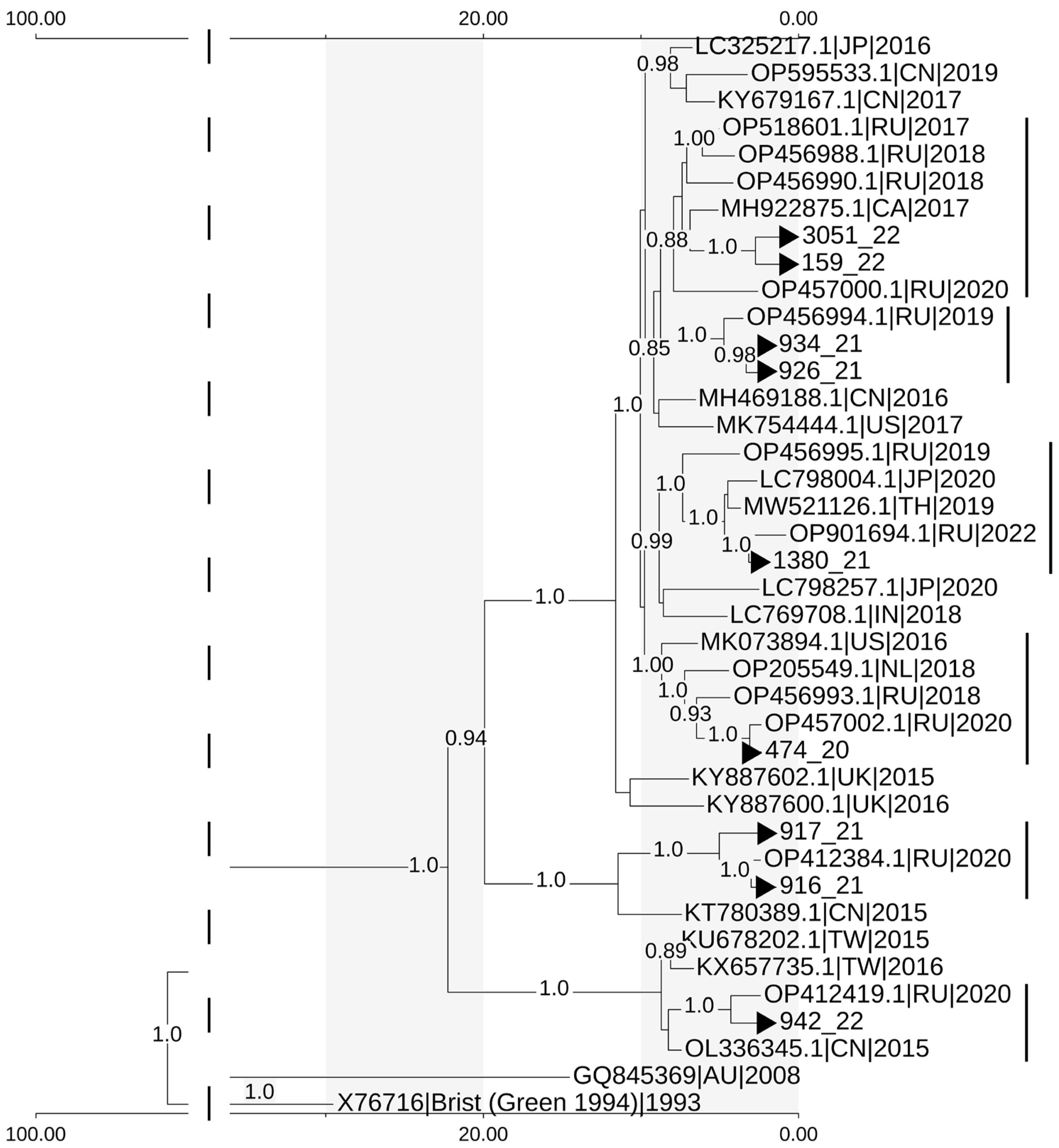
Figure 5.
Bayesian phylogenetic tree of GII.17 isolates based on VP1 gene fragment (950 bp). Strains from this study are marked with triangles (n=4). Period starting approximately 40 years before the last observation was collapsed (dashed line). Posterior values are depicted at nodes, values lower than 80 are omitted. Posteriors in collapsed site are equal to 1.0.
Figure 5.
Bayesian phylogenetic tree of GII.17 isolates based on VP1 gene fragment (950 bp). Strains from this study are marked with triangles (n=4). Period starting approximately 40 years before the last observation was collapsed (dashed line). Posterior values are depicted at nodes, values lower than 80 are omitted. Posteriors in collapsed site are equal to 1.0.
Disclaimer/Publisher’s Note: The statements, opinions and data contained in all publications are solely those of the individual author(s) and contributor(s) and not of MDPI and/or the editor(s). MDPI and/or the editor(s) disclaim responsibility for any injury to people or property resulting from any ideas, methods, instructions or products referred to in the content. |
© 2026 by the authors. Licensee MDPI, Basel, Switzerland. This article is an open access article distributed under the terms and conditions of the Creative Commons Attribution (CC BY) license (http://creativecommons.org/licenses/by/4.0/).
Copyright: This open access article is published under a Creative Commons CC BY 4.0 license, which permit the free download, distribution, and reuse, provided that the author and preprint are cited in any reuse.


