

Submitted:
15 June 2026
Posted:
16 June 2026
You are already at the latest version
Abstract
Subarachnoid hemorrhage (SAH) induces a sympathetic surge and systemic inflammation that may impair renal perfusion and glomerular integrity. Although the vagus nerve is central to autonomic and anti-inflammatory regulation, its relationship to renal structural injury in severe SAH is unclear. This study evaluated whether electrophysiological vagal CAP amplitude correlates with glomerular integrity in an experimental SAH model. Nineteen rabbits were assigned to control (n = 5), sham (n = 5), and SAH groups (n = 9). SAH was induced by daily cisterna magna injections of autologous blood for three days, and animals were followed for 14 days; those that did not survive to the 14-day endpoint formed the SAH-Nonsurvivor subgroup (n = 4). Vagal compound action potential (CAP) amplitude (mV) was recorded electrophysiologically and used as the principal physiologic readout of vagal nerve integrity. Renal tissue and perirenal parasympathetic ganglia were analyzed histologically and stereologically to quantify degenerated neurons and atrophic glomeruli (per mm³). Vagal CAP amplitude decreased from 1.42 ± 0.36 mV in controls to 0.34 ± 0.11 mV in the SAH-Nonsurvivor subgroup (p < 0.001), while atrophic glomeruli increased from 4 ± 1 to 98 ± 11 per mm³. Degenerated neuronal density peaked in the SAH-Nonsurvivor subgroup (98 ± 19 per mm³). Vagal CAP amplitude was inversely correlated with glomerular injury (Spearman ρ = –0.89, p < 0.001). In this small exploratory study, reduced vagal CAP amplitude was associated with greater glomerular injury after severe SAH. These hypothesis-generating findings warrant confirmation in larger, adequately powered studies before any physiologic or translational interpretation can be made.
Keywords:
subarachnoid hemorrhage
; vagus nerve
; renal innervation
; autonomic dysfunction
; neurogenic hypertension
; acute kidney injury
1. Introduction
Subarachnoid hemorrhage (SAH) is a life-threatening condition frequently accompanied by systemic complications caused by excessive sympathetic activation and inflammation [1,2]. The resulting presumed catecholamine surge contributes to widespread vasoconstriction, hypertension, and ischemic damage in peripheral organs, including the kidneys [2,3]. Acute kidney injury (AKI) develops in up to 40% of SAH patients and is strongly associated with elevated inflammatory biomarkers and poor outcomes [2,3,4,5].
The kidney receives dense sympathetic innervation, whereas its parasympathetic supply is more limited and conceptually distinct from the systemic cholinergic anti-inflammatory pathway (CAIP). The CAIP is mediated by efferent vagal signaling to the celiac ganglion, which in turn modulates the splenic sympathetic nerve and acetylcholine-releasing T cells, ultimately attenuating macrophage-derived cytokines such as TNF-α [6,7]. In contrast, the kidney itself receives a sparser direct parasympathetic input via perirenal/renal hilar microganglia, the functional role of which remains incompletely characterized [10]. These two pathways (systemic CAIP and intrinsic renal parasympathetic innervation) are anatomically and mechanistically distinct. In the present study, “vagal function” refers to the electrophysiological integrity of the cervical vagal trunk and the histologic preservation of perirenal parasympathetic ganglia, rather than to systemic anti-inflammatory tone, which we did not directly measure.
In this manuscript, “loss of vagal function” refers specifically to a reduction in evoked vagal compound action potential amplitude accompanied by histologic degeneration of vagal axons and perirenal ganglion neurons—that is, a structural/electrophysiological deficit rather than a transient autonomic tone shift. Such vagal dysfunction has been described in several clinically relevant conditions, including aneurysmal subarachnoid hemorrhage and traumatic brain injury (where brainstem and nucleus tractus solitarius injury impairs efferent vagal output) [15,17], advanced chronic kidney disease (where uremic neuropathy reduces vagal nerve activity) [6], diabetic autonomic neuropathy, and sepsis-related autonomic failure. In these settings, withdrawal of vagal restraint may unmask sympathetic over-activity, promote renal vasoconstriction, and exacerbate glomerular ischemia [8,9,17].
Previous SAH models demonstrated degeneration of vagal ganglia and renal artery vasospasm, suggesting a neurogenic mechanism of kidney injury, but no study has established a direct functional link between vagal CAP amplitude and glomerular preservation [10]. In severe SAH, this autonomic imbalance may contribute to peripheral organ injury, including the kidney [11,12]. While vagus nerve stimulation has been shown to improve renal allograft function in experimental transplantation, the direct relationship between vagal nerve function and glomerular preservation remains unclear.
The conceptual framework of this study is as follows. Severe SAH produces autonomic dysregulation in which sympathetic overactivity is normally opposed by vagal (parasympathetic) tone; structural injury to vagal pathways may therefore remove this counter-regulation and, together with hypertension and inflammation, contribute to peripheral organ injury. Within this framework, the cervical-vagal CAP amplitude provides a measurable index of vagal structural integrity, and atrophic glomerular density provides a measurable index of renal structural injury. We use these two quantifiable endpoints to test, at the level of statistical association, whether vagal structural integrity tracks with renal structural injury after severe SAH. This study aimed to determine whether vagal CAP amplitude is associated with renal structural injury in an experimental rabbit model of severe SAH. We tested the hypothesis that lower vagal CAP amplitude is associated with greater glomerular injury. We emphasize at the outset that this is an exploratory, association-level analysis in a small cohort: the design cannot establish causality, and the model does not reproduce the formal clinical diagnosis of brain death (which requires demonstration of irreversible loss of all brainstem function, including standardized apnea testing). We therefore describe outcomes in terms of survival and SAH severity rather than brain death.
2. Materials and Methods
Experimental Design and Animal Model: This study was conducted in full compliance with National Institutes of Health animal research guidelines and received approval from the Atatürk University Ethics Committee. Nineteen New Zealand white rabbits (2.5–3.0 kg) were randomly assigned to one of three groups: Control (n = 5), Sham (n = 5),SAH (n = 9). Animals were initially randomized into these three experimental groups; for outcome-based analyses, the SAH group was subsequently stratified post hoc into SAH-Survived and SAH-Nonsurvivor subgroups according to whether terminal brainstem failure occurred before the 14-day endpoint.
All animals were housed under standard conditions with free access to food and water. Adult male New Zealand white rabbits (age 12–16 weeks) from a single accredited supplier were used; only male animals were studied to limit hormonal variability, which is acknowledged as a limitation. Allocation was performed by an investigator not involved in subsequent outcome assessment using sequentially generated random numbers (random.org), with allocation concealed in sealed opaque envelopes opened immediately before the first procedure. Pre-defined exclusion criteria were peri-operative anesthetic death (< 30 min from induction) and failure of cisterna magna cannulation; no animals were excluded under these criteria. Humane endpoints were pre-specified as loss of righting reflex with respiratory arrest unresponsive to stimulation, or > 20% body-weight loss with score ≥ 10 on the composite clinical score. Buprenorphine (0.05 mg/kg, s.c.) was administered every 12 h for 48 h after each cisterna magna procedure and additional analgesia given on welfare grounds. Mechanical ventilation was not used outside of brief terminal resuscitation attempts. All histopathologic, stereologic, electrophysiologic, and image-based analyses were performed by investigators blinded to group assignment; sample identifiers were re-coded by a third party before analysis. No formal a priori power calculation was performed. This study is explicitly exploratory and pilot in nature. However, the small per-group sample size (n = 4–5) limits statistical power, precludes robust multivariable modeling, and means that all effect estimates carry wide uncertainty. The sample size was based on minimum-feasible numbers consistent with the 3Rs principle and with previously published rabbit SAH models. We do not present any finding as confirmatory. Both kidneys were harvested; reported glomerular and arterial morphometric values represent the mean of left and right kidneys for each animal.
SAH was induced by serial cisterna magna injections of autologous arterial blood (0.5 mL/day for 3 consecutive days), a well-established model of increased intracranial pressure and progressive brain injury. Under general anesthesia (ketamine 35 mg/kg and xylazine 5 mg/kg, intramuscular), each rabbit in this group received a cisterna magna injection of 0.5 mL fresh non-heparinized arterial blood (drawn from the auricular artery). This injection was performed once daily on three consecutive days (total of ~1.5 mL of blood introduced). This protocol is known to elevate intracranial pressure and produce diffuse SAH, leading to brain stem ischemia over time. Sham group rabbits underwent identical anesthesia, positioning, and surgical exposure of the cisterna magna as the SAH group, but received 0.5 mL of pre-warmed, sterile 0.9% saline injected slowly (over approximately 30 seconds) into the cisterna magna on three consecutive days (total volume administered: 1.5 mL over 3 days), exactly matching the volume, frequency, and administration duration of the SAH protocol. Control rabbits underwent no injections or surgical intervention.
All animals were monitored for 14 days for neurological signs of brain stem dysfunction, cardiorespiratory instability, and survival status. Non-invasive tail-cuff blood pressure (BP) was recorded each morning during a 1-minute monitoring window (average of three consecutive cuff measurements), and daily mean BP values were retained for longitudinal analysis (Supplementary Figure S3). Severity of illness in SAH animals at the 14-day end-point was scored using a composite clinical score (0–3 each for activity, posture, feeding, and respiratory pattern; maximum 12); SAH-Survived animals had end-point scores of 6–9, with persistently reduced activity, transient apneic episodes, and weight loss of 12–18% from baseline, whereas SAH-Nonsurvivor animals had scores ≥ 10 in the 24–48 h preceding death.
Physiological Monitoring: We recorded each animal’s heart rate, respiratory rate, oxygen saturation, and tail arterial blood pressure daily, starting from baseline (pre-injection) and throughout the 2-week observation period. Clinical signs of brain stem dysfunction (such as respiratory pattern changes, cranial nerve reflex loss, or coma) were documented. We defined the pre-specified moribund/terminal clinical state in this model by the occurrence of apnea or agonal respiration with a loss of cranial nerve reflexes, accompanied by a precipitous blood pressure rise followed by hypotension and cardiac arrest (if it occurred). Animals that met the pre-specified humane endpoint criteria, consistent with terminal brainstem dysfunction or moribund status, were euthanized immediately and included in the analysis as described below.
Tissue Harvesting and Vagal Compound Action Potential (CAP) Amplitude Measurement: At the end of the 14-day period, all surviving rabbits were deeply anesthetized (sodium pentobarbital 50 mg/kg i.v.) and then euthanized by decapitation. For rabbits that died or were euthanized early due to severe illness (particularly in the SAH group), data up to the point of death were included, and tissues were collected as soon as possible post-mortem. Specifically, in all SAH-Nonsurvivor animals the interval between cessation of spontaneous circulation (defined by loss of palpable femoral pulse and flat-line ECG) and initiation of cervical vagal nerve dissection plus ipsilateral nephrectomy was recorded and was kept below 30 minutes (median 18 minutes, range 5–30 minutes). Tissues were immediately placed in ice-cold normal saline during dissection and transferred to 10% neutral buffered formalin within a further 5–10 minutes to minimize autolytic change. We thus had four experimental cohorts for analysis based on actual outcomes: Control (survived, no SAH), Sham (survived, saline only), SAH-Survived (SAH group animals that survived to 14 days, n = 5), and SAH-Nonsurvivor (SAH group animals that succumbed before day 14, n = 4; these reached the pre-specified moribund/terminal state defined above and were found moribund or in respiratory arrest despite brief attempts at supportive resuscitation).
Vagal Compound Action Potential (CAP) Amplitude: Immediately after sacrifice, we surgically exposed the cervical vagi and the upper thoracic vagal nerve trunks. We measured the compound action potential amplitude of the vagus nerve complex in each animal. A bipolar stimulating electrode was placed on the cervical vagus nerve, and a recording electrode was placed distally on the vagal trunk. A supramaximal electrical stimulus (0.1 ms pulses) was delivered, and the evoked voltage response was recorded using an oscilloscope. The peak-to-peak amplitude (in millivolts, mV) of the vagal nerve response was taken as the vagal CAP amplitude value. This electrophysiological compound action potential amplitude reflects functional integrity of vagal fibers—higher amplitudes indicate preserved neural transmission, whereas lower amplitudes suggest severe vagal injury. Three measurements were taken and averaged per animal.
Following electrophysiological measurements, we harvested the kidneys and associated autonomic ganglia. Specifically, we carefully dissected the renal hila to identify the small parasympathetic ganglia in the renal plexus (hereafter referred to as renal parasympathetic ganglia or perirenal vagal ganglia). These ganglia, also known as renal hilar microganglia, receive vagal input and lie along the renal arteries. Both left and right kidneys along with adjacent renal plexus tissue were removed. Tissue samples (vagal nerve roots, renal ganglia, and kidneys) were fixed in 10% neutral buffered formalin for 7 days.
Histopathological Analysis and Stereological Quantification: Fixed tissues were processed by standard paraffin embedding. Serial 5 μm sections were obtained from each vagal nerve root (at the level of the nodose ganglion and cervical trunk), each renal ganglion, and the renal cortices. Sections were stained with hematoxylin and eosin (H&E) for general histopathology. Additional sections were processed with TUNEL staining (for apoptosis) and neuron-specific enolase (NSE) immunohistochemistry to aid identification of neurons and degenerative changes.
We evaluated vagal nerve pathology for evidence of Wallerian degeneration (axon fragmentation, myelin debris) and renal ganglion pathology for neuronal degeneration (pyknotic nuclei, cytoplasmic eosinophilia, cell dropout). Degenerated neurons in the renal parasympathetic ganglia were identified by criteria including cell shrinkage, dark eosinophilic cytoplasm, nuclear condensation, and perineuronal vacuolation. Only neurons positive for NSE were counted, and those meeting degeneration criteria were tallied as “degenerated neurons.”
For the kidneys, we examined both gross morphology and microscopic changes. Particular attention was paid to the renal arteries for any vasospasm or wall thickening, evidence of intrarenal hemorrhages, and the condition of glomeruli. Atrophic glomeruli were defined histologically by collapse of capillary tufts, wrinkling of the glomerular basement membrane, and diminished glomerular tuft size with sclerosis, often accompanied by peri-glomerular fibrosis. Normal glomeruli, in contrast, had open capillary loops and normal cellularity.
We employed stereological methods to quantify glomerular numbers and densities. Using the optical disector and Cavalieri method, every 10th section through the kidney was selected to ensure a systematic random sample of approximately 100 sections per kidney. On each sampled section, a counting frame grid was overlaid on digital photomicrographs. Glomerular profiles were counted in disector pairs of consecutive sections: a glomerulus counted in the reference section but not in the lookup section was considered one counted object (Sigma Q minus). Using the disector formula Nv = Sigma Q minus divided by (t multiplied by A frame), we calculated the numerical density of glomeruli (Nv, glomeruli per cubic millimeter) for each kidney. Here, t represents section thickness (5 micrometers), and A frame is the area of the counting frame. Atrophic and nonatrophic glomeruli were distinguished based on the histologic criteria described above. The density of atrophic glomeruli (per cubic millimeter) was obtained for each kidney. We also estimated the total number of glomeruli per kidney by multiplying the glomerular density by the kidney reference volume, determined using the Cavalieri principle from sectioned areas and section thickness.
Finally, the density of degenerated neurons in the renal ganglia was determined by counting degenerated neuron profiles in serial ganglion sections using a similar optical fractionator approach. Neuronal density was expressed as degenerated neurons per cubic millimeter of ganglion volume.
Statistical Analysis
All data were analyzed using IBM SPSS Statistics (v20.0, Chicago, IL, USA). Continuous variables are presented as mean ± standard deviation (SD). Data distribution was tested using the Shapiro–Wilk test. For normally distributed data (e.g., blood pressure, vagal CAP amplitude), comparisons across the four analytical cohorts (Control, Sham, SAH-Survived, SAH-Nonsurvivor) were made with one-way analysis of variance (ANOVA), followed by Tukey’s post-hoc test. For non-parametric data or non-normally distributed outcomes (e.g., histological counts), we used the Kruskal–Wallis test with Dunn’s post-hoc comparisons. Given the small per-group sample sizes (n = 4–5), normality testing has limited power; therefore Kruskal–Wallis with Dunn’s post-hoc was the primary approach for all histologic counts and continuous outcomes with skewed distributions, and ANOVA results are reported only where parametric assumptions were reasonable. The multivariable linear regression model presented below was considered exploratory and hypothesis-generating because the per-predictor case ratio is below the recommended threshold for confirmatory inference; standardized coefficients are therefore reported with appropriate caveats and should be interpreted with caution. The correlation between vagal CAP amplitude and glomerular counts was evaluated using Pearson’s correlation coefficient (for parametric data) or Spearman’s rho (for non-parametric data). Survival distributions across groups were compared using the Kaplan–Meier method with the log-rank test. Quantitative immunohistochemistry (TUNEL, NSE) and stereologic data (atrophic glomeruli and degenerated neurons per mm3) were compared between groups using Kruskal–Wallis tests with Dunn’s post-hoc comparisons. Correlations between vagal CAP amplitude and renal/morphometric parameters were displayed as scatterplots with regression lines and 95% confidence intervals. Because the SAH-Survived and SAH-Nonsurvivor subgroups were defined post hoc according to 14-day survival status, all subgroup-level analyses (i.e., those that compare SAH-Survived with SAH-Nonsurvivor) are explicitly interpreted as exploratory. A two-tailed P value < 0.05 was considered statistically significant.
3. Results
Survival, Clinical Course, and Physiological Findings
All control and sham-operated rabbits remained alive and neurologically normal through the 14-day experiment. In contrast, the SAH group exhibited high mortality and distinct signs of severe brainstem dysfunction.
Mortality: Out of 9 SAH-induced rabbits, 4 animals (44%) died or had to be euthanized due to the pre-specified moribund/terminal clinical state before day 14 (the “SAH-Nonsurvivor” subgroup, n = 4). The remaining 5 SAH animals survived to 14 days (the “SAH-Survived” subgroup). We observed that the rabbits which succumbed tended to do so in the second week post-SAH (days 8–14). Two SAH group rabbits died on day 10, one on day 12, and one on day 14 with agonal breathing despite supportive care. No deaths occurred in the control or sham groups. Kaplan–Meier survival analysis with the log-rank test confirmed significantly lower survival in the SAH group compared with controls and sham (log-rank p = 0.015; 14-day cumulative survival: control 100%, sham 100%, SAH 56% [95% CI 21–86%]) (Supplementary Figure S1).
Blood Pressure and Heart Rate: Baseline mean arterial pressures (MAP) were similar across groups (95–105 mmHg) prior to interventions (Supplementary Figure S3). By the end of the experiment, clear differences emerged. The Control group maintained a near-constant MAP of 99 ± 7 mmHg. Sham animals had a mild, non-significant increase to 106 ± 8 mmHg. The SAH group, however, developed sustained elevations in mean arterial pressure (i.e., daily MAP readings consistently above baseline values, rather than isolated transient peaks). SAH-Survived rabbits had an average MAP of 117 ± 13 mmHg (significantly higher than control, P<0.05). The SAH-Nonsurvivor subgroup exhibited more marked elevations in blood pressure prior to death: their average MAP exceeded 126 ± 8 mmHg, with peak readings (defined as the maximum single non-invasive tail-cuff systolic measurement obtained during a 1-minute monitoring window) exceeding 135 mmHg. This was often accompanied by a terminal drop in pressure just before cardiac arrest. Heart rate (HR) showed biphasic changes in SAH animals. In the early phase of SAH (first 24–48 h after blood injection), SAH rabbits developed bradycardia (mean HR 156 ± 12 beats/min) compared to controls (252 ± 31 beats/min) and shams, consistent with Cushing response. In the late phase of SAH (days 3–7), surviving SAH animals developed significant tachycardia (mean HR 349 ± 31 beats/min by day 7) along with episodic blood pressure surges. These tachycardic episodes corresponded to sympathetic hyperactivity following presumed brainstem failure.
Control and sham animals remained neurologically intact (normal appetite, activity, and reflexes) and maintained stable respiration (about 24 ± 4 breaths per minute, oxygen saturation about 96%). In contrast, SAH animals showed signs of brain stem dysfunction. Early after SAH induction, the respiratory rate dropped (to about 13 ± 3 breaths per minute) and oxygen saturation decreased (83 ± 10%), indicating neurogenic respiratory depression. As brain herniation progressed, irregular breathing patterns appeared, characterized by episodes of apnea alternating with rapid shallow breaths (tachypnea up to 40–45 breaths per minute). In moribund SAH rabbits, we observed gasping respirations, diaphragmatic breathing without chest expansion, and ultimately respiratory arrest. All SAH-Nonsurvivor rabbits experienced respiratory failure as the immediate cause of death. Pupillary reflexes were absent in these animals, consistent with severe terminal brainstem dysfunction in this model. We did not perform standardized apnea testing or the full ancillary work-up required to diagnose brain death, and we therefore do not claim that these animals met formal brain-death criteria.
ECG changes: SAH also provoked cardiac electrical disturbances. In SAH rabbits (especially those that died), we documented ST-segment depressions, frequent ventricular ectopic beats including bigeminy, sporadic ventricular tachyarrhythmias, and episodic atrioventricular conduction block on ECG. These arrhythmias reflected the cardiac effects of massive sympathetic discharge and intracranial pressure fluctuations.
Neurogenic pulmonary edema (NPE) developed in the severe SAH cases. On necropsy, the lungs of SAH-Nonsurvivor rabbits were heavy, wet, and showed frothy fluid in airways. Histologically, they had pulmonary capillary congestion and intra-alveolar edema with proteinaceous fluid – classic signs of NPE. All SAH-Nonsurvivor rabbits with NPE also had extensive renal injury (as detailed below), suggesting a common underlying mechanism of autonomic dysfunction and presumed sympathetic overactivation, although direct catecholamine measurements were not performed.
Vagal CAP Amplitude Outcomes: Vagal CAP amplitude declined progressively with increasing severity of SAH injury. Figure 1 illustrates the experimental setup for vagal nerve stimulation and recording. In healthy control rabbits, the vagus nerve exhibited a robust compound action potential with an average amplitude of 1.42 ± 0.36 mV. Sham-operated rabbits had a slightly lower vagal response (1.23 ± 0.29 mV), but this was not significantly different from controls (P>0.1), indicating that the surgical procedure and saline injection had minimal effect on vagal function. Group-wise hemodynamic, vagal CAP amplitude, and stereologic kidney data are summarized in Table 1.
In contrast, rabbits subjected to SAH showed significantly reduced vagal CAP amplitude. SAH-Survived animals (those that exhibited progressive brainstem dysfunction but survived to the 14-day endpoint) had a mean vagal amplitude of 0.95 ± 0.12 mV, approximately a 33% reduction versus controls (P<0.01). More strikingly, the SAH-Nonsurvivor subgroup (those that experienced fatal SAH with terminal brainstem dysfunction) had an average vagal CAP amplitude of only 0.34 ± 0.11 mV. This represents a 75% reduction from control values (P<0.001). The difference in vagal CAP amplitude between SAH-Nonsurvivor and SAH-Survived animals was also significant (P<0.01), indicating that vagal nerve function was worst in the animals with the most severe outcomes.
In all rabbits that died, vagal CAP amplitude at endpoint was < 0.5 mV. In fact, just before death, two rabbits had nearly flat vagal traces (~0.1–0.2 mV), suggesting almost complete vagal nerve failure. In contrast, rabbits that survived to the 14-day endpoint maintained vagal CAP amplitudes near 1.0 mV. Thus, low vagal CAP amplitudes were tightly associated with progression to terminal brainstem failure. Because vagal CAP amplitude was recorded immediately after sacrifice (or, in early-death animals, within 30 minutes of cardiac arrest; see Methods), we cannot fully exclude that the somewhat lower amplitudes in the SAH-Nonsurvivor subgroup were partly influenced by a longer post-mortem interval; however, electrophysiologic responses were not detectable in two SAH-Nonsurvivor animals where post-mortem interval was minimal, suggesting that true vagal failure, rather than post-mortem artifact alone, accounted for the major reductions observed.
Histopathological Findings in Vagal Ganglia and Kidneys
Renal Parasympathetic Ganglia Degeneration: Histological examination of the renal hilar (perirenal) ganglia revealed minimal abnormalities in control and sham animals. These ganglia in control rabbits contained healthy neurons with visible Nissl substance and only rare apoptotic cells. The average density of degenerated neurons in control ganglia was 6 ± 2 per cubic millimeter, indicating negligible neurodegeneration. Sham ganglia showed a slight increase in degenerative changes (21 ± 5 degenerated neurons per cubic millimeter), possibly due to surgical stress or local inflammation, but the overall ganglion architecture remained intact.
SAH Animals: SAH animals demonstrated markedly higher degeneration in the renal parasympathetic ganglia. In SAH-Survived rabbits, the ganglia contained shrunken, hyperchromatic neurons with perineuronal halos, consistent with ischemic degeneration. The degenerated neuron density averaged 25 ± 7 per cubic millimeter, which was significantly greater than in the sham group (p < 0.05). Some neurons were TUNEL positive, indicating apoptotic cell death, and occasional neuronophagia, defined as microglial ingestion of degenerating neurons, was observed. Quantitatively, TUNEL-positive neurons per ganglion section averaged 2.1 ± 0.8 in controls, 4.5 ± 1.2 in sham, 9.8 ± 2.4 in SAH-Survived, and 38.7 ± 7.6 in SAH-Nonsurvivor animals (Kruskal–Wallis p < 0.001; Dunn’s post-hoc: SAH-Nonsurvivor vs. control p < 0.001); Supplementary Figure S2 summarizes the stepwise increase in TUNEL-positive neurons per ganglion section across groups; NSE immunostaining was used to confirm neuronal identity for counting and followed the same qualitative pattern.
SAH-Nonsurvivor Subgroup: In the SAH-Nonsurvivor subgroup, ganglionic damage was extreme. The ganglia were often difficult to identify macroscopically, appearing pale and fibrotic. Microscopically, these ganglia had lost the majority of their neurons; the few remaining cells appeared as ghost neurons, showing only faint outlines or fragmented DNA on TUNEL staining. The density of degenerated neurons in SAH-Nonsurvivor rabbits reached 98 ± 19 per cubic millimeter, approximately four times higher than in the SAH-Survived animals (p < 0.01). Essentially, almost all neurons in the renal vagal ganglia exhibited degenerative changes in the animals with the most severe (fatal) SAH outcomes. These findings indicate a strong correlation between the severity of SAH, the intensity of the inferred sympathetic overactivation, and the extent of vagal ganglion neuron loss.
Glomerular Pathology: The glomeruli were the main focus of our analysis as an endpoint of renal injury. In control rabbits, renal glomeruli were uniformly normal, showing well-perfused capillary loops, normal cellularity, and no evidence of sclerosis or collapse. Control kidneys had only a few atrophic glomeruli (typically fewer than five per entire kidney section), often located peripherally and likely representing incidental age-related changes. The density of atrophic glomeruli in controls was 4 ± 1 per cubic millimeter, indicating that more than 95% of glomeruli were healthy (representative normal and atrophic glomeruli are shown in Figure 2). Sham animals showed a mild increase in atrophic or ischemic glomeruli (12 ± 3 per cubic millimeter), but the vast majority of glomeruli remained normal in appearance. There were no significant differences between control and sham groups in total glomerular counts or kidney mass, suggesting that the sham procedure itself did not cause major renal injury.
SAH had a dramatic impact on glomeruli. Figure 3 illustrates normal and atrophic glomeruli in a SAH rabbit kidney. In SAH-Survived rabbits, many glomeruli, especially in the subcapsular region, showed partial collapse and contraction. These animals had an atrophic glomerulus density of 56 ± 8 per cubic millimeter, accounting for roughly half of all glomeruli in a given volume. The remaining glomeruli in these rabbits, while not fully atrophic, often displayed signs of injury such as mesangial expansion or early fibrosis. Stereological analysis revealed that the total number of normal glomeruli per kidney was significantly reduced in SAH-Survived animals compared with controls (approximately 40% fewer normal glomeruli, p < 0.01). Group-wise atrophic glomerular density is shown as a box-and-whisker plot in Supplementary Figure S4A, and the scatterplot of vagal CAP amplitude versus atrophic glomerular density with the fitted regression line and 95% confidence interval is shown in Supplementary Figure S4B.
Renal Vascular Changes: We found that severe SAH was accompanied by renal artery vasospasm and damage to intrarenal vessels. In SAH-Nonsurvivor rabbits, the main renal arteries often exhibited pronounced vasoconstriction, with narrowed lumens and thickened smooth muscle layers. Quantitatively, on H&E-stained transverse sections of the proximal renal artery (analyzed in ImageJ by a blinded observer; mean of three sections per animal), luminal diameter was 0.86 ± 0.09 mm in controls, 0.81 ± 0.10 mm in sham, 0.62 ± 0.08 mm in SAH-Survived, and 0.41 ± 0.07 mm in SAH-Nonsurvivor animals (Kruskal–Wallis p < 0.001), and the wall-to-lumen ratio increased correspondingly (0.18 ± 0.03 in controls vs. 0.42 ± 0.06 in SAH-Nonsurvivor, p < 0.001), confirming the qualitative impression of marked vasoconstriction. Perivascular sympathetic nerve plexuses in these rabbits showed degeneration (loss of normal axonal staining), whereas control animals had normal-appearing renal nerve fibers. Figure 4 shows renal artery vasospasm and Figure 5 demonstrates degeneration of the perivascular nerve plexus around it in an SAH subject. Additionally, SAH-Nonsurvivor kidneys showed small foci of intraparenchymal hemorrhages (likely from rupture of stress-weakened microvessels), whereas no hemorrhages were seen in controls.
SAH-Nonsurvivor Subgroup: In the SAH-Nonsurvivor subgroup, renal damage was extensive and universal. Grossly, the kidneys were swollen and displayed a mottled cortical surface. Microscopically, nearly every glomerulus was either completely atrophic or showed ghost-like morphology. The atrophic glomerulus density reached 98 ± 11 per cubic millimeter in these rabbits, essentially indicating that almost all glomeruli in each observed area were destroyed or nonfunctional. The few glomeruli that retained normal structure were typically small and isolated, suggesting they were residual remnants in less affected regions. Figure 6 and Figure 7 demonstrate the severe glomerular degeneration and presence of apoptotic tubular cells in an SAH-Nonsurvivor rabbit kidney. Many renal tubules contained proteinaceous casts, and there was clear evidence of acute tubular necrosis, likely secondary to severe ischemia and hypertension.
Renal inflammation: Alongside glomerular damage, SAH kidneys, especially in the Dead subgroup, showed interstitial inflammation. We noted mononuclear cell infiltration (macrophages and lymphocytes) around glomeruli and blood vessels. Some glomeruli had crescents or fibrinoid necrosis, hinting that immune-mediated injury might be contributing (potentially triggered by damage-associated molecular patterns released after severe brain injury) [13,14]. This aspect was not quantitatively measured; it is consistent with the broader literature on inflammatory responses in severely brain-injured organ donors, which we cite as context rather than as a finding of the present study.
Correlation Between Vagal CAP Amplitude and Renal Parameters
Our data show a clear inverse relationship: across all individual animals, vagal CAP amplitude exhibited a strong negative correlation with atrophic glomerulus density (Spearman ρ = –0.89, p < 0.001). In an exploratory multivariable model including both vagal CAP amplitude and mean arterial pressure, vagal CAP amplitude showed a stronger association with atrophic glomerular density than MAP; however, this finding requires confirmation in larger, independently validated datasets (standardized β = –0.75, p < 0.01 vs β = 0.45, p = 0.07 for mean arterial pressure) (Table 2).
Among SAH animals, those with vagal CAP amplitude around 1.0 mV (the survivors) retained approximately 50–60% normal glomeruli, whereas animals with vagal CAP amplitude near 0.3 mV (the non-survivors) had less than 10% normal glomeruli, with more than 90% categorized as atrophic. In this exploratory dataset, vagal CAP amplitudes below approximately 0.30 mV were associated with severe glomerular injury: all animals with vagal amplitude below 0.3 mV had more than 60% of their glomeruli atrophic and none survived. Because this cut-off was derived from the same small dataset, was not externally validated, and was not accompanied by formal ROC or sensitivity/specificity analysis, it should be regarded as a preliminary observation requiring independent confirmation. Conversely, animals with vagal CAP amplitudes above 1.0 mV demonstrated minimal glomerular injury.
We also evaluated blood pressure in relation to these measures. Mean arterial pressure showed a positive correlation with atrophic glomerulus density, consistent with pressure-mediated kidney injury. However, exploratory multivariable analysis showed that vagal CAP amplitude had a stronger association with atrophic glomerular density than MAP (standardized β = –0.75, p < 0.01 for vagal CAP amplitude; β = 0.45, p = 0.07 for MAP); this finding requires confirmation in larger, independently validated datasets, and suggests that vagal nerve dysfunction reflects both sympathetic overactivation and additional pathological processes, such as inflammation, that contribute to renal damage.
4. Discussion
In this experimental study, electrophysiological vagal nerve dysfunction was strongly associated with renal histopathological injury in an experimental rabbit model of severe SAH. SAH produced clinical and hemodynamic findings consistent with marked autonomic imbalance, including sustained blood-pressure elevation, tachyarrhythmias, and neurogenic pulmonary edema. These changes were accompanied by histologic degeneration of vagal nerve fibers and parasympathetic ganglion neurons. We use the term “autonomic imbalance” rather than “autonomic storm” because sympathetic activity was not directly measured by plasma or tissue catecholamines or microneurography. Vagal impairment, quantified by reduced CAP amplitude, was closely correlated with the severity of glomerular loss. Animals with relatively preserved vagal signals showed better renal structural preservation, whereas those with nearly abolished vagal responses had severe glomerular injury. In this small dataset, vagal CAP amplitude showed a numerically stronger association with glomerular injury than mean arterial pressure; given the sample size, this comparison is exploratory and should not be over-interpreted. To our knowledge, we are not aware of a prior experimental study linking vagal electrophysiological metrics with renal structural injury after severe SAH. Because this is a small, single-time-point, association-level study, these observations should be regarded as preliminary and hypothesis-generating.
Our data reinforce the hypothesis that vagal nerve injury contributes to sustained sympathetic overactivity following acute brain injury. Subarachnoid hemorrhage induces a robust and prolonged activation of the central sympathetic nervous system; for instance, total-body norepinephrine spillover in SAH patients increased approximately threefold within 48 hours of hemorrhage and remained elevated over the first week after insult [15,16]. In parallel, acute brain injury, including SAH, disrupts parasympathetic regulation, diminishing vagal inhibitory tone and facilitating unchecked sympathetic discharge from hypothalamic and medullary centers [17,18]. In our SAH rabbits, this autonomic imbalance manifested as sustained hypertension, tachycardia, and cardiac arrhythmias compatible with presumed catecholamine-surge-like physiology. The combination of reduced vagal inhibitory signaling and excessive sympathetic drive provides a plausible pathophysiological mechanism linking brainstem injury after SAH to peripheral organ damage, including renal ischemia and glomerular loss.
Our observation that vagal CAP amplitude markedly dropped in animals showing the highest blood pressures and poorest outcomes aligns with prior experimental data. In an SAH rabbit model, degeneration of the vagal nodose ganglion was associated with renal artery vasospasm (vasospasm index increased from ~1.9 in sham to ~2.3 in SAH) and systemic hypertension, with animals developing pressures > 122 mmHg [10]. These findings support the notion that parasympathetic (vagal) loss contributes to neurogenic hypertension and altered renal vascular tone after SAH. Our study expands on this by providing a direct functional correlate (reduced vagal CAP amplitude) and linking it to histopathological kidney injury (glomerular and tubular damage). When vagal output is reduced, sympathetic overactivation appears to drive systemic hypertension, but renal hemodynamics likely shift: vasoconstriction of afferent arterioles, reduced renal perfusion, and increased susceptibility to ischemia. Given also that SAH triggers systemic inflammatory responses that may harm renal microvasculature, the combination of sympathovagal imbalance and inflammation may synergize to cause severe kidney injury [1,10].
Our results suggest that vagal suppression can remove a crucial anti-inflammatory control mechanism and thereby promote systemic and renal inflammation. The vagus nerve mediates the cholinergic anti-inflammatory pathway, which modulates immune responses through efferent signals to the spleen and other immune organs; this pathway reduces production of proinflammatory cytokines (e.g., TNF-α, IL-6) by immune cells such as macrophages, thereby limiting tissue inflammation and injury [19,20]. In the SAH-Nonsurvivor animals, where vagal CAP amplitude was severely diminished, we observed marked mononuclear leukocyte infiltration and both glomerular and tubulointerstitial damage on routine histology. Because we did not directly measure cytokines, splenic acetylcholine, or vagal efferent nerve activity, the contribution of the cholinergic anti-inflammatory pathway in our model remains inferential, and the inflammatory findings described here should be interpreted as inferential pending direct biochemical confirmation. Clinical data support this mechanism: in aneurysmal SAH patients, higher admission hs-CRP levels were independently associated with development of AKI (odds ratio 1.2 per mg/L increase in hs-CRP) [1,21]. These findings suggest that loss of vagal anti-inflammatory tone after SAH may result in a cytokine surge, damaging the renal microvasculature and glomeruli. The inflammatory injury likely acts in concert with the hemodynamic insult (hypertension, vasospasm) to produce the severe renal damage we observed.
The kidney is highly perfused and poorly tolerant of abrupt, sympathetic-mediated vasomotor changes. By way of context, and not as a claim about the present model, the brain-dead donor literature describes a neuroendocrine “adrenergic storm” with sustained catecholamine release and inflammatory and pro-coagulant mediators that can provoke renal vasoconstriction, endothelial activation, and microvascular injury [22,23]. Such vasoconstriction likely shunts blood flow away from glomeruli, inducing ischemia and predisposing to glomerular collapse. At the same time, brain death triggers a robust inflammatory response: donor kidneys from brain-dead individuals show early infiltration by T lymphocytes and macrophages, and release of proinflammatory cytokines such as IL-6 and MCP-1 upon reperfusion [24,25]. In a recent rat model, brain death was associated with increased neutrophil extracellular trap (NET) formation in kidneys, endothelial cell activation, platelet infiltration, and oxidative stress, factors that may promote microthrombi formation, glomerular capillary occlusion, and further ischemic injury.
Given these mechanisms, it is plausible that in our SAH-Nonsurvivor rabbits the combination of sympathetically mediated vasoconstriction, hemodynamic instability, and an unchecked inflammatory/coagulation-related cascade converged to produce widespread glomerular injury. The morphological findings we observed, glomerular collapse, ghost-like glomeruli, tubular necrosis, proteinaceous casts, and signs suggestive of microvascular inflammation or thrombosis, are consistent with this multifactorial model of injury. Thus, the heavy glomerular damage in our severe-SAH model likely reflects not only hemodynamic insult (vasoconstriction, ischemia, hypertension) but also, plausibly, inflammatory and coagulopathic processes associated with severe acute brain injury, which together may undermine glomerular perfusion and integrity.
Our data suggest that maintaining vagal activity may attenuate deleterious injury pathways following severe SAH. In our SAH rabbits, those with higher vagal CAP amplitude showed less extensive glomerular injury, whereas those with markedly reduced amplitudes showed near-total glomerular atrophy and sclerosis. This pattern mirrors preclinical models in which vagus-nerve stimulation markedly reduces kidney inflammation, oxidative stress, and structural damage after ischemia/reperfusion injury [8,26]. In brain-death donation experiments, kidneys from VNS-treated donors had lower rates of vasculopathy and tubulopathy and improved creatinine clearance after transplantation compared with kidneys from unstimulated donors [12]. These observations underscore the renoprotective effects of preserved or augmented vagal tone and mirror the clinical challenge in brain-dead organ donors, where hemodynamic instability, vasoconstriction, inflammation, and impaired organ perfusion often threaten graft viability [27].
Although our study was not designed to address transplantation, we briefly note possible directions for future work. Any link to donor organ assessment is speculative and would require a model of formally diagnosed brain death, which we did not study. With that caveat, vagal tone (or less-invasive surrogates such as heart-rate variability) could in principle be explored in future studies as a candidate physiologic correlate of organ vulnerability. Current assessment relies on donor history, urine output, creatinine levels, and occasional biopsy, which do not capture neurogenic injury. A non-invasive or minimally invasive measure of vagal activity, such as heart rate variability as a surrogate for vagal tone or direct vagal nerve electrical monitoring, might be explored as a candidate early warning for severe autonomic imbalance and as a marker associated with renal vulnerability. Donors with extremely low vagal tone might be experiencing marked autonomic imbalance compatible with catecholamine-surge-like physiology, which may track with more extensive renal injury and potentially worse post-transplant outcomes, whereas preserved vagal activity could indicate more robust kidneys. Second, targeting autonomic imbalance may complement existing donor management. Preclinical models show that vagus-nerve stimulation in brain-dead donors improves long-term renal allograft outcomes: recipients had better creatinine clearance and reduced vascular lesions and tubulopathy [12,20]. VNS likely exerts these protective effects by attenuating the sympathetic surge associated with brain death and activating the cholinergic anti-inflammatory pathway, thereby reducing inflammatory cell infiltration and vascular damage in donor organs [20]. Thus, preserving or restoring vagal signaling (via VNS or pharmacologic mimics) could help stabilize hemodynamics, modulate inflammation, and enhance organ viability prior to transplantation. Given the strong association between vagal integrity and renal structural integrity in our model, further exploration of such autonomic-targeted donor management protocols appears justified.
Our findings are also consistent with the broader principle that blood-pressure and autonomic stability matter in severe acute brain injury, although our data cannot establish specific management recommendations. The kidney is highly vulnerable to renal hemodynamic instability; therefore, sustained hypertension or rapid fluctuations in perfusion may contribute to glomerular and vascular injury. In transplantation settings, donor hemodynamics influence organ quality: several reports show that organ donors with suboptimal management often yield grafts with higher rates of delayed graft function or reduced long-term survival [28,29,30]. However, the clinical data on ideal blood-pressure targets in neurologically deceased donors remain limited and partly contradictory. A systematic review of donor BP in neurological death found that most evidence centres on the harms of hypotension rather than hypertension; a donor systolic BP below 90 mmHg was associated with impaired graft outcomes, whereas no clear optimal upper BP limit emerged [29]. Indeed, in many protocols for donor management after brain death, hypotension rather than hypertension is considered the primary hemodynamic threat [14,31]. Our findings suggest that, in addition to hypotension high or poorly controlled hypertension and autonomic instability must also be avoided. This calls for a balanced donor-management strategy: careful fluid and vasoactive support, continuous monitoring of perfusion, and perhaps autonomic stabilization (e.g., by preserving vagal tone); rather than simplistic “higher BP is better” or “target BP > X” approaches.
Methodological Considerations and Study Limitations
This was an animal model that used rabbits with experimentally induced SAH. Although this model reproduces several features of severe acute brain injury, including sympathetic surges and peripheral organ injury, progression was faster than in humans (1–2 weeks vs. several days) [27,32]. Critically, this model does not reproduce the formal clinical diagnosis of brain death. We did not perform standardized apnea testing, electroencephalography, or ancillary blood-flow studies, and we did not demonstrate irreversible cessation of all brainstem function. We therefore describe our most severely affected animals as SAH-Nonsurvivors with terminal brainstem dysfunction, not as brain-dead, and we have removed brain-death terminology from the central claims of this study. This is an important conceptual limitation that constrains extrapolation of our findings to the brain-dead organ donor. Vagal CAP amplitude (compound action potential amplitude) was used as an aggregate endpoint metric. A low amplitude likely reflects vagal axonal loss or impaired neurotransmission and correlated well with histological neuron counts, but it provides no temporal information. Continuous autonomic monitoring, such as heart-rate variability (HRV), could clarify the timing of vagal failure relative to renal injury [33,34]. HRV was not analyzed in the present study because high-fidelity ECG sampling was unavailable on a daily basis, and we therefore could not derive validated time- or frequency-domain HRV indices. Likewise, plasma or tissue catecholamines, microneurography-based muscle sympathetic nerve activity, and cytokine panels (TNF-α, IL-6, MCP-1) were not measured; hence, our inferences about “sympathetic surge” and “cholinergic anti-inflammatory pathway” involvement are based on hemodynamic and histologic surrogates rather than on direct biochemical confirmation, and should be tested in future studies that include simultaneous catecholamine and cytokine sampling, vagotomy/VNS interventions, and continuous HRV monitoring. Because tissue analysis was performed at a single time point, our results show association rather than proven causality. Vagal degeneration and renal injury might both result from a common insult such as global hypoperfusion. In addition, intracranial pressure was not continuously recorded in individual animals; brain injury severity was inferred from established model parameters, clinical signs of brainstem dysfunction, and post-mortem brainstem histology, but inter-animal variation in absolute ICP cannot be excluded.
For early-death animals, tissues were harvested as soon as possible after death (median post-mortem interval 18 minutes, range 5–30 minutes); although vagal compound action potential amplitudes are known to attenuate with progressively longer ischemic intervals, the very short and tightly controlled post-mortem window in our experiments, together with the very large group differences observed, makes it unlikely that the principal findings can be attributed to post-mortem artifact alone.
Nonetheless, we acknowledge this as a methodological limitation. Further interventional studies using pharmacological or electrical vagus nerve stimulation are needed to determine causality. Inter-individual variation was considerable, paralleling the clinical heterogeneity of SAH. Differences in vascular anatomy or genetic background may have influenced severity, though statistical trends remained robust. Direct vagal CAP amplitude measurement in humans would be invasive, but non-invasive autonomic surrogates could serve as translational tools. HRV, particularly its high-frequency component, is a validated correlate of vagal tone in physiologic studies. Reduced HRV after acute brain injury has been linked to worse outcomes and higher mortality. Yet HRV interpretation has methodological limits: the traditional assumption that high-frequency HRV purely reflects parasympathetic tone may not hold under unstable conditions such as brain death [33,35].
5. Conclusions
Our findings relate to the broader question of how acute brain injury affects peripheral organs, particularly the kidney. The downstream organ effects of severe brain injury are thought to arise partly from physiological, inflammatory, and hemodynamic disturbances [28,36]; our data add an autonomic (vagal) structural correlate to this picture in an experimental SAH model. Although kidneys from donors with acute kidney injury (“donor AKI”) have been used successfully, data are mixed. Some studies report only slightly higher rates of delayed graft function (DGF) but comparable long-term graft survival, even in donors with severe AKI [37]. Other work warns that AKI in the donor may impair long-term graft quality [38,39]. We note only briefly that clinical donor-management protocols emphasize hormonal and hemodynamic support; how, if at all, autonomic integrity relates to these strategies is beyond the scope of the present experimental study.
Within the limits of a small, exploratory, association-level study, our data suggest that vagal nerve integrity may be related to the severity of renal structural injury after severe SAH. We do not claim that vagal CAP amplitude is a validated marker of kidney quality, nor that the autonomic nervous system is an established determinant of renal outcome; these remain hypotheses requiring confirmation. Reduced vagal activity was associated with severe glomerular injury, consistent with the hypothesis that autonomic imbalance—particularly vagal dysfunction—may contribute to renal injury following acute brain damage; mechanistic causality, however, cannot be established from the present design. In our exploratory multivariable model, vagal CAP amplitude appeared to track glomerular injury more closely than blood pressure; this finding requires confirmation in larger studies before any clinical implication is drawn. Any clinical or donor-management implications are necessarily speculative at this stage and would require, at minimum, larger adequately powered studies, mechanistic (interventional) confirmation, and validation in a model that reproduces formally diagnosed brain death.
In summary, this exploratory study reports an inverse association between vagal CAP amplitude and glomerular injury in a small rabbit model of severe SAH. The principal contribution is to motivate larger, adequately powered, and mechanistically controlled studies of the autonomic nervous system in acute brain injury and renal outcome. No clinical or donor-management recommendation can be drawn from the present data.
Translational Statement
This exploratory experimental study examined whether an electrophysiological index of vagal nerve integrity (vagal CAP amplitude) is associated with the degree of glomerular injury after severe subarachnoid hemorrhage (SAH) in rabbits. The study describes a statistical association in a small animal cohort; it does not establish causality, does not model formally diagnosed brain death, and does not evaluate transplantation or graft function. Any translational implications for donor organ assessment are speculative and are raised only as hypotheses for future, adequately powered and mechanistically controlled studies.
Author Contributions
Feyza Bayraktar Çağlayan and İskender Samet Daltaban contributed equally to the study conception, design, and data analysis. Mehmet Selim Gel and Mehmet Dumlu Aydın performed the surgical and experimental procedures. Ayhan Kanat and Muhammet Enes Aydın contributed to physiological monitoring and interpretation of neurological findings. Elif Demirci performed histopathological and stereological analyses. Siren Sezer and Mehmet Emin Demir supervised the project, interpreted data, and critically revised the manuscript. All authors reviewed and approved the final version of the manuscript.
Funding
This research did not receive any specific grant from funding agencies in the public, commercial, or not-for-profit sectors.
Institutional Review Board and Informed Consent Statement:
All experimental procedures were conducted in accordance with the National Institutes of Health (NIH) guidelines for the care and use of laboratory animals. The study protocol was approved by the Animal Research Ethics Committee of Atatürk University (09.11.2022; No: E-42190979-050-01-04-220036966). All efforts were made to minimize animal suffering and the number of animals used.
Data Availability Statement
The datasets generated and analyzed during the current study are available from the corresponding author upon reasonable request.
Acknowledgments
The authors thank the staff of the Experimental Research Laboratory, Atatürk University Faculty of Medicine, for technical support during the study.
Conflicts of Interest
The authors declare that they have no conflicts of interest or competing financial interests related to this study.
Use of Artificial Intelligence (AI) Tools:
During the preparation of this manuscript, the authors used an AI-assisted writing tool (OpenAI ChatGPT, GPT-5 model) to improve clarity, grammar, and consistency of the English text. The AI system was not used for data generation, statistical analysis, image creation, or interpretation of scientific results. All intellectual content, experimental design, data interpretation, and conclusions were developed and verified by the authors. The final version was carefully reviewed and approved by all authors to ensure accuracy and integrity.
References
- Chai, C.Z.; Ho, U.C.; Kuo, L.T. Systemic Inflammation after Aneurysmal Subarachnoid Hemorrhage. Int. J. Mol. Sci. 2023, 24, 10943. [Google Scholar] [CrossRef] [PubMed] [PubMed Central]
- Rachfalska, N.; Putowski, Z.; Krzych, Ł.J. Distant Organ Damage in Acute Brain Injury. Brain Sci. 2020, 10, 1019. [Google Scholar] [CrossRef] [PubMed] [PubMed Central]
- Chen, S.; Li, Q.; Wu, H.; Krafft, P.R.; Wang, Z.; Zhang, J.H. The harmful effects of subarachnoid hemorrhage on extracerebral organs. BioMed Res. Int. 2014, 2014, 858496. [Google Scholar] [CrossRef] [PubMed] [PubMed Central]
- Subah, G.; Patel, R.; Nolan, B.; Fortunato, M.; Lui, A.; Uddin, A.; Li, A.; Spirollari, E.; Nuoaman, H.; Adnan, Y.A.; Thomas, A.; Brill, S.; Pak, I.; Ng, C.; Hecht, L.; Bauerschmidt, A.; Mayer, S.; Gandhi, C.D.; Al-Mufti, F. Acute kidney injury in subarachnoid hemorrhage: Exploring its clinical significance and prognostic implications. J. Stroke Cerebrovasc. Dis. 2024, 33, 107843. [Google Scholar] [CrossRef] [PubMed]
- Eagles, M.E.; Powell, M.F.; Ayling, O.G.S.; Tso, M.K.; Macdonald, R.L. Acute kidney injury after aneurysmal subarachnoid hemorrhage and its effect on patient outcome: an exploratory analysis. J. Neurosurg. 2019, 133, 765–772. [Google Scholar] [CrossRef] [PubMed]
- Hilderman, M.; Bruchfeld, A. The cholinergic anti-inflammatory pathway in chronic kidney disease-review and vagus nerve stimulation clinical pilot study. Nephrol. Dial. Transplant. 2020, 35, 1840–1852. [Google Scholar] [CrossRef] [PubMed] [PubMed Central]
- Nash, W.T.; Okusa, M.D. Neuroimmune Regulation for Acute Kidney Injury Therapy: Insights Along the Path From Bench to Bedside. Semin Nephrol. 2025, 151674, Epub ahead of print. [Google Scholar] [CrossRef] [PubMed] [PubMed Central]
- Deng, S.; Zhang, Y.; Xin, Y.; Hu, X. Vagus nerve stimulation attenuates acute kidney injury induced by hepatic ischemia/reperfusion injury in rats. Sci. Rep. 2022, 12, 21662. [Google Scholar] [CrossRef] [PubMed] [PubMed Central]
- Goggins, E.; Inoue, H.; Okusa, M.D. Neuroimmune Control of Inflammation in Acute Kidney Injury and Multiorgan Dysfunction. J. Am. Soc. Nephrol. 2025. [Google Scholar] [CrossRef] [PubMed]
- Kepoglu, U.; Kanat, A.; Dumlu Aydin, M.; Akca, N.; Kazdal, H.; Zeynal, M.; Kantarci, M.; Sipal, S.A. New Histopathologic Evidence for the Parasympathetic Innervation of the Kidney and the Mechanism of Hypertension Following Subarachnoid Hemorrhage. J. Craniofac Surg. 2020, 31, 865–870. [Google Scholar] [CrossRef] [PubMed]
- Kressel, A.M.; Tracey, K.J.; Brines, M. Engaging Brain Anti-inflammatory Circuits to Improve the Viability of Transplanted Organs. Transplantation 2025, 11. [Google Scholar] [CrossRef] [PubMed]
- Hoeger, S.; Fontana, J.; Jarczyk, J.; Selhorst, J.; Waldherr, R.; Krämer, B.K.; Schnuelle, P.; Yard, B.A. Vagal stimulation in brain dead donor rats decreases chronic allograft nephropathy in recipients. Nephrol. Dial. Transplant. 2014, 29, 544–9. [Google Scholar] [CrossRef] [PubMed]
- Wong, J.; Tan, H.L.; Goh, J.P. Management of the brain dead organ donor. Trends Anaesth. Crit. Care 2017, 13, 6–12. [Google Scholar] [CrossRef]
- Anwar, A.S.M.T.; Lee, J.M. Medical Management of Brain-Dead Organ Donors. Acute Crit. Care 2019, 34, 14–29. [Google Scholar] [CrossRef] [PubMed] [PubMed Central]
- 15; Naredi, S.; Lambert, G.; Edén, E.; Zäll, S.; Runnerstam, M.; Rydenhag, B.; Friberg, P. Increased sympathetic nervous activity in patients with nontraumatic subarachnoid hemorrhage. Stroke 2000, 31, 901–6. [Google Scholar] [CrossRef] [PubMed]
- Hasegawa, Y.; Uchikawa, H.; Kajiwara, S.; Morioka, M. Central sympathetic nerve activation in subarachnoid hemorrhage. J. Neurochem. 2022, 160, 34–50. [Google Scholar] [CrossRef] [PubMed]
- Takahashi, C.; Hinson, H.E.; Baguley, I.J. Autonomic dysfunction syndromes after acute brain injury. Handb. Clin. Neurol. 2015, 128, 539–51. [Google Scholar] [CrossRef] [PubMed] [PubMed Central]
- Powell, K.; White, T.G.; Nash, C.; Rebeiz, T.; Woo, H.H.; Narayan, R.K.; Li, C. The Potential Role of Neuromodulation in Subarachnoid Hemorrhage. Neuromodulation 2022, 25, 1215–1226. [Google Scholar] [CrossRef] [PubMed]
- Ramos-Martínez, I.E.; Rodríguez, M.C.; Cerbón, M.; Ramos-Martínez, J.C.; Ramos-Martínez, E.G. Role of the Cholinergic Anti-Inflammatory Reflex in Central Nervous System Diseases. Int. J. Mol. Sci. 2021, 22, 13427. [Google Scholar] [CrossRef] [PubMed] [PubMed Central]
- Tanaka, S.; Okusa, M.D. Crosstalk between the nervous system and the kidney. Kidney Int. 2020, 97, 466–476. [Google Scholar] [CrossRef] [PubMed] [PubMed Central]
- Yang, B.H.; He, Q.; Ding, C.Y.; Kang, D.Z.; Tang, Q.X. High-sensitivity C-reactive protein as a predictive factor of acute kidney injury following aneurysmal subarachnoid hemorrhage: a prospective observational study. Acta Neurochir. (Wien) 2019, 161, 1783–1791, Erratum in: Acta Neurochir (Wien). 2021, 163, 2367. [Google Scholar] [CrossRef] [PubMed]
- Smith, M. Physiologic changes during brain stem death--lessons for management of the organ donor. J. Heart Lung Transplant. 2004, 23((9) Suppl, S217–22. [Google Scholar] [CrossRef] [PubMed]
- Chudoba, P.; Krajewski, W.; Wojciechowska, J.; Kamińska, D. Brain death-associated pathological events and therapeutic options. Adv. Clin. Exp. Med. 2017, 26, 1457–1464. [Google Scholar] [CrossRef] [PubMed]
- de Vries, D.K.; Lindeman, J.H.; Ringers, J.; Reinders, M.E.; Rabelink, T.J.; Schaapherder, A.F. Donor brain death predisposes human kidney grafts to a proinflammatory reaction after transplantation. Am. J. Transplant. 2011, 11, 1064–70. [Google Scholar] [CrossRef] [PubMed]
- 25; Van Zyl, M.; Armstrong Junior, R.; Ottens, P.; Van Goor, H.; Van Rooy, M.J.; Lisman, T.; Leuvenink, H.G.D.; Hillebrands, J.L. Brain-Death in Rats Increases Neutrophil Extracellular Trap Formation in Donor Organs. Transpl. Int. 2025, 38, 14223. [Google Scholar] [CrossRef] [PubMed] [PubMed Central]
- Wang, M.; Deng, J.; Lai, H.; Lai, Y.; Meng, G.; Wang, Z.; Zhou, Z.; Chen, H.; Yu, Z.; Li, S.; Jiang, H. Vagus Nerve Stimulation Ameliorates Renal Ischemia-Reperfusion Injury through Inhibiting NF-κB Activation and iNOS Protein Expression. Oxid. Med. Cell Longev. 2020, 2020, 7106525. [Google Scholar] [CrossRef] [PubMed] [PubMed Central]
- Shemie, S.D.; Dhanani, S. The physiology of brain death and organ donor management. In Pediatric Critical Care Medicine; Wheeler, D.S., Wong, H.R., Shanley, T.P., Eds.; Springer, 2014; pp. 497–518. [Google Scholar] [CrossRef]
- Bos, E.M.; Leuvenink, H.G.; van Goor, H.; Ploeg, R.J. Kidney grafts from brain dead donors: Inferior quality or opportunity for improvement? Kidney Int. 2007, 72, 797–805. [Google Scholar] [CrossRef] [PubMed]
- Basmaji, J.; Reed, C.; Rochwerg, B.; Ball, I.M. The impact of neurologically deceased donors' blood pressures on clinical outcomes in transplant recipients: a systematic review. Can. J. Anaesth.;English 2020, 67, 1249–1259. [Google Scholar] [CrossRef] [PubMed]
- Bera, K.D.; Shah, A.; English, M.R.; Harvey, D.; Ploeg, R.J. Optimisation of the organ donor and effects on transplanted organs: a narrative review on current practice and future directions. Anaesthesia 2020, 75, 1191–1204. [Google Scholar] [CrossRef] [PubMed]
- Zirpe, K.; Gurav, S. Brain Death and Management of Potential Organ Donor: An Indian Perspective. Indian J. Crit. Care Med. 2019, 23 (Suppl 2), S151–S156. [Google Scholar] [CrossRef] [PubMed] [PubMed Central]
- Watts, R.P.; Thom, O.; Fraser, J.F. Inflammatory signalling associated with brain dead organ donation: from brain injury to brain stem death and posttransplant ischaemia reperfusion injury. J. Transplant. 2013, 2013, 521369. [Google Scholar] [CrossRef] [PubMed]
- Laborde, S.; Mosley, E.; Thayer, J.F. Heart Rate Variability and Cardiac Vagal Tone in Psychophysiological Research - Recommendations for Experiment Planning, Data Analysis, and Data Reporting. Front Psychol. Published. 2017, 8, 213. [Google Scholar] [CrossRef] [PubMed]
- Pinto, S.M.; Wright, B.; Annaswamy, S.; Nwana, O.; Nguyen, M.; Wilmoth, K.; Moralez, G. Heart rate variability (HRV) after traumatic brain injury (TBI): a scoping review. Brain Inj. 2024, 38, 585–606. [Google Scholar] [CrossRef] [PubMed]
- Schwerdtfeger, A.R.; Schwarz, G.; Pfurtscheller, K.; Thayer, J.F.; Jarczok, M.N.; Pfurtscheller, G. Heart rate variability (HRV): From brain death to resonance breathing at 6 breaths per minute. Clin. Neurophysiol. 2020, 131, 676–693. [Google Scholar] [CrossRef] [PubMed]
- Lazzeri, C.; Bonizzoli, M.; Guetti, C.; Fulceri, G.E.; Peris, A. Hemodynamic management in brain dead donors. World J. Transplant. 2021, 11, 410–420. [Google Scholar] [CrossRef] [PubMed] [PubMed Central]
- Moein, M.; Iskhagi, S.; Shahbazov, R.; Ball, A.; Loerzel, S.; Shaban, E.; Hod Dvorai, R.; Hanlon, M.; Saidi, R.F. Deceased Donor Kidney Transplantation From Donors With Acute Kidney Injury: Realities and Costs. Exp. Clin. Transplant. 2023, 21, 104–109. [Google Scholar] [CrossRef] [PubMed]
- 38; Boffa, C.; van de Leemkolk, F.; Curnow, E.; Homan van der Heide, J.; Gilbert, J.; Sharples, E.; Ploeg, R.J. Transplantation of Kidneys From Donors With Acute Kidney Injury: Friend or Foe? Am. J. Transpl. 2017, 17, 411–419. [Google Scholar] [CrossRef] [PubMed]
- Sharif, A. Deceased Donor Characteristics and Kidney Transplant Outcomes. Transpl. Int. 2022, 35, 10482. [Google Scholar] [CrossRef] [PubMed] [PubMed Central]
Figure 1.
Schematic of the experimental set-up and representative histopathology. (A) Diagram of vagal nerve stimulation: a bipolar stimulating electrode is placed on the cervical vagus and the evoked compound action potential is recorded distally; peak-to-peak amplitude (mV) defines vagal CAP amplitude. (B) Hematoxylin–eosin section of the renal hilum showing the renal artery (RA) and adjacent perirenal parasympathetic ganglion (PPG; arrow). Scale bars as indicated on individual panels. The annotation “VNS 10 mV” within the schematic indicates the approximate stimulation intensity in millivolts (mV) applied to the cervical vagus, not megavolts. PPG = perirenal parasympathetic ganglion; RA = renal artery; CAP = compound action potential.
Figure 1.
Schematic of the experimental set-up and representative histopathology. (A) Diagram of vagal nerve stimulation: a bipolar stimulating electrode is placed on the cervical vagus and the evoked compound action potential is recorded distally; peak-to-peak amplitude (mV) defines vagal CAP amplitude. (B) Hematoxylin–eosin section of the renal hilum showing the renal artery (RA) and adjacent perirenal parasympathetic ganglion (PPG; arrow). Scale bars as indicated on individual panels. The annotation “VNS 10 mV” within the schematic indicates the approximate stimulation intensity in millivolts (mV) applied to the cervical vagus, not megavolts. PPG = perirenal parasympathetic ganglion; RA = renal artery; CAP = compound action potential.
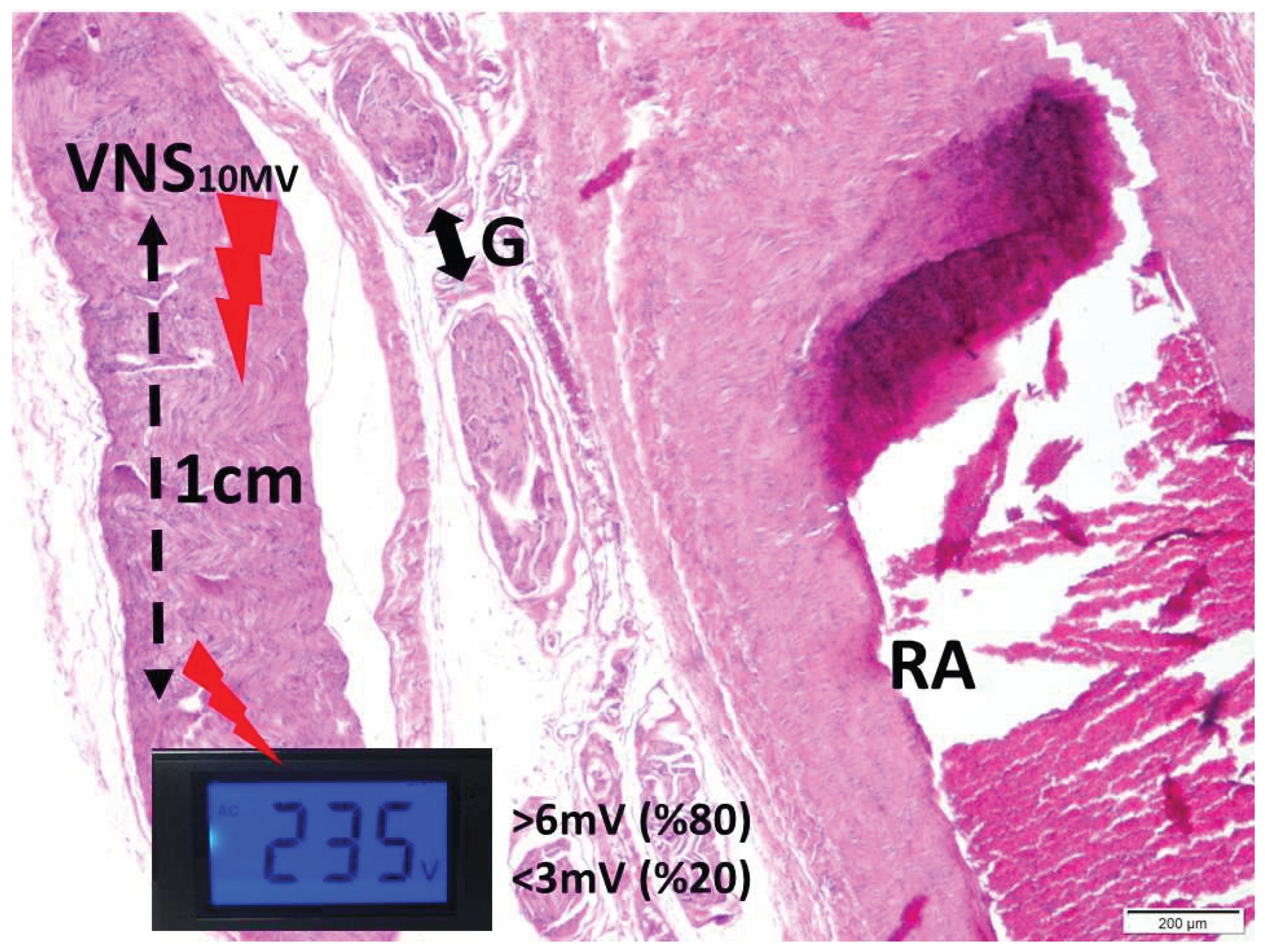
Figure 2.
Glomerular histology. (A) Control kidney: well-perfused glomerulus with open capillary loops adjacent to a normal interlobular artery. (B) SAH rabbit kidney: normal (NG) and atrophic (AG) glomeruli within the same field. Atrophic glomeruli show capillary tuft collapse, basement-membrane wrinkling, and peri-glomerular fibrosis. Hematoxylin and eosin; original magnification ×200. Image abbreviations: DG, degenerated ("ghost") glomerulus. Where panel-level coloration differs between panels A and B, this reflects regional differences in tissue preservation rather than a different histochemical stain. AG = atrophic glomerulus; NG = normal glomerulus.
Figure 2.
Glomerular histology. (A) Control kidney: well-perfused glomerulus with open capillary loops adjacent to a normal interlobular artery. (B) SAH rabbit kidney: normal (NG) and atrophic (AG) glomeruli within the same field. Atrophic glomeruli show capillary tuft collapse, basement-membrane wrinkling, and peri-glomerular fibrosis. Hematoxylin and eosin; original magnification ×200. Image abbreviations: DG, degenerated ("ghost") glomerulus. Where panel-level coloration differs between panels A and B, this reflects regional differences in tissue preservation rather than a different histochemical stain. AG = atrophic glomerulus; NG = normal glomerulus.
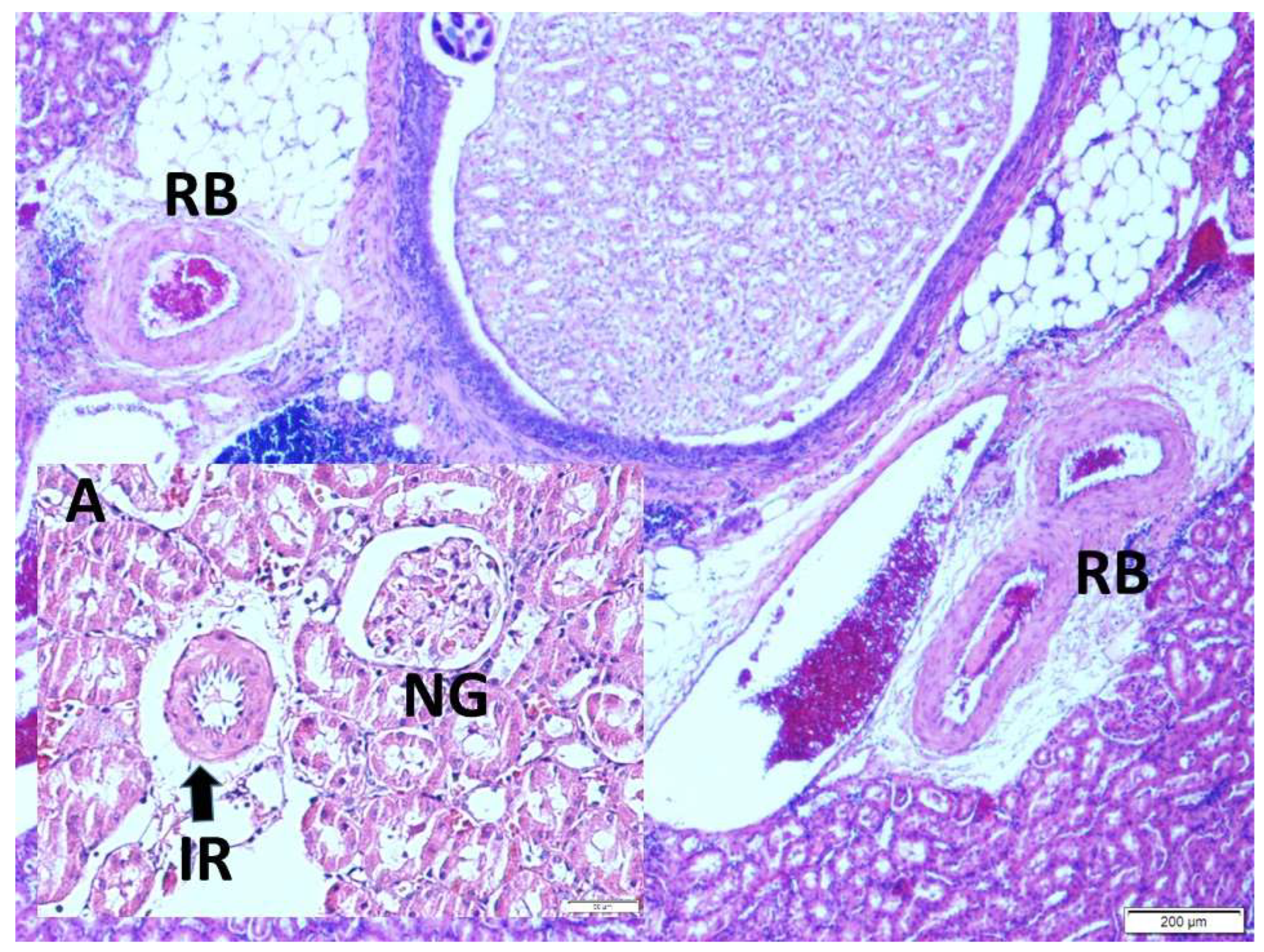
Figure 3.
Stereologic method for glomerular density. Sequential 5 µm sections were obtained; on systematically sampled section pairs the optical disector was applied, and glomerular profiles present in the reference but not in the look-up section were counted (ΣQ⁻). Numerical density (Nv, glomeruli/mm3) was calculated as Nv = ΣQ⁻ / (t × A-frame), where t is section thickness and A-frame is the counting-frame area. Atrophic and non-atrophic glomeruli were distinguished by predefined histologic criteria.
Figure 3.
Stereologic method for glomerular density. Sequential 5 µm sections were obtained; on systematically sampled section pairs the optical disector was applied, and glomerular profiles present in the reference but not in the look-up section were counted (ΣQ⁻). Numerical density (Nv, glomeruli/mm3) was calculated as Nv = ΣQ⁻ / (t × A-frame), where t is section thickness and A-frame is the counting-frame area. Atrophic and non-atrophic glomeruli were distinguished by predefined histologic criteria.
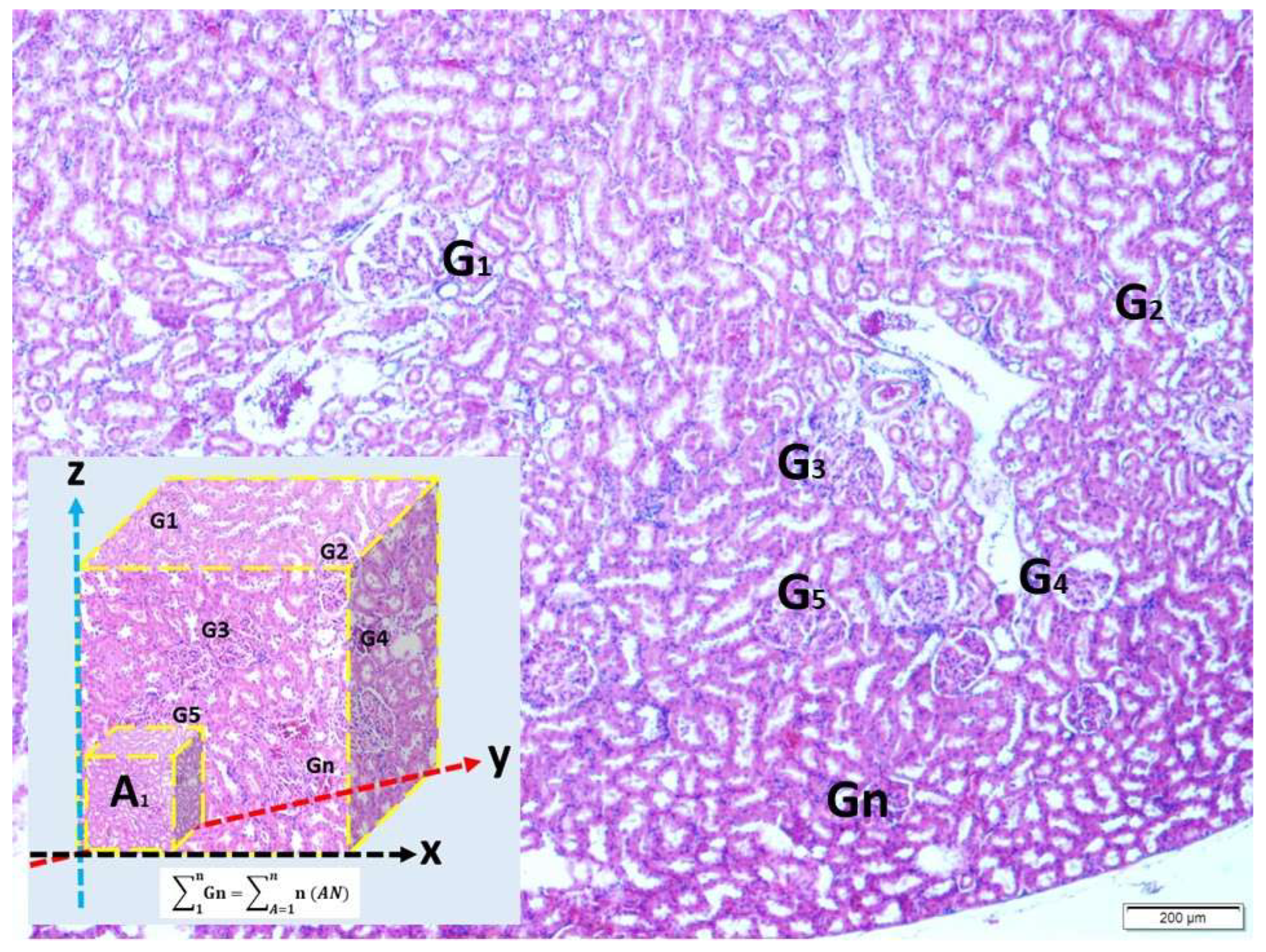
Figure 4.
Renal vascular and neural injury in an SAH rabbit. (A) Renal artery showing wall thickening and luminal narrowing. (B) Degenerated perirenal parasympathetic ganglion with shrunken hyperchromatic neurons and perineuronal halos. (C) Disorganized peri-arterial sympathetic plexus with reduced axonal staining. (D) Vagal trunk with axonal fragmentation consistent with Wallerian degeneration. Hematoxylin and eosin and neuron-specific enolase immunostaining; original magnification ×100–×400. Image abbreviations: VN, vagal nerve; RA, renal artery; SyP, sympathetic plexus; PRG (sometimes labeled DRPG), perirenal/degenerated renal parasympathetic ganglion; arrows indicate the structures named in each panel. Where panel-level labels A–D are not visible on the image, panels are arranged left-to-right and top-to-bottom in the order listed above. .
Figure 4.
Renal vascular and neural injury in an SAH rabbit. (A) Renal artery showing wall thickening and luminal narrowing. (B) Degenerated perirenal parasympathetic ganglion with shrunken hyperchromatic neurons and perineuronal halos. (C) Disorganized peri-arterial sympathetic plexus with reduced axonal staining. (D) Vagal trunk with axonal fragmentation consistent with Wallerian degeneration. Hematoxylin and eosin and neuron-specific enolase immunostaining; original magnification ×100–×400. Image abbreviations: VN, vagal nerve; RA, renal artery; SyP, sympathetic plexus; PRG (sometimes labeled DRPG), perirenal/degenerated renal parasympathetic ganglion; arrows indicate the structures named in each panel. Where panel-level labels A–D are not visible on the image, panels are arranged left-to-right and top-to-bottom in the order listed above. .
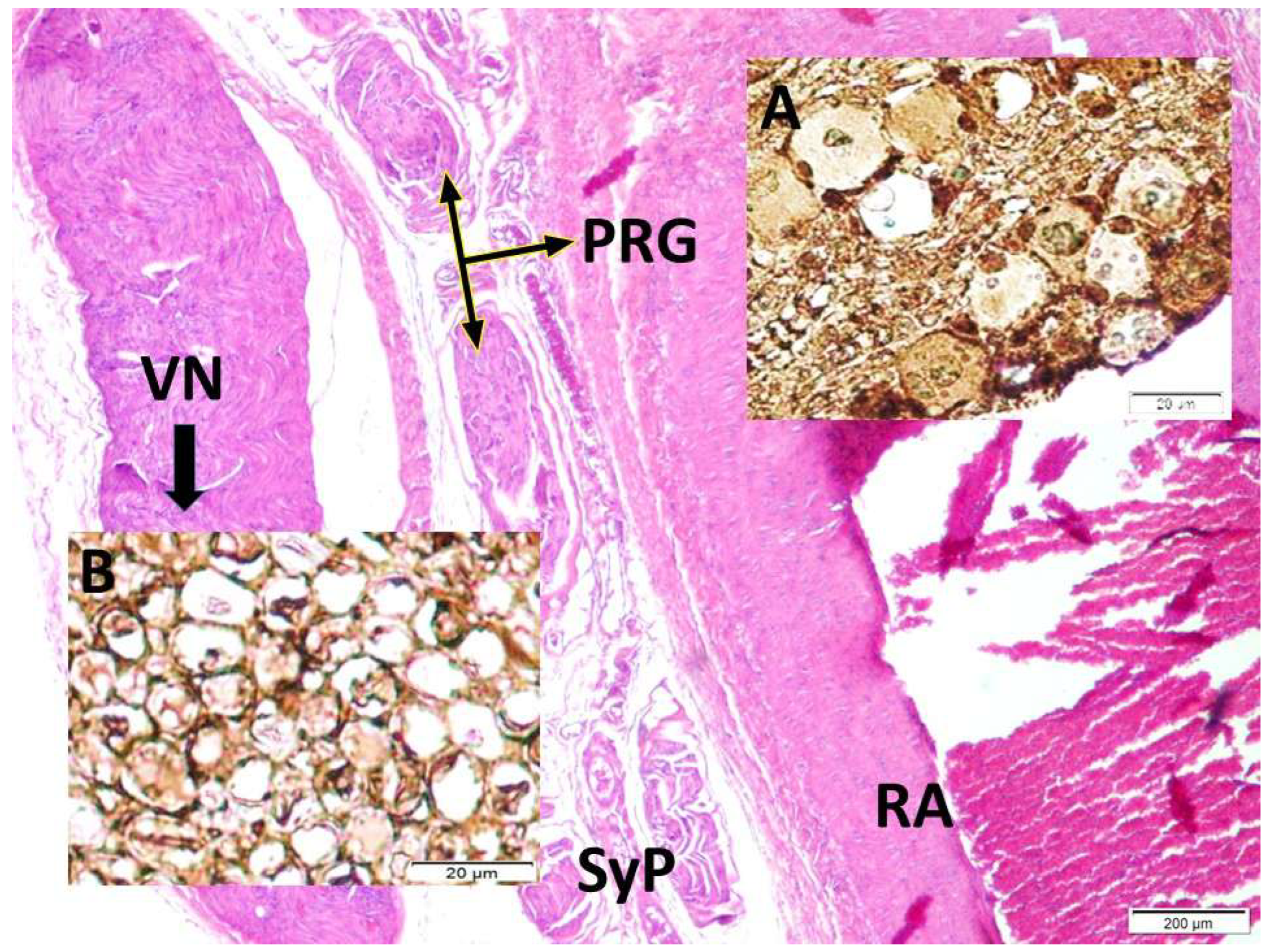
Figure 5.
Additional renal histology in an SAH rabbit. (A) Constricted renal artery with narrowed lumen. (B) Severely degenerated perirenal parasympathetic ganglion. (C) Intrarenal artery surrounded by mononuclear (lymphoid) infiltrate, with adjacent edematous and atrophic glomeruli (AG). Hematoxylin and eosin; original magnification ×200. Image abbreviations: AG, atrophic glomerulus; G, glomerulus (non-atrophic); IA, intrarenal artery; K, kidney parenchyma; DPRG, degenerated perirenal parasympathetic ganglion; DSyP, degenerated sympathetic plexus; DG, degenerated glomerulus.
Figure 5.
Additional renal histology in an SAH rabbit. (A) Constricted renal artery with narrowed lumen. (B) Severely degenerated perirenal parasympathetic ganglion. (C) Intrarenal artery surrounded by mononuclear (lymphoid) infiltrate, with adjacent edematous and atrophic glomeruli (AG). Hematoxylin and eosin; original magnification ×200. Image abbreviations: AG, atrophic glomerulus; G, glomerulus (non-atrophic); IA, intrarenal artery; K, kidney parenchyma; DPRG, degenerated perirenal parasympathetic ganglion; DSyP, degenerated sympathetic plexus; DG, degenerated glomerulus.
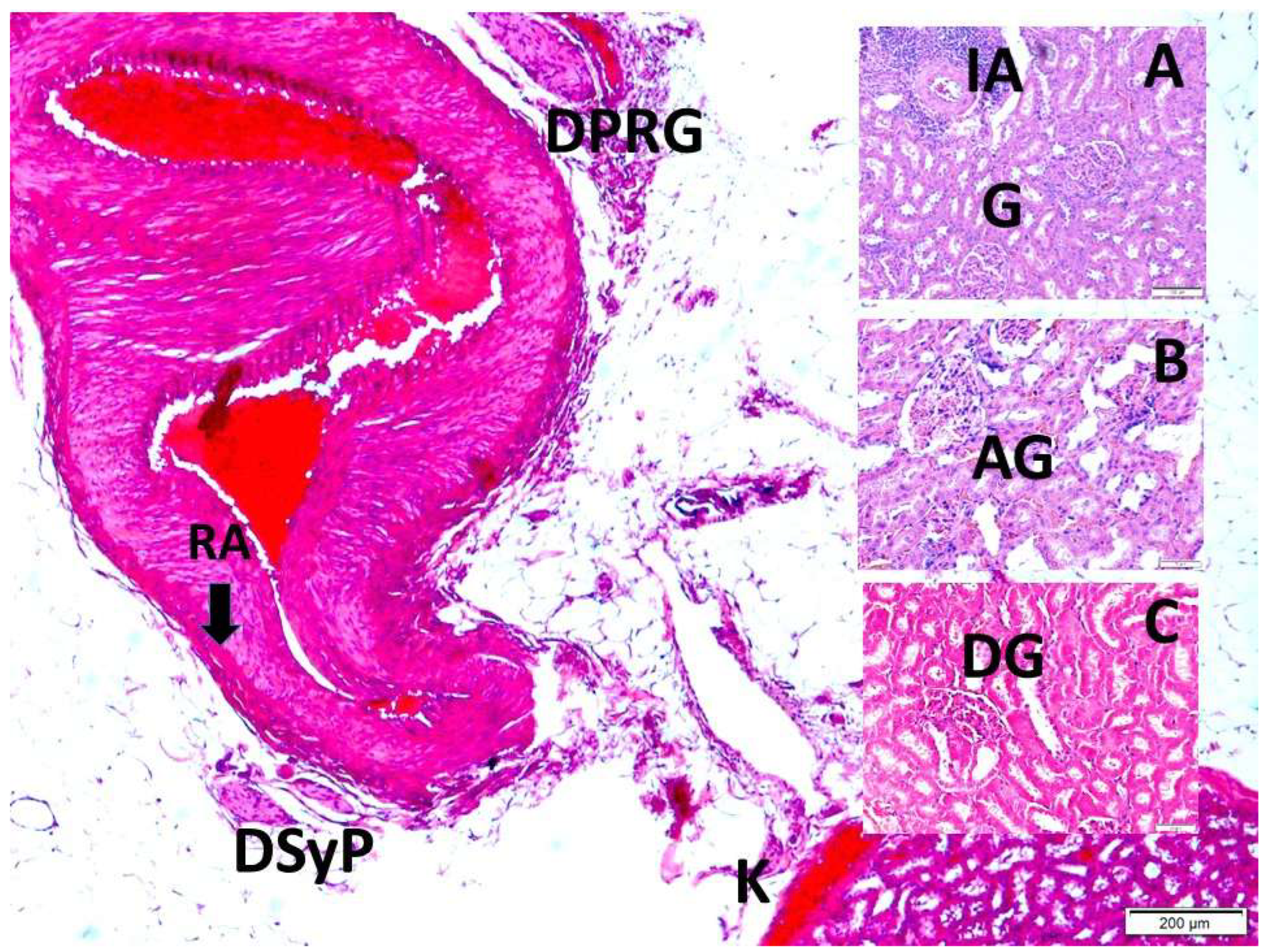
Figure 6.
Severe renal injury in an SAH-Nonsurvivor rabbit. (A) Parenchymal hemorrhagic edema with ghost glomeruli (collapsed acellular tuft outlines) and atrophic glomeruli. (B) Adjacent tubules show proteinaceous casts and acute tubular necrosis. Hematoxylin and eosin; original magnification ×200.
Figure 6.
Severe renal injury in an SAH-Nonsurvivor rabbit. (A) Parenchymal hemorrhagic edema with ghost glomeruli (collapsed acellular tuft outlines) and atrophic glomeruli. (B) Adjacent tubules show proteinaceous casts and acute tubular necrosis. Hematoxylin and eosin; original magnification ×200.
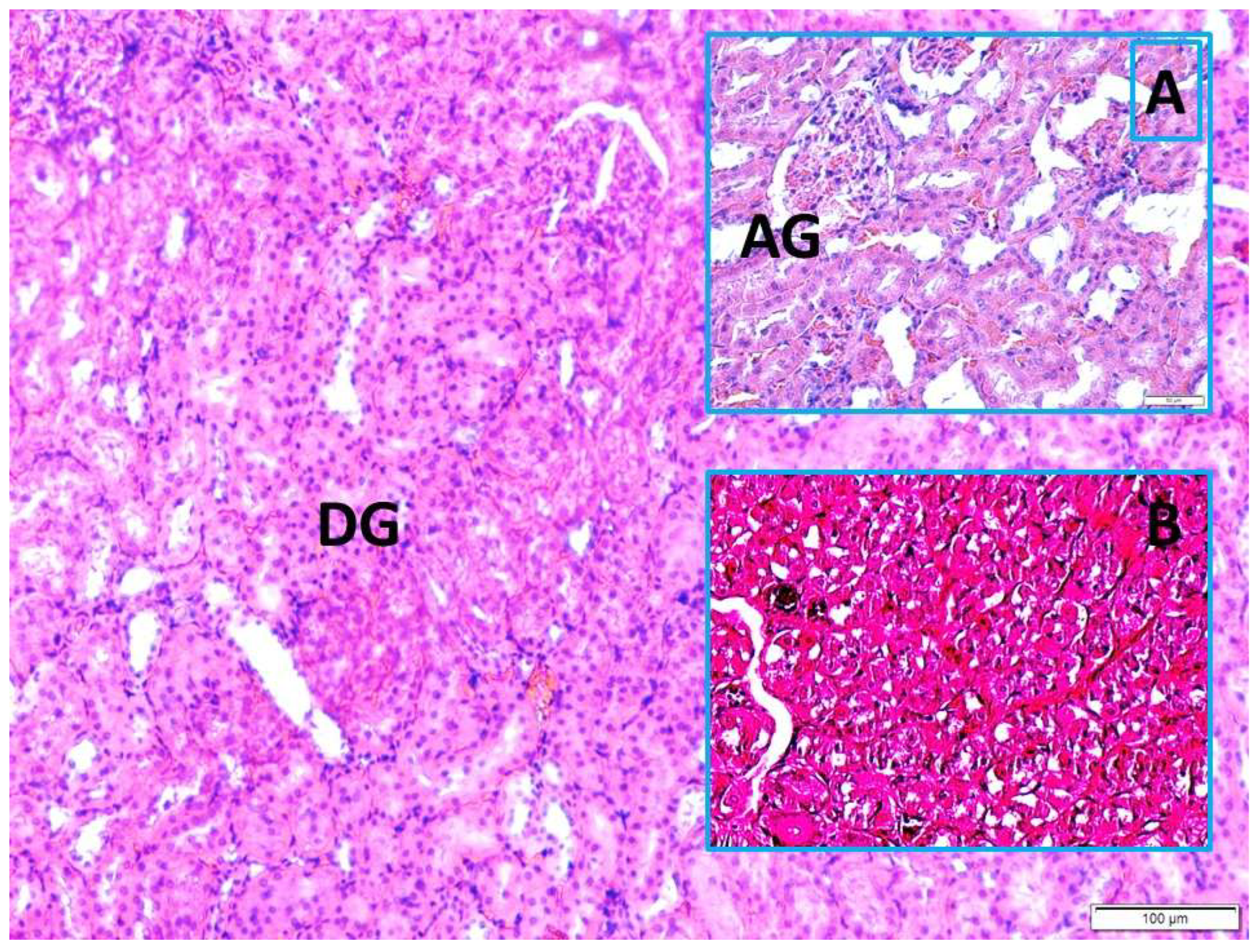
Figure 7.
Histopathological appearance of constricted renal artery, injured vagal nerve fibers, atrophic glomeruli, and apoptotic renal tubular cells in an SAH-Nonsurvivor rabbit. Hematoxylin and eosin; original magnification ×200–×400.
Figure 7.
Histopathological appearance of constricted renal artery, injured vagal nerve fibers, atrophic glomeruli, and apoptotic renal tubular cells in an SAH-Nonsurvivor rabbit. Hematoxylin and eosin; original magnification ×200–×400.
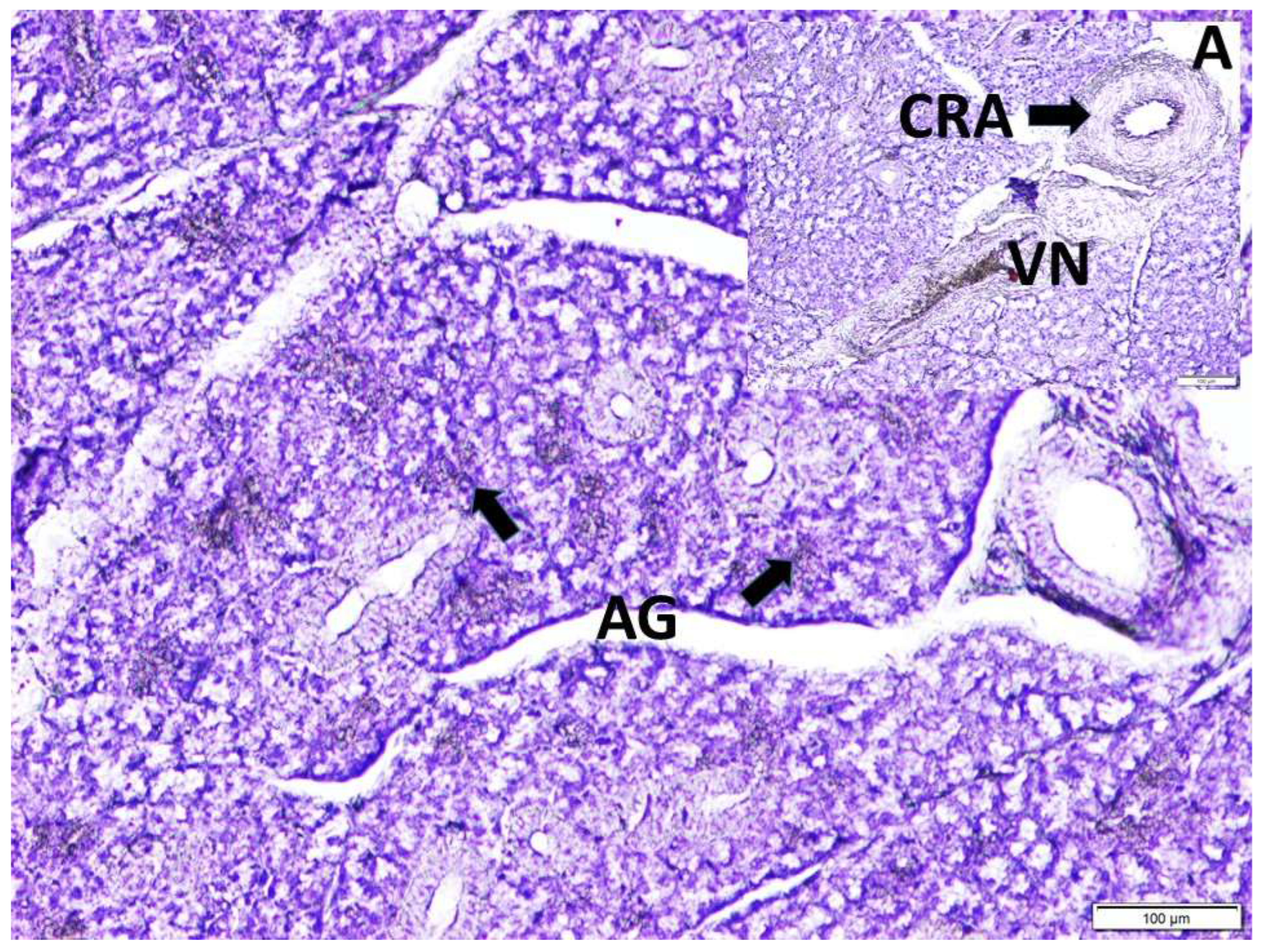

Table 1.
Hemodynamic (MAP), electrophysiologic, and renal histopathologic parameters.
| Group | Mean arterial pressure (mmHg) | Vagal CAP amplitude (mV) | Degenerated neurons in renal parasympathetic ganglia (per mm3) | Atrophic glomeruli (per mm3) |
|---|---|---|---|---|
| Control, n=5 | 99 ± 7 | 1.42 ± 0.36 | 6 ± 2 | 4 ± 1 |
| Sham, n=5 | 106 ± 8 | 1.23 ± 0.29 | 21 ± 5 | 12 ± 3 |
| SAH-Survived, n=5 | 117 ± 13 | 0.95 ± 0.12 | 25 ± 7 | 56 ± 8 |
| SAH-Nonsurvivor, n=4 | 126 ± 8* | 0.34 ± 0.11 | 98 ± 19 | 98 ± 11 |
Values are presented as mean ± SD. MAP was compared among groups using one-way ANOVA with Tukey’s post-hoc test; the most prominent between-group difference is marked with an asterisk (*p < 0.05 vs control). Histologic count variables, including degenerated neuronal density and atrophic glomerular density, were compared using the Kruskal–Wallis test with Dunn’s post-hoc test. Both histologic variables were significantly higher in SAH-Nonsurvivor animals than in controls (p < 0.001). MAP, mean arterial pressure; CAP, compound action potential; mV, millivolt; mm3, cubic millimeter; SAH, subarachnoid hemorrhage; SD, standard deviation.
Table 2.
Correlation, exploratory threshold observation, and exploratory multivariable regression between vagal CAP amplitude, blood pressure, and glomerular injury.
Table 2.
Correlation, exploratory threshold observation, and exploratory multivariable regression between vagal CAP amplitude, blood pressure, and glomerular injury.
| Analysis type | Variables compared | Statistic | Value |
|---|---|---|---|
| Correlation | Vagal CAP amplitude vs atrophic glomerulus density | Spearman ρ, p value | –0.89, p < 0.001 |
| Threshold analysis | Vagal CAP amplitude vs severe glomerular atrophy | Cut-off value | 0.30 mV |
| Atrophic glomeruli | > 60% | ||
| Survival | 0% survival when < 0.3 mV | ||
| Multivariate regression | Predictors of atrophic glomerulus density | β (vagal CAP amplitude) | –0.75 (p < 0.01) |
| β (mean arterial pressure) | 0.45 (p = 0.07) |
ρ, Spearman correlation coefficient; β, standardized regression coefficient; mV, millivolt; MAP, mean arterial pressure; CAP, compound action potential. Threshold and multivariable regression analyses are exploratory and hypothesis-generating, given the small sample size (n = 19), absence of independent validation, and absence of formal ROC analysis; they should not be interpreted as clinically applicable cut-offs.
Disclaimer/Publisher’s Note: The statements, opinions and data contained in all publications are solely those of the individual author(s) and contributor(s) and not of MDPI and/or the editor(s). MDPI and/or the editor(s) disclaim responsibility for any injury to people or property resulting from any ideas, methods, instructions or products referred to in the content. |
© 2026 by the authors. Licensee MDPI, Basel, Switzerland. This article is an open access article distributed under the terms and conditions of the Creative Commons Attribution (CC BY) license (http://creativecommons.org/licenses/by/4.0/).
Copyright: This open access article is published under a Creative Commons CC BY 4.0 license, which permit the free download, distribution, and reuse, provided that the author and preprint are cited in any reuse.


