

Submitted:
13 June 2026
Posted:
16 June 2026
You are already at the latest version
Abstract
Background: Vulvovaginal candidiasis, bacterial vaginosis, and mixed vaginal infection are among the most frequent infectious conditions encountered in gynecological practice and are commonly associated with substantial impairment in quality of life, sexual health, emotional well-being, and daily functioning. Dequalinium chloride is a locally administered broad-spectrum anti-infective agent with activity against bacterial and fungal pathogens; however, longitudinal real-world data integrating clinical, physiological, and fresh microscopic evolution across heterogeneous infectious phenotypes remain limited, particularly in Latin American populations Objectives: To evaluate the longitudinal clinical, physiological, and fresh microscopic evolution associated with intravaginal dequalinium chloride therapy in women with vulvovaginal candidiasis, bacterial vaginosis, and mixed vaginal infection during routine gynecological practice. Methods: A retrospective longitudinal real-world study was conducted in non-pregnant women diagnosed with vulvovaginal candidiasis, bacterial vaginosis, or mixed vaginal infection who received intravaginal dequalinium chloride therapy. Patients were evaluated at baseline, treatment completion, and post-treatment follow-up. Longitudinal assessment integrated patient-reported symptoms, physician-assessed gynecological findings, vaginal pH, and direct fresh wet-mount microscopic examination. Exploratory integrated clinical–microscopic assessment frameworks were used to characterize multidimensional longitudinal therapeutic evolution. Repeated-measures non-parametric analyses were performed across follow-up evaluations. Results: A total of 69 women were included in the final longitudinal analysis, including vulvovaginal candidiasis (n = 24), bacterial vaginosis (n = 31), and mixed vaginal infection (n = 14). Significant longitudinal improvement was observed across all evaluated clinical, physiological, and fresh microscopic domains throughout follow-up (all p < 0.0001). Median integrated clinical–microscopic assessment values decreased from 8 (IQR 6–10) at baseline to 3 (IQR 1–5) at treatment completion and to 1 (IQR 0–3) during post-treatment follow-up. Progressive normalization of vaginal pH occurred concomitantly with reduction of inflammatory-suggestive microscopic findings, improvement of infectious microscopic markers, and partial restoration of Döderlein bacillary predominance. Patients with mixed vaginal infection demonstrated the greatest baseline multidimensional disease burden but also exhibited substantial longitudinal improvement throughout follow-up. Clinically meaningful longitudinal therapeutic response was observed in 95.7% of patients at treatment completion and in 100% during post-treatment evaluation. Intravaginal dequalinium chloride demonstrated favorable overall tolerability, with only mild transient adverse events reported and no severe treatment-related complications identified Conclusions: Intravaginal dequalinium chloride therapy was associated with consistent longitudinal clinical, physiological, and fresh microscopic improvement across women with vulvovaginal candidiasis, bacterial vaginosis, and mixed vaginal infection in a real-world gynecological setting. The observed concordance between clinical symptom improvement, vaginal physiological normalization, and objective fresh microscopic evolution supports the potential clinical utility of dequalinium chloride as a locally administered therapeutic approach in heterogeneous vulvovaginal infectious disorders. Larger prospective controlled studies incorporating molecular microbiological evaluation and longer-term follow-up remain necessary to further validate these findings.
Keywords:
dequalinium chloride
; bacterial vaginosis
; vulvovaginal candidiasis
; mixed vaginal infection
; gynecological infection
1. Introduction
Infectious vulvovaginal disorders remain among the most common reasons for gynecological consultation in women of reproductive age and continue to pose substantial diagnostic and therapeutic challenges due to overlapping clinical manifestations, recurrent disease patterns, heterogeneous etiological profiles, and the limited diagnostic accuracy of routine clinical assessment [1]. Bacterial vaginosis, vulvovaginal candidiasis, and mixed vaginal infections frequently present with overlapping clinical manifestations, including abnormal vaginal discharge, pruritus, burning sensation, irritation, malodor, and inflammatory mucosal changes, making etiological differentiation challenging in routine clinical practice. Furthermore, mixed infectious presentations and alterations in vaginal microbial homeostasis are increasingly recognized in real-world gynecological settings, where clinical symptoms do not always correlate with a single microbiological entity and may reflect complex interactions between multiple pathogens and vaginal dysbiosis [2]. Consequently, current clinical guidelines emphasize that the diagnosis of infectious vaginitis should not rely solely on symptom assessment, as considerable overlap exists among common vaginal disorders. Instead, the diagnostic approach should ideally integrate vaginal pH measurement and fresh microscopic examination whenever available, improving diagnostic accuracy, facilitating etiological differentiation, and supporting appropriate therapeutic decision-making [3,4].
Bacterial vaginosis is characterized by disruption of the Lactobacillus-dominant vaginal microbiota and its replacement by diverse anaerobic bacterial communities, leading to alterations in vaginal homeostasis that are clinically reflected by elevated vaginal pH, abnormal vaginal discharge, amine odor, and the presence of clue cells on microscopic examination [5]. This dysbiotic condition is clinically relevant not only because of its symptomatic burden and high recurrence rates, but also because it has been associated with an increased risk of sexually transmitted infections, pelvic inflammatory disease, adverse reproductive outcomes, and pregnancy-related complications, highlighting its broader implications for women’s reproductive health [3,6]. Vulvovaginal candidiasis, in contrast, is primarily associated with the overgrowth of Candida species, most commonly Candida albicans, and typically presents with vulvovaginal pruritus, burning sensation, erythema, and abnormal vaginal discharge. Nevertheless, these clinical manifestations frequently overlap with those observed in other vulvovaginal infectious disorders, particularly in mixed infections and routine outpatient gynecological practice, limiting the diagnostic accuracy of symptom-based assessment alone [7]. Consequently, etiological differentiation based solely on clinical symptoms may be challenging because of the substantial overlap among common vulvovaginal infectious disorders. This limitation reinforces the importance of complementary diagnostic evaluation, including vaginal pH measurement and, when available, fresh microscopic examination, to improve diagnostic accuracy and guide appropriate therapeutic decision-making [1,3].
The vaginal microbiological microenvironment plays a central role in the pathophysiology of vulvovaginal infectious disorders. In healthy reproductive-aged women, the vaginal ecosystem is typically dominated by Lactobacillus species, which contribute to the maintenance of vaginal homeostasis through lactic acid production, preservation of an acidic vaginal pH, competitive exclusion of pathogenic microorganisms, and modulation of local mucosal immune responses [8].
Disruption of this physiological balance may promote bacterial dysbiosis, fungal proliferation, inflammatory mucosal alterations, or simultaneous polymicrobial involvement [8,9]. This biological and clinical complexity partially explains why isolated symptom assessment may be insufficient to reflect disease activity or therapeutic response in routine gynecological practice. Consequently, an integrated evaluation that incorporates symptoms, physician-assessed clinical findings, vaginal pH alterations, and fresh microscopic examination may provide a more clinically meaningful interpretation of longitudinal treatment-associated changes than symptom evaluation alone.
Dequalinium chloride is a locally administered quaternary ammonium compound with broad antimicrobial activity against bacterial and fungal pathogens commonly associated with vulvovaginal infectious disorders [10]. Unlike systemic antimicrobial therapies, intravaginal dequalinium chloride acts directly at the site of infection and inflammatory alteration, providing high local therapeutic exposure with limited systemic absorption. These characteristics may be particularly relevant in routine gynecological practice, where overlapping infectious presentations, mixed microbiological findings, and heterogeneous clinical manifestations frequently complicate pathogen-oriented therapeutic selection [11]. Previous randomized clinical trials have demonstrated that intravaginal dequalinium chloride is effective in bacterial vaginosis and may achieve clinical outcomes comparable to standard antimicrobial therapies while maintaining favorable tolerability and local safety profiles [10,12]. Additionally, prior reviews have highlighted its potential utility as a broad-spectrum local therapeutic alternative in vulvovaginal infectious conditions involving bacterial dysbiosis, fungal overgrowth, or combined infectious presentations [13].
A particularly relevant characteristic of dequalinium chloride is its potential applicability in routine gynecological scenarios where infectious presentations are not always microbiologically isolated and where patients frequently demonstrate overlapping bacterial, fungal, inflammatory, or mixed clinical–microscopic findings. In daily outpatient practice, therapeutic decision-making often occurs before complete microbiological characterization is available, increasing the clinical importance of local therapeutic strategies capable of addressing heterogeneous vulvovaginal infectious profiles [11].
Previous reviews evaluating intravaginal dequalinium chloride have described favorable tolerability, broad local antimicrobial activity, and practical utility in vaginal infections of different etiologies, supporting its incorporation into routine gynecological management algorithms [11,14].
Despite the available literature, most published studies evaluating dequalinium chloride have been conducted in European or non-Latin American populations, whereas real-world longitudinal data from Mexican gynecological practice remain comparatively limited [14]. Additionally, many previous investigations have focused primarily on isolated diagnostic entities or binary therapeutic outcomes, even though routine gynecological practice frequently requires multidimensional interpretation of clinical symptoms, vaginal physiological alterations, and direct microscopic findings across heterogeneous infectious presentations [15,16].
In this context, longitudinal integrated evaluation incorporating physician-assessed clinical manifestations, vaginal pH, and fresh microscopic examination may provide a more clinically meaningful characterization of treatment-associated changes than isolated symptom resolution alone. The present study, therefore, aimed to evaluate the longitudinal clinical, physiological, and fresh microscopic response associated with intravaginal dequalinium chloride therapy in non-pregnant Mexican women with bacterial vaginosis, vulvovaginal candidiasis, and mixed vaginal infection during routine gynecological practice.
2. Materials and Methods
2.1. The Study Design and Setting
A retrospective longitudinal real-world study was conducted to evaluate the clinical, physiological, and microscopic evolution associated with intravaginal dequalinium chloride therapy in women diagnosed with vulvovaginal candidiasis, bacterial vaginosis, or mixed vaginal infection during routine outpatient gynecological practice.
The study was performed using anonymized clinical information contributed by physicians participating in the AMEGINE Clinical Research Group. Data were derived from routine gynecological consultations conducted between November 2024 and April 2025 and were retrospectively extracted from medical records generated during standard clinical care.
The study was specifically designed to characterize treatment-associated changes through an integrated longitudinal assessment of symptoms, gynecological examination findings, vaginal pH, and fresh wet-mount microscopic examination under real-world clinical conditions. To enhance consistency among participating investigators, all evaluations were interpreted according to predefined clinical and microscopic assessment criteria established before data extraction and statistical analysis.
Longitudinal assessment was based on three predefined study visits: baseline before treatment initiation (Visit 1), treatment completion (Visit 2; Day 7), and post-treatment follow-up performed seven days after treatment completion (Visit 3; Day 14). This design allowed characterization of both the immediate therapeutic response and the short-term evolution of clinical manifestations, vaginal physiological parameters, and microscopic findings following dequalinium chloride treatment.
2.2. Study Population
The study population consisted of non-pregnant women of reproductive age who attended routine outpatient gynecological consultations and were diagnosed with bacterial vaginosis, vulvovaginal candidiasis, or mixed vaginal infection during standard clinical practice.
Eligible cases were identified through retrospective review of medical records. To be included in the final analytical cohort, records were required to document a complete treatment episode managed with intravaginal dequalinium chloride as the sole anti-infective therapy and contain sufficient information for longitudinal evaluation across all predefined study visits.
Specifically, eligible records were required to include baseline assessment before treatment initiation (Visit 1), treatment completion evaluation (Visit 2; Day 7), and post-treatment follow-up assessment (Visit 3; Day 14), together with documentation of clinical manifestations, gynecological examination findings, vaginal pH measurement, and fresh wet-mount microscopic examination.
Diagnostic classification was established retrospectively using predefined protocol-based criteria integrating clinical presentation, gynecological examination findings, vaginal pH, and microscopic evaluation. Based on these criteria, cases were classified as bacterial vaginosis, vulvovaginal candidiasis, or mixed vaginal infection.
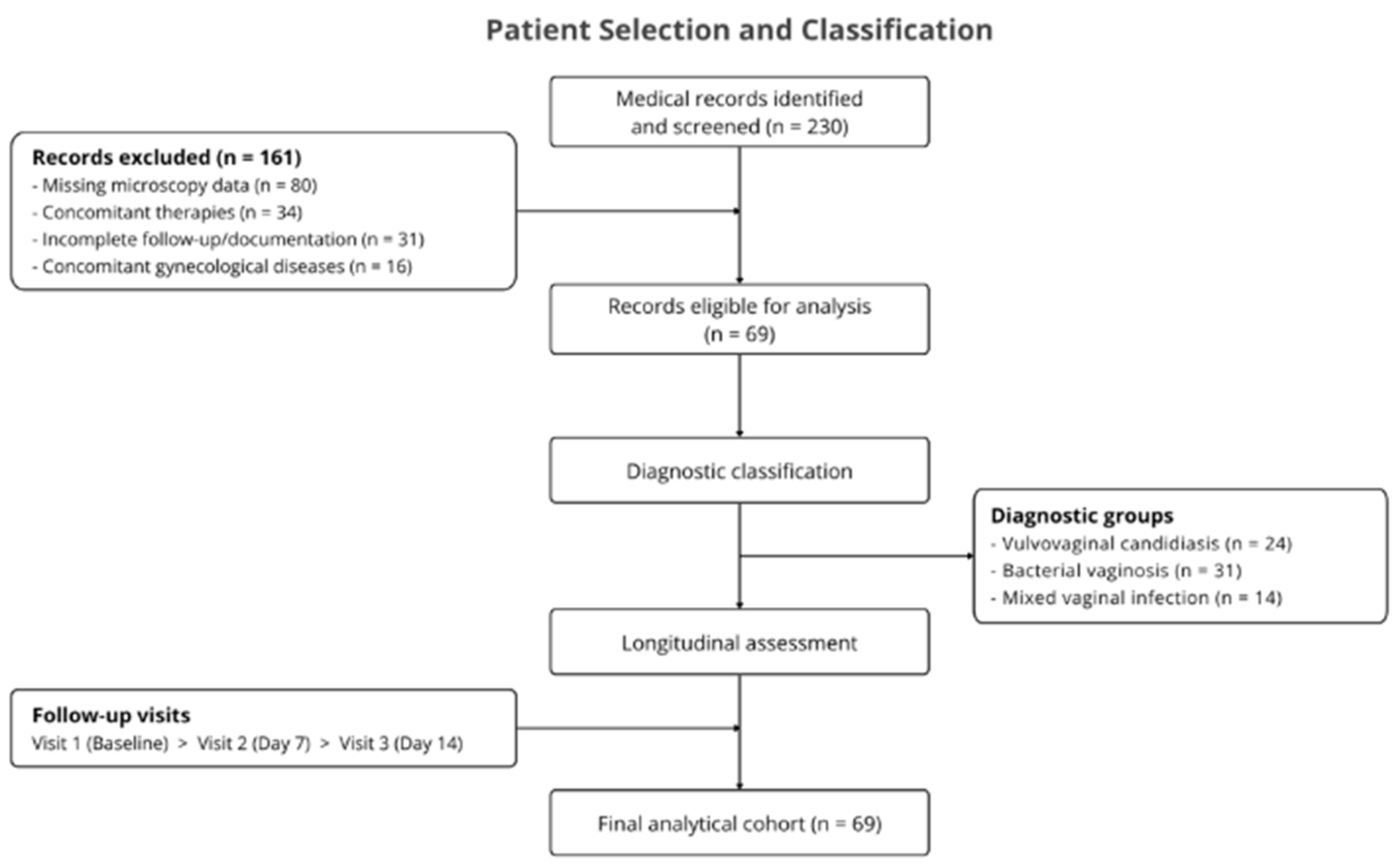
A total of 230 medical records were initially screened for eligibility. Following application of the predefined inclusion and exclusion criteria, 161 records were excluded, including 80 because microscopic examination data were unavailable, 34 because patients received concomitant therapies that could potentially influence treatment response assessment, 31 because of incomplete longitudinal follow-up or insufficient clinical documentation, and 16 because of concomitant gynecological diseases that could interfere with interpretation of treatment-associated outcomes. The remaining 69 records fulfilled all eligibility requirements and were included in the final longitudinal analytical cohort.
Records were excluded if patients were pregnant, received concomitant antimicrobial, antifungal, probiotic, corticosteroid, or other therapies that could influence treatment response, had concomitant gynecological diseases that could interfere with outcome assessment, or lacked sufficient clinical, physiological, microscopic, or follow-up information for longitudinal evaluation.
Figure 1.
Study flow diagram. Selection of medical records included in the final analytical cohort. Of 230 records screened, 161 were excluded because of missing microscopy data, concomitant therapies, incomplete follow-up, or concomitant gynecological diseases. The final cohort consisted of 69 treatment episodes classified as vulvovaginal candidiasis, bacterial vaginosis, or mixed vaginal infection and evaluated longitudinally at baseline, treatment completion (Day 7), and post-treatment follow-up (Day 14).
Figure 1.
Study flow diagram. Selection of medical records included in the final analytical cohort. Of 230 records screened, 161 were excluded because of missing microscopy data, concomitant therapies, incomplete follow-up, or concomitant gynecological diseases. The final cohort consisted of 69 treatment episodes classified as vulvovaginal candidiasis, bacterial vaginosis, or mixed vaginal infection and evaluated longitudinally at baseline, treatment completion (Day 7), and post-treatment follow-up (Day 14).
2.3. Clinical and Gynecological Assessment
Patients underwent a standardized gynecological evaluation at each study visit, including baseline before treatment initiation (Visit 1), treatment completion (Visit 2; Day 7), and post-treatment follow-up (Visit 3; Day 14). Evaluations were performed by the treating gynecologists according to predefined protocol-based criteria routinely used during the assessment of vulvovaginal infectious disorders.
Clinical assessment included documentation of symptoms and gynecological findings commonly associated with vulvovaginal infection, including vaginal discharge characteristics, vulvovaginal pruritus, burning or irritation, malodor, and other clinically relevant findings identified during routine examination.
To facilitate longitudinal comparison across study visits, predefined clinical variables were recorded as present or absent according to standardized criteria established before data extraction and statistical analysis. For the purpose of longitudinal assessment, the presence of each clinical finding contributed 1 point, whereas absence of the finding contributed 0 points to the disease-specific clinical assessment framework.
Because characteristic clinical manifestations differ among vulvovaginal candidiasis, bacterial vaginosis, and mixed vaginal infection, disease-specific clinical assessment frameworks were applied according to the diagnostic classification of each case. The clinical variables incorporated into each disease-specific assessment framework are summarized in Table 1.
Table 1. Clinical variables included in the disease-specific clinical assessment framework. Presence of a variable contributed 1 point, and absence contributed 0 points to the clinical assessment score.
2.4. Vaginal pH Assessment
Vaginal pH evaluation was performed during each study visit as part of routine gynecological assessment and longitudinal physiological characterization. Measurements were obtained by the treating gynecologist using Merck® MQuant™ colorimetric pH indicator strips (Merck KGaA, Darmstadt, Germany) applied directly to vaginal secretions collected during gynecological examination. Vaginal pH values were determined through visual comparison with the manufacturer-provided standardized colorimetric reference scale.
Because vaginal pH alteration represents an important physiological marker of vaginal dysbiosis, lactobacillary disruption, and vulvovaginal infectious imbalance, pH findings were incorporated into the disease-specific longitudinal assessment framework. For analytical purposes, vaginal pH was classified as normal or altered according to the predefined diagnostic criteria for each infectious category. An altered vaginal pH contributed 1 point, whereas a normal vaginal pH contributed 0 points to the disease-specific assessment score.
Longitudinal changes in vaginal pH were evaluated across all study visits as an objective physiological indicator of treatment-associated evolution and restoration of vaginal homeostasis.
2.5. Fresh Microscopic Examination
Fresh wet-mount microscopic examination with and without potassium hydroxide was performed during each study visit as part of routine gynecological evaluation and longitudinal microbiological assessment. Vaginal secretions obtained during gynecological examination were immediately analyzed under direct light microscopy using standard fresh wet-mount preparation techniques routinely employed in outpatient gynecological practice.
Microscopic evaluation was directed toward the identification of characteristic findings associated with vulvovaginal infectious disorders, including clue cells, leukocytes, Döderlein bacilli, yeasts, pseudohyphae, and other relevant inflammatory or microbiological findings.
Representative fresh wet-mount microscopic findings corresponding to vulvovaginal candidiasis, bacterial vaginosis, and mixed vaginal infection are presented in Supplementary Figure S1A.
Particular attention was given to the assessment of Döderlein bacilli because preservation or restoration of lactobacillary predominance represents an important indicator of vaginal microbiological homeostasis. Progressive restoration of normal bacillary flora during follow-up was interpreted as evidence of microbiological recovery and normalization of the vaginal microenvironment.
To facilitate longitudinal comparison across study visits, microscopic findings were graded semi-quantitatively according to their abundance during examination. Each microscopic variable was assigned a score ranging from 0 to 3 points, where 0 represented absence of the finding, 1 represented scarce findings, 2 represented moderate findings, and 3 represented abundant or innumerable findings.
Particular emphasis was placed on the evaluation of clue cells associated with bacterial vaginosis, yeasts and pseudohyphae associated with vulvovaginal candidiasis, inflammatory cellularity, and alterations in normal vaginal flora. The microscopic grading system used for longitudinal assessment is summarized in Table 2.
Table 2. A semi-quantitative microscopic grading system used for longitudinal assessment. Microscopic findings were scored from 0 to 3 points according to their abundance during fresh wet-mount examination, with higher scores indicating greater microbiological abnormality.
2.6. Composite Clinical–Microscopic Severity Assessment
To facilitate standardized longitudinal evaluation of treatment response, a disease-specific composite severity score was developed before data extraction and statistical analysis. The composite score integrated clinical findings, vaginal pH alterations, and microscopic findings documented during each study visit.
The final score corresponded to the sum of all applicable clinical, physiological, and microscopic variables recorded for each diagnostic category. Clinical findings contributed 1 point when present and 0 points when absent. Vaginal pH contributed 1 point when classified as altered and 0 points when classified as normal. Microscopic findings contributed between 0 and 3 points according to their abundance during fresh wet-mount examination.
Because the characteristic manifestations of vulvovaginal candidiasis, bacterial vaginosis, and mixed vaginal infection differ, separate disease-specific scoring frameworks were established for each diagnostic category. The maximum possible score was 10 points for vulvovaginal candidiasis, 10 points for bacterial vaginosis, and 20 points for mixed vaginal infection.
Higher scores indicated greater clinical and microbiological disease burden, whereas progressive score reduction across follow-up visits was interpreted as evidence of treatment-associated improvement. Conversely, lower scores reflected resolution of symptoms, normalization of vaginal physiology, and reduction of microscopic findings.
The composite clinical–microscopic score was developed a priori as an exploratory multidimensional assessment framework intended to integrate clinical manifestations, vaginal physiological alterations, and fresh microscopic findings into a single longitudinal outcome measure. The score was designed to facilitate interpretation of treatment-associated changes across multiple disease domains routinely evaluated in gynecological practice and was not intended to replace established diagnostic systems such as Amsel criteria, Nugent scoring, or microbiological classification methods. Because the study focused on longitudinal evolution rather than diagnostic validation, the scoring framework was used exclusively as an exploratory measure of multidimensional disease burden and therapeutic response.
Disease severity categories and longitudinal therapeutic response thresholds were predefined before statistical analysis. Based on the magnitude of score reduction observed between visits, treatment response was categorized as no clinically meaningful improvement, minimal improvement, moderate improvement, or major improvement. The complete scoring system, disease severity categories, and therapeutic response thresholds are summarized in Table 3.
Table 3. Composite scores were calculated by summing disease-specific clinical variables (0–1 point each), vaginal pH status (0–1 point), and semi-quantitative microscopic findings (0–3 points each). Separate scoring frameworks were established for vulvovaginal candidiasis, bacterial vaginosis, and mixed vaginal infection according to their characteristic clinical and microbiological features. Higher scores indicate greater disease severity. Severity categories were defined a priori according to proportional distribution across the maximum achievable score for each diagnostic category and were intended exclusively for exploratory longitudinal assessment rather than diagnostic classification or validation purposes.
2.7. Longitudinal Therapeutic Response Classification
To facilitate interpretation of treatment-associated changes over time, predefined response categories were established before statistical analysis according to the magnitude of composite score reduction observed between study visits.
Because mixed vaginal infection incorporated a broader range of clinical and microscopic findings and therefore a higher maximum composite score, disease-specific response thresholds were defined separately for vulvovaginal candidiasis, bacterial vaginosis, and mixed vaginal infection.
Because no validated multidimensional responder framework was available for the composite clinical–microscopic score used in this study, response thresholds were established a priori according to proportional reductions in disease-specific scores and were applied exclusively for exploratory characterization of treatment-associated improvement.
The predefined response thresholds used throughout the study are summarized in Table 4.
Table 4. Disease-specific thresholds used to categorize the magnitude of treatment-associated improvement according to changes in composite severity scores between study visits. Response categories were defined before statistical analysis and classified as no clinically meaningful improvement, minimal improvement, moderate improvement, or major improvement. Larger reductions in composite scores were interpreted as greater resolution of symptoms, normalization of vaginal physiology, and improvement of microscopic findings.
2.8. Treatment
All included patients received intravaginal dequalinium chloride vaginal tablets (10 mg) administered once daily for six consecutive days according to routine outpatient gynecological practice and the manufacturer’s prescribing recommendations.
The formulation evaluated in this study corresponded to Fluomizin® (Medinova AG, Switzerland), commercially distributed in Mexico by Armstrong Laboratorios de México (Drug Registration No. 050M2021 SSA).
Dequalinium chloride is a locally administered broad-spectrum anti-infective agent with antibacterial and antifungal activity and is commonly used in the management of bacterial vaginosis, vulvovaginal candidiasis, and mixed vaginal infections. All treatment episodes included in the present study were managed exclusively with dequalinium chloride, without concomitant antimicrobial, antifungal, probiotic, or corticosteroid therapies that could influence assessment of treatment-associated outcomes.
Patients were instructed to administer one vaginal tablet nightly for six consecutive days according to routine clinical practice.
2.9. Adverse Event Assessment
Safety evaluation was performed through retrospective review of adverse events documented during routine gynecological follow-up. Any unfavorable medical occurrence temporally associated with dequalinium chloride treatment and recorded in the medical record during treatment or follow-up visits was considered for safety assessment.
Reported adverse events were identified from clinical documentation and subsequently classified according to the Medical Dictionary for Regulatory Activities (MedDRA). Causality assessment was performed using the Naranjo Adverse Drug Reaction Probability Scale.
For each reported event, available information regarding severity, duration, temporal relationship with treatment exposure, clinical evolution, and outcome was collected and analyzed to facilitate structured safety interpretation. Safety findings were summarized descriptively according to event frequency, MedDRA classification, and causality assessment.
2.10. Data Collection
Clinical data were retrospectively extracted from eligible medical records using a standardized data collection form developed before database construction. Data extraction was performed according to predefined protocol definitions to ensure consistency across participating investigators and reduce retrospective interpretative variability.
Collected variables included demographic characteristics, diagnostic classification, clinical findings, vaginal pH measurements, fresh wet-mount microscopic findings, disease-specific composite severity scores, longitudinal therapeutic response categories, treatment information, and safety outcomes.
Following extraction, all variables underwent quality review and verification according to predefined protocol criteria before inclusion in the final analytical database.
2.11. Outcomes
Primary Outcome
The primary outcome was the change in the disease-specific composite clinical–microscopic severity score between baseline evaluation (Visit 1) and post-treatment follow-up (Visit 3; Day 14).
Secondary Outcomes
Secondary outcomes included longitudinal changes in individual clinical manifestations, vaginal pH, fresh microscopic findings, restoration of lactobacillary predominance, disease severity categories, therapeutic response classifications, and safety outcomes.
Exploratory Outcomes
Exploratory analyses evaluated treatment-associated response patterns according to diagnostic classification (bacterial vaginosis, vulvovaginal candidiasis, and mixed vaginal infection) and characterized longitudinal relationships among clinical, physiological, and microscopic variables throughout follow-up.
2.12. Statistical Analysis
Statistical analyses were performed to evaluate longitudinal changes in clinical findings, vaginal pH, microscopic findings, and composite severity scores across study visits.
Baseline continuous variables were summarized as mean ± standard deviation (SD), whereas longitudinal outcome variables were summarized as median (IQR).
Longitudinal comparisons among baseline (Visit 1), treatment completion (Visit 2; Day 7), and post-treatment follow-up (Visit 3; Day 14) were performed using the Friedman test for repeated measures. When statistically significant differences were identified, post-hoc pairwise comparisons were conducted using the Wilcoxon signed-rank test.
Categorical variables were compared using the Chi-square test or Fisher’s exact test, as appropriate. Responder analyses were performed using predefined therapeutic response categories derived from changes in composite severity scores during follow-up.
Subgroup analyses were conducted according to diagnostic classification, including bacterial vaginosis, vulvovaginal candidiasis, and mixed vaginal infection. Safety outcomes were analyzed descriptively and summarized according to MedDRA classification and Naranjo causality assessment.
All statistical tests were two-sided, and a p-value <0.05 was considered statistically significant.
2.13. Ethical Considerations
The study was conducted in accordance with the ethical principles of the Declaration of Helsinki, applicable national regulations governing clinical research, and institutional policies for the protection of confidential health information. The study protocol was reviewed and approved by the corresponding Research and Ethics Committees under approval number CEI-004-20231128.
Because of the retrospective observational design, no experimental intervention, modification of treatment, or alteration of routine clinical management was performed. All diagnostic evaluations, therapeutic decisions, microscopic examinations, and follow-up assessments corresponded exclusively to standard gynecological care provided by the treating physicians.
All data were retrospectively extracted from medical records and anonymized before database construction and statistical analysis. Personally identifiable information was removed from analytical datasets, and access to study data was restricted to authorized investigators in accordance with institutional confidentiality policies and applicable data protection regulations.
3. Results
3.1. Baseline Clinical, Physiological, and Microscopic Characteristics of the Study Population
A total of 69 non-pregnant women with complete longitudinal clinical and follow-up information were included in the final analytical cohort and classified as vulvovaginal candidiasis (n = 24), bacterial vaginosis (n = 31), or mixed vaginal infection (n = 14). Patient selection, eligibility assessment, and diagnostic classification are summarized in Figure 1. Baseline demographic, anthropometric, reproductive, and disease-related characteristics are presented in Table 5.
The study population demonstrated demographic and reproductive characteristics consistent with those commonly observed among women of reproductive age affected by vulvovaginal infectious disorders. Age, anthropometric measures, age at menarche, and age at sexual debut were generally comparable across diagnostic groups.
The mean number of sexual partners during the preceding year remained low throughout the cohort. However, women with mixed vaginal infection reported the highest lifetime number of sexual partners (7.29 ± 7.37), compared with patients with bacterial vaginosis (4.13 ± 2.47) and vulvovaginal candidiasis (3.42 ± 2.10). Previous vaginal infections during the preceding year were documented in 37.7% of the study population, suggesting recurrent susceptibility in a substantial proportion of patients.
Baseline physiological assessment demonstrated higher vaginal pH values among women with bacterial vaginosis (6.71 ± 0.86) and mixed vaginal infection (6.71 ± 1.20) compared with vulvovaginal candidiasis (5.33 ± 1.13), consistent with the expected pathophysiological characteristics of these infectious phenotypes.
Overall, no major differences in demographic or reproductive characteristics were observed among diagnostic categories, supporting subsequent longitudinal comparisons of clinical, physiological, and microscopic outcomes.
Table 5. Baseline demographic, anthropometric, and reproductive characteristics stratified according to diagnostic classification. Continuous variables are reported as mean ± standard deviation (SD), whereas categorical variables are presented as frequencies and percentages.
3.2. Baseline Clinical, Physiological, and Microscopic Findings
Baseline clinical, physiological, and fresh microscopic findings are summarized descriptively according to diagnostic classification in Table 6. These variables were recorded at the initial visit before dequalinium chloride treatment and are presented as median (IQR) or frequency and percentage, as appropriate.
Among patients with vulvovaginal candidiasis, the most frequent baseline findings were thick white discharge (100%), vulvovaginal pruritus (95.8%), and yeasts on fresh microscopy (95.8%). Genital burning or irritation was documented in 54.2% of cases, while fetid discharge, homogeneous discharge, clue cells, reduced or absent lactobacilli, and pseudohyphae were not observed in this subgroup.
Among patients with bacterial vaginosis, the most frequent baseline findings were positive amine test (93.5%), fetid discharge (87.1%), clue cells (80.6%), reduced or absent lactobacilli (77.4%), and homogeneous discharge (74.2%). Vulvovaginal pruritus was documented in 3.2% of cases, whereas genital burning or irritation, thick white discharge, yeasts, and pseudohyphae were not observed.
Among patients with mixed vaginal infection, baseline findings included vulvovaginal pruritus (100%), clue cells (100%), yeasts on microscopy (85.7%), genital burning or irritation (85.7%), reduced or absent lactobacilli (71.4%), fetid discharge (64.3%), positive amine test (57.1%), and thick white discharge (42.9%). Pseudohyphae or pseudomycelia were identified in one patient (7.1%).
Table 6. Data are presented as median (interquartile range [IQR]) or frequency and percentage, as appropriate. All findings correspond to the baseline evaluation before initiation of intravaginal dequalinium chloride therapy. The composite severity score corresponds to the disease-specific clinical–microscopic scoring framework described in the Methods section. Reduced or absent lactobacilli refers to decreased Döderlein bacillary predominance identified during fresh wet-mount examination. A positive amine (“whiff”) test corresponds to abnormal odor release after potassium hydroxide application during gynecological assessment.
3.3. Overall Longitudinal Clinical–Microscopic Response
The overall study population demonstrated progressive improvement across all evaluated domains following intravaginal dequalinium chloride therapy (Figure 2 and Table 7). Longitudinal reductions were observed in the number of clinical symptoms, vaginal pH values, clinical discomfort scores, fresh microscopic scores, and composite clinical–microscopic severity scores from baseline to treatment completion, with further improvement or maintenance of response during post-treatment follow-up.
At baseline, the median number of symptoms was 3 (IQR 3–4), decreasing to 1 (IQR 0–1) at treatment completion and 0 (IQR 0–1) at follow-up (p < 0.0001). Median vaginal pH decreased from 6 (IQR 5–7) at baseline to 5 (IQR 4–5) at both subsequent evaluations (p < 0.0001). Similar longitudinal reductions were observed for clinical discomfort scores, fresh microscopic scores, and composite clinical–microscopic severity scores (Table 7), with all comparisons reaching statistical significance (p < 0.0001).
Table 7. Longitudinal evolution of clinical, physiological, microscopic, and composite severity assessment variables following intravaginal dequalinium chloride therapy. Data are presented as median (IQR). Overall longitudinal comparisons across study visits were performed using the Friedman test. Global and multiple comparisons between the three groups showed a p value <0.0001 For pooled analyses, composite severity scores were standardized to a common 0–10 scale before combining diagnostic groups because mixed vaginal infection used a higher raw scoring range than vulvovaginal candidiasis and bacterial vaginosis. Disease-specific analyses were performed using the original raw scores.
3.4. Longitudinal Response According to Diagnostic Classification
Longitudinal improvement was observed across all diagnostic categories following intravaginal dequalinium chloride therapy (Figure 3 and Table 8 and Table 9). Reductions in symptom burden, vaginal pH, clinical discomfort scores, fresh microscopic scores, and composite clinical–microscopic severity scores were observed from baseline to treatment completion and remained evident at post-treatment follow-up.
Among patients with vulvovaginal candidiasis, the median number of symptoms decreased from 3 (IQR 2–3) at baseline to 0 (IQR 0–1) at treatment completion and remained at 0 (IQR 0–0) during follow-up (p < 0.0001). Median vaginal pH decreased from 5 to 4, while the composite clinical–microscopic severity score decreased from 6.5 (IQR 5–9) to 1 (IQR 0–2.25) at follow-up (p < 0.0001).
Patients with bacterial vaginosis demonstrated similar improvement. The median number of symptoms decreased from 3 (IQR 3–4) to 0 (IQR 0–1), vaginal pH decreased from 7 to 5, and the composite clinical–microscopic severity score decreased from 9 (IQR 7–10) to 1 (IQR 0–3) at follow-up (all p < 0.0001).
Among patients with mixed vaginal infection, symptom burden decreased from 4 (IQR 4–5.75) to 1 (IQR 0–1.75), vaginal pH decreased from 7 to 5, and the composite clinical–microscopic severity score decreased from 15.5 (IQR 11.25–17) to 4 (IQR 3–5) during follow-up (all p ≤ 0.0001). Although fresh microscopic scores improved markedly after treatment completion, residual microscopic findings persisted during post-treatment evaluation, resulting in a slower microscopic recovery profile compared with the other diagnostic groups. Nevertheless, substantial reductions were observed across all evaluated domains, including symptom burden, clinical discomfort, vaginal pH, and overall composite severity scores.
Therapeutic response classification demonstrated progressive improvement across all diagnostic groups (Table 9). At treatment completion, clinically meaningful improvement was observed in 95.8% of patients with vulvovaginal candidiasis, 96.8% of patients with bacterial vaginosis, and 92.9% of patients with mixed vaginal infection. By post-treatment follow-up, all patients achieved at least minimal clinically meaningful improvement, resulting in responder rates of 100% across all diagnostic categories. Major improvement was observed in 54.2% of patients with vulvovaginal candidiasis, 51.6% of patients with bacterial vaginosis, and 42.9% of patients with mixed vaginal infection at follow-up evaluation.
Overall, all longitudinal comparisons reached statistical significance, and responder rates increased progressively throughout follow-up. Although patients with mixed vaginal infection exhibited the highest baseline composite severity scores, clinically meaningful improvement was achieved in all patients by the final evaluation.
Table 8. Longitudinal evolution of clinical, physiological, microscopic, and composite severity score outcomes according to diagnostic classification following dequalinium chloride therapy. Data are presented as median (interquartile range [IQR]). Longitudinal comparisons were performed using the Friedman test. Lower composite clinical–microscopic severity scores indicate lower disease severity.
Table 9. Distribution of therapeutic response categories according to diagnostic classification following dequalinium chloride therapy. Data are presented as frequency and percentage. Therapeutic response categories were defined according to predefined reductions in the composite clinical–microscopic severity score. For vulvovaginal candidiasis and bacterial vaginosis, no clinically meaningful improvement corresponded to score reductions <2 points, minimal improvement to reductions of 2–4.9 points, moderate improvement to reductions of 5–7.9 points, and major improvement to reductions ≥8 points. For mixed vaginal infection, corresponding thresholds were <4, 4–9.9, 10–15.9, and ≥16 points, respectively. Responders were defined as patients achieving at least minimal clinically meaningful improvement.
3.5. Safety and Tolerability
Intravaginal dequalinium chloride was generally well tolerated throughout follow-up (Table 10). All patients completed the prescribed treatment regimen, and no treatment discontinuations were documented.
A total of 13 adverse events were reported in 11 patients (15.9%) during follow-up evaluation. The most frequently reported event was mild lower abdominal or pelvic discomfort, affecting 7 patients and accounting for 9 recorded events. Transient vulvovaginal irritation and local intolerance manifestations were each reported in 2 patients.
All adverse events were classified as mild, self-limited, and resolved without clinically significant sequelae. No severe adverse events, treatment-related hospitalizations, serious safety concerns, or clinically significant deterioration were observed during follow-up.
Table 10. Adverse events and tolerability findings during follow-up after dequalinium chloride therapy. Adverse events were identified during routine clinical follow-up and classified according to severity and outcome. All reported events were mild, self-limited, and resolved without treatment discontinuation or clinically significant sequelae. No serious adverse events or treatment-related hospitalizations were observed.
Taken together, these findings indicate that intravaginal dequalinium chloride was associated with significant clinical, physiological, and microscopic improvement across all diagnostic categories while maintaining a favorable tolerability profile throughout follow-up.
4. Discussion
The present real-world longitudinal study extends the available evidence on intravaginal dequalinium chloride by providing a multidimensional evaluation of treatment-associated changes across clinical manifestations, vaginal physiological parameters, and fresh microscopic findings in women with vulvovaginal candidiasis, bacterial vaginosis, and mixed vaginal infection. Consistent improvement was observed across all evaluated domains, with therapeutic benefits becoming evident at treatment completion and remaining sustained during follow-up. Importantly, clinically meaningful improvement was achieved across all infectious phenotypes, including patients with mixed vaginal infection, a population frequently underrepresented in previous studies despite its relevance in routine gynecological practice. Although women with mixed vaginal infection exhibited greater baseline disease burden and a slower pattern of microscopic recovery, all patients achieved clinically meaningful improvement by the end of follow-up. Collectively, these findings support the potential utility of dequalinium chloride as a broad-spectrum local therapeutic option in heterogeneous vulvovaginal infectious disorders encountered in real-world clinical settings.
The findings of the present study are consistent with previous investigations supporting the efficacy of intravaginal dequalinium chloride in the management of vulvovaginal infectious disorders. A multicenter randomized clinical trial demonstrated that dequalinium chloride was noninferior to intravaginal clindamycin, achieving comparable clinical cure rates while maintaining a favorable safety profile [12]. Similarly, more recent evidence showed noninferiority to oral metronidazole for the treatment of bacterial vaginosis, with comparable therapeutic outcomes and favorable tolerability [10]. Reviews and expert assessments have further concluded that dequalinium chloride represents an effective locally administered therapeutic option because of its broad antimicrobial activity, favorable tolerability profile, and low potential for resistance development [14,17,18]. The present study extends these observations by demonstrating that therapeutic improvement was not limited to symptom resolution alone but was accompanied by concordant normalization of vaginal physiological parameters and fresh microscopic findings. This multidimensional response pattern may provide a more comprehensive representation of treatment-associated recovery under routine clinical practice conditions than clinical outcomes alone.
The favorable outcomes observed in the present study may be related to the broad-spectrum antiseptic activity of dequalinium chloride. Unlike conventional antibiotics that target specific bacterial metabolic pathways, dequalinium chloride acts through multiple mechanisms involving disruption of microbial cell membrane integrity and cellular permeability, resulting in activity against Gram-positive and Gram-negative bacteria, anaerobic microorganisms, fungi, and protozoa commonly implicated in vulvovaginal infections [17]. Experimental studies have confirmed activity against a wide range of vaginal pathogens, supporting its use across diverse infectious presentations [19]. The broad antimicrobial spectrum of dequalinium chloride may partially explain the concordant clinical, physiological, and microscopic improvements observed across bacterial vaginosis, vulvovaginal candidiasis, and mixed vaginal infection in the present cohort.
Despite the growing body of evidence supporting dequalinium chloride, several important knowledge gaps remain. Most published studies have been conducted in European populations and have primarily focused on clinical cure rates or symptom resolution as principal therapeutic endpoints. In contrast, routine gynecological practice frequently requires integrated interpretation of clinical manifestations, vaginal physiological alterations, and direct microscopic findings when evaluating treatment response. The present study was specifically designed to address this gap by incorporating a multidimensional longitudinal assessment framework that simultaneously evaluated symptom burden, vaginal pH, fresh microscopic findings, and overall disease severity across different vulvovaginal infectious phenotypes.
The present study contributes to the existing literature by providing longitudinal real-world evidence from a Mexican outpatient population and by incorporating serial assessment of symptom burden, vaginal pH, fresh wet-mount microscopy, Döderlein bacillary predominance, and composite clinical–microscopic severity scores across vulvovaginal candidiasis, bacterial vaginosis, and mixed vaginal infection. By integrating clinical, physiological, and microscopic domains, this framework allowed a more comprehensive characterization of treatment-associated recovery and vaginal homeostasis than symptom-based evaluation alone.
A particularly relevant observation of the present study was the favorable longitudinal evolution observed among women with mixed vaginal infection. Mixed infections represent a clinically challenging condition because they combine characteristics of bacterial dysbiosis and fungal overgrowth. In the present cohort, patients with mixed vaginal infection exhibited the highest baseline composite clinical–microscopic severity scores together with the greatest microscopic burden among all evaluated infectious profiles. These findings are consistent with the coexistence of bacterial and fungal alterations simultaneously affecting the vaginal microenvironment[20]. Despite this greater baseline disease burden and a slower pattern of microscopic recovery, clinically meaningful improvement was achieved in all patients by the end of follow-up, suggesting that dequalinium chloride may remain effective even in more complex vulvovaginal infectious presentations characterized by overlapping microbiological and clinical abnormalities.
Beyond clinical symptom improvement, one of the most clinically relevant observations of the present study was the parallel improvement in vaginal physiological and microscopic findings throughout follow-up evaluation. Progressive normalization of vaginal pH occurred concomitantly with reduction of clue cells, yeasts, inflammatory findings, and alterations in vaginal flora, suggesting recovery of more physiologically balanced vaginal conditions during treatment. Because maintenance of an acidic vaginal environment and preservation of lactobacillary predominance are recognized components of vaginal homeostasis, these findings may indicate that the observed therapeutic response extended beyond symptom control and was accompanied by restoration of a more favorable vaginal microenvironment.
Restoration of vaginal microbiological homeostasis has become an increasingly important therapeutic objective in the management of vulvovaginal infectious disorders. Persistent disruption of lactobacillary predominance, elevated vaginal pH, and vaginal dysbiosis have been associated with recurrent infection, persistent symptoms, increased susceptibility to secondary infections, and reduced long-term therapeutic success[21]. In this context, the progressive normalization of vaginal pH and the partial restoration of Döderlein bacillary predominance observed during follow-up may represent clinically relevant indicators of recovery extending beyond symptom resolution alone.
Current evidence indicates that bacterial vaginosis is frequently associated with complex polymicrobial communities and biofilm formation, particularly involving Gardnerella species and other anaerobic microorganisms[22]. Additional reviews have emphasized that achieving durable clinical remission remains a major challenge in bacterial vaginosis because recurrence frequently occurs despite initial therapeutic success[23,24]. These observations highlight the importance of therapeutic strategies capable of promoting not only symptom resolution but also restoration of vaginal ecological balance. In this context, the favorable physiological and microscopic changes observed in the present study, including vaginal pH normalization and partial recovery of Döderlein bacillary predominance, may represent clinically relevant markers of vaginal microenvironment recovery.
Although biofilm formation and recurrence were not specifically evaluated in the present study, the observed reduction in clue cells, improvement in vaginal flora patterns, normalization of vaginal pH, and progressive restoration of Döderlein bacillary predominance are findings compatible with recovery of more stable vaginal physiological and microbiological conditions. While the long-term clinical implications of these changes require further investigation, such findings may represent favorable indicators of vaginal ecosystem restoration beyond short-term symptom resolution.
The present study was limited to short-term follow-up and therefore cannot establish whether the observed physiological and microbiological improvements translate into lower recurrence rates over time. Nevertheless, the favorable longitudinal evolution observed across clinical, physiological, and microscopic domains provides a rationale for future prospective studies incorporating extended follow-up periods, recurrence outcomes, and comprehensive evaluation of vaginal microbiological homeostasis.
From a practical clinical perspective, the findings of the present study suggest that assessment of treatment response in vulvovaginal infectious disorders may benefit from incorporation of physiological and microscopic parameters in addition to symptom evaluation alone. The concordant improvement observed across symptoms, vaginal pH, and fresh microscopic findings highlights the potential value of a multidimensional assessment strategy for monitoring treatment-associated recovery and vaginal ecosystem restoration in routine clinical practice.
In addition to efficacy-related outcomes, treatment tolerability represents an important consideration when selecting therapeutic strategies for vulvovaginal infectious disorders. Favorable tolerability may contribute to treatment adherence and overall patient satisfaction, particularly in conditions characterized by recurrent symptoms and repeated therapeutic interventions.
The safety findings observed in the present cohort were consistent with the favorable tolerability profile previously reported for intravaginal dequalinium chloride. Most adverse events were mild, transient, and self-limited, consisting primarily of lower abdominal discomfort and local irritation, with complete resolution during follow-up. Importantly, no serious adverse events, treatment-related hospitalizations, clinically significant complications, or treatment discontinuations were documented throughout the study period. These observations are consistent with previous clinical investigations reporting favorable local tolerability and further support the suitability of dequalinium chloride as a locally administered therapeutic option for vulvovaginal infectious disorders.
These findings are consistent with the safety outcomes reported in randomized clinical trials and recent systematic reviews evaluating dequalinium chloride in vulvovaginal infections [11,14,25]. Collectively, these observations suggest that the favorable tolerability profile observed in the present cohort aligns with the accumulated evidence supporting the safety of intravaginal dequalinium chloride across diverse vulvovaginal infectious conditions.
5. Conclusions
Intravaginal dequalinium chloride was associated with significant multidimensional improvement in women with vulvovaginal candidiasis, bacterial vaginosis, and mixed vaginal infection under routine clinical practice conditions. Therapeutic benefits were observed across clinical symptoms, vaginal physiological parameters, fresh microscopic findings, and composite clinical–microscopic severity assessments, with improvement sustained throughout follow-up. The concordant normalization of vaginal pH, reduction of microscopic abnormalities, and partial restoration of Döderlein bacillary predominance suggest recovery extending beyond symptom resolution alone and support the concept of restoration of vaginal microbiological homeostasis. These findings support the potential utility of dequalinium chloride as an effective and well-tolerated local therapeutic option for diverse vulvovaginal infectious disorders. Further prospective studies with extended follow-up are warranted to determine whether these physiological and microbiological improvements translate into reduced recurrence rates and sustained restoration of vaginal microbiological homeostasis.
6. Patents
Supplementary Materials
The following supporting information can be downloaded at the website of this paper posted on Preprints.org.
Author Contributions
Conceptualization: Gerardo Casanova-Román, Carolina Navarro-Venegas, Verónica Ávalos-López, and Cinthya Verver-Moreno. Methodology: Gerardo Casanova-Román, Carolina Navarro-Venegas, Verónica Ávalos-López, Cinthya Verver-Moreno, and Israel Casanova-Méndez. Investigation: Gerardo Casanova-Román, Carolina Navarro-Venegas, Verónica Ávalos-López, Cinthya Verver-Moreno, Henry Velázquez-Soto, Nataly Arellano-Contreras, Isabel Garza Ramos Raya, and Israel Casanova-Méndez. Data Curation: Henry Velázquez-Soto, Nataly Arellano-Contreras, Isabel Garza Ramos Raya, and Israel Casanova-Méndez. Formal Analysis: Isabel Garza Ramos Raya and Israel Casanova-Méndez. Writing – Original Draft Preparation: Henry Velázquez-Soto and Israel Casanova-Méndez. Writing – Review & Editing: Gerardo Casanova-Román, Carolina Navarro-Venegas, Verónica Ávalos-López, Cinthya Verver-Moreno, Henry Velázquez-Soto, Nataly Arellano-Contreras, Isabel Garza Ramos Raya, and Israel Casanova-Méndez. Supervision: Gerardo Casanova-Román and Israel Casanova-Méndez. Project Administration: Israel Casanova-Méndez. Correspondence: Israel Casanova-Méndez.
Funding
This research received no external funding.
Institutional Review Board Statement
The study was conducted in accordance with the ethical principles of the Declaration of Helsinki and was approved by the Research Ethics Committee of Saint Luke University, Mexico (Approval No. CEI-004-20231128). Due to the retrospective observational design of the study and the use of anonymized data obtained from routine clinical practice, the requirement for written informed consent was waived by the Ethics Committee.
Informed Consent Statement
Patient consent was waived by the Research Ethics Committee of Saint Luke University (Approval No. CEI-004-20231128) because of the retrospective observational nature of the study and the use of anonymized clinical records.
Data Availability Statement
The datasets generated and analyzed during the current study are available from the corresponding author upon reasonable request. Any shared dataset will be fully anonymized to protect patient confidentiality and will be provided in accordance with institutional and ethical regulations.
Acknowledgments
AMEGINE Clinical Research Group. Martha Leticia Valentino Flores, Priscilla Román Proa, Teresa Oda Solano, Yadira Albavera Mendoza, Janine Verónica Rojas Chichitz, María del Carmen Martínez Chiñas, Rosa Elene Herdocia, Alicia Guzmán Guzmán, and Herminia Licona Suárez. Members of the AMEGINE Clinical Research Group contributed to patient recruitment, clinical evaluation, longitudinal follow-up, source data generation, and acquisition of real-world clinical information used in the present study.
Conflicts of Interest
The authors declare no conflicts of interest.
Abbreviations
The following abbreviations are used in this manuscript:
| BV | bacterial vaginosis; |
| CDQ | dequalinium chloride; |
| IQR | interquartile range; |
| KOH | potassium hydroxide; |
| RCT | randomized controlled trial; |
| SD | standard deviation; |
| VVC | vulvovaginal candidiasis. |
References
- Brown, H.; Drexler, M. Improving the Diagnosis of Vulvovaginitis: Perspectives to Align Practice, Guidelines, and Awareness. Popul Health Manag 2020, 23, 1_suppl. [Google Scholar] [CrossRef] [PubMed]
- Sobel, J.D.; Vempati, Y.S. Bacterial Vaginosis and Vulvovaginal Candidiasis Pathophysiologic Interrelationship. Microorganisms 2024, 12(1), 108. [Google Scholar] [CrossRef] [PubMed]
- Workowski, K.A.; Bachmann, L.H.; Chan, P.A.; Johnston, C.M.; Muzny, C.A.; Park, I.; et al. Sexually Transmitted Infections Treatment Guidelines, 2021. MMWR Recomm. Rep. 2021, 70(4), 1–187. [Google Scholar] [CrossRef] [PubMed]
- Yalew GT, Muthupandian S, Hagos K, Negash L, Venkatraman G, Hagos YM, et al. Prevalence of bacterial vaginosis and aerobic vaginitis and their associated risk factors among pregnant women from northern Ethiopia: A cross-sectional study. Mitchell C, editor. PLOS ONE 2022, 17(2), e0262692. [CrossRef] [PubMed]
- Muzny, C.A.; Schwebke, J.R. Pathogenesis of Bacterial Vaginosis: Discussion of Current Hypotheses. J. Infect. Dis. 2016, 214 (suppl 1), S1–5. [Google Scholar] [CrossRef] [PubMed]
- Muzny, C.A.; Taylor, C.M.; Swords, W.E.; Tamhane, A.; Chattopadhyay, D.; Cerca, N.; et al. An Updated Conceptual Model on the Pathogenesis of Bacterial Vaginosis. J. Infect. Dis. 2019, 220(9), 1399–405. [Google Scholar] [CrossRef] [PubMed]
- Sobel, J.D. Vulvovaginal candidosis. The Lancet 2007, 369(9577), 1961–71. [Google Scholar] [CrossRef] [PubMed]
- Ravel, J.; Gajer, P.; Abdo, Z.; Schneider, G.M.; Koenig, S.S.K.; McCulle, S.L.; et al. Vaginal microbiome of reproductive-age women. Proc. Natl. Acad. Sci. 2011, 108 (supplement_1), 4680–7. [Google Scholar] [CrossRef] [PubMed]
- Plummer, E.L.; Vodstrcil, L.A.; Bradshaw, C.S. Unravelling the vaginal microbiome, impact on health and disease. Curr. Opin. Obstet. Gynecol. 2024, 36(5), 338–44. [Google Scholar] [CrossRef] [PubMed]
- Raba, G.; Ďurkech, A.; Malík, T.; Bassfeld, D.; Grob, P.; Hurtado-Chong, A.; et al. Efficacy of Dequalinium Chloride vs Metronidazole for the Treatment of Bacterial Vaginosis: A Randomized Clinical Trial. JAMA Netw. Open 2024, 7(5), e248661. [Google Scholar] [CrossRef] [PubMed]
- Mendling, W.; Weissenbacher, E.R.; Gerber, S.; Prasauskas, V.; Grob, P. Use of locally delivered dequalinium chloride in the treatment of vaginal infections: a review. Arch. Gynecol. Obstet. 2016, 293(3), 469–84. [Google Scholar] [CrossRef] [PubMed]
- Weissenbacher, E.R.; Donders, G.; Unzeitig, V.; Martinez De Tejada, B.; Gerber, S.; Halaška, M.; et al. A Comparison of Dequalinium Chloride Vaginal Tablets (Fluomizin®) and Clindamycin Vaginal Cream in the Treatment of Bacterial Vaginosis: A Single-Blind, Randomized Clinical Trial of Efficacy and Safety. Gynecol. Obstet. Invest. 2012, 73(1), 8–15. [Google Scholar] [CrossRef] [PubMed]
- Bailly, C. Medicinal applications and molecular targets of dequalinium chloride. Biochem Pharmacol. 2021, 186, 114467. [Google Scholar] [CrossRef] [PubMed]
- Eckel, F.; Farr, A.; Deinsberger, J.; Kernmayer-Farr, K.; Foessleitner, P. Dequalinium Chloride for the Treatment of Vulvovaginal Infections: A Systematic Review and Meta-Analysis. J. Low. Genit. Tract. Dis. 2024, 28(1), 76–83. [Google Scholar] [CrossRef] [PubMed]
- Qi, W.; Li, H.; Wang, C.; Li, H.; Zhang, B.; Dong, M.; et al. Recent Advances in Presentation, Diagnosis and Treatment for Mixed Vaginitis. Front Cell Infect. Microbiol. 2021, 11, 759795. [Google Scholar] [CrossRef] [PubMed]
- Eleutério, J.; Campaner, A.B.; De Carvalho, N.S. Diagnosis and treatment of infectious vaginitis: Proposal for a new algorithm. Front Med. 2023, 10, 1040072. [Google Scholar] [CrossRef] [PubMed]
- Mendling, W.; Weissenbacher, E.R.; Gerber, S.; Prasauskas, V.; Grob, P. Use of locally delivered dequalinium chloride in the treatment of vaginal infections: a review. Arch. Gynecol. Obstet. 2016, 293(3), 469–84. [Google Scholar] [CrossRef] [PubMed]
- Ferris, D.G.; Francis, S.L.; Dickman, E.D.; Miler-Miles, K.; Waller, J.L.; McClendon, N. Variability of Vaginal pH Determination by Patients and Clinicians. J. Am. Board Fam. Med. 2006, 19(4), 368–73. [Google Scholar] [CrossRef] [PubMed]
- Petersen, E.; Weissenbacher, E.; Hengst, P.; Spitzbart, H.; Wolfgang, W.; Wolff, F.; et al. Local Treatment of Vaginal Infections of Varying Etiology with Dequalinium Chloride or Povidone Iodine. Arzneimittelforschung 2011, 52(09), 706–15. [Google Scholar] [CrossRef] [PubMed]
- Donders, G.G.; Zodzika, J.; Rezeberga, D. Treatment of bacterial vaginosis: what we have and what we miss. Expert Opin. Pharmacother. 2014, 15(5), 645–57. [Google Scholar] [CrossRef] [PubMed]
- Van De Wijgert, J.H.H.M.; Jespers, V. The global health impact of vaginal dysbiosis. Res. Microbiol. 2017, 168(9–10), 859–64. [Google Scholar] [CrossRef] [PubMed]
- Machado, A.; Cerca, N. Influence of Biofilm Formation by Gardnerella vaginalis and Other Anaerobes on Bacterial Vaginosis. J. Infect. Dis. 2015, 212(12), 1856–61. [Google Scholar] [CrossRef] [PubMed]
- Muzny, C.A.; Schwebke, J.R. Biofilms: An Underappreciated Mechanism of Treatment Failure and Recurrence in Vaginal Infections: Table 1. Clin. Infect. Dis. 2015, 61(4), 601–6. [Google Scholar] [CrossRef] [PubMed]
- Bradshaw, C.S.; Brotman, R.M. Making inroads into improving treatment of bacterial vaginosis – striving for long-term cure. BMC Infect. Dis. 2015, 15(1), 292. [Google Scholar] [CrossRef] [PubMed]
- Eckel, F.; Farr, A.; Deinsberger, J.; Kernmayer-Farr, K.; Foessleitner, P. Dequalinium Chloride for the Treatment of Vulvovaginal Infections: A Systematic Review and Meta-Analysis. J. Low. Genit. Tract. Dis. 2024, 28(1), 76–83. [Google Scholar] [CrossRef] [PubMed]
Figure 2.
Global longitudinal reduction in composite clinical–microscopic severity score following dequalinium chloride therapy. Individual paired trajectories of the sixty-nine research subjects are shown for the overall cohort across baseline, treatment completion, and post-treatment follow-up. The composite clinical–microscopic severity score was normalized to a unified 0–10 scale before pooling diagnostic groups to avoid distortion from the higher raw scoring range used in mixed vaginal infection. Central tendency is presented as the median with the interquartile range. A longitudinal comparison was performed using a Friedman test.
Figure 2.
Global longitudinal reduction in composite clinical–microscopic severity score following dequalinium chloride therapy. Individual paired trajectories of the sixty-nine research subjects are shown for the overall cohort across baseline, treatment completion, and post-treatment follow-up. The composite clinical–microscopic severity score was normalized to a unified 0–10 scale before pooling diagnostic groups to avoid distortion from the higher raw scoring range used in mixed vaginal infection. Central tendency is presented as the median with the interquartile range. A longitudinal comparison was performed using a Friedman test.
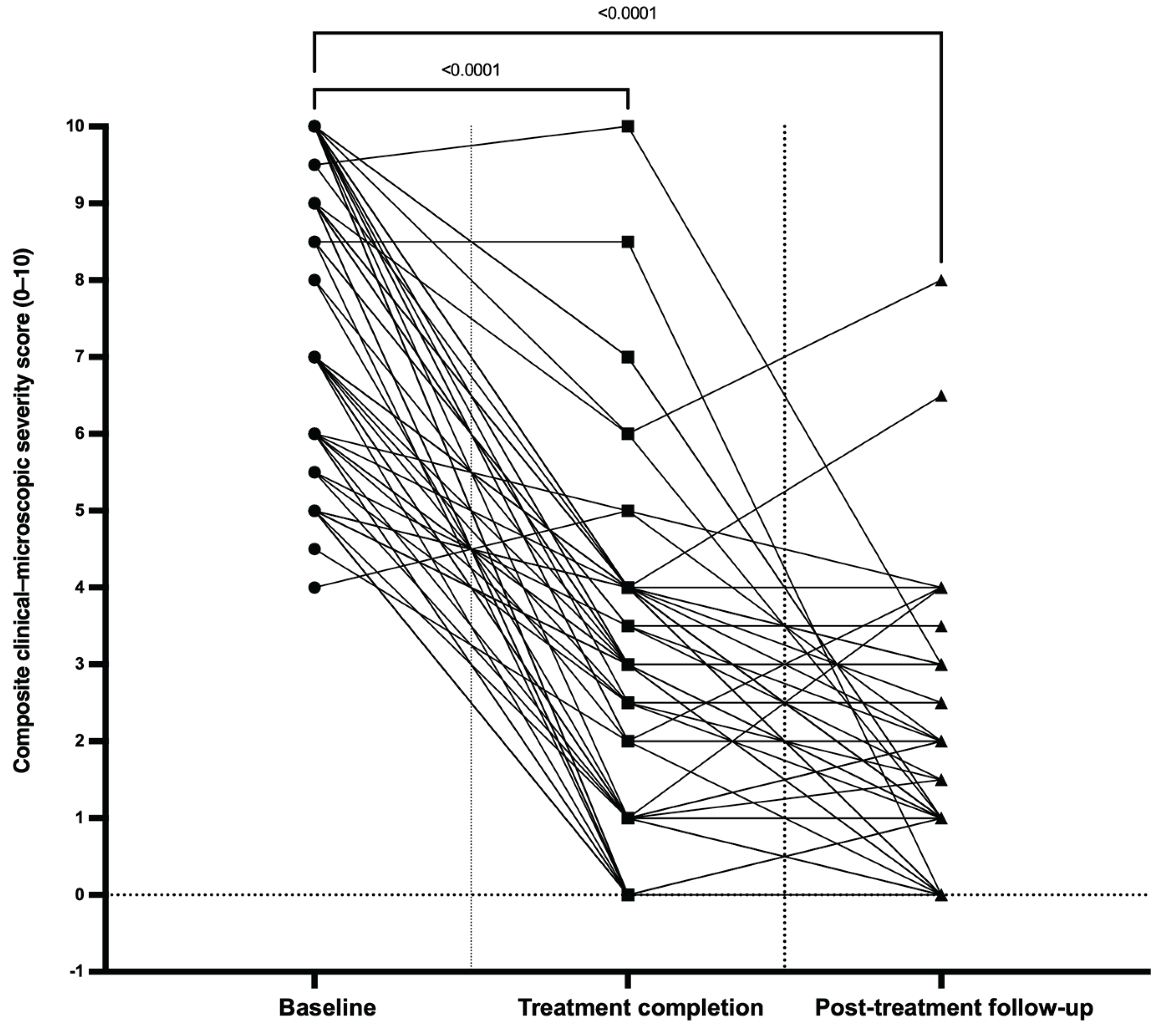
Figure 3.
Longitudinal evolution of composite clinical–microscopic severity scores according to diagnostic classification. Median (IQR) composite clinical–microscopic severity scores for vulvovaginal candidiasis, bacterial vaginosis, and mixed vaginal infection at baseline, treatment completion, and post-treatment follow-up following intravaginal dequalinium chloride therapy. Lower scores indicate lower disease severity. Longitudinal changes were analyzed using a repeated-measures mixed-effects model (REML), which demonstrated a significant effect of time (p<0.0001) and diagnostic group (p=0.0020).
Figure 3.
Longitudinal evolution of composite clinical–microscopic severity scores according to diagnostic classification. Median (IQR) composite clinical–microscopic severity scores for vulvovaginal candidiasis, bacterial vaginosis, and mixed vaginal infection at baseline, treatment completion, and post-treatment follow-up following intravaginal dequalinium chloride therapy. Lower scores indicate lower disease severity. Longitudinal changes were analyzed using a repeated-measures mixed-effects model (REML), which demonstrated a significant effect of time (p<0.0001) and diagnostic group (p=0.0020).
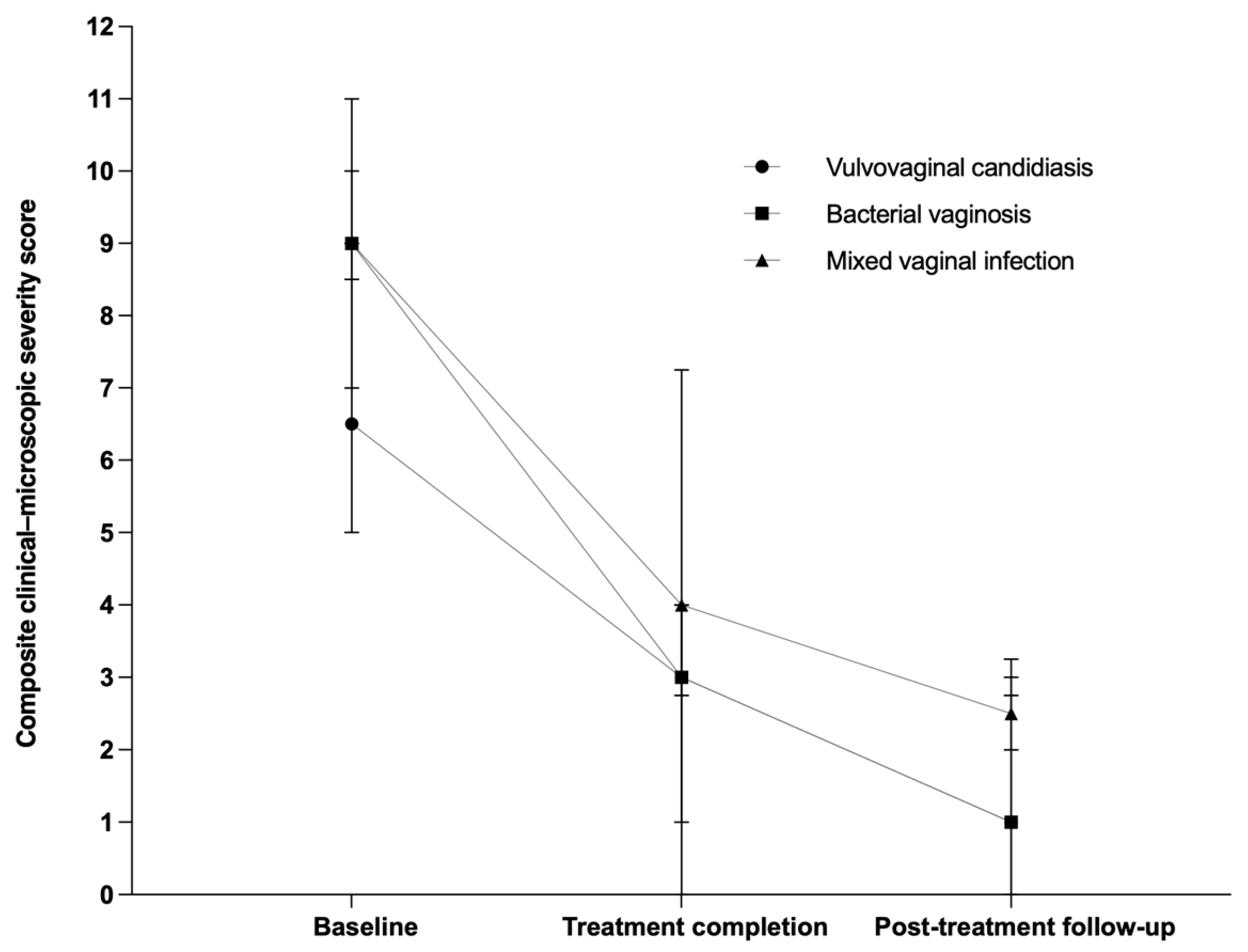

Table 1.
Clinical variables incorporated into the disease-specific severity assessment framework.
| Clinical Variable | Vulvovaginal Candidiasis | Bacterial Vaginosis | Mixed Vaginal Infection |
| Vaginal Discharge | 1 | 1 | 1 |
| Fetid Discharge | 0 | 1 | 1 |
| Homogeneous Discharge | 0 | 1 | 1 |
| Vulvovaginal Pruritus | 1 | 0 | 1 |
| Burning / Irritation | 1 | 0 | 1 |
| Positive Amine Whiff Test (KOH Test) | 0 | 1 | 1 |
Table 2.
Semi-quantitative grading system for fresh wet-mount microscopic findings.
| Microscopic Finding | 0 points | 1 point | 2 points | 3 points |
| Clue cells | Absent | Scarce | Moderate | Abundant |
| Leukocytes / neutrophils | Absent or 1–2 per field | Mild increase | Moderateincrease | Marked increase |
| Bacillary flora alteration | Normal | Moderatealteration | Scarce bacilli | Absent bacilli |
| Yeasts | Absent | Scarce | Moderate | Abundant |
| Pseudohyphae | Absent | Scarce | Moderate | Abundant |
| Additional abnormalfindings | Absent | Scarce | Moderate | Abundant |
Table 3.
Disease-specific composite severity scoring framework.
| Parameter | Vulvovaginal Candidiasis | Bacterial Vaginosis | Mixed Vaginal Infection |
| Maximum total score | 10 | 10 | 20 |
| No evident active disease | <3 | <3 | <6 |
| Mild disease | 3–5 | 3–5 | 6–10 |
| Moderate disease | 6–8 | 6–8 | 11–16 |
| Severe disease | 9–10 | 9–10 | 17–20 |
Table 4.
Longitudinal Therapeutic Response Classification.
|
Score Reduction Between Visits |
Vaginal Candidiasis / Bacterial Vaginosis |
Mixed Vaginal Infection |
Clinical Interpretation |
| No significant change | 0–1.9 points | 0–3.9 points | No improvement |
| Minimal reduction | 2–4.9 points | 4–9.9 points | Minimal improvement |
| Moderate reduction | 5–7.9 points | 10–15.9 points | Moderate improvement |
| Major reduction | 8–10 points | 16–20 points | Major improvement |
Table 5.
Baseline Demographic, Anthropometric, and Reproductive Characteristics According to Diagnostic Classification.
Table 5.
Baseline Demographic, Anthropometric, and Reproductive Characteristics According to Diagnostic Classification.
| Variable | Vulvovaginal Candidiasis (n = 24) | Bacterial Vaginosis (n = 31) | Mixed Vaginal Infection (n = 14) | Total Population (n = 69) |
| Demographic and anthropometric variables | ||||
| Age (years), mean ± SD | 34.67 ± 9.72 | 32.00 ± 7.44 | 35.43 ± 5.65 | 33.62 ± 8.04 |
| Weight (kg), mean ± SD | 64.37 ± 12.43 | 61.14 ± 8.44 | 64.86 ± 9.66 | 63.01 ± 10.22 |
| Height (cm), mean ± SD | 161.63 ± 4.00 | 160.45 ± 3.87 | 159.86 ± 6.57 | 160.74 ± 4.55 |
| Reproductive characteristics | ||||
| Menarche age (years), mean ± SD | 12.08 ± 1.74 | 12.13 ± 1.57 | 12.43 ± 1.70 | 12.17 ± 1.63 |
| Age at onset of sexual activity (years), mean ± SD | 18.46 ± 3.58 | 18.55 ± 3.06 | 18.21 ± 2.83 | 18.44 ± 3.16 |
| Sexual partners during previous year, mean ± SD | 1.08 ± 0.28 | 1.23 ± 0.67 | 1.86 ± 1.41 | 1.30 ± 0.82 |
| Lifetime number of sexual partners, mean ± SD | 3.42 ± 2.10 | 4.13 ± 2.47 | 7.29 ± 7.37 | 4.52 ± 4.08 |
| Previous vaginal infection during preceding year, n (%) | 8 (33.3%) | 11 (35.5%) | 7 (50.0%) | 26 (37.7%) |
Table 6.
Baseline Clinical, Physiological, and Fresh Microscopic Characteristics According to Diagnostic Classification.
Table 6.
Baseline Clinical, Physiological, and Fresh Microscopic Characteristics According to Diagnostic Classification.
| Variable | Vulvovaginal candidiasis (n=24) | Bacterial vaginosis (n=31) | Mixed infection (n=14) | Total (n=69) |
| Vaginal pH, median (IQR) | 5.0 (5–6) | 7.0 (6–7) | 7.0 (6–7) | 6.0 (5–7) |
| Vulvovaginal pruritus, n (%) | 23 (95.8%) | 1 (3.2%) | 14 (100%) | 38 (55.1%) |
| Genital burning/irritation, n (%) | 13 (54.2%) | 0 (0%) | 12 (85.7%) | 25 (36.2%) |
| Thick white discharge, n (%) | 24 (100%) | 0 (0%) | 6 (42.9%) | 30 (43.5%) |
| Fetid discharge, n (%) | 0 (0%) | 27 (87.1%) | 9 (64.3%) | 36 (52.2%) |
| Homogeneous discharge, n (%) | 0 (0%) | 23 (74.2%) | 5 (35.7%) | 28 (40.6%) |
| Positive amine test, n (%) | 1 (4.2%) | 29 (93.5%) | 8 (57.1%) | 38 (55.1%) |
| Yeasts on microscopy, n (%) | 23 (95.8%) | 0 (0%) | 12 (85.7%) | 35 (50.7%) |
| Clue cells, n (%) | 0 (0%) | 25 (80.6%) | 14 (100%) | 39 (56.5%) |
| Reduced/absent lactobacilli, n (%) | 0 (0%) | 24 (77.4%) | 10 (71.4%) | 34 (49.3%) |
| Pseudohyphae/pseudomycelia, n (%) | 0 (0%) | 0 (0%) | 1 (7.1%) | 1 (1.4%) |
Table 7.
Overall Longitudinal Treatment Response, Physiological, and Fresh Microscopic Evolution Following Intravaginal Dequalinium Chloride Therapy.
Table 7.
Overall Longitudinal Treatment Response, Physiological, and Fresh Microscopic Evolution Following Intravaginal Dequalinium Chloride Therapy.
|
Overall Cohort (All Diagnostic Groups Combined) |
Baseline (Pre-CDQ) median (IQR) |
Treatment completion median (IQR) |
Post-treatment follow-up median (IQR) |
p-value (Friedman) |
| Number of symptoms | 3 (3–4) | 1 (0–1) | 0 (0–1) | 0<0.0001 |
| Vaginal pH | 6 (5–7) | 5 (4–5) | 5 (4–5) | 0.0014 |
| Clinical discomfort score | 4 (3–4) | 1 (0–1) | 0 (0–1) | <0.0001 |
| Fresh microscopy score | 6 (3–6) | 3 (0–3) | 1.5 (0–3) | 0.0001 |
| Composite clinical–microscopic severity score | 8 (6–10) | 3 (1–5) | 1 (0–3) | <0.0001 |
Table 8.
Longitudinal evolution of clinical, physiological, microscopic, and composite severity score outcomes according to diagnostic classification.
Table 8.
Longitudinal evolution of clinical, physiological, microscopic, and composite severity score outcomes according to diagnostic classification.
| Diagnostic group | Parameter | Baseline median (IQR) | Treatment completion median (IQR) | Post-treatment follow-up median (IQR) |
p-value (Friedman) |
|
Vulvovaginal candidiasis |
Number of symptoms | 3 (2–3) | 0 (0–1) | 0 (0–0) | <0.0001 |
| Vaginal pH | 5 (5–6) | 4 (4–5) | 4 (4–5) | <0.0001 | |
| Clinical discomfort score | 3 (2–3) | 0 (0–1) | 0 (0–0) | <0.0001 | |
| Fresh microscopic score | 3 (3–6) | 3 (0–3) | 0.5 (0–2.25) | <0.0001 | |
| Composite clinical–microscopic severity score | 6.5 (5–9) | 3 (0–4) | 1 (0–2.25) | <0.0001 | |
|
Bacterial vaginosis |
Number of symptoms | 3 (3–4) | 1 (0–1) | 0 (0–1) | <0.0001 |
| Vaginal pH | 7 (6–7) | 5 (4–5) | 5 (4–5) | <0.0001 | |
| Clinical discomfort score | 4 (3–4) | 1 (0–1) | 0 (0–1) | <0.0001 | |
| Fresh microscopic score | 6 (3–6) | 3 (0–3) | 0 (0–3) | <0.0001 | |
| Composite clinical–microscopic severity score | 9 (7–10) | 3 (1–4) | 1 (0–3) | <0.0001 | |
|
Mixed vaginal infection |
Number of symptoms | 4 (4–5.75) | 1 (1–2) | 1 (0–1.75) | <0.0001 |
| Vaginal pH | 7 (6–7) | 5 (4.12–7) | 5 (4–6) | 0.0001 | |
| Clinical discomfort score | 5 (5–6.5) | 2 (1–2) | 1 (0–2) | <0.0001 | |
| Fresh microscopic score | 9 (6.75–12) | 3 (3–6) | 3 (3–3) | <0.0001 | |
| Composite clinical–microscopic severity score | 15.5 (11.25–17) | 6 (5–7.75) | 4 (3–5) | <0.0001 |
CDQ, dequalinium chloride; IQR, interquartile range.
Table 9.
Distribution of therapeutic response categories according to diagnostic classification following dequalinium chloride therapy.
Table 9.
Distribution of therapeutic response categories according to diagnostic classification following dequalinium chloride therapy.
| Diagnostic Group | Comparison |
No Clinically Meaningful Change n (%) |
Minimal Improvement n (%) |
Moderate Improvement n (%) |
Major Improvement n (%) |
Responders n (%) |
Non-Responders n (%) |
| Vulvovaginal candidiasis | Baseline → Treatment completion | 1 (4.2%) | 5 (20.8%) | 10 (41.7%) | 8 (33.3%) | 23 (95.8%) | 1 (4.2%) |
| Baseline → Follow-up | 0 (0%) | 3 (12.5%) | 8 (33.3%) | 13 (54.2%) | 24 (100%) | 0 (0%) | |
| Bacterial vaginosis | Baseline → Treatment completion | 1 (3.2%) | 6 (19.4%) | 13 (41.9%) | 11 (35.5%) | 30 (96.8%) | 1 (3.2%) |
| Baseline → Follow-up | 0 (0%) | 4 (12.9%) | 11 (35.5%) | 16 (51.6%) | 31 (100%) | 0 (0%) | |
| Mixed vaginal infection | Baseline → Treatment completion | 1 (7.1%) | 4 (28.6%) | 6 (42.9%) | 3 (21.4%) | 13 (92.9%) | 1 (7.1%) |
| Baseline → Follow-up | 0 (0%) | 3 (21.4%) | 5 (35.7%) | 6 (42.9%) | 14 (100%) | 0 (0%) | |
| Overall cohort | Baseline → Treatment completion | 3 (4.3%) | 15 (21.7%) | 29 (42.0%) | 22 (31.9%) | 66 (95.7%) | 3 (4.3%) |
| Baseline → Follow-up | 0 (0%) | 10 (14.5%) | 24 (34.8%) | 35 (50.7%) | 69 (100%) | 0 (0%) |
Abbreviations: CDQ, dequalinium chloride; IQR.
Table 10.
Adverse events and tolerability findings during follow-up after dequalinium chloride therapy.
Table 10.
Adverse events and tolerability findings during follow-up after dequalinium chloride therapy.
| Adverse Event | Patients n (%) | Number of Events | Severity | Outcome |
| Mild lower abdominal/pelvic discomfort | 7 (10.1%) | 9 | Mild | Resolved without sequelae |
| Transient vulvovaginal irritation | 2 (2.9%) | 2 | Mild | Resolved without sequelae |
| Local intolerance manifestations | 2 (2.9%) | 2 | Mild | Resolved without sequelae |
| Treatment discontinuation | 0 (0%) | 0 | Not observed | Not applicable |
| Serious adverse events | 0 (0%) | 0 | Not observed | Not applicable |
| Hospitalization related to treatment | 0 (0%) | 0 | Not observed | Not applicable |
Abbreviations: CDQ, dequalinium chloride.
Disclaimer/Publisher’s Note: The statements, opinions and data contained in all publications are solely those of the individual author(s) and contributor(s) and not of MDPI and/or the editor(s). MDPI and/or the editor(s) disclaim responsibility for any injury to people or property resulting from any ideas, methods, instructions or products referred to in the content. |
© 2026 by the authors. Licensee MDPI, Basel, Switzerland. This article is an open access article distributed under the terms and conditions of the Creative Commons Attribution (CC BY) license (http://creativecommons.org/licenses/by/4.0/).
Copyright: This open access article is published under a Creative Commons CC BY 4.0 license, which permit the free download, distribution, and reuse, provided that the author and preprint are cited in any reuse.


