

Submitted:
15 June 2026
Posted:
16 June 2026
You are already at the latest version
Abstract
Fungicide residues in food have emerged as a major concern for food safety monitoring due to increasing multiclass contamination associated with intensive agricultural prac-tices, particularly in Southeast Asia. This review critically evaluates recent advances (2019–2026) in microchemical analytical strategies for multiclass fungicide residue de-termination in complex food matrices, with emphasis on analytical performance, sus-tainability, and applicability to regional food systems. Recent developments in minia-turized and green sample preparation techniques, including modified QuEChERS, dis-persive liquid–liquid microextraction, solid-phase microextraction, magnetic solid-phase extraction, and deep eutectic solvent-based extraction, have significantly reduced sol-vent consumption and sample handling while maintaining high recovery, sensitivity, and reproducibility. Coupling these approaches with advanced detection platforms such as UHPLC–MS/MS, GC–MS/MS, and high-resolution mass spectrometry enables simul-taneous determination of multiclass fungicides and metabolites at trace levels. The re-view also discusses current analytical challenges related to highly polar fungicides, ma-trix effects, transformation products, and standard availability. Overall, microchemical analytical approaches provide promising sustainable and high-throughput solutions for fungicide residue monitoring; however, their effectiveness depends strongly on matrix complexity, analyte properties, and rigorous method validation.
Keywords:
fungicide residues
; food safety monitoring
; microchemical extraction
; pesticide residue analysis
; sustainable analytical chemistry
1. Introduction
Fungicides constitute a major class of agrochemicals whose widespread use presents significant analytical challenges due to their structural diversity, wide polarity range, and frequent co-occurrence in complex food matrices. The increasing global use of fungicides has led to complex residue patterns in food systems, requiring analytical methods capable of simultaneous multiclass detection at trace levels. Major fungicide classes (e.g., azoles, strobilurins, and SDHIs) exhibit diverse physicochemical properties that directly influence extraction efficiency and detection performance in multiresidue analytical workflows. Their deployment spans pre-harvest foliar spraying, seed treatment, and post-harvest preservation to reduce spoilage and mycotoxin development [1]. Recent global surveillance programs confirm that fungicides account for a significant proportion of pesticide residues detected in food monitoring studies. Multiresidue investigations across Europe, Asia, and Africa consistently report high detection frequencies of azoxystrobin, tebuconazole, boscalid, carbendazim, and difenoconazole in fresh produce [2]. Climate variability, especially increased humidity and temperature fluctuations, has further amplified fungal disease prevalence, prompting intensified fungicide application strategies. Consequently, residue surveillance systems face growing analytical demands for simultaneous detection of multiple fungicide classes at trace levels. From an analytical perspective, the occurrence of fungicide residues at trace levels necessitates highly sensitive and selective detection strategies to ensure compliance with regulatory limits. Although toxicological concerns exist, the primary analytical challenge lies in detecting these residues at trace levels across complex matrices with high selectivity and accuracy. Regulatory bodies such as the Codex Alimentarius Commission and European Food Safety Authority (EFSA) establish maximum residue limits (MRLs) to safeguard public health, necessitating reliable analytical monitoring tools capable of achieving sub µg/kg detection limits.
Southeast Asia (SEA) provides analytically challenging matrices due to high moisture content, complex plant metabolites, and intensive multiclass pesticide usage, which collectively complicate residue determination. The region’s tropical climate characterized by high humidity, monsoon cycles, and elevated temperatures creates ideal conditions for fungal proliferation in crops such as rice, oil palm, banana, mango, durian, chili, and leafy vegetables. To mitigate yield losses, farmers frequently adopt intensive fungicide spraying regimes throughout growing seasons. Residue monitoring studies conducted in Thailand, Vietnam, Indonesia, Malaysia, and the Philippines indicate increasing detection frequencies of multiclass fungicide residues in vegetables and fruits destined for both domestic consumption and export markets. Several studies report multiple residues per sample, often exceeding three or more fungicides in a single commodity [3]. In tropical horticultural systems, rotational use of different fungicide classes to prevent resistance contributes to this multiclass contamination pattern. Export-oriented agriculture further complicates the scenario. Southeast Asian producers must comply with stringent MRLs imposed by importing regions such as the European Union and Japan. Variability in regulatory standards among trading partners increases the need for high-sensitivity, harmonized analytical methods capable of detecting fungicides across a broad polarity and stability spectrum.
Recent literature demonstrates a clear shift from single-analyte residue detection toward comprehensive multiclass pesticide monitoring. Fungicide residues rarely occur in isolation; instead, food samples frequently contain combinations of azoles, SDHIs, and strobilurins due to integrated disease management strategies. Multiresidue studies across Asian markets report detection rates exceeding 60–80% in certain vegetable categories, with multiclass combinations being common [2]. Emerging evidence also highlights the presence of transformation products and metabolites, further complicating residue profiling. SDHI degradation products and azole metabolites may exhibit different polarity and stability compared with parent compounds, necessitating broader analytical coverage. The increasing complexity of contamination patterns reinforces the importance of multiclass analytical platforms that can deliver high sensitivity, selectivity, and throughput without excessive solvent consumption or sample handling time. Despite extensive progress in pesticide residue analysis, current methodologies remain insufficient for addressing multiclass fungicide detection in complex matrices, particularly when considering matrix effects, transformation products, and sustainability constraints. Existing reviews rarely integrate sample preparation and detection into a unified analytical framework, limiting their ability to address multiclass residue challenges in complex matrices.
Traditional analytical methods for fungicide residues typically involve exhaustive sample preparation steps such as liquid–liquid extraction (LLE) or solid-phase extraction (SPE), followed by chromatographic separation with gas chromatography (GC) or liquid chromatography (LC) coupled to various detectors such as electron capture detectors (ECD), mass spectrometry (MS), or tandem mass spectrometry (MS/MS). While these conventional approaches have historically underpinned regulatory residue analysis, they exhibit significant limitations when addressing current analytical demands [4]. Microchemical and miniaturized analytical approaches have significantly improved the efficiency and sustainability of fungicide residue analysis. These methodologies aim to improve analytical efficiency by minimizing solvent consumption while maintaining extraction selectivity and compatibility with advanced detection systems. Prominent microextraction techniques include dispersive liquid–liquid microextraction (DLLME), solid-phase microextraction (SPME), mini- Quick, Easy, Cheap, Effective, Rugged, and Safe (QuEChERS) variants, magnetic solid-phase extraction (MSPE), and solvent-free preconcentration strategies [5]. Moreover, advanced detection platforms such as high-resolution mass spectrometry (HRMS), ultra-high performance liquid chromatography (UHPLC) coupled with MS/MS, and hybrid systems combining chromatographic separation with accurate mass measurement have further enhanced analytical performance and enabling detection limits in the low ng/kg range while supporting suspect and non-target screening. These capabilities are particularly valuable for Southeast Asia, where diverse agricultural practices introduce emerging and previously unmonitored fungicides [1]. The analytical workflow integrating fungicide application, residue occurrence, microchemical extraction, and instrumental detection is summarized in Figure 1. Therefore, this review aims to critically evaluate microchemical extraction strategies for multiclass fungicide analysis, assess their compatibility with advanced chromatographic–mass spectrometric techniques, identify key analytical challenges in tropical food matrices, and propose future directions toward sustainable and high-throughput residue monitoring.
2. Methodology
The methodology of this review involved a comprehensive and systematic evaluation of recent literature published between 2019 and 2026 concerning microchemical analytical strategies for multiclass fungicide residue determination in complex food matrices, with particular emphasis on Southeast Asian food systems. Relevant peer-reviewed articles, regulatory reports, and analytical guidelines were collected from major scientific databases including Scopus, Web of Science, ScienceDirect, PubMed, and Google Scholar using combinations of keywords such as “fungicide residues,” “microextraction,” “QuEChERS,” “LC–MS/MS,” “HRMS,” “green analytical chemistry,” and “Southeast Asia food monitoring.” Studies were selected based on their relevance to multiclass fungicide analysis, analytical performance, sample preparation innovation, and applicability to complex agricultural commodities including fruits, vegetables, rice, spices, and processed foods. The review critically compared conventional and emerging microchemical extraction techniques including miniaturized QuEChERS, dispersive liquid–liquid microextraction, solid-phase microextraction, hollow-fiber liquid-phase microextraction, magnetic solid-phase extraction, and green solvent-based approaches. Instrumental detection platforms such as UHPLC–MS/MS, GC–MS/MS, Orbitrap HRMS, and QTOF systems were also evaluated in terms of sensitivity, selectivity, throughput, matrix-effect management, and regulatory suitability. Particular attention was given to analytical challenges associated with highly polar fungicides, metabolites, matrix effects, and sustainability considerations. Information was synthesized qualitatively to identify current analytical trends, limitations, and future perspectives for sustainable and high-throughput fungicide residue monitoring in tropical food matrices.
3. Major Chemical Classes Detected in SEA Foods
Fungicide classification is analytically significant because differences in chemical structure and physicochemical properties directly influence extraction efficiency, chromatographic separation, and ionization behavior in mass spectrometric detection. Analytical strategies must account for structural diversity, polarity differences, and degradation pathways, which influence extraction behavior, chromatographic retention, and ionization efficiency. Recent monitoring programs across Thailand, Vietnam, Indonesia, Malaysia, and the Philippines consistently report azoles, strobilurins, SDHIs, benzimidazoles, and dithiocarbamates as dominant fungicide residues in fruits, vegetables, rice, and plantation crops. From an analytical standpoint, the coexistence of multiple fungicide classes within a single sample represents a major limitation for conventional multiresidue methods, necessitating the development of more selective and adaptable microchemical strategies.
Multiresidue monitoring in SEA requires analytical workflows capable of handling wide polarity ranges, diverse stability profiles, and complex transformation pathways, which challenge conventional extraction and detection methods. These workflows must accommodate wide polarity ranges and stability differences, which often compromise simultaneous extraction and detection in multiresidue methods. In regional market surveys, fungicides are often among the dominant residue categories in plant foods, reflecting intensive disease pressure in humid tropical agroecosystems and frequent prophylactic spray schedules [6]. Method performance is commonly benchmarked against EU SANTE guidance (recoveries typically 70–120% with RSD ≤20% under validated conditions), which is widely adopted even outside Europe as a practical quality-control framework for enforcement-grade data [7].
Azoles especially triazoles (e.g., tebuconazole, propiconazole, difenoconazole, myclobutanil, penconazole) are demethylation inhibitors (DMIs) that block sterol biosynthesis (C14-demethylation), disrupting fungal membrane integrity and growth. Their agronomic popularity in tropical systems stems from broad-spectrum efficacy on leaf spots, anthracnose, mildews, and postharvest diseases, which makes them frequent targets in SEA residue monitoring. In Central Vietnam, difenoconazole was among the higher-frequency detections in vegetable samples, illustrating how DMI use translates into measurable residues at harvest [8]. From an analytical standpoint, many azoles are moderately lipophilic, amenable to LC–ESI–MS/MS (often positive mode), but matrix effects can be substantial in high-pigment or high-essential-oil matrices (e.g., herbs, leafy greens). Method design should therefore include matrix-matched calibration or isotopically labeled internal standards when feasible, and careful evaluation of ion suppression/enhancement [9]. A growing challenge is that “azole fungicides” also implies the need to track relevant metabolites and transformation products; recent reviews highlight expanding interest in rapid/alternative detection strategies and the analytical gaps for azole-containing residues in foods [10].
Strobilurins (QoIs) such as azoxystrobin, pyraclostrobin, trifloxystrobin, kresoxim-methyl, and fluoxastrobin inhibit mitochondrial respiration at the cytochrome bc1 complex (Qo site), causing energy deprivation in fungi. They are widely used on fruits and vegetables, and residue surveys often report high detection frequencies in produce due to repeated applications and relatively persistent parent compounds. In a multiresidue survey of litchi (May 2019–Aug 2020), pyraclostrobin was among the most frequently detected residues, consistent with QoI-heavy disease management in fruit production systems [11]. Analytically, QoIs are typically hydrophobic and well suited to LC–MS/MS (often positive mode), though some can also be measured by GC–MS/MS depending on volatility and method scope. QoIs may undergo environmental and microbial transformation, screening approaches increasingly consider degradation products alongside parents; mechanistic and fate-focused reviews emphasize the ubiquity of strobilurins in agricultural matrices and the importance of understanding transformation pathways that can affect residue profiles [12]. Human biomonitoring evidence is also emerging in the recent literature, reinforcing the need for robust residue methods that can support exposure assessment beyond food matrices alone [13].
SDHIs (e.g., boscalid, fluopyram, fluxapyroxad, penthiopyrad) inhibit succinate dehydrogenase (mitochondrial complex II), impairing fungal respiration. Their use has expanded globally across fruits, vegetables, and plantation crops, and SDHIs are now routine inclusions in multiresidue panels. Recent method papers report highly sensitive LC–MS/MS quantification of multiple SDHIs across diverse foods and beverages, illustrating increasing analytical maturity for this class [14]. For SEA-relevant contexts, SDHI residues are often expected in high-disease-pressure crops (e.g., tomatoes, cucurbits, peppers, grapes, tropical fruits). Fluopyram, for example, has been studied extensively for residue behavior and dietary risk assessment across fruit and vegetable matrices using QuEChERS with chromatographic MS detection [15]. Beyond enforcement, SDHI risk discussions have also prompted national-level scientific assessments (e.g., ANSES) focused on exposure and potential hazards, which further elevates the importance of reliable monitoring data [16]. Analytically, SDHIs are generally LC–MS/MS-friendly but can exhibit matrix-dependent recovery and ionization variability; comprehensive validation across representative SEA matrices (leafy greens, herbs, tropical fruits) is critical [9].
Benzimidazoles including carbendazim, benomyl, thiabendazole, thiophanate-methyl act primarily by disrupting microtubule assembly (β-tubulin binding), inhibiting cell division. Although resistance issues have constrained use in some settings, benzimidazoles remain relevant because of legacy application, postharvest use (e.g., thiabendazole), and the persistence of carbendazim as both parent and metabolite marker. Recent reviews synthesize residue behavior, detection technologies, and toxicological considerations for this class, underscoring why benzimidazoles remain common analytes in multiresidue methods [17]. In multiresidue workflows, carbendazim is typically robustly quantified by LC–MS/MS; however, method scope should explicitly consider precursor pesticides (thiophanate-methyl) and conversion patterns during sample handling or metabolism. Field dissipation studies that report linked dynamics among thiophanate-methyl and carbendazim highlight this interconversion issue and support including both analytes where relevant [18].
Dithiocarbamates (e.g., mancozeb, metiram, thiram, ziram, propineb) are a long-used, multi-site fungicide group. They are analytically challenging because enforcement often relies on a common moiety approach (acid digestion to carbon disulfide, CS2), which does not uniquely identify the parent compound and can be confounded by natural CS2 background or matrix-derived interferences. Updated European laboratory guidance documents reflect continuing method refinements (e.g., hydrolysis conditions, partitioning, GC measurement) aimed at improving reliability and comparability of CS2-based results. Recent toxicology and methodology discussions emphasize that dithiocarbamates also form specific degradation products (e.g., ethylene thiourea, ETU; propylene thiourea, PTU) with their own hazard relevance, creating a strong rationale to expand monitoring beyond CS2 where feasible (e.g., targeted LC–MS/MS for ETU/PTU alongside CS2 for enforcement) [19]. Because SEA diets include many leafy vegetables and herbs (matrices prone to strong matrix effects), careful QA/QC (recoveries, precision, and measurement uncertainty) is essential when interpreting dithiocarbamate results in multiresidue contexts.
Emerging fungicides in residue analysis include newer modes of action with rising market penetration, compounds used in niche tropical crops, and metabolites/transformants increasingly recognized as toxicologically or regulatory relevant. Two practical trends are notable. First, laboratories are moving toward HRMS workflows that combine targeted quantification with suspect screening to detect unexpected residues and metabolites in complex foods [20]. Second, routine triple-quadrupole methods are expanding panels and using cross-platform confirmation (LC–MS/MS plus GC–MS/MS) to reduce false positives/negatives for multiclass residue enforcement [21]. In SEA monitoring specifically, market-basket style surveys in Vietnam [22] and Malaysia demonstrate that multi-residue detection is feasible with modified QuEChERS and LC–MS/MS, and they provide real-world evidence that fungicides appear alongside insecticides in frequently consumed vegetables supporting the need to keep fungicide panels broad and regularly updated [23]. Major fungicide chemical classes relevant to multiresidues analysis in SEA foods could be seen in Table 1. Despite extensive classification, translating fungicide diversity into robust multiresidue analytical methods remains challenging due to conflicting extraction and detection requirements across classes.
4. Microchemical Sample Preparation Strategies
4.1. Miniaturized QuEChERS Approaches
Microchemical sample preparation has emerged as a key strategy to overcome the limitations of conventional extraction methods, particularly in reducing solvent consumption, improving throughput, and enhancing compatibility with multiclass analyte systems. QuEChERS remains the dominant framework; however, its conventional format is increasingly limited for multiclass fungicide analysis due to matrix effects and insufficient selectivity Maintaining comparable solvent-to-sample ratios. Recent synthesis papers also highlight QuEChERS miniaturization as part of broader trends toward greener, higher-throughput, and more modular analytical pipelines [37]. Conventional QuEChERS often uses 10 g test portions and 10 mL acetonitrile (MeCN) with salt-driven phase separation and dispersive SPE (d-SPE) cleanup. Micro-QuEChERS scales these steps down typically to 0.2–2 g test portions and 0.5–4 mL MeCN using smaller centrifuge tubes (2–15 mL), shorter vortex/centrifugation times, and reduced d-SPE masses, while preserving the key physicochemical functions with efficient partitioning into MeCN, water removal via MgSO4, and selective removal of matrix co-extractives with sorbents. Maintaining solvent-to-sample ratios preserves extraction efficiency; however, method robustness depends strongly on matrix homogeneity and analyte distribution [38]. A key limitation is increased subsampling variability in miniaturized formats, which may compromise reproducibility in heterogeneous food matrices. For example, quality-control discussions emphasize that shrinking from 10 g to 1 g can increase variance unless comminution/homogenization is highly effective; thus, micro-QuEChERS works best when milling/homogenization is robust and when labs implement replicate strategies or improved mixing for representative aliquots [39].
Buffered QuEChERS (acetate or citrate) is often retained in miniaturized formats to stabilize base-/acid-labile fungicides and improve reproducibility across matrices; the main change is proportional reduction of salt masses and tube volume. Trends papers note that these “modular” adjustments help maintain ruggedness across commodity groups [37]. Micro-QuEChERS is often paired with direct LC–MS/MS injection after dilution/filtration, or with minimal evaporation (e.g., gentle N2 blowdown of ≤1–2 mL) to avoid losses of volatile/semi-volatile analytes and to speed throughput. High-throughput/green reviews increasingly position these “evaporation-light” workflows as preferable, particularly in routine monitoring labs [40]. Some recent green-analytical literature highlights coupling micro-QuEChERS extracts to microextraction/enrichment (e.g., DLLME-type steps) to improve sensitivity while keeping total solvent low. This strategy is mainly used when target residues are expected at very low µg/kg levels and matrix effects are severe [38]. Low-solvent QuEChERS variants reduce MeCN volume and sometimes replace part of the MeCN with water (for dry matrices) to facilitate partitioning. The direction is consistent with green analytical chemistry priorities: minimize hazardous solvent use and maximize sample throughput. Recent high-throughput reviews explicitly describe miniaturized QuEChERS as a pathway to cut solvent volumes while remaining compatible with LC–MS/MS screening.
For dry matrices (notably rice), low-solvent strategies commonly add a measured water volume before MeCN to promote hydration and reproducible extraction. A Vietnam-focused high-capacity method for rice illustrates this logic clearly with 2 g rice, add 5 mL water and 10 mL MeCN (with 1% acetic acid) prior to salting-out, then further cleanup and concentration before LC–MS/MS and GC–MS/MS analysis. While this example is not “micro-QuEChERS” in solvent volume, it demonstrates the hydration principle used in miniaturized rice workflows (water addition enables smaller test portions without losing extraction robustness) [41].
Sorbent optimization in miniaturized d-SPE including primary–secondary amine (PSA), octadecylsilane (C18), graphitized carbon black (GCB), and enhanced matrix removal–lipid (EMR-Lipid). Because micro-QuEChERS typically uses smaller extract volumes and sometimes higher matrix-to-solvent ratios, cleanup efficiency becomes even more important for controlling ion suppression/enhancement in LC–MS/MS. PSA is widely used to remove fatty acids, sugars, and some organic acids. It is especially helpful for fruit/vegetable matrices with high co-extracted polar interferences that otherwise elevate baseline noise or suppress ionization. C18 targets nonpolar interferences (lipids, waxes) and is often combined with PSA in produce matrices; however, excessive C18 can reduce recoveries for very nonpolar analytes [42]. GCB is effective for pigments (chlorophyll, carotenoids), but it can retain planar pesticides/metabolites, causing low recoveries if overused. This tradeoff is repeatedly noted in comparative cleanup studies [43]. Last, EMR-lipid is designed for stronger lipid removal than classical C18/PSA mixtures and has been evaluated across complex matrices. Food-analytics studies show it can reduce matrix effects and improve chromatographic cleanliness, although its cost and occasional analyte losses necessitate validation per matrix/analyte set [44].
4.2. Advanced Microextraction Techniques
Advanced microextraction techniques enhance selectivity and preconcentration; however, their performance is highly method-specific and not universally applicable across fungicide classes [45]. For SEA food systems dominated by high-water vegetables (leafy greens, herbs), high-pigment commodities (chilies), and high-matrix-complexity products (spices, oils, tea) microextraction is particularly valuable to suppress matrix effects while meeting stringent default limits (commonly 0.01 mg/kg for many analyte commodity pairs in some regulatory settings) [8].
SPME is a solvent-minimized technique where analytes partition into a sorptive coating (fiber/Arrow/thin-film) from headspace (HS) or directly from liquid (DI-SPME). It is especially attractive for relatively volatile or semi-volatile fungicides (and some transformation products), and for GC-based workflows where HS-SPME can simultaneously provide clean-up and preconcentration [46]. Recent developments SPME Arrow and thin-film SPME expand surface area, improve robustness, and enhance sensitivity for multi-residue monitoring [47]. In Central Vietnam, market/harvest-time vegetables showed median individual pesticide residues of 0.007–0.037 mg/kg, while extreme cases reached 38.6 mg/kg total pesticide concentration in mustard greens and 32.1 mg/kg in green onions, indicating the need for methods that remain reliable across both trace-level and highly contaminated samples [8]. While QuEChERS–LC/GC–MS/MS remains common for such surveys, SPME-based screening (e.g., HS-SPME–GC–MS/MS for more GC-amenable fungicides) can be strategically deployed for rapid follow-up confirmation, hot-spot monitoring, and process-control checks (washing, blanching, cooking) with minimal solvent and reduced laboratory waste [47].
Dispersive liquid–liquid microextraction (DLLME) forms a transient dispersion of extraction solvent microdroplets in the aqueous phase (often assisted by disperser solvents, vortexing, ultrasound, or effervescence), enabling high enrichment factors in minutes [48]. For fungicides, DLLME is practical for aqueous food extracts (vegetable homogenate aqueous phase, fruit juices, herbal infusions) and can be paired with LC–MS/MS for polar to moderately nonpolar analytes. Method development continues to emphasize greener solvent systems, salt/ionic-strength tuning, and miniaturized phase-separation strategies compatible with routine labs [49]. In SEA food monitoring, DLLME coupled with LC–MS/MS or GC–MS has been used to quantify fungicides such as carbendazim, metalaxyl, tebuconazole, and azoxystrobin in rice, vegetables, and fruits. Reported residue concentrations typically range from 0.002–0.150 mg/kg in rice [50] and leafy vegetables from Vietnam, Thailand, and Malaysia, while higher levels up to 0.30 mg/kg have occasionally been detected in intensively cultivated vegetables such as mustard greens and choy sum. Method detection limits using DLLME-based protocols commonly reach 0.1–5 µg/kg with recoveries of 75–115%, demonstrating suitability for trace-level multiresidue analysis in regional food systems [27].
Hollow-fiber liquid-phase microextraction (HF-LPME) is a membrane-protected microextraction approach where analytes migrate through (or into) a supported liquid membrane held in a porous hollow fiber, offering strong clean-up and reduced matrix interferences often critical for pigments, waxes, and co-extractives typical of herbs, leafy greens, and chilies [51]. HF-LPME can be configured as two-phase or three-phase systems depending on analyte ionization and target polarity, making it adaptable to multiclass fungicides (e.g., azoles with basic character versus neutral QoI fungicides) [52]. A recent multiclass HF-LPME coupled to LC/MS illustrates how the technique supports simultaneous analysis of diverse pesticide classes with improved tolerance to complex matrices. In SEA monitoring scenarios where residue levels can span orders of magnitude, HF-LPME can be advantageous for confirmatory re-analysis of difficult matrices (herbs, leafy vegetables) that otherwise show severe ion suppression/enhancement in LC–MS/MS. Reported concentrations typically range from approximately 0.002–0.08 mg/kg in vegetables and 0.001–0.05 mg/kg in rice and fruit samples, generally below established maximum residue limits but indicating continuous agricultural exposure [53].
Magnetic solid-phase extraction (MSPE) employs functionalized magnetic sorbents (e.g., Fe3O4-based composites, MOFs/COFs, carbon materials, PSA-like functionalities) dispersed into the sample; after binding, a magnet isolates the sorbent for washing and elution. This format is fast, scalable, and effective for pigment-rich and high-water matrices because it integrates extraction and dispersive clean-up [54]. Recent work demonstrates MSPE for mixed panels including fungicides (e.g., automated MSPE for multiple fungicides in fruit matrices) [55]. MOF/zeolitic or carbon–magnetic hybrids have also been widely investigated as high-capacity sorbents in pesticide workflows, reflecting the broader trend toward higher selectivity and greener operation [56]. In Central Vietnam, fungicide-relevant targets such as difenoconazole were frequently detected (41% detection frequency among ten targets), with median residues within 0.007–0.037 mg/kg ranges exactly the concentration window where MSPE’s enrichment plus matrix clean-up can improve quantification robustness [8]. In Thailand, frequent detections and exceedances included carbendazim 1.5 mg/kg (papaya) and metalaxyl 0.11 mg/kg (cabbage), where MSPE can be used either as a stand-alone micro-cleanup/enrichment or as a selective secondary clean-up after a small-scale extraction [57].
Pipette-tip SPE (PT-SPE) miniaturizes classical SPE into disposable tips packed (or coated) with sorbent, enabling rapid “aspirate–dispense” cycles for extraction and clean-up using milliliter-to-submilliliter volumes. Tip formats support automation and parallelization (multi-channel pipettes/robots), making them attractive for monitoring programs handling hundreds of vegetable samples weekly [58]. Recent designs include engineered tip sorbents (e.g., biochar-derived materials and other high-surface-area phases) that broaden analyte coverage and improve sustainability [59]. Although some recent tip-SPE demonstrations focus on non-pesticide analytes, the same device logic (micro-scale sorbent bed with rapid mass transfer) is directly transferable to fungicide multi-residue panels in food extracts. Thai surveillance reported residues at or above default limits such as fipronil 0.02 mg/kg (several vegetables) and chlorfenapyr 0.13 mg/kg, indicating the practical need for methods that are both sensitive and field-lab friendly [57]. PT-SPE is a strong candidate for decentralized provincial labs because it reduces solvent, glassware, and operator time while maintaining compatibility with LC–MS/MS confirmatory analysis.
Stir bar sorptive extraction (SBSE) uses a coated magnetic stir bar (traditionally PDMS; increasingly MOF/COF and other advanced coatings) to sorb analytes while stirring, providing higher phase volume than SPME fibers and often higher sensitivity for hydrophobic fungicides [60]. SBSE is particularly useful for liquid matrices (tea infusions, fruit juices, extracted aqueous phases) and can be coupled to thermal desorption (GC) or solvent back-extraction (LC). A recent SBSE–HPLC–MS/MS multi-residue workflow (demonstrated for large pesticide panels) illustrates the scalability of sorptive approaches when high sensitivity is required [61]. Vietnam and Thailand datasets show that vegetables can contain residues from low µg/kg–tens of µg/kg medians up to mg/kg “hotspot” levels, which supports a tiered monitoring logic including routine high-throughput screening, sorptive enrichment (SBSE/SPME) for improved sensitivity or difficult matrices, and confirmatory LC–MS/MS with matrix-matched calibration [8,57].
4.3. Green and Sustainable Microextraction
Green and sustainable microextraction techniques have become increasingly important in modern food contaminant analysis, particularly in response to stricter environmental regulations and the need for sustainable laboratory practices. Traditional extraction methods such as liquid–liquid extraction and Soxhlet extraction often require large volumes of toxic organic solvents and generate substantial chemical waste. In contrast, microextraction approaches minimize solvent consumption, reduce energy use, and enable high analytical sensitivity for trace contaminants in complex food matrices. These techniques are particularly relevant for monitoring pesticide residues, fungicides, and other contaminants in Southeast Asian food systems, where agricultural intensification has increased the need for rapid and sustainable analytical methods [45]. Green microextraction strategies align with the principles of Green Analytical Chemistry (GAC), which emphasize reduced reagent consumption, minimal waste generation, safer chemicals, and energy efficiency. Modern microextraction approaches including deep eutectic solvent-based extraction, ionic liquid-based microextraction, ultrasound-assisted extraction, and solvent-free techniques have been widely adopted in food safety monitoring. These techniques not only improve analytical performance but also significantly reduce environmental impact compared with conventional extraction protocols [62].
Deep eutectic solvents (DES) have emerged as one of the most promising green alternatives to traditional organic solvents in microextraction procedures. DES are typically formed by combining hydrogen bond donors and acceptors, such as choline chloride with organic acids, sugars, or alcohols, resulting in a low-melting liquid mixture with tunable polarity and high solvation capacity. Their low toxicity, biodegradability, and ease of preparation make them particularly suitable for sustainable analytical applications [63]. In food contaminant analysis, DES-based microextraction techniques such as DLLME, LPME, and single-drop microextraction (SDME) have demonstrated excellent extraction efficiency for pesticides, fungicides, and heavy metals. For example, DES-SDME methods have been successfully applied for the determination of trace pesticides including metribuzin, dichlorvos, and fenthion, achieving detection limits in the low µg/kg range while using less than 100 µL of extraction solvent [64]. In SEA food systems, DES-based microextraction has been increasingly explored for monitoring pesticide residues in commodities such as rice, tropical fruits, and vegetables. Studies conducted on rice samples from Thailand and Vietnam reported recovery rates between 85–110% for organophosphate and pyrethroid pesticides using DES-DLLME combined with GC-MS. Similarly, DES-based extraction of fungicides in chili and leafy vegetables from Indonesia achieved limits of detection below 5 µg/kg while reducing solvent consumption by more than 90% compared with conventional liquid–liquid extraction. These results demonstrate the strong potential of DES systems in sustainable food monitoring programs across SEA [63].
Ionic liquids (ILs) represent another class of environmentally friendly solvents widely applied in microextraction techniques. These salts, which remain liquid at relatively low temperatures, possess unique physicochemical properties such as negligible vapor pressure, high thermal stability, and tunable polarity. Because of these characteristics, ILs are highly effective extraction media for trace organic contaminants in food samples [62]. Ionic liquid-based microextraction is commonly implemented through dispersive liquid–liquid microextraction (IL-DLLME), hollow-fiber microextraction, or ultrasound-assisted microextraction. These methods typically require only a few microliters of ionic liquid, enabling efficient enrichment of analytes while drastically reducing solvent usage. For instance, ultrasound-assisted IL-DLLME has been used for trace metal determination in food samples, demonstrating high extraction efficiency and rapid sample preparation [65].
Solvent-free microextraction techniques represent another important direction in green analytical chemistry. SPME and SBSE are among the most widely used solvent-free approaches for food contaminant analysis. These methods rely on polymer-coated fibers or bars that adsorb analytes directly from the sample matrix without requiring organic solvents [62]. Ultrasound-assisted microextraction (UAME) further enhances extraction efficiency by generating acoustic cavitation, which improves mass transfer between the sample matrix and extraction solvent. The formation and collapse of microscopic bubbles disrupt cell structures and accelerate analyte release, enabling rapid extraction within minutes [66].
The development of green microextraction techniques is guided by the twelve principles of GAC. These principles emphasize strategies such as minimizing sample size, reducing hazardous reagents, increasing automation, and integrating analytical processes to reduce energy consumption. Microextraction methods inherently comply with many of these principles because they require minimal solvent volumes, shorter extraction times, and smaller sample quantities [67]. For example, conventional liquid–liquid extraction of pesticide residues may require 50–100 mL of organic solvent per sample, whereas microextraction methods typically use less than 1 mL and often only a few microliters. This reduction significantly decreases chemical waste and laboratory costs while improving occupational safety. Furthermore, microextraction techniques are compatible with automated analytical platforms, enabling high-throughput food safety monitoring programs. To quantitatively evaluate the environmental performance of analytical methods, several greenness assessment tools have been developed, including the Analytical Eco-Scale and Analytical GREEnness (AGREE) metrics. These tools allow researchers to compare analytical procedures based on criteria such as solvent toxicity, energy consumption, waste generation, and occupational hazards [68]. Overall, no single microextraction technique provides universal applicability across all fungicide classes, highlighting the need for hybrid or multi-step analytical workflows.
5. Advances in Instrumental Detection
Recent developments in analytical instrumentation have significantly enhanced detection capabilities; however, challenges related to matrix effects, co-elution, and multiclass complexity remain critical limitations. Modern workflows typically integrate optimized sample preparation methods such as QuEChERS or MSPE, followed by advanced chromatographic separation and mass spectrometric detection. High-performance techniques including UHPLC–MS/MS, GC–MS/MS, and HRMS platforms such as Orbitrap or time-of-flight (TOF) systems enable accurate identification and quantification of multiclass fungicides at trace levels (µg/kg to ng/kg). These technologies enable simultaneous monitoring of multiclass fungicides; however, co-elution and matrix effects remain significant analytical challenges, within a single analytical run. The integration of automated sample preparation, high-resolution detection, and advanced data processing algorithms has enhanced multiresidue screening capability, improved reproducibility, and facilitated regulatory monitoring of pesticide residues in global food supply chains. Advances in instrumental detection for fungicide residues in food systems could be seen in Figure 2.
5.1. UHPLC–MS/MS Developments
Ultra-high-performance liquid chromatography coupled with tandem mass spectrometry (UHPLC–MS/MS) has become the dominant platform for targeted multiclass fungicide analysis due to its high sensitivity and selectivity; however, its reliance on predefined analyte lists limits its applicability for emerging compounds and unknown metabolites. Over the past decade, advances in column technology, ionization interfaces, and mass spectrometric detection have significantly improved sensitivity, selectivity, and analytical throughput. Modern UHPLC systems improve separation efficiency; however, gains in speed and resolution may increase susceptibility to matrix-induced signal variability. When coupled with tandem mass spectrometry, UHPLC enables multi-residue detection of hundreds of analytes in a single run at sub-µg/kg levels, making it highly suitable for large-scale monitoring programs in SEA food systems where diverse commodities such as rice, tropical fruits, vegetables, spices, and seafood require comprehensive contaminant screening [69]. Recent instrumental innovations have focused on four major areas including triple quadrupole mass spectrometry platforms, scheduled multiple reaction monitoring (MRM) optimization, polarity switching strategies, and improved quantification approaches including matrix-matched calibration and isotope dilution. These developments collectively enhance analytical reliability when dealing with complex matrices typical of SEA foods, which often contain pigments, lipids, polyphenols, and essential oils that may cause ion suppression or enhancement during electrospray ionization [70].
Triple quadrupole (QqQ) mass spectrometers remain the most widely used detectors for quantitative multiresidue analysis in food safety laboratories. In a typical QqQ configuration, the first quadrupole (Q1) selects precursor ions, the second quadrupole (q2) serves as a collision cell for fragmentation, and the third quadrupole (Q3) monitors product ions. This tandem arrangement allows highly selective detection using specific precursor–product ion transitions, dramatically reducing background interference from complex food matrices [71]. Recent UHPLC–QqQ platforms incorporate faster scanning speeds and improved ion optics, enabling simultaneous monitoring of hundreds of pesticide transitions in a single analytical run. Such high-throughput capability is critical for multiresidue fungicide analysis in regulatory monitoring programs. For example, validated LC-MS/MS methods have been developed for simultaneous determination of fungicides such as azoxystrobin, boscalid, carbendazim, cyazofamid, prochloraz, and tebuconazole using optimized QuEChERS extraction and UHPLC separation. These methods typically achieve LOQ ≤10 µg/kg with recoveries between 70–120% and relative standard deviations below 20%, meeting international validation criteria for pesticide residue analysis [72]. Applications in SEA demonstrate the effectiveness of UHPLC–MS/MS for detecting fungicides in diverse commodities. Studies on tropical fruits such as mango, papaya, and longan have reported residues of triazole fungicides including tebuconazole and difenoconazole typically ranging from 0.005 to 0.2 mg/kg, while strobilurin fungicides such as azoxystrobin and pyraclostrobin are often detected at levels between 0.01 and 0.3 mg/kg depending on agricultural practices and pre-harvest intervals. Similar multiresidue surveys in rice and vegetables from Thailand, Vietnam, and Indonesia have demonstrated the capability of UHPLC–MS/MS systems to simultaneously quantify over 100 fungicides, including multiple fungicide classes, in a single run of less than 15 minutes.
One major advancement in tandem mass spectrometry acquisition strategies is the implementation of scheduled multiple reaction monitoring (sMRM). In conventional MRM methods, all transitions are monitored continuously throughout the chromatographic run, which can reduce dwell time and compromise sensitivity when a large number of analytes are included. Scheduled MRM addresses this limitation by monitoring each transition only within a defined retention time window corresponding to the expected chromatographic elution of the analyte. This targeted acquisition approach increases dwell time per transition and improves signal-to-noise ratios, thereby enhancing detection sensitivity for trace fungicide residues. Modern UHPLC–MS/MS platforms can monitor hundreds of transitions using sMRM while maintaining adequate cycle times and peak definition. The technique is particularly valuable for large multiresidue pesticide methods where more than 200 compounds are analyzed simultaneously [73]. In SEA monitoring programs, scheduled MRM has been widely applied to analyze fungicide residues in complex matrices such as spices, tea, and herbal products, which often contain co-extractives that interfere with detection. For instance, optimized sMRM methods have enabled reliable quantification of azole fungicides (e.g., propiconazole and epoxiconazole) in spice matrices at concentrations below 0.01 mg/kg. Such analytical sensitivity is essential for ensuring compliance with MRLs established by regulatory authorities including Codex Alimentarius and the European Union.
One of the most significant challenges in LC-MS/MS pesticide analysis is the matrix effect, which arises when co-extracted compounds suppress or enhance ionization efficiency in the mass spectrometer. Complex food matrices such as spices, tea, fermented foods, and tropical fruits often contain pigments, lipids, and phenolic compounds that can significantly influence analytical accuracy. Matrix effects can lead to biased quantification if not properly corrected [74]. Matrix-matched calibration is one widely adopted strategy to compensate for such effects. In this approach, calibration standards are prepared in blank matrix extracts rather than pure solvent, ensuring that both calibration standards and sample extracts experience similar ionization conditions during analysis. Studies have shown that matrix-matched calibration significantly improves quantitative accuracy in LC-MS/MS fungicides analysis compared with solvent-based calibration. An even more robust approach involves isotope dilution mass spectrometry (IDMS), in which isotopically labeled internal standards (e.g., deuterated or ¹³C-labeled analogues of fungicides) are added to samples prior to analysis. Because the labeled standard behaves identically to the target analyte during extraction, chromatographic separation, and ionization, it effectively corrects for matrix effects, recovery losses, and instrumental variability. This strategy is increasingly used in advanced food safety laboratories for high-accuracy quantification of pesticide residues [75]. In SEA studies, matrix-matched calibration and isotope dilution approaches have been successfully applied to quantify fungicide residues in commodities such as chili peppers, rice, and leafy vegetables. For example, monitoring programs in Thailand and Vietnam have reported azoxystrobin residues in chili peppers at levels between 0.02 and 0.15 mg/kg and tebuconazole residues in rice between 0.005 and 0.05 mg/kg using isotope-corrected UHPLC–MS/MS methods. These concentrations are typically below international MRL thresholds but highlight the importance of sensitive analytical techniques for food safety surveillance.
5.2. HRMS
HRMS provides powerful capabilities for suspect and non-target screening; however, limitations in quantitative robustness and data processing complexity restrict routine application. The increasing diversity of agrochemicals and their transformation products in modern agricultural systems particularly in intensively cultivated regions such as SEA requires analytical techniques capable of detecting hundreds of compounds simultaneously at trace concentrations. HRMS platforms, especially Orbitrap and quadrupole time-of-flight (Q-TOF) instruments coupled with liquid chromatography (LC-HRMS), provide high mass accuracy (<5 ppm), resolving power exceeding 50,000, and full-scan acquisition modes that enable both targeted quantification and broad non-target screening of contaminants in food systems [76]. Unlike conventional LC-MS/MS, which is optimized for predefined analytes, HRMS allows simultaneous detection of thousands of molecular features through full-scan data acquisition. This capability is particularly valuable for monitoring fungicides and their metabolites in agricultural commodities such as rice, fruits, vegetables, and spices commonly produced in Southeast Asia. HRMS methods can achieve detection limits at sub-µg/kg levels while maintaining high selectivity even in complex matrices due to precise mass measurement and isotopic pattern recognition
Among HRMS technologies, Orbitrap and Q-TOF mass spectrometers are the most widely used platforms for pesticide and fungicide residue analysis. Orbitrap-based systems provide extremely high mass resolution and accurate mass measurement, making them particularly suitable for multi-residue screening and confirmation of unknown compounds. Q-TOF instruments, on the other hand, combine high-resolution mass measurement with rapid spectral acquisition, enabling efficient detection of multiclass pesticides in complex matrices such as fruits, vegetables, cereals, and herbal products. Applications of HRMS have been widely reported in agricultural commodities typical of SEA [77]. For example, analyses of rice, mango, chili, tea, and leafy vegetables have identified fungicides such as azoxystrobin, tebuconazole, carbendazim, and difenoconazole at concentrations typically ranging from 0.001 to 0.2 mg/kg, with occasional exceedances reported above 0.5 mg/kg in intensively treated crops. These residues are frequently detected in surveillance programs across countries such as Vietnam, Thailand, Indonesia, and Malaysia, reflecting the widespread use of fungicides for controlling fungal diseases in humid tropical climates.
Non-target screening (NTS) expands analytical scope but introduces significant challenges in data interpretation, identification confidence, and standard availability. Features detected in the chromatogram are filtered based on mass accuracy, isotopic pattern, retention time, and fragmentation spectra to identify potential contaminants. This strategy has proven particularly useful for discovering emerging fungicide metabolites formed through environmental transformation or food processing [78]. By reprocessing archived HRMS datasets, researchers can track historical contamination trends and identify previously overlooked compounds. For example, retrospective screening of archived fruit and vegetable samples using HRMS has revealed the presence of newly regulated fungicides such as fluxapyroxad and benzovindiflupyr that were not included in earlier targeted methods. This capability is particularly valuable in SEA, where agricultural practices evolve rapidly due to changing pest pressures and regulatory frameworks. Retrospective HRMS analysis has been used to reassess archived rice and tropical fruit samples, revealing historical contamination patterns for fungicides including azoxystrobin (0.01–0.12 mg/kg), carbendazim (0.02–0.3 mg/kg), and propiconazole (0.005–0.09 mg/kg). Such data provide critical information for risk assessment and regulatory decision-making. Although HRMS enables suspect and non-target screening, challenges related to data processing complexity, standard availability, and quantitative robustness limit its routine application in regulatory monitoring.
5.3. GC–MS/MS for Volatile Fungicides
Recent developments in GC–MS/MS instrumentation have significantly improved analytical performance for multiresidue pesticide monitoring. Modern triple quadrupole mass spectrometers operating in MRM mode provide enhanced selectivity and low detection limits, often reaching sub-microgram per kilogram levels. This capability is critical in SEA food systems where intensive agriculture and high humidity favor fungal diseases, resulting in extensive fungicide application on commodities such as rice, tropical fruits, and vegetables [79]. Monitoring studies in the region frequently report residues of fungicides such as tebuconazole, difenoconazole, propiconazole, azoxystrobin, and carbendazim in vegetables, fruits, and cereal products. For instance, multiresidue analyses have detected triazole fungicides including tebuconazole and difenoconazole at concentrations ranging from approximately 0.01 to 0.20 mg/kg in leafy vegetables and tropical fruits, while strobilurin fungicides such as azoxystrobin are often reported at 0.005–0.15 mg/kg in fruit commodities [80]. In certain cases, higher residues approaching 0.3 mg/kg have been observed in intensively treated crops, although most results remain below established MRLs [81].
Derivatization plays an essential role in GC–MS/MS analysis when target fungicides exhibit poor volatility, thermal instability, or insufficient chromatographic behavior. Chemical derivatization modifies functional groups within pesticides molecules, converting them into more volatile and thermally stable derivatives that are compatible with gas chromatographic separation. Common derivatization reagents include silylation agents (e.g., N-methyl-N-trimethylsilyl-trifluoroacetamide, MSTFA), acylation reagents, and alkylation agents. These reagents react with hydroxyl, carboxyl, or amine groups to improve volatility and peak symmetry during GC separation. In fungicide residue analysis, derivatization is particularly useful for compounds such as dithiocarbamates and certain polar metabolites of azole fungicides. Dithiocarbamates are typically converted to carbon disulfide (CS2) during acid digestion prior to GC analysis, enabling indirect quantification using GC–MS detection. This strategy has been widely used in monitoring programs because the parent compounds are unstable and difficult to analyze directly [82]. For triazole fungicides such as tebuconazole and propiconazole, derivatization may enhance chromatographic response and reduce matrix effects in complex food matrices like rice or fermented foods. Silylation reactions are commonly applied to improve detectability of hydroxyl-containing metabolites formed during degradation or food processing. These derivatized compounds produce characteristic fragmentation patterns in MS/MS spectra, facilitating accurate identification even at trace concentrations [78]. Comparative overview of recent instrumental approaches for fungicide-residue detection in SEA food matrices could be seen in Table 2.
6. Comparison Between Microchemical and Conventional Methods
A fundamental distinction between conventional and microchemical approaches lies in analytical efficiency, particularly in solvent consumption, extraction selectivity, and compatibility with high-throughput workflows. Traditional extraction methods often require tens to hundreds of milliliters of organic solvents such as acetonitrile, dichloromethane, or hexane to isolate pesticide residues from complex food matrices. These high solvent requirements not only increase analytical costs but also generate hazardous chemical waste, conflicting with modern principles of green analytical chemistry. In contrast, microchemical approaches employ miniaturized extraction systems that drastically reduce solvent consumption. For example, microextraction techniques such as SPME can operate with minimal or even solvent-free extraction phases, while modified QuEChERS methods typically reduce solvent usage by more than half compared with classical multiresidue extraction protocols. This reduction in solvent demand contributes to lower environmental impact and improved sustainability of fungicide monitoring programs [5]. Sample size requirements also differ substantially between these analytical strategies. Conventional extraction procedures generally require relatively large sample masses, often between 10–50 g of homogenized food material, to achieve reliable detection of trace pesticide residues. Microchemical approaches, however, employ miniaturized extraction formats capable of analyzing significantly smaller sample volumes or masses while maintaining adequate detection limits. Techniques such as DLLME, SPME, and single-drop microextraction rely on micro-scale extraction interfaces that allow rapid enrichment of analytes from small sample volumes. These miniaturized systems enhance extraction efficiency and facilitate analysis of limited or valuable samples, such as specialty foods or environmental monitoring samples [47].
Microchemical approaches improve throughput; however, increased speed may compromise reproducibility and method robustness if not carefully optimized. Conventional sample preparation procedures often involve multiple steps including solvent extraction, filtration, concentration, and clean-up, which collectively increase analysis time and reduce laboratory productivity. In contrast, microextraction-based techniques are designed to simplify sample preparation and reduce the number of processing steps. For example, the QuEChERS method integrates extraction and clean-up in a streamlined workflow that enables rapid multiresidue pesticide screening in fruits, vegetables, and processed foods [37]. As a result, microchemical approaches allow laboratories to process large numbers of samples within shorter timeframes, making them particularly suitable for routine monitoring of fungicide residues in regulatory surveillance programs [92]. Sensitivity is another critical parameter influencing analytical performance. Advances in microextraction technologies combined with modern chromatographic and mass spectrometric detection systems have significantly improved the sensitivity of fungicide residue analysis. Microchemical approaches often provide enhanced sensitivity due to analyte preconcentration; however, this advantage depends strongly on method optimization and matrix characteristics. For instance, microextraction techniques enhance analyte preconcentration prior to instrumental analysis, enabling trace-level detection of pesticide residues in complex matrices [93]. Enhanced sensitivity supports regulatory compliance; however, it depends strongly on matrix effects and calibration strategy. Despite these advantages, critical evaluation of microchemical approaches reveals several practical considerations. In terms of cost-effectiveness, microextraction techniques reduce solvent consumption and laboratory waste, which lowers operational costs over time. However, some specialized extraction devices or sorbent materials may require initial investment. Regarding scalability, many microchemical methods such as QuEChERS are already widely implemented in regulatory laboratories because they are relatively simple, reproducible, and compatible with high-throughput analytical platforms. Nonetheless, certain microextraction techniques requiring specialized instrumentation may be less accessible in routine laboratories [94]. Finally, the suitability of microchemical methods for developing countries is particularly promising. Their reduced reagent requirements, simplified workflows, and compatibility with portable analytical technologies make them attractive options for expanding pesticide residue monitoring capacity in resource-limited settings. Overall, microchemical approaches represent a significant advancement over conventional analytical techniques for fungicide residue determination, offering improved sustainability, efficiency, and analytical performance in modern food safety monitoring systems [95].
7. Current Challenges, Analytical Gaps, and Future Perspectives
Despite significant advances, major analytical challenges persist, particularly in the determination of highly polar fungicides, transformation products, and matrix-bound residues. One major limitation involves the determination of highly polar fungicides, which exhibit physicochemical properties such as low partition coefficients and high water solubility that complicate extraction and chromatographic retention. Conventional multiresidue approaches such as QuEChERS combined with LC–MS/MS are optimized for moderately polar compounds, but they often show poor recovery and retention for highly polar fungicides and their metabolites. Consequently, dedicated analytical workflows or specialized stationary phases are often required, reducing analytical throughput and limiting the scope of multiclass monitoring programs. These limitations highlight a critical gap in current multiresidue methods, particularly for integrating highly polar compounds into routine workflows [76]. Another significant challenge concerns the occurrence of conjugated and bound residues, which are formed when fungicides undergo metabolic transformation in plants, microorganisms, or food processing environments. These residues may exist as glycosides, sulfates, or other conjugated derivatives that are not directly detectable by conventional analytical methods targeting parent compounds. As a result, standard residue analysis may underestimate the total fungicide burden present in food matrices. The analytical characterization of such transformation products requires advanced sample preparation approaches, enzymatic hydrolysis, or high-resolution mass spectrometry techniques capable of identifying unknown metabolites. Furthermore, the toxicological significance of many conjugated residues remains insufficiently understood, creating additional uncertainty in risk assessment and regulatory evaluation.
The limited availability of certified reference standards for metabolites and emerging fungicides represents a critical bottleneck for accurate quantification and method validation. Many metabolites, degradation products, and newly developed fungicidal compounds lack commercially available analytical standards, making accurate quantification difficult. Without appropriate standards, analysts often rely on semi-quantitative approaches or surrogate calibration strategies that may introduce uncertainty into residue measurements. This issue is particularly relevant for emerging fungicides introduced to replace older active ingredients with unfavorable environmental profiles. The rapid evolution of agrochemical formulations has therefore outpaced the development of validated analytical standards, creating discrepancies between agricultural practice and monitoring capabilities [1]. The emergence of new fungicides and transformation products not yet incorporated into multiclass analytical methods further complicates monitoring efforts. Modern fungicide classes including novel SDHIs, oxysterol-binding protein inhibitors, and other recently introduced compounds may not be included in existing residue screening panels. Because regulatory monitoring methods are often validated for a predefined list of target analytes, newly registered fungicides may remain undetected until analytical methods are updated. This lag between pesticide innovation and analytical adaptation poses a risk for food safety monitoring programs and highlights the importance of high-resolution mass spectrometry and suspect screening workflows capable of detecting previously unrecognized residues [82]. A further analytical challenge involves severe matrix-induced ion suppression or enhancement during LC–MS/MS analysis. Food matrices such as fruits, vegetables, grains, and processed products contain numerous co-extractives including lipids, pigments, sugars, and organic acids that may interfere with electrospray ionization. These matrix effects can reduce signal intensity or produce variable responses, leading to inaccurate quantification of fungicide residues. Although cleanup strategies such as dispersive solid-phase extraction and matrix-matched calibration are commonly used to mitigate these effects, complete elimination remains difficult, particularly in complex matrices. Consequently, improving sample preparation strategies and developing more robust ionization techniques remain important research priorities in residue analysis [96]. Finally, biosensor-based screening methods, which are increasingly proposed as rapid alternatives to chromatographic techniques, face challenges related to cross-reactivity and selectivity. Many immunoassays and aptamer-based sensors rely on molecular recognition elements that may interact with structurally similar pesticides or metabolites, producing false-positive or false-negative results. While biosensors offer advantages such as portability, rapid detection, and potential field deployment, their analytical specificity is often lower than that of chromatographic-mass spectrometric approaches. Cross-reactivity therefore remains a critical limitation that must be addressed through improved sensor design, advanced nanomaterials, and integrated confirmatory analytical techniques [97].
Future analytical strategies should prioritize the integration of high-resolution mass spectrometry, AI-assisted data processing, and green microextraction techniques to address current limitations in multiclass residue analysis. One promising direction is the development of microfluidic-based extraction platforms, which enable miniaturized, rapid, and highly efficient sample preparation using extremely small volumes of solvents and samples. Microfluidic systems integrate extraction, separation, and detection steps within a single chip, thereby significantly reducing analysis time and reagent consumption compared with conventional extraction techniques such as liquid–liquid extraction or solid-phase extraction. Recent studies demonstrate that microfluidic devices coupled with fluorescence, electrochemical, or colorimetric detection provide sensitive detection of pesticide and fungicide residues in complex food matrices, making them suitable for high-throughput monitoring in food safety laboratories [98]. Nanomaterial-based sorbents show promising selectivity; however, reproducibility, cost, and scalability remain significant barriers to routine implementation. Nanomaterials such as graphene derivatives, carbon nanotubes, metal–organic frameworks, magnetic nanoparticles, and molecularly imprinted polymers have shown exceptional adsorption capacity and selectivity for pesticide molecules. When incorporated into extraction techniques such as modified QuEChERS or solid-phase extraction, these materials improve analyte enrichment, matrix cleanup efficiency, and detection sensitivity. Recent research also highlights the use of magnetic nanomaterials that allow rapid phase separation and facilitate automated workflows for multi-residue pesticide screening [99]. The increasing complexity of pesticide mixtures in food matrices has also stimulated the development of artificial intelligence (AI)-assisted non-target screening approaches. Non-targeted analysis using high-resolution mass spectrometry generates vast spectral datasets that are difficult to interpret using conventional workflows. Machine learning algorithms and advanced data-mining techniques can facilitate automated peak recognition, spectral deconvolution, and identification of unknown pesticide metabolites or transformation products. AI-assisted approaches offer potential for data interpretation; however, their reliability depends on training data quality and standardization of analytical workflows [100]. Finally, future research should align with the principles of sustainable analytical chemistry, particularly within SEA food systems where agricultural intensification and diverse commodity matrices pose unique analytical challenges. Sustainable analytical frameworks emphasize green sample preparation methods, reduced solvent consumption, energy-efficient instrumentation, and the use of biodegradable or reusable materials in analytical workflows. Integrating microfluidics, nanotechnology, and automated digital platforms can significantly reduce environmental impacts while maintaining analytical sensitivity and reliability. Such approaches are essential for establishing long-term monitoring strategies that support food safety, environmental protection, and sustainable agricultural development across SEA [101]. A key limitation in current literature is the lack of standardized evaluation criteria for comparing microchemical extraction techniques across different matrices and fungicide classes. Future research should adopt harmonized validation protocols and incorporate greenness assessment metrics to enable objective comparison and method selection.
8. Conclusions
Microchemical analytical strategies have significantly advanced multiclass fungicide residue analysis by enabling more sustainable, sensitive, and high-throughput workflows. However, no single analytical approach fully addresses the challenges associated with complex food matrices, multiclass contamination, and emerging residues. Future progress will depend on integrating advanced microextraction techniques with high-resolution mass spectrometry and data-driven analytical frameworks to achieve comprehensive and reliable residue monitoring. Techniques such as miniaturized QuEChERS, DLLME, SPME, and MSPE improve analytical efficiency; however, their performance is highly dependent on matrix characteristics and analyte class. These innovations enhance analytical capability but require rigorous validation to ensure reliability and regulatory compliance. Moreover, the adoption of greener methodologies supports environmentally sustainable monitoring practices, strengthening food safety systems and facilitating international trade. Future progress requires harmonized validation protocols, integration of advanced detection technologies, and standardized evaluation metrics for microchemical methods.
Author Contributions
S.S: Investigation. Writing—original draft. Conceptualization. A.R: Supervision. Validation. E.S.G.C: Resources. Writing—review and editing. Y.G: Visualization. Data curation.
Funding
This review received no external funding.
Institutional Review Board Statement
No applicable.
Informed Consent Statement
No applicable.
Data Availability Statement
No new data were created or analyzed in this study.
Acknowledgement
During the preparation of this work, the authors used the Quillbolt and perplexity AI to improve the language and readability of the paper, used Canva AI to generate all the figures, and took full responsibility for the content of the publication.
Conflicts of Interest
The authors declare that they are no known competing financial interests or personal relationships that could have appeared to influence the work reported in this paper.
Abbreviations
The following abbreviations are used in this manuscript:
| AGREE | Analytical GREEnness |
| CS2 | Carbon disulfide |
| DES | Deep eutectic solvents |
| DI-SPME | Direct immersion solid-phase microextraction |
| DLLME | Dispersive liquid–liquid microextraction |
| DMI | Demethylation inhibitor |
| d-SPE | Dispersive solid-phase extraction |
| ECD | Electron capture detector |
| EFSA | European Food Safety Authority |
| EMR-Lipid | Enhanced matrix removal–lipid |
| ETU | Ethylene thiourea |
| GAC | Green Analytical Chemistry |
| GC | Gas chromatography |
| GC-MS | Gas chromatography–mass spectrometry |
| GC-MS/MS | Gas chromatography–tandem mass spectrometry |
| GCB | Graphitized carbon black |
| HF-LPME | Hollow-fiber liquid-phase microextraction |
| HRMS | High-resolution mass spectrometry |
| HS-SPME | Headspace solid-phase microextraction |
| HPLC | High-performance liquid chromatography |
| IDMS | Isotope dilution mass spectrometry |
| IL | Ionic liquid |
| LC | Liquid chromatography |
| LC-HRMS | Liquid chromatography–high-resolution mass spectrometry |
| LC-MS/MS | Liquid chromatography–tandem mass spectrometry |
| LLE | Liquid–liquid extraction |
| LOQ | Limit of quantification |
| LPME | Liquid-phase microextraction |
| MeCN | Acetonitrile |
| MOF | Metal–organic framework |
| MRL | Maximum residue limit |
| MRM | Multiple reaction monitoring |
| MS | Mass spectrometry |
| MS/MS | Tandem mass spectrometry |
| MSPE | Magnetic solid-phase extraction |
| MSTFA | N-methyl-N-trimethylsilyl-trifluoroacetamide |
| NTS | Non-target screening |
| PSA | Primary–secondary amine |
| PT-PSE | Pipette-tip solid-phase extraction |
| PTU | Propylene thiourea |
| Q-TOF | Quadrupole time-of-flight |
| QqQ | Triple quadrupole |
| QoI | Quinone outside inhibitor |
| QuEChERS | Quick, Easy, Cheap, Effective, Rugged, and Safe |
| SDHI | Succinate dehydrogenase inhibitor |
| SDME | Single-drop microextraction |
| SEA | Southeast Asia |
| SBSE | Stir bar sorptive extraction |
| sMRM | Scheduled multiple reaction monitoring |
| SPE | Solid-phase extraction |
| SPME | Solid-phase microextraction |
| TOF | Time-of-flight |
| UHPLC | Ultra-high-performance liquid chromatography |
| UPHLC-MS/MS | Ultra-high-performance liquid chromatography–tandem mass spectrometry |
| UPLC | Ultra-performance liquid chromatography |
| UPLC-Orbitrap MS | Ultra-performance liquid chromatography–Orbitrap mass spectrometry |
| UPLC-MS/MS | Ultra-performance liquid chromatography–tandem mass spectrometry |
| UAME | Ultrasound-assisted microextraction |
References
- Patiyal, A.; Pandit, D.; Mushtaq, M. A systematic review of recent developments and trends in fungicide residue analysis in agriculture crops. Microchem. J. 2026, 220, 116502. [Google Scholar]
- Malhat, F.; Shokr, S.; Heikal, S.; Zidan, N.E. Temporal Trends, Multiple Residue Incidence, and Chronic Health Risk of Pesticides in Egyptian Onions: A Four-Year Market Surveillance. J. Xenobiot. 2025, 15. [Google Scholar] [CrossRef] [PubMed]
- Arena, A.; Zoccali, M.; Ferracane, A.; Mondello, L. Improvements in materials for microextraction techniques in pesticide analysis of fruit juices: Update of the last decade. TrAC Trends Anal. Chem. 2024, 180, 117911. [Google Scholar] [CrossRef]
- Jan, I.; Rashied, F.; Malik, Naveed A.; Mukhtar, M.; Dudwal, R.; Kataria, A. Detection of Pesticide Residues in Fruits and Vegetables Involving Different Chromatographic Techniques (LC–MS/MS, GC–MS/MS, GC and HPLC). Biomed. Chromatogr. 2025, 39, e70224. [Google Scholar] [CrossRef] [PubMed]
- Singh, G.; Mishra, S. QuEChERS: A Microextraction Technique for Pesticide Residue Analysis in Food Commodities. Int. J. Adv. Res. Sci. Commun. Technol. 2021, DOI. [Google Scholar]
- Authority, E.F.S.; Josheski, M.; Marchese, E.; Pastor, P.M. National summary reports on pesticide residue analyses performed in 2023. EFSA Support. Publ. 2025, 22, 9320E. [Google Scholar] [CrossRef]
- Valverde, A.; Pihlström, T. EU Document on Analytical Quality Control and Method Validation Procedures for Pesticide Residues Analysis in Food and Feed - An Update. 2017. [Google Scholar] [PubMed]
- Giang, C.; Le, D.; Hop, N.; Long, H.; Tran, T.; Huynh, T.; Nguyen, T. Assessment of pesticide use and pesticide residues in vegetables from two provinces in Central Vietnam. PLoS ONE 2022, 17, e0269789. [Google Scholar] [CrossRef] [PubMed]
- Balkan, T.; Karaağaçlı, H. Determination of 301 pesticide residues in tropical fruits imported to Turkey using LC–MS/MS and GC-MS. Food Control 2023, 147, 109576. [Google Scholar]
- Zou, P.-c.; Zhang, Y.; Bian, Y.; Du, R.-z.; Qian, M.; Feng, X.-s.; Du, C.; Zhang, X.-y. Triazoles in the environment: An update on sample pretreatment and analysis methods. Ecotoxicol. Environ. Saf. 2024, 286, 117156. [Google Scholar] [CrossRef] [PubMed]
- Wang, S.; Zeng, X.; Wang, X.; Chang, H.; Sun, H.; Liu, Y. A survey of multiple pesticide residues on litchi: A special fruit. Microchem. J. 2022, 175, 107175. [Google Scholar] [CrossRef]
- Zhang, C.; Zhou, T.; Xu, Y.; Du, Z.; Li, B.; Wang, J.; Wang, J.; Zhu, L. Ecotoxicology of strobilurin fungicides. Sci. Total Environ. 2020, 742, 140611. [Google Scholar] [CrossRef] [PubMed]
- Zhang, B.; Feng, S.; Gao, Y.; Xie, W.; Chen, Y.; Song, S. First Human Biomonitoring Evidence of Strobilurin Fungicide Exposure in South China: Impact on Oxidative Stress and Liver Damage. Toxics 2025, 13. [Google Scholar] [CrossRef] [PubMed]
- Pasquet, C.; Guinchard, S.; Villier, M.; Guyaz, E.; Bonmatin, J.-M.; Glauser, G. Development and validation of a highly sensitive method for the analysis of succinate dehydrogenase inhibitors (SDHIs) in plant-based food and beverages. Food Chem. 2025, 485, 144532. [Google Scholar] [CrossRef] [PubMed]
- Ren, S.; Zhang, Y.; Zhang, S.; Lu, H.; Liang, X.; Wang, L.; Wang, M.; Zhang, C. Residue behavior and dietary risk assessment of fluopyram in cowpea and determination in nine foodstuffs. Front. Environ. Sci. 2023, 11, 2023. [Google Scholar] [CrossRef]
- Kesse-Guyot, E.; Allès, B.; Lauzon-Guillain, B.; Feillet-Coudray, C.; Lapidus, N.; Mariotti, F.; Steichen, O.; Benzi-Schmid, C.; Adel-Patient, K.; Beaudart, C.; Bédard, A.; Betry, C.; Borel, P.; Gay-Queheillard, J.; Goncalves, A.; Jiang, T.; Malpuech Brugère, C.; Morand, C.; Mouillot, T.; Nadaud, P. Scientific Opinion of the French Agency for Food, Environmental and Occupational Health & Safety on the establishment of dietary guidelines for people following a diet that excludes some or all foods of animal origin (vegetarians). Food Risk Assess. Eur. 2025, 3. [Google Scholar] [CrossRef]
- Bai, S.; Zhang, M.; Tang, S.; Li, M.; Wu, R.; Wan, S.; Chen, L.; Wei, X.; Li, F. Research Progress on Benzimidazole Fungicides: A Review. Molecules 2024, 29. [Google Scholar] [CrossRef] [PubMed]
- Liu, Z.; Chen, Y.; Han, J.; Chen, D.; Yang, G.; Lan, T.; Li, J.; Zhang, K. Determination, dissipation dynamics, terminal residues and dietary risk assessment of thiophanate-methyl and its metabolite carbendazim in cowpeas collected from different locations in China under field conditions. J. Sci. Food Agric. 2021, 101, 5498–5507. [Google Scholar] [PubMed]
- Pacini, T.; Orsini, S.; Verdini, E.; Cristofani, E.; Pelliccia, A.; Sdogati, S.; Colosio, C.; Pecorelli, I. Advances in the Analytical Determination and Toxicological Assessment of Dithiocarbamates and Their Hydrolysis Products in Fruits, Vegetables, and Cereals: Methodological Evolution, Challenges, and Future Directions. Toxics 2025, 13. [Google Scholar] [CrossRef] [PubMed]
- Gkountouras, D.; Boti, V.; Albanis, T. High resolution mass spectrometry targeted analysis and suspect screening of pesticide residues in fruit samples and assessment of dietary exposure. Environ. Pollut. 2024, 352, 124143. [Google Scholar] [CrossRef] [PubMed]
- Kim, Y.-K.; Baek, E.J.; Na, T.W.; Sim, K.S.; Kim, H.; Kim, H.J. LC–MS/MS and GC–MS/MS Cross-Checking Analysis Method for 426 Pesticide Residues in Agricultural Products: A Method Validation and Measurement of Uncertainty. J. Agric. Food Chem. 2024, 72, 22814–22821. [Google Scholar] [CrossRef]
- Vu-Duc, N.; Nguyen-Quang, T.; Le-Minh, T.; Nguyen-Thi, X.; Tran, T.M.; Vu, H.A.; Nguyen, L.A.; Doan-Duy, T.; Van Hoi, B.; Vu, C.T.; Le-Van, D.; Phung-Thi, L.A.; Vu-Thi, H.A.; Chu, D.B. Multiresidue Pesticides Analysis of Vegetables in Vietnam by Ultrahigh-Performance Liquid Chromatography in Combination with High-Resolution Mass Spectrometry (UPLC-Orbitrap MS). J. Anal. Methods Chem. 2019, 2019, 3489634. [Google Scholar] [CrossRef] [PubMed]
- Majumder, S.; Mishra, P.; Pandey, J.; Krishnan, N.; Sharma, S.; Maurya, S.; Singh, A.; Pandey, K.; Behera, T. Optimisation and application of the multi-residue analysis method for detection of 50 pesticides in cabbage by using LC-MS/MS- QuEChERS. Int. J. Environ. Anal. Chem. 2024, 105, 1–18. [Google Scholar] [CrossRef]
- Alminderej, F.M.; Saleh, S.M.; Abdallah, O.I. Monitoring pesticide residues in pepper (Capsicum annuum L.) from Al-Qassim region, Saudi Arabia: Occurrence, quality, and risk evaluations. Heliyon 2024, 10, e36805. [Google Scholar] [CrossRef] [PubMed]
- Hoang, K.; Ignowski, L.; Tuan, M.; Belton, B.; Duong, T.; Nguyen, Q.; Nguyen, S.; Truong, T.; Thanh, P.; Murshed-e-Jahan, K.; Huynh, T. Tracking a decade of food system transformation in Vietnam’s Mekong Delta: production, consumption, and nutrition. Front. Sustain. Food Syst. 2025, 9. [Google Scholar] [CrossRef]
- Bellisai, G.; Bernasconi, G.; Carrasco Cabrera, L.; Castellan, I.; Del Aguila, M.; Ferreira, L.; Santonja, G.G.; Greco, L.; Jarrah, S.; Leuschner, R.; Perez, J.M.; Miron, I.; Nave, S.; Pedersen, R.; Reich, H.; Ruocco, S.; Santos, M.; Scarlato, A.P.; Theobald, A.; Tiramani, M.; Verani, A. Modification of the existing maximum residue levels for difenoconazole in wheat and rye. EFSA J. Eur. Food Saf. Auth. 2023, 21, e08207. [Google Scholar] [CrossRef] [PubMed]
- Nguyen, N.V.; Nguyen, K.-N.; Duong, N.; Tran, V.; Kim, K.; Pham, L. Evaluation of pesticide residues in vegetables from Mekong, Delta, Vietnam using LC-MS/MS. Trop. J. Pharm. Res. 2022, 20, 1497–1504. [Google Scholar] [CrossRef]
- Bellisai, G.; Bernasconi, G.; Brancato, A.; Carrasco Cabrera, L.; Ferreira, L.; Giner, G.; Greco, L.; Jarrah, S.; Kazocina, A.; Leuschner, R.; Magrans, J.O.; Miron, I.; Nave, S.; Pedersen, R.; Reich, H.; Ruocco, S.; Santos, M.; Scarlato, A.P.; Theobald, A.; Vagenende, B.; Verani, A. Setting of import tolerances for azoxystrobin in mangoes and oil palm fruits. EFSA J. Eur. Food Saf. Auth. 2021, 19, e06821. [Google Scholar] [CrossRef] [PubMed]
- Anastassiadou, M.; Brancato, A.; Brocca, D.; Carrasco Cabrera, L.; Ferreira, L.; Greco, L.; Jarrah, S.; Kazocina, A.; Leuschner, R.; Lostia, A.; Magrans, J.O.; Medina, P.; Miron, I.; Pedersen, R.; Raczyk, M.; Reich, H.; Ruocco, S.; Sacchi, A.; Santos, M.; Stanek, A.; Tarazona, J.; Theobald, A.; Verani, A. Modification of the existing maximum residue level for fluopyram in broccoli. EFSA J. Eur. Food Saf. Auth. 2019, 17, e05624. [Google Scholar] [CrossRef] [PubMed]
- Anastassiadou, M.; Bernasconi, G.; Brancato, A.; Carrasco Cabrera, L.; Ferreira, L.; Greco, L.; Jarrah, S.; Kazocina, A.; Leuschner, R.; Magrans, O.; Miron, I.; Nave, S.; Pedersen, R.; Reich, H.; Rojas, A.; Sacchi, A.; Santos, M.; Theobald, A.; Vagenende, B.; Verani, A. Modification of the existing maximum residue level for boscalid in pomegranates. EFSA J. Eur. Food Saf. Auth. 2020, 18, e06236. [Google Scholar] [CrossRef] [PubMed]
- Ishak, A.; Pak Dek, M.S.; Rukayadi, Y.; Ramli, N.S.; Wasoh @ Mohamad Isa, H. Evaluation of pesticide residues in selected vegetables from Kuala Lumpur, Malaysia using modified QuEChERS and assessment of washing methods. Int. Food Res. J. 2023, DOI. [Google Scholar]
- Authority, E.F.S.; Bellisai, G.; Bernasconi, G.; Binaglia, M.; Carrasco Cabrera, L.; Castellan, I.; Castoldi, A.F.; Chiusolo, A.; Crivellente, F.; Del Aguila, M.; et al. Updated reasoned opinion on the toxicological properties and maximum residue levels (MRLs) for the benzimidazole substances carbendazim and thiophanate-methyl. EFSA J. 2024, 22, e8569. [Google Scholar] [CrossRef] [PubMed]
- Costa, C.; Teodoro, M.; Giambò, F.; Catania, S.; Vivarelli, S.; Fenga, C. Assessment of Mancozeb Exposure, Absorbed Dose, and Oxidative Damage in Greenhouse Farmers. Int. J. Environ. Res. Public Health 2022, 19, 10486. [Google Scholar] [CrossRef] [PubMed]
- Martins, F.C.O.L.; Melchert, W.R. Environmentally friendly SLPME of propineb and mancozeb from tomato and rice. J. Food Compos. Anal. 2025, 148, 108358. [Google Scholar] [CrossRef]
- European Food Safety Authority; Bellisai, G.; Bernasconi, G.; Brancato, A.; Carrasco Cabrera, L.; Castellan, I.; Del Aguila, M.; Ferreira, L.; Giner Santonja, G.; Greco, L.; Jarrah, S.; Leuschner, R.; Magrans, J.O.; Miron, I.; Nave, S.; Pedersen, R.; Reich, H.; Robinson, T.; Ruocco, S.; Santos, M.; Scarlato, A.P.; Theobald, A.; Verani, A. Review of the existing maximum residue levels for dithiocarbamates according to Article 12 of Regulation (EC) No 396/2005. EFSA J. 2023, 21, e07987. [Google Scholar] [CrossRef]
- Duong, H.; Doan, N.; Trinh, H.; Kadokami, K. Occurrence and risk assessment of herbicides and fungicides in atmospheric particulate matter in Hanoi, Vietnam. Sci. Total Environ. 2021, 787, 147674. [Google Scholar] [CrossRef] [PubMed]
- Veiga-del-Baño, J.M.; Andreo-Martínez, P.; Pérez-Lucas, G.; Navarro, S. Overview of the Evolution and Trends of the QuEChERS Sample Preparation Procedure. Rev. Environ. Contam. Toxicol. 2024, 262, 22. [Google Scholar] [CrossRef]
- Li, M.; Pan, K.; Xin, L.; Wei, S. Advancement and Trends in High-Throughput Analysis of Pesticide Residues in Fruits and Vegetables: A Comprehensive Review. ACS Agric. Sci. Technol. 2026, 6, 257–277. [Google Scholar] [CrossRef]
- Ambrus, Á.; Doan, V.V.N.; Szenczi-Cseh, J.; Szemánné-Dobrik, H.; Vásárhelyi, A. Quality Control of Pesticide Residue Measurements and Evaluation of Their Results. Molecules 2023, 28, 954. [Google Scholar] [CrossRef] [PubMed]
- Sun, Y.; Sun, Y.; Zhao, J.; Xie, H.; Yang, Q.; Long, Z.; Tang, W.; Duan, C. Recent advances in high-throughput green analytical testing technologies for food inspection. Green Anal. Chem. 2025, 14, 100292. [Google Scholar] [CrossRef]
- Tran-Lam, T.-T.; Bui, M.Q.; Nguyen, H.Q.; Dao, Y.H.; Le, G.T. A Combination of Chromatography with Tandem Mass Spectrometry Systems (UPLC-MS/MS and GC-MS/MS), Modified QuEChERS Extraction and Mixed-Mode SPE Clean-Up Method for the Analysis of 656 Pesticide Residues in Rice. Foods 2021, 10, 2455. [Google Scholar] [CrossRef] [PubMed]
- Peter, M.; Müller, C. Systematic Comparison of Extract Clean-Up with Currently Used Sorbents for Dispersive Solid-Phase Extraction. Molecules 2024, 29. [Google Scholar] [CrossRef] [PubMed]
- Zhang, H.; Chang, Q.; Yang, F.; Li, J.; Wu, F.; Bai, R. Magnetic graphitized carbon black based on crystal growth method combined with high-resolution mass spectrometry for screening of 300 pesticide residues in Radix Codonopsis and Angelica sinensis. J. Chromatogr. B 2023, 1226, 123788. [Google Scholar] [CrossRef] [PubMed]
- Macías-Montes, A.; Luzardo, O.P.; Zaccaroni, A.; Acosta-Dacal, A. Optimization and validation of a QuEChERS-based method with a freezing-out clean-up for pesticide residues in commercial dry food for dogs and cats. J. Chromatogr. A 2025, 1756, 466093. [Google Scholar] [CrossRef] [PubMed]
- Berenguer, C.V.; García-Cansino, L.; García, M.Á.; Marina, M.L.; Câmara, J.S.; Pereira, J.A.M. Exploring the Potential of Microextraction in the Survey of Food Fruits and Vegetable Safety. Appl. Sci. 2023, 13, 7117. [Google Scholar] [CrossRef]
- Jalili, V.; Barkhordari, A.; Ghiasvand, A. A comprehensive look at solid-phase microextraction technique: A review of reviews. Microchem. J. 2020, 152, 104319. [Google Scholar] [CrossRef]
- Das, A.; Thiruvenkatakumar, M.; Poojary, H.; Selvamuthukumar, K.; Koo, S.; Ghosh, C. Current advances in solid-phase microextraction techniques for the estimation of pesticides from fruits and vegetables. Microchem. J. 2025, 215, 114412. [Google Scholar] [CrossRef]
- Rutkowska, M.; Płotka-Wasylka, J.; Sajid, M.; Andruch, V. Liquid–phase microextraction: A review of reviews. Microchem. J. 2019, 149, 103989. [Google Scholar] [CrossRef]
- Kokosa, J.M. The role of liquid phase microextraction in plant and animal food analysis. Explor. Foods Foodomics 2024, 2, 275–312. [Google Scholar] [CrossRef]
- Salim, S.A.; Sukor, R.; Ismail, M.N.; Selamat, J. Dispersive Liquid-Liquid Microextraction (DLLME) and LC-MS/MS Analysis for Multi-Mycotoxin in Rice Bran: Method Development, Optimization and Validation. Toxins 2021, 13. [Google Scholar] [CrossRef] [PubMed]
- Oliveira Martins, R.; Guimarães Souza, G.; Santos Machado, L.; Lopes de Araújo, G.; Costa Simas, R.; José Gonçalves da Silva, B.; Damin, V.; Rodrigues Chaves, A. Hollow fiber liquid-phase microextraction of multiclass pesticides in soil samples: A green analytical approach for challenging environmental monitoring analysis. Microchem. J. 2023, 193, 109028. [Google Scholar] [CrossRef]
- Moret, S.; Hidalgo, M.; Sanchez, J.M. Hollow-Fiber Liquid-Phase Microextraction (HF-LPME) Coupled On-Line to Liquid Chromatography for the Determination of the Herbicides 2,4-Dichlorophenoxyacetic Acid and 2-Methyl-4-chlorophenoxyacetic Acid and Their Main Metabolites in Soil Samples. Separations 2023, 10, 273. [Google Scholar] [CrossRef]
- Skretteberg, L.; Lyrån, B.; Holen, B.; Jansson, A.; Fohgelberg, P.; Siivinen, K.; Andersen, J.; Jensen, B. Pesticide residues in food of plant origin from Southeast Asia – A Nordic project. Food Control 2015, 51. [Google Scholar] [CrossRef]
- Huang, Y.; Ma, C.; Huang, X. A review on molecularly imprinted magnetic solid phase extraction emphasizing the analysis of antibiotics in complex matrices:Design, preparation, and application. J. Chromatogr. A 2025, 1742, 465653. [Google Scholar] [CrossRef] [PubMed]
- Pan, S.; Qiu, Q.; Li, X.; Huang, Y.; Shang, C.; Cao, X. An automated magnetic solid-phase extraction method for simultaneous determination of 22 nicotinic insecticides and fungicides in peach samples combined with ultra-high performance liquid chromatography-high resolution mass spectrometry. J. Food Compos. Anal. 2025, 139, 107160. [Google Scholar] [CrossRef]
- Ma, Y.; Zhao, L.; He, L.; Jie, Q.; Sun, X.; Wang, F. Research Progress on Magnetic Solid Phase Extraction Based on Fe3O4 Magnetic Nanomaterials in Food Analysis. Food Sci. 2025, 46, 364–390. [Google Scholar] [CrossRef]
- Nasuk, C.; Jannarong, P.; Sukreeta, S. Determination and health risk assessment of pesticide residues through fresh vegetables and fruits consumption in northeast of Thailand. SciTech Res. J. 2023, 6, 1–19. [Google Scholar]
- Silva, F.M.; Gama, M.R.; Melchert, W.R. Design and application of a solid-phase extraction device in disposable pipette tips for the quantification of carbaryl pesticide in water samples. J. Chromatogr. A 2025, 1759, 466231. [Google Scholar] [CrossRef] [PubMed]
- Liu, Y.; Li, W.; Zheng, Y.; Deng, B.; Ma, L.; Chen, D. Kapok fiber-derived biochar-based pipette-tip solid-phase microextraction for the eco-friendly and rapid extraction and determination of organochlorine pesticides in beverages and herbal extracts. Sustain. Chem. Pharm. 2024, 40, 101640. [Google Scholar]
- Fu, Y.-y.; Gan, Y.; Duan, Z.-c.; Wang, L.-z. Preparation of halogen-modified COFs-coated stir bars and their application in the detection of pesticide residues in vegetables. Microchem. J. 2025, 210, 113015. [Google Scholar] [CrossRef]
- Affricano, A.; Serra, S.; Bernardo, A.D.; Aigotti, R.; Floris, F.; Bello, F.D.; Medana, C. Stir Bar Sorptive Extraction (SBSE)-HPLC-Tandem MS-Based Method for Multi-Residue Determination of Pesticides in Drinking Water. Mass Spectrom. 2025, 14, A0172. [Google Scholar] [CrossRef]
- Cheriyan, B.V.; Karunakar, K.K.; Anandakumar, R.; Murugathirumal, A.; kumar, A.S. Eco-friendly extraction technologies: A comprehensive review of modern green analytical methods. Sustain. Chem. Clim. Action 2025, 6, 100054. [Google Scholar] [CrossRef]
- Ortega-Zamora, C.; González-Sálamo, J.; Hernández-Borges, J. Deep Eutectic Solvents Application in Food Analysis. Molecules 2021, 26, 6846. [Google Scholar] [CrossRef] [PubMed]
- Pourhossein, M.; Khadem, M.; Omidi, F.; Heravizadeh, O.R.; Shahtaheri, S.J. Development of a Green Single Drop Microextraction Based on Deep Eutectic Solvent and HPLC-UV for Trace Residue Analysis of Three Frequent-Used Pesticides. Iran. J. Public Health 2023, 52, 2440–2449. [Google Scholar] [CrossRef] [PubMed]
- Alminderej, F.M.; Younis, A.M.; Amin, A.S.; El-Feky, H.H. Ultrasound-assisted ionic liquid microextraction and colorimetric analysis for trace-level gold detection in environmental and geological samples. Anal. Methods 2025, 17, 6374–6386. [Google Scholar] [CrossRef] [PubMed]
- Lučić, M.; Onjia, A. Ultrasound-Assisted Microextraction for Food Chemical Contaminant Analysis: A Review. Processes 2025, 13, 3677. [Google Scholar] [CrossRef]
- Yahaya, N.; Mohamed, A.; Miskam, M.; Abdul Keyon, C.D.A.; Loh, S.H.; Mohamad Zain, N.N.; Sajid, M. Green analytical chemistry metrics for evaluation of microextraction methods: Fascinating or essential tools in real-world applications? TrAC Trends Anal. Chem. 2024, 172, 117587. [Google Scholar] [CrossRef]
- Tamargo, R.J.; Cosiñero, H.S.; Potato, D.N.; Dumrigue, A.H. Metrics of Green Chemistry and Sustainability; 2024; pp. 225–258. [Google Scholar]
- Zarębska, M.; Hordyjewicz-Baran, Z.; Wasilewski, T.; Zajszły-Turko, E.; Stanek, N. A New LC-MS Method for Evaluating the Efficacy of Pesticide Residue Removal from Fruit Surfaces by Washing Agents. Processes 2022, 10, 793. [Google Scholar] [CrossRef]
- Oliva, A. Advances in Pharmaceutical Analytical Technology. Molecules 2025, 30, 2155. [Google Scholar] [CrossRef] [PubMed]
- Yang, Q.; Deng, H.; Shi, Y.; Qiu, Q.; Wang, J.; Ping, W.; Gu, J.; Zhang, W. Determination of Fungicides in Fresh Fruit Juice Using Magnetic Solid-Phase Extraction Coupled With Gas Chromatography-Triple Quadrupole Mass Spectrometry. J. Chromatogr. Sci. 2025, 63. [Google Scholar] [CrossRef]
- Kuzniarová, M.; Micháliková, M.; Dömötörová, M. Efficient LC-MS/MS for Routine Fungicide Residue Analysis in Complex Matrices. Chem. Proc. 2025, 18, 88. [Google Scholar] [CrossRef]
- Brandi, J.; Siragusa, G.; Robotti, E.; Marengo, E.; Cecconi, D. “Analysis of veterinary drugs and pesticides in food using liquid chromatography-mass spectrometry”. TrAC Trends Anal. Chem. 2024, 179, 117888. [Google Scholar] [CrossRef]
- Wu, X.; Ding, Z. Evaluation of matrix effects for pesticide residue analysis by QuEChERs coupled with UHPLC-MS/MS in complex herbal matrix. Food Chem. 2023, 405, 134755. [Google Scholar] [CrossRef] [PubMed]
- Nakamura, K.; Otake, T.; Hanari, N.; Takatsu, A. Evaluation of the impact of matrix effects in LC/MS measurement on the accurate quantification of neonicotinoid pesticides in food by isotope-dilution mass spectrometry. J. Environ. Sci. Health Part B 2019, 54, 1–8. [Google Scholar] [CrossRef] [PubMed]
- Gavage, M.; Delahaut, P.; Gillard, N. Suitability of High-Resolution Mass Spectrometry for Routine Analysis of Small Molecules in Food, Feed and Water for Safety and Authenticity Purposes: A Review. Foods 2021, 10. [Google Scholar] [CrossRef] [PubMed]
- Martín-García, B.; Romero-González, R.; Garrido Frenich, A. Suspect screening of pesticide co-formulants in fruits, vegetables and leaves by liquid and gas chromatography coupled to high resolution mass accuracy spectrometry: Potential impact on human health. Food Chem. 2024, 434, 137555. [Google Scholar] [CrossRef] [PubMed]
- Hernández-Mesa, M.; Moreno-Gonzalez, D. Current Role of Mass Spectrometry in the Determination of Pesticide Residues in Food. Separations 2022, 9, 148. [Google Scholar] [CrossRef]
- Mandal, S.; Poi, R.; Hazra, D.; Ansary, I.; Bhattacharyya, S.; Karmakar, R. Review of extraction and detection techniques for the analysis of pesticide residues in fruits to evaluate food safety and make legislative decisions: Challenges and anticipations. J. Chromatogr. B 2022, 1215, 123587. [Google Scholar] [CrossRef] [PubMed]
- Selim, M.T.; Almutari, M.M.; Shehab, H.I.; El-Saeid, M.H. Risk Assessment of Pesticide Residues by GC-MSMS and UPLC-MSMS in Edible Vegetables. Molecules 2023, 28. [Google Scholar] [CrossRef] [PubMed]
- Tahya, C.; Karnelasatri, K. Gas Chromatography-Mass Spectrometry Analysis and α-Glucosidase Inhibitory Activity of n-Hexane Extract of Bilajang Bulu (Merremia Vitifolia) Leaves. Walisongo J. Chem. 2021, 4, 162–172. [Google Scholar] [CrossRef]
- Wahab, S.; Muzammil, K.; Nasir, N.; Khan, M.; Ahmad, M.F.; Khalid, M.; Ahmad, W.; Dawria, A.; Reddy, L.; Busayli, A. Advancement and New Trends in Analysis of Pesticide Residues in Food: A Comprehensive Review. Plants 2022, 11. [Google Scholar] [CrossRef] [PubMed]
- Phopin, K.; Wanwimolruk, S.; Norkaew, C.; Buddhaprom, J.; Isarankura-Na-Ayudhya, C. Boiling, Blanching, and Stir-Frying Markedly Reduce Pesticide Residues in Vegetables. Foods 2022, 11, 1463. [Google Scholar] [CrossRef] [PubMed]
- Kharbach, M.; Mansouri, M.A.; Taabouz, M.; Zhang, T.; Yu, H. Current advances in LC-MS/MS and GC-MS/MS coupled with chemometrics for integrated food analysis and quality control. Food Chem. 2026, 506, 147854. [Google Scholar] [CrossRef] [PubMed]
- Gordan, H.; Mahdavi, V.; Basij, M.; Mousavi Khaneghah, A. Optimized QuEChERS-HPLC-MS/MS method for pesticide residue detection in strawberries and associated health risks. J. Agric. Food Res. 2025, 21, 101907. [Google Scholar] [CrossRef]
- Shinde, R.C.; Suraliwala, M.; Kumar, D.; Atugade, S.; Shiragave, P. High-Throughput Quantification of Pesticide Residues in Complex Matrix (Chilli Powder) Using Liquid Chromatography Tandem Mass Spectrometry: Inter- and Intra-Day Validation. J. AOAC Int. 2025. [Google Scholar] [CrossRef] [PubMed]
- Sun, Q.; Dong, Y.; Wen, X.; Zhang, X.; Hou, S.; Zhao, W.; Yin, D. A review on recent advances in mass spectrometry analysis of harmful contaminants in food. Front. Nutr. 2023, 10–2023. [Google Scholar] [CrossRef]
- Mao, J.; Zhang, W.; Zhu, C.; Zhang, W.; Yan, M.; Du, H.; Qin, H.; Li, H. Rapid Screening of 20 Pesticide Residues in Tea by Thermal-Assisted Plasma Ionization–Time-of-Flight Mass Spectrometry. Foods 2025, 14, 3310. [Google Scholar] [PubMed]
- Botnaru, A.A.; Lupu, A.; Morariu, P.C.; Nedelcu, A.H.; Morariu, B.A.; Di Gioia, M.L.; Lupu, V.V.; Dragostin, O.M.; Caba, I.-C.; Anton, E.; Vieriu, M.; Morariu, I.D. Innovative Analytical Approaches for Food Pesticide Residue Detection: Towards One Health-Oriented Risk Monitoring. J. Xenobiotics 2025, 15, 151. [Google Scholar] [CrossRef] [PubMed]
- dos Santos, G.F.S.; Paganoto, G.T.; Cosme, L.C.; Prado, A.R.; Cassini, S.T.A.; Guimarães, M.C.C.; de Oliveira, J.P. Surface-enhanced Raman spectroscopy as a tool for food and environmental monitoring of pesticides: recent trends and perspectives. Nanoscale Adv. 2025, 7, 7061–7085. [Google Scholar] [CrossRef] [PubMed]
- He, H.; Li, Z.; Qin, Q.; Yu, Y.; Guo, Y.; Cai, S.; Li, Z. Spectroscopic and Imaging Technologies Combined with Machine Learning for Intelligent Perception of Pesticide Residues in Fruits and Vegetables. Foods 2025, 14. [Google Scholar] [CrossRef] [PubMed]
- Lv, S.; Liu, S.; Zang, C.; Zhou, B.; Wang, X.; Yao, Y.; Xue, M.; Ren, R.; Jin, Q. Optimized QuEChERS method in determination of multiresidues on high-risk leafy vegetables and monitoring data analysis from 2021 to 2023. Microchem. J. 2024, 207, 112152. [Google Scholar] [CrossRef]
- Tankiewicz, M.; Biziuk, M. Fast, sensitive and reliable multi-residue method for routine determination of 34 pesticides from various chemical groups in water samples by using dispersive liquid–liquid microextraction coupled with gas chromatography–mass spectrometry. Anal. Bioanal. Chem. 2018, 410, 1533–1550. [Google Scholar] [CrossRef] [PubMed]
- Brinco, J.; Guedes, P.; Gomes da Silva, M.; Mateus, E.P.; Ribeiro, A.B. Analysis of pesticide residues in soil: A review and comparison of methodologies. Microchem. J. 2023, 195, 109465. [Google Scholar] [CrossRef]
- Umer, M.; Naseer, A.; Mubeen, M.; Iftikhar, Y.; Umer, R.; Akram, A.; Altaf, M.T.; Ibrahim, E.H.; Ahmed, A.E.; Duan, M. Pesticide residue detection techniques for increasing productivity and yield: recent progress and future outlooks. Front Plant Sci. 2025, 16, 1694779. [Google Scholar] [CrossRef] [PubMed]
- Alanazi, S. Recent Advances in Liquid Chromatography-Mass Spectrometry (LC-MS) Applications in Biological and Applied Sciences. Anal. Sci. Adv. 2025, 6, e70024. [Google Scholar] [CrossRef] [PubMed]
- Tabrizi, N.; Ghafori-Gorab, M.; Kashtiaray, A.; Karimi, M.; Aghamirza Moghim Aliabadi, H.; Adibzadeh, S.; Maleki, A. Application of nanozyme-based biosensors in pesticide residue detection: a review. Mater. Adv. 2025, 6, 9272–9295. [Google Scholar] [CrossRef]
- Abdollahi Aghdam, A.; Chamanara, M.; Laripour, R.; Ebrahimi, M. Micro-extraction, pre-concentration, and microfluidic-based separation of organophosphate insecticides followed by the miniaturized electrochemical detection system. BioImpacts BI 2024, 14, 25288. [Google Scholar] [CrossRef] [PubMed]
- Chen, L.; Kan, J.; Zalán, Z.; Xu, D.; Cai, T.; Chen, K. Application of nanomaterials in the detection of pesticide residues in spices. Food Chem. 2025, 473, 143101. [Google Scholar] [CrossRef] [PubMed]
- Tang, M.; Ni, Y.; Zang, T.; Gao, W.; Song, J.; Zou, J.; Xu, D. Non-Targeted Screening and Quantitative Analysis of Pesticides and Veterinary Drug Residues in Brassica rapa chinensis Using an Improved Quechers Method Based on Magnetic Materials. Foods 2025, 14, 3288. [Google Scholar] [CrossRef] [PubMed]
- Cui, J.; Dong, F. Research advances in sample pretreatment techniques for pesticide residues. J. Chromatogr. Open 2025, 8, 100259. [Google Scholar] [CrossRef]
Figure 1.
Conceptual framework of multiclass fungicide residue analysis in Southeast Asian food systems.
Figure 1.
Conceptual framework of multiclass fungicide residue analysis in Southeast Asian food systems.
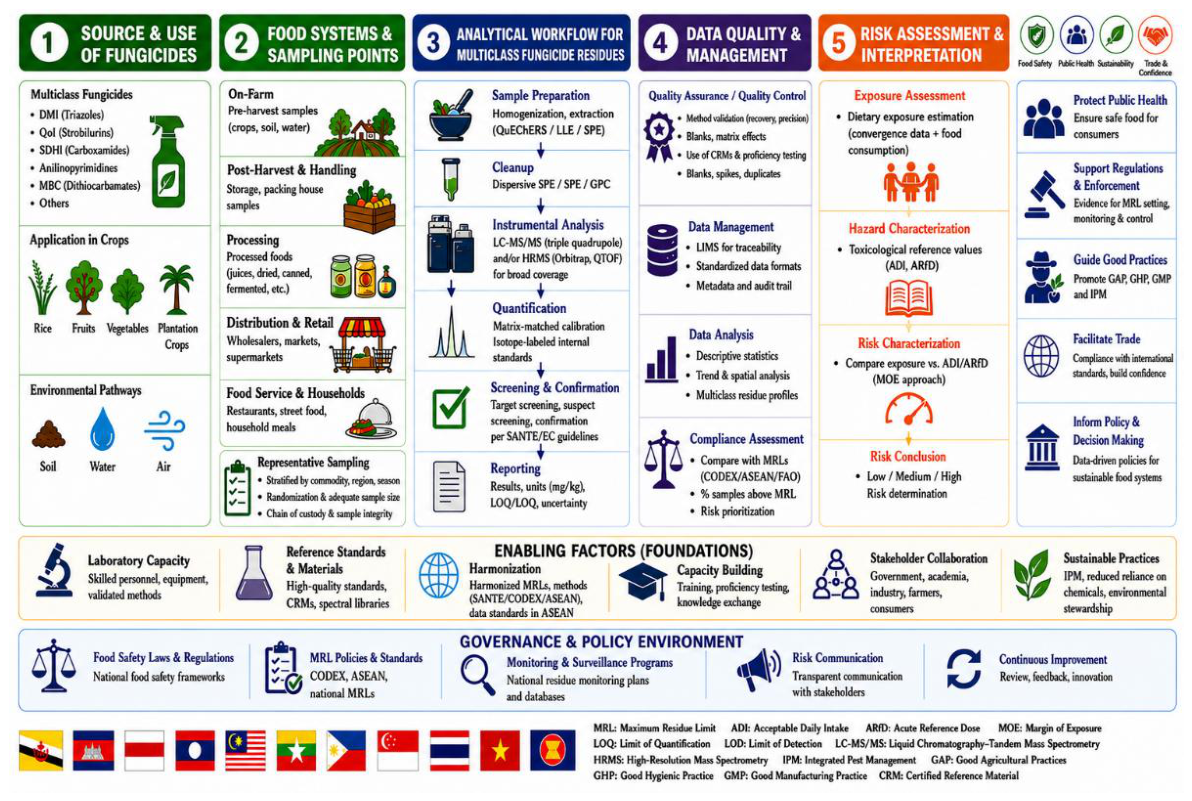
Figure 2.
Advances in instrumental detection for fungicide residues in food systems.
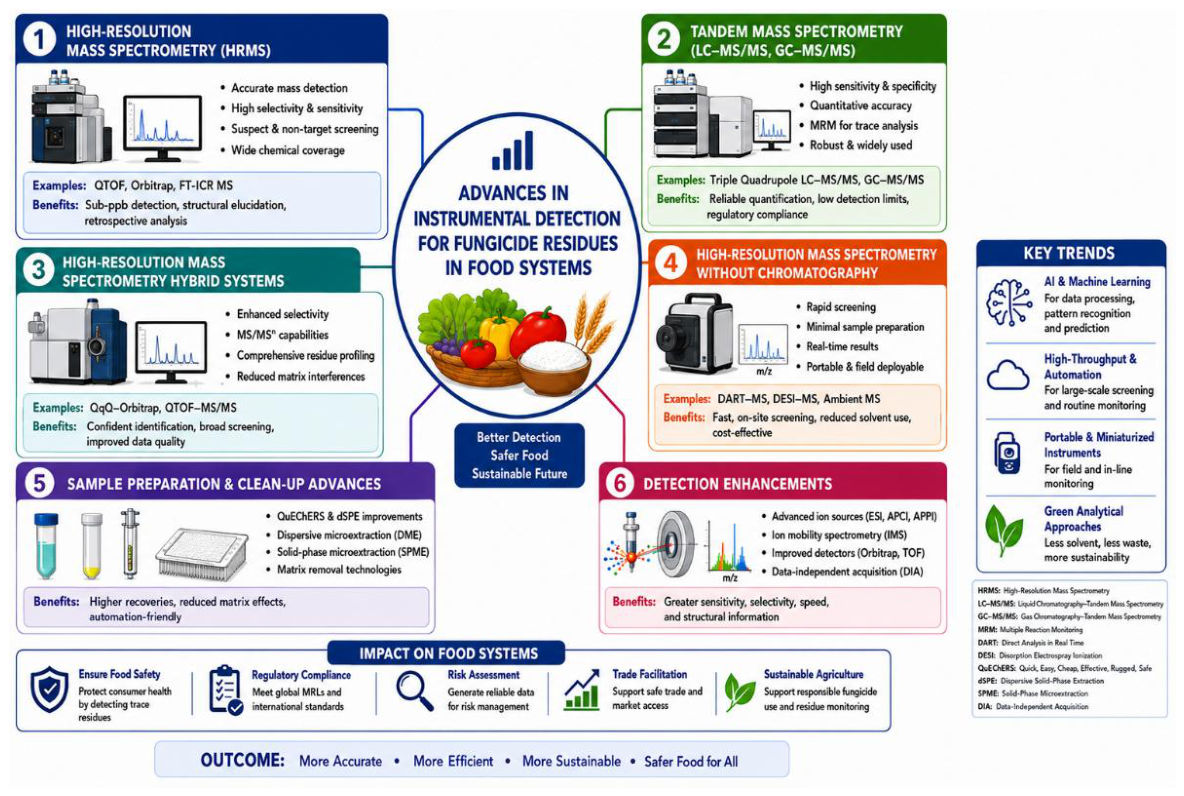

Table 1.
Major chemical classes of fungicides frequently detected in SEA foods, with representative actives, indicative polarity (logP), chemical structures, and example MRL values relevant to multi-residue analysis.
Table 1.
Major chemical classes of fungicides frequently detected in SEA foods, with representative actives, indicative polarity (logP), chemical structures, and example MRL values relevant to multi-residue analysis.
| Fungicide class | Representative actives commonly relevant to SEA foods (examples) | Chemical structure | Typical SEA foods/commodities where residues are often reported | SEA region signals (examples of monitoring contexts) | Indicative polarity (logP range; qualitative) | Example MRLs (EU examples from 2019–2026 literature/regulatory science) |
|---|---|---|---|---|---|---|
| Azoles (DMI; triazoles/imidazoles) | Tebuconazole, Difenoconazole |
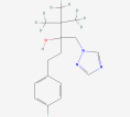 Tebuconazole Tebuconazole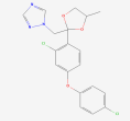 Difenoconazole Difenoconazole |
Leafy greens, chili/pepper, tomatoes, rice-derived products, tropical fruits (mango), herbs/spices [24] | Vietnam vegetable monitoring (Mekong/Central areas), Malaysia highland vegetables, regional export chains for fruit/veg [25] | 3.5–4.5 (moderately hydrophobic; medium polarity) |
Difenoconazole (wheat/rye grain): proposed 0.3 mg/kg [26] |
| Strobilurins (QoI inhibitors) | Azoxystrobin, Pyraclostrobin |
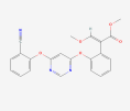 Azoxystrobin Azoxystrobin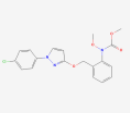 Pyraclostrobin Pyraclostrobin |
Fruits/vegetables (incl. peppers, leafy greens), rice, plantation crops; postharvest protection in some chains [24] | Reported frequently in multi-residue surveys in vegetables and specialty crops (regional monitoring contexts) [27] | 3.5–6.0 (moderate to hydrophobic) | Azoxystrobin (import tolerance examples exist for tropical fruits such as mango/oil palm fruit in EFSA assessments; commodity-specific values apply) [28] |
| SDHI fungicides | Boscalid, Fluopyram, Benzovindiflupyr |
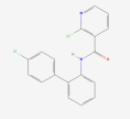 Boscalid Boscalid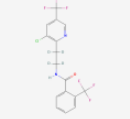 Fluopyram Fluopyram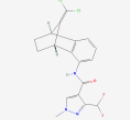 Benzovindiflupyr Benzovindiflupyr |
Vegetables (broccoli, leafy greens), fruits, herbs; intensive horticulture system [29] | Malaysia vegetable surveys and intensive horticulture contexts; Vietnam vegetable monitoring contexts [27] | 3.5–5.5 (often hydrophobic; low-to-medium polarity) | Boscalid (pomegranates): proposed MRL increase 0.01 into 2.0 mg/kg [30]. Fluopyram (broccoli): proposed 0.4 mg/kg [29]. |
| Benzimidazoles | Carbendazim, Thiophanate-methy |
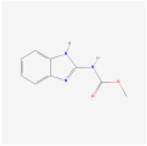 Carbendazim Carbendazim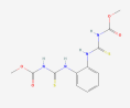 Thiophanate-methy Thiophanate-methy |
Leafy veg, fruits, peppers/spices; legacy use signals still appear in some monitoring datasets [24] | Malaysia vegetable studies report carbendazim among common residues; also seen in broader monitoring literature [31] | 1.0–2.0 (more polar than azoles/QoIs; moderate polarity) | EU risk management for benzimidazoles includes updated EFSA considerations (import tolerances/legacy residues; commodity-specific) [32] |
| Dithiocarbamates | Mancozeb | 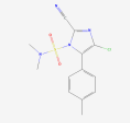 |
Tropical fruits (bananas, mango), vegetables, leafy greens; plantation agriculture contexts [33] | Regional relevance in plantations and vegetable production; exposure/monitoring discussions widely documented [33] |
logP often not meaningful for metal-complex mixtures; analytical behavior dominated by CS2 release (indirect) or newer speciation approaches [34] | EFSA has multiple recent MRL assessments for dithiocarbamates; example EFSA documentation discusses MRL setting/updates and scenarios [35] |
| Emerging fungicides & metabolites | Cyazofamid and metabolite CCIM |
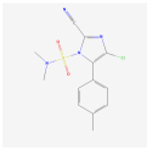 Cyazofamid Cyazofamid |
High-value vegetables (tomato/potato systems), specialty produce; detection increasing with LC-HRMS screening and expanded target lists | Emerging signals often appear when labs adopt LC-QTOF/Orbitrap suspect screening and updated MRM libraries; pepper/veg studies commonly list diverse fungicides [36] | Typically 3– more than 5 for many newer actives (often hydrophobic); metabolites may be less hydrophobic and more mobile | EU regulatory lists show ongoing MRL updates for multiple newer actives (commodity-specific amendments in recent OJ/EU regulations) |
*Notes: logP = octanol/water partition coefficient; QoI = quinone outside inhibitor; Limit of quantification (LOQ) = limit of quantification.
Table 2.
Comparative overview of instrumental approaches for fungicide-residue detection in SEA food matrices, including scope, performance, limitations, and applications.
Table 2.
Comparative overview of instrumental approaches for fungicide-residue detection in SEA food matrices, including scope, performance, limitations, and applications.
| Instrument approach | Best suited fungicide classes/compounds | Main strengths | Main limitations | Typical analytical/regulatory usefulness | Representative SEA food examples | Indicate MRL examples |
|---|---|---|---|---|---|---|
| HPLC-UV/DAD/FLD | Simple targeted assays for selected benzimidazoles or postharvest fungicides | Lower cost, widely available, useful for single/few analytes | Lower selectivity than MS; matrix interference; weak for large multiclass panels; usually not preferred for confirmatory multiresidue work in complex foods | Screening or legacy routine assays where analyte scope is narrow | Applicable to targeted assays in fruits and vegetables, but increasingly displaced by LC-MS/MS in regional monitoring workflow | Useful only if method LOQ is comfortably below the relevant MRL; less ideal for multiclass compliance work [82] |
| GC-MS/MS | Volatile or semi-volatile, thermally stable fungicides such as captan, chlorothalonil, folpet, some dithiocarbamate-related workflows after derivatization/indirect approaches | High selectivity and sensitivity for amenable analytes; robust for confirmatory residue analysis | Not suitable for many polar/thermolabile fungicides; derivatization or indirect chemistry may be needed; matrix enhancement/suppression can remain significant | Confirmatory analysis for GC-amenable fungicides; often complementary to LC-MS/MS in multiclass methods | Thai Chinese kale and yard-long bean samples were analyzed by QuEChERS-GC-MS/MS; the study reported detectable residues including captan and emphasized the relevance of cooking for residue reduction in locally consumed vegetables [83] | ASEAN/Codex examples: onion bulb–iprodione 0.2 mg/kg in the ASEAN crops database; dithiocarbamate examples also appear for several ASEAN vegetables/fruits [84] |
| LC-MS/MS | Broadest routine scope for triazoles, strobilurins, SDHIs, benzimidazoles, phenylamides; e.g., difenoconazole, azoxystrobin, carbendazim, metalaxyl, boscalid, fluopyram, tebuconazole | High sensitivity, selectivity, wide linear range, strong fit for regulated multiresidue monitoring | Matrix effects remain substantial; method optimization and matrix-matched calibration are often necessary; expensive instrumentation | Gold-standard confirmatory and quantitative platform for routine MRL compliance | Central Vietnam monitoring found residues in 81% of 290 vegetable samples and 23% above MRLs; difenoconazole was among the most frequently detected compounds. Mekong Delta vegetables analyzed by modified QuEChERS-LC-MS/MS showed 59% samples above MRLs [8]. Filipino Cavendish bananas analyzed by LC-MS/MS plus GC-MS/MS frequently contained azoxystrobin, carbendazim, imazalil, and thiabendazole [27] | Codex examples particularly relevant to SEA trade crops: banana–azoxystrobin 2 mg/kg, banana–tebuconazole 1.5 mg/kg in ASEAN crops database, pineapple–carbendazim 5 mg/kg, rice (husked)–carbendazim 2 mg/kg, chili pepper–difenoconazole 0.9 mg/kg [82] |
| UHPLC-MS/MS / high-throughput LC-MS/MS | Same fungicide scope as LC-MS/MS, but optimized for faster runs and higher sample throughput | Shorter analysis time, better peak capacity, lower solvent use, good fit for surveillance laboratories | Still requires careful cleanup, matrix compensation, and validation; throughput gains may trade off against breadth in some workflows | Best for large monitoring programs and dense sample sets such as vegetables, chili powder, rice, tea | High-throughput LC-MS/MS has recently been validated for complex chilli powder matrices; recent food-method papers also show QuEChERS-UHPLC-MS/MS detecting fungicides efficiently in fruit matrices [85], where fungicides often dominate residue findings. These workflows are directly relevant to Southeast Asian spice and produce surveillance [86] | Particularly useful when required LOQs must stay below stringent MRLs in processed matrices such as spices, teas, and rice-based products [38] |
| LC-HRMS / UHPLC-QTOF / Orbitrap HRMS | Targeted multiclass fungicides plus suspect/non-target screening of metabolites and transformation products | Simultaneous targeted and suspect screening; better for retrospective data mining and unknowns; valuable where fungicide metabolites or emerging actives are missed by fixed target lists | More complex data processing; quantification and routine accreditation can be harder than triple quadrupole workflows; cost and expertise barriers | Excellent secondary platform for broad surveillance, discovery, and retrospective review; less commonly the first-line routine regulatory method | HRMS studies have shown simultaneous target analysis and suspect screening in fruits, reporting both confirmed residues and numerous tentative identifications beyond standard target panels; this is useful for tropical fruit export chains relevant to SEA [20] | Supports risk monitoring beyond current MRL lists by revealing transformation products and non-target residues that may not yet be in routine methods [87] |
| Ambient ionization MS (for example TAPI-TOF/MS) | Rapid targeted screening of selected pesticide/fungicide panels on simpler extracts | Very fast, minimal sample preparation, potentially deployable for triage screening | Lower maturity for formal MRL enforcement; often narrower scope and weaker robustness than LC-MS/MS confirmatory methods | Rapid screening before confirmatory LC-MS/MS | A 2025 tea study using TAPI-TOF/MS with LC-MS/MS cross-checking reported a 66.7% detection rate across tested tea samples, although azoxystrobin was not detected in that sample set. This approach is relevant to tea-producing/consuming SEA markets [88] | Best viewed as a pre-screening tool; positive or borderline findings should still be confirmed against the applicable MRL using validated confirmatory methods [89] |
| SERS and other Raman-based nanosensors | Fast screening of selected fungicides/pesticides; promising for surface residues and portable testing | Very rapid, low sample volume, field potential, increasingly improved by machine learning and substrate engineering | Reproducibility, substrate standardization, matrix interference, quantitation robustness, and regulatory acceptance remain limiting |
Field or marketplace screening; best coupled with confirmatory LC-MS/MS/GC-MS/MS | Particularly attractive for rapid screening of tropical fruits, leafy vegetables, herbs, and spices sold in decentralized SEA supply chains, though published regional fungicide-validation datasets remain fewer than LC-MS/MS datasets | Usually not used alone for official MRL compliance; best for screening below action thresholds followed by confirmatory testing [90] |
| Hyperspectral / NIR / imaging systems with machine learning | Non-destructive prediction of residue presence or contamination class, often for surface-associated residue | Fast, non-destructive, image-compatible, potentially portable and scalable | Usually indirect rather than analyte-specific; requires large calibration sets; weaker for definitive quantitation and legal enforcement | Rapid prescreening and sorting, not stand-alone compliance testing | Highly relevant for high-volume Southeast Asian produce chains such as chili, leafy greens, mango, banana, and pineapple, but still needs confirmatory chromatographic follow-up for fungicide-specific decisions | Not appropriate as sole basis for MRL compliance decisions [91] |
Disclaimer/Publisher’s Note: The statements, opinions and data contained in all publications are solely those of the individual author(s) and contributor(s) and not of MDPI and/or the editor(s). MDPI and/or the editor(s) disclaim responsibility for any injury to people or property resulting from any ideas, methods, instructions or products referred to in the content. |
© 2026 by the authors. Licensee MDPI, Basel, Switzerland. This article is an open access article distributed under the terms and conditions of the Creative Commons Attribution (CC BY) license (http://creativecommons.org/licenses/by/4.0/).
Copyright: This open access article is published under a Creative Commons CC BY 4.0 license, which permit the free download, distribution, and reuse, provided that the author and preprint are cited in any reuse.